Original Article
Gestational diabetes induces chronic hypoxia stress and
excessive inflammatory response in murine placenta
Hua-Ping Li1*, Xuan Chen2*, Ming-Qing Li3
1Department of Gynecology & Obstetrics, the 6th People’s Hospital affiliated to Shanghai Jiaotong University, Shanghai 6th People’s Hospital, Shanghai 200233, China; 2Soochow University Medical College, Suzhou 215123, China; 3Laboratory for Reproductive Immunology, Hospital and Institute of Obstetrics and Gynecology, Fudan Uni-versity Shanghai Medical College, Shanghai, 200011, China. *These authors contribute equally to this work. Received January 13, 2013; Accepted February 22, 2013; Epub March 15, 2013; Published April 1, 2013
Abstract: Metabolic impairments in maternal obesity and gestational diabetes mellitus (GDM) induce an abnormal environment in peripheral blood and cause vascular structure alterations which affect the placental development and function. A GDM model was developed using C57BL/6J female mice fed with high fat food (HF) (40% energy from fat) and a control group with control food (CF) (14% energy from fat) for 14 weeks before mating and through-out the gestation period. A subset of dams was sacrificed at gestational day (GD) 18.5 to evaluate the fetal and placental development. HF-fed dams exhibited significant increase in the maternal weight gain and homeosta -sis model assessment for insulin re-sistance index (HOMA-IR), impaired insulin secretion of glucose stimulus and glucose clearance of insulin stimulus before pregnancy; in addition, they also had the increase in the fetal and placental weight. HF-fed dams at GD 18.5 showed the high level of circulating maternal inflammation factors and were associated with increased oxidative stress and hypoxia in the labyrinth, abnormal vascular development with a high level of hypoxia inducible factor-1α (HIF-1α) and VEGF-A expression, but without a parallel increase in CD31 level; were induced an exaggerated inflammatory response in placental vascular endothelial cell. Our findings show that GDM induces more maternal weight gain and fetus weight, with abnormal maternal circulating metabolic and inflammation factors, and forms a placental hypoxia environment and impacts the placental vascular development. Our findings indicate that gestational diabetes induce excessive chronic hypoxia stress and inflammatory response in placentas which may contribute mechanisms to the high risks of perinatal complications of obesity and GDM mothers.
Keywords: High fat diet, obesity, GDM, placenta, oxidative stress, hypoxia, inflammation factor
Introduction
With the worldwide epidemic of metabolic syn-drome, the proportion of women that are over-weight or obese and with GDM during pregnan-cy has increased [1, 2]. The resulting abnormal placenta environment may have deleterious effects on fetal metabolic programming and lead to the increased adverse perinatal out-comes, not only perinatal mortality, macroso-mia, shoulder dystocia [3], but also preeclamp-sia [4, 5]. GDM and obesity in pregnancy often increase the risk for the baby to develop meta-bolic syndrome later in life [4, 6].
Placenta plays an important role in this scenar-io, but basis research is leg behind in this area.
Only a few studies with rodent models were designed to address the consequences of maternal obesity to understand the metabolic reprogramming in offspring, but no close atten-tion has been paid to the state changes of pla-cental vascular structure. When capillarization increases rapidly, this tree delivers blood to an extensive and expanding capillary network with a large surface area for exchange and is vital for fetal growth and survival. Nevertheless, the factors that control the normal growth and development of the fetoplacental vasculature in the late gestational are still unknown.
GDM induces placental chronic hypoxia stress and inflammatory
accompanied with increased maternal adiposi-ty, fast glucose and insulin, impaired glucose and insulin tolerance, which is very similar to human GDM symptoms. Because placental function increases dramatically in the last half of gestation to supply enough oxygen and nutri-ents for exponential fetal growth, maternal hypertension and other complications start and accelerates during the last half of gesta-tion, it is requisite to monitor the pathological events of the placenta in this period. Therefore, based on this GDM animal model, we then took GD 18.5 as a dam time to investigate the changes in placental vascular structure of exchange area and placental environment in this late gestation period.
Our findings show that high fat diet induces more maternal weight gain and fetus weight, with changed maternal circulating metabolic and inflammation factors, and disordered pla -cental vascular environment and development.
Materials and methods
Mice and high fat mouse models
Female C57BL/6J (4 weeks old) mice were pur-chased from the Shanghai Slac Laboratory Animal Co., Ltd. All of the mice were housed in the animal facility with a 12 h light/dark cycle, 40%-60% humidity and constant temperature (22-24°C), and the mice had free access to water and diet. After 1 week quarantine, these mice were randomly divided into two groups. CF (Control food) group fed a control diet (14% fat, 26% protein, 60% carbohydrate ) [8]. HF (high fat food) [9, 10] group fed a research diet (40% fat, 20% protein, 40% carbohydrate), above foods all provided from Slac Laboratory Animal Co., Ltd. After 14 weeks dietary intervention, breeding was conducted overnight in a 1:2 ratio, mating was confirmed by presence of a vaginal mucous plug in the following morning,
research center of Shanghai 6th People’s Hospital.
Measurements of body weight, blood glucose and insulin levels
Body weight was measured once a week; blood glucose was determined by glucometer (ACCU-CHEK Performa) at indicated time points from cutting tails after overnight fasted (12 h) every 2 weeks; after 14 weeks of dietary interven-tion, blood samples were collected by retroor-bital sinus puncture without anesthetization after overnight fasted (12 h). Following immedi-ate centrifugation at 4000 rpm at 4°C, plasma was separated and stored at -70°C until serum insulin analysis. Homeostasis model assess-ment of insulin resistance (HOMA-IR) was esti-mated with the following formula: insulin resis-tance = fasting plasma insulin (in microunits per ml) × fasting plasma glucose (FPG, in milli-moles per litre)/22.5.
Intraperitoneal glucose tolerance test (IPGTT) and intraperitoneal insulin tolerance test (IPITT)
After 14 weeks dietary intervention, six mouse of each group were fasted for 12 h and blood was collected from tail for glucose assay by the glucometer at baseline (as 0 min) and 30, 60 and 120 min after glucose (2g/kg) loading through intraperitoneal injection [11]; other six mouse of each group were fasted for 4 h, then the glucose level was measured as the method in IPGTT at the 30, 60 and 120 min after human regular insulin (Novolin R, Novo-Nordisk) through intraperitoneal injection at 0.5 units/ kg [12].
Collection of blood and tissue samples
[image:2.612.89.368.89.183.2]Dams were sacrificed at GD18.5 after fasting 4 h, and maternal blood was collected by cardiac
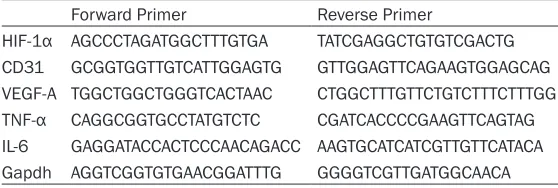
Table 1. Primer Pairs for Real time PCR
Forward Primer Reverse Primer
HIF-1α AGCCCTAGATGGCTTTGTGA TATCGAGGCTGTGTCGACTG CD31 GCGGTGGTTGTCATTGGAGTG GTTGGAGTTCAGAAGTGGAGCAG VEGF-A TGGCTGGCTGGGTCACTAAC CTGGCTTTGTTCTGTCTTTCTTTGG TNF-α CAGGCGGTGCCTATGTCTC CGATCACCCCGAAGTTCAGTAG IL-6 GAGGATACCACTCCCAACAGACC AAGTGCATCATCGTTGTTCATACA Gapdh AGGTCGGTGTGAACGGATTTG GGGGTCGTTGATGGCAACA
puncture, allowed to clot, and spun at 4000 rpm to collect serum. Maternal serum level of triglyceride and total cholesterol were analysed using triglyceride and total cholesterol test kits (Beijing BHKT Clinical Reagent Co. Ltd) accord-ing to the manufacturer’s instructions. Insulin levels were detected by Kit for mouse Insulin Batch (F1093, Shanghai Westang Bio-Tech Inc., Ltd); the levels of TNF-α (12-2720-096, Dakewe Biotech Co., Ltd.) and IL-1β (12-2012-096, Dakewei Biotech Co., Ltd.) were analyzed by ELISA followed manufacturer’s instructions. The marker of insulin resistance was calculated by HOMA-IR as follows: fasting plasma insulin (µU/mL) × fasting glucose (mM)/22.5.
After laparotomy, fetuses and placentas were removed and weighed, and placentas in each litter were pooled, one part of each group after weighing were stored at -70°C for measure-ment of malondialdehyde (MDA), a common stable marker for OS-induced lipid peroxida-tion, after placentas homogenized according protocol of MDA (A003-1, Nanjing Jiancheng Bioengineering Institute), the way of tissue homogenate as mentioned elsewhere [13]. One part of the remnant placentas of each group fixed in 4% polymerisatum at once for immuno -histochemistry and the other part of placentas were stored at -70°C for real time PCR.
Real time PCR
Real time quantitative PCR to measure mRNA expressions of HIF-1α (NM_010431.2), VEGF-A (NM_001110266.1), CD31(NM_008816.2), TNF-α (NM_013693), IL-6 (NM_031168.1), GAPDH (NM_008084 ). Primer Pairs of above molecular shows in Table 1. Total RNA was extracted from placenta tissues from each group (4 animals) using TRIzol (Invitrogen). Total mRNA (2μg) was reverse transcribed to cDNA using High Capacity cDNA Reverse Transcription Kit (Applied Takaro Biosystems) according to the manufacturer’s instructions. RT-PCR was performed by the Biosystems 7500 Fast Real-Time PCR System using Power SYBR® Green
PCR Master Mix kits (Applied Takara BioTechnology). Quantitative Real-time PCR analysis was carried out with the following cycle profile: 1 cycle at 95°C for 30 s, and 40 cycles at 95°C for 5 s, 60°C for 31 s.
Immunohistochemistry
[image:3.612.92.524.71.303.2]Placentas preserved were transected perpen-dicular to the long axis of the disc, processed, and paraffin embedded; and 5-μm sections were stained for morphologic analysis by light microscopy. Placentas from all groups were also observed for overall evidence of HIF-1α
GDM induces placental chronic hypoxia stress and inflammatory
(25 ug/ml, MAB1935, R&D Systems), CD31 (PECAM-1) (1:100, sc-31045, Santa Cruz Biotechnology), NFKB P65 (1:100, SC-372, Santa Cruz Biotechnology), pNF-KB P65 (1:50, SC-372, Santa Cruz Biotechnology). Immunohistochemistry was performed by labeled streptavidin/peroxidase method and microwave antigen retrieval technique. The reagents (PV9000 and DAB) were obtained from ZSGB-BIO and staining was performed as protocol. As negative controls, the primary anti-body was replaced by anti-mouse IgG isotype. Microvessel counting was carried out by select-ing two center areas in the labyrinth from 4 dif-ferent samples in each group, that is, average 10 representative microscopic fields of placen -ta at 400× magnification were enumerated fol -lowing the methods described previously [14]. The staining of HIF-1α, NFKB and pNF-KB was assessed semiquantitatively by using the Q score method: immunoreactivity was classified according to fractions of positive cells (0, 0-10%; 1, 10-25%; 2, 26-75%; 3, 76-100%) and general intensity of positive cells (0, none; 1, mild; 2, moderate; 3, intense) [14]. Vascular density was measured based on a combination of CD31 staining and morphologic analysis, and was semiquantitatively scored based on the density and area as above described [15], the brown positive staining levels were graded from 0 to 3 as above described, and percentage of staining area were graded from 0 to 4: nega-tive is 0, ≤25% 1, 26-50% 2; 51-75% 3; >75% 4. Each slide was calculated by multiplying stain-ing grade by fractions of positive cells or area.
HF increased the biomarkers associated with metabolic impairments
After high fat diet intervention before pregnan-cy, maternal body weight significantly increased from the second week (P<0.05) (Figure 1A), weight gained 19g compared 7.4g of CF, fasting glucose was increased significantly after 10 weeks (Figure 1A and 1B) (P<0.001). Fast glu-cose levels were significantly elevated in HF-fed dams prior to mating (P<0.001), although the glucose level was not so stable (Figure 1B), while the highest fast glucose levels of CF was only 131.4mg/dl without changing much during the whole process.
Besides fasting glucose, HF-fed dams also showed significant insulin resistance (Figure 1C) (P<0.001), IPGTT (Figure 1D) and IPTT (Figure 1E) exhibited much worse response to glucose stimulus at all time points (30, 60, 120, and 180 min). AUC levels of both IPGTT and IPTT indicated that HF impaired the response to insulin and glucose stimulus (Figure 1F) (P<0.001).
The obesity mouse in our study had high levels of fast glucose, insulin and impaired glucose tolerance. And many studies [8, 10, 12] had showed C57BL/6J mice with a high fat diet is a robust and efficient model for IGT and early type 2 diabetes. , HF mice after pregnancy still had a high serum fast glucose, insulin level (Table 2), and a high triglyceride and total cho-lesterol level with worse metabolic impair-ments. HOMA-IR was 7 folds higher than CF (Table 2), Our model of GDM were established and suitable for studying the influence on pla
-Table 2. Biomarkers associated with metabolic impairments
CF HF
Body weight (g) 39.3±4.1 51.1±5.4***
Fast Glucose (mg/dl) 122.4±7.2 163.8±12.6***
Fast Insulin (ng/ml) 0.352±0.046 1.742±0.140***
HOMA-IR 2.255±0.017 14.9±0.092***
Triglyceride (mg/dl) 140.4±28.6 235.5±27.4***
Total cholesterol (mg/dl) 235.4±46.9 362.3±102.42***
IL-1β ( ng/ml) 1.87±0.40 6.6±0.85***
TNF-α (ng/ml) 0.59±0.20 5.23±0.70***
Placenta weight (g) 0.1145±0.009 0.121±0.017*
Fetus weight (g) 0.76±0.08 0.83±0.09**
MDA of placenta
homog-enized (nmol/ml) 4.12±0.34 7.60±0.53
***
*P<0.05; **P<0.01; ***P<0.001.
The average score of ten fields was counted by two independent examin-ers who were blinded as to animal groups.
Statistical analysis
Data were expressed as the mean ± standard error of the mean (SEM). The data obtained in the present study were analyzed using an ANOVA. A p value < 0.05 was considered to be statistically significant. Data were analyzed using the statistical pack-age SPSS for Windows version 17.0.
cental development and function [16]. Body weight of the HF mouse during pregnancy in this study, was increased from 37.9±3.0 to 51.1±5.40g (Table 2) (P<0.001), compared CF from 26.3±2.2 to 39.3±4.1 (P<0.001); Dams were killed to obtain the fetuses and placentas on GD18.5, HF fetuses were significantly heavi -er than CF fetuses (P<0.001), wh-ereas placen-tal weight did not significantly differ between the two groups (Table 2) (P<0.05), our current results displayed that HF placentas are working in a heavy load.
The placentas of GDM are characterized by reduced tissue oxygenation
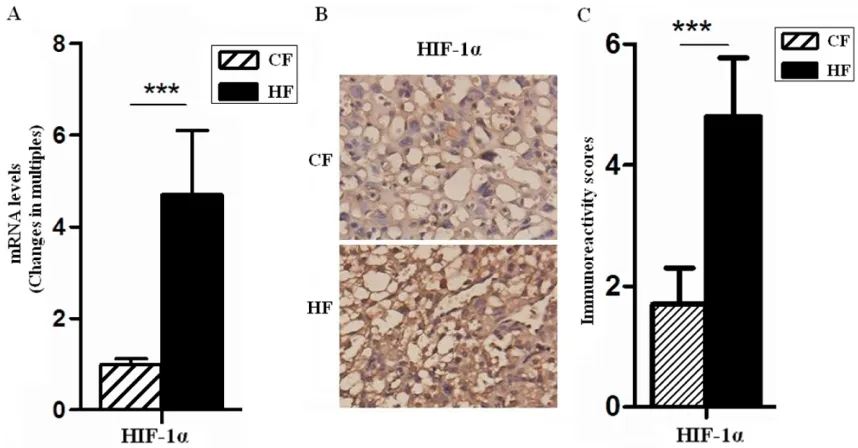
Obesity and GDM is associated with marked hyperglycaemia, hyperinsulinemia and dyslipid-emia, but also with increased oxidative stress [17]. Overproduction of reactive oxygen species may influence arterial branching of exchange region of HF placenta. We assessed the level of systemic oxidative damage in obese pregnant dams by quantifying placenta MDA. MDA level in HF placenta was increased by 84.4% over in whole placental homogenates of GD18.5 (Table 2) (P<0.001), the levels of MDA within the pla-centas were evaluated as an indicator of tissue hypoxia. HIF-1α, another marker of hypoxia, was also measured in the mouse placenta
dur-ing late gestation, as shown in Figure 2, HIF-1α mRNA level in HF was increased 4.7 folds, and the protein level of HIF-1α was highly located (P<0.001) (Figure 2A-C). These comprehensive data demonstrated that HF placenta might be in a stronger oxidative stress and deeper hypox-ia state.
Abnormal vascular development in the placen-tas of HF
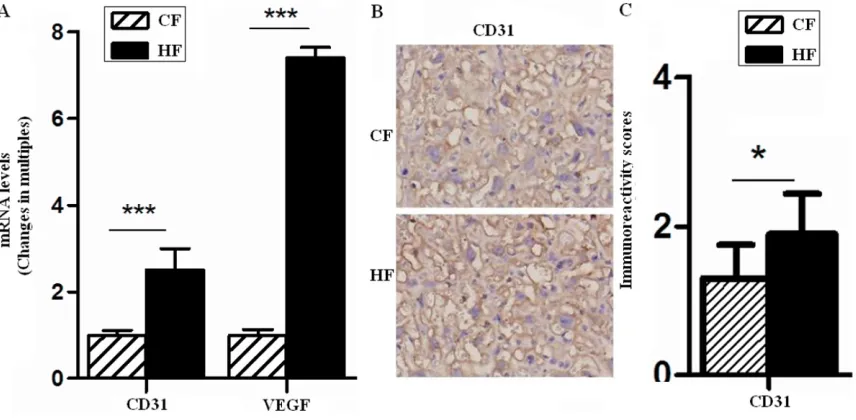
Hypoxia, an additional mechanism whereby hypoxia could influence VEGF action of the fac -tors known to induce VEGF gene expression, is by far the most potent stimulus. Low oxygen tension significantly increased VEGF mRNA lev -els in a reversible manner [18]. Since VEGF plays a role not only in angiogenesis and vascu-lar permeability, but also in maintenance of the endothelium. Thus, the hypoxic induction of VEGF expression was most likely achieved by transcriptional activation. It was found that VEGF-A mRNA level of placentas in HF group increased 7.4 folds (P<0.001) (Figure 3A), therefore, we speculated that maternal obesity and GDM may affected blood vessel density and function.
[image:5.612.91.520.72.296.2]Subsequently, we evaluated fetoplacental vas-culature changes. As a common endothelial
GDM induces placental chronic hypoxia stress and inflammatory
cell specific marker, the transcriptional level of CD31 in HF placentas was significantly higher than that of the CF group (P<0.001) (Figure 3A), but the result of immunohistochemistry showed that fetal microvessels with positive CD31 only increased 1.3 folds (P<0.05) (Figure 3B and 3C) than CF, increased CD31-postived areas suggested that there was a growing exchange area. However, these data also showed that HF vasculature changes could not catch up with its load, and as shown in figures, vascular structure was confused and disor-dered in HF group.
HF stimulates inflammatory response in pla-centas
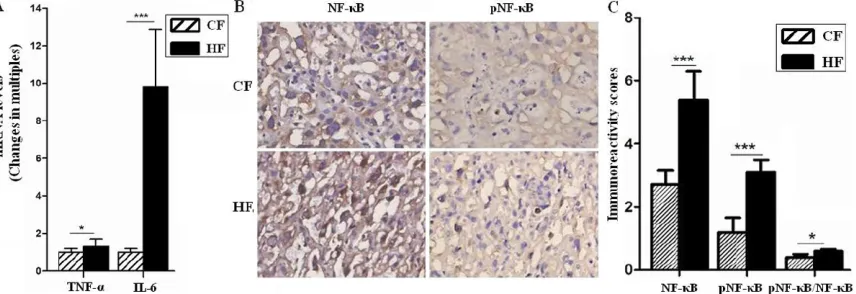
Finally, we found that the placenta in HF devel-oped an exaggerated inflammatory response to GDM and obesity with a high level of circulation inflammation factors (IL-1β and TNF-α) (Table 2) (P<0.001). As shown, pro-inflammatory fac -tors TNF-α and IL-6 of placentas were markedly elevated in HF group. TNF-α levels in HF was increased 1.3 folds (P<0.05) (Figure 4A) than CF along with a significant increase in IL-6 lev -els (9.79 folds, P<0.001) (Figure 4A). IL-6 also could stimulate angiogenesis, so HF was pos-sibly involved in modulating vascular develop-ment through promoting IL-6 expression and other factors in placentas.
As we known, NF-κB signaling pathways play an important role in activating inflammation response. Our data showed in Figure 4, both NF-κB and phosphorylation of NF-κB (pNF-κB) in vascular structure of HF group were higher than that in CF group (P<0.001) (Figure 4B and
4C), moreover, the ratio of pNF-κB to total NF-κB was also up-regulated in HF group. These data showed an exaggerated inflammation response in HF placenta, the effect was achieved partly through activating NF-κB signals.
Discussion
[image:6.612.93.521.73.283.2]In GDM, there are strong gene-environment interactions that trigger the pathogenetic pro-cess. Thus, despite their different genetic pre-disposition, environmental factors, mainly life-style-related factors such as high-saturated-fat diet, may enhance glucose intolerance and pro-mote insulin resistance and obesity during pregnancy. In this study, we have developed an attractive model to further study the physiolog-ic and molecular abnormalities in GDM. Mphysiolog-ice model was fed with a moderately high fat diet for a long time before pregnancy [10], as increased maternal adiposity, fast glucose and insulin, impaired glucose and insulin tolerance, which were very similar to the common meta-bolic abnormalities of human GDM, and Liang
et [16] fed high fat food to female C57BL/6J mouse for 8 weeks before mating and consid -ered them as GDM model, changes in fetus and placentas with these metabolic impairments also may be applied to GDM woman. In our study, we found that maternal and litter’s weight gain in HF group was more than that in CF group, placental weight also increased, which promoted an increase level in exchange nutrient function in HF group, but placenta weight did not show a parallel growth in litter weight.
A physiological state of insulin resistance is required to preferentially direct the maternal nutrients toward the fetoplacental unit, allow-ing adequate growth of the fetus. When women develop GDM, insulin resistance is more severe and disrupts the intrauterine milieu, which resulting in accelerated fetal development with increased risk of macrosomia. Jones et [9] found high fat diet before and during pregnancy could cause marked up-regulation of placental nutrient transport and fetal overgrowth in mice, in which glucose transporter 1 (GLUT1) and sodium-coupled neutral amino acid transporter (SNAT) 2 were elevated. They suggested that up regulation of specific placental nutrient trans -porter isoforms constituted a mechanism link-ing maternal high fat diet and obesity to fetal overgrowth. It coincided with our results on this point in placenta.
To further elucidate the mechanisms that a heavy function burden in HF group leads to pre-eclampsia, fetal growth restriction, infant
death, stillbirth and other complications, the key finding in these studies was that GDM results in increased placental oxidative stress, as the most frequently used indicators of lipid peroxidation and biomarker of oxidative stress [19], MDA level in HF placenta was increased by 84.4 % over in whole placental homogenates of GD18.5. At the first trimester, excessive pro -duction of reactive oxygen species may break the balance of hypoxia-reoxygenation on tro-phoblast development such as invading shal-lowly; and in late gestation, hypoxia has been shown to cause apoptosis of trophoblast and vascular endothelium cells [20, 21], which changes were all observed in preeclampsia, These may explains why GDM has a high inci-dence of preeclampsia [22, 23].
The primary molecular sensor used by tropho-blasts and the developing embryo to sense and respond to changes in O2 tension is HIF-1α [24]. Through transcriptional activation the HIF-1α regulates many different cellular processes in response to hypoxia, including angiogenesis. In human placenta, Myatt et al [25] suggested that oxidative stress may cause vascular dys-function in the placenta that compromises fetal growth. The higher level of HIF-1α expression showed a lower O2 tension. Our results proved that HF induced HIF-1α not only in mRNA level but also in protein level. HIF-1α and low O2 ten-sion are important in early pregnant, including regulation of angiogenesis, migration/invasion and cell metabolism, but in late placenta, it seems not so good for pregnancy. Our findings suggested that HF had a confused and
[image:7.612.95.523.73.220.2]GDM induces placental chronic hypoxia stress and inflammatory
dered vascular structure. Pietro et al [26] indi-cated that the change in the placental VEGF/ VEGFR expression ratio in mild hyperglycemia may favor angiogenesis in placental tissue. In our studies, the increase of VEGF level might be also induced by HIF-1α in HF group. However, we also found that CD31 staining intensity in placenta of HF group is not inconsistent with the increase degree of HIF-1α and VEGF, which suggested that angiogenesis in HF placenta may be not enough, although the level of angio-genesis related factors, such as VEGF, IL-6, was significantly increased. These results are partly echoed with Liang et al [16]. VEGF levels highly increased in human late gestational placenta, but vascular structure was not growing because one of VEGF receptor FLT-1 in placenta was decreased, but soluble FLT-1 (sFLT-1) expres-sion in a free serum could combine with VEGF, which could not ensure the neoformation of placental vessels and their organization to meet the needs of the fetus and placentas [27]. Our results also showed that GDM and obesity placentas could not have an adaptive capacity, besides impaired angiogenesis.
Radaelli et al [28] showed placental transcrip -tome emerged as a primary target of the altered environment of diabetic pregnancy. The genes identified provide the basis to elucidate links between inflammatory pathways and GDM-associated insulin resistance. Desoye et [29] showed a similar results with Radaelli’s that GDM induced a significantly increase in IL-6 mRNA levels in GDM placenta, there were no major differences in immune cell populations within the placental villi and only a greater degree of muscularity in the vessel walls [30, 31]. Zhou et al [32] showed that increased TNF-α/IL-6 signaling in mice was a key mecha -nism underlying increased preeclampsia, and IL-6 blockade inhibited preeclamptic features in autoantibody-injected pregnant mice. In our studies, it could be observed that an exagger-ated inflammation response in HF placentas. Because these factors and biological behaviors were closely related with each other, when the balance in placenta disturbed, such as misbal-ance of endothelial hypoxia, proliferation and apoptosis behaviors, which may contribute to a high risk of complications.
Qian et al [33] had demonstrated that HIF-1α activation by IL-1β and TNF-α resulted in increased secretion of VEGF, the process of
HIF-1α activation was driven by both IL-1β and TNF-α, up-regulating expression of the extracel -lular signal-regulated kinase (ERK) phosphory-lation pathway. NF-kB is the key link that drives cytokine cellular signal. There is a close rela-tionship between HIF-1α and NF-kB during hypoxia, which leads to the up-regulation of inflammatory modulators such as cycloxygen -ase-2 (COX-2), TNF-a, IL-6. Therefore, it can be speculated that the secretion of inflammatory factors in placenta induced by HF may further up-regulate the expression of HIF-1α and acti -vate NF-kB signals, which in turn increases the production of inflammatory factors, and forms a positive feedback. However, the mechanism of these factors expression changes need to be further investigated.
In summary, our findings showed that GDM mouse models developed by moderate high fat diet had a maternal nutritional imbalance and metabolic disturbance, an elevated circulating and placental inflammatory response, an aggravated placental hypoxia environment and an altered placental vascular development. Our data supported the hypothesis that the altered placental vascular structure and function con-tributed to the mechanisms of the high risks of perinatal complications in obesity and GDM mothers.
Acknowledgments
This study was supported by National Basic Research Program of Shanghai (12ZR1422200) to Hua-Ping Li.
We would like to thank Pro, Da-Jin Li, Ming-Qing Li, PhD, Dr, Kai-Kai Chan, Yu-Han Men, Hui Li, from the Institute of Obstetrics and Gynecology of Fudan University of Shanghai for their excel-lent technical support.
Conflict of interest statement
There is no conflict of interest that could be per -ceived as prejudicing the impartiality of the research reported.
References
[1] Working group on gestational diabetes. Nation-al guidelines for gestationNation-al diabetes. Duodec-im 2008; 124:1556-1569.
[2] Kaaja R, Rönnemaa T. Gestational Diabetes: Pathogenesis and Consequences to Mother and Offspring. Rev Diabet Stud 2008; 5: 194-202.
[3] Becker T, Vermeulen MJ, Wyatt PR, Meier C, Ray JG. Prepregnancy diabetes and risk ofpla-cental vascular disease. Diabetes Care 2007; 30: 2496-2498.
[4] Leddy MA, Power ML, Schulkin J. The Impact of Maternal Obesity on Maternal and Fetal Health. Rev Obstet Gynecol 2008; 1: 170-178. [5] Luoto R, Kinnunen TI, Aittasalo M, Kolu P, Rai-tanen J, Ojala K, Mansikkamäki K, Lamberg S, Vasankari T, Komulainen T, Tulokas S. Primary Prevention of Gestational Diabetes Mellitus and Large-for-Gestational-Age Newborns by Lifestyle Counseling: A Cluster-Randomized Controlled Trial. PLoS Med 2011; 8: e1001036. [6] Kim SY, Sharma AJ, Callaghan WM. Gestation-al diabetes and childhood obesity: what is the link? Curr Opin Obstet Gynecol 2012; 24: 376-81.
[7] Maltepe E, Bakardjiev AI, Fisher J. The placen-ta: transcriptional, epigenetic, and physiologi-cal integration during development. J Clin In-vest 2010; 120: 1016-1025.
[8] Winzell MS, Magnusson C, Ahrén B. Temporal and dietary fat content-dependent islet adap-tation to high-fat feeding-induced glucose in-tolerance in mice. Metabolism 2007; 56: 122-128.
[9] Jones HN, Woollett LA, Barbour N, Prasad PD, Powell TL, Jansson T. High-fat diet before and during pregnancy causes marked up-regula-tion of placental nutrient transport and fetal overgrowth in C57/BL6 mice. FASEB J 2009; 23: 271-278.
[10] Buettner R, Schölmerich J, Bollheimer LC. High-fat Diets: Modeling the Metabolic Disor-ders of Human Obesity in Rodents. Obesity 2007; 15: 798-808.
[11] Serre-Beinier V, Toso C, Morel P, Gonelle-Gispert C, Veyrat-Durebex C, Rohner-Jeanren -aud F, Calandra T, Roger T, James RW, Montet X, Bühler L, Bosco D, Berney T. Macrophage migration inhibitory factor deficiency leads to age-dependent impairment of glucose homeo-stasis in mice. J Endocrinol 2010; 206: 297-306.
[12] Gallou-Kabani C, Vigé A, Gross MS, Rabès JP, Boileau C, Larue-Achagiotis C, Tomé D, Jais JP, Junien C. C57BL/6J and A/J mice fed a high-fat diet delineate components of metabolic syn-drome. Obesity 2007; 15: 1996-2005.
[13] Ibrahim MY, Abdul AB, Wahab SIA, Elhassan MM, Alzubairi AS, Syamet MM. Attenuation of cisplatin induced hepatotoxicity in rats using zerumbone. Res J Biol Sci 2009; 4: 777-784. [14] Noguera R, Fredlund E, Piqueras M, Pietras A,
Beckman S, Navarro S, Påhlman S. HIF-1alpha and HIF-2alpha are differentially regulated in vivo in neuroblastoma: high HIF-1alpha corre-lates negatively to advanced clinical stage and tumor vascularization. Clin Cancer Res 2009; 15: 7130-7136.
[15] Tang L, Yi R, Yang B, Li H, Chen H, Liu Z. Valsar -tan inhibited HIF-1α pathway and attenuated renal interstitial fibrosis in streptozotocin-dia -betic rats. Diabetes Res Clin Pract 2012; 97: 125-131.
[16] Liang CY, DeCourcy K, Prater MR. High-saturat-ed-fat diet induces gestational diabetes and placental vasculopathy in C57BL/6 mice. Me-tabolism 2010; 59: 943-950.
[17] Furukawa S, Fujita T, Shimabukuro M, Iwaki M, Yamada Y, Nakajima Y, Nakayama O, Makishi-ma M, Matsuda M, Shimomura L. Increased oxidative stress in obesity and its impact on metabolic syndrome. J Clin Invest 2004; 114: 1752-1761.
[18] Olszewska-Pazdrak B, Hein TW, Olszewska P, Carney DH. Chronic hypoxia attenuates VEGF signaling and angiogenic responses by down-regulation of KDR in human endothelial cells. Am J Physiol Cell Physiol 2009; 296: C1162-1170.
[19] Del Rio D, Stewart AJ, Pellegrini N. A review of recent studies on malondialdehyde as toxic molecule and biological marker of oxidative stress. Nutr Metab Cardiovasc Dis 2005; 15: 316-328.
[20] Myatt L, Cui XL. Oxidative stress in the placen-ta. Histochem Cell Biol 2004; 122: 369-382. [21] Ahmed A. New insights into the etiology of
pre-eclampsia: identification of key elusive factors for the vascular complications. Thromb Res 2011; 127: S72-75.
[22] Rani N, Dhingra R, Arya DS, Kalaivani M, Bhat-la N, Kumar R. Role of oxidative stress markers and antioxidants in the placenta of preeclamp-tic patients. J Obstet Gynaecol Res 2010; 36: 1189-1194.
[23] Scholl TO, Leskiw M, Chen XH, Sims M, Stein TP. Oxidative stress, diet, and the etiology of preeclampsia. Am J Clin Nutr 2005; 81: 1390-1396.
[24] Patel J, Landers K, Mortimer RH, Richard K. Regulation of hypoxia inducible factors (HIF) in hypoxia and normoxia during placental devel-opment. Placenta 2010; 31: 951-957. [25] Myatt L, Kossenjans W, Sahay R, Eis A,
dys-GDM induces placental chronic hypoxia stress and inflammatory
[31] Roberts KA, Riley SC, Reynolds RM, Barr S, Ev-ans M, Statham A, Hor K, Jabbour HN, Norman JE, Denison FC. Placental structure and inflam -mation in pregnancies associated with obesity. Placenta 2011; 32: 247-254.
[32] Zhou CC, Irani RA, Dai Y, Blackwell SC, Hicks MJ, Ramin SM, Kellems RE, Xia Y. Autoanti-body-mediated IL-6-dependent endothelin-1 elevation underlies pathogenesis in a mouse model of preeclampsia. J Immunol 2011; 186: 6024-6034.
[33] Qian D, Lin HY, Wang HM, Zhang X, Liu DL, Li QL, Zhu C. Normoxic induction of the hypoxic-inducible factor-1 alpha by interleukin-1 beta involves the extracellular signal-regulated ki-nase 1/2 pathway in normal human cyto-tro-phoblast cells. Biol Reprod 2004; 70: 1822-1827.
function in the placenta. J Matern Fetal Med 2000; 9: 79-82.
[26] Pietro L, Daher S, Rudge MV, Calderon IM, Damasceno DC, Sinzato YK, Bandeira C, Bevi-lacqua E. Vascular endothelial growth factor (VEGF) and VEGF-receptor expression in pla -centa of hyperglycemic pregnant women. Pla-centa 2010; 31: 770-80.
[27] Xiong Y, Liebermann DA, Tront JS, Holtzman EJ, Huang Y, Hoffman BO, Geifman-Holtzman O. Gadd45a stress signaling regulates sFlt-1 ex-pression in preeclampsia. J Cell Physiol 2009; 220: 632-639.
[28] Radaelli T, Varastehpour A, Catalano P, Hau -guel-de Mouzon S. Gestational diabetes induc-es placental geninduc-es for chronic strinduc-ess and in-flammatory pathways. Diabetes 2003; 52: 2951-2958.
[29] Desoye G, Hauguel-de Mouzon S. The human placenta in gestational diabetes mellitus. The insulin and cytokine network. Diabetes Care 2007; 30: S120-126.