Efficient and Consistent Weight Balancing Optimization
in Proactive Routing Environment
William Asiedu
University of Edu, Winneba College of Techn Education Dept. of Info Techn EducationK. O. Boateng
KNUST College of Engineering Dept. of Computer Eng.ABSTRACT
This paper seeks to address problem of load balancing for ad hoc networks which are small radio devices with limited computational capacity. We have provide a metric that will optimize load distribution and provide a modify routing protocol in any of the proactive routing protocols in ad hoc environment. Maintaining the good performance of this complex network is a complicated task and efficient load balancing plays major role in the network. Nodes in these networks are limited in resources and load should be evenly distributed throughout the network. Congestion and delays will occur when nodes are heavily loaded with packets. Its create bottleneck that affect routing and performance of the network. We are therefore proposing a new metric and efficient way of balancing the weight on single nodes or cluster heads.
Keywords
Load Balancing, Optimization, Computation, Congestion, Distributed, Network
1.
INTRODUCTION
With the ever-increasing acceptance of mobile ad-hoc networks in areas like disaster recovery, battlefield scenarios, conference room scenarios, collaborative computing, and many others, the demands placed on these types of networks have massively expanded. With the increase in demand for various types of applications, the need for efficient routing algorithms is also becoming a major requirement. The fulfillment of this requirement has been a complex problem mainly due to the lack of fixed infrastructure. The absence of fixed infrastructure for ad hoc networks means that the nodes communicate directly with one another in a peer-to-peer fashion. The mobility of these nodes imposes limitations on their power capacity, as well as their transmission range. Mobile hosts are no longer just end systems; each node must be able to function as a router, and also must relay packets generated by other nodes. As the nodes move in and out of range with respect to one another, including those that operate as routers, the resulting topology changes must somehow be communicated to all other nodes so the up-to-date topology information for routing purposes is maintained. In addition, the communication needs of the user applications, the limited bandwidth of wireless channels, and the generally hostile transmission characteristics all impose additional constraints on the type, size, and frequency of information to be exchanged. Thus ensuring effective routing is one of the greatest challenges for ad hoc networking. In an effort to maximize the throughput of ad hoc networks, Significant work has been done on routing in ad hoc networks, some of the important works so far are the destination-sequence distance vector (DSDV) protocol [1], wireless routing protocol [2], the temporally ordered routing protocol [3], the
spine based routing algorithm [4] and the zone routing protocol [5], dynamic source routing protocol [6] and ad hoc on demand routing protocol [7]. The emphasis in these routing algorithms has been on providing the shortest path between the source and the destination, with an attempt to provide a high degree of route availability. But with the increasing acceptance of mobile ad hoc networks, the demands now being placed on the performance of these types of networks have increased with the main difficulty in achieving these goals being the load balance nature of the network topology in ad hoc networks. This load is an inherent property of ad hoc networks, but there are cases where the mobile node movements are predictable to some extent. Load balancing is an essential requirement of any multi-hop wireless network. A wireless routing protocol is accessed on its ability to distribute traffic over the network nodes and a good routing protocol achieves this without introducing un-acceptable delay. The most obvious benefit is manifested in increasing the life of a battery operated node which can eventually increase the longevity of the entire network. In the endeavor of finding the shortest distance between any two nodes to transmit data fast the center nodes become the famous picks. The centrally located nodes connect many subnetworks and serve as gateways to some subnetworks that become partitioned from the rest of the network in its absence.
Thus, the lifetime of the center nodes become a bottleneck for connectivity of a subnetwork prior to its partition from the rest of the network. An unbiased load can cause congestion in the network which impacts the overall throughput, packet delivery ratio and the average end to end delay. In, this research we have mitigated the unbiased load distribution on centrally located nodes by pushing traffic further to the peripheral nodes without compromising the average end to end delay for a greater network longevity and performances.
Clusters are formed by clubbing together nodes along the wireless links. Cluster Heads are the nodes which communicate with the other nodes that it can cover under its communication range.
Cluster Heads form a virtual backbone and may be used to route packets for nodes in their cluster. Nodes, being in an Ad Hoc network, are presumed to have a non-deterministic mobility pattern. Different heuristics employ different policies to elect Cluster Heads. Many of these policies are biased in favor of some nodes. As a result, these nodes shoulder greater responsibility which may deplete their energy faster due higher number of communication made, causing them to drop out of the network. Therefore, there is a need for load-balancing among Cluster Heads to allow all nodes the opportunity to serve as a Cluster Head.
2.
RELATED WORKS
achieved for every node in the network when the number of packets relayed by a particular node is proportional to its originated traffic. However, defining traffic fairness from a load balancing point of view. According to [11], the fairness index, c, of the network is the ratio of the maximum relay load to the average relay load over the entire network. Ideally, when the load is uniform across all nodes in the network, the fairness index is 1.0. The lower the value of the fairness index of the network, the better the load distribution and hence traffic fairness. Though the standard deviation of the relay traffic would be a good measure of the load distribution, it may not provide a true account of the traffic fairness achieved by mobile nodes, as some nodes may be loaded more lightly than the rest. For achieving fairness reduction of the relay traffic at the node relaying the maximum traffic is essential. Since all the other nodes relays less traffic as compared to this node, minimizing the fairness index will improve the overall fairness of the network.
Hassanein and Zhou[17] proposed a novel protocol called load-balanced ad hoc routing (LBAR) protocol. LBAR defines a new metric called the degree of nodal activity for representing the load on a mobile node. The main objective of this scheme is to find a route between the source and destination such that the end-to-end delay is minimum. The idea behind minimizing the delay is based on the fact that a path through a less congestion region does not get delayed due to the contention for the channel by intermediate nodes. A setup message is sent by the source in order to locate a path, and the destination responds with an ACK containing the selected path. However, fairness in LBAR becomes a secondary objective.
Zhang et al. proposed a multipath routing scheme in [8] and analyzed the effect of distribution of load among multiple paths using a queuing model that incorporates the traffic among these paths. They also consider load balancing as an optimization problem. The use of delay as considered by Zhang et al as criterion for load distribution many work well in case of real-time traffic where the nodes have preassigned slots to access the channel. However, in the case of best-effort traffic, using delay as a criterion may lead to unexpected results because of the unbounded delay at times of high contention.
The dynamic load-balancing schemes consider the traffic load at every intermediate node in a path to make routing or load-balancing decisions. The traffic load at the nodes can be approximated by means of queue length at the nodes, number of packets transmitted in the channel within a time frame, number of collisions experienced, or the number of traffic flows passing through the node. The load-balancing and throughput enhancement schemes described in this section can function independent of the parameter considered for traffic load measurement.
The optimized link state routing (OLSR) protocol [13] is a proactive routing protocol that employs an efficient link state packet forwarding mechanism called multipoint relaying. This protocol optimizes the pure link state routing protocol. Optimizations are done in two ways: by reducing the size of the control packets and by reducing the number of links that are used for forwarding the link state packets. The reduction in the size of the link state packets is made by declaring only a subset of the links in the link updates. These subsets of the links or neighbors that are designated for the link state updates and are assigned the responsibility of packet forwarding are called multipoint relays. The optimization by the use of multipoint relaying facilitates periodic link state updates. The
link state update
3.
PROACTIVE ROUTING
PROTOCOLS
This is easier of the two cases, as a priori the topology of the network is known at any given time by all nodes in the network. We have chosen to study the optimized link-state routing (OLSR) protocol [13], but our findings can be extended to any other proactive routing protocol using the shortest-path routing metric. We shall model a MANET formed of N mobile nodes by a connate nonoriented graph G = (V,ζ), where V denotes the group of vertices representing the network nodes and ζ is the group of lines linking these vertices which represent the links between the nodes. We shall use the following definitions and theorems, taken from graph theory [9], [10]:
DEFINITION 1.1. – Let the chain G = (V,ζ) be a finite sequence of vertices, so that:
The integer m is the length of the chain, written m= l(c).
DEFINITION 1.2.– If s and s′ are two vertices on the graph, then:
THEOREM 1.1.– If G = (V,ζ)is connate then the function d:
V2→ℝ is a distance on ℝ, where ℝ designates the group of real numbers.
DEFINITION 1.3.– A geodesic from s to s′ is a chain from s to s′ of length d(s,s′).
DEFINITION 1.4.– The diameter D(G) of a connate graph G is the length of the longest geodesic of G.
DEFINITION 1.5.– The eccentricity ℰ (s) of a vertex s is:
ℰ (s) = max {d(s,s′),s′ ∈V}
From the definitions given above, we obtain a mathematical characterization of the center of a connate nonoriented graph.
DEFINITION 1.6.– A center of G is a vertex s at minimum distance from the center, i.e. a vertex s where:
ℰ (s) = min {ℰ (s′), s′ ∈V}
This same definition characterizes the center of a MANET as described in the analytical study above. The distances defined in routing metrics are given as a number of hops, corresponding perfectly with the definition of the distance between two vertices on the graph (Definition 1.2). Moreover, the definition of central nodes using an eccentricity value corresponds to the definition of the center of a network as presented in the analytical study, as nodes closer to the center are also closer to other nodes and so, using a shortest path metric, most established paths will pass through them.
Subsequently, any node in a MANET using the OLSR routing protocol can calculate its eccentricity fairly quickly: this distance is the largest number of hops separating the node from a destination in the network.
Subsequently, the node must simply inform other nodes of its distance from the center so they can determine in what measure the node belongs to the central group, by comparing this value with those of other nodes. This operation is described in detail below.
3.1
Proposal for a new routing metric
Using the definitions and theorems given in the previous section, we propose that each node should aim to reach destinations at more than two hops using paths that are not a priori the shortest, but with the least load. We judge that immediate neighbors and two-hop neighbors are too close to the source for a better route than the shortest path available. We suggest that the optimality of these routes in comparison with the shortest path should be assessed using the equation below:
where n is the number of hops on the path and i a node on the path with eccentricity ε(i). This minimization is simple and free of constraints. First, the number of hops separating the two specified nodes cannot be zero. Second, the retroactive action of each term in the cost function on the other means that the minimum always exists: a shortest path route not only minimizes n (so maximizes the term) but also minimizes the sum of the distances of each node from the center, as these nodes belong to the central group.
3.2
Modification of the routing algorithm
In accordance with RFC 3626 [13], upon receiving a topological data update, a node using the OLSR protocol compares the routes announced by its neighbors with those present in its routing table and implements the necessary updates. Using our load-sharing mechanism, the comparison of old and newly announced routes should be carried out using the metric given in equation above.This metric brings into play the distance of a node from the center of the network, a value defined as the largest distance (in terms of number of hops) separating the node from other nodes in the network.
This metric is easy to calculate in OLSR. RFC 3626 requires that nodes begin by saving data on one-hop neighbors in their table, followed by two-hop neighbors, three-hop neighbors, etc. Consequently, the distance between the node and the last input in its routing table gives the distance of the node from the center, as defined in graph theory. Once the distance of the node from the center is known, the local node should share this information with other network nodes. This information will be included in the HELLO message in the same way as QoS extensions proposed by the QOLSR protocol [12].
Furthermore, as RFC 3626 limits the maximum distance to 255 hops (maximum value of the Time To Live field in an OLSR packet), this information will be contained in one byte and will therefore not have a noticeable effect on levels of signalization traffic in the network. Upon receiving a HELLO message sent from node B, node A takes the distance-from-center value of node B given in the HELLO message. A then recalculates the average distance from center of all the paths in which node B participates and which are present in its topological data table. A then compares these routes to those
present in its routing table.
If a path to a destination has a lower distance-from-center value than that of the path to the same destination contained in the routing table, then A will replace its existing table entry with the new path.
Algorithm 1.1 illustrates this routine.
ALGORITHM 1.1.– Proposed routine for identifying less loaded routes.
For any route route_k , ke entry in the topology database If B appears in route_k then
For any route route_j, je entry routing table If (same_destination(route_k, route_j) and eccentricity(route_k)< eccentricity (route_j)) then Replace route_j by route_k
End If End For End If End For
3.3
Performance evaluation of proposed
load-balancing mechanisms
We added our proposed load-balancing mechanisms to implementations of the OLSR under ns-2.29 and ns-2.27, respectively [14], to visualize the performance of our optimizations. We subsequently envisaged 10 different scenarios for simulation, each distinguished by different traffic and mobility parameters. The mobility model used was random waypoint [14].
The pause time in our simulations varied from 0 to 700 s and node velocity varied from 0 to 20 m/s with an average of 10 m/s to study the performance of our load-balancing mechanisms at both high and low mobility.
The simulated network was made up of 50 nodes of which 40 are traffic sources. The simulated traffic had a constant bit rate (CBR) of 2 Mbits/s and packet size was 512 bytes. The surface occupied by the nodes was 670 × 670 m and the simulations lasted 900 s. This duration was chosen as being sufficiently long to guarantee the stability of results and a fairly narrow confidence interval (10%, i.e. a confidence level of 90% for each point on the graphs presented).
The multiple access collision layer protocol was IEE 802.11b with a nominal debit of 11 Mbit/s. To better show the use of the proposed mechanisms, we increased the average number of hops on a route by limiting the range of nodes to 50 m. The performance of the routing protocol with the added load-balancing mechanism is expressed using the following terms:
average load distribution in relation to distance from the center of the network;
average end-to-end delay; and
packet delivery ratio (PDR) (or packet delivery fraction).
3.4
Evaluation: load distribution
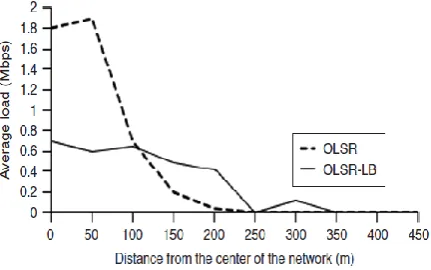
Fig. 1 Load distribution and eccentricity in OLSR
The analytical study of load distribution presented in the previous section linked the concentration of traffic at the center of the network to the use of shortest-path routing algorithms, as routes created by this metric pass through central nodes. The use of modified routing metrics alleviates the load in the center of the network and increases the use of peripheral nodes in routing. For the OLSR, Fig.1 shows a reduction of load in central nodes (within a radius of 50 m) of around 55%, and an increase in the load of nodes further from the center (within a radius of 200 m) of around 300%. Our load-sharing mechanism effectively made packets use paths further from the center of the network, reducing the load of central nodes and increasing that of peripheral nodes.
3.5
Evaluation: end-to-end delay
[image:4.595.324.528.224.363.2]Fig. 2 show the evolution of end-to-end delay as a function of mobility in the OLSR. This delay is defined as the average time taken to transfer a data packet from a CBR source to a destination [16]. On the whole, we note a significant reduction in delay of up to one half in a network with low mobility for this protocol. By using longer but less-loaded paths, packets experience an increased transmission delay but spend less time in node buffers. As transmission delays are considerably shorter than the time packets spend in node queues, the overall effect is positive and the end-to-end delay is reduced.
Fig. 2. Average end-to-end delay using OLSR
3.6
Evaluation: packet delivery fraction
In this simulation, the result visualizes the impact of the load-balancing mechanism on the reliability of transmissions. The parameter to evaluate in this case is packet delivery fraction.This parameter is defined as the relationship between the number of data packets received by destinations and the number of data packets generated by sources [16].
Fig.3 show the evolution of the packet delivery fraction in
relation to mobility, with and without load balancing. OLSR are known for high levels of reliability when compared with other routing protocols. For the scenarios envisaged in this simulation, the experienced PDRs is around 75%.
Thanks to the load-balancing mechanism, reliability was considerably increased, producing PDR values between 77 and 92%. Once again, this improvement is due to the use of less busy routes. If packets travel through nodes with low loads, they stand less chance of arriving at a saturated queue and thus the probability of rejection is lower. Note that this reliability is better at lower mobility rates in both cases, as mobility creates problems of link breakage, increased interference, and greater risk of collisions.
Fig. 3 PDR in OLSR
4.
CONCLUSION
Efficient energy usage through clustering i.e. utilizing the available limited amount of energy in deploying the network in the most efficient way is one of the greatest challenges faced by an ad-hoc system. Although there have been certain algorithms proposed to deal with it, however they do not provide a complete energy-efficient network. Starting from the observation that the spatial distribution of load in MANETs was extremely disparate and that load was the greatest at the center of the network, the proposed new routing metrics for existing protocols with the aim of moving load away from the center of a network. We implemented the proposed mechanisms in implementations of the OLSR routing protocols using the ns-2 simulator [14]. The results of our simulations have shown a definite improvement in the performance of the protocols in terms of end-to-end delay and packet delivery rate, in addition to the desired result of offering a more balanced distribution of traffic across the network. For future work, we are planning to redefine the model and the algorithm to support IoT networks in order to maximizing its energy consumption using load balancing.
5.
REFERENCES
[1] Azzedine Boukerche, Begumhan Turgut, Nevin Aydin, Mohammad Z Ahmad, Ladislau B•ol•oni, and Damla Turgut. Routing protocols in ad hoc networks: A survey. Computer Networks, 55(13):3032{3080, 2011.
[2] Mahesh K Marina and Samir R Das. Ad hoc on-demand multipath distance vector routing. ACM SIGMOBILE Mobile Computing and Communications Review, 6(3): 92{93, 2002.
[3] P.P. Pham and S. Perreau. Performance analysis of reactive shortest path and multipath routing mechanism with load balance. In INFOCOM 2003. Twenty-Second Annual Joint Conference of the IEEE Computer and Communications. IEEE Societies, volume 1, pages
[image:4.595.61.269.507.643.2]10.1109/INFCOM.2003.1208677.
[4] Oussama Souihli, Mounir Frikha, and Mahmoud Ben Hamouda. Load-balancing in manet shortest-path routing protocols. Ad Hoc Netw., 7(2):431{442, March 2009. ISSN 1570-8705. doi: 10.1016/j.adhoc.2008.04.007.
[5] Y. Ganjali and A. Keshavarzian. Load balancing in ad hoc networks: single-path routing vs. multi-path routing. In INFOCOM 2004. Twenty-third AnnualJoint Conference of the IEEE Computer and Communications Societies, volume 2, pages 1120{1125 vol.2, 2004. doi: 10.1109/INFCOM.2004.1356998.
[6] Shouyi Yin and Xiaokang Lin. Malb: Manet adaptive load balancing. In Vehicular Technology Conference, 2004. VTC2004-Fall. 2004 IEEE 60th, volume 4, pages
2843{2847 Vol. 4, 2004. doi:
10.1109/VETECF.2004.1400578.
[7] David B Johnson and David A Maltz. Dynamic source routing in ad hoc wireless networks. Kluwer International Series in Engineering and Computer Science, pages 153{179, 1996.
[8] Lianfang Zhang, Zenghua Zhao, Yantai Shu, Lei Wang, and O. W W Yang. Load balancing of multipath source routing in ad hoc networks. In Communications, 2002. ICC 2002. IEEE International Conference on, volume 5, pages 3197{3201 vol.5, 2002. doi: 10.1109/ICC.2002.997425.
[9] EMETHNI M., Cours de théorie des graphes, PierreMendès France University, Grenoble II,http://brassens.upmfgrenoble.fr/IMSS/MathSHS/MAS
S3/COURS/Chap3.htm, 2007.
[10]WEISSTEIN E.W., Graph center of math world website, Wolfram Web Resource, http://mathworld.wolfram.com/ Graph Center.html, last accessed 02/09/2007.
[11]E.P.C. Jones, M. Karsten, and P.A.S. Ward. Multipath load balancing in multi-hop wireless networks. In Wireless And Mobile Computing, Networking And Communications, 2005. (WiMob'2005), IEEE International Conference on, volume 2, pages 158{166 Vol. 2, 2005. doi: 10.1109/WIMOB.2005.1512865.
[12]BADIS H., AGHA K.A., “Quality of service for ad hoc optimized link state protocol (QOLSR)”, IETF MANET Draft,http://tools.ietf.org/wg/manet/draft-badis-manet-qolsr-04.txt, 2000.
[13]CLAUSEN T., JAQUET P., Optimized link state routing protocol (OLSR), Experimental RFC 3626, IETF, http://www.ietf. org/rfc/ rfc3626.txt, October 2003.
[14]NS-2 PROJECT,http://www.isi.edu/nsnam/ns/, last accessed 02/09/2007.
[15]Audrey Zhou and Hossam Hassanein. Load-balanced wireless ad hoc routing. In Electrical and Computer Engineering, 2001. Canadian Conference on, volume 2, pages 1157{1161. IEEE, 2001}.