
COMPUTER GRAPHICS
forum
Volume 00 (2015), number 0 pp. 1–28A Review of Eye Gaze in Virtual Agents, Social Robotics and HCI:
Behaviour Generation, User Interaction and Perception
K. Ruhland1, C. E. Peters2, S. Andrist3, J. B. Badler4,5, N. I. Badler5, M. Gleicher3,6, B. Mutlu3and R. McDonnell1
1School of Computer Science and Statistics, Trinity College Dublin, Ireland [email protected], [email protected]
2High Performance Computing and Visualization Department, KTH Royal Institute of Technology, Stockholm, Sweden [email protected]
3Department of Computer Sciences, University of Wisconsin, Madison, WI, USA {sandrist, gleicher, bilge}@cs.wisc.edu
4Northeastern University, Boston, MA, USA [email protected]
5Computer and Information Science Department, University of Pennsylvania, Philadelphia, PA, USA [email protected]
6Department of Computer Sciences, University of Grenoble and INRIA, France
Abstract
A person’s emotions and state of mind are apparent in their face and eyes. As a Latin proverb states: ‘The face is the portrait of the mind; the eyes, its informers’. This presents a significant challenge for Computer Graphics researchers who generate artificial entities that aim to replicate the movement and appearance of the human eye, which is so important in human–human interactions. This review article provides an overview of the efforts made on tackling this demanding task. As with many topics in computer graphics, a cross-disciplinary approach is required to fully understand the workings of the eye in the transmission of information to the user. We begin with a discussion of the movement of the eyeballs, eyelids and the head from a physiological perspective and how these movements can be modelled, rendered and animated in computer graphics applications. Furthermore, we present recent research from psychology and sociology that seeks to understand higher level behaviours, such as attention and eye gaze, during the expression of emotion or during conversation. We discuss how these findings are synthesized in computer graphics and can be utilized in the domains of Human–Robot Interaction and Human–Computer Interaction for allowing humans to interact with virtual agents and other artificial entities. We conclude with a summary of guidelines for animating the eye and head from the perspective of a character animator.
Keywords: facial animation
ACM CCS:I.3.7 [Computer Graphics]: Three-Dimensional Graphics and Realism—Animation
1. Introduction
The generation of realistic artificial entities, from virtual characters to physical humanoid robots, has become a requirement underlying many applications in human–machine interactions. Apart from the obvious applications in the movie and visual effects industries, they are needed for interactive applications such as games, virtual tourism and e-commerce, urban planning, medicine, surgery and training, among others. Realistic, plausible and engaging characters con-tribute to high levels of immersion, enjoyment and learning among human users. However, creating artificial entities which replicate hu-mans in both appearance and behaviour remains one of the greatest
challenges in the field of Computer Graphics. While their graphical fidelity has improved rapidly due to advances in graphics processing hardware and its accompanying rendering techniques, the qualita-tive mismatch between the appearance and behaviour of characters appears to be worsening. This can cause perceptual disparities that may disrupt viewers’ sense of immersion or may even contribute to unsettling emotional reactions [Mor70]. Behaviour synthesis has not yet reached the levels of realism required to convince users’ perceptual systems that a virtual human is the real thing. This is par-ticularly true when behaviour is generated automatically or semi-automatically in real time, where little or no corrective actions from outside the system are possible.
c
2015 The Authors
The human face is an important instrument for communicat-ing and defincommunicat-ing underlycommunicat-ing emotions in human–human interac-tions [EF03]. Eyes are central in conveying emotional information, enabling humans to interpret the intentions and feelings of other hu-mans by observing their eyes, which lends credence to the common proverb ‘the eyes are the window to the soul’. We learn this ability from a very young age, as infants have been shown to be efficient at distinguishing between emotional stimuli and other stimuli [Sim94]. Furthermore, using eye gaze to guide and interpret social behaviour remains a central facet of social interactions throughout life. The process of associating mental states with human behaviour is re-ferred to as ‘theory of mind’ [AHO90]. Further studies lead to ‘the language of the eyes’ [BCWJ97], demonstrating that complex men-tal states, such as interest, can sometimes be seen by observing the eyes alone. These are only a few examples of the role eyes play in people’s daily lives, for further information please see the previous excellent surveys by Kleinke [Kle86] and Koppet al.[KKM*06]. It is not surprising, therefore, that much effort is required in the creation and animation of realistic virtual eyes.
Historically, implementations of eye-gaze models typically have been proprietary in nature, often borrowing, somewhat arbitrarily, concepts from a variety of sources across a range of disciplines. One reason for this may be the difficulty of the endeavour, which requires the integration of knowledge from a large number of dis-ciplines, such as psychology, neuroscience and the social sciences. More recently, however, there has been an increase in the publication of comprehensive models that integrate knowledge from these dis-ciplines, making it possible to compile an overview of the process of designing gaze mechanisms appropriate for different applications. In order to design effective social gaze behaviours, we must first gain a better understanding of low-level gaze cues (e.g. saccadic eye movements, mutual gaze, head motion and so on), including the patterns in which they are produced and utilized in various social contexts. We also need to develop an understanding of how these low-level cues relate to high-level social and cognitive processes. At this higher level, gaze and eye movements are vital for creating compelling social interactions between human users and artificial entities, such as virtual agents and robots. Such interactions often re-quire an artificial entity to simulate eye-gaze behaviour, often as part of a range of synchronized multi-modal behaviours, in order to re-spond to and ultimately sustain meaningful interaction with a human user. Research developing the required competencies crosses a va-riety of domains, including Computer Graphics, Human–Computer Interaction (HCI), Human–Robot Interaction (HRI), affective com-puting, social sciences and many others. Character animators are also included in this effort of striving for more realistic eye and head movements. With the main goal of designing fictional char-acters which are appealing and convey thoughts, emotions and per-sonality, their realization might somewhat differ from the natural human behaviour.
In this survey, we present relevant and significant findings from anatomy and physiology on the construction and low-level workings of the human eye (Sections 2 and 3). We also discuss research from the social sciences and psychology on how eye gaze is used to convey information about direction of attention and emotional and mental states (Section 4). Throughout the report, we discuss how this information has been exploited in the development of eye-gaze models in Computer Graphics and HRI, as well as a control
method in HCI or as input for agent interaction. We highlight some outstanding challenges regarding stylized characters and robots that result from their diverging proportions and handling in comparison to their real-life counterparts (Section 5). In addition, we summarize animation guidelines from character animators for animating eye, eyelid and head movements for fictional characters that must convey thoughts, emotion and personality (Section 6). Finally, we address how researchers to date have evaluated the plausibility and realism of their eye models and conclude with future directions in the domain (Sections 7 and 8).
We anticipate that this review article will act as a focal point for knowledge in the Computer Graphics community and will help to solidify research in this domain. The survey will be accessible to both new and established Computer Graphics researchers who wish to develop enhanced models of eye-gaze behaviours, in addition to practitioners in related domains.
2. Virtual Eye Creation
The synthesis of realistic artificial eyes requires the accurate mod-elling and rendering of the eyeball structure. In this section, we discuss the basic anatomical structure of the human eye and present the most relevant research that uses this anatomical knowledge to produce geometry for facial animation or medical applications. The iris in particular presents a difficult challenge, as it is a layered and highly complex structure. Different approaches have been used to re-cover the iris structure and scattering features, from layering simple painted textures to recovering important details from photographs of an eye. This section focuses on the modelling and rendering ap-proaches needed in order to achieve high realism in the structure and appearance of eye geometry.
2.1. Anatomical structure
The basic anatomy of the human eye presented in this section is based on the book ‘Clinical Anatomy and Physiology of the Visual System’ by Remington [Rem11]. The interested reader is referred to this book for more detailed information.
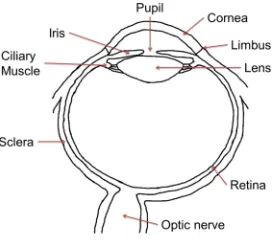
The eye is one of the most complex organs in the human body. Each individual layer of the eye performs a specific task, such as capturing, focusing and transforming light into electrical signals, to ensure correct perception of the environment. The transparent
cornea, located at the front of the eye, is the first refraction point for light entering the eye (Figure 1). A tear film moistens and smoothens the surface of the cornea to ensure minimal scattering and distortion of light. Separated by thecorneal limbus, the cornea is embedded in the outer shell, thesclera. Both can be pictured as two, not perfectly symmetric, spheres. The white opaque tissue of the sclera preserves the eye’s shape and provides protection against harmful influences and substances. The radius of curvature for the sclera and cornea varies between humans. On average, the sclera and the cornea have radii of 12 and 8 mm with a horizontal and vertical deviation due to their elliptical forms.
Figure 1: Schematic of the anatomy of the human eye.
and density of the iris define eye colour, a unique identifier of a person. The iris’ primary function is to regulate the amount of light that enters the inner eye. Light passing through the pupil is focused by thelensonto the retina. The lens’ shape changes through contractions of theciliary muscle, thereby increasing optical power and accommodating the projection of objects nearby onto the retina.
Theretinaforms the inner, light sensitive part of the eye. The light captured at the retina is processed and transmitted as electrical signals to the brain for further processing.
2.2. Modelling and realistic rendering
Eyes presented in animations or virtual environments are commonly modelled as spheres or half spheres and use high-resolution pictures of human eyes as texture maps [ID03, WLO10]. Only a few studies deal with a more anatomically realistic model of the eye, which are discussed in the following paragraphs.
For example, Sagaret al.[SBMH94] used simple Gouraud shad-ing on two spheres, representshad-ing the sclera and cornea, and texture maps to model and render the human eye for a surgical simulation application. They realistically generated the retinal blood vessels shining through the sclera using a fractal tree [Opp86]. Two layers of polygons, with the inner layer oriented towards the pupil and the outer layer towards the corneal limbus, represented the iris fibres. When the pupil dilates in the model, Gaussian perturbation makes the outer layer wavy.
Also in contrast to the standard procedure of modelling the eyeball as a sphere, Banf and Blanz [BB09] model the visible area of the eye as part of a continuous face mesh. A texture mapping approach is used to capture eye movements and occlusions by the eyelids. With this method, Banf and Blanz avoid the sharp edge between the eyeball and the surrounding skin and allow a smooth movement between them.
Other research has focused on replicating the visual appearance of the iris. Knowledge from ocularists was used to synthesize the human iris in Lefohnet al.’s [LBS*03] approach. Ocularists design aesthetically pleasing ocular prostheses by applying multiple layers of paint onto a plastic shell to paint the iris. Starting with the most dominant eye colour as a base, layers consisting of combinations of dots, radial smears or radial spokes, representing iris compo-nents, are added. Lefohnet al.adapted this approach for a virtual
eye by mapping scanned textures of painted layers onto overlaying frustums of right circular cones.
The most influential method for iris modelling to date is the image-based model of the eye by Franc¸oiset al.[FGBB09]. In an automated process, the iris morphology and light scattering features on the cornea and iris are extracted from iris photographs. The iris subsurface map created serves as render input for the subsurface texture mapping method. Franc¸oiset al.also take into account re-flection and refraction at the corneal surface based on ambient light.
Addressing the individuality of the human eye, B´erard
et al.[BBN*14] introduced a novel capture system allowing them to reconstruct the sclera, cornea and iris with its interpersonal dif-ferences. In successive processes, first the shape of the sclera is reconstructed, followed by the cornea and iris. In addition, the cap-ture system is used to reconstruct the iris deformation during pupil dilation in detail.
In contrast to the previously introduced image-based methods, the
ILIT(Iridal Light Transport Model) by Lam and Baransoki [LB06] is an iris model based purely on studies from the fields of physics and biology. A Monte Carlo–based rendering technique is imple-mented to replicate the interactions of the light within the iridal tissue and to determine the spectral response based on the known composition and structure of the iris and the properties of the light. The model allows the modification of biophysical parameters defin-ing the composition of the iridal tissue and thereby affectdefin-ing iris colour.
Other methods to synthesize iris images can be found in the field of iris recognition [WSG05, ZS06]. However, these methods are generated for verification of iris recognition algorithms and do not address the problem of modelling and rendering a realistic human iris.
An interesting area of research concerns the modelling of the pupil’s reaction to the light. Pamplonaet al.[POB09] presented a physiologically based model for the pupil light reflex and imple-mented an image-based iris deformation model. In this model, a delay-differential equation was used to define the pupil diameter as a function of environment light, enhancing results from mathe-matical biology and experimental data. The authors’ measurements of feature points on the iris during deformation showed that these points move along a straight line on radial axes. Therefore, the ani-mation could be simplified to a texture-mapped planar triangle-strip mesh with the inner triangle vertices mapped to the pupil border. When changing the pupil diameter as a result of incident light, all vertices at the pupil’s border are relocated to a new position along a radial line, connecting the vertex with the pupil’s centre.
An additional reason for modelling pupil diameter is that it changes as a function of emotional arousal [BMEL08], and that pupil dilation can function as an indication of attraction, when judging the opposite sex [TS04]. Obviously, emotion is expressed through eye gaze as well, which is the subject of Section 4.3.
3. Low-Level Eye Animation
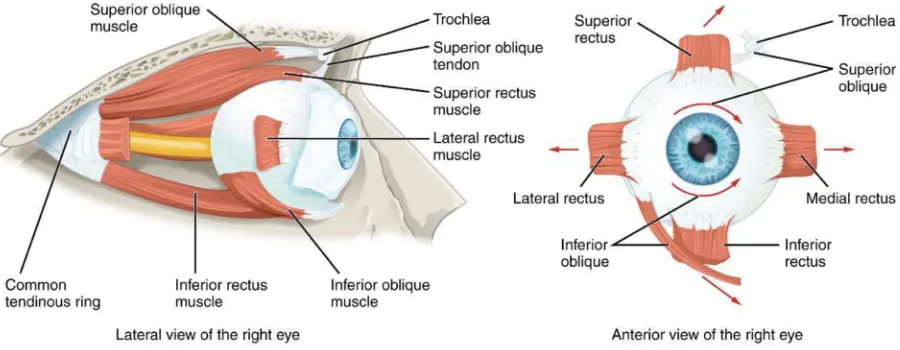
Figure 2: Arrangement of the extraocular muscles from ‘Anatomy & Physiology’, Connexions, June 19, 2013, http://cnx.org/content/ col11496/1.6/.
understanding of the underlying behaviour in humans. Fortunately, eye movements have been studied by psychologists and physiolo-gists for more than a half-century, so an abundance of data exists that precisely describes the kinematics of eye movements.
Located in the frontal part of the human head, the eyes perceive only a restricted view of the surrounding environment. Humans’ field of view is further limited due to the fact that high visual acuity is available only in a small region of the retina. Saccades, the vestibulo-ocular reflex (VOR), smooth pursuit movements and vergence (terms defined in later subsections) serve as mechanisms for the eyes to maintain fixation on a moving object, to stabilize the location of this object on the retinas and to adjust both eyes to visual depth. In addition, the eyes do not move in isolation: they are intricately intertwined with blinks and eyelid movements, and are very frequently just one component of a larger gaze shift that includes head motion.
In this section, the physiology underlying eye movements, eye-lid movements and combined eye–head movements are reviewed briefly. We also highlight relevant articles from computer science and animation literature. Numerous approaches, including paramet-ric approaches based on physiological measurements and computa-tion approaches derived from mocomputa-tion capture or tracking data, have been used to successfully simulate realistic gaze in agents perform-ing a variety of actions.
3.1. Eyeball movement
The eyeball is a deceptively complex organ capable of executing a wide repertoire of movements and controlled by six separate muscles (Figure 2) [LZ99].
Fortunately, these movements have been studied extensively by neurologists, psychologists and neuroscientists. As a result, both their characteristics and the conditions under which they occur have been extremely well-described, providing valuable resources for the animator who wishes to reproduce them.
3.1.1. Saccades
Saccades, if not the most frequent type of eye movement, are prob-ably the most noticeable. They are the rapid shifts in eye position that centre the gaze on targets of interest. Saccade characteristics are quite stable across healthy individuals. Their duration increases approximately linearly and their peak velocity increases exponen-tially with magnitude [Bec89; LZ99, chapter 2]. This consistent relationship is referred to as the main sequence [BCS75, figure 2].
Initial acceleration and final deceleration are extremely rapid (>10 000 deg s−2). For example, a very large saccade of 30◦
typ-ically has a velocity of around 500 deg s−1and a duration of less than one-tenth of a second. Under natural conditions, such saccades are rare [BAS75]. More commonly occurring saccades of 5–10◦ have durations of 30–40 ms, or approximately one frame at 30 Hz. Saccade latency in response to a visual target is normally around 200 ms [LZ99], but can reach approximately 100 ms under certain conditions [FR84]. Under most conditions, the smallest possible in-tersaccadic interval (delay between consecutive saccades) is around 150 ms [LZ99]. Other saccade properties such as slight target un-dershoots, slow drifts after saccade completion (glissades), slight curvature in the spatial trajectory of oblique saccades and torsional movements of the eyeball are all modest [LZ99] and are normally invisible to a casual observer.
Multiple approaches have been used to animate saccadic eye movements. Extremely faithful to the underlying muscle mechan-ics and innervation patterns driving the eyeball, Komogortsev
et al.were able to generate extremely accurate saccadic velocity curves [KHJK13]. Leeet al.[LBB02] also attempted to faithfully reproduce a normalized velocity profile using a polynomial curve fit, and their results were used in some later work [GLBB07, QBM08, WLO10, Sha11, APMG12a].
Figure 3: Eye movement capture using a head-mounted eyetracking device, and corresponding virtual avatar displaying the recorded eye movements [MBB12].
An opposing perspective is exemplified by Yeoet al.[YLNP12], who implemented simple bell-shaped velocity curves with the ra-tionale that subtle asymmetries of the velocity waveform were invisible to an observer. Similar methods use triangular velocity curves [VGSS04], uniform velocity [MH07] and instantaneous ro-tation [NBF*13] to model saccadic eye movements.
The implementation of the frequency of saccades highly depends on the task being performed. However, as a general rule the time between saccades (i.e. fixations) can be modelled as an exponential distribution [HHA*88], which for example was used by Normoyle
et al.[NBF*13].
3.1.2. Vestibulo-ocular reflex
The VOR acts to stabilize the eyes while they are fixating on an object during head motion. The VOR is modulated by a direct reflex via inner-ear vestibular neurons and thus occurs with extremely short latency, on the order of 7–15 ms [LZ99, chapter 3]. It therefore can be considered as effectively simultaneous with head movement. It is easy to implement from a modelling perspective: if the head rotates with some angleθx,θy,θz, the eyeballs should counter-roll at−θx,
−θy,−θz. If the eyeballs are radially uniform, their vergence angle is zero (see Section 3.1.4), and theirθzcomponent (corresponding to lateral head tilt) can be ignored as an additional simplification, see Anderson [And81] for an example of roll in a non-uniform (cat) eyeball. Note that the VOR is partially suppressed during large gaze shifts involving head movement (see Section 3.3). Most animation papers that parametrically simulated eye movements also included a VOR component [LBB02, GLBB07, MH07, WLO10, NBF*13, APMG12a].
3.1.3. Smooth pursuit
The human fixation system is not constrained to static objects. For example, it is able to make the complex series of saccades required
to read an advertisement on the side of a moving bus. The smooth pursuit system is responsible for stabilizing moving images on the retina [LZ99, chapter 4]. It has a response latency intermediate to that of VOR and saccades, approximately 80–130 ms, and breaks down at high target speeds of 30 deg s−1 or more [TL86]. Unlike VOR and saccades, smooth pursuit is more situational and therefore is not often observed. It can be seen, however, by watching specta-tors during a sporting match, or by watching a companion looking out the window of a moving train (technically this is optokinetic nystagmus, but it is visually similar to smooth pursuit), for exam-ple. From a simulation perspective, pursuit is considerably harder to implement than saccades, since it requires a velocity calculation in addition to the positional one. It is also harder to decidewhat
to pursue, since motion needs to be added to any underlying atten-tional model (e.g. Chopra-Khullar and Badler [CKB99], as well as Section 4). Due to its latency and limited velocity, a simulation of pursuit usually requires the computation and execution of one or more catch-up saccades, as well. For these reasons, it is currently of limited interest to animators, although the object-catching simu-lation of Yeoet al.[YLNP12] included an elegant implementation.
3.1.4. Vergence
Normally the two eyes are yoked; that is, if one eyeball rotates in a particular direction, the other will rotate in exactly the same direc-tion. Vergence [LZ99, chapter 8] is the exception to this rule. If an object lies on or near the visual midline, the two eyes must rotate in opposite directions to ensure that the object image appears at the cor-responding position on both retinas. This process, called fusion, can accompany both saccades (e.g. if gaze changes from a far periph-eral target to a close central one) and pursuit (e.g. if a moving target changes position in depth). Any animation system that calculates rotation angles for both eyes separately hasde factoimplemented vergence, but it is not strictly necessary for non-targeted gaze, such as that during speech (e.g. Masuko and Hoshino [MH07]) or emo-tional expression (e.g. Queirozet al.[QBM08]). Issues in vergence are exacerbated when the character has large or stylized eyes (see Section 4.7).
3.2. Eyelid movement
The eyelids are not part of the oculomotor system, but they do inter-act with it. This, as well as their proximity to the eyeballs, necessi-tates a brief treatment of eyelid movement here. Normal eye blinks can be broken into spontaneous, voluntary and reflexive subclasses, all of which have slightly different eyelid dynamics [VBR*03]. Spontaneous blinks, also called endogenous blinks, are the most in-teresting, since their frequency is linked to cognitive state and activ-ity [SWG84, SNJ*07]. Various studies have linked blink occurrence to attentional processes [NKM*13], fatigue [JTC*07, AWH10], ly-ing [BBW96] and speech production [NK10]. Blink rates are highly variable, however. A meta-study found ranges of 1.4–14.4 min−1 during reading, 8.0–21.0 min−1 during primary gaze and 10.5– 32.5 min−1during conversation [Dou01].
particularly large ones over 30◦ [EMP*94]. It is also important to note that during a single blink, eyelid motion is notuniform: the downphase velocity is approximately twice as fast as that of the upphase velocity, and their respective durations are non-linear [EMS91, figure 2; GSC91]. Importantly, eyelid displacements, called lid saccades [BF88], always accompany vertical eye saccades. Lid saccades do not exhibit as much marked asymmetry between down- and upphases as do blinks [EMS91, figure 7; GSC91].
An unblinking face is visually disconcerting enough that nearly all graphics papers implement some form of blink production; how-ever, the blinks are usually not described in detail, leaving their pre-cise implementation to be handled by the facial animation package used. It is possible to animate blinks by calculating eyelid trajecto-ries based on recorded video [DLN05, DLN07, WLO10, LMD12]. More sophisticated blink models also exist [SOS10, TCMH11], in which eyelid dynamics are modelled according to physiological data and account for both endogenous blinks and eyelid saccades. Other eye blink models focus on higher level aspects, such as the timing and synchronization of blinks during head movements and conversations [LBB02, GLBB07, MH07]. Peters [Pet10] compared the realism of different methods for simulating blink timing, such as constant frequency versus saccade-linked. Although the results did not show explicitly which blinking strategies were perceived as more natural, the experiment confirmed the importance of regular blinks in the general perception of blinks.
Normoyle and colleagues [NBF*13] used a heuristic approach based on physiology: eyelid displacement was proportional to eye-ball rotation except for the downward blink phase, which was mod-elled as a step displacement. Eyeball movement not only influences eyelid displacement, but also the eyelids’ shape. This correlation was analysed and synthesized by Eliseiet al.[EBCR*07]. Based on a training data set, the eyelids shape was modified by taking the eye-gaze direction into account.
3.3. Combined eye–head movement
Most natural gaze shifts employ both eye and head movements to replicate human gaze behaviours [LR86, figure 1; LZ99, chapter 7]. The threshold for evoking an eye–head gaze shift as opposed to an eye-only saccade is approximately 15–20◦ [Sta99], although this varies between individuals [Ful92]. When reacting to a target, eyes normally move first with typical saccadic latency (∼200 ms), while head motion begins 20–50 ms later. However, when gaze is shifted to a predictable target, the head movement begins around 100 ms before the eye saccades [LZ99]. Like eye saccades, head move-ments have a consistent velocity–magnitude relationship [GV87]. Unlike saccades, subjects can voluntarily modulate head velocity with a corresponding impact on eye velocity [LR86, figure 1B]. The calculation of gaze shifts with initial head and eye positions different from looking straight ahead, has to take the midline effect into account [Ful92, HM06]. With the midline defined as the torso midline, Fuller [Ful92] found that a gaze shift towards the midline results in larger head movements.
A common strategy employed in graphics literature is to define a cutoff displacement of 10–15◦above which targets are acquired by an eye–head gaze [NBF*13, MH07]. Once the desired head
displacement is known, there are several possibilities for computing the rest of its movement parameters. Its velocity can be estimated using the main sequence relation [GV87, YLNP12] or from a desired timing regime [MH07], or it can be computed automatically using inverse kinematics of the head and neck joints [NBF*13]. Head animation can also be modelled by fitting physiological [Pet10] or motion capture [VGSS04, LMD12] data. The model of Andrist
et al.[APMG12a] attempts to provide parametric control over many of the aspects of movements that vary based on actor and situation while maintaining the low-level kinematics common to all eye–head movements.
3.4. Summary
Eye movements, blinks and head gaze have all been extensively studied by physiologists, so their parameters are well understood. As a result, animators have access to a wealth of data that can be used to increase the realism of their own simulations. An important consideration is to decide which details are important for imparting realism, and which details are too subtle or unnoticeable to be worth incorporating into virtual agents.
Changes to low-level features of gaze motion, such as direction, velocity and amount of head recruitment, can produce substantial effects on high-level outcomes of the interaction. For this reason, it is important to parametrize the low-level features in such a way that designers of human-virtual agent interactions can easily target specific high-level outcomes through the manipulation of low-level parameters. For example, Andristet al.[APMG12b] have shown that manipulation of the amount of head alignment in a gaze shift towards users and objects can serve to create gaze behaviour that is perceived as more affiliative—leading to higher feelings of rapport—or more referential—leading to learning outcomes—in an educational sce-nario.
In this section, a great deal of attention was paid to movement kinematics. However, there are other characteristics of eye move-ments that remain to be resolved; namely, when they occur, where they are directed, and the cognitive state of the agent executing the movement. These higher level issues will be addressed in the following section.
4. High-Level Aspects of Gaze Behaviour
attention models (Section 4.2); gaze synthesis for expressing emo-tions (Section 4.3) and providing a window into the ‘mind’ of char-acters [LMT*07] to better communicate internal states, attitudes, attentions and intentions [MGR04]; for regulating conversations, as speaker or attentive listener (Section 4.4); and for use with other modalities, including speech, to enable characters to engage more naturally in discourse (Section 4.5). This section also provides an overview of how eye gaze detected from humans is being used in a variety of diverse HCI applications (Section 4.6); and how gaze models may be applied to stylized characters (Section 4.7).
4.1. Functions of gaze
Gaze is a powerful non-verbal cue that yields a number of positive effects in human–human interactions [Kle86]. It serves a number of functions, including information gathering, signalling interest and emotional state and regulating conversations through manage-ment of participant turn-taking [AC76, Ken90]. In conversations, gaze helps to mediate flow, including indicating the addressee, pay-ing attention, displaypay-ing attentiveness, affectpay-ing turn transitions and signalling requests for backchannels. Gazing at transition-relevant places in a conversation can facilitate conversational turn-taking by reducing the length of pauses between speaker turns and reducing the amount of overlapping speech [Ken67], and a teacher who en-gages in mutual gaze with students is effective in improving learning outcomes [OO80]. Gaze is used to regulate intimacy [Abe86], fa-cilitate references to objects in a shared visual space [BHAF09, GC11], signal dominance in multi-party conversations [FN11] and facilitate conversational grounding, which leads to improved col-laborative outcomes [BHZS12]. Gaze behaviour is also crucial for facilitating mobile sensory investigation in complex dynamic en-vironments. In this role, visual attention mechanisms may be used to control the target of gaze motions, as described in the following subsection.
4.2. Visual attention
Visual attention refers to mechanisms allowing us to focus our pro-cessing capabilities on relevant information and to filter out infor-mation that is irrelevant. More specifically, it has been described by [TCW*95] as referring to the selection of regions, features and values of interest in the visual field, the control of information flow through the visual system and the shifting of focus from one selected region to the next in time. For virtual agents and robots, models of visual attention allow the agent to becomesituated, which refers to an agent that is embedded in its environment in such a way as to be reactive to environmental objects, motions and/or the actions of the user [HJ96]. Visual attention models may drive gaze behaviours that facilitate sensory investigation when coupled with visual perception input systems (see Peterset al.[PCR*11] for an overview). Based on perceptual inputs, visual attention models determine locations of interest to which gaze and eye movements are subsequently directed and also inform other aspects of gaze motions, such as the ratio of the head and eye movements or the quality of blink motions [PO03].
These approaches have been employed in the animation of idle looking behaviours [CKB99] of characters in a bottom–up man-ner, i.e. when there are no tasks at hand or to interrupt tasks, in
order to ensure that characters are perceived to be situated in their environment, dynamically responsive to events occurring in their en-vironment. Thus, the approaches are useful for the generation of au-tonomous secondary behaviour [GD02] when characters are embed-ded in virtual environments [POS03]. More recent work [CGV09] also considers relationships between gaze targets and proxemics when generating idle gaze motions.
In other situations, the virtual character becomes situated in the user’s physical environment by interacting with the real world through the use of a web camera [ID03, PBER07] and makes eye movements and gaze motions towards salient locations in the en-vironment. Such saliency-based approaches [IDP06, OSS09] are based on a neurobiological model of visual attention [Itt00] and have been popular for animating eye and gaze movements. More recent efforts have focused on specific aspects of visual atten-tion; for example, the role of object relevance [OSP11] and task constraints [KOS11] on gaze specification. A key challenge is balancing bottom–up and top–down visual attention for gaze al-location [MHKS07]. This is a difficult issue due to the demands of real-time operation.
4.2.1. Opening interactions and directing attention
The ability of characters to express interest [GP09] in users through gaze [PPB*05] and associated modalities has led to research on less explicit and more natural ways in which interaction with humans is requested and human attention is directed. The ability to express interest through eye movements and gaze has been studied in re-lation to its effects on human perception of attention [Pet06] and human self-involvement during social interactions [MSH*06] with characters. Other studies have considered the use of the eyes, head, body and locomotive direction of characters [Pet05] as a means for opening an interaction [Car78].
Gaze behaviours may be a powerful means for cueing the attention of human users [FBT07]. A number of studies have investigated the gaze cueing abilities of virtual characters [MSSSB10] in game scenarios [PAK10, QPA14] and in multi-task scenarios [KK13]. Further research is required to elucidate the factors that may underlie the ability of artificial systems to better direct the visual attention of human users (see Section 5.1.1 for similar research themes involving physical embodiments).
4.3. Expression of emotion
Gaze is a powerful method by which emotions are expressed [Iza91]. It has also been noted that gaze affects how emotions are perceived by the addressee [PSA*04]. Therefore, how characters perform gaze motions is an important consideration for successful conveyance of emotional states to users [FOM*02].
Studies have also considered the expression of emotions through gaze shifts that involve movements of both the torso and the head [LM07]. For example, the SmartBody Gaze Con-troller [TLM09], released as part of the open-source SmartBody system, is capable of making full-body torso gaze shifts and aver-sions and also allows for the control of parameters, such as ve-locity and postural bias. Empirical studies have been performed in order to link low-level gaze attributes from non-verbal behaviour literature with observers’ attributions of emotional states [LM10a, QBM08]. For example, Ciget al.[CKEMT10] conducted user stud-ies to show that changes in gaze and head behaviour, achieved through the variation of gaze animation parameters, led to changes in impressions of the arousal and dominance levels of characters. Li and Mao [LM12] describe a rule-based approach to generate emotional eye movement based on the Geneva Emotion Wheel to enable virtual agents to convey different emotional expressions to users through eye movements. A data-driven approach was adopted by Bussoet al.[BDNN07] to generate expressive head movements from speech data.
4.4. Conversation
During conversations, non-verbal feedback behaviours relating to gaze, such as glances towards and away from others, in addition to other modalities, have many functions [CTP98] in mediating flow in conversational situations [CT99], including indicating the addressee, paying attention, displaying attentiveness, affecting turn transitions and signalling requests for backchannels [Hey06]. By deploying an agent’s gaze strategically, a number of positive high-level outcomes can be achieved in conversations between humans and agents. Previous approaches modelling conversational gaze for characters include those considering communicative functions to pre-determine gaze suitable in a specific conversational context and later modifying gaze patterns using statistical information to gener-ate directed and averted gaze for dyadic interactions [PB03]. Other approaches have used visual attention models to simulate social gaze, with accompanying engagement and distraction behaviours, during multi-party interactions [GB06, GLBB07]. People take an-other’s eye gaze as evidence of what they are attending to and thinking about and use it to determine the course of their current utterance or action [CK03]. Eye gaze produced by a speaker can be used by an addressee to resolve conversational ambiguity [HB07]. When multiple interactions take place over a long period of time, patterns of gaze and other non-verbal behaviours have been shown to adapt as relationships evolve [SB12].
Wang and Gratch [WG10] found that a virtual agent exhibiting gaze attention and displaying cues of positivity and coordination to a user can create stronger feelings of rapport from the user. In an interactive storytelling scenario, a virtual agent that modulates mutual gaze by shifting its gaze in reaction to a user’s gaze is able to improve user perceptions of social presence and rapport [BWA*10]. In immersive virtual environments, a virtual agent has been shown to influence the amount of interpersonal distance a human user will maintain with the agent based on the amount of eye contact the agent makes with the user [BBBL01]. Appropriately timed shifts in gaze away from the user, in relation to the speech of the user, can lead to positive high-level outcomes in turn-taking and participant
disclosure [AMG13]. An agent can also use gaze (along with gesture and speech) to effectively shape a conversation with multiple par-ticipants according to its own intentions by directing gaze towards specific participants or averting gaze from participants in order to signal turn-taking intentions [BH10].
The effects of cultural differences and gender on the con-versational behaviour of agents are also of importance. Jan
et al.[JHM*07] have simulated different cultural parameters related to gaze, overlap in turn-taking and proxemics for rating by native speakers of North American English, Mexican Spanish and Ara-bic. Studies in immersive and augmented reality environments have shown that users provide more personal space to agents that engage in mutual gaze with them [BBLB02], and users have a higher physi-ological arousal towards virtual agents not exhibiting behaviours of their cultural background [ODK*12]. In Valaet al.[VBP11], gaze is considered in the creation of a model for varying the communication of agents based on gender.
Recent efforts have involved the use of comprehensive anno-tated databases of conversations between humans and characters, for example [MVC*12]. Approaches also consider the animation of gaze aversion behaviours for virtual agents in conversation situa-tions [AMG13].
4.4.1. Artificial listeners
A notable area of research attention involves the definition of non-verbal signals for artificial listeners [HNP07] (see Bevacqua [Bev13] for an overview). In these situations, gaze has been studied in the context of backchannels during conversation, i.e. non-intrusive acoustic and visual signals provided to the speaker by listeners dur-ing their turn [YNG70]. The Rapport Agent, developed by Gratch
et al.[GWG*07], generates non-verbal backchannels for the listen-ing virtual agent. More recently, Hjalmarsson and Oertel [HO12] found that listeners are more prone to backchannels when the gaze of a speaking virtual agent is directed towards them; however, gaze alone cannot explain the timing of backchannels.
Such an approach is useful in situations where verbal utterances may not be desirable or practical, due to communication distance or for fear of negative social repercussions arising from failed at-tempts [Gof63]. Other work has focused on characters that initiate interactions in a favourable manner using gaze in order to promote subsequent interaction attempts [BAT09]. Cafaroet al.[CVB*12] further investigate how the multimodal non-verbal behaviours of characters during the approach to interaction lead to the formation of impressions related to personality and interpersonal attitude based on smile, gaze and proximity, highlighting relationships between gaze and judgements of friendliness.
4.5. Speech and multi-modal interaction
gaze [PPDR00], has therefore been an important focus of research for virtual characters engaging in conversation with humans. Some-times this involves artificial systems being able to detect engagement through gaze from real conversational partners [NI10, IONN13] in order to adapt to them.
4.5.1. Speech driven gaze
A number of systems use speech as an input from which to gen-erate facial expressions involving the mouth, head, eyes and eye-brows [AHS02]. More recently, Zoricet al.[ZFP11] automatically generated facial gestures in real time from the prosodic informa-tion obtained from speech signals. Nods, head movements, blinks, eyebrow gestures and gaze were generated using Hidden Markov Models and global statistics. Gaze level fell at the hesitation pause and rose at the end of the utterance to obtain listener feedback. Le
et al.[LMD12] generated head motion, eye gaze and eyelid motion simultaneously from speech inputs. Non-linear dynamic
al canonical correlation analysis was used to synthesize gaze from head motion and speech features. Mariooryad and Busso [MB12] focused on the generation of head and eyebrow motions from speech using three Dynamic Bayesian Networks (DBNs). In recent work, Marsella et al.[MXL*13] utilized semantics based on a shallow analysis of the utterance text and prosody from the speech signal to generate head movements, eye saccades, gestures, blinks and gaze behaviour. Their method outperforms previous approaches that used prosody alone.
A number of research efforts have considered eye movements and gaze specifically during situations involving verbal communi-cation between characters and humans [CCD00]. Vinayagamoorthy
et al.[VGSS04] presented an eye-gaze model for user-controlled avatars involved in dyadic interactions in shared immersive virtual environments. Their model accounts for differences in saccade mag-nitude and the effect of the roles of listener or speaker on gaze and intersaccadic interval and also generates movements for other parts of the body. Bretonet al.[BPG*06] modelled the gaze behaviour of conversational characters in real-time multi-modal dialogue with a group of users. Ishiiet al.[IMFN06] proposed a model for animat-ing the gaze behaviour of an avatar for turn-takanimat-ing in multi-party conversations using utterances and a probabilistic state transition model.
4.5.2. Multi-modal behaviour generation
The automatic generation of conversational behaviour for charac-ters [CPB*94] involves the generation and coordination of verbal and non-verbal behaviour over multiple modalities, such as facial expressions, lip motions, eye gaze, head motion and arm gestures in order to create meaningful gestures (Figure 4).
[image:9.594.316.536.52.129.2]For example, systems such as BodyChat [VC98], BEAT [CVB01] and Spark [Vil04] allowed characters to automatically animate their own conversational behaviours, including speech, gaze, turn-taking and backchannel feedback, with minimal user and animator spec-ification through text input. Beeet al.[BPAW10] combined gaze and linguistic behaviours to create agents capable of expressing
Figure 4: Gaze as one of a number of coordinated modalities expressing panic and fear in an Embodied Conversational Agent (ECA) [NHP13].
social dominance. For an overview of multi-modal coordination, see Martinet al.[MDR*11].
Initiatives such as SAIBA (Situation, Agent, Intention, Behaviour, Animation) [KKM*06] are being developed to modularize the de-sign of conversational characters. Behaviour Markup Language (BML) [VCC*07], developed as one of three stages in the SAIBA model, defines multi-modal behaviours, such as gaze, head, face, body, gesture and speech, among others, in a human-readable XML mark-up format. BML allows the definition of multi-modal be-haviours by specifying temporal details for primitive action elements (see Krennet al.[KPPP11] for an overview). Another example is the Affective Presentation Mark-up Language (APML) introduced by de Caroliset al.[DCPPS04] as part of a Mind–Body interface, where specified communicative goals and their relations are translated into the agents behaviour using APML to express their meaning with the body.
4.6. Eye gaze in HCI and beyond
Eye gaze has been used in a variety of diverse HCI applica-tions, from video games [SG06] to drones [HAMM14] to allowing physically impaired users to control their home using their eyes [BCCDR11]. Gaze has been used to support basic user interaction tasks, such as keyboard input for pointing and selecting [KPW07]. Advancements in gaze tracking have focused on generic selection methods for gaze-only controlled interfaces based on gaze ges-tures [DS07, MLGH10], that is, gesges-tures that consist of a single point-to-point movement in addition to studies involving eye clo-sure [HR12] and dwell time [DAH12] for a variety of applications, including games [WEP*08, EPM08, IHI*10]. The difficulties en-counter in the evaluation of these systems was addressed by ´Swirski and Dodgson [SD14], who generated physically accurate render-ings of synthesized eyes as ground truth data for video-based gaze estimators.
gestures enable moving and resizing, while the closure of the eyes stop actions in the drawing system.
4.6.1. Detecting user eye-gaze behaviour
While gaze detection from users has been extensively studied in HCI for controlling and complimenting interfaces, core technologies and research endeavours are also relevant to those working in the domain of interactive intelligent agents, for example, Embodied Conversa-tional Agents, or ‘ECAs’, and HRI. These systems are often tasked with engaging the user in dialogue, providing assistance or en-gaging in pedagogical activities [CBK*14]. Sustained interactions require the agent to have some knowledge of user behaviour and potential state, such as their level of engagement [PCdF09]. Since gaze is a powerful and efficient communication modality, a number of efforts aim to detect gaze direction from users to fully or par-tially inform the behaviour of artificial agents. Some of these efforts use the position of a user’s head to inform an agent’s reactive gaze behaviour [KG08], while others recognize an individual’s gaze aver-sion behaviours given contextual information [MD08] or identify an addressee during multi-party conversations to ensure that an agent responds appropriately when it has been addressed [NBHH13].
The detection of user gaze and derived inferences of attentive state has also been used in HRI situations (see also Section 5.2) to inform and trigger robot behaviour. For example, Daset al.[DRKK14] clas-sify human gaze behaviour as either spontaneous or scene-relevant looking. The robot interrupts the user to explain aspects of the scene only if it detects that they are looking at something of scene rele-vance.
4.6.2. Shared attention and engagement
Detecting user eye gaze is foundational to implementing more ad-vanced artificial social competencies. Agent interaction capabilities relating to engagement detection [CPC13], and joint and shared at-tention may be supported by real-time gaze detection from human users utilizing computer vision techniques [PAK10] and eye track-ing approaches [HPB*07]. Attentive presentation agents [EPAI07], for example, are capable of utilizing the user’s visual attention, based on their tracked eye fixations, to detect objects of interest and guide the behaviours of two virtual presentation agents who describe the items in further detail.
A more recent study by Pfeiffer-Leßmannet al.[PLPW12] im-plements joint attention behaviours in the virtual agent ‘Max’ to compare the timings of initial referential gaze acts in human–human interactions to those in human–agent interactions. The results indi-cate that, at least in this situation, the dwell time in the human–agent interaction was comparable to the human–human interaction case. Shared attention has also been investigated in relation to physical embodiments (see Section 5.1.1).
4.7. Stylized characters
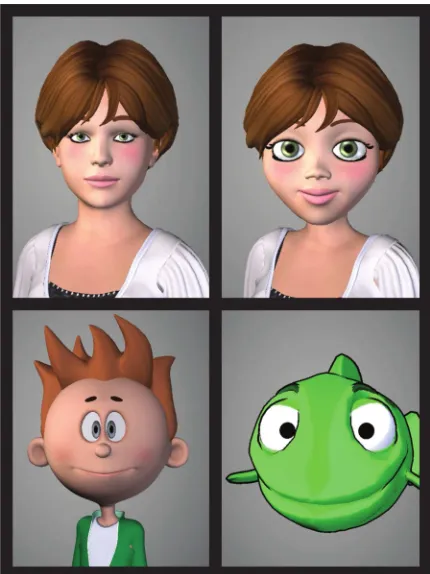
[image:10.594.324.539.51.338.2]Most gaze models are based on observations of humans or other animals that have eyes of a particular size and movements that are subject to physical properties and anatomical limits. Real-world
Figure 5: Four different characters with different eye geometry. The character on the upper left has realistic human proportions. Adapt-ing gaze models to characters with stylized eye geometry requires the consideration of potential artefacts [PMG13].
gaze movement must be functional to be effective; however, when similar gaze models are applied to characters, such as cartoon or stylized characters, whose eyes are significantly different from those of their real-life counterparts, problems may arise. The question is whether or not it is appropriate to use models developed for humans and human eyes for characters. Lacking an alternative, this is the most common approach. The human brain has a particular affinity for faces and eyes (e.g. Bentinet al.[BAP*96]), and peoples’ propensity to interpret even vaguely eye-like objects as eyes suggests adapting human models to characters is a viable approach.
Figure 6: Implied eye-line (recreated from [Osi10, chapter 2]).
stylized eyes, visual artefacts occur, such as movements that seem unusual or would not be seen in humans except under pathological circumstances (such as cross-eyedness or divergence).
To adapt a human gaze model to a range of stylized characters (see Figure 5), Pejsa et al.[PMG13] added constraints to ensure that pathological situations, such as cross-eyedness, do not occur. To meet these constraints, they exploited the fact that virtual agents are performative (see also Section 6.2 and Figure 6). They do not need to function correctly (e.g. enable the character to see); rather, they serve as a signal to the audience. The approach moves gaze targets and limits eye movements in order to avoid objectionable artefacts. While their model did not accurately point the eyes at the intended gaze targets, an empirical study confirmed that this inaccuracy did not limit viewers’ ability to localize gaze targets; furthermore, the visible artefacts were significantly reduced.
Efforts to map gaze behaviours between virtual and physical embodiments, such as robots, are also of relevance to this work and are described in Section 5.
5. Social Robots
The modelling of eye-gaze behaviours in robotics presents a number of complimentary and interesting crossovers with similar efforts tak-ing place in the domain of virtual characters. This section describes advancements in gaze generation for supporting enhanced interac-tions with social robots in conversational scenarios. An important is-sue that arises is the mapping of gaze behaviours between virtual and physical embodiments, such as robots, where there are challenges in retargeting to platforms with reduced embodiments. The investi-gation of reduced embodiments is significant to Computer Graphics applications where lower fidelity or more constrained characters are sometimes desirable while ensuring that core communicative qualities remain intact.
5.1. Human–Robot interaction
In the HRI community, a particular emphasis has been placed on examining the high-level outcomes achievable through gaze. This focus may be due to the HRI community’s strong ties to social science communities and partially due to the fact that HRI re-searchers generally have less control over the low-level variables of gaze. For example, HRI researchers are limited by the velocities
achievable by physical motors, and affordances of their robots or when working with a robot that does not have articulated eyes and must express gaze through head movements alone. Srinivasan and Murphy [SM11] provide a survey of HRI gaze research that iden-tifies a number of social contexts and discrete gaze acts considered so far by the community.
A number of high-level conversational outcomes achievable through gaze behaviour have been investigated in HRI research, including the use of gaze to signal participant roles [MSK*09], facilitate turn-exchanges [KYH*98] and affect the human user’s physical and psychological closeness with the robot [MM11]. A robot that gazes responsively towards the human user, rather than randomly or statically, produces stronger feelings of being intention-ally looked at [YSI*06]. In conversations with multiple participants, a robot’s scanning gaze behaviour serves the dual functions of in-dicating attention to all conversational partners and updating the robot’s knowledge of the partners that are occasionally outside the range of its cameras [BFJ*05].
5.1.1. Shared attention and gaze cueing
Studies have also investigated how different types of gaze behaviour, short frequent glances and long, less frequent stares, may convey a robot’s visual attention [AHFS*13]. Similar to studies involv-ing virtual agents (see Sections 4.2.1 and 4.6.2), shared attention behaviours and gaze cueing have also been studied with physical embodiments. Moonet al.[MTG*14] demonstrate that human-like gaze cues helped to improve performance during a task involving the handover of water bottles. Subjects initiated reaching actions earlier when shared attention gaze behaviours were present than in other conditions. In another study involving a handover task, Kirchneret al.[KAD11] found gaze to be an effective individu-alizing cue for ensuring that a selected participant, in contrast to arbitrary group members, would take a salient object.
reflexive attention cueing effects, implying that humans cognitively process robots differently from other humans in common social mechanisms.
5.1.2. Task performance and speech
In relation to gaze and speech behaviour, in a user study involving a map route drawing task, Skantzeet al.[SHO13] show that appropri-ate robot gaze behaviours helped to improve task performance and reduce cognitive load by helping to disambiguate referring expres-sions to objects in a shared scene and manage the flow of interaction. Notably, the study also considers how gaze may be used as a cue to inhibit or encourage the user to act during pauses in speech. Users gave less feedback and looked at the robot more during the task when the preceding utterance segment was incomplete.
5.2. Mapping virtual and physical embodiments
The virtual agents and social robotics communities have separately investigated a number of gaze mechanisms and their conversational effects. However, it is often unclear how these mechanisms might be accurately translated between the virtual and physical realms. Robots and virtual agents have been shown to differ along a num-ber of social dimensions, including realism, social presence, life-likeness and physical proximity [PKFT07]. A number of studies have been performed that compare virtual agents with human-like robots in various contexts, such as health education and collabora-tive work [PKFT07, KB04, BHKS11].
A number of unique challenges arise when attempting to re-purpose behaviours from a virtual agent for a human-like robotic platform, including (1) the acceleration and speed of a robot’s move-ments have both upper and lower limits, (2) due to physical inertia and communication latency, a robot will typically not react instan-taneously to a command and (3) robot expression has fewer degrees of freedom [LvW12]. The third challenge is of particular impor-tance when attempting to bring gaze mechanisms from a virtual platform, in which agents can use both their head and eyes, to a robotic platform without articulated eyes. In a similar vein, the physically co-located robot must actively direct its gaze to track users’ faces, motions that are not required of a virtual agent due to the Mona Lisa gaze effect [DdGB10, AMEB12]. Conversely, this may also enable physical systems to better direct human gaze to targets of interest in the real environment. In general, retooling a behaviour for a completely different platform (e.g. translating a virtual agent gaze model for human-like robots) requires a consid-eration of what minimum representation that behaviour would need in order to evoke the desired response [CT07]. Recent work by An-dristet al.[ATGM14] showed how conversational gaze aversion behaviours, originally developed for virtual agents, could be effec-tively adapted for a human-like robot platform that lacks articulated eyes.
6. Animator’s Eye Animation
In this section, we consider the animation of the eye and head from the perspective of a character animator. The creation of animated characters can be compared to a film or stage actor, where the
character animator designs a fictional character that must convey thoughts, emotion and personality. The main goal is to create a character which is appealing to the audience—one they can identify with, no matter if it is the hero or the villain. We will summarize animation guidelines from different animators, well known from the movie industry. These guidelines illustrate the requirements an ani-mator has to meet when animating eye, eyelid and head movements, which often differ from the requirements of realistic approaches de-scribed in the previous sections.
6.1. Thoughts and emotions
Walt Disney recognized the importance of the eyes and advised that, ‘the audience watches the eyes, and this is where the time and money must be spent if the character is to act convincingly’ [TJ95]. Well-designed and animated eye and head movements inform the audience about the character’s emotions and thoughts and are guided by the character’s personality.
Before creating a character, the animator has to acquaint them-selves with the personality of the character. Williams summarizes the job of an animator in three steps [Wil09]: first, to clearly com-municate the point of the scene; secondly, to project themselves into the character’s mind; and thirdly, to portray the thinking process of the character. To convince the audience that a character is alive, the animator matches the movements and actions with the thought pro-cess. Anticipation is one of the basic principle of animation [TJ95], and is especially suited for creating a character whose actions are guided by thoughts. A convincing action should always be led by the eyes or the head, starting with the eyes moving a few frames before the head and the rest of the body [Las01]. In specific cases where the character does not have eyes or where eye movement is unwanted, the head is used to lead the character’s movement. The time frame of the eyes or head leading the action depends on the substance of the thought—does the character have to make a quick decision, or does the character have to choose between dif-ferent options? Other tools to anticipate action aretakesanddouble takes[Gle13]. In a take, the character reacts to a situation. First, the character recognizes a situation, followed by an anticipation action, the actual take and the final recovery. A double take in-creases the effect of the anticipation by delaying the reaction to the situation [Gle13]. The anticipation of eye movements enhances the character’s credibility. An audience recognizing the thoughts of a character is aware of subsequent actions and can follow them easily [TJ95].
Figure 7: Relation eyelid to iris (recreated from [Osi10, chapter 2]).
6.2. Secondary movement—gaze, blink and pupil
The animation of conversing characters presents a specific chal-lenge due to the production cycle of the animation movie and vi-sual effects industry. After a script is written and voice actors act out the dialogue, the animator breaks down the dialogue to un-derstand the character’s state of mind and determines the thoughts behind the words [Hoo13]. This thought could be an intention, objective, motivation or emotion [Hoo13], indicated as a change in eye movement, concluding that the eye and head movement associated with this thought, anticipates the dialogue by several seconds [Mae06]. The animation must be simple and direct, com-municating one single thought or emotion at a time, to catch and maintain the audience’s attention [Mae06]. Excessive head move-ment could distract the audience and make it difficult to see the character’s face.
The animator also must find the character’s line-of-sight and the conversational partner’s location to keep the character’s focus fixed on the subject [Mae06]. In addition, the animator has to ensure that the audience is always aware of what is going on in the character’s mind. A character turning the head completely towards a target, such as an object or a dialogue partner, conceals the character’s facial expression from the audience. Osipa [Osi10] therefore recommends the use of an implied eye-line. The eye-line indicates where the eyes are pointing at and leads the audience toward the target. With an implied eye-line, more of the character’s face and expression is visible. More white on the left side of the eye for example, implies that the character is looking to the right side of the screen towards a target. From a top–down view, the eye-line might not directly intersect with the target, but the audience still is able to follow the character’s thoughts (see Figure 6). Furthermore, a character’s constant attention at an object communicates life and attentiveness to the audience.
As with the eyes, the correct animation of eyelid movements and blinking contributes to the believability of the character and emphasize thoughts and emotions. The position of the eyelid in relation to the eye and pupil is a powerful method for changing entire facial expressions. Osipa’s diagram (see Figure 7) shows the relationship between eyelid, eye and pupil [Osi10]. A half-open eye contributes to a sleepy expression, while a fully half-open eyelid gives the impression that the character is alert. Therefore, Maestri [Mae06] suggests to model a neutral, relaxed eyelid as approximately 80% open to avoid audience misinterpretations of
the character’s appearance as over alert or sleepy (see Figure 7, middle).
To incorporate effective blinking into an animation, it is essential to correlate thoughts and eye blinks as well as depict anatomical movements correctly. An eye blink during significant events in the animation draws the viewers’ attention and can be used to strengthen an expression. Murch’s book ‘In the blink of an eye’ [Mur01] gives advice on film editing and the importance of eye blinks. He inter-prets eye blinks as the projection of internal thoughts and the internal struggle a human might have. A blink separates visual inputs into important portions for easier processing. For Murch, an eye blink supports the separation of thoughts to order them or to break down ideas. Eye blinks are described as in sync with our emotional state and internal thoughts. For example, a person who does not blink for a long time might hold onto one thought, while a person who blinks every few seconds might switch from one thought to another in an attempt to order them and to find the answer. The appropriate place to add an eye blink therefore would be when the character is processing a thought or when the character reaches a decision. In addition, a blink occurs almost simultaneously with the onset of large eye and eye–head gaze movements (see Section 3). Further-more, Osipa [Osi10] advices against repetitive eye blinks following one another close in time, since this could indicate disbelief, shock or confusion and misleads the audience from the main point. Osipa further recommends not to add eye blinks ‘in the first or last 5 to 10 frames of a shot’ [Osi10], since an editor needs flexibility in the area to cut into and out of a shot.
Dilation of the pupils is often overlooked by animators, since pupils typically remain constant in size throughout a scene. How-ever, changing their size adds expressiveness and liveliness to a character and underlines the character’s state of mind [Rob07]. A child-like appearance is achieved with large pupils, while small pupils reflect fear, or could make the audience aware of an evil or untrustworthy character. Adapting the size of the pupil to surround-ing light conditions further emphasizes the character’s authenticity.
7. Perceptual Evaluation of Agents
Researchers strive to create virtual entities that evoke the same re-actions as real humans do during social interaction. It is therefore important to take human perceptions into account in judging the plausibility and realism of virtual entity simulations. In this sec-tion, we discuss the ways in which low- and high-level gaze mod-els have been evaluated in terms of plausibility, effectiveness and ability to achieve communicative goals. Various approaches have been adopted, including survey-based questionnaires, direct com-parisons with state-of-the-art algorithms and ground truth eye data captured from a human, to achieve this goal. We highlight the impor-tance of perception and how effective perceptual experiments can be designed.
7.1. Experimentation methods
The effectiveness of an experiment depends on the careful prepa-ration of stimuli, the presentation of those stimuli and a correct analysis of the results. This section describes in detail these individ-ual steps.
7.1.1. Stimuli preparation
The development of an experiment begins with the acquisition of stimuli that will be shown to the participants. These stimuli are typically images or animations which focus on a specific factor of interest. There are a number of different media and methods for presenting stimuli, such as videos, interactive applications or vir-tual reality. In the case of evaluating the accuracy of a head–eye coordination model, the stimulus presented might be an animated character gazing towards objects on a desk, as found by Andrist
et al.[APMG12b]. In this study, a series of videos was generated, and one of two videos was shown to participants. In one video, an animated virtual character performed gaze-shifts generated by the proposed model. In the other video, the state-of-the-art model and a human confederate looked at objects. Sixteen objects were placed in two rows on a desk with form or colour coding for easy iden-tification. Communicative accuracy was measured based on how accurately the participants identified the object towards which the agent was looking. In work focusing on eye-representation, Steptoe and Steed generated a scene in which an avatar was seated behind a clock-face and viewed from different camera angles [SS08]. Only the avatar’s eyes were directed towards a specific number on the clock-face. Conditions alternated with respect to eye socket de-formation and vergence. The authors showed that realistic socket motion increased both perceived authenticity and the viewer’s self-assessment of having correctly identified the point of regard, while vergence had a much more modest effect.
In order to investigate if a proposed model represents an im-provement on previous methods, comparisons may be performed between sample stimuli. For example, Steptoeet al.[SOS10] gen-erated a series of videos which animated blinks and lid saccades of two different virtual characters based on motion captured data, their proposed models and simple linear interpolation. Animations of each condition assembled in one video were then ranked regarding perceived realism and similarity to the recorded video. Similarly,
Denget al.[DLN05] synthesized eye motions with different ex-isting approaches and compared the results with their own model. This allowed them to test if their model showed an improvement in naturalness over previous methods. Peters and Qureshi [PQ10] focused on identifying the most appropriate parameters of an eye gaze and blinking system and created animations which altered only the blinking conditions, eye–head ratio or direction of head move-ments to assess which strategy would be better received by users. With a similar aim, Trutoiuet al.[TCMH11] studied the blinking mechanism in isolation by allowing participants to compare their model generated from real eye-blink data to other commonly used methods for blink animation, such as linear interpolation and ease-in ease-out curves.
Once stimuli have been generated, the order and way in which stimuli are presented must be decided. Most setups show each stim-ulus under all possible conditions in a random order to each partici-pant (within-groupsdesign). The randomized presentation of stimuli minimizes the risk of order effects, wherein participant judgements may be biased by their evaluation of preceding stimuli. An alter-native setup was used by Andristet al.[AMG13], however. In this setup, participants were randomly assigned to one of three gaze aversion conditions in which they performed tasks for each of the proposed hypotheses. This is referred to as thebetween-groups de-sign, where two or more groups of subjects can be tested simulta-neously under varied conditions with multiple modified variables. In a shared immersive virtual environment, Garauet al.[GSV*03] paired two participants together as part of a role-play, one using a CAVETM-like system and the other using a head-mounted display. Each participant was assigned randomly to one of four conditions to investigate the impact of an avatar’s eye-gaze behaviour on per-ceived realism. The setup allowed the authors to test subjects under various conditions with altered variables simultaneously to acquire an unbiased opinion from participants on behavioural realism and the quality of communication.
Some thought should also be given to where the experiment takes place. While most experiments usually take place in a laboratory due to the available infrastructure, online experiments offer an advan-tage in that they reach a broader range of subjects and hardware con-figurations [OSS09]. For researchers located in the United States, Amazon.com’s Mechanical Turk [Ama14] gives researchers the op-portunity to access a wide range of potential participants. However, care must be taken to ensure the experiment is set up carefully and that the results are examined critically to avoid selection bias and other confounds [PCI10, BKG11].
7.1.2. Stimuli presentation and evaluation
Two types of measurements can be used to evaluate the partici-pants response to the stimuli: subjective measurements and objec-tive measurements. Subjecobjec-tive measurements include self-reported assessments of the characters by observers, such as how plausible or likable observers find a character to be. An example for objective measurements is the examination of how well participants remem-ber information presented by a character.
![Figure 3: Eye movement capture using a head-mounted eyetrackingdevice, and corresponding virtual avatar displaying the recordedeye movements [MBB12].](https://thumb-us.123doks.com/thumbv2/123dok_us/1529377.696156/5.594.54.270.51.226/figure-movement-capture-eyetrackingdevice-corresponding-displaying-recordedeye-movements.webp)
![Figure 4: Gaze as one of a number of coordinated modalitiesexpressing panic and fear in an Embodied Conversational Agent(ECA) [NHP13].](https://thumb-us.123doks.com/thumbv2/123dok_us/1529377.696156/9.594.316.536.52.129/figure-gaze-number-coordinated-modalitiesexpressing-embodied-conversational-agent.webp)
![Figure 6: Implied eye-line (recreated from [Osi10, chapter 2]).](https://thumb-us.123doks.com/thumbv2/123dok_us/1529377.696156/11.594.144.445.53.164/figure-implied-eye-line-recreated-osi-chapter.webp)
![Figure 7: Relation eyelid to iris (recreated from [Osi10, chapter 2]).](https://thumb-us.123doks.com/thumbv2/123dok_us/1529377.696156/13.594.145.445.53.164/figure-relation-eyelid-iris-recreated-osi-chapter.webp)
![Figure 8: The characters in this study were delivering 3-min lec-tures. Assessment included both subjective questions about rapportwith the agent and objective questions about how much of the lecturewas remembered [APMG12b].](https://thumb-us.123doks.com/thumbv2/123dok_us/1529377.696156/15.594.317.532.50.210/characters-delivering-assessment-subjective-questions-rapportwith-lecturewas-remembered.webp)
