International Institute of Tropical Agriculture (IITA), Ibadan, Nigeria *Corresponding author: [email protected]
Abstract
Balogun M., Maroya N., Augusto J., Ajayi A.,Kumar L., Aighewi B., Asiedu R. (2017): Relative efficiency of positive selection and tissue culture for generating pathogen-free planting materials of yam (Dioscorea spp.). Czech J. Genet. Plant Breed., 53: 9–16.
Yams are staples in West Africa. They are propagated from tubers in an informal seed system. This encourages a build-up of diseases, and necessitates the rapid development of a formal seed system where certified seeds are functional. Although few reports exist on the use of meristem culture to generate pathogen-free yam, the success rate for the most economically important species in the sub-region, Dioscorea rotundata, for the most prevalent viruses is inadequate. To generate pathogen-free yam planting materials, the relative efficiency of tis-sue culture and positive selection was compared. Twenty-one asymptomatic yam plants were positively selected from 8187 stands of five landraces. Five of these stands were tested virus-negative by multiplex polymerase chain reaction (PCR) for Yam mosaic virus (YMV), Yam mild mosaic virus (YMMV) and Cucumber mosaic virus (CMV), and by PCR for the genus Badnavirus (BV), giving 0.08% success. Single nodes of the positively selected stands were used to establish in vitro plantlets, which were screened onto bacteriological indexing medium. The same was done for meristem- and node-derived plantlets of the improved variety TDr 95/19158. Incidence of endophytes ranged from 18 to 32% in the nodal plantlets while it was 0% in the meristem-derived plantlets. The effect of meristem culture combined with thermotherapy on the virus infection status was deter-mined using virus-tested, one week old in vitro plantlets of eight improved genotypes. These in vitro plantlets were incubated at 36 ± 0.5°C and 16 h photoperiod for 21 days, after which meristems were excised, regenerated into plantlets and re-tested for viruses. Seventy-three percent of the samples were recovered from YMV but the effect on BV was inconsistent. Positive selection can be used as a palliative in generating quality declared seed but meristem culture combined with thermotherapy is more efficient for generating certified seed tubers of yam. Keywords: asymptomatic selections; endophytes; micropropagation; seed systems; thermotherapy; yam virus diseases
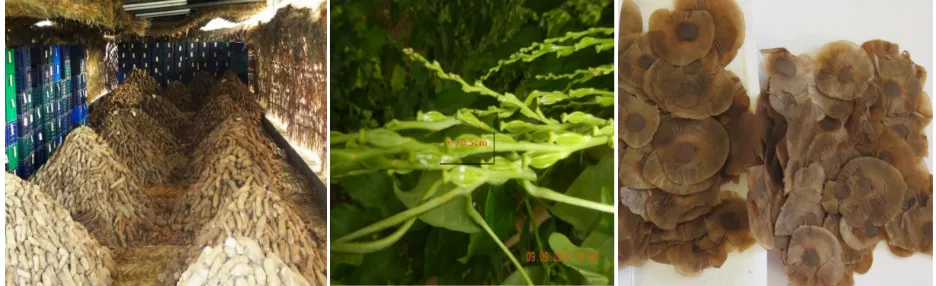
The yams (Dioscorea spp.) are starchy root sta-ples and a primary source of income in West Africa (Aighewi et al. 2015). About 58 million tons are produced annually worldwide, 93% and 65% of which are produced in West Africa and Nigeria, respectively (FAO 2013). Although yam has zygotic seeds borne on female plants (Figure 1), it is used for propagation only for genetic improvement purposes.
in yam fields in single and mixed infections (Op-pong et al. 2007; Eni et al. 2010; Asala et al. 2012; Odedara et al. 2012). Poty-, potex-, badna- and cucumo-viruses have been reported in Dioscorea spp., but the most significant loss is caused by Yam mosaic virus (YMV) (Malaurie et al. 1998). Diseases accumulate over generations of the use of unhealthy seed tubers with threat of the extinction of valuable germplasm. Therefore, there is scarcity of virus-free seed yam. Up to 63% of the cost of production is spent on the purchase of seed (Ironkwe et al. 2007). This makes it necessary to improve the existing informal seed production and development of a formal yam seed system where regulatory rules are functional (Balogun et al. 2014).
In generating virus-free seed, positive selection (PS) and tissue culture (TC) have been reported to be suc-cessful for potatoes (Gildemacher et al. 2009). In PS, asymptomatic plants and tubers are selected for growing the next generation of the crop. The TC technique of meristem culture combined with heat, cold or chemo-therapy is used when donor plant is infected with viral pathogens (Berg & Bustamante 1974). Culture of meristems from heat-treated white yam plants cleaned them from YMV (Ng & Hahn 1985) but meristem regeneration was limited by blackening and premature senescence. In addition, virus indexing was not carried out by PCR and the success rate was not reported. Fil-loux and Girard (2006) also proposed that efficiency of this technique should be confirmed for YMV as the sample size tested, especially in D. rotundata, was small. Recurring culture contaminations during micropro-pagation also cause high losses in micropromicropro-pagation schemes and germplasm losses in in-vitro genebanks while products of such micropropagation cannot be certified to be pathogen-free (Thomas 2004). This study compared efficiencies of PS and TC techniques
of meristem culture combined with thermotherapy in generating yam planting materials free from viruses and other pathogens of yam.
MATERIAL AND METHODS
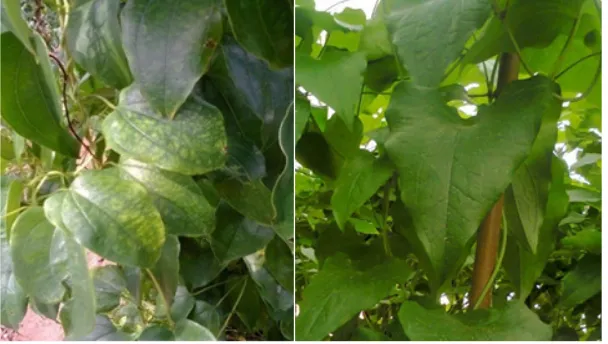
[image:2.595.63.531.97.240.2]Tuber portions (50 g) of five landraces (Table 1) were planted in April, 2013 in a serpentine layout at 1 and 0.5 m inter- and intra-row spacing, respec-tively, to generate 8187 stands at the International Institute of Tropical Agriculture, Ibadan, Nigeria (7°26'N, 3°54'E), a rainforest-savanna transition zone. The stands were visually assessed for mottling, leaf and vein chlorosis, leaf distortion and malforma-tion. Asymptomatic stands (Figure 2), totalling 150, were tagged 16 weeks after planting and harvested in December, 2013. Tubers from twenty-one out of one hundred and fifty plants were selected against tuber crack and gall, dry rot and mealy bug, cut into 40 g setts and planted to 50 stands per landrace in April 2014 in 10 l pots filled with 7 l of sterile top soil inside an aphid-proof screenhouse. Thirty-four asymptomatic stands were further selected and tested for these viruses: Yam mosaic virus (YMV), Yam mild mosaic virus (YMMV), Badnavirus (BV) and Cu-cumber mosaic virus (CMV) using polymerase chain reaction (PCR) (Nkere 2016) at two and four months after planting. Tubers were harvested eight months after planting from stands tested to be virus-free and planted in June, 2015 in an aphid-proof screenhouse. At three to four months after planting, single node cuttings were made from each virus-negative stand and planted in a mixture of sterile carbonized rice husks + top soil (50 : 50 by volume). The number of rooted vines per clean mother plant was recorded. In order to determine the incidence of endophytes in the virus-free certified positively selected plants, Figure 1. Seed tubers of yam (left); female flowers bearing fruits (middle); zygotic seeds from fruits (right)
single nodes from three genotypes (Hembakwase, Pepa and Amula) were surface-sterilized by im-mersing in 2 ml/l lambda-cyhalothrin + 7 g/l Team (4 g/l mancozeb + 0.8 g/l carbendazim) for 10 min, air-drying in the laminar flow box for 45 min, im-mersing in 70% ethanol, 2% and 1% sodium hypo-chlorite (NaOCl) for 5, 15 and 30 min, respectively, before rinsing in three changes of sterile distilled water. The nodes were cultured in agar-solidified, modified Murashige and Skoog (1962) medium (MS) containing 20 mg/l L-cysteine, 100 mg myo-inositol, 0.5 mg/l kinetin, 30 g/l sucrose and 7 g/l agar. Cultures were incubated at 25 ± 2°C, 4000 lux and 12 h photoperiod provided by white fluorescent tubes (Balogun et al. 2014). Roots, stems and leaves of 8-week-old plantlets were chopped onto bacteria indexing medium containing 10 g/l sucrose, 8 g/l ca-sein hydrolysate, 4 g/l yeast extract, 2 g/l potassium hydrogen phosphate, 0.15 g/l magnesium sulphate heptahydrate and 10 g/l agar in sterile Petri dishes
and incubated at 27 ± 2°C for 7 days in darkness (Thomas 2004). Incidence of endophytic bacteria was recorded. The same procedure was repeated using meristem- and node-derived plantlets of the improved genotype TDr 95/19158.
Another experiment was conducted to determine the effect of heat therapy on the virus status. Meri-stem-derived plantlets of improved genotypes of water yam (TDa 95/01166) and white yam (TDr 95/05575, TDr 95/19158, TDr 95/19177, TDr 95/18544, TDr 89/0070, TDr 89/02677, TDr 89/02565) were tested for YMV, YMMV, CMV and BV using PCR. Two-node cuttings from the virus-positive plantlets were sub-cultured onto the same multiplication medium and incubation conditions as described above for one week followed by transfer to a growth cabinet set at 36 ± 0.5°C and 16 h photoperiod for twenty-one days. Newly initiated meristems about 0.5–1.0 mm long were excised with the aid of a dissecting mi-croscope and cultured on modified MS medium
Mean ± SE 11.6 0.94 1 0.08 ± 0.04 8.62 ± 4.3
[image:3.595.64.533.111.253.2]SE – standard error; efficiency of positive selection (PS) – No. of PCR clean plants/No. of positive selection
[image:3.595.147.451.566.738.2]containing 30g/l sucrose, 100 mg/l myo-inositol, 20 mg/l L-cysteine, 80 mg/l adenine hemisulphate, 0.2/l mg benzylaminopurine and 1 mg/l uniconazole-P. Plantlets were regenerated from the meristem for 16 weeks and transferred into yam multiplication medium described above for further growth, which took sixteen weeks. Leaf samples from the heat-treated meristems which regenerated into plantlets and those of the virus-positive controls were tested for viruses using PCR. The incidence of infected plants recovered from each virus or mixed infec-tion was recorded and compared with descriptive statistics (%) using SAS (Version 9.4 (TS1M2) 2012).
RESULTS AND DISCUSSION
Incidence of asymptomatic stands from PS both at vegetative stage and on harvested tubers ranged from 0.2% to 1.8% among the landraces with a mean of 1% across genotypes (Table 1). Eleven stands were virus-free at two months after planting, while six out of these tested virus positive ones at four months of age. This suggests that even with PCR, expression of virus infection symptoms varied with plant age. Thus, a total of only five stands were virus-free out of the initial 8187 stands. This double PCR-test is therefore more reliable although it is at added cost. No virus-free stocks were retrieved in Alumaco and Ekpe genotypes.
In planting the positively selected tubers, minisetts were used so that more than one stand was planted from one tuber. Among plants raised from the same mother tuber, some stands were positive for viruses and others were negative. Aiheiboria (2015) re-ported that plants raised from the head portions of
tuber had the highest mean value for incidence and severity of YMV infection while the tail portions were least infected and discussed that as photosynthates flow down to the tuber, they carry along the virus particles. Thus, virus concentration varied with tuber portion, and by extension, it suggests that the smaller the seed tuber portion, the higher the probability of uniformly virus-free progenies from it.
Consequently, small, whole seed tubers are qual-ity-, time- and cost-effective as there will also be no need to cut into minisetts and this reduces labour costs and risk of disease transmission from knives used for cutting. In a different study, in vitro mi-crotubers weighing up to 2.7 g (Figure 3) sprouted successfully when planted in pots (Pelemo 2015, personal communication). Meristem culture could therefore generate genetically more uniform and virus-free stands due to the small size of the explant (Villordon & LaBonte 1996) and slow down the process of cultivar decline that may accrue due to accumulation of viruses and mutations. However, it will be worthwhile to determine genetic variations among progenies from different types of planting materials (tuber, vine, meristems and bulbils).
[image:4.595.132.461.96.263.2]that PS is at added cost to the farmer as fewer stands are reserved for planting, making it necessary for the farmer to buy more seeds to plant on his farm. Innovative, field-applicable diagnostic tools will be very useful for the efficient use of PS by seed yam producers. In addition, the rate of PS success de-pends on number of virus-free stocks in the initial population and is unpredictable.
The numbers of single node vines cut from five stands of Hembakwase were 34, 13, 8, 4, 50; from one stand of Pepa it was 23 while it was 7 from one stand of Amula. Based on the virus-negative result of the five positively selected stands, additional single nodes, not meristems, were cut from the stands for in vitro introduction in order to remove endophyte-contaminated stocks through bacteria indexing, with an average of 121.3 ± 59.3 vines per plant. Vine cuttings from positively selected plants (Figure 4) increased the rapidity of virus-free stock generation by a factor of 121, and could be more, depending on
the vigour of the positively selected mother plant. An optimum fertilizer regime for maximum canopy development will significantly increase the number of vine cuttings.
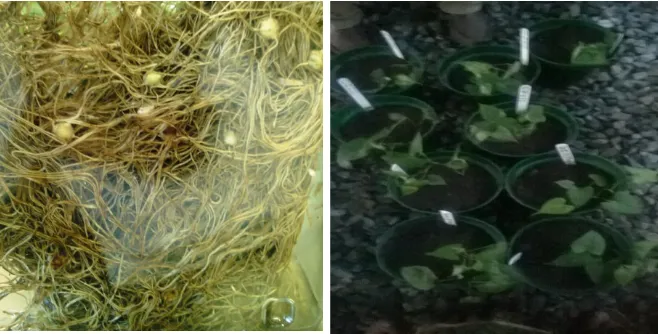
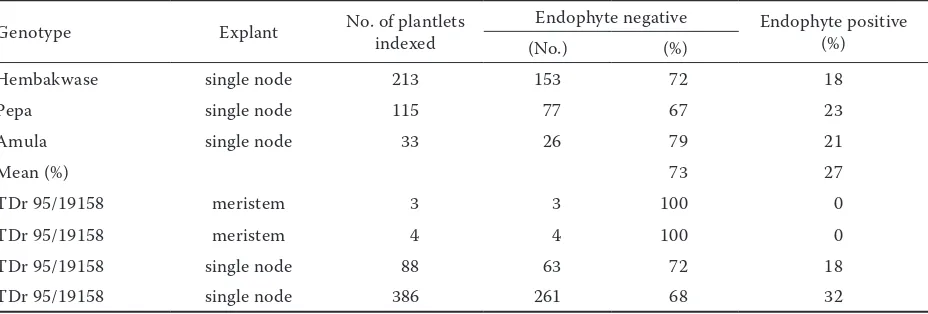
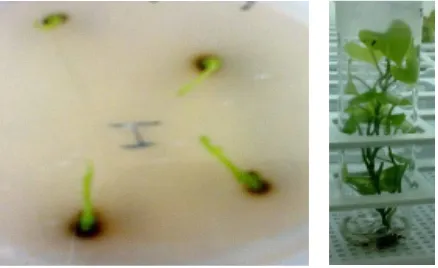
[image:5.595.305.534.96.243.2]Table 2 shows that the percentage incidence of endophyte-free stocks ranged from 67% in Pepa to 79% in Amula with a mean of 72.5%. Thus, about 27% of the nodal explants harboured endophytes (Figure 5). Mbah and Wakil (2012) reported that contaminations were due to endophytes harboured by yam plantlets intercellularly, which may pass latently into culture and spread horizontally and vertically in cultures. A mean of 30% endophytic cultures was also recorded among plantlets derived from nodes in TDr 95/19158 but none of the meristem-derived plantlets had endophytes although the sample size was smaller.These may be due to the smaller size of meristem relative to the nodes, and that the terminal region of the shoot meristem which is above the zone of vascular differentiation is unlikely to contain patho-Figure 4. Rooted vine cuttings of white yam
Table 2. Incidence of endophytes in plantlets of 4 yam genotypes regenerated from different explants
Genotype Explant No. of plantlets indexed Endophyte negative Endophyte positive(%)
(No.) (%)
Hembakwase single node 213 153 72 18
Pepa single node 115 77 67 23
Amula single node 33 26 79 21
Mean (%) 73 27
TDr 95/19158 meristem 3 3 100 0
TDr 95/19158 meristem 4 4 100 0
TDr 95/19158 single node 88 63 72 18
[image:5.595.68.287.96.260.2]TDr 95/19158 single node 386 261 68 32
[image:5.595.66.530.600.757.2]genic organisms due to the absence of differentiated conducting tissues. Although culturing the nodes in vitro gave cleaner seedlings due to the inclusion of an endophyte indexing step that reduced losses to contamination significantly, additional 3 weeks are needed for hardening.
Previous studies on contamination control in yam tissue cultures advocated the use of a combination of five antibiotics, with 33% success and this was specific to some genotypes (Mbah & Wakil 2012). However, endophytes may not be completely undesirable as various endophytic bacteria in association with plants
were reported to increase the adaptive response of plants to stress through plant growth stimulation (nitrogen fixation, auxin and cytokinin production) and disease protective properties (Jasim et al. 2015). In black pepper, the endophyte Pseudomonas fluo-rescens increased production of defence enzymes against the pathogenPhytophthora capsici (Paul & Sarma 2005). It will therefore be necessary to test the relative adaptability of endophyte-containing and non-containing yam to stress conditions, and also their effects on propagation ratio in vitro or in vivo. This may also affect the rate of degeneration of otherwise ‘virus-free’ planting materials when grown in the field.
[image:6.595.63.291.127.221.2]The use of meristem culture combined with ther-motherapy recovered plantlets from YMV with 73% success (Table 3). Meristem culture was reported to clean D. alata from viruses (Mantell et al. 1980). Filloux and Girard (2006) reported the virus elimination success of 2%, 21%, 46% and 60% for BV, YMV, YMMV and Potex viruses using thermo-therapy while Shin et al. (2013) reported that cold treatment combined with shoot tip culture cleaned Table 3. Effect of thermotherapy and meristem culture on
some common viruses infecting yam
Virus eliminated No. of plants
treated cleaned (%)
Yam mosaic virus (YMV) 15 11 (73)
Yam mild mosaic virus (YMMV) 2 2 (100)
Badnavirus (BV) 25 6 (24)
YMV + BV 12 3 (25)
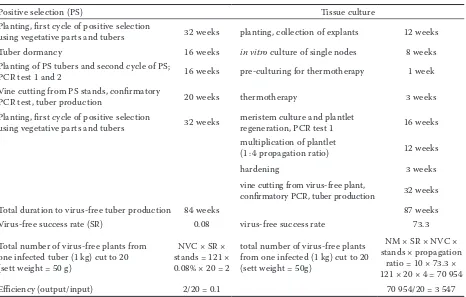
Table 4. Relative efficiency of positive selection and tissue culture for generating virus-free planting materials of yam
Positive selection (PS) Tissue culture
Planting, first cycle of positive selection
using vegetative parts and tubers 32 weeks planting, collection of explants 12 weeks
Tuber dormancy 16 weeks in vitro culture of single nodes 8 weeks
Planting of PS tubers and second cycle of PS;
PCR test 1 and 2 16 weeks pre-culturing for thermotherapy 1 week
Vine cutting from PS stands, confirmatory
PCR test, tuber production 20 weeks thermotherapy 3 weeks
Planting, first cycle of positive selection
using vegetative parts and tubers 32 weeks meristem culture and plantlet regeneration, PCR test 1 16 weeks multiplication of plantlet
(1 : 4 propagation ratio) 12 weeks
hardening 3 weeks
vine cutting from virus-free plant,
confirmatory PCR, tuber production 32 weeks
Total duration to virus-free tuber production 84 weeks 87 weeks
Virus-free success rate (SR) 0.08 virus-free success rate 73.3
Total number of virus-free plants from one infected tuber (1 kg) cut to 20 (sett weight = 50 g)
NVC × SR × stands = 121 × 0.08% × 20 = 2
total number of virus-free plants from one infected (1 kg) cut to 20 (sett weight = 50g)
NM × SR × NVC × stands × propagation
ratio = 10 × 73.3 × 121 × 20 × 4 = 70 954
Efficiency (output/input) 2/20 = 0.1 70 954/20 = 3 547
[image:6.595.66.532.418.715.2]D. opposita from YMV with 90% success. Cryo- and thermo-therapies were also reported to be effective for virus elimination (Houten et al. 1968; Gallet et al. 2007; respectively). In this study, meristem culture combined with thermotherapy had a success rate of 24% for elimination of BV and 25% for the mixed infection of YMV and BV. In addition, the effect on BV was inconsistent, as no BV was detected before treatment but it emerged after treatment in some of the samples of water yam tested. This also points to the recent report that BV is integrated into the yam genome (Seal et al. 2014). Considering that YMV is the most economically important virus affecting yam, the 73% elimination by thermotherapy is sig-nificantly higher than 0.08% achieved with positive selection. More than 3000 virus-free plants can be generated from 1 kg of infected tubers, compared to two plants from PS (Table 4). The longest phases of the recovering process are the canopy development after tuber planting (12 weeks) to generate explants and the regeneration of plantlets from meristems (16 weeks, Figure 6). It may be possible to reduce the duration of these 2 phases by inducing multiple sprouts in tubers as they undergo thermotherapy and culturing the meristems from the sprouts.
Positive selection is recommended as the first step against accumulation of bad quality seed yams where the seed system is informal while meristem culture is more efficient for sustainable generation of more uniformly virus-free stands. Production of certified seed yam should be initiated using tissue culture for the development of a formal seed system. The procedure should involve meristem culture and ther-motherapy, regeneration of plantlets, PCR detection of viruses, tissue screening onto bacteria indexing medium, multiplication of clean stock, transplanting and acclimatization to produce pre-basic seed tubers.
selection plot with us.
References
Aighewi B., Asiedu R., Maroya N., Balogun M. (2015): Improved propagation methods to raise the productiv-ity of yam (Dioscorea rotundata Poir.). Food Security, 7: 823–834.
Aiheiboria D. (2015): The response of white yam (Dioscorea rotundata Poir) tuber portions to positive selection for quality seed yam. [MSc. Thesis.] Ibadan, University of Ibadan.
Asala A., Alegbejo M., Kashina B., Banwo O., Asiedu R., Kumar L. (2012): Distribution and incidence of viruses infecting yam (Dioscorea spp.) in Nigeria. Global Journal of Biotechnology and Biochemistry, 1: 163–167. Balogun M., Maroya N., Asiedu R. (2014): Status and
pros-pects for improving yam seed systems using Temporary Immersion Bioreactors. African Journal of Biotechnology, 13: 1614–1622.
Berg L., Bustamante M. (1974): Heat treatment and meri-stem culture for the production of virus-free bananas. Phytopathology, 64: 320–322.
Eni A.O., Hughes Jd’A., Asiedu R., Rey M.E.C. (2010): Survey of the incidence and distribution of viruses infecting yam (Dioscorea spp.) in Ghana and Togo. Annals of Applied Biology, 156: 243–251.
FAO (2013): FAO Statistical Programme of Work. Rome, FAO. Available at www.fao.org/statistics/en/
Filloux D., Girard J.-C. (2006): Indexing and elimination of viruses infecting yams (Dioscorea spp.) for the safe move-ment of germplasm. In: Proc. 14th Triennial Symp. ISTRC,
Trivandrum, Nov 20–26, 2006. Available at https://ag-ritrop.cirad.fr/540794/1/document_540794.pdf (accessed Nov 22, 2016).
Gallet S., Gamiette F., Filloux D., Engelmann F. (2007): Cryo-preservation of yam germplasm in Guadeloupe (FWI). Advances in Horticultural Science, 21: 244–246. Gildemacher P., Demo P., Barker I., Kaguongo W.,
[image:7.595.64.283.96.230.2]Wol-degiorgis G.T., Wagoire W.A., Wakahiu M., Leeuwis C., Figure 6. Regenerating heat-treated meristems (left) and
Struik P. (2009): A description of seed potato systems in Kenya, Uganda and Ethiopia. American Journal of Potato Research, 86: 373–382.
Houten T.J., Quak F., Van der Meer F. (1968): Heat treatment and meristem culture for the production of virus-free plant material. Netherlands Journal of Plant Pathology, 74: 17–24.
Hughes J.d'A., Dongo L.M., Ng S.Y.C. (1998): Diagnosis of yam viruses. Tropical Agriculture, 75: 45–48.
Ironkwe A.G, Asiedu R., Unamma R.P.A. (2007): Adoption of yam minisett technology by women farmers in Abia State, Nigeria. Journal of Agriculture and Social Research, 7: 95–105.
Jasim B., Geethu P.R, Mathew J., Radhakrishnan E.K. (2015): Effect of endophytic Bacillus sp. from selected medicinal plants on growth promotion and diosgenin production in Trigonella foenum-graecum. Plant Cell, Tissue and Organ Culture, 122: 565–572.
Kinyua Z.M., Smith J.J., Lung’aho C., Olanya M., Priou S. (2001): On-farm success and challenges of producing bacterial wilt free tubers in seed plots in Kenya. African Crop Science Journal,9:279–285.
Malaurie B., Trouslot M.F., Berthaud J., Bouselem M., Pi-nel A., Duberm J. (1998): Medium-term and long-term in vitro conservation and safe international exchange of yam (Discorea spp.) germplasm. Electronic Journal of
Bio-technology, 1: 1–8. Available at http://dx.doi.org/10.2225/
vol1-issue3-fulltext-2
Mantell S.H., Haque S.Q., Whitehall A.P (1980): Apical meristem tip culture for virus eradication of flexuous viruses in yams (Dioscorea alata). Tropical Pest Manage-ment, 26: 170–179.
Maroya N., Balogun M., Asiedu R., Aighewi B., Kumar L., Augusto J. (2014): Yam propagation using aeroponics technology. Annual Research and Review in Biology,4: 3849–3903.
Mbah E.I., Wakil S.M. (2012): Elimination of bacteria from in vitro yam tissue cultures using antibiotics. Plant Pa-thology, 94: 53–58.
Murashige T., Skoog F. (1962): A revised medium for rapid growth and bioassays with tobacco tissue culture.
Phys-iologia Plantarum, 15: 437–497.
Ng S.Y., Hahn S.K. (1985): Application of tissue culture to tuber crops at IITA. In: Proc. Inter-Centre Seminar on Biotechnology in International Agricultural Research, Los Banos, Apr 23–27, 1984: 29–40.
Nkere C.K., Atiri G., Onyeka J., Seal E.E., Kumar P.L. (2016): Incidence and distribution of viruses in plants grown from different portions of seed yams (Dioscorea spp.). In: Abstracts of the 1st World Congr. Roots and Tubers,
Nanning, Jan 18–22, 2016: S05-03.
Odedara O.O., Ayo-John E.I., Gbuyiro M.M., Falade F.O., Agbebi S.E. (2012): Serological detection of yam viruses in farmers’ fields in Ogun State, Nigeria. Archives of Phytopathology and Plant Protection, 45: 840–845. Odu B.O., Hughes J.D., Shoyinka S.A., Dongo L.N. (1999):
Isolation, characterisation and identification of a
potyvi-rus from Dioscorea alata L.(water yam) in Nigeria. Annals
of Applied Biology, 134: 65–71.
Oppong A., Lamptey J.N.L., Ofori F.A., Anno-Nyako F.O., Offei S.K., Dzomeku B.M. (2007): Serological detection of Dioscorea alata potyvirus on white yam (Dioscorea ro-tundata) in Ghana. Journal of Plant Science, 2: 630–634.
Paul D., Sarma Y.R. (2005): Pseudomonas fluorescens
medi-ated systemic resistance in black pepper (Piper nigrum L.)
is driven through an elevated synthesis of defence en-zymes. Archives of Phytopathology and Plant Protection, 38: 139–149.
Seal S., Turaki A., Muller E., Kumar P.L., Kenyon L., Fil-loux D., Galzi S., Lopez-Montes A., Iskra-Caruana M.L. (2014): The prevalence of badnaviruses in West African
yams (Dioscorea cayenensis-rotundata) and evidence of
endogenous pararetrovirus sequences in their genomes. Virus Research, 186: 144–154.
Shin J.H., Kang D.K., Sohn J.K. (2013): Production of yam mosaic virus (ymv)-free Dioscorea opposita plants by cryotherapy of shoot-tips. CryoLetters, 34: 149–157. Thomas P. (2004): A three-step screening procedure for
detection of covert and endophytic bacteria in plant tis-sue cultures. Current Science, 87: 67–72.
Villordon A.Q., LaBonte D.R. (1996): Genetic variation among sweet potatoes propagated through nodal and adventitious sprouts. Journal of American Society of Horticultural Science, 112: 170–174.