Atmospheric CO2 concentrations increased sig-nificantly in the past two centuries, rising from about 270 µL/L in 1750 to current concentra-tions larger than 385 µL/L (Le Quéré et al. 2009). The expected continued rise in atmospheric CO2 concentration, apart from possible influences of increasing temperature and other changes in environmental factors, is anticipated to stimulate biomass of many C3 crops (Ainsworth and Long 2005, Prasad et al. 2005). Changes in atmospheric CO2 are known to affect the fundamental plant processes of photosynthesis (Pn), respiration and stomatal conductance (gs). Elevated CO2 typically improves net photosynthetic rate under satu-rated irradiance, however the photosynthesis is not stimulated by CO2 concentration under low light intensities, when photons are limiting sub-strate of the photosynthesis (Spunda et al. 2005), plant-water relations and photosynthetic water use efficiency (Ainsworth and Long 2005, Prasad et al. 2005). Antioxidant enzymes like superoxide dismutase (SOD), esterase (EST) etc. are produced by the plants to minimize the cellular oxidative
damage. These molecules catalyze reaction that directly or indirectly detoxify reactive oxygen species (ROS) (Schwanz et al. 1996). Stylosanthes hamata is regarded as the most important C3 range legume for the humid to semi-arid tropics. It is extensively utilized in pastoral, agro-pastoral and silvi-pastoral systems for animal production. Due to its ability to restore soil fertility, improve soil physical properties and provide permanent vegetation cover, it plays a vital role in the devel-opment of west lands. It is also considered a nurse crop in plantation on degraded lands. In light of rising global atmospheric CO2 concentrations it is an attempt to understand the effects of atmo-spheric CO2 enrichment on assimilatory function and biochemical changes in Stylosanthes hamata under elevated CO2 environment.
MATERIAL AND METHODS
Plant material, experimental environment and treatment. The experiment was conducted at the
Assimilatory function and biochemical changes
in
Stylosanthes hamata
grown under elevated CO
2
M.J. Baig, R.K. Bhatt, H.S. Tiwari, P. Swami
Indian Grassland and Fodder Research Institute, Jhansi, India
ABSTRACT
We studied the impact of 360 ± 50 µL/L (ambient) and 600 ± 50 µL/L (elevated) CO2 on growth performance, bio-mass production, photosynthetic efficiency, carbon isotope discrimination, protein profile and some antioxidant enzymes on Stylosanthes hamata. This crop responded significantly to photosynthetic rate, stomatal conductance and transpiration rate under elevated CO2. The biomass production in terms of fresh and dry was increased in el-evated CO2 by 126.81% (fresh) and 114.55% (dry) over ambient CO2. Long term exposure to elevated CO2 enhanced photosynthetic water use efficiency by 127.77%. The photosynthetic pigment, total chlorophyll and chlorophyll a/b
ratio also increased by 220.56 and 132.86%, respectively in elevated over ambient CO2. Around 149% increase in the soluble protein accumulation (mg/g FW) was recorded under elevated over ambient CO2, which was also reflected in the polyacrylamide gel profile. The isoforms of superoxide dismutase and esterase isozymes showed remarkable difference under elevated as compared to ambient. Measurement of 13δ in different plant parts indicated a signifi-cant increase in discrimination against 13C when plants were grown at elevated relative to ambient CO
2. Maximum increase was recorded in roots (439.72%) followed by leaf and the stem recorded least increase in 13δ (119.94%) in elevated over ambient CO2.
Indian Grassland and Fodder Research Institute, Jhansi, India (25°27'N, 78°35'E, 271 m a.s.l.). As per weather data concerned the maximum tempera-ture ranges from 24–42°C, minimum temperatempera-ture ranges from 4–26°C, the precipitation varies from 550–600 mm, the relative humidity ranges from 30–90% and the total sunshine hours varies from 3–9 h per day. The soil was clay loam in texture, neutral in reaction (pH 6.54), and non saline (EC 0.29 mS/m). The contents of organic carbon (0.48%) and available nitrogen (23.52 g/m2) in the surface soil were low. The available phosphorus and potas-sium contents were in the medium range [1.27 g/m2 (P) and 23.14 g/m2 (K)]. Stylosanthes seeds were sown in side the open top chambers (OTCs) at 50 cm row to row and 25 cm plant to plant spacing. The OTCs are circular in nature with diameter of 3 m. Nitrogen and phosphorus were applied as basal at the rate of 60 kg N and 17.6 kg P per hectar before sowing on the onset of monsoon i.e. in the month of July. The plants were maintained as per recommended agronomical package of practices. Pure CO2 gas (discrimination value ranges from 7.1–7.8%) was used for enrichment of CO2 in-side the open top chambers. Two chambers were maintained as elevated CO2 (600 ± 50 µL/L) and the other two chambers were maintained without elevated CO2, i.e. ambient CO2 (360 ± 50 µL/L) (C360). The flow of CO2 was adjusted with the help of a flow meter to get the target concentration of CO2 inside the chambers and the CO2 concentra-tion was monitored by an IRGA (LICOR, Nebraska, USA). The period of CO2 enrichment was from 8.0 a.m. to 5.0 p.m. round the cropping season from 2 week seedling stage to harvest (flowering). The soil water condition was never a limited resource for the whole cropping season, however, the irriga-tion was given when the soil moisture reached to 20–25%. Measurements of each parameter were done in three replicates from each chamber and the data presented is the mean of six data recorded from two chambers of each elevated and ambient CO2. The data was statistically analyzed by using statistical package MSTAT C and the LSD value is given in the table.
Photosynthesis and related parameters. The assimilatory characters such as Pn, transpiration (E), gs and intercellular CO2 concentration (Ci) were recorded in the second fully expanded leaf from the top of the plant by using the portable photosynthesis system (LI-6200, LICOR, Nebraska, USA). The micro environmental parameters like, air temperature, photosynthetically active radiation (PAR), relative humidity (RH) and leaf temperature
(LT) were also recorded by the attached sensors of the photosynthesis system. All the measurements were made between 11.00 and 12.00 h under satu-rated light condition and the PAR in the OTCs ranges from 1400–1600 µmol/m2/s during the measurements. The leaf temperature ranges from 1.0–1.5°C among the observations. The ratio Pn/E (photosynthetic water use efficiency) and Pn/Ci (carboxylation efficiency) were also calculated.
Biomass production. The above ground fresh and dry biomass of the whole plant was taken just after harvesting at 50% flowering stage. For dry matter yield, the plant samples were dried in a hot air oven at 80°C for 48 h. The leaf area per unit land area, leaf area index (LAI) was estimated by taking twenty representative leaf blades from plants in each sample at random and their total area was measured by an automatic leaf area me-ter (LICOR-3000, Nebraska, USA). The LAI was calculated following Tanaka and Kuwano (1966).
Photosynthetic pigments. Chlorophyll a and b contents were determined by extraction in dime-thyl sulphoxide (DMSO) using a non-maceration technique of Hiscox and Israelstam (1979).
Enzyme and soluble proteins. Fresh leaves were ground in a pre-chilled pestle and mortar in grinding medium (1 mL/L g tissue) containing 50 mmol Tris HCl (pH 8.0), 50 mmol MgCl2, 5 mmol 2-mercaptoethanol and 1 mmol. Homogenate was centrifuged at 4°C for 20 min at 15 000 × g. This extract was used for estimating soluble protein following the procedure of (Lowry et al. 1951). The same extract was used for estimating PEPC activity by a decrease in absorbance at 340 nm per s in a mixture of 925 µL 0.1 mol Tris HCl (pH 7.8), 500 µL MgCl2 (20 mmol), 500 µL NaHCO3 (10 mmol), 500 µL PEP (5 mmol), 50 µL NADH and 50 µL enzyme extract. The activity was expressed in unit per mg protein, whereas one enzyme unit was defined as a change of 0.1 absorbance per min caused by the enzyme aliquot.
SDS-polycarylamide gel electrophoresis (PAGE). SDS-PAGE was performed using 12% gel according to (Laemmli 1970) with minor modi-fication. An aliquot (15 cm3) of the above extract was mixed with 2X sample buffer (0.25 mol/L Tris-Cl, pH 6.8; 0.2% sodium dodecyl sulphate (SDS), 10% glycerol, 10% β-mercaptoethanol, and 0.002% bromophenol blue. The electrophoresis was performed at 30 mA on a 1.0 × 1.5 mm gel.
was used by loading approximately 150 μg protein. For staining EST was stained with 50 mmol phos-phate buffer (pH 6.0) containing 0.02% α-naphthyl acetate (dissolved in 2 cm3 of 60% acetone) and 0.05% Fast Blue RR salt. For Super oxide dismutase (SOD, E.C.1.15.1.1), when the run was over gel was removed from the gel assembly and incubated in dark for 30 min in 100 mL of 50 mmol Tris buffer (pH 8.0) containing 2 mg riboflavin, 1 mg EDTA and 10 mg NBT (Nitroblue tetrazolium). After the incubation gel was shifted to bright and intense light for 30 min and then gel was washed with distilled water. The bands appeared in form of negative bands against the blue background.
Carbon isotope discrimination. Carbon isotope ratios were determined with an Isotope Ratio Mass Spectrometer (Delta-plus, Thermo Finnigan, Bremen, Germany) interfaced with an Elemental Analyzer (NA 1112, CarloErba, Milano, Italy) via a continuous flow device (Conflo-III, Thermo Finnigan, Bremen, Germany). A composite leaf sample comprising of 10 mature leaves representing all positions of the plant canopy were harvested from both the CO2 levels and oven dried for 3 days at 70°C and homogenized to fine powder with a ball mill. Three replications for both the grasses were
analyzed for δ13C
lb with an analytical uncertainty of less than 0.1‰. Carbon isotope discrimination (δ13C) expressed in ‰ notation) was computed as follows, assuming the isotopic composition of atmospheric air (δ13C
a) to be –‰ (Farquhar et al. 1989): δ13C = [δ13C
a – δ13Clb]/[1 + (δ13Clb/1000)]
RESULTS AND DISCUSSION
Photosynthesis and related parameters. Pn and related parameters like internal CO2 concen-tration (Ci) and transpiration (E) were increased significantly in Stylosanthes hamata grown under elevated CO2 as compared to the crop grown under C360. However there was a significant decrease in stomatal conductance (gs) observed under the el-evated CO2 environment. The LAI increased under elevated CO2. Elevated CO2 could increase the LAI through at least two mechanisms, such as by increasing photosynthetic efficiency, elevated CO2 would lower the light compensation point (LCP) of photosynthesis, allowing leaves to maintain a positive carbon balance in elevated CO2 than at present atmospheric CO2. Alternatively, greater carbohydrates supply and improved water use
ef-Table 1. Effect of elevated CO2 (600 ± 50 µL/L) on photosynthesis, transpiration, chlorophyll accumulation and
carbon isotope discrimination (13δ) in Stylosanthes hamata
S. No. Parameters OTC with LSD0.05
360 ± 50 μL/L CO2 600 ± 50 µl/L CO2
1 Pn (µmol/m2/s) 15.13 20.49 (135.43) 4.490
2 Ci (µmol CO2/mol air) 338.96 538.26 (158.79) 71.93
3 gs (mol H2O/m2/s) 0.215 0.158 (73.49) 0.179
4 E (mmol H2O/m2/s) 8.979 9.159 (102.00) 1.439
5 LAI 5.01 5.61 (111.98) 0.812
6 Pn/Ci (µmol/mol) 0.045 0.047 (104.44) 0.023
7 Pn/E (µmol/m2/s) 1.685 2.153 (127.77) 0.963
8 chl a + b (mg/g/FW) 1.07 2.36 (220.56) 0.109
9 chl a:b 5.69 7.56 (132.86) 1.235
10 soluble protein (mg/g/FW) 12.36 18.42 (149.03) 4.68
11 fresh biomass (g/m2) 2361 2994 (126.81) 138.83
12 dry biomass (g/m2) 880 1008 (114.55) 101.42
13 13δ (leaf ) 18.17 24.43 (134.45) 5.42
14 13δ (stem) 20.76 24.90 (119.94) 3.63
15 13δ (root) 4.28 18.82 (439.72) 12.41
[image:3.595.64.532.441.733.2]ficiency may lead to larger individual leaves and more rapid canopy development, thereby increasing the LAI (Ferris et al. 2001). A negligible change in the carboxylation efficiency (Pn/Ci) was recorded in C600 but there was a significant increase in the photosynthetic water use efficiency (Pn/E) (Table 1). Changes in Pn are the result of changes in both gs and mesophyll capacity for photosynthesis. The impact of elevated CO2 on mesophyll capacity in turn depends on the carboxylation efficien-cy (activity, amount and kinetic properties) of Ribulose-1,5-biphosphate carboxylase oxygenase (RuBisCO) and the capacity for photosynthetic electron transport and ribulose 1,5-bis-phosphate regeneration (Bunce 2001). Elevated CO2 resulted in an increase in photosynthesis of the leaves exposed to C600. This is in agreement with the majority of reports in the literature where such an increase in CO2 has resulted in enhanced Pn in C3 plants (Ainsworth and Long 2005, Ainsworth and Rogers 2007). Fleisher et al. (2008) also reported in potato that plants grown under elevated CO2 had consistently larger photosynthetic rates through most of the growth season, with the maximum canopy photosynthesis at 1600 µmol photons/m2/s. In the contrary, Spunda et al. (2005) reported that Norway spruce trees cultivated under elevated CO2 coupled with low irradiance led to the diminution of the midday photosynthesis depression that was predominantly caused by stomatal closure and subsequent decrease in the intercellular CO2 (Ci). Stomatal closure in response to elevated CO2 is a common phenomenon. In our study, the decline in gs probably resulted from direct effects of CO2 on the stomata guard cells, because plants were wa-tered regularly. CO2 sensing is an intrinsic property of guard cells, which are thought to respond to Ci rather than CO2 at the leaf surface. Bernacchi et al. (2003) suggested that photosynthetic CO2 uptake within a leaf is either limited by the rate of ribu-lose-1,5-biphosphate (RuBP) regeneration or the activity of RuBP carboxylase oxygenase (RuBisCO). The same author reported a re-parameterization at the temperature responses of Rubisco activity that proved robust when applied to a range of species. At the same time stomatal conductance is reduced, leading to lower transpiration and less evaporative cooling (Leakey et al. 2009). One of the major limitations of carbon uptake is stomatal conductance (gs). Linear and non linear decreases in gs were observed in C3 annual grass grown across a sub-ambient to super-ambient CO2 gradient and these decreases were quite consistent when plants were grown in elevated CO2 (Ainsworth
and Rogers 2007). However, the response of A to Ci is non-linear, so gs decreases significantly with increasing CO2 concentration, stomatal limitation to photosynthesis as CO2 increased and that the shift in photosynthetic control from Rubisco to RuBP regeneration at elevated CO2 was sufficient to offset the decrease in gs (Bernacchi et al. 2005). Decrease in stomatal conductance in response to increased CO2 is more than compensated by the larger substrate for carboxylation (Del Pozo et al. 2005). Zhou et al. (2005) who found gs of Pinus sylvestriformis was 22% lower in plants grown under elevated CO2 compared with ambient CO2 (350 µmol/mol) grown plants. Following a decrease in gs with concomitant rise in the atmospheric CO2, many C3 species use less water and thus become more water use efficient.
Carbon isotope discrimination function (13δ). Measurements of 13δ made on dried plant parts indi-cated a significant increase in discrimination against 13δ when plants were grown at elevated relative to ambient CO2 (Table 1).13δ showed an increase in the 13δ in all the plant parts grown under elevated CO
2 environment. The maximum increase was recorded in root followed by leaf and stem recorded the least increase in 13δ under C
600 over C360 (Table.1). The 13δ values (indicating their ability to discriminate CO2 on the basis of the 12C or 13C isotope) in the different plant parts differed significantly (P < 0.05) with higher CO2. The discrimination was lower in stem followed by leaf and root. The increase in 13δ possibly due to increased capture of CO
2 in different plant parts under elevated CO2 and also reduced leakiness. The switchingof air isotopic composition from 12CO
2 to pure 13CO2 when the [CO2] was changed, showed that the efflux of 12CO
2 (which represents net respiratory CO2 evolution originating from respiratory substrates minus the CO2 being re-fixed by carboxylases) was reduced in leaves of C3 plants, but not C4, when the [CO2] increased(Pinelli and Loreto 2003). We therefore, hypothesized that for any given species the length of exposure of the plant to elevated CO2 account for the majority of 13δ variation.
ultimately increased the total biomass production. Sharma and Sengupta (1990) also observed that the extra carbon fixed by the plants due to CO2 enrichment was translocated to the growing axis. Increased fodder production of white clover and increased yield in rice grown under elevated CO2 was reported by Saebo and Mortensen (1995) and Uprety et al. (2002), respectively. The increase in Pn and LAI (data not shown) under elevated CO2 might have resulted in greater accumulation of assimilates which resulted in the production of more biomass. The Stylosanthes hamata grown in elevated CO2 produced greater total biomass than those grown in ambient CO2. Growth in CO2 enriched environments typically enhances growth and photosynthesis by directly increasing the amount of carbon available for fixation, decreas-ing CO2 loss to photorespiration and reducing oxygenase activity of rubisco (Lawlor and Mitchell 1991). Increased leaf biomass, stem biomass and total biomass due to long-term exposure to CO2 enrichment in 90 day old seedlings of white birch (Betula papyrifera) was reported by (Cao et al. 2008) also summarized the increase in the above ground biomass of cotton (Gossypium hirsutum L.) in response to elevated CO2 of 600 µL/L.
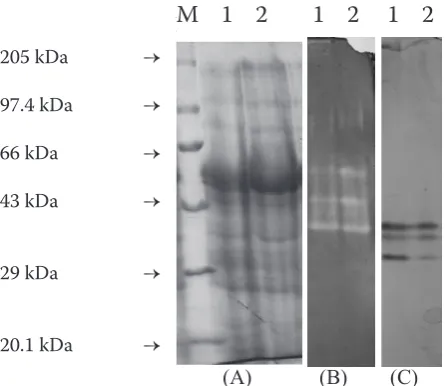
Biochemical changes. The accumulation of photosynthetic pigments was also influenced by the elevated CO2. Significant increase in total chlorophyll and chlorophyll a/b ratio was recorded in the leaves of S. hamata grown under C600. The increase in the soluble protein was recorded in the leaves of S. hamata grown under C , which
was reflected in the SDS-PAGE pattern with the more intensified band in the range of 55 kDa in the plants grown under C600. The isozyme pattern of EST and SOD differ under the C600. The isoforms of the SOD are less intensified in C600 than the C360. The isoforms of the EST also differed with less intensification of the 2nd and 3rd isoforms under the elevated CO2 environment (Figure 1). The accumulation of photosynthetic pigments was also influenced by the elevated CO2. Significant increase in total chlorophyll and chlorophyll a/b ratio was recorded in the leaves of S. hamata grown under C600. The increase was recorded to the tune of 54.66% in total chlorophyll (chl a + b) and 24.73% in chlorophyll a/b ratio. In agreement with this, the chl a/b ratio also significantly in-creased. Moreover, Wang et al. (2004) reported that elevated CO2 increased chloroplast number per unit cell area. In general it is thought that the status (up or down regulated) of plant oxidant systems is controlled by the extent of oxidative stress (Polle et al. 1997). Therefore it follows that the reduction of oxidative stress resulting from growth in CO2 enriched atmosphere. Further, because antioxidant activities are stimulated by water stress (Schwanz et al. 1996) and growth in elevated CO2 is often reported to alleviate water stress (Rogers et al. 1983), plants growing in CO2 enriched atmospheres may exhibit lower antioxi-dant activities. Clearly, the relative contributions of these mechanisms to the observed reductions in antioxidative enzymes remain to be elucidated. Data obtained in the present study lend support to the hypothesis that plants growing in CO2 en-riched atmospheres will have lower antioxidative enzymes activity because of a decrease in cellular ROS production. In our study less intensified iso-forms were observed for SOD and EST.
Acknowledgement
The authors are very thankful to Prof. Prasanna Mohanty, INSA-Senior Scientist for his critical review of this article.
REFERENCES
[image:5.595.67.290.54.247.2]Ainsworth E.A., Long S.P. (2005): What have we learned from 15 years of free-air CO2 enrichment (FACE)? A meta-analytic re-view of the responses of photosynthesis, canopy properties and plant production to rising CO2. New Phytologist, 165: 351–372. Ainsworth E.A., Rogers A. (2007): The response of photosyn-thesis and stomatal conductance to rising [CO]: mechanisms
Figure 1. SDS-PAGE protein profile (A), super oxide dismutase (B) and esterase (C) of Stylosanthes hamata
grown under ambient (C360) and elevated (C600) CO2 environment. M – molecular weight marker; 1 – S. ha-mata (C360); 2 – S. hamata (C600)
M 1 2 1 2 1 2
(A) (B) (C) 205 kDa →
97.4 kDa →
66 kDa →
43 kDa →
29 kDa →
20.1kDa
205 kDa →
97.4 kDa →
66 kDa →
43 kDa →
29 kDa →
20.1 kDa →
and environmental interactions. Plant, Cell and Environment,
30: 258–270.
Bernacchi C.J., Pimentel C., Long S.P. (2003): In vivo temperature response functions of parameters required to model RuBP-limit-ed photosynthesis. Plant, Cell and Environment, 26: 1419–1430. Bernacchi C.J., Morgan P.B., Ort D.R., Long S.P. (2005): The
growth of soybean under free air [CO2] enrichment (FACE) stimulates photosynthesis while decreasing in vivo Rubisco capacity. Planta, 220: 434–446.
Bunce J.A. (2001): Direct and acclimatory responses of stomatal conductance to elevated carbon dioxide in four herbaceous crop species in the field. Global Change Biology, 7: 323–331. Cao B., Q. Dang, X. YU, S. Zhang (2008): Effects of [CO2] and
nitrogen on morphological and biomass traits of white birch (Betula papyrifera) seedlings. Forest Ecology and Manage-ment, 254: 217–224.
Del Pozo A., Pérez P., Gutiérrez D., Alonso A., Morcuende R., Martínez-Carrasco R. (2007): Gas exchange acclimation to elevated CO2 in upper-sunlit and lower-shaded canopy leaves in relation to nitrogen acquisition and partitioning in wheat grown in field chambers. Environmental and Experimental Botany, 59: 371–380.
Farquhar G.D., Ehleringer J.R., Hubick K.T. (1989): Carbon isotope discrimination and photosynthesis. Annual Review of Plant Physiology and Plant Molecular Biology, 40: 503–537. Fleisher D.H., Timlin D.J., Reddy V.R. (2008): Elevated carbon
dioxide and water stress effects on potato canopy gas exchange, water use and productivity.Agricultural and Forest Meteorol-ogy, 148: 1109–1122.
Ferris R., Sabatti M., Miglietta F., Mills R.F., Taylor G. (2001): Leaf area is stimulated in Populus by free air CO2 enrichment (POPFACE) through increased cell expansion and production. Plant, Cell and Environment, 24: 305–315.
Hiscox J.D., Israelstam G.F. (1979): A method for the extraction of chlorophyll from leaf tissue without maceration. Canadian Journal of Botany, 57: 1332–1334.
Laemmli U.K. (1970): Cleavage of structural proteins during the assembly of the head of bacteriophage T4. Nature, 227: 680–685. Lawlor D.W., Mitchell R.A.C. (1991): The effects of increasing
carbon dioxide on crop photosynthesis and productivity: a re-view of field studies. Plant, Cell and Environment, 14: 807–818. Leakey A.D.B., Ainsworth E.A., Bernacchi C.J., Rogers A., Long S.P., Ort D.R. (2009): Elevated CO2 effects on plant carbon, nitrogen, and water relations: six important lessons from FACE. Journal of Experimental Botany, 60: 2859–2876.
Le Quéré C., Raupach M.R., Canadell J.G., Marland G., Bopp L., et al. (2009): Trends in the sources and sinks of carbon dioxide. Nature Geoscience, 2: 831–836
Lowry O.H., Rosebrough N.J., Farr A.L., Randall R.J. (1951): Protein measurement with Folin-phenol reagent. Journal of Biological Chemistry, 193: 265–275.
Pinelli P., Loreto F. (2003): 12CO
2 emission from different
meta-bolic pathways measured in illuminated and darkened C3 and C4 leaves at low, atmospheric and elevated CO2 concentration. Journal of Experimental Botany, 54: 1761–1769.
Polle A., Eiblmeier M., Sheppard L., Murray M. (1997): Responses of antioxidative enzymes to elevated CO2 in leaves of beech (Fagus sylvatica L.) seedlings grown under a range of nutrient regimes. Plant, Cell and Environment, 20: 1317–1321. Prasad P.V.V., Allen L.H., Boote K.J. (2005): Crop responses to
elevated carbon dioxide and interaction with temperature: Grain legumes. Journal of Crop Improvement, 13: 113–155. Rogers H.H., Heck W.W., Heagle A.S. (1983): A field technique
for the study of the plant responses to elevated carbon dioxide concentrations. Journal of Air Pollution, 33: 42–44.
Saebo A., Mortensen L.M. (1995): Growth and regrowth of Phleum pratense, Lolium perenne, Trifolium repens and Trifolium pra tense at normal and elevated CO2 concentration. Agriculture, Ecosystem and Environment, 55: 29–35.
Schwanz P., Picon C., Vivin P., Dreyer E., Guehl J.M., Polle A. (1996): Responses of antioxidative systems to drought stress in pedunculate oak and maritime pine as modulated by elevated CO2. Plant Physiology, 110: 393–402.
Sharma A., Sengupta U.K. (1990): Carbon dioxide enrichment effect on photosynthesis and related enzymes in Vigna radiata
Wilczek. Indian Journal of Plant Physiology, 33: 340–346. Spunda V., Kalina J., Urban O., Luis V.C., Sibisse I., Puertolas J.,
Sprtova M., Marek M.V. (2005): Diurnal dynamics of photo-synthetic parameters of Norway spruce trees cultivated under ambient and elevated CO2: the reasons of midday depression in CO2 assimilation. Plant Science, 168: 1371–1381.
Tanaka A., Kuwano K. (1966): Effect of mutual shading on dry-matter production in tropical rice plant. Plant and Soil, 24: 128–144.
Uprety D.C., Dwivedi N., Jain V., Mohan R. (2002): Effect of el-evated carbon dioxide concentration on the stomatal parameters of rice cultivars. Photosynthetica, 40: 315–319.
Wang X., Anderson R., Kelvin O., Griffin L. (2004): Chloroplast numbers, mitochondrion number and carbon assimilation physiology of Nicotiana sylvestris as affected by CO2 concen-tration. Environment and Experimental Botany, 51: 21–31. Zhou Y., Han S., Liu Y., Jia X. (2005): Stomatal response of Pinus
sylvestriformis to elevated CO2 concentrations during the four years of exposure. Journal of Forest Research, 16: 15–18.
Received on November 25, 2011
Corresponding author:
Dr. M.J. Baig, Sr. Scientist, Central Rice Research Institute, Cuttack-753006, Odisha, India