©IJRASET: All Rights are Reserved
477
Evaluation of Ad-Hoc Routing Protocols in a
Vehicular Traffic Environment using SUMO and
NS2
Mehul Birari1, Anurag Dhawad2, Maayank Kothari3 1, 2, 3
Computer Engineering Department, University Of Mumbai
Abstract: Considering the transition from a peripatetic world to a world full of vehicles all over, the need for a well-defined communication between vehicles is something to be thought of. There may be circumstances where we cannot rely on traditional methods of communication for message or data transfer. At times, speed is prioritized over reliability and vice-versa. This paper focuses on evaluating the performances of different Ad Hoc routing protocols which are Ad Hoc On-Demand Distance Vector (AODV), Dynamic Source Routing (DSR), Destination Sequenced Distance Vector (DSDV) in terms of their average throughput and average end-to-end delay. All the three protocols have been implemented in the same traffic environment. Six cases have been considered where these routing protocols have been implemented using User Datagram Protocol (UDP) and Transmission Control Protocol (TCP) as the transport layer protocols. The scope of this paper is to find out the best routing protocol, both on the basis of average throughput and even end-to-end delay and optimize it to improve its performance. Finally, the paper is summarized.
Keywords: MANET, VANET, Simulation of Urban Mobility (SUMO) simulator, DSDV, AODV, DSR
I. INTRODUCTION
A routing protocol consists of a set of rules that enables nodes of a network to find the path for communication with each other. Each routing protocol has its own approach towards finding the optimal path and it need not be necessary for any particular routing protocol to be the best in each and every applicable scenarios. Performance in such scenarios is governed by the routing protocols used.
A. Mobile Ad-Hoc Network (MANET)
Mobile ad hoc network [1] is a group of wireless mobile nodes in which nodes collaborate by forwarding packets for each other to allow them to communicate outside range of direct wireless transmission. The network topology is unpredictable and can vary over time. All the network activity, including discovering the topology and delivering the messages must be executed by the nodes themselves. The mobile nodes can directly communicate with the nodes that are in the range of each other whereas other nodes need the help of intermediate nodes. The MANET allows more flexible communication since the user is not limited to a fixed physical location. Mobile Ad-hoc network (MANET) is a dynamic wireless network in which each mobile node acts as a router. [2]The performance of routing protocols directly affects the performance of network. Performance of routing protocols is measured in terms of various qualitative and quantitative metrics. For better performance of Ad-hoc networks it is necessary to optimize the routing protocols. The AODV routing protocol is the most prominent among the reactive routing protocols.
B. Vehicular Ad-Hoc Network (VANET)
Vehicular[3] ad hoc networks (VANETs) are classified as an application of mobile ad hoc network (MANET) that has the potential in improving road safety and in providing travellers comfort. Cooperative Intelligent Transport Systems (C-ITS) use wireless technologies to enable real-time wireless communication between vehicles, roadside infrastructure, mobile devices and back-office systems, improving the safety and manageability of the transport network, and reducing congestion and costs. In [4] the author analyse the topic of vehicular networks in the context of C-ITS from an evolutionary point of view, scanning early concepts and enabling technologies, current status and future opportunities, with a look on a future fully networked vehicular environment.
C. Ad-Hoc Routing Protocols
©IJRASET: All Rights are Reserved
478
being even or odd. It also helps us to differentiate between stale routes and updated ones and avoids the loop formation. If a node receives new information, then the route is selected on the basis of the latest sequence number. If the sequence number is not updated, the route with the better metric is used.
2) AODV: As the name suggests, AODV [6] finds a path between the nodes only when requested by the source node. The routes are maintained as long as they are required by the sources. It defines 3 message types: RREQ, RREP, RERR. RREQ packets are used to initiate the route calculation and finding process. RREP packets are used to finalize the routes. RERR packets are used to notify the network of a link breakage in an active route. The source node broadcasts the RREQ packets to its neighbouring nodes. If one of the neighbouring nodes has the path to the destination node, then it sends an RREP packet back to the source. Thus, a path is discovered and message transfer is possible.
3) DSR: DSR is also an on-demand routing protocol which consists of three stages: - route discovery, route cache, and route maintenance. The difference between DSR and AODV is that in DSR, the source node keeps a track of the hop count required for communication with the destination node. The source node broadcasts the RREQ packets to all of its neighbouring nodes. If one of the neighbouring nodes is the destination node, then it will send back an RREP packet to the source node. If the neighbouring node is an intermediate node, it will add its own address to the route record in the RREQ packet and broadcasts it to its own neighbouring nodes, or it will discard the RREQ packet if it is duplicate message or if it finds its own address in the route record. However the commonly used protocols mentioned above face various challenges and thus limit their usage to a particular application. Hence various optimization approaches are suggested in the literature
II. REVIEW OF PERFORMANCE EVALUATION
Various routing protocols can be used for the transfer and we tried three – AODV, DSR, and DSDV. All the three protocols gave different results in terms of end to end delay and throughput accordingly the best one was chosen.
The two types of transport layer protocols, TCP and UDP were taken into consideration and the tests were performed on both of them with all the three routing protocols respectively. There were six such combinations produced for which we performed the simulation five times each giving us 30 results for the overall conclusion about the best transport layer protocol as well as the routing protocol for the algorithm.
III.IMPLEMENTATION
The software requirements for the simulation are:
1) Simulation of Urban Mobility (SUMO) simulator [7]
2) Network Simulator 2 (NS2) [6]
The steps involved are:
A. Extraction of Map
For simulation purpose, a map of a certain area is needed. The map is extracted from a website called Open Street Maps where a particular area of a map can be selected and corresponding Open Street Maps (.osm) file can be extracted and downloaded.
B. Creation of Traffic Simulation (SUMO)
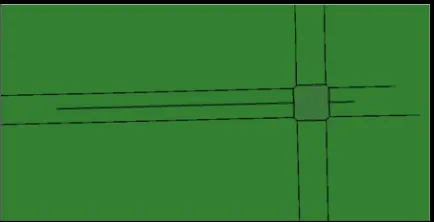
[image:2.612.178.395.598.709.2]We created a real-world traffic scenario for the map extracted from Open Street Maps. In this, we defined 50 [8] vehicles that will be running on the roads of the selected map. Thus, a VANET for the scenario is created.
©IJRASET: All Rights are Reserved
479
[image:3.612.205.409.87.288.2][image:3.612.209.401.318.497.2]
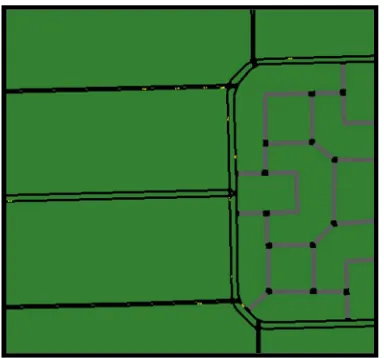
Fig. 2. A closer look of the internal area of the map
Fig.3. Yellow vehicles depicting mobile nodes
C. Creation of Equivalent Network Simulation (NS2)
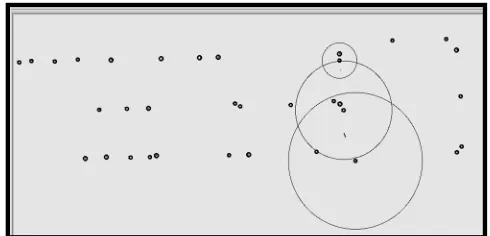
The network simulation is implemented using NS2. This simulation consists of wireless mobile nodes. In this simulation, the packet flow between vehicles and their proximity among each other is observed. The source and destination of data packets are predefined using TCP or UDP connection. The start time and stop time is specified in the .tcl file (NS2 file). The simulation is then viewed in Nam simulator.
[image:3.612.181.423.602.717.2]©IJRASET: All Rights are Reserved
480
Fig. 5. Vehicles in each other’s proximity
D. Scenarios Considered
Transport Layer Protocol Routing Protocol
TCP
DSDV AODV DSR
UDP
DSDV AODV DSR
Running the simulations for each scenario 5 times, corresponding 5 trace files were generated.
An awk script was used on the trace files to extract relevant average end to end and average throughput.
E. Comparison
[image:4.612.166.429.418.551.2]1) TCP
Fig 6. Throughput vs Time Graph for UDP
[image:4.612.144.421.604.714.2]2) UDP
©IJRASET: All Rights are Reserved
481
IV.SIMULATION ENVIRONMENT
The performance of the routing protocols such as AODV, DSR, and DSDV is analysed by simulating ad-hoc network using SUMO and NS-2. Simulation scenario consists of 50 mobile nodes (vehicles).
Parameters Values
Number of nodes and Area 50 and 600*200 sq.m.
Node Placement Uniform
Time of Simulation 5 minutes
PHY/MAC Layer Protocol IEEE 802.11
Speed Range (m/s) 0-22
Mobility Model Random Way Point(RWP)
Propagation Limit -111 dBm
Path Loss Model Two Ray Model
Channel Frequency 2.4GHz
Fading Model Rayleigh
Map Model OSM (Bagalkot, Karnataka)
Network Simulator NS2
Traffic Simulator SUMO v0.22
Routing Protocol DSDV, AODV, DSR
Transport Layer Protocol UDP, TCP
V. RESULTS
Performance of all the three routing protocols was analysed using simulation scenarios.
Upon generating the simulations and creating the graphs, it was concluded that there was a higher throughput when the DSR routing protocol was used and lesser delay when the AODV routing protocol was used. On the other hand, it was also seen that using UDP transport layer protocol gave a uniform result whereas the TCP transport layer protocol gave us a non-uniform result.
VI. FUTURE WORK
The efficiency of the AODV protocol can be further enhanced by optimising the AODV protocol. Two parameters considered are distance between the nodes and Received Signal Strength (RSS). The distance between a node and all its neighbouring nodes are calculated and the minimum distance is then considered. Furthermore, the signal strength [6], [1], [3] is accounted for a probabilistic approach for forwarding RREQ packets. Lesser the signal strength. Less is the probability of sending RREQ packets. More the signal strength more is the probability of sending RREQ packets.
REFERENCES
[1] Jadhav SS, Kulkarni AV, Menon R. Mobile Ad-Hoc Network (MANET) for disaster management. In2014 Eleventh International Conference on Wireless and Optical Communications Networks (WOCN) 2014 Sep 11 (pp. 1-5). IEEE.
[2] Patel DN, Patel SB, Kothadiya HR, Jethwa PD, Jhaveri RH. A survey of reactive routing protocols in MANET. InInternational Conference on Information Communication and Embedded Systems (ICICES2014) 2014 Feb 27 (pp. 1-6). IEEE.
[3] Al-Sultan S, Al-Doori MM, Al-Bayatti AH, Zedan H. A comprehensive survey on vehicular ad hoc network. Journal of network and computer applications. 2014 Jan 1;37:380-92.
[4] Campolo C, Molinaro A, Scopigno R. From today's VANETs to tomorrow's planning and the bets for the day after. Vehicular Communications. 2015 Jul 1;2(3):158-71.
[5] Shah S, Khandre A, Shirole M, Bhole G. Performance evaluation of ad hoc routing protocols using NS2 simulation. InConf. of Mobile and Pervasive Computing 2008 Aug 7.
[6] Rathi D, Welekar R. Performance evaluation of AODV routing protocol in VANET with NS2. International Journal of Interactive Multimedia and Artificial Intelligence. 2017 Jan 1;4(3):23-7.
[7] Fall K, Varadhan K. The ns Manual (formerly ns Notes and Documentation). The VINT project. 2005 Jan 25;47:19-231 [8] Kathiriya H, Bavarva A. Traffic Detection in VANET using NS2 and SUMO. Traffic. 2013 Jun:1-7.
[9] Shete P, Awale RN. RSS-GossipAODV: Received Signal Strength based Gossip Flooding Mechanism for AODV. InProceedings of the 6th IBM Collaborative Academia Research Exchange Conference (I-CARE) on I-CARE 2014 2014 Oct 9 (pp. 1-5). ACM.
[10] Shete P, Awale RN. Channel quality based Adaptive Gossip Flooding mechanism for AODV. InModeling and Optimization in Mobile, Ad Hoc, and Wireless Networks (WiOpt), 2015 13th International Symposium on 2015 May 25 (pp. 553-559). IEEE.