Experimental Study on the Effect of Chopped Glass
Fibres on the Strength of Concrete Tiles
C. Mahesh Babu1, Rounak Hussain2 1
15W51D2001, PG Student (SE), Dept. of Civil Engineering, SVTM – Madanapalle, JNTU – Ananthapur, A.P. India
2
Asst. professor, Dept. of Civil Engineering, SVTM – Madanapalle, JNTU – Ananthapur, A.P. India
Abstract: The consequence of glass fibre on flexural strength, split-tensile strength and compressive strength was considered for different fibre content on M-20 grade concrete designed as per IS 10262.The maximum size of aggregates used was 20mm. To study the effect on compressive strength, flexural strength, split-tensile strength 6 cubes,6 prisms and 6 cylinders were casted and tested. After that a practical application of GFRC in the form of cement concrete tiles was taken into consideration and no special technique was used to produce these tiles. The thickness of the tiles was 20mm and maximum size of aggregates used was 8mm.The water cement ratio was kept consistent and the admixture content was varied from .8 to 1.5 percent to maintain slump in between 50mm to 100mm.The mix proportion used was 1:1.78:2.66. The size of short fibres used were 30mm and the glass fibres were alkali resistant. The effect of this short fibres on wet transverse strength, compressive strength and water absorption was carried out. Six full sized tiles 400mm x 400mm x 20mm were tested and the results recorded. Pulse velocity tests was also conducted.
Keywords: GFRC, Aggregates, flexural strength, compressive strength
I. INTRODUCTION
One of the most significant building materials is concrete and its use has been ever cumulative in the whole world. The motives being that it is relatively cheap and its constituents are easily available, and has usability in extensive range of civil infrastructure works. However, concrete has certain drawbacks like brittleness and poor resistance to crack opening and spread. Concrete is brittle by nature and hold very low tensile strength and therefore fibres are used in one form or another to increase its tensile strength and decrease the brittle behaviour. Increasingly a lot of experiments have been done to enhance the properties of concrete both in fresh state as well as hardened state. The basic materials remain the same but superplasticizers, admixtures, micro fillers are also being used to get the desired properties like workability, Increase or decrease in setting time and higher compressive strength.
A. Glass Fibre Reinforced Concrete
Glass fibre reinforced concrete (GFRC) is a cementitious composite product reinforced with separate glass fibres of varying length and size. The glass fibre used is alkaline resistant as glass fibre are vulnerable to alkali which reductions the durability of GFRC. Glass strands are used for the most part for outside claddings, veneer plates and different components where their reinforcing impacts are required during construction. GFRC is stiff in fresh state has lower slump and hence less workable, therefore water reducing admixtures are used. Further the properties of GFRC depends on various parameters like method of producing the product. It can be done by various methods like spraying, casting, extrusion techniques etc. Cement type is also found to have considerable effect on the GFRC. The length of the fibre, sand/filler type, cement ratio methods and duration of curing also effect the properties of GFRC.
II. LITERATURE REVIEW
Extensive literature study has been carried out from national and international journals. These literatures are classified as journals, documents collected from web etc.
for material, funnels, and so forth. Later, glass fibres were proposed for fortification of concrete glue and mortar by Biryukovichs.The ordinary E-glass fibers are not durable and resistant in highly alkaline Portland cement paste. Majumdar and Ryder invented Alkali Resistant glass fibers by adding Zircon oxide (ZrO2). Romualdi and his co-authors published important influences of the use of steel fibre in concrete which lead the development of steel fibre reinforced cements (SFRC).
Carbon fiber reinforced mortar (CFRM) and carbon fiber reinforced cement (CFRC) are composites that have high flexural quality and durability and low drying shrinkage, notwithstanding this they have great electrical properties, for example, voltage-touchy impact. Ease pitch carbon filaments is satisfactory for scaffolds, other structural designing structures furthermore for cladding for structures, Kucharska and Brandt. In the districts with Corrosive impact of marine climate and solid winds (e.g. in Japan) CFRC is utilized as a part of scaffold auxiliary components for preferred toughness over it would be conceivable utilizing steel filaments Fibre-reinforced polymer (FRP) bars can be used to replace steel reinforcement conventional steel has the inherent problem of corrosion as a result of which it undergoes expansion and concrete cracking may occur; therefore, FRP rebar may be used as an alternate. The use of this fibres excludes the problem of corrosion and increases the ductility of the FRP-reinforced concrete beams but the load deflection was found to be higher. (Mohamed S. Issa, Ibrahim M. Metwally, Sherif M. Elzeiny 2010).
III. MATERIALS AND METHOD
Concrete is the supreme broadly used construction material. The basic materials of concrete are Portland cement, water, fine aggregates i.e. sand and coarse aggregates. The cement and water form a paste that hardens and bonds the aggregates together. Concrete in fresh state is plastic and can be easily moulded to any shape, as time passes it hardens and gains strength. The initial gain in strength is due to a chemical reaction between water and C2s and latter gain in strength is due to reaction between C3s and water. Concrete is produced by either following nominal mix proportions in which the mix proportions are fixed as per grade of concrete required or mix design proportions, latter produces more economical concrete.
A. Cement
Cement is a tremendously ground material having adhesive and cohesive properties which provide a binding medium for the discrete elements. The processes used for production of cement can be classified as dry and wet. The cement commonly used is Portland cement, it is also defined as hydraulic cement, i.e. a cement which hardens when it comes with water due to chemical reaction but there by forming a water-resistant product. Portland cement is obtained when argillaceous and calcareous materials are grounded to fine powder and mixed in definite proportion and fused at high temperature. When blast furnace slag is also used as one of the ingredients than the cement obtained is called Portland slag cement (PSC). Portland slag cement (PSC) – 43 grades (Konark Cement) was used for the experimental programme
B. Fibre
Fibre is a natural or synthetic string or used as a component of composite materials, or, when matted into sheets, used to make products such as paper, papyrus, or felt. Concrete is brittle by nature and is feeble in flexure as well as direct tension consequently in order to improve these properties fibres are added to concrete. Fibres may be short discrete or in forms of rods or may be even in form of textile fibres or woven mesh fibres. Numerous types of fibres have been added to concrete some have high modulus of elasticity some have low modulus of elasticity each category can improve certain properties of concrete. In our case short discrete glass fibres were used and as glass fibre is susceptible to alkali we used alkali resistant glass fibres. A fibre is a material made into a long filament with a diameter generally in the order of 10 tm. The chief purposes of the fibers are to carry the load and provide stiffness, strength, thermal stability, and other structural properties in the FRC.
Glass strands are filaments generally utilized as a part of the maritime and mechanical fields to create composites of medium-elite. Their unconventional trademark is their high quality. Glass is basically made of silicon (SiO2) with a tetrahedral structure (SiO4). Some aluminum oxides and other metallic particles are then included different extents to either facilitate the working operations or change a few properties (e.g., S-glass strands show a higher elasticity than E-glass).
C. Admixture
water-reducing admixture. In our case a water reducing admixture was used to obtain the desire workability as with increase in fibre content the mixture was becoming stiffer.
The experimental work contains of casting cubes, cylinders and prisms to study the effect of glass fibres on the compressive, flexural and split tensile strength of concrete. The consequence was calculated by changing the fibre content from 0% to 0.3%, no water reducing admixture was used for the experimental programme. To check the effect on concrete for fibre content variation 6 specimens each of cube, prisms and cylinders were casted. Test were conducted on the specimen after 7days and 28 days.
Additional in order to get a practical use of glass fibres in concrete, concrete tiles were casted. The size of the tiles being 400mm*400mm*20mm.The maximum size of aggregates used for 8mm in case of tiles and the testing for tiles were done as per IS 1237: 2012.The fibre content varied from 0% to 0.7% and the main study of interest was compressive strength, wet transverse strength and water absorption.
D. Fine aggregates
The fine aggregates secondhand for experimental programme was found from bed of river. The fine aggregates secondhand passed through 4.75mm sieve and had a specific gravity of 2.68. The fine aggregates belonged to Zone III according to IS 383.
E. Coarse aggregate
The coarse aggregates used were non-reactive and as per the necessities to produce a good and durable concrete. The coarse aggregates were of two different grading and as such a definite mix proportion was used to obtain the desire grading for coarse aggregates. One grade has maximum size of 10mm and minimum 4.75mm and for the other the maximum size was 20mm and minimum 10mm.This combination was used for casting cubes, cylinders and prisms. For casting cement and concrete tiles, a maximum size of 8mm and retained on 4.75mm was used. The coarse aggregates for casting tiles was obtained by sieving 10mm down aggregates.
F. Water
Ordinary tap water which is safe and potable for drinking and washing was used for producing all types of mix.
G. Formwork
Form work may be distinct as a temporary structure or a permanent structure used to comprise poured concrete in fresh state. Fresh concrete is plastic and can be easily moulded formwork plays an important role in shaping the concrete and also support it until it gains sufficient strength to support itself. It is required that the formwork be sufficiently strong to take the dead load and live load that may come upon it during construction and also it should be sufficiently rigid at the same time to avoid bulging, twisting, swaging due to these loads. Dead loads refer to the load or weight of the forms and the weight of the fresh concrete.
In our case permanent moulds were used which are commercially available in market. However, for preparation of tiles moulds were specially ordered and procured from local steel fabricating shops.
IV. EXPERIMENTAL SETUP
Various tests conducted on the specimens are described below along with the description and importance. And the grade of concrete was M-20. The proportioning of the concrete was. The nominal maximum size of aggregate was 20mm There were two ways in which the investigation was carried out one in which only cubes, cylinders and prisms were casted and no admixture was used.
A. Compressive Strength
The maximum important property of concrete is its compressive strength and durability. Concrete is mostly used in construction where load moved is mostly via compressive strength. In order to check the effect of fibres on the compressive strength of concrete 150mm cubes were cast and tested. The cubes were tested at the age of 7days and 28 days and the variation were noted. Fibre content was varied from 0% to 0.3% when the nominal maximum size of aggregates was 20mm and no admixture was used. The water cement ratio was fixed at 0.5. The workability of the mix was observed to come down but however no extra water was used.
B. Split Tensile Strength
C. Flexural Strength
Flexural strength is also a measure of the tensile strength of concrete. In practical concrete may not be subjected to direct tension but it is subjected to flexure in many cases particularly in beams which is a flexural member. Flexural strength is also referred to as modulus of rupture.
D. Water Transverse Strength Test
Acceptable to determine the wet transverse strength of tiles six full sized tiles are tested at 28 days as per the guidelines given by IS 1237:2012. Before performing the test, the tiles are soaked in water for 24 hrs and then placed horizontally on two parallel steel supports, the wearing surface is upwards and its sides parallel to supports. The load is applied in such a way that the steel rod is parallel to supports and midway between them. It is required that the length of the supports and of the loading rod shall be longer than the tile. The diameter of the loading rod shall be 12mm and be rounded. The load is applied at a uniform rate of 2000N/min, until the tile breaks
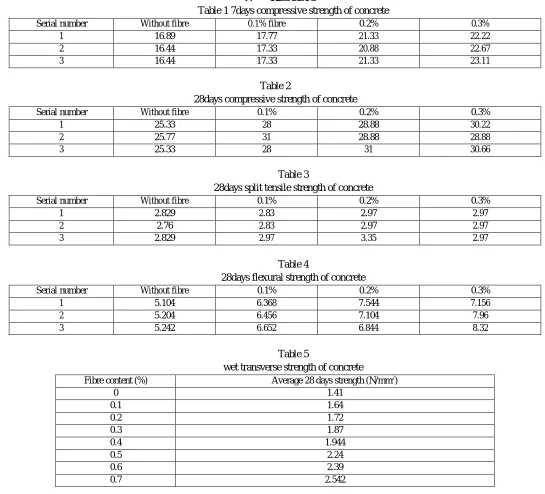
[image:4.612.31.576.247.741.2]V. RESULTS
Table 1 7days compressive strength of concrete
Serial number Without fibre 0.1% fibre 0.2% 0.3%
1 16.89 17.77 21.33 22.22
2 16.44 17.33 20.88 22.67
3 16.44 17.33 21.33 23.11
Table 2
28days compressive strength of concrete
Serial number Without fibre 0.1% 0.2% 0.3%
1 25.33 28 28.88 30.22
2 25.77 31 28.88 28.88
3 25.33 28 31 30.66
Table 3
28days split tensile strength of concrete
Serial number Without fibre 0.1% 0.2% 0.3%
1 2.829 2.83 2.97 2.97
2 2.76 2.83 2.97 2.97
3 2.829 2.97 3.35 2.97
Table 4
28days flexural strength of concrete
Serial number Without fibre 0.1% 0.2% 0.3%
1 5.104 6.368 7.544 7.156
2 5.204 6.456 7.104 7.96
3 5.242 6.652 6.844 8.32
Table 5
wet transverse strength of concrete
Fibre content (%) Average 28 days strength (N/mm2)
0 1.41
0.1 1.64
0.2 1.72
0.3 1.87
0.4 1.944
0.5 2.24
0.6 2.39
VI. CONCLUSIONS
A. The compressive strength of concrete deprived of admixture is not affected by the presence of short distinct glass fibers with fibre content in the range 0.1 to 0.3 % of fiber content by weight of concrete.
B. The split tensile strength of concrete upsurges with the totaling of glass fibers.
C. The flexural strength of concrete upsurges with increase in fiber content and as such the tension carrying capacity of concrete may increase in flexure
D. The wet transverse strength of tiles increases and the increase has been originating with addition of fibers
E. Water absorption of the concrete also reduces with increase in fiber content.
F. The compressive strength of concrete with admixture was not pretentious up to 0.4 %
G. Fibre content but decreased with the presence of higher amount of fibers
REFERENCES
[1] Cook D.J., Pama R.P., Weerasingle H.L.S.D. “Coir fibre reinforced cement as a low cost roofing material”. Build Environ 1978;13(3):193–8.
[2] Perez-Pena .M and Mobasher .B, “Mechanical properties of fiber reinforced lightweight concrete composites ”. Cement and Concrete Research, Vol. 24, No. 6, pp. 1121-1132, 1994
[3] Brandt AM. “Cement-based composites: materials, mechanical properties and performance”. London: E&FN Spon; 1995. p. 470
[4] Nakamura H, Mihashi H. “Evaluation of tension softening properties of fiber reinforced cementitious composites.” Fracture Mechanics of Concrete Structures 1998; I:499e510.
[5] Mirza F.A., Soroushiannd P. “Effects of alkali-resistant glass fiber reinforcement on crack and temperature resistance of lightweight concrete.” Cement and Concrete Composites 2002;24(2):223–7
[6] Robert S.P. Coutts .“A review of Australian research into natural fibre cement composites” Cement & Concrete Composites 27 (2005) 518–526 [7] Khosrow Ghavami. “Bamboo as reinforcement in structural concrete elements” .Cement & Concrete Composites 27 (2005) 637–649
[8] Huang Gu, Zuo Zhonge “Compressive behaviour of concrete cylinders reinforced by glass and polyester filaments”. Materials and Design 26 (2005) 450– 453