An exploration of the current knowledge on young people
who kill: a systematic review
GERARD, F. Jeane, JACKSON, Vicki, CHOU, Shihning, WHITFIELD, Kate C. <http://orcid.org/0000-0001-9208-9484> and BROWNE, Kevin D.
Available from Sheffield Hallam University Research Archive (SHURA) at: http://shura.shu.ac.uk/12907/
This document is the author deposited version. You are advised to consult the publisher's version if you wish to cite from it.
Published version
GERARD, F. Jeane, JACKSON, Vicki, CHOU, Shihning, WHITFIELD, Kate C. and BROWNE, Kevin D. (2014). An exploration of the current knowledge on young people who kill: a systematic review. Aggression and Violent Behavior, 19 (5), 559-571.
Copyright and re-use policy
See http://shura.shu.ac.uk/information.html
1
An Exploration of the Current Knowledge on Young People who Kill: A
Systematic Review
F. Jeane Gerarda, Vicki Jacksonb, Shihning Chouc, Kate C. Whitfieldd, & Kevin D. Brownee
Authors’ affiliation addresses
a b c e
Centre for Forensic and Family Psychology, Division of Psychiatry and Applied
Psychology, The University of Nottingham, Yang Fujia Building (Floor B), Jubilee Campus,
Nottingham, NG8 1BB, United Kingdom
d
Birmingham City University, United Kingdom
E-mail addresses
a
b
c
d
e
Corresponding author
Jeane F. Gerard
Postal address: Centre for Research in Psychology, Behaviour and Achievement, Coventry
University, Priory Street, Coventry, CV1 5FB, United Kingdom
2
Abstract
This exploratory systematic review assessed the quality of primary studies on young people
who kill and synthesised the findings regarding the characteristics of these offenders. An
electronic search yielded 12,717 hits of papers published between 1989 and 2012. Of these,
8,395 duplicates, 3,787 irrelevant hits, and 527 publications not meeting the inclusion criteria
of the review were excluded (15 publications were added after searching the grey literature),
leaving 23 good quality studies. From these, a further seven were removed due to their small
sample size (i.e., n < 30), leaving a total of 16 studies reviewed in detail. A search update was carried out on 2 February 2014 and no further studies meeting the inclusion criteria were
found. The results indicate that juvenile homicide offenders are a heterogeneous group and
the risk factors for juvenile homicide are cumulative and evolve through life. The findings are
mixed, but ten risk factors are identified which appear to be consistent for offenders across
the studies reviewed. The limitations of the current review are highlighted and
recommendations for future research are outlined, with particular consideration given to
improving the quality of the literature in this field.
3
1. Introduction
Juvenile homicide is a rare event, but has increasingly been making media headlines since the
1990s. According to Rodway et al. (2011), approximately 12% of homicides in Canada are
committed by young people per year, 10% in the United States of America (USA), 8% in
Finland, and 6% in England and Wales. Despite being a rare event, a number of empirical
studies have been conducted in an effort to understand the offence, motivations and
characteristics of these young offenders (see Heide, 2003 for a summary). However, these
studies tend to be diverse in content and primarily comprised of case studies (Heide, 2003).
Two literature reviews have previously been carried out regarding juvenile homicide.
A comprehensive literature review was conducted by Heide (2003), focusing on clinical and
empirical findings, as well as the treatment of the offenders. The second literature review
(Shumaker & Prinz, 2000) concentrated on the characteristics of pre-teen homicide offenders
(under 13 years old). The existing literature on juvenile homicide offenders has successfully
explored the demographic, psychiatric, familial and social characteristics associated with
these offenders (Heide, 2003). However, Heide (2003) provides recommendations concerning
enhanced methodological designs to explore the aetiology, interventions and long-term
outcomes. In addition, Shumaker and Prinz (2000) suggest that, despite their differences,
pre-teens share similarities with adolescent homicide offenders in terms of background
characteristics, such as domestic violence and abuse, poor parenting and instability. They also
found weak evidence to support the existence of different etiologies between pre-teen and
adolescent homicide offenders.
2. The difficulty of defining juvenile homicide
Existing studies relating to juvenile homicide are heterogeneous in terms of their content
4 relating to the meaning of the term ‘juvenile’, but also different legal definitions of what
constitutes homicide. Indeed, homicide is defined differently depending on the country in
which it occurs. In England and Wales, according to the Crown Prosecution Service (2013),
homicide includes the offences of murder, manslaughter, infanticide and causing death by
dangerous or careless driving. In Scotland, homicide refers to the offences of murder and
culpable homicide (Scottish Government, 2012).
International agencies also vary in terms of how they define homicide, as well as
which offences constitute homicide. For instance, the European Commission (2013) refers to
homicide as the “intentional killing of a person” (para. 1). It includes offences such as
murder, manslaughter, euthanasia and infanticide. On the other hand, the United Nations
(2012) define homicide as “unlawful death purposefully inflicted on a person by another
person” (para. 1). While the definitions (and offences included within the definitions) of
homicide may differ, they all consist of similar elements, that is, a person has been killed,
there was an intention to kill that person, and there is a human offender (Smit, De Jong &
Bijleveld, 2012).
In United Kingdom (UK) legislation, the terms ‘juvenile’ and ‘youth’ are used
interchangeably. In some instances these terms refer to all individuals under the age of 18,
while in others they only refer to those aged 14 to 18. However, it is generally accepted that a
‘child’ is someone aged 13 or below, a ‘young person’ refers to someone between the ages of
14 and 17, and a ‘young adult’ is someone aged 18 to 21 (Penal Affairs Panel, 2009). The
term ‘juvenile’ appears to be used far more frequently in the USA legislation, and whether or
not an individual is classified as a ‘juvenile’ is determined by a judicial decision. Depending
on the state, a juvenile is usually someone under the age of either 17 or 18 (Heide, 2003).
Some authors (e.g., Carcach, 1997) argue that the term ‘youth’ refers to a broader
5 anyone under the age of 24. Across Europe, the age relating to juvenile delinquency also
differs, with the age of criminal responsibility being eight in Scotland, 10 in England and
Wales, 13 in France, 14 in Germany, 16 in Spain, and 18 in Belgium (Marttunen, 2008). The
young offenders referred to in this paper are individuals under the age of 21. This is because
21 is the legal age in most European countries and also incorporates puberty, psychological
and physical development.
3. Characteristics of juvenile homicide offenders
A number of characteristics have been identified in relation to juvenile homicide offenders.
These include characteristics relating to their background (e.g., low socio-economic status,
harsh parenting and exclusion from school) and their environment (e.g., availability of
weapons, family disorganisation, abusive home environment and violent family life) (Darby,
Allan, Kashani, Hartke & Reid, 1998; Hill-Smith, Hugo, Hughes, Fonagy & Hartman, 2002).
The social learning approach, developed by Bandura (1986), states that learning results from
a combination of human interactions and environmental influences. Bandura’s (1986) theory
focuses on observational learning, where an individual models his or her behaviour on that of
others after observing their behaviour. The observed behaviour is adopted or changed
according to the consequences experienced by the individual (referred to as reinforcement
and punishment). Studies in which aggressive behaviours (e.g., punching or hitting) were
modelled by adults show that exposure to aggressive models increases the rate of imitation by
children (see Gonzalez, 2001). Research also shows that the parents of juvenile homicide
offenders tend to provide a model of violence as shown in Hardwick and Rowton-Lee (1996)
in which parricide offenders are more likely to have experienced severe abuse by their
families. According to Roe-Sepowitz (2007), risk factors concerning the background
6 parental supervision. She also found that sexual abuse occurred in 20% of cases and more
than half of the offenders experienced a history of substance use.
A comprehensive study carried out by Heide (1997) identified 15 primary factors
associated with juvenile homicide offenders in the 1990s. These factors belong to five broad
categories: the situation, societal influences, resource availability, personality characteristics
and cumulative effect. Heide (1997) suggests that these categories contribute towards the
escalation of juvenile homicide in the USA. She also highlights other contributing factors,
such as psychological disorders, neurological impairments, influence of home environment,
involvement in antisocial behaviour, substance abuse, and other social difficulties (e.g.,
truancy, dropping out or being expelled from school).
In addition to the work of Heide (1997, 1999, 2003), other studies have examined the
criminal involvement of parents (Busch, Zagar, Hughes, Arbit & Bussell, 1990; Lindberg et
al., 2009; Zagar, Arbit, Sylvies, Busch & Hughes, 1990), gang membership (Busch et al.,
1990; Zagar et al., 1990), and previous arrests (Carter, 1999; Myers, Burgess & Nelson,
1998; Zagar & Grove, 2010).
The Pittsburgh Youth Study (Loeber & Farrington, 2011) is a prospective longitudinal
study that followed 1,517 males from childhood to early adulthood. It is the first study of its
kind to prospectively gather information on the lives and living conditions of men growing up
in a medium-sized city in order to explore those who would later become homicide offenders,
victims, or neither. Between 1987 and 2009, 37 participants (aged 15-29) were convicted of
homicide. It is important to note that this includes first, second and third degree murder,
manslaughter, vehicular homicide, and ‘unknown degree’ murder. Four fifths of these
offenders had committed their offences by the age of 20, peaking at 18 to 19 years old.
Despite the age range being older in this study, it seems important to report their findings
7 offend. According to Heide (2012), this study by Loeber and Farrington (2011) is
ground-breaking due to its longitudinal nature, large sample, comparative analyses, utilisation of
several control groups, inclusion of both self-reported delinquency and official reports, and
the use of multiple informants as well as standardised measures when appropriate and
available.
The risk factors determined by Loeber and Farrington (2011), which are associated
with becoming a homicide offender, include environmental and socio-economic factors (e.g.,
neighbourhood, low socio-economic status, and young and unemployed mother). They found
that these factors were more important in terms of predicting homicide offenders than
individual risk factors. As a result, African American boys were more at risk of committing
homicide due to the high prevalence of environmental and socio-economic risk factors. In
terms of behavioural risk factors, suspension from school, disruptive behaviour, and positive
attitudes towards delinquency strongly predicted violence. Factors that were found to be
non-significant comprised of those relating to the individual’s parents, peers, low school
achievement, and psychopathic characteristics (e.g., lack of guilt and cruelty). Loeber and
Farrington (2011) conclude that homicide is best predicted by a range of risk factors and not
by a single predictor.
Heide (2003) reports a consensus between the studies she reviewed that suggest that a
‘typical’ juvenile homicide offender is male, unlikely to suffer from psychosis or be mentally
ill, shows low achievement at school, has witnessed or experienced violence at home, has a
prior arrest record, and is likely to use and/or abuse substances (i.e., drugs and alcohol).
However, Heide (2003) highlights that the findings in this research area are mixed and
fraught with methodological problems (e.g., case studies, absence of a comparison group, and
sample drawn from psychiatric populations referred for assessment or treatment). These
8 While past research on juvenile homicide has tended to rely on case studies, stronger
empirical work is being carried out more frequently. The quality of the research in this
subject area has improved over the last decade and important longitudinal cohort studies have
been published in 2011. There is currently a need for a more up-to-date systematic review of
the empirical research on juvenile homicide in order to synthesise findings, gain further
understanding in this area, inform future research, and highlight the challenges researchers
face when conducting research with this specific population.
4. The purpose of the current systematic review
This review seeks to systematically explore and synthesise the current knowledge (both
published and unpublished primary research in all languages) concerning juvenile homicide
offenders. It is an exploratory analysis that will assess the heterogeneity and quality of the
studies before their findings are synthesised. Priority has been given to findings from studies
that draw on high quality study designs with the least amount of bias possible. Priority has
also been given to case-control and cohort studies. The results from these studies will be
summarised, providing researchers with up-to-date knowledge of the subject area and
identifying gaps in the literature to prompt future research. This systematic review carries
implications for preventing juvenile homicide, as it will highlight the risk factors relating to
young people who kill. This will allow for future identification of those young people most at
risk so that they can be supported by appropriate interventions being put in place.
5. Method
5.1. Inclusion criteria for the review
Studies that met the following criteria were included in the review:
9
Target group: juvenile homicide offenders
Comparison group: non-homicidal young people
2. Exposure: exploring the personal characteristics and risk factors of juvenile homicide
offenders
3. Outcome: the victim died as a result of the homicide
4. Study type: cohort or case-control primary studies
5. Language: all languages
The type of exposure included in this review was kept broad in order to fully explore
the subject area. Studies were excluded from the review if they included: child murder where
the child is the victim and not the offender, legal issues and policies regarding homicide and
school shootings, post-traumatic stress disorder and consequences for survivors following
homicide among young people, child soldiers, and manslaughter. Additionally, conference
abstracts that did not contain primary study data, book reviews, and secondary studies based
on media reports were excluded. The analysis of victim characteristics and crime scene
characteristics were also beyond the scope of this review.
5.2. Search methods for identification of studies
Ten databases were searched to identify relevant published and unpublished studies. These
are: PsycINFO (Ovid), Medline (Ovid SP), Science Direct, Web of Knowledge (ISI),
SCOPUS, Cochrane Library, PubMed, Sociological Abstracts, Social Services Abstracts,
ProQuest dissertations and theses. A scoping exercise helped develop and refine the search
terms for the review. These were verified by the faculty team librarian. The following search
terms were used with truncation in the title and abstract: ((child* or kid* or young* or youth*
or juvenil* or teenag* or adolescen*) AND (murder* or kill* or slaughter* or manslaughter*
10 high number of repeatedly irrelevant hits, the following terms were excluded from the search:
(kidney* or disease* or cell* or natural* or whale* or malnutrition* or pathogen* or zone* or
fish* or vaccine* or plant* or animal* or infection* or tumor* or tumour* or flower* or
malaria* or diarrhoea* or accident* or humanitar* or tree*). This was done by using the
Boolean operator ‘NOT’ to help refine the search. A limit of time was set by only including
studies published between 1989 and 2012. This period of time was chosen as it marks the
development and testing of typologies on juvenile homicide offenders (e.g., Benedek &
Cornell, 1989) and the increase in the number of empirical studies conducted.
In order to include all available studies, a manual search of relevant papers’ references
was also carried out. Additionally, a further two authors (Brownstein and Bailey) were
contacted to locate unpublished works. Copac articles written in all languages were
considered and the grey literature was searched, including the websites for the Ministry of
Justice, Home Office, Federal Bureau of Investigation, and Youth Justice Board. A second
reviewer applied the inclusion criteria to 10% of the 12,717 hits identified (n = 1,272). This was to assess inter-rater reliability, of which the level of agreement between raters was high
(Cohen’s κ = .98).
5.3. Data collection and analysis
The first search was carried out on 28 March 2012 and the last search on 17 April 2012. A
search update was carried out on 2 February 2014 and no further studies meeting the
11
Figure 1. Search strategy of systematic review
SCOPUS 2,460 hits PsycINFO 3,300 hits Social Services Abstracts 361 hits Sociological Abstracts 1,249 hits ProQuest 1,330 hits Medline 2,115 hits PubMed 1,490 hits Cochrane Library 42 hits Web of Knowledge 370 hits
Total hits 12,717 hits
8,395 duplicate references excluded 4,322
4,255
67 book reviews and editorials excluded
3,285 references excluded by scanning titles and abstracts
435 references excluded because related to child soldiers, fiction, legal issues,
manslaughter, offender being over age of 21, school shooting policy, youth crime
15 relevant references added because non-duplicates from grey literature (n = 9) and manual search (n = 6)
527 references excluded due to: Design (n = 506)
Population (n = 10) Exposure (n = 5) Outcome (n = 1)
Conference abstract (n = 2) No access - duplicate (n = 3) 550
970
535
7 studies excluded as sample was too small (n < 30)
23
12 This search generated 12,717 hits, with papers dating back until 1989. After the
exclusion of duplicate papers (n = 8,395) and application of the inclusion criteria, 535 remaining hits appeared to be relevant based on their title and abstract. These 535 articles can
be grouped into nine categories: gang-related, serial killer, sexual killer, homicide,
neonaticide/infanticide, murder/suicide, parricide, siblicide, and school shooting. The nine
categories represent different thematic emphases of the studies on juvenile homicide and
highlight the heterogeneity of the literature in this area.
In addition to the 535 articles, a further 15 papers were added to the review. These
papers were from grey literature (n = 9) and the result of a manual search (n = 6). A quality assessment then took place, which considered the design, population, exposure and outcome.
A total of 527 studies were eliminated based on this quality assessment. While the research in
this field is dominated by case studies, a number of case-control and longitudinal cohort
studies have been conducted in recent years. Case-control studies identify predictors and
assess their influence on the outcome. Longitudinal cohort studies describe incidence or
natural history, allowing the analysis of risk factors and measuring events in a temporal
sequence (Mann, 2003). In order to improve the reliability of the review’s findings, the
inclusion of studies was limited to case-control and longitudinal cohort studies (Level 3 in the
Centre for Review and Dissemination hierarchy of evidence, 2003).
Only high quality studies were kept and the full text of the paper was needed to verify
the presence of a control group. As three publications were inaccessible within the time frame
of the review, they were excluded. Seven of the case-control studies were also removed from
the review because they had a sample of less than 30 juvenile homicide offenders, which
limited the generalisability of their findings. A total of 16 studies were thus left in the final
13 These studies were assessed using a quality appraisal checklist, which was an
adaptation of a checklist developed by the Critical Appraisal Skills Programme (2006). It
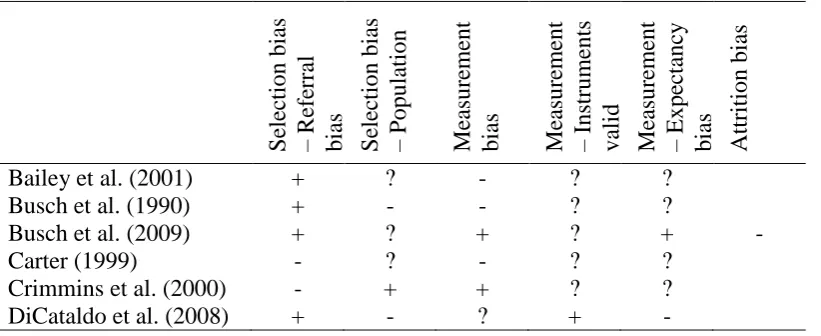
covers selection, measurement and attrition bias. Based on the quality assessment, 24 items
(in terms of cohort studies) and 16 items (in terms of case-control studies) were used to
determine the risk of bias in each study. Two points were awarded to a study if it met a
quality criterion, one point was awarded if it partially met a criterion, and zero points were
awarded if it did not meet a criterion. The points for all the quality criteria were then added
and a higher overall score meant that the study was of a high quality. According to
Sanderson, Tatt and Higgins (2007), an overall quality score may not be the best way to
determine a study’s quality. As a result, an assessment of each area of bias was also
conducted (e.g., selection, sampling, population, measurement, classification, and attrition).
Each area of bias was assessed (where 0 = low risk, 1 = unclear, and 2 = high risk), resulting
in a score of 0-4 for cohort studies or 0-6 for case-control studies. Higher scores indicated a
higher risk of bias in the study. This follows the procedure recommended by the Cochrane Handbook for Systematic Reviews of Interventions (Higgins & Green, 2011) and the Cochrane Collaboration’s tool for assessing risk of bias (Higgins & Altman, 2008). Table 1
[image:14.595.68.479.596.764.2]summarises the risk of bias in each study included in the review.
Table 1. Risk of bias in each study
S elec ti on bias – R efe rr al
bias Selec
ti on bias – P opu lation Mea sure ment bias Mea sure ment – Instru ments va li d Mea sure ment – Expe ctanc y bias Attrit ion bi as
Bailey et al. (2001) + ? - ? ?
Busch et al. (1990) + - - ? ?
Busch et al. (2009) + ? + ? + -
Carter (1999) - ? - ? ?
Crimmins et al. (2000) - + + ? ?
14
Dolan et al. (2001) ? - + ? -
Greco et al. (1992) + ? - - -
Hughes et al. (2009) + ? + ? + -
Lindberg et al. (2009) + + - ? -
Reyes (1991) ? + + + -
Shumaker et al. (2001) + ? - ? ?
Zagar et al. (1990) + - - ? +
Zagar et al. (2009a) + ? + ? + -
Zagar et al. (2009b) + ? + ? + -
Zagar et al. (2010) + + - ? +
Note. High risk of bias (+), low risk of bias (-), unclear (?)
Once the quality assessment had been conducted, a random selection of 22% of the 23
studies was independently assessed by a second reviewer. In order to establish inter-rater
reliability, the same quality appraisal checklist was used to assess the studies. As each area of
bias was ascribed an ordinal score, weighted κ was used to evaluate the degree of
disagreement between the raters (Sim & Wright, 2005; Viera & Garrett, 2005). Any
disagreements between the raters were resolved through discussion, leading to a final 100%
agreement on all areas of bias.
Data relating to study characteristics and risk factors associated with juvenile
homicide were extracted from the 16 studies and are presented in the results section (please
refer to the original articles for the definitions of the risk factors). The significance level of
each risk factor was also examined to determine its frequency in the offender group versus
the comparison group. Due to the diverse samples across the 16 studies, as well as the
limitations of their study design and the bias inherent within them, meta-analysis is not
appropriate for the presentation of their results. A qualitative data synthesis was therefore
performed and is presented in the results section. The p-values reported in the original 16 studies were used to determine the significance of the results.
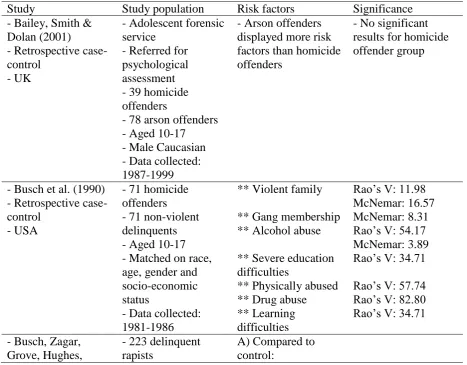
15 Table 2 provides a description of the 16 studies included in the review, as well as significant
risk factors associated with juvenile homicide. The diversity across the studies is clear. They
differ in terms of type of sample (i.e., different types of juvenile homicide), size of sample,
age of offenders (i.e., ranging from 10 to 21 years old), and type of control group (e.g.,
violent offenders or non-violent offenders). The aims of the studies also vary, and they span
the years 1990 to 2010. Most of the studies were conducted in the USA (n = 13), while two took place in the UK, and one was conducted in Finland. The terms ‘youth’, ‘adolescent’ and
‘juvenile’ are used interchangeably across the studies, and the age of inclusion as a young
offender varies. This is linked to the issue of definition of juvenile homicide offenders (as
[image:16.595.65.533.402.767.2]outlined in the introduction), which is deeply ingrained in the research in this field.
Table 2. Description of 16 studies included in review and significant risk factors
Study Study population Risk factors Significance
- Bailey, Smith & Dolan (2001) - Retrospective case-control
- UK
- Adolescent forensic service
- Referred for psychological assessment - 39 homicide offenders
- 78 arson offenders - Aged 10-17 - Male Caucasian - Data collected: 1987-1999
- Arson offenders displayed more risk factors than homicide offenders
- No significant results for homicide offender group
- Busch et al. (1990) - Retrospective case-control
- USA
- 71 homicide offenders - 71 non-violent delinquents - Aged 10-17 - Matched on race, age, gender and socio-economic status
- Data collected: 1981-1986
** Violent family
** Gang membership ** Alcohol abuse
** Severe education difficulties
** Physically abused ** Drug abuse ** Learning difficulties
Rao’s V: 11.98 McNemar: 16.57 McNemar: 8.31 Rao’s V: 54.17 McNemar: 3.89 Rao’s V: 34.71
Rao’s V: 57.74 Rao’s V: 82.80 Rao’s V: 34.71
- Busch, Zagar, Grove, Hughes,
- 223 delinquent rapists
16 Arbit, Bussell &
Bartikowski (2009) - Cohort study - USA
- 223 delinquent molesters
- 223 non-violent delinquents
- 7 became juvenile sexual homicide offenders
- Randomly selected - Individually matched
- Data collected: 1980-1988
** Not with parents until age 14
** Personality disorder
* Violent family ** Low socio-economic status * Male
** Single parent ** Prior court contact for violent offences ** Prior court contact for delinquent
offences
** Prior court contact for all offences ** Underachieves ** Poor executive function
B) Compared to matched non-violent delinquents:
* Single
* Violent family * Low socio-economic status * Male
* Truancy
** Prior court contact for violent offences * Prior court contact for delinquent offences
t = 3.53, p < .01
t = 3.87, p < .01
t = 2.12, p < .05
t = -3.54, p < .01
t = 2.44, p < .05
t = -4.92, p < .01
t = 3.87, p < .01
t = 4.58, p < .01
t = 6.87, p < .01
t = 4.08, p < .01
t = 9.55, p < .01
t = 2.83, p < .05
t = 2.12, p < .05
t = -2.45, p < .05
t = 2.45, p < .05
t = -2.85, p < .05
t = 3.87, p < .01
t = 2.70, p < .05
- Carter (1999) - Retrospective case-control
- USA
- 32 homicide offenders - 32 juveniles remanded to adult court on felony offences other than homicide
- Under 18 years old - Male
- Matched on age and ethnicity
- Data collected: 1995
*** Homicide offenders had previous knowledge of victim
p = .001
- Crimmins, Cleary, Brownstein, Spunt & Warley (2000) - Retrospective
case-- 83 homicide offenders - 145 robbery offenders
17 control
- USA
- 115 assault offenders
- 71 sexual assault offenders
- All in custody - Aged 12-21 - Data collected: 1995-1996
homicide offenders with an average of the three comparison groups
* Attacked someone to hurt them
** Owned a gun ** Used a gun
OR = 1.83
OR = 2.61
OR = 3.05 - DiCataldo &
Everett (2008) - Retrospective case-control
- USA
- Secure detention programme - 33 offenders charged or convicted of homicide
- 38 individuals adjudicated for a violent offence - Average age: 16 - Male
- Data collected: 1995-1998
** Early positive memories of mother ** Early positive memories of father * Gun routinely kept at home
* Took gun from home
χ2
(1, 47) = 15.50, p
= .004
χ2
(1, 49) = 14.69, p
= .005
χ2
(1, 67) = 4.90, p = .027
χ2
(1, 70) = 4.53, p = .033
- Dolan & Smith (2001)
- Retrospective case-control
- UK
- 46 homicide offenders
- 106 fire-setters - Aged 10-17 - Matched on age, ethnicity, socio-economic status and criminal history - Referred to same unit for assessment during same time period
- Data collected: 1986-1996
* Male
** Attended multiple schools
χ2
(1, 46) = 4.15, p < .05
χ2
(1, 46) = 8.00, p < .01
- Greco & Cornell (1992)
- Retrospective case-control
- USA
- Clinical sample - 55 homicide offenders (2 groups: conflict and crime) - 55 non-violent offenders convicted of larceny, breaking or entering, but without prior charges for violent offences - Aged 12-18 - Matched on age, race and gender
- No significant differences were observed between groups
- No significant results
- Hughes, Zagar, Busch, Grove & Arbit (2009)
- 181 abused children divided into four groups:
A) Compared to control:
18 - Cohort study
- USA
1. later homicidal 2. later violent 3. later delinquent 4. later non-delinquent
- Records followed for nine years - Data collected: 1980-1988 infectious, neurological, genitourinary, pregnancy, childbirth, or perinatal complications ** Parent abused substances ** Parent abused alcohol
** Violent family ** Physically abused parent
** Parent abused alcohol and substances
** Parent member of gang
* Child truancy, suspension or expulsion * Child epilepsy * Child was in psychiatric hospital * Male
* Low socio-economic status * Single parent ** Later parent and child in court contact ** Poor executive function
** Child illness B) Compared to matched later non-delinquent group: ** Child
underachieves * Child respiratory, infectious, neurological, genitourinary, pregnancy, childbirth or perinatal complications ** Parent abused substances ** Parent abused alcohol
t = 6.00, p < .01
t = 6.00, p < .01
t = 6.00, p < .01
t = 47.25, p < .01
t = 9.00, p < .01
t = 3.67, p < .01
t = 2.06, p < .05
t = 2.45, p < .05
t = 2.45, p < .05
t = 2.47, p < .05
t = -3.29, p < .05
t = 4.59, p < .05
t = 16.75, p < .01
t = 8.27, p < .01
t = 5.13, p < .01
t = 9.00, p < .01
t = 2.47, p < .05
t = 4.20, p < .01
19 ** Violent family
** Physically abused parent
** Parent abused alcohol and substances
** Parent member of gang
** Male ** Low socio-economic status ** Later parent and child in court contact ** Poor executive function
t = 6.00, p < .01
t = 3.29, p < .01
t = 4.93, p < .01
t = 3.67, p < .01
t = 4.20, p < .01
t = -2.61, p < .01
t = 8.13, p < .01
t = 8.44, p < .01 - Lindberg et al.
(2009)
- Retrospective case-control
- Finland
- 57 male juvenile homicide offenders referred for
psychiatric examination - Aged 15-19 - 57 male adult homicide offenders - Randomly selected - Data collected: 1995-2004
Risk factors for juveniles scoring 26 or higher on PCL-R: * Previous criminal history
* Excessive violence during index
homicide
* Not living with both parents * Institutional or foster home placement in childhood ** Parent has criminal history ** Parent or close relative with history of homicide
* School difficulties
** Special education
* Mental health contact prior to age 18
χ2
= 4.07, p = .04,
ϕ = .27
p = .04, ϕ = .31
p = .02
χ2
= 2.39, p = .03,
ϕ = .29
χ2
= 7.75, p = .01,
ϕ = .37
χ2
= 7.75, p = .01,
ϕ = .37
χ2
= 4.95, p = .03,
ϕ = .30
χ2
= 13.68, p = .01,
ϕ = .49
χ2
= 4.07, p = .04,
ϕ = .27 - Reyes (1991)
- Case-control, quasi-experimental
- USA
- Case-study group: 32 males who were treated in groups and met for 13 weeks - Control group: 32 males incarcerated for aggravated assault
- Content same for
* Low mean scores on
hostility-aggression post-test for treatment group * Relationship
between empathy and hostility-aggression on pre-test for treatment group
r = .38, p < .05
20 each group
- Average age when committed offence: 15
- Matched on proximity to release eligibility
- Excluded: individuals with psychosis, learning difficulties, or suffering from major affective disturbance or pervasive
developmental disorder
* Relationship between full scale IQ score and locus of control post-test for whole sample (slightly more for treatment group) * Relationship between longer sentences and locus of control post-test for whole sample * Relationship between number of offences committed and empathy on post-test for treatment group
* Relationship between number of offences committed and
hostility-aggression scores on post-test for
treatment group * Relationship between greater number of offences associated with higher, more external locus of control for treatment group
r = .38, p < .05
r = .28, p < .05
r = -.42, p < .05
r = -.35, p < .05
r = .35, p < .05
- Shumaker & McKee (2001) - Retrospective case-control
- USA
- 30 males charged with murder - 62 males charged with other violent felony offences - Average age: 15 - Data collected: 1987-1997
** Raised by one or both parents
* Less likely to have attempted suicide in the past
* Less likely to be an only child
** Less likely to have used mental health services at time of offence
*** Less likely to have been diagnosed with an Axis 1 mental disorder
p < .01
p < .05
p < .05
p < .01
χ2
(1) = 27.0, p < .001
- Zagar et al. (1990) - Retrospective case-control
- 30 homicide offenders - 30 violent
Discriminant function:
** Criminally violent
χ2
21
- USA delinquents (e.g.,
property offences, theft, truancy) - Matched on age, race, gender and socio-economic status
- Aged 10-17 - Data collected: 1981-1986
family
** Gang participation ** Alcohol abuse ** Severe
educational deficits Discriminant
function on combined samples (30+71 from previous study): ** Criminally violent family
** Gang participation ** Alcohol abuse ** Severe
educational deficits - Showed more learning difficulties, epilepsy and central nervous system conditions during infancy
χ2
(1) = 56.50, p < .01
- Zagar, Busch, Grove, Hughes & Arbit (2009a) - Cohort study - USA
- 26 homicide offenders - 26 non-violent delinquents
- Matched on age and race
- Historical groups comparison: 101 homicide offenders and 101 non-violent delinquents
- Combined comparison: 127 homicide offenders, 127 matched non-violent delinquents, and 127 matched control
Predictors:
Combined sample of homicide offenders and non-violent delinquents Poor executive function Weapon possession/conviction Low social maturity
Special education
OR = 6.18e-02, 97.5% CI
OR = 5.06e-09, 97.5% CI
OR = 62,132.38, 97.5% CI
OR = .99, 97.5% CI
- Zagar, Busch, Grove, Hughes & Arbit (2009b) - Cohort study - USA
- 192 abused infants divided into four groups:
1. later homicidal 2. later violent 3. later delinquent 4. later non-delinquent
- 192 random control group matched on age and race
Abused later homicidal group versus control group: ** Physically abused parent
** Infant hyperactivity ** Infant injury, burn, poisoning, substance exposure ** Parent member of
t (40) = -20.00, p < .01
t (40) = -10.95, p < .01
t (40) = -10.95, p < .01
22 - Records followed
for 12 years - Data collected: 1980-1988
gang
** Parent abused substances ** Parent abused alcohol
** Parent abused alcohol and substances ** Pregnancy, childbirth, perinatal complications ** Violent family ** Three or more home/school moves ** Infant sexual abuse
** Low socio-economic status ** Male
** Later parent and child court contact ** Poor executive function
Abused later homicidal group versus abused later non-delinquent group: Same factors as above
.01
t (40) = -10.57, p < .01
t (40) = -8.72, p < .01
t (40) = -10.34, p < .01
t (40) = -5.35, p < .01
t (40) = -8.84, p < .01
t (40) = -4.82, p < .01
t (40) = -4.69, p < .01
t (40) = 3.16, p < .01
t (40) = -4.35, p < .01
t (40) = -37.27, p < .01
t (40) = -6.75, p < .01
- Zagar & Grove (2010)
- Case-control, quasi-experimental
- USA
- 1,127 young people - 1,595 adults
- Control group of 2,722 individuals selected from 4,000 clinically referred young people - 47,987 abused and delinquent young people
- Data collected: 1980-1988
In terms of the young people, 15 significant predictors of
violence: ** Executive function
** Prior court contact ** Gender
** Both alcohol and substance abuse ** Violent family members
** Underachieve ** Illness
** Family composition ** Alcohol abuse ** Substance abuse ** Social maturity ** Physical abuse ** Truancy,
p < .01
p < .01
p < .01
p < .01
p < .01
p < .01
p < .01
p < .01
p < .01
p < .01
p < .01
p < .01
23 suspension, expulsion
** Epilepsy
** Gang membership
p < .01
p < .01
Note. * p < .05, ** p < .01, *** p < .001
6.1. Risk of bias in studies reviewed
The Cochrane ‘Risk of Bias’ tool (Higgins et al., 2011) was used to assess the risk of bias in
each of the studies reviewed. Only the four cohort studies were assessed for attrition bias, as
in these studies all of the young people were tracked (backward or forward depending on the
study). It is worth noting that case-control and cohort studies are particularly prone to
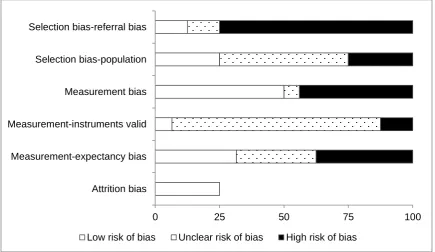
selection bias, and the studies reviewed were no exception. Figure 2 shows the risk of bias
[image:24.595.71.507.402.654.2]across the 16 studies included in the review.
Figure 2. Risk of bias across the 16 studies
As can be observed in Figure 2, 75% of the included studies are at a high risk of
selection-referral bias. This is where control cases differ from the cases in the homicide
offender group in terms of risk factors or psychopathology. The differentiation is due to the
control cases being referred for an assessment because of their level of risk in relation to
0 25 50 75 100
Attrition bias Measurement-expectancy bias Measurement-instruments valid Measurement bias Selection bias-population Selection bias-referral bias
24 these factors. Only 25% of the studies were at a high risk of population bias. This is mainly a
result of the absence of a matched group, the matching process, or the cases not being
representative of the population.
In terms of measurement bias, 44% of the studies were at a high risk of bias. For
instance, they used only one source of information (e.g., school reports, police reports, court
reports, or family interventions), historical comparisons were made, or the participants may
have been influenced in some way (i.e., due to volunteering or being paid to participate in the
study). In 81% of the studies, the level of bias as a result of the instruments used (i.e.,
validity, reliability, standardisation, and inter-rater reliability) was unclear, as some
instruments were validated and standardised while others were not. Additionally, there were
occasions where limited information was provided regarding the tests used. A high risk of
measurement-expectancy bias was found in 37.5% of the studies. This is where the
expectations or knowledge of the researcher may unconsciously influence the questions or
answers. No risk of attrition bias was observed across the 16 studies. This is defined as
systematic differences between groups as a result of withdrawal or exclusion of participants.
Due to the retrospective nature of most of the included studies, the accuracy of
recalling an event, childhood or developmental characteristics may have been affected.
However, it is not possible to fully assess this problem. Additionally, samples in the studies
were restricted to a specific geographical area, thus presenting difficulties regarding external
validity when generalising conclusions to other populations.
6.2. Risk factors identified by cohort studies
Cohort studies are the best means of determining the occurrence and natural history of a
25 data that were collected for another purpose are used. A cohort design enables studying the
effect of each variable on the development of the outcome of interest (Mann, 2003).
Four cohort studies were included in the review, all of which were carried out by
Zagar and his colleagues (Busch et al., 2009; Hughes et al., 2009; Zagar et al., 2009a; Zagar
et al., 2009b). These studies used diverse, independent samples of randomly selected ‘at risk’
individuals in the USA. The participants were then matched on age and race to
clinically-referred, non-violent delinquents (who were the control group), and their records were
assessed over time to explore which individuals later committed homicide, assault, violent
delinquent crime, or no crime. The design of each study was robust, but selection bias was
present when using the clinically-referred individuals as participants. The samples used
across the four studies consisted of abused infants who later committed homicide, abused
children who later committed homicide, juvenile homicide offenders, and juvenile sexual
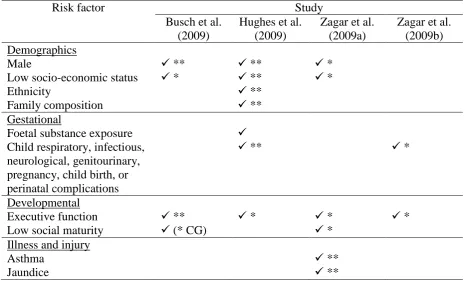
[image:26.595.65.540.486.767.2]homicide offenders. Table 3 summarises the risk factors identified by the four studies.
Table 3. Risk factors identified by the four cohort studies
Risk factor Study
Busch et al. (2009)
Hughes et al. (2009)
Zagar et al. (2009a)
Zagar et al. (2009b) Demographics
Male ** ** *
Low socio-economic status * ** *
Ethnicity **
Family composition **
Gestational
Foetal substance exposure
Child respiratory, infectious, neurological, genitourinary, pregnancy, child birth, or perinatal complications
** *
Developmental
Executive function ** * * *
Low social maturity (* CG) *
Illness and injury
Asthma **
26
Epilepsy ** *
Illness * *
Head injury *
Neurological disease *
Sleep disturbance **
Psychological disorder
Psychiatric hospitalisation ** **
Personality disorder *
Individual characteristics History of alcohol/substance use/abuse
*
Relationship status: single **
Infant hyperactivity *
Unemployed (** CG)
IQ < 70 *
Parent characteristics
Physically abused * *
Gang member * *
Alcohol/substance abuse * *
Criminally violent ** *
Violent family * *
Child not with parent until age 14
*
Live in mother/father home
Orphaned ** **
Single parent family * **
Physical abuse **
Sexual abuse *
Antisocial behaviour/delinquency Parent and child have prior contact with court
**
Parent and child had later contact with court
* * *
Prior court contact for violent/delinquent offending
*
Truancy ** *
Gang membership **
Education
Low academic achievement * * **
Suspension/expulsion ** *
Three or more home/school moves
*
Weapon availability
Weapon possession *
27 As Table 3 shows, risk factors relating to demographics, gestation, development,
illness and injury, psychological disorder, individual characteristics, parent characteristics,
antisocial behaviour/delinquency, education, and weapon availability were identified. Of the
risk factors assessed, foetal substance exposure and living in a mother/father home were not
found to be significantly related to juvenile homicide. Additionally, unemployment and low
social maturity were found to be significant risk factors for the control group and not the
homicide offender group. The offender being male, low socio-economic status, executive
function, parent and child later having contact with the court, and low academic achievement
were the only risk factors found significant across three or more studies, which perhaps gives
them greater weight.
6.3. Risk factors identified by case-control studies
Risk factors were also identified by the case-control studies that were reviewed. However,
when considering these risk factors, it is important to take into account a limitation regarding
the variety of comparison groups used (e.g., non-violent offenders, violent offenders, and
non-offenders), which each include different characteristics. The risk factors explored by the
case-control studies are outlined below.
In four of the studies, demographic characteristics were examined, but on the whole
were not found to be significant risk factors. Juvenile homicide offenders’ gender tends to be
male was the only significant (p < .01, p < .05) risk factor highlighted by the studies (Dolan & Smith, 2001; Zagar & Grove, 2010). Age (DiCataldo & Everett, 2008; Shumaker &
Mckee, 2001), ethnicity (DiCataldo & Everett, 2008; Dolan & Smith, 2001; Shumaker &
McKee, 2001), level of education (DiCataldo & Everett, 2008), and socio-economic status
(Shumaker & McKee, 2001; Zagar & Grove, 2010) were not found to be significant risk
28 Only one study considered gestational risk factors (i.e., Busch et al., 1990), but found
no significant differences between the homicide offender group and the control group in
terms of neonatal problems or difficulties at birth (Busch et al., 1990). Illness and injuries
were explored in three studies and on the whole were not found to be significant
discriminating factors for the commission of homicide by young people. Zagar and Grove
(2010), however, identified illness and epilepsy as being significantly more prevalent in the
juvenile homicide offender group (both at the .05 level).
In terms of developmental risk factors, poor executive function and low social
maturity were significantly more prevalent in the juvenile homicide offender group (both at
the .05 level) (Zagar & Grove, 2010). Delays in development (Bailey et al., 2001; Dolan &
Smith, 2001), conduct disorder (Dolan & Smith, 2001), and hyperactivity (Zagar & Grove,
2010) were not found to be significant risk factors.
Seven of the studies explored psychological disorders, but found few significant risk
factors. Axis I mental disorders, prior counselling, prior contact for psychological support,
and psychotic illness were significantly less prevalent in the juvenile homicide offender
group than in the control group (Bailey et al., 2001; Busch et al., 1990; Carter, 1999; Dolan &
Smith, 2001; Shumaker & McKee, 2001). Psychopathic deviancy and/or antisocial
personality disorder was not found to be significantly related to juvenile homicide offenders
(Lindberg et al., 2009; Zagar & Grove, 2010).
Risk factors relating to the offenders’ parents and family were considered in nine of
the studies. Violent family members (p < .05; Zagar & Grove, 2010), criminal family members (p < .05, Busch et al., 1990; p < .05, Zagar et al., 1990; p < .01, Lindberg et al., 2009), and positive early memories of parents (p < .05; DiCataldo & Everett, 2008) were found to be significant risk factors in some of the studies. Additionally, when comparing
29 significantly (p < .01) more likely to be placed in care (Lindberg et al., 2009). Parents’ psychopathology (Shumaker & McKee, 2001), sexual abuse (DiCataldo & Everett, 2008;
Shumaker & McKee, 2001), neglect and long-term separation from parents (Shumaker &
McKee, 2001), parents’ employment status, and absent fathers (Zagar & Grove, 2010) were
not found to be significant risk factors. The studies found insufficient evidence to draw any
conclusions regarding physical abuse (Bailey et al., 2001; Busch et al., 1990; Shumaker &
McKee, 2001; Zagar & Grove, 2010) and dysfunctional or harsh parenting (DiCataldo &
Everett, 2008).
Substance abuse was assessed by several of the studies, seven of which considered
alcohol abuse and five of which focused on drug abuse. Overall, mixed findings emerged
from these studies. However, the use or abuse of alcohol was found significant in three of the
studies (all at the .01 level) (Busch et al., 1990; Zagar et al., 1990; Zagar & Grove, 2010).
The use or abuse of drugs was found significant in two of the studies (both at the .01 level)
(Busch et al., 1990; Zagar & Grove, 2010).
In terms of anti-social or delinquent behaviour, prior contact with the court was the
only significant (p < .05) risk factor identified (Zagar & Grove, 2010). Prior referrals, detainment, arrests, violent delinquency, arson, mistreatment of animals, and level of
aggression were not found to be significant risk factors (Bailey et al., 2001; DiCataldo &
Everett, 2008; Shumaker & McKee, 2001). However, prior delinquent acts with a knife
(DiCataldo & Everett, 2008), being young at the time of first violent offence (Carter, 1999;
DiCataldo & Everett, 2008), and delinquent acts to support substance abuse (DiCataldo &
Everett, 2008) were significantly less prevalent in the juvenile homicide offender group than
in the comparison group. Overall, the mixed findings do not provide enough evidence to
support anti-social or delinquent behaviour being related to either the juvenile homicide
30 Studies that examined individuals’ education showed that severe educational
difficulties (Busch et al., 1990; Zagar et al., 1990), attending multiple schools (Dolan &
Smith, 2001), and low academic achievement (Zagar & Grove, 2010) were significantly
related to juvenile homicide offenders (all at the .05 level). Learning difficulties and attaining
high grades were not found to be significant risk factors (Dolan & Smith, 2001; Shumaker &
McKee, 2001), while suspension or expulsion from school showed mixed findings
(Shumaker & McKee, 2001; Zagar & Grove, 2010).
Gang or group membership was significantly more prevalent in the juvenile homicide
offender group (p < .05) (Busch et al., 1990; Zagar et al., 1990; Zagar & Grove, 2010). Additionally, Crimmins et al. (2000) found that owning a firearm and previously using a
firearm were significantly related to the juvenile homicide offender group as opposed to the
comparison group (p < .01). In terms of access to firearms, easy access in the community was not found to be a significant risk factor, while access at home was found to be significant (p < .01; DiCataldo & Everett, 2008).
7. Discussion
The aim of this exploratory systematic review was to assess the quality of primary studies on
young people who kill and synthesise their findings regarding the characteristics of these
offenders. The studies that were reviewed have considered the risk of juvenile homicide in
terms of demographic characteristics, gestational factors, illness and injury, developmental
factors, psychological disorder, parents and family, individual characteristics, antisocial
behaviour/delinquency, education, and weapon availability. They show that risk factors are
cumulative and develop across an individual’s life span.
The review brings together a list of significant risk factors in relation to juvenile
31 studies, or two or more cohort studies and at least one case-control study. These risk factors
are:
Gender (male): Three cohort studies (Busch et al., 2009; Hughes et al., 2009; Zagar et al.,
2009a) and two case-control studies (Dolan & Smith, 2001; Zagar & Grove, 2010).
Low executive function: Four cohort studies (Busch et al., 2009; Hughes et al., 2009;
Zagar et al., 2009a; Zagar et al., 2009b) and one case-control study (Zagar & Grove,
2010).
Illness: Two cohort studies (Hughes et al., 2009; Zagar et al., 2009b) and one case-control
study (Zagar & Grove, 2010).
Epilepsy: Two cohort studies (Hughes et al., 2009; Zagar et al., 2009a) and one
case-control study (Zagar & Grove, 2010).
Violent family members: Two cohort studies (Hughes et al., 2009; Zagar et al., 2009b)
and one case-control study (Zagar & Grove, 2010).
Criminal family members: Two cohort studies (Busch et al., 2009; Hughes et al., 2009)
and three case-control studies (Busch et al., 1990; Lindberg et al., 2009; Zagar et al.,
1990).
Contact with the court: Three cohort studies (Hughes et al., 2009; Zagar et al., 2009a;
Zagar et al., 2009b) and one case-control study (Zagar & Grove, 2010).
Low academic achievement: Three cohort studies (Busch et al., 2009; Hughes et al.,
2009; Zagar et al., 2009a) and one case-control study (Zagar & Grove, 2010).
Gang/group membership: One cohort study (Zagar et al., 2009a) and three case-control
studies (Busch et al., 1990; Zagar et al., 1990; Zagar & Grove, 2010).
Weapon possession: One cohort study (Zagar et al., 2009a) and two case-control studies
32 It is important to note that these risk factors should be considered with caution. It is quite
possible that young people presenting these risk factors may never commit homicide. The
mixed findings across the studies also show that a great deal more research is required in this
area.
A possible reason why juvenile homicide offenders tend to be male rather than female
is because they commit homicide for different reasons (Roe-Sepowitz, 2009). Male offenders
are inclined to commit homicide during the commission of a crime, where the victims are
often strangers. Conversely, female offenders tend to commit homicide during an
interpersonal conflict with a family member or while responding to domestic stress (Heide,
Roe-Sepowitz, Solomon & Chan, 2012; Loper & Cornell, 1996). Indeed, there is a higher rate
of female children murdering a parent than male children (Roe-Sepowitz, 2009). As the
offences of female offenders are likely to be more expressive in nature, while those of male
offenders lean towards some form of instrumental gain, it stands to reason that the gender of
juvenile homicide offenders should play a role in determining tailored treatment that
addresses this risk factor (Roe-Sepowitz, 2009).
Executive functioning in juvenile homicide offenders may be low due to their living
environment, particularly if living with an impoverished, violent family. It could also be as a
result of poor parental involvement, as children usually learn healthy decision-making
through interactions with their parents (Hughes et al., 2009). The lack of parental
involvement could also be why juvenile homicide offenders tend to suffer from illness. Their
neglect, poor care and treatment, as well as potentially limited financial means, may
contribute to their ill health (Hughes et al., 2009).
Violent family members is an understandable risk factor, as research has shown that
abusive parents can lead to heightened aggression in children and a lower capacity to
33 criminality and, as Hughes et al. (2009) show, the juvenile homicide offenders in their study
were raised in a climate of abuse, violence and criminality. By growing up in a family where
violent and criminal behaviour are common, these children absorbed and integrated a model
of violence. Anti-social acts are imitated and reinforced, both directly and indirectly, thus
reducing the children’s inhibitions. Additionally, these then-established behaviours persist
due to positive reinforcement (Blackburn, 2002). When considering the risk factors discussed
above, it is not surprising that contact with court was found in the systematic review to be a
risk factor. These young offenders may come into contact with the courts as a result of their
parents’ actions, their own abuse, minor delinquency, or serious violent offences.
When taking into account the adversity in many juvenile homicide offenders’
backgrounds, low academic achievement could be linked to low executive function, a lack of
parental involvement, and being raised in an impoverished and/or risky environment. Such
issues may influence the development of cumulative risk factors that eventually lead to these
young people committing homicide.
Gang or group membership is a risk factor that, amongst others, increases the
likelihood of either offending or becoming a victim. This is because members are exposed to
situations, activities or belief systems that result in violence. The influence of peers in the
gang or group, rivalry between gangs and groups, and criminality in which they are involved
(e.g., drug trafficking), reinforces cohesion and social status amongst members (Papachristos,
2007).
Weapon possession and ease of access to firearms frequently features in studies on
youth violence and juvenile homicide (DiCataldo & Everett, 2008) and, as such, this is not a
surprising risk factor. Additionally, according to DiCataldo and Everett (2008), it may act as
34 The environment in which these young offenders are raised (e.g., family members
involved in crime or violence) may have an impact on the system of beliefs they hold about
crime. This is related to the theory of social learning (Bandura, 1986), where learning results
from a combination of human interactions and environmental influences. By observing the
behaviour of a parent who is involved in criminal activities, a young person may adopt this
same behaviour if he or she sees positive and reinforcing consequences. Unless punitive
consequences arise for the adult, there will be no deterrent for the young person to continue
living on a criminal pathway. However, it is important to note that peers (and not family)
might be role models that lead a youth towards a criminal career (e.g., peers who belong to
gangs). Alternative pathways that do not result in criminality need to be shown to young
people at risk.
7.1. Implications of the review
The review shows that juvenile homicide offenders are a heterogeneous group of people. The
ten risk factors short-listed above are those most consistent across the current literature
regarding juvenile homicide. This presents a platform for future research and the
development of interventions to minimise the risk of lethal escalation in violence. The
different themes regarding the risk factors indicate that early parenting interventions, with
continual follow-up at school, would be beneficial in terms of managing and reducing
families who are at risk.
Initiatives that support the development and education of young people in
impoverished communities should be coupled with investigative teams that can recognise
signs of neglect or abuse and can take action by providing the help required. Additionally, the
35 male and female juvenile homicide offenders commit their offences for different reasons, and
consequently require tailored assessment and treatment based on their gender.
7.2. Limitations and future research
The quality of the included studies varied, with some more prone to multiple biases than
others, and some more detailed and comprehensive than others. This limitation is primarily
due to the data quality in this particular research area. However, careful selection of control
groups (either by random selection or matching the most important characteristics) and
controlling confounding variables would assist with combatting selection bias.
The difficulty of defining juvenile homicide, as outlined in the introduction, presents
limitations in that no study is directly comparable with another study. With no consistent
definition, cases across the studies vary in terms of age of offender and offence actions. As no
agreed international definition of juvenile homicide exists, reviews such as this that compare
the findings of studies have to be read and interpreted with caution. Further, unless studied by
the same team of collaborators (e.g., the cohort studies included in this review), the risk
factors may be defined differently across the studies. Indeed, many studies did not
specifically define each risk factor they measured (e.g., DiCataldo & Everett, 2008). Future
research would benefit from an agreed set of definitions. Additionally, the consequences of
adopting a restrictive data collection (case-control and cohort studies) might have missed the
more infrequent characteristics displayed by some juvenile homicide offenders that would
have been explained in depth in a single case study for example (see Kazdin, 1982).
The variety of comparison groups (e.g., non-violent offenders, violent offenders, and
non-offenders) used across the studies presents another limitation. As each comparison group