physical activity monitors
STORM, F, HELLER, Ben <http://orcid.org/0000-0003-0805-8170> and
MAZZA, C
Available from Sheffield Hallam University Research Archive (SHURA) at:
http://shura.shu.ac.uk/9569/
This document is the author deposited version. You are advised to consult the
publisher's version if you wish to cite from it.
Published version
STORM, F, HELLER, Ben and MAZZA, C (2015). Step detection and activity
recognition accuracy of seven physical activity monitors. PLOS ONE, 10 (3),
e0118723.
Copyright and re-use policy
Step Detection and Activity Recognition
Accuracy of Seven Physical Activity Monitors
Fabio A. Storm1,2*, Ben W. Heller3, Claudia Mazzà1,2
1Department of Mechanical Engineering, University of Sheffield, Sheffield, United Kingdom,2INSIGNEO Institute forin silicoMedicine, University of Sheffield, Sheffield, United Kingdom,3Centre for Sports Engineering Research, Sheffield Hallam University, Sheffield, United Kingdom
Abstract
The aim of this study was to compare the seven following commercially available activity monitors in terms of step count detection accuracy: Movemonitor (Mc Roberts), Up (Jaw-bone), One (Fitbit), ActivPAL (PAL Technologies Ltd.), Nike+ Fuelband (Nike Inc.), Tractiv-ity (Kineteks Corp.) and Sensewear Armband Mini (Bodymedia). Sixteen healthy adults consented to take part in the study. The experimental protocol included walking along an in-door straight walkway, descending and ascending 24 steps, free outin-door walking and free indoor walking. These tasks were repeated at three self-selected walking speeds. Angular velocity signals collected at both shanks using two wireless inertial measurement units (OPAL, ADPM Inc) were used as a reference for the step count, computed using previously validated algorithms. Step detection accuracy was assessed using the mean absolute per-centage error computed for each sensor. The Movemonitor and the ActivPAL were also tested within a nine-minute activity recognition protocol, during which the participants per-formed a set of complex tasks. Posture classifications were obtained from the two monitors and expressed as a percentage of the total task duration.
The Movemonitor, One, ActivPAL, Nike+ Fuelband and Sensewear Armband Mini un-derestimated the number of steps in all the observed walking speeds, whereas the Tractivity significantly overestimated step count. The Movemonitor was the best performing sensor, with an error lower than 2% at all speeds and the smallest error obtained in the outdoor walking. The activity recognition protocol showed that the Movemonitor performed best in the walking recognition, but had difficulty in discriminating between standing and sitting. Re-sults of this study can be used to inform choice of a monitor for specific applications.
Introduction
An objective and reliable method for the classification and quantification of free-living motor ac-tivity is a prerequisite for the understanding of the complex relationship between health and physical activity. Recently, the use of motion sensors for its estimation has gained widespread recognition. Accelerometry is currently the most exploited technology in physical activity
OPEN ACCESS
Citation:Storm FA, Heller BW, Mazzà C (2015) Step Detection and Activity Recognition Accuracy of Seven Physical Activity Monitors. PLoS ONE 10(3): e0118723. doi:10.1371/journal.pone.0118723
Academic Editor:Lei Ren, University of Manchester, UNITED KINGDOM
Received:May 27, 2014
Accepted:January 11, 2015
Published:March 19, 2015
Copyright:© 2015 Storm et al. This is an open access article distributed under the terms of the Creative Commons Attribution License, which permits unrestricted use, distribution, and reproduction in any medium, provided the original author and source are credited.
Data Availability Statement:All relevant data are within the paper and its Supporting Information files.
Funding:This study was funded by the EC contract FP7-ICT-2011-9, No. 600803 (MISSION-T2D, URL: http://www.mission-t2d.eu/MISSION-T2D/Welcome. html), and by the Sheffield National Centre for Sport and Exercise Medicine (URL:http://www.scci.org.uk/ home/projects/national-centre-for-sport-and-exercise-medicine-ncsem/). The funders had no role in study design, data collection and analysis, decision to publish, or preparation of the manuscript.
Competing Interests:The authors have declared
monitoring [1]. The development of micro-engineered piezoresistive and capacitive accelerome-ters, often referred to as microelectromechanical systems (MEMS), allows the recognition of both dynamic and static activities [2]. These devices have been additionally combined with phys-iological sensors such as heart rate, temperature, heat flux and galvanic skin response with the aim of increasing their accuracy of predicting energy expenditure and discriminating activity types [3–5]. The integration of these technologies in a sensor fusion approach has been investi-gated in the last decades [6].
Various commercially available physical activity monitors (PAMs) have been tested and val-idated for field-based research in both healthy and chronically diseased populations [7]. Most recent studies in this field investigated the validity of energy consumption algorithms embed-ded in different devices [8–10]. A review by Welk et al. [11], focusing on protocol equivalency, emphasized the“emerging measurement challenge”caused by the increasing availability of low cost PAMs, along with the chronic difficulty in comparison and standardization of data from different models of accelerometry-based sensors. As far as is known to the authors, only one study has investigated consumer-based PAMs, i.e. PAMs addressed directly to final users, typi-cally interested in health and fitness rather than to clinicians or therapists. The devices investi-gated in this study showed an absolute error for energy expenditure estimation during a 69-minute protocol ranging between 9.3% and 23.5% [12].
Activity type-specific equations are generally implemented into PAMs to model energy ex-penditure [13]. Interestingly, despite the fact that in these devices the application of these activ-ity-dependent equations relies on step detection, only a few studies have focused specifically on the accuracy of this estimate. Dijkstra et al. [14] compared the accuracy of a pedometer (Yamax Digi-walker SW 200) and a triaxial accelerometer (Dynaport Micromod) in their step count estimates in patients with Parkinson’s disease, using video recordings as reference. The error of the pedometer was speed-dependent, ranging between 4.5%- 17.2%, whereas the error of the accelerometer was around 7%. A second study [15], testing and comparing a pedometer (Digiwalker SW701) and a multisensor device (Sensewear Armband Mini) in patients with chronic obstructive pulmonary disease and healthy elderly showed that at slow speeds (1.6 ± 0.2 km/h) neither of the two systems was adequately accurate.
The robustness of the measure during walking at slow speed is of particular interest in clini-cal research [16]. An additional factor that could affect the accuracy of step detection is, of course, the walking environment. To our knowledge, however, the accuracy of step count in PAMs has never been compared between indoor and outdoor settings.
The aim of this study is to compare the step count detection accuracy of seven different PAMs in healthy adults, covering a range of technologies and prices, during different walking protocols, including indoor and outdoor walking at different speeds. Among these monitors, those that allow recognition of common everyday tasks will be further tested in their ability to discriminate and classify basic activities within more composite motor tasks. The results of this study may be used to provide reference values for the error to be expected when the investigat-ed PAMs are usinvestigat-ed for long-term recording of physical activity.
Materials and Methods
Participants
Sixteen participants were recruited for the study. The sample characteristics are shown in
Ethics statement
Approval from the University of Sheffield Research Ethics Committee was obtained for the study and participants were asked to read carefully an information sheet before giving written informed consent.
Physical Activity Monitors
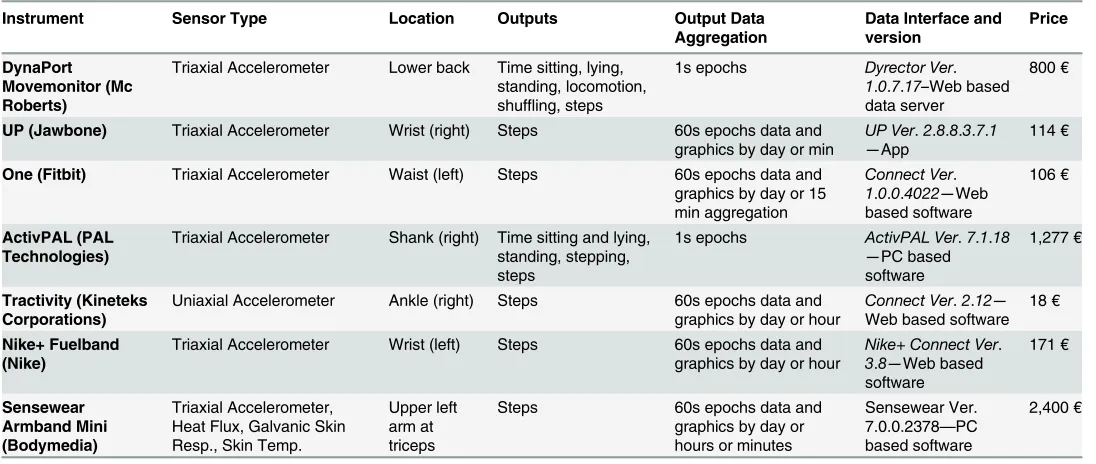
[image:4.612.196.578.95.175.2]Seven different PAMs were assessed during this study: Movemonitor (Mc Roberts, The Hague, The Netherlands), Up (Jawbone, San Francisco, USA), One (Fitbit, San Francisco, USA), Activ-PAL (Activ-PAL Technologies Ltd., Glasgow, UK), Nike+ Fuelband (Nike Inc., Beaverton, USA) Tractivity (Kineteks Corp., Vancouver, Canada) and Sensewear Armband Mini (Bodymedia, Pittsburgh, USA). Further details about these sensors are provided inTable 2. After having their anthropometric characteristics recorded, the subjects were fitted with the sensors, which were all positioned at the manufacturer’s recommended locations (Fig. 1). The participants were asked to perform two protocols, one including different locomotion tasks and one includ-ing different postural transitions and complex motor activities.
Table 1. Sample Characteristics of the study group (mean±SD).
Characteristics Value
Men/Women 10/6
Age (y) 28.87±2.65
Weight (kg) 72.0±9.2
Height (m) 1.75±0.09
BMI (kg/m2) 23.5±2.3
doi:10.1371/journal.pone.0118723.t001
Table 2. Details of the monitors tested in this study.
Instrument Sensor Type Location Outputs Output Data Aggregation
Data Interface and version
Price
DynaPort Movemonitor (Mc Roberts)
Triaxial Accelerometer Lower back Time sitting, lying, standing, locomotion, shuffling, steps
1s epochs Dyrector Ver. 1.0.7.17–Web based data server
800€
UP (Jawbone) Triaxial Accelerometer Wrist (right) Steps 60s epochs data and graphics by day or min
UP Ver.2.8.8.3.7.1
—App
114€
One (Fitbit) Triaxial Accelerometer Waist (left) Steps 60s epochs data and graphics by day or 15 min aggregation
Connect Ver. 1.0.0.4022—Web based software
106€
ActivPAL (PAL Technologies)
Triaxial Accelerometer Shank (right) Time sitting and lying, standing, stepping, steps
1s epochs ActivPAL Ver.7.1.18
—PC based software
1,277€
Tractivity (Kineteks Corporations)
Uniaxial Accelerometer Ankle (right) Steps 60s epochs data and graphics by day or hour
Connect Ver.2.12— Web based software
18€
Nike+ Fuelband (Nike)
Triaxial Accelerometer Wrist (left) Steps 60s epochs data and graphics by day or hour
Nike+ Connect Ver. 3.8—Web based software 171€ Sensewear Armband Mini (Bodymedia) Triaxial Accelerometer, Heat Flux, Galvanic Skin Resp., Skin Temp.
Upper left arm at triceps
Steps 60s epochs data and
graphics by day or hours or minutes
Sensewear Ver. 7.0.0.2378—PC based software
2,400€
[image:4.612.35.583.464.696.2]Experimental protocol
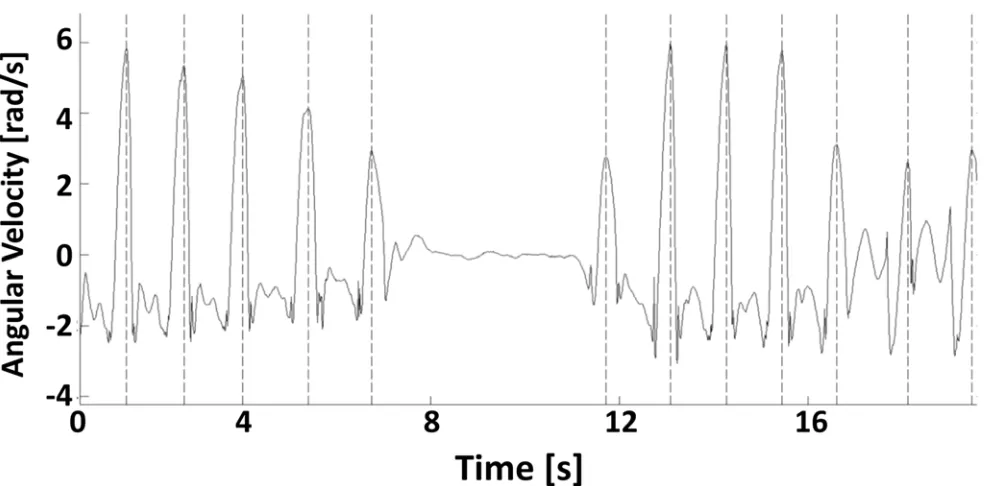
[image:5.612.39.459.81.446.2]In addition to the activity monitors, two wireless inertial measurement units (OPAL, ADPM Inc., Portland, OR, USA) were positioned on the left and right shanks, just above the ankle, by means of an elastic strap. Data from the OPAL sensors collecting data at a sampling rate of 128 Hz were used as a gold standard for step detection. An algorithm using the gyroscopic sig-nals was implemented in Matlab R2013a (The Mathworks Inc., USA). This algorithm is direct-ly derived from the one proposed by Aminian et al. [17], which has been extensively validated to detect heel strike and toe off in healthy individuals, and identifies the maxima of the angular velocity around the mediolateral axis of the shank corresponding to the swing phases of the leg from the data (Fig. 2). Not being interested in detecting a specific phase in the gait cycle, we used the maxima instead of the heel strike peak used by Aminian et al. as a conservative solu-tion. Nevertheless, the presence of a heel strike between two subsequent strides was always veri-fied and the independent information from the sensors on the two ankles was used as a cross-check to verify the alternate presence of left and right steps. For each session, step counts for left and right shanks were computed and the total number of steps (N) was obtained by sum-ming up the number of right and left steps.
Fig 1. Sensor placement.The figure shows the location of the sensors on a subject’s body: Movemonitor (1), Up (2), One (3), ActivPAL (4) Tractivity (5), Nike+ Fuelband (6), Sensewear Armband Mini (7), OPAL (8).
During the first protocol, which tested the accuracy of the monitors for step detection under different walking conditions, each participant simultaneously wore all the seven monitors. The protocol lasted 11-minutes and included the following tasks: a) walking along a 20-meter long indoor straight walkway; b) descending 24 steps (4 flights of 5,12,3 and 4 steps respectively); c) free outdoor walking; d) ascending 24 steps and e) free walking in an indoor setting. During the free indoor walking the participants were asked to walk inside a 300 m2office space filled with lines of desks and separated by rectilinear corridors, without following any predefined path (they were free to decide which way to go, provided that they would not stop nor make abrupt turns). During the outdoor walking they were instructed to walk along a regularly crowded sidewalk, following a pre-defined route that included straight paths and turns around blocks. This was repeated three times, with the participants being instructed to walk at self-se-lected natural, slow, and fast speeds. The order of the walking speeds was randomized. A de-tailed description of the protocol is presented inTable 3.
The number of steps, as estimated by each sensor (Ñ), was recorded at the end of each trial and saved for further analysis. An additional analysis was performed in order to investigate dif-ferences in step count accuracy between the five different walking phases of the protocol. This phase analysis was performed on the Movemonitor and the ActivPAL data only, since the out-puts of the other PAMs do not lend themselves to the extraction of the number of steps in sub-intervals.
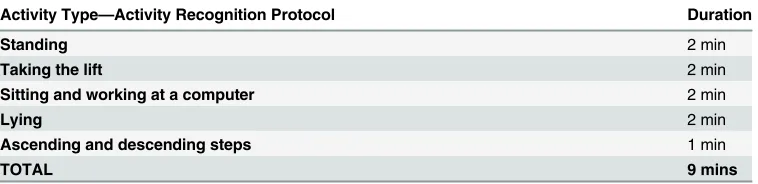
During the second protocol, in addition to the two OPAL sensors, the subjects wore the two PAMs (Movemonitor and ActivPAL) that are able to discriminate other activities besides walk-ing. This activity recognition protocol lasted 9 minutes and is described inTable 4. This proto-col included motor activities designed to challenge the recognition of basic tasks (e.g.
[image:6.612.38.532.73.316.2]introducing upper body movements while sitting or external accelerations affecting the entire body). Each activity was completed once and one minute of free indoor walking was performed
Fig 2. Typical angular velocity signal of the shank in the sagittal plane during consecutive steps.The figure shows the angular velocity signal as measured by one of the shank sensors in the sagittal plane during a portion of a randomly selected indoor walking trial. The shown portion of the signal includes walking, stopping and turning. The maxima detected by the algorithm used to detect single steps are also highlighted (dotted vertical lines).
between them to facilitate their classification. The order of the activities was previously ran-domized. The Movemonitor classifies the activities into 5 categories (lying, sitting, standing, lo-comotion and shuffling) and the ActivPAL into 3 categories (sedentary, standing and
stepping). Using the previously described algorithm, the data from the OPAL sensors were used to identify the beginning and end of each activity by detecting the walking phases that separated them.
Statistical analyses
Data analysis was performed using SPSS Statistics 21.0 (IBM Corporation, New York, USA). For the investigation of step detection accuracy in the seven sensors, the mean absolute per-centage error (MPE) for each sensor was computed as (1):
MPE¼j~NNj
N 100 ð1Þ
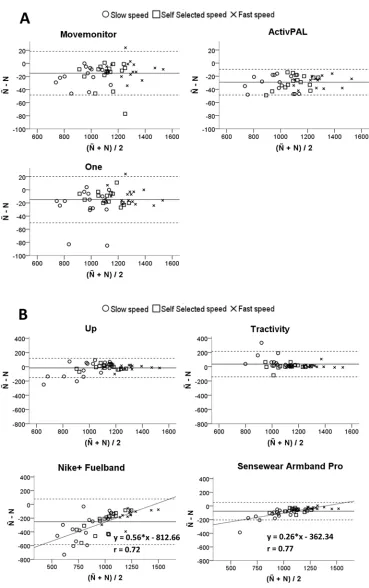
The Kolmogorov-Smirnov test was used to analyse normality of data. As data were normally distributed, parametric tests were used and data were presented as mean and standard devia-tion (SD). Differences in group estimates between sensor outcomes were tested using mixed-model ANOVA with a significance level of p = 0.05 and post-hoc follow up analysis. Bland-Altman plots were used to assess the agreement between the measures and evaluate bias between the scores of the PAMs, where the difference (D) and the average (A) for each sensor were computed as:
D¼N~N ð2Þ
[image:7.612.37.579.107.199.2]M¼N~þ2N ð3Þ
Table 3. Summary of the activities performed during the step detection protocol, their duration and the step count (as obtained by the OPAL sensors) for each walking speed.
Activity Type—Step Detection Protocol Duration Slow Speed (N) Self Selected Speed (N) Fast Speed (N)
Indoor walking on a straight walkway 3 min 260±42 313±44 353±37
Descending 24 steps 1 min 70±11 72±7 66±11
Outdoor walking 3 min 330±81 378±56 460±69
Ascending 24 steps 1 min 67±6 65±7 63±7
Free indoor walking 3 min 267±53 309±38 350±35
TOTAL 11 mins 986±127 1127±103 1289±115
doi:10.1371/journal.pone.0118723.t003
Table 4. Summary of the activities performed during the activity recognition protocol.
Activity Type—Activity Recognition Protocol Duration
Standing 2 min
Taking the lift 2 min
Sitting and working at a computer 2 min
Lying 2 min
Ascending and descending steps 1 min
TOTAL 9 mins
[image:7.612.200.579.606.698.2]For the activity recognition protocol, the posture classifications given by the two monitors were extracted and expressed as a percentage of the duration as computed by the reference signals collected at the shanks.
Results
The ANOVA showed significant differences in step count between the three walking speed conditions (p<0.05, seeTable 3for values). Planned contrasts revealed that the number of steps recorded at the self-selected speed was significantly lower than those at slow walking speed (p<0.01) and higher than those at fast walking speed (p<0.01).
[image:8.612.203.557.339.653.2]There was a significant underestimation of Ñ for the Movemonitor, One, ActivPAL, Nike+ Fuelband and Sensewear Armband Mini, whereas the Tractivity significantly overestimated step count. The observed power was 0.999 for the overall ANOVA and ranged from 0.833 to 0.999 for the significantly different contrast tests. The Up did not show any systematic over- or underestimation. These findings were confirmed also when the data were separated by walking speed.Fig. 3summarises mean and SD between individuals of the mean percentage error (MPE) at all walking speeds for each of the seven PAMs. The best performing device in terms of MPE was the Movemonitor, with MPE<2.0% at every speed, followed by One and Activ-PAL, with MPE<2.6% and<3.2%, respectively. These three sensors presented also the
Fig 3. Summary of MPE for the 7 PAMs included in the study.The figure shows the mean percentage error (MPE) during slow, self-selected and fast walking speed trials for all the sensors included in the study. Error bars are mean±SD.
smallest SD (1.7%,2.5% and1.5%, respectively). See the supporting information for the total number of steps (S1 Table) and MPE (S2 Table) for all the sensors included in the study. The Bland-Altman plots for the number of steps (Ñ), depicted inFig. 4, showed an average ± Limits of Agreement (1.96SD) underestimation of 15±33, 15±35,29±20, 16±135, 36±178, 253±331 and 77±127 steps for the Movemonitor, One, ActivPAL, Up, Tractivity, Nike+ Fuel-band and Sensewear ArmFuel-band Mini, respectively. The values of step count over- or underestima-tion for all the sensors at all walking speeds are shown inS3 Tableof the supporting information. The correlation analysis (see regression lines on the Bland-Altman plots) highlighted also that for the Nike+ Fuelband and the Sensewear Armband Mini the underestimation was affected by the number of steps taken: the statistically significant (p<0.05) correlations between D and M were r = 0.72 and r = 0.77, respectively.
The results of the phase analysis performed on Movemonitor and ActivPAL data showed that, for both sensors, the best performance in terms of MPE was obtained during the outdoor walking: for the Movemonitor, MPE values ranged between 0.38±0.35% at natural walking speed and 0.54±0.65% at slow walking speed; for the ActivPAL, values ranged between 1.0±0.7% at fast walking speed and 1.4±0.8% at slow walking speed, respectively. The mixed-model ANOVA showed that the Movemonitor sensor was more accurate than the ActivPAL (p<0.05) in terms of MPE. The MPE also significantly differed in the 5 walking phases (p<0.001). There was also a significant interaction between speed and phase (p<0.01). Planned contrasts revealed that during the first transition phase (descending stairs), regardless of the sensor used, accuracy in step detec-tion was higher during slow walking than at self-selected speed, while during the second transi-tion phase (ascending stairs), MPE was lower at the self-selected speed than at slow walking speed, (p<0.05). Equally, accuracy in step detection was higher during the first transition phase at self-selected walking speed than at fast speed, while during the second transition phase, MPE was lower at the self-selected speed than at fast walking speed, (p<0.05).
The accuracy of the ActivPAL monitor in the classification of the activities performed dur-ing the activity recognition protocol (Table 5) ranged between 97.1% and 99.6%. Sitting while working at a computer was mainly categorized as sedentary activity (98.7%, excluding one out-lier); taking the lift was mostly classified as standing (99.6% of the time). The accuracy of the Movemonitor device (Table 6) in classifying lying, sitting while working at a computer and stair walking ranged between 96.0 and 98.8%. Taking the lift was categorized either as standing or shuffling. Standing was categorized correctly only for 10.8% of the time, instead it was main-ly classified as sitting (88.4%).
Discussion
It has been recently suggested that in activity monitoring research multiple comparison of moni-tors should be adopted to provide a better understanding of advantages or disadvantages of tech-nology on the market [11]. The first aim of this study was to compare step counts of research and consumer-oriented PAMs during a short protocol including indoor and outdoor walking phases and stair climbing and descending. The second aim was to further characterise two of the chosen sensors in their ability to discriminate between simple and complex tasks and postures.
The experimental protocol adopted in this study proved to be suitable to investigate the ac-curacy of physical activity monitors. The chosen 11-minutes duration for the data collection al-lowed the highlighting of differences in the step count throughout the three walking speeds. Our experimental design did not include a quantitative measure of walking speed, which pre-vents us from making observations regarding the specific relationship between speed and accu-racy of the PAMs. This could be of interest for applications involving patients or
Five out of seven activity monitors underestimated the number of steps in all the three ob-served walking speeds (Movemonitor, One, ActivPAL, Nike+ Fuelband and Sensewear Arm-band Mini). The first three above-mentioned devices were also the three best performing in terms of MPE. For these three devices, no trend was found in the error, whereas for the latter two (Nike+ Fuelband and Sensewear Armband Mini), the underestimation was higher at the lower paces. This corroborates previous literature findings about the difficulty of step detection at slow walking speeds [15,16]. The reason for the poor performance of some PAMs is likely to be due to the fact that the products were originally developed for running. Also the Up acceler-ometer was markedly inaccurate at the lowest pace. The Tractivity was the only device that overestimated the steps at all walking speeds. The reason for this is not easily identifiable, since not enough information was available to the authors about the data processing techniques and algorithms, a problem also highlighted by Chen et al. [1].
The three best performing PAMs included the two devices explicitly designed for clinical use (Movemonitor and ActivPAL). These devices provide also the most complex activity re-ports including the classification of different activities such as lying, walking and standing. The One was the best consumer-based device in terms of MPE and might be the best low-cost op-tion for step count monitoring.
[image:11.612.33.591.95.193.2]When interpreting data measured from PAMs in real life conditions, careful consideration should be paid to the consequences of the bias existing between actual and measured steps. Since prolonged physical activity monitoring in clinical trials typically lasts up to one week [18], small underestimation of the time spent in an energy- and movement-demanding activity such as walking may be an amplifier for errors. For example, the one-week use of PAMs leading to underestimation errors higher than 14%, might translate into errors corresponding to
Table 5. Classification of the performed activities for the ActivPAL sensor.
ActivPAL Categories
Activity Sedentary Standing Stepping
Standing 0.0±0.0 99.6±0.8 0.4±0.8
Taking the lift 0.0±0.0 97.1±3.2 2.9±3.2
Sitting and working at a computer 98.7±1.3 0.7±0.6 0.6±1.0
Lying 98.8±1.6 0.7±0.9 0.5±1.1
Ascending and descending steps 0.0±0.0 1.4±1.8 98.6±1.8
Data is presented as percentage of the total duration of the activity (mean±SD).
doi:10.1371/journal.pone.0118723.t005
Table 6. Classification of the performed activities for the Movemonitor sensor.
DynaPort Categories
Activity Standing Sitting Lying Locomotion Shuffling
Standing 10.8±26.9 88.4±26.6 0.0 0.7±0.6 0.1±0.3
Taking the lift 80.5±5.8 1.7±6.5 0.0 3.0±2.0 14.9±3.5
Sitting and working at a computer 0.4±0.5 98.6±1.4 0.0 0.7±0.8 0.3±0.6
Lying 0.0 0.8±1.1 98.8±1.4 0.4±0.6 0.0
Ascending and descending steps 0.7±1.0 0.0 0.0 99.2±1.3 0.1±0.3
Data is presented as percentage of the total duration of the activity (mean±SD).
[image:11.612.33.587.578.679.2]ignoring more than one entire day of walking activity out of a seven-days observation period. Smaller errors, such as those found for the best performing monitors (1–3%), may be clinically irrelevant in the case of research studies involving sedentary populations, but might still need to be taken into account when investigating physical activity interventions. The phase analysis revealed that the best accuracy in step count was obtained during outdoor walking. This result might be explained by the fact that during indoor walking the likelihood of miscounting steps was higher than outdoor, since the participants had to stop-and-start to turn around at the end of the walkway, and the path they followed during free indoor walking was generally more tor-tuous than the one they walked outdoors. Nevertheless, the good performance of the sensors is encouraging for applications involving prolonged outdoor data collection.
The ActivPAL and Movemonitor performances in detecting steps were also examined in stair climbing during the two transition phases. Interestingly, for both sensors, at slow walking speed MPE was higher when ascending stairs than when descending. Conversely, at fast ing speed, MPE was higher when descending stairs than when ascending. At self-selected walk-ing speed, the accuracy was not affected by whether the participant was ascendwalk-ing or
descending stairs. This finding is in agreement with a previously reported study using pedome-ters [19] and should be the aim of further investigation to clarify what are the signal and soft-ware characteristics that might influence such an outcome.
The activity recognition protocol included all the activities indicated as recognisable by the manufacturers of the two tested sensors. Activities such as working at a computer or taking the lift were adopted to generate possible significant variations in the measured accelerations, so to include features entailing a realistic perturbation to the system. The results of this protocol showed that the position of the Movemonitor on the lower back of the participants leads to a high chance of misclassification of the standing posture, often confused with sitting. This prob-lem, already highlighted in a previous validity study [20], is caused by the similar inclination of the accelerometers with respect to the gravity line during these two static activities [21]. Inter-estingly, despite the Movemonitor widely misclassified quiet standing, it correctly classified taking the lift as standing. Investigating the recognition capabilities of the Movemonitor during short activities (<5s), Dijkstra et al. [22] highlighted that short standing periods were well de-tected. Activity recognition methods employed in PAMs often rely on specific features in the signal to detect transitions between postures. Rapid and brief deceleration and acceleration of the lift may have helped the algorithm employed in the Movemonitor to correctly classify the standing posture during that specific task. Conversely, the location of the ActivPAL sensor on the thigh clearly overcomes the problem of static standing classification, but doesn’t allow sepa-ration of sitting from lying. Nevertheless, further studies should investigate the classification capabilities of these sensors in other groups such as older people or people with disability, to in-vestigate how the activity recognition algorithms perform when pathologies hinder normal movement patterns.
implemented as a spot check for patient specific calibration and reliability assessment of activi-ty monitor devices, before giving them to patients for long-term monitoring.
Conclusions
The overall step detection accuracy for the seven PAMs included in the study ranged between 0.9% (Movemonitor, fast walking speed) and 36.4% (Nike+ Fuelband, slow walking speed). On a practical point of view, considering a person taking 5000 steps per day (boundary between sedentary and low active lifestyle) over a one-week period this would translate into up to 326 and 12.737 steps not detected by the best and the worst performing PAM, respectively. The ma-jority of the sensors underestimated the step count and Movemonitor, ActivPAL and One were the best performing PAMs in step count recognition. Movemonitor was the best performing device overall, but failed in the recognition of standing posture, usually misclassified as sitting. ActivPAL showed a good accuracy overall, although it is limited in not being able to discrimi-nate between sitting and lying. One might be a valid low cost solution for monitoring the effect of interventions aiming at increasing the number of steps walked per day. Stair ascending and descending significantly affect step recognition accuracy, with a speed-dependent effect.
Supporting Information
S1 Table. Step count for the PAMs and the reference method.Values are mean ± SD. (DOCX)
S2 Table. Mean Absolute Percentage Error (MPE) for the PAMs.Values are mean ± SD. (DOCX)
S3 Table. Mean over- or underestimation of step count (D) for the PAMs.Values are mean ± SD.
(DOCX)
Acknowledgments
The authors would like to thank Dr. Peter Cudd and The School of Health and Related Re-search (ScHARR) for providing some of the adopted devices and Ms Silvia Pancani for her as-sistance with the experimental set up and during the data collection.
Author Contributions
Conceived and designed the experiments: FS BH CM. Performed the experiments: FS. Ana-lyzed the data: FS CM. Contributed reagents/materials/analysis tools: CM BH. Wrote the paper: FS BH CM.
References
1. Chen KY, Janz KF, Zhu W, Brychta RJ. Redefining the roles of sensors in objective physical activity monitoring. Med Sci Sports Exerc. 2012 Jan; 44(1 Suppl 1: ):S13–23. doi:10.1249/MSS.
0b013e3182399bc8PMID:22157770
2. Bonomi a G, Westerterp KR. Advances in physical activity monitoring and lifestyle interventions in obe-sity: a review. Int J Obes (Lond). Nature Publishing Group; 2012 Mar; 36(2):167–77. doi:10.1038/ijo. 2011.99PMID:21587199
3. Brage S, Brage N, Franks PW, Ekelund U, Wareham NJ. Reliability and validity of the combined heart rate and movement sensor Actiheart. Eur J Clin Nutr. 2005 Apr; 59(4):561–70. PMID:15714212 4. Colbert L, Matthews C, Havighurst T, Kim K, Schoeller D. Comparative Validity of Physical Activity
5. Johannsen DL, Calabro MA, Stewart J, Franke W, Rood JC, Welk GJ. Accuracy of armband monitors for measuring daily energy expenditure in healthy adults. Med Sci Sports Exerc. 2010 Nov; 42 (11):2134–40. doi:10.1249/MSS.0b013e3181e0b3ffPMID:20386334
6. Lowe S a, Ólaighin G. Monitoring human health behaviour in one’s living environment: a technological review. Med Eng Phys. Institute of Physics and Engineering in Medicine; 2014 Mar; 36(2):147–68.
7. Van Remoortel H, Giavedoni S, Raste Y, Burtin C, Louvaris Z, Gimeno-Santos E, et al. Validity of activi-ty monitors in health and chronic disease: a systematic review. Int J Behav Nutr Phys Act. 2012; 9:84. doi:10.1186/1479-5868-9-84PMID:22776399
8. Van Remoortel H, Raste Y, Louvaris Z, Giavedoni S, Burtin C, Langer D, et al. Validity of six activity monitors in chronic obstructive pulmonary disease: a comparison with indirect calorimetry. PLoS One. 2012 Jan; 7(6):e39198. doi:10.1371/journal.pone.0039198PMID:22745715
9. Rabinovich R a, Louvaris Z, Raste Y, Langer D, Remoortel H Van, Giavedoni S, et al. Validity of physi-cal activity monitors during daily life in patients with COPD. Eur Respir J Off J Eur Soc Clin Respir Phy-siol. 2013 Mar 8;
10. Ryan J, Gormley J. An evaluation of energy expenditure estimation by three activity monitors. Eur J Sport Sci. Taylor & Francis; 2013 Mar 8; 13(6):681–8. doi:10.1080/17461391.2014.908956PMID:
24754671
11. Welk GJ, McClain J, Ainsworth BE. Protocols for evaluating equivalency of accelerometry-based activi-ty monitors. Med Sci Sports Exerc. 2012 Jan; 44(1 Suppl 1: ):S39–49. doi:10.1249/MSS.
0b013e3182399d8fPMID:22157773
12. Lee J-M, Kim Y, Welk GJ. Validity of Consumer-Based Physical Activity Monitors. Med Sci Sports Exerc. 2014;
13. Brandes M VAN Hees VT, Hannöver V, Brage S. Estimating energy expenditure from raw accelerome-try in three types of locomotion. Med Sci Sports Exerc. 2012 Nov; 44(11):2235–42. doi:10.1249/MSS. 0b013e318260402bPMID:22776868
14. Dijkstra B, Zijlstra W, Scherder E, Kamsma Y. Detection of walking periods and number of steps in older adults and patients with Parkinson’s disease: accuracy of a pedometer and an accelerometry-based method. Age Ageing. 2008 Jul; 37(4):436–41. doi:10.1093/ageing/afn097PMID:18487266 15. Furlanetto KC, Bisca GW, Oldemberg N, Sant’anna TJ, Morakami FK, Camillo C a, et al. Step counting
and energy expenditure estimation in patients with chronic obstructive pulmonary disease and healthy elderly: accuracy of 2 motion sensors. Arch Phys Med Rehabil. Elsevier Inc.; 2010 Feb; 91(2):261–7. doi:10.1016/j.apmr.2009.10.024PMID:20159131
16. Harrison SL, Horton EJ, Smith R, Sandland CJ, Steiner MC, Morgan MDL, et al. Physical activity moni-toring: Addressing the difficulties of accurately detecting slow walking speeds. Heart Lung. Elsevier Inc; 2013; 42(5):361–4.e1.
17. Aminian K, Najafi B, Büla C, Leyvraz P, Robert P. Spatio-temporal parameters of gait measured by an ambulatory system using miniature gyroscopes. J Biomech. 2002; 35(5):689–99. PMID:11955509 18. Motl RW, Dlugonski D, Suh Y, Weikert M, Fernhall B, Goldman M. Accelerometry and its association
with objective markers of walking limitations in ambulatory adults with multiple sclerosis. Arch Phys Med Rehabil. 2010; 91:1942–7. doi:10.1016/j.apmr.2010.08.011PMID:21112438
19. Ayabe M, Aoki J, Ishii K, Takayama K, Tanaka H. Pedometer accuracy during stair climbing and bench stepping exercises. J Sports Sci Med. 2008 Jan; 7(2):249–54. PMID:24149457
20. De Groot S, Nieuwenhuizen MG. Validity and reliability of measuring activities, movement intensity and energy expenditure with the DynaPort MoveMonitor. Med Eng Phys. Institute of Physics and Engineer-ing in Medicine; 2013 Oct; 35(10):1499–505. doi:10.1016/j.medengphy.2013.04.004PMID:23684579 21. Van Hees VT, Gorzelniak L, Dean León EC, Eder M, Pias M, Taherian S, et al. Separating movement
and gravity components in an acceleration signal and implications for the assessment of human daily physical activity. PLoS One. 2013 Jan; 8(4):e61691. doi:10.1371/journal.pone.0061691PMID:
23626718
22. Dijkstra B, Kamsma YP, Zijlstra W. Detection of gait and postures using a miniaturized triaxial acceler-ometer-based system: accuracy in patients with mild to moderate Parkinson’s disease. Arch Phys Med Rehabil. Elsevier Inc.; 2010 Aug; 91(8):1272–7. doi:10.1016/j.apmr.2010.05.004PMID:20684910 23. Nusser SM, Beyler NK, Welk GJ, Carriquiry AL, Fuller WA, King BM. Modeling errors in physical activity