OPEN A
CCE
SS
JZ
AR R
esearch article
OPEN A
CCE
SS
An investigation into keeper opinions of great ape diets and abnormal
behaviour
Rebecca Hammerton1, Kerry A. Hunt2 and Lisa M. Riley1
1Centre for Animal Welfare, Faculty of Humanities and Social Sciences, University of Winchester, Winchester, Hampshire, UK, SO22 4NR. 2University Centre Sparsholt, Sparsholt College, Westley Lane, Sparsholt, Hampshire, UK, SO21 2NF.
Correspondence: Lisa Riley, [email protected]
Keywords: abnormal behaviour;
cultivated fruit-free; diet; food presentation; great ape; keeper opinion.
Article history: Received: 30 Sept 2018 Accepted: 12 Aug 2019 Published online: 31 Oct 2019
Abstract
Zoos are evidencing a shift in great ape diets to cultivated fruit-free to achieve a more wild-type nutritional composition (lower sugar, higher fibre). This study aimed to ascertain great ape keeper knowledge and opinions on the removal of cultivated fruit from great ape diets, to investigate feeding regimes currently in use and to understand the prevalence and frequency of abnormal behaviour and health conditions within captive great apes that may be related to diet. Keepers from 11 collections in the British Isles participated by completing a standardised questionnaire; this provided information on 20 great ape groups. Keepers report, two thirds of great ape groups were fed cultivated fruit, but zoos intended that half of these go cultivated fruit-free in future. All groups were fed multiple times a day using multiple feeding strategies. Significantly more groups were fed using eight feeding strategies, very few groups were fed using less than seven feeding strategies (P=0.001). Most keepers (whether their apes were fed a cultivated fruit-free diet or were fed cultivated fruit) believed their apes’ diets were not comparable to the wild. However, all keepers, irrespective of diet type, agreed or agreed strongly that their great apes were in good health and were motivated by their diet. Fifteen abnormal behaviours were noted by keepers across all groups; regurgitation and reingestion, regurgitation, and coprophagy were reported significantly more than other abnormal behaviours (P=0.045) but no significant differences (in prevalence or frequency) were reported for these behaviours between cultivated fruit-free and cultivated fruit-eating groups. Keeper-reported prevalence of spinning (P=0.001) and self-patting (P=0.001) were significantly higher in groups fed a cultivated fruit-free diet compared to those fed cultivated fruit; however, prevalence of hyper-aggression was significantly higher in groups fed cultivated fruit (P=0.001). Keepers reported abnormal behaviours were significantly more prevalent in gorillas given the average performance across all three species (P<0.001) while chimpanzees showed a tendency to perform abnormal behaviours more frequently. Further research into keeper opinions on primate diets, nutritional analysis between diets (cultivated fruit-free versus cultivated fruit-containing), and experimental data pre- and post-removal of cultivated fruit from primate diets is required.
Introduction
Zoological collections are taking an increasingly scientific approach towards diet formulation, focused mostly on aligning captive diets with wild feeding ecology (Sauther and Cuozzo 2009; Crissey 2005). A species-appropriate captive diet is essential for health and wellbeing whilst also playing a vital role in encouraging the development and expression of species typical wild-type food manipulation and general behavioural repertoire (Britt et al. 2015; Dishman et al. 2009). However, such a scientific approach has not been extended to all species, including great apes.
general welfare concerns (Hopper et al. 2016; Slight et al. 2015; Hosey 2005).
Removal of cultivated fruit (CF) from the diets of captive primates has been associated with health and behavioural benefits. CF is higher in sugar (fructose, sucrose and glucose) and metabolisable energy, and lower in dietary fibre (neutral detergent fibre and acid detergent fibre) compared to wild fruit (Kawata 2008; Schwitzer et al. 2008; Crissey 2005). Obesity is prevalent in captive primates (Kawata 2008; Schwitzer et al. 2008) and can increase the risk of cancer (Hale et al. 2015; Schmidt et al. 2005), cardiovascular disease (Less et al. 2014; Popovich and Dierenfeld 1997) and diabetes mellitus (Hale et al. 2015; Videan et al. 2007), a specific concern for captive frugivores receiving high levels of sugar from CF (Britt et al. 2015; Plowman 2013; Kawata 2008; Schwitzer et al. 2008; Hosey 2005). Weight loss in obese individuals, improved dental health and improved faecal consistency have been noted when CF was removed from the diet
of six captive monkey species (Old world species: Colobus guereza,
Colobus polykomos, Cercopithecus diana, Papio hamandrayas, Macaca nigra; New World species: Ateles belzebuth hybridus) (Plowman 2013). Furthermore, behavioural benefits, including a significant reduction in aggression (P<0.001) and self-directed behaviour (P=0.01) were recorded when CF was removed from
the diets of four lemur species (Lemur catta, Varecia variegata,
Varecia rubra and Eulemur coronatus) (Britt et al. 2015). Combined, these findings on physical health and behaviour, both important measures of welfare, would support the reduction and ultimate removal of CF from captive primate diets. Yet, research also suggests improved choice (including allowing the animal to select preferred items), control and reduction in predictability, and therefore an increase in diet variability, is important for good welfare (Ban et al. 2016; McGowan et al. 2010; Kawata 2008; Morgan and Tromborg 2007; Jones and Pillay 2004; Birke 2002; Visalberghi et al. 2002).
The need for careful and considered captive diet formulation for primates (and other taxa) is apparent. Great apes have received little attention in terms of CF-removal research, yet industry bodies promote the removal of CF from their diets (Abello et al. 2017; AZA 2017). In the wild, great apes show many cognitively complex extractive foraging techniques (e.g. ant dipping, termite fishing, honey dipping and nut-cracking; Rothman et al. 2014; Lonsdorf et al. 2009; Cunningham et al. 2006) and have extremely diverse diets: chimpanzees in Kibale National Park consume 191 plant-based food items from 78 genera of flora (Watts et al. 2012); gorillas consume 347 genera of plants (Russon et al. 2008); orangutans consume 449 genera (Russon et al. 2008).
In captivity, great ape diets are traditionally based on CF, cultivated vegetables, pelleted concentrate, and browse (Sha et al. 2014; Schmidt et al. 2005). Captive individuals of all ape species are susceptible to developing abnormal repetitive behaviours (Rose et al. 2017), including regurgitation and reingestion (e.g. Hopper et al. 2016; Casella et al. 2012; Birkett and Newton-Fisher 2011; Lukas 1999) which has been linked to low fibre, high calorie intake and low meal frequency (Less et al. 2014; Remis and Dierenfeld 2004; Baker and Easley 1996).
Given their conservation value, advanced cognitive abilities, availability of wild data and documented industry changes in diet, great apes are ideal candidates for development of evidence-based practice (Finestone et al. 2014; Lonsdorf et al. 2009; Barber 2009; Birke 2002), with keeper knowledge and opinions on diet providing an area for investigation. Keepers are integral to good animal management (Rose et al. 2016; Toddes et al. 2014; Whitman and Wielebnowski 2009; Crissey 2005; Schmidt et al. 2005), yet diets are often formulated with little input from section keepers (Maple 2010; Crissey 2005). The current study conducted a survey in which great ape keepers were asked to
complete a questionnaire to determine their opinions of current feeding practices for their great ape group(s). Keeper knowledge of CF-free diets alongside their opinion on health, welfare and behaviour of the great apes under their care was also ascertained, allowing comparisons to be made between the keeper-reported behaviour of apes fed CF-free diets and apes fed CF.
Methods
Data collection and sample
In August 2017, all collections within the British Isles that maintain great apes were contacted via email requesting their participation in the study. Eleven collections agreed to participate, providing information on 20 great ape groups (chimpanzee n=6; orangutan n=6; gorilla n=8) (diets were group-specific not collection specific). There was no discernible pattern in collections that chose to/not to participate.
A questionnaire was compiled using Word© 2016 and Google Forms© to provide easy access for respondents and wide dispersal. Keepers were specifically contacted and asked to complete the questionnaire. Questionnaires provide an objective method for investigating current knowledge for specific subject areas (Boynton and Greenhalgh 2004). The questionnaire was split into six sections: 1) about your group; 2) current feeding regime; 3) your perspective (on your apes’ diet(s)); 4) behaviour and health of individuals in your group; 5) fruit-free diets and your group, and; 6) your opinion on fruit-free diets. Subsections aid logical flow, and increase response rates (Rattray and Jones 2007). Across these sections various questions were asked regarding the group structure, health status of the great ape group, what abnormal behaviours were seen (prevalence and frequency), keeper understanding of why CF-free diets were popular and details of the great ape group’s diet. Keepers could supply a copy of the diet sheet or write details of what was fed (food type, weight/ amount, feeding schedule and food presentation strategies).
A variety of question styles were employed to encourage participation (Bricki and Green 2007), including open-ended questions, selection boxes, tick boxes and Likert scales. A five-point Likert scale of agreement enabled standardised attitudes towards statements to be recorded (Croasmun and Ostrom 2011). Forced choice and questionnaire bias was reduced through the provision of neutral options (e.g. “Don’t know”) (Barua 2013; Gray 2007).
One questionnaire was completed for each great ape group; thus, the same keeper and collection could submit multiple responses.
Data analyses
Completed questionnaires were compiled into spreadsheets
using Excel© 2016. Responses were categorised firstly by species
(chimpanzee; gorilla; orangutan), and secondly by diet (CF-free; containing; changing to free, later categorised with CF-containing).
Using Minitab® 18, a Chi-square goodness of fit test was applied to determine differences in the distribution of great ape groups between diet type (CF-free vs CF-containing); differences in the distribution of great ape groups between number and type of feeding regime used; differences in the distribution of total number of feeding strategies between diet type (CF-free vs CF-containing) and between species (chimpanzee vs gorilla vs orangutan); and differences in the distribution of prevalence of abnormal behaviour between diet type (CF-free vs CF-containing) and between species (chimpanzee vs gorilla vs orangutan).
investigated by applying the two-proportions (Z) test.
The Mann-Whitney U test was applied to determine significant differences in the frequency of abnormal behaviour (graded by keepers between 1 [very infrequent] and 5 [extremely frequent]) between diet type (CF-free vs CF-containing).
Qualitative data on health conditions were coded using an inductive approach. Codes were agreed between the first and last authors and triangulation was not required.
Results
Current ape diets
Of the 20 great ape groups whose keepers returned questionnaires, keepers reported seven groups were fed CF-free diets (inspection of the diet sheets showed that, in rare cases, some of these great apes were fed CF as a reward during training or husbandry procedures but CF had otherwise been excluded from their diets). Zoos were in the process of changing the diet of seven further groups to CF-free (currently they received CF), whilst six groups were fed CF. The number of great ape groups fed each diet type
was highly similar (χ2=0.1, n=20, df=2, P=0.951). Four out of eight
gorilla groups were fed CF, while four of six chimpanzee groups and five of six orangutan groups were fed CF (Figure 1).
Feeding regimes
Keepers report their great apes were fed multiple times a day (median 5, range 3–9) using multiple feeding strategies (median 8, range 4–8); apes fed a CF-free diet were fed 6–7 times per day (median 6), while apes receiving CF were fed 3–9 times per day (median 5). Gorillas tended to be fed more frequently when fed CF (gorilla median 8, chimpanzee median 5, orangutan median 5), while chimpanzees tended to be fed more frequently when fed a CF-free diet (chimpanzee median 6, gorilla median 3, orangutan median 3).
No keepers used fewer than four feeding strategies and 50% of great ape groups surveyed were fed using eight different feeding strategies, hence significantly more great ape groups were fed using many different feeding strategies compared to the
number of groups fed few feeding strategies (χ2=20.2, n=20, df=5,
P=0.001). Given the average number of great ape groups fed each feeding strategy, significantly fewer groups were fed from a bowl, while significantly more groups were fed “cut up food”, liquid food
or fed via an enrichment device (χ2=27.425, n=146, df=9, P=0.001)
(Figure 2).
The average number of feeding strategies used was similar in all species, regardless of if the diet contained CF. All keepers feeding a CF-free diet used “cut up food”, simple feeding enrichment, complex feeding enrichment and food-based rewards during training programmes. Only one keeper feeding a CF-free diet reported presenting food in bowls, with an additional three keepers providing direct access to food in piles. Significantly fewer keepers (compared to the average number of keepers) who fed CF presented food in bowls, while significantly more presented food chopped, in complex feeding enrichment or as liquid food
(χ2=17.645, n=93, df=9, P=0.04) (Figure 3).
For 18/20 great ape groups, keepers agreed or agreed strongly that their apes were motivated by current feeding strategies. Six keepers indicated ‘yes’ when asked if the current diet was comparable to the wild (chimpanzee n=1; gorilla n=3; orangutan n=2). Two of these keepers fed CF-free diets while four keepers were in the process of changing the diet to CF-free.
Prevalence of abnormal behaviour
Keepers were asked about the prevalence of 15 pre-determined abnormal behaviours well documented in great apes. All behaviours were noted by at least five keepers, with one keeper noting an ‘other’ abnormal behaviour described by the keeper as ‘finger painting with faeces’. Regurgitation (n=10), regurgitation and reingestion (n=15), coprophagy (n=13), hair plucking (n=10), displacement yawning (n=11) and displacement scratching (n=12), were reported by keepers in significantly more great ape groups
given the overall distribution of abnormal behaviours (χ2=25.365,
n=126, df=15, P=0.045) (Table 1). There were no significant differences in the number of ape groups who performed these behaviours between the two diet types (CF-free and CF-containing) (Figure 4).
Figure 2. Feeding strategies used for the 20 great ape groups surveyed (χ2=27.425, n=146, df=9, P=0.001).
Keepers reported the prevalence of spinning in significantly more great ape groups fed a CF-free diet (n=5), compared to those fed a diet containing CF (n=1) (Z=3.43, n=6, df=1, P=0.001). In addition, self-patting behaviour was reported to have significantly higher prevalence in great ape groups fed a CF-free diet (n=5) compared to groups fed CF (n=1) (Z=3.43, n=6, df=1, P=0.001), however hyper-aggression was reported in significantly more great ape groups fed CF (n=5) compared to groups fed CF-free diets (n=1) (Z=3.43, n=6, df=1, P=0.001) (Figure 4). Pacing was only reported in great ape groups fed CF.
A significantly higher prevalence of abnormal behaviours (total count) was reported for gorillas compared to chimpanzees or orangutans (gorilla total=49, chimpanzee total=23, orangutan
total=18, χ2=18.467, n=90, df=3, P<0.001), with oral stereotypy
being particularly prevalent when compared to chimpanzees and orangutans. In all great ape species, the total prevalence of all abnormal behaviours was slightly (though not significantly) higher in collections that were CF-free (Table 1).
Figure 3. Feeding strategies used for captive great apes across the 20 groups surveyed; cultivated fruit-free diets (χ2=10.8, n=50, df=9, P=0.290) and diets containing cultivated fruit (χ2=17.645, n=93, df=9, P=0.04).
Figure 4. Prevalence of abnormal behaviour in great ape groups (self-reported by keepers) in groups fed cultivated fruit-free diets and groups fed cultivated fruit.
Behaviour Chimpanzee Gorilla Orangutan Total
CF-free CF fed CF-free CF fed CF-free CF fed
Regurgitation and Reingestion 1 1 3 3 1 1 10
Regurgitation 1 1 2 3 0 1 8
Coprophagy 1 1 4 3 1 0 10
Teeth clenching 0 1 1 2 0 1 5
Hair plucking 1 1 2 1 1 0 6
Overgrooming 1 1 2 0 1 0 5
Rocking 1 1 2 1 1 0 6
Pacing 0 0 1 0 1 1 3
Spinning 0 1 4 0 1 0 6
Self-patting 1 0 3 0 1 0 5
Self-clasping 1 0 1 1 0 1 4
Lethargy 1 0 1 1 0 1 4
Hyper-aggression 1 1 0 2 0 0 4
Yawning (displacement behaviour) 1 1 1 2 1 1 7
Scratching (displacement behaviour) 1 1 1 2 1 1 7
Total 12 11 28 21 10 8 80
Health
All keepers considered their great ape groups to be healthy, with 12 keepers agreeing and eight strongly agreeing that their animals were in “good health”. Keepers reported five age-related health conditions, two neurological conditions, three behavioural conditions, two behavioural conditions due to past experience and five conditions related to disease. For seven of the 20 great ape groups keepers indicated there were no known health conditions. On average, the sample incurred one health issue per group. There was no significant difference between the number of health issues reported between great ape groups fed CF-free diets (n=7) and those fed CF (n=9), or at species level (chimpanzee total health
Abnormal behaviour frequency
Keepers noted the frequency of each abnormal behaviour that their great ape groups expressed. Frequency varied from very infrequent (1) to extremely frequent (5) on a Likert scale. Keepers scored frequency of spinning (W=87.00, n=19, df=1, P=0.009) and self-patting (W=90.50, n=19, df=1, P=0.001) significantly higher in great ape groups fed a CF-free diet compared to great ape groups fed CF. No other significant differences were found (Figure 5).
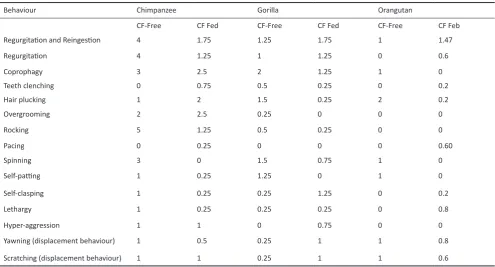
Chimpanzees, particularly when fed CF-free, were reported to show a higher frequency of most abnormal behaviours, including regurgitation and reingestion, regurgitation and coprophagy, rocking and spinning (Table 2).
Figure 6. Keeper self-reported knowledge of cultivated fruit-free diets. Figure 5. Frequency of abnormal behaviour (reported by keepers) in
great ape groups either fed cultivated fruit-free diets or diets containing cultivated fruit.
Behaviour Chimpanzee Gorilla Orangutan
CF-Free CF Fed CF-Free CF Fed CF-Free CF Feb
Regurgitation and Reingestion 4 1.75 1.25 1.75 1 1.47
Regurgitation 4 1.25 1 1.25 0 0.6
Coprophagy 3 2.5 2 1.25 1 0
Teeth clenching 0 0.75 0.5 0.25 0 0.2
Hair plucking 1 2 1.5 0.25 2 0.2
Overgrooming 2 2.5 0.25 0 0 0
Rocking 5 1.25 0.5 0.25 0 0
Pacing 0 0.25 0 0 0 0.60
Spinning 3 0 1.5 0.75 1 0
Self-patting 1 0.25 1.25 0 1 0
Self-clasping 1 0.25 0.25 1.25 0 0.2
Lethargy 1 0.25 0.25 0.25 0 0.8
Hyper-aggression 1 1 0 0.75 0 0
Yawning (displacement behaviour) 1 0.5 0.25 1 1 0.8
Scratching (displacement behaviour) 1 1 0.25 1 1 0.6
conditions n=7; gorilla total health conditions n=7; orangutan total health conditions n=2) (Table 3).
Knowledge of CF-free feeding
All keepers reported some level of knowledge of why CF-free diets are being introduced throughout the industry. All keepers whose apes were fed a CF-free diet reported that they “know a lot” about this while 10/13 keepers who either feed CF (5/6) or are in the process of changing their apes’ diets to CF-free (5/7) reported they also “know a lot” rather than “know a bit” about CF-free diets (know a lot vs know a bit, changing to fruit free diets χ2=5.429, n=7, df=2, P=0.066; diet containing fruit χ2=7, n=6, df=2, P=0.03) (Figure 6).
Discussion
Current diets fed to captive great apes
The recent trend promoting the removal of CF from primate diets has been well publicised (e.g. Britt et al. 2015; Plowman 2013; Schwitzer et al. 2008). Results generated here indicate the practice of CF-removal from the diet is well established for great ape groups kept in the British Isles, with seven groups being fed a CF-free diet, and the diet of a further seven groups in the process of being changed to CF-free. If all groups in the process of changing to CF-free diets complete this action, 70% of great ape groups from this survey would be CF-free. The keepers who participated in this study are evidencing their compliance with industry guidelines. The reduction and removal of fruit from captive gorilla diets is recommended by the EAZA guidelines for best practice (Abello et al. 2017; Bastian et al. 2010; Russon et al. 2008). Furthermore, the orangutan care manual suggests that fruit can be eliminated from diets stating that it is not essential (AZA 2017), which is controversial given that orangutans are primarily frugivorous (Coiner-Collier et al. 2016; Kawata 2008). The chimpanzee care manual suggests a balanced diet where soft fruits are replaced with harder varieties to increase dietary fibre (AZA 2017). It is evident that there is a need to take a species-specific approach to captive diet formulation to better replicate food sources found in the wild, both in terms of quantity and quality (Vinyard et al. 2016; Sha et al. 2014; Melfi 2009). However, the keepers in this study report that changes will be made despite no empirical evidence
supporting free diets in great apes specifically. Although CF-free diets may present both health and behavioural benefits as documented by Britt et al. (2015) and Plowman (2013), these are reported in monkeys and prosimians, not great apes. Some doubts regarding behavioural benefits are noted in the literature; fruit within a varied diet can promote wild-type foraging in primates (Birke 2002) and promote performance of naturalistic food processing behaviours, whilst providing choice and control (Slight et al. 2015; Crissey 2005; Hosey 2005; Birke 2002; Popovich and Dierenfeld 1997). This research, though reliant on keeper opinions and not experimental data, found limited evidence of welfare benefits from feeding CF-free diets.
Abnormal behaviour of captive great apes
Keepers reported multiple abnormal behaviours across all species, regardless of diet (CF-free vs CF-containing diets). Regurgitation, regurgitation and reingestion, and coprophagy were particularly prevalent. A wealth of research has identified these behaviours as a welfare concern in captive apes (e.g. Lukas 1999; Birkett and Newton-Fisher 2011; Casella et al. 2012) and the current results suggest such negative welfare indicators remain a concern in the captive great ape population regardless of industry wide changes in CF feeding. This is unexpected given that some abnormal behaviours have been linked to diet (Vasconcellos et al. 2012; Hosey 2005). Reingestion, regurgitation and reingestion and coprophagy in captive great apes have been linked to a lack of dietary fibre specifically (Hopper et al. 2016; Lukas 1999). The rate of regurgitation and reingestion in gorillas significantly decreased when fed reduced dietary starch and increased dietary fibre (Less et al. 2014). While the sample of CF-free great ape groups was small in the current study the results suggest that dietary fibre content particularly needs to be compared across free and CF-containing diets. Such nutritional analysis was beyond the current study but identifies an area for future study.
The role of diet presentation cannot be overlooked here. All great ape groups were fed multiple times a day using multiple feeding strategies, significantly more of which involved working for food; most keepers considered their great apes to be motivated by the diet provided. These similarities may account for the general lack of significant differences in abnormal behaviour reported by keepers across the two diet types. Studies have long established
Health condition Chimpanzee Gorilla Orangutan
CF-Free CF Fed CF-Free CF Fed CF-Free CF Fed
Age-related condition 1 1 1 1 0 1
Neurological conditions 0 1 0 1 0 0
Behavioural conditions 1 0 1 1 0 0
Past behavioural conditions 1 1 0 0 0 0
Disease 1 0 1 1 0 1
Total 4 3 3 4 0 2
that food presentation is a means of improving behavioural profiles in great apes. Future studies and industry practice should consider both what is fed and how food is presented, particularly as keeper reports of hyper-aggression support empirical data on CF-free diets (it reduces after CF removal) but contradict empirical evidence regarding regurgitation and reingestion, which was more prevalent and frequent in groups fed a CF-free diet.
From keepers’ reports, gorillas were found to have a significantly higher prevalence of abnormal behaviour while chimpanzees were reported to perform abnormal behaviour most frequently. These species differences persisted regardless of whether or not the apes were fed CF. Abnormal behaviour has many aetiologies and while researchers continue to investigate specific causes (e.g. Hopper et al. 2016), species is a known risk factor (Rose et al. 2017). Species differences in diet and foraging (time and strategies) that are seen in wild populations are likely to greatly influence a captive individual’s motivation. The social dynamic of feeding behaviour may also need to be considered. It may be that, contrary to keeper opinions, the diets of great apes generally do not motivate the species except of course to eat the food that is given.
Captive great ape health
Keepers reported several health issues in their collections, but agreed their apes were in good health, with no difference between diet types (CF-free vs CF-containing). Many of the health issues reported in the sample were age-related and appeared to have little to do with diet. Previous research has noted the occurrence of age-related health conditions given the increasing age of captive populations (Lowenstine et al. 2015; Videan, Lammey and Lee 2011). As health is a major indicator for captive welfare (e.g. Slight et al. 2015; Schwitzer et al. 2008) the care of our aging ape population needs careful review, particularly if keepers consider health to be good in animals frequently performing multiple abnormal behaviours. Previous research (e.g. Plowman 2013) revealed several health benefits following a change in diet to CF-free. While these benefits were reported in primates, great apes were not specifically researched, and current findings highlight the need to conduct experimental studies in great apes fed both CF and CF-free diets, allowing direct empirical evidence of diet affect to be collected.
Feeding regimes and feeding strategies used for captive great apes Dietary presentation is equally as important as diet content, especially given the diverse wild feeding ecology and cognitive abilities of great apes (Hohmann et al. 2006; Crissey 2005; Kaumanns et al. 2000). In the current study, all apes, regardless of species or diet type, were fed multiple times a day with some collections feeding eight or nine times per day (median=5). Zoos are encouraged to increase feeding opportunities, with EAZA guidelines for best practice suggesting a minimum of four feeds per day for gorillas (Abello et al. 2017). However, in this study gorillas demonstrated a particularly wide repertoire of abnormal behaviour. The proportion of time that great apes spend foraging within the wild differs between species (chimpanzees and orangutans, 40–60% of daily activity; gorillas, 45%) (Finestone et al. 2014; Harrison and Marshall 2011; Kawata 2008; Celli et al. 2003). Despite multiple feeding opportunities throughout the day, which may go some way to providing wild foraging opportunities, feeding strategies used may in some way remain deficient compared to the wild. Levels of foraging differ between captive collections but have been noted to be lower than 20% (of the entire activity budget) in most great ape species (Harrison and Marshall 2011).
The surveyed collections used between four and eight named feeding strategies. Keepers reported using cut up food, complex feeding enrichment, solid as well as liquid items, and just five collections provided food in bowls (a legitimate feeding strategy
especially for ill or old individuals). Here, keepers are evidencing good practice; presentation of diets plays a vital role in captive management (Crissey 2005; Kerridge 2005), and use of traditional methods such as chopping food, when combined with other methods of dietary presentation, such as puzzle feeders, can promote opportunity, variability and choice (Clark 2011; Gruber et al. 2010; Csatadj et al. 2008; Kerridge 2005; Bloomsmith and Lambeth 1995).
It is therefore difficult to explain why abnormal behaviours are so prevalent, diverse and frequent in the collections studied here. Given the multifactorial causes of behavioural abnormality it may be that diet overall needs review, or that other husbandry aspects are causing the expression of abnormal behaviour in these groups of great apes. It is of course imperative to note that this research did not directly compare behaviour before and after CF removal from the diets of ape groups.
Keeper knowledge on trends and benefits of CF-free diets and recommendations for evidence-based captive feeding
With all keepers indicating they either ‘know a lot’ or ‘know a bit’ about the trend of CF-free feeding, this would suggest that current literature and knowledge of CF-free diets are accessible for great ape collections to utilise, with Britt et al. (2015) being open access. Zoo practitioners are clearly making knowledge-based choices on the diets fed and using research to inform practice (Cloutier and Packard 2014; Melfi 2009) and it is evident that keepers believe there are benefits to feeding CF-free diets, reinforced with the recommendation to go CF-free made in captive care manuals. The current research highlights the need for an evidence-based approach as the results of research with prosimians and monkeys are being extrapolated to great apes. This may or may not be appropriate and until empirical research is conducted the appropriateness of CF-free diets for great apes will not be directly understood. The results of this survey suggest abnormal behaviours, including regurgitation and reingestion, persist in great ape groups fed CF-free diets yet hyper-aggression was absent in this sample and keepers report good health equally in both CF-free and CF-eating groups. While no researcher or practitioner would promote feeding an unhealthy diet or consider health concerns like obesity trivial, a holistically good diet that benefits health, welfare and behavioural profile/competency needs specific research before it can be effectively determined.
With little research available on keeper opinions, this study aimed to use a novel approach to highlight a keeper’s perspective into the current feeding practices in captive great apes. Previous research has identified the importance of a multi-disciplinary approach in diet formation, with keepers having an input alongside curators, veterinary teams and nutritionists (Maple 2010; Barber 2009; Melfi 2009; Crissey 2005). While successful, this study highlights the need for empirical evidence, nutritional analysis, further consideration of the causes/remedies of abnormal behaviour and further consideration of keeper opinions, as this can influence future best practice (Rose et al. 2016; Slight et al. 2015; Melfi 2009).
References
Abello M., Rierkek F., Bemment N. (2017) EAZA best practice guidelines:
Great ape taxon advisory group Gorilla (Gorilla gorilla). Amsterdam:
EAZA Executive Office.
AZA Ape Taxon Advisory Group. (2017) Orangutan (Pongo) care manual.
Silver spring, MD: Association of Zoos and Aquariums.
Baker K., Easley S. (1996) An analysis of regurgitation and re-ingestion in captive chimpanzees. Applied Animal Behaviour Science 49(2): 403– 415.
Barber J. (2009) Programmatic Approaches to Assessing and Improving Animal Welfare in Zoos and Aquariums. Zoo Biology 28(6): 519–530. Barua A. (2013) Methods for decision making in survey questionnaires
based on Likert scale. Journal of Asian Scientific Research 3(1): 35–38. Bastian M., Zweifel N., Vogel E., Wich S., van Schaik C. (2010) Diet traditions in wild orangutans. American Journal of Physical Anthropology 143(2): 175–187.
Birke L. (2002) Effects of Browse, Human Visitors and Noise on the Behaviour of Captive Orangutans. Animal Welfare 11(2): 189–202. Birkett L., Newton-Fisher N. (2011) How abnormal is the behaviour of
captive, zoo-living chimpanzees? PLoS 6(6).
Bloomsmith M., Lambeth S. (1995) Effects of predictable versus unpredictable feeding schedules on chimpanzee behaviour. Applied
Animal Behaviour Science 44(2): 65–74.
Boynton P., Greenhalgh T. (2004) Hands on guide to questionnaire research: selecting, designing and developing your questionnaire.
British Medical Journal 328(7452): 1313–1315.
Bricki N., Green J. (2007) A guide to using qualitative research methodology. United Kingdom: MSF Field Research.
Britt S., Cowlard K., Baker K., Plowman A. (2015) Aggression and self-directed behaviour of captive lemurs (Lemur catta, Varecia variegata,
V. rubra and Eulemur coronatus) is reduced by feeding fruit-free diets.
Journal of Zoo and Aquarium Research 3(2): 52–58.
Casella C., Mills A., Lukas K. (2012) Prevalence of regurgitation and reingestion in orangutans housed in north American zoos and an examination of factors influencing its occurrence in a single group of Bornean orangutans. Zoo Biology 31(5): 609–620.
Celli M., Tomonaga M., Udono T., Teramoto M., Nagano K. (2003) Tool use task as environmental enrichment for captive chimpanzees. Applied
Animal Behaviour Science 81(4): 171–182.
Clark F. (2011) Great ape cognition and captive care: Can cognitive challenges enhance well-being? Applied Animal Behaviour Science 135(1): 1–12.
Cloutier T., Packard J. (2014) Enrichment options for African painted dogs (Lycaon pictus). Zoo Biology 33(5): 475–480.
Coiner-Collier S., Scott R., Chalk-Wilayto J., Cheyne S., Constantino P., … Vogel E. (2016) Primate dietary ecology in the context of food mechanical properties. Journal of Human Evolution 92(2): 1–16. Crissey S. (2005) The complexity of formulating diets for zoo animal: a
matrix. International Zoo Yearbook 39(1): 36–43.
Croasmun J., Ostrom L. (2011) Using Likert-type scales in the social sciences. Journal of Adult Education 40(1): 19–22.
Csatadi K., Leus K., Pereboom J. (2008) A brief note on the effects of novel enrichment on an unwanted behaviour of captive bonobos. Applied
Animal Behaviour Science 112(2): 201–204.
Cunningham C., Anderson J., Mootnick A. (2006) Object manipulation to obtain a food reward in hoolock gibbons, Bunopithecus hoolock.
Animal Behaviour 71(2): 621–629.
Dishman D., Thomson D., Karnovsky N. (2009) Does simple feeding enrichment raise activity levels of captive ring-tailed lemurs (Lemur
catta). Applied Animal Behaviour Science 116(1): 88–95.
Finestone E., Bonnie K., Hopper L., Vreeman V., Lonsdorf E., Ross S. (2014) The interplay between individual, social, and environmental influences on chimpanzee food choices. Behavioural Processes 105(4): 71–78. Gray D. (2007) Doing research in the business world. Los Angeles: SAGE
Publications.
Gruber T., Clay Z., Zuberbuhler K. (2010) A comparison of bonobo and chimpanzee tool use for female bias in the Pan lineage. Animal
Behaviour 80(4): 1023–1033.
Hale M., Spencer S., Conti B., Jasoni C., Kent S., Radler M., Reyes T., Sominsky L. (2015) Diet, behaviour and immunity across the lifespan.
Neuroscience and Biobehavioural Reviews 58(2): 46–62.
Harrison M., Marshall A. (2011) Strategies for the Use of Fallback Foods in Apes. International Journal of Primatology 32(2): 531–565.
Hohmann G., Potts G., N’Guessan A., Fowler A., Mondry R., Ganzhorn J., Ortmann S. (2010) Plant foods consumed by Pan: Exploring the variation of nutritional ecology across Africa. American Journal of
Physical Anthropology 141(3): 476–485.
Hopper L., Freeman H., Ross S. (2016) Reconsidering coprophagy as an indicator of negative welfare for captive chimpanzees. Applied Animal
Behaviour Science 176(2): 112–119.
Hosey G. (2005) How does the zoo environment affect the behaviour of captive primates? Applied Animal Behaviour Science 90(2): 107–129. Jones M., Pillay N. (2004) Foraging in captive hamadryas baboons:
implications for enrichment. Applied Animal Behaviour Science 88(2): 101–110.
Kaumanns W., Hampe K., Schwitzer C. (2000) Primate nutrition: towards
and integrated approach. United Kingdom: EAZA publications.
Kawata K. (2008) Zoo Animal Feeding: A Natural History Viewpoint. Der
Zoologische Garten 78(1): 17–48.
Kerridge F. (2005) Environmental enrichment to address behavioural differences between wild and captive black-and-white ruffed lemurs
(Varecia variegata). American Journal of Primatology 66(1): 71–84.
Less E., Lukas K., Bergl R., Ball R., Kuhar C., Lavin S., Raghanti M., Wensvoort J., Willis M., Dennis P. (2014) Implementing a low-starch biscuit-free diet in zoo gorillas: The impact on health. Zoo Biology 33(1): 74–80. Lonsdorf E., Ross S., Linick S., Milstein M., Melber T. (2009) An experimental,
cooperative investigation of tool use in chimpanzees and gorillas.
Animal Behaviour 77(3): 1119–1126.
Lowenstine J., McManamon R., Terio K. (2015) Comparative pathology of aging great apes. Veterinary Pathology 53(2): 250–276.
Lukas K. (1999) A review of nutritional and motivational factors contributing to the performance of regurgitation and reingestion in captive lowland gorillas (Gorilla gorilla). Applied Animal Behaviour
Science 63(2): 237–249.
Maple T. (2010) Toward a Science of Welfare for Animals in the Zoo. Journal
of Applied Animal Welfare Science 10(1): 63–70.
McGowan R., Robbins C., Alldredge R., Newberry R. (2010) Contrafreeloading in Grizzly Bears: Implications for captive foraging enrichment. Zoo Biology 29(4): 484–502.
Meehan C., Mench J. (2007) The challenge of challenge: Can problem solving opportunities enhance animal welfare? Applied Animal
Behaviour Science 102(4): 246–261.
Melfi V. (2009) There are big gaps in our knowledge, and thus approach, to zoo animal welfare A case for evidence-based zoo animal management.
Zoo Biology 28(6): 574–588.
Mellor D. (2014) Positive animal welfare states and encouraging environment-focused and animal-to-animal interactive behaviours.
New Zealand Veterinary Journal 63(1): 9–16.
Morgan K., Tromborg C. (2007) Sources of stress in captivity. Applied
Animal Behaviour Science 102(3): 262–302.
Plowman A. (2013) Diet review and change for monkeys at Paignton Zoo Environmental Park. Journal of Zoo and Aquarium Research 1(2): 73– 77.
Popovich D., Dierenfeld E. (1997) Gorilla Nutrition. Management of Gorillas
in Captivity Husbandry Manual. United States: American Association
of Zoos and Aquariums.
Rattray J., Jones M. (2007) Essential elements of questionnaire design and development. Journal of Clinical Nursing 16(2): 234–243.
Remis M., Dierenfeld E. (2004) Digesta Passage, Digestibility and Behaviour in Captive Gorillas Under Two Dietary Regimens. International Journal
of Primatology 25(4): 825–845.
Rose P., Brereton J., Gardner L. (2016) Developing flamingo husbandry practices through workshop communication. Journal of Zoo and
Aquarium Research 4(2): 115–121.
Rose P., Nash S., Riley L. (2017) To pace or not to pace? A review of what abnormal repetitive behaviour tells us about zoo animal management.
Journal of Veterinary Behaviour 20: 11–21.
Rothman J., Raubenheimer D., Bryer M., Takahashi M., Gilbert C. (2014) Nutritional contributions of insects to primate diets: Implications for primate evolution. Journal of Human Evolution 71(2): 59–69. Russon A., Wich S., Ancrenaz M., Kanamori T., Knott C., … van Schaik C.
(2008) Geographic variation in orangutan diets. In Wich, S., Atmoko, S., Setia, T., & van Schaik, C. (Ed.). Orangutans: Geographical Variation
in Behavioural Ecology and Conservation. USA: Oxford University
Press.
Sauther M., Cuozzo F. (2009) The impact of fallback foods on wild ring-tailed lemur biology: A comparison of intact and anthropogenically disturbed habitats. American Journal of Physical Anthropology 140(4): 671–686.
Schmidt D., Kerley M., Porter J., Dempsey J. (2005) Structural and non-structural carbohydrate, fat, and protein composition of commercially available, whole produce. Zoo Biology 24(4): 359–373.
Schwitzer C., Polowinsky S., Solman C. (2008) Fruits as foods – Common misconceptions about frugivory. Zoo Nutrition 131–168.
Sha J., Tin B., Jun J., Chandran S., Amzah A., Yin S. (2014) Comparative diet and nutrition of primates at the Singapore Zoo. Journal of Zoo and
Aquarium Research 2(3): 54–61.
Slight D., Nichols H., Arbuckle K. (2015) Are mixed diets beneficial for the welfare of captive axolotls (Ambystoma mexicanum)? Effects of feeding regimes on growth and behaviour. Journal of Veterinary
Stroud P. (2007) Defining issues of space in zoos. Journal of Veterinary
Behaviour 2(1): 219–222.
Toddes B., Power M., Lintzenich B. (2014) Food, Behavioural Enrichment, and Primates. Washington DC: Nutritional Research Council of the National Academies.
Vasconcellos A., Adania C., Ades C. (2012) Contrafreeloading in maned wolves: Implications for their management and welfare. Applied
Animal Behavioural Science 140(2): 85–91.
Videan E., Fritz J., Murphy J. (2007). Development of guidelines for assessing obesity in captive chimpanzees (Pan troglodytes). Zoo
Biology 26(2): 93–104.
Vinyard C., Thompson C., Doherty A., Robl N. (2016) Preference and consequences: A preliminary look at whether preference impacts oral processing in primates. Journal of Human Evolution 98(2): 27–35. Visalberghi E., Yamokoshi M., Hirata S., Matsuzawa T. (2002) Responses
to novel foods in captive chimpanzees. Zoo Biology 21(6): 539–548. Watts D., Potts K., Lwanga J., Mitani J. (2012) Diet of chimpanzees (Pan
troglodytes schweinfurthii) at Ngogo, Kibale National Park, Uganda.
American Journal of Primatology 74(2): 114–129.