Iranian Rehabilitation Journal, Vol. 13, Issue 4, Winter 2015
Original Article
Effectiveness of Cognitive Existential Approach on Decreasing
Demoralization in Women with Multiple Sclerosis
Nasim Pakniya; Bahman Bahmani*; Asghar Dadkhah Mojtaba Azimian; Maedeh Naghiyaee; Rahele Masudi Sani University of Social Welfare and Rehabilitation Sciences, Tehran, Iran
Objectives: Multiple Sclerosis (MS) is the most prevalent central nervous system diseases that due to chronicity, frequent recurrence, uncertainty about progression, and disability, can lead to various distresses as well as demoralization. Rehabilitation method based on Cognitive-Existential therapy is an integrated approach to decreasing demoralization syndrome in these patients. This study aimed to exploring effectiveness of rehabilitation method based on Cognitive-Existential approach on decreasing demoralization syndrome in patients with Multiple Sclerosis.
Methods: Single subject design was used in this study. Among women who had referred to Tehran MS Association, 3 women (aged between 20-40) were selected through purposeful sampling and separately participated in 10 sessions (90 minutes). Participants were assessed during 7 phases of intervention (2 baselines, 3 measurements during intervention, 2 follow-up) through Demoralization Syndrome Scale and Cognitive Distortion scale. Data were analyzed by calculating process variation index and visual analysis.
Results: Comparing patients with MS scores on the diagram during 7 time measurement and calculating recovery percentage, represent decreasing in demoralization syndrome score scale.
Discussion: Findings showed that rehabilitation method based on Cognitive Existential approach can decrease demoralization syndrome in patients with MS.
Keywords: Cognitive distortion; Cognitive-Existential therapy; Multiple Sclerosis; Demoralization Syndrome.
Submitted: 9 October 2015 Accepted: 20 November 2015
Introduction
Multiple Sclerosis (MS) is the most prevalent chronic central nervous system diseases, which through De-neuronal myelin nerve can destroy patient’s sensory and motor functions (1). This disease is the most prevalent neurologic diseases among youths; especially its prevalence in women is two or three times more than men (2). The prognosis is varied from a benign disease to a rapidly progressive, debilitative, and potentially fatal disease (1). The etiology of MS is anonymous and on the one hand, due to unpredictability, uncontrollability and sudden occurrence, primary prevention is impossible and on the other hand, remedy is mostly restricted to rehabilitation and decreasing intensity of symptoms and consequences. For the reason that MS generally is chronic, frequently recurring and
debilitative in doing physical activity, negatively affect different mental, familial, financial, social dimensions of patients’ life (3) and their physical difficulty can have severe impact on their mental health (4). Consequently, rehabilitation is an inevitable process of helping patients and treatment plan, so that they can retain their ability and capacity after disease.
As a result of diseases’ progress, and consequences such as fatigue, difficulty in concentration, changing roles, disturbance in daily activity (5), patient may apprehend that he/she cannot do anything in this situation, therefore instead of controlling and managing problems, may feel helplessness and inefficacy and finally trapped in feeling loneliness, shame, and failure. These symptoms finally touch and challenge patients’ fundamental beliefs and
values of their meaning and purpose of life (6), the place that existential questions begin (7). According to existential approach, confronting with existential incontrovertible and ultimate concerns which are definite and inevitable nature of human existence, is distressing (8). In this regard, patients with MS, because of being vulnerable to extensive debilitation, are exposed to existential anxieties. In a case of confronting with existential anxieties without finding and giving authentic meaning to situation, may lead them to existential distress (9). Kissane, use existential distress to describing experience of those patients who face with imminent death and suggest that this is accompanied with feeling regret, weakness, meaninglessness of life, futile, and helplessness (10).
Previous researches indicated that, existential distress may occur among patients with chronic and intractable diseases (11) including MS (12) in all stages of disease, and is essential aspect of patients’ psychological care. Obviously, depression and demoralization are closely interdependent, both in their phenomenology and development. Although demoralization may be precursor or even co-exist with depression, the two are essentially different constructs (13). As Bahmani and colleagues (20) in a correlation study, explored linear correlation of existential anxiety, demoralization syndrome, and depression in mothers of children with potentially fatal diseases and found that there is significant relationship between these three components, to the point that high existential anxiety was predictor of demoralization syndrome, and high demoralization was predictor of depression. So, we can say that demoralized feel inhibited in action by not knowing what to do, feeling helpless and incompetent; the depressed have lost motivation and drive even when an appropriate direction of action is known.
In other word, the central feature of depression is pervasive anhedonia and a loss of consummator pleasure in the present moment. This contrasts with demoralization, where the individual retains the capacity to enjoy the present moment, but the future is perceived to be without value-there is a loss of anticipatory pleasure (6). One of the important dimensions of demoralization syndrome is cognitive distortion in finding meaning. Demoralized have negative and black and white thoughts into events and have contempt, exaggeration, and low self-confidence (13). Since demoralization syndrome is consist of emotional, cognitive and behavioral
Methods
Single subject experimental design was used in this study. This method which is called single case experiment or time series experiment, concentrate research on an individual or group of people as an unique group (24). This study include two baseline assessments before the first session of intervention, three assessments in third session, sixth session, and tenth session and two follow up assessments which were administer four and eight weeks after completion of intervention. Among women who had referred to MS society in Tehran, three women were selected through purposeful sampling and invited to participating in study. Inclusion criteria were consist of: being single, being diagnosed about one year ago, ages between 20 to 40 years old, demoralization syndrome score higher than cut of point (30>), no prior history of psychiatric medication, not being diagnosed with depression. Exclusion criteria were consisting of: recurring of disease and intention to leave the study .Intervention was administered privately for each patient, in ten sessions (120 minutes) and once a week. Study lasted about ten months from starting baseline assessments until final follow up assessment.
The therapist was educated by participating in cognitive therapy and cognitive existential workshops and 100 hours observation and internship under supervision of supervisor to be proficiently prepared to intervention. On the other hand, trend of intervention in this report was under supervision process of supervisor. General topics of intervention included introductory session: introducing general aspects of intervention program and administering pretest; initial session: establishing therapeutic secure space and setting “here and now” presence; second session: facilitating though and feelings expression of client about illness and assessing cognitive errors; third session: focusing on existential anxiety and challenging with client’s
thought about uncontrollable events; forth session: listening and challenging with death anxiety, and cognitive errors in client’s meaning about death anxiety; fifth session: facilitating in making new meaning about illness, and paying attention to loneliness anxiety; sixth session: challenging with loosing meaning, and helping client to finding new and authentic meaning; seventh session: challenging with concept of suffering due to illness; eighth session: reviewing former sessions and helping client in leading to her personal and unique meaning; ninth session: reviewing all sessions with client, talking about modified cognitions, past confused identity, inefficient meaning, negative thoughts and feelings, and their new born identity; tenth session: exploring effect of interventions, coordinating follow up session with client, administering posttest.
The self report Demoralization scale syndrome was used in this study. Kissane and Clarck designed the widely used self- report measures of demoralization in patients with advanced cancer (25). Demoralization Scale (DS) is a 24- item scale and contains 5 subscales including meaninglessness, helplessness, feeling failure, dishearten, and despair. An alpha coefficient for the DS scale was reported 94%. The Persian version of scale was translated and administrated by Bahmani and Naghiyaee (6) amongst women with breast cancer (70 samples) and its alpha coefficient reported 86% and in present study among MS patients (100 participants) reported 89%. Cognitive distortion questioner: This scale contains 20 questions which measure cognitive distortions. Hasanzadeh and Salar reported its alpha coefficient 80%. In present study we explore it in MS patients (10 samples) the same as 85.2%. Data were analyzed through drawing process variation index and Visual analysis and recovery percent formula. Findings: The participant’s demographic characteristics are shown in table (1).
Table 1. Participant demographic characteristics
Character participant Gender age education Job marriage Length of disease
A Female 33 diploma Household single 5
B Female 27 student Student single 4
C Female 24 diploma Household single 6
In table (2) and figure (1) the raw score of
Table 2. Participant demoralization scores
Demoralization Baseline 1 Baseline 2 Session 3 Session 6 Session 10 Follow 1 Follow 2 Participant A
Participant B Participant C
43 38 39
40 35 41
33 32 32
28 27 24
19 21 20
22 19 20
24 18 22
Fig 1. Trend changes in participants ‘demoralization scores
As indicated in table (2) and figure (1), demoralization score of participant (1) during intervention sessions decreased. In general, recovery percent of client was 45%, that in follow up sessions, it increased very slightly. The score of participant (2) during sessions to follow up
assessment decreased. Also, her recovery percent acquired 50%. Recovery percent of participant 3 acquired 48%, which in follow up Assessment increased. In table (3) and figure (2), cognitive distortion scores and process variation index are shown.
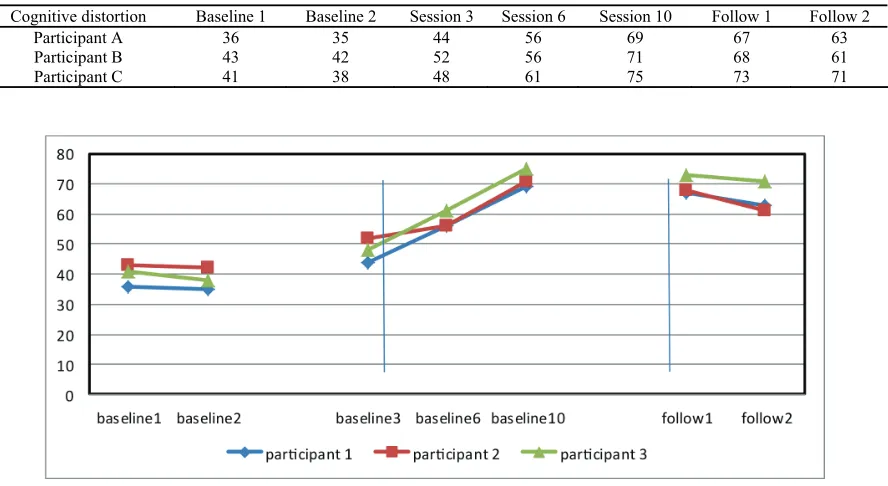
Table 3. Participant cognitive distortion scores
Cognitive distortion Baseline 1 Baseline 2 Session 3 Session 6 Session 10 Follow 1 Follow 2 Participant A
Participant B Participant C
36 43 41
35 42 38
44 52 48
56 56 61
69 71 75
67 68 73
As shown in table (3) and figure (2), scores of 3 participants during intervention sessions in Cognitive distortion decreased, and they leaded to positive Thinking and modified and in follow up decreased slightly. So, their recovery Percent after follow up respectively are 83%, (participant1), 51 % (participant 2), 82 % ( participant 3).
Discussion
The aim of present study was exploring effectiveness of rehabilitation method based on cognitive existential approach on decreasing demoralization syndrome in patients with Multiple Sclerosis. Findings show that this therapeutic method can decrease demoralization syndrome through considering existential anxieties and cognitive distortions that impeding authentic experience of existential anxiety and finally help them to find authentic meaning. In this point, other studies show that cognitive existential psychotherapy on patients with breast cancer can decrease their distress and increase their problem solving and efficient cognitive strategies (25). In this regard Bahmani, Shafiabadi and colleagues (20), in a study found that cognitive existential therapy can increase hope, self-esteem and quality of life in women with breast cancer. Eskandari, Bahmani and colleagues (21) showed that this approach decrease depression in parents of child with cancer. Farmani, Bahmani and colleagues (23) in their research discussed that this therapeutic method can modify demoralization in patients with HIV. In fact, patients with MS, by facing with unpredictability, uncertainty about future, fear of disability, predicting hasten death, may confront with meaninglessness, and try to deny and repress existential anxieties. This process may lead to feeling hopelessness, meaninglessness, anguish, anger and predispose demoralization syndrome. According to our findings in tables (2 and 3) and figures (1 and 2), this method can decrease demoralization and cognitive distortion scores in patients during intervention sessions through emphasis on here and now, help to expression of feelings and existential anxieties, modifying cognitive distortions, considering death anxiety, meaning, loneliness anxiety, and finally creating new meaning. In this process, patients can accept their existential anxieties including uncertainty of
life, possibility of recurrence of their illness and disability and reconnect with their authentic existence. Challenging with inefficient meaning of life resulting from different distresses during illness, lead them to recreating efficient meaning of life. In this regard, Torren believe that cognitive therapy for patient with chronic pain is the most effective approach, and Leahy found that cognitive therapy can conceptualize patient’s problems (26). From the viewpoint of cognitive therapy, individuals by mindreading try to proof their thoughts about themselves, world and future. In intervention process, patients asked to explore causes of events and their own part in happening. To challenging with fortunetelling and generalization in patients, they asked to find several facts to proof and disproof those thoughts. So, therapist helped participants to modify negative automatic thoughts and creating new meaning through cognitive technique, such as writing daily thoughts, challenging with should and musts, exploring basic beliefs, during sessions and practicing at home. Therefore, cognitive existential therapy introduce beneficial model appropriate with patient’s needs. In this model, individuals explore and express their feeling and existential anxieties in safe and secure therapeutic space, and concurrently declare and modify cognitive distortions that exacerbate demoralization in them. Obviously, this process that helped them to recreating meaning of life, lead to acceptance of anxiety resulted from uncontrollability, unpredictability, uncertain future, such as recurrent of illness, disability and death.
Conclusion
In conclusion, psychological rehabilitation in patients with MS by means of cognitive existential method, target existential components and negative thoughts and beliefs which cause existential distress. Subsequently, this method can be used during treatment of MS patients as psychological intervention.
Acknowledgements
References
1. McCabe MP. Mood and self-esteem of persons with multiple sclerosis following an exacerbation. J Psychosom Res. 2005;59(3):161-6.
2. Mohr DC, Cox D. Multiple sclerosis: empirical literature for the clinical health psychologist. J Clin Psychol. 2001;57(4):479-99.
3. Mohr DC, Pelletier D. A temporal framework for understanding the effects of stressful life events on inflammation in patients with multiple sclerosis. Brain Behav Immun. 2006;20(1):27-36.
4. Aghabagheri H, Mirzaian B, Mohammadkhani P, Omrani S. The effectiveness of mindfulness-based group cognitive therapy in reduction of depression in patients with multiple sclerosis. Andisheh va Raftar (Applied Psychology) 2012 6(23):75-82.
5. Janardhan V, Bakshi R. Quality of life in patients with multiple sclerosis: the impact of fatigue and depression. J Neurol Sci. 2002;205(1):51-8.
6. Naghiyaee M, Bahmani B, Ghanbari Motlagh A, Khorasani B, Dehkhoda A. The effect of rehabilitation method based on Existential Approach and Olson's model on Marital Satisfaction. Iranian Rehabilitation Journal. 2014;12(21):12-7. 7. Kissane DW, Clarke DM, Street AF. Demoralization
syndrome-a relevant psychiatric diagnosis for palliative care. J Palliat Care. 2001;17(1):12-21.
8. Westman B, Bergenmar M, Andersson L. Life, illness and death-existential reflections of a Swedish sample of patients who have undergone curative treatment for breast or prostatic cancer. European Journal of Oncology Nursing. 2006;10(3):169-76.
9. Yalom ID. Existential psychotherapy. Translated by Habib, s. Tehran: Ney Publication; 2008.
10.Kissane DW. Psychospiritual and existential distress. The challenge for palliative care. Australian family physician. 2000;29(11):1022-5.
11.Lee V, Robin Cohen S, Edgar L, Laizner AM, Gagnon AJ. Meaning-making intervention during breast or colorectal cancer treatment improves esteem, optimism, and self-efficacy. Soc Sci Med. 2006;62(12):3133-45.
12.De Simone, Philip A. Demoralization and depression in outpatients from a multiple sclerosis center. New York: Hofstra University; 1989.
13.Watson M, Kissane DW. Handbook of psychotherapy in cancer care. New Jersey: John Wiley & Sons; 2011.
14.Ackerman KD, Heyman R, Rabin BS, Anderson BP, Houck PR, Frank E, et al. Stressful life events precede exacerbations of multiple sclerosis. Psychosom Med. 2002;64(6):916-20.
15.Breitbart W, Gibson C, Poppito SR, Berg A. Psychotherapeutic interventions at the end of life: a focus on meaning and spirituality. Canadian journal of psychiatry Revue canadienne de psychiatrie. 2004;49(6):366-72. 16.Crawford JD, McIvor GP. Group psychotherapy: benefits in
multiple sclerosis. Arch Phys Med Rehabil. 1985;66(12):810-3.
17.Hind D, Cotter J, Thake A, Bradburn M, Cooper C, Isaac C, et al. Cognitive behavioural therapy for the treatment of depression in people with multiple sclerosis: a systematic review and meta-analysis. BMC Psychiatry. 2014;14(1):5. 18.Nordin L, Rorsman I. Cognitive behavioural therapy in
multiple sclerosis: a randomized controlled pilot study of acceptance and commitment therapy. J Rehabil Med. 2012;44(1):87-90.
19.Stuifbergen AK, Becker H, Perez F, Morison J, Kullberg V, Todd A. A randomized controlled trial of a cognitive rehabilitation intervention for persons with multiple sclerosis. Clin Rehabil. 2012;26(10):882-93.
20.Bahmani B, Etemadi A, Shafieabadi A, Delavari A, Ghanbari M. Cognitive-existential group therapy and cognitive instructional therapy for breast cancer patients. Developmental Psychology: Iranian Psychologists. 2010;6(23):201-14.
21.Eskandari M. Efficacy of group cognitive existential therapy on depression & hopefulness of parent with children having cancer [Master]. Tehran: Islamic Azad University; 2011. 22.Moetamed R. Efficacy of group cognitive existential therapy
on depression & hopefulness of Men with Hemodialysis [Master]. Tehran: Islamic Azad University; 2011.
23.Farmanishahreza S. The effectiveness of Cognitive - Existential Therapy on decreasing Demoralization of woman with HIV [Master]. Tehran: University of Social Welfare and Rehabilitation Sciences; 2014.
24.Borg V. Educational & Psychological Research. Tehran: Samt Publication; 2008.
25.Kissane DW, Wein S, Love A, Lee XQ, Kee PL, Clarke DM. The Demoralization Scale: a report of its development and preliminary validation. J Palliat Care. 2004;20(4):269-76.