R E S E A R C H
Open Access
Service utilization and cost of
implementing a comprehensive HIV
prevention and care program among
people who inject drugs in Delhi, India
Mary Philip Sebastian
1, Aparajita Dasgupta
2, Lopamudra Ray Saraswati
3, Asha Singh
1, Vartika Sharma
1, Ira Madan
4,
Waimar Tun
5, Julie Pulerwitz
5, Ibou Thior
6and Avina Sarna
3*Abstract
Background:WHO, UNODC, and UNAIDS recommend a comprehensive package for prevention, treatment, and care of HIV among people who inject drugs (PWID). We describe the uptake of services and the cost of
implementing a comprehensive package for HIV prevention, treatment, and care services in Delhi, India.
Methods:A cohort of 3774 PWID were enrolled for a prospective HIV incidence study and provided the comprehensive package: HIV and hepatitis testing and counseling, hepatitis B (HB) vaccination, syndromic management of sexually transmitted infections, clean needles-syringes, condoms, abscess care, and education. Supplementary services comprising tea and snacks, bathing facilities, and medical consultations were also provided. PWID were referred to government services for antiretroviral therapy (ART), TB care, opioid substitution therapy, and drug dependence treatment/rehabilitation.
Results:The project spent USD 1,067,629.88 over 36 months of project implementation: 1.7% on capital costs, 3.9% on participant recruitment, 26.7% for project management, 49.9% on provision of services, and 17.8% on
supplementary services. Provision of HIV prevention and care services cost the project USD 140.41/PWID/year. 95.3% PWID were tested for HIV. Of the HIV-positive clients, only 17.8% registered for ART services after repeated follow-up. Reasons for not seeking ART services included not feeling sick, need for multiple visits to the clinic, and long waiting times. 61.8% of the PWID underwent HB testing. Of the 2106 PWID eligible for HB vaccination, 81% initiated the vaccination schedule, but only 29% completed all three doses, despite intensive follow-up by outreach workers. PWID took an average of 8 clean needles-syringes/PWID/year over the project duration, with a mid-project high of 16 needles-syringes/PWID/year. PWID continued to also procure needles from other sources, such as chemists. One hundred five PWID were referred to OST services and 267 for rehabilitation services.
Conclusions:A comprehensive HIV prevention, treatment, and care package is challenging to implement. Extensive efforts are needed to ensure the uptake of and retention in services for PWID; peer educators and outreach workers are required on a continuous basis. Services need to be tailored to client needs, considering clinic timing and distance from hotspots. Programs may consider provision of ART services at selected drop-in centers to increase uptake.
Keywords:HIV, PWID, Harm reduction, Needle-syringe program, HIV, Hepatitis B, Hepatitis C
* Correspondence:[email protected]
3Population Council, India Habitat Center, New Delhi 110003, India
Full list of author information is available at the end of the article
Background
India has a large PWID (people who inject drugs) popula-tion estimated at 177,000 napopula-tionally with an estimated HIV prevalence of 7.2%. In Delhi, the HIV prevalence is esti-mated to be 18.1%, which is the second highest in the country [1, 2]. PWID continue to engage in unsafe injec-tion and sexual behaviors resulting in new infecinjec-tions [3–5], highlighting the need for continued focus on HIV preven-tion while providing care services for HIV-positive PWID.
WHO, UNODC, and UNAIDS recommend a compre-hensive package for the prevention, treatment, and care of HIV among PWID [6]. The package includes the following nine components: (i) needle-syringe program (NSP); (ii) opioid substitution therapy (OST) and other drug depend-ence treatment; (iii) HIV testing and counseling (HTC); (iv) antiretroviral therapy (ART); (v) prevention and treat-ment of sexually transmitted infections (STI), (vi) condom provision for PWID and their sex partners; (vii) targeted information, education, and communication for PWID and their sex partners; (viii) vaccination, diagnosis, and treatment of viral hepatitis; and (ix) prevention, diagnosis, and treatment of TB. To date, there is little documenta-tion of the comprehensive package for prevendocumenta-tion, treat-ment, and care of HIV, as well as the associated costs, based on real-world implementation, particularly in low resource settings. A search for published material on the topic in India only extracted one study carried out by UNODC that examined access to the nine components of the comprehensive package in north-east Indian states [7]. North-east states are ethnically and socio-culturally dis-tinct, and the porous border with neighboring countries makes the drug availability and practices very different from the capital [8, 9].
In May 2011, the Population Council, in collaboration with the Sahara Center for Residential Care and Re-habilitation (Sahara), launched the AVHI (averting HIV infections) project for PWID in Delhi, as part of a HIV incidence study. A cohort of PWID provided the com-prehensive HIV prevention and care services until April 2014. An integrated biological and behavioral assessment was conducted at three time points during this period to provide data on injection and sexual behaviors, HIV prevalence [8] and incidence [5], and the prevalence of hepatitis B and C [10] as elaborated in the “Methods” section. In this paper, we describe the uptake of services and related costs of implementing a comprehensive package for HIV prevention, treatment, and care services in a resource poor setting.
Methods
From May to October 2011, PWID were recruited through targeted outreach, peer-referral, and as walk-in clients at five drop-in centers (DICs) operated by Sahara in central, east, north-east, and north-west districts of
Delhi [11] for the longitudinal HIV incidence study de-signed to compare HIV incidence before and after the provision of comprehensive HIV prevention and care services. PWID who had injected atleast once in the last 3 months were eligible to participate. The study entailed three rounds of data collection: baseline at recruitment, follow-up visit 1 (FV1) approximately 1 year after the baseline (March–October 2013), and follow-up visit 2 (FV2) a year later at the end of the study (March– October 2014). At each visit, participants completed a behavioral survey and HIV testing (only HIV-negative PWID were tested at FV1 and FV2). At FV2, partici-pants were asked open-ended questions regarding reasons for using/not using NSPs, or ART services. A variety of services were offered to participants during the course of the study. The period between baseline and FV1 served as the control phase when basic ser-vices were provided, and the period between FV1 and FV2 as the intervention phase when comprehensive services were provided to study participants.
HTC was offered to all PWID at baseline. From base-line to FV1, PWID received abscess care, outpatient medical consultations for common ailments, bathing/hy-giene facilities, and nutrition services (tea/snack) at the DIC; they could access harm reduction and care services routinely available in the community throughout the project period. PWID who tested HIV positive at base-line received an accompanied referral to a government ART center for treatment. These services continued until the end of the project. Participants returning for their FV1 completed study procedures (testing for HIV, hepa-titis B and C, and a behavioral survey; a subsample underwent STI testing) and started receiving the remain-der of the comprehensive HIV prevention package (Information Education and Communication (IEC), NSP, condoms, hepatitis B vaccination for those found to be hepatitis B surface antigen (HBsAg) negative, STI treat-ment, OST through referral to government-approved centers, harm-reduction education, and referral for drug dependence treatment/rehabilitation). Participants could access these services at any of the five AVHI DICs. Dis-tribution of needles/syringes and condoms, and abscess dressing was also offered through mobile vans parked at designated high-volume hotspots at specific times. The AVHI project provided these services until April 2014.
analysis, cost data has been divided into: (i) capital costs which included procurement of furniture and medical equipment and other setup costs; (ii) recurring infra-structure and management cost that included rent and other utilities and personnel costs for the project man-ager, project accountant, site manager and security guards, and (iii) services provided. Personnel time for frontline services providers nurses, doctors, and out-reach workers (ORWs) were divided per proportionate work allocation for each of the services. The method-ology used for deciding the breakdown of costs into
ser-vices components and other costs, including
infrastructure and management, was based on the UNAIDS costing guidelines for HIV prevention strat-egies [12]. Capital costs were annualized using a dis-count rate of 3%. Capital goods were assumed to have a life of between 5 and 10 years depending on the item. Costs incurred for research activities and technical ex-perts were excluded so that the costs mentioned in the paper reflect only the costs of provision of a comprehen-sive HIV prevention and care package.
Results
A total of 3774 PWID (males: 3748 and females: 26) were enrolled into the study. Overall, 69% (n= 2604) of PWID were followed until the end of the study; 75.8% (males: 2480; females: 21) attended at least one follow-up visit while 59.4% (males: 2225; females: 17) attended both follow-up visits. Nine hundred eight male PWID did not attend any follow-up visits: 44 refused to partici-pate, 337 moved out of Delhi, 49 were incarcerated, 10 were in long-term rehabilitation, 123 were confirmed dead, and 345 were untraced. Five female PWID did not attend any of the follow-up visits: 2 moved out of Delhi, and 3 died during the study period.
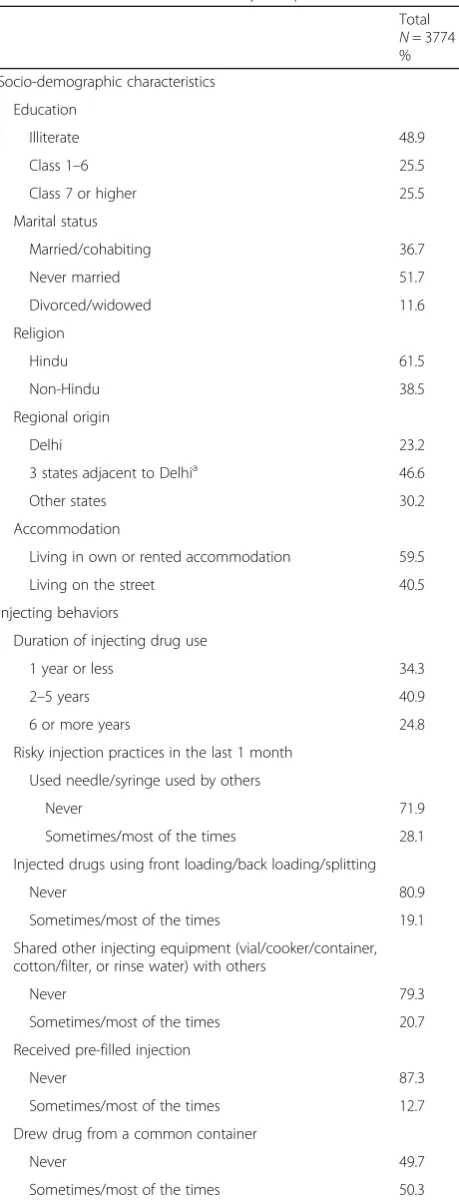
Table 1 details the socio-demographic profile of the participants at baseline. Nearly half (48.9%) of the partic-ipants were illiterate, most (51.7%) were never married, nearly half (46.6%) came from the three states around Delhi (Haryana, Rajasthan, and Uttar Pradesh), and 40.5% lived on the streets. The mean age at initiation of drug use (any drug) was 18.9 years (SD: 7.5 years); 78.1% had been using drugs for 6 years or more (data not shown). 92.7% had injected atleast once in the last 1 month. Among those who had injected atleast once in the last 1 month, the mean number of injection days was 19.8 (SD: 11.1).
Services
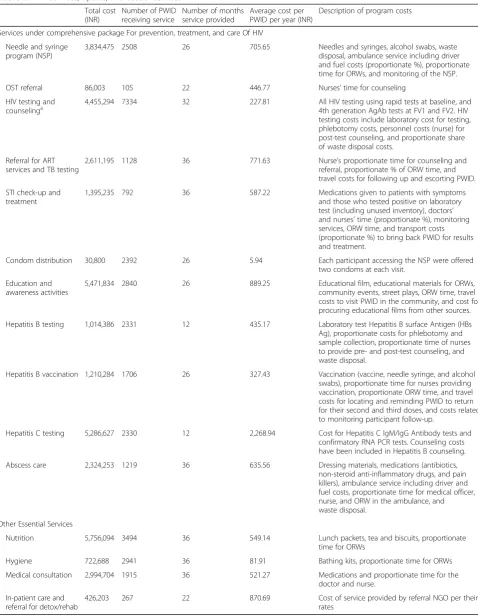
Table 2 summarizes program service components, up-take of services, and related costs. Research costs have been excluded from program costs.
Table 1Baseline characteristics of participants
Total
N= 3774 %
Socio-demographic characteristics
Education
Illiterate 48.9
Class 1–6 25.5
Class 7 or higher 25.5
Marital status
Married/cohabiting 36.7
Never married 51.7
Divorced/widowed 11.6
Religion
Hindu 61.5
Non-Hindu 38.5
Regional origin
Delhi 23.2
3 states adjacent to Delhia 46.6
Other states 30.2
Accommodation
Living in own or rented accommodation 59.5
Living on the street 40.5
Injecting behaviors
Duration of injecting drug use
1 year or less 34.3
2–5 years 40.9
6 or more years 24.8
Risky injection practices in the last 1 month
Used needle/syringe used by others
Never 71.9
Sometimes/most of the times 28.1
Injected drugs using front loading/back loading/splitting
Never 80.9
Sometimes/most of the times 19.1
Shared other injecting equipment (vial/cooker/container, cotton/filter, or rinse water) with others
Never 79.3
Sometimes/most of the times 20.7
Received pre-filled injection
Never 87.3
Sometimes/most of the times 12.7
Drew drug from a common container
Never 49.7
Sometimes/most of the times 50.3
a
Table 2AVHI services, uptake, and cost of services
Total cost (INR)
Number of PWID receiving service
Number of months service provided
Average cost per PWID per year (INR)
Description of program costs
Services under comprehensive package For prevention, treatment, and care Of HIV
Needle and syringe program (NSP)
3,834,475 2508 26 705.65 Needles and syringes, alcohol swabs, waste
disposal, ambulance service including driver and fuel costs (proportionate %), proportionate time for ORWs, and monitoring of the NSP.
OST referral 86,003 105 22 446.77 Nurses’time for counseling
HIV testing and
counselinga 4,455,294 7334 32 227.81 All HIV testing using rapid tests at baseline, and4th generation AgAb tests at FV1 and FV2. HIV testing costs include laboratory cost for testing, phlebotomy costs, personnel costs (nurse) for post-test counseling, and proportionate share of waste disposal costs.
Referral for ART services and TB testing
2,611,195 1128 36 771.63 Nurse’s proportionate time for counseling and
referral, proportionate % of ORW time, and travel costs for following up and escorting PWID.
STI check-up and treatment
1,395,235 792 36 587.22 Medications given to patients with symptoms
and those who tested positive on laboratory test (including unused inventory), doctors’ and nurses’time (proportionate %), monitoring services, ORW time, and transport costs (proportionate %) to bring back PWID for results and treatment.
Condom distribution 30,800 2392 26 5.94 Each participant accessing the NSP were offered
two condoms at each visit.
Education and awareness activities
5,471,834 2840 26 889.25 Educational film, educational materials for ORWs,
community events, street plays, ORW time, travel costs to visit PWID in the community, and cost for procuring educational films from other sources.
Hepatitis B testing 1,014,386 2331 12 435.17 Laboratory test Hepatitis B surface Antigen (HBs Ag), proportionate costs for phlebotomy and sample collection, proportionate time of nurses to provide pre- and post-test counseling, and waste disposal.
Hepatitis B vaccination 1,210,284 1706 26 327.43 Vaccination (vaccine, needle syringe, and alcohol swabs), proportionate time for nurses providing vaccination, proportionate ORW time, and travel costs for locating and reminding PWID to return for their second and third doses, and costs related to monitoring participant follow-up.
Hepatitis C testing 5,286,627 2330 12 2,268.94 Cost for Hepatitis C IgM/IgG Antibody tests and confirmatory RNA PCR tests. Counseling costs have been included in Hepatitis B counseling.
Abscess care 2,324,253 1219 36 635.56 Dressing materials, medications (antibiotics,
non-steroid anti-inflammatory drugs, and pain killers), ambulance service including driver and fuel costs, proportionate time for medical officer, nurse, and ORW in the ambulance, and waste disposal.
Other Essential Services
Nutrition 5,756,094 3494 36 549.14 Lunch packets, tea and biscuits, proportionate
time for ORWs
Hygiene 722,688 2941 36 81.91 Bathing kits, proportionate time for ORWs
Medical consultation 2,994,704 1915 36 521.27 Medications and proportionate time for the doctor and nurse.
In-patient care and referral for detox/rehab
426,203 267 22 870.69 Cost of service provided by referral NGO per their
rates
ORWoutreach worker,AgAbantigen-antibody,IgM/IgGimmunoglobulin M-immunoglobulin G,RNAribonucleic acid,PCRpolymerase chain reaction a
HIV testing and counseling
On recruitment, HIV testing was offered to all partici-pants using HIV rapid tests per NACO guidelines [13]. Repeat HIV testing was conducted for all HIV-negative participants at FV1 and FV2, and positive test results were confirmed with Western Blot (WB) or PCR tests per the study protocol [5]; the associated costs for WB/ PCR tests have not been included in program costs, as these were required to confirm new infections for the HIV incidence research component. A total of 3597 (95.3%) PWID were tested for HIV at baseline and re-ceived their test result and post-test counseling the same day [8]. One thousand nine hundred two HIV-negative PWID were tested at FV1 and 1842 HIV-negative PWID at FV2 (not all HIV-negative PWID returned for their FV1 and FV2). A total of 7334 HIV tests were under-taken over the study period at cost of INR 4,455,294. The average unit cost/PWID/year for HIV testing and counseling was INR 228 (USD 4.4).
Nutrition, hygiene, abscess care, and medical consultation Supplementary nutrition, hygiene (bathing), abscess care, and medical consultation were provided all through the project period (36 months). Medical consultations in-cluded mainly common ailments such as diarrhea and respiratory and skin infections. In all, 3494 (92.5%) PWID used nutrition services and 2941 (77.9%) PWID used bathing services over the project period. The average unit cost/PWID/year was INR 82 (USD 1.6) for providing hygiene services and INR 549 (USD 10.5) for providing nutrition services.
A third of the PWID (32.3%;n= 1219) accessed abscess care services. However, of those, only 57% (n= 692) com-pleted their abscess care with wound healing, while the remaining discontinued treatment midway. Overall, 62% (n= 760) of PWID received systemic antibiotics in addition to local wound care and the average number of dressing/treatment days per PWID were 8.7 days. Abscess care services cost the program INR 2,324,253, with an average unit cost/PWID/year of INR 636 (USD 12.2). Medical consultation services were used by 1915 (50.7%) PWID at a total cost of INR 2,994,704. The average unit cost/PWID/year was INR 521 (USD 10.0).
Hepatitis B testing and vaccination
The national HIV prevention program for PWID does not currently include HBV testing or vaccination. The AVHI project provided both these services. All partici-pants returning for their FV1 visit were offered HBV testing using HBsAg tests, an indicator of active hepatitis B infection. Those testing HBsAg negative were offered three doses of hepatitis B vaccination at 0, 1, and 6 months. Although PWID were given appointment cards for their next dose, the vast majority misplaced
their cards and needed repeated reminders. DIC nurses reviewed appointments every week and provided ORWs with lists of PWID due for their second or third vaccin-ation doses. Active outreach and follow-up were under-taken over several months to encourage PWID to return to collect their HBV test result and to return for their second and third doses. Nurses also provided pre- and post-test counseling specific to hepatitis transmission, prevention, and care, including a referral to a govern-ment facility for managegovern-ment of active hepatitis B.
61.8% (2,331/3774) PWID underwent HBV testing, and 80% (n= 1875) returned to collect their HBV test results. Two thousand one hundred six (90.3%) PWID were negative and eligible for vaccination. Vaccination was initiated for 1706 (81%) PWID, and of those, only 492 (29%) completed all three doses. Program costs for undertaking HBV testing were INR 1,014,386 with an average unit cost/PWID/year of INR 435 (USD 8.40). The program cost of delivering vaccination services was INR 1,210,284 with an average unit cost/PWID/year of INR 327 (USD 6.3).
Hepatitis C testing, counseling, and referral
The national HIV prevention program for PWID does not currently include HCV testing or treatment. At FV1, the AVHI project offered HCV testing, prevention coun-seling, and referral to a public sector hospital for further management of active HCV infection. The HCV total antibody test was used to detect HCV antibodies followed by an RNA PCR test to confirm active infec-tion. 61.7% (2,330/3774) PWID underwent HCV testing, 1655 (71%) PWID tested positive on the antibody test, and 1636 PWID underwent HCV PCR testing (19 did not have sufficient sample for testing).
53.5% (n= 1237) had active HCV infection that required medical management [10]. Nurses provided pre- and post-test counseling specific to hepatitis C trans-mission, prevention, and care. PWID with positive RNA PCR tests were referred to government hospitals for fur-ther management. The total program cost for undertaking HCV testing was INR 5,286,627 with an average unit cost/ PWID/year of INR 101,666 (USD 43.6).
used ones. Each participant accessing the NSP were of-fered two condoms at each visit.
A total of 2508 (87.7% of those who attended FV1) PWID accessed AVHI’s NSP, and received an average of 199 needle-syringes/PWID over 25 months of imple-mentation (7.96 needles-syringes/person/month). The NSP program cost a total of INR 3,834,475 over the dur-ation of the project and distributed a total of 501,391 needles-syringes. A total of INR 30,800 was spent for purchasing condoms, and 2392 PWID had taken con-doms at least once. Costs related to condom distribution include only cost of condoms as these were distributed alongside needles-syringes.
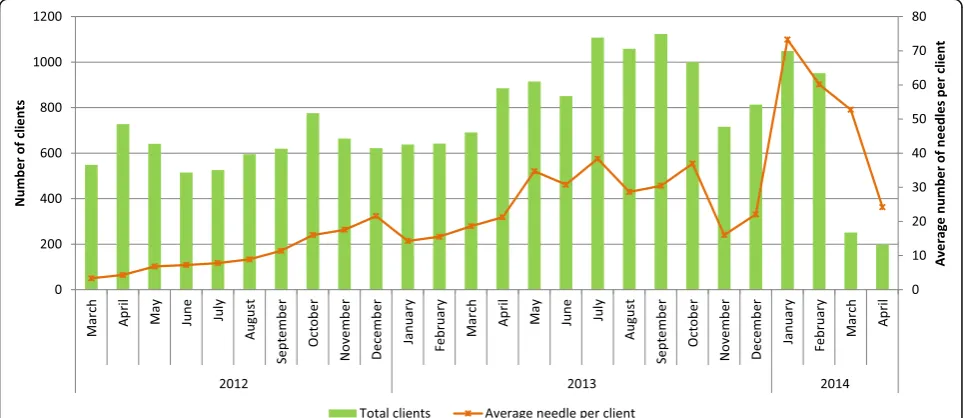
Figure 1 illustrates the uptake of needles-syringes over the project period among participants who accessed NSP services. The uptake varied over time—it was lower on very cold or very hot summer days, and during national day celebrations or around elections when the police undertook cleanup drives in Delhi and police presence was increased to maintain law and order. The project started by giving out 2 needles-syringes/person/ day with exchange of used needles-syringes. In October 2012, the number of needles-syringes given out was in-creased to 4 needles/person/day resulting in an increase in uptake. Around April 2013, when the exchange criter-ion was removed, there was significant increase in both the number of clients accessing services and number of needles taken going up to an average of 16 needles-syringes/PWID/month. The dip in needle-syringe uptake in November–December 2013 occurred around Delhi Assembly elections. This was followed by an upsurge in January 2014. The gradual decline after February 2014
occurred as DICs ended services at the end of the pro-ject—three DICs closed in March and the remaining two DICs in April 2014.
In the behavioral interview at FV2, only 49% of PWID reported using NSP in the last 3 months. Among them, 39% had last obtained sterile needles-syringes from a chemist/pharmacy, 38% from the AVHI project, 19% from TIs, and 4% from other sources. Of those who had not accessed NSP (51%) in the last 3 months, 76% re-ported obtaining new needles-syringes from medical shops. The most common reasons for not accessing NSP included not injecting (32%), distance from services (18%), and being in jail or out of Delhi (12%). Among PWID who were interviewed at baseline, FV1, and FV2 (n= 2242), the proportion who reported not having injected in the last 1 month increased from 6.4% at base-line to 26.3% at endbase-line (p< 0.01).
Education and awareness activities
HIV prevention education and awareness activities were conducted after FV1 and included harm reduction and safe-sex counseling delivered by study nurses, one-to-one and group contact by peer educators and ORWs at hotspots, screening of educational films at the DIC, and street plays in the community. While each PWID re-ceived one-to-one counseling after his/her HIV and hepatitis tests, group and community education activities were initiated after the majority (>90%) of participants had completed their FV1 behavioral survey.
Peer educators and ORWs were provided printed cards with key information on HIV transmission and prevention, HBV and HCV infections, OST, partner
testing, STIs, and ART, to ensure correct and uniform messaging. The program developed an educational film on key messages for screening at DICs. Educational films were also obtained from the Department of AIDS Control (DAC) and screened at the DICs. The AVHI project conducted 41 street plays at large hotspots and 21 community events around major festivals. A total of INR 5,471,834 was spent on education and awareness activities and reached 2840 PWID.
OST and rehabilitation services
The project provided OST services through referrals to government-approved centers for PWID who expressed a desire to use OST. A total of 105 PWID were provided accompanied referrals for OST at an average cost of INR 447 (USD 8.60)/PWID/year. Several PWID accessed OST services on their own—the proportion of PWID who reported having accessed OST services in the last month increased from 6.4% at baseline to 14.2% at endline. Data on retention in OST program was not accessible.
For drug dependence treatment and rehabilitation services, the AVHI project referred PWID to NGOs providing services free of cost where possible. Overall, 267 PWID were referred for these services. In instances, where PWID accessed these services themselves, the families paid out-of-pocket for the service (costs not in-cluded). The AVHI project paid for drug dependence treatment/rehabilitation services for 105 PWID, incur-ring an expenditure of INR 426,203 yielding an average unit cost of INR 871 (USD 16.70)/PWID/year.
STI services
The AVHI project provided syndromic management of STIs based on standard program guidelines. A sub-cohort of PWID were tested for STIs (syphilis, gonor-rhea, chlamydia trachomatis, and HSV-2) at their FV1 (n= 879) and FV2 (n= 733) visits to determine preva-lence and incidence of STIs. Participants testing positive for any of the above mentioned infections were provided counseling and treatment. The costs for STI testing were considered research costs and have not been included.
Forty-four PWID sought treatment for a genital infec-tion and were treated using syndromic management guidelines. A total of 748 participants were diagnosed with an STI based on laboratory testing at FV1 or FV2; of those, 61% (n= 456) returned to collect their test results and 65 PWID were treated and 88% (n= 57) completed their treatment. Among those who tested positive for herpes simplex virus 2 (n= 405), none re-quired treatment as they did not have active lesions; they did receive safe-sex counseling. ORWs made special ef-forts to advise PWID to collect their test results and to return for treatment. A total of INR 1,395,235 was spent
on STI care and treatment, with an average cost of INR 587 (USD11.3)/PWID/year.
ART and TB services
All HIV-positive PWID were provided accompanied re-ferrals to the nearest public health ART center where this treatment is provided free of charge. TB services have been categorized with ART services, as all HIV-positive PWID undergo TB testing as a part of their clin-ical assessment for ART initiation. During post-test counseling at the AVHI study visit, HIV-positive clients were given appointments at the DIC for ORWs to escort clients to the ART center. As PWID often missed these appointments, in the latter part of the project, ORWs contacted sero-positive clients in the community and directly escorted them to Integrated Counseling and Testing Centers (ICTCs) and ART centers—per NACO guidelines, it is mandatory to undergo HIV testing at a government ICTC to be eligible to access ARV services.
All participants (n= 1128) who tested HIV positive dur-ing the project were counseled for ART, and 84% (n= 945) of them received a referral. A total of 307 PWID were accompanied to ICTCs, and 201 PWID registered for ART services (17.8%). It took an average of 8 visits for HIV-positive PWID to complete registration procedures. Additionally, 46 HIV-negative PWID were referred for TB testing. At the end of the study, a total of 82 participants were receiving ART (endline survey). Based on focus group discussions with PWID, the main reasons for not accessing ART services included not feeling sick enough to start medications, repeated visits required to complete the registration process, long waiting time at ART centers, and not being able to reach the DIC on time for ORWs to escort them to ART centers. Those who registered suc-cessfully were appreciative of the assistance provided through accompanied referrals where ORWs helped them navigate the hospital system. The project spent a total of INR 2,611,195 on this service for providing referrals to 1128 HIV-positive PWID. The average unit cost/PWID/ year for the service was INR 771 (USD 14.80).
Proportionate costs incurred to provide services
625,366 (USD 12,026; 1.7%) on capital costs (annual-ized), INR 14,807,187 (USD 284,753.60; 26.7%) for recur-rent project management costs, and INR 2,145,963 (USD 41,268.52; 3.9%) on recruitment of the partici-pants. Provision of comprehensive HIV prevention and care services accounted for the largest proportion of program costs (49.9%) and supplementary services for the remaining 17.8%.
Provision of the comprehensive HIV prevention and care package was INR 7,301.36 (USD 140.41)/PWID/year (ex-cludes extra services: nutrition, hygiene, medical consulta-tions which are not routinely provided by programs). These costs do not include the cost of services provided through government centers, such as ART provision at ART centers, TB testing, and treatment and OST. HCV testing was the most expensive component of the comprehensive package as it included HCV RNA PCR testing to identify active in-fections requiring medical management. Excluding HCV testing, the cost of provision of comprehensive services was INR 5,032.42 (USD 96.78)/PWID/year.
Discussion
This paper presents service implementation data for a comprehensive package for the HIV prevention, treat-ment, and care services provided for PWID in Delhi. We provide a detailed component-wise breakup of costs and uptake of services in India; lessons learnt from this experience can inform other programs. The project was unique in that it was the first in the country to provide testing for hepatitis B (HBV) and hepatitis C (HCV) virus and hepatitis B vaccination for HBV negative PWID. Pro-ject Orchid [7] implemented in 13 districts in Manipur and Nagaland in north-east India and the CARE-SHAKTI HIV prevention program for PWID implemented in neighboring Bangladesh [14] are two programs that pro-vided comprehensive harm-reduction services for PWID (NSE, abscess management, treatment of STIs, education, and condom distribution) and serve as comparators for our study. Both programs referred clients for treatment of HIV (ART), TB, and OST to government run programs. Neither of the two referenced programs provides testing for HBV/HCV nor HBV vaccination.
The needle-syringe distribution offers important les-sons. The service was initiated with a needle exchange component and distribution of 2 needles-syringes/per-son/day from fixed facilities and mobile vans. This was rapidly changed to the distribution of 4 needles-syringes/day in response to client needs. The exchange component had to be removed as clients found it diffi-cult to carry used needles, following which, a surge in uptake was observed. Despite all this, we were able to distribute an average of 96 needles-syringes/PWID/year which is lower than the 300 needles-syringes reported from Bangladesh [14] and 192 needles-syringes reported
from Project Orchid [7] or the internationally recom-mended target of 140 needles-syringes [6]; both projects had exchange-based distribution. It is important to note that uptake increased slowly as more clients became eli-gible to receive needles-syringes after completing their FV1 reaching a high of 16 needles-syringes/PWID/year for a few months when all five DICs were at peak per-formance. The uptake of needles-syringes also had a sea-sonal variation and distribution through mobile vans served to enhance uptake. Our survey revealed that PWID in Delhi sourced needles from multiple sources, notably chemists (39%) from where they obtain pharma-ceutical drugs, and other TI programs (19%), whichever was closer or convenient; it is well known that in Delhi chemists throw in free needles-syringes with the pur-chase of pharmaceutical drugs [15]. Taking into account the supply from chemists and other TI programs, it is probable that the actual use of clean needles-syringes among our clients would be higher. Our cost of USD 13.55/person/year for needle-syringe distribution was lower than international estimates of USD 23–71 from UNAIDS for all variety of distribution systems [16].
The uptake of ART by HIV-positive PWID was a chal-lenge. In the national program, ART services are provided at designated public sector health centers/hospitals that require a HIV test result from government testing sites that are often located away from the ART center; thus PWID from our project had to undergo repeat HIV test-ing to be eligible and then visit the ART center at another location. Despite offering accompanied referrals with out-reach workers, only a small proportion of positive PWID were registered for ART. PWID found it difficult to re-member appointments, make multiple visits to the center, and wait in queues. While the uptake of HIV testing was very high (95%) as testing was conducted at the DIC itself, getting onto ART was suboptimal. This is in sharp con-trast to the Orchid program report that shows 98% of their opioid injecting HIV-positive individuals were regis-tered in ART services [7]. The socio-cultural context of rural north-east of the country is very different from the low-income, densely populated urban setting of Delhi. The national program may consider provision of HIV test-ing and ART services at selected TI DICs as a pilot pro-ject, this would help with improving uptake of HIV testing and ART services, and better treatment compliance. Dur-ing our project period, OST services were only offered at approved TI centers and there was a limit to the number of people who could receive OST. Thus, many persons referred to OST remained on waiting lists. However, at endline, 14.2% of the PWID reported that they had accessed OST services. This is similar to the 13.7% coverage reported from the north-east [7].
India. HBV and HCV testing was offered by our project. Uptake of HBV and HCV testing was high, and the major-ity came back to collect their results, but did so after several reminders. HBV vaccination was initiated for the majority; however, despite intense follow-up and several reminders, less than a third completed all three doses. Completion rates are also low in western countries; in a recent US study, 58% of PWID initiating HBV vaccination completed three doses [17]. HBV vaccination is now a part of the na-tional immunization program and can be easily integrated into TI services; however, programs introducing HBV vac-cination need to have effective retention strategies in place.
Additional services such as nutrition (snacks), hygiene (bathing facilities), recreational space, and medical con-sultations were provided to retain clients in services, based on Sahara’s past experience with service provision for PWID. Both the other programs, in north-east India and Bangladesh, also provided hygiene and recreational space as retention strategies. Learning from our experi-ence, several TI programs in other parts of the capital have introduced similar services.
The AVHI project spent a total of USD 1,067,629.88 over 3 years (2011–2014). The largest component of the cost, over half of the budget, went towards delivering comprehensive HIV prevention and care services. An additional 17.8% went towards supplementary services such as hygiene, nutrition, medical consultations, and recreational space that we consider essential to the pro-gram, as a substantial proportion (40%) of our partici-pants were street-based [8]. The CARE-SHAKTI and Orchid projects also provided bathing facilities and rec-reational space as retention strategies. Peer support and outreach is a critical component of all harm-reduction programs that supports almost all services (provision of needles-syringes, abscess care, crisis management, IEC, follow-up of clients, and accompanied referrals). A small proportion of this expense, which was spent during the recruitment phase, has been budgeted as cohort recruit-ment cost; the rest of it has been proportionately budgeted into each service component that was supported by it. The cost the AVHI program spent for cohort recruitment will not be necessary for the ongoing TI programs as they already serve registered clients. Providing comprehensive HIV prevention and care services, including hepatitis B vaccination, excluding hepatitis C testing, based on our project experience costs USD 96/person/year when ART, TB, and OST are provided through government program. This is marginally lower than the USD 110/person/year reported from Bangladesh (1999–2001) [14]. The more re-cent Project Orchid (2011–12) reported a cost of USD 154/person/year (USD 67 to reach clients and USD 87 for field monitoring) to provide harm-reduction services to PWID across 13 districts in Manipur and Nagaland in their scale-up phase [7].
There are some limitations. A mixed model of com-prehensive HIV prevention, care, and treatment services were provided in this program—harm-reduction services were provided by the NGO while ART, TB, and OST ser-vices were accessed from the government health system. For all services where we referred clients, we did not have access to retention, adherence, or cost data; this data could have permitted a more detailed analysis of services and costs. The project undertook HBV and HCV testing but had to rely on the public health system for management of active infection.
Conclusion
In conclusion, this paper documents the implementation of a comprehensive HIV prevention and care program in a large urban city and provides important insights into the challenges and the facilitators for the program. A comprehensive HIV prevention package is challenging to implement. Extensive efforts are needed to ensure the uptake of and retention in services for PWID; peer edu-cators and outreach workers are required on a continu-ous basis. Services need to be tailored to client need, taking into account clinic timing and distance from hot-spots. Programs may consider provision of ART services at selected drop-in centers to increase uptake. This pro-gram was the first to implement hepatitis B testing and vaccination services and provides feasibility information for the national program.
Abbreviations
ART:Antiretroviral therapy; AVHI: Averting HIV infection; DIC: Drop-in center; HBV: Hepatitis B virus; HCV: Hepatitis C virus; HTC: HIV testing and counseling; IEC: Information Education and Communication; NACO: National AIDS Control Organization; NGO: Non-governmental organization; ORWs: Outreach workers; OST: Opioid substitution therapy; PWID: People who inject drugs; STI: Sexually transmitted infections; TB: Tuberculosis; UNODC: United Nations Office on Drugs and Crime; WHO: World Health Organization
Acknowledgements
We would like to thank Dr Neeraj Dhingra, Deputy Director General, NACO, Mr JK Misra, Joint Director Targeted Interventions, and Delhi State AIDS Control Society for their support to the project. We would like to thank Sahara’s team of dedicated staff without whom this project would be impossible to implement. All laboratory testing was undertaken by Super Religare Laboratories, India. And finally, our deepest thanks to the study participants for their willingness to share this information with us.
Funding
Availability of data and materials
The data that support the findings of this study have been submitted to PATH by Population Council and can be made available from the authors upon reasonable request and with permission of PATH.
Authors’contributions
AS, PI of the study, has conceptualized and designed the study, and has prepared the final version of the manuscript. MPS has interpreted the data and drafted the manuscript. AD has divided the total cost of the project into different sub-components. LRS has calculated the component-wise costs, critically reviewed and modified the draft manuscript, and prepared the references. AS kept the records of costs incurred for different objects and services during the whole project period. VS was actively involved in acquisition of data on cost by different components and service uptake by the participants. IM was responsible for monitoring the service uptake of the participants, the data for which is a critical component of the present manuscript. WT, a co-PI, has contributed in conceptualizing and designing the study. JP and IT have provided critical input in the design of the study, and analysis and interpretation of the data. All authors read and approved the final manuscript.
Competing interests
The authors declare that they have no competing interests.
Consent for publication
Informed consent was taken from all the study participants and can be produced to the Editorial team on request.
Ethics approval and consent to participate
The study was approved by the National AIDS Control Organization’s (NACO) Technical and Ethics Committees in Delhi, India, the PATH Research Ethics Committee in Seattle, USA, and the Institutional Review Board of the Population Council in New York, USA.
Publisher’s Note
Springer Nature remains neutral with regard to jurisdictional claims in published maps and institutional affiliations.
Author details
1Ex-Population Council, Delhi, India.2Economics, Ashoka University, Sonepat,
Haryana, India.3Population Council, India Habitat Center, New Delhi 110003, India.4Sahara Center for Residential Care and Rehabilitation, New Delhi, India.5Population Council, Washington, DC, USA.6PATH, Washington, DC, USA.
Received: 15 February 2017 Accepted: 5 June 2017
References
1. NACO. HIV sentinel surveillance 2010-11: a technical brief. New Delhi: National AIDS Control Organization, Department of AIDS Control, Ministry of Health and Family Welfare, Government of India; 2012.
2. NACO. Annual report 2012-13. New Delhi: National AIDS Control Organization, Department of AIDS Control, Ministry of Health and Family Welfare, Government of India; 2013.
3. Mahanta J, et al. Injecting and sexual risk behaviours, sexually transmitted infections and HIV prevalence in injecting drug users in three states in India. AIDS. 2008;22 Suppl 5:S59–68.
4. Panda S, et al. Risk factors for HIV infection in injection drug users and evidence for onward transmission of HIV to their sexual partners in Chennai, India. J Acquir Immune Defic Syndr. 2005;39(1):9–15.
5. Sarna A, et al. High HIV incidence in a cohort of male injection drug users in Delhi, India. Drug Alcohol Depend. 2014;139:106–14.
6. WHO, UNODC, UNAIDS. Technical Guide for countries to set targets for universal access to HIV prevention, treatment and care for injecting drug users. Geneva: World Health Organization; 2009.
7. Lalmuanpuii M, et al. Scale-up of a comprehensive harm reduction programme for people injecting opioids: lessons from north-eastern India. Bull World Health Organ. 2013;91(4):306–12.
8. Sarna A, et al. High uptake of HIV testing in a cohort of male injection drug users in Delhi, India: prevalence and correlates of HIV infection. AIDS Behav. 2013;17(7):2479–89.
9. Sarna A, et al. Assessment of unsafe injection practices and sexual behaviors among male injecting drug users in two urban cities of India using respondent driven sampling. Southeast Asian J Trop Med Public Health. 2012;43(3):652–67.
10. Saraswati LR, et al. HIV, Hepatitis B and C among people who inject drugs: high prevalence of HIV and Hepatitis C RNA positive infections observed in Delhi, India. BMC Public Health. 2015;15(726):1–11.
11. Tun W, et al. Strategies for recruiting injection drug users for HIV prevention services in Delhi, India. Harm Reduct J. 2013;10:16.
12. UNAIDS. Costing guidelines for HIV prevention strategies. Geneva: UNAIDS; 2000.
13. NACO. Targeted intervention under NACP III: operational guidelines (volume i - core high risk groups). New Delhi: NACO. New Delhi: National AIDS Control Organization, Ministry of Health and Family Welfare, Government of India; 2007.
14. Guinness L, et al. The cost-effectiveness of consistent and early intervention of harm reduction for injecting drug users in Bangladesh. Addiction. 2010; 105(2):319–28.
15. Besseling D. Reportage: the needle and the damage done—death and decay in a Delhi neighbourhood where chemists serve as drug dealers. 2003. The Caravan.
16. Wilson D, Fraser-Hurt N. The economics and financing of harm reduction. In: Book The economics and financing of harm reduction (Editor ed.^eds.). The World Bank; 2013. http://www.harm-reduction.org/library/presentation-economics-and-financing-harm-reduction.
17. Bowman S, et al. Factors associated with hepatitis B vaccine series completion in a randomized trial for injection drug users reached through syringe exchange programs in three US cities. BMC Public Health. 2014;14:820.
• We accept pre-submission inquiries
• Our selector tool helps you to find the most relevant journal
• We provide round the clock customer support
• Convenient online submission
• Thorough peer review
• Inclusion in PubMed and all major indexing services
• Maximum visibility for your research
Submit your manuscript at www.biomedcentral.com/submit