RESEARCH ARTICLE
Development and evaluation of a computer-based auditory
training program for rehabilitation of children with decoding
deficit
Azam Aghaie1, Ali Akbar Tahaei2*, Farnoush Jarollahi2, Mohammad Kamali3
1- Department of Audiology, School of Rehabilitation Sciences, International Campus, Iran University of Medical Sciences, Tehran, Iran 2- Department of Audiology, School of Rehabilitation Sciences, Iran University of Medical Sciences, Tehran, Iran
3
- Department of Rehabilitation Management, School of Rehabilitation Sciences, Iran University of Medical Sciences, Tehran, Iran
Received: 14 Jan 2018, Revised: 27 Feb 2018, Accepted: 18 Mar 2018, Published: 15 Jul 2018
Abstract
Background and Aim: Decoding deficit is the most common central auditory processing dis-order (CAPD). Given the benefits of computer-based auditory training programs for treatment of central disorders and the lack of such pro-grams in Persian language, this study aimed to develop a computer-based auditory training pro-gram for decoding skill. We also evaluated this program in 8 to12 year old children with CAPD.
Methods: The first stage of research was to develop a computer-based auditory training pro-gram. This program consists of three levels of phonological discrimination, syllable discrimi-nation, and word discrimination. The second stage was to determine the content and face validity of the program. The third stage was to assess the program effect on five children with decoding deficit. The research method was interventional and had a pretest and post-test design with another five children as control group. The staggered spondaic word, phonemic synthesis (PS) and speech in noise tests was used to assess the children performance before and after training.
Results: Mean scores of staggered spondaic word (SSW) and PS tests of the experimental group were significantly difference before and after the auditory training (p<0.05) as compared to control group. However, there was no signi-ficant difference with regard to the speech-in-noise test results (p>0.05).
Conclusion: This computer-based auditory trai-ning program can be considered as a prelimi-nary tool for the rehabilitation and treatment of decoding deficits in children with CAPD.
Keywords: Computer-based auditory training; decoding; central auditory processing disorders
Citation: Aghaie A, Tahaei AA, Jarollahi F, Kamali M. Development and evaluation of a computer-based auditory training program for rehabilitation of children with decoding deficit. Aud Vestib Res. 2018;27(3):143-9.
Introduction
Central auditory processing disorder (CAPD) is a deficit in perceptual processing of auditory stimuli in the central auditory nervous system and its underlying neurobiological processes. CAPD is not due to higher order language or cognitive disorders [1]. One of the disorders in children with CAPD is decoding problem. The problem lies in the phonemic area located in the left posterior temporal lobe, i.e. the primary auditory cortex. Decoding is the precise and fast
*
Corresponding author: Department of Audiology,
reception of speech stimuli, especially at the phonemic level. Based on Buffalo model (1990), decoding deficit can result in difficulties in phonemic identification, control, and reca-lling. Reading or lexical accuracy and spelling problems are usually part of decoding deficit. In this condition, difficulty in discrimination and vocabulary is due to misperception of auditory stimuli. Based on Bellis/Ferre (1999) model, decoding deficit includes weak phonemic repre-sentation, discrimination problems, difficulty in blending phonemes, and remembering learnt phonemes [2]. By far, decoding deficit is the most common auditory processing deficit [3]. The results of the central tests in decoding deficit includes low staggered spondaic word (SSW) scores in right competing and left non-competing conditions; low scores of phonemic synthesis (PS) test, weaker right ear versus left ear performance on the monaural low-redun-dancy speech and speech-in-noise test [2]. Auditory training is widely used for CAPD intervention [4]. Brain plasticity is the key fac-tor in audifac-tory training outcome [5]. Direct management and auditory training used for decoding deficit has been introduced by Katz and Smith (1991) and includes phonemic trai-ning program (PTP) and PS. Both methods use words, nonsense syllables, or repair strategies for teaching speech sounds. The aim of the PTP is the precise perception of speech sounds. It is assumed that subjects with decoding deficit perceive vague, inaccurate, or overlapping con-cepts of speech sounds. In PS, each word is presented phoneme by phoneme and subjects are asked to repeat the blended word or point to the target image [6].
Another program was suggested by Sloan called the minimum difference between discriminative pairs. Sloan approach was mainly focused on consonant discrimination and the most similar consonants are paired and presented to children such as /t/ and /d/. The child is expected to perform a fast and accurate discrimination [4]. After verifying the neurophysiologic represen-tation of sound stimuli and improvement of listening and related functions in children and adults by auditory training, different software
programs for auditory training for various aud-itory language and learning disorders were developed The best-known programs are Fast ForWord (Scientific Learning Corporation, 2001), Earobics (Cognitive Concept, 1999), Learning Fundamentals, Otto’s World of Sou-nds, Conversation Made Easy, LiSN and Learn (for spatial hearing disorder) and dichotic int-eraural intensity difference (for dichotic pro-cessing deficit conducted by audiometer and computer game) [4,7]. Computer-based prog-rams enable us to accurately control stimuli. They provide easy access to different training levels and games. Furthermore, their equipment is available and trainings are standard [8]. Decoding deficit is one of the most common type of auditory processing disorder (APD) and needs auditory training. In addition computer-based auditory training programs are shown to be effective for APD. However, there is no Persian computer-based program available, so the present study aimed to design a computer-based auditory training program for improving decoding skills in Persian-speaking children with CAPD and evaluate its effects.
Methods
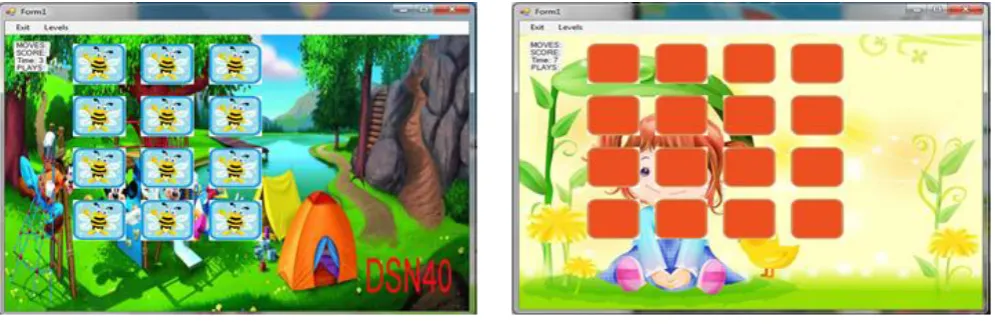
The present study was conducted in three sta-ges. Stage one comprised designing a computer-based auditory training program. In this stage, after reviewing different computer-based pro-grams and considering treatment and manag-ement approaches for decoding deficits, the intended program framework was designed. In the next stage, an original version the program with non-phonemic stimuli was written and assessed by specialists. Phonemes, syllables, and words were used as the materials. There-fore, this program consists of three levels of phonemes, syllables and words discrimination (Fig. 1). The used syllables and words were different in their initial or final consonants. Each level has different difficulty levels from easy to difficult.
difficult based on voicing, manner of articu-lation, and place of articulation. First level inc-luded /â/, /a/, /u/, /o/, /i/, and /e/. Second level included consonants with similar voicing, manner and place of articulation consisting of /d/, /j/, /v/, /m/, /r/, and /y/. The third level includes consonants with similar voicing and manner of articulation but different place of articulation consisting of /s/, /š/, /f/, /x/, /h/ and /y/. The fourth level includes consonants with similar manner of articulation consisting of /b/, /p/, /t/, /d/, /k/, and /g/. The fifth level included two consonant groups with similar place of articulation; 1) /t/, /d/, /s/, /z/, /n/, and /l/, and 2) /š/, /ž/, /j/, /č/, /k/, /g/, /x/, and /q/.
The syllabic level had three stages. Phonemes of the last three stages of the first level were used in combination with vowels. In stage one, /â/ was used in combination with the consonants of the fourth stage of phonemic level, including /dâ/, /tâ/, /kâ/, /gâ/, /bâ/, and /pâ/. In stage two, /e/ was used in combination with the consonants of the fifth stage of phonemic level, including /šu/, ž/u/, /ju/, /ču/, /ku/, /gu/, /xu/, and /qu/. At the word level, the program includes 21 stages in which words with different initial or final consonants were sorted in eight or six-word groups. The stages of this level were arranged based on available vowels. Vowels in the words had easy to difficult order: /â/, /a/, /o/, /e/, /u/, and /i/. There were 14 stages, including words with different first consonants such as
/bâl/, /sâl/, /šâl/, /xâl/, /fâl/, /lâl/, /mâl/, /yâl/, /tang/, /sang/, /jang/, /čang/, /zang/, /rang/, /mang/, /nang/. The last seven stages included words with different final consonants such as /bâd/, /bâj/, /bâr/, /bâz/, /bâk/ , /bâl/, /bâm/, /baq/, /did/, /dir/, /dis/, /dig/, /din/, and /div/. The stages of the program included 12-box sets (matched six pairs) and 16-box sets (matched eight pairs) and different icons with different images (Fig. 1). With hovering the mouse cursor on each icon, the related sound will be played and with a click, its color, or image will be changed (depending on the stage). The child is asked to find similar sounds among other sounds. If a child does not recognize the correct sound, the icon will be returned to the default status. If the child correctly recognizes it, the correct response will be shown in the form of an animation or motion picture. Motion pictures for each correct response motivates children to con-tinue auditory training. This process concon-tinues until all icons are being activated.
answer has one negative score. For example, if the child moves 8 icons correctly, his score will be 80 and his moves will be 8. “time” is indicative of the time lasted until a level is completed. “play” shows the total number of mouse movements on icons.
The second stage was to determine the content validity of the program. Content validity form was prepared and handed out among 10 audi-ologists who were experts in central auditory processing and speech and language pathology. They were asked to use a 4-point scale (from 1 to 4) to score phonemes, syllables, and words based on predetermined criteria, including nece-ssity, relevance, clarity, and simplicity. Based on their comments and scores, the content vali-dity index was calculated and experts’ com-ments were applied to the lists. Schipper desig-ned a Table in which the minimum acceptable content validity ratio (CVR) in relation to a number of experts is shown. Based on this Table and for 10 experts, the minimum acceptable CVR is 62%. If the index for a group of phonemes was lower than 62%, that group must be modified. All groups showed an index of higher than 62%. Then phonemes, syllables, and words were recorded in the educational tech-nology center supported by IRIB studio by a male voice actor with standard condition (clear, undistorted, and familiar).
In the next step, the details of the stages and principles were described for a software engin-eer and the computer-based program was desi-gned and developed by AutoPlay software and Photoshop. Afterwards, the CD of the program was distributed among five audiologists to check and consider its face validity, including its relevance to the aim of the study, the acce-ptability of components and overall program, encompassing important aspects of the study aims, and being appropriate for the target age group. Experts’ comments were reviewed and any recommended revisions were made.
The third stage of the study was conducting research on the study population. This study is an interventional study with pretest and post-test design and a control group. The study popu-lation comprised all children with CAPD in
Ahvaz City aged 8 to 12 years. The sample size was selected based on similar studies and inc-luded 10 children (5 cases and 5 controls). Non-probability sampling with considering inclusion and exclusion criteria was used to enroll the study samples.
administered for evaluation of variance equality and then Kolmogorov-Smirnov test for checking the normal distribution of scores. Next, for com-paring the mean scores from pre to post int-ervention, paired t test was used. All tests were performed by SPSS 24. The significant level was set at 0.05.
Results
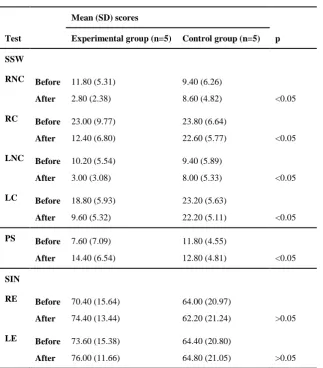
Table 1 presents the mean and standard devi-ation of SSW, PS, and SIN results before and after computer-based auditory training in both groups. As it is seen, there was a significant difference between children with CAPD in case
and control groups in regards to SSW RNC (p=0.02), RC (p=0.02), LNC (p=0.01) and LC (p=0.001). In addition, there was a significant difference between two groups with regard to PS score (p=0.01). There was not any signi-ficant difference between two groups in SIN at SNR-10 in two ears: right ear (p=0.07) and left ear (p=0.4).
Discussion
The present study aimed at developing a com-puter-based auditory training for decoding deficit in Persian and its evaluation in 8 to12 years old children with CAPD. In this study, the Table 1. Mean (standard deviation) of the staggered spondaic word,
phonemic synthesis, and speech in noise test scores in experimental and control groups before and after training
Mean (SD) scores
Test Experimental group (n=5) Control group (n=5) p
SSW
RNC Before 11.80 (5.31) 9.40 (6.26)
After 2.80 (2.38) 8.60 (4.82) <0.05
RC Before 23.00 (9.77) 23.80 (6.64)
After 12.40 (6.80) 22.60 (5.77) <0.05
LNC Before 10.20 (5.54) 9.40 (5.89)
After 3.00 (3.08) 8.00 (5.33) <0.05
LC Before 18.80 (5.93) 23.20 (5.63)
After 9.60 (5.32) 22.20 (5.11) <0.05
PS Before 7.60 (7.09) 11.80 (4.55)
After 14.40 (6.54) 12.80 (4.81) <0.05
SIN
RE Before 70.40 (15.64) 64.00 (20.97)
After 74.40 (13.44) 62.20 (21.24) >0.05
LE Before 73.60 (15.38) 64.40 (20.80)
After 76.00 (11.66) 64.80 (21.05) >0.05
computer-based auditory training made a signi-ficant difference in SSW and PS scores of chil-dren in the case group. Computer-based audi-tory training improved the mean scores of RNC, RC, LNC, and LC in SSW and PS tests in the case group in comparison to control group. The amount of this effect for RC was 0.85 which means 85% of RC score improvements after auditory training is attributed to computer-based training. This effect for RNC and LC was 0.83 and for LNC 0.67. The amount of mean PS score improvement in children with CAPD in the case group was 0.62.
Battin et al. studied the effects of computer-based Fast ForWord (FFW) program on the per-formance of children with CAPD on the SCAN [12]. FFW has different levels for different age groups. It is actually a game for improving basic cognitive skills such as memory, attention, and order with special focus on phonemic awareness and language structure. For older children, the program focus is on the processing skills, and reading enhancement via perception of speech sounds, phonemic awareness, and word recog-nition. The stimuli were non-speech tones or modulated speech with lengthening their cha-racteristics (for example formant transition) in comparison with natural speech [13]. The res-ults showed that after 6 to 8 weeks of auditory training, children’s score in the screening test for auditory processing disorder in children-revised-c (SCAN-C) improved significantly. SCAN-C includes Auditory Figure Ground, Fil-tered Words, Competing Words, and Competing Words and Competing Sentence subtest [12]. In addition, Wertz and Hall studied four 8 to 12-year-old children with CAPD who rec-eived rehabilitation via FFW and Earobics [14]. Earobics was a comprehensive program for pho-nemic awareness and language-auditory proce-ssing training. This program consists of sets of games designed for language development, pho-nemic awareness, alphabetical knowledge, deco-ding, spelling, readeco-ding, and writing improv-ement [15]. They reported significant improv-ement in SCAN-C and a dichotic task following training [14].
Miller et al. studied 7 to 9-year-old children
with CAPD. Three children received FFW, two children Earobics and two children traditional auditory processing trainings. Auditory proce-ssing, language, speech, and writing tests were performed before and after the training. The results supported auditory processing improv-ement in all children [16].
Krishnamurti et al. studied the effects of audi-tory training on audiaudi-tory brainstem response (ABR) in two school children with CAPD. FFW was selected as an intervention. Click ABR and speech ABR were studied before and after auditory training. Auditory training lasted for eight weeks. Click ABR did not show any significant change but speech-ABR components showed significant alterations from pre- to post intervention [17]. In agreement with these stu-dies the results presented in our research dem-onstrate that auditory training programs improve auditory performance in subjects with CAPD which reflect neural plasticity in the central auditory system. Speech encoding-decoding is altered by cognitive functions such as auditory-language experiences and these effects can cha-nge neural activity within the brain structures. In the present study there were no significant improvements on the SIN performance in the right and left ears.
The probable reasons can be related to limited sample size or other CAPD deficits such as int-egration or tolerance-fading memory.
Conclusion
Based on the results, this computer-based aud-itory training program can be effective in imp-roving decoding deficits in children with CAPD and seems to provide a preliminary tool for reh-abilitation and treatment of decoding deficit in subjects with CAPD. Nevertheless, due to pat-hological heterogeneity of CAPD more research with larger sample size is needed before it can receive widespread acceptance for utilization in clinical populations.
Acknowledgements
Medical Sciences. The authors would also like to show their gratitude to the Consulting Center of Ahvaz Education Department and parents of the attended children.
Conflict of interest
The authors declare that they have no conflict of interest.
REFERENCES
1. Lotfi Y, Moosavi A, Abdollahi FZ, Bakhshi E, Sadjedi H. Effects of an auditory lateralization training in chi-ldren suspected to central auditory processing disorder. J Audiol Otol. 2016;20(2):102-8. doi:
10.7874/jao.2016.20.2.102
2. Tillery KA. Central auditory processing evaluation: a test battery approach. In: Katz J, Medwetsky L, Burkard R, Hood LJ, editors. Handbook of clinical audiology. 6th ed. Philadelphia: Lippincott Williams & Wilkins; 2009. p. 627-41.
3. Katz J. The Buffalo CAPD Model: The importance of phonemes in evaluation and remediation. J Phonet and Audiol. 2016;2(1):111. doi: 10.4172/2471-9455.1000111
4. Weihing J, Chermak GD, Musiek FE. Auditory training for central auditory processing disorder. Semin Hear. 2015;36(4):199-215. doi: 10.1055/s-0035-1564458
5. Musiek FE, Shinn J, Hare C. Plasticity, auditory training, and auditory processing disorders. Semin Hear. 2002;23(4):263-76. doi: 10.1055/s-2002-35862
6. Bellis TJ, Anzalone AM. Intervention approaches for individuals with (central) auditory processing disorder. Contemp Issues Commun Sci Disord. 2008;35:143-53. 7. Chermak GD, Musiek FE. Central auditory processing
disorders: new perspectives. 1st ed. San Diego: Singular Publishing Group, Inc; 1997.
8. Loo JH, Bamiou DE, Campbell N, Luxon LM.
Computer-based auditory training (CBAT): benefits for children with language- and reading-related learning difficulties. Dev Med Child Neurol. 2010;52(8):708-17. doi: 10.1111/j.1469-8749.2010.03654.x
9. Barootiyan SS, Jalilvand Karimi L, Jalaie S, Negin E. Development and evaluation of the efficacy of Persian phonemic synthesis program in children with (central) auditory processing disorder: a single subject study. Aud Vest Res. 2018;27(2):101-10.
10. Hajiabolhassan F, Lotfi Y, Azordegan F. [Introducing and evaluating a Farsi - language version of the staggered spondaic word test in normal hearing subject]. Audiol. 2006;15(1):39-46. Persian.
11. Amiriani F, Tahaei A, Kamali M. [Comparative evaluation of auditory attention in 7 to 9 year old learning disabled students]. Audiol. 2011;20(1):54-63. Persian.
12. Battin R, Young M, Burns M. Use of Fast Forword in remediation of central auditory processing disorders. Audiology today. 2000;12(2).
13. Tallal P. Fast ForWord®: the birth of the neurocognitive training revolution. Prog Brain Res. 2013;207:175-207. doi: 10.1016/B978-0-444-63327-9.00006-0
14. Ugwuanyi LT, Adaka TA. Effect of auditory training on reading comprehension of children with hearing impair-ment in Enugu state. Int J Spec Educ. 2015;30(1):58-63. 15. Diehl SF. Listen and earn? A software review of
Earobics®. Lang Speech Hear Serv Sch. 1999; 30(1):108-16. doi: 10.1044/0161-1461.3001.108
16. Miller CA, Uhring EA, Brown JJC, Kowalski EM, Roberts B, Schaefer BA. Case studies of auditory trai-ning for children with auditory processing difficulties: a preliminary analysis. Contemp Issues Commun Sci Disord. 2005;32:93-107.
17. Krishnamurti S, Forrester J, Rutledge C, Holmes GW. A case study of the changes in the speech-evoked auditory brainstem response associated with auditory training in children with auditory processing disorders. Int J Pediatr Otorhinolaryngol. 2013;77(4):594-604. doi: