of peer-reviewed research and commentary in the population sciences published by the Max Planck Institute for Demographic Research Konrad-Zuse Str. 1, D-18057 Rostock · GERMANY www.demographic-research.org
DEMOGRAPHIC RESEARCH
VOLUME 13, ARTICLE 17, PAGES 415-454
PUBLISHED 17 NOVEMBER 2005
http://www.demographic-research.org/Volumes/Vol13/17/ DOI: 10.4054/DemRes.2005.13.17
Research Article
Trends in gender differences in
accidents mortality:
Relationships to changing gender roles
and other societal trends
Ingrid Waldron
1 Introduction 416
2 Data and methods 424
3 Results 427
3.1 Motor vehicle accidents 427
3.2 Other accidents 434
3.2.1 Falls 435
3.2.2 Poisonings 438
3.2.3 Drownings 439
3.3 Occupational accidents 442
3.4 Drinking 443
4 Discussion 444
5 Acknowledgments 448
Trends in gender differences in accidents mortality:
Relationships to changing gender roles and other societal trends
Ingrid Waldron 1
Christopher McCloskey 2
Inga Earle 3
Abstract
This study tests five hypotheses concerning trends in gender differences in accidents mortality and accident-related behavior, using data for the US, UK, France, Italy, and Japan, 1950-98. As predicted by the Convergence Hypothesis, gender differences have decreased for amount of driving, motor vehicle accidents mortality, and occupational accidents mortality. However, for many types of accidents mortality, gender differences were stable or increased; these trends often resulted from the differential impact on male and female mortality of general societal trends such as increased illicit drug use or improved health care. Similarly, trends in gender differences in accident-related behavior have shown substantial variation and appear to have been influenced by multiple factors, including gender differences in rates of adoption of different types of innovations.
1. Introduction
Women's roles have changed substantially in economically developed countries, and there has been considerable interest in assessing the effects of changing gender roles on trends in gender differences in mortality (e.g., Annandale and Hunt 2000, Austin, Bologna, and Dodge 1992, Pampel 2001a). Trends in gender differences have varied for different causes of death, so it is useful to investigate trends for specific types of mortality. This paper focuses on accidents mortality, the largest component of injuries mortality and an important contributor to gender differences in total mortality (Annandale and Hunt, 2000, Fingerhut et al. 1998). We test three previously proposed hypotheses which postulate effects of changing gender roles on trends in gender differences in accidents mortality and accident-related behavior. We also test two new hypotheses which postulate that trends in gender differences in accidents mortality and accident-related behavior are influenced by other societal trends (such as the introduction of medical or other technological innovations).
Before introducing these hypotheses, it will be helpful to clarify our usage of several terms. Some authors make a distinction between sex differences, which are biologically-based, and gender differences, which are culturally or socially-determined. However, this distinction is not helpful for our purposes since both biological and cultural or social factors contribute to the differences between males and females in accident-related behavior and mortality. Therefore, we use the term gender differences with no implication concerning biological vs. cultural or social causes. We use the term sex ratio to refer to male divided by female rates. For convenience, we use the term gender roles in a narrow sense to refer to the social roles held by women or men, such as caretaker of children or employed worker, rather than the broader meaning of gender roles which includes other behaviors and attitudes that are more common, expected and accepted for one sex or the other. Some investigators have argued that the term accidents should be replaced by unintentional injuries to indicate that these events are not strictly accidental, but rather are influenced by societal and individual characteristics. This point of view is fundamental to our analysis, but we have preferred to retain the term accidents, which is more succinct and was used in the original data we analyze.
Reduction-in-Protection hypothesis (Pampel 2001b). The Convergence Hypothesis has received some support from analyses of trends in gender differences in motor vehicle accidents mortality and other accidents mortality and from analyses of trends in gender differences in behaviors that contribute to accidents risk. However, both types of analyses have shown significant exceptions to the predicted trends. (Data for the US and other developed democracies in the second half of the twentieth century have been presented in Bloomfield et al. 2003, National Highway Traffic Safety Administration (NHTSA) 1994, Pampel 2001b, Veevers 1982, Veevers and Gee 1986, Waldron 1997, 2000.)
Two previously proposed hypotheses have attempted to account for deviations from the trends predicted by the Convergence Hypothesis. The first of these hypotheses focuses on changes in trends over time, and the second focuses on differences in trends for different types of accident-related behavior
The Institutional Adjustment Hypothesis proposes that changes in women's roles initially result in behavioral changes and increased stress which increase women's injury mortality relative to men's, so gender differences decrease. This hypothesis further proposes that, with time, institutions, cultural norms, and individual women adapt to the changes in women's roles, so women's injury mortality decreases relative to men's and gender differences increase. This hypothesis was originally developed to account for trends in suicide, which showed decreasing gender differences during the 1960s and 1970s, followed by increasing gender differences during the 1980s (data for the US and other developed democracies in Austin et al. 1992, Pampel 2001a).
women's driving and decreases in gender differences in driving. In contrast, heavy drinking may interfere with a woman's ability to meet traditional female responsibilities for child care and sexual restraint, and thus women are not expected to adopt heavy drinking and gender differences in heavy drinking are not expected to decrease" (Waldron 2000, p. 154). In accord with this hypothesis, US data since 1950 indicate decreasing sex ratios for having a driver's license, but not for heavy drinking or for driving with high blood alcohol (per mile driven) (Waldron 2000). However, in some European countries gender differences in drinking have decreased, and this observation raises doubts concerning the generalizability of the Gender Roles Modernization Hypothesis (Bloomfield et al. 2003).
While the three hypotheses presented thus far focus on the effects of changing gender roles, the following two hypotheses focus on gender differences in the effects of other societal trends, including technological, medical and public health innovations. The Modified Diffusion of Innovations Hypothesis focuses on gender differences in rates of adoption of innovations that influence accident-related behaviors. In contrast, the Differential Impact of Other Societal Trends Hypothesis focuses on gender differences in the impact on accidents mortality of general societal trends such as improvements in medical care or trends in accident-related behavior that may be observed for both sexes, but may have a greater impact on mortality for one sex or the other.
Previous researchers have proposed the Diffusion of Innovations Hypothesis to account for trends in gender differences in smoking (Ferrence 1988, Fernandez et al. 2003). These researchers have argued that men generally adopt innovations earlier than women because men have more resources and more exposure to influences outside the home, and this is the reason why men adopted cigarette smoking earlier than women in the US and multiple European countries. The lag between male and female adoption of cigarette smoking resulted in an early large male excess in cigarette smoking, followed by decreasing gender differences in recent decades. Additional evidence indicates that this Diffusion of Innovations Hypothesis should be modified to take into account the gender role compatibility of specific behaviors. For example, women adopted the innovation of smoking filter cigarettes before men, apparently at least in part because smoking filter cigarettes was more compatible with women's self-image and tastes (Waldron 1991).4
Based on these observations, we propose a Modified Diffusion of Innovations Hypothesis to predict trends in gender differences in accident-related behavior following innovations such as the introduction of new products (e.g. automobiles or
4 In the US, following the initial publicity concerning the health hazards of smoking, men had higher rates of quitting cigarette smoking than
seat belts) or the initiation of public health and legal campaigns to reduce risky behavior (such as drinking and driving). With respect to the adoption of innovations that can be risky and require financial resources and independence, we predict that men will generally adopt these types of accident-related behavior earlier than women, so there will be an initial male excess followed by decreasing gender differences. In contrast, with respect to the adoption of innovations that are more compatible with female gender roles and women's greater concerns with preserving health (Waldron 1997), we predict that women will generally adopt these types of accident-related behavior earlier than men, so trends in gender differences may show an early female excess. This Modified Diffusion of Innovations Hypothesis is supported by US trends in having a driver's license. Automobiles were introduced in the first half of the twentieth century, and by the mid-twentieth century over three-quarters of men, but less than half of women, had a driver's license; then, during the second half of the twentieth century, women's rates of having a driver's license increased to approach men's rates (Waldron 2000). The Modified Diffusion of Innovations Hypothesis leads to two additional predictions for the US. Specifically, women would be expected to respond more rapidly to two innovations designed to reduce motor vehicle accidents mortality, including (1) seat belts, which were introduced widely in cars during the 1960s with increasingly widespread laws mandating seat belt use during the 1980s, and (2) the public health and legal campaigns against drinking and driving during the last quarter of the twentieth century.
The Differential Impact of Other Societal Trends Hypothesis also predicts that trends in gender differences in accidents mortality will be influenced by the greater impact on male mortality of similar proportionate changes in male and female rates of specific types of accident-related behaviors that are substantially more common among males. Several specific examples for the US are as follows. The crack cocaine epidemic and increased opiate use during the 1980s contributed to increased accidental poisoning mortality (Baker et al. 1992, Fingerhut and Cox 1998, Wysowski et al. 1993). Since rates of fatal accidental overdoses due to illicit drugs are substantially higher for males than for females, the increase in drug overdose fatalities would be expected to contribute to an increase in the male excess for accidental poisoning mortality. During the 1970s, increased motorcycle riding and decreased helmet use (as many states weakened or repealed their helmet laws) resulted in increased motorcyclist accident fatalities (Baker, O'Neill, and Karpf 1984). Consequently, an increasing proportion of total motor vehicle accidents mortality was due to motorcyclist fatalities. Since motorcyclist fatalities are overwhelmingly male, this trend would tend to increase the male excess in total motor vehicle accidents mortality. In both the US and the UK, drinking and driving decreased during the last quarter of the twentieth century as a result of public health campaigns, increased law enforcement, and tougher penalties (Baker et al. 1992, Department of the Environment, Transport and the Regions (DETR) 1999-2002, Voas et al. 1998). Since drinking and driving is more common among males, this decrease would be expected to benefit males more, which would tend to decrease the male excess for motor vehicle accidents mortality.
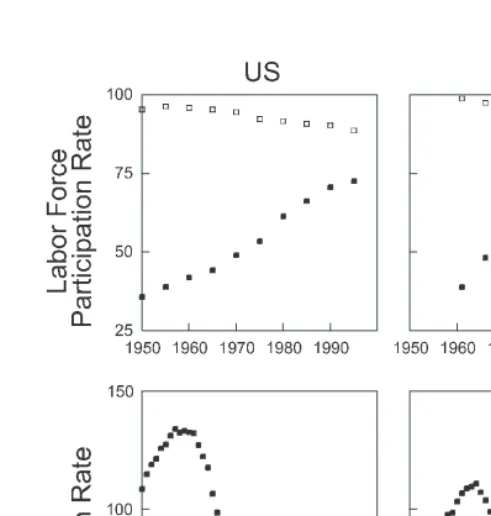
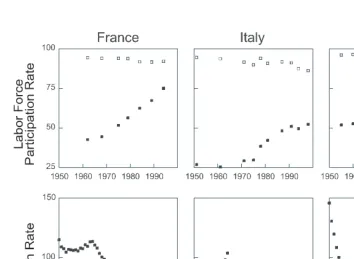
This paper evaluates the five hypotheses presented, using data for 1950-1998 for the population aged 15 and above in five of the six largest economically developed democracies: the US, UK, France, Italy and Japan (excluding Germany because of lack of continuity of mortality statistics during reunification). In these countries, women's roles changed substantially during the study period, as indicated by increases in female labor force participation rates and decreases in birth rates (Figure 1).5
To provide evidence concerning the hypotheses presented, we have analyzed trends in gender differences in mortality for the major types of accidents, as well as additional data (where available to us) for specific sub-types of accidents and accident-related behavior. The predictions tested for each hypothesis are as follows.
5 Data concerning labor force participation for ages 25-59 were obtained from Jacobs (2001) and International Labor Office (1965-2001), and data
1. The Convergence Hypothesis predicts decreasing gender differences for most types of accidents mortality (e.g. motor vehicle accidents, falls, poisonings, drownings, and occupational accidents) and for most types of accident-related behavior (e.g. amount of driving, heavy drinking, drinking and driving, and seat belt use).
2. The Institutional Adjustment Hypothesis predicts an initial decrease and subsequent stabilization or increase in gender differences for most types of accidents mortality and accident-related behavior.
3. The Gender Roles Modernization Hypothesis predicts decreasing gender differences in driving, but not in heavy drinking, drinking and driving, or use of illicit drugs.
4. The Modified Diffusion of Innovations Hypothesis predicts a decrease in gender differences in having a drivers' license during the second half of the twentieth century, and more rapid female than male responses to public health and legal campaigns to increase seat belt use and decrease drinking and driving.
Figure 1: Trends in Labor Force Participation and Birth Rates
2. Data and methods
Mortality and population data for the US, UK, France, Italy and Japan, 1950-1998, were obtained from the World Health Organization (2002). Although data for accidents mortality for these countries are quite accurate and valid, there were differences in the coding of some causes of accidental death between countries and over time, especially with changes in the International Classification of Diseases (ICD) (Chesnais 1976, Dolman and Faust 1965, Fingerhut et al. 1998, Great Britain, Office of Population Censuses and Surveys 1983, Klebba and Dolman 1975). To minimize potential problems, we focus primarily on major trends in sex ratios within countries for categories of accidents that did not have substantial discontinuities in definition with changes in ICD. (In the data analyzed, ICD-6 was used for 1950-7, ICD-7 for 1958-67, ICD-8 for 1968-78, and ICD-9 for 1979-1998.)
We calculated age-adjusted death rates (per hundred thousand population) for males or females aged 15 and above, using age-specific death rates for each 5-year age group (and the age group, 85 and above) and weights derived from the average proportion of the population in each age group for the countries and years included in the analyses. Mortality trends have been analyzed for motor vehicle accidents, other accidents, falls (which is the largest component of other accidents), and poisonings and drownings (which are also large components of other accidents). (The other component of comparable magnitude is accidental fires mortality, but this category has been omitted due to discontinuities in definitions with changes in ICD and differences in coding between countries.)
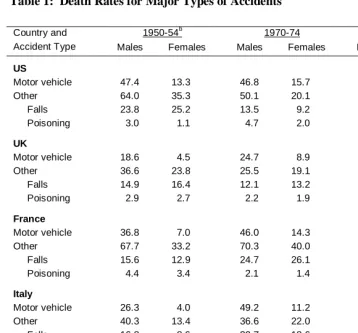
Male and female death rates are summarized in Table 1. Since our focus is on trends in gender differences, we devote little attention to trends that affected both sexes similarly. Instead, we analyze trends in sex mortality ratios (male divided by female age-adjusted death rates).
Table 1: Death Rates for Major Types of Accidentsa
Country and 1950-54b 1970-74 1990-94
Accident Type Males Females Males Females Males Females
US
Motor vehicle 47.4 13.3 46.8 15.7 28.2 11.8
Other 64.0 35.3 50.1 20.1 30.3 11.1
Falls 23.8 25.2 13.5 9.2 7.2 3.9
Poisoning 3.0 1.1 4.7 2.0 5.3 1.7
UK
Motor vehicle 18.6 4.5 24.7 8.9 13.6 4.7
Other 36.6 23.8 25.5 19.1 17.5 9.5
Falls 14.9 16.4 12.1 13.2 7.1 5.3
Poisoning 2.9 2.7 2.2 1.9 2.5 1.1
France
Motor vehicle 36.8 7.0 46.0 14.3 28.6 9.1
Other 67.7 33.2 70.3 40.0 45.3 24.9
Falls 15.6 12.9 24.7 26.1 15.1 12.4
Poisoning 4.4 3.4 2.1 1.4 0.8 0.5
Italy
Motor vehicle 26.3 4.0 49.2 11.2 29.0 7.4
Other 40.3 13.4 36.6 22.0 27.1 17.3
Falls 16.8 8.6 20.7 18.6 15.1 13.7
Poisoning 1.2 0.7 1.2 0.7 1.2 0.6
Japan
Motor vehicle 8.9 2.1 37.6 10.5 20.1 6.6
Other 56.4 15.4 39.3 13.5 25.7 9.5
Falls 10.9 2.7 10.8 4.7 5.9 2.2
Poisoning 2.8 1.1 1.6 1.0 0.7 0.3
a Age-adjusted death rates per 100,000 population aged 15 and above
b
We have also inspected trends in sex ratios for three age categories (young adults, 15-34; middle-aged adults, 35-64; and older adults, 65 and older). Due to limitations of space, we describe only the most salient features of these age-specific trends that are relevant for assessing the validity of the hypotheses.
For the other variables in this study, calculations and graphical presentation are similar to the methods described above. Where specific data were available, age-adjusted rates were calculated using weights normalized for the age range included for a specific variable. Data sources for these additional variables are as follows.
National data on fatalities due to occupational accidents, specific types of motor vehicle accidents, and/or specific types of poisonings have been obtained from government sources for the US, UK, and Italy (Baker et al. 1992, National Center for Health Statistics (NCHS) 1953-94, DETR 1999-2002, U.S. Department of Labor, Bureau of Labor Statistics 2002, personal communication from Dr. Franco D'Amico, Instituto Nazionale per L'Assicurazione Contro Gli Infortuni Sul Lavoro, May 21, 2003). For the US, 1970-90, we calculated age-adjusted death rates for four specific categories of motor vehicle accidents (drivers of motor vehicles other than motorcycles, passengers of motor vehicles other than motorcycles, motorcyclists, and pedestrians). To calculate male and female adjusted death rates for each category, we used age-specific death rates, which we calculated by multiplying the age-age-specific death rates for all motor vehicle accidents by the proportion of fatalities in the specified category (relative to total specified motor vehicle accidents fatalities). UK data concerning fatalities for car drivers, car passengers, riders (drivers) of two wheel motor vehicles, and pedestrians were restricted to Great Britain (i.e. England, Wales and Scotland, but excluding Northern Ireland).
For the US, driving and traffic safety related variables for nationally representative samples include proportions with licenses and average annual miles driven per licensed driver (Hu and Young 1999), driver fatality rates per hundred million miles driven (Cerelli 1998, NHTSA 1994), rates of alcohol-related (blood alcohol levels (BAC) > = 0.01) and non-alcohol-related involvement in fatal accidents per hundred million miles driven (calculated from data in Hu and Young 1999, NHTSA 2000, 2002), proportion of late-night weekend drivers who were intoxicated (BAC > 0.10; Voas et al. 1998), and the proportions of adults who did not use their seat belts "usually" or "all or most of the time" (calculated from data in NCHS 1988, Piani and Schoenborn, 1993, Schoenborn 1988; the two different measures yielded the same sex ratio in 1985, the year for which the two data series overlap). British data concerning trends in having a driving license were obtained from McKenna, Waylen and Burks (1998).
an average of 1 ounce or more of alcohol per day (Dietz, Williams, and Dufour 1996, Hilton 1988, Piani and Schoenborn 1993, Schoenborn 1988). Data for the UK are restricted to Great Britain, and the definition of heavy drinker differed for men and women (Bridgwood et al. 2000, Great Britain, Office of Population Censuses and Surveys, Social Survey Division 1986). For 1988-98, a heavy drinker was defined as a male who consumed 22 or more units per week or a female who consumed 15 or more units per week. For the 1978-84 data, published drinking categories did not differ by sex, but for comparability to the later data we calculated sex ratios that compared males categorized as "heavier" drinkers with females categorized as "heavier" or "moderate" drinkers. Japanese data were obtained for being a drinker, but not for heavy drinking (Takano, Nakamura, and Watanabe 1996).
3. Results
3.1 Motor vehicle accidents
Sex ratios for motor vehicle accidents mortality decreased in all five countries, although periods of relatively stable sex ratios were observed from the mid-1960s through the 1970s in the US and Japan and from about 1970 on in the three European countries (Fig. 2). The trends in all five countries are generally compatible with the Convergence Hypothesis, and the trends in the European countries are compatible with the Institutional Adjustment Hypothesis. Statistical results presented by Pampel (2001b, Table 3) confirm that the trends in the three European countries, but not the US or Japan, are compatible with the Institutional Adjustment Hypothesis. To provide further insight concerning the causes of these trends, the following paragraphs present analyses of trends in gender differences for specific types of motor vehicle accident fatalities and for driving-related behaviors in the US and UK.
Figure 2: Trends in Sex Ratios for Motor Vehicle Accidents, Other Accidents, and Accidental Falls Mortality
these trends was an increase in motorcyclist fatalities, as motorcycle riding increased and helmet use decreased.6 Because motorcyclist fatalities have a very large male excess, the increase in motorcyclist fatalities had a particularly adverse effect on males. Thus, during the 1970s, the sex ratio for motor vehicle accidents mortality was relatively stable because there was a balance between counteracting trends such as the decrease in the male excess for automobile driver fatalities vs. the increase in the predominantly male category, motorcyclist fatalities.
Additional evidence indicates that gender differences in automobile driver fatalities decreased primarily because gender differences in amount of driving decreased. Gender differences in the proportion of adults who had driver’s licenses decreased, due to substantial increases in the proportion of women with driver’s licenses (Fig. 3, Table 2). Sex ratios for miles driven per driver also decreased during the 1980s (Fig. 3). There also was a slight decrease in sex ratios for driver fatalities per mile. One reason for this decrease appears to have been a decrease in gender differences in driving in hazardous circumstances; for example, there was a substantial decrease in the male excess in late-night weekend driving (sex ratio of 5.0 in 1973 vs. 2.1 in 1996; Voaz et al. 1998).
Table 2: Trends in Male and Female Motor Vehicle Accident-Related Behavior
Males Females Sex Ratiosa
Percent with Driver's License, U.S.
1953 78.3 39.2 2.00
1969 87.0 61.2 1.42
1977 88.8 73.3 1.21
1983 90.4 77.5 1.17
1990 92.9 85.8 1.08
1995 92.5 85.3 1.08
Percent with Full Driving License, Great Britain
1975-76 68 29 2.4
1985-86 73 42 1.7
1989-91 80 49 1.6
1991-93 80 52 1.5
1995-96 81 55 1.5
Percent Who Usually Use Seat Belts, U.S.
1979 20.0 19.6 1.02
1985 34.6 38.4 0.90
1990 61.7 71.3 0.87
Percent of Late-night Drivers with High Blood
Alcohol, U.S.b
1973 5.5 3.0 1.8
1986 3.9 1.3 3.0
1996 3.5 1.5 2.3
a Sex ratios calculated prior to rounding.
In summary, the multiple trends observed in the US provide partial support for four of our hypotheses. In accord with the Convergence Hypothesis, decreasing gender differences were observed for driver fatalities, pedestrian fatalities, and amount of driving, although several other trends did not show decreasing gender differences. In accord with the Gender Roles Modernization Hypothesis, gender differences decreased for amount of driving, but not for the proportion of drivers who had high blood alcohol levels; however, contrary to this hypothesis, there was a decrease in gender differences in relatively hazardous late-night weekend driving. In accord with the Modified Diffusion of Innovations Hypothesis, the male excess in proportion with driver's licenses decreased, and there was a tendency for females to respond more rapidly to public health and legal campaigns for seatbelt use and against drinking and driving. In accord with the Differential Impact of Other Societal Trends Hypothesis, trends in gender differences in motor vehicle accidents mortality were influenced by decreases in drinking and driving and by increases in motorcyclist fatalities due to increased motorcycle riding and decreased helmet use.
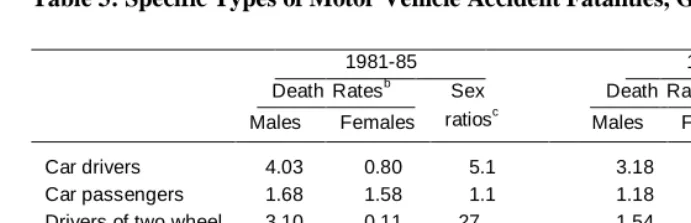
For Great Britain, data concerning gender differences for specific types of motor vehicle accidents fatalities are available for the early 1980s and the late 1990s (Table 3). During that time period, sex ratios for total motor vehicle accidents mortality remained stable, as trends that tended to decrease sex ratios were counterbalanced by other trends that tended to increase sex ratios. Trends that benefited males include a decrease in the sex ratio for car driver fatalities that was due in large part to decreased gender differences in amount of driving, as more women became drivers and women drivers drove greater distances (Table 2).8 Rates of drinking and driving accidents decreased, and this would also be expected to benefit males more, since male drivers more often have excessive blood alcohol levels (DETR 1999-2002). These trends were counterbalanced by trends that benefited females more (Table 3). For example, decreases in distance walked and improvements in pedestrian safety resulted in decreased pedestrian fatalities; these trends resulted in a greater proportionate decrease in total motor vehicle accidents mortality for females, because females experienced a greater proportionate decrease in pedestrian fatalities and because pedestrian fatalities constitute a greater proportion of total motor vehicle accidents mortality for females.
Table 3: Specific Types of Motor Vehicle Accident Fatalities, Great Britaina
1981-85 1994-98
Death Ratesb Sex Death Ratesb Sex
Males Females ratiosc Males Females ratiosc
Car drivers 4.03 0.80 5.1 3.18 0.88 3.6
Car passengers 1.68 1.58 1.1 1.18 1.08 1.1
Drivers of two wheel motor vehicles
3.10 0.11 27. 1.54 0.04 37.
Pedestrians 4.10 2.72 1.5 2.30 1.30 1.8
Total 14.88 5.75 2.6 9.27 3.55 2.6
a
Great Britain is the UK, excluding Northern Ireland.
b In contrast to most other data in this paper, these death rates (deaths per 100,000 population) are not age-adjusted and include
children ages 1-14.
c Sex ratios were calculated before death rates were rounded off.
3.2 Other accidents
3.2.1 Falls
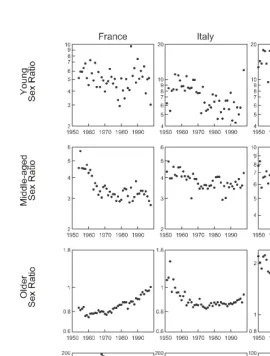
Sex ratios for accidental falls mortality showed very different trends in different countries (Fig. 2). In Italy and Japan, sex ratios decreased in the early decades, followed by stable or increasing sex ratios. These trends are compatible with the Institutional Adjustment Hypothesis. In contrast, sex ratios for accidental falls mortality increased in the US and the UK, and the observed trends are not compatible with either the Institutional Adjustment Hypothesis or the Convergence Hypothesis.
Trends in sex ratios for accidental falls mortality differed for different age groups (Fig. 4). For young and middle-aged adults, sex ratios generally were stable or decreased. For example, sex ratios for accidental falls mortality decreased for young adults in the UK, Italy and Japan. In contrast, for older adults (ages 65 and up), sex ratios increased in the US and also increased in recent decades in the UK, France and Japan. The trends in sex ratios for older adults had a dominant effect on the trends in sex ratios for age-adjusted falls mortality because death rates for accidental falls are much higher for older adults than for young and middle-aged adults.
Two additional observations indicate that sex ratios for accidental falls mortality for older adults increased because older women benefited more than older men from reductions in falls mortality. For older adults in each country, periods of increasing sex mortality ratios generally coincided with periods of decreasing falls mortality (Fig. 4). Also, comparisons of trends in different countries indicate that countries with a larger decrease in falls mortality generally had a greater increase in sex mortality ratios. Thus, sex ratios for accidental falls mortality increased for older adults primarily because falls mortality decreased more for elderly females than for elderly males. This advantage for females was probably due in large part to greater benefits for females from improved medical care for elderly falls patients.9
Figure 4: Trends in Sex Ratios for Falls Mortality by Age and Trends in Falls Death Rates for Older Men and Women
3.2.2 Poisonings
In the US and UK, sex ratios for accidental poisoning mortality were stable initially and then increased (Fig. 5). Trends differed in the other three countries, although in each case sex ratios for accidental poisoning mortality tended to increase during at least part of the time period after 1970. The trends in Japan are compatible with the Institutional Adjustment Hypothesis, but the trends in the US, UK and France are not compatible with either the Institutional Adjustment Hypothesis or the Convergence Hypothesis.
More detailed data for the US during the 1980s show an increase in sex ratios for accidental poisoning mortality due to opiates and related narcotics, the category that includes heroin overdoses (Table 4). In contrast, sex ratios tended to decrease for the category of accidental poisoning mortality that includes crack cocaine overdoses. These contrasting trends are not predicted by any of the relevant hypotheses and are particularly incompatible with the Convergence Hypothesis (which predicts decreasing gender differences for both categories) and the Modified Diffusion of Innovations Hypothesis (which predicts more rapid male adoption of crack cocaine, a new product which spread across the US during this period).
Table 4: Accidental Poisoning Mortality, US
Death Ratesa Sex Ratiosb % of Total Accidental
Males Females Poisoning Deaths
Opiates and Related Narcotics
1979-80 0.48 0.12 4.2 7.4%
1989-90 1.32 0.22 6.0 15.3%
Cocaine and Other Drugsc
1979-80 0.25 0.06 4.2 3.8%
1989-90 1.24 0.35 3.5 15.9%
Total Accidental Poisoning Deaths
1979-80 5.41 2.59 2.1 100%
1989-90 7.40 2.64 2.8 100%
a
In contrast to most other data in this paper, these death rates (deaths per 100,000 population) are not age-adjusted and include children ages 1-14.
b
Sex ratios were calculated before rounding of death rates.
The proportion of accidental poisoning deaths in the categories that include heroin overdoses and cocaine overdoses nearly tripled in the US, increasing from 11% in 1979-80 to 31% in 1989-90 (Table 4). These categories of accidental poisoning mortality have relatively high sex ratios, reflecting males' higher rates of overdoses due to illicit drugs. Consequently, the increase in fatal drug overdoses made a larger contribution to increases in total accidental poisoning mortality for males. The greater impact on males of trends in drug overdose fatalities accounted for more than half of the increase in sex ratios for total accidental poisoning mortality during the 1980s. These findings support the Differential Impact of Other Societal Trends Hypothesis as an important explanation for the recent increase in sex ratios for accidental poisonings mortality in the US.
3.2.3 Drownings
3.3 Occupational accidents
Since one major change in female roles has been the increase in female labor force participation rates (Fig. 1), it is of interest to evaluate trends in gender differences in occupational accidents mortality. This category includes any of the various types of accidents discussed above when the fatal accident occurs on the job. As predicted by the Convergence Hypothesis, sex ratios for fatal occupational accidents have decreased substantially in the US and Italy (the two countries for which data were obtained; Table 5).
Table 5: Occupational Accidents Mortality
Death Rates Sex Ratiosa
Males Females
US
Non-Transport Accidents in Industrial
Locations, Farms, Mines, or Quarriesb
1960 8.34 0.16 52
1970 5.73 0.14 42
Occupational Accidentsc
1980-5 7.45 0.29 26
1993-7 6.26 0.39 16
Italy
On-the-Job Accidentsd
1955-9 22.39 0.66 34
1960-4 22.80 0.77 30
1965-9 19.36 0.66 29
1970-4 17.06 0.64 27
1975-9 15.22 0.66 23
1980-4 12.11 0.62 20
1985-9 9.35 0.50 19
1990-4 8.76 0.51 17
1995-8 6.43 0.49 13
a
Sex ratios were calculated before rounding of death rates. b Deaths per 100,000 population for ages 20-64.
c Annual total number of fatal unintentional occupational injuries (including transport as well as non-transport accidents) divided by
population ages 20-64.
d Annual total number of fatal on-the-job accidents (based on compensated injuries, with missing data estimated for some early
3.4 Drinking
Drinking alcohol, especially heavy drinking, contributes to increased risk for most types of accidents, so it is of interest to evaluate trends in gender differences in drinking (Table 6). In the US and Great Britain, sex ratios for being a drinker have been low and relatively stable in recent decades.10 In contrast, in Japan, the sex ratio for being a drinker decreased substantially between 1968 and 1988. Sex ratios for the proportion who were heavy drinkers showed no consistent trend in the US, but decreased in Great Britain in recent decades. Thus, the Convergence Hypothesis is supported by decreasing gender differences in drinking in Japan and heavy drinking in Great Britain. In contrast, the lack of convergence in the US supports the Gender Roles Modernization Hypothesis.
Table 6: Sex Ratios for Drinkinga
Sex Ratios for Drinker Sex Ratios for Heavy Drinkerb
US
1964/1984 1.3/1.2 4.0/4.0
1985/1990 NA c 4.4/5.5
1987/1992 1.4/1.5 4.6/4.4
Great Britain
1978/1984 1.1/1.1 4.2/3.3
1988/1998 1.1/1.1 2.6/1.8
Japan
1968/1988 3.8/1.8 NA
a Each sex ratio is the proportion of males who were drinkers (or heavy drinkers) divided by the proportion of females who were
drinkers (or heavy drinkers). Each pair of sex ratios separated by a slash represents sex ratios for the two years indicated in the first column. Comparisons between sex ratios within a given pair are valid, but comparisons between pairs should be made with considerable caution due to differences in samples and measures (see Data and Methods).
b
See Data and Methods for differing definitions of heavy drinking for the US and Great Britain. c
4. Discussion
This study has analyzed trends in gender differences in accidents mortality and accident-related behavior in five large economically developed democracies, 1950-98, in order to test five hypotheses.
The Convergence Hypothesis postulates that, as differences in gender roles have decreased, gender differences in accident-related behavior and accidents mortality have decreased. Trends that support the Convergence Hypothesis include decreases in gender differences in motor vehicle accidents mortality in each study country, decreases in gender differences in amount of driving and car driver fatalities (data for the US and UK), decreases in gender differences in occupational accidents mortality (data for the US and Italy), and in some countries decreases in gender differences in drowning mortality and/or decreases in gender differences in falls mortality for young adults.11 Trends that are contrary to the predictions of the Convergence Hypothesis include increases in sex ratios for accidental falls mortality for older adults in some countries, increases in gender differences for accidental poisoning mortality in some countries, and increases in gender differences for some types of accident-related behavior (data for the US). Our results confirm and extend previous findings, which have shown mixed support for the Convergence Hypothesis (Bloomfield et al. 2003, NHTSA 1994, Pampel 2001b, Veevers 1982, Veevers and Gee 1986, Waldron 1997, 2000).
Our findings suggest that many of the exceptions to the predictions of the Convergence Hypothesis can be accounted for by the Differential Impact of Other Societal Trends Hypothesis. This hypothesis postulates that trends in gender differences in accidents mortality have been influenced by the differential impact on males and females of trends such as (1) improvements in medical treatment or public health measures that have influenced one sex more than the other or (2) increased or decreased rates of types of accident-related behavior that are much more common among one sex than the other. For example, males have much higher rates of illicit drug overdoses, so the increase in drug overdose deaths in the US during the 1980s affected males more than females, and this contributed substantially to the increase in the male excess for total accidental poisonings mortality. Improvements in medical care for elderly falls patients appear to have benefited women more than men, and the larger decreases in falls mortality for elderly women were primarily responsible for the increases in the male excess for total accidental falls mortality. Males more often ride motorcycles and males more often drink and drive, so males have been affected more by the changes in rates of motorcycle riding, helmet use, and drinking and driving that have resulted from legal changes, public health campaigns, and other societal trends.
11 It should be noted that the Modified Diffusion of Innovations Hypothesis provides an alternative explanation for the decreasing gender
These effects have influenced trends in gender differences in total motor vehicle accidents mortality (data for recent decades for the US and UK). Taken together, our findings suggest that a combination of the Convergence Hypothesis and the Differential Impact of Other Societal Trends Hypothesis can account for most important features of the trends in gender differences in accidents mortality.
The Institutional Adjustment Hypothesis proposes that, as female roles changed during the second half of the twentieth century, gender differences in accidents mortality and accident-related behavior decreased initially, followed by stable or increasing gender differences once institutions and individuals adjusted to the changes in female roles. This hypothesis is supported by many of the results of Pampel's (2001b) statistical analyses of mortality trends for eighteen developed democracies. However, our more in-depth analyses for the largest of these developed democracies highlight the extent of exceptions to the predicted trends and also suggest that even the mortality trends that do show the predicted pattern may be due to factors other than institutional adjustment.
The apparent importance of the exceptions to the predictions of the Institutional Adjustment Hypothesis is greater in the present analysis in part because Pampel's statistical analysis gives equal weight to each country, regardless of size, whereas we have focused on the largest countries. The US and Japan together account for half the total population of the countries in Pampel's analysis, and both his analysis and ours show that the Institutional Adjustment Hypothesis is not supported for motor vehicle accidents in either country or for other accidents in the US.12 Also, our analyses have extended tests of the Institutional Adjustment Hypothesis to trends in gender differences in specific types of other accidents mortality and accident-related behavior, and many of these trends do not conform to the predictions of the Institutional Adjustment Hypothesis.
stabilized during the 1980s and 1990s because the continuing trend to decreasing gender differences in car driver fatalities was counterbalanced by trends that benefited females more, such as greater decreases in pedestrian fatalities for females. In summary, our evidence provides little support for the Institutional Adjustment Hypothesis.
The Gender Roles Modernization Hypothesis postulates that gender differences have decreased only for types of accident-related behavior that help women to carry out fundamental aspects of traditional female role responsibilities in the modern world. This hypothesis is supported by decreased gender differences in amount of driving, which helps contemporary women to care for their families. Also as predicted, in the US gender differences have not decreased for several other types of accident-related behavior that do not help women to meet traditional female role responsibilities, including heavy drinking, fatal opiate overdoses, and proportion of drivers who have high blood alcohol levels. However, contrary to the predictions of the Gender Roles Modernization Hypothesis, gender differences decreased for fatal cocaine overdoses and for late-night weekend driving in the US, for heavy drinking in Great Britain, and for drinking in Japan. Thus, the Gender Roles Modernization Hypothesis receives only very weak and inconsistent support from the findings of this and previous studies (Bloomfield et al. 2003, Waldron 2000).
The Modified Diffusion of Innovations Hypothesis postulates that men more rapidly adopt innovations that can be risky and require financial resources and independence (e.g. automobile driving), but women more rapidly adopt innovations that promote health (e.g. seat belt use or avoiding driving after drinking). These predictions were generally supported by the limited data that were available for analysis. It should be noted that the scope of this hypothesis is rather limited, since, for many types of accident-related behavior, there appear to be no relevant innovations. For example, trends in gender differences in drinking have, for the most part, occurred in the absence of innovations such as the introduction of a new type of alcoholic beverage (Bloomfield et al. 2003).
Thus, the hypotheses we investigated are only partially successful in accounting for the varied trends in gender differences for different types of accident-related behavior in different countries. It appears to be very difficult to develop alternative general hypotheses that can account for these diverse trends. Even for the relatively limited domain of trends in gender differences in drinking in Western countries, Bloomfield and co-workers end their thorough review and analysis with the conclusion that "no overarching explanation seems to be available for why convergence does or does not occur in various settings and societies" (Bloomfield et al. 2003, p. 269).
accident-related behavior in order to evaluate hypotheses concerning causes of trends in gender differences in accidents mortality. One limitation of our study is that our data concerning accident-related behavior and specific subtypes of accidents mortality are not as comprehensive as would be desirable, because we had great difficulty in obtaining the requisite time series data by gender. Another limitation is that we have focused on variables that assess more proximal causes such as accident-related behaviors and have not systematically evaluated relationships for more distal causes, such as social variables. In addition, we have largely ignored differences between subgroups within each country, although we have investigated differences by age and described the most important of these. Although we have not investigated differences between socioeconomic groups, it is of interest that, in the US, whites and nonwhites show generally similar trends in sex ratios both for motor vehicle accidents mortality and for other accidents mortality (data from NCHS 1953-1994, 1978-1995, 1998-2000; figure available from first author).
Although the specific evidence presented has been limited to accidents mortality, several of our conclusions have more general relevance. One substantive generalization is that trends in gender differences in various types of mortality and morbidity are influenced, not only by changing gender roles and gender differences in behavior, but also by the differential impact of other societal trends, such as improvements in medical care, public health, or other public policies that benefit one sex more than the other, or deteriorating socioeconomic conditions that harm the health of one sex more than the other (Annandale and Hunt 2000, Arber and Khlat 2002, Waldron 1987). Similarly, changes in gender differences in health-related behavior appear to be influenced not only by changing gender roles, but also by other processes such as the diffusion of innovations with differing gender role compatibility (Bloomfield et al. 2003, Waldron 1991, 1997).
In conclusion, gender differences in accidents mortality and accident-related behavior have shown diverse trends, depending on the specific type of accident or behavior and the country and time period considered. As gender roles have become more similar, gender differences have decreased for some types of accident-related behavior and accidents mortality, including amount of driving, motor vehicle accidents mortality, and occupational accidents mortality. In contrast, gender differences in accidents mortality have increased in some cases, apparently due to causes such as greater harm to men from trends to increased illicit drug use and greater benefit to women from improved medical care for elderly falls patients. Thus, trends in gender differences in accidents mortality have been influenced both by changing gender differences in accident-related behaviors and by the differential impact on males and females of other societal trends. It appears that trends in gender differences in accident-related behaviors have also been influenced by multiple factors, including changing gender roles and gender differences in rates of adoption of various technological and public health innovations. Given the complexity of the multiple factors that have influenced trends in gender differences in accident-related behavior and accidents mortality, it should be clear that current hypotheses, while providing useful insight into previous trends, cannot be expected to accurately predict future trends.
5. Acknowledgments
References
Annandale, E., Hunt, K. (2000). Gender Inequalities in Health. Buckingham: Open University Press.
Arber, S., Khlat, M. (2002). "Introduction to 'social and economic patterning of women's health and a changing world'." Social Science & Medicine, 54: 643-647.
Austin, R. L., Bologna, M., Dodge, H. H. (1992). "Sex-role change, anomie and female suicide: A test of alternative Durkheimian explanations." Suicide and
Life-Threatening Behavior, 22, 2: 197-225.
Baker, S., O' Neil, B., Ginsburg, M., Li, G. (1992). The Injury Fact Book, 2nd edition. New York: Oxford University Press.
Baker, S. P., O'Neill, B., Karpf, R. S. (1984). The Injury Fact Book, Lexington, MA: Lexington Press.
Bloomfield, K. with Gmel, G., Neve, R., Mustonen, H. (2003). "Investigating gender conversion [convergence] in alcohol consumption in Finland, Germany, the Netherlands and Switzerland." In: K. Bloomfield (Coordinator), Gender and
Alcohol - A Multinational Study. (www.medizin.fu-berlin.de/statistik/Gender&
Alcohol/download/chapter5-V.pdf) (accessed March 6, 2003).
Bridgwood, A., Lilly, R., Thomas, M., Bacon, J., Sykes, W., Morris, S. (2000). Living
in Britain-Results from the 1998 General Household Survey. London: Office for
National Statistics Social Survey Division.
Cerrelli, E. C. (1998). Crash data and rates for age-sex groups of drivers, 1996. Research Note, National Highway Traffic Safety Administration, National Center for Statistics and Analysis.
Chesnais, J.-C. (1976). Les morts violentes en France depuis 1826. Paris: Presses Universitaires de France.
Dolman, A.B., Faust, M. M. (1965). Comparability of mortality statistics for the sixth and seventh revisions: U.S., 1958. Vital Statistics, Special Reports, 51, 4: 248-297.
Fernandez, E., Schiaffino, A., Borras, J. M., Shafey, O., Villalbi, J. R., LaVecchia, C. (2003). "Prevalence of cigarette smoking by birth cohort among males and females in Spain, 1910-1990." European Journal of Cancer Prevention, 12: 57-62.
Ferrence, R. G. (1988). "Sex differences in cigarette smoking in Canada, 1900-1978."
Canadian Journal of Public Health, 79: 160-165.
Fingerhut, L. A., Cox, C. S. (1998). "Poisoning mortality, 1985-1995." Public Health
Reports, 113: 218-233.
Fingerhut, L. A., Cox, C. S., Warner M., Participants of the International Collaborative Effort (ICE) on Injury Statistics (1998). International comparative analysis of injury mortality. Advance Data from Vital and Health Statistics, No. 303. Hyattsville, MD: National Center for Health Statistics.
Hilton, M. E. (1988). "Trends in U.S. drinking patterns: Further evidence from the past 20 years." British Journal of Addiction, 83: 269-278.
Hu, P. S., Young, J. R. (1999). Summary of Travel Trends-1995 Nationwide Personal
Transportation Survey. Washington D.C.: U. S. Department of Transportation.
International Labour Office. (1965-2001). Yearbook of Labour Statistics. Geneva: International Labour Office.
Jacobs, E. E. (2001). Handbook of U.S. Labor Statistics. Lanham, MD: Bernan Press.
Kannus, P., Parkkari, J., Koskinen, S., Niemi, S., Palvanen, M., Jarvinen, M., Vuori, I. (1999). "Fall-induced injuries and deaths among older adults." JAMA, 281, 20: 1895-1899.
Klebba, A. J., Dolman, A.B. (1975). "Comparability of mortality statistics for the seventh and eighth revisions of the International Classification of Diseases, U.S.." Vital and Health Statistics, Series 2, No. 66. Rockville, MD: U.S. Department of Health Education and Welfare.
Macintyre, S., Hunt, K., Sweeting, H. (1996). "Gender differences in health: Are things really as simple as they seem?" Social Science & Medicine, 42, 4: 617-624.
McKenna, F. P., Waylen, A. E., Burks, M. E. (1998). Male and female drivers: How
National Center for Health Statistics (NCHS) [United States]. (1953-1994). Vital
Statistics of the United States, 1950-1990; Vol. II, Mortality. Hyattsville,
Maryland: U.S. Department of Health, Education, and Welfare/U. S. Department of Health and Human Services.
National Center for Health Statistics (NCHS) [United States]. (1978-1995) "Advance report of final mortality statistics, 1978-1995" Monthly Vital Statistics Report 26-43, Supplements
National Center for Health Statistics (NCHS) [United States]. (1988). "Adult health practices in the United States and Canada." Vital and Health Statistics, series 5, No. 3.
National Center for Health Statistics (NCHS) [United States]. (1998-2000) "Deaths: Final data for 1996-1998" National Vital Statistics Reports 47-48.
National Highway Traffic Safety Administration (NHTSA) [United States]. (1994).
Female Drivers in Fatal Crashes, Washington, D.C.: U.S. Department of
Transportation.
National Highway Traffic Safety Administration (NHTSA) [United States]. (2000).
Traffic Safety Facts 1999. Washington, D.C.: National Highway Traffic Safety
Administration (DOT HS 809 100).
National Highway Traffic Safety Administration (NHTSA) [United States]. (2002).
Transitioning to Multiple Imputation -- A new method to impute missing blood alcohol concentration (BAC) values in FARS. Washington D.C.: National
Center for Statistics and Analysis.
National Safety Council. (1999). Injury Facts. Itasca, IL: National Safety Council.
Office of Population Censuses and Surveys [Great Britain]. (1983). Mortality statistics: Comparison of 8th and 9th Revisions of the International Classification of Diseases (ICD). London: H.M.S.O.
Office of Population Censuses and Surveys [Great Britain]. (1986). General
Household Survey, 1984. London: H. M. S. O.
Piani, A., Schoenborn, C. (1993). "Health promotion and disease prevention, United States, 1990." Vital and Health Statistics, Series 10, No. 185.
Riggs, J. E. (1993). "Mortality from accidental falls among the elderly in the United States, 1962-1988: Demonstrating the impact of improved trauma management."
Journal of Trauma, 35, 2 3: 212-219.
Schoenborn, C. A. (1988) "Health promotion and disease prevention: United States, 1985." Vital and Health Statistics, Series 10, No. 163.
Takano, T., Nakamura, K., Watanabe, M. (1996). "Increased female drinking in accordance with postindustrial urbanization in Japan." Alcohol & Alcoholism,
31, 1: 41-49.
United Nations. (2000). Demographic yearbook historical supplement. (ST/ESA/STAT/SER.R/CD/28) New York: United Nations.
U.S. Department of Labor, Bureau of Labor Statistics. (2002). Fatal Occupational
Injuries, 1993-8. Available at http://stats.bls.gov/oshcfoil.htm. (Accessed July
3, 2002).
Veevers, J. (1982). "Women in the driver's seat: Trends in sex differences in driving and death" Population Research and Policy Review, 1: 1-11.
Veevers, J. E., Gee, E. M. (1986). "Playing it safe: Accident mortality and gender roles." Sociological Focus, 19, 4: 349-360.
Voas, R. B., Wells, J., Lestina, D., Williams, A., Greene, M. (1998). "Drinking and driving in the United States." Accident Analysis and Prevention, 30, 2: 267-275.
Waldron, I. (1987). "Patterns and causes of excess female mortality among children in developing countries." World Health Statistical Quarterly, 40: 194-210.
Waldron, I. (1991). "Patterns and causes of gender differences in smoking." Social
Science & Medicine, 32, 9: 989-1005.
Waldron, I. (1997). "Changing gender roles and gender differences in health behavior." In D. S. Gochman (Ed.) Handbook of health research I: Personal and social
determinants. New York: Plenum Press.
Whitehead, P. C., Ferrence, R. G. (1976). "Women and children last." In: Greenblatt, M., Schuckit, M. (Eds.) Alcoholism problems in women and children. New York: Grune and Stratton: 165-191.
World Health Organization (2002) WHO Mortality Database, Detailed Data Files. (www3.who.int/whosis/whsa/ftp/download.htm, accessed August 13, 2002)
Wysowski, D. K., Schober, S. E., Wise, R. P., Kopstein, A., (1993). "Mortality attributed to misuse of psychoactive drugs, 1979-88." Public Health Reports,