in the population sciences published by the Max Planck Institute for Demographic Research Konrad-Zuse Str. 1, D-18057 Rostock · GERMANY www.demographic-research.org
DEMOGRAPHIC RESEARCH
VOLUME 11, ARTICLE 3, PAGES 57-94
PUBLISHED 26 August 2004
www.demographic-research.org/Volumes/Vol11/3/
DOI: 10.4054/DemRes.2004.11.3
Research Article
Qualitative data in demography:
The sound of silence and other problems
Sara Randall
Todd Koppenhaver
1 Introduction 58 2 A review of qualitative data in recent demographic research 59 3 Use of qualitative data in African fertility research 62 4 In-depth interviews in demographic research 65 4.1 Reproductive decision-making in Senegal and Zimbabwe 66
4.2 Comparability in methods 67
4.2.1 Comparability and potential for generalisations 70 4.3 Selection of study communities and respondents 71
4.4 Interpreting interview material 72
4.4.1 Problems of silence 74
4.4.2 Testing the theories 76
4.5 Characteristics of interviewers and rapport 79
5 Discussion 84
6 Acknowledgements 86
Notes 88
Research Article
Qualitative data in demography:
The sound of silence and other problems
Sara Randall 1 Todd Koppenhaver 2
Abstract
Qualitative methods and insights from other disciplines are increasingly integrated into demography’s traditionally quantitative toolkit. Whereas this is not problematic for multi-disciplinary research projects difficulties may arise when quantitatively trained demographers diversify to use less familiar data collection tools. We review the scale of this recent trend and the choice of qualitative methods typically employed by demographic researchers. Using insights from a comparative qualitative study undertaken in Zimbabwe and Senegal, we discuss some problems inherent in qualitative data collection and analysis and propose ways in which such data should and should not be used. Focussing in particular on semi-structured in-depth interviews, we discuss issues of representativity, investigate respondents’ silence on specific topics, and the role of interviewer characteristics in influencing the interview subject matter.
1
Dept of Anthropology, University College, London E-mail: [email protected]
2
1. Introduction
Over the last two decades there has been a movement in demography toward complementing more traditional quantitative approaches with qualitative methods. The principal motivation of this diversification is to increase our understanding of demographic behaviour and phenomena, although qualitative methods have also been employed to improve the quality of survey data, to collect data on illegal or clandestine activities or from sub-groups, like adolescents, who are thought unlikely to respond well to surveys. Many qualitative studies concern perceptions, anxieties, and attitudes towards such subjects as fertility, family planning, reproductive health, STDs, and HIV, both because reproductive decision-making has important policy implications and therefore requires a broad understanding, and because it is a subject tied to sexual behaviour—a sensitive and complicated domain not easily approached through survey methods. Market research approaches are particularly apt for assessing the acceptability of family planning ‘products’ but qualitative research is also used in research with a more theoretical orientation attempting to try to understand the ‘culture’ element of demographic behaviour (Caldwell et al. 1983a & b, Hammel 1990, Lockwood 1995, Fricke 1997, Coast 2003), to re-examine demographic theories and concepts emerging from quantitative analysis (Casterline 1997), and to try to disentangle cause and effect of highly correlated behavioural patterns. Qualitative data are used in attempts to get closer to understanding ‘why’ people behave in certain ways and their own representations of their rationales.
symbolises the distance between the two disciplines and is unfortunate because sometimes only participant observation, with its necessary long-term immersion in a community, might really allow an understanding of the social complexities surrounding birth, marriage, reproduction, and death, as well as socially deviant demographic behaviour (Bleek 1987).
In 1974 Cicourel, a sociologist, challenged many demographic perspectives on fertility decline in his qualitative study of Argentinean fertility (Cicourel 1974). He wanted to understand how people constructed their ideas about fertility intentions and how a demographic ‘stimulus’ such as mortality decline is actually monitored, evaluated and communicated to others (if at all) by the members of a population. Many of the issues discussed below were considered by Cicourel in his lengthy study which included many multiple interviews with respondents and their spouses. His study did not then lead to a burgeoning of qualitative research. Now that qualitative methods are increasingly used in demographic research, it seems apposite to review the particular qualitative methods which are most commonly employed, the research questions to which those methods are put, and some of the problems those methods encounter. We review recent qualitative research published in population studies journals to demonstrate the current trends and highlight the evolution of the use of qualitative methods and the emergence of the in-depth interview as an important tool. We then draw upon experiences from our recent involvement in a comparative qualitative study of reproductive decision-making in Senegal and Zimbabwe. This study was designed by demographers and therefore has many of the hallmarks of much demographic research: a comparative format, attempts to investigate a representative sample, and standardisation of data collection tools and approaches. We reflect on some of the problems encountered at various stages of this project, and, in particular, some of the issues and pitfalls which should be considered in the use of in-depth interviews as a research tool. We discuss specific methodological issues that have emerged from the Senegal-Zimbabwe research project and how these might be countered in future qualitative research.
2. A review of qualitative data in recent demographic research
concepts such as ‘qualitative’ were used in the abstract, the text was examined to see whether in-depth interviews or focus groups were specified.
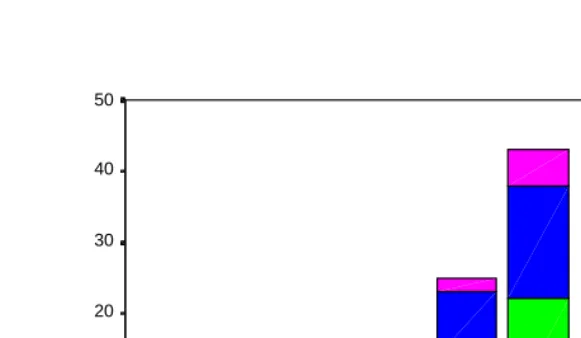
The absolute numbers of articles published either about or using qualitative methods has increased substantially over the last 25 years (figure 1). Whereas until 1990 the majority referred to ‘anthropological or ethnographic’ methods – either undertaken by the demographic research team themselves (Caldwell 1983a, 1983b) or collaborating with anthropologists working in the same populations - since then the number of ‘anthropological’ articles has remained constant while those using ‘qualitative methods’ have increased substantially, which corroborates Knodel’s (1997) perception that demographers may feel more at ease working with non-anthropological methods.
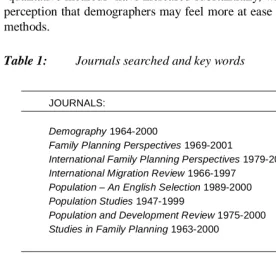
Table 1: Journals searched and key words
JOURNALS:
Demography 1964-2000
Family Planning Perspectives 1969-2001
International Family Planning Perspectives 1979-2001 International Migration Review 1966-1997
Population – An English Selection 1989-2000 Population Studies 1947-1999
Population and Development Review 1975-2000 Studies in Family Planning 1963-2000
KEY WORDS:
anthropology /gical/ gist ethnography /phic /pher qualitative
focus groups
Figure 2: Abstracts containing 'anthropology' or 'ethnography'
Despite embracing qualitative methods, a third of the studies remain firmly grounded within quantitative analysis (table 2), with some using the qualitative material to improve quantitative data collection while others use a multi-method approach to address specific demographic questions or phenomena.
Table 2: Percentage of qualitative abstracts including quantitative data
Key word / method Without quantitative With quantitative N (Note 1)
In-depth interview 66.7 33.3 39
Focus group 68.3 31.7 41
Anthropology 66.7 33.3 21
Ethnographic 66.7 33.3 18
1996-2000 1991-95
1986-90 1981-85 1976-80 <1976
50
40
30
20
10
0
other qualitative
anthropology or
In contrast, the balance of qualitative methods has changed (figure 3), with both focus groups and in-depth interviews coming to dominate recently (note 2) and both being equally popular. This suggests that now is an appropriate time to consider the use of the in-depth interview in demography in more detail (focus groups having been considered in Studies in Family Planning 1981 and in Health Transition Review 1994).
Figure 3: Studies using focus groups and in depth interviews
3. Use of qualitative data in African fertility research
From the articles included in the above review, qualitative data have been used in African fertility research both to develop our theoretical understanding of fertility and potential for fertility decline in Africa and, more commonly, as a practical tool for enhancing policies and interventions. One approach is the use of ethnographies undertaken by anthropologists either as the context for a particular quantitative study (e.g., Gregson et al., 1999) or as the basis for a review of salient aspects of African culture which might have a bearing on demographic behaviour (Caldwell et al., 1989). This approach is not without its critics (Coast 2003, Hammel 1990, Lockwood 1995)
period article published
1996-2000 1991-95 1986-90 1981-85 1976-80 <1976
C
ount
50
40
30
20
10
0
focus groups & idi
idi only
focus groups only
but is not the focus of this paper. In contrast there are many demographic studies which have either used qualitative data within a larger multi-method study or are based entirely on purposively collected qualitative data – usually using focus groups and/or semi-structured interviews.
Such qualitative studies cover a multitude of aspects of demography but there are particular pervasive themes. Most are problem oriented, often linked to particular interventions or focusing on the development or refinement of policies. Few are concerned with a more theoretical understanding of the fundamental nature of African fertility, although Watkins (2000) is a notable exception to this. There are two consequences of the applied nature of most qualitative studies. Firstly, there is a general focus on behaviour and / or population subgroups seen to be problematic by policy makers, such as adolescent sexual activity, pre-marital pregnancies, abortions and sexual networking (Messersmith et al. 2000, Bauni & Jarabi 2000). Secondly, such studies are frequently used to investigate behaviour which may be clandestine (Biddlecom & Faopohunda 1998, Castle et al. 1999) or bordering on the illegal (Otoide
et al. 2001). Along with the examination of contrasting gender attitudes to aspects of
reproduction (Wolff et al. 2000, Bawah et al. 1999) these are all seen to be topics which are difficult to address through conventional questionnaires because of the unpredictable nature of the behaviour, the sensitivity of the subject and the perceived need to pursue respondents’ own agendas and reasoning rather than forcing the structured categories of a questionnaire. In contrast with main-stream quantitative fertility research, which is still dominated by analysis of data collected from women, a much higher proportion of qualitative work either focuses on men alone or on comparative perspectives of both genders. In these contexts qualitative methods are justified because of their ability to cope with the unexpected, to obtain more honest and better information through the rapport developed with the researchers, and to explore those difficult-to-quantify issues such as conflict, perceptions, and social and psychological barriers. Many papers deal with adolescents – a group whose sexual activity is often problematised. Urban populations figure frequently in qualitative research, which is unsurprising given that the policy-related priorities are usually oriented towards the dynamics and consequences of reproductive change, and the rapid fertility declines in urban areas contrast with the largely pre-transitional fertility regimes in much of rural Africa. Urban areas are frequently the locale of ‘demographic problems’--such as schoolgirl pregnancies, abortion, and complex sexual networks--partly because most secondary schools are in towns. Rural adolescent sexual activity and pregnancy are usually within marriage and therefore not identified as problems in the way that they are in changing urban environments.
analytically. Many studies combine qualitative and quantitative approaches, some to inform the design (and presumably the analysis) of the survey (Biddlecom & Fapohunda 1998, Wolff 2000), others as a complement to the survey, to develop topics such as rumours, perceptions, and conflicts, which cannot be researched using questionnaire-based methods (Ezeh 1993, Gueye et al. 2001, Meekers & Ahmed 1999, Mensch et al. 1999). Data obtained through qualitative methods are often used to explain the quantitative results, to give them context and to refine the policy recommendations by addressing perceptions as well as observed actions. Some authors use their transcripts of interviews and focus groups to build up a generalised picture of behaviour, which is then reported on whilst drawing out particular themes or patterns described for subgroups. Here the actual language used by the respondents is rarely reiterated, save for small phrases (Okafor & Rizzuto 1994, Temin et al. 1999, van de Wijgert et al. 1999, Wawer et al. 1990). In these examples qualitative data provide the facts or perceptions that are then grouped into themes by the analyst. A contrasting approach provides the reader with the words of the respondents, which are usually the translated words of respondents in Africa (note 3). The analysts identify important themes but the evidence for the importance of those themes is represented by relatively long transcript extracts, specifying salient socio-demographic characteristics of the speaker, like age, sex, education, and marital status. It is essential to avoid the trap that somehow this extract is representative of the opinions or experience of that socio-demographic sub-group, but this approach does allow the reader greater power to develop their own interpretations of the statements and can be an effective way of demonstrating both tone (and thus inferred attitudes) and associations in the respondents’ discourse. Nevertheless the analyst retains substantial editorial control in terms of selecting quotes to represent the key ideas. In both cases the reader has to have the confidence that the weight of particular ideas are adequately represented, usually through guidance such as ‘most young men said…’ or ‘a few respondents mentioned…’. This issue of presentation of qualitative data was evoked by Cicourel (1974, p99): “If the lengthy particulars available were presented, some readers would complain that too much detail was given and others might say that such details were ‘rich’ and convincing.” This appears to focus on the whims of the audience rather than the more fundamental problem of how one moves from interview transcripts with individuals to an understanding of population-level fertility change, but Cicourel continues to observe that whichever approach is used (the long extract or the tabulated summary), we must not “overlook the possibility for tacit cooperation between interviewer and respondent” (Cicourel, 1974, p100).
groups. It is rare that the analyst considers ‘why’ people might be saying certain things, what they might be concealing and how the relationship with either the interviewer themselves or their general perception of the reasons behind the research and the benefits of collaborating with the research team may influence their words. In general, quotations are reproduced as ‘facts’ or ‘actual’ perceptions or attitudes, rather than those that the respondent may have chosen to enunciate on that day at that time. There are exceptions to this. Rutenberg and Watkins’ paper on models of fertility in Nyanza clarifies the biases in the selection of focus group participants – as readers we are aware that this group is better educated and more politically powerful than many not-interviewed women. They also articulate clearly their understanding of local perception of the research team and the impossibility of total objectivity. The way that respondents may modify their accounts according to the position of the research team is critical in allowing the reader to make their own judgements about the validity of particular quotes or themes that are brought out. The multiple realities of many aspects of reproductive behaviour become clearer as this paper progresses; such multiple realities are often missing from the presentation of qualitative data. Other research by Watkins and colleagues (Miller et al. 2001) alerts us to some of the pitfalls in both quantitative and qualitative data – in this case that gender-specific agendas may lead to very different responses to a seemingly simple question such as ‘do you have a latrine?’ paving the way for potential chasms when researching the complexities of reproductive decision making. It is clearly not possible to control for all the different interpretations of the role of the research team and the relationships between them and the respondent, but a paper which is sensitive to the potential biases and particular vested interests and which explains them to the reader complements the interpretations developed from qualitative data.
4. In-depth interviews in demographic research
emerge which have not previously been considered by the researchers because the respondent has some leeway in determining both the direction of the interview and the content. Through the use of open questions it is possible to analyse the vocabulary used in the context of particular subjects, which can give important indirect insight into attitudes. However, good rapport between the interviewer and interviewee is essential, and such rapport may be influenced by a range of tangible factors such as gender, age, dress, and education but also by intangible personal characteristics that are hard to identify.
4.1 Reproductive decision-making in Senegal and Zimbabwe
This research project wanted to establish whether Africans manipulate their reproductive behaviour in response to perceptions of infant and child mortality, in the ways traditionally conceptualised by demographers − e.g., via the insurance and replacement strategies (LeGrand et al. 2003, Randall & LeGrand 2003). By selecting two African populations at different stages of the fertility transition and, using the same methods in both, we could investigate the whole reproductive decision-making process, allowing respondents to explore and explain their own agendas whilst giving them all possible opportunities to verbalise links between mortality and fertility.
To this end a comparative study was set up in Zimbabwe and Senegal – two countries chosen primarily because their demographic parameters fulfilled the desired criteria: Zimbabwe had low infant and child mortality and had undergone substantial fertility decline, whereas Senegal had higher infant and child mortality and, with the exception of the urban elite, showed few signs of fertility decline. Unfortunately, when the project was designed, the full extent of the AIDS epidemic in Zimbabwe was not apparent, and once fieldwork began it became clear that not only was mortality rapidly rising but previous reproductive decision-making processes had been altered by the effects of AIDS—factors which, along with a major economic crisis, were dominating fertility decisions. Because of HIV’s very particular age-pattern of transmission and the inevitability of premature death, the AIDS epidemic has almost certainly altered any replacement and insurance effects that might have previously existed (Greiser et al., 2001).
This paper will not report on the substantive findings from this study (LeGrand et
al. 2003, Randall & LeGrand 2003), except incidentally to illustrate particular points.
We limit our analysis to four particular types of problems with qualitative research using in-depth interviews:
1. comparability; 2. sample selection;
3. when respondents don’t talk about issues which one might have expected them to address;
4. the role of interviewer characteristics in constructing the interview data.
The critical approaches needed to consider these aspects should alert a researcher to the role of other issues inherent in qualitative data that may influence what and how conclusions are drawn (note 4).
4.2 Comparability in methods
Like many other studies using qualitative methods to address specific demographic issues, we used a combination of focus groups and semi-structured interviews as the primary tools. A comparative study using the same methods and approach in each country was originally planned but the practicalities of the field situations, the social acceptability of different methods for particular social sub-groups, and the expertise of the different collaborating institutes meant that ultimately the balance of methods differed considerably. This itself is a significant indication of the problems of comparative qualitative research.
Although the overall aim of the study was to explore the whole process of reproductive decision-making, we were particularly interested in the impact of prior experience of demographic events, such as sibling and child mortality. Did individuals who had experienced many deaths in childhood perceive mortality risks to be higher than those who hadn’t? And if so, would they tend to want more children? Did people articulate insurance rationales to reproductive decision making and plan to bear more children than the number they ultimately wanted because of a fear that some might die?
and Ndebele) between whom there is a history of conflict, and it was considered essential to collect data on both groups in urban and rural areas. For practical reasons we limited the research in ethnically diverse Senegal to the Wolof – the dominant ethnic group in the country but particularly around Dakar, the capital. This choice excludes a substantial proportion of the Senegalese population, and moreover, the dominance of the Wolof in Senegalese society and politics and in the capital means that this ethnic group (like the Shona in Zimbabwe) is probably disproportionately privileged in terms of access to services. Such biases did not matter in the context of this study since we were primarily interested in the rationales of reproductive decision-making processes and diversity of perceptions.
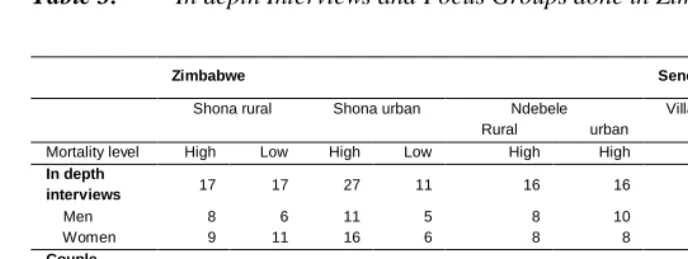
Table 3: In depth Interviews and Focus Groups done in Zimbabwe & Senegal
Zimbabwe Senegal
Shona rural Shona urban Ndebele Rural urban
Village Town Dakar
Mortality level High Low High Low High High High Medium Low
In depth
interviews 17 17 27 11 16 16 43 36 43
Men 8 6 11 5 8 10 20 18 18
Women 9 11 16 6 8 8 23 18 25
Couple
interviews 8 12 9 8 8 8 0 0 9
Focus
groups 9 4 3 8 7 4 6 4 4
Men 4 2 2 4 4 1 1 1 2
Women 5 2 1 4 3 3 5 3 2
Notes:
Mortality in Ndebele areas was generally lower than in comparable Shona areas 2-4 key informant interviews were also done in all sites except high mortality urban Shona Free lists were undertaken in all Zimbabwe sites and as part of the training in Senegal The in-depth interviews in Zimbabwe include those initiated by photo stories
Each couple interview includes at least two separate spousal interviews; in four polygamous Shona households, more than one wife was interviewed.
Focus groups in rural Senegal were natural group discussions.
small family were not appropriate for many Senegalese (the very educated people in Dakar excepted), thus often precluding even the indirect insurance questions used in Zimbabwe.
4.2.1 Comparability and potential for generalisations
Once the power to raise particular topics is taken away from the questionnaire designer and put into the hands of the respondents, the potential for generalisations and comparability becomes much reduced because individuals will pursue their own interests (within socially acceptable limits), provided they are given enough space to do so by the interviewers. Thus, in Zimbabwe, AIDS and the economic crisis dominated discussions about reproductive decision-making. AIDS was very important in people’s lives but was also specified in the interview guides. In Senegal, AIDS was barely mentioned (despite also being in the interview guides) and does not seem to be a factor in reproductive decision-making. In Senegal only 0.5% text units (a measure derived from the NUD*IST software used for analysis (note 8)) were coded under the AIDS and STDs code compared to 14% in Zimbabwe; in contrast only 13% of text units were coded under ‘marriage’ in Zimbabwe compared to 45% in Senegal. In Senegal, marriage, entry or non-entry into marriage, choice of spouse, and resources needed for marriage pre-occupied many people and were clearly acceptable topics for discussion.
HIV prevalence was, of course, much higher in Zimbabwe and reproduction is more tightly bound in with marriage in Senegal and a standardised questionnaire with, for example, 6 questions about marriage and 6 on AIDS, would have allowed for a sophisticated quantitative analysis of the impact of each on fertility. Although such data allow one to quantify these impacts, such analysis may distort the weight of the two factors in the day-to-day lives of individuals in each population and also misrepresent the degree to which individuals may have reflected about each phenomenon.
field, probably with differing outcomes. Where analysts are themselves distanced from the data collection process and data are available in a cleaned up format, any problems of comparability or misunderstanding have apparently disappeared into standard codes or missing data, but that should not be taken to mean that there are no problems of comparability.
4.3 Selection of study communities and respondents
A major concern of many demographers about qualitative studies is lack of representativeness. We made substantial efforts to address this issue by selecting contrasting study sites representing high and low mortality, and urban and rural locations. Within each site, individuals representing different age, sex, marital status and duration of marriage categories were selected and we expected to pick up a range of educational achievements. One of the aims of the research was to examine the ways in which personal biographies and experiences influence people’s perception of risk and their subsequent reproductive decision-making. Given this emphasis and the inevitably limited numbers of in-depth interviews possible, this attention to representativeness generated other problems: ultimately only one or two individuals represent their particular age-sex-education-residence-mortality group and, although they were chosen at random, one must be very circumspect in using their words and ideas as necessarily representative of what similar others might say or have experienced. In retrospect, it might have been better to have distanced ourselves from the demographic paradigm of representativity, reduced the scope of the study, and focussed on reproductive decision-making in a smaller range of communities where we could have interviewed more people within each socio-demographic subgroup.
characteristics rendering them atypical in some respects. One original choice was not pursued because the town was riven with religious rivalry, and two other towns were not considered because they were heavily dominated by Muslim brotherhoods, which would have made working there difficult. Ultimately all one can do with the limited samples used in qualitative research is to collect as much information as possible on the larger socio-political and economic context and analyse the data within that context.
In Senegal a further problem in interpreting the role of different influences is the substantial degree of correlation between factors known to affect fertility and mortality. Thus, the differences between Dakar and the village could result from the differences between services available, education, communications, the economy, or some combination of these factors. Disentanglement is dependent more on the subjective skills of the analyst rather than any ‘objective’ multi-variate analysis. Respondents’ perceptions of the purpose of our study also differed according to the social context in Senegal. In the village, preliminary visits had been made by the principal investigators (Senegalese, North American and European), and the study was presented communally and the subject of discussion amongst the elders. The interviewers lived in the village for three months and were socially very visible, which quite possibly led to concerns about the confidentiality of what was said. Despite many explanations to the contrary, there was a general belief in the village that the study was part of a future development project which would bring in resources. In contrast, in both the small town and Dakar, participants had little or no knowledge of the study before they were contacted, and this resulted in their having fewer expectations and preconceptions to distort their discussions.
4.4 Interpreting interview material
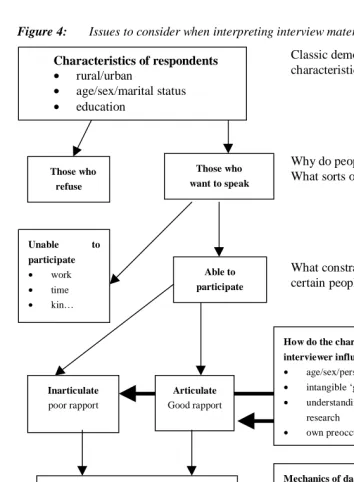
Figure 4: Issues to consider when interpreting interview material
Classic demographic characteristics
Why do people refuse? What sorts of people refuse?
What constraints do certain people face?
Characteristics of respondents
• rural/urban
• age/sex/marital status
• education
Those who refuse
Those who want to speak
Unable to participate
• work
• time
• kin…
Articulate
Good rapport
Inarticulate
poor rapport
Content of interview depends on:
• personal experience
• personal characteristics
• perception of the world
• intelligence……
How do the characteristics of interviewer influence the interview?
• age/sex/personal experience
• intangible ‘getting on’
• understanding / interpretation of research
• own preoccupations
How can we use the data?
Mechanics of data collection
• note taking
• tape recorders
Language and translation
• translation of key terms
• interviewer consistency
• tone and language in translation
the various factors that influence both whether a person participates in an interview study and the qualities of the emergent interview. The socio-demographic and characteristics and personality of the interviewee are important, but equally important are those of the interviewer.
This brings into question the degree to which one person’s statements, beliefs, and perceptions can be justifiably appended to the category of similar people in order to elucidate population-level behaviour. The more one does individual interviews, the more one discovers that each person is unique or an outlier in some way, although this does not preclude the simultaneous identification of patterns of behaviour. Without a long period of study involving participant observation, it is hard for the qualitative researcher to say, ‘This person (or this person’s opinion) is (or is not) representative of many people in this sub-group / population.’ One important aim of qualitative research is to capture human diversity in terms of influences, experience, opinions, attitudes, and behaviour. The researcher may try to establish to what degree the person being interviewed is typical or atypical by obtaining a condensed life history – which can serve a range of other purposes – but it leaves us with the issue of how to use these qualitative data. Do people really talk retrospectively about their actions rather than norms? Can in-depth interviews really build up an accurate picture of the endless constraints and compromises that people face in their daily lives, which may help us understand some of the diversity observed in quantitative analyses? How can one establish whether people are lying (Bleek 1987)?
4.4.1 Problems of silence
Silence on a subject is a major problem for interpretation and understanding. If a topic is brought up frequently, in a variety of contexts, and with a range of different emphases, (e.g., the deteriorating economy or AIDS in Zimbabwe, or good upbringing in urban Senegal), then one can assume that not only is it a pre-occupation, it is also perceived as a fairly safe topic to talk about. The benefit of qualitative research is the increased respondent control over subject matter, but we must beware of the flawed assumption that everything can be talked about. There may well be certain subjects which people are not only prohibited from discussing but which they are discouraged from thinking. Thus, silence on a subject should make an analyst pause. Does it necessarily mean that the subject is unimportant, or might it mean that the subject is potentially extremely important but not to be discussed with just anyone?
(Diop 1981): the general interpretation of Islam in the study communities is that a believer must not challenge God's will. There are substantial demographic ramifications of this, including: (1) the number of children a person has is under God's control; (2) the prophet told Muslims that it was their duty to have as many children as possible to increase the number of believers in the world (and a sub-text is that God will feed all the mouths he provides); (3) death is controlled by God. Interestingly, because the pursuit of health is mentioned positively within the Koran, expending substantial resources in search of treatments and cures is not seen as challenging God’s will: in fact doctors were often represented as messengers of God’s will.
It is quite plausible that what is really important is that publicly an individual should not be seen to challenge God's will, whatever his or her more private behaviour. An interview with a stranger – however much the interviewee is told about confidentiality and anonymity (note 10) – is a quasi-public event, and if questioning the will of God is blasphemous, then most people might be unwilling to do so, regardless of their private beliefs and behaviour. Silence on “fertility insurance” behaviour can therefore be interpreted in four ways:
• Fertility decisions are not something which people consider – this is certainly the case for many Senegalese villagers and older Zimbabwean informants. Contraceptive knowledge is low, contraceptive use is minimal and agency over family size is not within the bounds of conscious choice.
• The respondent has never actually thought about mortality risks in relation to fertility behaviour. Such rationalisations do not therefore enter into his or her fertility-making decisions.
• The respondent has indeed thought about these issues but either was unwilling to pursue them because of a belief that such thoughts are blasphemous or is unwilling to talk about their behavioural responses openly for fear that others would think them blasphemous.
4.4.2 Testing the theories
One way of trying to circumvent silence on a key subject of interest is to ask direct questions about it. This might be risky in certain circumstances, given that the silence itself may be an indication of where boundaries lie (Bleek 1987). Towards the end of the Senegal study, when it was clear that little was emerging spontaneously on insurance, some of the interviewers in Dakar started to be more direct. In Zimbabwe direct questions were more frequent throughout data collection. The following quotes are examples where areas of silence are approached and delineated; they also offer clues to why such areas might be circumscribed.
Senegalese village man, 27 years old, single
Death is in the hands of God. You can have 20 children and all 20 survive, or you can have 10 and watch them all die. It’s God’s will; God alone knows.
19-year-old urban Ndebele woman, focus group, Zimbabwe
We all know that when one is born, the next thing is to die, but we never think of it. We just say, ‘This is the number of children that I want.’ What will happen after that is something else. People just achieve their desired number of children without thinking of them dying.
36-year-old urban Shona man, university-educated, Zimbabwe [interview done in English]
Q …what if you were to lose one of your children? Do you think that you might then be more likely to have a sixth [child]?
A To have a replacement? [Laughs.] No, no, no. In fact, I don’t have a vision of losing them…I don’t testify the opposite [of my desire]; I always testify the desired outcome.
Q Wait - I don’t quite understand you. You don’t testify the - ?
A [Interrupting] What I’m saying is, when I talk, I don’t leave possibility that one child may die before me.
Q You don’t like to say it or…?
Given present circumstances in Zimbabwe, admitting that one even considers that one’s child might die could be interpreted as an admission that one either has HIV or has had enough sexual partners to be afraid that one has it, both of which would be very stigmatising.
30-year-old urban Shona man, Zimbabwe
Q When people first start having children, do you think it ever occurs to them that some of their children may die?
A No. That idea is because of some reason in the past. You might be a person who was exposed to pleasure during your youth [i.e., had many partners], but if you were not going out with different types of ladies, I don’t think you will have that idea.
Dakar, man, age 67 years, >7 children, polygamous
Q Could the fact of losing a child push a husband to impose another pregnancy on his wife?
A (in a very serious tone of voice) What are you saying? But it’s not linked. The death of a child and wishing for a pregnancy, it’s not linked. One makes a child with God’s blessing. If He takes it back, you can only wait until He gives it back to you...I can see no possible calculation.
By its vehemence, this last quote points toward one reason there might have been silence on this subject – challenging God’s will is unacceptable. Further clues about some respondents’ silence come from statements by two well educated men from Dakar, for whom the reasoning of Western researchers − and by implication the Senegalese interviewers who are pursuing the topics arising out of this rational demography − is utterly false. Both religion and alien perspectives are justifications for silence.
Dakar, man aged 25, unmarried, secondary education
Q Does the death of children influence a couple’s fertility? A I don’t understand you.
A I don’t think that people here reason as you do. Because there is the phenomenon of God, religion, faith, etc. Everything counts. People are believers.
Dakar, man aged 55, university-educated and unemployed, monogamous, 3 children
Q For you, would the loss of a child push you to have another, thinking to replace the dead one?
A No, no. You must believe in God; it’s He that has given them to you and He that takes them away. He is the sole master (…) It’s He who decides (laughs). Q Because sometimes in our discussions with people there are those who say that
they don’t want to have 1 or 2 children for fear that they would die and they would find themselves with none, and that’s why they want to have a lot.
A No, No. Someone’s life….but they could all die. Q That’s true.
A You could even go up to 30 [children] and they could all die. Everything depends on God. You shouldn’t try and plan like that, wanting to imitate the tubaabs [whites]. Planning, planning, that’s all blabla.
For this man, it is not the use of family planning methods which he considers an imitation of white people’s behaviour – he admits to such use himself - but rather the planning aspect implied by an insurance approach. He considers such forward thinking to be alien and is criticising the very rationality that we demographers find so convincing− yet he is highly educated, has used family planning, and is just the sort of person we might have expected to use insurance logic.
4.5 Characteristics of interviewers and rapport
Much social science research involves human interaction and is dependent on human relationships which have elusive and uncontrollable elements. Surveys attempt to minimise this effect either by using self-completed questionnaires or by instigating an intensive training programme before the data are collected alongside strictly worded questionnaires. Predictably, few researchers analyse their quantitative data by interviewer – significant results would be embarrassing to deal with, although possibly frequent.
In qualitative data collection, the role of the interviewer is even more critical. Rigorous training is an important way of countering interview bias, and it is essential that the interviewers actually understand the key issues behind the research – which itself may be difficult if these key issues are demographic and the research assistants are trained in qualitative disciplines and do not share the demographer’s world view (note 11). In this study interviewers in both countries were university graduates. In Senegal all were anthropologists or sociologists; in Zimbabwe the background was more mixed, with two trained in demography. This meant that, although excellent at in-depth interviews, most required training in demographic research interests. This involved a detailed examination of research aims, relevant demographic background, and many discussions about what topics were of interest to demographers and why. All interviewers were from the same ethnic group as the communities where they were to work – or at least had been brought up in that environment. However, there are certainly class or familial subtleties of status or ethnicity that we were unable to control. Standard Wolof greetings involve an exchange of surnames suggesting that these are very important socially, yet we are unable to identify the influence they may have had on the data.
interviewer and interviewee. In Senegalese interviews with highly educated city dwellers, it was clear that our well educated interviewers were essential to developing rapport. The impact of educational disparities between interviewer and interviewee is unclear but it seems that highly educated interviewees are most likely to respond well to similar interviewers. Such interviewer issues may be unavoidable, but they must be taken into account when interpreting the research outputs. We cannot ignore them and just pretend that ‘rigorous training’ has eliminated them – they are impossible to eliminate.
Apart from issues of ethnicity, education, and training, the actual personal characteristics of interviewers have a major impact on both rapport (and therefore on data quality) and the sorts of questions which interviewers are socially allowed to ask − and responses with which they can empathise. Thus, when interviewing young men about their sexual lives, it is likely that another young man may be most successful. Likewise, married women are probably more likely to divulge intimate secrets and problems with an older married woman, who may be expected to share some secrets of her own. A younger unmarried interviewer may not even be aware of what some of these reproductive issues are, precluding her from probing deeply, but she might be far more adept at encouraging young girls to confide in her about their romantic dreams and hopes. Ideally, research design and selection of the research team should control for all these issues, but in practice this is impossible. It is thus essential that the analyst knows something about the personal characteristics of the interviewers and takes them into account. Where it is clear that interviewers are fairly intolerant about something – for example, pre-marital sex – one should not expect their interviews to contain much material on that topic, both because the interviewer is uncomfortable pursuing the idea and because the respondent may sense the interviewer’s judgemental attitude. For some demographers, such limitations might be seen as confirmation of the invalidity of qualitative research methods. This is not so. Even in very strictly controlled questionnaire surveys, interviewer characteristics and power relations will always influence aspects of responses. In fact, in qualitative data the phenomenon may be clearer and actually easier to take into account during analysis because such influences are more readily perceptible from the interview transcript. In surveys we only have the questionnaire, apparently objective but actually mute about interview dynamics.
inexperienced (of life) members of the team. With the least domestic responsibility in their own lives, they were available for longer fieldwork periods away from home. From this site we have the least evidence of marital discord and deception: this may not be because such issues do not exist here but because the two interviewers did not have, through no fault of their own, the life experience or social status themselves to be able to pursue them. The interviewers who worked in the urban area had the most domestic and other work commitments and were therefore unable to do fieldwork elsewhere. These very commitments were a function of their maturity and their family situations, both of which enabled them to explore these issues in more depth with their interviewees. This was particularly marked for two female interviewers who were prepared to probe with little embarrassment into people’s domestic and sexual conflicts and decision-making processes in a way difficult for one young woman in the village. Although the latter asked frequently about intimate relations, she was satisfied with much simpler answers than the more mature and experienced urban female interviewers. That youth can limit the effectiveness of an interviewer was evident in both countries. It also seems true that, in general, men probed less than women into their subjects’ intimate lives, although one team had two young male interviewers who were often able to use their youth and inexperience as a way to get their respondents to open up and teach them about their reproductive histories. In many cases, these young men were able to get their male respondents to admit to things (such as premarital pregnancies) that their wives apparently concealed.
Thus, although qualitative methods are an improvement over questionnaires at demonstrating both the relative importance of different issues to the subjects as well as their perceptions and understandings of the important factors concerned with these issues, silence on a specific subject must not lead one to necessarily conclude that the topic is unimportant or irrelevant − it may also be because an interviewer is herself very reluctant to raise or discuss that issue.
Interviewer characteristics can influence not only silence on a subject, they can also have a major impact on noise and the quantity of material in interviews. If an interviewer has a particular preoccupation with a topic or a personal interest in it, the discussions which ensue on that topic are much more likely to be frank and rich – because often interviewer and interviewee will be interrelating as equals. Provided they are relevant to the research topic, such interactions are likely to be an excellent source of understanding. Indeed, successful focus groups are predicated upon such dynamics. However, in the same way that it is essential to have an idea of interviewers’ interests, prejudices, and socio-demographic characteristics in order to interpret silences, a basic knowledge of their preoccupations can also help interpret noise.
somewhere to menopause. In over 100 other interviews, only 7 transcripts include the word ‘menopause.’ Is this significant? Of the female interviewers, some were in their twenties, thirties, and forties, and one a 40 year old divorcee with one child. She was keen to remarry in order to have another child and she was the one for whom ‘menopause’ appeared in half her interviews. Yet menopause is a perfectly valid topic to explore in an investigation of reproductive decision-making. Her personal interest in no way invalidates the study or even the interviews discussing menopause. However, one would have to be careful in considering the relative importance of menopause in the lives of the women from the three different community types because menopause appears to be more important in the area where this interviewer worked. A similar situation occurred where an interviewer had previously lost one of her own children and found the demographic idea that people ‘replace’ such children very offensive. If an analyst was not aware of her bias, he may mistakenly surmise that women from the community where this interviewer worked are less likely to replace than others, because she elicited 4 of the 11 such responses from her interviewees.
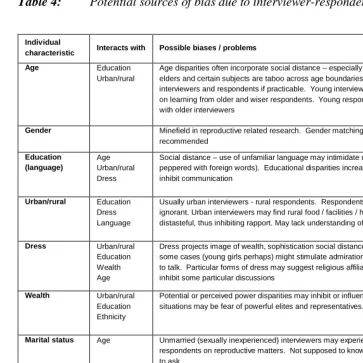
Table 4 summarises many of the areas where interviewer characteristics can influence the relationship and thus the interview – many of these may also influence survey data. Not all apply in every situation but for most the key issue is power imbalance (or a perceived power imbalance) which may distort the interviewer-respondent relationship, the topics discussed, the questions asked, and the replies given.
Table 4: Potential sources of bias due to interviewer-respondent characteristics
Individual
characteristic Interacts with Possible biases / problems
Age Education
Urban/rural
Age disparities often incorporate social distance – especially where respect is accorded to elders and certain subjects are taboo across age boundaries. Best to age-match interviewers and respondents if practicable. Young interviewers develop strategies based on learning from older and wiser respondents. Young respondents may be embarrassed with older interviewers
Gender Minefield in reproductive related research. Gender matching of interview-respondent recommended Education (language) Age Urban/rural Dress
Social distance – use of unfamiliar language may intimidate respondents (especially if peppered with foreign words). Educational disparities increase social distance and may inhibit communication
Urban/rural Education Dress Language
Usually urban interviewers - rural respondents. Respondents may feel intimidated or ignorant. Urban interviewers may find rural food / facilities / hardships difficult and distasteful, thus inhibiting rapport. May lack understanding of rural priorities.
Dress Urban/rural Education Wealth Age
Dress projects image of wealth, sophistication social distance – may inhibit rapport – but in some cases (young girls perhaps) might stimulate admiration and aspiration and willingness to talk. Particular forms of dress may suggest religious affiliations or beliefs which might inhibit some particular discussions
Wealth Urban/rural Education Ethnicity
Potential or perceived power disparities may inhibit or influence responses. In extreme situations may be fear of powerful elites and representatives.
Marital status Age Unmarried (sexually inexperienced) interviewers may experience problems with married respondents on reproductive matters. Not supposed to know things or don’t know enough to ask.
Ethnicity / name
Wealth May imply political power or affiliation leading to imbalanced power relationships
Personal life situation
Influences questions asked and topics pursued in detail because of personal interest. May inhibit asking questions about particular issues or generate personal dislike of key concepts. Critical for reproductive decision making research - all interviewers are personally involved in such decisions and behaviour themselves, which will modify what they pursue and how they do it
Community perception of aims and affiliations and benefits of research
Affiliation with NGO / international organisation Association with flow of resources into community Suspicion because of original contacts with gatekeepers
5. Discussion
The move towards a greater variety of data collection methods and increased triangulation in demography must be encouraged. All data collection methods have their disadvantages and biases, and in many ways the particular problems inherent in quantitative demographic data can be offset by triangulating research combining quantitative and qualitative approaches. However, it is crucial that, in the same way that demographers scour their survey data sets for errors such as systematic mis-dating of events or age-heaping, we are equally critical about how we interpret in-depth interviews.
Carefully used interview material is good for:
(1) Confirming that people do in fact think in particular ways. If ideas are brought up spontaneously without direct or leading questions, then this is a good indication that the theory is not totally far-fetched. In Senegal there were spontaneous evocations of insurance ideas – especially by women – but they were rare, given the mass of interview material and the opportunities for making the link provided by the interviewers.
Does this infrequency mean that those who did bring it up were exceptional – and if so, were they exceptional in thinking about the subject or just in talking about it? It may be significant that most who did bring it up were women. Women are those who suffer most from pregnancies (and possibly from child deaths), but their opinions are less important (to Senegalese men). Therefore, they may feel freer to express more heretical ideas – something which the more public and self-conscious man might hesitate to do.
but the outcome is the same – earlier marriage where mortality is high. Do we have conscious decision-making or some sort of unconscious mechanistic response? In this case the researcher can use interview material to establish: (a) whether people consistently and accurately identify differential mortality risks; (b) whether young women (or their families) have any agency over entry into marriage; and (c) whether there are indications of some sort of mechanistic response such as sororate, pre-existing marriage arrangements.
(3) Examining the range of ideas, knowledge, attitudes, and opinions on a
particular topic whilst being aware of the topics about which people are reluctant to talk. In Senegal it became clear that although many demographers believe that
the critical factor in reproductive decisions is the number of children (which is something that can easily be measured in quantitative surveys), most respondents were much more concerned with the quality of their children and having some ‘good’ children. In Zimbabwe, the number of children was important but long birth spacing in order to spread education costs was even more critical in decision making.
In-depth interviews are less reliable for developing an understanding of the relative importance of different attitudes or responses to a particular topic. Although the range of acceptable possibilities brought up in the whole dataset does give an idea of the parameters within which one is working, the potential biases induced by one respondent who has had a particular life experience or an interviewer who systematically explores a topic that others do not, can make conclusions about relative importance hazardous. Use of ethnographies, judicious use of observations, and general knowledge about both a society and the individuals within a research team are essential components of the triangulation of methods used in the ideal research programme.
‘decisions’ are only present at the population level as statistical associations and correlations, or whether they actually emerge from conscious individual-level strategies. This is important both in terms of prediction and understanding but also for policy. Thus we must applaud this move towards embracing qualitative data but at the same time beware of overusing it. There are pitfalls. Individuals whose characteristics represent a particular demographic sub-group also have their own unique history, biography, capabilities, and experiences, all of which mould both how they perceive their own decisions and actions and how they represent these to others. There are many topics about which people will not, cannot or do not want to speak, and these silences also have to be interpreted using triangulation from other sources.
Greater understanding of the collection, use, and problems with qualitative data can itself contribute to quantitative data collection, analysis, and interpretation, especially in developing countries where so much data collection is dependent on face-to-face interviews. It will be decades before the anonymous and distanced technological data collection methods can be used in most of Africa, and therefore the above discussion on interviewer relationships, power, and silence is equally important for any questionnaire-based survey. A further lesson from this comparative qualitative study is the difficulty of the truly comparable study. Despite the best intentions, local traditions, concerns, religion, domestic arrangements, traditional gender relations, and many other aspects of life mean that the same methods and the same questions are translated and transformed in different environments. The impossibility of undertaking a truly comparative qualitative study should certainly make us think carefully about the implications of quantitative comparative research and conclusions.
Ultimately, it is unlikely that we will ever fully appreciate the multiple perceptions of reality that underlie reproductive decision-making because reproduction is so intertwined with most of the more fundamental, deeply felt, and taboo aspects of being human: sexual behaviour, reproduction of self and society, human relationships with God, and life and death. One shouldn’t be surprised that there are many silences and evasions: the task is to interpret them in the most sensible and sensitive ways possible.
6. Acknowledgements
the Rockefeller Foundation and from a grant made by the Mellon Foundation to the Université de Montréal.
The fieldwork for the data collection was undertaken in collaboration with Dr Cheikh Ibrahim Niang of the University Cheikh Anta Diop, Dakar and Dr. Ravai Marindo of the University of Zimbabwe. The Central Statistical Office in Harare, Zimbabwe provided invaluable assistance to the fieldwork there and made intercensal survey data available to the Zimbabwe team prior to its publication. We would also like to thank all the field assistants who worked so hard in collecting the data. The themes of the paper are by no means intended to undermine their excellent work – just to point out some implications of such research approaches. To protect their anonymity they remain nameless in our thanks. Finally, we would like to thank all the respondents from both countries who talked to us so frankly.
Notes
1. Some studies used more than one method
2. The substantial number of focus group articles in the early 1980s was due to a special section on focus groups in Studies in Family Planning 12, 1981
3. Translation opens up a whole new range of issues which cannot be addressed here
4. Other important issues which need to be considered but cannot be discussed in-depth here are
(1) General perceptions of the aims and potential consequences of the research both by interviewers and respondents and how this biases both what people say and also immediate interpretations of their words and statements by interviewers.
(2) Power and gender relations (which can include political affiliations) between different members of the research team, and between them and the study population.
(3) Problems of translation which are particularly acute when one is working in languages which are rarely written and interviews are translated immediately into English or French by a range of different interviewers. It is made more complex by the different ways some words are used in African English or French compared to European or American usage.
(4) Difficulties in reconstructing the past from present perceptions. Such difficulties include the generalised idea for most people that the past was a rosy period, problems in interpreting generational differences and conflicts and their change over time, general issues related to using a cross-sectional study to understand longitudinal issues.
5. A different strategy could have been to target respondents on the basis of their prior mortality experience. This would have required a preliminary survey to identify such people and might well have lead to many refusals alongside preconceptions about the types of subjects we wanted to discuss in the interviews. It would also have presupposed that particular mortality experience (that of own children or siblings) was the most likely to influence their perception of risk. By selecting communities with different mortality experience we not only obtained a range of individual experiences in different contexts but we were able to explore a range of factors which might influence perception of mortality risk.
7. Men’s focus groups were much less successful. Men wanted to stick very closely to the story which initiated the discussion.
8. QSR NUD*IST Qualitative Solutions and Research: Non-numerical Unstructured Data Indexing Searching and theorizing: in this case text units were paragraphs.
9. At early stages in Senegal, detailed notes were taken which were written up afterwards. This method was quickly abandoned in favour of tape recorders. Interviewers transcribed their own interviews and simultaneously translated them from Wolof into French. In Zimbabwe the same process occurred with direct translation into English. Translation raises many issues which cannot be addressed here but should not be ignored.
10. Confidentiality and anonymity are themselves problematic concepts where, especially in the village context, they may be very alien ideas.
11. This was definitely a problem in this study, but was picked up on and addressed by discussion, more training and quizzes. Early in the research but after some interviews had already been collected, most interviewers mistakenly believed that by “insurance” we meant having plenty of children so that they would take care of you in old age. One male interviewer approached one of the authors after a few interviews and said, ‘I just don’t understand – these men all say that they have sex with their wives 40 days after birth, but the women don’t get pregnant again’. He didn’t know about lactational amenorrhoea and was therefore asking his questions with some substantial miscomprehensions.
References
Bauni, Evasius & Jarabi, Ben Obonyo (2000) Family Planning and Sexual behavior in the Era of HIV/AIDS: the case of Nakuru District, Kenya, Studies in Family
Planning, 31(1) 69-80.
Bawah, Ayaga Agula, Akweongo, Patricia, Simmons, Ruth, & Phillips, James F. (1999) Women's fears and Men's Anxieties: the impact of Family Planning on Gender relations in Northern Ghana, Studies in Family Planning, 30(1), 54-66.
Biddlecom, Ann E. & Fapohunda, Bolaji M. (1998) Covert Contraceptive Use: Prevalence, Motivations and Consequences, Studies in Family Planning, 29(4), 360-372.
Bledsoe, C. & Cohen, B. (eds.) (1993) Marriage: New forms, new ambiguities. Chapter 3 in: Social Dynamics of Adolescent Fertility in Sub-Saharan Africa. National Research Council, National Academy Press
Bleek, W. (1987) Lying informants: A fieldwork experience from Ghana. Population and
Development Review, 13(2), 314-322.
Caldwell, John C., Caldwell, Pat, & Quiggin, Pat (1989) The Social context of AIDS in Africa, Population and Development Review, 15(2), 185-234.
Caldwell, J., Reddy, P., & Caldwell, P. (1983a) The social component of mortality decline: An investigation in South India employing alternative methodologies.
Population Studies, 37(2), 185-205.
Caldwell, J., Reddy, P., & Caldwell, P. (1983b) The causes of marriage change in South India. Population Studies, 37(3), 343-361.
Casterline, J., Perez, A., & Biddlecom, A. (1997) Factors underlying unmet need for family planning in the Philippines. Studies in Family Planning, 28(3), 173-191.
Castle, S., Konate, M.K., Ulin, P., & Martin, S. (1999) A qualitative study of clandestine contraceptive use in urban Mali. Studies in Family Planning, 30(3), 231-248.
Coast, E. (2003) An evaluation of demographer’s use of ethnographies. Population
Studies 57(3), 337-346
Diop, A. (1981) La Societé Wolof. Karthala, Paris.
Fricke, T. (1997) The uses of culture in demographic research: A continuing place for community studies. Population and Development Review, 23 (4), 825-832.
Greenhalgh, S. (1997) Methods and meanings: Reflections on disciplinary difference.
Population and Development Review, 23(4), 819-824.
Gregson, Simon, Zhuwao, Tom, Anderson, Roy M., & Chandiwana, Stephen K. (1999) Apostles and Zionists: The Influence of religion on Demographic Change in Rural Zimbabwe, Population Studies, 53(2), 179-193.
Grieser, M., Gittelsohn, J., Shankar, A.V., Koppenhaver, T., LeGrand, T., Marindo, R., Mavhu, W., and Hill, K. (2001) Reproductive decision-making and the HIV/AIDS epidemic in Zimbabwe. Journal of Southern African Studies, 27(2), 225-243
Gueye, Mouhamadou, Castle, Sarah, & Konate, Mamadou Kani (2001) Timing of first intercourse among Malian Adolescents: Implications for Contraceptive Use,
International Family Planning Perspectives, 27(2), 56-62.
Hammel, Eugene (1990) A theory of culture for demography. Population and
Development Review, 16(3), 455-485.
Hulton L., Cullen, R., Khalokho, S.W. (2000) Perceptions of the risks of sexual activity and their consequences among Ugandan adolescents. Studies in Family
Planning, 31(1) 35-46
Kertzer, D., & Fricke, T. (1997) Anthropological Demography. University of Chicago Press: Chicago.
Knodel, J. (1997) A case for non-anthropological qualitative methods for demographers. Population and Development Review, 23(4), 847-853.
LeGrand T., Koppenhaver T., Mondain N., Randall, Sara, (2003) ‘Reassessing the insurance effect: A qualitative analysis of fertility behaviour in Senegal and Zimbabwe’ Population and Development Review 29(3), 375-403
LeGrand, T., & Barbieri, M. (2002) The effects of child survival on women's ages at first union and childbirth in Sub-Saharan Africa. European Journal of
Population, 18 (4), 361-386
Lockwood, M. (1995). Structure and behaviour in the social demography of Africa.
Population and Development Review, 21(1), 1-32.
Mensch, Barbara S., Bagah, Daniel, Clark, Wesley H., & Binka, Fred (1999) The Changing Nature of Adolescence in the Kassena-Nankana District of Northern Ghana, Studies in Family Planning, 30(2), 95-111.
Messersmith, Lisa J., Kane, Thomas T., Odebiyi, Adetanwa I., & Adewuyi, Alfred A. (2000) Who's at Risk? Men's STD Experience and Condom Use in Southwest Nigeria, Studies in Family Planning, 31(3), 203-216.
Miller, K., Zulu, E.M., & Watkins, S. (2001) Husband-wife survey responses in Malawi. Studies in Family Planning, 32(2), 161-174
Obermeyer, C.M. (1997) Qualitative methods: A key to a better understanding of demographic behaviour. Population and Development Review, 23(4), 813-818.
Okafor, Chinyelu B. & Rizzuto, Rahna R. (1994) Women's and Health Care Providors' Views of Maternal Practices and Services in Rural Nigeria, Studies in Family
Planning, 25(6) 353-361.
Otoide, Valentine, Oronsaye, Frank, & Okonofua, Friday E. (2001) Why Nigerian adolescents seek abortion rather than contraception: evidence from focus-group discussions, International Family Planning Perspectives, 27(2), 77-81.
Randall, Sara & LeGrand, Tom (2003) Reproductive Decisions, Strategies and Outcomes in Senegal: the role of child mortality, Population E2003 58(6) 687-716
Stewart, M Kathryn, Stanton, Cynthia K., Festin, Mario & Jacobson, Nora (1996) Issues in measuring maternal morbidity: Lessons from the Philippines Safe Motherhood Survey Project, Studies in Family Planning, 27 (1) 29-35
Temin, Miriam J., Okonofua, Friday E., Omorodian, Francesca O., Renne, Elisha P., Coplan, Paul, Heggenhougen, Kris, & Kaufman, Joan (1999) Perceptions of Sexual Behaviour and Knowledge About Sexually Transmitted Diseases Among Adolescents in Benin City, Nigeria, International Family Planning Perspectives, 25(4), 186-190.
Van de Walle, E. (1968) ‘Marriage in African Censuses and Enquiries’ in: W.Brass, A.Coale, P.Demeny, DF Heisel, F.Lorimer, A.Romanuik, E. van de Walle (eds.)
The Demography of Tropical Africa Princeton University Press
van de Wijgert, Janneke, Khumalo-Sakutukwa, Gertrude, Coggins, Christiana, Dube, Sabada, Nyamapfeni, Prisca, Mwale, Magdalene, & Padian, Nancy (1999) Men's attitudes Toward Vaginal Microbicides and Microbicide Trials in Zimbabwe,
Watkins, Susan Cotts (2000) Local and Foreign Models of Reproduction in Nyanza Province, Kenya, Population and Development Review, 26(4), 725-759.
Wawer, Maria J, Gaffikin, Lynne, Ravao, Voahangi, Maidouka, Halima, & Traore, Kadi (1990) Results of a contraceptive prevalence survey in Niamey, Niger,
International Family Planning Perspectives, 16(3), 90-96.