Solid Waste Management in Lebanon: Challenges and
Recommendations
*Ismail I. Abbas
1, Jinane K. Chaaban
2, Abdel-Rahman Al-Rabaa
3, Ali A. Shaar
41,2,3Chemistry Department, Faculty of Sciences, Section I, Lebanese University, Hadat, Beirut, Lebanon. 4Lebanese Civil Aviation Authority and Beirut Arab University, Faculty of Science, Beirut, Lebanon.
Successful waste management plans require accurate data about the nature and composition of waste. Despite the high content of organic (52%) and recyclable (37 %) materials in waste stream, only 8% and 15% of solid waste are recycled and composted respectively. Unfortunately, 48% of the waste are disposed in sanitary landfills. Dumping of waste and open burning is predominant outside Beirut and Mount Lebanon. Adequate treatment is unavailable for wastes produced by slaughterhouses, industrial premises and healthcare centers. Corruption, lack of human resources and suitable facilities and inadequate technical skills are responsible for inefficient municipal solid waste management. This paper aims at determining the current practices of municipalities in terms of segregation, collection, treatment and final disposal of solid waste. It also considers key policy challenges and recommendations for improving the municipal solid waste management system.
Key Words: SolidWaste Management, Recycling, Composting, Incineration, Landfill.
INTRODUCTION
Waste generation in Lebanon has increased significantly during the past decades. This is mainly due to the rise in community living standards, urbanization, immigration of Syrian refugees, and increasing in population levels (Cohen, B. 2004; MOE, 2014). Solid waste management (SWM) is critical in protecting environment and ensuring human health. Therefore, new strategies are needed to deal with the waste Lebanese produce today to prevent it from creating problems for next generations. In the last few months, Lebanon witnessed a waste management crisis which results in the scattering of satellite landfills and incineration sites throughout the country, with grave consequences on health, economy and environment (Sara, 2015; Giusti, 2009; Naharnet Newsdesk, 2016; Coffey, 2010). For the first time, dioxin and Dibenzanthracene compounds were identified in air in Lebanon (Massoud 2016). These toxins have the potential to raise the lifetime of cancer risk (Aderemi, 2012; Mazz, 2015; Thamaraiselvan, 2015) and may cause lasting ill effects on human health and environment (Khairy, 2009).
Although Lebanon practiced a string of SWM plans (Halldin, 2010; MOE, 2011) over the last 20 years, SWM has remained a complex task. This is due to deficiency in skills of modern SWM practices (Boadi,2005; Vitorino de Souza, 2017), lack of awareness on the threats of unsustainable waste management practices (Henry, 2006), and poor Government support (Konteh, 2009). Private sector has failed to shift from high percentage of disposal to recovery of both energy and materials (CDR/LACECO, 2011).
*Corresponding author: Ismail I. Abbas, Chemistry Department, Faculty of Sciences, Section I, Lebanese University, Hadat, Beirut, Lebanon. Email
[email protected] , Tel: +961-3-601140.
Co-Authors Email: [email protected],
[email protected]
3, [email protected]
4Journal of Environment and Waste Management
Vol. 4(3), pp. 235-243, October, 2017. ©
www.premierpublishers.org
. ISSN: XXXX-XXXX
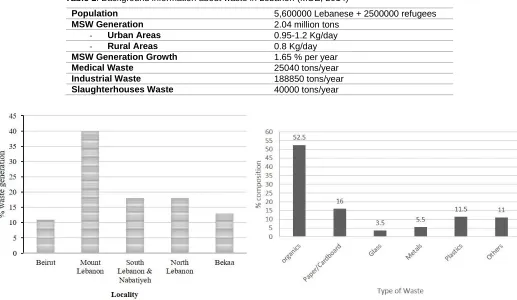
Figure 1: Waste generation per locality (GIZ, 2010). Figure 2 Waste composition in Lebanon. (MOE, 2014; Massoud, 2016)
On the other hand, municipalities are facing main problems such as lack of organization, and financial resources (Parthan, 2012), Consequently, high percentage of Lebanon’s solid waste still ends up in landfills and open dumps (MOE,2011). The current waste problem could be resolved by adopting an integrated sustainable waste management strategy. Thus, the main objectives of the study are to determine the current practices of municipal SWM in Lebanon in terms of segregation, collection, treatment, and final disposal; assess the level of services and allocation of financial and human resources in SWM; and identify key policy challenges and recommendations for improving municipal SWM in Lebanon.
MATERIALS AND METHODS
Quantum and Nature of Solid Waste
The properties of municipal solid waste (MSW) collected from different places in Lebanon depend on many parameters such as consumer patterns, food habits, the cultural traditions of citizens, lifestyles, climate, and economic status. As the cities expand, average per capita waste generation increases. Waste generation is 1.05 Kg per capita per day in Lebanon amounting to about 2.04 MT of waste annually (Table 1). Also, lifestyle changes are leading to the use of more packaging materials and as
such waste generation is increasing by about 1.65 % per capita per year (MOE 2014). Lebanon is divided into five localities: Beirut, Mount Lebanon, South Lebanon and Nabatiyeh, North Lebanon, and Bekaa. Contribution of each district to the total stream of solid waste is presented in Figure 1.
Various research studies have been conducted on the composition of the MSW stream in Lebanon since 1995 (Figure 2) (MOE, 2011; Massoud,2016). Analysis of waste composition indicates that the highest waste fraction is organic matter (52%), followed by papers and cardboards (16%), plastics (12%), others (11%), metals (6%) and glass (3%). The high organic content suggests the frequent collection and removal, as well as good prospects for organic waste resource recovery. The content of major reusable and recyclable materials (i.e., plastic, paper and paper products, metal and glass) comprised 37% on average. It is also notable that the composition of municipal waste varied greatly among different locations in Lebanon. Organic content at the national level (52 %) may be lower than in Beirut (63%) because people feed some of their organic wastes (vegetable cuts, fruit remains, etc.) to their domestic animals in rural areas. MSW makes up about 89 % of the total solid waste stream generated in Lebanon (Figure 3).
Figure 3 Waste categories in Lebanon. (MOE, 2014)
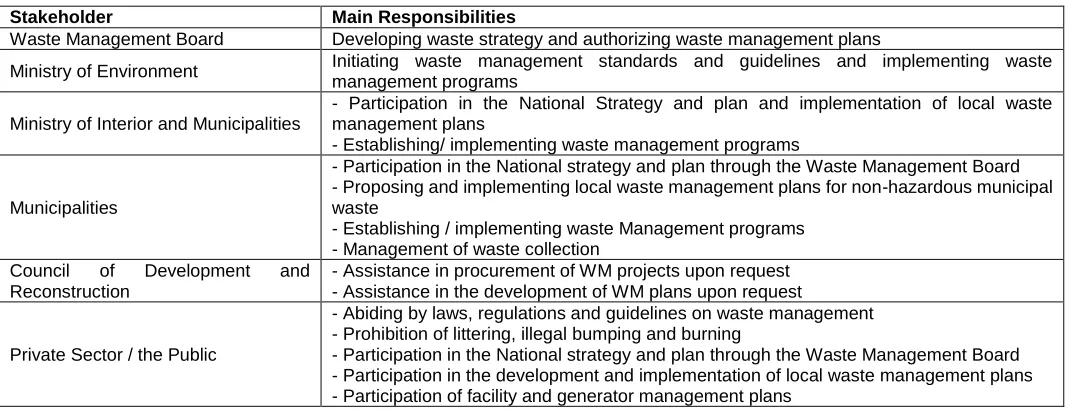
Table 2: Duties of different stakeholders (MOE, 2011; Massoud, 2016)
Stakeholder Main Responsibilities
Waste Management Board Developing waste strategy and authorizing waste management plans
Ministry of Environment Initiating waste management standards and guidelines and implementing waste management programs
Ministry of Interior and Municipalities
- Participation in the National Strategy and plan and implementation of local waste management plans
- Establishing/ implementing waste management programs
Municipalities
- Participation in the National strategy and plan through the Waste Management Board - Proposing and implementing local waste management plans for non-hazardous municipal waste
- Establishing / implementing waste Management programs - Management of waste collection
Council of Development and Reconstruction
- Assistance in procurement of WM projects upon request - Assistance in the development of WM plans upon request
Private Sector / the Public
- Abiding by laws, regulations and guidelines on waste management - Prohibition of littering, illegal bumping and burning
- Participation in the National strategy and plan through the Waste Management Board - Participation in the development and implementation of local waste management plans - Participation of facility and generator management plans
and fields’ trimming. As far as the industrial waste is concerned, about 22,000 industrial companies produce a wide range of solid wastes which contribute to about 8.23 % to the total solid waste stream in Lebanon (GIZ, 2010). Non-hazardous wastes (packaging, Styrofoam, wood pallets, food residues, etc.) comprise 98.2 % of the industrial waste stream. The remainder fraction however is potentially hazardous, as defined by the Basel Convention (www.basel.int).
The composition of Lebanon’s industrial waste is poorly documented and no plants are available for industrial waste treatment. In the absence of a well-defined legislation and more stringent controls, most of the industrial and hazardous wastes are mixed with the municipal wastes. Additionally, wastes produced by slaughterhouses contributes to 1.74 % of total waste generation (MOE, 2011). Furthermore, waste stream composes of 20 and 79.8 % of infectious and non-infectious healthcare wastes respectively.
Finally, there are currently no facilities for recovering used tires. Within Sukleen’s service area, used tires are collected as part of the bulky waste stream and stored at the warehouse. A small portion is then resold to tire recycling customers while the remaining portion is shredded and sent to Bsalim landfill to be used as inert material (GIZ, 2010). Outside Sukleen’s service area, used tires are either (1) stockpiled in various locations (mainly near vehicles repair shops), (2) dumped haphazardly, (3) used as solid fuels for home heating, and/or (4) burned.
Stakeholders
and landfilling, with sorting and composting, and at costs which are substantially high (Mazza, 2015). In Tripoli, Lavajet and BATCO are responsible for waste collection and disposal respectively. In the city of Zahleh, the private sector is responsible for waste collection and disposal of solid waste. In Saida, the private sector built an anaerobic digester for municipal waste treatment.
RESULTS AND DISCUSSIONS
Existing Solid Waste Management System
Collection and Segregation
Collection, city cleaning, and sweeping is not performed every day except in main markets and in some residential areas. Other areas are served occasionally from twice a week to twice a month. Many areas are neglected due to the ineffectiveness and insufficiency of the service. Container service, and roadside pickup from open piles or containers are the types of collection service generally used by municipalities and private sectors.
In Beirut and Mount Lebanon, the collection of waste from curbside containers and transportation into the two sorting facilities are performed by SUKLEEN. Processing of waste at the two sorting facilities are similar. This includes weighing, manual sorting and mechanical separation of waste by trommel screen. Organics are then sent for composting at the Coral plant. Manual sorting is further practiced to remove recyclable materials. Residual waste is then baled, wrapped and transported to the Naameh Landfill (currently Costa Brava landfill). From the waste collected, around 48% goes to landfills, 15% is treated, and 8% is recycled.
Outside Beirut and Mount Lebanon, municipalities are carrying out waste management operations (collection and disposal) according to Municipal Law No. 118 (dated 30 June 1977). Some municipalities are using their own waste collection vehicles and workers and others are subcontracting the service to private sector. Waste recovery outside Beirut and Mount Lebanon is estimated
to processing centers or final disposal sites. Transportation of waste from the waste storage areas to the disposal site is done by a variety of vehicles such as trucks and modern hydraulic vehicles. The percentage of MSW disposed of at landfills amounts to 48 % of the total. Problems facing municipalities at present include lack of technical support, financial constraints, problems in area selection for landfilling and strong disapproval from nearby communities. Political intervention has also been practiced in many municipalities.
In Lebanon, there are two sanitary landfills and a third landfill for inert materials in Bsalim. The three landfills receive solid waste from about half of Lebanon’s population. Shredded materials and rubbles make up 89 % of the waste sent to Bsalim. Recyclable materials sent for disposal include PET, dirty plastic, tins, and cardboard (plus shredded wood and shredded tires).
Recently private sector and Lebanese authority built up the Costa Brava landfill in Ouzaai (south of Beirut) to solve the problem of MSW(Obeid, 2016). The new landfill will temporarily solve the problem of the accumulation of solid wastes in the streets of cities but it will not form a permanent and environmentally friendly solution for solid waste.Thus, garbage could start once again piling on the streets if an integrated SWM system is not considered and approved by Lebanese government. Currently, Costa Brava landfill receives around 200 tons of the 650 tons of waste generated per day in the capital. 250 tons of the remaining garbage is sent to a waste treatment plant in Sidon. Outside Beirut and most of Mount Lebanon, dumping of waste and open burning is predominant. Tons of solid wastes are disposed in the environment every year including household waste, bulky items, as well as medical, industrial, agricultural and slaughterhouse wastes.
Figure 4: Percent waste recovery and disposal in Lebanon (MOE, 2014).
disposal is expected to drop. Uncontrolled and unlicensed incineration of healthcare waste continues in many hospitals releasing persistent organic pollutants and other pollutants. There are no data for expired medicines in Lebanon. Local authorities (customs, municipalities, regional health councils, etc.) occasionally find stocks of expired medicines and face major difficulties in disposing them. Ministry of Environment has prepared environmental guidelines for destroying expired goods but there are no specialized facilities that can treat the waste. In the absence of such facilities, it can be assumed that expired drugs end up in landfills and/or open dumpsites around the country.
Slaughter houses in Lebanon produces large quantities of different wastes and wastewaters. None of the slaughterhouses currently provide adequate treatment of their waste (blood, internal organs, and bones). On the other hand, wastewater from slaughterhouses is heavy in pollution and it is mixed with the municipal drain system without pre-treatment.
Resource Recovery Methods
Tight budgets and scarce resources have made municipal SWM an environmental, financial, and social burden to the municipalities. Resource recovery from managing MSW has the potential to decrease such burdens and even give profits. The composition of MSW in Lebanon showed organic materials and paper as the dominant factions (Figure 2). Thus, recycling and composting are the most used methods for the recovery of materials from the solid waste stream (Figure 4). The most common materials that are recovered include: organics, various types of paper products, some plastics and metallic containers. The most common methods of recovery are briefly described in the following sections.
i) Recycling
The MSW composition reveals that about 37 % of the waste could be either reused or recycled, excluding
organic waste. Unfortunately, only small amount (8 %) was reused and recycled in most municipalities. It is worth noting that minority of Lebanese recover recyclable materials at source and large amounts of recyclable materials continue to be mixed with other types of wastes. Thus it is very difficult to recover recyclable materials of acceptable quality from unsegregated waste stream. When the waste arrives at the two sorting facilities, it is already in a state of decomposition, releasing leachate and foul odors. These undesirable conditions of the wastes encourage recycling industries not to buying them. In addition, there are no specific incentives to promote the recycling industry, in particular technologies that can recycle plastics (PVC and PET) and “dirty” recyclable materials. In this context, plastics, except PET and PVC, are recycled into secondary plastic products such as flowerpots and benches. “Clean” cardboard and paper are recycled by one of the few remaining paper recycling plants currently operating in Lebanon. However, these industrial plants rely mainly on informal networks of suppliers for waste paper and cardboard.
ii) Composting
problems such as foul odors from the curing process, space limitation, proximity to residential areas, and mechanical failures. Leachate produced at the plant are treated by anaerobic and aerobic processes. The effluents from this primary treatment are then combined with the bio-filter discharge water and sent by tanker trucks to the Ghadir wastewater treatment plant south of Beirut.
Public Awareness
A critical element in SWM is public awareness, in addition to other factors such as proper legislation, strong technical support, and sufficient funding. Lack of public awareness is one of the major problems of SWM in Lebanon. Only a small percentage of the public know where their own domestic waste goes once it has been collected or how much the waste collection and disposal service costs them. Community participation has a direct effect on efficient SWM plan. Municipalities don’t have awareness programs for SWM staff, and for the public. They have failed to educate citizens on the basics of handling waste and appropriate way of storing it in their own bins at the household, shop and other institutions and then disposing it in the communal storage points declared by the authorities. Therefore, the main challenge in SWM lies in alerting the public about not littering and encouraging them to dump the waste at designated points. On the other hand, households, hotels, restaurants, schools and other commercial establishments should be directed to introduce systems for segregation of solid waste. Imposing fine will not give results unless the public understand the importance of keeping the country clean. The essential barriers for raising awareness about waste management activities are:
i.
Deficiency in funds and capacity and lack of interest from key stakeholders.ii.
Rooted cultural practices and behavioral norms.iii.
Unsupportive legal and regulatory frameworks.Special Waste Management
Special waste includes categories of waste slaughterhouses and industry and hazardous waste from hospitals and medical centers. Management of this
waste treatment is usually performed by incineration in hospitals in many municipalities. This involves merely burning of the waste in a chamber or open burning in the hospitals. In other municipalities, medical waste is mixed with municipal waste, and in some cases it is burned or crudely dumped. There is no appropriate system for the management of medical waste, and the staff, including medical personnel, in most hospitals are not aware of the health impacts. On the other hand, no proper slaughterhouse was observed in any of the municipalities. Dead animals are buried or dumped. The burying is done randomly at dump sites.
Drawbacks in Present MSW Services
i. Storage and Collection of Waste at Source
There is no practice of storing the waste at source and citizens have not been cultured to keep domestic, trade, and institutional bins for storage of waste at source and stop littering on the streets. There is no public system of primary collection from the source of waste generation. The waste discharged here and there is later collected by private companies and municipal workers.
ii. Low Percentage of Solid Waste Recovery and High Cost of Waste Treatment
Figure 5: Integrated waste management strategies.
of waste collection and disposal amounts to roughly 120 USD per ton. This high cost prevents municipalities from living up to their responsibilities and leaves them to face wider budget deficits and failure to pay the fees required for collection and treatment.
Key Policy Challenges and Recommendations
i. Since 1994, the government contracted out waste management in Beirut and Mount Lebanon to Sukleen, which continued to collect and manage solid waste by sorting, composting, recycling, and landfilling until the expiry of its contract in July 17, 2015. Since expiry, Lebanon has challenged a garbage management problem. In the absence of governmental solutions, municipalities and citizens used primitive solutions which led to open dumps scattering throughout the country, with serious consequences on health, economy, and the environment. It can be concluded that the development of policy, strategy, and guidelines has not been effective on the ground. A national SWM policy and strategy that specifies key policy objectives, guiding principles, and an implementation strategy needs to be developed to provide clear strategic direction to local bodies. Municipalities are also encouraged to improve their SWM systems. Technical procedures need to be developed for issues such as organic composting, resource recovery technologies, and landfill development and operation.
ii.. The waste in Lebanon represents a significant source of biomass, recycled materials, and energy. The large proportion of reusable and recyclable materials in solid waste offers a great opportunity for improving waste reuse and recycling. Endorsement of 3R policy significantly reduce the amount of waste to be disposed of at landfills,
thereby saving costs for final disposal and reducing public health and environmental risks. In addition, based on waste characterization (Figure 2), solid waste could be used as a potential feedstock in various waste to energy technologies such as anaerobic digestion, pyrolysis, incineration, and gasification (Figure 5) (Nizami, 2017). These technologies, if developed in Lebanon, can be able to treat around 80% of the total MSW. The remaining of MSW fraction can be recycled or disposed in landfill. This scenario requires better public awareness of the advantages of these technologies.
iii. Strengthening Capacity of Local Bodies: Municipalities should be in charge of collecting, transporting, treating, and finally disposing MSW. But in Lebanon, most municipalities are facing shortage of financial and human resources, as well as technical skills to effectively manage MSW. Developing the in-house capacity of the municipalities is thus essential. Municipalities that do possess MSW units are suggested to establish one and operate it with suitably qualified individuals. Municipalities should be capable of managing their recycling sites as productive units reducing overall management cost and thus allowing them to give more money for the general well-being of their communities.
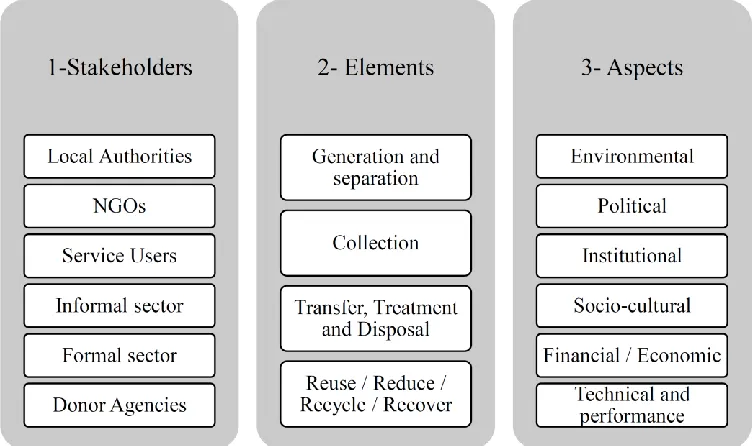
Figure 6: Integrated Sustainable Waste Management Framework (van de Klundert, 2001)
environmental campaigns to improve citizens’ awareness of 3R and better SWM. Raising awareness about SWM activities can result in increases in:
a) Use of city waste collection services by the public and private sectors.
b) Implementation and enforcement of local waste management policies and strategies.
c) Backing of municipalities for local-level activities. d) Segregation at point source and reduction of
waste generation.
v. Stop the violation to the Integrated solid waste management (ISWM). Today with the current crisis, a strategy for an ISWM plan must immediately be implemented. There are three dimensions of ISWM, which need to be addressed simultaneously when designing a solid waste management system: stakeholders, elements, and aspects (Figure 6). An integrated approach is necessary from segregation at source and collection to resource recovery and landfill. Sorting garbage at home should be compulsory by the governmental laws. Resource recovery facilities may be built on the way to or near the final disposal sites so that residual wastes from recovery facilities can be brought efficiently for disposal. Recycling paper, plastic, glass, should also be applied and introduced as a law. Smaller municipalities may gradually improve their final disposal method from open dumping to engineered landfill. Incineration can be also considered as an efficient solution due to its high efficiency and low operation cost (1.5-2.5 $/ton) (Ouda, 2016). Nonetheless, the need for treatment of air and decontamination of ashes within the incineration facilities are limiting factors for the development of this technology in Lebanon. Wastes from hospitals, plants, batteries, etc., should be listed as hazardous and submitted to a particular recycling facility or be treated in an environmentally safe manner to prevent land and water pollution.
CONCLUSIONS
The analysis of waste composition revealed that organic content is the highest fraction, making up 52% of municipal waste. Current common practice of SWM in Lebanon is landfilling. After the closure of the main landfill in Naameh, most of solid waste in Beirut and Mount Lebanon is now disposed at Costa Brava Landfill. Most municipalities in Lebanon are unable to manage MSW effectively and efficiently because of the lack of financial, technical and human resources. Government and other stakeholders were unsuccessful to implement an integrated SWM in Lebanon.
The current SWM system in Lebanon has many disadvantages such as: unorganized source reduction programs, high cost of sweeping and collection and low percentage of waste recovery. Several recommendations have been proposed to improve waste management, such as, organizing public awareness programs, which could start from the schools; increasing efforts for recycling, keeping in mind future population growth, resource recovery, strengthening capacity of municipalities and encouraging public private partnerships.
REFERENCES
Aderemi AO, Falade TC. (2012). Environmental and Health Concerns Associated with the Open Dumping of Municipal Solid Waste: A Lagos, Nigeria Experience. AJEE 2(6):160-165. doi: 10.5923/j.ajee.20120206.03. Boadi K, Kuitunen M, Raheem K, Hanninen K. (2005).
CDR/LACECO. (2011). Supervision of Greater Beirut Sanitary Landfills - Annual Report.
Coffey M, Coad A. (2010). Collection of Municipal Solid Waste in Developing Countries. UN-HABITAT, Malta. Cohen, B. (2004). Urban growth in developing countries: a
review of current trends and a caution regarding existing forecasts. World Dev. 32 (1): 23–51. doi:10.1016/j.worlddev.2003.04.008.
Obeid G .(2016). Costa Brava receives compacted waste. The Daily Star, 6 April. http://www.dailystar.com.lb. Giusti L. (2009). A review of waste management practices
and their impact on human health. Waste Management 29(8): 2227–2239. doi:10.1016/j.wasman.2009.03.028. GIZ. (2010). The Solid Waste Management Situation in the Mashreq and Maghreb Countries: Challenges and Opportunities. Sweepnet. Tunis.
GIZ. (2014). Country Profile on the Solid Waste Management Situation in Lebanon.” Sweepnet. Tunis. Halldin A. (2010). Lebanon Country Environmental
Analysis Report on Municipal Solid Waste Management. The World Bank, Stockholm.
Henry R K, Yongsheng Z, Jun D. (2006). Municipal solid waste management challenges in developing countries – Kenyan case study. Waste Management. 26(1): 92–-100. doi:10.1016/j.wasman.2005.03.007.
http://www.basel.int.
Khairy M A, Kolb M, Mostafa AR, El-Fiky A, Bahadir M. (2009). Risk assessment of polycyclic aromatic hydrocarbons in a Mediterranean semi-enclosed basin affected by human activities (Abu Qir Bay, Egypt). J. Hazard. Mater. 170(1): 389–397. doi: 10.1016/j.jhazmat.2009.04.084.
Konteh F H. (2009). Urban sanitation and health in the developing world: reminiscing the nineteenth century industrial nations. Health Place. 15(1): 69–78. doi: 10.1016/j.healthplace.2008.02.003.
Lilliana A G, Ger Maas, William H. (2013). Solid waste management challenges for cities in developing countries. Waste Management 33(1): 220–232. doi:10.1016/j.wasman.2012.09.008.
Massoud, M., Merhebi, F. (2016). Guide to Municipal Solid Waste Management., American University of Beirut - Nature Conservation Center (AUB-NCC).
Mazza, A., Piscitelli, P. , Neglia, C., Della, R. G., Iannuzzi, L. (2015). Illegal Dumping of Toxic Waste and Its Effect on Human Health in Campania, Italy. Int. J. Environ. Res. Public Health. 12(6): 6818-6831. doi:10.3390/ijerph120606818.
MOE, EU, and UNDP. (2011). State and Trends of the Lebanese Environment.
MOE, EU, and UNDP. (2014). Lebanon Environmental Assessment of the Syrian Confict and Priority Interventions.
Naharnet Newsdesk. (2016). Shehayyeb Announces 'Permanent' Closure of Naameh Dump at Midnight. 18 May, www.naharnet.com/stories/en/209519.
Nizami AS, Rehan M, Waqas M, Naqvi M, Ouda OKM, Shahzad K, Miandad R, Khan MZ, Syamsiro M, Ismail IMI, Pant D. (2017). Waste Biorefineries: Enabling Circular Economies in Developing Countries. Bioresour. Technol. 241: 1101-1117 .
Ouda OKM, Raza SA, Nizami AS, Rehan M, Al-Waked R, Korres NE. (2016). Waste to energy potential: a case study of Saudi Arabia. Renew. Sustainable Energy Rev. 61: 328-340
Parthan SR, Milke, MW, Wilson DC, Cocks JH. (2012). Cost estimation for solid waste management in industrializing regions – precedents, problems and prospects. Waste Management. 32: 584–594. doi:10.1016/j.wasman.2011.11.004.
Sara H. (2015). Beirut awash with trash after landfill protest. phys.org. 24 July. https://phys.org/news /2015-07-beirut-awash-trash-landfill-protest.html.
Thamaraiselvan R, Peramaiyan R, Natarajan N, Boopathy L, Palaniswami R, Ikuo N. (2015). Exposure to polycyclic aromatic hydrocarbons with special focus on cancer. Asian Pac. J. Trop. Biomed. 5(3):182–189. doi.org/10.1016/S2221-1691(15)30003-4.
van de Klundert, A, Anschütz J. (2001). Integrated Sustainable Waste Management- the Concept. Tools for Decision-makers. Experiences from the Urban Waste Expertise Programme (1995-2001). WASTE. Vitorino de Souza Melaré A, Gonzálezb MS, Facelib
K, Casadeib V. (2017). Technologies and decision support systems to aid solid-waste management: a systematic review. Waste Management. 59: 567–584. doi:10.1016/j.wasman.2016.10.045.
Zarate MA, Slotnick, J., Ramos M. (2008). Capacity building in rural Guatemala by implementing a solid waste management program. Waste Management.
28(12): 2542–2551.
doi.org/10.1016/j.wasman.2007.10.016.
Accepted 01 October, 2017
Citation: Abbas II, Chaaban JK, Al-Rabaa AR, Shaar AA (2017) Solid Waste Management in Lebanon: Challenges and Recommendations. Journal of Environment and Waste Management 4(3): 235-243.