The Dynamics and Effects of the Renewable Energy Sector in the European Union:
Implications and Recommendations for Developing Countries
Author’s Details: Agyenim Boateng Kofi1
, Long Xingle1 1
School of Management, Jiangsu University, Zhenjiang 212013, China. Corresponding author: Long Xingle ([email protected])
Abstract
Renewable energy has become a focus in the energy sector driving the fight towards smart climate economies on a global scale. Despite the successes chalked in this area in the European Union (EU), many challenges were faced and strategies have been devised to overcome them. This study was carried out to understand the dynamics of the renewable energy sector between 2005 and 2017 and how outcomes influenced strategic changes towards future targets. It also throws light on the effects of the renewable energy sector on fossil fuel market in the EU and how the future looks like for all stakeholders especially in the developing regions of the world. This study is relevant as a quick guide to understanding the major events surrounding renewable energy development, deployment and uptake in the EU. Recommendations based on lessons from the EU scenario are made for future consideration, especially for developing countries.
Keywords: Renewable Energy Sector, European Union
1. INTRODUCTION
The concept of climate change has led to many initiatives in recent times towards the advancement and adoption of new technologies that monitor the effects of industrial and domestic operations on environmental sustainability as well as for control and mitigation (FAO, 2015; USAID, 2012). The effects of climate change have been known through research to present both challenges and opportunities with phenomena of extremities that become risky to the sustenance of development and livelihood.
Sub-Saharan Africa, especially among other parts of the world, is one of the regions that has started having its inhabitants negatively affected by climate change effects, especially in the areas of agriculture, disease outbreaks, and floods among others. The three main areas of concern when dealing with climate change mitigation in the past two to three decades have been manufacturing, energy and transportation. All these sectors are key to the development of any society in socio-economic terms as well as on environmental and food security considerations.
The current challenges posed by climate change effects and the forecasted future risks associated with the concept taking into account projections from present statistics have posed a huge state of urgency on all nations to individually and concertedly make efforts to cut down on actions that are known to have significant bearing on the state of the global climate (IPCC, 2018; OECD, 2018; World Bank, 2016). Individual nations have made pledges to the international bodies concerned based on their particular circumstances and capabilities to offset carbon emissions by certain agreed quotas by a certain timeframe, but subject to international monitoring and evaluation (OECD, 2018; UN Environment, 2018). But it must also be argued that the extent of success to be chalked by these nations depend largely on their development stage reached.
change effects and mitigation efforts but little on the lessons that can be drawn for the benefit of developing nations regarding the dynamics of the renewable energy sector in the developed countries. This study considers how the renewable energy sector in the EU is performing and draws on lessons that can be useful for developing countries making attempts to follow in their paths in combatting climate change.
The Paris Agreement to mitigate global warming in order to reduce the associated risks significantly and the impacts of climate change make it necessary that the energy sector is transformed towards the more sustainable system (UNFCCC, 2015). This call also includes the need for all nations to adjust production of goods and services as well as their consumption patterns within the soonest timeframe possible (OECD, 2018). The transformation of an energy system that depends on non-renewable sources to one that adopts renewable sources depends not only on the development of advanced technologies in favour of the latter but also the deployment of same and the scale of successful deployment (UN Environment, 2018; Pacesila et al., 2016). The need to increase the distribution of renewable energy sources (RES) is therefore crucial to climate change mitigating and the realization of the energy sector transformation goal (Keček et al., 2019; Seetharaman et al., 2019). To sustainably transform the energy sector in Europe and in any other part of the world, it is demanded that the share of RES is increased at the expense of non-renewable sources such as the use of fossil fuels in the supply of electricity, heating and transportation among others. Although the success of increased RES share is required, it is more critical for the energy, manufacturing and transportation sectors (EEA, 2018). This approach will significantly cut down on GHG emissions, hence mitigating climate change across all sectors. It is therefore clear that the priority of the European Energy Union in achieving its carbon reduction targets and set climate commitments under the Paris Agreement depends largely on renewable energy. In order to understand the subject of RES and their impacts, this study discusses the progress made by the European Union regarding its climate commitments, only in the context of renewable energy use. It also assesses the effects of such initiatives on fossil fuel as a major alternative energy source in the region and makes a recommendation based on results.
2. METHODOLOGY
This study depends on secondary data from the European energy policy databases and documents with relevance to indicative renewable energy directive (RED) and national renewable energy action plans (NREAPs) trajectories. Information on renewable energy was sourced from the “Global trends in renewable energy investment annual report,” focusing on data from 2005 to 2017 (Frankfurt School-UNEP, 2018). Other sources of data were from recently published literature on the subject matter. Data were organized and analyzed using SPSS (version 25) and Microsoft Excel (version 2016). Trends were followed, and correlational analysis was done to determine the relationship between the level of RES targets achieved and impacts made on the development of key sectors in the EU. Results were presented in Figures and Tables.
3. RESULTS
3.1 Progress and dynamics on renewable energy share of the EU
Figure 1: Comparing actual RES share field values to RED targets of the EU.
The EU’s energy mix initiative meant to increase RES uptake resulted in a 17.4% share of renewable energy in 2017 as gross final energy consumption according to data from primary studies of the EEA (2018). This result shows that the EU has not diverted from its RES share target of 20% by 2020. The remarkable performance of the EU was from 2005 to 2015. By the end of 2016, a 17.0 % RES share was realized, which only increased marginally by 0.4 % in 2017 to 17.4 %. Concerning progress in the transport sector set to a 2020 target of 10 % RES share, insufficient results were realized in the EU. With only 2 to 3 years to go, the 2020 trajectories needed extraordinary approaches in order to meet the national targets which were becoming steeper (EEA, 2018). Further studies revealed that an increase in final energy consumption and other factors are presenting the uptake of renewables in several member countries with challenges, leading to a decline in the performance of some member states by 20 % from 2016 to 2017 (EEA, 2018).
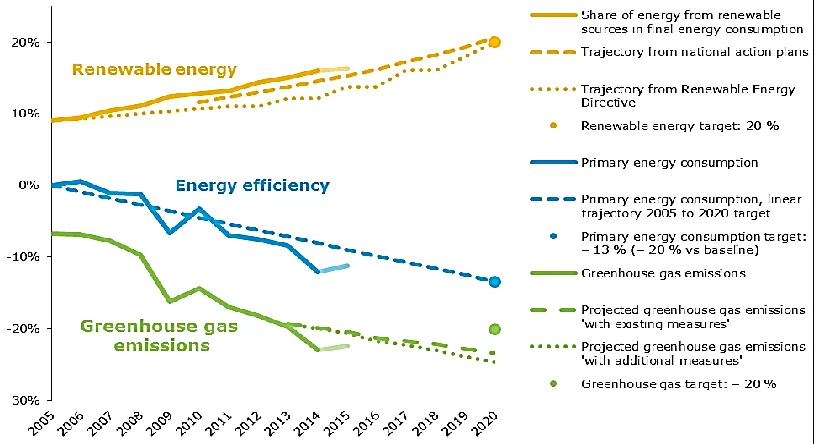
Figure 2: The dynamics of renewable energy source share of the EU from 2005 towards 2020 targets. Renewable energy uptake increased during the period from 2005 until 2015 when it started to decline. Energy consumption generally decreased but has been found to increase in 2015. A similar trend was observed for GHG emissions which increased in 2015 (Source: EEA, 2018).
13.80%
17%
16.20% 16%
17.40% 17.20%
0.00% 2.00% 4.00% 6.00% 8.00% 10.00% 12.00% 14.00% 16.00% 18.00% 20.00%
indicative RED target RED field value NREAPs field value
P
er
ce
n
ta
ge
R
ES
sh
ar
e
(%
)
2015-2016
In the majority of these countries, the decline in progress was linked to increasing total energy consumption in the year 2015 (Figure 2). This trend was not anticipated when the 2020 RED targets were set and recent years may still experience an increase in energy consumption. Further studies done revealed that in 2016, the demand for energy in the transportation sector grew to 33.0 % of final energy consumption in the EU. Such a trend, not only in the transportation sector but also in other sectors makes the 2020 RED target difficult to achieve, hence the need to review targets and make plans towards new targets for 2030. Besides the given reasons for the decline in RES shares, there are several other barriers that could be considered such as technological barriers, social barriers, economic barriers and regulatory / or political barriers (Bianco et al., 2019; Karatayev et al., 2016; Seetharaman, 2019).
In the light of the above RES dynamics, and according to reports of the EEA in 2018, new EU targets have been set for 2030 in the areas of GHG emissions, renewable energy and energy efficiency, with the objectives to reduce GHG emissions by at least 40% (compared to 1990 levels); increase RES share to at least 32 % of gross final energy consumption; and achieve an improvement in energy efficiency (compared to the 2007 baseline) by at least 32.5% (EEA, 2018; World Bank, 2018).
3.2 Renewable energy effects on fossil fuel consumption in the EU
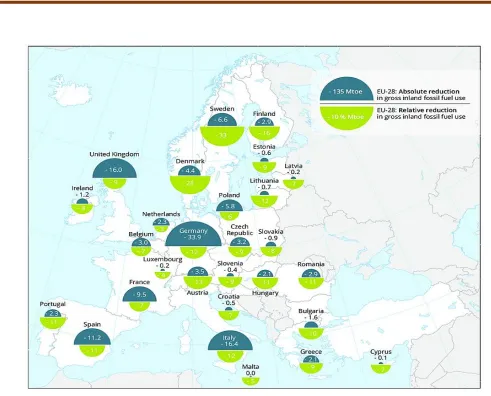
Assessing the actual effects of the RES on the patronage of fossil fuel energy sources assumes that the level of renewable energy uptake substitutes an equivalent amount of non-renewable energy that would have been supplied and used(EEA, 2015). Thus, a 17.4 % RES share of total energy consumption observed in 2017 in the EU meant that 82.6 % of the energy used belonged to the category of renewables and that 17.4 % of non-renewables were displaced by RES. Thus, according to the new EU 2030 target, at least conventional energy sources must be displaced by 32 % of gross final energy consumption owing to increased RES by at least the same magnitude. From EEA data, the remarkable increase in the consumption of RES in the EU observed in 2016 could be linked to many other successes in the reduction in total EU GHG emissions by 9.4 % to the tune of 460 Metric tons of carbon dioxide. The demand for fossil fuels was also cut during the same period by 143 Mtoe, about 12 % of total fossil fuel consumption in the EU. This reduction in fossil fuel use was largely due to increases in the consumption of solid fuels by 38 % (55 Mtoe), and 36 % of gaseous fuels (51 Mtoe), totaling 74 % of avoided fossil fuels as a result of RES alternatives from solid and gaseous sources. Energy efficiency was also enhanced by cutting down on primary energy consumption of fossil fuels by 2 % (35 Mtoe) across the EU. For instance, at member country level, the most significant relative reductions in fossil fuel consumption in proportion to domestic usage levels were made by Sweden (32 %), Denmark (26 %) and Finland (17 %). According to EEA report (2018), Germany, Italy and the United Kingdom were the highest users of renewable energy and the member states where the greatest quantities of fossil fuels were avoided in the EU.
Figure 3: Total and relative reduction in gross inland fossil fuel use in 2016)
3.3 Country-specific variabilities with renewable energy
Considering Figure 3, it is obvious that each EU member state has its own unique capacity in dealing with climate change mitigation from the perspective of renewable energy use in the displacement of fossil fuel (World Banks, 2018; Verma et al., 2018). States which have made major relative strides with a high gross reduction in fossil fuel seem to make significant efforts partly and potentially due to their population sizes as depicted in the recent census data for 2018 (Eurostat, 2018). Germany is the most populated country in the EU-28 with a population size of 82.9 million residents, followed by France (67.2 million), United Kingdom (66.2 million), Italy (60.5 million), Spain (46.7 million) and Poland (38.0 million) among the others (Eurostat, 2018).
Table 1: Correlation between population size of the first biggest six EU-28 member countries and their absolute fossil fuel reduction, AFFR (Mtoe) and relative fossil fuel reduction, RFFR (%) values from Figure 3. This matrix included figures for Germany, France, UK, Italy, Spain, and Poland only.
Population AFFR (Mtoe) RFFR (%)
Population 1
Population
AFFR (Mtoe) 0.84957377 1 AFFR (Mtoe)
The correlation matrix shown in Table 1 displays the relationship between the population of the EU-28 member countries and their efforts in reducing the amounts of fossil fuel used inland. It is clear that a positive relationship was established between these variables, making it relevant to discuss the effect of population size on RES adoption and fossil fuel displacement. A relatively stronger relationship existed between population size and absolute reductions in fossil fuel usage (0.85) than the relative amounts (0.55) (Table 1).
3.4 Factors influencing RES uptake 3.4.1 Economic factors
The economic strength which is strongly linked to the level of industrialization and technological advancement of countries plays essential roles in the uptake of RES in every part of the world (EIA, 2016; Raza et al., 2015). It is expected that more advanced states of the EU will be able to invest more in the renewable energy market than others. It is also expected that investments in renewables and other alternative energy systems will translate into greater displacement of fossil fuel use compared to relatively weak economies in the EU. This is needed as fossil fuel is a major competitor against renewable energy.
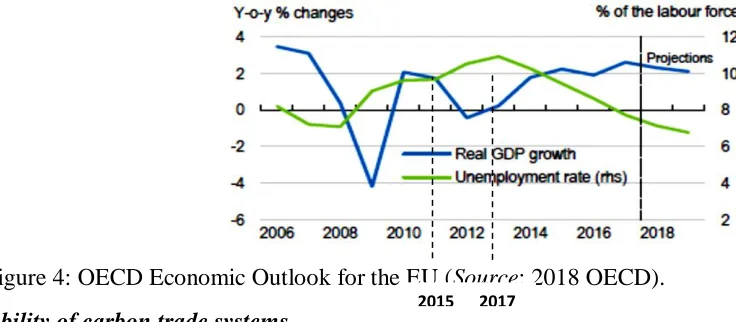
Relating to developmental stage, countries which are under-developed may need to depend more on fossil fuel and other conventional energy sources which are the readily available source of energy. This is because they are easily accessible and they make renewables only an available source after further innovations, technologically advanced investments and regulatory adjustments on the policy front (Verma et al., 2018). That is to say, new economic growth may reflect increased use of fossil fuel and reduced RES shares in the short term. This may explain the trend seen in the reduced RES share across the EU in 2015 (Figure 2). A potential example of this is the effect of a significant economic expansion in the EU economy according to 2017 GDP figures. This economic growth may have started earlier and probably back into the 2015 or 2016, taking into account the fact that such levels of progress do not happen overnight (Figure 4). Considering the stalling performance of the RES share recorded during the 2015-2017, it may not be a coincidence that final energy consumption across the EU increased around the same period (2015-2017, Fig. 4) as the economy started seeing robust growth (OECD, 2018). Of course, and obviously, economic growth usually matches industrialization and accommodates new shifts in demand and supply, with increased energy consumption. In the short term, conventional energy use will increase, pending innovations and new investments and adjustments in policies as well as technological advancement towards RES. No doubt RES shares reduced around the same period.
To conclude on the role of the economy on RES share, it is important to note that households need financial assistance to be able to invest in RES as well as countries. Until such investments are possible, the most available conventional fossil fuel energy source will continue to make the shares of RES insignificant.
Figure 4: OECD Economic Outlook for the EU(Source: 2018 OECD).
3.4.2 Viability of carbon trade systems
Despite the fact that the carbon trade system is an economic incentive to enhancing renewable energy uptake, its viability remains a challenge facing the EU, as well as other regions working towards climate change
mitigation is the economic viability of carbon trade systems (Karpf et al., 2018; OECD, 2018; Charles et al., 2013). This carbon trade concept is a key policy incentive that drives investment into renewable energy sources in order to cut on carbon emissions in exchange for carbon trade units (UN Environment, 2018). Unfortunately, the EU carbon emission trading system (ETS) has not been as instrumental as expected in driving low-carbon investments owing to the recession, widespread promotion of RES and other measures which have generated a large surplus of allowances on the carbon market resulting in low carbon prices (OECD, 2018). Recommendations are that the ETS be adjusted further and taxation on the use of fossil fuel be increased to make it a less attractive energy alternative.
3.4.3 Information asymmetry
Of great relevance to the future of RES for the EU and the world in combating climate change is the issue of information asymmetry (Hulshof et al., 2019). This is important because monitoring and evaluation of progress from various countries must be measured with uniform standards of performance without bias to enhance proper functioning of the renewables market (Karpf et al., 2018; Jiao et al., 2018). European governments have therefore resorted to using certification schemes in addressing the problem of information asymmetry in renewable electricity markets in the EU. Despite the relevance of certification, it is currently unclear to state a specific system that becomes the basis for comparison (OECD, 2018). Also, there are several variabilities among the different countries regarding the use of these certification schemes in the EU. Hulshof and his colleagues (2019) found in their study that certificate markets are suffering from poor liquidity and price volatility regardless of the increasing shares of renewable electricity certification. They further recommended that it is appropriate to adopt an international standard for the development of certificate systems that will suit all types of markets regarding renewable electricity.
3.4.4 Political factors
The political environment of any country determines its characteristics, stability and the extent to which policies favour key sectors. The same can be said about the renewable energy sector. The commitment of the government to its pledge in reducing carbon emission based on achievable targets and the ability to set and implement policies to that effect is crucial to the future of RES and the fight against climate change and its effects (Burke & Stephens, 2018). There have been many instances where international and national unrests have occurred due to energy technologies in different parts of the world. Local conflicts between residents around renewables energy installations dealing with space allocation for projects, royalties for lands used, especially wind power and solar panel installations on large scales. Some of these incidences have led to delays or even ceased the adoption of renewables (Peterson et al., 2015). A similar case can be followed for many worldwide political conflicts regarding hydroelectric and nuclear power technologies (Kaunda et al., 2012; Watts, 2012; Rosa & Dunlap, 1994). It cannot be overemphasized that the determination of government policies to ensure strict implementation of ethics in executing missions targeting the achievement of their RED targets is very important (OECD, 2018; EEA, 2018). Good governance ethics such as transparency and accountability will ensure success in public investment in renewable energy technologies without malfeasance and corrupt embezzlement of state funds. This will also go a long way to enable citizenry in supporting the smooth implementation of smart climate policies. Studies done in this area revealed that more democratic countries have higher investments and shares of renewable energy than autocratic ones (Adams et al., 2018; Sequeira & Santos, 2018). A study by Adams et al. (2018) linked a 10% increase in renewable energy consumption to a 0.27 % increase in economic growth while a 10% increase in the consumption of non-renewable energy led to higher economic growth by 2.11 % ceteris paribus. The study also found that higher growth rates were observed for democratic states than autocratic states.
3.4.5 Competition from fossil fuels
future as it remains a key economic commodity to many countries. Even countries which are working hard towards increasing RES share still import and use fossil fuels in many forms according to EIA’s report on International Energy Outlook (EIA, 2018, 2016). According to this report, about 78 % of global energy used in 2040 will be supplied by that fossil fuels in the forms of oil, natural gas and coal. As of 2016, investment in fossil fuels accounted for more than half (55 %) of global energy investment, compared with that of renewable energy (16 %).
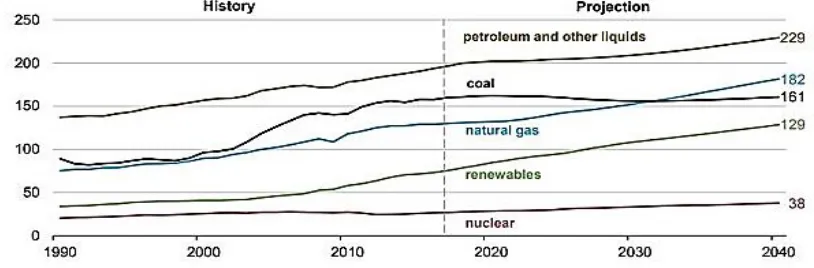
The entrance of several technologies as alternatives to fossil fuels and the further exploitation of crude oil reserves from different parts of the world has resulted in enormous changes in the energy sector since the year 2014. Oil prices dropped from $115.71/barrel in 2014 to $27.10 in 2016 by 76 %. Similarly, coal dropped from $84/tonne to $36.30 during the same period. Natural gas also followed suit by dropping from $4.50/MMBtu to 1.91 during the same period. These changes have made the fossil fuel sector still a cheaper substitute and a strong competitor to the renewable energy sector, a scenario that will be difficult to change even in the long term (Seetharaman et al., 2019; EIA, 2018). The stronger performance of fossil fuels against renewables and the projections for the future show that both sides are in keen competition, but in favour of the earlier (Fig. 5).
Figure 5: World energy consumption increases for fuels other than coal. (Source: EIA, 2018). Units are in quadrillion Btu.
4. The way forward for developing countries
The concept of renewable energy is not totally new to the developing countries, and it is important to mention that many of such countries are adopting renewable energy sources as a result of the global shift towards transformation towards climate change mitigation. Considering literature on the subject and scenarios regarding the dynamics of the renewable energy market, it is important that certain lessons be learned and adjustments made going forward in the adoption of renewable energy technologies. It is relevant to mention that several adjustments will have to be made in preparedness and also towards the sustainabilit y of the energy sector regarding socio-cultural issues, technological barriers, financial barriers, political and governance barriers, as well as regulatory barriers.
needed and institutional capacities and skilled labour in the renewable energy technological sphere strengthened to ensure future progress in sector development and sustenance. Through international and local funding, developing countries should gradually replace old, less efficient energy technologies for better ones and adopt more and more of renewable energy technologies through education, maintenance, efficient carbon trading, industrial policies and good governance. Maintaining a steady growth in the renewables energy sector is key to the long-term success of the sector.
5. Conclusion
The cases for climate change mitigation and renewable energy as one major variable are complicated and have been found to depend on many other factors that belong to a complex network between social, cultural, technological, economic, political and regulatory concepts. For this reason, an intelligent approach based on appropriate and specific information is required to ensure that the promotion of renewable energy does not leave unbearable aftermaths on other sectors of the economy in striving to mitigate global climate change and its effects.
Wherever needed, and in an equitable manner, different existing energy sources should be balanced initially while more attention is given to renewables. This is because drastic changes may introduce both social and economic shocks in the short-term and may as well lead to long-term closure of other sectors that lag in the technological advancement to fully embrace renewable energy. It is therefore understood that the push for renewable energy needs much social, structural and economic adjustment and may need careful consideration towards the most appropriate decisions that do not go against good governance practices, administrative ethics and political stability. Of utmost importance is the fact that the introduction of renewable energy in developing countries especially should not worsen the plights of poor households and economies all over the world.
References
i. Adams, S., Klobodu, E.K.M., & Apio, A. (2018). Renewable and non-renewable energy, regime type and economic growth. Renewable Energy, 125, 755-767. https://doi.org/10.1016/j.renene.2018.02.135. ii. Bianco, V., Driha, O.M., & Sevilla-Jiménez, M. (2019). Effects of renewables deployment in the Spanish
electricity generation sector. Utilities Policy, 56, 72-81. https://doi.org/10.1016/j.jup.2018.11.001. iii. Burke, M.J., & Stephens, J.C. (2018). Political power and renewable energy futures: A critical review.
Energy Research & Social Science, 35, 78-93. https://doi.org/10.1016/j.erss.2017.10.018.
iv. Charles, A., Darné, O., & Fouilloux, J. (2013). Market efficiency in the European carbon markets. Energy Policy, 60, 785-792. https://doi.org/10.1016/j.enpol.2013.05.036.
v. EIA. (2016). International energy outlook report. Available at:
https://www.eia.gov/outlooks/ieo/pdf/0484(2016).pdf. Accessed 13/02/2019 at 01:17.
vi. FAO (2015). FAO’s work on climate change- Zero hunger is not possible without tackling climate change. Available at: http://www.fao.org/3/CA2607EN/ca2607en.pdf. Accessed 13/02/2019 at 02:18. vii. Hulshof, D., Jepma, C., & Mulder, M. (2019). Performance of markets for European renewable energy
certificates. Energy Policy, 128, 697–710. https://doi.org/10.1016/j.enpol.2019.01.051.
viii. IPCC (2018). Global Warming of 1.5 degrees C, Intergovernmental Panel on Climate Change, Geneva. Available at: http://www.ipcc.ch/report/sr15/. Accessed 11/2/2019 at 01:04.
ix. Jiao, L., Liao, Y., & Zhou, Q. (2018). Predicting carbon market risk using information from macroeconomic fundamentals. Energy Economics, 73, 212-227.
https://doi.org/10.1016/j.eneco.2018.05.008.
xi. Karpf, A., Mandel, A., & Battiston, S. (2018). Price and network dynamics in the European carbon market. Journal of Economic Behavior & Organization, 153, 103-122.
https://doi.org/10.1016/j.jebo.2018.06.019.
xii. Kaunda, C.S., Kimambo, C.Z., & Nielsen, T.K. (2012). Hydropower in the context of sustainable energy supply: a review of technologies and challenges. ISRN Renew. Energy, 2012, 1–15.
http://dx.doi.org/10.5402/2012/730631.
xiii. Keček, D., Mikulić, D., & Lovrinčević, Ž. (2019). Deployment of renewable energy: Economic effects on the Croatian economy. Energy Policy, 126, 402-410. https://doi.org/10.1016/j.enpol.2018.11.028.
xiv. OECD Economic Surveys (2018). Available at:
https://www.oecd.org/eco/surveys/European-union-2018-OECD-economic-survey-overview.pdf. Accessed 12/02/2019 at 23:25.
xv. OECD/The World Bank/UN Environment (2018). Financing Climate Futures: Rethinking Infrastructure,
OECD Publishing, Paris. https://doi.org/10.1787/9789264308114-en.
xvi. Pacesila, M., Burcea, S.G., & Colesca, S.E. (2016). Analysis of renewable energies in European Union. Renewable and Sustainable Energy Reviews, 56, 156-170. https://doi.org/10.1016/j.rser.2015.10.152. xvii. Peterson, T.R., Stephens, J.C., & Wilson, E.J. (2015). Public perception of and engagement with
emerging low-carbon energy technologies: a literature review. MRS Energy Sustain. 2.
http://dx.doi.org/10.1557/mre.2015.12.
xviii. Rosa, E.A., & Dunlap, R.E. (1994). Poll trends: nuclear power: three decades of public opinion. Public Opin. Q., 58 (2), 295. http://dx.doi.org/10.1086/269425.
xix. Seetharaman, Krishna, M., Nitin, P., Saravanan, & Yash, G. (2019). Breaking barriers in deployment of renewable energy. Heliyon, Article No. e01166. https://doi.org/10.1016/j.heliyon.2019.e01166.
xx. Sequeira, T.N., & Santos, M.S. (2018). Renewable energy and politics: A systematic review and new evidence. Journal of Cleaner Production, 192, 553-568. https://doi.org/10.1016/j.jclepro.2018.04.190.
xxi. UN Environment (2018). Emissions Gap Report. Available at:
https://reliefweb.int/sites/reliefweb.int/files/resources/EGR2018_FullReport_EN.pdf. Accessed on
12/02/2019 at 23:36.
xxii. UNFCCC (2015). The Paris Agreement. Available at:
https://unfccc.int/resource/docs/2015/cop21/eng/l09r01.pdf. Accessed 12/02/2019 at 02:14.
xxiii. USAID (2018). Climate change & development- clean, resilient growth. Available at:
https://pdf.usaid.gov/pdf_docs/PDACS780.pdf. Accessed 13/02/2019 at 02:21.
xxiv. Verma, P., Patel, N., Nair, N-K.C., & Brent, A.C. (2018). Improving the energy efficiency of the New Zealand economy: A policy comparison with other renewable-rich countries. Energy Policy, 122, 506-517. https://doi.org/10.1016/j.enpol.2018.08.002.
xxv. Watts, R. (2012). Public Meltdown: The Story of the Vermont Yankee Nuclear Power Plant, White River Press, Amherst, Mass, 2012.
xxvi. World Bank. (2016). Climate Change Action Plan 2016–2020. Available at:
https://openknowledge.worldbank.org/bitstream/handle/10986/24451/K8860.pdf. Accessed 13/02/2019