Copyright © 2019 (Jörg Haßler, Marcus Maurer, and Corinna Oschatz). Licensed under the Creative Commons Attribution Non-commercial No Derivatives (by-nc-nd). Available at http://ijoc.org.
What You See Is What You Know: The Influence of Involvement
and Eye Movement on Online Users’ Knowledge Acquisition
JÖRG HA
ẞ
LER
1Ludwig-Maximilians-University Munich, Germany
MARCUS MAURER
1Johannes Gutenberg-University Mainz, Germany
CORINNA OSCHATZ
1University of Koblenz Landau, Germany
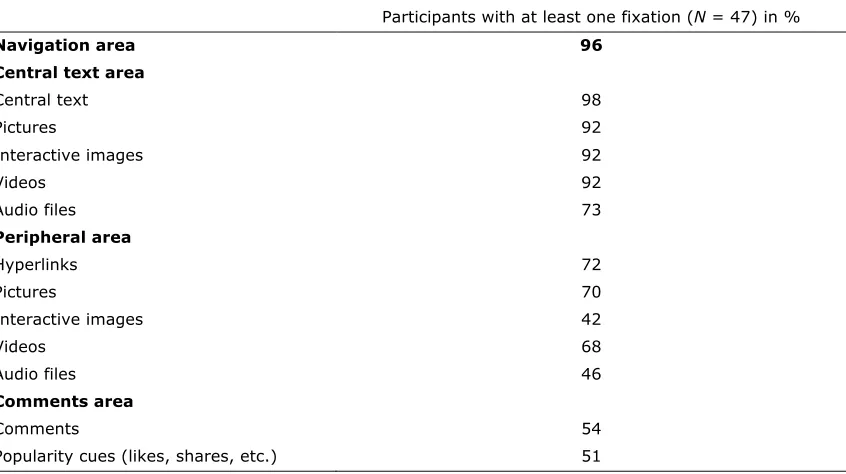
News websites have become a major source of information for citizens in Western countries. Although much research has focused on how Internet use affects knowledge acquisition, little is known about how individual websites are used and how that is connected to knowledge gain. This study focuses on how involvement affects attention and how recipients learn from individual website use, integrating theoretical perspectives of multimedia learning theory and the cognitive mediation model. To test our assumption, an eye-tracking experiment was combined with a log file analysis and an online survey. Our results show that users mostly focus on text on news websites, whereas multimedia elements (e.g., pictures or videos) are rarely used. Users’ involvement further influences fixations on the central text of a website. Moreover, knowledge acquisition can be explained primarily by the fixation duration on the central text.
Keywords: eye tracking, online communication, cognitive mediation model
The influence of online media on (political) knowledge acquisition is widely debated in communication research. From a theoretical perspective, approaches that assume positive effects of online media on knowledge (Mayer, 2001) can be differentiated from approaches that assume negative effects (e.g., digital divide; Norris, 2001). At the center of the debate is the question whether hypertextuality, interactivity, and multimediality can equally be accessed by all social groups, and whether all citizens are
Jörg Haßler: [email protected] Marcus Maurer: [email protected] Corinna Oschatz: [email protected] Date submitted: 2018-11-15
1 This publication was created in the context of the research group Political Communication in the Online
equally able to extract knowledge from the wide variety of online information. Empirically, several studies have found strong positive influence of online news use on knowledge acquisition (Dalrymple & Scheufele, 2007; Wei & Hindman, 2011), whereas several others have found small effects (Tran, 2013).
Whether recipients learn from online news depends on at least two different conditions. First and foremost, recipients need to use the information acquired. This is less trivial than it sounds. Although the literature can confidently establish how many citizens use the Internet and which websites they use (Pew Research Center, 2017; Poushter, 2016), significantly less is known about how single-website elements— like text, pictures, videos, and hyperlinks—are used in detail. However, it can be assumed that what is crucial to individual knowledge acquisition is how intensively single elements of websites are used. In other words, multimediality of online news, defined as “presentation of explanations in visual and verbal formats, such as . . . presenting illustrations next to corresponding text” (Mayer, 1997, p. 1), only becomes relevant to knowledge acquisition if multimedia elements are detected and used by the recipients. However, scientific research has seldom focused on how intensively recipients use different website elements.
The second condition to learning from online news is individual preconditions, which determine whether recipients learn from online news. Among the most important preconditions is involvement, defined as the ability and motivation to attentively process and use the content of a message (Petty, Cacioppo, & Schumann, 1983; Yang, 2015). It is assumed that high involvement leads to more intensive processing of information and, subsequently, to a greater likelihood of knowledge acquisition (Eveland, 2001).
This study analyzes whether involvement guides how news on a website is used on a desktop computer, which multimedia elements (besides the central text article) are viewed, and how individual website use affects knowledge acquisition. To do so, an eye-tracking experiment was conducted. Forty-seven participants were exposed to four different website articles on climate change policy, with eye tracking used while the participants viewed news on a website. This article seeks to contribute to understanding individual knowledge acquisition in online environments.
Website Use
The rise of the Internet has changed the way information from news media is consumed worldwide. Today, using the Internet has become normal for citizens in developed countries (Anderson, Perrin, Jiang, & Kumar, 2019; EUROSTAT, 2018). With Internet use becoming part of everyday life, the ways that we search for information, buy goods, or plan holidays have changed.
The change in how news is used goes hand-in-hand with a change in how news is presented. Online news can be presented in a multimedia style that combines texts, interactive images, videos, and hyperlinks. Since the late 1990s, news websites of traditional media companies—like nytimes.com by The New York Times in the U.S., or sueddeutsche.de by the Sueddeutsche Zeitung in Germany—have integrated more and more multimedia elements (Dibean & Garrison, 2001; Doudaki & Spyridou, 2015; Jacobson, 2011; Menke et al., 2018; Quandt, 2008).
However, although the number of videos, photos, and graphs on news websites has grown and continues to grow, the production of multimedia content for online platforms is not institutionalized in many media organizations (Sehl, Cornia, Graves, & Nielsen, 2019). A recent study by Humprecht and Esser (2018) comparing news websites in six countries shows that news organizations do not reach the fullest potential in use of multimodality, which enables transparent reporting, access to background information, and user deliberation. For example, graphical illustrations of complex processes were only used in 0.7% (Italy) to 6.7% (Germany) of news stories. On the high-reaching websites of international television news services (such as CNN.com, BBC.co.uk, or ARD.de), video messages are usually embedded in comprehensive text, even on the websites of news organizations that typically produce video content instead of text. Contrary to linear television, text information seems to be an essential tool in guiding visual attention online. This is also reflected in online users’ behavior. Online users still favor text over video content format, although younger cohorts engage with videos more frequently than with digital texts (Frees & Koch, 2018, p. 407).
Although website owners have broad insights into how their websites are used, not many scientific studies have researched how websites are used. Surveys suggest that audiences may not make much use of most multimedia elements (Chung, 2008; Larsson, 2011). Of these elements, audiences prefer videos, photo slideshows, or audio files. In contrast, more interactive website elements—like user comments and chats—are used less often. These results suggest that Chung’s (2008) conclusion may still hold true: “Online audiences are not using interactive features extensively contrary to anticipation by media scholars and the news industry” (p. 672).
A limitation of these findings could derive from their nature as survey data. Because these studies involved self-reporting techniques they might not account for unconscious or automatic affective behavior. Therefore, data from nonreactive methods, such as eye tracking, could provide further insights into how audiences use individual websites. Early research in the field of usability shows that recipients use websites on a desktop computer in an F-shaped pattern (Nielsen, 2006). This means that reading on websites starts on the top left side. While the first few sentences are often read carefully, recipients go on to read only the first few words of the following sentences. While this pattern is still observed for traditional news website layouts and can also be found with mobile screens, changes in layout can encourage users to read text more systematically, on either desktop or mobile screens (Namoun, 2018; Pernice, 2017).
website users only view banners on the side and top of websites for roughly half a second, even if they had the opportunity to browse freely on a website without a specific task (Resnick & Albert, 2014, p. 212).
In terms of the use of different multimedia elements on news media websites, few studies have been conducted. Holmqvist, Holsanova, Barthelson, and Lundqvist (2003) separate a news webpage into seven different areas of interest (AOIs). Besides the back button of the browser, the scroll bar, and the title header, they distinguish among a navigation area on the left, the middle part containing the central text article, a navigation area on the right, and an ad on the far right side of the website. They show that 59% of the fixation time was spent on the central editorial text in the middle of the website. A “strong preference for text over graphics” has also been found by the Stanford Poynter Institute through gaze entry points on news websites (Lewenstein, 2000, para. 11). These findings have been confirmed by Bucher and Schumacher (2006), who also find a “text-before-picture pattern” for news website-viewing behavior.
The studies presented in the previous section provide some hints on how news websites are viewed by recipients, but they were carried out in the early days of the Internet, when websites did not yet contain many diverse multimedia elements. To be able to make a claim about the use of multimedia elements on modern websites, further research is necessary. Therefore, our first hypothesis is:
H1: Website users mainly focus on the central text of a website.
Knowledge Acquisition in the Online World
One of the main advantages of online communication that has been advocated since the 1990s is the free access to abundant amounts of multimedia information (Dahlgren, 1996). At a broader level, hopes and concerns have been shared regarding the influence of the Internet on democracy. On the one hand, it has been stated that “the Internet is one of the fastest, cheapest, and most reliable channels for distributing political information” (Albrecht, 2006, p. 63). On the other hand, it has also been stated that the immense amount of information is not easy for democratic societies to handle. For example, the “Babel Objection” raises “the concern that information overload will lead to fragmentation of discourse, polarization, and the loss of political community” (Benkler, 2006, p. 214; Hiltz & Turoff, 1985).
These macro-level observations can be applied to the micro level of individual website use. On the one hand, it can be assumed that a multimedia presentation of information simplifies knowledge acquisition, as the same information can be presented in various channels; on the other hand, an information overload can be expected. The central premise for both of these assumptions is the idea that recipients make use of all of the information that is presented to them. In both cases, recipients are assumed to see the information within the certain medium (here, a news website on a desktop computer), and they need to cognitively process the information they see, as explained by the eye-mind hypothesis (Just & Carpenter, 1980).
certain words could influence where users look on a website. The top-down approach argues that motivational factors guide visual attention; thus, emotional factors (Kaspar, 2013) or “attention to task relevant stimuli” primarily guide gaze motion (Orquin, Bagger, & Mueller Loose, 2013, p. 702). Whether users of news websites view multimedia information or primarily rely on textual information might thus depend on the specific situation in which news is used. According to the top-down approach, users would only look at pictures, videos, or other multimedia elements if they intend to do so or if they follow internalized usage habits. Additionally, Orquin et al. (2013) state that “practice increases top down modulation” (p. 702). Because (online) media use is part of many people’s daily routine, website use could be guided by top-down attention processes instead of a bottom-up guidance of multimedia elements.
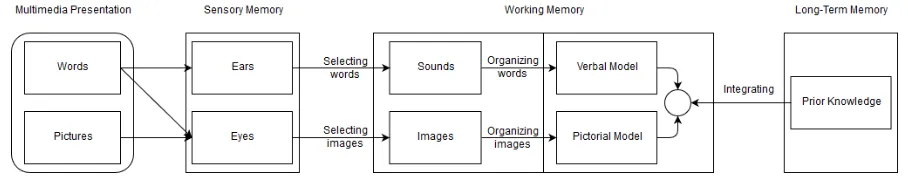
These basic assumptions of a stimulus-driven approach to visual attention can also be expanded into broader theories of knowledge acquisition and learning. For example, multimedia learning theory assumes that “people learn more deeply from words and pictures than from words alone” (Mayer, 2005, p. 31). The theory thus assumes that both visual attention and learning are stimulus-driven processes. Multimedia learning theory is based on three assumptions: dual-channel processing, limited capacity, and active processing.
The dual-channel processing assumption proposes that information can be processed via two channels: a visual channel and a verbal/textual channel. Visual processing is activated when pictures or videos are presented, whereas verbal or textual processing is activated when hearing or reading textual information (Mayer, 2005, 2017). (This assumption is closely connected to Paivio’s, 1986, dual coding theory.) The limited capacity assumption proposes that only a limited amount of information can be processed in each channel at a time (Mayer, 2005, p. 36). The active processing assumption proposes that information is integrated into a coherent mental representation, together with previously learned information. Active processing is thus closely connected to the limited capacity assumption because it concerns the selection, organization, and integration of received information (Mayer, 2005).
Figure 1. The multimedia learning model.Source: Mayer (2017, p. 405).
Lai et al. (2013) conclude in a literature overview that most studies analyzing the effect of website use on knowledge acquisition have focused on design questions. For instance, researchers have tested how color codings affect multimedia learning (Ozcelik, Karakus, Kursun, & Cagiltay, 2009). In terms of combining text and pictures, Johnson and Mayer (2012) show that text presented together with a diagram has a stronger effect on learning than presenting the diagram after the text. Furthermore, they conclude that “learning was largely text-directed, such that learners in both groups spent much more time looking at the text than the diagrams” (p. 189). Other studies show that illustrations containing irrelevant information hinder learning from the text (Harp & Mayer, 1997, 1998; Sanchez & Wiley, 2006). This effect has been labeled the seductive details effect (Garner, Brown, Sanders, & Menke, 1992).
It can thus be concluded that, just like on the macro level (Benkler, 2006), an information overload can be found on the micro level of smaller scale website use. When the information presented on a single set of websites exceeds individual cognitive capacities, an information overload is generally perceived. When and how recipients perceive information overload depends on individual preconditions, like prior knowledge (Chen, Pedersen, & Murphy, 2017).
Multimedia learning theory mainly focuses on how cognitive processing corresponds with information presentation (bottom-up approach). In contrast, motivational factors are considered by the cognitive mediation model, which directly addresses learning from the news:
[The cognitive mediation model] proposes that learning from the news is determined through a causal process in which self-imposed learning motivations drive the processing of news information to which individuals are exposed and that this processing to a great extent determines the amount of learning that will occur. (Eveland, 2001, p. 571)
The focal point of the cognitive mediation model is the assumption that motivational factors do not directly determine knowledge acquisition: instead, the learning effect is mediated via factors like attention and news processing (Eveland, 2001, p. 572). The model assumes that attention to news and elaboration on the provided information “covary and have a direct and positive impact on learning of news content” (Eveland, 2001, p. 572).
Shah, & Kwak, 2003; see also Jensen, 2011). In these studies, news media attention is measured using items asking if participants “pay close attention, some attention, or little attention to stories about national government and politics” (Eveland, 2001, p. 593).
However, attention to news media content can also be measured in a way that is less dependent on self-disclosure. Kruikemeier, Lecheler, and Boyer (2018) used eye tracking to detect visual attention as a mediating effect in learning from news media. They found that news items are read more intensively when they can be actively selected, as on news websites. Furthermore, although recipients read more texts when they read in a newspaper or on a tablet, they read single articles for longer when they read on desktop computers; the selective visual attention leads, in turn, to more learning. Thus, they argue that visual attention should be more intensively researched, as it is a main explanatory factor driving the process of learning from news media content, and they ask future researchers to take into account the influence of design and visual elements (Kruikemeier et al., 2018, p. 8788).
We would like to use this way of measuring attention to news and focus on the intensity of website use. Therefore, in this study, we focus on visual attention as well as the use of hyperlinks on a website. To test individual learning from news websites and to include the influence of the websites’ visual elements, we combine the theoretical foundations of multimedia learning theory and the cognitive mediation model. We argue that involvement determines how attention is allocated, which then determines what is learned from the individual use of the website. Our second and third hypotheses state:
H2: High involvement positively predicts the intensity of website use.
H3: Intensity of website use positively predicts knowledge gain.
To address the bottom-up approach of the multimedia learning theory, we specifically test to what extent attention to multimedia elements determines knowledge gain:
H4: The use of multimedia elements positively predicts knowledge gain.
Method
To test our hypotheses, we conducted an eye-tracking analysis and combined it with a log file analysis and an online survey. The data were collected in autumn 2014 at a large German university.
Participants
Before the stimulus was presented to the participants, the tracking ratio was checked, and the eye-tracking device was calibrated to ensure a valid measurement. The eye-tracking ratio is a percentage value indicating how many (possible) gazes the eye tracker was able to detect. Eighty-nine percent of gazes were recorded (the actual ratio might be higher, because fixations were only analyzed for the stimulus website). All recorded trials of all participants were manually inspected for visible deviations (e.g., if gazes were visibly above or below texts).
The validation was conducted as a calibration task. The participants had to fixate on five points on the screen, one after the other. The validation value can be interpreted as an accuracy value indicating (in degrees) the deviation between the gaze position and the marker on the screen. All validation deviations were below 0.8 degrees (overall mean for horizontal deviations = 0.45; overall mean for vertical deviations = 0.39). Three participants had to be excluded from the data set because of unsatisfactory tracking ratio or validation.
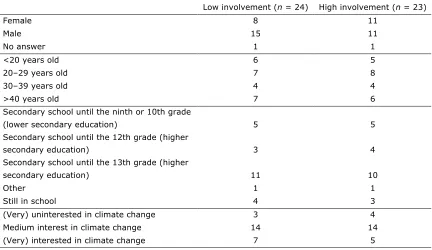
[image:8.612.91.523.400.650.2]Participants’ ages varied between 14 and 68 years (M = 32.66 years, SD = 14.90; median = 27 years); 55% of all participants were male, and 51% had formal education levels at high school or higher. Furthermore, we tested participants’ interest in climate change using a 5-point Likert scale, ranging from very uninterested to very interested. The mean score for the control group was 3.25, and the experimental group had a mean score of 3.13. This difference was not significant (p = .613; see Table 1). With regard to the sociodemographic characteristics, the two groups were equal.
Table 1. Gender, Age, and Education of the Participants (Absolute Numbers).
Low involvement (n = 24) High involvement (n = 23)
Female 8 11
Male 15 11
No answer 1 1
<20 years old 6 5
20–29 years old 7 8
30–39 years old 4 4
>40 years old 7 6
Secondary school until the ninth or 10th grade
(lower secondary education) 5 5
Secondary school until the 12th grade (higher
secondary education) 3 4
Secondary school until the 13th grade (higher
secondary education) 11 10
Other 1 1
Still in school 4 3
(Very) uninterested in climate change 3 4
Medium interest in climate change 14 14
Procedure
The eye-tracking study was conducted using an SMI RED eye tracker with a sample rate of 120 Hz, recording 120 data points for gazes per one second. Participants were seated in front of a desktop computer with a 22-in. TFT screen, with a resolution of 1,680 × 1,050 px. Gazes were detected as fixations at a threshold of 80 ms. Log files recording mouse clicks were stored using SMI Experiment center software. The software recorded the exact pixel location where the mouse cursor clicked, thus making it able to detect in what area of a website the user clicked. The online survey was conducted using the Web survey tool SoSci Survey.
Each participant was first instructed on the eye-tracking device, after which the calibration was performed; then, the stimulus material (a news article on a website) was presented. All participants were closely supervised to ensure that they read the information carefully. Any questions were answered by the person conducting the experiment.
After instruction and before showing the stimulus material, the involvement of the participants was artificially manipulated. Two different instructions were presented to divide participants into a low-involvement group and a high-low-involvement group. Participants in the low-low-involvement group were asked to use the stimulus website like any other website they would encounter if casually browsing the Internet. Participants in the high-involvement group were told that climate change is an important topic and that they would take part in a survey on climate change after using the website. We manipulated the involvement of the participants by giving different initial instructions. Of the 47 participants, 24 were randomly assigned to the high-involvement group, and 23 participants were randomly assigned to the low-involvement group.
All websites presented a central text article on the topic of climate change, together with relevant hyperlinks, pictures, videos, and interactive images. All participants were informed that they may browse as long as they want and leave the starting page for any other page whenever they want. To do this, the participants could either click on a link in the news website used as a stimulus, or they could manually type a URL into the address bar of the browser. The participants freely browsed up to 17 further websites (M = 7.17, SD = 7.59, Mdn = 4).
Materials
recorded using SMI experiment center software. After the browser was closed, a new window containing the online survey opened.
Measures
To analyze gaze targets and location of clicks, four AOIs were defined, following the functionality of the stimulus websites. These AOIs were not visible to the participants, and the subsequent division of the Web pages into four distinct areas only occurred for our analysis. These AOIs included the navigation area at the top of the websites, the central text area, the peripheral area, and the comments area. Within the central text area and the peripheral area, textual information (including hyperlinks), pictures, interactive images, videos, and audio files were differentiated. The comments area was divided into a user comments section and a popularity cues (likes, shares, etc.) section. Fixation duration in these areas and sections was recorded as an indicator of attention to the presented information. Fixations on the different AOIs was calculated, along with the number of website elements that were fixated on at least once.
Moreover, the total duration of the trial was recorded. This duration was calculated as the sum of all fixations and saccades on the stimulus website, together with all websites used during the participants’ trial. Besides fixations, clicks on any element on the website were recorded, and the accessed websites were manually coded. Therefore, we were able to capture whether these websites also provided information on climate change.
Knowledge acquisition was measured using six recall and recognition items that could be answered using information from the stimulus website (e.g., By how many degrees Celsius has the air temperature increased since the beginning of the 20th century?). The information necessary for answering the question was present in the central text, in multimedia elements (such as videos, audio files, interactive graphics, or pictures), and on websites linked to the stimulus websites that dealt with climate change. For control variables, age, gender, and formal education were measured. Formal education was dummy coded to differentiate participants with high-school and higher education levels from participants with lower education. Additionally, interest in climate change was measured as a control variable.
Findings
Website Use
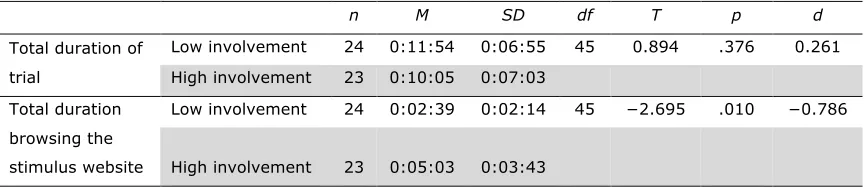
Table 2. Direct Effects of Involvement on Browsing Duration (t tests).
n M SD df T p d
Total duration of trial
Low involvement 24 0:11:54 0:06:55 45 0.894 .376 0.261 High involvement 23 0:10:05 0:07:03
Total duration browsing the stimulus website
Low involvement 24 0:02:39 0:02:14 45 −2.695 .010 −0.786
High involvement 23 0:05:03 0:03:43
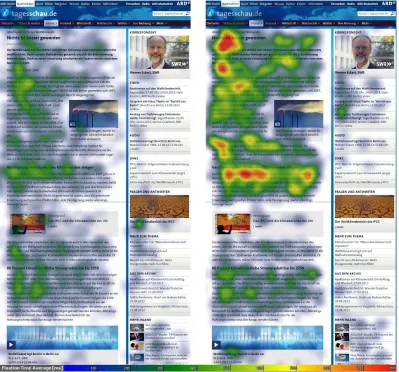
Figure 2. Heat maps of one user in the low-involvement group (left) and one user in the high-involvement group (right).
Table 3. Share of Participants Fixating on Different Website Elements.
Participants with at least one fixation (N = 47) in %
Navigation area 96
Central text area
Central text 98
Pictures 92
Interactive images 92
Videos 92
Audio files 73
Peripheral area
Hyperlinks 72
Pictures 70
Interactive images 42
Videos 68
Audio files 46
Comments area
Comments 54
Popularity cues (likes, shares, etc.) 51
Table 4. Direct Effects of Involvement on Website Viewing Behavior (t tests).
n M SD df T p d
Fixation duration central text
Low involvement
24 0:01:06 0:01:33 45 −2.260 .029 −0.659
High involvement
23 0:02:27 0:02:29
Fixation duration multimedia elements Low involvement
24 0:00:32 0:00:39 45 −1.558 .126 −0.455
High involvement
23 0:00:50 0:00:41
Share of website elements with at least one fixation
Low involvement
24 0.70 0.27 34.2
4
−1.874 .069 −0.547
High involvement
23 0.82 0.14
Number of clicks (all areas)
Low involvement
24 1.42 1.06 45 0.069 .945 0.020
High involvement
23 1.39 1.44
Number of views of websites on the same topic Low involvement
24 0.63 1.38 45 −0.911 .367 −0.266
High involvement
23 1.00 1.45
Knowledge Acquisition
Table 5. OLS-Regression: Influence of Individual Website Use on Knowledge Acquisition.
Number of questions answered correctly
b SE B ß b SE B ß
Involvement −.014 (−.604, .634) .284 −.006
Total duration of trial −.044 (−.088,
−.003)
.019 −.275
Fixation duration central text
.269 (.091, .376) .091 .516***
Fixation duration multimedia elements
−.403 (−.869, .415) .291 −.244
Number of views of websites on the same topic
.362 (.129, .867) .147 .411**
Formal education (high school yes/no)
−.143 (−.784, .475) .335 −.064 −.292 (−.876, 253) .286 −.130
Age .016 (−.007, .038) .012 .214 .009 (−.017, .030) .013 .120 Gender −.152 (−.977, .753) .401 −.067 −.276 (−.937, .324) .330 −.122 Interest in climate
change
.012 (−.490, .449) .229 .008 −.001 (−.394, .411) .215 −.001
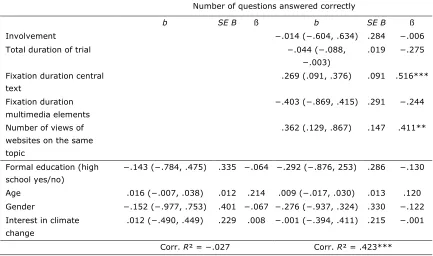
Corr. R² = −.027 Corr. R² = .423*** Note. 95% bias-corrected and accelerated confidence intervals reported in parentheses. Confidence intervals and standard errors based on 1,000 bootstrap samples. *p ≤ .05. **p ≤ .01. ***p ≤ .001.
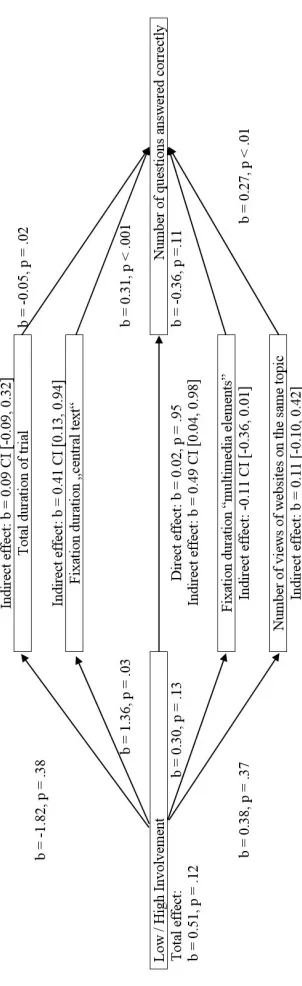
Figure 3. Mediation model: Effect of involvement on knowledge gain.Note. 95% bias corrected and accelerated confidence intervals reported in square brackets. Confidence intervals based
Thus, we can conclude that participants’ involvement influences their knowledge acquisition indirectly, because involved recipients tend to spend more time reading the central text of the website, which leads to stronger knowledge gain. Thus, our third hypothesis (H3)—that intensive website use leads to stronger knowledge gain—is partly supported, for the use of the central text article. Because the use of multimedia elements does not explain knowledge gain at all, our fourth hypothesis (H4), stating that the use of multimedia elements leads to knowledge gain, must be rejected.
Discussion
The aim of this experimental study was to analyze how multimedia news websites are used and how knowledge acquisition is affected by individual website use. To assess one of the most influential motivational factors, we manipulated participants’ involvement and measured its effect on website use and knowledge acquisition. To measure news attention nonreactively, we conducted an eye-tracking study. Insights on individual website use were drawn from an additional log file analysis. Knowledge acquisition was tested using survey items on knowledge about climate change that had been available on the stimulus website.
Our data shows that news websites are still mainly used as a text-based medium (H1). All participants of our study spent most of the time reading the central text of the stimulus website, and several participants did not even briefly fixate on multimedia elements. This was especially true for multimedia elements outside the central text area. This finding is in line with self-reports of media users: 41% of online news users in Germany report using news articles on websites, whereas only 14% report using videos and 6% report using infographics provided with the articles (Hölig & Hasebrink, 2017, p. 37). Additionally, how intensively websites are viewed is only partly determined by the involvement of the users (H2). Although the central text is viewed for a longer time when users are highly involved, other elements (like videos and images) are not fixated on more. This indicates that highly involved participants searched for information within the central text instead of in multimedia elements.
Furthermore, we found a pattern of viewing behavior, which showed that participants go through websites from top to bottom with decreasing attention, leading to the fact that only a minority of the participants took notice of interactive elements (like user comments) at the bottom of the websites. This is a noteworthy finding, as it is often assumed that multimedia and the interactive structure of websites promote knowledge acquisition. In fact, many participants in our study did not seem to make much use of these elements. Thus, when news media organizations provide additional multimedia elements—such as videos or pictures—to their news stories, they cannot assume that this information will be used by the recipients. In the context of using news websites on desktop computers, our results do not indicate a bottom-up guidance of visual attention (Kaspar, 2013).
multimedia information is presented could affect attention (Eitel & Scheiter, 2015; Eitel, Scheiter, Schüler, Nyström, & Holmqvist, 2013). Further studies should focus on these aspects, to test under which conditions multimedia elements and text complement each other and which conditions favor visual attention.
Interestingly, the trend of promoting videos on news websites continues (Mitchell & Page, 2014). This is because news outlets are more and more approachable via Facebook. Since Facebook changed its algorithm to provide videos in users’ newsfeeds, one can assume that users are becoming increasingly accustomed to consuming videos when consuming news (Bell, 2015). This could, in turn, affect news presentation and news use on websites. Of course, the promotion of videos must be observed with caution and skepticism, because Facebook is suspected of falsely inflating video user numbers (Welch, 2018). Therefore, more noncommercial research is needed on the importance of videos for users seeking news. Further eye-tracking studies should focus on both the use of news on Facebook and the use of website elements on “traditional” news websites.
In terms of the process of learning from news websites, our results indicate a strong influence of reading a website’s central article on knowledge acquisition (H3). The longer participants fixated on the central text article, the more they learned about climate change. Moreover, we found an indirect effect of involvement on knowledge gain: High involvement increased the time spent reading the central text article. However, contrary to the assumptions of multimedia learning theory, multimediality does not guide attention and thus does not influence knowledge acquisition (H4). As stated above, we did not find support for the bottom-up approach of visual attention, which states that visual elements guide attention (Kaspar, 2013; Mayer, 2005). Instead, involvement influenced the fixation duration on the central text, which in turn influenced knowledge acquisition. This could have to do with our setting—casual news use on a media website using a desktop computer. These websites were used as a text-based medium by the participants. When seeking to maximize knowledge acquisition, news media could use the central text of a website to directly refer to the information presented in images or videos, or provide guidance tools to direct attention away from the central text to multimedia elements (Amadieu, Lemarié, & Tricot, 2017).
Outlook and Limitations
This study has three shortcomings that need to be discussed. First, we focused on short-term effects on knowledge acquisition, and thus possible long-term effects of multimedia learning could not be measured (Schweppe, Eitel, & Rummer, 2015). Second, our study should only be understood as a first insight into how the use of websites affects knowledge acquisition. We could only test our assumptions with a very small sample; however, the effects we found can serve as a starting point for future studies. These effects provide explorative insights into mechanisms that need further investigation. Third, some results of our experiment are limited to news use on desktop computers or laptops. Smartphone use has become one of the main modes of browsing the Internet: In Germany, news use via smartphone has become equally popular to news use via laptops or desktop computers, and it is becoming the dominant device among younger citizens (Hölig & Hasebrink, 2018b, p. 31). Some very basic findings reported here, like the F-shaped pattern of reading online, cannot be generalized to news use via smartphones, because current findings are mixed. New studies find the same pattern for users of mobile devices (Pernice, 2017), but the general layout of websites may strongly influence this pattern (Namoun, 2018) on both desktop computers and mobile screens. In terms of the more complex findings on how the use of online information is connected to knowledge acquisition, this study only adds one piece to the puzzle. Therefore, further research should not only focus on desktop computers and laptops but also extend the scope to the use of smartphones.
References
AGOF. (2019). Daily digital facts: Letzter Monat (February 2019) [Daily digital facts: last month (February 2019)]. Retrieved from https://www.agof.de/download/Downloads_daily_digital_facts/
Downloads_ddf_02_2019/ddf_Februar_2019_Angebote_Ranking_Internet.pdf
Albrecht, S. (2006). Whose voice is heard in online deliberation? A study of participation and
representation in political debates on the Internet. Information, Communication & Society, 9(1), 62–82. doi:10.1080/13691180500519548
Amadieu, F., Lemarié, J., & Tricot, A. (2017). How may multimedia and hypertext documents support deep processing for learning? Psychologie Française, 62(3), 209–221.
doi:10.1016/j.psfr.2015.04.002
Anderson, M., Perrin, A., Jiang, J., & Kumar, M. (2019). 10% of Americans don’t use the Internet. Who are they? Retrieved from http://www.pewresearch.org/fact-tank/2019/04/22/some-americans-dont-use-the-internet-who-are-they/
Beaudoin, C. E., & Thorson, E. (2016). Testing the cognitive mediation model. Communication Research, 31(4), 446–471. doi:10.1177/0093650204266098
Benkler, Y. (2006). The wealth of networks: How social production transforms markets and freedom. New Haven, CT: Yale University Press.
Benway, J. P., & Lane, D. M. (1998). Banner blindness: Web searchers often miss “obvious” links. Proceedings of the Human Factors and Ergonomics Society 42nd Annual Meeting, 1, 463–467.
Brinson, N. H., Eastin, M. S., & Cicchirillo, V. J. (2018). Reactance to personalization: Understanding the drivers behind the growth of ad blocking. Journal of Interactive Advertising, 18(2), 136–147. doi:10.1080/15252019.2018.1491350
Bucher, H.-J., & Schumacher, P. (2006). The relevance of attention for selecting news content: An eye-tracking study on attention patterns in the reception of print and online media. Communications, 31(3), 347–368. doi:10.1515/COMMUN.2006.022
Chen, C.-Y., Pedersen, S., & Murphy, K. L. (2017). Learners’ perceived information overload in online learning via computer-mediated communication. Research in Learning Technology, 19(2), 101–116. doi:10.1080/21567069.2011.586678
Chung, D. S. (2008). Interactive features of online newspapers: Identifying patterns and predicting use of engaged readers. Journal of Computer-Mediated Communication, 13(3), 658–679.
doi:10.1111/j.1083-6101.2008.00414.x
Dahlgren, P. (1996). Media logic in cyberspace: Repositioning journalism and its publics. Javnost–The Public, 3(3), 59–72.
Dalrymple, K. E., & Scheufele, D. A. (2007). Finally informing the electorate? How the Internet got people thinking about presidential politics in 2004. The Harvard International Journal of Press/Politics, 12(3), 96–111. doi:10.1177/1081180X07302881
Dibean, W., & Garrison, B. (2001). How six online newspapers use web technologies. Newspaper Research Journal, 22(2), 79–93.
Doudaki, V., & Spyridou, L.-P. (2015). News content online: Patterns and norms under convergence dynamics. Journalism, 16(2), 257–277. doi:10.1177/1464884913517657
Eitel, A., & Scheiter, K. (2015). Picture or text first? Explaining sequence effects when learning with pictures and text. Educational Psychology Review, 27(1), 153–180. doi:10.1007/s10648-014-9264-4
EUROSTAT. (2018). Internet use by individuals. Retrieved from https://ec.europa.eu/eurostat/ tgm/table.do?tab=table&init=1&language=en&pcode=tin00028&plugin=1
Eveland, W. P. (2001). The cognitive mediation model of learning from the news: Evidence from nonelection, off-year election, and presidential election contexts. Communication Research, 28(5), 571–601. doi:10.1177/009365001028005001
Eveland, W. P., Shah, D. V., & Kwak, N. (2003). Assessing causality in the cognitive mediation model: A panel study of motivations, information processing, and learning during campaign 2000. Communication Research, 30(4), 359–386. doi:10.1177/0093650203253369
Frees, B., & Koch, W. (2018). ARD/ZDF-Onlinestudie 2018: Zuwachs bei medialer Internetnutzung und Kommunikation: Ergebnisse aus der Studienreihe „Medien und ihr Publikum“ (MiP) [ARD/ZDF-Online study 2018: Growth in online media use and communication: Results of the study series “media and their publics” (MiP)]. Media Perspektiven. (9), 398–413.
Garner, R., Brown, R., Sanders, S., & Menke, D. (1992). “Seductive details” and learning from text. In K. A. Renninger, S. Hidi, A. Krapp, & A. Renninger (Eds.), The role of interest in learning and development (pp. 239–254). Hoboken, NJ: Taylor & Francis.
Harp, S., & Mayer, R. E. (1997). The role of interest in learning from scientific text and illustrations: On the distinction between emotional interest and cognitive interest. Journal of Educational Psychology, 89(1), 92–102.
Harp, S. F., & Mayer, R. E. (1998). How seductive details do their damage: A theory of cognitive interest in science learning. Journal of Educational Psychology, 90(3), 414–434. doi:10.1037/0022-0663.90.3.414
Hiltz, S. R., & Turoff, M. (1985). Structuring computer-mediated communication systems to avoid information overload. Communications of the ACM, 28(7), 680–689. doi:10.1145/3894.3895
Hölig, S., & Hasebrink, U. (2017). Reuters Institute Digital News Survey 2017: Ergebnisse für Deutschland (Arbeitspapiere des Hans-Bredow-Instituts). [Reuters Institute Digital News Survey 2017: Results for Germany (Working papers of the Hans-Bredow-Institute)]. Retrieved from https://www.hans-bredow-institut.de/uploads/media/Publikationen/cms/media/
2d87ccdfc2823806045f142bebc42f5f039d0f11.pdf
Hölig, S., & Hasebrink, U. (2018a). Nachrichtennutzung und soziale Medien: Befunde aus dem Reuters Institute Digital News Survey 2018 [News use and social media: Results from the Reuters Institute Digital News Survey 2018]. Media Perspektiven, 12, 574–582.
Hölig, S., & Hasebrink, U. (2018b). Reuters Institute Digital News Survey 2018: Ergebnisse für
2018: Results for Germany (Working papers of the Hans-Bredow-Institute Hamburg)]. Retrieved from https://www.hans-bredow-institut.de/uploads/media/Publikationen/cms/media/
jlrh813_44RDNR18_Deutschland.pdf
Holmqvist, K., Holsanova, J., Barthelson, M., & Lundqvist, D. (2003). Reading or scanning? A study of newspaper and net paper reading. In J. Hyönä, R. Radach, & H. Deubel (Eds.), The mind’s eye: Cognitive and applied aspects of eye movement research (pp. 457–670). Amsterdam,
Netherlands: North-Holland.
Humprecht, E., & Esser, F. (2018). Mapping digital journalism: Comparing 48 news websites from six countries. Journalism, 19(4), 500–518. doi:10.1177/1464884916667872
Jacobson, S. (2011). Transcoding the news: An investigation into multimedia journalism published on nytimes.com 2000–2008. New Media & Society, 14(5), 867–885.
doi:10.1177/1461444811431864
Jensen, J. D. (2011). Knowledge acquisition following exposure to cancer news articles: A test of the cognitive mediation model. Journal of Communication, 61(3), 514–534. doi:10.1111/j.1460-2466.2011.01549.x
Johnson, C. I., & Mayer, R. E. (2012). An eye movement analysis of the spatial contiguity effect in multimedia learning. Journal of Experimental Psychology. Applied, 18(2), 178–191. doi:10.1037/a0026923
Just, M. A., & Carpenter, P. A. (1980). A theory of reading: From eye fixations to comprehension. Psychological Review, 87(4), 329–354.
Kaspar, K. (2013). What guides visual overt attention under natural conditions? Past and future research. International Scholarly Research Notices Neuroscience, 2013(1), 1–8. doi:10.1155/2013/868491
Kruikemeier, S., Lecheler, S., & Boyer, M. M. (2018). Learning from news on different media platforms: An eye-tracking experiment. Political Communication, 35(1), 75–96.
doi:10.1080/10584609.2017.1388310
Lai, M.-L., Tsai, M.-J., Yang, F.-Y., Hsu, C.-Y., Liu, T.-C., Lee, S., . . . Tsai, C.-C. (2013). A review of using eye-tracking technology in exploring learning from 2000 to 2012. Educational Research Review, 10, 90–115. doi:10.1016/j.edurev.2013.10.001
Lewenstein, M. (2000). A deeper probe confirms findings. Retrieved from https://www.poynter.org/news/deeper-probe-confirms-findings
Mayer, R. E. (1997). Multimedia learning: Are we asking the right questions? Educational Psychologist, 32(1), 1–19. doi:10.1207/s15326985ep3201_1
Mayer, R. E. (2001). Multimedia learning. Cambridge, UK: Cambridge University Press.
Mayer, R. E. (2005). Cognitive theory of multimedia learning. In R. E. Mayer (Ed.), Cambridge handbooks in psychology: The Cambridge handbook of multimedia learning (pp. 31–48). Cambridge, UK: Cambridge University Press.
Mayer, R. E. (2017). Using multimedia for e-learning. Journal of Computer Assisted Learning, 33(5), 403–423. doi:10.1111/jcal.12197
Menke, M., Kinnebrock, S., Kretzschmar, S., Aichberger, I., Broersma, M., Hummel, R., . . . Salaverría, R. (2018). Convergence culture in European newsrooms. Journalism Studies, 19(6), 881–904. doi:10.1080/1461670X.2016.1232175
Mitchell, A., & Page, D. (2014). State of the news media 2014. Retrieved from
http://www.journalism.org/2014/03/26/state-of-the-news-media-2014-overview/
Namoun, A. (2018). Three column website layout vs. grid website layout: An eye tracking study. In A. Marcus & W. Wang (Eds.), Lecture notes in computer science: Design, user experience, and usability: Designing interactions (Vol. 10919, pp. 271–284). Cham, Germany: Springer International Publishing. doi:10.1007/978-3-319-91803-7_20
Nielsen, J. (2006). F-Shaped pattern for reading Web content. Retrieved from https://www.nngroup.com/articles/f-shaped-pattern-reading-web-content/
Norris, P. (2001). Digital divide: Civic engagement, information poverty, and the Internet worldwide: Communication, society, & politics. Cambridge, UK: Cambridge University Press.
Orquin, J. L., Bagger, M. P., & Mueller Loose, S. (2013). Learning affects top down and bottom up modulation of eye movements in decision making. Judgment and Decision Making, 8(6), 700–716.
Ozcelik, E., Karakus, T., Kursun, E., & Cagiltay, K. (2009). An eye-tracking study of how color coding affects multimedia learning. Computers & Education, 53(2), 445–453.
Pagendarm, M., & Schaumburg, H. (2001). Why are users banner-blind? The impact of navigation style on the perception of web banners. Journal of Digital Information, 2(1). Retrieved from
https://journals.tdl.org/jodi/index.php/jodi/rt/printerFriendly/36/38
Paivio, A. (1986). Mental representations: A dual coding approach. New York, NY: Oxford University Press.
Pernice, K. (2017). F-Shaped pattern of reading on the web: Misunderstood, but still relevant (even on mobile). Retrieved from https://www.nngroup.com/articles/f-shaped-pattern-reading-web-content/
Petty, R. E., Cacioppo, J. T., & Schumann, D. (1983). Central and peripheral routes to advertising effectiveness: The moderating role of involvement. Journal of Consumer Research, 10, 135–146.
Pew Research Center. (2017). Digital news fact sheet. Retrieved from http://www.journalism.org/fact-sheet/digital-news/
Poushter, J. (2016). Internet access growing worldwide but remains higher in advanced economies. Retrieved from http://www.pewglobal.org/2016/02/22/internet-access-growing-worldwide-but-remains-higher-in-advanced-economies/
Quandt, T. (2008). (No) News on the World Wide Web? Journalism Studies, 9(5), 717–738. doi:10.1080/14616700802207664
Resnick, M., & Albert, W. (2014). The impact of advertising location and user task on the emergence of banner ad blindness: An eye-tracking study. International Journal of Human-Computer Interaction, 30(3), 206–219. doi:10.1080/10447318.2013.847762
Sanchez, C., & Wiley, J. (2006). An examination of the seductive details effect in terms of working memory capacity. Memory & Cognition, 34(2), 344–355.
Schweppe, J., Eitel, A., & Rummer, R. (2015). The multimedia effect and its stability over time. Learning and Instruction, 38, 24–33. doi:10.1016/j.learninstruc.2015.03.001
Sehl, A., Cornia, A., Graves, L., & Nielsen, R. K. (2019). Newsroom integration as an organizational challenge. Journalism Studies, 20(9), 1238–1259. doi:10.1080/1461670X.2018.1507684
Shearer, E. (2018). Social media outpaces print newspapers in the U.S. as a news source. Retrieved from http://www.pewresearch.org/fact-tank/2018/12/10/social-media-outpaces-print-newspapers-in-the-u-s-as-a-news-source/
Wei, L., & Hindman, D. B. (2011). Does the digital divide matter more? Comparing the effects of new media and old media use on the education-based knowledge gap. Mass Communication and Society, 14(2), 216–235. doi:10.1080/15205431003642707
Welch, C. (2018). Facebook may have knowingly inflated its video metrics for over a year: The inflated video views led both advertisers and media companies to bet too much on Facebook video. The Verge. Retrieved from https://www.theverge.com/2018/10/17/17989712/facebook-inaccurate-video-metrics-inflation-lawsuit
Yang, S.-F. (2015). An eye-tracking study of the elaboration likelihood model in online shopping. Electronic Commerce Research and Applications, 14(4), 233–240.