Effects of drying methods on the structure and emulsifying capacity of
egg yolk lecithin
Xiting Bai
,
Jiaqi Gao
,
Yu Yang
,
Wenxue Zhu
*,
Jinling Fan
(College of Food and Bioengineering, Henan University of Science and Technology, Luoyang, Henan 471003, China)
Abstract: The purpose of this study was to investigate the effects of different drying methods, including ultrasonic vacuum drying, vacuum drying, vacuum freeze-drying, hot-air drying and spray drying, on the structure and emulsifying capacity of egg yolk lecithin based on Raman spectra. The results showed that ultrasonic vacuum drying and spray drying can induce the vibration of C–N bonds in the polar O–C–C–N+ head skeleton of egg yolk lecithin. The shift of the peak attributed to the C–N bond from 717 cm−1 to 774 and 772 cm−1 indicated that the vibration of some C–N bonds in the O–C–C–N+ skeleton had transformed from gauche to trans. Ultrasonic vacuum drying exerted the most intense effect on the C–C skeleton of egg yolk lecithin, with the greatest vibration peaks at 1062 cm−1, 1128 cm−1, and 1097 cm−1 in the Raman spectra of egg yolks. Specifically, it relieved gauche vibration and strengthened trans vibration in the C–C skeleton. Hence, the Igauche/Itrans ratio of the egg yolk lecithin processed through ultrasonic vacuum drying decreased. Ultrasonic vacuum drying and spray drying decreased the I2850/I2878 ratio of the vibration peak of C–H bonds in the lipid chains of egg yolk lecithin. The weakening of the symmetric stretching vibration of the C–H bond and the strengthening of antisymmetric stretching vibration indicated that orderliness among the molecular chains of lipid bilayer membranes had increased, whereas liquidity had decreased. The emulsifying capacities were highly significantly different among various egg yolk lecithin samples, in which the highest emulsifying capacity (49.58 m2/g) was shown for the egg yolk lecithin prepared through vacuum freeze-drying, and ultrasonic vacuum drying produced the lowest emulsifying capacity (14.77 m2/g). This study demonstrated that ultrasonic vacuum drying and spray drying drastically affected the structure of egg yolk lecithin. The appropriate drying method can be selected based on sample volume and production situation.
Keywords: drying, structure, emulsification capacity, egg yolk lecithin, Raman spectrum
DOI: 10.25165/j.ijabe.20201304.5648
Citation: Bai X T, Gao J Q, Yang Y, Zhu W X, Fan J L. Effects of drying methods on the structure and emulsifying capacity of egg yolk lecithin. Int J Agric & Biol Eng, 2020; 13(4): 238–244.
1 Introduction
The yolk accounts for 28%-29% of the total mass of an egg. Solids contribute 50% of the total mass of egg yolks, and 32% of the total mass of egg yolk solids is attributed to lipids. Phospholipids, such as lecithin, account for 30% of the total egg yolk lipids[1]. Egg yolk lecithin is a composite phospholipid, and its major functional constituent is phosphatidylcholine (PC), which accounts for 70%-80% of the total egg yolk lecithin[2]. Egg yolk lecithin possesses high nutritional value and has been called “the gold for brain strengthening and a great nutrient for health” by British scientists[3]. It releases choline after digestion by the human body. Choline reaches the brain through blood circulation. It can prevent intellectual deterioration and enhance memory. Moreover, it facilitates hepatocyte regeneration, increases the plasma protein content, promotes metabolism, and boosts immunity. In addition, it is a natural surfactant and has numerous critical
Received date: 2020-01-07 Accepted date: 2020-04-13
Biographies: Xiting Bai, MS, Senior Experimentalist, research interests: food drying, Email: [email protected]; Jiaqi Gao, Undergraduate student, research interests: food processing, Email: [email protected]; Yu Yang, Undergraduate student, research interests: ultrasound drying, Email: [email protected]; Jinling Fan, PhD, Professor, research interests: functional components, Email: [email protected]
*Corresponding author: Wenxue Zhu, PhD, Professor, research interests:
drying theory and technology of agricultural products. College of Food and Bioengineering, Henan University of Science and Technology, Luoyang, Henan 471003 China. Tel: +86-379-64282342, Email: [email protected].
physiological functions. Egg yolk lecithin is applied as a pharmaceutical accessory. For example, it is used as an emulsifier in fat emulsion injections. It has also been utilized to produce liposomes for targeted drug delivery[4]. Egg yolk lecithin is mainly extracted from egg yolk powder. Hence, drying methods for the production of egg yolk powder must ensure that the structure of egg yolk lecithin is maintained in the final product. The emulsifying capacity is one of the key functional properties for egg yolk lecithin and is closely related to its structure which is influenced by different processing methods[4]. Moreover, the suitable detection method should be applied to analyze the quality of dried egg yolk powder.
Existing studies on egg yolk lecithin mainly focused on the extraction technologies and the functions of egg yolk lecithin. Liu et al.[9] found that a high voltage pulse electric field could improve PC extraction efficiency without drastically affecting the detection of the molecular structure of the PC through mid-infrared spectroscopy. Palacios et al.[10] demonstrated that the egg yolk lecithin extraction efficiencies of the non-deoiling and deoiling techniques with ethyl alcohol as a solvent were 23.9% and 13.5%, respectively. Asomaning et al.[11] optimized the enzymatic extraction of egg yolk lecithin by introducing transesterification. Akashi et al.[12] discovered that the addition of egg yolk lecithin to enteral formulations could protect emulsifiers from gastric acid damage, promote lipid adsorption, and ameliorate diarrhea. Nevertheless, the effects of drying methods on the structure of egg yolk lecithin and the effects of structural modifications on emulsifying capacity have not yet been reported.
In the lecithin industry, spray drying is the current commercial method for drying egg yolk lecithin, but egg yolk lecithin is easily oxidized or denatured during drying and the quality of the dried product is usually unsatisfactory. Thus, some alternative drying methods with low pressure and low temperature could be considered. In this study, egg yolk powder was processed from
liquid egg yolk through five different drying methods including ultrasonic vacuum drying, vacuum drying, vacuum freeze-drying, hot-air drying and spray drying. Egg yolk lecithin was extracted from egg yolk powder samples prepared through different methods and the emulsifying capacities were quantified. The effects of drying methods on the polar O–C–C–N+ head skeleton, C–C skeleton, and lipid bilayer membrane liquidity of egg yolk lecithin were investigated through laser Raman spectrometry. The relationship between the emulsifying capacity and the structure of egg yolk lecithin was discussed.
2 Materials and methods
2.1 Test materials
Fresh eggs were procured from a market in Luoyang, China. Standard egg yolk lecithin samples (purity>99.3%) were purchased from Shanghai Yuan Ye Biotechnique Co., Ltd. The analytical agent SDS was obtained from Luoyang AokeHuabo Instrument Distribution. Peanut oil (Lu Hua 5S pressing peanut oil) was acquired from a supermarket in Luoyang City.
2.2 Experimental methods
2.2.1 Processing of egg yolk powder
The processing of egg yolk powder is illustrated in Figure 1.
Figure 1 Processing of egg yolk powder 2.2.2 Drying methods
After the removal of sugar impurities, the liquid egg yolk samples were dried with five different methods, cooled, and ground. The powders were passed through a 120 mesh sieve to obtain the final egg yolk powder samples. The moisture content of dried egg yolk powder samples was less than 5%. The drying methods were performed under the following conditions:
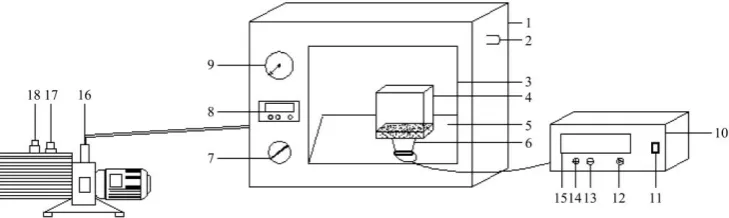
Ultrasonic vacuum drying[13]: An ultrasonic system was installed into a vacuum dryer (DZF-6050, Yiheng Scientific Instrument Company, Shanghai, China) to achieve an ultrasonic vacuum drying device. The ultrasonic system was self-fabricated
by Henan University of Science and Technology and mainly consisted of an ultrasound receiver, an ultrasonic transducer, and an ultrasonic generator. The schematic of the ultrasonic vacuum dryer is demonstrated in Figure 2, and detailed information and parameters of the ultrasonic system and the ultrasonic vacuum dryer could be seen in the literature[13]. Liquid egg yolk (500 g) was poured into the material tank of the ultrasonic system. The energy density of the ultrasonic wave, ultrasonic frequency, vacuum pressure, drying temperature, ultrasonication time, and drying time were set as 2 W/g, 28 kHz, 0.01 MPa, 50°C, 3 h, and 3 h, respectively.
1. Casebody 2. Air evacuation valve 3. Inner container 4. Ultrasonic receiver 5. Partition 6. Ultrasonic transducer 7. Vacuum valve 8. Temperature controller 9. Vacuum meter 10. Ultrasonic generator 11. Switch 12. Frequency sweep switch 13. Setting time 14. Setting power 15. Electronic display 16. Intake duct 17. Exhaust port 18. Gas ballast valve
Figure 2 Schematic of ultrasound enhanced vacuum dryer Vacuum drying[14]: Liquid egg yolk was poured into a disk to
form a layer with a thickness of 4 mm. The disk was then placed into a vacuum drying oven (DZF-6050, Yiheng Scientific
Vacuum freeze-drying[15]: Liquid egg yolk was poured into a disk and then covered with a perforated piece of thin plastic film. The liquid was frozen for 1h under −30°C. The egg yolk was dried in a vacuum freeze-dryer (LGJ-10D, Sihuan Scientific Instrument Company, Beijing, China) after complete freezing. The thickness of the material layer, temperature, drying room pressure, and drying time were 4 mm, −60°C, 30 Pa, and 24 h, respectively.
Hot-air drying: Liquid egg yolk was poured into a disk to form a layer with a thickness of 4 mm and then dried for 24 h in a blast-drying oven (DHG-9420A, Yiheng Scientific Instrument Company, Shanghai, China) at the constant temperature of 60°C. Spray drying[16]: Liquid egg yolk was poured into a constant-temperature water bath and preheated to 25°C before drying in a spray-drier (SP-1500, Shunyi Experimental Apparatus Company, Shanghai, China). The spraying flow rate was 500 mL/h. Inlet temperature and outlet temperature were held at 120°C and 90°C, respectively.
During the drying processes, the sample was taken out and weighed every 20 min, and the drying ended until the sequential two mass readings are approximately the same, with the corresponding moisture content of around 5% for the dried sample. All drying experiments were performed in triplicates.
2.2.3 Raman spectra of standard egg yolk lecithin samples and egg yolk powder
A confocal microscopic Raman spectrometer (XploRA ONE, HORIBA JOBIN YVON S.A.S, France) was applied to acquire the spectra of the egg yolk lecithin samples and egg yolk powder. The spectrometer was equipped with a 50×objective telephoto lens, 785 nm laser, and CCD detector. The spectrometer was operated with the laser power, spectral resolution, integral time, integration number, and spectral scanning range of 50%, 4 cm−1, 20 s, 2 and 200-3500 cm−1, respectively[17].
In each experiment, 200 points were selected randomly for scanning. The Raman spectra of standard egg yolk lecithin samples and egg yolk powder were recorded under the above conditions. Peaks attributable to egg yolk lecithin in the spectra of egg yolk powder dried through different methods and fresh liquid egg yolk were indexed to the characteristic peaks of standard egg yolk lecithin. The Raman spectra of fresh liquid egg yolk were used as the control group to analyze the effects of drying methods on the structure of egg yolk lecithin.
2.2.4 Extraction of egg yolk lecithin
Referring to previous studies[18], egg yolk lecithin was extracted by ethanol. Egg yolk powder of 30 g was weighed into a 250 mL beaker with the addition of 95% ethanol of 4 times volume, was stirred with a homogenizer (Angni Instrument Company, Shanghai, China) at a speed of 500 r/min for 15 min at 60°C water bath, and was centrifuged at 3600 g for 8 min, and then the supernatant was poured out. The precipitate was extracted again using the same method described above. The supernatant was combined and placed in a refrigerator at 4°C for 12 h to precipitate a neutral fat. After filtration, the filtrate was concentrated by a rotary evaporator (Yarong Biochemical Instrument Company, Shanghai, China) to obtain egg yolk lecithin. 2.2.5 Emulsifying capacity test of egg yolk lecithin
This test was performed according to the references of Marefati et al.[19] and Ishii[20]. In this test, 30 mL of distilled water was combined with 10 mL of peanut oil, into which 300 mg of egg yolk lecithin was added. The mixture was then homogenized for 1 min at 16000 r/min. Subsequently, 0.2 mL of the homogenate
was collected from the bottom of the container by using a transfer pipette and mixed with 40 mL of 0.1% SDS. The optical density of the mixture was quantified at 500 nm by using a UV-visible spectrometer (Shimadzu, Japan) with a 0.1% SDS solution as the blank control and three parallel samples. Emulsifying capacity was calculated as follows:
0
2 2 2.303
EAI / (m /g)
10000
A n
ρ φ
(1)
where, EAI is the emulsifying capacity; n is the dilution ratio (200 in this experiment); ρ is the mass concentration of egg yolk lecithin (g/mL); φ is the volume fraction of oil (1/4 in this experiment), and
A0 is the optical density of homogenized samples at 500 nm. 2.2.6 Spectral preprocessing and data analysis
All Raman spectra of 200 points were recorded and presented as the mean value. Data analysis was carried out with Origin 8.5 software. The statistical analysis including analysis of variance and multiple comparisons was carried out using SAS 6.0 software.
3 Results and analysis
3.1 Raman spectra of standard egg yolk lecithin samples
The Raman spectra of standard egg yolk lecithin samples are shown in Figure 3.
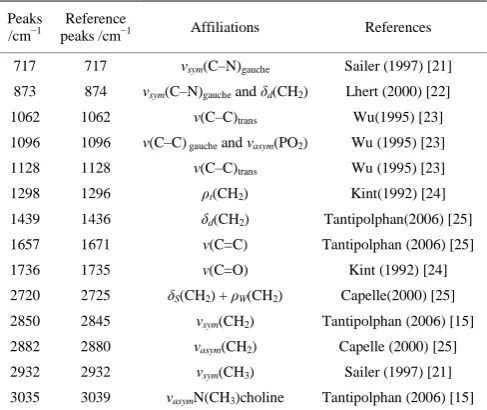
Figure 3 Raman spectra of standard egg yolk lecithin samples Table 1 provides the affiliations of peaks in the Raman spectra of the standard egg yolk lecithin samples shown in Figure 3.
Table 1 Affiliations of peaks in the Raman spectra of standard egg yolk lecithin samples
Peaks /cm−1
Reference
peaks /cm−1 Affiliations References 717 717 νsym(C–N)gauche Sailer (1997) [21]
873 874 νsym(C–N)gauche and δd(CH2) Lhert (2000) [22]
1062 1062 ν(C–C)trans Wu(1995) [23]
1096 1096 ν(C–C) gauche and νasym(PO2) Wu (1995) [23]
1128 1128 ν(C–C)trans Wu (1995) [23]
1298 1296 ρt(CH2) Kint(1992) [24]
1439 1436 δd(CH2) Tantipolphan(2006) [25]
1657 1671 ν(C=C) Tantipolphan (2006) [25]
1736 1735 ν(C=O) Kint (1992) [24]
2720 2725 δS(CH2) + ρW(CH2) Capelle(2000) [25]
2850 2845 νsym(CH2) Tantipolphan (2006) [15]
2882 2880 νasym(CH2) Capelle (2000) [25]
2932 2932 νsym(CH3) Sailer (1997) [21]
3035 3039 νasymN(CH3)choline Tantipolphan (2006) [15]
Notes: ν is stretching vibration; νsym is symmetric stretching vibration; νasym is
asymmetric stretching vibration; δdis deformation vibration; ρt is torsional
Egg yolk lecithin is composed of glycerin, choline, phosphoric acid, and saturated and unsaturated fatty acids. The molecular structure of egg yolk lecithin can be divided into three regions on the basis of spectral features: the hydrophobic chain consisting of C–H stretching modes, CH2 deformation, CH2 twisting, and C–C stretching modes, the interfacial region containing C=O stretching, and the polar headgroup region comprising of a band of PO2
−
asymmetric stretching and C–N stretching [15,26].
As shown in Figure 3 and Table 1, C–N stretching vibration occurred at 717 cm−1.
The vibration of the carbonyl group in the interfacial region gave a weak band at 1736 cm−1.
The stretching vibration region of the C–C skeleton was observed in the 1000-1200 cm−1 region. In this region, peaks at 1062 cm−1 and 1128 cm−1 were ascribed to the vibration peaks of the trans conformation of the bilayer C–C skeleton, whereas the peak at 1096 cm−1 was attributed to the stretching vibration peak of the gauche conformation of the C–C skeleton and PO2
−[23] . The deformation peak of CH2 was located at 1439 cm−1, and the peak at 1298 cm−1 belonged to the twisting mode of CH2.
The stretching vibration mode of C–H was located in the 2800-3000 cm−1 region. The vibration peaks at 2850 and 2882 cm−1 were contributed by the symmetric and asymmetric stretching vibrations of methylenes, respectively. The peak at 2932 cm−1 was ascribed to the symmetrical stretching vibration of terminal methyls. The peak at 3035 cm−1 was attributed to the asymmetric stretching vibration of choline methyl[27].
3.2 Raman spectra of egg yolk powder and fresh liquid egg yolk
The Raman spectra of egg yolk powder and fresh liquid egg yolk samples are shown in Figure 4.
Note: (A) Ultrasonic vacuum drying; (B) Vacuum drying; (C) Vacuum freeze-drying; (D) Hot-air drying; (E) Spray drying; (F) Fresh liquid egg yolk.
Figure 4 Raman spectra of egg yolk powder and fresh liquid egg yolk samples
Figure 4 illustrates that the spectra of egg yolk powder and fresh liquid egg yolk samples presented the characteristic peaks of standard egg yolk lecithin samples. In addition, the peak intensity and positions in the Raman spectra of egg yolk powder prepared through various drying methods were different from those in the Raman spectra of fresh liquid egg yolk samples.
3.3 Effects of drying methods on the polar O–C–C–N+ head skeleton of egg yolk lecithin
The symmetric stretching vibration of the choline head base C–N is sensitive to the conformation of the O–C–C–N+ skeleton. When O–C–C–N+ is in its gauche conformation, the vibration peak
of C–N appears at 717 cm−1. When O–C–C–N+ is in its trans conformation, the vibration peak of C–N moves to 770 cm−1[28,29]. The orientation of the polar head changed from the parallel membrane plane to the vertical membrane plane when the conformation of O–C–C–N+ transformed from gauche to trans. Therefore, the effects of the drying method on the polar headgroup region of egg yolk lecithin can be determined based on the vibration peak position of C–N.
As illustrated in Figure 5, ultrasonic vacuum drying and spray drying drastically affected the conformation of the polar headgroup region of egg yolk lecithin. A vibration peak was developed at 774 cm−1 in the spectra of the sample prepared through ultrasonic vacuum drying. An intense vibration peak was observed at 772 cm−1 in the spectra of the spray-dried sample. This result confirms that these drying methods modified the conformation of the O–C–C–N+ skeleton in egg yolk lecithin from gauche to trans. By contrast, no vibration peaks were observed near 770 cm−1 in the spectra of the samples prepared through vacuum freeze-drying, vacuum drying, and hot-air drying. These results indicate that these methods negligibly affected the conformation of the O–C–C–N+ skeleton.
Note: (A) Ultrasonic vacuum drying; (B) Vacuum drying; (C) Vacuum freeze-drying; (D) Hot-air drying; (E) Spray drying; (F) Fresh liquid egg yolk.
Figure 5 Raman spectra of the stretching vibration of C–N The massive energy exerted by ultrasonic propagation during ultrasonic vacuum drying reduced the orderliness of lecithin molecules and the liquidity of the bilayer membrane[30]. Molecules in the substance vibrated under the action of ultrasonic waves. Vibration frequency is equal to ultrasonic frequency. Molecular structures are intensively damaged by high frequency[31,32]. Therefore, ultrasonic vacuum drying influenced the structure of egg yolk lecithin.
Similar to ultrasonic vacuum drying, spray drying drastically influenced the structure of egg yolk lecithin. Under the high inlet temperature (120°C) of spray drying, materials acquired sufficiently high energy that stimulated and accelerated molecular vibration[33]. By contrast, the structure of molecules is hardly changed under the low temperatures of vacuum freeze-drying, vacuum drying, and hot-air drying due to their inadequate energy.
3.4 Effects of drying methods on the conformation of the C–C skeleton
System energy is minimized when the chain is in a trans configuration and the skeleton of the hydrocarbon chain is on a zigzag plane. A certain amount of energy is required to form various gauche conformations that then result in the different torsions of the hydrocarbon chain[34]. In the stretching vibration region of the C–C skeleton, the vibration peaks at 1062 cm−1 and 1128 cm−1 were contributed by the bilayer C–C skeleton of egg yolk lecithin, whereas the peak at 1097 cm−1 was ascribed to the vibration peak of the C–C skeleton in gauche conformation[26]. The orderliness of the C–C chain can be acquired by comparing the strengths of the trans and gauche spectra. High Igauche/Itrans ratios indicate low lecithin molecule order and high liquidity. Otherwise, the orderliness of lecithin molecules had increased and liquidity had decreased[35]. The Igauche/Itransratios of the samples are listed in Table 2.
1000 1020 1040 1060 1080 1100 1120 1140 1160 1180 1200
F
E
D
C
B
A
1128 1097
Wavenumber (cm-1)
1062
Note: (A) Ultrasonic vacuum drying; (B) Vacuum drying; (C) Vacuum freeze-drying; (D) Hot-air drying; (E) Spray drying; (F) Fresh liquid egg yolk.
Figure 6 Raman spectra of stretching vibration of C–C
Table 2 I gauche/I trans ratios of egg yolk samples with different drying methods
Ultrasonic vacuum drying Vacuum drying Vacuum freeze-drying Hot-air drying Spray drying Fresh liquid egg yolk I1096/I1062 (0.52±0.008)b (0.70±0.020)a (0.67±0.015)a (0.70±0.013)a (0.69±0.018)a (0.69±0.012)a
I1096/I1128 (0.82±0.021)b (1.44±0.025)a (1.41±0.020)a (1.45±0.006)a (1.42±0.011)a (1.43±0.014)a
Note: Different letters represent significant differences (p<0.05).
As shown in Table 2, the I1096/I1062 and I1096/I1128 ratios of powdered egg yolk samples prepared through ultrasonic vacuum drying were lower than those of fresh liquid egg yolk and samples prepared through other drying methods. Moreover, as presented in Figure 6, the vibration peaks at 1062, 1128, and 1097 cm−1 in the Raman spectra of egg yolks prepared through ultrasonic vacuum drying were stronger than those in the spectra of fresh liquid egg yolk and samples dried through other methods, indicating that ultrasonic vacuum drying showed the most intense effect on the C–C skeleton. These results indicate that the conformation of the C–C skeleton was drastically affected by ultrasonic energy to change the order of the internal structure of a molecule while it was negligibly influenced by other drying methods.
3.5 Effects of drying methods on the bilayer membrane liquidity of egg yolk lecithin
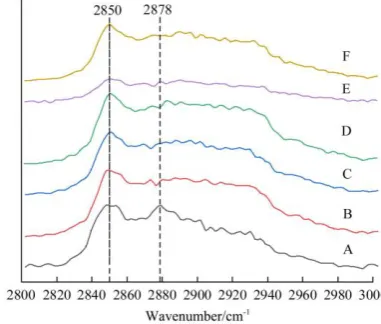
Peaks within the 2800-3000 cm−1 region in the Raman spectra of egg yolk lecithin were attributed to the stretching vibration of some C–H bonds in the lipid chain (Figure 7). The symmetric stretching and antisymmetric stretching vibrations of the C–H bond manifested as two peaks at 2850 cm−1 and 2878 cm−1, respectively. The vibration modes of these two peaks drastically influenced the lattice accumulation of the lipid bilayers and conformation between chains. The degree of order among the molecular chains of egg
yolk lecithin could be inferred based on the ratio of the intensities of the two peaks at 2850 cm−1 and 2878 cm−1. The I2850/I2878 ratio is negatively correlated with the degree of order among the molecular chains of lecithin but is positively correlated with the liquidity of the lipid bilayer membrane[36,37]. The I2850/I2878 ratios are shown in Table 3.
Note: (A) Ultrasonic vacuum drying; (B) Vacuum drying; (C) Vacuum freeze-drying; (D) Hot-air drying; (E) Spray drying; (F) Fresh liquid egg yolk.
Figure 7 Stretching vibration region of C–H
Table 3 I2850/I 2878 ratios of egg yolk samples with different drying methods
Ultrasonic vacuum drying Vacuum drying Vacuum freeze-drying Hot-air drying Spray drying Fresh liquid egg yolk I2850/I 2878 (1.00±0.020)b (1.20±0.015)a (1.21±0.006)a (1.21±0.014)a (1.02±0.018)b (1.22±0.011)a
Note: Different letters represent significant differences (p<0.05).
As presented in Table 3, that I2850/I2878 ratios of egg yolk samples processed through ultrasonic vacuum drying and spray drying were 1.00 and 1.02, respectively, and were lower than those of fresh liquid egg yolk and samples dried through other methods. The liquidity of the lipid bilayer membrane was considerably influenced by ultrasonic vacuum drying and spray drying but was slightly affected by other drying methods.
3.6 Effects of drying methods on the emulsifying capacity of egg yolk lecithin
Egg yolk lecithin was extracted with 95% ethanol from egg
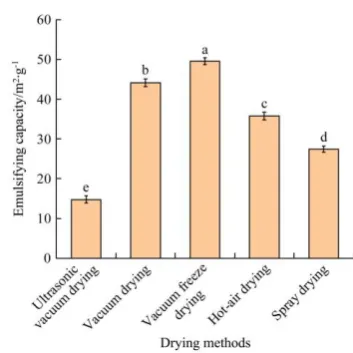
yolk powder samples prepared through different methods and the emulsifying capacities were quantified using the method described above. The results are shown in Figure 8, and different letters in the figure indicate that their differences are significant at the level of α=0.05.
The effects of different drying methods on the emulsifying capacity of egg yolk lecithin were analyzed by variance analysis and multiple comparisons, as shown in Tables 4 and 5.
lecithin were highly significant.
Figure 8 Effects of drying methods on the emulsifying capacity of egg yolk lecithin
Table 4 Variance analysis of the effects of different drying methods on the emulsifying capacity of egg yolk lecithin
Source SS df MS F value Significance level Drying methods 6855.57 4 1713.89 2079.19 α=0.01
Error 32.97 40 0.82 Sum 6888.54 44 Note: F0.01 (4, 40) = 3.83.
Table 5 Significance analysis of the effects of different drying methods on the emulsifying capacity of egg yolk lecithin
Drying methods xi
Significance of difference
α=0.05 α=0.01
Vacuum freeze-drying 49.58 a A
Vacuum drying 44.15 b B
Hot-air drying 35.81 c C
Spray drying 27.41 d D
Ultrasonic vacuum drying 14.77 e E
As shown in Figure 8, the highest emulsifying capacity of 49.58 m2/g was exhibited by the egg yolk lecithin sample prepared through vacuum freeze-drying, followed by that of samples processed through vacuum drying, hot-air drying, spray drying, and ultrasonic vacuum drying. The lowest emulsifying capacity of 14.77 m2/g was obtained by the egg yolk lecithin sample dried through ultrasonic vacuum drying. The structures of lecithin were altered by different drying methods and drying conditions, which led to the change of emulsifying capacity.
In this study, ultrasonic vacuum drying and spray drying altered the membrane orientation of the polar head region of egg yolk lecithin from parallel to vertical. This alteration exposed the hydrophobic groups of egg yolk lecithin and consequently weakened the hydrophilicity and emulsifying capacity of egg yolk lecithin[38,39]. Meanwhile, the combined effects of ultrasonic wave and high temperature decreased the liquidity of the lipid bilayer membrane[40,41]. This reduction was accompanied by increased lipophilicity and reduced emulsifying capacity[42].
Egg yolks begin to solidify at 65°C. The temperature of spray drying exceeded the solidification temperature of egg yolks and reached 120°C, under which emulsifying capacity drastically decreased[43,44]. In actual operation, egg yolk lecithin prepared through ultrasonic vacuum drying was partially insoluble in the oil-water mixture. The precipitation of particles and the rapid
formation of different liquid layers after homogenization were indicative of extremely low emulsifying capacity[42,45]. The egg yolk lecithin prepared through vacuum freeze-drying exhibited the highest emulsifying capacity mainly because molecular vibration is insensitive to low temperature. The temperature of vacuum drying and hot-air drying was 50°C, which was lower than the temperature required for egg yolk solidification. Therefore, the egg yolk lecithin samples prepared through vacuum drying and hot-air drying presented moderate emulsifying capacity. Vacuum drying was quicker than hot-air drying and slightly degraded the structure of egg yolk lecithin. Therefore, the emulsifying capacity of samples processed through hot-air drying was slightly higher than that of samples prepared through vacuum drying.
4 Conclusions
Ultrasonic vacuum drying, vacuum drying, vacuum freeze-drying, hot-air drying, and spray drying influenced the structure of egg yolk lecithin at different degrees. Among others, the greatest influence was observed on the structure of egg yolk lecithin dried by ultrasonic vacuum, which can change its conformation, making the inter-chain order increased, and the fluidity of the membrane bilayer reduced. The influence of spray drying on the structure of egg yolk lecithin is less than that of the ultrasonic vacuum drying, with the little effect observed for other drying methods. The emulsifying capacity of egg yolk lecithin is closely related to its structure. The effects of drying methods on the emulsifying capacity of egg yolk lecithin are highly significant. The egg yolk lecithin sample prepared through vacuum freeze-drying presented the highest emulsifying capacity, followed by the samples processed through vacuum drying, hot-air drying, spray drying, and ultrasonic vacuum drying, respectively.
Acknowledgements
The authors acknowledge that this work was financially supported by the Support Plan of the College Scientific and Technological Innovation Team of Henan Province (Project 17IRTSTHN016), the College Scientific and Technological Innovation Talents Program of Henan Province (Project 19HASTIT013), and Henan University of Science and Technology Experimental Technology Development Fund (Project SY1819011).
[References]
[1] Clayton Z S, Fusco E, Kern M. Egg consumption and heart health: A review. J. Nutrition, 2017; 37: 79–85.
[2] Chen D W, Dimitrios P B, Jane K P. Use of egg yolk phospholipids to generate chicken meat odorants. Food Chem., 2019; 286: 71–77. [3] Chen X W. Extraction of egg yolk lecithin and its effect on memory
function of mice. Food Sci., 2011; 32(13): 314–317. (in Chinese) [4] Asomaning J, Curtis J M. Enzymatic modification of egg lecithin to
improve properties. Food Chem., 2017; 220(apr.1): 385–392.
[5] Liu Y H, Wang Q Q, Gao X W, Xie A G. Total phenolic content prediction in Flos Lonicerae using hyperspectral imaging combined with wavelengths selection methods. J. Food Process Eng., 2019; 42(6): e13224. doi: 10.1111/jfpe.13224.
[6] Hu R, He T, Zhang Z W, Yang Y H, Liu M L. Safety Analysis of Edible Oil Products via Raman Spectroscopy. Talanta, 2019; 191: 324–332. [7] Herrero A M. Raman spectroscopy for monitoring protein structure in
muscle food systems. Crit. Rev. Food Sci. Nutrition, 2008; 48(6): 512–523. [8] Czaja T, Mazurek S, Szostak R. Quantification of gluten in wheat flour
by FT-Raman spectroscopy. Food Chem., 2016; 211: 560–563. [9] Liu J P, Zhou Y Q, Liu D, Lin S Y, Zhang Y. Extracting egg yolk lecithin
[10] Palacios L E, Wang T. Egg-yolk lipid fractionation and lecithin characterization. J. Am. Oil Chem. Soc., 2005; 82: 571–578.
[11] Asomaning J, Curtis J M. Enzymatic modification of egg lecithin to improve properties. Food Chem., 2017; 220: 385–392.
[12] Akashi T, Muto A, Takahashi Y, Nishiyama H. Enteral formula containing egg yolk lecithin improves diarrhea. J. Oleo Sci., 2017; 66(9): 1017–1027.
[13] Liu S J, Zhu W X, Bai X T, You T F, Yan J M. Effect of ultrasonic energy density on moisture transfer during ultrasound enhanced vacuum drying of honey. J. Food Meas. Charact., 2019; 13(1): 559–570.
[14] Li H D, Jiang J N, Chen L, Chen X T, Li X H. The effect of different drying methods on the quality characteristics of Saussure nucifera. Food Sci. Tech., 2019; 44(7): 96–100. (in Chinese)
[15] Tantipolphan R, Rades T, Strachan C J, Gordon K C, Medlicott N J. Analysis of lecithin-cholesterol mixtures using Raman spectroscopy. J. Pharm. Biom. Anal., 2006; 41(2): 476–484.
[16] Carter B, Patel H, Barbano D M, Drake M. The effect of spray drying on the difference in flavor and functional properties of liquid and dried whey proteins, milk proteins, and micellar casein concentrates. J. Dairy Sci., 2018; 101(5): 3900–3909.
[17] Yu H C, Fu X Y, Yin Y, Liu Y H, Bai X T. Raman spectroscopy combined with UVE-SVR algorithm to predict the content of trans fatty acid in the edible oil. J. Nuclear Agric. Sci., 2020; 34(3): 582–591. (in Chinese)
[18] Li M L, Lu X M, Ren F Z, Jing H. Influence of Thermal Processing on Egg Yolk Lecithin Extraction. J. CIFST, 2013; 13(9): 119–125. (in Chinese)
[19] Marefati A, Matos M, Wiege B, Haase N U, Rayner M. Pickering emulsifiers based on hydrophobically modified small granular starches Part II-Effects of modification on emulsifying capacity. Carbohyd. Polym., 2018; 201: 416–424.
[20] Ishii F. Emulsification properties of egg yolk lecithin and various phospholipids. J. JPN Soc. Food Sci., 2016; 63(8): 363–368. [21] Sailer K, Viaggi S, Nüsse M. Kinetics of radiation- and cytochrome
c-induced modifications in liposomes analyzed by FT-Raman spectroscopy. BBA-Biomembranes, 1997; 1329(2): 259–268.
[22] Lhert F, Capelle F, Blaudez D, Heywang A C, Turlet J M. Raman spectroscopy of phospholipid black films. J. Phys. Chem. B, 2000; 105(105): 11704–11707.
[23] Wu Y, Li X M, Zhao B, Xu W Q, Tao Y C, Zhao D Q, et al. FT-Raman spectroscopic study of the interaction of La3+ and cholesterol with DPPG
bilayers. Chin. J. Light Scattering, 1995; 7(2): 175–176. (in Chinese) [24] Kint S H, Wermer P H, Scherer J R. Raman spectra of hydrated
phospholipid bilayers. 2. Water and head-group interactions. J. Phys. Chem., 1992; 96(1): 446–452.
[25] Capelle F, Lhert F, Blaudez D, Kellay H, Turlet J M. Thickness and organization of black films using confocal micro-Raman spectroscopy. Colloids & Surfaces A, 2000; 171(1-3): 199–205.
[26] Wu L, Wang L, Qi B. 3D confocal Raman imaging of oil-rich emulsion from enzyme-assisted aqueous extraction of extruded soybean powder. Food Chem., 2018; 249: 16–21.
[27] Wong P T T, Mantsch H H. Effect of hydrostatic pressure on the phase state and molecular structure of aqueous lysolecithins: A Raman spectroscopic study. J. Raman Spectrosc., 1986; 17(14): 335–340. [28] Tai K D, Liu F G, He X Y, Ma P H, Mao L K, Gao Y X, et al. The effect
of sterol derivatives on properties of soybean and egg yolk lecithin
liposomes: Stability, structure and membrane characteristics. Food Res. Int., 2018; 109: 24–34.
[29] Asomaning J, Curtis J M. Enzymatic modification of egg lecithin to improve properties. Food Chem., 2017; 220: 385–392.
[30] Bi S, Sui X N, Han T X, Li Y, Wang Z J, Qi B K, et al. Effect of ultrasound on rheological and Raman spectroscopy properties of soybean protein isolate-phospholipid composite system. Food Sci., 2016; 37(21): 61–66. (in Chinese)
[31] Liu Y H, Sun Y, Yu H, Yin Y, Li X, Duan X. Hot air drying of purple-fleshed sweet potato with contact ultrasound assistance. Dry. Technol., 2017; 35(5): 564–576.
[32] Liu Y H, Zeng Y, Hu X Y, Sun X. Effect of ultrasonic power on water removal kinetics and moisture migration of kiwifruit slices during contact ultrasound intensified heat pump drying. Food Bioprocess Tech., 2020; 13(6): 430–441.
[33] Zhang M Q, Li J H, Chang C H, Wang C Y, Li X, Su Y J, et al. Effect of egg yolk on the textural, rheology and structural properties of egg gels. J. Food Eng., 2019; 246: 1–6.
[34] Hossein B, Aminoddin H, Homa M. Analysis of lecithin treatment effects on the structural transformation of wool fiber using vibrational spectroscopy. Int. J. Biol. Macromol., 2018; 108: 585–590.
[35] Hui G, Zhao Y, Zhang J Z, Liu W, Li H D, Zhao B. Raman and DSC spectroscopic studies on the interaction between ginsenosides and DMPC bilayer membranes. Spectrosc. Spect. Anal., 2014; 34(2): 410–414. [36] Kpodo F M, Agbenorhevi J K, Alba K, Oduro I N, Morris G A,
Kontogiorgos V. Structure-function relationships in pectin emulsification. Food Biophysics, 2018; 13(1): 71–79.
[37] Zeng Y, Liu Y H, Zhang J Y, Xi H H, Duan X. Effects of far-infrared radiation temperature on drying characteristics, water status, microstructure and quality of kiwifruit slices. J. Food Meas. Charact., 2019; 13(4): 3086–3096.
[38] Wang L, Wu M, Liu H M. Emulsifying and physicochemical properties of soy hull hemicelluloses-soy protein isolate conjugates. Carbohyd. Polym., 2017; 163: 181–190.
[39] Sui X N, Li Q H, Wang Z J, Qi B K, Zou X S, Li Y, et al. Does the hydrophobic group on sn-2 position of phosphatidylcholine decide its emulsifying ability? LWT-Food Sci. Technol., 2016; 74: 255–262. [40] Liu Y H, Zeng Y, Wang Q, Sun C Y, Xi H H. Drying characteristics,
microstructure, glass transition temperature, and quality of ultrasound-strengthened hot air drying on pear slices. J. Food Process. Pres., 2019; 43(3): e13899. doi: 10.1111/jfpp.13899.
[41] Xi H H, Liu Y H, Guo L G, Hu R R. Effect of ultrasonic power on drying process and quality properties of far-infrared radiation drying on potato slices. Food Sci. Biotechnol., 2020; 29(1): 93–101.
[42] Matos M, Marefati A, Bordes R, Gutiérrez G, Rayner M. Combined emulsifying capacity of polysaccharide particles of different size and shape. J. Carbohyd. Polym., 2017; 169: 127–138.
[43] Liu Y H, Sun C Y, Lei Y Q, Yu H C, Xi H H, Duan X. Contact ultrasound strengthened far-infrared radiation drying on pear slices: Effects on drying characteristics, microstructure and quality attributes. Dry. Technol., 2019; 37(6): 745–758.
[44] Kiosseoglou V. Egg yolk protein gels and emulsions. Curr. Opin. Colloid In. Sci., 2003; 8(4): 365–370.