Table of Contents
About This Journal iii-v
Editorial 1-4
Keynote Address
Can Theology Be Practical? Part I: A Discussion of Theory, Practice, Wisdom,
Spirituality and Context 5-19
Ps Mark J Cartledge
Can Theology Be Practical? Part II: A Reflection on Renewal Methodology
and the Practice of Research 20-36
Ps Mark J Cartledge Peer Reviewed Articles
Theology and Social Sciences in Ministry Research 37-57 Rev Dr Philip Hughes
Spiritual Knowing: A Case Study in Entitlement 58-66 Dr Bruce A Stevens
Appreciative Inquiry – A Strategy for Being a Healthy Church 67-81 Dr Nigel Pegram
Gender and Leadership Issues in the Australian Church: Leadership
Effectiveness – men vs women 82-100
Dr Lewis McMaster and Assoc Prof Juhani Tuovinen Pastoral Reflection
Reflecting on 40 years of Christian Ministry 101-105 Ps Richard Warner
Student Article
‘Four Pentecostal Views on Healing 106-118
Theses/Dissertation Listing
2016 119-121
Book Reviews 122-141
About This Journal
Editorial Board
The Editorial Board of the Journal of Contemporary Ministry is comprised of:
Professor Emeritus, The Rev Gary
D. Bouma, AM - Monash University;
Chair of Harvest Bible College Academic Board; Sociologist; Anglican Priest, prolific author.
Rev Dr Peter Carblis – Senior
Chaplain, Churches of Christ in NSW; former principal Tabor NSW, Australia.
Rev Prof Darren Cronshaw –Head
of Research and Professor of Missional Leadership, Australian College of Ministries (SCD); Pastor, Auburn Life Baptist Church; Honorary Research Fellow, University of Divinity, Australia.
Rev Dr Kevin Giles - Published
author; Anglican minister; adjunct lecturer for many years for Harvest Bible College, Australia
Rev Dr David Jakobsen - Assistant Professor Aalborg University, Denmark
Rev Dr Julie Ma - Associate Professor of Missions and Intercultural Studies, Undergraduate College of Theology and Ministry, Oral Roberts University, Tulsa, OK, USA.
Rev Dr Cheryl McCallum - Principal, Eastern College Australia, Australia.
Dr Soong-Chan Rah – Milton B.
Engebretson Professor of Church Growth and Evangelism, North Park Theological Seminary, Chicago, USA. Rev Dr Michelle Sanders - Head of Art and Community Development, Eastern College Australia; Missional church planter and Pastor, Kaleidoscope Community, Melbourne, Australia; Founder and Director of Art and Soul; Artist and Author.
Assoc Prof Juhani Tuovinen -
Editorial Team
The Editorial Team of the Journal of Contemporary Ministry is comprised of:
Dr Jon Newton - (Dean of Postgraduate Studies and Research, Harvest Bible College); Editor.
Ms Kerrie Stevens - (College Librarian, Harvest Bible College); Journal Manager, Layout Editor.
Dr Astrid Staley - (Adjunct faculty, Harvest Bible College); Section Editor for Pastoral Reflections and Student Articles, Layout Editor.
Rev Dr Clayton Coombs - (Academic Dean, Planetshakers College); Book Review Editor.
The Journal of Contemporary Ministry will act as a place for reporting research and discussing issues related to contemporary ministry, including related theological and biblical questions.
Its goals are to:
o Stimulate informed discussion regarding issues faced by contemporary Christian churches and ministries worldwide;
o Encourage research, including empirical research, into diverse forms and contexts of contemporary ministry and the practical, theological and biblical issues that arise from ministry practice;
o Enable students and graduates in postgraduate Ministry programs to speak to a wider audience;
The Journal of Contemporary Ministry will provide a specific forum for Harvest Bible College research students and faculty, and other interested people, to publish the results of their research.
It will also provide a potential publishing venue for paper presenters at Harvest’s annual research conference.
The Journal of Contemporary Ministry will contain these kinds of material:
o Peer-reviewed articles based on scholarly research (empirical or theological) into diverse forms and contexts of contemporary ministry, and the practical, theological and biblical issues that arise from ministry practice;
o Pastoral reflections and articles that contribute viewpoints, based on personal experience or theological reflection, on contemporary ministry issues. These may be responses to articles from the Journal;
o Book reviews and/or notes of new publications related to contemporary ministry;
o Articles contributed by postgraduate students, which would also be refereed but may not come up to the level required in the first category;
o A list of recent doctoral research theses completed on contemporary ministry relevant to this journal’s focus.
The material we invite covers such topics as:
o Results of empirical research into aspects of contemporary Christian ministry, e.g. youth ministry, children’s ministry, pastoral counselling, pastoral leadership, intercultural ministry;
o Theological and biblical reflection on issues that have arisen from the practices of contemporary Christian churches and ministries, e.g. manifestations of the Spirit, worship styles, leadership culture, interfaith matters, political and social engagement, etc;
o Underlying theological questions that lie behind Christian ministry issues, e.g. the role of women’s ministry in local churches, ethnic identity, ordination, apostleship;
o Proposals for new expressions or forms of Christian ministry based on social analysis, e.g. how to reach specific sub-cultures.
The Journal of Contemporary Ministry is indexed in Informit's Humanities & Social Sciences Collection database.
For further information, please visit the journal website
Editorial
Focusing our Efforts
A few weeks ago, I read an opinion piece about Contemporary Christian Music by Jonathan Aigner contemporary Christian music as not even really contemporary, let alone Christian or theologically valid. It is “mostly unremarkable garbage”, he wrote. I was interested in the reasons he advanced for giving up on listening to CCM for entertainment: it’s a poor derivative of mainstream pop music, Christians should engage positively with secular culture rather than withdrawing into a kind of Christian ghetto (my phrase, not his), buying CCM increases its unhealthy presence and influence in church worship and “it perpetuates lame, bogus, or just bad theology”. Instead, Aigner urges Christians to listen to classical music, other pop music or just no music at all (we don’t need to constantly fill our heads with music just because it’s there).
The question I want to raise is, how much actual empirical research has been done on such dilemmas? Do we actually know whether contemporary styles of church attract, keep or alienate young people, or indeed anyone? Both sides of such debates are in danger of parading their own preferences, anecdotes or experiences as evidence. And even the Bible doesn’t give us precise answers to these questions.
The purpose of a journal like this is to provide a place for scholars and ministers to discuss contemporary ministry and all the issues and questions that impact on that (like the points above) in a way that draws on good research and scholarship. The problem is that there are so many issues that can be discussed and this is reflected in the range of topics that postgraduate students at Harvest Bible College choose to do research projects on as well as the topics of articles submitted to this journal and the papers presented at our annual research conference. When a potential Doctor of Ministry student contacts me, one of my first questions is (obviously), “What do you want to do research about?” As it is a DMin program, I automatically reject topics that are purely theological or biblical in nature, as there are better programs that suit such areas of investigation. But even within that category of ministry, there is such a broad range of possibilities. DMin students at Harvest are investigating such topics as pastoral care of same-sex-attracted people, sacred space, hearing from God, GenY and the church, overseas aid by local faith organisations, relationships between Christians and Jews, Pentecostal churches and people with long-term problems, speaking in tongues, inner healing, local churches and social welfare, integration of Asian migrants into Australian churches - and so on.
For this reason, and to stop our resources being stretched too thin (always a danger with any postgraduate program), at Harvest we have chosen five research domains to focus on, based partly on the research interests of our five leading academics:
1. Leadership in Local Churches and Society led by Dr Albert Haddad, Chief Academic Officer at Harvest, whose doctoral research was about leadership and change. He is the author of Arise to Lead: 5 Fundamentals to Becoming an Effective Leader (High Bridge Books, 2015).
2. Ministry and Society, led by Dr Philip Hughes, Chief Supervisor at Harvest, author of many books and articles in his former role at Christian Research Association.
3. Intercultural Ministry and Global Christianity led by Dr Ian Grant, Vice-President Emeritus at Harvest and a leading Pentecostal missiologist. His doctoral research was about leadership in a cross-cultural context, specifically in Papua New Guinea.
4. Wellbeing and Ministry led by Dr Nigel Pegram, Postgraduate Fellow at Harvest. Nigel’s doctoral research was about the role of emotional intelligence in the prevention of ministry burnout. He is co-author of Ministry Life Skills Foundations: Key Lessons in Leadership and Discipleship (Ministry Life Skills Centre, 2010, with Roger Tan).
5. Issues in Pentecostal Ministry and Local Churches led by Dr Jon Newton, Dean of Postgraduate Studies and Research at Harvest, Editor of this journal and author of The Revelation Worldview: Apocalyptic Thinking in a Postmodern World
These are still very broad categories but we hope they will help Harvest and its associated entities, including this journal, to focus its research efforts. In the future, we may decide to present themed issues of the journal focusing on each of these domains, or at least to classify articles under these five headings.
Let me introduce our authors for this issue and their articles.
We start with a new feature: the keynote addresses at last year’s Harvest Research Conference. Our keynote speaker in 2016 was Rev. Professor Mark Cartledge, who serves as Professor of Practical Theology at Regent University in Virginia, USA. He has been a minister in the Church of England (UK) for over twenty-five years and has worked in parish ministry, overseas theological education in an Anglican seminary in Nigeria as well as campus ministry in the UK (Universities of Liverpool and Durham). He has taught in seminary (Durham) and secular University departments (Lampeter and Birmingham) over the last sixteen years. He is the author of several books, including most recently The Mediation of the Spirit (Eerdmans Publishing, 2015), which our journal reviewed in 2016 (Issue 2). In his addresses, he spoke to the conference theme “Can theology be practical?” In the first address, Cartledge discussed theory, practice, wisdom, spirituality and context, exploring the whole concept of “practical theology”. His second address was entitled “A Reflection on Renewal Methodology and the Practice of Research”. Here he seeks to show a renewal (i.e. Pentecostal-charismatic) perspective can contribute to practical theology and empirical research on the church and its mission for the benefit of church, academy and society. These addresses are academic in nature, but they underpin the kind of research that the conference and this journal wish to promote.
The next section of the journal consists of four peer-reviewed articles.
Rev. Dr Philip Hughes is the Chief Supervisor at Harvest Bible College and one of the most experienced researchers on Australian Christianity during his long tenure as chief researcher for the Christian Research Association. He has a string of publications to his name. In this article, “Theology and Social Sciences in Ministry Research”, he picks up the debate about how much Christian researchers should draw on the methods and findings of the social sciences. He particularly discusses an empirical research project about youth ministry of local churches in Australia today. Since reaching youth is a central concern of contemporary ministers, this article has some important conclusions.
Professor Bruce Stevens holds the Wicking Chair of Ageing and Practical Theology at Charles Sturt University, Canberra (funded by the J. O. and J. N. Wicking Trust) and author of Crossfire! How to Survive Giving Expert Evidence as a Psychologist (Australian Academic Press, 2008), and Happy ever after?: A Practical Guide to Relationship Counselling for Clinical Psychologists (Australian Academic Press, 2011, with Dr Malise Arnstein). His article is entitled “Spiritual Learning: A Case Study in Entitlement”. In this article, Stevens explores the sense of entitlement people often have as a factor in how people fail to learn and grow spiritually. This article provides a different perspective for the contemporary Christian minister seeking to build emotional and spiritual health in themselves and those they serve.
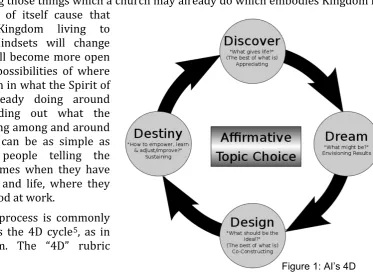
feel their church is somehow “stuck”, will find some stimulating ideas here that have been used successfully in other local churches.
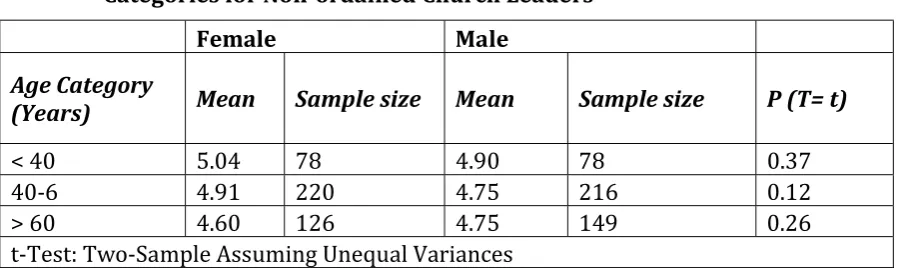
Dr Lewis McMaster is the senior pastor of Emmanuel Christian Outreach in South Australia. Together with a mixed gender leadership team he pioneered the development of two churches and two Christian Schools in rural South Australia and completed doctoral studies on women and church leadership in the Australian church. Dr Juhani Tuovinen is an Associate Professor at the Australian Institute of Business, Senior Research Fellow at the Global Centre for Work-Applied Learning and a freelance Education and Research Consultant. In their article, entitled, “Gender and Leadership Issues in the Australian Church: Leadership Effectiveness - Men Versus Women”, they draw on the National Church Life Survey from 2006 to discuss the comparative effectiveness of male and female church leaders. Their analysis of this research and other research on gender and leadership explores new dimensions of these issues.
Our pastoral reflection for this issue comes from a pastor who is presently completing a term of thirty-seven years at the same church, Lighthouse Christian Church in Keysborough, a suburb of Melbourne. Pastor Richard Warner was born in the UK but migrated to Australia in pursuit of God’s call on his life. Since Richard and his wife, Pauline, accepted the call to what was then Springvale Assembly of God, Lighthouse Church has been a significant participant in the Pentecostal world in Melbourne, spawning a number of church plants and a multi-campus Christian school among other achievements. He reflects on some of the lessons he has learned in ministry over the long period.
Our outstanding student paper for this issue has been written by a member of our Doctor of Ministry cohort, Christopher Cat. Christopher lives in Sydney and attends Life Church in Parramatta. The original version of this essay was written as part of a DMin course unit in “Theology, Hermeneutics and Research”. Christopher is researching how Pentecostal theology and pastoral care operate with people experiencing long-term suffering. In this essay, he explores four major Pentecostal writers, representing two different approaches to the issue of health and sickness, a key issue for Pentecostal and charismatic ministers.
Two important resources for readers and students in the area of contemporary ministry are the book reviews and lists of relevant theses from around the globe. Reading these sections of our journal will help you keep abreast of developments in this and related fields of enquiry.
I commend all the contents of this issue to you as discerning readers and adventurous, enquiring ministers.
In closing, I also want to thank my editorial team - Kerrie Stevens, Astrid Staley and Clayton Coombs - for all their effort in making Issue 3 happen.
Can Theology be ‘Practical’?
Part I: A Discussion of Theory, Practice, Wisdom,
Spirituality and Context
Professor Mark J. Cartledge
Regent University School of DivinityDirector of the Center for Renewal Studies
Contact:
Introduction
Can theology be ‘practical’?1 One of the clergy at my church asked me what
my job title was at Regent University. I told him that I was Professor of Practical Theology. He laughed out loud and said: ‘Isn’t practical theology an oxymoron?’ To which I replied, ‘Well, it all depends on what you understand theology to mean and indeed whether you buy into a particular kind of dichotomous thinking: theory and practice, with that which is “practical” reduced to things like hints and tips for ministry. For example, how not to drop the baby at its baptism and what not to say at a funeral, for example, “Have a nice day!”’. But what we mean by the term ‘practical’ when we use it in this context is an interesting question. Similarly, what do we mean by ‘theology’? As Pete Ward has observed, practical theology has been derided for neither being properly practical nor properly theological.2
1 The question has been asked many times before. See, for example, the discussion by
Duncan B. Forrester, ‘Can Theology be Practical?’ in Friedrich Schweitzer and Johannes van der Ven (eds.), Practical Theology – International Perspectives (Frankfurt am Main: Peter Lang, 1999), pp. 16-27.
We can easily trot out the standard definition of ‘speaking about God’, or theological discourse about God, but actually theology is not just
2 Pete Ward, ‘The Hermeneutical and Epistemological Significance of Our Students: A
about what we say but what we do, how we think and feel, our dispositions as well as our speech and actions. And then there is the question of how we put these things together. Is there a wise way of integrating thought and speech with action as patterned, repeated activity or skill-based activity, i.e. ‘practice’?3
So, in order to explore these ideas, I would like to think about our terminology, define our terms and look at some practices or models that arise from the field of practical theology.
4
Terminology and Assumptions
In the first keynote address, I shall consider this material largely in terms of the discipline/field of practical theology. In the second keynote address, I shall ask questions as to how a Pentecostal and Charismatic or Renewal perspective might begin to orient the answers to these questions in a particular way. In other words, I shall offer a theological approach that answers these basic questions in a tradition-specific manner, but with an eye to the relationship between academy, church and society.
Let me begin by attempting to clarify some terminology and the assumptions behind their use.
Theory versus Practice
Many of us are inheritors of modern, Enlightenment thinking. In this way of thinking we distinguish between theory as abstract thinking that provides models of understanding reality through the use of ideas, diagrams expressed in words and numbers. These theories describe the nature of the reality that we are seeking to understand and they also provide explanations as to why certain things happen in a patterned way. They offer clues about how we might begin to change certain outcomes, intervene and use the patterns of our natural world. This second phase is often referred to as the ‘applied’ phase or the ‘application’ of the theory. And, in some cases, this makes sense and appropriately describes what is happening. However, for most of us, while we are programmed to conceptualize things in theory and practice terms, in our own life practices we integrate our knowledge in a kind of intuitive manner. Thus, in our everyday lives we do not think: ‘now I am doing theory, now I am doing practice, now I am doing theory, now I am doing practice’. They are intertwined and necessarily so.5
In almost all of what we do in our life situations, we act and reflect together. We do something and then we learn from the doing of it, such that we change our approach. Sometimes we do not really do this as clearly or as intentionally as we should, but in general terms it is already happening. And yet, academically, this distinction holds sway.6
3 Duncan B. Forrester, Truthful Action: Explorations in Practical Theology (Edinburgh: T & T
Clark, 2000), pp. 3-4.
4 For a very useful and interesting American assessment of the development of the
discipline/field of practical theology, see: Bonnie J. Miller-McLemore, ‘Five Misunderstandings about Practical Theology’, International Journal of Practical Theology 16.1 (2012), pp. 5-26.
5 My latest book, Mediation in the Spirit: Interventions in Practical Theology (Grand Rapids:
Eerdmans, 2015) seeks to challenge the marginalization of religious experience from practical theological discourse and the lack of integration with first order thinking and acting.
6 See my discussion in ‘Christian Theology for Ministry and the Quality Assurance Agency
The problem is accentuated when practitioners of one kind or another are frustrated by discourse that seems overly abstract and irrelevant to everyday life. While scientists turn theories into technology through experiments and product designs, which are in turn commercialized and form part of our economic system, the ordinary consumer is less interested in the theory behind technology and more interested in the use of the technology to make their lives more enjoyable, convenient and efficient. I am typing this address on a MacBook Air. I do not really understand the scientific theory behind the electronics that make the computer work. I do not care, if I am honest. I am pleased that some clever people have understood the science, have the imagination to create a tool and I am complicit in an economic system that mass-produces these items for global consumption. You may question my ethical stance on the use of Apple products, but I find them very ‘practical’. They help me to do what I want to do in an enjoyable and efficient (or at least fairly efficient) manner. I, too, am a product of modernity. I cannot escape it. I find technology to be very ‘practical’!
But the very same problem can be seen in the world of vocational practice, whether that be in social work or pastoral work. Practitioners are very interested in what can be ‘useful’. There is a desire for ‘tools’. What will make my job easier or more effective? How can I reach this group of people? How can I change this situation? The engagement with theory can be cursory or shallow because of the drive for utility. I find this problem with my own Doctor of Ministry students. There can be a rush to intervention, without first fully understanding the problem as deeply as it deserves to be understood in order to address it appropriately.
The Nature of Theology
What about the nature of theology? Theology is ‘speech about God’, but it is not just speech about God. It reflects thinking about God too. Of course, there are people who speak about God without thinking about God! And in personality terms there are some people who simply do not know what they think until they have spoken because it is only in the process of speech that they begin to understand what they think. But it can be a little frustrating when we have to listen to a lot of half-baked ideas or even nonsense because people are always processing their thoughts in confused and problematic ways. This highlights an important point, namely that theology is a process of thinking that develops over time. We might come out with statements of faith or position papers on certain things, but these texts have a process history, even if we have never been party to the process. We all process our thinking in some way and then we share it in some other way.
There is, of course, an allied point. Theology is also a ‘practice’, that is, a set of patterned activities carried out by individuals and communities.7
7 James W. Fowler, ‘The Emerging New Shape of Practical Theology’, in Friedrich Schweitzer
and Johannes van der Ven (eds.), Practical Theology – International Perspectives (Frankfurt am Main: Peter Lang, 1999), pp. 75-92 (p.79).
would discover a set of different conventions to do with the practice of publishing. Publishing writing is a distinct form of theology. It is a second order discourse that allows the author/s to reflect on their faith and consider it in the light of specific sources, whether Scripture, tradition or contemporary experience in local contexts.
The role of experience is an interesting source but it is also context for theology. Theology is performed in sets of practices, which are themselves experienced by individuals and communities. The performance of an action that has itself theological commitments embedded in it reinforces the theological beliefs but can also lead to a change of beliefs and commitments. For example, how you baptize a person depends on a number of theological assumptions. What amount of water should be used? A small bowl or a large tank? How many times should the person be dunked or sprinkled? Once or three times? Should the person have already confessed the faith with their own lips before the ritual or can we baptize those who cannot yet confess the faith on the assumption of parental covenantal promises? In other words do we baptize babies or believers? And do we baptize in the name of Jesus only or in the name of the Trinity? This liturgical practice is loaded with theological assumptions about what is believed in a descriptive sense, but also what should be believed in a prescriptive sense. In this important ritual they are combined. The whole community is ‘traditioned’ in a particular understanding every single time this practice is performed and their ‘experience’ is shaped by this understanding. It cannot be otherwise. This means that theology is practised in action and action reinforces existing understanding.
Of course, in the diverse world of Christianity, it is not long before you observe theological practices that are different to your own. Or you meet people whose experience in their past has been different to what you are offering them in the present. In one of my congregational studies, I had a conversation with a Ugandan Pentecostal woman. She asked me a series of faith-based questions, because her assumption was that because I was an Anglican I was not really a true Christian. I think she was deciding as to whether I was a conversion project. ‘Was I saved, baptized in the Spirit and did I speak in tongues?’ When I answered all of these questions in the affirmative, she simply shrugged her shoulders and said ‘Huhh!’ and walked off. She could not believe that an Anglican could have remained an Anglican if these experiences had been true. In the same church, I was often asked: ‘Why aren’t you a Pentecostal? You know so much about Pentecostalism’. I would reply: ‘Because I am committed to the Anglican tradition, and in any case you don’t accept my baptism. I was baptized as an infant and I don’t believe that I should be re-baptized because to do so would be to deny the validity of my first baptism’. They usually got the point, even if they disagreed with my theology. I would then point out that believer’s baptism is not universal among Pentecostals around the world, so that it is not a Pentecostal distinctive but rather an Anabaptist position. Usually, at that juncture, historical and contemporary information was somehow less interesting, presumably because it problematized their cherished position.
The Central Question
to say: how can it not be practical in the sense that theology is itself a practice that shapes not only how we construct it but also in the sense that it informs and gives expression to theological commitments that are deeply held and reinforced by communal dimensions, as well as individual preferences. But I suggest this question is a practitioner’s one that is concerned about utility. How can all this theoretical stuff be useful when all I want to do is plant a church, grow a congregation or solve a pastoral problem? For me, bringing existing theoretical sources to bear on a contemporary practice means the possibility of analyzing a practice and understanding it better. It also means listening to Scripture, tradition and the insights of contemporary scholarship in theology, the social sciences and humanities in such a way that a critique can be offered and a more authentic practice performed. The problem that we face is that our contemporary practices may just as well be informed by contextual and cultural factors as they are by Christianity. What practical theology has done is to give us processes and tools to analyze the contemporary end of the question in a theological manner in order to revise contemporary practices for the sake of the kingdom of God. Poor practice, inconsistent practice, bad practice, unhealthy practice and even abusive and toxic practice do not glorify God. We are called to higher things in the service of Jesus Christ. Amen?!
The Process of Practical Theology
I move now to the process of conducting or going about practical theology. How do contemporary practical theologians actually do what they do? Are there models of how this is done and what may be said about them in terms of the central question before us?
Liberationist Hermeneutics
Contemporary practical theology is indebted to the hermeneutics of liberation theology, which also focuses on the concrete particularities of the experience of the poor around the world.8 Thus, the attention is primarily on the
need to alleviate adverse conditions under which people exist. In this context there has been a focus on another word, namely ‘praxis’. Praxis is used to give expression to the idea that concrete lived experience is always a mix of values and action or behaviour. They are blended together and cannot be pulled apart. Practical theologians often mix Aristotelian and Marxist connotations in terms of the integration of action and reflection and the subversion of hegemony.9 In my
work I tend to follow the Aristotelian heritage as ‘value-laden practices’.10
8 See, for example the discussion by Nancy J. Ramsey, ‘Emancipatory Theology and
Method’, in Bonnie J. Miller-McLemore (ed.), The Wiley-Blackwell Companion to Practical Theology (Oxford: Wiley-Blackwell, 2012), pp. 183-192.
I have just shown how the practice, or we could say praxis, of baptism is shaped deeply by theological assumptions. So, it is the case that praxis is also shaped by deeply held values and these values are supported or not by wider cultural systems of belief that can marginalize different groups. Truth is not only what is said or written: orthodoxy, but also what is done: orthopraxy. In order to understand
9 Fowler, ‘The Emerging New Shape of Practical Theology’, p.80.
10 For a discussion of the Aristotelian background to praxis, see Thomas H. Groome,
how things should be changed towards orthopraxy, liberation theology sought first to understand the nature of existing praxis, which affected the poorest people in the community. This was analyzed not only theologically but also socially in order to construct a new praxis based on different assumptions: usually the dichotomy between oppressed and oppressor, and the exodus motif as a theological response. Liberation theology has now been used by different marginalized groups around the world to promote their cause and seek change. There are a number of different problems with liberation theology, which I cannot delve into here, but the point I wish to make is that academic practical theology borrowed this move to praxis. If you ask most practical theologians around the world about the focus of their attention, in other words the direct object of their enquiry, most will say either contemporary belief and practice or praxis (because they amount to the same thing).11
The hermeneutical move away from starting with either Scripture or tradition to starting with experience or praxis has meant that the focus of attention has become the contemporary end of the question. Now, in some of my work I have critiqued the consequences of this move, rather than the move itself. I believe our focus should be the contemporary end of the question, I just do not believe that we should have downplayed the use of Scripture, tradition and systematic theology in the ways that the academy has done so. In my latest book,
The Mediation of the Spirit, I have attempted to address what I regard as these weaknesses in contemporary scholarship.12
The Pastoral Cycle
But in order to give a sense of the processes, I should like to describe two models of practical theology viewed as a process. I like the process idea because it resonates with the idea of research as a process of investigation.
The first model, which in certain contexts (e.g. the UK) appears to be ubiquitous, is the so-called pastoral cycle.13
11 For example, see the discussion at the International Academy of Practical Theology in
2013 and the papers associated with the discussion published in a special issue of the Academy’s journal: Christiaan A.M. Hermans and Friedrich Schweitzer, ‘Theory and Methodology of Praxis in Practical Theology: Introduction to the Panel’, International Journal of Practical Theology 18.1 (2014), pp. 88-90; R. Ruard Ganzevoort and Johan Roeland, ‘Lived Religion: the Praxis of Practical Theology’, International Journal of Practical Theology
18.1 (2014), pp. 91-101; Wilhelm Gräb, ‘Practical Theology as a Theory of Lived Religion Conceptualizing Church Leadership’, International Journal of Practical Theology 18.1 (2014), pp. 102-112; Christiaan A.M. Hermans, ‘From Practical Theology to Praxis-Orientated Theology: The Study of Lived Spirituality and Lived Religion in Late Modernity’, International Journal of Practical Theology 18.1 (2014), pp. 113-126; Gerrit Immink, ‘Theological Analysis of Religious Practices’, International Journal of Practical Theology 18.1 (2014), pp. 127-138; Friedrich Schweitzer, ‘Professional Praxis in Practical Theology: Theoretical and Methodological Considerations’, International Journal of Practical Theology 18.1 (2014), pp. 139-149; Birgit Weyel, ‘Practical Theology as a Hermeneutical Science of Lived Religion’,
International Journal of Practical Theology 18.1 (2014), pp. 150-159.
It is derived from the liberationist approach and contains four or five phases. It is a process that can be used individually to guide a research project or a collaborative learning process with a
12 (Grand Rapids; Eerdmans, 2015).
13 For a discussion of the pastoral cycle see Emmanuel Larty, ‘Practical Theology as a
group of people. The first stage in the process is the experience of something. It can be something routine, such as the practice of counselling or taking funerals or it can be a critical incident of some kind, like a pastoral crisis. In this phase the issue, event or practice is described as thickly or as nuanced as possible. Once this is done, the second phase offers an analysis based on some theoretical or analytical perspective from the social sciences. So, for example in the case of the funeral, an analysis could be in terms of the nature of bereavement and where the congregation might be situated in terms for the process of bereavement. Alternatively, it could draw from social psychology and personality theory, and the kinds of things different people are listening for in a sermon. Attention to personality differences could inform how pastoral themes are communicated in a relevant manner. Third, we have the theological response. What one thinks about death and what has happened to the person who has died will inform what is said. This reflective stage explores the kinds of theological responses such an event might elicit. The fourth and final stage in the process of theological reflection returns to praxis and asks in light of the following analysis and reflection, how might the existing practice be changed or renewed in order to be more authentic and relevant.
The Four Voices
The second model emerged from the action-research literature in ministry studies, which is where a team of academics work with congregational participants to design and implement a research project collaboratively.14
14 For a description of the four voices see Helen Cameron, Deborah Bhatti, Catherine Duce,
James Sweeney and Clare Watkins, Talking about God in Practice: Theological Action Research and Practical Theology (London: SCM Press, 2010), pp. 53-56.
formal sources assist in the evaluation of both the espoused and operant theology? Finally, the normative voice is added to the conversation. How do Scripture and tradition help us to understand the nature of prophecy and do they provide a critical way of evaluating the contemporary practice? It is here that the formal theology also helps because it will draw from the normative voice in its own constructions. Of course, the research will need to appreciate the different perspectives in their own terms before seeking to bring them into conversation with each other. But the outcome can be a recommendation for change in terms of espoused, operant and formal theology, and indeed a renewed understanding of Scripture and tradition.
The Role of Wisdom and Spirituality
One of the main questions that practical theologians have faced over the years is: how can we integrate theology into the Christian life when (a) it appears remote, abstract and irrelevant to the concrete realities of church life in society; and (b) it does not always connect with individual and corporate intuitions concerning the spiritual life? There have been a number of responses to this question and the processes of doing practical theology noted above reflect ways of integrating theory and practice, but there are other possibilities as well. I shall comment on only two in this address. As I do so, I am conscious of the critique of Ward that the use of at least one of these terms, phrónēsis (although he also refers to poeisis and theoria), can be understood as a theology replacement term because of the doctrinal deficit in practical theology.15 I think that this is partly
true in the sense that there has been a doctrinal deficit but not because of the use of these terms per se. Rather, I would suggest that this doctrinal deficit emerges out of an historical and tradition-specific amnesia aligned with a low view of Scripture and an interest in the social sciences found within the wider practical theological academy.16
Phrónēsis
First, there is an approach, drawing from the Aristotelian tradition that focuses on the concept of phrónēsis, often referred to as practical wisdom. In this tradition, the way in which we guide our knowledge, technical abilities and praxis towards ends that are appropriate and good is through phrónēsis.17
Aristotle defines phrónēsis as ‘a true state involving reason, concerned with action in relation to human goods’.18
15 Ward, ‘The Hermeneutical an Epistemological Significance of Our Students’, p.61. The
irony concerning this particular statement is that when I analyzed Ward’s own work, I discovered that he was light in terms of his use of both Scripture and doctrine, see Mediation of the Spirit, pp. 40, 117.
This can actually sound quite vague. Theologians who have used this idea in terms of virtues have stressed the nature of moral insight and judgment at specific moments or with regard to particular
16 See my Mediation of the Spirit, pp. 32-44.
17 Nigel Rooms, ‘Paul as a Practical Theologian: Phronesis in Philippians’, Practical Theology
5.1 (2012), pp. 81-94 (p.82-84).
18 Aristotle, Nicomachean Ethics, trans. and ed. Roger Crisp (Cambridge: Cambridge
circumstances.19 In some respects it coheres with what we might today call
‘integrity’ but it also includes feelings and motives as well as judgment.20 In
essence it refers to ‘fittingness’ in the synthesis of action and reflection that is morally committed and informed by tradition, as well as the cultivation of excellence.21
It is a concept that has been used within the practical theological literature, most famously by Don Browning.22 He argued that practical reason or phrónēsis
should be seen as a way of reconstructing experience using the outer core of traditional narratives and practices and the inner core of the second greatest commandment (Mtt. 19:19) or golden rule (Mtt. 7:12; Lk. 6:31).23 Some might
understand this deontological approach as problematic because it ignores the teleological perspective of the overall Aristotelean perspective, which strives for the highest possible good.24 However, if it is understood within a framework of
thought that is shaped by the past in terms of Scripture and tradition while anticipating a redeemed future, it is able to combine both deontology and teleology for the sake of wise judgment in the present. It allows us to look backwards and forwards in order to make appropriate judgment.25 This is
especially the case if we acknowledge that phrónēsisis communally nurtured and sustained. It is about our own making sense of things, but it is also about making value judgments since making sense of what is happening is also a making of
good or appropriate sense of what is happening.26 It is not something that we
exercise exclusively as individual Christians. Rather it is something that we exercise in relation to others around us in the community of faith that share our beliefs, values and commitments. In this sense it belongs to and arises out of a communal habitus or way of living that is dispositional and virtuous.27 It is from
habitus that action flows naturally and spontaneously rather than from excessive calculation and labour.28 This context for habitus already exists in the
community of the church; that which is ‘practical’ and ‘theological’ needs to be connected to the life of the church, 29
19 Linda Zagzebski, ‘The Place of Phronesis in the Methodology of Theology’, in Stephen T.
Davis (ed.), Philosophy and Theological Discourse (London: Macmillan, 1997), pp. 204-28 (p.212).
even if ‘godly criticality’ also needs to be employed, especially in relation to the church (there is no perfect church and its members are sinners as well as saints).
20 Zagzebski, ‘The Place of Phronesis’, p.213.
21 Elaine Graham, ‘Is Practical Theology a Form of “Action Research”?’, International Journal
of Practical Theology 17.1 (2013), pp. 148-178 (pp. 170-171).
22 Don Browning, A Fundamental Practical Theology: Descriptive and Strategic Proposals
(Minneapolis, MN: Fortress Press, 1996).
23 Browning, A Fundamental Practical Theology, p.11.
24 Robert L. Smith, ‘Black Phronēsis as Theological Resource: Recovering the Practical
Wisdom of Black Faith Communities’, Black Theology 6.2 (2008), pp. 174-187.
25 Rooms, ‘Paul as a Practical Theologian’, p.85.
26 Charles W. Allen, ‘The Primacy of Phronesis: A Proposal for Avoiding Frustrating
Tendencies in our Conceptions of Rationality’, The Journal of Religion 69.3 (1989), pp. 359-74 (p.363).
27 Rooms, ‘Paul as a Practical Theologian’, p.84; Graham, ‘Is Practical Theology a Form of
“Action Research”?’, p.171.
28 Forrester, Truthful Action, p.5.
In this approach the telos of Christian theology and ministry is assessed in terms of its contribution to the good of the gospel. Wise living, appropriate action, faithful, true and loving responses to the issues of our day are ultimately guided by phrónēsis: practical wisdom. This is something that is very rarely taught in theology and ministry courses. Why is this the case? How can we rectify it? What can be done to integrate it as a way of looking, thinking, appreciating and ultimately acting in the world today?
Spirituality
The second integrating centre in the practice of theology is spirituality. This subject has found its way into the literature because most practical theologians are committed to some form of Christian tradition and there is an interest in correlating spiritual disciplines with the practice of speaking about God.30
I am an integrationist by nature and I have worked in both Christian and secular institutions. I can honestly say that beliefs and values are just as alive and kicking in the secular as in the Christian context. But the politics of values are different. There are always ideologies at work and these can shape what values are regarded as acceptable and what are regarded as unacceptable. This occurs in both sacred and secular settings. There is always some kind of boundary line, which is policed by some kind of authority. The question is what kind of leeway is granted to faith commitments and, of course, which kinds of faith commitments. Even in the most secular of contexts there are faith commitments. For Christians, their spirituality informs their faith commitments and is resourced by it. To maintain a clear separation is to accept the modernist dichotomy once again and to undermine the holistic nature of the Christian life.
There has been a certain amount of work done on this feature and I have contributed to it from a Pentecostal and Charismatic perspective. Pentecostal and Charismatic Christians may on occasion ‘park’ their Christian commitments for the sake of contributing to certain kinds of theological discourse. I have done this myself when writing for journals that are either objectivist in outlook (they do not wish to see any religious commitment identified in an author) or hostile to Pentecostal and Charismatic perspectives. But, the basic intuition is to take scholarship and integrate it into our spirituality, thus allowing spiritual intuitions to inform the academic conversation and allowing the academic discourse to inform the spiritual intuitions.
31
Context: The Interface of Three Publics
Finally, I wish to address the issue of the context of practical theology by means of the three publics identified by David Tracy some years ago now.32
30 Graham, ‘Is Practical Theology a Form of “Action Research”?’, p.176.
I have often referred back to these three publics and I have found them to be
31 For a discussion of theological education and issues of integration and the academy, see:
Edward Farley, Theologia: The Fragmentation and Unity of Theological Education (Philadelphia: Fortress Press, 1983); and David H. Kelsey, Between Athens and Berlin: The Theological Education Debate (Grand Rapids: Eerdmans, 1993). For a discussion of a Pentecostal educational journey in the Australian context, see: Denise A. Austin and David Perry, ‘From Jerusalem to Athens: A Journey of Pentecostal Pedagogy in Australia’, Journal of Adult Theological Education 12.1 (2015), pp. 43-55.
32 David Tracy, The Analogical Imagination: Christian Theology and the Culture of Pluralism
helpful ways of thinking about the interface between different domains. These different domains are not mutually exclusive, how could they be? But they are distinct and form a context in which we all do our theology, however we do our theology.33 I take as an assumption that whichever is our primary focus, we
nevertheless address all three publics to a greater or lesser extent.34
First, for Tracy, there is the public of society. Both the church and the academy are situated in a wider cultural context of a society, and here he has an advanced and industrial model in mind. He observes that social scientists use the word ‘society’ to encompass three realms: the technoeconomic, polity and culture. The technoeconomic realm represents the organization of society and the structure of goods and services. It gives shape to occupations and social stratifications and uses modern technology for instrumental ends. The second realm is polity and concerns the organization, meaning and structure of authority and power. It regulates society and seeks to embody justice. Then there is the third realm of culture, the patterns of meanings transmitted by narratives, practices and symbols and which includes art and religion, as well as the reflection upon it in terms of philosophy and theology.35 Given the
publication date of this book, Tracy did not fully appreciate the nature of globalization and so we shall need to add this dimension to the conversation of what constitutes the public of society in our discussion. In this contemporary world, with its globalization, we are all part of an interconnected global society. Both the local and the global influence the church and the academy. This means that voices that had been previously ignored from different contexts than western ones are now being heard with even greater force. It also means that external factors influencing how society acts in educational and religious terms begin to exert increasing pressure. For example, the interaction with transnational migrant religious communities is something that we cannot ignore and not just because of a terrorist threat, which is very real but not usually associated with Pentecostals! These factors cannot be ignored but should be engaged with curiosity and criticality. But, perhaps, the most important feature of theology as it engages with society and the issues that preoccupy public life is rather simple: does it have anything theologically interesting to say?36
The second public is the academy. It is ‘the social locus where the scholarly study of theology most naturally occurs’.
Does it shed some accessible perspective to an audience outside the church and the academy? If not, then its voice will be regarded as sectarian and irrelevant.
37
33 Also see the earlier discussion in David Tracy, ‘Revisionist Practical Theology and the
Meaning of Public Discourse’, Pastoral Psychology 26.2 (1977), 83-94.
For Tracy, theology should not be limited to confessional contexts but has the right to stand as a legitimate and respected form of academic discourse within secular universities too, even if he regards its status as a discipline as ‘diffuse’ and ‘would-be’, as opposed to clear and ‘compact’. At the time of writing back in 1981, Tracy argued that ‘diffuse’ and ‘would-be’ disciplines lack a clear sense of disciplinary direction agreed upon by the community of academic practitioners and therefore live with a host of
34 Tracy, The Analogical Imagination, p.5. 35 Tracy, The Analogical Imagination, p.7.
36 This important and obvious point is helpfully made by Miller-McLemore, ‘Five
Misunderstandings about Practical Theology’, p.24.
unresolved problems; in addition, professional organization is lacking to give legitimation to the findings of research.38
Nevertheless, the academy serves a very important role in society by training its younger generations in certain scholarly virtues and thus contributing to the development of character for the sake of wider society. In more recent times it has suffered from specialization, such that students become ever more proficient in the narrowest of subjects, to the exclusion of other branches of knowledge. Although, the increased interest in interdisciplinary enquiry has been one way in which the narrowness of specialization has been ameliorated. What I think is problematic, even if it is inevitable, is the massive influence of government on education so as to harness and shape the next generation for the purpose of economic growth and national development, rather than the pursuit of knowledge, character and virtue for their own sake. I am not against the role of government in education, quite the opposite, but I am against instrumental rationality, whereby students become products of a particular economic system that in effect reduces their humanity to slaves to narrow economic goals rather than human flourishing in a richer sense. If we are not careful, theology designed and taught for the sake of church ministry can fall foul of such instrumental thinking.
The situation is a little different today in the sense that there are stronger and more numerous academic societies, but with the greater influence of postmodern discourse, it could be suggested that the academy is even more diverse and ‘diffuse’ than when Tracy first wrote his book. A glance at the offerings from a typical American Academy of Religion conference might support this observation.
Third, Tracy identifies the church in an ecumenical sense as a ‘public’ for the theologian, which is not true for other academics who simple address the academy and society. He argues that in terms of its inner logic ‘all Christian theology is, in some meaningful sense, church theology’.39
38 Tracy, The Analogical Imagination, p.18
The church functions sociologically as a reference group, to which theological discourse is directed. It is a community of (largely) voluntary association mediating between individuals and wider society. If the theologian is himself/herself part of an ecclesial body then there is a commitment to its beliefs and values, as well as its tradition and disciplines, and these, inevitably, will influence the outcomes of theology and command attention. While this may be true, there are, of course, different types of theology, different expressions of theology and different church audiences for theology. Writing a book for a Roman Catholic theological audience will be very different to writing for an Evangelical audience. The sources and approaches will be very different. How we write our theology will be influenced by the audience we expect to address. This is inevitable. But it does mean that it limits accessibility, unless we have managed to write in such a way as to transcend certain boundaries of ecclesial particularity. Theology written for a very specific constituency will hardly have a wide audience. Increasingly research projects that are publicly funded will have a number of different so-called outputs. Some of these outputs will be produced in a way that makes them accessible to a wider church audience for the sake of influencing existing church practice. Theology
has to find ways of speaking that translates across ecclesial traditions, while also remaining rooted in those traditions.
It is here that the church also works in and with the academy. I would not be here except for this partnership. The academy works with the church for economic and cultural reasons and not for religious reasons, except that it regards religion as a product of culture. Once again economics cannot be ignored: students bring in finances that allow programs to run and colleges to function. This context also influences how we go about our task of theology for ministry since the academy regulates what it regards as good practice educationally. Again, I am not against this and I have been involved in Quality Assurance processes internally and externally in the UK. On the whole I think proper engagement with these processes is a good thing. But there are tensions, not least when government bodies impose values upon Christian institutions and expect them to comply. In the past, this has influenced how theology has been taught.40
The church exists in relation to both the academy and society, and this is especially the case for a theological institution. It cannot escape either but is embedded in both, for good and ill. This embeddedness influences the context of theology and its relationship to practice. This is because theology is always contextual, even when we wish to downplay particularities for the sake of universalities; we cannot escape their interplay in our own context. Therefore, I would suggest that they be examined critically in order to better understand in what ways the theological discourse that is being produced is influenced by social and cultural factors so that we can better construct and perform theology that is authentic and relevant to the church’s ministry and mission in the world.
For example, when I studied for my BA in Theology at a certain British Theological College in the early 1980s, it was expected that we would engage in theological discourse in an ‘objectivist’ manner. This approach was required by the accrediting body. Again, I am not entirely against such discourse, but confessional institutions, in my view, should be allowed to construct their own confessional-critical accounts of theology as they see fit because these accounts are part of the theological landscape in an academic sense.
Conclusion
In this paper I have roamed around a fair bit. I have roamed around questions to do with the nature of theology, hermeneutics and process, wisdom and spirituality, as well as the context of theology and how it influences how we go about the task today. I have attempted to sketch out the issues that confront us when we begin to ask the question: can theology be practical? Of course, I have problematized the question and I think the person who suggested it as a title for my presentation expected me to do so! Nevertheless, it has prompted us to consider a number of different issues that are relevant to practical theology and that we need to reflect upon in order to decide how practical theology as a discipline can develop in different contexts around the world. Given this backdrop, it now remains for me to suggest a distinctly Renewal (Pentecostal and Charismatic) approach to theology as practice, or practical theology,
drawing upon Scripture, my experience of research, as well as my own spiritual journey. I address these features in Part II.
Bibliography
Allen, C. W. (1989). The Primacy of Phronesis: A Proposal for Avoiding
Frustrating Tendencies in our Conceptions of Rationality. The Journal of
Religion, 69(3), 359–374.
Aristotle. (2004). Nicomachean ethics (R. Crisp, Ed. & Trans.). Cambridge: Cambridge University Press.
Austin, D. A., & Perry, D. (2015). From Jerusalem to Athens: A journey of
pentecostal pedagogy in Australia. Journal of Adult Theological Education,
12(1), 43–55.
Browning, D. (1996). A fundamental practical theology: Descriptive and strategic proposals. Minneapolis, MN: Fortress Press.
Cameron, H., Bhatti, D., Duce, C., Sweeney, J., & Watkins, C. (2010). Talking about God in practice: Theological action research and practical theology.
London: SCM Press.
Cartledge, M. J. (2005). Christian theology for ministry and the quality assurance agency criteria: An epistemological critique. Discourse, 4(2), 26–42. Cartledge, M. J. (2015). Mediation in the Spirit: Interventions in practical theology.
Grand Rapids, MI: Eerdmans.
Forrester, D. B. (1999). Can theology be practical? In F. Schweitzer & J. A. Ven (Eds.), Practical theology – International perspectives (pp. 16–27). Frankfurt am Main: Peter Lang.
Forrester, D. B. (2000). Truthful action: Explorations in practical theology. Edinburgh: T & T Clark.
Fowler, J. W. (1999). The emerging new shape of practical theology, In F. Schweitzer & J. A. Ven (Eds.), Practical theology – International perspectives (pp. 75–92). Frankfurt am Main: Peter Lang.
Ganzevoort, R. R., & Roeland, J. (2014). Lived religion: The praxis of practical theology. International Journal of Practical Theology, 18(1), 91–101.
Gräb, W. (2014). Practical theology as a theory of lived religion conceptualizing church leadership. International Journal of Practical Theology, 18(1), 102– 112.
Graham, E. (2013). Is practical theology a form of “action research”?
International Journal of Practical Theology, 17(1), 148–178.
Groome, T. H. (1980). Christian religious education: Sharing our story and vision. San Francisco: Harper & Row.
International Journal of Practical Theology, 18(1), 113–126.
Hermans, C. A. M., & Schweitzer, F. (2014). Theory and methodology of praxis in practical theology: Introduction to the panel. International Journal of
Practical Theology, 18(1), 88–90.
Immink, G. (2014). Theological analysis of religious practices. International Journal of Practical Theology, 18(1), 127–138.
Kelsey, D. H. (1993). Between Athens and Berlin: The theological education debate. Grand Rapids, MI: Eerdmans.
Larty, E. (2000). Practical theology as a theological form. In J. Woodward & S. Pattison (Eds.), The Blackwell reader in pastoral and practical theology
(pp. 128-134). Oxford: Blackwell.
Miller-McLemore, B. J. (2012). Five misunderstandings about practical theology.
International Journal of Practical Theology16(1), 5–26.
Ramsey, N. J. (2012). Emancipatory theology and method. In B. J.
Miller-McLemore (Ed.), The Wiley-Blackwell companion to practical theology (pp. 183–192). Oxford: Wiley-Blackwell.
Rooms, N. (2012). Paul as a practical theologian: Phronesis in Philippians.
Practical Theology, 5(1), 81–94.
Schweitzer, F. (2014). Professional praxis in practical theology: Theoretical and methodological considerations. International Journal of Practical
Theology, 18(1), 139–149.
Smith, R. L. (2008). Black phronēsis as theological resource: Recovering the practical wisdom of Black faith communities. Black Theology, 6(2), 174– 187.
Tracy, D. (1977). Revisionist practical theology and the meaning of public discourse. Pastoral Psychology, 26(2), 83–94.
Tracy, D. (1981). The analogical imagination: Christian theology and the culture of pluralism. New York: Crossroad.
Ward, P. (2012). The hermeneutical and epistemological significance of our Students: A response to Bonnie Miller-McLemore. International Journal of Practical Theology, 16(1), 55–65.
Weyel, B. Practical theology as a hermeneutical science of lived religion.
International Journal of Practical Theology, 18(1), 150–159.
Zagzebski, L. (1997). The place of phronesis in the methodology of theology. In S. T. Davis (Ed.), Philosophy and theological discourse (pp. 204–228).
Can Theology be ‘Practical’?
Part II: A Reflection on Renewal Methodology and the
Practice of Research
Professor Mark J. Cartledge
Regent University School of Divinity
Director of the Center for Renewal Studies
Contact:
Introduction
In this second keynote address, I shall focus especially on the nature of Renewal as it informs practical-theological research. Practical theology can be used in an individual manner as a form of reflective practice or it can be used as an educational process in a congregational context. These uses of practical theology are important and have their place in the range of how practical theology is used. However, in this address I am assuming that we are talking about the role of research in practical theology in different contexts. In other words, like other academic disciplines, we can talk about practical-theological research as a process of investigation leading to insights that are effectively shared. But in this case we are also aiming to use these insights to renew theological praxis in the life of the church and its mission in the world.
So, let me begin by defining some key terms. What is methodology? What is Renewal? And when we put them together, what exactly are we talking about?
knowledge and how it related to reality.1
In sense (2) ‘methodology’ can mean an overall procedure or process of investigation.
For example, in the social sciences positivism understands that the world is captured by language in a fairly straightforward manner so that the word ‘tree’ corresponds simply with the object in the real world so designated by it. In other words, there is an a priori
understanding of what constitutes knowledge in relationship to the reality beyond language or what we might call ontology. This particular approach contains assumptions about the nature of reality and the ability of language through concepts or images to represent it in academic or ordinary discourse. I call this a ‘standpoint’, even if the standpoint is denied because the tradition (e.g. positivism) emphasizes neutrality and objectivity. We all view reality from somewhere and the assumptions about knowledge and reality belong to that standpoint. It enables us to understand what we are doing and why we do what we do in the way that we do it. Many academics do not examine their standpoints and in fact many simply follow the procedures of the discipline as in for example scientific method. But as the philosophy of science has taught us, there are a number of assumptions at play that can be examined and scrutinized, which make a difference to our appreciation of why we think and act in the way that we do.
2 For example in quantitative survey research in the social sciences, the process could be described as (a) the literature review, (b) the construction of the key research questions or hypotheses to be tested, (c) the operationalization of measures (i.e. design of questions), (d) the gathering of data, (e) the input of data into computer software, (f) the analyzing of data, (g) the presentation of results, (h) the discussion of the results in relation to the existing theory and (i) the statement of the implications for future research.3
In sense (3) ‘methodology’ can mean a discussion of specific tools, In practical theology this process can be seen in some of the empirical studies, but different approaches can be detected in the use of the pastoral cycle or the four voices, which has its roots in action research.
4 for example, the design of a questionnaire, or an interview protocol, or an ethnographic approach to field study and the observation of a community.5
1 See, for example, the discussion in standard textbooks like Alan Bryman, Social Research
Methods (2nd edn., Oxford: Oxford University Press, 2004); for a discussion in practical
theology see John Swinton and Harriet Mowat, Practical Theology and Qualitative Research
(London: SCM Press, 2006), pp. 74-77.
These specific tools often relate to both the standpoint and the overall process of enquiry, but not necessarily so. For example, in the past questionnaires,
2 This is how I understand the pastoral cycle of the empirical-theological cycle, and it is how I
also understand the four voices approach, which is part of a overall process of investigation which revolves around a conversational process, see Helen Cameron, Deborah Bhatti, Catherine Duce, James Sweeney and Clare Watkins, Talking about God in Practice: Theological Action Research and Practical Theology (London: SCM Press, 2010), pp. 56-58.
3 See, for example, Bryman, Social Research Methods, 9.
4 Swinton and Mowat, Practical Theology, p.74. However, I would distinguish between an
overarching procedure and a specific tool of method, which is not a distinction that they make, so I think they conflate sense (2) with sense (3).
5 See the discussion of congregational studies by Helen Cameron, Philip Richter, Douglas
perceived as ‘objective’ measures of beliefs and attitudes, would have been associated with positivism as a standpoint and scientific procedure as a process. Nowadays, with the greater sensitivity to the nature of hermeneutics, there is recognition that the questions that we ask are never neutral but are aligned with our assumptions and interests. So, while at one level the process of methodology might appear objectivist, there is recognition that the ways in which the tools are constructed are indeed influenced by the standpoint and necessarily so. Therefore, they should be open to evaluation like any other aspect of the academic process, including the influence of the standpoint on their construction. It also means that there is a greater fluidity in the use of the tools and previously tight approaches to the relationship between standpoint, procedures and tools has been relaxed leading to a more creative interplay between these elements, especially in the use of specific methods of data collection.
Now I move to the terminology of ‘Renewal’. What exactly is Renewal? The language of Renewal has its roots in the Charismatic Renewal movement of the 1960s and 1970s.6 It captures the idea that Pentecostal spirituality, associated with Spirit Baptism and the gifts of the Spirit were once again part of the experience of the denominational churches, revitalizing its life, ministry and mission. For many denominational charismatics they were fundamentally Evangelicals, Anglicans or Roman Catholics with Spirit Baptism and tongues speech. Their individual and corporate experience of ‘coming alive’ in the Holy Spirit gave impetus to innovation in worship practices, the use of the gifts of the Spirit by every believer, especially through prophecy and healing practices, greater energy for evangelism and a holistic view of mission.7 In other words, there was considerable impact at the level of congregational life and ministry. But this was one of the main problems, there was very limited impact on the structure of their theology as a whole. The most interesting theologizing on the experience of the Holy Spirit came from Roman Catholic Charismatic theologians and some influence was seen in the statements of Pope Paul VI between 1972 and 1974,8 as well the journal Theological Renewal in the UK edited by the Presbyterian-cum-Anglican, Thomas A. Smail.9
This renewing work of the Holy Spirit in the mainline churches influenced independent churches and energized a movement called the House Church movement in the UK.10
6 See the description by Peter Hocken, Streams of Renewal: The Origins and Early
Development of the Charismatic Movement in Great Britain (Carlisle: Paternoster, 1986, revised 1997).
It also renewed many classical Pentecostal churches that
7 Michael Welker, a theological commentator notes (1) the experience of the power and
presence of God, (2) a new emphasis on community, its proclamation and worship, (3) use of gifts of the Spirit, (4) an openness to ecumenism, and (5) the experience of Baptism in the Spirit and speaking in tongues, see God the Spirit (Minneapolis: Fortress Press, 2004), pp. 11-13.
8 René Laurentin, Catholic Pentecostalism (London: Darton, Longman, & Todd, 1977), pp.
24-25.
9 See my ‘Theological Renewal (1975-1983): Listening to an Editor’s Agenda for Church and
Academy’, <