R E S E A R C H
Open Access
A pollution gradient contributes to the
taxonomic, functional, and resistome
diversity of microbial communities in
marine sediments
Jiarui Chen
5†, Shelby E. McIlroy
2†, Anand Archana
3, David M. Baker
2,3*and Gianni Panagiotou
1,4,5*Abstract
Background:Coastal marine environments are one of the most productive ecosystems on Earth. However,
anthropogenic impacts exert significant pressure on coastal marine biodiversity, contributing to functional shifts in microbial communities and human health risk factors. However, relatively little is known about the impact of eutrophication—human-derived nutrient pollution—on the marine microbial biosphere.
Results:Here, we tested the hypothesis that benthic microbial diversity and function varies along a pollution
gradient, with a focus on human pathogens and antibiotic resistance genes. Comprehensive metagenomic analysis including taxonomic investigation, functional detection, and ARG annotation revealed that zinc, lead, total volatile solids, and ammonia nitrogen were correlated with microbial diversity and function. We propose several microbes, includingPlanctomycetesand sulfate-reducing microbes as candidates to reflect pollution concentration. Annotation of antibiotic resistance genes showed that the highest abundance of efflux pumps was found at the most polluted site, corroborating the relationship between pollution and human health risk factors. This result suggests that sediments at polluted sites harbor microbes with a higher capacity to reduce intracellular levels of antibiotics, heavy metals, or other environmental contaminants.
Conclusions:Our findings suggest a correlation between pollution and the marine sediment microbiome and
provide insight into the role of high-turnover microbial communities as well as potential pathogenic organisms as real-time indicators of water quality, with implications for human health and demonstrate the inner functional shifts contributed by the microcommunities.
Keywords:Metagenomics, Pollution concentration, Marine sediments, Antibiotic resistance genes
Background
Over the last two centuries, human activities such as coastal development and nutrient discharge from waste-water have driven major changes in marine biodiversity [1,2]. Nutrient pollution, or eutrophication, detrimentally affects global marine ecosystems by impacting the diver-sity and function of a wide range of foundational species
such as seagrass, oysters, corals, and other metazoans, and microbes including bacteria and viruses [3–5]. Eutrophica-tion also negatively impacts marine coastal sediments that harbor microbial communities in high abundance and di-versity. Not only are marine sediments hot spots for nitro-gen and carbon cycling [6], they also serve as a long-term reservoir of terrigenous and aquatic pollutants [7]. There-fore, understanding the mechanisms by which water pollution affects the diversity and function of microbial populations in sediments is paramount.
Until recently, researchers used environmental microbes and their genetic markers as indicators for pollution [8,9]. These studies began to reveal that microorganisms living
© The Author(s). 2019Open AccessThis article is distributed under the terms of the Creative Commons Attribution 4.0
International License (http://creativecommons.org/licenses/by/4.0/), which permits unrestricted use, distribution, and
reproduction in any medium, provided you give appropriate credit to the original author(s) and the source, provide a link to the Creative Commons license, and indicate if changes were made. The Creative Commons Public Domain Dedication waiver (http://creativecommons.org/publicdomain/zero/1.0/) applies to the data made available in this article, unless otherwise stated.
* Correspondence:[email protected];[email protected]
†Jiarui Chen and Shelby E. McIlroy contributed equally to this work.
2
Swire Institute of Marine Science, The University of Hong Kong, Hong Kong SAR, China
1Leibniz Institute for Natural Product Research and Infection Biology, Hans
inside marine sediments correlated well with pollutants such as trace metals and persistent organic compounds [10] and likely impacted sedimentary niche changes [11]. However, this methodology has not shed light on the over-all genetic profiles of the communities.
Advances in high-throughput sequencing have revolu-tionized the detection of genes in complex environmen-tal communities, offering a more promising avenue for comprehensive genetic profiling [12]. Through shotgun metagenomic and metabarcoding analyses, studies have revealed that sediments in urbanized areas with higher pollution levels may be enriched in human pathogens [13], such as those that cause ciguatera poisoning, avian influenza [14], and gastroenteritis [15]. In addition to changes in taxonomic profiles, changes in gene abun-dances have also been observed in impacted microbial communities, including genes associated with metabolic processes such as denitrification [16] and genes related to virulence/defense and stress response such as anti-biotic resistance genes (ARGs) [17]. Although the afore-mentioned studies demonstrate that eutrophication alters microbial communities and genetic composition, very few comprehensive studies combining all taxo-nomic, functional, and resistance profiles have been per-formed to examine the influence of a well-constrained pollution gradient on the metagenomic profiles of microbial communities and the possible pathogenic risks for both humans and the environment. Moreover, a significant knowledge gap remains in understanding the associated impacts of pollution on influencing micro-biome communities.
Furthermore, Hong Kong, which is located within the fastest developing area in southern China (the Greater Bay Area) has a population of approximately 7.5 million, and is situated at the mouth of the Pearl River Delta (PRD) offering one of the greatest opportunities to investigate the influence of pollution on the marine -sediment microbiome. The PRD is also regarded as the Pearl River Estuary (PRE), through which the Pearl River enters the South China Sea. During the 1980s to the 1990s, Hong Kong was rapidly developed and sub-jected to land reclamation and population migration. The pollution footprint increased with a lagging in-vestment in wastewater treatment. Therefore, eu-trophication has contributed to losses of foundational species such as hard corals in many areas [18, 19]. Tolo Harbour [20] is a typical area suffering from eu-trophication and is an enclosed bay located in north-east Hong Kong. Tolo Harbour was previously coral-dominated but the coral was gradually replaced by other organisms including algae and suspension feeders due to rapid coastal development inshore. However, coral communities still exist in some off-shore regions of Tolo Harbour.
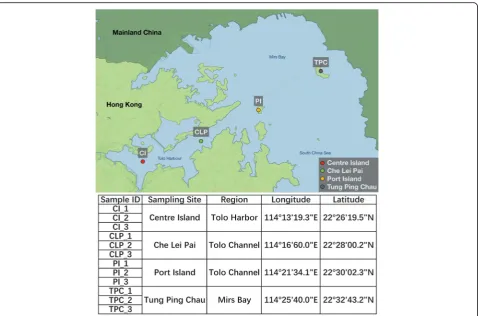
Thus, in our study, we examined four field sites in Tolo Harbour that have different degrees of eutrophication, in-cluding Centre Island (dead oyster reef), Che Lei Pai (sandy bottom with sparse vegetation), Port Island (50% hard coral cover), and Tung Ping Chau (75% coral cover) (Fig. 1). These sites were selected based on seven water quality gradients (Additional file 1: Table S1) and their coral species richness, which made them ideal regions to study the impact of pollution. By using a shotgun metage-nomic approach, we assessed the microbial community composition, the functional characteristics of the micro-bial community, the prevalence of pathogenic bacteria, and the abundance and dissemination potential of ARGs in marine sediments. Lastly, we evaluated the differences in microbial communities among sampling sites in con-nection to representative pollution parameters. Our study revealed that the antibiotic resistome composition of marine sediment microbial communities is significantly different depending on the pollution concentration and, moreover, the distribution of microbial communities is highly associated with the pollution parameters.
Results
Sequencing results
The 12 sediment samples subjected to metagenomic sequencing generated 138.6 Gb of raw data (average of 11.55 Gb per sample). Quality filtering reduced the aver-age raw data to 6.66 Gb of filtered sequencing data per sample. On average, 85.3% of the mapped reads were classified as bacteria per sample, followed by archaea at 12.1% and eukaryotes at 2.6%. The percentage of bacter-ial reads was significantly higher in samples from Centre Island than those from Tung Ping Chau (P = 0.0172, Student’sttest) whereas the percentage of archaeal and eukaryotic reads were significantly lower (P= 0.0222 and
P = 0.0317, respectively). Moreover, the percentage of bacterial reads was also significantly higher in samples from Centre Island compared to those from Port Island (P= 0.0199).
Pollutant concentration profiles
Tung Ping Chau exhibited similar levels of Zn, Pb, Cu, arsenic, and NH3-N.
Comparative analysis of microbial communities in a pollution gradient
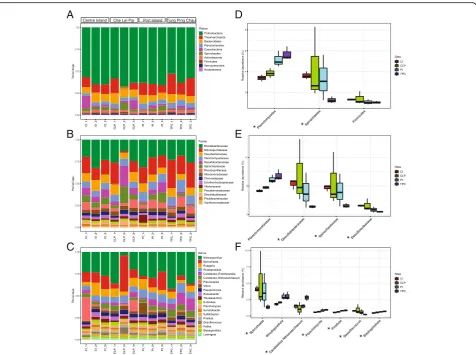
We constructed the total prokaryotic profile by extract-ing all bacterial and archaeal reads among samples at different taxonomic levels from phylum to genus. The most abundant prokaryotic phyla were Proteobacteria
(60.3 ± 4.3%, SD), Thaumarchaeota (12.2 ± 5.7%), and
Bacteroidetes (8.46 ± 1.7%) (Fig. 2a). The five most
abundant prokaryotic families were Rhodobacteraceae,
Nitrosopumilaceae, Flavobacteriaceae,
Planctomyceta-ceae, and Desulfobacteraceae, which comprised on aver-age ~ 42% of the prokaryotic communities (Fig. 2b). At the genus level, Nitrosopumilus (9.1 ± 3.8%) was the most abundant across all communities (Fig. 2c). The comparisons on the relative abundance of prokaryotes among the four sampling sites at the above described taxonomic levels (Additional file 2: Table S2 and Add-itional file 4: Table S4) revealed that Centre Island and Tung Ping Chau had the most dissimilar microbial com-munities with the largest number of significantly
different prokaryotes (at every taxonomic level). Notably,
Planctomycetes was the only phylum showing a
signifi-cant difference among the four sampling sites (P= 0.030, Kruskal-Wallis test), with an increasing abundance from Centre Island to Tung Ping Chau (Fig. 2d). The abun-dance ofPlanctomyceteswas significantly different in the comparisons between Centre Island and Tung Ping Chau (P= 0.014, Student’sttest), Centre Island and Port Island (P= 0.043), and Che Lei Pai and Tung Ping Chau (P = 0.020). Further investigation of its major family
(Planctomycetaceae) and genus (Planctomyces) revealed
the same tendency when comparing Centre Island to Tung Ping Chau (P= 0.022, Kruskal-Wallis test andP= 0.008, Student’s t test, respectively) (Fig. 2e). At the phylum level, we further observed that several human-related prokaryotes had significantly increased abundances in Centre Island compared to Tung Ping Chau, including
Spirochaetes, a phylum that includes potential pathogens
(P = 0.001, Student’s t test), and Firmicutes, one of the most abundant phyla in the human gut microbiome (P= 0.044) (Fig.2f ).
To evaluate the community diversity of each site and the differences in microbial composition among them, we
Fig. 1Sampling information. A map of Tolo Channel (including Tolo Harbour) and Mirs Bay shows the four sampling sites marked in circles of
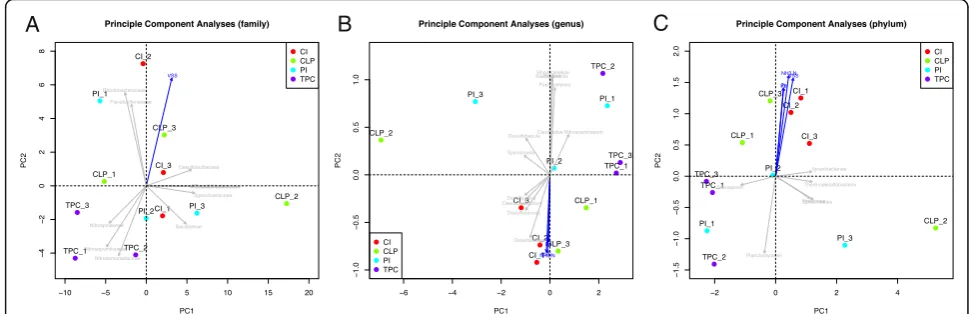
calculated both the alpha and beta diversity using different indices. For the alpha diversity, neither the Shannon nor Simpson diversity indices showed any significant differ-ence among sampling sites (Additional file 7: Figure S2). Notably, the principle component analyses (PCA) based on the most abundant prokaryotes revealed significantly different communities among the four sites at the phylum level (P = 0.048, PERMANOVA). Furthermore, we ob-served clear separations of the microbial communities be-tween Centre Island and Tung Ping Chau at phylum and genus level (P= 0.047 andP= 0.049, respectively) (Fig.3). Four pollution parameters (zinc, lead, total volatile solid, and ammonia nitrogen) were significantly correlated with communities at either phylum or genus levels (P < 0.05, Additional file 5: Table S5) (Fig.3). At the phylum level, the pollution parameters can further serve as potential negative indicators of the distribution ofThaumarchaeota
and Planctomycetes, which were significantly enriched in
Tung Ping Chau (P= 0.008, Student’sttest). At the genus level, the distribution of Desulfatitalea, Desulfococcus,
Desulfobacterium, and Desulfovibrioare positively
corre-lated with the representative parameters to different extents, while four genera ofPlactomycetes(Planctomyces,
Blastopirellula, Pirellula, and Rhodopirellula) were
negatively correlated. At the family level, total volatile solids was the best indicator of the community distribu-tion, and interestingly, was negatively correlated with three nitrifying bacteria (Nitrosomonadaceae,
Nitrosopu-milaceae, andNitrospinaceae).
In addition to the abundance of microbes in the sediment, we also investigated the replication activity of different species, which could reflect changes in active communities. Therefore, we selected the 30 most .abun-dant species among all samples and applied the iRep [21] algorithm for evaluating the replication rate. Among these species, the replication rates of 14 species were es-timated based on sufficient genome coverage among all the samples.Ruegeria conchae, which belongs to
Rhodo-bacteraceae, the most abundant family in all samples,
had on average the highest replication rate compared to 0.00
0.25 0.50 0.75 1.00
CI_1 CI_2 CI_3
CLP_1 CLP_2 CLP_3 PI_1 PI_2 PI_3 TPC_1 TPC_2 TPC_3
P e rcentage 0.00 0.25 0.50 0.75 1.00
CI_1 CI_2 CI_3 CLP_1 CLP_2 CLP_3
PI_1 PI_2 PI_3 TPC_1 TPC_2 TPC_3
P ercentage 0.00 0.25 0.50 0.75 1.00
CI_1 CI_2 CI_3
CLP_1 CLP_2 CLP_3 PI_1 PI_2 PI_3 TPC_1 TPC_2 TPC_3
P e rcentage 2 4 6 8 Planctom ycetes Spiro chaetes Firmicutes Relativ e ab undance (%) Sites CI CLP PI TPC 0 5 10 Planctom ycetaceae Desul fobacteraceae Spir ochaetaceae Desul fob ulbaceae Relativ e ab undance (%) Sites CI CLP PI TPC 0.0 2.5 5.0 7.5 10.0 Spir ochaeta Rhodopirellula Candidatus Nit rosoa rchaeum Planctom yces Pirellula Desulf ococcus Blastopirellula Relativ e a b undance (%) Sites CI CLP PI TPC Phylum Proteobacteria Thaumarchaeota Bacteroidetes Planctomycetes Cyanobacteria Spirochaetes Actinobacteria Firmicutes Verrucomicrobia Acidobacteria Family Rhodobacteraceae Nitrosopumilaceae Flavobacteriaceae Planctomycetaceae Desulfobacteraceae Spirochaetaceae Rhodospirillaceae Alteromonadaceae Chromatiaceae Ectothiorhodospiraceae Vibrionaceae Pseudomonadaceae Desulfobulbaceae Phyllobacteriaceae Xanthomonadaceae Genus Nitrosopumilus Spirochaeta Ruegeria Rhodopirellula Candidatus Entotheonella Candidatus Nitrosoarchaeum Pleurocapsa Vibrio Pseudomonas Roseobacter Thioalkalivibrio Eudoraea Planctomyces Ilumatobacter Sulfitobacter Pirellula Desulfococcus Haliea Blastopirellula Leisingera
Centre Island Che Lei Pai Port Island Tung Ping Chau
A
D
B
E
C
F
* *
* * *
Fig. 2Comparative analysis of the prokaryotic communities among the sampling sites.a,b,cRelative abundance of the most abundant
other species across all sites (P < 10−8, Student’s t test) (Additional file 8: Figure S3). By comparing the replica-tion rate among different sampling sites, we observed that
Candidatus Nitrosopumilussp.NF5had higher replication
rates in Port Island and Tung Ping Chau than in Centre Is-land and Che Lei Pai (P= 0.027).Candidatus
Nitrosoarch-aeum koreensis also showed a higher replication rate in
Tung Ping Chau than in Centre Island (P= 0.031).
Functional shifts contributed by microcommunities
We annotated our metagenomics sequencing data using the KEGG database and constructed the pathway profiles for the microbial communities of each sampling site.
“Nitrogen metabolism”was the most abundant functional
pathway among all samples (6.1%), followed by“oxidative phosphorylation” (5.2%) and “aminoacyl-tRNA biosyn-thesis”(4.8%) (Fig.4a). We implemented FishTaco [22], a novel algorithm for integrating taxonomic and functional comparative analyses to accurately quantify family-level contributions to functional shifts. We performed the ana-lyses by using the microbial communities of Centre Island and Tung Ping Chau, which were the most dissimilar in terms of pollution concentration and were found to have the most diverse prokaryotic composition according to the above analyses.
After comparing the annotated KEGG pathways between Centre Island and Tung Ping Chau, 17 path-ways showed significant enrichment at Centre Island (Additional file3: Table S3). We further extracted the 25 most abundant families in these two sites that comprised over 72% of all the microbial communities. The Pearson correlation coefficient was calculated based on the pathway profile and the abundant family profile (Additional file 9: Figure S4). The results showed an average Pearson correlation coefficient of 0.91, suggest-ing a tight correlation between taxon and functional
profiles. Desulfobulbaceae was found to be the main driver of the enrichment of the sulfur metabolism and benzoate degradation pathways in Centre Island. More-over, Spirochaetaceae served as the driver of the sulfur relay system (also known as sulfur transfer system) in Centre Island. In addition, the trinitrotoluene degrad-ation pathway was found to be enriched in Centre Island and was driven by Chromatiaceae and Nitrosopumila-ceae. (Fig. 4b). To further confirm our findings, Spear-man correlation between the above pathways and families among the four sites were showing overall a relatively good consistency with the Pearson correlation (except the correlation between Spirochaetaceae and sul-fur relay system) (Additional file10: Figure S5).
Putative pathogens and antibiotic resistome
By aligning the taxonomic profiles to a list of potential human pathogens compiled from three different sources [23–25], we discovered opportunistic pathogenic species from 148 genera that comprised 4.92–7.65% of all the microbial communities, among which Vibrio (1.27 ± 1.18%) was the most abundant (Fig. 5a). Typical opportunistic pathogenic species of Vibrio including V.
cholera, V. parahaemolyticus, and V. vulnificus were
found at all the sampling sites. The potential opportunis-tic pathogenic species P. aeruginosa was found to have the second highest abundance (1.23 ± 0.10%). We further calculated the alpha diversity of the putative pathogenic communities among sampling sites using both the Shannon and Simpson indices (Fig. 5b). Alpha diversity decreased from Centre Island to Tung Ping Chau signifi-cantly, with nine putative pathogenic genera that were significantly more abundant in Centre Island compared to Tung Ping Chau (P < 0.05, Student’s ttest) (Fig. 5c). Among them, Bacillus (0.14 ± 0.03%) was the most abundant putative pathogen (P = 0.037). Clostridium,
A
B
C
Fig. 3Community dissimilarities among sampling sites with pollutant vectors.a,b,cPrincipal component analyses for the microbes among sites
another putative pathogen, was enriched in Centre Is-land compared to Tung Ping Chau (P = 0.015), mainly due to increased levels of the species C. tetani. In addition, two putative pathogenic species ofTreponema
(T. denticola and T. pallidum) were found in
signifi-cantly higher abundances in Centre Island compared to Tung Ping Chau (P= 0.015).
Subsequently, we investigated the resistome profiles in the different sampling sites. Among ARG mechanisms, antibiotic efflux pumps (237.24 ± 47.7 RPM—reads per million reads) were the predominant resistance mechan-ism in the sediment communities, followed by target protection (95.74 ± 29.2 RPM), inactivation (65.29 ±
28.6 RPM) and target alteration (43.52 ± 13.2 RPM) (Fig. 5d). Annotation using ResFams identified 17 ARG families. Among the ARG families, five genes that have activities against specific antibiotics were detected in-cluding aminoglycoside, beta-lactamase, fluoroquino-lone, tetracycline, and the chloramphenicol resistance gene (Fig. 5e), and there were no significant differences found among the sites. To evaluate the differences in the ARGs among the sediment samples, we compared the total abundances of the ARGs. The results showed that Tung Ping Chau had the lowest abundance of total ARGs, whereas Centre Island had the highest (P = 0.0001, Fig. 5). Further comparisons of the ARG
A
B
Sulfur_metabolism Sulfur_relay_system Trinitrotoluene_degradation Peptidoglycan_biosynthesis Benzoate_degradation Alanine,_aspartate_and_glutamate_metabolism Synthesis_and_degradation_of_ketone_bodies Histidine_metabolism Taurine_and_hypotaurine_metabolism Aminoacyl−tRNA_biosynthesis Base_excision_repair Pyruvate_metabolism Phenylalanine_metabolism Propanoate_metabolism Starch_and_sucrose_metabolism Arginine_and_proline_metabolism Glycolysis_/_Gluconeogenesis0 4 8
T test statistic (t)
Taxa Acidimicrobiaceae Cytophagaceae Flavobacteriaceae Planctomycetaceae Alteromonadaceae Chromatiaceae Desulfobacteraceae Desulfobulbaceae Methylococcaceae Piscirickettsiaceae Rhodobacteraceae Rhodospirillaceae Thiotrichaceae Vibrionaceae Spirochaetaceae Nitrosopumilaceae Other taxa CI_1.2B CI_2.2B CI_3.3B CLP_1.1B CLP_2.2B CLP_3.3B PI_1.2B PI_2.3B PI_3.1B TPC_1.1B TPC_2.2B TPC_3.1B ABC_t ranspor ters_−_Gene ral Alanin e ,_aspa rtate_and_glutamate_metabolism Amino_sugar_and_ n ucleotide_sugar_metabolism
Aminoacyl−tRNA_biosynthesis Arginine_and_proline_metabolism beta−Alanine_metabolism Butanoate_metabolism C5−B
ranched_dibasic_acid_metabolism Carbon_fixation_in_photosynthetic_organisms Carbon_fixation_path w a ys_in_proka ryo te s Chloroalkane_and_chloroalk ene_deg radation Cit rate_cycle_(TCA_cycle)
Cysteine_and_methionine_metabolism Fatty_acid_degr
adation
Fr
uctose_and_mannose_metabolism Glutathione_metabolism Glycin
e ,_ser ine_and_threonine_metabolism Glycolysis_/_Gluconeogenesis Gly o xylate_and_dicarbo xylate_metabolism
Histidine_metabolism Legionellosis Lysine_deg
radation
Methane_metabolism Nitrogen_metabolism Nucleotide_
e xcision_repair One_carbon_pool_ b y_f olate Oxidativ e _phosphor ylation P
antothenate_and_CoA_biosynthesis Pentose_phosphate_path
wa y Phen ylalanine_metabolism Phen ylpropanoid_biosynthesis Photosynthesis Po rph yr in_and_chloroph yll_metabolism Propanoate_metabolism Pur ine_metabolism Py rimidine_metabolism Py ru v ate_metabolism Ribosome RNA_polymer ase
Selenocompound_metabolism Starch_and_sucrose_metabolism Sulfur_metabolism Thiamine_metabolism Toluene_degr
adation
T
rinitrotoluene_degr
adation
T
ryptophan_metabolism Tw
o−component_system_−_Gene
ral
T
yrosine_metabolism Valine
,_leucine_and_isoleucine_biosynthesis V alin e ,_leucine_and_isoleucine_degr adation 100 200 300
Fig. 4KEGG Orthology annotation and taxonomic drivers of functional shifts between sites.aHeat map of the top 50 abundant KEGG pathway
families showed that three efflux pump genes, RND, baeR, and ABC, were significantly enriched in Centre Island compared to the other sites (P = 0.014, 0.047, and 0.033, respectively).
Discussion
Microbial communities inhabiting marine sediments are extremely diverse due to the complex physicochemical gradients therein [26]. Community dynamics are affected by human activities, particularly those related to water chemistry and quality [13]. Hong Kong has a diverse dis-tribution of highly urbanized and relatively undisturbed coastal environments [27] and provides a perfect oppor-tunity to assess the relationship between microbial communities and different levels of perturbation. Earlier studies have investigated the community of bacteria and ARGs in marine sediments of Hong Kong using both clone libraries and metagenomics [7, 28, 29]. However, they were unable to identify clear patterns in either bacter-ial communities or ARGs. To fill this gap, we constructed a comprehensive pipeline for the proof-of-concept analysis of the microbiome communities, their functional diversity, and the resistome as affected by human activities and pollution levels. Throughout our analysis, we provided
evidence of the impact of different pollution levels on the diversity of microbial communities and their functional-associated genes as well as the risks of increased levels of ARGs and pathogens.
Regarding the prokaryotic profile, we observed an enrich-ment of a number of phyla tightly associated with the hu-man gut and terrestrial biomes in the most polluted areas. These phyla include Spirochaetes, a potential pathogenic phylum causing a wide range of diseases including lepto-spirosis, Lyme disease, and Alzheimer’s disease [30–32],
and Firmicutes, which make up the largest portion of the
human gut microbiome [33]. While the majority of sewage generated from the local population is treated and then redirected for discharge elsewhere (https://www.epd.gov.
hk/epd/wqo_review/en/watQua.htm), the presence of
Firmicutesmay indicate that inputs remain and
Planctomy-cetes, a widely distributed phylum found in a variety of
marine environments [34, 35], exhibits a dose-response sensitivity effect to heavy metals [36] while generally resistant to high concentrations of inorganic nitrogen compounds. In our study, Planctomycetes was the fourth most abundant phylum among the samples, and its abundance was significantly decreased at Centre Island compared to Tung Ping Chau. Combined with the pollu-tion data from the sampling sites, our study suggests that
A
B
C
D
E
F
Fig. 5Comparisons of abundances of potential pathogens and antibiotic resistant genes (ARGs) among samples.aHeat map based on relative
abundances of potential pathogenic genera in different samples.bComparisons of pathogenic alpha diversity among sampling sites.c
Planctomycetes may also serve as an important potential water quality indicator.
By evaluating the microbial diversity at the community level, we observed clear differentiation among the sam-pling sites—especially between Centre Island and Tung Ping Chau—and coherence with the distribution of rep-resentative pollutants. Interestingly, at the genus level, the four sulfate-reducing microbes (SRM) Desulfatitalea,
Desulfococcus, Desulfobacterium, and Desulfovibrio were
found to be positively correlated with pollution levels, sug-gesting that eutrophication increases the abundance of SRM. Previous studies in marine sediments of Hong Kong had also reported the relationship between SRM and pol-lution levels. For instance, pollutants may influence the relative abundance of SRMs to total microbes under a unimodal paradigm while low concentrations of pollutants will decrease relative abundance of SRMs in total mi-crobes [7]. Moreover, with the clone library methods, unique SRM members related to the polluted harbor environment and estimated SRM richness correlated with several environment factors [29].
In our study, we also implemented a novel algorithm, based on sequencing coverage, which was used to calcu-late an index of replication (iRep) for estimating changes in the active microbial communities [21]. Ruegeria
conchaehad the highest replication rate among all sites,
which is consistent with previous studies [37, 38]. These studies have shown that Ruegeria is present in a wide range of marine habitats, from coastal regions to deep-sea sediments, and constitute up to 25% of the total bacterial community. Interestingly, the active commu-nity analysis revealed additional changes in bacterial spp. replication rates along the water quality gradient. Two species of Thaumarchaeota—Candidatus
Nitrosopumi-lus sp. NF5 and Candidatus Nitrosoarchaeum
koreen-sis—which are responsible for the major
ammonia-oxidizing process [39, 40] in sediment, replicated faster in sites with high water quality (i.e., low ammonia; Additional file1: Table S1). The concordance of replica-tion rate with relative abundance not only confirms the adaptation of Thaumarchaeota to low-ammonia condi-tions but also reveals the mechanism by which it can maintain a high abundance.
When investigating pathogenicity among all sites, we observed that Vibrio, including its three opportun-istic pathogenic species,V. cholera,V. parahaemolyti-cus, andV. vulnificus, were the most abundant. These disease-causing strains of Vibrio are associated with infectious diarrhea and are commonly carried by mar-ine animals including crustaceans [41]. Pseudomonas
aeruginosa, the second most abundant potential
pathogenic species in our analysis, is a multidrug re-sistant pathogen and causes a wide variety of serious infectious diseases including meningitis, pneumonia,
and septicemia [42–44]. The alpha diversity calculated from only putative pathogenic microbes decreased significantly from Centre Island to Tung Ping Chau, indicating that pollution inputs influence the local potential pathogen composition. Furthermore, nine opportunistic pathogenic genera were enriched at the most polluted site. Considering that coastal waters are the most impacted by human activities including re-creation (e.g., swimming) and food supply (e.g., fishing and aquaculture), surface or water column sampling to assess public safety may overlook potential pathogen reservoirs in the sediment.
Based on the evidence above, we observed a connec-tion between the extent of polluconnec-tion and the abundance and diversity of pathogenic organisms in marine sedi-ments. Pinpointing the drivers of these patterns is com-plex as feedback loops between both biotic and abiotic process function across multiple spatial and temporal scales. For example, healthy and biodiverse marine ecosystems buffer against the proliferation of bacterial pathogens [5, 45] but foundational species can be sensitive to pollutants. The persistence of diverse coral assemblages at Tung Ping Chau may contribute to in-creased pathogen resistance while the eutrophication of Tolo Harbour and disappearance of coral communities [27] may have reduced this important ecosystem service. More direct links between human activity and pollution stress can be inferred from our antibiotic resistance analysis which shows an increase in the dom-inant resistance mechanisms and abundance of ARGs. It is well known that efflux pumps are the predominant resistance mechanism in sediments [17], and our results further provide the direct evidence that an increase in efflux pump-related genes is correlated to an increase in pollution [46]. These data suggest the in-creased capability of microbes to reduce intracellular concentrations of antibiotics, heavy metals, or other toxins/environmental stresses [17] in polluted sedi-ments. In other words, the increasing efflux pump mechanisms in the microbes would greatly contribute to antibiotic resistance and further presented a growing threat to antibiotic therapy and a major challenge for antibiotic development.
Conclusions
Our investigation of the microbiome composition and functionality in marine sediments revealed that mi-crobe communities are likely influenced by human activity and pollution discharge. Through our analysis, we also identified several microbes within the
Plancto-mycetes phylum that may serve as useful
presented here set the stage for a valuable reference database for environmental assessments and public policy. Therefore, we strive for the continuous sam-pling of these as well as additional sites in Hong Kong to provide new insight into the interactions between humans and coastal marine ecosystems.
Materials and methods
Sampling sites and sample collection
Sampling was conducted in August 2016 from four field sites (Centre Island (CI), Che Lei Pai (CLP), Port Island (PI), and Tung Ping Chau (TPC)) in Tolo Harbour. At each sampling site, 50 g of sediment from the top 10 cm were collected via scuba using sterile 15-mL falcon tubes and were further divided into three aliquots as replicates (Fig. 1). Within minutes after sampling, sediment samples were flash frozen in liquid nitrogen and stored at−80 °C for DNA extraction and metagenomic shotgun sequencing.
Pollution data collection
Seven geochemical indicators (zinc (Zn), lead (Pb), cop-per (Cu), chemical oxygen demand (COD), arsenic (As), total volatile solid (TVS), and ammonia nitrogen (NH3 -N)) were obtained from the Hong Kong Environmental Protection Department’s extensive periodic water and sediment monitoring database [47] (Additional file 1: Table S1) representing the environmental pollution in the sediment including heavy metals and organic matter. These data were obtained from the sediment samples collected in August 2016 at the benthic sediment sam-pling locations. Pollution data were normalized using the minimum-maximum normalization procedure for further analyses (Additional file6: Figure S1).
DNA extraction and metagenomic sequencing
DNA from the sediment samples was extracted using the MoBio PowerSoil DNA Isolation Kit (MoBio, Carls-bad, CA) following the manufacturer’s instructions. DNA concentrations (2.41 ± 1.25μg) were verified using the Qubit Fluorometer and DNA quality was checked via agarose gel electrophoresis (using Takara λ-Hind III digest and the Tiangen D2000 marker) prior to library construction. DNA libraries were constructed using the Nextera XT kit. Metagenomic shotgun sequencing was then performed on an Illumina HiSeq 1500 (101 bp PE) platform. The raw sequence data were uploaded into the Sequence Read Archive of NCBI (accession numbers SRR8361706-17).
Taxonomic profiling
The raw sequencing paired-end reads passed standard quality control after the adapter regions and low-quality reads were removed, as per Li et al. [48]. The filtered
reads were mapped to the nonredundant database using DIAMOND [49] and the default settings. The aligned reads were filtered using an e-value < 1e−10 and a 95% cutoff. The lowest common ancestor (LCA) algorithm was implemented with the LCA mapper from mtools of MEGAN5 [50] for the taxonomic assignment of each aligned read. The relative abundances of each taxa were further distilled from the LCA results for each taxonomic level. Prokaryotic community profiles were constructed at phylum, family, and genus levels for further statistical analysis. Additionally, potential patho-genic species and genera were taxonomically identified using three publicly available lists of putative pathogens [23–25] and further summarized to genus level for statistical comparisons. The organisms appearing on the list were regarded as opportunistic pathogens and the species containing at least one opportunistic pathogenic strain were marked as putative pathogenic species.
Microbial community composition
Alpha diversity indices detailing microbial community composition within each sample was calculated using vegan [51] in R. Both the Shannon and Simpson indices were used for alpha diversity evaluation based on the relative abundance of each taxonomic level. For estimat-ing community dissimilarities, both Bray-Curtis and Euclidean distances were calculated by phyloseq [52] and vegan [51] based on the relative abundance of each taxon at different levels.
Estimation of species cellular replication rate
To estimate the replication rate of the 30 most abundant species, an in-house genome database was constructed manually by obtaining the draft or complete genomes of the target species (either contig or scaffold) from the NCBI Genome database. The high-quality metagenomic reads were mapped to the in-house genome database by Bowtie2 [53]. The mapped results of each target species were further manipulated with SAMtools [54] and were used for measuring replication rates with iRep [21].
Functional annotation
Antibiotic resistance genes (ARGs)
Subsampled reads were mapped against an in-house ARG database based on CARD [57], ARDB [58], and ResFams [59] using BLASTX. Aligned reads were filtered (best hit from BLASTX, identity > 70% and coverage > 70%), classified into different ARG mecha-nisms, and further annotated into ARG families using ResFams. The abundance of ARG genes was calculated as RPKM (reads per million mapped reads).
Data analysis
Three replicate samples were analyzed. Statistical com-parisons of prokaryotic taxonomic profiles, potential pathogens, and ARGs (including clinically important ARGs) were performed by using Kruskal-Wallis tests between the four sampling sites and Student’sttests be-tween each pairwise site in R. The Benjamini-Hochberg FDR correction [60] was applied to adjust the P value for multiple t test comparisons in R (Additional file 4). We performed principal component analysis (PCA) on the relative abundance of taxonomic profiles to evaluate the community dissimilarities using the vegan and ape [61] packages in R (Additional file 11). The pollution parameters were served as fitted vectors in the above multidimensional scaling for testing the correlation between community distributions and pollution levels. Adonis from vegan package in R was used as PERMA-NOVA test to evaluate the significance of a variable in determining variation of distances (the number of permutations were set as 999). The homogeneity of dis-persions test was calculated using PERMDISP from vegan package in R. Pearson’s correlation coefficients were calculated between the taxa-based and KO function-based profiles using FishTaco. Spearman corre-lations were further performed between taxonomic abundance and KO pathways among the four sampling sites based on the FishTaco results using the correlation function in R.
Data visualization
Packages including ggplot2 and gplots in R and matplo-tlib in Python were used for visualization purposes.
Additional files
Additional file 1: Table S1.Representative water quality data from the Hong Kong Environmental Protection Department. (CSV 264 bytes)
Additional file 2: Table S2.Significant statistical comparison result on the top 50 abundant prokaryotes at phylum/family/genus levels. (XLSX 46 kb)
Additional file 3: Table S3.Significantly enriched KEGG pathways in Centre Island comparing to Tung Ping Chau. (XLSX 9 kb)
Additional file 4: Table S4.Taxonomic significant statistical comparison result between Centre Island and Tung Ping Chau with FDR correction. (XLSX 51 kb)
Additional file 5: Table S5.PERMANOVA and PERMDISP results on microbial communities among the four sampling sites. (XLSX 35 kb)
Additional file 6: Figure S1.Representative water quality data among the four sampling sites. (PDF 4 kb)
Additional file 7: Figure S2.The comparison of alpha diversity in the Shannon index among sampling sites. (PDF 4 kb)
Additional file 8: Figure S3.Comparisons of bacterial replication rate among the four sampling sites. (PDF 8 kb)
Additional file 9: Figure S4.Pearson’s correlation coefficients between the taxa-based and KO function-based profiles for the significantly different pathways. (PDF 5 kb)
Additional file 10: Figure S5.Spearman’s correlation results between the correlated pathways and families among the four sampling sites. (PDF 31 kb)
Additional file 11: File S1.Statistical analysis scripts performed in R. (PDF 72 kb)
Abbreviations
ARGs:Antibiotic resistance genes; COD: Chemical oxygen demand; iRep: Index of replication; KEGG: Kyoto Encyclopedia of Genes and Genomes; LCA: Lowest common ancestor; PCA: Principle component analyses; PRD: Pearl river delta; RPKM: Reads per million mapped reads; RPM: Reads per million mapped reads; SRM: Sulfur-reducing microbe; TVS: Total volatile solid
Acknowledgements
The authors would like to thank Dr. Jun Li (City University of Hong Kong, China), Dr. Till Röthig (The University of Hong Kong, China), Dr. Yueqiong Ni, and Dr. Kang Kang (Leibniz Institute for Natural Product Research and Infection Biology, Hans Knoll Institute, Jena, Germany) for valuable discussions. GP would like to thank Deutsche Forschungsgemeinschaft (DFG, German Research Foundation) CRC/ Transregio 124“Pathogenic fungi and their human host: Networks of interaction,” subproject B5 and INF and DFG under Germany’s Excellence Strategy—EXC 2051—Project-ID 390713860 for intellectual input. Funding was provided from the School of Biological Sciences of the University of Hong Kong and an Environment and Conservation Fund award (#67-2016) to GP and DB. This paper is contribution 43 to the Smithsonian’s MarineGEO-TMON program.
Authors’contributions
DMB and GP designed this study. AA and SEM collected the sediment samples from sampling locations in Hong Kong. JC analyzed the data. JC and GP wrote the manuscript and AA, SEM, and DB revised it. All authors read and approved the final manuscript.
Funding
This work was supported by Environment and Conservation Fund (ECF 2016-67).
Availability of data and materials
The raw Illumina sequence data of metagenomic data have been deposited in the sequence read archive (SRA accession: SRR8361706-17) at NCBI under Bioproject accession #PRJNA511137. The scripts for all statistical analysis are available as Additional file11.
Ethics approval and consent to participate
Not applicable
Consent for publication
Not applicable
Competing interests
The authors declare that they have no competing interests.
Author details
1Leibniz Institute for Natural Product Research and Infection Biology, Hans
Knoll Institute, Beutenbergstrasse 11a, Jena 07745, Germany.2Swire Institute
of Marine Science, The University of Hong Kong, Hong Kong SAR, China.
3School of Biological Sciences, Faculty of Science, The University of Hong
The University of Hong Kong, Hong Kong SAR, China. Systems Biology & Bioinformatics Group, School of Biological Sciences, Faculty of Science, The University of Hong Kong, Hong Kong SAR, China.
Received: 21 December 2018 Accepted: 17 June 2019
References
1. McKee JK, Sciulli PW, Fooce CD, Waite TA. Forecasting global biodiversity threats associated with human population growth. Biol Conserv. 2004;115: 161–4.
2. Worm B, Barbier EB, Beaumont N, Duffy JE, Folke C, Halpern BS, et al. Impacts of biodiversity loss on ocean ecosystem services. Science. 2006;314:787–90. 3. Phillips DJ. The use of biological indicator organisms to monitor trace metal
pollution in marine and estuarine environments—a review. Environ Pollution (1970). 1977;13:281–317.
4. Knowlton N, Jackson JB. Shifting baselines, local impacts, and global change on coral reefs. PLoS Biol. 2008;6:e54.
5. Lamb JB, van de Water JA, Bourne DG, Altier C, Hein MY, Fiorenza EA, et al. Seagrass ecosystems reduce exposure to bacterial pathogens of humans, fishes, and invertebrates. Science. 2017;355:731–3.
6. Fuhrman JA, Hewson I. Chapter 25–Viruses, bacteria, and the microbial loop. In: Capone DG, Bronk DA, Mulholland MR, Carpenter EJ, editors. Nitrogen in the marine environment (2nd edition). Amsterdam: Elsevier; 2008. p. 1097–134.
7. Guo F, Li B, Yang Y, Deng Y, Qiu JW, Li X, et al. Impacts of human activities on distribution of sulfate-reducing prokaryotes and antibiotic resistance genes in marine coastal sediments of Hong Kong. FEMS Microbiol Ecol. 2016;92:9. 8. Rasmussen LD, Sørensen SJ. The effect of longterm exposure to mercury on
the bacterial community in marine sediment. Curr Microbiol. 1998;36:291–7. 9. Gillings MR, Gaze WH, Pruden A, et al. Using the class 1 integronintegrase
gene as a proxy for anthropogenic pollution. ISMEJ. 2015;9:1269–79. 10. Xu M, Zhang Q, Xia C, et al. Elevated nitrate enriches microbial functional
genes for potential bioremediation of complexly contaminated sediments. ISMEJ. 2014;8:1932–44.
11. Muyzer G, Stams AJ. The ecology and biotechnology of sulphate-reducing bacteria. Nat Rev Microbiol. 2008;6:441–54.
12. Li LG, Yin X, Zhang T. Tracking antibiotic resistance gene pollution from different sources using machine-learning classification. Microbiome. 2018;6:93. 13. Medeiros JD, Cantão ME, Cesar DE, Nicolás MF, Diniz CG, Silva VL, et al.
Comparative metagenome of a stream impacted by the urbanization phenomenon. Braz J Microbiol. 2016;47:835–45.
14. Ellis TM, Barry Bousfield R, Bissett LA, Dyrting KC, Luk GS, Tsim ST, et al. Investigation of outbreaks of highly pathogenic H5N1 avian influenza in waterfowl and wild birds in Hong Kong in late 2002. Avian Pathol. 2004;33:492–505. 15. Lau SK, Woo PC, Fan RY, Lee RC, Teng JL, Yuen KY. Seasonal and tissue
distribution of Laribacter hongkongensis, a novel bacterium associated with gastroenteritis, in retail freshwater fish in Hong Kong. Int J Food Microbiol. 2017;113:62–6.
16. Scott NM, Hess M, Bouskill NJ, Mason OU, Jansson JK, Gilbert JA. The microbial nitrogen cycling potential is impacted by polyaromatic hydrocarbon pollution of marine sediments. Front Microbiol. 2014;5:108. 17. Chen B, Yang Y, Liang X, Yu K, Zhang T, Li X. Metagenomic profiles of
antibiotic resistance genes (ARGs) between human impacted estuary and deep ocean sediments. Environ Sci Technol. 2013;47:12753–60.
18. Morton B. Hong Kong’s coral communities: status, threats and management plans. Mar Pollut Bull. 1994;29:74–83.
19. Scott PJB. Chronic pollution recorded in coral skeletons in Hong Kong. J Exp Mar Biol Ecol. 1990;139:51–64.
20. Xu F, Lam K, Zhao Z, Zhan W, Chen Y, Tao S. Marine coastal ecosystem health assessment: a case study of the Tolo Harbour, Hong Kong, China. Ecol Model. 2004;173:355–70.
21. Brown CT, Olm MR, Thomas BC, Banfield JF. Measurement of bacterial replication rates in microbial communities. Nat Biotechnol. 2016;34:1256. 22. Manor O, Borenstein E. Systematic characterization and analysis of the
taxonomic drivers of functional shifts in the human microbiome. Cell Host Microbe. 2017;21:254–67.
23. Wattam AR, Abraham D, Dalay O, Disz TL, Driscoll T, Gabbard JL, et al. PATRIC, the bacterial bioinformatics database and analysis resource. Nucleic Acids Res. 2013;42:D581–91.
24. Forsberg KJ, Patel S, Gibson MK, Lauber CL, Knight R, Fierer N, et al. Bacterial phylogeny structures soil resistomes across habitats. Nature. 2014;509:612. 25. Kembel SW, Jones E, Kline J, Northcutt D, Stenson J, Womack AM, et al.
Architectural design influences the diversity and structure of the built environment microbiome. ISME J. 2012;6:1469.
26. Sogin ML, Morrison HG, Huber JA, Welch DM, Huse SM, Neal PR, et al. Microbial diversity in the deep sea and the underexplored“rare biosphere”. Proc Natl Acad Sci. 2006;103:12115–20.
27. Duprey NN, Yasuhara M, Baker DM. Reefs of tomorrow: eutrophication reduces coral biodiversity in an urbanized seascape. Glob Chang Biol. 2016; 22:3550–65.
28. Zhang W, Ki JS, Qian PY. Microbial diversity in polluted harbor sediments I: bacterial community assessment based on four clone libraries of 16S rDNA. Estuar Coast Shelf Sci. 2008;76:668–81.
29. Zhang W, Song LS, Ki JS, Lau CK, Li XD, Qian PY. Microbial diversity in polluted harbor sediments II: sulfate-reducing bacterial community assessment using terminal restriction fragment length polymorphism and clone library of dsrAB gene. Estuar Coast Shelf Sci. 2008;76:682–91. 30. Palaniappan RU, Ramanujam S, Chang YF. Leptospirosis: pathogenesis,
immunity, and diagnosis. Curr Opin Infect Dis. 2007;20:284–92. 31. Schwan TG. Ticks and Borrelia: model systems for investigating
pathogen-arthropod interactions. Infect Agents Dis. 1996;5:167–81. 32. Miklossy J. Alzheimer’s disease-a neurospirochetosis. Analysis of the
evidence following Koch’s and Hill’s criteria. J Neuroinflammation. 2011;8:90. 33. Ley RE, Peterson DA, Gordon JI. Ecological and evolutionary forces shaping
microbial diversity in the human intestine. Cell. 2006;124:837–48. 34. Fuerst JA. The planctomycetes: emerging models for microbial ecology,
evolution and cell biology. Microbiology. 1995;141:1493–506.
35. Fuerst JA, Sagulenko E. Beyond the bacterium: planctomycetes challenge our concepts of microbial structure and function. Nat Rev Microbiol. 2011;9:403. 36. Flores C, Catita JA, Lage OM. Assessment of planctomycetes cell viability
after pollutants exposure. Antonie Van Leeuwenhoek. 2014;106:399–411. 37. Brinkhoff T, Giebel HA, Simon M. Diversity, ecology, and genomics of the
Roseobacter clade: a short overview. Arch Microbiol. 2008;189:531–9. 38. Sonnenschein EC, Nielsen KF, D'Alvise P, Porsby CH, Melchiorsen J,
Heilmann J, et al. Global occurrence and heterogeneity of the Roseobacter-clade species Ruegeria mobilis. ISME J. 2017;11(2):569.
39. Nakagawa T, Stahl DA. Transcriptional response of the archaeal ammonia oxidizer Nitrosopumilus maritimus to low and environmentally relevant ammonia concentrations. Appl Environ Microbiol. 2013;79:6911–6. 40. Kim BK, Jung MY, Yu DS, Park SJ, Oh TK, Rhee SK, et al. Genome sequence
of an ammonia-oxidizing soil archaeon,“Candidatus Nitrosoarchaeum koreensis”MY1. J Bacteriol. 2011;193:5539–40.
41. Hogan CM. Bacteria. Encyclopedia of Earth. Washington DC: National Council for Science and the Environment; 2010.
42. Diekema DJ, Pfaller MA, Jones RN, Doern GV, Winokur PL, Gales AC, et al. Survey of bloodstream infections due to gram-negative bacilli: frequency of occurrence and antimicrobial susceptibility of isolates collected in the United States, Canada, and Latin America for the SENTRY Antimicrobial Surveillance Program, 1997. Clin Infect Dis. 1999;29:595–607.
43. Prithiviraj B, Bais HP, Weir T, Suresh B, Najarro EH, Dayakar BV, et al. Down regulation of virulence factors of Pseudomonas aeruginosa by salicylic acid attenuates its virulence on Arabidopsis thaliana and Caenorhabditis elegans. Infect Immun. 2005;73:5319–28.
44. Kirienko NV, Ausubel FM, Ruvkun G. Mitophagy confers resistance to siderophore-mediated killing by Pseudomonas aeruginosa. Proc Natl Acad Sci. 2015;112:1821–6.
45. Raymundo LJ, Halford AR, Maypa AP, Kerr AM. Functionally diverse reed-fish communities ameliorate coral disease. Proc Natl Acad Sci U S A. 2009;106: 17067–70.
46. Zhu YG, Zhao Y, Li B, Huang CL, Zhang SY, Yu S, et al. Continental-scale pollution of estuaries with antibiotic resistance genes. Nat Microbiol. 2017; 2(4):16270.
47. Hong Kong Environmental Protection Department (EPD). Hong Kong.
http://www.epd.gov.hk/epd/english/resources_pub/publications/pub_
reports_ap.html. Accessed 24 Oct 2016.
48. Li J, Sung CYJ, Lee N, Ni Y, Pihlajamäki J, Panagiotou G, et al. Probiotics modulated gut microbiota suppresses hepatocellular carcinoma growth in mice. Proc Natl Acad Sci. 2016;113:E1306–15.
50. Huson DH, Mitra S, Ruscheweyh HJ, Weber N, Schuster SC. Integrative analysis of environmental sequences using MEGAN4. Genome Res. 2011;21:1552–60. 51. Dixon P. VEGAN, a package of R functions for community ecology. J Veg
Sci. 2013;14:927–30.
52. McMurdie PJ, Holmes S. phyloseq: an R package for reproducible interactive analysis and graphics of microbiome census data. PLoS One. 2013;8:e61217. 53. Langmead B, Salzberg SL. Fast gapped-read alignment with Bowtie 2. Nat
Methods. 2012;9:357.
54. Li H, Handsaker B, Wysoker A, Fennell T, Ruan J, Homer N, et al. The sequence alignment/map format and SAMtools. Bioinformatics. 2009;25: 2078–9.
55. Kanehisa M, Furumichi M, Tanabe M, Sato Y, Morishima K. KEGG: new perspectives on genomes, pathways, diseases and drugs. Nucleic Acids Res. 2016;45:D353–61.
56. Xie C, Mao X, Huang J, Ding Y, Wu J, Dong S, et al. KOBAS 2.0: a web server for annotation and identification of enriched pathways and diseases. Nucleic Acids Res. 2011;39(Suppl 1):316–22.
57. McArthur AG, Waglechner N, Nizam F, Yan A, Azad MA, Baylay AJ, et al. The comprehensive antibiotic resistance database. Antimicrob Agents Chemother. 2013;57:3348–57.
58. Liu B, Pop M. ARDB—antibiotic resistance genes database. Nucleic Acids Res. 2008;37(Suppl1):443–7.
59. Gibson MK, Forsberg KJ, Dantas G. Improved annotation of antibiotic resistance determinants reveals microbial resistomes cluster by ecology. ISME J. 2015;9:207.
60. Benjamini Y, Hochberg Y. Controlling the false discovery rate: a practical and powerful approach to multiple testing. J R Stat Soc Ser B Methodol. 1995;57(1):289–300.
61. Paradis E, Claude J, Strimmer K. APE: analyses of phylogenetics and evolution in R language. Bioinformatics. 2004;20:289–90.
Publisher’s Note