Journal of Education and Training Studies Vol. 5, No. 11; November 2017 ISSN 2324-805X E-ISSN 2324-8068 Published by Redfame Publishing URL: http://jets.redfame.com
Determining Teachers’ Educational Needs Regarding School Education
Projects within the Scope of Erasmus + Programme
Fatma Karakuş1, Melis Yeşilpınar Uyar2, Nur Leman Balbağ31Çukurova University, Faculty of Education, Department of Primary Education, Adana, Turkey
2Çukurova University, Faculty of Education, Department of Educational Sciences, Adana, Turkey
3Uşak University, Faculty of Education, Department of Primary Education, Uşak, Turkey
Correspondence: Melis Yeşilpınar Uyar, Çukurova University, Faculty of Education, Department of Educational Sciences, Adana, Turkey.
Received: September 14, 2017 Accepted: October 10, 2017 Online Published: October 12, 2017 doi:10.11114/jets.v5i11.2653 URL: https://doi.org/10.11114/jets.v5i11.2653
Abstract
The purpose of this study was to determine teachers’ educational needs regarding school education projects within the scope of Erasmus+ programme. In the study, the case study method, one of qualitative research designs, was used. The participants were determined using the snowball sampling method, and eight secondary school teachers took part in the study. The research data were collected via semi-structured interviews and analyzed using the inductive analysis method. The results of the analysis revealed that the teachers had certain knowledge about the processes of planning, implementation and evaluation of the projects and that they did not acquire the necessary related skills at all, though. It was also found that the group work process and lack of related knowledge, skills and experience were among the factors making the functioning of the process difficult and that professional development was not fully achieved. All these results demonstrate that teachers are need of an in-service training which focuses more on the steps of the application process and on the integration of the objectives of the process into the curriculum and which aims to help acquire the related skills considering the functioning of the process as a whole.
Keywords: Erasmus+, European Union project, needs analysis, teacher training
1. Introduction
Erasmus+ programme, which is executed within the scope of European Union Education and Youth Programme, is applied in years from 2014 to 2020. The programme, which covers the fields of education, teaching, youth and sports, aims to help individuals acquire new skills regardless of their ages and educational backgrounds, to develop their personal developments and to increase their opportunities of employment. When the activity areas of the programme are examined with respect to teachers’ professional development and students’ education, it is seen that the programme simultaneously providing both teachers and students with the related services functions in the area of the activities of “Strategical Partnerships in School Education” within the scope of the main action of “Cooperation for Innovation and Exchange of Good Practices” (Center for European Union Education and Youth Programmes, 2017a).
The activity area of Strategical Partnerships in School Education is a follow-up of Comenius Program, which was put into practice between 2007 and 2013 and which was found among the education and youth programmes most popular in Turkey in those years. The programme provides service for the purposes of developing, transferring and/or applying innovative practices at institutional, local/regional, national or international levels and supports strategical partnership projects among the educational institutions in member countries of the programme (Center for European Union Education and Youth Programmes, 2017b). In addition, the activity area in question aims to let the education staff and students recognize different cultures, to help acquire the life skills necessary for personal development and for becoming an effective European citizen, to encourage raising awareness of various cultures and to develop teachers’ skills in the area of international education. Barzanò (2002) states that with Erasmus+ projects, teachers are provided with the opportunity to work in different areas in which they can develop their social skills, effective communication skills and group-work skills.
development of all the individuals in the Project team, support especially teachers’ personal and professional development, and make important contributions to the education system as these projects allow learning about different education systems and making related comparisons (Aydoğan & Şahin, 2006; Bozak, Konan & Özdemir, 2016; Demircioğlu, Yavuz-Konokman & Akay, 2015; Haspolat & Özkılıç, 2007; Lembet, 2008; Öztürk, 2016). When viewed from the school dimension, especially strategical partnerships are reported to develop the relationships between students and teachers as well as between teachers and administrators, to increase parents’ interest in school, to let students participate in the process, to develop students’ self-confidence and to provide participants with the opportunity to recognize and investigate their own cultures (Acir, 2008; Aydoğan & Şahin, 2006; Bahadır, 2007; Dilekli, 2008; Öksüm-Erdoğan, 2009). In addition, project processes provide institutions with the opportunity to do self-evaluation with a more autonomous approach and to determine their areas they need to develop (Barzanò, 2002).
When international studies carried out on European Union projects are examined, it is seen that school partnership projects contribute to the development of teachers and students as well as to the development of local governments, increase teachers’ professional knowledge and skills, their social skills and personal responsibilities, and develop their language proficiencies (Dumitrescu, Drăghicescu, Olteanu & Suduc, 2014; Liduma, 2014; Talmo, Radojicic, Orevi & Mogli, 2014; Vabo, 2007). In addition, it is reported that project processes increase students’ motivation, make positive contributions to the development of innovative teaching approaches, and improve the communication between teachers and students (Barzanò, 2002; Dumitrescu et.al., 2014; Gutiérrez Colón-Plana, 2012; Helsinki University, 2003; Somekh et.al., 2007; Talmo et.al., 2014; Thorsteinsson & Page, 2008; Viladot et.al., 2017).
When studies in related literature were taken into account within the context of Turkey, it was seen that most of the studies include national reports and studies conducted by commissions (Kulaksız, 2010). Besides, it was found that some of the studies evaluated the project processes and their effects with respect to the views of students, teachers and administrators. It was also seen that these studies allowed participants to learn about and understand different cultures, to raise their awareness of these different cultures, encouraged intercultural communication and developed the participants’ language skills (Akay & Yanpar-Yelken, 2012; Aydoğan & Şahin, 2016; Bozak, Konan & Özdemir, 2016; Haspolat & Özkılıç, 2007; Kesik & Balcı, 2016; Kulaksız, 2010; Tatlı, 2016; Öztürk, 2016; Yalçın-İncik & Yanpar-Yelken, 2009).
The results obtained in both national and international studies demonstrate that European Union projects mostly make positive contributions to participants and institutions. On the other hand, it is seen that some other studies reported in related literature focused on the difficulties and problems experienced in the whole project process. For instance, in one study carried out by Kassel (2007), it was revealed that the problems experienced in the process of conducting Erasmus+ projects included local administrators and teachers’ lack of interest and support regarding the process who are all actually expected to take an active role in the process or. Yalçın-İncik and Yanpar-Yelken (2009) point out that participants experience problems in terms of working in groups and taking responsibility in the process of conducting the projects, while Haspolat and Özkılıç (2007) state that the most important difficulty experienced by project coordinators is related to finding a partner and filling out the application forms. In addition, Kulaksız (2010) reports that school education projects contribute to the encouragement of intercultural communication and that the projects do not help increase the quality at all, though. Also, other similar studies demonstrating that participants experience difficulty especially in the application process suggest increasing their levels of knowledge and project processes (Bahadır, 2007; Bozak, Konan & Özdemir, 2016; Helsinki University, 2003; Türkoğlu & Türkoğlu, 2006).
In European Union Education and Youth Programmes, which involve Norway, Liechtenstein, Iceland, Switzerland and Croatia apart from 27 European Union countries, The Turkish National Agency ranks first among 33 countries that apply the programme in terms of the total number of requests for project applications in Europe. This situation demonstrates that European Union projects receives more interest in Turkey every passing year and that the number of projects prepared is increasing gradually. Considering this interest in European Union projects, it could be stated that it is important to determine participants’ educational needs regarding the process of project preparation not only with respect to experiencing fewer problems in the phases of preparing, conducting and evaluating the projects but also in terms of allowing participants and institutions to benefit most from the process. In this respect, the present study aimed to determine the educational needs of teachers regarding the school education projects within the scope of Erasmus+. In line with this purpose, the following research questions were directed:
• What are activities carried out by teachers in the processes of planning, implementation and evaluation of the projects?
• What are personal and professional contributions of projects to participants?
Journal of Education and Training Studies Vol. 5, No. 11; November 2017
2. Method
In the present study, which aimed to determine teachers’ educational needs regarding school education projects within the scope of Erasmus+, the case study method, one of qualitative research methods, was used. Case studies are empirical studies which examine an up-to-date phenomenon in its real-life context (Yin, 2013). As in other qualitative research approaches, a case study does not serve the purpose of generalization, it allows in-depth examination considering various units ranging from a single individual to a school (Lichtman, 2012). In the present study, the activities of planning, implementation and evaluation carried out by teachers in project processes constituted the analysis units, and with the help of these activities, the problems experienced in the process and the areas that needed development were subjected to in-depth examination. Therefore, in the study, the case study method was adopted.
2.1 Participants
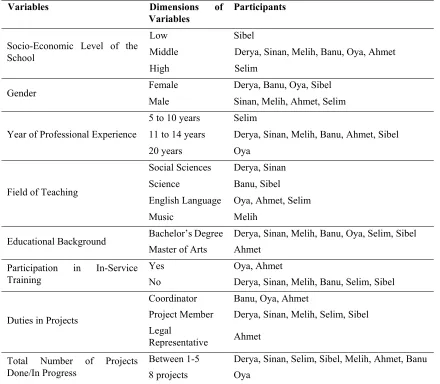
The study was carried out in the Spring Term of the academic year of 2016-2017 with teachers working at schools in different cities which belonged to the Ministry of National Education. While selecting the participants, the snowball sampling method, one of purposeful sampling methods, was used. In this respect, semi-structured interviews were held with a total of eight teachers. The snowball chain sampling method was used as it is an effective method used for determining individuals who can constitute a rich source of data regarding the problem. In this method, the process starts with the question of “Who could have the most information about this subject? Who would you like me to interview in relation to this subject?”. The number of names determined in line with the progress in the process increases like a snowball (Yıldırım & Şimşek, 2006). In this way, the individuals to be interviewed are determined, and the number of these individuals starts to decrease. In the present study, the first interview was held with the teacher coded as Oya, and the sample group was then expanded by directing the question of “Who would you like me to interview?”. Table 1 presents personal information about the teachers participating in the study.
Table 1. Characteristics of the participants
Variables Dimensions of Variables
Participants
Socio-Economic Level of the School
Low Sibel
Middle Derya, Sinan, Melih, Banu, Oya, Ahmet
High Selim
Gender Female Derya, Banu, Oya, Sibel
Male Sinan, Melih, Ahmet, Selim
Year of Professional Experience
5 to 10 years Selim
11 to 14 years Derya, Sinan, Melih, Banu, Ahmet, Sibel
20 years Oya
Field of Teaching
Social Sciences Derya, Sinan
Science Banu, Sibel
English Language Oya, Ahmet, Selim
Music Melih
Educational Background Bachelor’s Degree Derya, Sinan, Melih, Banu, Oya, Selim, Sibel
Master of Arts Ahmet
Participation in In-Service Training
Yes Oya, Ahmet
No Derya, Sinan, Melih, Banu, Selim, Sibel
Duties in Projects
Coordinator Banu, Oya, Ahmet
Project Member Derya, Sinan, Melih, Selim, Sibel Legal
Representative Ahmet
Total Number of Projects Done/In Progress
Between 1-5 Derya, Sinan, Selim, Sibel, Melih, Ahmet, Banu
As can be see to low and hi level. Moreov experience we a teaching exp In addition, it in projects as revealed that o
2.2 Data Colle
In order to col forms prepare information ab and so on). F processes of contributions determine the 150 minutes. The research d the data were between the c In the study, consistency cr ensure credib tools and for about the prep the study, to e were used in their views ab of the discuss data, a compu
3. Results
This part pres
3.1 Activities
This part pres way to includ the sub-catego
When Figure determined th members, dist addition, two
en in Table 1, o gh socio-econ ver, four of the ere examined, perience for m was found tha a coordinator one teacher too
ection and Ana
llect the resear ed by the rese
bout them (ye Following this
planning, app of their projec ir suggested so
data collected arranged and ategories were for the data riteria were us ility, expert vi
the analysis o paration of the ensure the crite
the findings p bout all the pro ions held with uter-aided quali
ents the findin
Carried out in
ents the findin de the related d ories regarding
Figure 1 is examined he project topic tributed the d of the particip
of all the teach nomic levels, w
teachers were it was seen th more than 10 ye
at two of the t r; four as proj ok part in eigh
alysis
rch data, the in archers were u ar of professio s, the teacher plying and eva ct works, to de
olutions to the
via the intervi coded. Next, e formed. a gathered wit
ed (Lincoln & iews and part of the data. In data collectio erion of transf art of the stud ocesses from th h the experts, t itative data an
ngs obtained in
n the Processes
ngs regarding t dimensions of g the activities
e 1. Activities c d, it is seen th cs, filled in the duties in line w
pants stated th
hers participati while six of th e female, and f at one teacher ears; and that s teachers had ta ect members a ht projects and
nterview metho used. In this r onal experienc s were directe aluating schoo etermine the pr ese problems. T
ews were anal the related cat
th the qualita & Guba, 1985 c ticipants’ confi n the methodol on tools, about ferability, the r dy. As for cons he preparation the categories alysis software
n the study und
s of Planning, I
the activities th f planning, imp the teachers c
carried out in t at in the proce e application fo with the fields hat they establ
ing in the stud hem worked at four of them w had a teaching six teachers ha aken training o and only one
that the rest of
od was applied respect, the tea ce, field of teac ed questions ol education p roblems they e The interviews
lyzed using the tegories were
ative data col cited in Yıldırı firmation were logy part of th
the data collec research proces sistency and c
of the data col and the codes e was used to i
der sub-heading
Implementatio
he teachers car plementation a carried out in th
the preparation ess of preparat orms, planned
s of expertise lished commu
dy, two of them t schools belon were male. Whe g experience b ad a teaching e on Erasmus+ p as a legal rep f the teachers t
d. During the i achers were d ching, educati to identify th projects, to re experienced in s held on face
e method of in formed, and th
llection tools, ım & Şimşek, e used for the
he study, the p ction process a ss was describ confirmability llection tools t were finalized increase the va
gs.
on and Evaluat
rried out while and evaluation he preparation
n process of the tion of the sch and developed and shared th unication with
m were teacher nging to the m en the teachers between 5 and experience bet projects, while presentative in took part in 1 t
interviews, sem directed questio onal backgrou he activities th eveal the pers n their project p
-to-face basis
nductive analys he models sho
the credibilit 2006). Also, in
development participants w and about the bed in detail, a of the study, e to the analysis d. In addition, alidity and reli
tion of the Proj
e conducting th n. Figure 1 sho
process.
e project work hool education d the activities he project top the out-of-sch
rs at schools b middle socio-e s’ years of prof
10 years; that tween 11 and 1 e three of them
projects. Also to 5 projects.
mi-structured in ons to obtain und, project ex hey carried ou sonal and prof processes as w lasted between
sis. In this resp owing the relat
ty, transferabi n the study, in of the data c were informed analysis of the and frequent qu experts were a of the data. A
for the analys iability of the s
oject Works
heir project w ows the catego
ks
n projects, the , determined th pic with the sc
hool environm elonging conomic fessional one had 14 years. m worked o, it was
nterview personal xperience ut in the fessional well as to n 30 and
pect, first, tionships
ility and order to ollection in detail e data. In uotations asked for s a result sis of the study.
orks in a ories and
Journal of Educ
one participan determining th communicatio determining th There is its curre projects we shou applicati that has
Figure 2 illus planning proc
Fi As can be see sharing the pr than one parti the meeting h mentioned the schedule and d said:
Every da we go? I talked ab replied to ‘what ar music ro always h
Figure 3 prese evaluation of t
cation and Train
nt reported that he project top on with the ou he project topi
an idea put fo ent location, o might have be uld remember ion form… we never tried bef
strates the cat ess carried out
igure 2. Activi en in Figure 2 roducts and ac icipant. In add hours in the p e communicat different meas
ay, this issue w Is there any an bout these issu o them; and so re you doing? oom. From tim had dialogues l
ents the catego the project wo
ning Studies
t s/he conducte pic, the partne ut-of-school en c, one of the te
rward, and we or its expectati een conducted
that everyon can reshape t fore. Our proje
tegories and t t in the process
ities carried ou 2, in the proce ctivities online dition, two of t process. Also, tion establishe surement tools.
was unavoidab nswer? And thi
ues, and we kn o on. We cons ’ Sometimes, a me to time, the like these (Mel
ories and sub-c orks.
ed needs analy ers and the gro nvironment, we
eachers said:
e evaluate this ions. The proj d before, or the e has their o the idea. I mea ect idea should
the sub-catego ses of conduct
ut in the proces ss of conducti e and integrati the participant , it was seen ed with the fa
. In relation to
ly brought into is and that. We new everything tantly talked to at the end of s
teacher put fo lih, p. 3).
categories rega
ysis. All the pa oup members, ere found to w
project idea a ject idea is su e project idea own peculiar an there is no n
d be meaningfu
ories regardin ting and monit
ss of conductin ing the project ing course con ts mentioned th
that in the p amilies and th the importanc
o agenda. Wel We didn’t talk ab
g about these o each other a school days,… forward ideas a
arding the acti
articipants, who , filling in the work as a coor
according to th upposed to inc might have be style. If we need to redisc ful to others (O
g the activitie toring their pro
ng and monitor t works, activi ntents into pro he flexibility b phase of moni
hat they moni ce of planning
ll, there were a bout any other
issues like ‘th about these iss I saw the tea about the mus
ivities carried
Vol. 5,
o explained in e application f rdinator in the
he needs of the clude originali
een put into p can express o over America; Oya, p. 6-7).
es the teacher oject works.
ring of the proj ities like plann oject topic wer
brought into th itoring the pro itored the proc prior to mobil
always questio r thing in those hat mail has b
sues. For exam acher; we did
sical pieces to
out by the tea
No. 11; Novem
detail the proc forms and esta process. In re
e institution, its ity. Of course, practice previo
ourselves well ; we won’t do
rs who compl
oject works ning prior to m re carried out he course cont ocess, the par cess by using lity, one of the
ons like ‘what e two years. W een received; mple, someone these and thos be played. I m
chers in the pr mber 2017 cesses of ablishing elation to s culture, , similar usly, but l in our anything
leted the
mobility, by more tents and rticipants a work teachers
time will We always we have asks me se in the mean we
F When Figure necessary info partners and p tools as websi One of the tea
While fin supposed the road report ab filled in t
Another partic
During t and the w with the 3.2 Personal a
In relation to contributions
When Figure the field of ge cultures and i stated that th pointed out th
Figure 3. Activ 3 is examined ormation onlin provided the s ites, printed m achers explaine
nalizing the p d to share som d, distance calc
bout what we that report via
cipant mention
the activities ca website of the teachers work and Profession
another dime of the project p
Fig 4 is examined eneral culture. improvement e project wor hat the projec
vities carried ou 1, it is seen tha ne, filling in th supplementary aterials and so ed the process
project, there me information
culation, the b had done bes a the website on
ned the activiti
arried out for e school. Also, king at schools nal Contributio
ension of the processes to th
gure 4. Person d, it is seen tha In this respec of foreign lan rks provided o t works allow
ut in the proce at while finaliz he final report, documents. F ocial media and
of filling in th
is a website o about what w budget, and th sides what was n the Internet
ies carried out
the disseminat we published in the city (Ba ons of the Proj
findings obtai hem. Figure 4
al and professi at the participan
ct, such issues nguage were m
opportunities t wed them to in
ess of finalizing zing their proje , checked appr For the sake of d shared the pr he final report w
on the Interne we have done h
here was a par s planned and (Sinan, p. 4).
for the dissem
tion of the proj d the related ne
anu, p.5). ject Works
ined, the parti shows the cate
ional contribut nts mostly me as recognizing mentioned by
to develop in ntroduce and r
g and dissemin ect works, the ropriateness to f the dissemin rojects with co while finalizin
et. It is about here via that w rt called ‘repo d about to wha
mination of the
ojects, we effec ews in local p
icipants menti egories regardi
tions of the pro ntioned the co g different cul more than on terest in diffe represent their
nating the proj teachers share o the criteria, h nation of the p olleagues and f ng the project:
t European U website. We sha
ort’. We were at extent we a
projects, sayin
ctively used the press. We held
ioned the pers ing the particip
oject works ontributions of
ltures, commu ne participant. erent fields, an
r country. One
ect works ed the products held meetings project, they u families in the
Union mobility. ared informatio
expected to p achieved the g
ng:
e website of th introductory m
sonal and prof pants’ related v
f the project wo unicating with
Also, one pa nd another pa e of the stude
s and the with the sed such process.
We are on about
repare a oals. We
e project meetings
fessional views.
Journal of Educ
pointed to rec
As I said with the visiting o
It was found t mentioned rec allowed learn providing the Course, menti
I had the mean, fo and Italy informat 3.3 Factors M
Figure 5 pres project proces
As can be see related to lack in preparing a (f:2) and sele problem (f:4) constituted th forming the p participants m
Another p Turkey, o partners biggest d
In the other di environment a
cation and Train
ognition of dif
d before, thank schools in the other countries
that in relation cognition of d ning about diff
school with ioned professio
e opportunity t or example, the y are poor like tion about thes Making the Proj
ents the categ sses difficult.
en in Figure 5 k of knowledge a budget plan ecting the part ) made the pr he dimensions project team, mentioning the
problem was t only the teach . In other cou deficiency was
imension of th and on the syst
ning Studies
fferent cultures
ks to this proje ese countries. s even as a trip
to the contribu different educ ferent teaching
financial supp onal contributi
to learn about e classes are th e us. Also, the se countries (D
ject Processes
gories and sub
Figure 5. 5, the first dim e, skills and ex
appropriate to tners (f:2) and rocess difficul
of determinin ensuring origi difficulties the
that neither th hers of Englis untries, the tea lack of a forei
he factors maki tem. These pro
s said:
ect, I visited se We were intro p really contrib
ution of the pr ation systems g methods, tra port. One of t
ions of project
education syst he same. As Ir eir populations Derya, p. 9).
s Difficult
-categories reg
Factors makin mension of the xperience. In th o the European
d that unequa lt. The other ng appropriate
inality of the ey experienced
he teachers nor sh Language achers and the ign language (
ing the proces oblems, which
even, or eight, oduced to peop butes to a pers
roject works to . In addition, ansferring up-t the project me t works, saying
tems in other c reland is quite s, and the geog
garding the pa
ng the project p e problems ex his respect, it w n standards (f: al contribution
problems bas project topic, application fo d due to their l
r the students can speak a f e students did
(Banu, p. 4).
s difficult, the included socia
countries in t ple there. We son’s life a lot
o professional d the participan to-date develo embers, who w g:
countries. I rec a rich country graphical form
articipants’ vie
processes diffi xperienced by was seen that t 2), filling in t ns of the grou ed on lack of integrating th orm and effec anguage probl
can speak a fo foreign langua not have any
e participants m al events restri
Vol. 5,
two years. We went there for (Melih, p. 8).
development, t nts reported t opments into c
was a teacher
cognized that t y, it is a bit diff mations… I lea
ews about the
icult
the participan the participant the application up members ( f knowledge, he project topi ctive time man lem said:
foreign languag age, and this language prob
mentioned the icting mobility
No. 11; Novem
compared our r project purpo
the participant that the projec class environm of the Social
they are all the fferent from us
arned a lot of
factors that m
nts in the proc ts mostly had d n form and fin
f:2) and the l skills and ex ic into the cur nagement. On
ge. In the grou makes us qu blem, so I can
problems base y (f:3), partner
mber 2017
r schools oses, but
ts mostly ct works ment and l Studies
e same. I . Poland f detailed
made the
cess was difficulty al report language xperience rriculum, ne of the
up called ite weak n say the
to make the n and families a the calculatio knowledge, pr states, and bu school culture The othe process… provide teachers. 3.4 Suggestion
Figure 6 prese project proces
As can be se seminars for t reported that t importance of
Alternati person c
In the study, i language skil studies. In add effective ways forward differ language skill
I told th applicati while fill
necessary effor anxiety about e on mistakes in rofessional wo ureaucratic corr e not open to d
er teachers did … Therefore, I any support j . Also, there is ns Regarding t
ents the catego sses.
Figu een in Figure
the disseminati they needed an f guidance by t
ive spontaneou ould be asked
it was seen tha ls, steps of th dition, accordin
s to find a par rent ways of co ls said:
his in all the s ion form, and ling in the form
rt (f:2), school exams (f:2), w n the system, orkload, famili respondences. development sa
d not support u I can say it wa
just because th s no mission, v
the Developme
ories and
sub-ure 6. Suggesti 6, the particip ion of the proj n in-service tra the national ag
us solutions c to pay the cos
at the in-servic he application ng to the parti rtner, on determ
ommunication
seminars. They it is 64 pages ms. Therefore,
culture not op were mentioned the administ ies’ failure to One of the pa aid:
us in their less as not efficient. hey are teach ision or openn ent of the Proje
-categories reg
ons regarding pants suggeste ects throughou aining for the gency said:
an be put forw st (Ahmet, p. 3)
ce training sug process, effe cipants, the tra mining project n with partners
y really have . And some fo
we have to spe
pen to develop d by more than trators’ negati
understand th articipants who
sons. They did . Actually, we hers. They com ness to change
ect Processes
garding the pa
the developme ed structural r ut Europe and development o
ward by consu ).
ggested by the ective distribut ainings to be o t topics as wel s. One of the p
to speak a fo rms include 6 eak English (O
pment (f:3), in n one participa ive attitudes a he contribution o stated that s/
d not put music of course gain me and teach …(Derya, p. 1
articipants’ sug
ent of the proj regulations lik establishment of process. On
ulting nationa
participants s tion of duties, organized shou ll as on planni participants me
oreign languag 67 pages, and s Oya, p. 10).
efficient admin ant. Among th and behaviors ns of the proje /he experience
c into the foreg ned something
their lessons. 1).
ggestions for th
ect processes ke guidance by
t of the project ne of the partic
l agency expe
should cover d , budget mana uld not only foc ing the mobilit entioning the d
ge. Well, they some 62. But t
nistrative supp he other proble
s and their in ects, families’
ed difficulty du
ground in the g. Our teachers
I mean they
he developmen
y the national t execution cou
cipants mentio
erts... Also, the
development of agement and cus on putting ty process but development o
are just fillin they never use
port (f:3) ms were nefficient financial ue to the
teaching s did not are just
nt of the
agency, uncil and oning the e related f foreign practical forward also put f foreign
Journal of Education and Training Studies Vol. 5, No. 11; November 2017
Another participant who worked as a coordinator in the projects stated that the in-service trainings should cover the steps of the project application processes and said:
I know all of them now. I don’t have any specific demand for the moment. For those new beginners, I would ask them to explain what to write down in each section of the application form, how to write it and what to mention because the trainings are too general; they do not provide any detail (Banu, p. 5).
4. Discussion, Conclusion and Implications
The findings obtained in the study revealed that the teachers preparing for school education projects determined the project topics filled in the application forms, prepared the activities and distributed the duties. In addition, it was found that several activities were carried out to execute, evaluate and maintain the process via such activities as disseminating the project works, planning prior to mobility, sharing information and products with partners, filling in the final report and checking appropriateness to the criteria. In other studies investigating teachers’ views about project processes, similar results were obtained in that the participants in these studies generally mentioned activities like determining the project topic, labor division regarding the activities, determining the partners and sharing the products in the process of mobility (Barzanò, 2002; Gutiérrez Colón-Plana, 2012; Öztürk, 2016; Türkoğlu & Türkoğlu, 2006).
In addition, it is seen in the guide prepared by the National Agency that in relation to planning before application, special importance is given to such issues as appropriateness to programme criteria and checking financial conditions (Turkish National Agency, 2017) and that the phases of the project application process in the international platform were explained in detail with the support of visuals (European Commission, 2016). In this respect, the findings demonstrated that the teachers mostly took the suggested basic phases into account for the activities they carried out in relation to planning, implementation and evaluation of the project processes. In addition, when the findings were elaborated, it was revealed that the coordinator had the responsibility in such activities as filling in the application form and final report which directed the whole process and sharing the products and activities and that the other members took active roles in some phases of the process. This situation demonstrates that there were some problems with the selection of the group members while planning the project works and that the duties were not effectively distributed among the group members. This view is also supported by the finding that the participants mentioned unequal contributions of the group members. However, it was seen that with the school education projects within the scope of Erasmus+, different areas were created for the development of the teachers’ social skills, their effective communication skills and their group work skills. In addition, among the goals of project processes is to allow institutions to do self-evaluation with a more autonomous approach and to determine the areas they need to develop (Barzanò, 2002). The fact that the opportunities provided by project processes lead to problems rather than development could be associated with the dependence between group members, with lack of motivating factors influential on this dependence and with inefficient development of the institutional culture. This view is also supported by the fact that the participants mentioned such environment-based and system-based problems as inefficient administrative support and the school culture not open to development. In one study carried out by Kassel (2007), it was reported that the problems frequently experienced in the process of execution of projects include local administrators or teachers’ lack of interest and support in the process who are actually expected to take an active role in projects. In another similar study, it was revealed that the participants experienced problems in relation to taking responsibility and working in groups in the process of execution of the projects (Yalçın-İncik & Yanpar-Yelken, 2009). Therefore, as suggested by Akay and Yanpar-Yelken (2012), while forming the project team, personal characteristics and academic proficiencies of teachers willing to take part in the process should be taken into account. When examined in more detail, the findings also pointed out that project coordinators should be informed about the selection of group members. In addition, it is thought that more concrete regulations are necessary to increase administrators’ support for project processes and to support teachers’ participation in project works. These regulations could include not only increasing the financial funds provided for schools, administrators and teachers taking part in project processes but also providing administrators and teachers with the opportunities to be promoted within and out of the institution.
When the other problems experienced in the process were examined, it was seen that the participants had difficulty more in such issues as preparing a budget plan appropriate to European standards, filling in the application form and final report and selecting the partners. The results reported by Haspolat and Özkılıç (2007) who found that the most important difficulty experienced by project coordinators was related to finding partners and filling in application forms are consistent with the related findings obtained in the present study. In addition, other similar studies also revealed that participants experience difficulty in the application process, and based on the results, increasing their levels of knowledge about the process was suggested (Bahadır, 2007; Bozak, Konan & Özdemir, 2016; Helsinki University, 2003; Türkoğlu & Türkoğlu, 2006).
processes. In this respect, it was found that the project works made important contributions to developing language skills, establishing interaction with different cultures and recognizing different cultures. This finding is parallel to those obtained in other national and international studies which reported that project works allow participants to recognize and understand different cultures, to raise awareness of different cultures, to encourage intercultural communication and to develop language skills (Akay & Yanpar-Yelken, 2012; Aydoğan & Şahin, 2016; Barzanò, 2002; Bozak, Konan & Özdemir, 2016; Haspolat & Özkılıç, 2007; Kesik & Balcı, 2016; Kulaksız, 2010; Liduma, 2014; Tatlı, 2016; Öztürk, 2016; Yalçın-İncik & Yanpar-Yelken, 2009). On the other hand, one striking finding obtained in the present study was that there was a limited number of participants mentioning professional development and that these participants mostly pointed to the contribution of project works to the recognition of different education systems. The results of another study carried out by Kulaksız (2010) demonstrated that Erasmus+ school education projects contribute to encouragement of intercultural communication and that the contribution of the projects to increasing the quality in education was not at the desired level, though. In the related study, it was also found that the goals of participants in Turkey mostly include visiting other countries, bringing prestige to school, and meeting other teachers and administrators in other schools participating in the projects.
The priorities of the National Agency (2017) in the field of school education include informing teachers and school administrators about effective teaching methods and about information and communication systems, coping with culturally-mixed classroom environments, and acquiring such skills as using new teaching methods and tools in class. In addition, it is pointed out that new teaching methods and materials and language skills should be developed with the help of school education projects (Gordon, 2001; Kirss & Uus, 2007). International studies and the reports in European Union countries show that the goals in question have been achieved to a great extent. Related studies demonstrate that project processes contribute positively to the development of innovative teaching approaches, to the communication between teachers and students as well as to student motivation (Barzanò, 2002; Dumitrescu et.al., 2014; Gutiérrez Colón-Plana, 2012; Helsinki University, 2003; Somekh et.al., 2007; Talmo et.al., 2014; Thorsteinsson & Page, 2008; Viladot et.al., 2017).
In addition, while international studies provide important data regarding the contributions of projects to professional development of teachers, the findings obtained in these studies also demonstrate that professional development targeted by Erasmus+ school education projects remains limited to such basic information as recognizing different education systems. In this respect, it is thought that the skill-related outcomes have not been achieved at all. Participants’ lack of knowledge, skills and experience in relation to the functioning of the projects could be regarded as an important factor restricting professional development. The reason is that in order to achieve professional development at the desired level, functioning of school education projects should be integrated into the curricula. This integration process requires teachers to associate project topics with the learning outcomes and to carry out activities appropriate to the project goals in the teaching process. Also, for the purpose of achieving professional development at the desired level, participants’ knowledge and skills regarding the functioning of projects and the integration of these projects into the curriculum should be developed. Results of other studies supporting this view demonstrate that teachers’ related knowledge, skills and experience are among the basic factors influential on the success of the projects (Akay & Yanpar-Yelken, 2012; Bahadır, 2007; Gordon, 2001; Gutiérrez Colón-Plana, 2012; Romano, 2002; Tatlı, 2016; Yalçın-İncik & Yanpar-Yelken, 2009; Viladot et.al., 2017). Regarding the suggestions for the development of the process, it was found that most of the participants needed an in-service training on Erasmus+ school education projects. Moreover, the participants’ views about the contents of such in-service trainings revealed that they mostly focused on foreign language skills, on the steps of the application process and on effective distribution of the duties. The participants also mentioned such dimensions as budget management, determining the project topics, the reporting process, mobility and communication with the partners. When the participants’ suggestions regarding the development of projects were examined as a whole, it was seen that they pointed to the need for an education process which is supported by practical studies for the acquisition of skills. These views of the participants are consistent with the results of other related studies (Önen, Mertoğlu, Saka & Gürdal, 2010; Tatlı, 2016; Türkoğlu & Türkoğlu, 2006) which draw attention to the importance of practical studies for the improvement of project processes.
Consequently, in the present study, it was found that the teachers had certain knowledge about the planning, implementation and evaluation of Erasmus+ school education projects and that they failed to acquire the necessary skills at the desired level, though. It was also revealed that the group work process and lack of knowledge, skills and experience regarding the process were among the factors making the functioning of the projects difficult and that professional development was not achieved at all.
Journal of Education and Training Studies Vol. 5, No. 11; November 2017
structural regulations which inform local governments and school administrators about the contributions of European Union projects and which encourage teachers participating in these projects to take a more active role.
Lastly, the results obtained in the present study were limited to the views of eight participants. For this reason, future studies could be carried out with a more comprehensive study group to determine and deal with the educational needs of teachers regarding European Union project processes.
Note
This study was presented at 26th International Conference on Educational Sciences (April 20-23, 2017, Antalya, Turkey).
References
Acir, E. (2008). Searching the comenius projects process in schools. Unpublished master’s thesis, Yeditepe University, Turkey.
Akay, C., & Yanpar-Yelken, T. (2012). The aspects of project attendant teachers about European Union education and youth programmes projects. Social Sciences Research Journal, I, 277-294.
Aydoğan, İ., & Şahin, A. E. (2006). The contribution of Comenius school partnership projects to achievement of Comenius objectives. Educational Administration: Theory and Practice, 48(48), 455-480.
Bahadır, H. (2007). The opinions of the school administrators and teachers on what level they can benefit from comenius projects. Unpublished master’s thesis, Kırıkkale University, Turkey.
Barzanò, G. (2002). School self-evaluation towards a European dimension. European Journal of Teacher Education,
25(1), 83-100. https://doi.org/10.1080/0261976022000012886
Bozak, A., Konan, N., & Özdemir, T. (2016). The views of teachers school directors and educational inspectors towards European Union educational programs. Gümüşhane University Electronic Journal of the Institute of Social Sciences, 7(15), 1-23. http://dx.doi.10.17823/gusb.192
Center for European Union Education and Youth Programmes (2017a). Erasmus + programme. Retrieved from http://www.ua.gov.tr/
Center for European Union Education and Youth Programmes (2017b). Strategical partnerships in school education. Retrieved from http://www.ua.gov.tr/
Demircioğlu, T., Yavuz-Konokman, G., & Akay, C. (2015). The effect of proactivity of academicians’ at education faculty on their attıtudes towards European Union lifelong learning. Electronic Journal of Social Sciences, 15(59), 1120-1137. http://dx.doi.10.17755/esosder.08908
Dilekli, Y. (2008). Analyzing effects of the comenius projects applied in Aksaray the year between 2006-2007 on students, teachers, schools and courses. Unpublished master’s thesis, Niğde University, Turkey.
Dumitrescu, C., Drăghicescu, L., Olteanu, R. L., & Suduc, A. M. (2014). Key competences for sustainable development–aspects related with SUSTAIN project activity. Procedia-Social and Behavioral Sciences, 141, 1101-1105. https://doi.org/10.1016/j.sbspro.2014.05.185
European Commission (2016). Erasmus +: Technical guidelines for completing application e-forms. Retrieved from http://ec.europa.eu
Gordon, J. (2001). The internationalisation of education–schools in Europe and the SOCRATES programme. European Journal of Education, 36(4), 407-419. https://doi.org/10.1111/1467-3435.00078
Gutiérrez Colón-Plana, M. (2012). The reality of Comenius projects in ten Catalan educational institutions. Gist Education and Learning Research Journal, 6, 190-212.
Haspolat, E., & Özkılıç, R. (2007). The opinions of Comenius school partnership project coordinators about projects process. Eurasian Journal of Educational Research, 7(27), 163-177.
Helsinki University (2003). Intermediate report on the implementation of the SOCRATES programme in Finland
(Report No. 41/2003). Finland : Publications of the Ministry of Education.
Kassel (2007). Impact of the comenius school partnerships on the participant schools: Final Report. Germany: Association for Empirical Studies.
Kesik, F., & Balcı, E. (2016). Evaluation of The EU projects in terms of the contributions to schools: A scale development study. Kastamonu Education Journal, 24(4), 1621-1640.
Tallinn: PRAXIS Center for Policy Studies.
Kulaksız, E. (2010). The participant’s opinions of the implemantations of European Union Comenius programmes in Turkey. Unpublished doctoral dissertation, Kocaeli University, Turkey.
Lembet, Z. (2008). The contribution of cultural interaction of European Union education an exchange program's in learning foreign language. Unpublished master’s thesis, Gazi University, Turkey.
Lichtman, M. (2012). Qualitative research in education: A user's guide. Thousand Oaks: Sage Publications.
Liduma, A. (2014). Citizenship promotion opportunities: reflections on the Comenius project ‘me and my Europe: Intercultural challenges of modern pre-primary education. In P. Cunningham & N. Fretwell (Eds.), Innovative practice and research trends in identity, citizenship and education (pp. 280 – 285). London: CiCe.
Öksüm-Erdoğan, D. (2009). Evaluation of Comenius program’s level of achieving its goals according to the opinions of administrators and teachers taking part in the program. Unpublished master’s thesis, Kırıkkale University, Turkey. Önen, F., Mertoğlu, H., Saka, M., & Gürdal, A. (2010). The effects of in service training on teachers’ knowledge about project-based learning and competencies for conducting projects: Öpyep case. Ahi Evran University Journal of Education, 11(1), 137-158.
Öztürk, E. (2016). Evaluation of effectiveness of European Union’s Comenius program according to attending teachers’opinions. Unpublished master’s thesis, Uşak University, Turkey.
Romano, M. (2002). Training teachers for quality education in Europe. European Journal of Teacher Education, 25(1), 11-17. https://doi.org/10.1080/0261976022000012822
Somekh, B., Lewin, C., Saxon, D., Woodrow, D., Sing, S., & Convery, A. (2007). Evaluation of the ICT test bed Project: The qualitative report. Retrieved from http://www.evaluation.icttestbed.org.uk.
Talmo, T., Radojicic, K., Orevi, M., Ramstrand, A., & Mogli, M. (2014). Identifying the logical structure of languages by use of new interactive mobile services, new diagnostic training methods for development of key competences, and new evaluation methods introducing assessment for learning practices. Retrieved from http://histproject.no/sites/histproject.no/files/D%207_1%20-%20Exploitation%20strategy%20guideline%20in%20 English.pdf
Tatlı, Z. (2016). Teachers opinions about project development processes. YYU Journal Of Education Faculty, XIII(I), 631-656.
Thorsteinsson, G., & Page, T. (2008). Blended learning approach to improve in-service teacher education in Europe through the FISTE Comenius 2.1 project. Educatia, 21, 291-297.
Turkish National Agency (2017). Erasmus+ KA2- stratejik ortaklıklar: Okul eğitimi stratejik ortaklık projeleri başvuru rehberi. Retrieved from http://www.ua.gov.tr.
Türkoğlu, Ş., & Türkoğlu, R. (2006). The views of school managers and coordinator teachers who applied to Comenius 1 school partnership projects. Inonu University Journal of the Faculty of Education, 7(12), 125-154.
Vabo, A. (2007). Evaluation of the Leonardo da Vinci and SOCRATES programmes in Norway: Final report (Report No. 26/2007). Oslo: NIFU STEP.
Viladot, L., Hilton, C., Casals, A., Saunders, J., Carrillo, C., Henley, J., ... Welch, G. (2017). The integration of music and mathematics education in Catalonia and England: Perspectives on theory and practice. Music Education Research, 1-12. https://doi.org/10.1080/14613808.2017.1290595
Yalçın-İncik, E., & Yanpar-Yelken, T. (2009). Elementary school teachers opinions about the European Union education projects. e-Journal of New World Sciences Academy, 4(3), 923-940.
Yıldırım, A., & Şimşek, H. (2006). Sosyal bilimlerde nitel araştırma yöntemleri. Ankara: Seçkin Yayıncılık. Yin, R. K. (2013). Case study research: Design and methods. Sage publications.
Copyrights
Copyright for this article is retained by the author(s), with first publication rights granted to the journal.