Flipp
Corresponden Siirt, Turkey. Received: Aug doi:10.11114/j Abstract Technological rescuing educ our study, is t without depen particularly fo language skill use of the pra Classroom an model was bro emphasis was were made. Keywords: fl 1. Introductio1.1 Education
On behalf of k trade, politics, the need of qu deprived of te missing. Educ for the daily n provided by te related to the u Technological utilization of t continue to in technology tak (2001) uses th many fields ra this generation ways of using from technolo Thanks to FA environment a 1This study h presented in X Association (A
ped Clas
nce: Assist. Pr
gust 22, 2016 jets.v4i11.182
l development ation from loc the learning m nding on their or the courses a
ls require pract actice environm
d settled to the owsed at first, s laid on the av ipped classroo on
n and Technolo
keeping up wit , and tourism c ualified labor f
echnology. Be cation cannot b needs of indiv echnological to usage of these l tools have be tools such as c ncrease day by
kes part in all he concept of anging from e n. This conditi g technology in ogy.
ATIH project, as well. Techn has been prepa XVIII. World AMSE-AMCE
sroom Le
of. Dr., Erhan
Accepte 5 U
ts, which ente king in certain model called Fl r teachers and aimed at teachi tice rather than ment. It is exp e literature as
and then theor vailability of th om learning mo
ogy
th technologica can also be see force for these ecause, if these be separated fro viduals. Almos ools. If individu
tools more eff ecome the cent computer, inter y day (Bayhan
fields of life. E
digital citizen
education to en ion shows itse n a more purpo it is shown nology began t
ared with refer
Congress with E-WAER) in E
earning M
Ed
E n Akın, Siirt U
ed: September URL: http://dx
ered into educ n environments lipped Classro
classrooms an ing skills. Turk n theory. Learn
pected to be l "Flipped Clas retical framew his model in T odel, Turkish e
al developmen en in the educa fields. Educat e opportunitie om technologic st all communi uals can meet w fficiently and e
ter of our dail rnet, telephone n, Olgun and Especially new
ns for new gen ntertainment, f
lf in FATIH pr oseful and effic that technolo to take its pla rence to notic h "preparing t skisehir Anado 100
Model and
ducation
1 Erhan Akın University, Facr 22, 2016 x.doi.org/10.11
cational enviro s by expanding
om. In this mo nd breaking o kish education ning and teachi earned at the sroom". For th ork of the stud Turkish educati education, ava
nts; changes an ation field. Ed tion field, whic
s are not used cal developmen
ication and en with these tool effectively, thes y lives. They e etc., which ar
Yelland, 2002 w generation is neration in his from trade to t roject, which i cient way are b ogical develop ace in educatio e called "An today's educat olu University
Jo I
d Its Avai
culty of Educa
Online Pub 1114/jets.v4i11
onment, led u g its domain. O odel, students ff from them. n is a course tho
ing of a skill ca highest level his purpose, th dy was created ion. Recomme
ilability
nd transformati ducation covers ch has utmost d in education nts not only fo nlightenment w
ls very often, th se tools should continue to m re used in orde 2). This area o s born and grow s study. Digita
tourism. Techn is put into effe being pursued pments can be onal environme Analyze on F tion for the fu between 30 M
ournal of Educa Vol. 4, N SSN 2324-805X
Published URL
ilability i
ation, Turkish blished: Septem 1.1825up new develo One of these de
are able to co This model m ought for basic an be provided by a model w he field related by reaching re endations relate
ions made in m s and directs a
importance, ca n, any part of or the above-me ways of people hen trainings s d be used for th make rapid prog er to facilitate t of utilization e ws with techno al citizens use
nological tools ct by the Mini
instead of prot e used for st ent with this p Flipped Classro uture" by Wor May - 2 June 20
ation and Trainin No. 11; Novem X E-ISSN 2 by Redfame P L: http://jets.redf
in Turkish
Education Dep
mber 29, 2016
opments on b evelopments, su ontinue their e may be more c language skil d as a result of which is called d to Flipped Cl elevant source ed to field of t
many fields suc all these fields.
annot be consi all other field entioned fields e used in daily should be given heir trainings. gress. Rate and the lives of ind expands gradu ology. Indeed,
technological s are indispens istry of Educat
tecting new ge tudents in edu project. In cla oom Learning ld Education 016.
ng Studies mber 2016 324-8068 Publishing fame.com
h
partment
behalf of ubject of ducation effective lls. Basic effective Flipped lassroom s and the the study
ch as art, It meets idered as s can be s but also y life are n to them d area of dividuals, ually and
students use tools such as smart boards, tablets etc. for learning, and they continue to use them at home for cases like homework, practice etc. Odabaşı and Namlu (2008) stated in their study that audio-visual tools, computer technologies provide great contributions to teachers and students in their studies as a result of the development of technology. Information related to life show improvement day by day in communication and information era. It is unlikely to keep up with this speed through traditional ways. As a result of this, educational environments which are appropriate for all stakeholders of the education, who don't receive information as is, question, use technological tools effectively, improve themselves to have critical thinking skills, should be established. One of the significant ways to create such educational environments is educational environments, in which technological tools are included to work.
It is thought that including technological tools into work provides benefit to all stakeholders of education. This condition is also seen in the studies carried out in this field (Davis& Shade, 1994; Odabaşı, 2010; Tezci and Perkmen, 2013; Spector, 2013). Technological developments, which entered into educational environment, led up new developments on behalf of rescuing education from locking in certain environments by expanding its domain. One of these developments, subject of our study, is learning model called Flipped Classroom.
1.2 Flipped Classroom Learning Model
In this model, students are able to continue their education without depending on their teachers and classrooms and breaking off from them. The requirement of the student-oriented education system as a principle of constructivist education system can be met by this training and students can commune with education at all hours of the day wherever they want by this system. In this way, student will have prior knowledge about the subject before he/she comes to the classroom. Students can learn theoretical information before they come to classroom and they can spend their time for practice in the classroom. Learning or teaching of a subject can be provided by effective use of field of application. It is expected to be learned at the highest level by a model which is called as Flipped Classroom and settled to the literature as "Flipped Classroom".
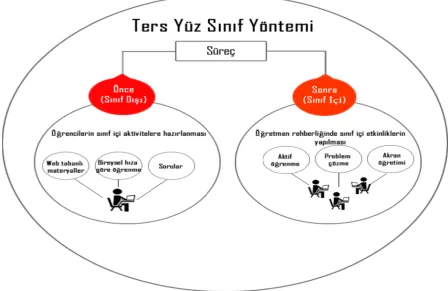
Flipped classroom learning model is a learning model, which is being discussed for a long time abroad and given importance in our country in recent years. Radical changes are being realized in the education environment with this model. Now students learn theoretical information at home and have courses focused on practice in the classroom. The allocation of time to practice by students may be a great opportunity on behalf of learning environment (Tucker, 2012) and more qualified, effective classroom environment can be created with this model (Bergman and Sams, 2012; Fautch, 2015). Flipped classroom can be defined as a model, which gives students the opportunity to reach and use information individually, while recommending them to do the things they will do in the classroom at home and do the things they will do at home in the classroom through solving their own problems by themselves (Verleger& Bishop, 2013). Thus, student can apply for learning methods without depending on the classroom environment. The exact opposite situation of traditional teaching ways is experienced. The course is not thought by teacher in the classroom by straight speech or other methods. Teacher supplies information related to course to his/her student before coming to the classroom and students learn this information at home first and then come to the classroom with the knowledge about the subject. Therefore, thanks to students coming to the classroom with the prior knowledge about the subject, more time remains for group works and practices in the classroom.
It is stated in some studies made abroad in body of literature that students having education with flipped education model are more active and open for improvements compared to students having education with traditional method, while successes of students increase with this model, more subjects can be taught in courses, teachers can spend most of their time for practices and activities, students have positive attitudes towards flipped classroom learning model and their motivation levels are always at the top level (Gannod, Burge &Helmick, 2008; Strayer, 2012; Johnson and Renner, 2012; Tune, Sturek and Basile, 2013; Mason, Shuman and Cook, 2013; Davies, Dean and Ball, 2013; McGivney-Burelle and Xue, 2013; Touchton, 2015). It has been emphasized that flipped learning model is a great innovation, but its field of utilization hasn't been expanded yet as desired, especially universities didn't do in-depth practices and theoretical studies at desired level (Roach, 2014; Bergmann and Sams, 2012; Mattis, 2014). In some studies,it is stated that flipped classroom learning model doesn't increase success but this model is welcomed warmly by students (Johnson and Renner, 2012; Missildine, Fountain, Summers and Gosselin, 2013; Findlay and Mombourquette, 2013; Love, Hodge, Grandgenett and Swift, 2014).
Some studies conducted about Flipped Classroom model in our country can be listed as follows:
Journal of Education and Training Studies Vol. 4, No. 11; November 2016
102
not be successful. Then they emphasize that "Flipped Classroom" learning model is one of the models outstanding in the West and draw attention that students can monitor theoretical information outside the class where they want unlike traditional methods and can make activities given to them as homework with the guidance of their teachers in classrooms.
In his “A Case Study About the Implementation of Flipped Classroom Model in Schools (2015)” titled thesis, Gençer examined the use and applicability of Flipped Classroom educational model, which is known as the displacement of homework and in-class activities and stated as activating the student during the learning process, and made a case study in a school. As a result of this study, the researcher stated that even though the workload of teachers increase in cases as making research related to learning the model, preparation and presentation of the course materials within the scope of the implementation of flipped classroom model; yet students play a more active role in the learning process, take their own individual learning responsibilities and spend more time for in-class activities with the transformation of homework process which they find boring. As a result of this, he stated that this model is accepted by students and makes significant contribution to the success of students.
In their study prepared from the doctoral thesis called “A New Approach in Higher Education: Opinions of the Students for Flipped Classroom Method”, Turan and Göktaş (2015) tried to determine the opinions of students about flipped classroom method. As a result of the study, it is stated that students have quite positive opinions regarding Flipped Classroom method. Afterwards, they drew attention to positive opinions of the students as a result of that flipped classroom method increases the persistency of learning, it facilitates learning, it is an enjoyable and flexible method. Another point to be taken into consideration are the disadvantages of flipped classroom method as there is lack of technical tools, it takes lots of time, videos are required to be watched prior to courses.
In their “Achievability of Flipped Classroom Model in Mobil Learning Environments” titled study, Torun and Dargut (2015) remarked the crowded number of students in the current environment and insufficient course time to perform the learning activities. They also emphasized the importance of Flipped Classroom model that will meet the expectations of the students. By this model, students state that they realize their information process through non-class activities. In class, they express an opinion on the subject of strengthening learning and sparing more time for practices. They emphasize that in this model they don't adhere to any place in non-class activities as seen in mobile learning.
In their “Course at Home, Homework at School” titled study, Demiralay and Karataş (2014) stated that flipped or inverted classroom, Course at Home, Homework at School(flipped classroom) model, which prevails often in foreign literature, is a learning model trying to stand out in our country recently. They argued about the place of Course at Home; Homework at School model in blended learning environments and examined the development of the model and the contribution of the model to learning environments in their study.
Based on the findings obtained as a result of the research made by Demiralay (2014) under the name of “Analysis of Course at Home, Homework at School Model Adoption Process within the Framework of Diffusion of Innovation”, he emphasized that Course at Home, Homework at School Model is associated with education with tablet; there isn't any change agent in the diffusion process; there are different decision processes in teacher-teacher, student-teacher, administrator-teacher, parent-teacher systems; need variable is effective on the decision of model use, and age groups, grade levels, exam preparation status of students are effective on the decision of non-use. The common sense attributed to Course at Home, Homework at School Model is that; it is useful and observable learning model for students; for teachers it is a mixed flexible learning model, requiring the use of tablets, appropriate depending on experience, applicable in several course times or throughout the whole course, requiring perception of institutional support.
In his “Implementation of Flipped Learning Model in Individual Instrument Violin” titled study, Sever (2014) says that it is a model taking students to the center in-class practices. Then, he put the flipped classroom learning into effect in the field of violin education. The researcher got his student to watch a video, which was prepared for the student who couldn't come to class due to health problems, and tried to teach his course by this way. The researcher took and analyzed the opinion of the student for this implementation after the course. As a result of the analysis, the implementation of flipped classroom learning method in individual violin courses saved time for the stakeholders of the education and made teaching more effective and efficient. The student felt himself more comfortable and was motivated better to improve his skills in this direction by this model.
In his “Evaluation of Flipped Classroom Implementation in English Teaching” titled thesis, Boyraz (2014) analyzed the effect of the new Flipped Classroom teaching method in English teaching on academic success and retention. He concluded that the experimental group, who were taught by flipped classroom method, was at a greater level in terms of academic success than the control group, who were taught by traditional method.
students withi "Population" classroom mo students wher experimental g When reviewi learning mode the education Classroom lea activities in cl Zownorenga a in the classroo methods by th to prior-watch classroom can When body of seen as follow
F 2. Availability Flipped Classr education is Learning and expected to be "Flipped Clas As basic lang flipped classro give lesson on teacher may tr
in the scope o subject of So odel. Videos p rever and whe group which w ing body of the el throughout t
system reverse arning model, lassrooms. Eve as follows: Flip om by being m he teacher duri
h.Thus, teache n be evaluated
f literature is r ws:
Figure 1. Flippe y of Flipped C room Learning a course thou
teaching of a e learned at the
sroom". guage skills ar
oom learning m nly about lang ransmit the vi
f Scientific an cial Sciences repared in acc enever they w was taught by u e literature, it s the studies. As es. Traditional in which infor erything has ch pped classroom monitored at h
ing course tim er gains the ab
in a more effe reviewed, the c
ed Classroom Classroom Lea
g Model may b ught for basic
a skill can be e highest level e in touch wit model in this c guage skills o
deos and pres
nd Technologic to control gro cordance with want. As a res using flipped c seen that tradit it can be unde model, in whi rmation is tried hanged by this
m approach ca home. Then, it me in class. It is bility to deal ective manner ( comparison of
Learning Mod arning Model be more effect language ski provided as l by a model, w th each other course is poss
r teach throug entations that
cal Research C oup by norma
the flipped cl sult of the stu classroom meth tional educatio erstood from th ch information d to be learnt b model. Serçem ame up with th
is intended to s achieved wit with students (Zownorenga, f flipped classr
del with Traditi l in Turkish E tive particularl ills. Basic lan a result of the which is called and all require ible. It may no gh some activi have been pre
Council of Tur al teaching and
lassroom mod udy, an increa
hod.
onal methods a he comparison n is transferred by students, an meli (2015) tran he idea of givin o absorb in adv th the help of v s one to one i
2013). room learning
ional Educatio Education
ly for the cour nguage skills r
e effective use d Flipped Clas
e application, ot be enough f
ities put into earranged or se
rkey (TUBITA d to experime del were reque
ase was obser are compared w
of these two m d by teacher, gi nd this informa nsfers this situ ng education t vance given in video records, in-class time.
model with tra
on Models (Tur
rses aimed at t require practic e of the pract ssroom and set it is thought t for the teachin
practice mostl eem applicable
AK) project. H ental group by sted to be wat rved in the su
with flipped cl models; the situ
ves its place to ation is reinfor uation in the stu
traditionally co nformation by which give po So, time spen aditional mode
ran, 2015)
eaching skills. ce rather than tice environme ttled to the lite
that the availa ng of language ly by the teac e to the studen
He taught y flipped tched by uccess of lassroom uation in o Flipped ced with udy from ontinuing different ossibility nt in the el can be
Journal of Education and Training Studies Vol. 4, No. 11; November 2016
104
flipped classroom learning model. The teacher may prepare some questions about the knowledge that is prearranged for the students gained by them after the presentation. Students may have theoretical knowledge about the subject before attending to the class based on these presentations and talk about the questions that are asked to show their knowledge about the presentations. The teacher may use the time saved for giving theoretical knowledge to the class in order for the application phase of basic language skills. Considering speech skill in connection with the lesson, the practices may be carried into when students attend in the class instead of giving theoretical information about prepared speech required by this skill. Thus, the time is saved and the students are not bored in the class due to the theoretical knowledge given through simple expression. Discussions may be arranged and some more effective and productive applications can be done in order to develop verbal skills of the students.
Considering the writing skill, the situation is the same. Considering that the knowledge required to be given in the class about writing skills have been learnt by the student before, more effective and productive lessons can be taught in order for both writing and evaluation process at the class environment.
2.1 A Recommendation about the Teaching of Ottoman Turkish Course with Reference to Flipped Classroom Learning Model
2.1.1 Preparation to the Lesson
With reference to the flipped classroom learning model, the preparations required to be realized by the teacher and learners of the Ottoman Turkish Lesson have been dwelled on. The aim of Ottoman Turkish lesson is to make students gain the language skills and their processes. The preparation phase for Ottoman Turkish lesson should be application oriented. Teachers primarily should limit the subject that they are going to teach. They should clearly determine what, when and how long they teach. It increases the quality of lesson presentations to be prepared and affects the effectiveness on the presentations. It may be useful that the teachers start working by determining the platforms that they will share videos with their students. It may be social networks, e-mail or other platforms. They should prepare a video presentation about the lesson or use the presentations comply with the target of the lesson through the resources that are accord with the subject. The timing of these presentations should be arranged according to the students and subjects as long videos may affect students negatively. These videos should pertain to the theoretical part of the lesson. Students should have knowledge about the subject before attending to the class. The informative presentations to be submitted to the students should clearly explain the subject in general terms and contain various visual and audial stimulus. For instance, if alphabet is being taught, short information should be given concerning the historical development of Arabic letters and it is ensured that students should focus on the subject. Afterwards, the articulation about the pronunciation of these letters should be given. The writing of Arabic letters should be shown practically. Some examples should be indicated about the cursive and separate letters. The usage of real environments in videos may be more effective. The effectiveness of the videos may be enhanced by showing letters in colors, presenting important aspects in different color tones and preparing videos in the class using the board. The videos should be watched by those who prepared them or another expert of the field if possible from beginning till the end and the deficiencies should be removed if they exist. Thus the videos are put in the final form.
After preparing videos properly, it should be clarified about what students may learn from the videos. Relatedly, study papers should be prepared on an electronic platform. The short, clear and proper questions should be prepared for the parts before and after the video. Thanks to the questions before the video, the students shall have knowledge about the reason for watching those videos. Besides, the questions may provide high motivation to students before the video. Afterwards, they should answer the questions about the things they have learnt from the videos. Through these questions, the students may make self-evaluations about the things they learned and prove that they have watched those videos. It may help practitioner to have knowledge about the rating of the videos and may also have more comfortable practicing environment in the class.
Lesson presentations and study papers are uploaded to the determined platform with students after being reviewed once more. The students should be informed in advance about the time of uploading operation. The process works better if the practitioners follow up their students constantly and have a good command of knowledge about the platforms where the applications will be loaded.
Table 1. Pre-lesson preparations of teacher and students
Preparation of teacher Preparations of student
Determination of the time of uploading and platforms where
teachers share the videos with the students. Determination of the time of uploading and platforms where the students share the videos with teachers. Subject is determined. Follows up the lesson presentations and study papers before the
lesson. Presentations are prepared about the subject or suitable
presentations are determined. Has an opinion about the subject and evaluates what s/he learns thanks to study papers. Presentations are reviewed with the experts and they are
finalized. Has a positive attitude towards lesson as s/he is informed about the subject. Questions are prepared for the parts before and after the lesson
presentations. Attends class with a high level of motivation.
Questions are reviewed again with the presentations -Lesson presentations and study papers are uploaded to the
determined platform.
-Students are monitored in the platform after uploading process. -2.1.2 Teaching the Lesson
With reference to the flipped classroom learning model, the teaching phase of Ottoman Turkish lesson should be handled after the preparations of teacher and learners for Ottoman Turkish lesson. After the preparations indicated in preparation phase, the students attend to the class with knowledge of the subject. Firstly, the teachers, in order to determine their knowledge, draw out the students about some questions specified in study papers. Furthermore, the teachers draw out students about the knowledge which is expected to be gained during the lesson presentations. The teacher verifies that all of them have watched lesson presentation. In the contrary case, the teacher takes measure by finding out the source of the problem.
The teachers pass to practice part after a brief introduction for the lesson. For instance, the teachers make students recognize the Arabic letters by calling them to the board. The practice of writing on the board and pronunciation are made by the teacher. Thus, the teacher passes to practice without showing the pronunciation of letters, giving theoretical information about letters and writing letters on the board. However, she/he sometimes has to realize those practices. All students are given an opportunity to practice and the attendance to the lesson is ensured. Visual and audial stimulus can be used as well. A practicing environment can be created to make students learn letters better through educational games.
A studying environment can be created with a group. The students are led to communicate with each other about the subject. For instance, each group represents certain letters and they make practice about their characteristics. Some groups are created such as the group of cursive letters or separate letters. Thus, the lessons become more entertaining and productive. Some difficult subjects may be learnt through in-group or intergroup activities. The deficiencies arising from individual differences may be overcome through this way. The students revise the subject in groups or individually or a general overview may be realized by the teacher at the end of the lesson. A discussion environment may be created about the subject.
The teachers should be a good observer during the teaching of the lesson and they should determine the failing parts of the lesson. The teacher should be a good guide during the lesson. She/he makes lesson workable with the students and tries to save enough time for the practicing. The students should be involved in all decisions that will be taken. The teachers should ask the opinion of students about the lesson presentations and study papers. Thus, the teachers both review the lesson and prepare next presentations more carefully. They inform students about the time of uploading of the presentations prepared for the next lesson and warn the students related to these presentations. The preparations to be done by the teachers and students during the teaching of the lesson are indicated in the table below:
Table 2. The preparations to be done by the teachers and students during the teaching of the lesson
Teachers Students
Starts to the lesson with attention-grabbing words. Be prepared for the lesson. Draws out students about the lesson presentations and study
papers. Talks about the study papers and presentations that they have watched. Passes to practice related to the lesson. Uses visual and
audial stimulus. The letters are introduced through educational games.
Carries out the practices that should be done during the lesson. Follows up visual and audial stimulus. Tries to recognize letters through educational games.
Creates the groups. Determines the groups.
Ensures in-group and intergroup interactions. Creates an interaction environment in-group and intergroup. Ensures the revision of subject in general sense. Reviews the subject in general sense.
Gets criticism about lesson presentations. Makes criticism about the lesson presentations. Gets the opinions of students about the next lesson
presentation and determines the time for sharing these presentations.
Journal of Education and Training Studies Vol. 4, No. 11; November 2016
106 2.1.3 Evaluation of Lesson
With reference to flipped classroom learning model, the following points may be indicated about the evaluation process of Ottoman Turkish Lesson: The students have required knowledge about the subject after the studies indicated during the teaching of the lesson and they realize adequate practice. Thus, an intergroup discussion environment is created related to the lesson. The teacher may lead in-group and intergroup students to ask questions to each other about the subject. Teachers may interfere to the process from time to time. The evaluation process may be realized through study papers. Following the lesson presentations, the questions on study papers may be asked again.
The evaluations may be realized by using audiovisual tools. For instance, students may both be asked to give information about those letters theoretically and make pronunciation and writing practices. With the reference to the short texts to be projected to the board, some questions may be asked about the letters and the usage of these letters. Following questions may be asked about the lesson and the practice at the end of the lesson: What have you learnt? Students may be asked to list the answer of this question. Where and how did you learn? By means of this question, the teacher has knowledge about the stakeholders and tools during the learning process. Students may also be asked to prepare questions about the subject and practice. Thus, the questions forgotten or ignored by the teacher may be determined.
3. Conclusion and Recommendations
It has been concluded that flipped classroom learning model is an applicable model for all learning skills. This model is applicable in each class level where language education is given if required infrastructure is created. As indicated above, another aspect obtained as a result of this study is that the teachers show their skills to make a good preparation and transform the classroom into an effective practicing environment for the students. It is concluded that the teachers and students should be informed about this model. It is also determined that the education planners, teachers and principals have required information about flipped classroom learning model and make an endeavor to provide material and environment for this model and consequently the education may be saved from being trapped inside four walls in information and communication era if these conditions are ensured.
In conclusion, the time out of class prepares learning individuals for the studies realized in the class through flipped classroom learning model. The teachers evaluate these out-of-class learning's and preparations. Students learn in an effective and productive way without remaining passive in the classroom environment thanks to this model. Most of the time offers opportunity for an active education inside the classroom in company with a teacher rather than a theoretical information education in flipped classroom learning model. According to these features of flipped classroom learning model, it can be said that this model is effective, productive and practicable compared to the traditional education method. Thus, it shows that the examined model is practicable in Turkish educational field.
The student can reach to required information when needed by receiving education in an active platform if flipped classroom learning model is used with the models such as digital learning model. When considering the pedagogic features of the student, it privatizes the education, makes education productive and allows effective teaching for student in flipped classroom learning model and digital platforms (Gençer, Gürbulak and Adıgüzel, 2014; Seamen & Gaines, 2013; McGivney & Xue, 2013; Talbert, 2012; Toto and Nguyen, 2009). The teacher, in flipped classroom learning model, is no longer a teacher who transmits the information in the class through different technological devices. Teacher may present learning platforms to students at different times through individual and group studies. It is concluded that the teacher may realize more productive studies concerning the subjects that are not comprehended by the students (Serçemeli, 2015; Hamdanvd, 2013). This model allows more comfortable education ambiance for the teacher and students. It also allows more effective and productive education process for all stakeholders of the education. Thus, it is concluded that the students, who are supposed to be active in language skill teaching, learn language skills better thanks to this model. The recommendations about the availability of flipped classroom learning model in Turkish education are listed below:
1. Firstly, the teachers should have required knowledge about the flipped classroom learning model.
2. The equipment to be used both by the teachers and students should be supplied for this model and required background should be prepared for their usage.
3. The teachers should prepare lesson presentations in an effective and qualified way.
4. The studies should be realized about the usage of flipped classroom learning model in Turkish education and Ottoman Turkish lesson in private besides practical studies in related universities.
References
Bayhan, P., Olgun, P., & Yelland, N. J. (2002). A study of pre-school teachers’ thoughts about computer-assisted instruction. Contemporary Issues in Early Childhood, 3(2), 298–303. http://dx.doi.org/10.2304/ciec.2002.3.2.11 Bergmann, J., & Sams, A. (2012). Flip your classroom: Reach every student in every class every day. Alexandria, VA:
International Society for Technology in Education.
Boyraz, S. (2014). İngilizce öğretiminde tersine eğitim uygulamasının değerlendirilmesi. Yayımlanmamış Yüksek Lisans Tezi, Sosyal Bilimler Enstitüsü, Afyon Kocatepe Üniversitesi. Afyon.
Davies, R. S., Dean, D. L., & Ball, N. (2013). Flipping the classroom and instructional technology integration in a college-level information systems spreadsheet course. Educational Technology Research and Development, 61(4), 563-580. http://dx.doi.org/10.1007/s11423-013-9305-6
Davis, B. C., & Shade, D. D. (1994). Integrate, don’t isolate! Computers in the early childhood curriculum. ERIC Digest December, 1994. No. EDO-PS-94-17.
Demiralay, R. (2014). Evde ders okulda ödev modelinin benimsenmesi sürecinin yeniliğin yayılımı kuramı çerçevesind eincelenmesi.Yayımlanmamış Doktora Tezi Eğitim Bilimleri EnstitüsüGazi Üniversitesi. Ankara.
Demiralay, R., & Karataş, S. (2014). Evde ders okulda ödev modeli. Eğitim ve Öğretim Araştırmaları Dergisi, 3(3), 333-340.
Fautch, J. M. (2015). The flipped classroom for teaching organic chemistry in small classes: is it effective? Chemistry Education Research and Practice, 16, 179-186. http://dx.doi.org/10.1039/C4RP00230J
Findlay-Thompson, S., Saint, M., & Mombourquette, P. (2013). Evaluation of a flipped classroom in an undergraduate business course. Business Education, Accreditation, 8(2), 63–70.
Gannod, G., Burge, J., & Helmick, M. (2008). Using the ınverted classroom to teach software engineering.
ınternational conference on software engineering (ICSE). Leipzig, Germany, 10-18 May 2008. http://dx.doi.org/10.1145/1368088.1368198
Gençer, B. G. (2015). Okullarda ters-yüz sınıf modelinin uygulanmasına yönelik birvaka çalışması. yayımlanmamış Yüksek Lisans Tezi, Eğitim Bilimleri Enstitüsü Bahçeşehir Üniversitesi. İstanbul.
Gençer, B. G., Gurbulak, N., & Adiguzel, T. (2014). A new approach in learning and teaching: The Flipped Classroom.
In A.C. Ilhan, A. Isman, C. Birol& A. Eskicumali (Eds.), Proceedings of International Teacher Education Conference (pp. 881-888).
Hamdan, N., McKnight, P., McKnight, K., & Arfstorm, K. M. (2013). A review of flipped learning. Flipped Learning Network. Retrieved November 2,
http://researchnetwork.pearson.com/wpcontent/uploads/ExecSummaryFlippedLearnig.pdfadresinde 20.04.2016tarihinde alınmıştır
Johnson, L. W., & Renner, J. D. (2012). Effects of the flipped classroom model on a secondary computer applications course: student and teacher perceptions, questions and student achievement. Unpublished Phd thesis, University of Louisville.
Kapçık, A. C. (2014). Fipped classroom eğitim modelinin ortaokul öğrencileri üzerindeki etkilerinin değerlendirilmesi.
TUBİTAK 45. Ortaöğretim Öğrencileri Araştırma Projeleri Yarışması. İstanbul.
Love, B., Hodge, A., Grandgenett, N., & Swift, A. W. (2014). Student learning and perceptions in a flipped linear algebra course. International Journal of Mathematical Education in Science and Technology, 45(3), 317–324. http://dx.doi.org/10.1080/0020739X.2013.822582
Mason, G. S., Shuman, T. R., & Cook, K. E. (2013). Comparing the effectiveness of an inverted classroom to a traditional classroom in an upper-division engineering course. IEEE Transactions on Education, 56(4), 430-435. http://dx.doi.org/10.1109/TE.2013.2249066
Mattis, K. V. (2014). Flipped Classroom Versus Traditional Textbook Instruction: Assessing Accuracy and Mental Effort at Different Levels of Mathematical Complexity.Technology, Knowledge and Learning, 1-18.
McGivney-Burelle, J., & Xue, F. (2013). Flipping calculus. PRIMUS: Problems, Resources, and Issues in Mathematics Undergraduate Studies, 23(5), 447-486. http://dx.doi.org/10.1080/10511970.2012.757571
Missildine, K., Fountain, R., Summers, L., & Gosselin, K. (2013). Flipping the classroom to improve student performance and satisfaction. Journal of Nursing Education, 52, 597-599.
Journal of Educ
Odabaşı, F., & http://ww Odabaşı, H. F Prensky, M
http://dx. Roach, T. (20 in econom http://dx. Seaman, G., &
Teacher Q
Serçemeli, M.
Dergisi, O
Sever, G. (2
Araştırm
Spector, J. M
16(2), 21 Strayer, J. F.
Learning
Talbert, Rober http://sch Temizyürek, F
http://dx. Tezci, E., &
Çağıltay,
Ankara: P Torun, F., & D öneri. Ad
Toto, R., & N Educatio Touchton, M.
quasi-exp http://dx. Tucker, B. (20 http://edu Tune, J. D., S cardiovas http://dx. Turan, Z. (201
incelenm
Turan, Z., & görüşleri Verleger, M. A
Expositio Zownorega, J
Master’s
This work is l
cation and Train
& Namlu, A. G ww.anadolu.edu
. (2010). Bilgi
M. (2001). .doi.org/10.110
14). Student p mics. Internati
.doi.org/10.10 & Gaines, N. (2
Quarterly, 1, 2 . (2015).Muha
Ocak, 115-126 014). Bireyse
alar Dergisi, 2
. (2013). Eme 1–30.
(2012). How l
g Environments
rt (2012). Inve holarworks.gvs F., & Ünlü, N .doi.org/10.146
Perkmen, S.
, K. ve Göktaş PEGEM Dargut, T. (20
dnan Menderes
Nguyen, H. (20 n Conference. . (2015). Flip periment. .doi.org/10.108 012). The Flipp
ucationnext.org Sturek, M., &
scular, respi .doi.org/10.115 15). Ters yüz s mesi. Yayımlanm
Göktaş, Y. (2 i. Yüksek öğret
A., & Bishop, on. American S J. S. (2013). E
Thesis. Easter
icensed under
ning Studies
G. (2008). Türk
u.tr/aos/kitap/I
ve iletişim tek
Digital 08/107481201 perceptions tow
ional Review o
16/j.iree.2014. 2013). Levera 25-27.
asebe eğitimind 6.
el çalgı kema
2(2), 27-42. rging educatio learning in an
s Research, 15
erted Classroom su.edu/colleagu N. A. (2015). F
686/BUEFAD (2013). Oluşt
ş, Y. (Ed.). Öğ
15). Mobil öğr
s Üniversitesi E
009). Flipping
San Antonio, pping the clas
Journal
80/15512169.2
ped Classroom
g/the-flipped-c Basile, D. P. iratory, and 52/advan.0009
sınıf yöntemini
mamış Doktor 2015). Yüksek
tim ve Bilim De
, L. J. (2013). Society for En
Effectiveness o
rn Illinois Univ
a Creative Co
kçe Öğretimind
IOLTP/2277/u
knolojileri ışığı
natives, di 10424816 ward flipped le
of Economics E
.08.003 ging digital le de yeni bir ya an derslerinde onal technolog n inverted clas
5(2), 171–193. m, Colleagues
ues/vol9/iss1/7 Flipped Classro .2015111015
turmacı persp
ğretim teknoloj
renme ortamla
Eğitim Fakülte the work desig
TX. http://dx. ssroom and s
of Po
2014.985105
m. Retrieved fr classroom/adre
(2013). Flippe renal phy 91.2013
in değerlendir
raTezi. Atatürk k öğretimde y
ergisi, 5(2), 15 The flipped c ngineering Edu
of flipping the
versity. ommons Attrib 108 de Ortamlar. unite07.pdf.adr
ında dönüşüm
gital immig earning. New m
Education, 17,
arning system aklaşım önerisi e çevrilmiş öğ gies and resear
sroom in fluen http://dx.doi.o : 9:1, Article 7 7adresinden 20 oom. Bartın Ü pektiften tekno
jilerinin temel
arında ters yüz
esi Eğitim Bilim gn in an indus
doi.org/10.110 student perform
olitical S
om
esinden14.04.2 ed classroom ysiology. Ad rilmesi ve akad
k Üniversitesi E yeni bir yaklaş
56-164. classrom: A su ucation, 20-26.
e classroom in
ution 3.0 Licen
resinden 14.04
ler. Ankara: N grants. On
methods to inc 74-84. s to flip classr i: tersyüz edilm ğrenme mode rch directions. nces cooperati org/10.1007/s1 7.
0.04.2016 tarih
Üniversitesi Eğ
olojinin öğrenm lleri: Teoriler,
z sınıf modelin
mleri Dergisi, strial engineer
09/fie.2009.53 mance in adv
Science E
2016 tarihinde model improv
dvan. in P
demik başarı, b
EğitimBilimle şım: Öğrencil urvey of the re
n a honors lev
nse. Vol. 4, 4.2016tarihinde Nobel Yayınları the Ho crease interact
room instructio mişsınıflar. Mu
elinin uygulan
Educational
ion, innovation 10984-012-910 hinde alınmıştı ğitim Fakültes
me-öğretme s araştırmalar,
nin gerçekleşti
6(2),20-29.
ring course. AS 50529 vanced statisti
Education,
alınmıştır ves graduate s
Physiol. Edu
bilişsel yük ve
ri Enstitüsü. E erin tersyüz s esearch. 120th
vel, mechanics
No. 11; Novem
ealınmıştır ı.
rizon, 9(5) tion and active
on. Journel of uhasebe ve Fin
nması. Eğitim Technology &
n and task ori 08-4
ır
si Dergisi 4(1)
ürecine enteg eğilimler (s.1 irilebilirliği üz SEE/IEEE Fro ics: Evidence
11(1),
tudent perform
u., 37(4), 3
e motivasyona
Erzurum. sınıf yöntemin h ASEE Confe
s-based physic
mber 2016
, 1-6. e earning f Modern nansman de Nitel Society, entation. ), 64–72. rasyonu. 85-211). erine bir ontiers in from a 28-44.
mance in 316-320.
etkisinin
ne ilişkin erence &