Doctor of Psychology (PsyD) Theses and Dissertations
11-1-2015
Building Self-Efficacy in Peer Relations: Evaluation
of a School-Based Intervention
Shaun Davis
George Fox University, [email protected]
This research is a product of the Doctor of Psychology (PsyD) program at George Fox University.Find out moreabout the program.
This Dissertation is brought to you for free and open access by the Theses and Dissertations at Digital Commons @ George Fox University. It has been accepted for inclusion in Doctor of Psychology (PsyD) by an authorized administrator of Digital Commons @ George Fox University. For more information, please [email protected].
Recommended Citation
Davis, Shaun, "Building Self-Efficacy in Peer Relations: Evaluation of a School-Based Intervention" (2015).Doctor of Psychology (PsyD).Paper 198.
Building Self-Efficacy in Peer Relations: Evaluation of a School-Based Intervention
by
Shaun Davis
Presented to the Faculty of the
Graduate Department of Clinical Psychology
George Fox University
in partial fulfillment
of the requirements for the degree of
Doctor of Psychology
in Clinical Psychology
Newberg, Oregon
by
Shaun Davis
has been approved
by the
Graduate School of Clinical Psychology
George Fox University
as a dissertation for the PsyD Degree
Signatures:
Mary Peterson, PhD, ABPP, Chair
Members:
C'·
~
;,-'!
~'~tp~~~
Elizabeth Hamilton, PhDBuilding Self-Efficacy in Peer Relations: Evaluation of a School-Based Intervention
Shaun Davis
Graduate Department of Clinical Psychology
George Fox University
Newberg, Oregon
Abstract
This study employs a longitudinal, cohort-sequential design (Schaie, 1965) to evaluate
the effectiveness of Kelso’s Choice (KC), a behavioral intervention program, in 3 cohorts of 3rd
and 4th grade students from a rural elementary school over the course of 2 academic years. The
study evaluates the impact of KC on development of social self-efficacy, as measured in 2
domains: (a) social self-efficacy, as measured by student reports from the Children’s
Self-Efficacy in Peer Interactions (CSPI; Wheeler & Ladd, 1982), the Social Problem Solving
Measure (SPSM; Dodge, Bates, & Pettit, 1990) and teacher reports from the Social Competence
Scale (SCS; Conduct Problems Prevention Research Group, 1991) and the teacher survey of KC
principles used by students in the classroom and on the playground; and, (b) student behavior as
measured by the school’s referral system.
This study revealed 4 major findings: (a) Kelso’s Choice contributes to the development
of student’s social self-efficacy and demonstrates a “staying power” over time; (b) the greatest
likely to recognize changes in student behavior and social skills before students’ self-perception
changes; and (d) development of students’ social self-efficacy appears to depend on consistent
Acknowledgements
I would like to express my gratitude to my dissertation committee for their support and
encouragement. Dr. Mary Peterson, my committee chair, guided me through the research process
with wisdom and patience. She helped me produce a final product that was both meaningful and
professional. Dr. Elizabeth Hamilton challenged me to follow my passion and provided the
opportunity to explore my interests in an underserved population. Dr. Kathleen Gathercoal spent
countless hours helping me devise a workable statistical model for my project. I offer my sincere
appreciation for the learning opportunities provided by my committee.
My project would not have been possible without the support from the Rural School
District Consortium. The 3rd and 4th grade teachers at Yamhill-Carlton Elementary School
devoted hours to completing questionnaires and allowed me to use class time to collect student
data. The administrative assistants helped collect demographic data, and the administrators were
invaluable in helping define the needs of the population.
I owe my family my overwhelming gratitude. I am thankful to my parents, Mr. and Mrs.
Glen Merriman, who taught me to set my goals high and never give up. My daughters, Heather,
Natalie, and Danielle, were my inspiration for returning to graduate school. Hopefully, I have
modeled well that education is a lifelong pursuit. And, finally, to my husband, Arlin—I cannot
express how much I appreciate your selfless support. You made all of this possible with your
Table of Contents
Approval Page ... ii
Abstract ... iii
Acknowledgements ... v
List of Tables ... viii
List of Figures ... ix
Chapter 1: Introduction ... 1
Conflict Resolution: An Important Developmental Skill ... 2
School Environment: Combination of Risk and Opportunity ... 2
Rural School Districts ... 2
School-Based Interventions ... 3
Kelso’s Choice ... 4
Chapter 2: Methods ... 7
Research Model ... 7
Participants ... 7
Procedures ... 7
Instruments ... 8
The Children’s Self-Efficacy in Peer Interactions (CSPI) ... 8
The Social Problem Solving Measure ... 9
The Social Competence Scale ... 9
School Disciplinary Data ... 9
CSPI – Student Report Results ... 13
SPSM – Student Report Results ... 16
SCS – Teacher Report Results ... 19
Teacher Survey ... 24
Referral Data ... 28
Chapter 4: Discussion ... 29
Implications ... 32
Limitations ... 33
Suggestions for Future Research ... 34
Summary ... 34
References ... 36
Appendix A: Consent Letter ... 42
Appendix B: Instruments ... 44
List of Tables
Table 1 ... 12
Table 2 ... 14
Table 3 ... 15
Table 4 ... 16
Table 5 ... 17
Table 6 ... 18
Table 7 ... 19
Table 8 ... 20
Table 9 ... 21
Table 10 ... 22
Table 11 ... 23
Table 12 ... 23
Table 13 ... 25
Table 14 ... 26
List of Figures
Figure 1. Cohort participation and ID ... 13
Figure 2. Teacher survey repeated measures results. ... 25
Chapter 1 Introduction
A growing body of research clearly demonstrates the importance of social skill
development and effective peer relationships in determining a child’s developmental trajectory
(Durlak, Weissberg, Dymnicki, Taylor, & Schellinger, 2011). Enhancing a child’s sense of
self-efficacy is an important first step towards developing prosocial skills that are necessary for
building durable peer alliances, such as “caring, sharing, helping, and empathic concern towards
others” (Alessandri, 2009, p. 1229). Childhood perception of self-efficacy has been found to be a
strong predictor of the type of friends chosen during adolescence. Furthermore, self-efficacy has
a significant impact on academic performance and behavioral outcomes throughout the
secondary education years (Caprara, Barbaranelli, Pastorelli, & Cervone, 2004; Caprara,
Vecchione, Alessandri, Gerbino, & Barbaranelli, 2011). Children’s belief about their ability to
succeed academically, socially, and emotionally has far-reaching ramifications for their future.
These beliefs are a better predictor of their occupational aspirations than their actual academic
prowess or achievement (Bandura, Barbaranelli, Caprara, & Pastorelli, 2001). Interventions
designed to promote children’s social competence, including what they believe about their
abilities to make good decisions, present a positive impact on their mental health, sexual
practices, and educational and economic achievement as adults (Hawkins, Kosterman, Catalano,
preventive interventions that build interpersonal skills and create a positive developmental
trajectory that will be maintained into early adulthood (Hawkins et al., 2005).
Conflict Resolution: An Important Developmental Skill
Peer conflict often emerges as a prominent developmental challenge during early
childhood as children begin to interact socially in the school environment. Children who are
unable to amicably resolve problematic interactions with their peers are at risk for behavioral and
psychological maladjustment and social isolation (Parker, Rubin, Erath, Wojslawowicz, &
Buskirk, 2006).
School Environment: Combination of Risk and Opportunity
Children learn important patterns of behavior from their social environments, which
makes the school setting an optimal environment to develop pro-social skills. (Catalano,
Haggerty, Oesterle, Fleming, & Hawkins, 2004). Social learning begins at a young age, and in
elementary school, children form affiliations that impact their attitudes towards relationships and
development of interpersonal skills. Their interactions with peers is a proven predictor of
substance use, delinquent behavior, relational violence and victimization (Menard & Grotpeter,
2011). School-based behavioral health delivery systems provide a means of introducing social
and emotional learning interventions to children from diverse backgrounds during the critical
early years of development (Payton et al., 2008).
Rural School Districts
Rural school districts face unique challenges across the United States. More than 9.6
million students are enrolled in rural school districts, which represents over 20% of all public
urban counterparts. Additionally, rural school districts serve a population with a growing
ethnically diverse population and where more than 40% of the students live in poverty (Johnson
& Strange, 2007; Strange, Johnson, Showalter, & Klein, 2012). Access to behavioral and mental
health is a significant concern among these schools (Langley, Nadeem, Kataoka, Stein, &
Jaycox, 2010). School administrators are challenged to find effective means of meeting their
students’ academic and social/behavioral needs. Unfortunately, finding evidence-based
interventions presents a difficult task, as the research of such interventions in rural school
settings is limited (Schaeffer et al., 2005). District administrators and school principals often rely
on school counselors to select curriculum that will best serve the broad student needs.
School-Based Interventions
Research has shown that school-based interventions (SBIs) positively impact a wide
range of psychosocial developmental issues. SBIs are effective in addressing physical issues,
such as pediatric obesity (American Dietetic Association, 2006) and childhood fitness (Kriemler
et al., 2011). Social and emotional learning is also well served by SBIs. A survey of literature
reveals positive evidence for programs that range from anti-bullying (Vreeman & Carroll, 2007)
and ADHD behavior regulation (DuPaul, Eckert, & Vilardo, 2012) to reducing aggressive and
disruptive behaviors (Wilson & Lipsey, 2007). Likewise, SBIs offer significant benefit in
addressing the broad domains of anxiety and depression (Mychailyszyn, Brodman, Read, &
Kendall, 2012; Stallard et al., 2014), as well as specific emotional disturbances, such as suicidal
tendencies (Robinson et al., 2013)
Delivery of timely, effective, and evidence-based services in a school setting mitigates
overall functioning of students (Peterson, Hamilton, & Russell, 2009). Interventions adapted to
the school setting allow school systems to make efficient use of faculty assets, reduce the time
and resources spent on behavior and peer interaction problems, help build self-efficacy skills in
students, and improve academic achievement (Durlak et al., 2011).
Kelso’s Choice
One such intervention is Kelso’s Choice (KC), a conflict management skills program that
was developed more than 20 years ago by two elementary school guidance counselors
(www.kelsoschoice.com). The authors created the curriculum based on the Social
Developmental Strategy (SDS; personal communication, November 12, 2013). The SDS
framework is based on longitudinal research and the Social Developmental Model (SDM) by
Hawkins and Catalano
(http://www.channing-bete.com/prevention-programs/risk-protective-factors.html). The SDM is a complete model of behavioral development that describes the
interaction between problem and positive behaviors, and the SDS defines the pathway to healthy
behaviors as outlined by the SDM. The SDS emphasizes three important factors to buffer
children’s exposure to risk factors and increase development of positive behaviors: healthy
beliefs and clear standards; attachment and commitment to families, schools, communities, and
peer groups; and the nurturing of the child’s individual characteristics. The goal of the SDS is to
develop healthy behaviors in all children and youth. To do so, adults must model and
communicate healthy values and clear standards for behavior to the children (Catalano &
Hawkins, 1996).
Kelso’s Choice strives to make use of the three “bonding” conditions detailed by the SDS
relations. According to Catalano and Hawkins (1996), three elements shape a child’s relationship
with adults; and these elements need to be clearly defined. First, children need developmentally
appropriate opportunities for meaningful involvement with a positive social group or individual.
Second, children need the emotional, cognitive, social, and behavioral skills to successfully take
advantage of opportunities. Third, children must be recognized for their involvement.
Recognition sets up a reinforcing cycle in which children continue to look for opportunities,
learn skills, and as a result receive recognition (www. Channing-bete.com). The efficacy of the
SDM has demonstrated over the last 30 years its ability to identify risk and protective factors that
predict behaviors (Catalano et al., 2004; Hawkins, Arthur, & Catalano, 1995; Hawkins et al.,
2005, 2008; Lonczak et al., 2001).
Schools which have implemented Kelso’s Choice report results that are consistent with
the SDM research. Teachers report that students are better able to solve problems on their own
and there are decreases in the number of rule infractions and aggressive conflicts between
students. Overall, anecdotal evidence purports that Kelso’s Choice creates more pleasant
classroom and school environments. Additionally, Kelso’s Choice is mentioned in Character
Education in America’s Blue Ribbon Schools: Best Practices for Meeting the Challenge
(Murphy, 2003) and 1001 Great Ideas for Teaching and Raising Children with Autism or
Asperger’s (Murphy, 2003). Finally, the Anchorage School District reports that Kelso’s Choice
was a part of the successful implementation of the Alaska Initiative for Community Engagement
(2005; www.kelsoschoice.com). However, despite Kelso’s Choice being a popular curriculum
among school counselors, there is a lack of empirical research demonstrating the effectiveness of
curriculum on the perceived efficacy of students in peer relationships. In addition to the
self-report measures, this study assessed the program’s impact on the ecologically relevant variable
of behavioral referrals, specifically asking, will participation in the program reduce the number
of behavioral referrals students receive? The outcome was measured in three cohorts of 3rd and
4th grade students over the course of two academic years using the Children’s Self-Efficacy in
Peer Interactions (CSPI; Wheeler & Ladd, 1982) and the Social Problem Solving Measure
(SPSM; Dodge, Bates, & Pettit, 1990) and teacher reports from the Social Competence Scale
(SCS; Conduct Problems Prevention Research Group, 1991) and the teacher survey of KC
principles used by students in the classroom, and the school disciplinary referral database.
Classroom teachers taught Kelso’s Choice curriculum, kindergarten through 4th grade in a
rural elementary school in Yamhill County, Oregon. We hypothesized that students would
demonstrate improvement in social efficacy as measured by: (a) increases in student
self-report of self-efficacy in peer interactions, social problem solving, and teacher self-report of
Chapter 2 Methods Research Model
Methodology of this study was modeled on the cohort-sequential design presented by
Schaie (1965). This design was selected to allow for multiple levels of comparison within and
between groups. The cohort-sequential model provided means to reduce natural childhood
developmental change as a confounding factor in analysis of the results.
Participants
Participants included all of the 3rd and 4th grade students (N = 246) from six classes (three
3rd grade and three 4th grade) at Yamhill Carlton Elementary School (YCES), composed of both
male and female students ranging in ages from 7 to 10 years old. The majority of students was
eligible for free and reduced lunch, demonstrating one of the unique needs of an underserved
population. Students were followed in three cohorts over the course of two school years. KC was
implemented as part of daily classroom instruction, therefore, no inclusion or exclusion criteria
was warranted as part of the participant selection.
Procedures
The Kelso’s Choice curriculum was introduced in September 2013. YCES faculty
members and support staff were trained by the school counselor for appropriate implementation
of the Kelso’s Choice curriculum during the first quarter of the 2013-2014 school year.
Classroom instruction of Kelso’s Choice principles began in the second quarter of the school
the lunchroom, and other outside-of-class activities, supplemented classroom instruction.
Instruction and reinforcement of KC principles continued during the 2014-2015 academic year,
with the resource room coordinator as the primary instructor. Although participation in the
classroom instruction was compulsory, participants’ guardians were given opportunity to have
students opt out of the evaluative portion of the study by signing a letter of dissent (see Appendix
A). The CSPI and SPSM measures were administered to students in each of the six 3rd and 4th
grade classrooms four times: before KC instruction began (Fall 2013), at the end of the first year
of implementation (Spring 2014), at the beginning of the second year of KC instruction (Fall
2014), and at the end of the second year of KC instruction (Spring 2015). Teachers completed
the SCS measures for individual students and the classroom survey at the same intervals. All
instruments can be found in Appendix. B. Additionally, monthly interval measures of behavior
incidences were collected for both years of the study.
Instruments
The Children’s Self-Efficacy in Peer Interactions (CSPI). The Children’s Self-Efficacy in Peer Interactions (Wheeler & Ladd, 1982) is a 22-item questionnaire designed to
measure youths’ perceptions of their ability to be successful in social interactions. This includes
their ability to be persuasive towards peers in positive ways. The questionnaire contains two
subscales that measure social self-efficacy in conflict and non-conflict situations. It is designed
for children ages 7-10 years old in grades 3-8.
Validity. Correlations between the CSPI and the Peer Rating of Social Influence (PRSI)
yielded a concurrent validity coefficient of .28 for third graders and .23 for fourth graders.
concurrent validity coefficient of .27 for third graders and .24 for fourth graders. Correlations
between the CSPI and the Teacher Rating of Social Efficacy (TRSE) yielded a concurrent
validity coefficient of .25 for third graders and .40 (p < .01) for fourth graders.
Reliability. Alpha for the conflict situation subscale is .85 and .73 for non-conflict
situations subscale. Alpha for the total scale is .85.
The Social Problem Solving Measure. The Social Problem Solving Measure (Dodge et al., 1990) is an 8-item instrument designed to measure children’s aggressive and competent
interpersonal negotiation strategies in proactive situations. The measure provides two subscales:
the aggressive strategy and the competent strategy.
Reliability. Internal consistency for the aggressive strategy subscale is .67 and for the
competent strategy subscale is .60.
The Social Competence Scale. The Social Competence Scale (Conduct Problems Prevention Research Group, 1991) is a 19-item questionnaire designed to measure teachers’
perceptions of a child’s social competence. The questionnaire contains two subscales that
measure prosocial behavior and emotion regulation. It is designed for elementary school
children, grades 1-6.
Teacher survey. Using a teacher survey previewed on the Kelso’s Choice website, teachers reported their perceptions of the impact of the Kelso’s Choice principles on classroom
and playground behavior.
School Disciplinary Data. Beyond student and teacher report data, school disciplinary data were collected for 3rd and 4th grade students. The data came from two sources: the school
instructional time, which were tracked by the behavioral classroom instructional aide. The date
and nature of each disciplinary action taken were documented and coded within four severity
domains: high frequency nuisance behaviors, aggression towards peers, aggression towards
Chapter 3 Results
This study explored the ability of Kelso’s Choice (KC) curriculum to contribute to
children’s social self-efficacy development in a sample of 3rd and 4th grade students from a rural
elementary school. The impact of KC was measured in two domains: (a) social self-efficacy, as
measured by student reports from the Children’s Self-Efficacy in Peer Interactions (CSPI;
Wheeler & Ladd, 1982) and the Social Problem Solving Measure (SPSM; Dodge et al., 1990)
and teacher reports from the Social Competence Scale (SCS; Conduct Problems Prevention
Research Group, 1991) and the teacher survey of KC principles used by students in the
classroom and on the playground; and, (b) student behavior as measured by the school’s referral
system.
Demographic, school disciplinary behavior reports, and the CSPI, SPSM, and SCS
measures were collected for the majority of participants. Four students were removed from the
sample due to parent request via consent forms. Retention rate for those participating in the study
was high; 93% (N = 228) of the 246 original students completed the study, 18 students didn’t
complete due to transfers out of the school district. Three cohorts of students participated in the
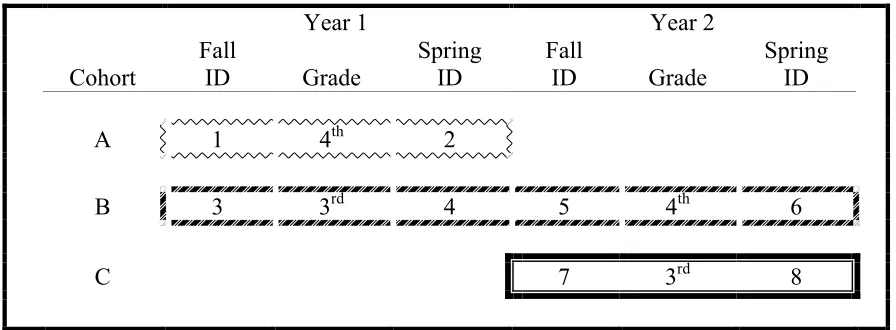
project: Cohort A consisted of three 4th grade classrooms of students from 2013-14; Cohort B
consisted of students who were in three 3rd grade classrooms during 2013-14 and three 4th grade
classrooms during 2014-15; and Cohort C, which was three 3rd grade classrooms of students
Cohort C = 73). Fifty-four percent of participants were boys (N = 124), and 46% were girls (N =
104). Table 1 displays the breakdown of gender by cohort. Eighty-one percent of students were
European American (N = 185), 13% were Latino/a (N = 29), 0.4% were Asian (N = 1), 0.4%
were African American (N = 1), 4 % identified as multiracial (N = 8). Ethnicity information was
not available for 2% of the sample (N = 4).
Table 1
Gender Information by Cohort
Males Females
Cohort N % N %
A 44 54% 38 46%
B 46 63% 27 37%
C 34 47% 39 53%
Total 124 54% 104 46%
Each cohort participated in at least two of the data collection points. Additionally, each
cohort/time combination was assigned an identification number (ID). Figure 1 displays cohort
participation and ID.
Due to the cohort sequential model used in this study, each dependent variable was
analyzed using a series of independent and paired sample t-tests with a Bonferroni correction to
control for Type 1 error. As a result of the correction, significance was evaluated with α = 0.005.
Results were analyzed using effect sizes in order to avoid inflating the probability of Type I
error, due to the number of t-tests conducted or assumptions violated. Cohen’s d (Cohen, 1988)
is reported for independent samples and δRM (Morris & DeShon, 2002) is reported for paired
Year 1 Year 2
Fall Spring Fall Spring
Cohort ID Grade ID ID Grade ID
A 1 4th 2
B 3 3rd 4 5 4th 6
C 7 3rd 8
Figure 1. Cohort participation and ID
CSPI – Student Report Results
A series of independent and paired sample t-tests were employed for the two subscales,
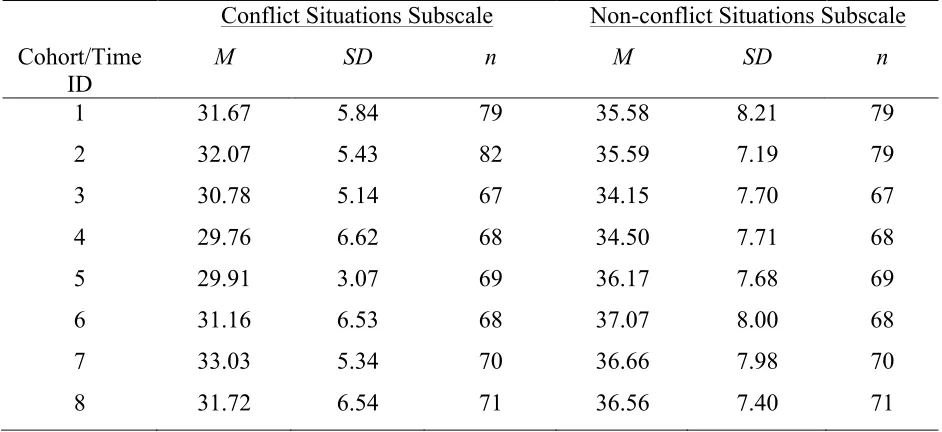
which measure social self-efficacy in conflict and non-conflict situations. Table 2 displays the
means, standard deviations, and number of participants for each cohort/time grouping. The
majority of distributions of responses were either not skewed or not skewed in opposite
directions. Additionally, the assumption of equal variance was met, unless otherwise noted.
When the assumption of equal variance was violated, Welch’s t-tests were employed and
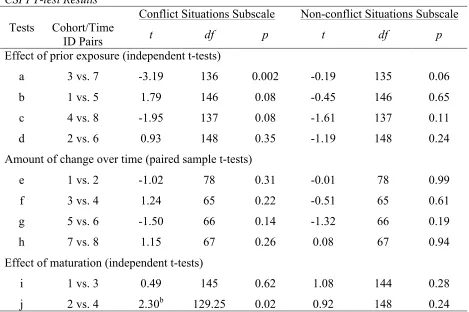
reported in the results tables. T-test results are reported in Table 3. Results were analyzed using
effect sizes in order to avoid inflating the probability of Type I error, due to the number of t-tests
conducted or assumptions violated.
As reported in Table 11, KC had a moderate positive effect in both conflict and
non-conflict situations when 3rd grade students with one year of exposure were compared to 3rd grade
students with no previous KC exposure. Fourth grade results showed that previous exposure
observed prior to KC implementation due to maturation; however, at the end of the first year of
KC exposure, the effect of maturation on self-efficacy in conflict situations increased to a
moderate effect.
Table 2
CSPI Descriptive Information
Conflict Situations Subscale Non-conflict Situations Subscale Cohort/Time
ID
M SD n M SD n
1 31.67 5.84 79 35.58 8.21 79
2 32.07 5.43 82 35.59 7.19 79
3 30.78 5.14 67 34.15 7.70 67
4 29.76 6.62 68 34.50 7.71 68
5 29.91 3.07 69 36.17 7.68 69
6 31.16 6.53 68 37.07 8.00 68
7 33.03 5.34 70 36.66 7.98 70
8 31.72 6.54 71 36.56 7.40 71
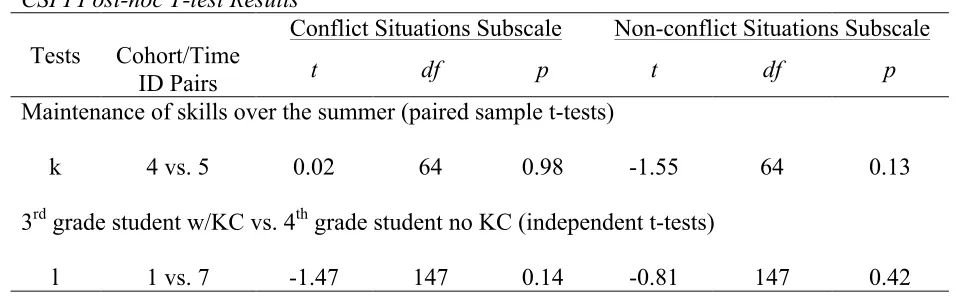
Post-hoc, paired sample t-test was conducted to determine if cohort B students
maintained the same levels of self-efficacy in conflict and non-conflict situations over the
summer break. No significant difference was noted in either condition; therefore it appears that
students who participated in both years of evaluation maintained their skills over the summer
break. An independent t-test was employed to compare 4th grade students with no prior exposure
to KC with 3rd grade students with one year of KC exposure. Third grade students demonstrated
a moderate effect in conflict situations after one year of KC instruction; therefore it appears that
conflict situations. Table 4 shows the results of post-hoc t-tests and Table 11 shows the effect
sizes.
Table 3
CSPI T-test Results
Conflict Situations Subscale Non-conflict Situations Subscale Tests Cohort/Time
ID Pairs t df p t df p
Effect of prior exposure (independent t-tests)
a 3 vs. 7 -3.19 136 0.002 -0.19 135 0.06
b 1 vs. 5 1.79 146 0.08 -0.45 146 0.65
c 4 vs. 8 -1.95 137 0.08 -1.61 137 0.11
d 2 vs. 6 0.93 148 0.35 -1.19 148 0.24
Amount of change over time (paired sample t-tests)
e 1 vs. 2 -1.02 78 0.31 -0.01 78 0.99
f 3 vs. 4 1.24 65 0.22 -0.51 65 0.61
g 5 vs. 6 -1.50 66 0.14 -1.32 66 0.19
h 7 vs. 8 1.15 67 0.26 0.08 67 0.94
Effect of maturation (independent t-tests)
i 1 vs. 3 0.49 145 0.62 1.08 144 0.28
j 2 vs. 4 2.30b 129.25 0.02 0.92 148 0.24
Table 4
CSPI Post-hoc T-test Results
Conflict Situations Subscale Non-conflict Situations Subscale Tests Cohort/Time
ID Pairs t df p t df p
Maintenance of skills over the summer (paired sample t-tests)
k 4 vs. 5 0.02 64 0.98 -1.55 64 0.13
3rd grade student w/KC vs. 4th grade student no KC (independent t-tests)
l 1 vs. 7 -1.47 147 0.14 -0.81 147 0.42
Note. Bonferroni correction, α = 0.005. a1-tailed; all other results are 2-tailed. bWelch’s t used due to unequal variances.
SPSM – Student Report Results
A series of independent and paired sample t-tests were employed for the two subscales,
which measure children’s aggressive and competent interpersonal negotiation strategies in
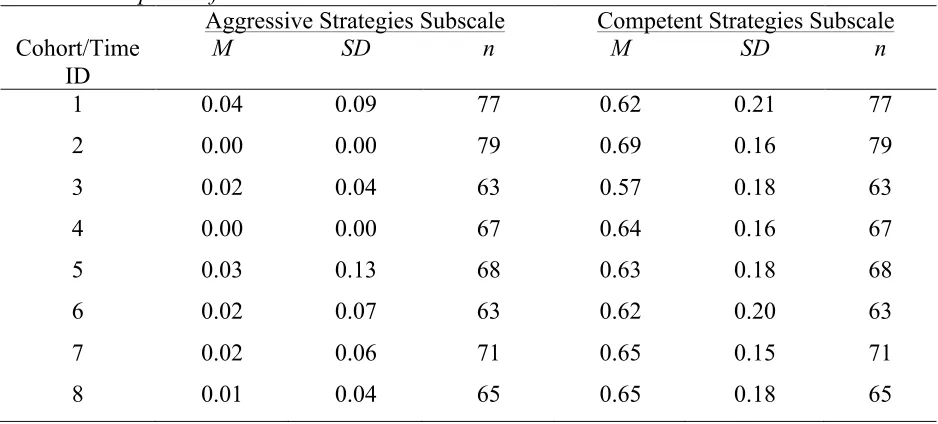
proactive situations. Table 5 displays the means, standard deviations, and number of participants
for each cohort/time grouping. The majority of distributions of responses were either not skewed
or not skewed in opposite directions. Additionally, the assumption of equal variance was met,
unless otherwise noted. When the assumption of equal variance was violated, Welch’s t-tests
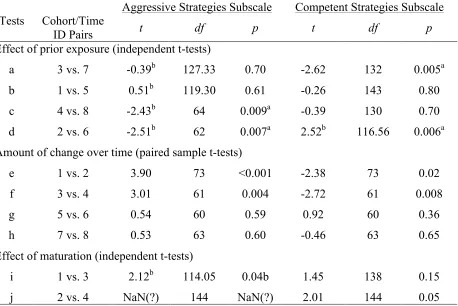
were employed and reported in the results tables. T-test results are reported in Table 6. Results
were analyzed using effect sizes in order to avoid inflating the probability of Type I error, due to
Table 5
SPSM Descriptive Information
Aggressive Strategies Subscale Competent Strategies Subscale Cohort/Time
ID
M SD n M SD n
1 0.04 0.09 77 0.62 0.21 77
2 0.00 0.00 79 0.69 0.16 79
3 0.02 0.04 63 0.57 0.18 63
4 0.00 0.00 67 0.64 0.16 67
5 0.03 0.13 68 0.63 0.18 68
6 0.02 0.07 63 0.62 0.20 63
7 0.02 0.06 71 0.65 0.15 71
8 0.01 0.04 65 0.65 0.18 65
As reported in Table 11, one year of KC exposure had moderate effect on 3rd grade
students’ use of competent problem solving strategies when compared at the beginning of year 1
and year 2 and moderate increase of aggressive problem solving strategies when compared at the
end of year 1 and year 2. Prior exposure had a large effect on 4th grade students’ use of
aggressive strategies when compared at the beginning of year 1 and year 2 and a moderate
negative impact on both aggressive and competent problem solving strategies when compared at
the end of year 1 and year 2.
Cohort A experienced a very large effect on use of competent strategies and a moderate
improvement on use of aggressive strategies in year 1. Cohort B reported a moderate effect on
both aggressive and competent problem solving strategies during year 1, and a very large
Table 6
SPSM T-test Results
Aggressive Strategies Subscale Competent Strategies Subscale Tests Cohort/Time
ID Pairs t df p t df p
Effect of prior exposure (independent t-tests)
a 3 vs. 7 -0.39b 127.33 0.70 -2.62 132 0.005a
b 1 vs. 5 0.51b 119.30 0.61 -0.26 143 0.80
c 4 vs. 8 -2.43b 64 0.009a -0.39 130 0.70
d 2 vs. 6 -2.51b 62 0.007a 2.52b 116.56 0.006a
Amount of change over time (paired sample t-tests)
e 1 vs. 2 3.90 73 <0.001 -2.38 73 0.02
f 3 vs. 4 3.01 61 0.004 -2.72 61 0.008
g 5 vs. 6 0.54 60 0.59 0.92 60 0.36
h 7 vs. 8 0.53 63 0.60 -0.46 63 0.65
Effect of maturation (independent t-tests)
i 1 vs. 3 2.12b 114.05 0.04b 1.45 138 0.15
j 2 vs. 4 NaN(?) 144 NaN(?) 2.01 144 0.05
Note. Bonferroni correction, α = 0.005. a1-tailed; all other results are 2-tailed. bWelch’s t used due to unequal variances.
Maturation had a moderate effect prior to KC exposure on use of competent problem
solving strategies, but 3rd grade students reported moderately fewer aggressive strategies than 4th
grade students. However, at the end of year 1, maturation had no effect on aggressive strategies
and maintained a moderate effect on competent strategies.
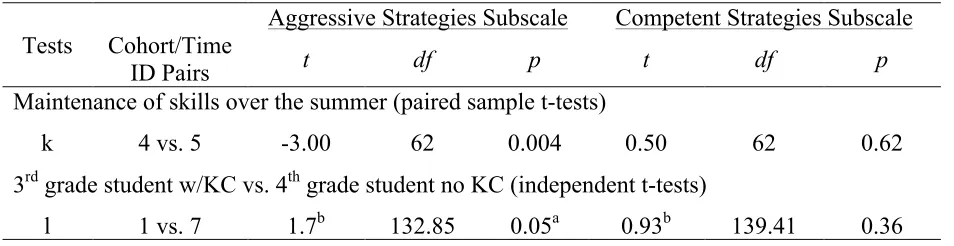
Post-hoc, paired sample t-test was conducted to determine if cohort B students
reported moderate increase of aggressive strategies and very little change in competent
strategies; therefore it appears that students who participated in both years of evaluation
maintained their competent problem solving skills over the summer break with some regression
to previous levels of aggressive strategies. An independent t-test was employed to compare 4th
grade students with no prior exposure to KC with 3rd grade students with one year of KC
exposure. Third grade students demonstrated a moderate effect in use aggressive strategies and a
small effect in use of competent strategies after one year of KC instruction; therefore it appears
that KC exposure may allow younger students to match the skills of an older. Table 7 shows the
results of post-hoc t-tests and Table 11 shows the effect sizes.
Table 7
SPSM Post-hoc T-test Results
Aggressive Strategies Subscale Competent Strategies Subscale Tests Cohort/Time
ID Pairs t df p t df p
Maintenance of skills over the summer (paired sample t-tests)
k 4 vs. 5 -3.00 62 0.004 0.50 62 0.62
3rd grade student w/KC vs. 4th grade student no KC (independent t-tests)
l 1 vs. 7 1.7b 132.85 0.05a 0.93b 139.41 0.36
Note. Bonferroni correction, α = 0.005. a1-tailed; all other results are 2-tailed. bWelch’s t used due to unequal variances.
SCS – Teacher Report Results
A series of independent and paired sample t-tests were employed for the two subscales,
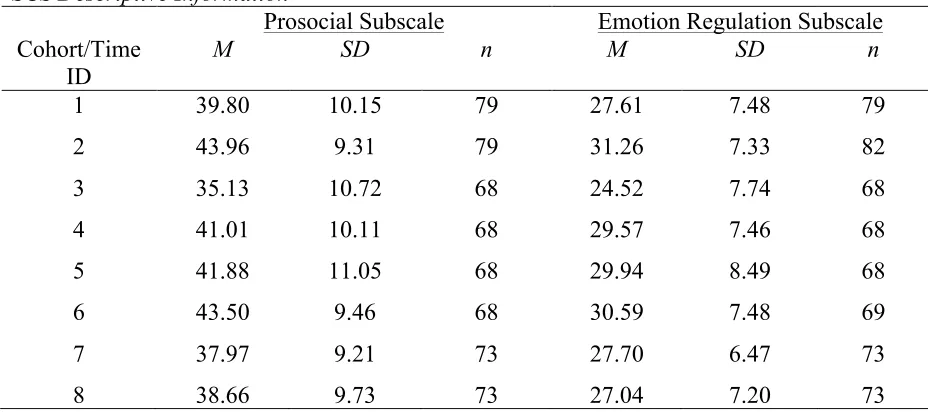
Table 8 displays the means, standard deviations, and number of participants for each cohort/time
grouping. The majority of distributions of responses were either not skewed or not skewed in
opposite directions. Additionally, the assumption of equal variance was met, unless otherwise
noted. When the assumption of equal variance was violated, Welch’s t-tests were employed and
reported in the results tables. T-test results are reported in Table 9. Results were analyzed using
effect sizes in order to avoid inflating the probability of Type I error, due to the number of t-tests
conducted or assumptions violated.
Table 8
SCS Descriptive Information
Prosocial Subscale Emotion Regulation Subscale
Cohort/Time ID
M SD n M SD n
1 39.80 10.15 79 27.61 7.48 79
2 43.96 9.31 79 31.26 7.33 82
3 35.13 10.72 68 24.52 7.74 68
4 41.01 10.11 68 29.57 7.46 68
5 41.88 11.05 68 29.94 8.49 68
6 43.50 9.46 68 30.59 7.48 69
7 37.97 9.21 73 27.70 6.47 73
8 38.66 9.73 73 27.04 7.20 73
As reported in Table 11, prior exposure to KC had a moderate effect on 3rd grade students
on both subscales when compared at the beginning and end of both year 1 and 2. Fourth grade
students experienced a moderate effect due to prior exposure to KC in emotion regulation when
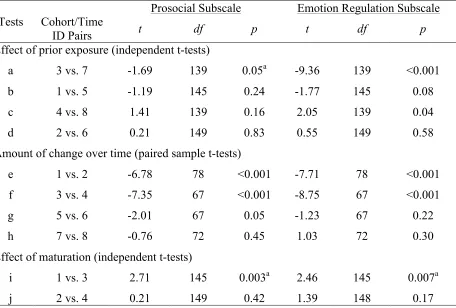
Table 9
SCS T-test Results
Prosocial Subscale Emotion Regulation Subscale Tests Cohort/Time
ID Pairs t df p t df p
Effect of prior exposure (independent t-tests)
a 3 vs. 7 -1.69 139 0.05a -9.36 139 <0.001
b 1 vs. 5 -1.19 145 0.24 -1.77 145 0.08
c 4 vs. 8 1.41 139 0.16 2.05 139 0.04
d 2 vs. 6 0.21 149 0.83 0.55 149 0.58
Amount of change over time (paired sample t-tests)
e 1 vs. 2 -6.78 78 <0.001 -7.71 78 <0.001
f 3 vs. 4 -7.35 67 <0.001 -8.75 67 <0.001
g 5 vs. 6 -2.01 67 0.05 -1.23 67 0.22
h 7 vs. 8 -0.76 72 0.45 1.03 72 0.30
Effect of maturation (independent t-tests)
i 1 vs. 3 2.71 145 0.003a 2.46 145 0.007a
j 2 vs. 4 0.21 149 0.42 1.39 148 0.17
Note. Bonferroni correction, α = 0.005. a1-tailed; all other results are 2-tailed. bWelch’s t used due to unequal variances.
Time demonstrated a large effect on Cohort A in prosocial skills and a very large effect
on emotion regulation. Cohort B experienced a very large effect on both prosocial and emotion
regulation skills due to time. Cohort C reported moderate change over time in prosocial skills.
Maturation had a moderate effect on prosocial and emotion regulation skills when measured at
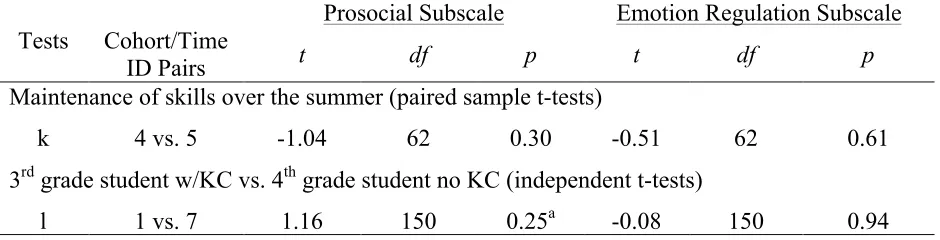
Post-hoc, paired sample t-test was conducted to determine if cohort B students
maintained similar problem solving skills over the summer break. Students from Cohort B
reported small or very small effect on prosocial and emotion regulation skills; therefore it
appears that students who participated in both years of evaluation maintained their skills over the
summer break. An independent t-test was employed to compare 4th grade students with no prior
exposure to KC with 3rd grade students with one year of KC exposure. Third grade students were
slightly less skilled on the prosocial scale than 4th grade students, but there was no effect in
emotion regulation after one year of KC instruction; therefore it appears that KC exposure may
allow younger students to match the skills of an older. Table 10 shows the results of poshoc
t-tests and Table 11 shows the effect sizes.
Table 10
SCS Post-hoc T-test Results
Prosocial Subscale Emotion Regulation Subscale Tests Cohort/Time
ID Pairs t df p t df p
Maintenance of skills over the summer (paired sample t-tests)
k 4 vs. 5 -1.04 62 0.30 -0.51 62 0.61
3rd grade student w/KC vs. 4th grade student no KC (independent t-tests)
l 1 vs. 7 1.16 150 0.25a -0.08 150 0.94
Table 11
Subscale Effect Sizes by Cohort/Time ID Pairs
Effect Sizes Tests Cohort/Time
ID Pairs Conflict
Non-Conflict Aggressive Competent Prosocial
Emotion Regul. Effect of prior exposure (independent t-tests)
a 3 vs. 7 -0.43 -0.32 0.00 -0.48 -0.28 -0.45
b 1 vs. 5 0.38 -0.07 0.63 -0.05 -0.20 -0.29
c 4 vs. 8 -0.30 -0.27 -0.35 -0.06 0.24 0.35
d 2 vs. 6 0.15 -0.19 -0.40 0.39 0.05 0.09
Amount of change over time (paired sample t-tests) δRM
e 1 vs. 2 -0.12 0.00 0.50 -2.00 -0.77 -0.87
f 3 vs. 4 0.15 -0.06 0.50 -0.37 -0.89 -1.06
g 5 vs. 6 -0.18 -0.16 0.07 3.21 -0.24 -0.15
h 7 vs. 8 0.14 0.01 0.05 -0.06 -0.09 0.12
Effect of maturation (independent t-tests)
i 1 vs. 3 0.16 0.18 0.29 0.26 0.45 0.41
j 2 vs. 4 0.38 0.15 0.00 0.31 0.30 0.23
Maintenance of skills over the summer (paired sample t-tests)
k 4 vs. 5 0.00 -0.19 -0.50 -0.05 -0.13 -0.06
3rd grade student w/KC vs. 4th grade student no KC (independent t-tests)
l 1 vs. 7 -0.24 -0.13 0.26 -0.16 0.19 -0.01
Table 12
Interpretation Information for Cohen’s d and δRM
Effect Size Label Effect Size
Small 0.00 – 0.20
Medium 0.21 – 0.50
Large 0.51 – 0.80
Teacher Survey
Six 3rd and 4th grade teachers completed a classroom survey to identify how well students
applied the key Kelso’s Choice components. Each of the eight skills was evaluated on a 4-point
scale: 1 = not at all; 2 = sometimes; 3 = mostly; 4 = always. A series of repeated measures
Analysis of Variance (ANOVA) was used to examine teacher perception of each group’s
performance. The eight KC components measured were:
1. Students in my class can identify a big problem that needs adult help.
2. Students can identify an adult to whom they can report a big problem.
3. Students in my class know when to solve a little problem themselves.
4. Students know the difference between tattling and telling.
5. Students refrain from tattling.
6. Students use one or more of Kelso’s choices to solve problems in the classroom.
7. Students use one or more of Kelso’s choices to solve problems on the playground.
8. Kelso helped make my classroom a more pleasant place to teach.
The assumption of sphericity was met for all eight questions, and significant change was found
for all of the domains except question 1. Figure 2 displays the mean change by question over
Figure 2. Teacher survey repeated measures results.
Table 13
Teacher Survey Descriptive Data
Fall 2013 Spring 2014 Fall 2014 Spring 2015
Q M SD N M SD N M SD N M SD N
1 2.50 0.84 6 2.83 0.41 6 3.00 0.63 6 3.00 0.63 6
2 3.00 0.63 6 3.83 0.41 6 3.33 0.82 6 3.67 0.82 6
3 2.17 0.41 6 2.67 0.52 6 2.17 0.41 6 2.83 0.41 6
4 2.17 0.41 6 2.83 0.41 6 2.17 0.41 6 2.83 0.41 6
5 1.67 0.52 6 2.50 0.55 6 2.33 0.52 6 2.67 0.52 6
6 1.83 0.41 6 3.00 0.00 6 2.50 0.55 6 2.83 0.41 6
7 1.67 0.52 6 3.00 0.00 6 2.33 0.52 6 2.67 0.52 6
8 1.83 0.41 6 3.33 0.52 6 3.00 0.89 6 3.33 0.82 6
0.00 0.50 1.00 1.50 2.00 2.50 3.00 3.50 4.00 4.50
Fall 2013
Spring 2014 Fall 2014
Table 14
Teacher Survey Repeated Measures Anova Results
Q F df1, df2 Sig
1 1.00 3, 15 0.42
2 6.86 3, 15 0.004
3 4.05 3, 15 0.03
4 5.71 3, 15 0.008
5 4.03 3, 15 0.03
6 9.75 3, 15 0.001
7 9.21 3, 15 0.001
8 7.45 3, 15 0.003
Post hoc, a sequence of paired sample t-tests were conducted to see where change
happened in the four times of data collection. See Table 15 for t-test results. The most consistent
significant positive changes were found between the initial implementation of KC and the
end-of-year measurements of year 1 and year 2. Teachers reported loss of skills over the summer
break on questions 4 (knows the difference between tattling and telling) and question 7 (uses KC
to solve problems on the playground). Although, teachers indicated overall improvement in
students’ ability to solve problems in the classroom (question 6), students seemed to demonstrate
stronger skills in this domain at the end of the first year than at the end of the second year.
Finally, results demonstrated that students exhibited continued growth during the second year in
knowing how to solve little problems on their own and knowing the difference between tattling
Table 15
Teacher Survey Post Hoc Paired Sample T-test Results
Q T1-T2 T1-T3 T1-T4 T2-T3 T2-T4 T3-T4
t Sig t Sig t Sig t Sig t Sig t Sig
1 -0.71 0.47 -1.17 0.30 -2.24 0.08 -0.54 0.61 -.054 0.61 0.00 1.00
2 -5.00 0.004* -1.58 0.18 -3.16 0.03* 2.24 0.08 1.00 0.36 -1.58 0.18
3 -2.24 0.08 0.00 1.00 -3.16 0.03* 1.46 0.20 -1.00 0.36 -3.13 0.03*
4 -3.16 0.03* 0.00 1.00 -3.16 0.03* 3.16 0.03* 0.00 1.00 -3.16 0.03*
5 -2.71 0.04* -2.00 0.10 -2.74 0.04* 0.54 0.61 -1.00 0.36 -1.00 0.36
6 -7.00 0.001* -2.00 0.10 -3.87 0.01* 2.24 0.08 1.00 0.04* -1.58 0.18
7 -6.33 0.001* -2.00 0.10 -3.87 0.01* 3.16 0.03* 1.58 0.18 -1.00 0.36
8 -4.39 0.007* -2.45 0.05* -4.69 0.007* 1.58 0.18 0.00 1.00 -0.79 0.47
Referral Data
A one-way ANOVA was used to determine if disciplinary referrals were impacted by KC
implementation. Three years of referrals for 3rd and 4th grade students were included in the
ANOVA: the year prior to KC, 2012-2013; the year of KC implementation, 2013-2104; and the
second year of KC instruction, 2014-2015. There were significant differences between the three
groups, F(2, 21) = 18.63, p < 0.0001. The post hoc Tukey test showed that the significance was
found between the implementation year and both of the other years, p < 0.01. However, no
significance was found between the year prior to KC and the second year of KC instruction.
Figure 3. Number of disciplinary referrals for 3rd & 4th grade students. 0
10 20 30 40 50 60
SEP OCT NOV DEC JAN FEB MAR APR
3rd & 4th Grade Referrals
2012-2013
Chapter 4 Discussion
This study hypothesized that students would demonstrate an improvement in social
self-efficacy as measured by: (a) increases in student self-report measures of self-self-efficacy in peer
interactions, social problem-solving, and teacher report of social competence, and (b) decreases
in behavioral referrals. The results of teacher and student report measures support the first
hypothesis. Overall, students’ perceived improvement in their self-efficacy in peer interactions
and social problem-solving due to exposure to the behavioral intervention program, Kelso’s
Choice (KC). Teachers reported more consistent, positive behavioral change than students’
self-report of behavior change. However, both teachers and students self-reported an increase in
competent problem solving strategies, particularly in the first year of exposure.
Disciplinary data results did not support the second hypothesis. Although teachers
reported improved behaviors in the classroom, disciplinary referrals did not decrease over time.
In fact, a significant increase of referrals was noted in the first year of KC implementation, and
the second year of referral data was similar to the year prior to KC. This is likely explained by
increased attention to behavior due to staff KC training (Yokoyama, Padmala, & Pessoa, 2015).
KC exhibited a longitudinal impact, as evidenced by students’ maintenance of their skills
over the summer break and throughout the second year of implementation. The program
demonstrated its “staying power,” as student report indicated that 3rd grade students with one
exposure. Social self-efficacy skills learned in early childhood can be expected to impact
students’ developmental trajectory. The skills emphasized in the KC curriculum may positively
influence how they select and maintain friendships, how they interact with important adult
figures, and how they address challenges during adolescence and early adulthood.
Both teachers and students perceived a decrease in behavioral problems as students
learned to navigate peer conflict more competently. Students had the greatest gains in competent
problem solving, prosocial behaviors, and emotion regulation, primarily in the first year of
implementation. School administrators placed tremendous focus on the initial KC
implementation, with monthly training didactics for teachers and support staff. Students received
added reinforcement of KC principles through school wide assemblies and classroom
recognition, which enabled them to receive frequent feedback on behavior that was congruent
with KC principles. Similar activities occurred during the second year of implementation,
however, current research affirms that introduction of novel information heightens attentional
response (Raymond, Fenske, & Tavassoli, 2003). This likely explains why Kelso’s Choice had
the greatest effect during the first year of implementation.
Social self-efficacy is defined as the perception of one’s ability to manage social
situations appropriately. The confidence students gained as they attained social behavioral skills,
such as conflict management, contributed to an improved learning environment. Individual
achievements influenced the cohort and allowed greater gains as a group. The positive changes
noted by teachers may have provided increased opportunity for student achievement in
Although recent research seems to imply that an increase in perceived self-efficacy
allows a child to master new skills, this study suggests that students might not be aware of the
positive changes in their own behavior. In this study, teachers reported improvement in students’
behavior even when students’ report failed to note improvement in their behavior. Specifically,
teachers’ reported greater improvement in conflict management skills than was reported by
students. Although students identified improvement in problem solving skills, they failed to note
the corresponding improvement in classroom behavior, which was observed by their teachers.
This lack of self-awareness is developmentally appropriate for third and fourth grade students,
and we know that behavioral change can happen without insight (Bandura, 1977). In this study,
development of self-efficacy was dependent on consistent systemic reinforcement of desired
behaviors. This suggests that in elementary school-aged children, behavioral change may be the
first-order benefit from KC and changes in perceived self-efficacy the second-order effect.
Introducing KC as a school-wide intervention proved to be an effective method for
improving student self-efficacy without requiring additional personnel resources. This study
implemented KC in a rural, underserved population of children from primarily low
socioeconomic families. Most of the students had limited access to resources for development of
important psychosocial tasks, such as improving self-efficacy. KC effectively provided social
and behavioral skills training to a socially and culturally diverse group of students.
The results of this study are somewhat discrepant with outcome information provided on
the KC website. For example, one testimonial reported 82% decrease in serious infractions due
to KC implementation, and another school posted greater differences on the teacher survey
noted differences are due to reporting methodology, which is not available from the anecdotal
evidence on the website.
Implications
There are several important implications based on this study’s findings. The results
provide evidence that rural schools experience a high level of benefit by employing
evidence-based school wide interventions, such as KC. This empirical support for KC as an effective
population-based, behavioral intervention to improve social self-efficacy in elementary
school-aged children allows school to choose KC with confidence. Elementary schools can use KC
school wide and improve social self-efficacy skills in the entire student population for relatively
little cost. Training for faculty and staff is necessary, particularly prior to implementation, and
classroom time must be devoted to intervention instruction and reinforcement, but no additional
staffing or resources are required. Overall, the longitudinal benefits of successful KC
implementation appear to outweigh the costs.
Behavioral interventions, such as KC, are likely to have the greatest effect during the first
year of implementation due to novelty factors. Continued skill and self-efficacy development
requires administrative maintenance of progressive levels of instruction and reinforcement to
offset natural habituation to repetitive skill building.
Children may not feel confident in their social self-efficacy skills as quickly as they
demonstrate behavioral change. The disparity between students’ perception of their social
abilities and teachers’ recognition of their behavioral improvement can be remediated by
linked to adult reinforcement of appropriate behavioral improvements and is enhanced when
their accomplishments are noted and encouraged.
Finally, individual improvements contribute to cohort success, making this type of
behavioral intervention valuable on a systemic level. The reciprocal relationship between
students’ behaviors and teacher interactions is one component of the learning environment. As
teachers perceive improved classroom behavior, they spend less time on disciplinary tasks and
more time on instruction and positive student exchanges. An improved classroom environment
promotes students’ ability to focus on specific learning tasks and engage in classroom activities
more appropriately, thereby enhancing their education. The overall experience of students and
teachers fosters academic, behavioral, and psychosocial gains that increase effective and efficient
use of existing resources, thus benefitting the greater school community.
Limitations
This research was somewhat limited by factors common to field study. The measurement
tools available for this specific population, particularly the CSPI, may not have been sensitive
enough to capture KC’s true impact on self-efficacy. Additionally, because the student-report
measures were administered to entire classrooms at one time, there may have been some students
who had difficulty completing the forms accurately due to learning challenges. The strongest
results were found in the teacher-report measures. Since teachers were the KC instructors, there
may have been some motivation to report stronger results. However, previous research affirms
Suggestions for Future Research
More research is needed to increase the evidence base on the effectiveness of KC on
self-efficacy development. Follow up studies in the same or similar settings would contribute to
increased confidence in the curriculum. It would be particularly informative to follow the three
cohorts from this study to measure the longitudinal impact on student self-efficacy and behavior
after termination of instruction. Although KC is designed for children as young as 5 years old, it
is unknown how effective it is along the developmental trajectory. It would be beneficial to
conduct research with a broader age range of students.
Equally important, continued research is needed to explore the interaction between
behavior and self-efficacy. While current literature seems to purport that increased self-efficacy
leads to improved behavior, the KC results suggest that teachers first recognize change in
students’ behavioral patterns before students’ perception of their abilities increases. Research to
focuses on the role of a reinforcing feedback loop in children’s self-efficacy development would
provide important information to psychological and educational systems.
Summary
This study revealed four major findings: (a) Kelso’s Choice contributes to the
development of student’s social self-efficacy and demonstrates a “staying power” over time; (b)
the greatest gains in student social self-efficacy were evidenced in the first year of exposure; (c)
teachers are likely to recognize changes in student behavior and social skills before students’
self-perception of behavior change; and (d) development of students’ social self-efficacy may be
from which to continue studying development of self-efficacy in young children from
References
Alessandri, G. G. V. N. P. (2009). Reciprocal relations among self-efficacy beliefs and
prosociality across time. Journal of Personality, 77(4), 1229-1259. doi:
10.1111/j.1467-6494.2009.00580.x
American Dietetic Association. (2006). Position of the american dietetic association: Individual-,
family-, school-, and community-based interventions for pediatric overweight. Journal of
the American Dietetic Association, 106(6), 925.
Bandura, A. (1977). Self-efficacy: Toward a unifying theory of behavioral change.
Psychological Review, 84(2), 191-215. doi: 10.1037/0033-295X.84.2.191
Bandura, A., Barbaranelli, C., Caprara, G. V., & Pastorelli, C. (2001). Self-efficacy beliefs as
shapers of children's aspirations and career trajectories. Child Development, 72(1),
187-206. doi: 10.1111/1467-8624.00273
Caprara, G. V., Barbaranelli, C., Pastorelli, C., & Cervone, D. (2004). The contribution of
self-efficacy beliefs to psychosocial outcomes in adolescence: Predicting beyond global
dispositional tendencies. Personality and Individual Differences, 37(4), 751-763. doi:
10.1016/j.paid.2003.11.003
Caprara, G. V., Vecchione, M., Alessandri, G., Gerbino, M., & Barbaranelli, C. (2011). The
contribution of personality traits and self-efficacy beliefs to academic achievement: A
longitudinal study. British Journal of Educational Psychology, 81(1), 78-96. doi:
Catalano, R. F., Haggerty, K. P., Oesterle, S., Fleming, C. B., & Hawkins, J. D. (2004). The
importance of bonding to school for healthy development: Findings from the social
development research group. Journal of School Health, 74(7), 252-261. doi:
10.1111/j.1746-1561.2004.tb08281.x
Catalano, R. F., & Hawkins, J. D. (1996). The social developmental model: A theory of
antisocial behavior. In J. D. Hawkins (Ed.), Delinquency and crime: Current theories (pp.
149-197). New York: Cambridge University Press.
Cohen, J. (1988). Statistical power analysis for the behavioral sciences: Hillsdale, NJ: Erlbaum
Ed. 2nd ed.
Conduct Problems Prevention Research Group. (1991). Technical report (unpublished). Durham,
NC: Department of Psychology, Duke University.
Dodge, K. A., Bates, J. E., & Pettit, G. S. (1990). Mechanisms in the cycle of violence: How
child abuse affects later aggressive behavior. Science, 250(4988), 1678.
DuPaul, G. J., Eckert, T. L., & Vilardo, B. (2012). The effects of school-based interventions for
attention deficit hyperactivity disorder: A meta-analysis 1996-2010. School Psychology
Review, 41(4).
Durlak, J. A., Weissberg, R. P., Dymnicki, A. B., Taylor, R. D., & Schellinger, K. B. (2011). The
impact of enhancing students’ social and emotional learning: A meta-analysis of
school-based universal interventions. Child Development, 82(1), 405-432.
Hawkins, J. D., Arthur, M. W., & Catalano, R. F. (1995). Preventing substance abuse. Crime and
Hawkins, J. D., Kosterman, R., Catalano, R. F., Hill, K. G., & Abbott, R. D. (2005). Promoting
positive adult functioning through social development intervention in childhood:
Long-term effects from the seattle social development project. Archives of Pediatrics &
Adolescent Medicine, 159(1), 25-31.
Hawkins, J. D., Kosterman, R., Catalano, R. F., Hill, K. G., & Abbott, R. D. (2008). Effects of
social development intervention in childhood 15 years later. Archives of Pediatrics &
Adolescent Medicine, 162(12), 1133-1141.
Johnson, J., & Strange, M. (2007). Why rural matters 2007: The realities of rural education
growth. Rural School and Community Trust.
Kriemler, S., Meyer, U., Martin, E., Van Sluijs, E., Andersen, L., & Martin, B. (2011). Effect of
school-based interventions on physical activity and fitness in children and adolescents: A
review of reviews and systematic update. British journal of sports medicine, 45(11),
923-930.
Langley, A. K., Nadeem, E., Kataoka, S. H., Stein, B. D., & Jaycox, L. H. (2010).
Evidence-based mental health programs in schools: Barriers and facilitators of successful
implementation. School Mental Health, 2(3), 105-113.
Lonczak, H. S., Huang, B., Catalano, R. F., Hawkins, J. D., Hill, K. G., Abbott, R. D., . . .
Kosterman, R. (2001). The social predictors of adolescent alcohol misuse: A test of the
social development model. Journal of Studies on Alcohol, 62(2), 179-189.
McTaggart, R. (1998). Is validity really an issue for participatory action research? Studies in
Menard, S., & Grotpeter, J. K. (2011). Peer influence, social bonding, physical and relational
aggression: Perpetration and victimization in an elementary school sample. Victims &
Offenders, 6(2), 181-206. doi: 10.1080/15564886.2011.557326
Morris, S. B., & DeShon, R. P. (2002). Combining effect size estimates in meta-analysis with
repeated measures and independent-groups designs. Psychological methods, 7(1), 105.
Murphy, M. (2003). Character education in America's blue ribbon schools: Best practices for
meeting the challenge. Lanham, MD: Scarecrow Press.
Mychailyszyn, M. P., Brodman, D. M., Read, K. L., & Kendall, P. C. (2012). Cognitive‐
behavioral school‐based interventions for anxious and depressed youth: A meta‐
analysis of outcomes. Clinical Psychology: Science and Practice, 19(2), 129-153.
Parker, J. G., Rubin, K. H., Erath, S. A., Wojslawowicz, J. C., & Buskirk, A. A. (2006). Peer
relationships, child development, and adjustment: A developmental psychopathology
perspective. In D. C. D. J. Cohen (Ed.), Developmental psychopathology, vol 1: Theory
and method (2nd ed.) (pp. 419-493). Hoboken, NJ, US: John Wiley & Sons Inc.
Payton, J., Weissberg, R. P., Durlak, J. A., Dymnicki, A. B., Taylor, R. D., Schellinger, K. B., &
Pachan, M. (2008). The positive impact of social and emotional learning for kindergarten
to eighth-grade students: Findings from three scientific reviews. Chicago, IL:
Collaborative for Academic, Social, and Emotional Learning.
Peterson, M. A., Hamilton, E. B., & Russell, A. D. (2009). Starting well: Facilitating the middle
Raymond, J. E., Fenske, M. J., & Tavassoli, N. T. (2003). Selective attention determines
emotional responses to novel visual stimuli. Psychological Science (Wiley-Blackwell),
14(6), 537-542.
Robinson, J., Cox, G., Malone, A., Williamson, M., Baldwin, G., Fletcher, K., & O’Brien, M.
(2013). A systematic review of school-based interventions aimed at preventing, treating,
and responding to suicide-related behavior in young people. Crisis: The Journal of Crisis
Intervention and Suicide Prevention, 34(3), 164.
Schaeffer, C., Bruns, E., Weist, M., Stephan, S., Goldstein, J., & Simpson, Y. (2005).
Overcoming challenges to using evidence-based interventions in schools. Journal of
Youth and Adolescence, 34(1), 15-22. doi: 10.1007/s10964-005-1332-0
Schaie, K. W. (1965). A general model for the study of developmental problems. Psychological
Bulletin, 64(2), 92-107. doi: 10.1037/h0022371
Stallard, P., Taylor, G., Anderson, R., Daniels, H., Simpson, N., Phillips, R., & Skryabina, E.
(2014). The prevention of anxiety in children through school-based interventions: Study
protocol for a 24-month follow-up of the paces project. Trials, 15(1), 77.
Strange, M., Johnson, J., Showalter, D., & Klein, R. (2012). Why rural matters 2011-12: The
condition of rural education in the 50 states. A report of the rural school and community
trust policy program. Rural School and Community Trust.
Vreeman, R. C., & Carroll, A. E. (2007). A systematic review of school-based interventions to
Wheeler, V. A., & Ladd, G. W. (1982). Assessment of children's self-efficacy for social
interactions with peers. Developmental Psychology, 18(6), 795-805. doi:
10.1037/0012-1649.18.6.795
Wilson, S. J., & Lipsey, M. W. (2007). School-based interventions for aggressive and disruptive
behavior: Update of a meta-analysis. American Journal of Preventive Medicine, 33(2),
S130-S143.
Yokoyama, T., Padmala, S., & Pessoa, L. (2015). Reward vs. Emotion in visual selective
Appendix A Consent Letter February 7, 2014
Dear Parents of YCES 3rd and 4th Grade Students,
My name is Shaun Davis, and I am currently a second year doctoral student in George Fox University’s Doctor of Clinical Psychology program in Newberg, Oregon. As part of my training, I am working with students in the Yamhill Carlton School District. One part of my job is helping the elementary school develop successful programs to increase students’ social skills and reduce peer conflict. One such program is Kelso’s Choice, which is designed to help
children identify the difference between “big” and “little” problems. It also teaches children how to resolve minor conflicts on their own and how to ask for adult help for more serious problems.
Kelso’s Choice is being implemented school wide at YCES. As a service to YCES, I will be conducting a study of the curriculum’s effectiveness in the 3rd and 4th grade classes. This will involve a teacher survey, as well as two questionnaires that students fill out at the beginning and end of the program. Students will complete the forms as part of their classwork and will not be asked to do any additional work outside of regular school hours. All questionnaires will be kept confidential, and the identities of students will be protected. No part of the information will be used to evaluate individual students or be reflected in their school records. The results of this program evaluation will provide YCES with valuable information regarding the benefit of continuing the Kelso’s Choice curriculum and may be published professionally to help other educators choose effective programs.
All of the students in kindergarten through 4th grade will be taught the Kelso’s Choice principles as part of the school curriculum; however, participation in the effectiveness study is not mandatory. If you would prefer that your child’s responses NOT be included in the study, please sign and return this form. If I do not receive a signed form, your child will be included in the program evaluation.
If you have any questions, please feel free to contact me at the elementary school or by email, or you may contact my supervisor, Dr. Elizabeth Hamilton, at [email protected]. I look forward to working with the students and faculty at Yamhill Carlton Elementary School.
Sincerely,
Shaun Davis, M.A.
Yamhill Carlton Elementary School Psychology Intern George Fox University Doctoral Candidate
Email: [email protected]
I, ____________________________________ (parent’s name), do NOT want my child,
_____________________________ (student’s name), to participate in the Kelso’s Choice study.
______________________________________________ __________________
Appendix B Instruments
The Children’s Self-Efficacy in Peer Interactions (Wheeler & Ladd, 1982, reprinted with
The Social Competence (Conduct Problems Prevention Research Group, 1991, reprinted with