AUC Knowledge Fountain
AUC Knowledge Fountain
Theses and Dissertations2-1-2017
Faculty perceptions of faculty development programs in Egyptian
Faculty perceptions of faculty development programs in Egyptian
universities: An exploratory study
universities: An exploratory study
Noran Ali EldebeckyFollow this and additional works at: https://fount.aucegypt.edu/etds
Recommended Citation Recommended Citation
APA Citation
Eldebecky, N. (2017).Faculty perceptions of faculty development programs in Egyptian universities: An exploratory study [Master’s thesis, the American University in Cairo]. AUC Knowledge Fountain.
https://fount.aucegypt.edu/etds/646
MLA Citation
Eldebecky, Noran Ali. Faculty perceptions of faculty development programs in Egyptian universities: An exploratory study. 2017. American University in Cairo, Master's thesis. AUC Knowledge Fountain.
https://fount.aucegypt.edu/etds/646
This Thesis is brought to you for free and open access by AUC Knowledge Fountain. It has been accepted for inclusion in Theses and Dissertations by an authorized administrator of AUC Knowledge Fountain. For more information, please contact [email protected].
1
Graduate School of Education
Faculty Perceptions of Faculty Development Programs in Egyptian Universities: an Exploratory Study
A Thesis Submitted to The Graduate School of Education
Department of International & Comparative Education
In partial fulfillment of the requirements
of the degree of Master of Arts in Educational Leadership
By Noran Ali Eldebecky
Under the supervision of Dr. Stacie Rissmann-Joyce January 2017
2
Acknowledgments
I would like to thank Dr. Stacie for her support and tolerance with me all through my thesis journey. I would also like to thank Dr. Russanne for her insightful feedback and support. Dr. Russanne, you have always made life easier for me. Thank you from the bottom of my heart. I would also like to thank Dr. Gihan Osman for taking the time to read my thesis and for helping me with the data collection.
A sincere thank you is for all my professors in the GSE whom I have learned a lot from. Dr. Nagwa Megahed and Dr. Jenniffer, thank you for your meticulous feedback you gave me in my very first semester in the GSE that taught me how to write proper research papers. Dr. Rasha Sharaf, thank you for helping me to better understand how an empirical paper is written and for guiding me in my initial thesis stages. Dr. Ted, thank you for introducing me to a new way of learning, which is the blended learning, which was a new interesting learning experience. Thank you all for everything. I would also like to thank Ms. Dena Riad for always simplifying things and providing help even in very difficult times.
On a different note, I would like thank my dear family. My beautiful daughter Nour, thank you for being such an amazing and loving daughter. Thank you for all the sacrifices you made; thank you for the long and late days you had to spend outside your home for me to study and get this degree. If anyone deserves this degree, this will be you my love. My handsome son Ahmed, thank you for having to stay with other people rather than with me for me to finish this degree. Thank you my dear children for putting up with all the difficult days the last three years without complaining. I love you and hope one day I will make you proud. My dear husband
3
Mohamed, thank you for your support and tolerance all the past three years. I wouldn‟t have been able to reach this far without your love and support. The good news is it is finally over.
I would also like to thank my social support system and my back bone, my mother and my dear sister Alzahraa Eldebecky. Words can‟t express how much I love you. Without your emotional and social support, I would have been dead by now. You lifted me in my darkest moments, and believed in me at a time that I lost all confidence and hope. You made this thesis happen, and you made Noran come back on track. Thank you is not enough! Thank you is also due to my beautiful niece Rovan for always looking up to me as a role model and encouraging me to be a better person.
Thank you my dear work family friends Noha Desouky and Mai Selim. I love you ladies so much. Words can‟t express my love and gratitude to you. You have always listened to me with no complaints, and always supported me. You always bring the best in me dears. Abeer Elshahed my dear sister, thank you for always pushing me to be better. I love you dear. Merna Ehab, my dear student and friend. Thank you for supporting me and lending me your laptop to work on dear. Nermine and Alaa, thank you for helping me with the proofreading.
Last but definitely not least, thank you Dr. Mona Osman, GUC head of the English department, for believing that I deserve to be in this program; for your support and tolerance in my LONG MA journey, and for giving me the opportunity to be in the GUC in the first place; the place that I learned how to be a good teacher, researcher, and leader. Ms. Dahlia Sennara, thank you for always providing a family atmosphere in our department. Thank you for all the hugs that pushed me to move forward, and thank you for your constant concern that I do well in study as well as work.
4
Finally, I would like to thank all the faculty members who participated in this study; thank you for being generous enough and sharing with me your precious time while others refused even to answer my emails. I really appreciate it. You made my dream come true.
5 Dedication
To my dear mother and my father’s spirit in heaven
I hope I make you proud
To my beautiful daughter Nour
You are my heart and soul
To my hansom son Ahmed
You are the apple of my eye
Thank you for making this thesis possible
Thank you for all the sacrifices you made
6 Abstract
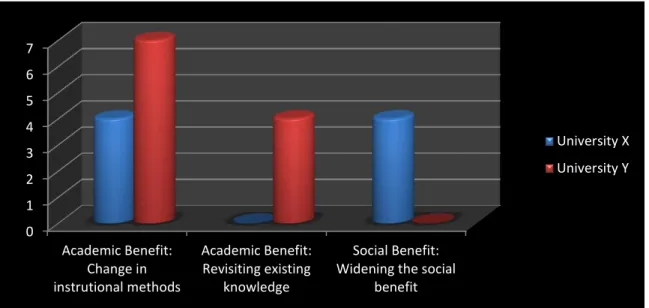
Faculty members teaching in the 21st century face pressing challenges of accelerated advancement in their disciplines, pedagogy, and technology. Furthermore, they face a different student body that is demanding better quality education. With these challenges, come the myriad roles of faculty in teaching, research and community service. To navigate successfully between these three pillars and to face the 21st century challenges, faculty development comprehensive initiatives are needed. In Egypt, faculty development started systematically only at the beginning of the 21st century. Thus, it is important to explore the effectiveness of faculty development initiatives from faculty‟s perspectives. As such, the purpose of this phenomenological exploratory qualitative study is to explore faculty personnel‟s perceptions of comprehensive faculty development initiatives offered by Egyptian universities inside their premises for faculty professional development. The sample included faculty members from one public university and one private, in addition to faculty developers and the director of the center of learning and teaching in the private university. The main instrument was semi-structure interviews with all participants, in addition to documents from the public university website. Thematic analysis was used for data analysis with the help of NVIVO@11 software. The main results show that faculty members had different perceptions regarding formal faculty development initiatives in their universities that could be grouped in four themes: benefits, motivations and feelings, challenges, and needs. The first theme included academic benefit, through which faculty changed their teaching methods based on faculty development. The second benefit is social, through which faculty shared experiences with colleagues from other disciplines. Faculty also stated two
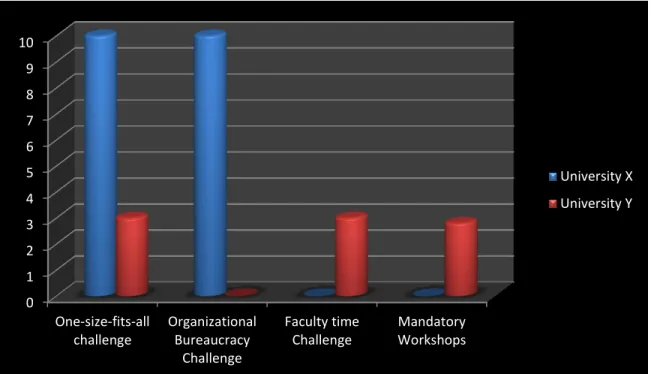
feelings which are frustration from the current faculty development initiatives and some extrinsic motivations that could help them attend more initiatives. Faculty members also reported some challenges that undermine the effectiveness of formal faculty development initiatives. The first
7
challenge reported by participants in the two universities is the one-size-fits-all system. The second challenge, reported only by the public university was organizational bureaucracy. The third challenge was faulty time. The last challenge was having mandatory workshops.
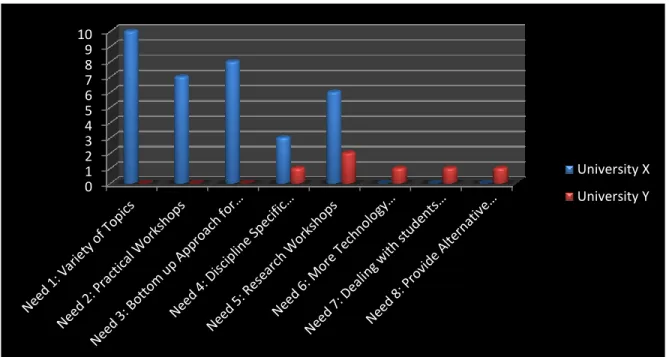
Furthermore, faculty members indicated their needs to have a better faculty development
experience: first a need for more variety of topics; second more practical workshops; third a need for a bottom up approach for faculty development; and finally a need for more discipline specific workshops. However, each university had its specific subthemes. In the private university all faculty developers‟ perceptions generally reflected their role as that of pedagogical guidance and support to faculty. This role is clear from the four themes emerging from the data which are: needs assessment for faculty‟s needs, motivations for better faculty development experience, enhancing teaching and learning through experiential learning, and extended pedagogical
support. Finally, the director of the CLT perceptions were very similar to the faculty developers‟ perceptions. She perceived the CLT role as that of pedagogical support for faculty. Her
perceptions can be grouped into four themes: extended pedagogical support, assessment of success, andmotivations needed for better faculty development experience. Implications mentioned can guide future faculty development initiatives to better meet faculty‟s needs.
8
Table of Contents
Acknowledgments ... 2
Dedication ... 5
Abstract ... 6
List of Tables ... 12
List of Figures ... 13
Abbreviations and Acronyms ... 14
CHAPTER 1 INTRODUCTION ... 16
1.1 Change in Higher Education in the 21st Century ... 16
1.2 Higher Education in Egypt ... 18
1.2.1 Types of Higher Education Institutions ... 18
1.2.2 Higher Education Management System ... 19
1.2.3 Faculty Appointment... 19
1.2.4 Higher Education in Numbers ... 20
1.2.5 Faculty Development in Egypt ... 21
1.3 Statement of the Problem ... 22
1.4 Purpose of the Study ... 22
1.5 Research Questions ... 23
1.6 Definition of Terms ... 23
1.7 Significance of the Study ... 23
CHAPTER 2 LITERATURE REVIEW ... 24
2.1 Chronological Overview of Faculty Development in the US ... 24
2.1.1 Age of the Scholar (mid1950s to 1960s)... 24
2.1.2 The Age of the Teacher (late 1960s through 1970s) ... 24
2.1.3 The Age of the Developer (1980s) ... 27
2.1.4 The Age of the Learner (1990s-2000) ... 27
2.1.5 The Age of the Network (2000- the present day) ... 28
2.2 Principles of Good Practice in Teaching and Learning Centers ... 31
2.3 Faculty‟s Perceptions and Teaching and Learning Centers ... 35
9
2.4.1 Studies on Faculty Development in Egypt ... 40
2.4.1.1 Egyptian Public Universities ... 41
2.4.1.2 Comparative ... 43
2.4.1.3 Private Universities ... 44
2.5 Conceptual Framework ... 45
2.5.1 The Micro Level: Adult Learning Model Andragogy ... 45
2.5.2 The Macro Level: POD Educational Development Model ... 51
CHAPTER 3 METHODOLOGY ... 54
3.1 Research Design ... 54
3.2 Sample... 55
3.3 Instruments ... 59
3.4 Data Collection Procedures ... 60
3.5 Data Analysis ... 61
3.6 Triangulation and Data Validity ... 61
3.7 Ethical considerations ... 62
CHAPTER 4 RESULTS ... 63
4.1 Research Question 1: What are faculty members‟ perceptions of faculty development initiatives offered by their universities? ... 63
4.1.1 Theme 1: Benefits ... 68
4.1.1.1 Benefit 1: Change in Instructional Methods ... 69
4.1.1.2 Benefit 2: Revisiting Existing Knowledge ... 80
4.1.1.3 Benefit 3: Widening the Social Circle and Sharing Experiences ... 82
4.1.2 Theme 2: Challenges ... 83
4.1.2.1 Challenge 1: One-size-fits all ... 85
4.1.2.2 Challenge 2: Organizational Bureaucracy ... 99
4.1.2.3 Challenge 3: Faculty Time ... 106
4.1.2.4 Challenge 4: Mandatory Workshops ... 107
4.1.3 Theme 3: Needs ... 108
4.1.3.1 Need 1: Variety of Topics ... 112
4.1.3.2 Need 2: Practical Workshops ... 116
10
4.1.3.4 Need 4: Discipline Specific Workshops ... 120
4.1.3.5 Need 5: Research Workshops ... 121
4.1.3.6 Need 6: Miscellaneous ... 122
4.1.4 Theme 4: Feelings and Motivations ... 124
4.1.4.1 Feeling 1: Frustration ... 126
4.1.4.2 Feeling 2: Extrinsic Motivation ... 128
4.2 Research Question 2: What are faculty developers‟ perceptions of faculty development initiatives offered by their universities? ... 131
4.2.1 Theme 1: Needs Assessment for Faculty‟s Needs ... 134
4.2.2 Theme 2: Motivations for More Engagement in Faculty Development ... 136
4.2.3 Theme 3: Enhancing Teaching and Learning through Experiential Learning ... 139
4.2.4 Theme 4: Extended Pedagogical Support ... 143
4.3 Research Question 3: What are the perceptions of directors of faculty development centers of faculty development initiatives offered by their universities? ... 144
4.3.1 Theme 1: Extended Pedagogical Support ... 144
4.3.2 Theme 2: Assessment of Success ... 146
4.3.3 Theme 3: Motivations Needed for More Engagement in Faculty Development ... 147
CHAPTER 5 DISCUSSION ... 148
5.1 The Micro Level: Faculty Members‟ Perceptions ... 148
5.2 The Marco Level: Faculty Developers‟ and the CLT director‟s perceptions ... 152
5.3 Linking the Micro with the Macro Level ... 156
5.4 Public versus Private Universities in Egypt ... 157
5.5 Faculty Development in Egypt and Internationally ... 159
5.6 Practical Implications ... 163
5.7 Recommendations for Future Research ... 164
5.8 Limitations of the Study ... 165
References ... 166
Appendix A ... 170
Appendix B ... 171
Appendix C ... 172
11
Appendix E ... 175
Appendix F... 176
Appendix G ... 177
Appendix H ... 178
Appendix I ... 180
Appendix J ... 181
12
List of Tables
Table 1: Number of Faculty in Public and Private Universities in Egypt 14/2015 ... Error! Bookmark not defined.
Table 2: Students Enrollment in Higher Education Institutions 14/2015 .... Error! Bookmark not defined.
Table 3: Participants Characteristics in University X ... Error! Bookmark not defined. Table 4: Participants Characteristics in University Y ... Error! Bookmark not defined.
Table 6: Summary of Faculty Members' Perceptions ... 67
Table 7: Theme 1 Benefits ... 69
Table 8: Theme 2 Challenges ... 84
Table 9: Theme 3 Needs ... 110
Table 10: Theme 4 Feelings and Motivations... 125
Table 11: Faculty Developers' Perceptions ... 134
13 List of Figures
Figure 1: Theme 1 Benefits ... 69
Figure 2: Theme 2 Challenges ... 85
Figure 3: Theme 3 Needs ... 111
14 Abbreviations and Acronyms
AUC American University in Cairo
CAPMAS Central Agency for Mobilization and Statistics
CLT Center of Learning and Teaching
ETCP Egyptian Technical Colleges Project
EULC Egyptian Universities Libraries Consortium
FLDP Faculty and Leadership Development Project
FLDC Faculty and Leadership Development Center
GoE Government of Egypt
HEEP Higher Education Enhancement Project
HEEPF Higher Education Enhancement Project Fund
HEIs Higher Education Institutions
HERS Higher Education Reform Strategy
IBCT International Board of Certified Trainers
ICTP Information & Communication Technology Project
IRB Institutional Review Board
15
NCFLD National Centre for Faculty and Leadership Development
QAAP Quality Assurance and Accreditation Project
TOT Training of Trainers
16
CHAPTER 1 INTRODUCTION
1.1 Change in Higher Education in the 21st Century
In today‟s globalized world, change is the key factor that shape teaching and learning enterprises in higher education institutions. With new platforms of learning as blended learning and flipped classrooms, the educational scene in the 21st century differed from the twentieth century. Although, it is the prime duty of faculty to be the chief innovators and initiators of change in academia, with the accelerated technological advances and expanded globalization this is a difficult task (Camplin & Steger, 2000).
Change is seen in many factors in academia, first, in the professor‟s means of knowledge. It was always assumed that faculty members are capable of self-learning to be updated with new developments in their disciplines and develop their skills. However, with the speed of new advancements in different areas of study, it is rather difficult to keep up, relying only on personal efforts. As such, it is important that higher education institution maintain faculty development endeavors to aid faculty members (Camplin & Steger, 2000).
Another factor of change comes in the consumers (e.g., students, parents, employers, etc.) in higher education. Nowadays, consumers of higher education demand high levels of liability than in the past. Many rapid challenges face higher institutions today such as the rapid changes in knowledge, technology, and even by the way academic work is being conducted, i.e., in teams, electronically over great distances, etc. (Camplin & Steger, 2000). Thus, higher education
institutions need to provide continuous opportunities to their faculty for learning.
In comprehensive universities, faculty members face a more challenging task, in addition to this change, which is to navigate successfully through the three faculty‟s roles: teaching, research, and community service. As Austin, Brocato & Rohrer (1997) suggested “faculty are
17
pressed to fulfill heavy teaching responsibilities while they also develop significant research agendas and meet responsibilities as institutional citizens. At the research universities, and particularly those with research and land-grant traditions, multiple missions must be met. These include knowledge discovery and creation (research), knowledge dissemination (teaching), and knowledge application (outreach or public service to external constituencies)” (P. 5).
For the first role teaching differs in the 21st century is from before. With the rise of constructivism, the teacher is seen as a facilitator of learning rather than the source of
knowledge. For many faculty members who are accustomed to lecturing while students listen, leaner-centered teaching techniques may require new and unfamiliar teaching skills and raise fears about lack of coverage of content or less control over assessment activities. However, learner-centered teaching, allows students to do more of the leaning tasks, such as organizing content or summarizing discussions, and encourages them to learn more from and with each other (Sorcinellie, 2007). In Egypt particularly, higher education is more teacher-centered rather than learner-centered. The emphasis is on route memorization with the lecturer is the source of knowledge. Usually with curricula that are narrow, rigid, and outdated from, that are only based on the lecturer perspective. Only in private universities that more group-based and experiential learning techniques are encouraged (OECD, 2010; Strategic Planning Unit, 2008). To change this trait in Egyptian education system, professional development of faculty is encouraged for better utilization of new student-centered teaching techniques.
The other prominent role is research. In Egypt, according to the OECD report “research capacity needs to be built up to an internationally competitive level in selected areas and integrated with university education” (OECD, 2010, P. 203). Research internationally is vastly expanding in different disciplines. However, Egyptian faculty are not able to keep up with this
18
expansion. In fact, according to the Strategic Planning Unit (2008) more than half of Egyptian university research output comes from three universities only, which indicates that The
alignment of university research even with national development goals is weak (Strategic
Planning Unit, 2008). This fact shows the significance of the need for a systematic means to help faculty in their research goals.
The aforementioned challenges in teaching and research were the main reason why he “OECD report recommends having professional development for faculty as one of the main steps in higher educational reform” (OECD, 2010, P. 203). Thus, for successful navigation of the three academic pillars, teaching, scholarship, and service, it is important that higher education
institutions provide faculty with faculty development initiatives (Puri, Graves, Lowenstein, & Hsu, 2012). Faculty Development may be defined as “an endeavor aimed at promoting faculty success and academic acculturation. Some common forms of faculty development include support through course release time, funding, training, opportunities to network, orientation programs, and workshops on teaching and grant writing” (Puri, Graves, Lowenstein, & Hsu, 2012, P. 1). Nevertheless, more comprehensive initiatives are needed to suit faculty members‟ busy schedules and to insure an ongoing learning process. Thus, the focus of this study is on formal comprehensive faculty development programs that are offered by universities for their faculty members.
1.2 Higher Education in Egypt
1.2.1 Types of Higher Education Institutions
Higher education includes public and private technical colleges and universities. The higher education system offers two types of undergraduate degrees: bachelors (bachelors of Arts
19
and bachelors of Science) and diplomas. The bachelors‟ degree is awarded by public and private universities after four, five or six year programs (or their equivalent in private higher institutes). Technical colleges offer two-year programs leading to a Diploma. In addition, the public higher education system also grants diplomas, masters (MA and MSc) and PhD degrees after fulfilling the requirements of different postgraduateprograms (Strategic Planning Unit, 2008).
1.2.2 Higher Education Management System
Higher education in Egypt has a centralized system of management, governed by the Ministry of Higher Education MoHE and the Supreme Council of Universities SCU. The SCU functions within a centralized system of governance and management. Public and private higher education institutions also function under different judicial and financing rules. Leadership is another important factor for the management of the higher education sector. The government appoints university leaders — the Minister of Higher Education recommends three candidates and a presidential decree is issued for one of them. This process does not match the recruitment regulations and procedures described by the “universities regulating law” where the selection of universities‟ leaders should be through (Strategic Planning Unit, 2008).
1.2.3 Faculty Appointment
Faculty members in Egypt are appointed based on Egypt‟s public service system of a lasting appointment to the post. They are promoted based on seniority. “Under this system, there is no difference in remuneration or tenure for high-performing and under-performing staff. In 2006, with a view to lifting performance quality and dynamism in the sector, the Minister for Higher Education proposed the introduction of a “merit system” of hiring according to qualifications and promotion according to achievements. The proposal met academic staff
20
resistance. Part of these qualifications is the professional development workshops or seminars that a faculty member attends during the period before promotion” (OECD, 2010, P.171).
1.2.4 Higher Education in Numbers
Higher education has a relatively high expenditure in the Egyptian public expenditure. According to CAPMAS (2015), the Egyptian state public expenditure is 789 431.0. Expenditure on university education is 19 984.9. This number forms 21.2 % of the public expenditure on university education to expenditure on education. Table 1 and 2 show the number of faculty members and students enrolled in Egyptian Higher Education Institutions (CAPMAS, 2015).
Faculty Role Public Universities Private Universities
Demonstrator 21000 1571 Assistant Lecturers 19035 911 Lecturers 2 3612 1045 Assistant Professor 11226 291 Professors 14351 507 Total 88960 4 325
21
Students‟ enrollment in Egyptian Higher Education Institutions and Universities (CAPMAS, 2015)
Level of Education Students Enrolled
Middle Technical Institutes 55873
Higher Institutes 52117
Public Universities 1918197
Private Universities 36347
Table 2: Students' Enrollment in Higher Education Institutions 14/2015 1.2.5 Faculty Development in Egypt
In Egypt, faculty professional development in education differs in public universities from private universities. In public universities, it was not introduced systematically until the start of the twenty first century. During the twentieth century, most of the universities in Egypt did not provide any pedagogical training to faculty members. However, starting 2000 the World Bank funded a project to improve the quality of higher education. One project in this initiative was dedicated to the training of h university instruction academics. Nowadays, this training program is compulsory in all Egyptian universities for faculty promotion and appraisal. Furthermore, it is interesting to note that faculty members who are certified trainers, both nationally and internationally, conduct teacher training workshops.
In public universities, each university includes a Faculty and Leadership Development Center (FLDC). These centers were initially established as one of six development projects recommended by the first conference for “Higher Education Reform Strategy” in 2000 as one of the World Bank initiative to reform education in Egypt. This conference was directed towards improving the quality, efficiency, and relevance of higher education. The FLDCs provide public
22
universities faculty members with professional development through a series of workshops that are mandatory on for all faculty members for appraisal and promotion. However, the
effectiveness of these workshops is questionable for some faculty members.
As for private universities, each university follows its own program according to the administration beliefs and the faculty‟s needs. In the private university that is selected in this study, a Center for Learning and Teaching (CLT) has been providing continuous support for the faculty in their teaching since 2002. However, it was not until only 2015 that the provost decided to initiate a new system for faculty development through a comprehensive program that includes a series of workshops to develop all faculty-teaching skills for all full, part time, new, and adjunct professors. Investigating the effectiveness of this initiative is important to further develop faculty professional endeavors.
1.3 Statement of the Problem
Looking at these two universities as examples of public and private universities in Egypt, it is apparent that faculty development is rather a new trend in universities, although, it is a crucial factor for the educational process success. Furthermore, according to the researcher‟s knowledge, to date, this is the only study investigating the effectiveness of faculty development programs in both public and private Egyptian universities from faculty members‟ perceptions.
1.4 Purpose of the Study
Thus, the purpose of this phenomenological exploratory descriptive study is to investigate
faculty personnel‟s perceptions about formal faculty development programs in public and private universities.
23 1.5 Research Questions
The study was guided by three research questions:
1. What are faculty members‟ perceptions of faculty development initiatives offered by their universities?
2. What are faculty developers‟ perceptions of faculty development initiatives offered by their universities?
3. What are the perceptions of directors of faculty development centers of faculty development initiatives offered by their universities?
1.6 Definition of Terms
Faculty perceptions: for the purpose of this study, perceptions refer to how faculty members see and feel about formal faculty development initiatives/ workshops offered by their university. Faculty development: in this study, faculty development is defined as the formal initiatives are workshops that are offered by a university as professional development for faculty members inside its premises in learning and teaching centers.
1.7 Significance of the Study
This study is the first to explore faculty development both in public and private Egyptian universities from faculty members‟ perceptions, faculty developers‟, and directors‟ of faculty development centers perceptions. Thus, the results and recommendations of this study will provide a comprehensive view of faculty development in Egyptian universities from different perspectives. This will help faculty developers to better understand faculty members‟ needs and the effectiveness of the existing initiative. Furthermore, recommendations of this study can be helpful in designing new initiatives.
24
CHAPTER 2 LITERATURE REVIEW
In this chapter a chronological overview will be presented to faculty development as a field in the United States, as it is the country this field originated. Then, a detailed presentation of the Faculty Development Leadership Project FLDP in Egypt will be followed, in addition to the studies that tackled this project. The conceptual framework will then be presented.
2.1 Chronological Overview of Faculty Development in the US
Faculty development in the US changed over time based on the changes happening in the educational field. Sorcinelli et al. (2006) proposed four ages of faculty development in the US: the age of the scholar (mid 1950s to 1960s), the age of the teacher (late 1960s through 1970s), the age of the developer (1980s), the age of the learner (1990s- 2000), and the age of the network.
2.1.1 Age of the Scholar (mid1950s to 1960s)
In this age, the main goal for faculty development was to master specific disciplines and stay up to date with it. Academic success was based on faculty development in their fields, especially research and publication. As such, the focus in this age was on the faculty member as a scholar. Thus, faculty development in this age were mainly based ongrants, sabbaticals, and reducing teaching loads to enable faculty members to work on research or to pursue an advanced degree in one‟s discipline, which resulted in faculty development becoming narrowly defined as support for research and scholarly activities (Cited in Barsoum, 2014).
2.1.2 The Age of the Teacher (late 1960s through 1970s)
In this age, higher education expanded. Students from different backgrounds joined universities. A demand for better quality of instruction was apparent. This led to a change in
25
faculty‟s role from a mere scholar to a qualified instructor. Higher education institutions devoted their resources to more instructional development for faculty. This age signifies the first faculty development models by Gaff‟s (1975), Bergquist and Phillips (1975), and Centra (1978).
Workshops, consultations and grants were the main forms of faculty development in this age (Barsoum, 2014). The following section will present the three main models in this age.
Bergquist and Phillips (1975) suggested model for faculty development is based on three dimensions: personal development, instructional development, and organizational development. Linked to these dimensions are proposed changes in the attitude, process, and structure in the educational process. Attitude is linked to personal development of the faculty member. Several tools were proposed to change faculty members‟ attitude toward the educational process for more personal development, such as faculty interviews, supportive and counseling sessions, interpersonal skills training, and life planning workshops. Process was linked to instructional development, in which faculty develop and advance their instructional methods and technology. Proposed initiatives for this dimension include pedagogical workshops such as microteaching, educational technology training, and, assessment. Change in structure was linked to the organizational development dimension of the model. This encompasses targeting institutional policies and structures. Different organizational development activities were proposed to achieve change in this dimension, such as team building, conflict management, and decision making on the department level.
Gaff (1975) proposed a similar model including three dimensions: faculty development, instructional development, and organizational development. Developing the knowledge, skills and growth of faculty members is the focus of the first dimension, faculty development. The second, instructional development is more concerned with teaching and learning. Thus, the focus
26
is on initiatives that would develop student learning. The last dimension, organizational
development is concerned with initiatives that would ensure an effective organizational culture that would encourage teaching and learning enterprises (cited in Barssoum, 2014).
Centra (1978), while criticizing the previous models as being heuristic in nature, proposed another model that is based on his 1044 sample of faculty and college coordinators across the US. Results of the factorial analysis indicated four groups of practices of faculty development identifies by the sample. The first, he considered to be traditional practices including “sabbaticals” and temporary reduction in the teaching load offered by the university. The second included initiatives offered by faculty members to faculty members to help each other in their teaching. The third group of practices, he called "instructional assistance". This included providing specialist instructional support for faulty such as visual aids and other pedagogical facilities. The last group of practices focused on assessment, for example assessing students. Centra (1978) expounded that these four categories of practice offer a rather different view of faculty development programs in contrast with the “heuristic” models of Bergquist and Phillips and Gaff‟s. However, his model‟s “instructional assistance” might overlap with the previous models instructional development.
During this age also, a very prominent professional organization was formed which is the Professional and Organizational Development Network in Higher education (POD). The
Professional and Organizational Development Network in Higher Education (POD Network) was formed in 1974 to support faculty development and organizational improvement initiatives. Its 1,400 members consist of faculty, graduate students, and educational administrators whose employment relate to or is involved in achieving consistent improvement of higher education (McKee et al., 2013).
27 2.1.3 The Age of the Developer (1980s)
During this age a number of very prominent faculty development programs and
organizations were established. Another prominent change is that faculty development initiatives became more comprehensive addressing faculty‟s different roles, teaching, research, and
community service, and also different career stages. Thus, the focus in this age was on the faculty developer. Faculty development focus shifted from developing the faculty‟s skills and knowledge to improvement of courses and curricula (cited in Barsoum, 2014)
2.1.4 The Age of the Learner (1990s-2000)
In this age, there was a paradigm shift in education from the role of the faculty as a teacher and lecturer to that of the facilitator. With the constructivism and other learning theories that encourage student-centered learning, learning was seen as two way process, in which the faculty member is a facilitator rather than knowledge transmitter (cited in Barsoum, 2014). Faculty development programs focused on different learning strategies, such as active and cooperative
learning, problem-based learning, and assessment and student evaluation. Another focus of this age is instructional technology. One prominent problem-based learning faculty development model is Irby (1996) that will be explained below.
Irby (1996) proposed a comprehensive Problem-based faculty development model that includes four dimensions: instructional development, professional development, leadership development, and organizational development. Instructional development is concerned with advancing pedagogical skills. The time frame of these initiatives is usually short workshops focusing on two aspects of teaching: general pedagogical skills, focusing on methods of presenting lectures and teaching in a Problem-based Learning context, and content specific pedagogy, focusing on teaching a discipline specific content or problem in a problem-based
28
learning environment for a specific academic year. The second dimension, professional development is more concerned with the professional development of faculty academically. Programs covering this dimension would include topics such as conducting rigorous research, writing for publication, working with a mentor, and developing professional networks. The third dimension, leadership development is more concerned with developing leadership skills in faculty. Thus, typical topics covering this dimension could include achieving goals in an organization, promoting vision, leading groups, and managing one‟s self and others. The last dimension proposed by Irby (1996) is organizational development. Irby (1996) explained “This deals with the structures and procedures of organizations and seeks to create self-renewing systems that continuously improve quality. Organizational development efforts focus on creating participative and empowering policies and procedures, and organizational structures. These might include developing procedures to: evaluate and reward teaching excellence, administer the curriculum, or collaborate across departmental boundaries”.
Another model that can also be placed in this age is the POD comprehensive model. POD uses the term educational development rather than faculty development because of the former‟s comprehensive nature. This model will be explained in details in the conceptual framework.
2.1.5 The Age of the Network (2000- the present day)
With the accelerated technological advances that are present every day, faculty members face new challenges to stay up to date with their disciplines, student learning, and advance technology. A number of comprehensive studies were conducted to investigate faculty
development programs effectiveness or faculty perceptions of faculty development. The most prominent and recent studies will be reviewed below.
29
In 2006, under the membership of the DOP Network, Sorcinelli, Austin, Eddy, and Beach conducted a comprehensive study on POD Network members. The study aimed at exploring respondents‟ perception of their institution‟s goals for faculty development, different faculty development practices, the extent used and importance to their institution of a series of faculty development practices, and the extent to which a series of development efforts are used and should be used in their organizations. A survey entitled “Envisioning the Future of Faculty Development: A Survey of Faculty Development Professionals,” was sent to 999 members of the POD, from which 494 were returned and analyzed. This sample represented 300 higher
education institutions of different types including research and doctoral institutions,
comprehensive I and II institutions, Liberal Arts I and II institutions, and community colleges from both US and Canada (MaKee et al., 2013;Sorcinelli, 2007).
Based on the results, Sorcinelli (2007) identified three main challenges facing faculty development in our age. These are the changing professoriate, the changing nature of the student body and the changing nature of teaching, learning, and scholarship. Each will be explained in details below.
In Sorcinelli et al., (2006), faculty developers identified a number of challenges that faculty face that cause transformational changes in faculty's roles. The first is the expansion of facultyroles. “The set of tasks expected of faculty is intensifying under increasing pressure to
keep up with new directions in teaching and research. Thus, for example, new faculty members may need to develop skills in grant-writing or in designing and offering online courses”
(Sorcinelli et al. 2006). The second challenge is finding balance between these increasing roles, and also between the personal and professional life. Another challenge is satisfying needs of new faculty through different faculty development practices such as mentoring, orientation, providing
30
learning communities, and individual consultation. Another factor in this challenge is the rise of a big number of non-tenure-track and part-time faculty who also have different needs from full time faculty.
The second challenge is the changing nature of the student body. Faculty developers in this study underscored two key challenges: the challenge presented by increased multiculturalism and diversity and the challenge presented by underprepared students. The challenge of the
underprepared student was identified as one of the most important educational problems facing faculty and faculty development (Sorcinelli, 2007).
The last challenge is the changing nature of teaching, leaning, and scholarship. This challenge encompasses four factors: emphasizing Learner-Centered teaching, emphasizing assessment of student learning outcomes, emphasizingassessment of student learning outcomes, expanding definitions of scholarship, and building interdisciplinary collaboration (Sorcinelli, 2007). One interesting note relates to faculty development specifically in the use of instructional technology. Of the eight issues identified by professional and faculty developers in the 2001 POD research, “integrating technology into traditional teaching and learning settings” was one of the top three most important issues (Sorcinelli et al. 2006, P.72).
Another important research project was conducted by McKee, Johnson, Richie, and Tew in 2010. The study aimed at investigating chief faculty development officers‟ expectations and perceptions of faculty development endeavors in terms of type, size, and level of institution. “By doing so, the researchers hoped to describe and assess these activities to determine the
expectations for faculty development, the magnitude of support provided, and whether or not this support varies by type of institution and whether the faculty member is full-time or part-time
31
(MaKee et al., 2013). A web-based survey was sent to the chief academic officers in all Southern Association of Colleges and Schools, Commission on Colleges (SACSCOC) accredited
institutions.The sample consisted of 546 completed the survey. The results indicated that participants agreed that their institutions provided travel funds to attend professional conferences, 66 percent indicated their institutions provided release time for professional development, 45 percent provided professional development funds for membership in
professional organizations, and 63 percent provided funds for courses taken to enhance academic credentials (McKee et al., 2013).
2.2 Principles of Good Practice in Teaching and Learning Centers
Although institutional foci for faculty development differ according to the institution‟s objectives, the main goal for any center is to develop faculty different skills. Based on her long research and experience in the field of faculty development, Sorcinelli (2002) suggested ten principles of good practice in faculty development. These practices are important in creating and maintaining teaching and learning centers. They can be used as a guide for faculty developers for better and more innovative ideas for faculty development. Each of these ten principles will be explained in details below.
The first principle is to build stakeholders by listening to all perspectives. It is important for any teaching and learning center to listen to different perspectives of different stakeholders in the teaching and learning process. Thus, faculty developers need to design faculty development initiatives based on the feedback from faculty, teaching assistant, administrators, and even students on the teaching and learning endeavors in the institutions. This could happen through
32
soliciting feedback and ideas through a needs assessment that is conducted internally or externally (Sorcinelli, 2002).
The second principle isensuring effective program leadership management. Sorcinelli (2002) expounded that it is crucial for successful teaching and learning centers to have a person of vision, dedication, and excellent evaluative skills directing the center. She recommended having a full-time director for the center who is able to observe the needs of faculty, evaluate initiatives effectiveness, and manage everyday administrative tasks. She further elaborated that it is for the good of the center that the director is accessible to the faculty for better
faculty-developer contact.
The third principle suggested by Sorcinelli (2002) isemphasizing faculty ownership. Ensuring faculty ownership is important so that the center can provide services that suit faculty‟s needs. Although the director can evaluate the needs of faculty, having faculty members involved can provide insightful ideas for faculty developers. Ensuring faculty ownership can happen through myriad means. One of them is to select well respected faculty members who can work as associates for the teaching and learning center for better communication of faculty‟s needs. To ensure these well respected faculty engagement in the center, Sorcinelli (2002) suggested some modest incentives such as giving a title such as faculty associate or teaching mentor, a stipend, small funds for professional development, or release time from course. The fourth principle is related to the third one. It is cultivating administrative commitment. This could happen through ensuring the involvement of a senior administrator who is dedicated and interested in faculty development. This person can be the link between the center and the administration (Sorcinelli, 2002).
33
The fifth principle is developing guiding principles, clear goals, and assessment
procedures for the center. Sorcinelli (2002) suggested that a center‟s goals should be a reflection of the feedback taken from different stakeholders. These goals should be communicated to the institution through a report. Furthermore, these goals need to be discussed and prioritized according. After that, faculty developers need to assess the centers activities periodically. Assessment and evaluation may include different ways, such as faculty‟s satisfaction, student learning outcomes, faculty participation, or even changes in the teaching and learning culture in the institution. Evaluation and assessment are important for two main reasons. First, they show whether the scheduled goals were achieved or not, and to what extent. They can also act as a method of feedback on the success of the initiatives in the center. Finally, they can be a source for administration to check the center‟s accountability.
The sixth principle suggested by Sorcinelli (2002) is to strategically place the center within the organizational structure. This principle encompasses two aspects, the administrative and the physical placement. Sorcinelli (2002) suggests that the director of a center of teaching and learning should be in direct contact with the administration in the institution. This would ensure that the center would have the academic and financial support needed which in turn would affect faculty positively. The other aspect is the physical location of the center. Sorcinelli (2002) further suggested locating the center of teaching and learning in the center of the campus rather than “on the periphery”. This way it can be more accessible to faculty for personal
consultation in addition to group workshops.
The seventh principle is to offer a range of opportunities, but to lead with strengths. As studies show the diverse needs of faculty in different career stages, it is crucial that a center of teaching and learning designs initiatives that would cater for these different needs. Such
34
initiatives may vary including “orientations for teaching assistants and new faculty, early feedback mechanisms for pre-tenure teachers, and mentoring opportunities involving senior faculty” (Sorcinelli, 2002). Nevertheless, a successful director would prioritize these programs according to faculty‟s needs, budget and staffing limits while still insisting on good quality of the initiatives.
The eighth principle is to encourage collegiality and community. One of the main benefits of participating in faculty development is to be introduced to faculty members from different disciplines and share ideas and experiences with (Sorcinelli, 2002). A successful center of teaching and learning would encourage such opportunities through small modest ways such as a luncheon or refreshments. These occasions will set the scene for faculty conversations to occur. Thus, by time faculty members who participate in such occasions will encourage their colleagues to also participate in faculty development to benefit from other colleagues‟ experiences and also share theirs.
The ninth principle is to create collaborative systems of support. This is suggested through seeking support from different administrative offices in the institution such as the
provost office. Support and collaboration could be financial and administrative to help create and maintain faculty development activities as part of the strategic plan of the institution (Sorcinelli, 2002).
The last principle is to provide measures of recognition and rewards. Sorcinelli (2002) suggested using formal and informal methods to motivate faculty for more participation in faculty development. Some of the suggested means are providing class-free time for developing more innovative teaching methods for example integrating technology in teaching; providing
35
small teaching grants programs; or even showing appreciation and recognition through a note, a plaque, a luncheon, a gift certificate for books, or a designation as mentor. These ideas will be well recognized by faculty and will encourage more participation in faculty development programs (Sorcinelli, 2002).
2.3 Faculty’s Perceptions and Teaching and Learning Centers
Some studies investigated faculty members‟ perceptions of initiatives offered by centers of teaching and learning. As this is the focus of this study, two studies will be summarized in this section.
Mitchell (2015) investigated faculty members‟ perceptions of faculty development initiatives offered by a teaching and learning center in a non-profit regionally accredited private university. A convenient sample including 22 full time faculty members answered a
questionnaire that was designed for the purpose of the study. The instrument used was a
quantitative survey designed by the researcher for the purpose of the study. Results indicated that participants had positive perceptions regarding the Teaching and Learning Center initiatives. They further explained that the initiatives prepared them well for their first teaching assignments at the university. Nevertheless, participants indicated that more variety of topics is required for these initiatives. On the other hand, mentoring experiences results were mixed. Participants reported facing problems with the mentorships system. Results also showed that participants‟ perceptions of the TLC workshops and mentoring were not affected much by the demographic variables and the experience factors.
In his qualitative phenomenological study, White (2014) investigated the experiences of lead faculty developers (LFDs) from faculty development centers (FDCs) in the U. S to better understand the role of interactions and perceptions of LFDs on success of faculty development
36
programs. The sample included LFDs from multiple FDCs around the U.S. with varying levels of experience and differing levels of interactions within their institutions. In-depth, semi-structured questions were asked of LFDs regarding their perceptions of faculty development success, how they interact with college personnel, and their perceptions of the impact of those interactions on faculty development efforts. Results included seven themes: first, using the attendance system to measure the success of FDC; second change in faculty members‟ behavior could be an indicator for assessment; FLDs indicated a desire to help faculty and administrative personnel; content expertise does not necessarily ensure effective teaching skills; teaching most of the time is not a priority to faculty members because of their busy schedules; and strong personal relationship produce positive outcomes.
2.4 Faculty Development in Egypt
Faculty development is rather a new trend in Egypt. To the knowledge of the researcher, no nationwide faculty development initiatives were introduced before the 21st century. Only in 2000, when the Government of Egypt realized the challenges facing education in general and the higher education sector in particular, that a national move was sought. According to the World Bank Report (2009), in 2000, a new reform strategy, Higher Education Reform Strategy (HERS) was prepared by the Government of Egypt (GoE) and was discussed during a National
Conference on Higher Education held in February in the same year. Twenty five reform initiatives were identified in the conference. The main issues addressed in this conference that are relevant to the context of this study were centralized governance and system inefficiencies and low quality of university education. According to the World Bank:
Despite shortage of data to assess the quality of university education, there was a general acknowledgement that university graduates skills were below what is needed to improve
37
Egypt‟s economic competitiveness, and that employers prefer foreign skilled graduates. University education was heavily lecture/textbook reliant with memorization-based assessment systems, no emphasis on creative thinking, problem solving and collaborative work, and insufficient use of IT (World Bank, 2009, xii).
To improve higher education quality together with the other problems addressed in the conference, the GoE proposed 25 specific initiatives to be executed within a period of fifteen years. This reform agenda was financed by the World Bank with a fund of (i) a US$13 million IDA credit to support quality improvement in the faculties of Education; and (ii) a US$50
million IBRD loan complemented by a US$10 million funding from the GoE to finance 11 out of the 25 initiatives under the HERS. The initiatives to be supported by the IBRD under the Higher Education Enhancement Project (HEEP) were selected based on the priority given to improve: (i) system governance and efficiency; and (ii) quality and relevance of higher education.
The main beneficiaries of this reform acknowledged by the World Bank report were higher education students. However, the other beneficiaries were public and private sector employer and faculty and instructors in higher education institutions who would have access to additional resources and professional development opportunities.
One of the original components in the World Bank Project was in-service training of approximately 5,000 university faculty members. The main purpose of the training was to develop their capabilities in using and applying computer technology and integrating technology in their instruction (World Bank, 2009). To further reform higher education in Egypt, the
Ministry of Higher Education reorganized the project to include five sub-projects including: Quality Assurance and Accreditation Project (QAAP), Higher Education Enhancement Project Fund (HEEPF), Information & Communication Technology Project (ICTP), Faculty-Leadership
38
Development Project (FLDP), Egyptian Technical Colleges Project (ETCP) (World Bank, 2009). The six projects were implemented together under the umbrella of the Higher Education
Enhancement Project (HEEP) funded from World Bank (Said, 2009).
The Faculty-Leadership Development Project (FLDP), which is the concern of this study, “aims at enhancing institutional and professional potentials of higher education institutions (HEIs), along with developing the skills and competencies of faculty members, administrators and leaderships to enable them to cope with developments of the era, to face competitiveness, and to increase the efficiency of higher education outcomes. The achievements of FLDP fulfilled through: identifying the training needs of HEIs, developing training strategies by universities/ HEIs, conducting Training of Trainers (TOT) workshops to create core teams of certified trainers within each university/HEI, establishing sustainable training and development mechanisms, supporting the establishment of training centers in each public university to ensure sustainability of the continuous training process, setting training priorities, prioritizing training groups and developing annual training planners, executing all training activities within the training centers established in each university/HEI, and performing periodic evaluation and impact assessment of the training programs in accordance with quality assurance and accreditation requirements” (Said,2009, P.465).
In its first phase of implementation the project management established 17 training centers in 17 universities across Egypt in partnership with an international partner (ICTB). Approximately 760 trainers were trained with a primary group of 40 certified trainers who were expected to be role models and communicate their knowledge to their institutions. Furthermore, more than 220,000 courses were delivered together with 16 specialized and 3 TOT training packages (World Bank, 2009). In fact an unexpected outcome of this project was the initiation of
39
the National Centre for Faculty and Leadership Development (NCFLD) with an international accreditation and the mandate of training of trainers and certification programs as well as the top Management at central and university levels(World Bank, 2009). This center was established “as the third branch of the International Board of Certified Trainers (IBCT) in the US, with its
second branch in the Netherlands to cover EU countries, offers its training services to certify master trainers, training materials, and training labs, covering 22 counties in the MENA region, Africa and Asia. NCFLD also operates as a hub networking the FLDCs established in all public universities to coordinate training activities and ensure that they conducted in accordance with international good practice and certification requirements” (Said, 2009, P. 467). Aboulmagd & Khalifa (2016) further explain “Through FLDP “the concept of life-long learning was
consolidated within universities” (Ministry of Higher Education, 2010, p. 41). In addition, FLDP established a National Training Center, which was authorized by the International Board of Certified Trainers in the USA, in order to locally offer faculty members international
certification (Ministry of Higher Education, 2010). This project also “helped establish a training center within each university in which faculty members are urged to be enrolled by linking training attendance with promotion” (Ministry of Higher Education, 2010, p. 41)” (as cited in Aboulmagd & Khalifa, 2016).
“In response to the nation-wide implementation of the HEEP, each university has set up its own University Project Management Unit (UPMU) within its organizational structure to ensure proper implementation of the project. As a result of this project a National Center for Faculty and Leadership Development (NCFLD) was established to primarily focus on training of the trainers, providing certified programs and workshops material for selected set of courses,
40
tailored to each university‟s facilities (World Bank, 2009)” (as cited in Aboulmagd & Khalifa, 2016).
The initial assessment study for this project was conducted by the World Bank had positive findings. The project director of the FLDP project together with the other five project directors made a report based on a survey of a random sample from the 17 universities
implementing the project. The sample included1000 students from the third year or above, 500 of faculty members, 350 of the teaching assistants and 300 of graduate students from each
participated university. The results show that over half of these courses were of huge usefulness for them among all specialties (World Bank, 2009).
It is worth mentioning that the FLDC is now in each public university under the
supervision of the Supreme Council of Universities. However, private universities do not follow this project. Each university organizes its own faulty development initiative according to the institution‟s needs.
2.4.1 Studies on Faculty Development in Egypt
This section will cover the studies done on faculty development in Egyptian universities. All of the studies are MA and PhD dissertations. The researcher searched the Egyptian
Universities Libraries Consortium (EULC) database with the years covered from 1977 to 2016. However, studies on faculty development in Egypt were only found from 2009 till 2015. The researcher focused on studies investigating the FLDC model only rather than all faculty
development initiatives as it is the focus of this study in the public university. These studies can be categorized into two groups; studies focusing on the Egyptian universities, and comparative studies. In addition to the FLDC model in the public universities, one study included in this
41
section focused on a needs assessment for the American University in Cairo faculty‟s needs for faculty development.
2.4.1.1 Egyptian Public Universities
Many scholars focused in their studies on the Egyptian faculty development model of FLDC centers under the umbrella of quality and accreditation framework. Results of these studies contradict the initial assessment by the World Bank. Allabody (2013) sought to
investigate how to develop professional development for faculty members and their assistants in Egyptian universities in the light of the standards of quality and accreditation. To answer this research question, Allabody (2013) used the descriptive and comparative approach. She interviewed a sample of 240 faculty members from five Egyptian universities: Suez Canal University, Ain Shams University, Helwan University, Mansoura University, and Elmenia University. The main results of this research included the following: professional development programs in Egyptian universities are still focusing on theoretical rather than practical aspects; lecturing and discussions are the two most used instructional activities in professional
development programs in Egyptian universities; poor application of academic quality and accreditation in the field of professional development of academic staff and their assistants in Egyptian universities.
Hussien (2013) explored faculty development programs in terms of objectives, content, training methods and techniques, and duration time. The main purpose of the study was to identify and test learning assessment before and after the program. This study adopted the mixed methods descriptive approach in which several instruments were employed including a survey, interviews, pre-post evaluation questionnaire for professional development programs. Data were collected from 252 faculty members of different ranks, assistant professor, lecturer, assistant
42
lecturer, and demonstrator, who attended a number of faculty development initiatives in Menofia University. Results showed that faculty development programs were not announced ahead of time with proper propaganda to reach all faculties. Monetary and psychological incentives are needed to motivate faculty to attend and excel in these programs. These programs were offered in a one-size fits all method with no distinction between scientific and humanities schools. Scientific schools/ faculties training should differ from humanities/social sciences schools. Evaluation/ assessment of these programs are not comprehensive; thus they do not evaluate all learning outcomes of the program on the faculty member including knowledge, skills, and attitudes.
Abdelmotaleb, (2010) explored faculty members experiences of attending professional development initiatives, and to what extent they participate in these initiatives. Furthermore, Abdelmotaleb, (2010) investigated the obstacles facing faculty members in attending
professional development programs. The sample included a sample 420 participants from the ALU, including faculty members of different ranks, profession, assistant professor and lecturer. Questionnaires were disseminated to faculty members to suit the objective of the study. Results indicated that first, professional development programs for faculty members have a positive impact on university education system, as well as the culture faculty members. Second, demographic variables affect the participation rate of these programs. Third, professional
development programs help in building social relations between faculty members from different discipline. Fourth, there are many obstacles impeding the ultimate benefit of these programs to faculty members. Finally, professional development programs help faculty in changing their teaching methodology.
43
Almorsy, (2009) sought to explore the experience of attending professional development initiatives offered by Faculty and Leadership Development Project in Mansoura University for faculty members. He further wanted to explore the vision, elements, procedures and obstacles of this program. The results indicated that the program‟s vision is to meet the needs of faculty members for professional development. The objectives of the project are to enhance faculty members teaching skills, develop their research skills, and introduce them to the modern and most up-to-date technology in the scientific research methodology. Procedures of the project include setting a special center for professional development in campus and holding up trained courses for staff and leaders of the University to promote their skills scientifically professionally and culturally, and saving a program to train trainers. The main obstacles found of this project are faculty members were not internally motivated to attend the workshops offered; faculty members had to repeat the same topics in different promotions, different workshops with different titles would have the same content; trainers do not respect faculty members‟ scientific backgrounds in their teaching; faculty members were not involved in the preparation process of these initiatives; minimal change of academic exchange between universities. The study had some recommendations such as motivating faculty members to attend more workshops; involving faculty members in the preparation process of these initiatives; exchanging experiences with other Arab and international universities.
2.4.1.2 Comparative
Elsaadawy (2015) investigated professional development of Egyptian faculty by using distance-learning technology compared to British and German universities represented by Oxford University in the UK and Munich in Germany. The study found multiple results, notably that professional development is an important factor in developing the abilities, skills and
44
knowledge of faculty members. Furthermore, distance education technology is one of the important strategies to develop professional development programs for faculty members. Distance education technology also contributed to the modernization and development of professional development programs for faculty members in the universities of Oxford, England and Munich, Germany in an advanced manner. It was also found that the lack of professional development process for faculty member using distance education technologies is reflected negatively on important development programs provided to faculty members and thus the overall performance of higher education institutions in Egypt.
Makhas (2011) study explored faculty development in Egyptian universities compared to their counterparts in American and German universities. The studies approach is comparative in which the researcher investigated the similarities and differences between these workshops, especially cultural factors, to benefit from the international experiences in the Egyptian
universities. To achieve this, the researcher used the entrance to American and German studies exploring faculty development using technology, analyzed and compared them to the Egyptian experience. The major results revealed the inadequacy of Egyptian programs in goals, content, and method of implementation in developing faculty members‟ skills and knowledge compared to the American and German programs.
2.4.1.3 Private Universities
One study tackled a case of one private university, namely the American University in Cairo. Barsoum, (2014) qualitative study sought to assess the personal and professional needs, objectives, challenges, and concerns of faculty members in the School of Sciences and
Engineering at the American University in Cairo (AUC) for faculty development. Using semi-structured interviews, Barsoum (2014) interviewed faculty members representing different career