MEKELLE UNIVERSITY
COLLEGE OF BUSINESS AND ECONOMICS
DEPARTMENT OF MANAGEMENT
NON FARM LIVELIHOOD DIVERSIFICATION AS AN ALTERNATIVE LIVELIHOOD STRATEGY OF RURAL HOUSEHOLDS IN DROUGHT PRONE AREAS OF TIGRAY RIGION.THE CASE OF KILTE-AWLAELO
WOREDA
By:
Kunom Hailu Tesfay
A THESIS
SUBMITTED IN PARTIAL FULFILLMENT OF THE REQUIREMENTS FORTHE MASTER’S OF ARTS DEGREE IN DEVELOMENT STUDIES
(RLDS)
Advisors Frdu Nega(Ph.D)
Girma Tegene(MA)
February 2010 Mekelle
Declaration
This is to certify that this thesis entitled “Non farm livelihood diversification as
an alternative livelihood strategy of rural households in drought prone areas of Tigray region. The case of kilte-awlaelo woreda ” submitted in partial fulfillment of the requirements for the award of the degree of MA., in Development Studies to the College of Business and Economics, Mekelle University, through the Department of Management, done by Mr./Ms. Kunom Hailu Tesfay, Id.No FBE/PR 0012/00 is an authentic work carried out by him/her under my guidance. The matter embodied in this project work has not been submitted earlier for award of any degree or diploma to the best of my knowledge and belief.
Name of the student
Kunom Hailu Tesfay Signature____________ Date____________
Name of the supervisor(s)
1. Fredu Nega(Phd) Signature____________ Date_____________ 2. Girma Tegene(MA) Signature____________ Date_____________
Acknowledgments
Many people have contributed to the work of this study. I am particularly owe special thanks to my advisers Dr. Frdu Nega and Ato Girma Tegene (MA) of College of Business and Economics at Mekelle University for their constant guidance, intellectual feedback, enthusiasm and invaluable suggestions while designing and executing the research work and during the write up of the thesis.
I would also like to extend my deepest gratitude and appreciation to Angel Olaran, Managing Director of Wukro St. Mary‟s College, who strongly encouraged and inspired me to pursue this study. My study would not have been possible to finalize without his thoughtful advice and support, had it not been for his encouragement and support, I would not have attempted to go back to school.
I am also thankful to Aby Kasa for his unreserved technical support, who generously devoted his time and energy to read and comment on the various sections of the research paper.
My lovely wife, Nebyat Abrha deserves special thanks for her patience, love and encouragement during my stay at Mekelle University. My daughter Maria Kunom also deserves special thanks.
I am very much indebted to Ato Birhane Tewelde (Dean of St. Mary‟s college and Director of WSDP), and my friends Hagose Reda, Truwerk Lake, Mesfine Worede, Abrha Hailu,Welday G/mariam, Yared H/mariam for their morale support in the time of the study. I have also special obligation to extend my heart felt thanks to Ato Efirem Gidey, who gave me a laptop computer at times when I badly need it.
I am also very grateful to the various heads and experts of Kilte-Awlaelo Wereda, Office of Agriculture and Rural Development for providing me all the information I sought and the cooperation of the sampled households in replying to all questions patiently and active participation in the discussion made is also highly acknowledged.
Abstract
The Ethiopian government has been putting more emphasis to the agriculture sector as a strategy to resolve the challenges in food security. However, crop and livestock production is no longer the only sources of rural households´ income. Solely depending on agriculture is unlikely to improve food security because of the increase in population pressure and recurrent drought. Farmers themselves have realized that farming is not enough for meeting their consumption and cash income needs. Thus, many policy makers have an intense interest in promoting income-generating activities via non-farm livelihood diversification at household level. This study was conducted in drought prone area of Tigray region with particular reference to Kilte-Awlaelo Woreda. It attempts to identify how diversification is perceived and the type of non-farm activities, explore the major factors that affect non-farm income and diversification and constraints confronting rural household from diversifying, and assess the implication of adopting non-farm livelihood as alternative livelihood strategy. Both the quantitative and qualitative research methods were employed. As part of quantitative and qualitative research methods, primary data were collected by means of household survey questionnaire and focus group discussions respectively. Descriptive analysis and linear regression model were used as tools of analysis.
In the study area, a number of non-farm activities have been identified from which sand and stone quarrying, is the major one followed by livestock trading, pottery making and petty trading etc. Taking wealth status in to account, 35.3 % of the poor, 25% of the medium and 17.6 % of the better of wealth category have participated in non-farm activities. Implying that the greatest extent of diversification is among the poor and medium households, however, diversification among the better off group is less. The research result from the econometrics analysis indicates that sex of the household head, family size, credit access, livestock holding, oxen ownership, land holding, farm income have significant influence in non farm income and diversification in the study area. Insufficient start up capital, absence of local infrastructure services, and lack of appropriate entrepreneurial skills are the major constraints that prevent households from participating in non-farm livelihood diversification. Therefore, rural development policy should give more emphasis to the non-farm sector to diversify the sources of rural households income to supplement their farm income by improving access to credit, schooling, infrastructures and marketing as part of poverty reduction strategy.
ACRONYMS
ADLI Agricultural Development-Led Industrialization CSA Central Statistics Agency
CARE Cooperative for Assistance and Relief Everywhere
Das Development Agents
DECSI Dedebit Saving and Credit Institutions DFID Department for International Development FCT Farmers Training center
FDRE Federal Democratic Republic of Ethiopia FHHs Female-headed Households
FGD Focus Group Discussion FFW Food For Work
FSS Food Security Strategy GNP Gross National Product HHH Household Head KAW Kilte-Aelaelo Woreda MHH Meal headed Household
MDGs Millennium Development Goals
MEDaC Ministry of Economic Development and Cooperation MoFED Ministry of Finance and Economic Development NGOs Non Governmental Organizations
PA Peasant Association REST Relief Society Tigray
RDPSI Rural Development Policies, Strategies and Instruments SDPRP Sustainable Development and Poverty Reduction Programme SLF Sustainable Livelihood Framework
TLU Tropical Livestock Unit
UNCCD United Nations Convention to Combact Desertification WoARD Woreda office of Agriculture and Rural Development
TABLES OF CONTENTS
Contents
pages
Acknowledgments ...i
Abstract ... ii
Acronyms ... iii
List of Tables ... vii
List of figures ... viii
CHAPTER I: INTRDUCTION
1.1. Background of the study ... 11.2. Statement of the problem ... 3
1.3. Research questions ... 5
1.4. Objectives of the study ... 5
1.5. A conceptual frame work for the study ... 6
1.6. Significance of the study ... 8
1.7. Scope and limitation of the study ... 8
1.8. Organization of the paper ... 9
CHAPTER II:REVIEW OF RELATED LITERATURE 2.1.Concepts of poverty, drought and food security situation in Ethiopia ... 10
2.2.Livelihood (S) ... 12
2.2.1. Livelihood Assets (capital) ... 13
Livelihood strategies... 15
Livelihood diversification ... 16
Non-farm livelihood diversification ... 17
Motives and determinants for livelihood diversification ... 20
2.3. Linkage between farm and non-farm activities ... 21
CHAPTER III: MATERIALS AND METHODS
3.1. Introduction ... 23
3.2. Site selection and description ... 23
3.2.1 Description of the study area ... 23
3.2.2 Study area selection ... 25
3.3 The study approach ... 26
3.4 Sampling procedure and sampling size ... 27
3.5 Data collection ... 30
3.6 Data analysis ... 31
3.6.1 Econometric Model Specification ... 32
CHAPTER IV: RESULTS AND DISCUSSIONS
A: Descriptive findings and discussions ...
344.1. Socio-economic characteristic of the sample households ... 34
4.1.1 Demographic characteristics of sample households ... 34
4.1.2. Households Asset Ownership ... 37
4.1.3. Households Access to various services ... 40
4.1.4. Households‟ access to social support institutions ... 44
4.2. Assessment on rural non farm livelihood diversification ... 45
4.2.1. Households status of participation in non-farm income diversification ... 46
4.2.2. Types of non-farm employment and sample households ... 48
4.2.2.1. Non-farm self-employment ... 50
4.2.2.2. Non-farm wage Employment ... 55
4.2.2.3. Food aid and Food for work ... 56
4.2.2.4. Migration ... 56
4.2.3. Sources of start up capital for diversification ... 57
4.2.4. Motives for non-farm livelihood diversification ... 58
B: Estimated econometric results and discussions ...
624.3
.
Determinants of Livelihood Diversification ... 624.3.1. Estimation results and discussion ... 62
4.4
.
Constraints and opportunities in adopting non-farm livelihood strategy ... 704.5. The implication of adopting non-farm diversification by rural Households ... 73
CHAPTER V: CONCLUSION AND RECOMMENDATION
5.1. Conclusions ... 755.2 Recommendations ... 78
REFERENCES ... 80
ANNEXES... 84 Annex I. Regression Results
Annex II. Map of the study area
LIST OF TABLES
List of tables pages
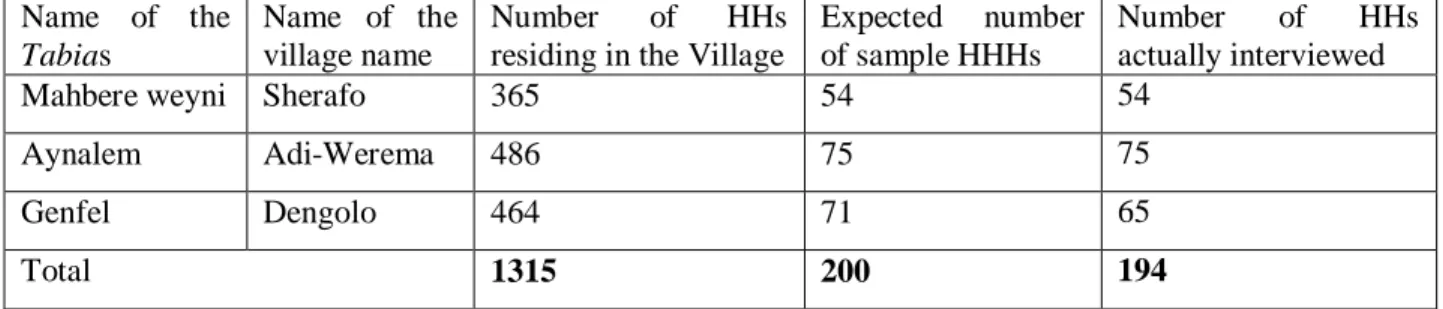
Table 3.1 Sample household distribution by tabia(PA) and villages ... 28
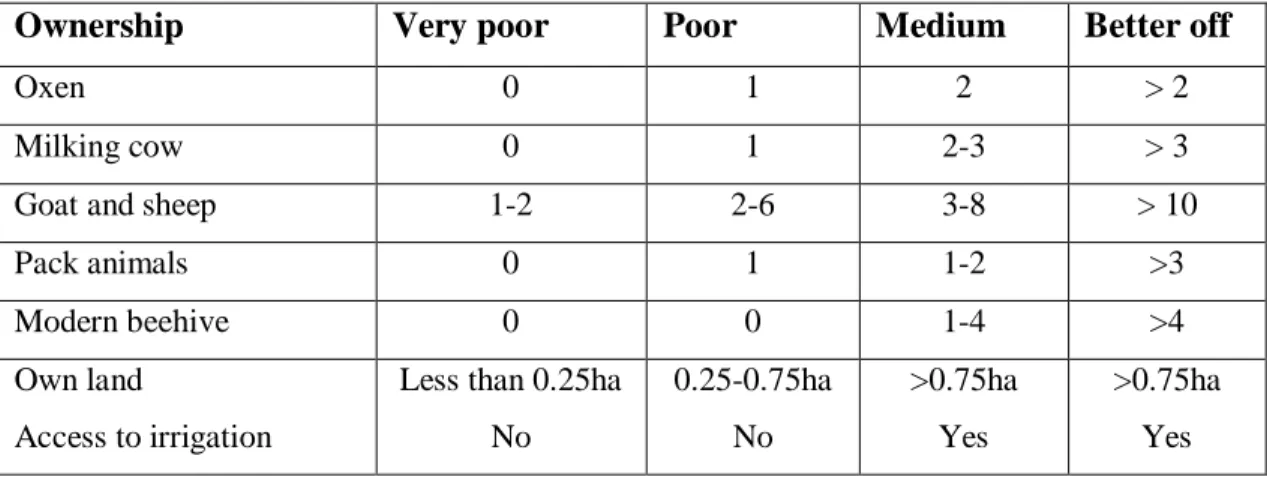
Table 3.2. Wealth characteristic used as criteria to stratify the wealth groups ... 29
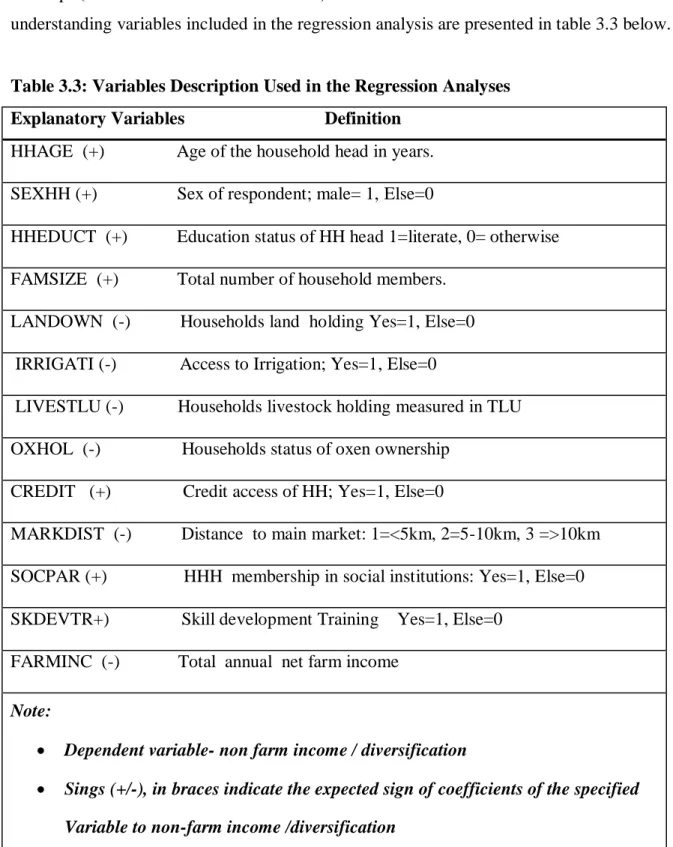
Table 3.3. Variables Description Used in the Regression Analyses ... 33
Table 4.1. Sex of household heads by wealth category ... 35
Table 4.2. Households‟ age group with respect to wealth category ... 35
Table 4.3. Households‟ family size by age category ... 36
Table 4.4. Sample Household‟s characteristics with respect to diversification ... 37
Table 4.5. Distribution of land ownership ... 38
Table 4.6. Size of land owned with respect to participants and non-participants ... 39
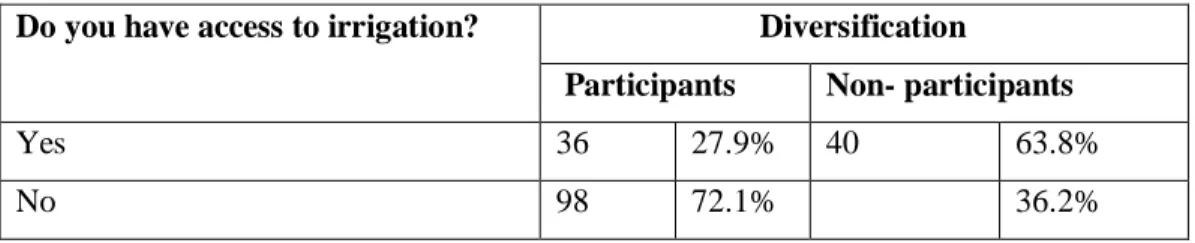
Table 4.7. Households access to irrigation with respect to diversification ... 40
Table 4.8. Livestock holding condition with respect to participation ... 41
Table 4.9. Oxen ownership with respect to diversification ... 41
Table 4.10. Households Access to Credit with respect to diversification ... 43
Table 4.11. Households source of credit... 43
Table 4.12. Purpose of loan by borrowers ... 44
Table 4.13. Membership in social associations with respect to diversification ... 45
Table 4.14. Households statuses of participation in non-farm activities ... 47
Table 4.15. Adopters and non-adopters of diversification with respect wealth category ... 47
Table 4.16.Type of non-farm employment adopted ... 48
Table 4.17. Type of non farm activity with respect to household characteristics ... 49
Table 4.18. Types non-farm of self-employment activities ... 54
Table 4.19. Type of wage employment with respect to wealth categories ... 55
Table 4.20. Source of start up capital for participation in income diversification ... 57
Table 4.21. Motive for non-farm diversification with respect to wealth category ... 59
Table 4.22. Percentage distribution of income sources ... 60
Table 4.23. Determinants of rural non-farm livelihood diversification ... 63
Table 4.24. Major constraints for non-farm livelihood diversification ... 72
LIST OF FIGURES
List of tables Pages
Figure 1.1. Determinants of livelihood strategy ... 7
Figure 3.1 SampleHouseholds wealth category ... 30
Figure 4.1. Households‟ Marital status ... 37
Figure 4.2.Percentage of household with respect to diversification ... 46
CHAPTER I: INTRODUCTION
1.1.
Background of the study
According to World Bank (2005), like many other developing countries Ethiopia presents one of the most important global challenges in agricultural development. Agriculture accounts 40% of the national Gross Domestic Product (GDP), 90 percent of exports, 85% of employment, and 90% of the poor. Although agriculture is the major economic activity and often the sole source of people‟s livelihood in rural parts of Ethiopia, its productivity has been low and declining over time. The causes of the economic crisis in Ethiopia are complex and interlocked. Structural problems, natural and man-made calamities and civil strife have stifled economic growth (Mekonen and Abdulhamid, 1994). Among the causes, however, drought has remained the leading cause of disaster and human suffering in terms of frequency; recurrent droughts have had a devastating impact on the natural resource of the country. Moreover, low levels of physical and human capital, exposure to climatic shocks and failure of past policies to provide strategic investments and incentives for efficient decision-making are some among the factors mitigating against smooth functioning of the sector (MoFED, 2005).
According to Ministry of Economic Development and Cooperation (1999) the poverty situation in Ethiopia is much worse in the rural areas, where nearly half (47.5%) of the rural population is living below the poverty line. On the recent experiences of drought and food insecurity Ethiopia is an extremely valuable source of information, every year, more than 4 million people, particularly in the rural areas have problems of getting enough food for themselves (Tassaew, 2004). Rural poverty is further compounded by extreme land shortage in the highlands-per capita land area has fallen from 0.5ha in the 1960s to only 0.2ha by 2005 and by a marginal productivity of labor is estimated at close to zero (World Bank, 2005). In response to the frequent drought and chronic food shortages faced by millions, both the past and present governments of Ethiopia have made efforts to mitigate the problem. Especially, the present government of Ethiopia has given due emphasis to
Agricultural Development Led Industrialization (ADLI). However; because of the instability in agricultural production, agriculture has failed to play the decisive role expected of it ( Ayele, 2006:32).
Thus, agriculture cannot afford to continue as a sole economic sector for many rural households as it has become increasingly difficult to expand agricultural employment in the country. Some empirical evidences have also proved that agriculture is not enough for meeting rural household consumption and cash income needs. With this regard, it is believed that most of the economic growth in the 1990s came from non-agricultural sources, despite the governments‟ emphasis on Agricultural Development-Led Industrialization (Eastrly, 2002). This seems the reason since the past recent years; income diversification has become a widespread attempt to tackle food insecurity in developing countries like Ethiopia, in attempt with this, rural people have three options to improve their livelihoods: through agricultural intensification and increase in farm size, diversification into non-farm activities and migration (Kees, 2006).
In tandem with this, the emergence and rapid expansion of the (mainly private sector) non-farm economy in rural areas and the towns they serve is a major source of growth in incomes and employment. The rural non-farm economy can develop into a major engine of economic growth, not only for the countryside but also for the economy as a whole.(Axel, 2005). This seems the reason that policy makers are focusing on the non-farm sector in their struggle to overcome the high levels of rural unemployment by promoting non-farm livelihood diversification as an alternative livelihood strategy. The indication here is that the existing types of non-farm livelihood strategies adopted may have their own contribution on poverty reduction, which still depends on assets base of each household. The direction of this study is; therefore, to identify the existing non-farm employment adopted and to investigate factors affecting household‟s non-farm income and diversification and finally to assesses the implication of adopting non-farm livelihood strategy on the well being of rural households in drought affected areas of Tigray Region with particular reference to Kilte-Awlaelo Woreda.
1.2 Statement of the problem
Although the agricultural sector plays a dominant role in the economy in terms of its contribution to national income, foreign currency earning, employment generation and source of input to industry, the level of production obtained from this sector is still low. That is, despite the efforts made to improve productivity of this sector, the country has remained food deficient let alone to produce surplus for structural transformation of the economy. In tandem with this, in Ethiopia policy makers, by tradition, were favoring agriculture as a means of rural economic development for along time (Fikru, 2008). This excluded the rural non-farm activities from much attention, thereby ignoring an important source of livelihood. During the Derg regime, diversification has been actively discouraged in Ethiopia. Farmers were not allowed to engage in off-farm activities, hire of labor was restricted, rather farmers were forced to be members of producer and service cooperatives (Tassew, 2002). The economic challenge is then to absorb workers out of the agricultural sector at a sufficient rapid rate to stop their average productivity from lagging behind (Axel, 2005).
According to a study of income diversification in rural Africa, off-farm and non-farm activities provide 30 to 50 per cent of total rural household incomes (Reardon, 1997). In Ethiopia, compared to other African countries, off-farm and non-farm activities contribute to the overall income of rural agricultural households in only a limited way.(Pernille, 2003). In tandem with this, the current government of Ethiopia is, criticized by some scholars for following rural development policies that neglect the role of rural non-farm economy. The work by Stephen (2000) indicated that food insecurity in Ethiopia derives directly from dependence on an un-diversified livelihoods based on low-input, low out put rain fed agriculture
The work of Ellis and Tassew (2005:xi) also pointed out that households´ livelihood portfolios in rural Ethiopia are amongst the least diversified in Sub-Saharan Africa. The reported level of rural non-farm participation across Ethiopia varies largely between 10-35 per cent (Fikru, 2008). This means that little non-farm growth is occurring in small towns (woreda centres). Further more, the findings of Ellis and Tasew(2005) in the participatory poverty assessment (PPA) has clearly indicated that the Ethiopian rural economy is
characterized by the relative absence of rural non-farm enterprise and the major reasons being lack of encouragement by district and kebele administrators, fear of sanctions such as loss of entitlement to land (even though such fear is not grounded in public policy), social constraints on mobility especially for women, and low cash in circulation in remote rural areas (most people eat their own harvests).Moreover, Tassew (2002) confirmed that ´´the role of the rural non-farm sector is the least understood component of the rural economy, and its role in the broad development process is not well known.” It has been and still is unclear which government organization is responsible for the promotion of non-farm activities in rural areas, moreover, the links between farm and non-farm activities are not fully recognized.
These being the strategies, most of the policies formulated in many of the developing nations mainly focus on improving the total production of agricultural sector, with little emphasis devoted to strengthening and widening the non-farm livelihood strategy which may have a grate contribution on the livelihood of rural households. Moreover, many of the researches conducted in Ethiopia have been observed to focus mainly on investigating various non-farm activities applied by rural households with little focus given to the relative importance of the non-farm economy on the wealth status of rural households as part of strategy to resolve the challenges in food security by supplementing their farm incomes.
One can simply understand from the previous explanations that there is a research gap in promoting the non-farm livelihood diversification in drought prone areas as part of strategy used to meet challenges in food security. To close this gap, the current research intends to identify and understand the existing adopted non-farm activities and seeks to assess the implication of adopting these activities on the economic well being of the rural households as well as to examine the dominant factors that influence household‟s participation in non farm employment in order poor farmers get out of poverty. Hence, a better understanding of the relative importance of the non-farm employment with respect to wealth statuses may help informing policy makers to incorporate issues at macro level and planners and experts at micro level
1.3 Research Questions
The study is an attempt to address the following research questions:
1.What are the existing types of rural non-farm livelihood activities adopted with respect to the various wealth statuses of the sample households in the study area?
2.What major determinant factors and motives do influence rural households participation in non-farm livelihood diversification?
3.What are the major constraints and opportunities for the development of non-farm livelihood diversification?
4.What is the relative importance of adopting the non-farm livelihood strategy in improving the livelihood of rural households with respect to various wealth groups?
1.4
Objective of the study
The general objectives of the study is to identify various non farm activities adopted by the rural households to supplement their farm income and assess the link between these activities and wealth status of rural household and to examine the dominant factors that affect rural household‟s non-farm income and diversification. Thus, the specific objectives of the study are:
1. To identify the existing types of rural non-farm livelihood activities adopted in the study area taking various wealth status of rural households in to account.
2. To explore the major factors determining households decision in adopting non-farm livelihood diversification strategies
3. To identify the key constraints and opportunities in facilitating or hindering rural households to participate in non- farm livelihood diversification activities
4. To assess the relative implication of adopting non-farm livelihood diversification strategies in improving the livelihood status of rural households.
1.5 A conceptual framework for the study
For the purpose of tackling the above research questions and to achieve the research objectives, a conceptual framework is developed based on the sustainable livelihood analysis framework developed by the Department for International Development (DFID) of the British government and the CARE international livelihood security framework. As depicted in figure 1.1 below the study framework attempts to understand
i) The relationships between the type and nature of household livelihood strategies and Relative well-being status of the household
The gender of the household head The age of the household head The family size of the household The educational status of the household
ii) The link between households‟ choice of livelihood strategies and their access and control over important “livelihood assets” such as
Land
Draught power (oxen) Other livestock Labour
Finance (credit)
Figure 1.1. Determinants of household livelihood strategies
Household Socio-economic and Livelihood Assets Livelihood Demographic Characteristics Strategies
Source: Adapted from the DfID‟s „Sustainable Livelihood Framework‟ (Carney, 1998) and CARE‟s „ Livelihood Security Framework‟ (CARE,2001)( cited in Mesfine,2006)
Relative wealth status Sex of household heads Educational status of the household Family size of the household Age of household heads Asset resources Land Draught animals Other livestock Labour Credit Social support Livelihood strategies Farm Non-farm Migration
1.6.
Significance of the study
Since the past recent years, attempts have been made to study and understand the contribution of income diversification on the economic well being of rural households. Thus, understanding the nature, determinants factors and motives for diversification is believed to give clues about the character of socio-economic changes that could be induced for the adoption of appropriate livelihood strategies in rural areas. This study, therefore, mainly strives to create a better understanding of the various non farm activities adopted by drought affected rural households with particular reference to Kilte-Awlaelo Woreda and their relative importance on the livelihood status of rural households which is believed as a vital issue for designing an appropriate agricultural and rural development programs and projects to bring about sustainable rural development
Therefore, the outcome of this study may serve as a source of additional information, which may be of significant use to policy makers and planners during the designing, and implementation of agriculture and rural development programs by showing the opportunities and constraints in diversifying rural non-farm livelihood and the dynamics of the rural non farm economy in providing income diversification employments. Moreover, since this study is an empirical study, it will help add to empirical literature which uses both quantitative and qualitative approach in assessing the link among the various non farm-livelihood diversification strategies with respect to different wealth status and exploring the dominant factors and motives that affect rural household‟s participation in non-farm livelihood and income diversification.
1.7 Scope and Limitation of the study
A comprehensive analysis of rural livelihood diversification involves a range of activities, which needs an ample time to cover all the details; it requires understanding the resource base of a particular area in relation to a particular group of people. Thus, livelihood strategies are usually recognized at individual and household level. Moreover, rural livelihood diversification strategies are numerous, and vary from one household to the other. Likewise, factors that affect household‟s participation in non-farm diversification also
varies. However, since it is difficult to exhaust all the non-farm employment strategies and factors influencing non-farm income diversification, the study confined itself to the major and common ones, which are found to be relevant to the topic and the research area. In line with this, for reasons associated with time and resources, the scope of the study was limited to one draught prone Woreda(kilte-Awlaelo) in Tigray region.
It is indicated in the methodology part of this thesis that the research has employed cross sectional survey. However, such data do not permit analysis of the dynamics of livelihood diversification. That is, to examine the pattern of non-farm income diversification, time series or panel data was needed which is the fundamental limitation of this study. However, it is customary to collect data from the rural farm households retrospectively with careful assumptions and interpretations. The other limitation is unavailability of baseline data. Such data would reflect the condition of the farm households‟ agricultural production, non farm income and asset ownership which would have been helpful to compare more comprehensively and evaluate the relative effect of income diversification on rural households‟ well being. Finally, there are some parameters used to examine wealth status of households. These include the income/consumption, and asset ownership, which are explained in physical terms. Each of the parameters has got their own drawbacks. However, we choose to examine wealth status of rural households in terms of asset ownership i.e based on traditionally perceived measure and criteria‟s with the help of key informants for categorizing rural households among four different wealth groups since this technique is considered more reliable as compared to the first one.
1.8 Organization of the paper
This research paper contains some five chapters. The first chapter deals with background, statement of the problem, research questions, objectives, significance, and scope and limitations of the study. The second chapter focuses on review of related conceptual as well as empirical literatures pertinent to the objectives of the study. While, chapter three exclusively deals with the description of the study area and research methodology pursued; chapter four presents the major descriptive findings and discussions and interpretation of econometric results. Finally, conclusion and recommendations are presented in chapter five.
CHAPTER II: REVIEW OF RELATED LITERATURE
Introduction
Since the prominent objective of the thesis is to assess the link between households‟ level non-farm diversification decision and their socio-economic characteristics and to identify and examine the determinant factors that affect rural household‟s non farm income and diversification, the researcher found it meaningful to visit various literatures, which are believed to be relevant to the topic. Thus, the basic concepts of poverty, drought, food security and livelihood diversification, motives and determinants that influence households farm income and diversification, linkage between farm and farm activities, non-farm diversification and poverty reduction, dimensions of rural non non-farm diversification in Ethiopia, government policies, strategies and programs adopted in the country and various asset types up on which the livelihood of a given society is built in are presented below.
2.1.
Poverty, drought and food security situation in Ethiopia
PovertyThe World Bank defines poverty as the inability of people to attain a minimum standard of living. Poverty not only means low income and consumption and low levels of human development in terms of education, and healthcare but also feelings of powerlessness, vulnerability and fear because poor people are not free and are exposed to grate risk, living on the margin of subsistence (Thirlwall, 2006). The major causes of individuals‟ poverty can be linked to a lack of assets and or a low return on assets. Important assets to enable people to grow out of poverty include
1 Natural Asset such as land
2 Human Assets such as education and health 3 Financial Assets including access to credit and 4 Social assets such as net works of contacts
Ethiopia is a large country with over 75 million people of which the majority or 85 percent are engaged in rural and agricultural based economic activities. It has one of the lowest per
capita incomes in the world. In fact, the miserable condition of the Ethiopian economy is reflected in every sector and by all standard social and economic indicators one prefers to use (Tilaye, 2004). In fact, Ethiopia has reasonably good resource potential for development- agriculture, biodiversity, water resources, minerals, etc. Yet, Ethiopia is faced with complex poverty, which is broad, deep and structural. The proportion of the population below the poverty line is 44 per cent in 1999/2000 (MoFED, 2002).
Drought
Due to pervasive global environmental change, drought has become the common and universal phenomenon, irrespective of level of development of nations. But, its sever consequences has been repeatedly manifested in those of nations which are found at low level of development. In this regard, many researches identified that the occurrence of recurrent drought is one among the various factors resulting in agricultural production failure in many of developing nations especially in the arid and semi arid areas. Although various scientists from various disciplines defined drought in many ways, the United Nations Convention to Combact Desertification (UNCCD)(2006) as cited in Aby(2009) defined drought as it is naturally occurring phenomenon that exists when precipitation has been significantly below normal recorded levels, causing serious hydrological imbalances that adversely affect land resource systems.
In one way or the other the definitions assert that drought is commonly taken as a physical event consisting of some degree of short fall in rainfall over a period of time which in turn affects the level of production in particular and human lives in general. In addition to this, displacement of people, social disruption due to change in gender roles and split of families, reduced school attendance, environmental degradation, malnutrition, death, diseases and loss of sprit are some among the visible adverse effects of droughts imposed on the livelihood of the rural households. Taking the case of Ethiopia, rural farmers‟ current circumstances reflect the challenges faced by the country over the last decades. In particular, the country is extremely vulnerable to drought and since the early 1980s, has experienced seven major droughts, five of which resulted in famine. The most recent drought, which occurred in 2002/2003, affected approximately 13 million people (MOFED, 2005). Thus, to protect and/
or mitigate the adverse consequences of drought, rural households has long been adopting non-farm livelihood diversification activities as coping strategies depending on their local natural resource endowment, institutional arrangement, social relations, human capital and so on. The basic concepts of livelihood strategies in general and non-farm livelihood strategy in particular are, therefore, presented below
Food security situations
Food security shall be the prime and most important achievement of a developing country, like Ethiopia. Food security is “the availability at all times of adequate world supplies of basic food stuffs to sustain a steady expansion of food consumption and to off set fluctuation in production and price” (Alem, 2003). At the national level, the major features of food security in Ethiopia are a persistent deficit in aggregate food supply, a downward trend in per capita food production, and large variability in output of food items (Alem, 1999). Ethiopia has been a net importer of food for more than three decades. In the decade between 1985 and 1994, net domestic production of cereals that on average account for about 85 per cent of household food consumption ranged between 82.7 and 93.8 per cent of total supply. Domestic food supply has failed to meet the food requirement of the country. In fact, per capita food out put of the country has been declining for nearly over 30 years and the ability of the country to feed its population, growing at about 3 per cent per annum, is deteriorating from bad to worse (Astatke, 2002).
2.2. Livelihood (S)
Although various scholars define it at different times and in different ways, these days, the concept of livelihood is increasingly gaining importance and is widely used in various articles and texts written on poverty and rural development. In relation to this, Conway and Chambers, as cited in Ellis F. (2000) define livelihood as it includes the capabilities, assets, and activities, which are considered crucially important for means of living. This definition helps one to note that livelihood is associated with a means of one‟s living which is influenced by the ability of individuals in realizing their potential as human beings, varying degree of individuals‟ access to and portfolios of assets and activities in which they are engaged in to support and sustain their living.
Moreover, with some modifications, Ellis (2000) defined livelihood in the following way As it “comprises the assets (natural, physical, financial, human
and social capital), and activities and the access to those (mediated by institutions and social relations) that together determine the living gained by an individual or household.”
In this case, Ellis has precisely categorized the type of assets, access to these assets and activities determining the livelihood enjoyed by an individuals and households. . In tandem with this, adding to previous definition of Conwey and Chambers, he went on to say that various types of institutions with in a society and social relations among groups play a pivotal role in determining access to assets that individuals are expected to have. This helps one to understand that the varying degree of access to and portfolios of assets among rural society possibly makes the livelihood of one household to be different from the other
2.2.1. Livelihood Assets (Capital)
The Sustainable Livelihood Framework (SLF) identifies five types of assets or capital up on which livelihoods are built; increasing access (ownership or right to use) to these assets create a great contribution to poverty reduction and improves the well-being of the society. These are: human capital, natural capital, financial capital, social capital, and physical capital. People‟s choice of livelihood strategies, as well as the degree of influence they have over policy, institutions and processes, depends partly upon the nature and mix of the assets they have available to them. Some combination of them is required by people to achieve positive livelihood outcomes –that is, to improve their quality of life significantly on a sustainable basis. No single category of assets on its own is sufficient to achieve this, but not all assets may be required in equal measure. It is important to note that a single asset can generate multiple benefits. For example, if someone has secure access to land (natural capital) they may also be able to get better access to financial capital, as they can use the land both for productive uses and as security for a loan ( Mesfine, 2006)
A. Human Capital;
Human capital represents the skills, knowledge, ability to labor and good health that together enable people to pursue different livelihood strategies and achieve their livelihood
objectives. At a household level human capital is a factor of the amount and quality of labour available; this varies according to household size, skill levels, leadership potential, health status, etc.
B.Natural capital;
Natural capital is the term used for the natural resource stocks from which resource flows and services (e.g. nutrient cycling, erosion protection) useful for livelihoods are derived. There is a wide variation in the resources that make up natural capital, from intangible public goods such as the atmosphere and biodiversity to divisible assets used directly for production (trees, land, etc.). Within the sustainable livelihoods framework, the relationship between natural capital and the Vulnerability Context is particularly close. Many of the shocks that devastate the livelihoods of the poor are themselves natural processes that destroy natural capital (e.g. fires that destroy forests, floods and earthquakes that destroy agricultural land) and seasonality is largely due to changes in the value or productivity of natural capital over the year.
C. Financial Capital
Financial capital denotes the financial resources that people use to achieve their livelihood objectives. The definition used here is not economically robust in that it includes flows as well as stocks and it can contribute to consumption as well as production. However, it has been adopted to try to capture an important livelihood building block, namely the availability of cash or equivalent that enables people to adopt different livelihood strategies
D. Social Capital
There is much debate about what exactly is meant by the term „social capital‟. In the context of the sustainable livelihoods framework it is taken to mean the social resources upon which people draw in pursuit of their livelihood objectives, networks and relationships based on trust, reciprocity and exchanges
E. Physical Capital
Physical capital comprises the basic infrastructure and producer goods needed to support livelihoods. Infrastructure consists of changes to the physical environment that help people to meet their basic needs and to be more productive. Producer goods are the tools and equipment that people use to function more productively (Cambers and Conway, 1992 )
2.2.2 Livelihood strategies
The term livelihood strategy is used to denote the range and combination of activities and choices that people make in order to achieve their livelihood objectives (Carney 1998). It includes: how people combine their income generating activities; the way in which they use their assets; which assets they chose to invest in; and how they manage to preserve existing assets and income. Strategies may reflect underlying priorities, such as to diversify risk. Livelihood Strategies are diverse at every level. For example, members of a household may live and work in different places, engaging in various activities, either temporarily or permanently. Individuals themselves may rely on a range of different income generating activities at the same time, and are likely to be pursuing a variety of goals.
There are different ways of categorizing household livelihood strategies and income sources. Household livelihood strategies could be categorized into three broader groups as Agriculture, which encompasses intensification and extensification of crop and livestock farming activities, livelihood diversification in which off-farm activities and non-farm activities are included and Migration (Scoones, and Wolmer , 2002).Income sources can be categorized as those activities that are „natural resource based activities 'and „non-natural resource based activities. Others categorize household income sources as farm, off-farm, non-farm income sources and remittance income from migratory labor ( Ellis 1998:54). Definitions are given as follows:
Farm income: this refers to income generated from own-account farming, whether on owner occupied land or on land accessed via cash or share tenancy. Farm income broadly defined, includes livestock as well as crop income.
Off-farm income: refers to wage or exchange labor on other farms (i.e. within agriculture). It may also include income obtained from local environmental resources such as firewood, charcoal, house building materials, wild plants and so on.
Non-farm income: refers to agricultural income sources. Several sub-categories of non-farm income are commonly identified. These are: non-non-farm rural wage, non-non-farm rural self-employment, and rental income obtained from leasing land or property, urban-to-rural
remittance. It is important to point here is that in this, study off-farm activities are considered as non-farm income.
Migration: means that one or more family members leave the resident household for varying Periods of time and in so doing are able to make new and different contributions to the household‟s well being.
There are different types of migration: seasonal migration (temporary migration according to agricultural seasons), circular migration: refers to temporary migration that is not necessarily tied to seasonal factors in agriculture, and that may be for varying duration, permanent migration: implies that the family member makes a long-duration move to a different location and sets up domicile at destination, international migration: a family member moves either temporarily or permanently abroad (Ellis, 1998 cited in Mesfine, 2006).However, this study gives more emphases to non- farm livelihood strategy.
2.2.3 Livelihood diversification
Various literatures indicated that diversification of activities is used widely in rural areas of developing countries as a mechanism to reduce the outcome of future expected shocks such as drought. Diversification can either refer to an increasing multiplicity of activities (regardless of the sector), or it can refer to a shift away from traditional rural sectors such as agriculture to non-traditional activities in either rural or urban space (Start and Jonson, 2004). Minot et al. (2006) also defines diversification as the expansion in the importance of non-crop or non-farm income and increase in the number of sources of income In this regard, Ellis (2000) defined rural livelihood diversification “as a process by which rural households construct an increasingly diverse portfolio of activities and assets in order to survive and improve their standard of living.” This implies that diversification recognizes that people survive and widen their income source by doing many different things, rather than just one thing or a few things. This is associated with the fact that farming, on its own, does not provide a sufficient means of survival in rural areas. For this reason, most rural households are found to depend on diverse portfolio of activities and income sources such as crop and livestock production, non-farm self employment and wage employment for their livelihoods, although the degree of dependence on these activities varies according to the socio economic status of the households.
In recent years, it has been realized that livelihood diversification is contributing a lot to rural livelihoods even if policy makers have neglected it. In this respect, as cited in Aby (2009), the findings of Belanieh (2002) indicated that although the contribution of rural livelihood diversification is often ignored in policy agenda, it is an important feature of survival in rural areas of Ethiopia. Based on his findings, he concluded that the misconception of rural development that is focused on enhancing the productivity of agriculture need to be re examined and emphasized on food security as only one of the central concerns of households but not the only one.
Likewise, a research conducted in southern Ethiopia indicated that diversification of activities are crucially important in the study region outlining that caste, household size, structure, gender of household head, wealth group, ownership and access to asset and access to transport, market and other services are some of the important variables determining diversification activities applied at different levels. (Carswell et al,2002). In confirming the importance of livelihood diversification, Easterly (2000) asserted that Ethiopia‟s food insecurity problem drives directly from its dependence on diversify livelihoods that are based on low input rain fed agricultural activities. Thus, Livelihood diversification assumed to play a role in overcoming the consumption-smoothing problem created by the seasonality of agricultural output patterns. For rural households, risks are particularly related to natural shocks (floods, drought etc.). All households, whether rural or urban, are prone to the personal shocks of chronic illness, accidents and death and reduces all the risks by diversifying their livelihoods (Ellis, 1998)
2.2.4 Non-farm livelihood diversification
Non-farm means (any) activity outside agriculture and non-farm employment means (any types of) employment of the rural household members in these activities (Reardon et al., 2001). In this study, non-farm activity consists of all economic activities in the rural areas, which are different from farming (which is specified as somebody who works on her/his own farm or is hired by the others to work on their farms as farmer laborer). Given this, households might belong to one of the two employment outcomes according to their primary and secondary jobs. In this regard, both wage employment and self-employment activities are
means of income earned from non-farm activities. The first outcome (wage or salary employment) refers to those who participate in non-farm activities against payment to cash or in kind (hired by others) such as working for paid development work (such as food for work), regular jobs (such as masonry and carpentry) and casual daily work. And the second out come (self employment or own business) refers to those who participate in non farm activities (such as Trading in livestock and grain, selling fire wood and homemade charcoal, stone mining, hiring out of pack animals ( such as transport animals, like donkey horse and camels), petty trading and handcraft).
Studies of rural income portfolios generally converge on the once startling figure that, on average, roughly 50 per cent of rural household incomes in low income countries are generated from engagement in non-farm activities and from transfers from urban areas or abroad (remittances and pension payments (Bryceson & Jamal, 1997). Rural structural transformation involving diversification out of agriculture is also increasingly becoming both research and policy issue in Ethiopia. As elaborated by PASDEP, the rural development strategy of the country will be broadened beyond the initial focus on agricultural intensification, with recognition of the need to stimulate income diversification and rural-urban linkages.
In relation to this, the work of Tassew‟s (2000) conducted in the Northern part of Ethiopia (Tigray) on the basis of farm household survey data collected shows that off farm income can be complementary to farm income if farm households are constrained in their borrowing. It also shows that farm households with more diversified sources of income have a higher agricultural productivity. One of the key findings of the study is that expenditure on farm input is dependent not only on agricultural production, but also on off-farm and non - farm income because of capital market imperfections (borrowing constraints). Farmers involved in better paying off-farm activities such as masonry, carpentry and trading are in a better position to hire farm labour. In the study area a substantial proportion of farm households (81%) have found diversified their income into off-farm activities.
According to Fredu et al (2006) using data from 385 rural households in Northern Ethiopia ( Tigray) found out that diversification intensifies income inequality. Income sources outside
crop production have an inequality increasing effect. A rise in income from non-farm income and livestock increases income inequality. They also indicate that social capital is an important factor that determines non-farm income diversification but does not affect for crop income. The same author further pointed out supporting evidences that social capital is more important to women headed than male-headed household. Nigisti (2007) who studied An economical analysis of farmers risk attitudes and farm households response to rainfall risk in Tigray Northern part of Ethiopia, has also indicated that the better off households with more than two oxen were more reliant on non farm self employment and less reliant on wage employment and non labor income (such as food aid) than those who were considered poorer. This, definitely, indicates that better wealth status of households is positively related with self-employment non-farm self-employment and negatively related with farm wage employment.
In addition to this, many studies assess that non- farm employment opportunities in rural areas are limited having a lower income generating potential (Devereux, 2000). These can be substantiated by the fact that the survey reported from Ethiopia ministry of labor in 1996 indicated that only 44% of rural households surveyed pursued non-farm livelihood activities as source of their income and these sources constituted only 10% to household income (Befekdu and Berhau, 2000 cited in Aby, 2009). In tandem with this, the findings Fikru (2008) in Oromiya zone indicated that lack of waged labor opportunities, lack of initial start up capital, limited knowledge and skill, lack of raw materials and limited markets are discouraging factors against expanding non-farm income earning activities. However, it is important to note at this point that there are many conflicting propositions about the cause and consequences of income diversifying activities. That is, diversification of activities may be considered both as a deliberate household strategy and as an involuntary response to crises and hence it can be taken as a safety valve for rural poor and as a means of wealth accumulation for rural rich (Ellis, 2000). The above statement helps one to understand that diversification of activities can be adopted at household level as copying strategies to compensate the harvest failure in agriculture which mainly depend on various variables such as location, access to assets, income level, opportunity, institutions and social relation.
2.2.5 Motives and determinants for livelihood diversification
In studying households‟ livelihood diversification strategies, it is important to account for the fact that the motives, means, and outcomes of diversifying are heterogeneous. Diversification of livelihood strategies occurs for many different reasons. According to Junior et al (2003) farm households may diversify their income sources for at least two motives (i.e. Pull factor and push factors). Diversification could be for reasons of necessity or people may diversify their livelihood by choice (Ellis, 1998). The reasons for diversifying income sources vary for different families in different times and places. Clearly, extreme misfortune is more likely to result in people making involuntary decisions to diversify rather than voluntary ones (Ibid). But it is important to remember that it is not only poor households that are forced to diversify in order to make ends meet as best they can. Richer households also diversify their economic activities and this can be a path to accumulation (Murray 2001). Furthermore, engagement in non-agricultural activities in rural areas can be classified into survival-led or opportunity-led. Survival-led diversification would decrease inequality by increasing the incomes of poorer households and thus reduce poverty. By contrast, opportunity-led diversification would increase inequality and have a minor effect on poverty, as it tends to be confined to non-poor households.
Distress-push diversification typically occurs in an environment of risk, market imperfections, and of hidden agricultural unemployment, and is typically triggered by economic adversity, which sets the household on a downward income trajectory. It implies engaging in economic activities that are less productive than agricultural production could be on a full-employment basis, and is motivated by the need to avoid further income decreases. Demand-pull diversification, on the other hand, is characterized as a response to evolving market or technological opportunities, which offer the opportunity of increasing labour productivity and household incomes8. This distinction suggests a number of specific
inferences in terms of the relationship between diversification strategies, household characteristics and the socio-economic environment. Within any rural area, distress-push diversification attracts households in a rural population, which are less well endowed, or which have lower incomes. These households will enter nonagricultural activities that are, on average, less rewarding (e.g. in terms of labour productivity) than demand-pull
diversification activities, since the higher-return activities typically require higher investment that only the richer households can afford. For instance, poorer households will obtain a larger share of their non-agricultural income from wage employment, while richer households have better opportunities to enter non-agricultural activities in their own independent enterprise. Third, since income inequality is typically such that there are more relatively poor than relatively rich households, distress-push diversification will be more prevalent than demand-pull diversification. Fourth, distress-push and demand-pull diversification activities will be more clearly separately observable as inequality is larger (Davis R. et al, 2003).
Determinants of livelihood diversification fall into two broad categories: “push” versus “pull” factors. The “coping” literature examines how farmers in low-potential and risky environments-those subject to drought, flooding, or environmental degradation – often adapt by deploying household resources to a range of farm and non-farm activities “ a growing landlessness also pushes households into non-farm activity by default. Many farm households in medium to high-potential environments are also “pooled” by opportunities for diversification into attractive non-farm activities (Bryceson, 1997)
Infrastructure development is generally believed to have impact on rural non-farm activity. Roads, telecommunications, credit and electricity all contribute to increased non-farm activity. Haggblade et al, (2007), observed that in a specific case of the rural non-farm economy, infrastructure is a double-edged sword. He further note that adequate roads, communication facilities, and other public goods are necessary fixed inputs into production; and, hence, would be expected to facilitate the development and expansion of rural industries. On the other hand, connecting rural places to urban places, via infrastructure expansion and improvement, may well lead to inadvertent “crowding out” of more remote rural firms and industries by virtue of lowering the cost of distance and their competit iveness with urban firms.
2.3. Linkage between farm and non-farm activities
Although agriculture remains the backbone of most rural economies like that of Ethiopia, the notion of rural economies as purely agricultural is nowadays considered simplistic and
obsolete. The rural non-farm economy alone cannot act as a driver for the rural economy, independently of agriculture or other primary activities However, certain non-farm activities are not only reactive to rising production and income in primary sectors but can also facilitate, or even initiate, growth in these primary activities (Davis, 2004). A profitable and productive agricultural sector is the main stimulus to rural non-farm growth, until late in the development process. However, there is already evidence in Asia and Latin America of increasing linkages to urban industrialization, e.g. outsourcing of textile assembly, independent of agricultural growth. In any event, from a public policy viewpoint, investment in infrastructure and education is the key to a vibrant rural non-farm sector that supports both agricultural and non-agricultural sectors. For most countries, economic growth and sustained poverty reduction are unlikely to be achieved without initially stimulating sustained agricultural production (Axel,2005).
2.4 Non-farm diversification and poverty reduction
The non-farm sector offers potential to absorb a growing rural labor force, slow rural - urban migration, contribute to national income growth, and promote a more equitable distribution of income (Lanjouw and Lanjouw, 1997). Given low capital requirements and the small-scale nature of many rural non-farm enterprises, poor households dominate many of them. For these reasons, policy makers are increasingly forced to view the rural non-farm economy as a potentially important contributor to foster local economic growth and alleviate the rural-urban income gap and rural poverty (Davis and Bezemer, 2004). There is thus a growing consensus that poverty declines as the share of income from non-agricultural sources rises. In this regard, Ellis (2004) pointed out that, occupational diversity needs to be distinguished from the income proportions to which it gives rise.
The better off and the poor may exhibit similar degrees of diversity (as measured, for example, by count frequencies of the different occupations in which they are engaged) yet the better off tend to diversity in the form of non-farm business activities (trade transport, shop keeping, etc), while the poor tend to diversify in the form of casual work, especially on other farms. Diversification by the poor therefore tends to leave them still highly reliant on agriculture, while that by the better off reduces such dependence (ibid, 2004)
CHAPTER III: MATERIALS AND METHODS
3.1 Introduction
This study employed a mixed approach with an emphasis given to quantitative household survey supplemented by the qualitative research method. The quantitative research approach is applied to explore the types of non-farm employment adopted at household level and examine the major determinants of non-farm income and diversification, as well as to identify the major constraints and opportunities in adopting non-farm livelihood strategy and finally assess the implication of adopting these strategies on economic well being (wealth status) of the rural households understudy. Moreover, to capture some variables, which are non-quantifiable methodologically, qualitative methods of data analysis are used.
3.2 Site selection and description
3.2.1 Description of the study area
Tigray region is situated in the northern part of Ethiopia and covers an approximate area of 80,000 square kilometers and a total population of 4.3 million, which is growing at 2.5 percent per year. Geographically, the regional state lies roughly between 120 15‟-140 57‟ North latitudes to 360 27‟-390 59‟ East longitudes. The region is divided in to 7 zones, and 46 Woredas, for administrative purpose( CSA, 2009).The Afar region bounds Tigray to the East, Sudan to the west, Eritrea to the North, and Amhara to the South. Ecologically, the region belongs to the sudano-sahelian agro-climatic region of Ethiopia. Its climate is characterized by one long dry season from October to May, followed by a short rainy season from March to April and the long rainy season from June to late September. The region receives a rainfall between 550 and 650 mm annually (Aby, 2009)
Like in any other regions of the country, agriculture is the major sector of the regions economy; it is characterized by mixed (crop-livestock) farming system contributing about 45% of the Gross Domestic Product (GDP). More than 85% of the population derives its livelihoods from agriculture and related activities. Agriculture in Tigray consists of crop husbandry, livestock husbandry and mixed farming, which is the dominant type of farming
system. Rain fed subsistence is the dominant form of agricultural production. Moreover, Agriculture is characterized by extremely small holding, traditional farming and low level of literacy among the holders (CSA, 2008).
As agriculture is mainly rain feed, the category and duration of rainfall determines the growing period. The major crops of the region are sorghum, teff, baley, finger millet(Dagusa), wheat, and maize accounting for 26%, 16%, 12%, 11%, 9% and 7% of the total area cultivated respectively (BoFED, 2004 ). The work ofFistum and Holden (2004:16) indicated also “agricultural production in the region is highly risky not only because of the recurrent drought and adverse weather conditions but also due to deteriorating land quality owing to land degradation”. The study also pointed out that access to infrastructure and institutions, such as market for inputs and outputs, road and transport, storage facilities in the region is limited
As part of the Eastern Zone of Tigray regional state, the Woreda selected for this research, Kilte Awlaelo (KAW), is one of the 46 weredas in the region, geographically it is located at about 45 km North of Mekelle (Regional capital) along the Mekelle-digrat main road. The wereda ranges from 130 46‟ North Latitude and 40o 35‟ East Longitude with a total area of 1010.25 km2. Atsebi Wemberta in the East, Saesie-tsaedaemba in the North, Hawzen in the North West, Temben in South West and Enderta in the south bound KAW.
The Woreda comprises 17 rural Tabias and 64 Kushets, it is one of the most vulnerable areas of the region where significant number of the population is suffering from food insecurity. Topographically, the altitude of Kleteawlaelo Woreda ranges from 1990-2300 meters above sea level while the temperature ranges from 17-28oC. Daily temperature becomes very high during the months of May to June, with a mean annual temperature of 22oC. The climatic situation of the woreda is characterised by cool, warm and dry weather. The spatial and temporal distribution of rainfall is low and unreliable to support the rain-fed agriculture. According to the available data, the mean annual rainfall for the area ranges from about 170-450mm. About 80 % of the Woreda receives mean annual rainfall of 310 mm, with rainy months extending from late of June to the end of August. However most of the rainfall is received during the months of July (WoARD, 2009). According to the office
of Wereda Agriculture and Rural Development, the population of the Woreda is estimated to be 123,068 in 2008 with an average population density of 105.04 per km2 and about 95.8% of the population lives in the rural areas. According to the recent Woreda population report (2007), the total number of households in the Woreda is 24,583. Out of these 12,065(49.07%) are male headed and the remaining 12,552(50.03%) are female-headed households. The age distribution of the population in the Woreda is 41.4 % under 15 years, 53.1% between 15-64 years and 5.5% were 65 and above. Based on this data the dependency ratio of the rural population in the study area is 88.3 %. With respect to land use pattern of the woreda, 20.88 percent of the total land is arable land in which major crops like teff, sorghum, and wheat and barely are grown, while 62.95 percent is unproductive. Forest and bush land covers 11.48 percent of the total area. The remaining 4.71 percent is a postural land, which is used for animal grazing.
3.2.2 Study area selection
The rational for the choice of the study area( Kitle-Awlaelo Woreda) from the woredas of Tigray national state is due to the fact that large part of the area in the Wereda has repeatedly been facing scarcity of rainfall, which resulted in recurrent drought. At the same time, the rural households in this area are identified as having and adopting well identified non–farm activities (which are observed to be studied by the researcher) where the predominant occupation of the population is farming. Moreover, the area was also given high attention by the sponsor organization, as it is one of their project areas as well as the previous quittance of the researcher with the locality. And hence the wereda is considered more appropriate to the study, which mainly aims at assessing the determinant factors influencing household non-farm income and diversification. Therefore, the occurrence of repeated drought and rural farm households‟ preparedness to diversify their income generating activities and adopting of various types of non-farm activities are the basis for selecting Kilte-Awlaelo Wereda for the study. See the map of the study area in Appendices II.
3.3 The Study Approach
According to Dessaleng (2004), it is becoming increasingly popular that combinations of methods are to be employed in social research; it is usual for researchers to employ mixed method design to investigate different aspects of the same phenomenon. Thus, this study employed a mixed approach with an emphasis given to quantitative household survey supplemented by the qualitative research method. The quantitative research approach is applied to identify the existing types of non-farm livelihoods adopted at household level and examine the determinant factors and motives influencing rural households participation in non farm income diversification, and finally assess the implication of adopting the non-farm livelihood strategy on the e