MALAWI’S TRILEMMA: MONETARY POLICY INDEPENDENCE, EXCHANGE RATE STABILITY AND FINANCIAL INTEGRATION
A THESIS SUBMITTED IN PARTIAL FULFILMENT OF THE REQUIREMENT FOR THE DEGREE OF
MASTER OF COMMERCE IN FINANCIAL MARKETS AT
RHODES UNIVERSITY
BY
CHARITY KAMAMKHUDZA
SUPERVISOR: MR ROB STUART
i ABSTRACT
Malawi has, in the last few decades, undergone several reforms relating to monetary, exchange rate and financial integration policies in a bid to achieve sustainable economic growth. Despite these reforms, however, the country has barely attained desirable macroeconomic performance. This study sets out to establish if the need for these policy reforms is due to the fact that the country is constrained from the simultaneous achievement of optimal levels of monetary policy independence, exchange rate stability and financial integration, as postulated by the ‘trilemma’. The trilemma is evaluated using an approach introduced by Aizenman et al. (2008), in which the Ordinary Least Squares (OLS) method is applied to a model in which a constant is regressed on indices constructed for the policy intermediate goals; the results indicate that the trilemma is a binding constraint in Malawi and that the largest trade-off is between exchange rate stability and financial integration.
Given these constraints, the study also considers the combination of the trilemma intermediate policy goals that has been dominant in the country in the last three decades, using predicted values from the model and a graphical analysis to explore this objective. The analysis reveals that Malawi has, on average, prioritised exchange rate stability and monetary policy independence at the expense of financial integration.
The study also assesses how the trilemma intermediate policy goals affect macroeconomic performance, specifically regarding output growth rate and inflation. The results reveal that exchange rate stability is associated with faster output growth, financial integration is associated with higher inflation, and that monetary policy independence is not a significant factor. The results emphasise the importance of consistent stability of the exchange rate if Malawi is to achieve faster and sustainable economic growth. Given this, policy makers must be cautious, as the current floating exchange rate regime, combined with financial integration, could lead to slow growth and high inflation.
ii DECLARATION
This thesis is wholly my own work, except where explicitly stated otherwise and duly acknowledged. It has not been submitted to any other university, college or technikon for degree purposes.
……….. Charity Kamamkhudza
iii ACKNOWLEDGEMENTS
Writing this thesis was one of the most demanding academic tasks I have ever had to complete. I would never have produced this type of work without the help and support of others. I am greatly indebted and grateful to the following people and institutions for making this research project a success and less stressful:
1. Almighty God: for good health, direction, provision and encouragement. I would never have come this far without Him.
2. My supervisor, Mr Rob Stuart: for believing in me and undertaking to supervise my work when he had many other commitments on his table. His technical advice, guidance, dedication and sincere interest in the study throughout the process is heartily appreciated.
3. Prof Gavin Keeton, Mr Ferdi Botha, Ms Jamela Hoven, Prof Pierre Faure, Prof Hugo Nel and the entire staff in the Department of Economics and Economic History at Rhodes University: Although not my official supervisors, they dedicated their precious time to read my work and provide me with constructive advice, encouragement and valuable resources whenever I needed them.
4. Most importantly, the Beit Trust and Rhodes University for financial support. Without their generous scholarship I would not have been able to have embarked on this journey.
5. My classmates for the peer support they rendered to me during the course of my study. They were constantly available when I needed resources, advice or just company. 6. My beloved family and friends for being there for me through thick and thin. Their
emotional and some technical support was exceptional. They were always there, every step of the process, cheering me on.
7. My church and Connect Group for emotional and spiritual support. Having them in my life kept me going. I learned valuable lessons through my interaction with them. 8. Dr Kisu Simwaka: for his input during the early stages of the process when I was
iv TABLE OF CONTENTS ABSTRACT ... i DECLARATION ... ii ACKNOWLEDGEMENTS ... iii TABLE OF CONTENTS ... iv
LIST OF FIGURES ... viii
LIST OF TABLES ... ix LIST OF ACRONYMS ... x CHAPTER 1 ... 1 INTRODUCTION ... 1 CHAPTER 2 ... 6 LITERATURE REVIEW ... 6
2.1 The Trilemma or Impossible Trinity Hypothesis ... 6
2.1.1 Use of the Trilemma Intermediate Policy Goals (Advantages and Disadvantages) ... 8
Monetary Policy Independence ... 8
Exchange Rate Stability ... 8
Financial Integration ... 9
2.1.2 The Impossibility of the Simultaneous Attainment of the Three Intermediate Policy Goals of the Trilemma – a Theoretical Perspective ... 11
2.1.3 Challenges to the Validity of the Trilemma Hypothesis ... 13
2.1.4 Macroeconomic Effects of the Trilemma Intermediate Policy Goals ... 14
2.1.4.1 Monetary Policy Independence and Macroeconomic Performance ... 15
Monetary Policy Independence and Inflation ... 15
Monetary Policy Independence and Output ... 15
2.1.4.2 Impact of Exchange Rate Stability on Macroeconomic Performance ... 15
Exchange Rate Stability and Inflation ... 15
Exchange Rate Stability and Output ... 16
2.1.4.3 Impact of Financial Integration on Macroeconomic Performance ... 17
Financial Integration and Inflation ... 17
Financial Integration and Output ... 18
2.2 Empirical Literature ... 19
Introduction ... 19
2.2.1 The Trilemma in History ... 20
2.2.2 The Validity of the Trilemma Hypothesis ... 22
v
2.2.3.1 Developed Countries ... 27
2.2.3.2 Emerging Market Developing Countries ... 28
2.2.3.3 Non-emerging Market Developing Countries ... 29
2.2.4 Previous Research Findings on the Impact of the Trilemma Intermediate Policy Goals on the Economy ... 30
2.2.4.1 Impact of Monetary Policy Independence on the Macro-economy ... 30
Monetary Policy Independence and Inflation ... 30
Monetary Policy Independence and Output ... 30
2.2.4.2 Impact of Exchange Rate Stability on the Macro-economy ... 31
Exchange Rate Stability and Inflation ... 31
Exchange Rate Stability and Output ... 32
2.2.4.3 Impact of Financial Integration on the Macro-economy ... 33
Financial Integration and Inflation ... 33
Financial Integration and Output ... 34
2.3 Summary and Conclusion ... 35
CHAPTER 3 ... 38
MALAWI’S ECONOMY AND THE EVOLUTION OF MONETARY AND EXCHANGE RATE POLICIES AND FINANCIAL LIBERALISATION ... 38
Introduction ... 38
3.1 Evolution of Monetary Policy, Exchange Rate Policy and Financial Liberalisation in Malawi (1964-2015) ... 38
3.1.1 Pre-Liberalisation Period (1964 to mid-1980s) ... 39
3.1.2 Financial Liberalisation Period (from late 1980s to 1994) ... 40
3.1.3 Post-Liberalisation Period (1995 to 2012) ... 42
3.1.4 Most Recent Period and the Current State (2012 to 2015) ... 44
3.1.4.1 Exchange Rate Policy ... 44
3.1.4.2 Monetary Policy ... 46
Current Objectives of Monetary Policy in Malawi ... 46
Monetary Policy Framework and Instruments ... 47
3.2 Overview of Malawi’s Economy and Financial System ... 50
3.2.1 Country Overview ... 50
3.2.2 Overview of Malawi’s Economy ... 51
3.2.3 Financial System Overview ... 52
3.3 Summary and Conclusion ... 55
CHAPTER 4 ... 57
METHODOLOGY ... 57
vi
4.1 Construction of Measures for the Intermediate Policy Goals of the Trilemma ... 58
4.1.1 Measure for Monetary Policy Independence (MI) ... 58
4.1.2 Measure for Exchange Rate Stability (ERS) ... 60
4.1.3 Measure for Financial Integration (FI) ... 61
4.2 Testing if the Trilemma is binding in Malawi ... 64
4.3 Determining the Dominant Combination in the Last Three Decades ... 66
4.4 Examining the Impact of the Trilemma Intermediate Policy Goals on Macroeconomic Performance ... 67
4.5 Unit Root and Diagnostic Tests ... 69
4.6 Data Sources and Analysis Tools ... 69
4.7 Summary and Conclusion ... 69
CHAPTER 5 ... 71
EMPIRICAL RESULTS AND DISCUSSION ... 71
Introduction ... 71
5.1 Preliminary Observations in the Constructed Trilemma Indices... 71
5.1.1 Descriptive Statistics of the Trilemma Indices ... 71
5.1.2 Preliminary Observations on the Trends of the Trilemma Indices ... 73
5.2 Validity of the Macroeconomic Policy Trilemma in Malawi ... 74
5.2.1 Unit Root Tests for Trilemma Indices ... 74
5.2.2 Empirical Test Results for the Validity of the Trilemma in Malawi ... 75
5.2.3 Diagnostic Tests for the Trilemma Regression ... 77
5.3 Determining the Dominant Combination ... 78
5.4 Examining the Impact of the Trilemma Intermediate Policy Goals on Macroeconomic Performance ... 81
5.4.1 Unit Root Test Results for Macroeconomic Indicators and Control Variables . 81 5.4.2 Regression Results and Discussion ... 82
5.4.2.1 Results on the Impact of the Trilemma Intermediate Policy Goals on the Output Growth Rate: ... 84
5.4.2.2 Results on the Impact of the Trilemma Intermediate Policy Goals on the Level and Volatility of Inflation ... 86
5.4.3 Diagnostic Tests ... 89
5.5 Summary and Conclusion ... 91
CHAPTER 6 ... 93
SUMMARY AND CONCLUSION ... 93
6.1 Summary of the Study ... 93
6.2 Policy Recommendations ... 96
vii 6.4 Areas for Further Research ... 98 References ... 99 Appendix ... 104
viii LIST OF FIGURES
Figure 2.1 The Trilemma Triangle ………..……. 7
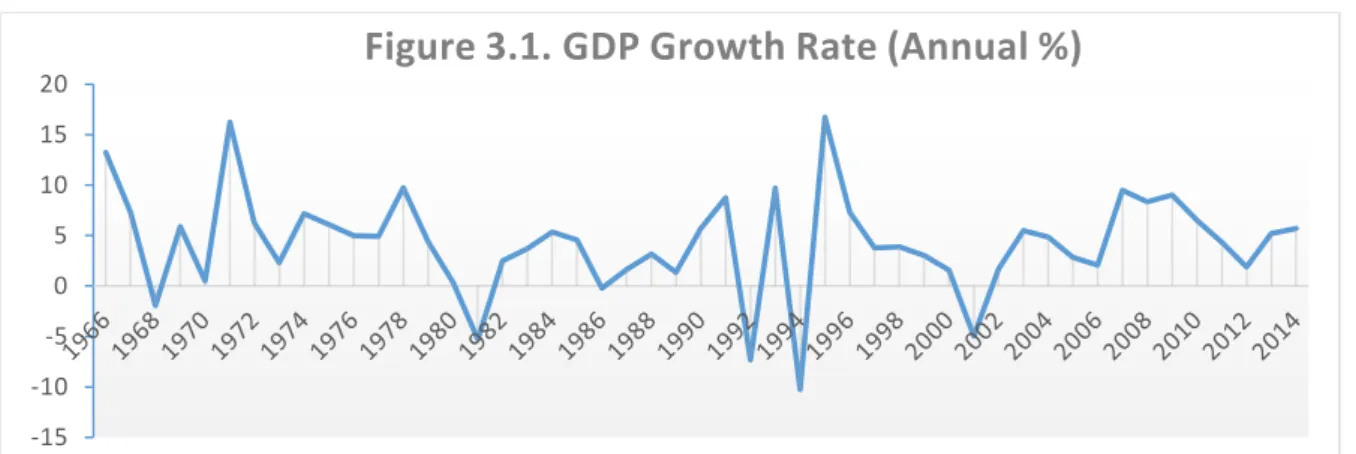
Figure 3.1 GDP Growth Rate (Annual %) ………...……… 39
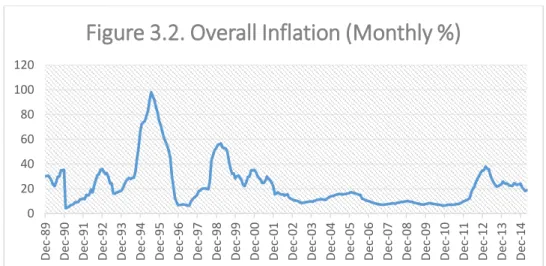
Figure 3.2 Overall Inflation (Monthly %) ………..…………. 42
Figure 3.3 Malawi Kwacha per U S Dollar Exchange Rate (Monthly Mid-rate) …….. 43
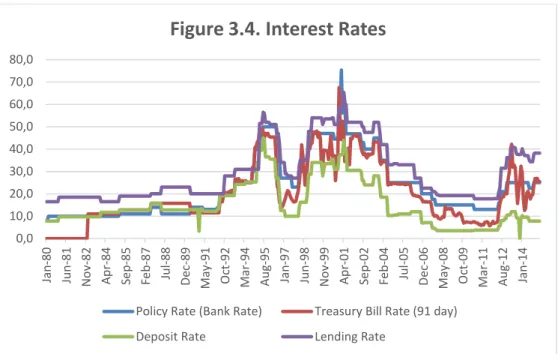
Figure 3.4 Interest Rates ………...… 49
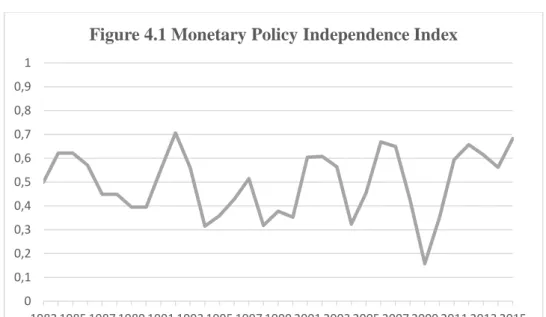
Figure 4.1 Monetary Policy Independence Index ………...……… 60
Figure 4.2 Exchange Rate Stability Index (ERS) ………..……… 61
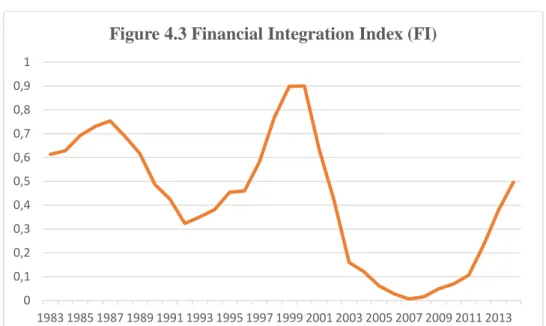
Figure 4.3 Financial Integration Index (FI) ………..……….… 64
Figure 5.1 Trilemma Indices ………...……… 73
Figure 5.2 Predicted Values (aMI+bERS+cFI) ………...……… 76
Figure 5.3 Individual Contributions of the Trilemma Indices to the Total ……...……… 79
ix LIST OF TABLES
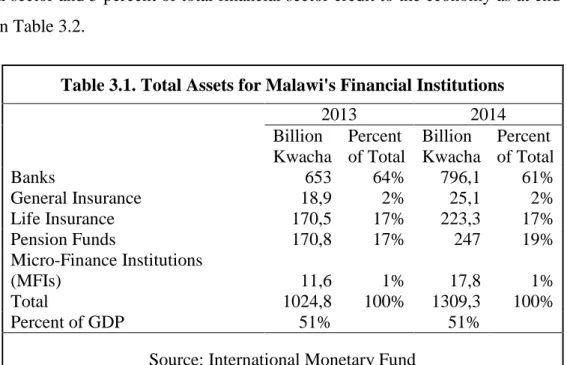
Table 3.1. Total Assets for Malawi's Financial Institutions ………...……… 53
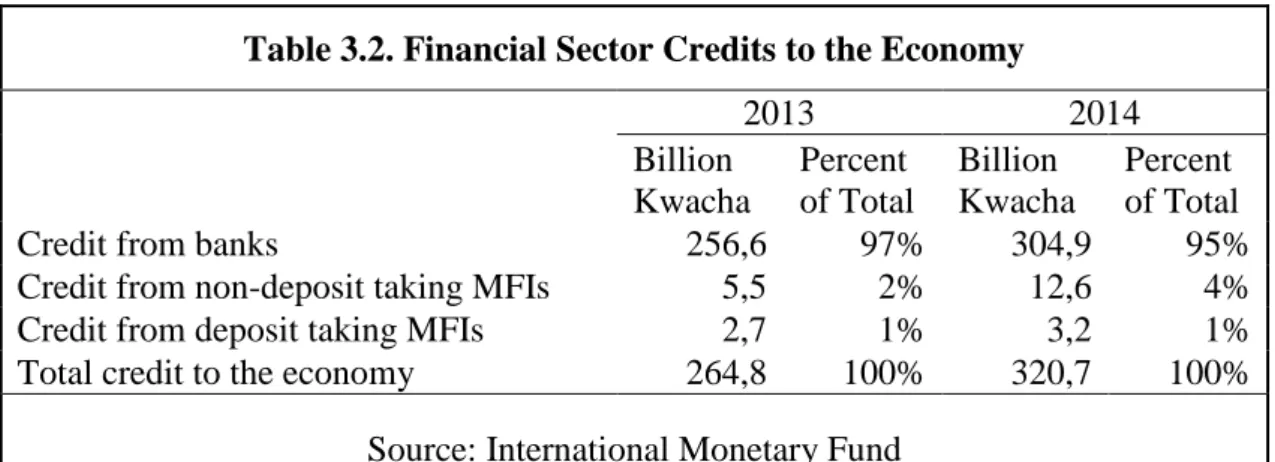
Table 3.2. Financial Sector Credits to the Economy ………...… 54
Table 3.3. Malawi Stock Exchange Statistics ………...…… 54
Table 5.1 Summary Statistics of the Trilemma Indices ………...……… 71
Table 5.2 Augmented Dickey-Fuller Test Results for the Trilemma Indices ……...……… 74
Table 5.3 Estimated Trilemma Equation Output ………...…… 75
Table 5.4 Correlations between the Trilemma Indices ………...……… 76
Table 5.5 Diagnostic Tests for the Trilemma Regression ………...…… 78
Table 5.6 Means of Individual and Cumulative Contributions of the Trilemma Indices to the Total ………...……… 79
Table 5.7 Unit Root Test Results for Macroeconomic Performance Indicators – Augmented Dickey-Fuller Test ………...……… 82
Table 5.8 Regression Output for the Impact of Trilemma Intermediate Policy Goals on Macroeconomic Performance ………..………...……….. 83
Table 5.9 Tests for Serial Correlation and Heteroskedasticity ………..… 90
x LIST OF ACRONYMS
ADB African Development Bank
AFEDs Authorised Foreign Exchange Dealers
AREAER Annual Report on Exchange Arrangements and Exchange Rate Restriction COMESA Common Market for East and Southern Africa
CPI Consumer Price Index DSI Domestic Share Index ECF Extended Credit Facility
ERM II European Exchange Rate Mechanism ERS Exchange Rate Stability
FA Foreign Assets
FCDAs Foreign Currency Denominated Accounts FI Financial Integration
FL Foreign Liabilities FSI Foreign Share Index GDP Gross Domestic Product
HAC Heteroskedasticity and Autocorrelation Consistent IMF International Monetary Fund
KAOPEN Chinn-Ito Financial Openness Index LRR Liquidity Reserve Requirement MASI Malawi All Share Index
MFIs Micro-Finance Institutions MI Monetary Policy Independence MSE Malawi Stock Exchange MWK Malawi Kwacha
NDA Net Domestic Assets
NEMC National Economic Management Committee NFA Net Foreign Assets
OLS Ordinary Least Squares OMO Open Market Operations PR Policy Rate
PRGF Poverty Reduction Growth Facility RBM Reserve Bank of Malawi
xi US United States
USA United States of America VIF Variance Inflation Factors
1 CHAPTER 1
INTRODUCTION
In pursuit of the macroeconomic stability that creates an environment conducive to sustainable economic growth, countries adopt different macroeconomic policies. One of the biggest challenges for most countries, however, is how to simultaneously manage the three intermediate1 goals of macroeconomic policy that would contribute to attaining this; monetary policy independence, exchange rate stability and financial integration. Aizenman (2010), defines national monetary policy independence (or sovereignty) as the ability of a country to implement its own monetary policy in order to achieve specific objectives without being constrained to follow the monetary policy actions of another country or a monetary union. The highest level of exchange rate stability would be when a country pegs the value of its currency to that of another (Mandilaras, 2014). Financial integration (or free capital mobility), as defined by Ogbuagu & Ewubare (2015), describes a situation in which the financial markets of neighbouring, regional or global economies are closely linked. Ogbuagu & Ewubare (2015) indicate that this integration can take various forms, one of which is elimination of controls on cross-border financial operations and flows.
The trilemma of International Finance and Macroeconomics, also known as the ‘impossible trinity’, postulates that it is not possible for a country to achieve optimal levels of all the three intermediate policy goals simultaneously (Mandilaras, 2014; Obstfeld et al., 2005). The argument posed in the literature (Aizenman et al., 2008; Hutchison et al., 2012; Obstfeld et al., 2005; Sengupta, 2015) is that there are trade-offs between them; an improvement in one has a negative effect on one or both of the other two. Even though attainment of the three intermediate policy goals is desirable for the attainment of ultimate policy goals such as high economic growth and low inflation, countries are thus faced by the constraint of having to choose at most two at a particular point in time. The hypothesis is based on the theory of uncovered interest rate parity2 and empirical evidence.
In light of the trilemma, over the past few decades countries have tried out different combinations of the three. For instance, Aizenman (2010) and Hsing (2012a) observed that
1 The three goals: monetary policy independence, exchange rate stability and financial integration, are
intermediate goals of macroeconomic policy since they are used to attain ultimate goals such as higher economic growth and low inflation.
2 ‘Uncovered interest rate parity’, as defined by Bekaert et al. (2007), Cumby and Obstfeld (1982) and Francis et al. (2002), refers to a parity condition in which the difference between the interest rates in the two countries is equal to the expected rate of change in the exchange rate.
2 the United States of America (USA) has embraced financial integration, where anyone is free to invest in and out of USA with ease; the country’s central bank has autonomy over monetary policy, but exchange rates are determined by market forces. Countries in the Eurozone like France, Germany, Italy and Greece have also embraced free capital mobility but, as Hsing (2012a) notes, they have eliminated any exchange rate movements within the Eurozone by adopting the Euro as their currency; this in turn means that the freedom to conduct independent monetary policy has been lost. Lastly, Hsing (2012a; 2012b) indicated that, while China has autonomy over its monetary policy and controls its exchange rate through maintaining strict exchange controls, financial liberalization is sacrificed. This diversity in policy choices among countries would seem to indicate that country choices depend on their unique needs and circumstances.
Malawi, like many other countries, could be battling with the trilemma; this has become especially pronounced in the last few decades as the country aims to achieve exchange rate and price stability while opening up to the global financial system. According to Chipeta & Mkandawire (1991) and Mwabutwa (2014), after independence in 1964 the country’s financial system was heavily controlled by government; there were onerous exchange controls and direct controls on credit and interest rates, in addition to the government adopting a fixed exchange rate system. Mangani (2011) and Ngalawa & Viegi (2011) noted that financial liberalisation started in late 1980s as a result of macroeconomic imbalances developing due to the failure of the economy to adjust to external shocks. Some of the reforms mentioned by Ngalawa & Viegi (2011) include floating exchange rates, changing from direct to indirect tools of monetary policy, and relaxing some exchange controls to open up the current and capital accounts.
Despite the reforms adopted, by 1994 the exchange rate, inflation and output had become more volatile, leading to further reforms being adopted between 1994 and 2014, some of which were mentioned in Mangani (2011) and Simwaka & Mkandawire (2011). The most recent reforms were implemented in 2012 when the country shifted from a peg to the US$ to a floating exchange rate regime (Lungu, 2015; Simwaka & Mkandawire, 2011). Additional exchange controls were loosened during this period to further open up the current account, and liberalisation of the capital account is gradually progressing. Additionally, as stated in the Reserve Bank of Malawi Monetary Policy Statement Number 3 (2016, January 06), the Reserve Bank started to use an interest rate targeting monetary policy framework (using the Taylor rule equations) in the context of inflation targeting in January 2014, moving away
3 from the previous regime of targeting monetary aggregates. Even after these policy changes, however, the problem with volatility of the exchange rate, inflation rate and output persists. These frequent changes in macroeconomic policies, and the observed volatility in macroeconomic indicators in Malawi, could be explained by the trilemma; that is, the constraints policy makers face between monetary policy independence, exchange rate stability and financial integration.
Empirical studies on the trilemma concept have been plagued by the difficulty in measuring a country’s level of achievement for each of the intermediate policy goals which Aizenman et al. (2008) addressed by developing indices for the goals. Studies focusing on various issues relating to the trilemma have since emerged in literature. Most empirical studies are, however, concentrated in developed countries (especially in Europe) and in emerging3 market developing countries. The few studies that were done in non-emerging4 market developing countries, such as those by Aizenman (2010), Aizenman & Ito (2011) and Aizenman et al. (2008; 2010; 2013), mostly assessed the trilemma concept at an aggregate level, and not at a single country level. A single country study (Ogbuagu & Ewubare (2015)) was done in Nigeria but focused on only two of the three, namely exchange rate stability and financial integration; there seems to be a gap in the literature regarding single country studies in non-emerging market developing countries.
Under normal circumstances, each of the intermediate policy goals of the trilemma should promote lower and stable inflation and higher and sustainable output growth (Aizenman & Ito, 2011; Hsing, 2012b; 2013b; Mandilaras, 2014; Obstfeld, 1994). Empirical studies on the issue have, however, produced mixed results. For instance, using multiple countries, Aizenman (2010) found that greater monetary policy independence is associated with higher inflation and greater capital account openness with lower inflation in developing countries. Contrary to these results, Hutchison et al. (2012) found that, in India, greater monetary independence was associated with lower inflation, and greater capital account openness with higher inflation volatility. Hutchison et al. (2012) found greater exchange rate stability to be associated with lower inflation volatility in India, but Hsing (2012b) found that in Greece
3 Emerging markets refer to national economies that are still considered developing but are progressing towards becoming advanced. They are often characterised by high prospects of economic growth but lower per capita income and less developed capital markets than advanced economies. Examples according to the International Monetary Fund (IMF) are Brazil, Russia, India, China, South Africa, Indonesia and Mexico.
4 Non-emerging market developing countries are poor unindustrialised economies characterised with low per capita income and underdeveloped capital markets. Malawi is in this category according to the IMF classification.
4 greater exchange rate stability had no significant effect on either the level of, or the volatility in, inflation.
These mixed results would seem to indicate that country choices and the effects of the trilemma on inflation and output depend on country-specific factors, and is thus pertinent for Malawi. The study could provide some assistance in understanding the effects of macroeconomic policy changes that the country has gone through in the last three decades, particularly whether and how changes in the intermediate policy goals can be linked to inflation and output performance.
Given the background, the study is aimed at achieving the following goals:
1. To empirically evaluate the trade-offs between monetary policy independence, exchange rate stability and financial integration in Malawi as implied by the trilemma hypothesis;
2. To determine the combination of the intermediate policy goals of the trilemma that has been dominant or prevalent in Malawi in the last three decades;
3. To assess the extent to which pursuing the trilemma intermediate policy goals has affected macroeconomic performance in Malawi in terms of the level and volatility of inflation and output growth over the last three decades.
The study adopts a positivist, quantitative approach, using OLS and Eviews software for analysis. Specifically, the study follows an existing methodology in the literature introduced by Aizenman et al. (2008) and later used by Aizenman et al. (2009; 2010; 2011; 2012), Hsing (2012a; 2012b; 2013a; 2013b), Hutchison et al. (2012) and Jian et al. (2011), among others. The use of an existing methodology could make the findings comparable to those of other studies that applied the same methodology to other countries.
Firstly, indices are constructed for each of the three intermediate policy goals using formulae developed by Aizenman et al. (2008) for monetary policy independence and exchange rate stability, and by Jian et al. (2011) for the financial integration index. The monetary policy independence index is constructed by normalizing correlations between Malawian and South African interest rates. The exchange rate stability index is constructed by normalizing volatility (the standard deviation) of the exchange rate between the Malawi Kwacha and the US$ and the financial integration index as the ratio of the sum of the gross stock of foreign assets and liabilities to gross domestic product (GDP). These indices measure Malawi’s level of achievement in each of the intermediate policy goals over a period.
5 Secondly, to evaluate the tradeoffs between the intermediate policy goals and hence assess whether or not the trilemma hypothesis is binding in Malawi, a linear model is estimated using the OLS method by regressing a constant (one) on the three constructed indices. The rationale for estimating this linear model, as argued by Hutchison et al. (2012:11), is that if there are indeed trade-offs between the three intermediate policy goals, their weighted sum should equal unity, reflecting the overall constraint on the three indices. The parameters in this model provide approximate estimates of the weights assigned to each intermediate policy goal.
Next, to determine the most prevalent combination of the intermediate policy goals of the trilemma over the sample period, a graphical analysis of possible combinations is conducted. Lastly, to assess the effects of the trilemma intermediate policy goals on macroeconomic performance, the OLS method is applied on three models in which the macroeconomic performance indicators - the output growth rate, the inflation rate and inflation volatility5 - are regressed on the indices for the intermediate policy goals of the trilemma and some control variables.
The study uses monthly data spanning the period from January 1983 to December 2015 obtained from the Reserve Bank of Malawi, Malawi National Statistics Office, Board of Governors of the Federal Reserve, International Monetary Fund and the World Bank websites.
The thesis is organised into six chapters. Chapter 1 is an introduction where a brief background and context to the study is provided while stating the motivation, significance, goals and methodology of the study. Chapter 2 provides a review of existing theoretical and empirical literature on the trilemma concept which should provide an understanding of the subject and gaps that the study may fill. Chapter 3 follows with a description of the context of the study, providing an overview of Malawi’s financial system, how the three policies (monetary policy, exchange rate policy and financial liberalisation) have been pursued in the country and how the economy has performed over the study period. Chapter 4 describes the methodology, procedures, techniques and data to be used. Chapter 5 follows with a presentation, interpretation and discussion of the results. Chapter 6 concludes, providing a summary of the research and findings, policy recommendations and areas for further research.
6 CHAPTER 2
LITERATURE REVIEW
This chapter provides a review of existing literature relating to the trilemma concept. It is aimed at providing an outline of the trilemma hypothesis while highlighting the position in the body of relevant knowledge in which the study is located. It is divided into two main sections: theoretical and empirical literature.
The theoretical review describes in detail the nature of the trilemma hypothesis. It includes definitions of the three components of the trilemma and provides theoretical explanations regarding why they may or may not be desirable. It also explains why the intermediate policy goals of the trilemma cannot be pursued simultaneously, in the process highlighting theories from which the trilemma hypothesis draws its arguments. Lastly, it reviews theoretical debates on the validity of the trilemma and theoretical aspects regarding how each of the three intermediate policy goals affects the macro-economy.
The empirical section discusses studies that have been done on the trilemma. Focus is on studies that have empirically examined the validity of the trilemma, those that have assessed the evolution of the trilemma intermediate policy goals over time and those that have examined their effects on economic performance.
2.1 The Trilemma or Impossible Trinity Hypothesis
As previously stated, the ‘trilemma’, also called the ‘impossible trinity’, is a hypothesis in the field of International Finance and Macroeconomics which posits that a country cannot simultaneously pursue optimal levels of the following three intermediate goals of macroeconomic policy: monetary policy independence, exchange rate stability and financial integration (Aizenman et al., 2008; 2009; 2010; Globan, 2014; Grenville, 2011; Hosny et al., 2015; Mandilaras, 2014). This, according to Aizenman & Ito (2011), Hutchison et al. (2012) and Sengupta (2015), is due to the fact that there are trade-offs between the three, such that an improvement in one induces a worsening in one or both of the remaining two. Consequently, Jian et al. (2011), Mandilaras (2014), Mankiw (2010) and Schoenmaker (2011), argue that a country can pursue only one or at most two of the trilemma intermediate policy goals at a point in time, but not all three.
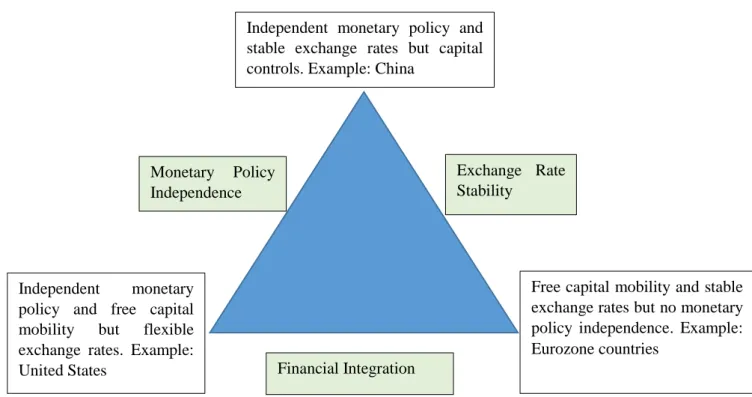
To illustrate, the trilemma is often described using some version of the triangle in Figure 2.1 overleaf:
7 (See Aizenman, 2010; Aizenman & Ito, 2011; Aizenman et al., 2009)
The sides of the triangle each represent one of the trilemma intermediate policy goals: monetary policy independence, exchange rate stability and financial integration. All three are desirable for the attainment of ultimate goals of macroeconomic policy such as high economic growth and low inflation but, according to the trilemma, a country can be on two at most at any one time.
The vertices of the triangle thus represent possible combinations a country can choose. A country that chooses the top vertex values the freedom of setting its own interest rates (monetary policy independence) and stable (pegged) exchange rates but forgoes the benefits of free capital mobility by employing capital controls; China would be a good example. The left vertex represents a situation where a country that chooses monetary policy independence and free capital mobility has to let exchange rates float; the United States opted for this option. Lastly, a country that chooses the right vertex accrues the benefits from free capital mobility and stable exchange rates but at the expense of its freedom to conduct independent monetary policy; a preferred choice of countries in the Eurozone.
The next section examines the benefits and costs that may be associated with use of the various intermediate policy goals.
Exchange Rate Stability
Monetary Policy Independence
Financial Integration
Free capital mobility and stable exchange rates but no monetary policy independence. Example: Eurozone countries
Independent monetary policy and free capital mobility but flexible exchange rates. Example: United States
Independent monetary policy and stable exchange rates but capital controls. Example: China
8 2.1.1 Use of the Trilemma Intermediate Policy Goals (Advantages and Disadvantages) Theoretical literature provides several reasons as to why the trilemma intermediate policy goals may be appealing to policy makers. Each, however, may be associated with undesirable effects. The trilemma, accordingly, emanates from the difficulty in determining which intermediate policy goal is more beneficial than the others in promoting macroeconomic stability.
Monetary Policy Independence
To begin with, Mankiw (2010) argues that monetary policy independence affords a central bank the ability to use monetary policy as a tool for stabilising the economy. With monetary policy autonomy, a central bank is able to stimulate a sluggish economy by engaging in monetary easing or cool down an overheated economy by engaging in monetary tightening (Hsing, 2012; 2013). Additionally, Mandilaras (2014) points out that, without being subjected to other countries’ macroeconomic management policies or actions, a central bank can effectively respond to external shocks with monetary sovereignty. Monetary independence thus enables a central bank to use its own monetary policy as a tool to achieve internal balance which can potentially lead to a stable and sustainable economic growth. On the flip side, as argued by Aizenman & Ito (2011), greater monetary policy independence can lead to increased inflation and output volatility if policy makers, faced with price and wage rigidities, use their sovereignty to manipulate inflation and output movements in the short run. Aizenman & Ito (2011) further argue that, without fiscal discipline, policy makers can abuse their sovereignty by monetising the national debt which can breed volatility, especially high and unstable inflation. This mostly happens in countries where the central bank is not fully independent from government or political influence.
Exchange Rate Stability
Hsing (2013) argues that exchange rate stability (fixed / pegged exchange rates) is attractive to policy makers mainly because it protects the value of a country’s currency. Floating exchange rates, on the other hand, are prone to speculative dynamics which, according to Mankiw (2010) and Ogbuagu & Ewubare (2015), may result in excessive volatility in exchange rates and in turn broader economic instability, especially in small open economies with inefficient foreign exchange markets. As such, stable exchange rates allow individuals and institutions or businesses to make concrete long-term plans and participate in the world
9 economy without reference to possible adverse exchange rate movements. Moreover, as Aizenman & Ito (2011) and Mandilaras (2014) indicate, stable exchange rates may lead to price stability by (i) providing an anchor for inflationary expectations and (ii) by mitigating uncertainty which lowers the risk premium, in turn fostering domestic and international investment and trade. Further, Aizenman & Glick (2009) argue that maintaining exchange rate stability during an economic crisis can increase confidence in the central bank and thereby expedite the effectiveness of efforts aimed at stabilising output movements.
On the other hand, high levels of exchange rate stability, according to Aizenman & Ito (2011), can limit policy makers by removing the option to use the exchange rate as a potentially effective policy tool for absorbing external shocks. A free floating exchange rate, in comparison, acts as a natural defence against unfavourable international capital flows (Globan, 2014). For instance, during excessive capital inflows, the exchange rate would appreciate, leading to an increase in the foreign price of domestic assets, automatically reducing demand for the domestic assets by foreign investors.
A pegged exchange rate may be desirable as a policy tool for stabilising the economy through stabilising the exchange rate and prices, but may also be a source of volatility, especially during excessive foreign capital flows.
Financial Integration
There is a heated debate regarding whether or not financial integration is beneficial. For some proponents (Aizenman & Ito, 2011; Hsing, 2012; Mandilaras, 2014) a financially open economy attracts foreign capital inflows in the form of foreign direct investment (FDI), portfolio investment and other forms of investment. The increase in investment boosts output in the short-run by enhancing or supplementing domestic savings and hence promotes fixed investment and economic growth (Aizenman & Ito, 2011; Hsing, 2012; Mandilaras, 2014). Additionally, Aizenman & Ito (2011) and Mankiw (2010) argue that financial integration encourages foreigners to bring their expertise (technological and managerial know-how) into the country, increasing domestic factor productivity and in turn boosting output.
Financial integration also enables a country’s citizens to invest in international financial markets and thereby diversify their portfolios. Aizenman & Ito (2011), Mandilaras (2014) and Obstfeld (1994) argue that this international diversification may help a country stabilise through risk sharing with other countries and may also encourage efficient allocation of capital as well as production specialisation in the long run. Capital-poor countries, according
10 to Ogbuagu & Ewubare (2015), can especially benefit from financial integration as they can diversify away their production bases which are mostly agriculture and natural resource-based. This is why Levine (2001) asserts that if having a broader base of capital is one of the drivers of economic growth, then financial integration may be part of the solution.
Mandilaras (2014) and Ogbuagu & Ewubare (2015) further posit that financial integration can generate long-run indirect benefits from better and more appropriate economic policies; the argument is that the cost of policy mistakes increases with greater financial integration. Policy makers would then take extra caution when formulating or implementing policies, bearing in mind that any mistake would reduce their country’s competitiveness on the international market.
Financial integration is, however, not without flaws. Perhaps the most well-known side effect of greater financial integration is that it increases the risk exposure of countries to volatile short-term cross-border capital flows (hot money) which are subject to sudden stops and reversals (Aizenman et al., 2009; Aizenman & Ito, 2011). Volatile cross-border flows are one of the major causes of economic instability at both country and global level. Most economic or financial crises in the last few decades were either caused, or exacerbated, by the interconnectedness of world financial markets. For instance, the 2008 global financial crisis started in the United States but spread across the globe due to the integrated nature of the US and international financial markets.
Further, as mentioned by Sengupta (2015), large capital inflows can fuel domestic inflationary pressures and the formation of asset price bubbles which have the potential to cause economic instability. This is due to the fact that capital inflows dramatically increase the demand for domestic assets and hence demand for the local currency and eventually the monetary base. Further, Buigut & Rao (2011) and Jian et al. (2011) argue that greater financial integration can reduce national government autonomy in macroeconomic policy management. This is because policy makers may be obliged to follow international standards to compete on the international market.
Lastly, developing countries are prone to capital flight problems when they choose greater financial liberalisation. Most developing countries have less-developed financial markets characterised by low liquidity and few asset classes. Financial liberalisation in such countries would enable some investors to free their resources and pursue other more rewarding, liquid
11 and sophisticated investment opportunities in international markets; these outflows could lead to the problems referred to earlier.
Each of the intermediate policy goals of the trilemma can be a double edged sword. Policy makers would have to assess and weigh the benefits and costs of each goal in relation to the country’s unique needs and circumstances before adopting any of them. Unfortunately, that kind of assessment is not an easy task. While it would be relatively simpler if it was possible to use all three intermediate policy goals at once, that is not, in terms of the trilemma hypothesis, possible.
2.1.2 The Impossibility of the Simultaneous Attainment of the Three Intermediate Policy Goals of the Trilemma – a Theoretical Perspective
The trilemma hypothesis is a fundamental contribution of the 1960’s Mundell-Fleming model (an extension of the IS-LM Neo-Keynesian model) which considers a small economy choosing its exchange rate regime and financial integration with global financial markets (Aizenman, 2010). As a matter of illustration, consider a country that has adopted a fixed exchange rate regime and full financial integration but is also trying to have full autonomy over monetary policy. Say, in an effort to reduce domestic inflation, the country raises interest rates to a position higher than world interest rates. In this case, ‘arbitrage theory’ in Financial Economics posits that foreign investors (arbitrageurs) will be attracted by the relatively high interest rates to invest in that country; high foreign exchange capital inflows and increased demand for the local currency will result, putting pressure on the local currency to appreciate. However, because the exchange rate is fixed, the monetary authority will have to maintain the value of the local currency by intervening in the foreign exchange market through purchasing the excess foreign currency. The local currency will be used to purchase the foreign currency, increasing the local reserves. The increased liquidity in the system will, unless it’s neutralized by open market operations, put upward pressure on the general price level; the goal of reducing inflation will be frustrated.
A second scenario, similar to that presented by Mandilaras (2014), would be a central bank trying to boost spending by lowering interest rates relative to world rates. Lower interest rates would be relatively unattractive to arbitrageurs who, because of financial integration, would be free to sell their investment holdings in the local market and demand foreign currency to invest in higher yielding investments elsewhere. In order to prevent the local currency from depreciating against the foreign currency and hence defend a pegged exchange rate, the central bank would have to run down on its reserves by selling the foreign currency; this
12 would reduce liquidity in the system and, unless neutralized, negate the central bank’s initial objective of boosting spending.
It would not be possible, therefore, for the central bank to exercise full monetary policy independence in the presence of full exchange rate stability and financial integration. What would work for the country to have monetary policy independence is to either give up financial integration by imposing controls on capital flows or float the exchange rate to allow it to move to a new equilibrium. Otherwise, according to the impossible trinity theory, it is impossible to attain optimal levels of all three intermediate policy goals at the same time. Some of the theories underlying the impossible trinity hypothesis (the trilemma) are ‘uncovered interest rate parity’ and ‘arbitrage’.
Uncovered interest rate parity, as defined by Bekaert et al. (2007), Cumby and Obstfeld (1982) and Francis et al. (2002), refers to a parity condition which states that the difference in interest rates of two countries is equal to the expected rate of change in the exchange rate between the currencies of the two countries. For the above examples, the uncovered interest rate parity would be presented mathematically as follows:
iL– iB = E(e)
Where iLis the interest rate of the local country, iB is the interest rate of the base country and E(e) is the expected rate of change in the exchange rate between the two countries.
For instance, assuming initially the interest rate of government bonds in both the local country (iL) and the base country (iB) is 10%, if the local country changes its interest rate to 15% so that the difference in interest rates between the two countries is 5%, according to the uncovered interest rate parity, the exchange rate between the two countries’ currencies would be expected to depreciate by 5%. If the exchange rate does not change, or changes by more or less than 5%, an opportunity to make arbitrage profits exists.
Arbitrage, according to Faure (2013), refers to the act of simultaneously purchasing and selling identical or similar financial assets with the intention of profiting from price differences. It involves purchasing an asset in the cheaper market and, at the same time, selling an identical or similar asset in the more expensive market. In short, arbitrage is a trade that seeks to make riskless profit by exploiting differences in the prices of identical or similar assets in different markets or in different forms. It exists due to market inefficiencies like the
13 absence of uncovered interest rate parity (Faure, 2013) and would tend to drive the prices to equality.
Revisiting the first case, it was assumed that the local country has adopted a fixed exchange rate and financial integration but it is also trying to pursue monetary policy independence. If the country decides to raise interest rates by 5%, according to ‘uncovered interest rate parity’, the exchange rate is supposed to depreciate by 5%. Because the country has adopted a fixed exchange rate, however, an ‘arbitrage’ opportunity exists for investors to profit by purchasing government bonds in the local country at a lower price and selling base country government bonds at a higher price. This means that due to financial integration there will be capital inflows into the local country; capital inflows will increase the supply of foreign currency, increasing pressure on the exchange rate to appreciate. The central bank intervenes by buying forex from the market to defend the fixed exchange rate, but in the process increases liquidity in the system which opposes the initial objective of the central bank of raising interest rates to reduce inflation. It is clear that optimal levels of each of the intermediate policy goals cannot be attained simultaneously; hence the trilemma.
2.1.3 Challenges to the Validity of the Trilemma Hypothesis
As can be seen, central bank intervention in the foreign exchange market could lead to further inflation by increasing the monetary base (the first case) or liquidity shortages by reducing the monetary base (the second case). Altinkemer (1998), Grenville (2011) and Sengupta (2015) point out that sterilised rather than unsterilized intervention would enable countries to use the trilemma intermediate policy goals at the same time. For instance, in the first scenario, in order to prevent the foreign exchange intervention from raising the inflation rate further, the central bank would sterilise the intervention by conducting a contractionary open market operation by selling local-currency-denominated securities to withdraw excess liquidity from the markets. Mandilaras (2014), however, argues that this challenge assumes that central banks are not limited by the extent that intervention in the foreign exchange market can be neutralized.
The literature identifies two constraints to sterilisation that may be encountered. Firstly, according to Jian et al. (2011) and Mandilaras (2014), international reserves are not an inexhaustible resource; the more the central bank intervenes in the forex market to prevent a depreciation of the local against the foreign currency in an environment of fixed exchange rates and free capital mobility, the faster international reserves would be depleted. The
14 sustainability of foreign exchange market intervention by the central bank is thus questionable in the long-run, rendering its ability to deal with the trilemma questionable.
The second limit to sterilisation lies in its costs. Altinkemer (1998) argues that sterilised intervention is costly because it is associated with the risk of increasing interest rates as well as reinforcing inward capital flows. The securities that the central bank uses for sterilisation have to bear attractive interest rates for the sterilisation to be effective, meaning offering higher interest rates relative to market rates. Ultimately, all other rates in the financial system follow suit, thereby attracting further international capital inflows. Excessive sterilisation and the associated high interest rates increase the interest payment burden for the central bank, in turn increasing losses, which are for the account of the taxpayer. Also, as Jian et al. (2011) point out, the higher interest rates triggered by sterilisation can promote macro and micro moral hazard which can lead to distortions in the financial system. The costs associated with sterilisation make its long-run sustainability questionable, implying that monetary policy independence, in an environment of fixed exchange rates and financial integration, would also be unsustainable. The trilemma constraint would, therefore, be binding.
Besides the issue of the effect of sterilisation on the trilemma, there are other arguments raised that question the validity of the trilemma hypothesis. Grenville (2011) contends that the impossible trinity story is problematic because it assumes that (i) currencies are close substitutes, (ii) portfolio capital flows are mainly driven by interest rate differentials and (iii) foreign direct investment is driven by other factors; for example, foreign investors may be attracted to invest in a country because of future long-term growth prospects. This type of capital inflow, in Grenville’s (2011) view, would be structural rather than cyclical and would not easily be reversed due to short-term movements in interest rates. Clearly, the trilemma hypothesis does not take into account all the factors that drive capital flows.
The existence of arguments against the trilemma hypothesis indicates the importance of an empirical validation of the issue; there is a growing empirical literature on the subject discussed later.
2.1.4 Macroeconomic Effects of the Trilemma Intermediate Policy Goals
One of the objectives of this study is to assess how the pursuit of the trilemma intermediate policy goals influences macroeconomic performance in Malawi. Accordingly, the effect of the pursuit of these intermediate goals on macroeconomic stability is considered.
15 2.1.4.1 Monetary Policy Independence and Macroeconomic Performance
Monetary Policy Independence and Inflation
It was mentioned earlier that monetary policy independence could result in either a decrease or an increase in inflation. Whether monetary policy independence decreases or increases the level, and / or volatility, of inflation, Aizenman & Ito (2011), Mandilaras (2014) and Ihnatova & Cẳprarua (2014) argue that this depends on the credibility of the monetary authorities. If the central bank is credible enough, monetary policy independence would give them the ability to use monetary policy as an effective tool to decrease or control inflation levels and volatility. If the central bank is not credible, on the other hand, Aizenman & Ito (2014) argue that greater monetary policy independence would allow them to abuse their power and use monetary policy for other undesirable objectives such as to finance fiscal deficits and manipulate output and inflation levels for government debt or for political reasons. These practices would lead to high and volatile inflation. Monetary policy independence would thus be good news for countries with credible central banks but bad news for countries with low central bank credibility.
Monetary Policy Independence and Output
Reasonably low and stable inflation promotes investment and consumption which are important components of a country’s total output or gross domestic product (GDP). In contrast, high and volatile inflation discourages investment and consumption. Since inflation affects output, for reasons explained in the preceding section, monetary policy independence would also decrease or increase output depending on central bank credibility. That is, assuming a credible central bank, monetary policy independence, working through its effect on inflation, can lead to high, stable and sustainable economic growth. If the central bank lacks credibility, monetary policy independence can be a source of low and volatile output growth (Aizenman & Ito, 2011). Hence, like the effect on inflation, monetary policy independence can advance or suppress economic growth or make it volatile.
2.1.4.2 Impact of Exchange Rate Stability on Macroeconomic Performance Exchange Rate Stability and Inflation
Some theoretical literature predicts that exchange rate stability should go together with low and stable inflation. Aizenman et al. (2010) and Mandilaras (2014) argue that long-run stability in the exchange rate can be seen as an indication of a central bank’s credibility in the
16 conduct of monetary policy, especially in its commitment to defend an anti-inflationary monetary policy stance. This can mitigate uncertainty in the economy and hence result in low and stable prices.
A fixed exchange rate can, as argued by Hsing (2012; 2013), potentially lead to high or volatile inflation by subjecting the local country’s currency movements to movements in the anchor currency. When the anchor currency appreciates (depreciates), the local currency would depreciate (appreciate), so that volatility in the anchor currency would potentially transmit to the local currency. Volatile exchange rates breed uncertainty and eventually inflation volatility.
Exchange rate stability can also attract large international portfolio capital inflows which can easily be reversed in times of macroeconomic shocks. These volatile movements in capital flows can increase uncertainty and volatility in the domestic country and eventually lead to high or volatile inflation. According to Ihnatova & Cẳprarua (2014), after the European Union (EU) enlargement in 2004 and 2007, new Eastern EU member countries which had adopted the EURO as their currency faced high capital inflows which initially generated two digit inflation rates and later on low inflation after the crisis.
Thus, despite a well-known theoretical proposition that exchange rate stability leads to low and stable inflation, fixed exchange rates have the potential to generate high and volatile inflation.
Exchange Rate Stability and Output
The effect of exchange rate stability on output can be both positive and negative. Two positive effects stand out in literature. First, Aizenman & Ito (2011) and Hsing (2013a) assert that stable exchange rates can mitigate uncertainty and thereby lower both foreign exchange risk and interest rate risk premiums. This promotes investment, consumption and international trade, and in turn leads to high, stable and sustainable economic growth. Second, Aizenman and Glick (2009) contend that a prolonged stability in exchange rates or maintenance of fixed exchange rates during an economic crisis can increase the credibility of monetary authorities. A credible central bank enhances consumer, producer and investor confidence and thereby contributes to stabilising output movements. According to Ogbuagu & Ewubare (2015), small open economies particularly benefit from the output-stabilising effect of exchange rate stability.
17 Among the negative effects of exchange rate stability on output is that a pegged exchange rate regime deprives policy makers of an easy tool for absorbing external shocks. The argument in the literature (Friedman, 1953 and Meade, 1951 in Ogbuagu & Ewubare, 2015) is that with a flexible exchange rate a country can more easily adjust to real shocks than with a fixed exchange rate regime where adjustments to the real exchange rate are done through relative price changes; these are costly and slow in a world of price rigidities. The slow adjustment process of the economy can slow down output growth. Aizenman & Ito (2011) argue that this rigidity caused by fixed exchange rates can also lead to resource misallocation, contributing to unbalanced and unsustainable output growth.
Another negative impact of exchange rate stability on output relates to the effect of capital inflows attracted by the stable exchange rates. As previously stated, short-term capital inflows can easily reverse in times of external shocks, thereby contributing to output volatility through the investment channel (Ihnatova & Cẳprarua, 2014). Aizenman et al. (2010), however, argue that the volatility-enhancing effect of fixed exchange rates can be mitigated by holding high levels of international reserves, an issue that is still under scrutiny in literature.
Exchange rate stability can, thus, be a desirable tool for promoting output growth and decreasing output volatility but it also carries the risk of actually doing the opposite.
2.1.4.3 Impact of Financial Integration on Macroeconomic Performance Financial Integration and Inflation
The theoretical relationship between financial integration and inflation can be unpredictable. In some circumstances, for instance when the domestic country is characterised by low unemployment and attractive interest rates, financial integration can lead to large capital inflows (direct and portfolio investment) which could put pressure on prices and wages to rise, in turn raising inflation. In other circumstances, however, the same increase in capital inflows can put pressure on the country’s currency to appreciate. In this case imports for the country could become cheaper, reducing inflation in the process. Similarly, Mandilaras (2014) puts forward that increased investment inflows can increase domestic production which could lead to low prices and in turn reduce inflation.
It was also earlier mentioned that capital inflows in an environment of free capital mobility are prone to abrupt reversals in times of economic shocks. These capital movements or speculative attacks, according to Ihnatova & Cẳprarua (2014), have the potential of causing severe instability in the economy, inflation volatility inclusive.
18 Like the other two intermediate policy goals of the trilemma, therefore, financial integration can be a double edged sword on inflation.
Financial Integration and Output
Picking up from theoretical literature, financial integration in some cases is associated with high output growth and low output volatility but in other cases it is with low output growth and high output volatility.
Beginning with positive effects, Aizenman & Ito (2011) believe that financial integration leads to output growth by allowing for more efficient allocation of resources. This is due to the fact that, with more financial integration, both domestic and foreign investors have the opportunity to invest in more profitable businesses or assets either in or outside the country. The returns realized from these investments should increase aggregate output. In addition, as mentioned before, Aizenman & Ito (2011) believe that not only can financial integration attract capital inflows which supplement domestic savings and investment, it can also attract managerial and technological knowhow which enhances factor productivity, and in turn aggregate output.
Aizenman & Ito (2011) further contend that countries with access to international financial markets and with open financial markets themselves are in a better position to contain economic shocks due to risk sharing with other countries and portfolio diversification. Aizenman et al. (2010) also argue that financial integration can contribute to real exchange rate stability which stabilizes the economy. Macroeconomic stability in turn promotes economic growth.
On the negative side, Hsing (2012a; 2013a) and Ihnatova & Cẳprarua (2014) suggest that financial integration exposes a country to the risk of abrupt capital inflows which, as explained previously, can lead to economic volatility and hence low and unstable output growth. Thus, as much as financial integration can be beneficial through enhancing output growth and reducing economic growth volatility, in some circumstances it can reduce economic growth or lead to output volatility.
From the above theoretical discussion, it can be noted that the effects of each trilemma intermediate policy goal on the economy are not clear-cut. Each one of them can have desirable and undesirable effects. Perhaps that should explain the differences in choices of
19 these intermediate policy goals that countries have made and the resultant effects on their economies. This is why, in subsequent sections, empirical aspects of the trilemma hypothesis, including the macroeconomic effects of the trilemma intermediate policy goals, are examined so as to gain a better understanding of the trilemma concept, before focusing on Malawi in subsequent chapters.
2.2 Empirical Literature Introduction
The trilemma hypothesis has, to an extent, been regarded as a theoretical curiosity. Even though the concept has been widely accepted in academia and among policy makers, comprehensive empirical scrutiny of the concept is only just beginning to gain momentum. This is probably because, not only is it strenuous to test the constraints implied by the trilemma, but it is also difficult to measure a country’s extent of achievement in each of the intermediate policy goals of the trilemma: monetary policy independence, exchange rate stability and financial integration.
Obstfeld et al. (2005) and Aizenman et al. (2008) are notable and comprehensive pioneer studies that developed the first methods to empirically analyze the trilemma hypothesis. The term ‘trilemma’ for the impossible trinity was actually brought into widespread use by Obstfeld & Taylor (1997) and Obstfeld et al. (2005). Few empirical studies followed after Obstfeld et al. (2005), perhaps because of the rigor required in the study; the majority emerged after Aizenman et al. (2008) developed methods for constructing indices that measure a country’s level of achievement in each of the trilemma intermediate policy goals. A majority of the studies actually have in fact been based on the Aizenman et al. (2008) methodology.
The 2007-2008 global financial crisis also triggered an influx of empirical studies on the trilemma concept as economists tried, and are still trying, to understand and look for solutions to various economic and financial problems facing the world.
This part of the chapter reviews the pioneering, and some subsequent, studies on the trilemma concept. As per the objectives of this study, the review concentrates on studies focused on analyzing the validity of the trilemma hypothesis, examining country choices over the past few decades and assessing the macroeconomic effects of the trilemma intermediate policy goals.
20 2.2.1 The Trilemma in History
The trilemma has been widely accepted in academia and among policy makers as a major macroeconomic policy guiding framework, largely because the trade-offs implied by the trilemma have been observed in history. Aizenman & Ito (2011) observed that different financial architectures have endeavoured to achieve two of the trilemma intermediate policy goals; attempts to achieve all three have led, or at least contributed to, the breakdown of some historical financial systems. Some of the financial crises in history were also to some extent triggered by attempts to pursue all intermediate policy goals of the trilemma at the same time. Going as far back as the classical gold standard, Obstfeld et al. (2005) observed that the gold standard financial system was characterised by fixed exchange rates, unconstrained capital mobility but limited monetary policy independence. The main aim of the gold standard system, according to Obstfeld et al. (2005), was exchange rate stability which required free capital mobility among countries at the expense of internal price stability. During and after World War 1, however, governments feared that the gold standard could bring about inflationary and / or deflationary pressures and hence volatility (Obstfeld et al., 2005). They thus attempted to pursue both exchange rate and price stability; this could not happen with unrestricted international gold movements. As a result, according to Obstfeld et al. (2005), the governments had to impose controls restricting international flows of gold. This was one of the main reasons for the breakdown of the gold standard system. That is, the attempt to pursue all the three intermediate policy goals of monetary policy independence, exchange rate stability and financial integration during the gold standard led to its downfall.
The Bretton Woods financial system that followed the breakdown of the gold standard also broke down partly due to countries trying to pursue the three intermediate policy goals of the trilemma at the same time. Obstfeld et al. (2005), Aizenman & Ito (2011) and Aizenman et al. (2010) stated that the system gave countries autonomy over monetary policy with relatively stable exchange rates, but it was associated with restricted capital movements. During that time, as Bordo (1981) mentioned, countries’ currencies were pegged to the US$ which was in turn convertible to gold. However, throughout the 1960s and 1970s, the world financial structure was changing gradually. Bordo (1981) stated that other currencies (such as the Western European currencies) became convertible into gold and could therefore be used as reserve currencies. This increased international financial transactions and strengthened monetary interdependence; as a result the US$ became so overvalued that it was difficult to maintain its convertibility to gold (Bordo, 1981). In August 1971, according to Bordo (1981), the then president of the United States, Richard Nixon, announced that the convertibility of
21 the US$ to gold would be suspended (IMF). The increase in financial integration had made it difficult to maintain fixed exchange rates and monetary policy independence during the Bretton Woods era, an example of the trilemma in practice.
After the breakdown of the Bretton Woods system, countries were given the freedom to choose any exchange rate regime desired in combination with their policy choices on monetary policy independence and financial integration. Aizenman et al. (2010) noted that most developed countries, such as the United States, the United Kingdom, Canada and Australia, opted for free floating exchange rates to allow for monetary independence and free capital mobility. Some countries like Hong Kong and Eurozone member countries in recent decades opted for stable exchange rates and free capital mobility but had to forego monetary policy independence by having currency boards, as Hsing (2012a; 2012b; 2013a) noted. Most emerging market economies such as China and some non-emerging market developing economies (until recently) opted for the third combination of stable exchange rates and monetary independence while maintaining controls on capital mobility to some extent (Aizenman et al., 2010; Hsing, 2012a; 2012b; 2013a). Thus, even presently most countries pursue only two of the trilemma intermediate policy goals and are cautious to pursue all three. Strengthening the trilemma hypothesis further, historical literature provides examples of economic crises that are believed to have been caused by countries’ attempts to simultaneously achieve high levels of all the trilemma intermediate policy goals since the breakdown of the Bretton Woods system. Sengupta (2015) cited the 1994-1995 Mexican peso crisis, the 1997-1998 Asian financial/debt crisis and the 2001-2002 Argentinean financial crisis as examples.
The Asian 1997-1998 crisis, according to Patnaik and Shah (2010), is known to have been caused by East Asian countries’ pursuit of the combination of all the intermediate policy goals of the trilemma. East Asian countries had fixed exchange rate regimes (de facto dollar peg) and were promoting de facto financial integration, and at the same time pursuing independent monetary policy (Garnaut, 1998; Patnaik & Shah, 2010). First, the fixed exchange rate meant that foreign investors could invest in East Asia without fear of exchange rate fluctuation risk. Second, the financial integration implied that foreign investors could invest in and out of East Asia with ease. Third, as Garnaut (1998) noted, East Asian countries had interest rates higher than the US and some other important countries. These three points attracted large amounts of short-term investment inflows into the East Asian region. Garnaut (1998) noted that, while initially the trade balance in the region was within reasonable levels, when the trade balance