LEEDS BECKETT UNIVERSITY
Evaluation of Joint Pilot: Health and
Well-Being Support Worker - Locala and Connect
Housing
Final Evaluation Report
September 2016
Dr Louise Warwick-Booth, Dr Anne-Marie Bagnall and
Susan Coan
Executive Summary including summary of evaluation findings
1. Introduction
The joint housing and health pilot project was set up in September 2015 as a prototype approach aiming to improve the health and well-being of people with complex health needs within the Batley and Spen Valley localities. The project was co-commissioned by Locala, a provider of NHS community services and Connect Housing, a charitable housing association based in the voluntary sector. This report presents the findings from an
evaluation of the joint pilot project conducted by the Centre for Health Promotion
Research, Leeds Beckett University. It presents evidence about the project’s background, the outcomes for service users, the Health and Support Worker role, multi-agency working, reductions in health service usage costs, and maps the evaluation evidence against Care Closer to Home Key Performance Indicators as well as overall learning from the project.
2. Background
Housing associations have often contributed to public health improvements in recent years when their work has involved providing warm, affordable and energy efficient homes, tackling financial issues and providing care and support services for tenants. Many housing associations are also experienced in delivering services and support to people experiencing social exclusion and health inequalities, and in working in partnership to deliver health improvement interventions (National Housing Federation 2011). It is within this context that this evaluation will contribute to the evidence base about the work of a housing association in partnership with a community health service provider, who aimed to improve the health and well-being of people with complex needs in the Batley and Spen Valley areas via the delivery of a one year pilot project from September 2015-September 2016 (the time period in which the evaluation took place). The pilot project was then extended until March 2017.
3. Evaluation aims and objectives
The evaluation used a mixed method approach including data collection from semi-structured interviews with stakeholders, referrers and service users, and desk-based analysis of monitoring data and health service usage data. The specific objectives of the evaluation were to:
Focus upon improvements in the lives of clients working with the support worker capturing the perspective of service users;
To gather the views of stakeholders involved in the project and report their perspectives;
To identify the ways in which the pilot project operates and delivers its provision, identifying the factors that are important in developing
and supporting progress. This will include an assessment of the importance of the support worker role;
To examine how the pilot project works within a multi-agency setting, and to ascertain what this means for the success of the project;
To examine the economic case for the pilot project; tracking contributions in relation to reduced health care costs and added value;
To examine how the project is working in relation to several Care Closer to Home key performance indicators (KPIs).
4. Overall summary of evaluation findings
The quantitative evaluation data gathered illustrates that
The Connect intervention was associated with reduced use of community healthcare services. During the time that clients were receiving the Connect intervention, statistically significant reductions were seen in all direct contacts with the community healthcare service (Locala), ICCT direct contacts, ICCT direct clinical time, ICCT total clinical time and SPC contacts. Smaller, but statistically significant reductions, were maintained after the clients were discharged from the intervention in all direct contacts with Locala, ICCT direct contacts and SPC contacts;
The reduced time spent in contact with community healthcare services is estimated to be equivalent to savings of approximately £45,818.20. The support worker cost was £25,000 during the period September 2015-September 2016, for 20 hours per week therefore we can estimate a net saving of £20, 818.20 over the year in which the pilot project ran. It is worth noting that the support worker spent a variable amount of time with each client based upon their level of need.
The qualitative evaluation data gathered illustrates that
Several qualitative positive outcomes were evident in evaluation data including improved health and well-being, more independence and less social isolation. Therefore from the perspective of the service-users, the joint pilot made a difference to their lives;
There are many positive aspects perceived in relation to the role of the support worker including the available time to work with people, the flexibility associated with the role and its unique approach when compared to existing services;
There had been some challenges associated with the implementation of the project related to referrers’ understanding and engagement as well
as the promotion of the service as a mechanism to raise awareness of its existence.
5. Learning From the Joint Pilot
Several lessons were learned during the life-time of the project such as
The need for the Support Worker to have access to health systems, specifically SystemOne as a single place where information could be both accessed and
recorded to better link together housing and health, and to more efficiently track the progress of service-users. Access to this would have enabled the evaluation team to produce more robust quantitative analysis of the impact of the project.
The need for promotion of the service with clarity about function as an on-going aspect of the project delivery to ensure the continuation of referrals as well as increased understanding of the purpose of the project amongst professionals who are likely to refer in. Consideration needs to be given to how projects are labelled and named to avoid confusion.
As a result of the pilot project, there was evidence of improved communication between the health and housing sector demonstrated in referral patterns and more joined up working which is often required in complex case management.
6. Issues for consideration
Future delivery of the service should ensure that broader measurement of service user outcomes is on-going and embedded within the monitoring approach, to encompass quality of life changes in a robust manner.
Future projects need to ensure longer-term analysis of the project impacts. Whilst evidence of short-term impacts on participating individuals has been demonstrated, it is important that the medium and longer-term impacts are captured over time despite the complexities and challenges associated with this.
The health service usage data that the evaluation team had access to is a robust measure. However, greater access to more health data such as figures associated with GP appointments and Accident and Emergency attendance for all service users participating in the pilot would allow more meaningful comparisons and therefore fuller conclusions to be drawn.
1. Introduction: Joint Pilot Overview
Local NHS community healthcare provider, Locala Community Partnerships and charitable housing and support provider, Connect Housing, established a partnership in 2015-2016 to help improve the health and wellbeing of people with complex health conditions in the Batley and Spen Valley area. Locala has been commissioned to deliver the Care Closer to Home contract (2015-2020) to provide community health in Kirklees. As part of this
delivery, the development of new models of care have resulted from work with
organisations like Connect Housing, as part of an approach to improve the health and wellbeing of vulnerable people in Kirklees and maximise their independence. Anyone with a long term health condition or disability, who was in receipt of care from community health teams and at risk of needing increased levels of health care, was eligible for a referral by a health professional to the project.
A dedicated worker was recruited to deliver the service in the form of support linked to a number of key areas such as;
• Economic well-being • Home and housing
• Maintaining health and well-being • Life skills and reducing social isolation • Signposting and accessing other services
Upon referral to the project, the Support Worker visited the potential service user and made a confidential assessment of their needs in all of the five areas listed above. On the basis of this assessment, eligibility for inclusion within the project was decided. Each service user then has one-to-one support provided, tailored holistically to their individual needs. This support was not exhaustive, therefore provision of the following was
excluded; general social care, day to day repairs, cash handling, decorating services, domiciliary and home care, gardening, health care, personal care and rehabilitation.
2. Overview of the Joint Pilot
From September 2015 to September 2016, the Health and Wellbeing Support worked with a total of 27 clients. The following tables illustrate the demographic characteristics of the service users who took part in the pilot project.
Table 2.1 Ages of those involved within the Joint Pilot Project
The project was established to work with individuals over the age of 50, and as table 1.2 shows the majority of those involved were above the age of 60, with 75% of clients aged 60 and over.
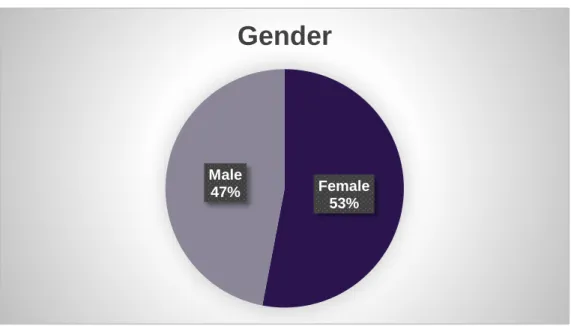
Table 2.2 Gender of clients worked with in the pilot project
There was little difference in terms of the gender of the clients worked with during the pilot project with slightly higher numbers of women.
0% 5% 10% 15% 20% 25% 30% 35% <50 50-59 60-69 70-79 80-89 >90 8% 18% 24% 16% 32% 3%
Age Group
Female 53% Male 47%Gender
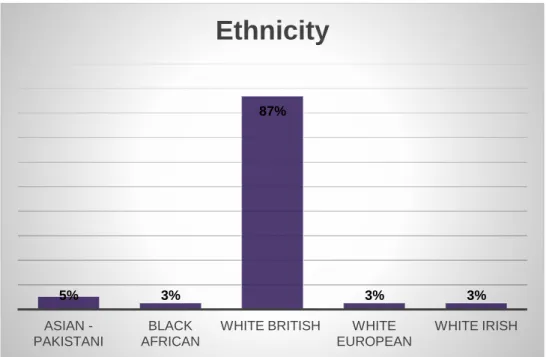
Table 2.3 Ethnicity of clients within the joint pilot
Analysis of other demographic data collected by the project staff showed that the majority of clients within the remit of the project were white British (87%).
Table 2.4 Postcode data for clients within the joint pilot
5% 3% 87% 3% 3% ASIAN -PAKISTANI BLACK AFRICAN
WHITE BRITISH WHITE EUROPEAN WHITE IRISH
Ethnicity
BD19 13% WD15 3% WF13 3% WF15 18% WF16 24% WF17 39%Postcode
The monitoring data held by the project also showed the areas in which clients were living, with clear trends emerging in terms of the project drawing from specific postal codes. The WF17, WF16 and WF15 areas had the largest numbers of clients. The Index of Multiple Deprivation indicates that WF15 is among the 40% least deprived neighbourhoods in the country (22,450 out of 32,844 LSOAs), WF16 is amongst the 20% most deprived
neighbourhoods in the country (3,996 out of 32,844 LSOAs) and WF17 is amongst the 30% most deprived (8,203 out of 32,844) as is WF13 (6,782 out of 32,844) and BD19 (9,007 out of 32,844).
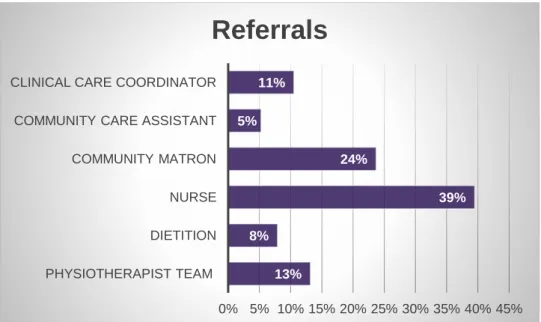
Table 2.5 Referrals into the project
Referrals into the project are illustrated in table 2.5 with the largest number being made from nurses and community matrons.
Some individuals were either declined following assessment or withdrawn from the service, with these decisions coded for the following reasons:
Needs too high
Needs too low
Risk too high
Already being supported by other services
Won’t engage
No contact
Out of area
Too ill to continue
Improved 13% 8% 39% 24% 5% 11% 0% 5% 10% 15% 20% 25% 30% 35% 40% 45% PHYSIOTHERAPIST TEAM DIETITION NURSE COMMUNITY MATRON COMMUNITY CARE ASSISTANT CLINICAL CARE COORDINATOR
The Joint Pilot operated within a multi-agency setting, with the Support Worker making referrals to a number of other local organisations during the life-time of the project, as illustrated in Box 2.1
Box 2.1 – Referrals out of the project (made by the Support Worker) Mears Handyman Service
Accessible Homes Team Fire Safety Check Team Blue Badge Scheme RVS - Befriender
Batley Resource Centre - Travel Companions RVS – IT Buddy
Batley Resource Centre – Luncheon Club Cleckheaton Luncheon Club
Health Trainers
Carers Count – Benefits Checks plus Carer Support Cruise Bereavement Service
Second Chance – Headway
Stroke Association – Information & Advice Branches – Leaning Disabilities Day Centre Age UK – Day Care
Age UK – Social Activities club Age UK – Energy Check Age UK – Befriending
Age UK – Telephone Befriending Expert Patients Programme New Mind Counselling
Locala - Jubilee Centre – Falls Team Locala – Community Chiropodist Locala – OT Assessment
GP – Urgent BP advice/treatment Kirklees - Care Navigators
Owls Activity Days (Local Sports Centre) Cleckheaton U3A
CAB – Debt Management Health Watch
Law Society
Private Chiropodists and Mobile Hairdressers Free Prescription Service
3. Findings
3.1: Focus upon improvements in the lives of clients working with the support worker capturing the perspective of service users;
A number of positive outcomes for clients were reported.
Increased independence; the Support Worker was able to involve appropriate groups as part of the process of enabling service users to develop the skills that they needed to live independently. In some instances this resulted in them joining exercise classes or
receiving IT classes, taught at home.
“Well I’ve only had one lesson, and he’s learnt me how to go to Iceland to do me shopping [online].” [Service User]
The support worker also worked with one service user to get a drive from wheelchair car as she identified the biggest barrier to leaving the house related to his fears of getting stranded somewhere with no way of getting home. At the time of the interview, this was still a work in progress, but the potential increase in independence was recognised by the service user.
“It would make a heck of a difference to me, yes, to be able to get out and about […] me biggest dread is going out somewhere then running out of power on the way back…” [Service User]
Decrease in isolation/ increased access to services in the community; The Support Worker has helped service users to become involved in community activities and
organised for visitors to see them at home.
“I never went nowhere, I never saw nobody. And now I can go out, I can go to the lunch club and have my friend that comes and a young man comes to teach me computer. She comes and in fact I’ve something happening more or less everyday now, I see somebody and it’s all because of her.” [Service User]
Improved mental health; a number of service users reported feeling more positive and able to plan for the future.
“I used to get very depressed, well I don’t get depressed now really you know. I mean there’s times when I think about my husband and I get a bit depressed then, but it passes.” [Service User]
Interestingly, service users reported increased well-being and increased confidence just from knowing about different social options that were available, even if they chose not to take up the offer. One service user said that the service gave him:
“…encouragement as to what I could do, you know, […] more confidence to try things” [Service User]
In addition to the signposting to other services, the support worker’s visits alone had a positive effect on service users’ mental health:
“Since [support worker] came, me Mum’s been much happier and I think she’s felt, you know, quite a bit more supported[…] asking how she is, asking if there’s anything else she needs, asking how she feels and I think that’s been a lot to do with it.” [Carer]
Making a difference; one stakeholder described the general improvements that referrers were able to see when service users were supported by the project;
“So where there have been people referred by a district nurse or a community matron, they can see it does make a demonstrable difference to that patient’s life, which helps in the person’s life and in their health as well.” [Stakeholder]
Holistic working; stakeholders also noted the importance of being able to work with service users in a holistic manner, dealing with the service user as a whole, not as a set of distinct problems.
“It’s shown the requirement of people with a health need but also a variety of other more social issues, which may or may not include housing that those need to be resolved just as much as their specific health need.” [Stakeholder]
“I think it’s making professionals think more holistic about people, other than just health. So I think they are starting to think about maybe there are other issues that could help this person.” [Stakeholder]
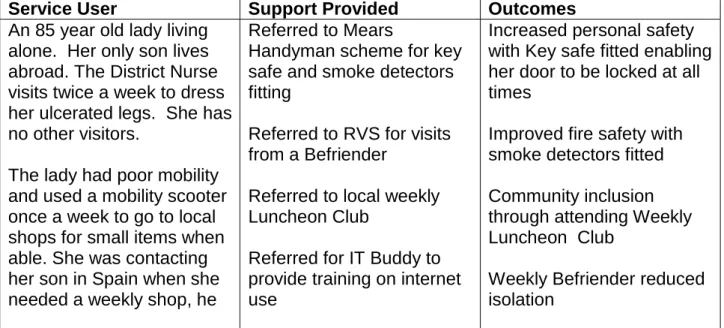
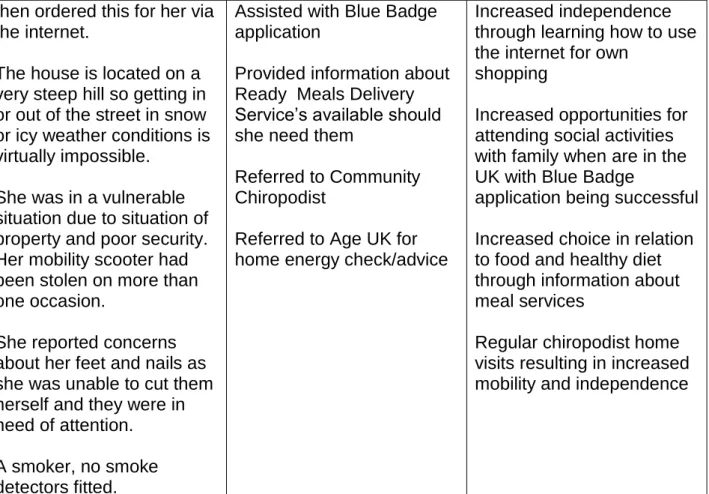
In-house case study data also illustrated a range of positive outcomes for service users, as demonstrated in the following tables.
Table 3.1.1. Positive outcomes for a female service user
Service User Support Provided Outcomes
An 85 year old lady living alone. Her only son lives abroad. The District Nurse visits twice a week to dress her ulcerated legs. She has no other visitors.
The lady had poor mobility and used a mobility scooter once a week to go to local shops for small items when able. She was contacting her son in Spain when she needed a weekly shop, he
Referred to Mears
Handyman scheme for key safe and smoke detectors fitting
Referred to RVS for visits from a Befriender
Referred to local weekly Luncheon Club
Referred for IT Buddy to provide training on internet use
Increased personal safety with Key safe fitted enabling her door to be locked at all times
Improved fire safety with smoke detectors fitted Community inclusion through attending Weekly Luncheon Club
Weekly Befriender reduced isolation
then ordered this for her via the internet.
The house is located on a very steep hill so getting in or out of the street in snow or icy weather conditions is virtually impossible.
She was in a vulnerable situation due to situation of property and poor security. Her mobility scooter had been stolen on more than one occasion.
She reported concerns about her feet and nails as she was unable to cut them herself and they were in need of attention. A smoker, no smoke detectors fitted.
Assisted with Blue Badge application
Provided information about Ready Meals Delivery Service’s available should she need them
Referred to Community Chiropodist
Referred to Age UK for home energy check/advice
Increased independence through learning how to use the internet for own
shopping
Increased opportunities for attending social activities with family when are in the UK with Blue Badge
application being successful Increased choice in relation to food and healthy diet through information about meal services
Regular chiropodist home visits resulting in increased mobility and independence
Table 3.1.2. Positive Outcomes for a male service user
Service User Support Provided Outcomes
A 63 year old married man with long term health
problems including Cervical Dystonia and Osteoarthritis which cause him severe pain. He also suffered from Depression, Post Traumatic Flashbacks and sleeping problems.
He was reported as having frequent falls.
He stated that he was struggling with day to day activities due to pain, fear of
Provided informal
counselling and emotional support regarding his pain, sleep issues and
depression
Gave advice, information, support and techniques on improving mood and negative thinking
Liaised with GP regarding depression
Devised a sleep diary to assist him to adjust his
Sleep pattern improved and more able to cope with the awareness of available techniques to assist sleep along with a sleep diary and increased medication
Increased awareness of the impact of negative thinking has on mental health Improved mood through emotional support and medication
falling and depression about his situation.
His wife also had long term health problems and
reported that they both needed help and support to manage their physical and mental health due to the impact it was having on their day to day life and relationship.
sleep pattern at a manageable pace
Referral for perching stool to reduce falls and fear of falling when carrying out tasks in the kitchen
Referred for grab rails fitting to exterior of property to help prevent falls
Liaised with Kirklees Council regarding application for Stair Lift Assessment
Information and brochure given for meal service to ease pressure of having to prepare meals when both are unwell
Gave information and contact details for
Handyman Service for jobs too difficult to do
themselves
Gave information and leaflet for Expert Patient Programme
Gave information and leaflet for Health Trainers Service
Gave Travel Companions details to both gentleman and his wife to enable them to get out of the house with support.
Gave Carer’s Count information and contact details to service user’s wife
Reduced falls and fear of falling through perching stool and grab rails being supplied/fitted
Stair lift assessment was successful
Grab rails fitted resulting in safer exit/entry to the property
Able to make informed choices regarding meal service and house repairs as necessary
Aware of other
services/groups available to assist with long term health and wellbeing issues
Successful DWP claim for PIP leading to continued stable financial situation
Acted as Advocate at a DWP PIP Assessment Assisted with Blue Badge Application
These detailed case studies in tables 3.1.1 and 3.1.2 illustrate the holistic provision and support delivered when service users were part of the project as well as the variety of individual outcomes which resulted.
3.2: The importance of the support worker role;
A number of key strengths of the Support Worker role have emerged following the interviews with stakeholders, referrers and service users.
Time; a significant benefit was the fact that the Support Worker could work with service users for as long as necessary. Healthcare professionals have limitations due to caseload and a focus on medical issues. Other services they can refer to generally have a
maximum time period they can work with an individual.
“So I think she’s got the time to go into those issues that you maybe wouldn’t go into on a standard professional visit as a dietician” [Referrer 1]
“Care Navigator will only work with the clients for a very short time and not sure, the outcome is always what the desired expectation would be, they’re in and out really, so that the rapport isn’t built up with the client” [Referrer 4]
“Some people we see just need a bit more ongoing support and support over time, and other services can sometimes go in and I don’t know, support or advice but then perhaps can’t continue or spend the same amount of time as it appears that the support worker would be able to do” [Referrer 2]
Rapport; The Support Worker was able to spend time getting to know service users and build strong rapport which helps her to identify different issues that are affecting people’s health and wellbeing.
“Often it can be very confusing different people, different services coming in, and different people for different lengths of time for different reasons. And so that can be very confusing. And I think for them it’s one person that they can speak to and they know that the information is confidential unless we have agreed to share it with other professionals.” [Stakeholder]
“She is, yes she’s really easy to get on with, well I mean I got on with her so I mean, y’know she was more like a friend… it isn’t very often I find somebody I don’t like, but she is just nice.” [Service User]
Flexibility; The Support Worker does not have the same limitations that the healthcare professionals have as to what comes under their remit.
“…first of all it’s very flexible, so because I’m a Support Worker I can support people in whatever way they want…they (service-users) can build up a good trusting relationship with me because it does take time for people to open up and share what’s going on…” [Stakeholder]
“She able to provide that long term support, the psychological support as well and she’s been quite good at recognising things that may have an impact. You know it was the support worker that sort of picked up well, actually she might not be remembering what’s been said to her when she’s going to see the doctor.” [Referrer 3]
Family involvement; The Support Worker has involved family members, where
appropriate and with service user consent, to reinforce the recommendations she gives.
“…she’s been working with the daughter, the daughter knows the same information, passing the same messages on continuously so it has you know helped.” [Referrer 3]
The family involvement was described as being important to the service users, and it additionally meant that carers could receive advice and feel supported;
“If me Mum’s been in hospital, she’s [the support worker] still seen me on occasions, you know, because it’s nice then for me to talk to her about what’s been happening, or any of my concerns. So, not just for my mum, it’s helped me.” [Carer]
Promoting joined up working; the Support Worker position was seen as being able to contribute significantly to promoting a more coordinated way of working;
“…it [the pilot] was making sure the clinical teams understand that health and housing are inextricably linked, and you get one right and you can get the other right. And that we both might see the same people anyway so…there is probably some benefit of us both working together.” [Stakeholder]
“It is showing that integrated working and working as a team with other sectors is beneficial to patients.” [Stakeholder]
Lightening the load of health care professionals; Healthcare staff have heavy
caseloads and referring a patient to a number of different services/organisations is time-consuming. They also frequently see the same patients getting referred back to them time and time again when they are not able to manage their conditions. The Support Worker can be one point of referral and then she decides which further referrals will be
appropriate. She can also work with service users to put measures in place that will potentially help them to manage long-term conditions and regain/retain a level of independence.
“…there are patients that may have other needs and how that will then potentially reduce their work loads. By the patients being able to manage their long term conditions better and not relying on their services as much.” [Stakeholder] “I think it [the workload] will definitely reduce because a lot of the
complexities around patients with long-term conditions aren’t always physical medical problems, but it’s that they’ve got into a real rut at
home and they’re just struggling with just their activities and daily living and coping, so I think we put a lot of visits in just to counsel really” [Referrer]
“I think it’s not only needed by service users but I think professionals need it as well, because you know because of their workload now.” [Stakeholder]
Unique; There are alternatives to aspects of the support offered from this pilot but they all had limitations of time and/or remit, for example, health trainers can only work with people for up to 6 visits, so this Pilot Project is offering a different and more unique service;
“The only thing that I can liken it to it a health trainer. They’re short term and they would do like six visits, six appointments with the patient. The support worker has no time limits, so it’s dependent on how long it took her to get patients independent.” [Stakeholder]
“I also think it’s a success from the point of service users, because the remit’s not restricted …from their point of view they feel there’s someone on their side and they’re not just restricted to one area to discuss, whether it’s with any other services maybe, just one area of benefits, or one area of attending maybe social events from another service and obviously all the medical. I think that works really well….I think it’s quite unique, in that it’s not time-limited, its remit’s not limited, you know it’s really flexible. It’s a free service as well.” [Stakeholder]
“There isn’t been anybody else that sort of considering the wider determinants of health, where you’ve got things like Kirklees Health Trainers and stuff, our service goes into a lot more depth than that...issues around the home, housing, the economic wellbeing, social isolation, signposting.” [Stakeholder]
The service users were in agreement with the healthcare professionals and stakeholders regarding the unique role that the Health and Wellbeing Support Worker plays:
“There’s nobody else anywhere that covers them sorts of things, that are as prepared to help as much as [support worker] is. There’s nothing else to take over from her […] there’ll be a big hole in the system if [support worker]’s unit stopped.” [Service User]
When asked what they would have done if they hadn’t been referred to the support worker, one carer replied:
“I wouldn’t, wouldn’t know. I think we’d still be struggling really.” [Carer]
Perspectives on purpose of the role; There were a range of perspectives reported on the purpose of the role, summarised as follows:
Very wide remit
‘Catch all’ – can refer to Support Worker if in doubt
Promoting independence
Reducing isolation
Housing/finance/benefits advice
Furthermore, when clients exited the service, they were given the opportunity to complete a feedback form that had been designed in-house by the support worker.
Feedback Form Summary (n=6)
All of the service users who completed a feedback form felt that the service had been explained to them, and that it helped with advice, information, and signposting very well. The majority of the respondents (5/6) also thought that it offered practical and emotional support very well.
Regarding the specific support, the home visits were considered useful by all respondents and everyone that received phone calls, signposting and emotional support (5/6) also found those aspects useful.
The most common means of support was information on attending a group/using a befriender service (4/6) and one person was taking regular exercise as a result of the contact with the Health and Wellbeing Support Worker. One person particularly valued being referred to services, the support worker’s advocacy in getting help from other agencies and her practical suggestions for managing mental health (such as sleep records, positive recording techniques).
Another person commented that simply knowing about the existence of the befriending service contributes to the service user’s health and wellbeing.
The reasons people gave for liking the service mirrored the themes reported within the interview data for example:
Time; people appreciated the fact that the support worker had time to listen to them and wasn’t in a hurry to get away:
“[Support worker] has time to listen, we never feel she’s in a hurry, though she might be.”
Rapport; the support worker was described several times as being supportive, kind and patient:
“Nothing has been too much trouble.” Service user
“I never felt “judged” even when I was finding my circumstances extremely difficult to cope with.” Service user
Reliability; several service users commented that the support worker was very reliable which contributes to rapport with the people she’s working with:
“If [support worker] says she will do something, she does it.” Service user
Knowledge; service users appreciated the service worker’s advice and knowledge of
services available:
“Top marks [name of support worker] @ Locala. Her help and advice has been extremely appreciated.” Service user
Suggestions for improving the service from users included the following:
Covering a wider district
Employing more support workers
Extending the life of the service
Advertising the service well
Clear referral processes e.g. for GPs to be more involved in referring
3.3: The operation of the project within a multi-agency setting and stakeholder views;
A number of comments from the interviews provided insight into how the project operated within a multi-agency context.
Working differently; the Pilot Project was described as a different model of working compared to previous service offers;
“There is a huge opportunity to work differently along the lines of the pilot in the way that we assumed.” [Stakeholder]
Location; The fact that the Support Worker was co-located with the healthcare
professionals at a health centre was viewed as being highly beneficial. Having face to face contact with the Support Worker allowed staff to talk through possible referrals to gain clarity about referral criteria, and meant that they received feedback on service user
progress following on from referrals. The Support Worker also attended multi-disciplinary meetings as a way to raise her profile and encourage referrals during the delivery of the project;
“I feel that (the support worker) is more integrated into the team and she’s here, she visible, that’s a massive benefit and bonus really, although referrals are quite on one level and unless you, I think have some shared, working with that person, and joint working, sometimes it, you need an understanding of each other’s roles” [Referrer 4] “And of course the other thing is that I am based in Locala so I’m there where
community are. I’m right at the heart of it, and that’s where the referrals are coming from. So they are able to able to freely speak to me.” [Stakeholder]
Referral processes; for some the referral process was considered to be straightforward, and less time-consuming than other referrals staff had to make. The fact that referrals could be discussed directly with the Support Worker was a strength cited by all of the referrers interviewed.
“The support worker been visible and been in the meetings and been in the buildings, then it makes more sense because you can have a conversation as well as writing a paper referral.” [Referrer 5]
However, there were some issues identified in relation to referral processes in a number of areas.
Getting referrals; getting word out about the service was challenging at the outset of the project and fewer referrals than expected were made.
“I don’t know if it was what’s the word, sort of advertised or you know I don’t know if maybe more people could be made aware of the service. I think it took a while to sort of establish the case load.” [Referrer 3]
Embedding the service/keeping referrers engaged; connected to the difficulty of getting referrals the issue of ensuring the visibility of the service offer proved a challenge. It was reported that the idea of the service was well received by other staff when they were introduced to the role, but if they didn’t have an appropriate referral to make at that time then they don’t necessarily remember this referral option at a later date.
“…just remembering really as not all you patients are going to need it so you might forget, or you’ve missed the meeting or whatever.” [Referrer 1]
Lack of clarity on referral criteria; as this is a pilot, there had to be a degree of flexibility for the role to develop into something that responded to the assessed needs within the service-user community, but this did result in some staff saying that they were unclear about the exact detail of the service-offer and therefore being less likely to engage with the project.
“…if I don’t get it straight away I suppose I lose interest to be honest, but it didn’t really make sense to me who it was aiming at and what the service was for, so and the words Connect Housing again, the title I didn’t get, it didn’t make sense to me, I think that sent me on a track thinking it was to do with support people around their living conditions.” [Referrer 4]
Attitudes from potential referrers; some concerns were raised in relation to potential referrers being perceived as unwilling to refer into the service due to being over-burdened with work or unable to see the value of it.
“When they don’t perhaps know much about a service and perhaps there is some hesitancy…” [Referrer 2]
“I think there is probably some barriers in some cases where we are housing and they are health. And I think it’s probably more from the health side really. A little bit of reluctance to work [together]” [Stakeholder]
Knowledge and raising awareness; the Support Worker was perceived as having good knowledge of other services in the community which she was able to refer into. In
addition, her role was seen positively in terms of raising awareness to other staff about broader health and wellbeing issues being experienced by service users.
“…she’s got all that background and I think straight away she understands and probably has a good idea of what would benefit the patient and what she can signpost to, you know, support groups out there.” [Referrer 4]
“So everything they would have an individual place where they could refer to. Now whether that happened quite so much, cos I think me being there just raising their awareness of other issues shall we say, other than physical health, and how people could refer.” [Stakeholder]
Challenges; however, working in a multi-agency setting did also pose some challenges including lack of shared access to systems which hindered information sharing and tracking of service-users;
“One challenge has been that I don’t actually have access to System One, that’s the system that all the NHS’s is on there. And that although you know it worked, it worked fine in the beginning, I’ve found as I’ve gone along that actually that would be you know wise to have access to that. Because from having access to System One I can look back to see what’s been happening health wise, if I visit and a person’s not in for instance I can look on to see if they’re in hospital, or you know find out what’s
happening with the person.” [Stakeholder]
“Well initially it was a challenge that the health service is made up of a broad range of professionals and actually getting all those different professional groups to understand what the service was, that was a key challenge initially.” [Stakeholder]
Linking all of those involved in the provision of care was also an issue following on from the initial referral;
“The referrer knows I’m involved, but there are a lot of other people involved as well, including GPs. And it would help if everybody knew I was involved and I was going in, which at the moment is not the case.” [Stakeholder]
Understanding of the service offer amongst other professionals were on occasion incorrect;
“I think the service needs a specific name as well. At the moment it’s a Health and Wellbeing Pilot, but people see it as Connect Housing pilot. So that can be misleading in terms of people thinking it’s a housing project, and understanding my remit….referrals that come in had an element of a housing, You know I did feel that it was maybe against gearing people you know to perhaps the wrong idea of what the service does” [Stakeholder]
A final challenge that was noted in relation to the role was the limited capacity available (i.e. one part-time worker) so some referrers saw that as a challenge going forward.
“…so there’s a capacity, but I mean we all have that problem and she’s just one person, so that’s the only thing. [Referrer 5]
Promoting joined up working; the support worker offered continuity which was viewed as missing in other areas of care provision therefore this was perceived positively. One carer described the support worker as a “go between” linking them to the community matron who was often difficult to contact;
“[one positive has been having] the same person coming each time because the problem is if you need a doctor to come out, it could be
any doctor and they’re just interested in, you know, what the problem is at that time. There’s been no continuity with anybody.” [Carer]
“She [the service user] did like having someone at the end of the phone to be able to ring. You can’t always get hold of the community matron if she needs her, she can very rarely get through.” [Carer]
3.4: The economic case for the pilot project; tracking contributions in relation to reduced health care costs and added value;
3.4.1. Quantitative data findings
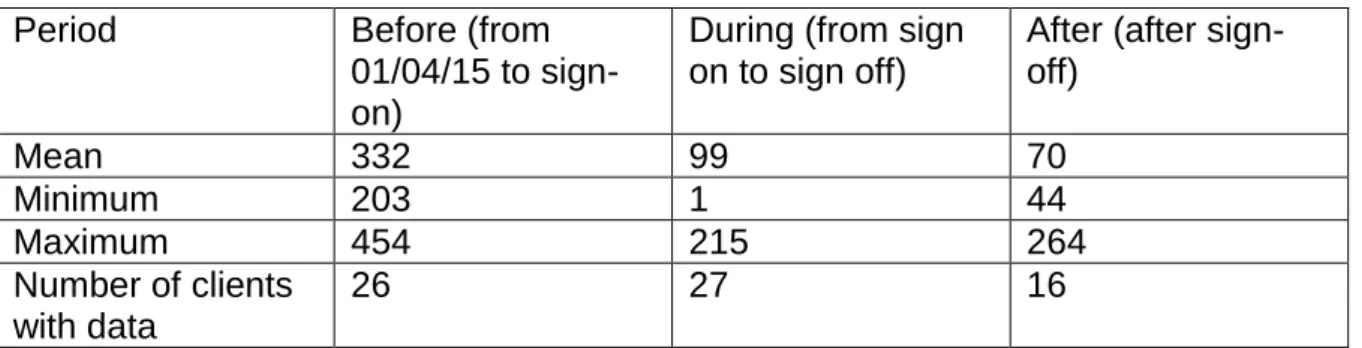
Data on community health service use were received from Locala for 27 clients. Service use data was available from 1st April 2015 until 29th August 2016.
Dates of enrolment into the Connect pilot project ranged from 22nd October 2015 to 19th July 2016.
At the date of analysis, 16 clients had been signed off from the service, and limited follow-up data was available for these clients. Dates of sign-off ranged from 10th December 2016 to 7th July 2016. Eleven clients had not yet been signed off (i.e. were still using the
service) and therefore no follow-up data is available for these clients. Table 3.4.1 Average number of days in each period
Period Before (from
01/04/15 to sign-on)
During (from sign on to sign off)
After (after sign-off) Mean 332 99 70 Minimum 203 1 44 Maximum 454 215 264 Number of clients with data 26 27 16
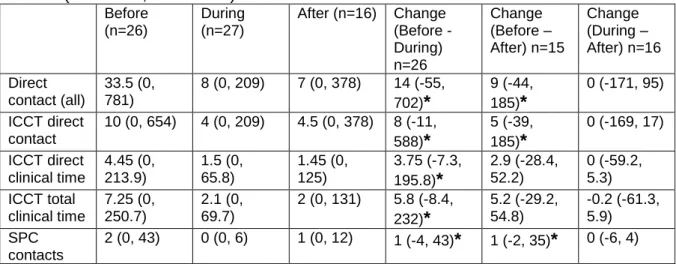
Initial analysis of the service use data revealed that it was not normally distributed, therefore the following data is presented using medians and ranges, rather than means and standard deviations, and a non-parametric test (related samples Wilcoxon’s signed rank test) was used to compare client data before and after enrolment into the project. In table 2, data are presented as averages (median) across the client group for three time periods:
before enrolment into the project (from 1st April 2015 up to sign-on date);
during enrolment in the project (between sign-on and sign-off dates) and
after discharge from the project (from sign-off date to 29th August 2016). Data are then presented for the average change in service use between time periods (Before – During; Before – After; During – After). Change over time was first calculated for each client, then this was averaged across the group to give the figures presented in the last 3 columns in Table 2.
Direct contact (all): this refers to direct contact face to face, by telephone or by video with the patient in a clinical context (e.g. not just to make a further appointment). Around 90% of such contacts are face to face.
ICCT direct contact: This refers to direct patient contact, in a clinical context, with the integrated community care team at Locala (this includes district nurses, community matrons and therapists).
ICCT direct clinical time: This refers to time spent by ICCT staff with the patient in a clinical context.
ICCT total clinical time: This refers to time spent by ICCT staff on a patient, including writing up notes and consulting with other professionals.
SPC contacts: This refers to the number of calls made to a single point of contact call centre for each patient.
ICCT time per 4 weeks: This refers to time spent with the client by ICCT staff averaged over a 28 days period.
Statistically significant reductions (p<0.05) were seen between the time periods “Before” and “During” the intervention for all community health service use outcomes, apart from ICCT time per 4 weeks. Smaller reductions were seen for all outcomes between the time periods “Before” and “After”, and these were statistically significant for the outcomes of direct contact (all), ICCT direct contact and SPC contacts, suggesting that the effects were maintained for these outcomes after the patients were discharged from the intervention. No statistically significant differences were seen between the time periods “During” and “After” the intervention, which suggests no substantial drop-off in effect in the short time period after discharge from the intervention.
Table 3.4.2 Aggregated client service use data Median (minimum, maximum)
Before (n=26) During (n=27) After (n=16) Change (Before -During) n=26 Change (Before – After) n=15 Change (During – After) n=16 Direct contact (all) 33.5 (0, 781) 8 (0, 209) 7 (0, 378) 14 (-55, 702)* 9 (-44, 185)* 0 (-171, 95) ICCT direct contact 10 (0, 654) 4 (0, 209) 4.5 (0, 378) 8 (-11, 588)* 5 (-39, 185)* 0 (-169, 17) ICCT direct clinical time 4.45 (0, 213.9) 1.5 (0, 65.8) 1.45 (0, 125) 3.75 (-7.3, 195.8)* 2.9 (-28.4, 52.2) 0 (-59.2, 5.3) ICCT total clinical time 7.25 (0, 250.7) 2.1 (0, 69.7) 2 (0, 131) 5.8 (-8.4, 232)* 5.2 (-29.2, 54.8) -0.2 (-61.3, 5.9) SPC contacts 2 (0, 43) 0 (0, 6) 1 (0, 12) 1 (-4, 43)* 1 (-2, 35)* 0 (-6, 4)
ICCT time per 4 weeks 0.6 (0, 24.2) 0.5 (0, 18.9) 0.5 (0, 18.7) 0.1 (-4.5, 5.3) 0.3 (-6.2, 5.5) 0 (-6.8, 0.5)
* Statistically significant difference between time periods (p<0.05)
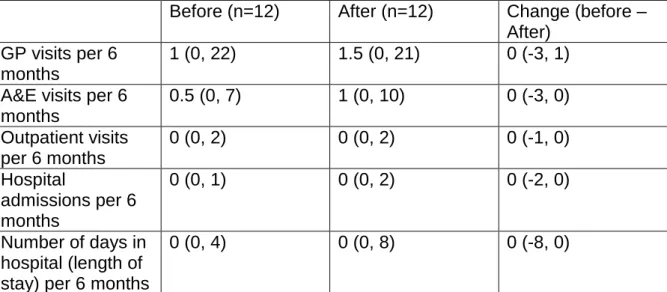
Data on GP, A&E, outpatient attendance and hospital admissions were available for 12 patients. No statistically significant differences were seen between the time period of six months before enrolment in the intervention and the time period of up to six months after the intervention (Table 3.4.3).
Table 3.4.3 Primary and secondary care service use data Median (minimum, maximum)
Before (n=12) After (n=12) Change (before – After)
GP visits per 6 months
1 (0, 22) 1.5 (0, 21) 0 (-3, 1) A&E visits per 6
months 0.5 (0, 7) 1 (0, 10) 0 (-3, 0) Outpatient visits per 6 months 0 (0, 2) 0 (0, 2) 0 (-1, 0) Hospital admissions per 6 months 0 (0, 1) 0 (0, 2) 0 (-2, 0) Number of days in hospital (length of stay) per 6 months
0 (0, 4) 0 (0, 8) 0 (-8, 0)
Health economics:
The data provided showed that ICCT direct clinical time before the intervention came to a total of 986.9 hours; during the intervention it was 295.4 hours, and after the intervention it was 304.3 hours. ICCT total clinical time before the intervention came to a total of 1181.1 hours; during the intervention it was 359.8 hours and after the intervention it was 347.7 hours.
Although several different types of health care professionals were involved in providing care, we have used PSSRU 2015 hourly rates for community nurses of £44 per hour or £58 per hour of patient related work to estimate costs saved:
Direct clinical time: 691.5 hours saved x £58 per hour = £40,107 saved
Total clinical time: (821.3 - 691.5) = 129.8 hours saved x £44 per hour = £5,711.20 saved. Total cost savings for community healthcare: £45,818.20
The support worker cost was £25,000 during the period September 2015-September 2016, for 20 hours per week therefore we can estimate a net saving of
that the support worker spent a variable amount of time with each client based upon their level of need.
3.4.2 Qualitative data findings
Reduction in Use of Health Services; the interview data illustratedstakeholders perceptions in relation to reductions in the use of health services.
“…this lady she was attending quite a lot at A & E, attending the doctor’s surgery. She does still come to the doctor’s surgery but she hasn’t had any further A&E attendances in the last two months so it’s been working. It’s shown to be effective.” [Referrer 3] “It makes a massive difference to people’s lives who on the ground, so people that we’re working with, it’s a preventative service. So if we can get in there and give them the skills and the confidence to manage their long term conditions better, then that is going to have an impact on themselves and also probably lead to a reduction in the future NHS spending both in the primary and secondary care, through less GP visits, less community interventions, and also potential for less admissions into, into A&E.” [Stakeholder]
“She’s such a fountain of knowledge, you can ask her all sorts rather than going, shopping around to various different people for the answers […] she does make a big difference.” [Service User]
“I had a stroke 30 years ago. I was in hospital 4 months. When I was discharged from hospital, I came home, sat down, and thought what next, what do I do now? […] I wish I’d had somebody like [Support worker] at the time, at that time to help us through it. […] Something like [support worker]’s set up would have been ideal, would’ve been smashing for something like that, them circumstances.” [Service User]
In the absence of a Health and Wellbeing support worker, people tended to contact healthcare professionals for non-medical issues. When asked who they would have sought help from before being referred to the joint pilot, one service user responded:
“It’d have to have been the doctor or district nurses or social worker, I mean, she [the support worker] basically does all those jobs in one go […] it takes them out of the picture, sort of thing.” [Service User]
One in-house case study illustrated a reduction in health service usage following engagement with the Support Worker (highlighted), alongside a range of other positive outcomes. The level of support provided further reflects the added value of the service as described by stakeholders.
Box 3.4.2 – Case Study illustrating reductions in health service usage
Details of the Service User
75 year old married lady, with high levels of statutory intervention including GP, A & E and use of Ambulance Service. Lady presents at services with pain in back and neck and sometimes in chest. Has high blood pressure but no other serious health problems diagnosed at time of referral. Although the lady was regularly walking to shops, she was not engaged with any other activities outside the home and family.
Support provided (via the Support Worker)
Developed a needs led plan to increase exercise, gain peer support and develop friendships, through “Owls” Activities;
Accompanied and participated alongside the first Owls session to build confidence and ensure safe participation;
Encouraged to increase flexibility and lower back pain by regular stretching and awareness of posture;
Regular telephone calls/visits to encourage continued attendance at Owls sessions; Regularly liaised with daughter to reassure about mums progress and safety about
exercising and medication issues;
Encouraged to evaluate medication taken both prescribed and bought; Encouraged to take prescribed pain killers regularly;
Arranged for Blister Packs for medication to help reduce confusion regarding dose; Liaised with Care Co-ordinator regarding progress, medication and memory concerns; Completed a Memory Test with the lady to eliminate any memory issues;
Accompanied to PALS appointment to discuss options for further exercise.
Outcomes:
• Increased physical activity through Owls attendance on a weekly basis and engagement with a range of activities including aerobics and table tennis; • Continues to developed peer support and friendships through the Owls group; • Increased self-awareness regarding pain management and posture;
• Reduced health anxiety (self-reported) • Reduction in back pain (self-reported) • Reduction in medication taken
• Safer medication intake with introduction of blister packs
• Reduced A and E visits and taken off Hospital concerns list • Health benefit in terms of reduced blood pressure
Adding value; one stakeholder reported a number of ways in which the project was perceived to have added value;
“The value of the pilot is that it considers people’s well-being and not just a specific health need. It considers wider determinants of health which are as important in
someone’s life as their specific health need. Second bit would be that it reduces activity on other statutory health services like hospitals and GPs, and keeps people at home and independent. And the third bit is that patients seem to report that they like it, and they’re more content and happy in their lives, which generally means that their health and well-being is improved.” [Stakeholder]
“…having two organisations that previous didn’t work together working together and understanding each other more. Because other things have come out of this from that relationship that you wouldn’t know about, around intermediate care and rehab
facilities, and what their approach is and what our approach could be in the future. So there are other sorts of kind of unintended positive consequences that have come from this.” [Stakeholder]
3.5: How the project worked in relation to several Care Closer to Home key performance indicators (KPIs);
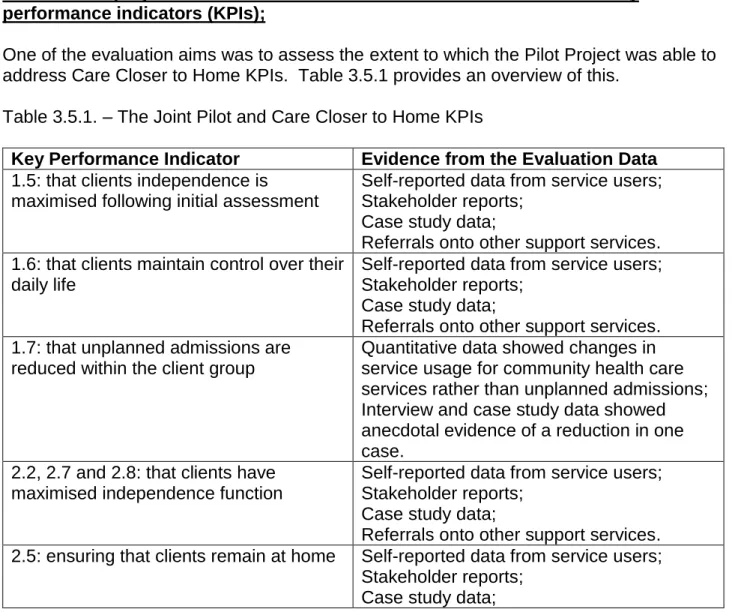
One of the evaluation aims was to assess the extent to which the Pilot Project was able to address Care Closer to Home KPIs. Table 3.5.1 provides an overview of this.
Table 3.5.1. – The Joint Pilot and Care Closer to Home KPIs
Key Performance Indicator Evidence from the Evaluation Data
1.5: that clients independence is
maximised following initial assessment
Self-reported data from service users; Stakeholder reports;
Case study data;
Referrals onto other support services. 1.6: that clients maintain control over their
daily life
Self-reported data from service users; Stakeholder reports;
Case study data;
Referrals onto other support services. 1.7: that unplanned admissions are
reduced within the client group
Quantitative data showed changes in service usage for community health care services rather than unplanned admissions; Interview and case study data showed anecdotal evidence of a reduction in one case.
2.2, 2.7 and 2.8: that clients have maximised independence function
Self-reported data from service users; Stakeholder reports;
Case study data;
Referrals onto other support services. 2.5: ensuring that clients remain at home Self-reported data from service users;
Stakeholder reports; Case study data;
Referrals onto other support services. 2.9: that clients are able to remain at
home with an improved quality of life
Self-reported data from service users; Stakeholder reports;
Case study data;
Referrals onto other support services. 3.1: that clients receive specialist input
and complex case management
Self-reported service user data; Stakeholder reports.
3.2: that clients are aware of how to manage their function
Self-reported data from service users; Stakeholder reports;
Case study data. 3.3, 3.4 and 3.5: that clients feel confident
in managing their own condition
Self-reported data from service users; Stakeholder reports;
Case study data;
Referrals onto other support services. 4.2, 4.3, and 4.4: that clients have goal
oriented management plans
Self-reported data from service users; Stakeholder reports;
Case study data;
Referrals onto other support services. 4.6: that clients receive social support. Self-reported data from service users;
Stakeholder reports; Case study data;
Referrals onto other support services.
Summary of findings
The quantitative evaluation data gathered illustrates that
The Connect intervention was associated with reduced use of community healthcare services. During the time that clients were receiving the Connect intervention, statistically significant reductions were seen in all direct contacts with the community healthcare service (Locala), ICCT direct contacts, ICCT direct clinical time, ICCT total clinical time and SPC contacts. Smaller, but statistically significant reductions, were maintained after the clients were discharged from the intervention in all direct contacts with Locala, ICCT direct contacts and SPC contacts;
The reduced time spent in contact with community healthcare services is estimated to be equivalent to savings of approximately £45,818.20. The support worker cost was £25,000 during the period September 2015-September 2016, for 20 hours per week therefore we can estimate a net saving of £20, 818.20 over the year in which the pilot project ran. It is worth noting that the support worker spent a variable amount of time with each client based upon their level of need.
The qualitative evaluation data gathered illustrates that
Several qualitative positive outcomes were evident in evaluation data including improved health and well-being, more independence
and less social isolation. Therefore from the perspective of the service-users, the joint pilot made a difference to their lives;
There are many positive aspects perceived in relation to the role of the support worker including the available time to work with people, the flexibility associated with the role and its unique approach when compared to existing services;
There had been some challenges associated with the implementation of the project related to referrers’ understanding and engagement as well as the promotion of the service as a mechanism to raise awareness of its existence.
4. Discussion
The data from this evaluation show that self-reported health improved as a result of older people taking part in the joint pilot project. This resonates with existing evidence, the Health Begins at Home pilot study (2016) involved Family Mosaic a large housing provider in London offering residents health and wellbeing interventions over a 3 year period. The evaluation illustrated that as a result of support provided to tenants living in social housing, participants’ health was improved by taking part in the pilot. 75% of the participants in the intervention group reported that their health had improved. The authors of the study also make a case for the importance of health and housing working together, attributing the impact that housing providers can have upon health to their “unique position” in the community. As most tenants trust them, and they call them when something goes wrong, they have an existing and visible presence within their communities. This presence means they’re perfectly positioned to identify people who need additional support and also to implement early interventions or ‘quick fixes’ which can help people to live independently and in better health.
Our evaluation findings also indicated that the support worker role was highly valued by service users and a carer. In addition, wider stakeholders referring into the project could also see the value of the role in relation to encouraging care closer to home and service user independence. Purdy (2010) discusses evidence from systematic reviews whereby self-management seems to be effective in reducing unplanned admissions for patients with conditions including COPD and asthma. Self-management action plans were reported as being useful in reducing admissions and in the joint pilot it was evident that the support worker enabled service users to self-manage their conditions. Further evidence from the literature indicates that in instances where support is provided to older people in
community settings, improvements can be seen in a number of areas. Windle et al (2009) discuss the importance of support in terms of improved well-being. For example, older people receiving practical help reported a notable improvement (12% increase), as simple aids and services can affect well-being. The provision of a gardening or home adaptation service reduced anxiety and the risk of falls. An equivalent improvement (12% increase) was also reported following interventions providing exercise, presumably due to increased strength and flexibility and a positive effect on mood. Windle et al’s (2009) evaluation showed there were notable improvements in several well-being categories from support which was similar to that offered within the joint pilot.
In relation to the collaborative partnership working that was involved in the delivery of the joint pilot, concerns were reported in terms of referrers based in the healthcare sector not recognising the value of the project (being based outside of the NHS) and therefore not sign-posting people into the intervention. Similar concerns have been reported in other housing intervention evaluations (Bagnall et al 2016). Despite these concerns there were referrals into the project, many from nurses. Barker et al (2014) discuss how district nurses are “ideally placed” to support patients in areas other than physical illness, in particular in relation to mental health, but also including the wider determinants of health - they have frequent contact with patients; they see them in their own home; they are trusted and are viewed as a “professional friend.” However, Barker et al (2014) do not discuss the
obstacles that district nurses face when it comes to addressing non-medical problems patients have, namely large caseloads and lack of time. All of the key strengths attributed to district nurses in this paper, were identified
by stakeholders and service users in the course of this evaluation in the work of the Health and Wellbeing Support Worker. The evaluation data illustrates that the support worker can complement the role of the community based nurses and step into the role of “professional friend”, freeing up nursing time to care for patients’ physical needs.
In terms of health service use, the Health Begins at Home pilot study found that the health and wellbeing interventions reduced NHS usage, in particular for planned hospital
appointments (although these conclusions were based upon self-reported data). Blunt et al (2010) also make a case for both the financial and social value of using preventative measures within communities as a mechanism to reduce costly emergency admissions. The evaluation illustrated anecdotal evidence of at least one service user reducing their use of accident and emergency services. However, some commentators advise caution when using health service usage data and argue that these figures are not the only important impact measures (Nuffield Trust 2013). Our evaluation also examined
community health service usage and the data reflected a reduction in use of these and therefore a cost saving.
5. Conclusion
This is the final report evaluating the impact and process of delivering the Joint Pilot. The evaluation data showed that service users reported positive perceptions and experiences of the project as well as a range of positive outcomes in relation to their health and well-being. Furthermore, there was a reduction in usage of community health services and therefore cost savings associated with this. In conclusion, the joint pilot project is meeting its aims in terms of supporting clients with complex health needs whilst reducing demands on community health care services.
6. Learning from the Joint Pilot
Several lessons were learned during the life-time of the project such as
The need for the Support Worker to have access to health systems, specifically SystemOne as a single place where information could be both accessed and
recorded to better link together housing and health, and to more efficiently track the progress of service-users. Access to this would have enabled the evaluation team to produce more robust quantitative analysis of the impact of the project.
The need for promotion of the service with clarity about function as an on-going aspect of the project delivery to ensure the continuation of referrals as well as increased understanding of the purpose of the project amongst professionals who are likely to refer in. Consideration needs to be given to how projects are labelled and named to avoid confusion.
As a result of the pilot project, there was evidence of improved communication between the health and housing sector demonstrated in referral patterns and more joined up working which is essential in complex case management.
7. Issues for consideration
Future delivery of the service should ensure that broader measurement of service user outcomes is on-going and embedded within the monitoring approach, to encompass quality of life changes in a robust manner.
Future projects need to ensure longer-term analysis of the project impacts. Whilst evidence of short-term impacts on participating individuals has been demonstrated, it is important that the medium and longer-term impacts are captured over time despite the complexities and challenges associated with this.
The health service usage data that the evaluation team had access to is a robust measure. However, greater access to more health data such as figures associated with GP appointments and Accident and Emergency attendance for all service users participating in the pilot would allow more meaningful comparisons and therefore fuller conclusions to be drawn.
8. How we did the research
The evaluation was conducted by researchers from the Centre for Health Promotion Research, Leeds Beckett University during 2016. The evaluation used a mixed method approach including qualitative data from interviews with stakeholders, interviews with service users and carers, desk-based analysis of monitoring data and quantitative analysis of health service usage data. The overarching aim of the evaluation was to ascertain the extent to which the Joint Pilots project’s aims and objectives had been met. The specific objectives of the evaluation were to:
• Focus upon improvements in the lives of clients working with the support worker capturing the perspective of service users;
• To gather the views of stakeholders involved in the project and report their perspectives;
• To identify the ways in which the pilot project operates and delivers its provision, identifying the factors that are important in developing and supporting progress. This will include an assessment of the importance of the support worker role; • To examine how the pilot project works within a multi-agency setting, and to
ascertain what this means for the success of the project;
• To examine the economic case for the pilot project; tracking contributions in relation to reduced health care costs and added value;
• To examine how the project is working in relation to several Care Closer to Home key performance indicators (KPIs) such as;
1.5: that clients independence is maximised following initial assessment
1.6: that clients maintain control over their daily life
1.7: that unplanned admissions are reduced within the client group
2.2, 2.7 and 2.8: that clients have maximised independence function
2.5: ensuring that clients remain at home
2.9: that clients are able to remain at home with an improved quality of life
3.1: that clients receive specialist input and complex case management
3.2: that clients are aware of how to manage their function
3.3, 3.4 and 3.5: that clients feel confident in managing their own condition
4.2, 4.3, and 4.4: that clients have goal oriented management plans