From the DEPARTMENT OF WOMEN’S AND CHILDREN’S
HEALTH
Karolinska Institutet, Stockholm, Sweden
TAILORING AND STANDARDIZING THE
ASSESSMENT OF ABILITY AND
DISABILITY IN ADHD AND AUTISM: THE
DEVELOPMENT OF WHO ICF CORE SETS
Soheil Mahdi
All previously published papers were reproduced with permission from the publisher. Published by Karolinska Institutet.
Printed by Eprint AB 2019 © Soheil Mahdi, 2019 ISBN 978-91-7831-490-4
Tailoring and Standardizing the Assessment
of Ability and Disability in ADHD and Autism:
The Development of WHO ICF Core Sets
THESIS FOR DOCTORAL DEGREE (Ph.D.)
AKADEMISK AVHANDLING
som för avläggande av medicine doktorsexamen vid
Karolinska Institutet offentligen försvaras i sal Leo, Center of
Neurodevelopmental Disorders (KIND), Gävlegatan 22 B, 8 tr.,
Stockholm
Onsdagen den 19 juni 2019, kl. 10.00
BySoheil Mahdi
Principal Supervisor: Sven Bölte, PhD, Professor Karolinska Institutet
Department of Women’s and Children’s Health Division of Neuropsychiatry, Center of
Neurodevelopmental Disorders (KIND) Co-supervisor(s):
Mats Granlund, PhD, Professor Jönköping University
Department of Social Work
Division of CHILD, School of Health and Welfare
Opponent:
Jerome Edmond Bickenbach, PhD, Professor University of Lucerne
Department of Humanities and Social Sciences Division of Health Sciences & Health Policy Examination Board:
Clara Hellner, MD, PhD, Adjunct Professor Karolinska Institutet
Department of Clinical Neuroscience Division of Centre for Psychiatry Research Peter Wennberg, PhD, Professor
Stockholm University
Department of Public Health Sciences Ann-Christin Eliasson, PhD, Senior Professor Karolinska Institutet
Department of Women’s and Children’s Health Division of Neuropsychiatry
ABSTRACT
The concept of health has evolved over time and is today considered a multidimensional construct that involves not only absence of impairments or pathologies, but also quality of life and individual functioning. This conceptualization is especially important to individuals with neurodevelopmental disorders (NDD), as these are characterized by early-onset symptoms that tend to persist into adulthood, interfering with individual well-being, daily life activities and engagement in society. The lack of well-established tools for functioning assessment in NDD marks a significant gap, as there is a substantial interindividual variation in severity of functioning and profile of individual limitations and resources. Hence, diagnosis alone is not sufficient enough to understand individual health outcome in NDD. In 2001, the World Health Organization (WHO) launched the International Classification of Functioning, Disability and Health (ICF), a classification system based on a biopsychosocial framework which seeks to describe and understand health-related functioning, allowing all aspects of an individual’s life to be taken into account. However, the ICF in its current form comprises over 1600 categories of health-related functioning aspects, which makes the implementation of the nomenclature rather infeasible and undesirable in clinical and daily practice. To facilitate the implementation, shorter versions of ICF (i.e. Core Sets) have been developed to describe specific condition or condition groups. This thesis is part of the overarching aim to develop ICF Core Sets (ICF-CS) for two common NDD, i.e. Attention-Deficit/Hyperactivity Disorder (ADHD) and Autism Spectrum Disorder (ASD), to standardize individual
assessment of functioning and disability in ADHD and ASD.
The development of ICF-CS followed a rigorous and scientific procedure, as established by the World Health Organization (WHO) and the ICF Research Branch, which comprised a series of preparatory studies aiming to investigate relevant aspects of functioning and disability in ADHD and ASD using multiple stakeholder perspective and cross-cultural data sample. In this thesis, two of four preparatory studies are included, of which one explored the client and social environment perspective, whereas the other examined the clinical
perspective on functional health in ADHD and ASD. Since the preparatory studies were conducted separately for ADHD and ASD, these resulted in four scientific papers which are included in the thesis.
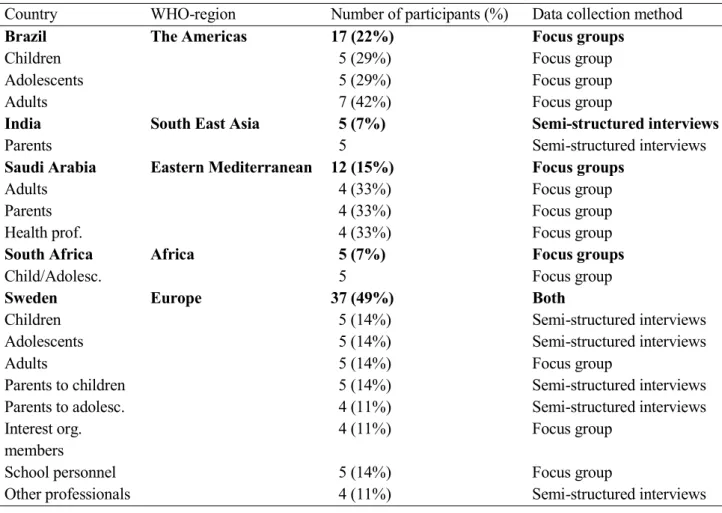
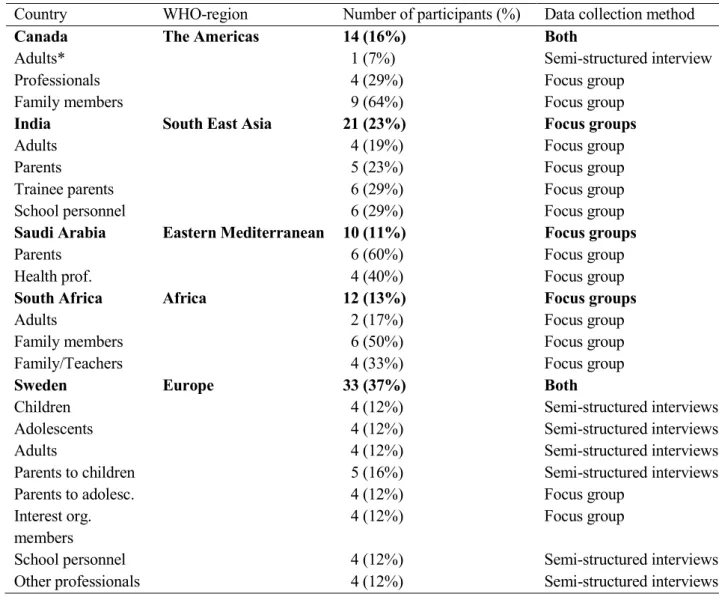
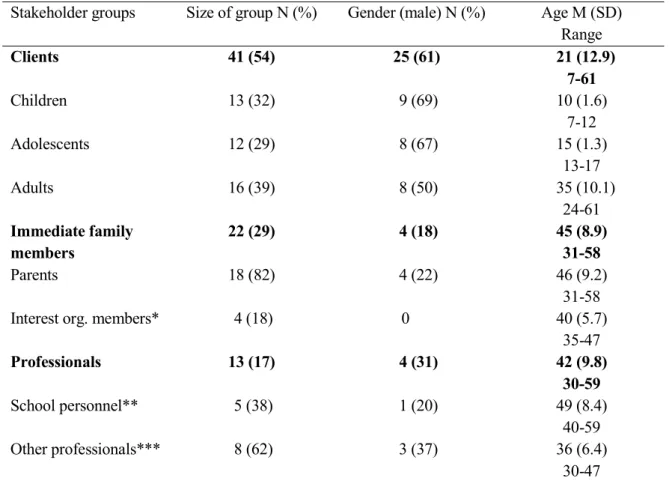
Study I-II consisted of a mixed qualitative-quantitative study design, involving clients with ADHD/ASD (children, adolescents, adults), caregivers and professionals participating in focus group discussions or individual interviews across five countries and WHO-regions (i.e. Africa, Eastern Mediterranean, Europe, South East Asia, The Americas). The participants were divided into different groups based on age group, stakeholder perspective and country. All discussions and interviews were audio-recorded and transcribed verbatim with
meaningful concepts extracted from the transcriptions and linked to ICF categories following a meaning condensation procedure. In study III-IV, a cross-sectional study design was employed, with clinical researchers rating the functioning level of individuals with ADHD and ASD using a checklist with ICF categories. Various types of information sources (e.g.
interviews with clients/caregivers, clinical observation, test results, rating scales, medical records) were used to complete the rating.
Study I (ADHD) included 76 participants, which generated 82 ICF categories (32 activities and participation; 25 environmental factors; 23 body functions; 2 body structures), 243 personal factors (e.g. personality traits, personal attitudes, behavior patterns) and 4 recurring strengths (e.g. creativity, hyper-focus). The categories in the activities and participation component and environmental factors represented all nine (i.e. learning and applying knowledge; general tasks and demands; communication; mobility; self-care; domestic life; interpersonal interactions and relationships; major life areas; community social and civic life) and five chapters (i.e. products and technology; natural environment; support and
relationships; attitudes; services, systems and policies), respectively. Body functions comprised mainly of mental functions, but other areas of the body were also identified, including cardiovascular, sensory, digestive and motor functions. Study II (ASD) included 90 participants, which resulted in 110 ICF categories (45 activities and participation; 33 body functions; 29 environmental factors; 3 body structures), 492 personal factors (e.g. life-habits, personal attitudes, behavior patterns) and 6 recurring strengths (e.g. memory, attention, temperament and personality). The activities and participation component and environmental factors included categories from all nine and five chapters, respectively. Body functions consisted mostly of mental and sensory functions, even though other areas of the body also had some coverage (e.g. digestion, exercise tolerance, motor functions).
In study III (ADHD), 112 clinical cases were contributed from eight countries and four WHO-regions (i.e. Eastern Mediterranean Europe, South East Asia, Western Pacific). In total, 113 ICF categories (50 activities and participation; 33 environmental factors; 30 body functions), 212 personal factors (e.g. life situation/sociocultural factors, personal attitudes, personality traits) and 22 ADHD-related strengths (e.g. social skills, attention, memory) were identified. Similar to study I, all nine and five chapters were covered in the activities and participation component and environmental factors, respectively. Body functions consisted mainly of mental functions, albeit other areas of body functions were identified in this study which were not covered in study I, such as reproductive and speech functions. No body structures were represented in this study, contrary to study I, which covered 2 body
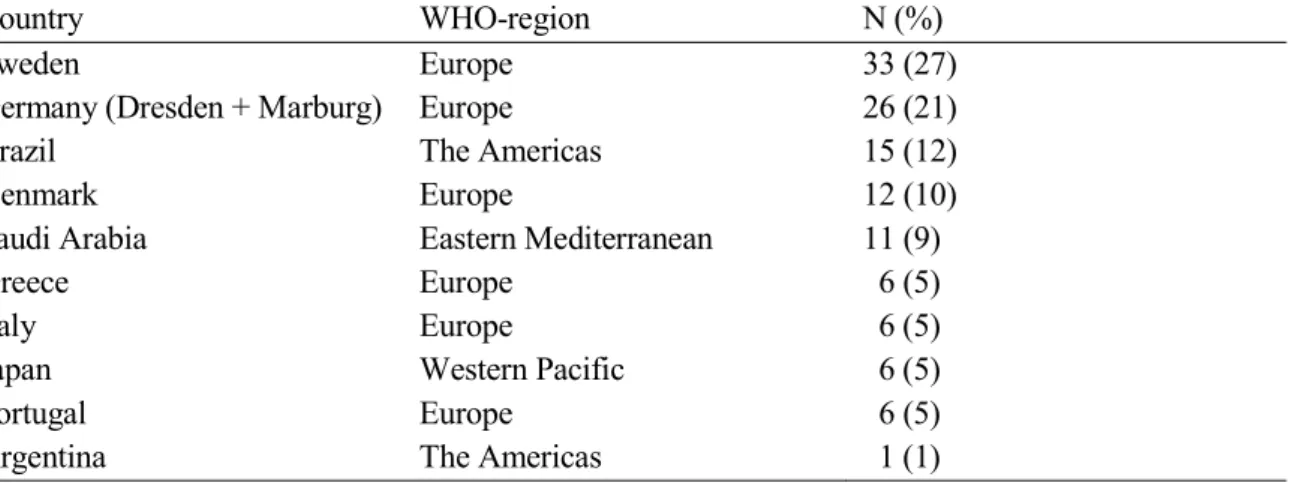
structures. Study IV (ASD) comprised 122 cases from ten countries and four WHO-regions (i.e. Eastern Mediterranean, Europe, The Americas, Western Pacific), generating 139 ICF categories (64 activities and participation; 40 body functions; 35 environmental factors), 148 personal factors (e.g. personal attitudes, personality traits, mental factors) and 3 ASD-related strengths (e.g. memory, attention). Categories were from all chapters in the activities and participation and environmental factors component. Most body functions were mental functions, but still this study identified broader aspects of body functions compared to study II, including reproductive and voice and speech functions. This study did not cover any body structures, unlike study II, which included 3 body structures.
The large variety of activities and participation categories identified in the different
preparatory studies attest to the complexity of ADHD and ASD and the necessity of having a functioning-oriented perspective on well-being and health. Interestingly, certain areas of activities and participation, which are not extensively covered in research or clinical practice, were highlighted as important areas to explore, such as participation in community and civic life, domestic life, self-care and mobility (i.e. using transportation). The chapter coverage of environmental factors was similar to activities and participation, regardless of study and diagnosis, which shows that factors in the environment are vital to assess in order to
understand and optimize individual functioning in daily practice. Given that ADHD and ASD are complex diagnoses with heterogeneous impact on well-being and functioning, it is not surprising that different aspects of the environment are highlighted as important determinants of individual health. Body functions comprised mainly of mental functions, but findings suggest other areas of the body to be affected in ADHD and ASD, hence emphasizing an interdisciplinary service and assessment approach. Although not coded in the ICF, the preparatory studies showed that personal factors could add additional information on functioning which may be essential to intervention planning or goal-setting.
In the future, tools will be derived from the ICF-CS for ADHD and ASD and implemented in different settings (e.g. clinics, schools, social services) that play major part in the lives of individuals with ADHD and ASD. The categories in the ICF-CS need to be operationalized into useful items which users (e.g. clinicians, clients, caregivers) can rate with ease and clarity. Users should also be free to add missing ICF categories or add information on strengths, personal factors or other contextual factors which may be pivotal to their everyday life functioning. Qualitative and quantitative outcome measures need to be used to evaluate usefulness of the items as well as administration. Future studies should investigate
psychometric properties of ICF-CS based assessment tools and explore how the different ICF components and categories may relate to each other.
SCIENTIFIC PAPERS INCLUDED IN THE THESIS
I. Mahdi, S., Viljoen, M., Massuti, R., Selb, M., Almodayfer, O., Karande, S.,
de Vries, P., Rohde, L., Bölte, S. (2017). An international qualitative study of ability and disability in ADHD using the WHO-ICF framework. European Child & Adolescent Psychiatry, 26, 1219-1231.
II. Mahdi, S., Viljoen, M., Yee, T., Selb, M., Singhal, N., Almodayfer, O.,
Granlund, M., de Vries, P., Zwaigenbaum, L., Bölte, S. (2018). An international qualitative study of functioning in autism spectrum disorder using the World Health Organization International Classification of Functioning, Disability and Health Framework. Autism Research, 11, 463-475.
III. Mahdi, S., Ronzano, N., Knüppel, A., Dias, J.C., Albdah, A., Chien-Ho, L., Almodayfer, O., Bluschke, A., Karande, S., Huang, H-L., Christiansen, H., Granlund, M., de Vries, P., Coghill, D., Tannock, R., Rohde, L., Bölte, S. (2018). An international clinical study of ability and disability in ADHD using the WHO-ICF framework. European Child & Adolescent Psychiatry, 27, 1305-1319.
IV. Mahdi, S., Albertowski, K., Almodayfer, O., Arsenopoulou, V., Carucci, S.,
Dias, J.C., Khalil, M., Knüppel, A., Langmann, A., Lauritsen, M.B.,
Rodrigues da Cunha, G., Uchiyama, T., Wolff, N., Selb, M., Granlund, M., de Vries, P., Zwaigenbaum, L., Bölte, S. (2018). An international clinical study of ability and disability in autism spectrum disorder using the WHO-ICF framework. Journal of Autism and Developmental Disorders, 48, 2148-2163.
SCIENTIFIC PAPERS NOT INCLUDED IN THE THESIS
I. de Schipper, E., Mahdi, S., Coghill, D., de Vries, P.J., Shur-Fen Gau, S.,Granlund, M., Holtmann, M., Karande, S., Levy, F., Almodayfer, O., Rohde, L., Tannock, R., Bölte, S. (2015). Towards an ICF core set for ADHD: a worldwide expert survey on ability and disability. European Child & Adolescent Psychiatry, 24, 1509-1521.
II. de Schipper, E., Mahdi, S., de Vries, P., Granlund, M., Holtmann, M., Karande, S., Almodayfer, O., Shulman, C., Tonge, B., Wong, V.C.N., Zwaigenbaum, L., Bölte, S. (2016). Functioning and Disability in Autism Spectrum Disorder: A Worldwide Survey of Experts. Autism Research, 9, 959-969.
III. Bölte, S., Mahdi, S., Coghill, D., Gau, S.S., Granlund, M., Holtmann, M., Karande, S., Levy, F., Rohde, L.A., Segerer, W., de Vries, P.J., Selb, M. (2018). Standardised assessment of functioning in ADHD: Consensus on the ICF Core Sets for ADHD. European Child & Adolescent Psychiatry, 27, 1261-1281.
IV. Bölte, S., Mahdi, S., de Vries, P.J., Granlund, M., Robison, J.E., Shulman, C., Swedo, S., Tonge, B., Wong, V., Zwaigenbaum, L., Segerer, W., Selb, M. (2019). The Gestalt of Functioning in Autism Spectrum Disorder: Results of the International Conference to Develop Final Consensus International Classification of Functioning, Disability and Health Core Sets. Autism, 23, 449-467.
V. Schiariti, V., Mahdi, S., Bölte, S. (2018). International Classification of Functioning, Disability and Health Core Sets for cerebral palsy, autism spectrum disorder, and attention-deficit-hyperactivity disorder.
Developmental Medicine & Child Neurology, 60, 933-941.
VI. Viljoen, M., Mahdi, S., Griessel, D., Bölte, S., de Vries, P.J. (2019).
Parent/caregiver perspectives of functioning in autism spectrum disorders: A comparative study in Sweden and South Africa. Autism, [Epub ahead of print], doi: 10.1177/1362361319829868.
CONTENTS
1 INTRODUCTION ... 1
1.1 Models and conceptualizations of health ... 1
1.1.1 Medical model ... 1
1.1.2 Social model ... 2
1.1.3 Biopsychosocial model ... 4
1.2 Neurodevelopmental disorders ... 7
1.3 Attention-Deficit/Hyperactivity Disorder and Autism Spectrum Disorder ... 7
1.3.1 Diagnostic criteria ... 7
1.3.2 Prevalence ... 9
1.3.3 Etiology ... 10
1.3.4 Interventions ... 11
1.3.5 Impact on individual health ... 12
1.4 Clinical guidelines and assessment of ADHD and ASD ... 15
1.4.1 Clinical guidelines ... 15
1.4.2 Clinical assessment ... 16
1.4.3 Limitations in clinical assessment of ADHD and ASD ... 17
1.5 International Classification of Functioning, Disability and Health ... 19
1.5.1 History and framework ... 19
1.5.2 Application areas ... 21
1.5.3 Challenges with the ICF... 23
1.6 Development of ICF Core Sets ... 25
1.7 Summary and conclusions ... 26
2 AIMS AND RATIONALE ... 29
2.1 Study I and II ... 29
2.2 Study III and IV ... 29
3 METHODS ... 31
3.1 General considerations ... 31
3.2 Ethical considerations ... 32
3.3 Design and procedure ... 33
3.3.1 Study I and II ... 33
3.3.2 Study III and IV ... 35
3.4 Participants ... 36
3.4.1 Study I and II ... 36
3.4.2 Study III and IV ... 41
3.5 Material ... 44
3.5.1 Study I and II ... 44
3.5.2 Study III and IV ... 45
3.6 Data analysis ... 47
3.6.1 Study I and II ... 47
3.6.2 Study III and IV ... 51
4.1 Study I ... 51
4.1.1 Activities and participation ... 52
4.1.2 Environmental factors ... 53
4.1.3 Body functions and structures ... 55
4.1.4 Personal factors ... 56
4.1.5 ADHD-related strengths ... 57
4.2 Study II ... 57
4.2.1 Activities and participation ... 58
4.2.2 Environmental factors ... 60
4.2.3 Body functions and structures ... 62
4.2.4 Personal factors ... 63
4.2.5 ASD-related strengths ... 64
4.3 Study III ... 64
4.3.1 Activities and participation ... 64
4.3.2 Environmental factors ... 66
4.3.3 Body functions ... 68
4.3.4 Personal factors ... 70
4.3.5 ADHD-related strengths ... 71
4.4 Study IV ... 72
4.4.1 Activities and participation ... 72
4.4.2 Environmental factors ... 74 4.4.3 Body functions ... 76 4.4.4 Personal factors ... 78 4.4.5 ASD-related strengths ... 78 5 DISCUSSION ... 79 5.1 Study I ... 79
5.1.1 Activities and participation ... 79
5.1.2 Environmental factors ... 80
5.1.3 Body functions ... 81
5.1.4 Personal factors and ADHD-related strengths ... 81
5.2 Study II ... 82
5.2.1 Activities and participation ... 82
5.2.2 Environmental factors ... 83
5.2.3 Body functions ... 83
5.2.4 Personal factors and ASD-related strengths ... 84
5.3 Study III ... 84
5.3.1 Activities and participation ... 85
5.3.2 Environmental factors ... 85
5.3.3 Body functions ... 86
5.3.4 Personal factors and ADHD-related strengths ... 86
5.4 Study IV ... 87
5.4.2 Environmental factors ... 88
5.4.3 Body functions ... 89
5.4.4 Personal factors and ASD-related strengths ... 90
5.5 Limitations and considerations ... 90
6 CONCLUSIONS AND FUTURE DIRECTIONS ... 92
7 ACKNOWLEDGEMENTS ... 97
LIST OF ABBREVIATIONS
ABAS-2 Adaptive Behavior Assessment System -second edition ADHD Attention-Deficit/Hyperactivity Disorder
ADI-R Autism Diagnostic Interview -Revised
ADOS-2 Autism Diagnostic Observation Schedule -second edition ASD Autism Spectrum Disorder
BRIEF Behavior Rating Inventory of Executive Function Brief ICF-CS Brief ICF Core Set
CBT Cognitive Behavioral Therapy C-GAS Children’s Global Assessment Scale Comprehensive
ICF-CS
Comprehensive ICF Core Set
CPT-3 The Conners Continuous Performance Test -third edition CRF Case record form
CRPD Convention on the Rights of Persons with Disabilities CSI-SY
D-KEFS
The Communication Supports Inventory -Children & Youth Delis-Kaplan Executive Function System
DSM-5 Diagnostic and Statistical Manual of Mental Disorders -fifth edition
GAF Global Assessment of Functioning GI-issues Gastrointestinal issues
ICD International Statistical Classification of Diseases and Related Health Problems
ICF International Classification of Functioning, Disability and Health
ICF-CS ICF Core Sets
ICF-CY International Classification of Functioning, Disability and Health -Children & Youth Version
ICIDH International Classification of Impairments, Disabilities and Handicaps
ILCD International List of Causes of Death NDD Neurodevelopmental disorders
NRS Numeric Rating Scale
PDD-NOS Pervasive Developmental Disorder -Not Otherwise Specified QoL
SC
Quality of Life Steering Committee
SNRI Serotonin-norepinephrine reuptake inhibitors SRS Social Responsiveness Scale
UPIAS Union of the Physically Impaired Against Segregation VABS Vineland Adaptive Behavior Scale
WHO World Health Organization
WHODAS 2.0 World Health Organization Disability Assessment Schedule 2 WISC-V Wechsler Intelligence Scale for Children -fifth edition
ABOUT THIS THESIS
This thesis is part of an overarching effort to develop International Classification of Functioning, Disability and Health (ICF) Core Sets for Attention-Deficit/Hyperactivity Disorder (ADHD) and Autism Spectrum Disorder (ASD) to tailor and standardize individual assessment of functioning and disability. As part of this development procedure, two cross-cultural studies were conducted to investigate different stakeholders’ perspectives on relevant aspects of functioning and disability in ADHD and ASD as operationalized by the ICF. Given that the studies were conducted separately for ADHD and ASD, this thesis consists of four scientific papers. Study I-II aimed to explore the opinions of diagnosed clients with ADHD and ASD, caregivers and professionals on important aspects of functioning and disability in ADHD and ASD. Study III-IV aimed to investigate the clinical perspective on ADHD and ASD by applying a multicenter, cross-sectional design that involved clinical researchers rating the functioning level of individuals with ADHD and ASD. The structure of the thesis is as follows:
Chapter 1 provides an introduction to the thesis with information about different
conceptualizations and models of health. This part is followed by a section about
neurodevelopmental disorders (NDD), specifically ADHD and ASD, and their impact on functioning and quality of life. Limitations in clinical guidelines and assessment of ADHD and ASD are discussed, with emphasis on the lack of a unifying framework or classification system that enables assessment of individual health beyond the boundaries of
psychopathology or impairments. The introduction part is then concluded by a section about the ICF, its background, rationale, framework and application areas. Challenges with
applying the ICF are discussed, including the need for shorter versions of ICF (i.e. ICF Core Sets) that allows users to capture relevant aspects of functional health for specific diagnoses, in this case ADHD and ASD.
Chapter 2 describes the aims and rationale of the thesis.
Chapter 3 describes the method section, namely ethical considerations, study design,
procedure, participants, material and data analysis.
Chapter 4 describes the results of the different studies, with information about second-level
ICF categories that were identified across various components and chapters. Recurring personal factors are also summarized here along with results on ADHD and ASD-related strengths.
Chapter 5 discusses the findings from the different studies, relating them to previous
research as well as mentioning the implications they may have for daily practice. Study limitations and considerations are also discussed here.
Chapter 6 provides the conclusions of the thesis as well as future directions with the project,
focusing on deriving user-friendly assessment tools from the ICF Core Sets for ADHD and ASD and implementing these in daily practice.
1 INTRODUCTION
1.1 MODELS AND CONCEPTUALIZATIONS OF HEALTH
The concept of health has evolved over time, much due to improved living standards and advances in medical treatment that have enabled individuals with illnesses to not only survive for a longer period of time, but also actively participate in society (Jetté et al. 2010). This development makes the assessment of non-fatal outcomes, such as individual functioning and quality of life, vital in daily practice, particularly in mental health, as some conditions may be stable over time and interfere with daily life activities and involvement in society. Hence, the definition of health as “merely absence of disease or illness” is insufficient, as evidenced by the World Health Organization’s (WHO) decision in 1948 to adopt a holistic definition which viewed health in a broader manner, encompassing other vital dimensions, including physical, mental and social well-being as important determinants of health (WHO, 2014). In 1984, the WHO further elaborated on this issue when individual aspirations and satisfaction of needs, as well as ability to cope with the environment were added as essential components in the conceptualization of health (WHO, 1984). Based on the actions undertaken by the WHO, one can conclude that assessments of health must take into account all aspects of life and not merely focus on morbidities or illnesses. Throughout history, various models have been introduced to explain health and disability, with enormous implications for healthcare providers and society as a whole.
1.1.1 Medical model
The medical model, which has traditionally been used to explain and treat disorders in
psychiatry, posits that symptom complaints have biological causes that can be remedied using medical treatment to restore deviations in body processes and structures (Deacon, 2013). The model emerged as a popular framework in the middle of 20th century, in part due to
pharmacological interventions successfully reducing symptoms of various psychiatric
disorders. The success further cemented the role of the medical model in explaining disability and health and etiological theories of chemical imbalances in mental disorders soon followed, challenging the old paradigm which viewed mental disorders as outcome of poor parenting. The biological perspective was intended to decrease stigmatization by viewing patients as innocent victims of brain aberrations that produced specific symptoms. The patient was expected to be passive recipient of treatment, meaning that medical doctors had an active role in deciding how treatment should be administered. The medical model has been highly influential in assessment, service provision and resource allocation for people with psychiatric disorders. Current diagnostic procedure includes for instance using different assessment tools to identify core behavioral domains of disorders and many service providers follow a disorder-specific approach with separate services for people with physical
disabilities and mental health problems (BUP SLL, 2015; Wade & Halligan, 2004). Moreover, funding is still in some societies determined by guidelines that involve meeting criteria for specific diagnoses (Wade & Halligan, 2017).
Although the medical model has vastly improved our knowledge and understanding of neural mechanisms underlying specific psychiatric disorders, it has been criticized on numerous accounts. Firstly, the medical model emphasizes the biological aspect of health (i.e. psychopathology), thus leading to interventions mainly focused on reducing symptoms through usage of medication (Deacon, 2013), which can be particularly problematic in certain conditions where medication is not listed as evidence-based treatment option (DeFilippis & Wagner-Dineen, 2016; Hsia et al. 2014; LeClerc & Easley, 2015). Another criticism relates to the medical model focusing too much on modifying individual traits rather than changing the environment to better fit individual needs of people with disabilities (Deacon, 2013). It is a well-known fact that facilitators in the environment (e.g. parental commitment, accepting attitudes) can positively influence individual outcome, whereas barriers (e.g. limited accessibility to evidence-based programs, negative attitudes) can reduce functioning status (Kirby, Baranek & Fox, 2016; Lebowitz, 2016). Finally, the medical model has been
criticized for not sufficiently addressing individual experiences and feelings of health (Engel, 1977), which makes the assessment of other health-related dimensions, such as functioning and quality of life, difficult to measure. Limited understanding about individual functioning in everyday life is particularly problematic in mental health conditions, as there is a
substantial individual variation in how strengths and difficulties are presented in real life (Masi, DeMayo, Glozier & Guastella, 2017), hence making it almost impossible to design interventions that are in line with individual needs. The shortcomings of the medical model have therefore prompted researchers to propose other types of models to explain disability and health.
1.1.2 Social model
The social model emerged in the 1970s in the United Kingdom when the Union of the Physically Impaired Against Segregation (UPIAS) published a document arguing for a shift in how disability and health is defined (UPIAS, 1976). Unlike the medical model, this model breaks the link between impairment and disability, emphasizing the social aspect of health, meaning that disability is not caused by impairments in the body but rather barriers in society that limit opportunities for individuals to participate in mainstream social, educational and occupational activities (Oliver & Barnes, 2010). Although the social model recognizes the reality of impairments, it views disability as outcome of hindering environmental factors, ranging from stigmatizing cultural and social attitudes to lack of accessibility in programs, services and policies. Consequently, solutions should not target the individual but rather the society, and improvement should be considered as change in political and social action instead of change in physical body (Bingham, Clarke, Michielsens & Van De Meer, 2013). The social model of disability has inspired number of laws and regulations that endorse implementation of social change to enhance participation. These include the United Nations’ Convention on the Rights of Persons with Disabilities (CRPD) (2006) and the Salamanca Statement and Framework for Action on Special needs (1994), which emphasize inclusive-oriented approaches as the most effective means to achieve education and employment for all people. On national level, the Swedish Parliament decided in 1993 on the Swedish Act
concerning Support and Service for Persons with Certain Functional Impairment to ensure that individuals with extensive and permanent functional impairments are guaranteed special support related to domestic life, occupation and self-care. A couple of years later, the
Swedish Mobility Service Act (1997) came into force, allowing individuals with impairments to use alternative transportation means (i.e. taxi) to carry out daily errands. Similar
developments have taken place in other countries as well, including Australia (Disability Discrimination Act 1992), Hong Kong (Disability Discrimination Ordinance of 1995), South Africa (Promotion of Equality and Prevention of Unfair Discrimination Act, 2000), the United Kingdom (Disability Discrimination Act 1995; now repealed and replaced by Equality Act 2010) and the United States (Americans with Disabilities Act of 1990), among others. Besides international policies and regulations, the social model has also played a role in creation of disability rights movements who adhere to the notion of removing environmental barriers to meet individual needs of people with disabilities (Oliver, 2013). One of the most influential movements is the autism rights movement which advocates for a neurodiversity perspective, encouraging individuals, caregivers and other members in society to accept autism as a variation in functioning rather than a mental disorder (Robertson & Ne’eman, 2008). Additional goals include working for greater acceptance of autistic behaviors and creation of social networks that would allow individuals to socialize on their own terms. While a growing number of countries and organizations have laid the foundation for meaningful change, there is still a long way to go with regards to how inclusive-oriented programs and systems are interpreted and implemented (Pellicano, Bölte & Stahmer, 2018). A survey conducted in Sweden, which included almost 4800 school-based personnel, revealed that only 6 % of the participants felt that they were prepared to educate pupils with neurodevelopmental disorders (Bartonek, Borg, Berggren & Bölte, 2018). Remarkably, 14 % indicated they had formal education in teaching pupils diagnosed with neurodevelopmental disorders. The lack of staff understanding and recognition of needs in diagnosed pupils has previously been documented in other studies with serious consequences, including social isolation, exclusion from school-related activities and expulsion (Atkinson, 2013; Brede, Remington, Kenny, Warren & Pellicano, 2017; Roberts & Simpson, 2016). In another study, results showed that many interventions for individuals with neurodevelopmental disorders focused on impairment and modification of individual traits (e.g. teaching people problem-solving skills) rather than being the intervention itself (e.g. using headphones to protect from noisy environment) (Scott et al. 2018). The findings here attest to the discrepancy that exists between what is enforced by national laws and how it is implemented in real life. The reasons for this discrepancy are complex, but some suggest that the term inclusion is vague and that there are no clear guidelines for how inclusion should be implemented in daily practice (Pellicano et al. 2018). Others criticize the social model for separating impairments from disability (Haegele & Hodge, 2016; Shakespeare, 2010), stating that it would be nearly impossible to understand how changes in the environment should be implemented without accounting for how impairments may influence individual health. Additional criticisms include the social model’s implicit emphasis on achieving a “barrier-free utopia” with all
sorts of barriers removed, which is not plausible in real life, given that some environmental elements may be difficult or even impossible to adapt (e.g. adapting a mountain to fit the need of someone who is in a wheelchair) (Shakespeare, 2010). Finally, the social model has been criticized for not taking into account individual differences that may exist between people with disabilities (Haegele & Hodge, 2016; Shakespeare, 2010). For example, people with different impairments may require solutions that differ from one another. A blind person may for instance prefer steps and defined curbs, whereas someone in a wheelchair may rather use ramps and smooth surfaces.
1.1.3 Biopsychosocial model
In 1977, the American psychiatrist George L. Engel proposed a biopsychosocial model to understand health outcome. He criticized the medical model’s overreliance on explaining health from a biological standpoint and highlighted the need for complementary information that accounted for individual experiences of health as well as social influences (Engel, 1977). However, unlike the social model, Engel acknowledged the importance of biological
impairments and defined the development of health as a series of complex interaction involving biological, psychological and social factors along a continuum of natural systems (Engel, 1980). The natural system is organized into different levels of complexity, with larger units that are superordinate to less complex and smaller units. Each unit has a distinctive property and characteristic that justifies its position in the hierarchy. For example, cells are smaller units to tissues, which in turn is an inferior system to organs. Lowest in the hierarchy is systems related to biological factors, encompassing smaller (i.e. molecules, organelles, cells) and larger biological units (i.e. tissues, organs, nervous system). The individual, which is made up of human experiences and behaviors, is considered to be in the highest level of organismic hierarchy, while at the same time constituting the smallest unit in the social hierarchy, meaning that each system can be both a whole or part of a larger system. The social hierarchy consists of the environment, which is organized into different levels of systems based on complexity, starting with two people (i.e. family member, friend,
professional caregiver), family (i.e. nuclear, extended) and community (i.e. healthcare, work, residential setting, neighborhood) to higher levels of complexity such as culture/subculture (i.e. norms, values), society/nation (i.e. economic, political forces) and biosphere. Even though lower levels of systems are necessary for higher ones to exist, they are not sufficient enough to explain or understand their nature without accounting for superior systems. A patient can for instance be described in terms of certain characteristics (e.g. sex, age, marital status, occupation, residence etc.) that identify other systems of which the patient is part of (e.g. family, community, culture). In other words, nothing exists in isolation and all systems interact with one another. Therefore, it is vital that healthcare providers address all aspects of an individual’s life in order to understand the totality of individual health experiences.
The biopsychosocial model has received wide attention around the world, as evidenced by the WHO’s adoption of the model as framework to appraise and document health-related
practice, the model has mainly gained prominence in services related to chronic pain, rehabilitation and habilitation (Wade & Halligan, 2017). The latter is usually made up of interdisciplinary teams that aim to provide interventions that target participation in various life areas, emphasizing close collaboration with the client and social environment (Adolfsson, Granlund, Björck-Åkesson, Ibragimova & Pless, 2010). Notwithstanding the growing trend of the biopsychosocial model, the implementation of the framework in everyday practice is still limited. In healthcare administration systems, diagnoses and core symptoms are routinely documented (Wade & Halligan, 2017), even though these are too futile to be useful for
intervention planning and calculation of health-related costs. It’s important, however, to stress that a transition from an old paradigm to a new one takes time and effort. Collaboration across professional boundaries requires trust and sharing, as well as consensus on how to proceed and understand a certain situation from a biopsychosocial perspective. Evidently, this could be facilitated by a framework or classification system that uses a common language that would allow various professionals to communicate information with ease and clarity. The absence of such framework could therefore be a barrier. Other critics state that the biopsychosocial model is too broad (Ghaemi, 2009) and that the exact mechanisms involved in the interaction between the various factors included in the model, especially the human-environment interaction, are not clearly defined (Batorowicz, King, Mishra & Missiuna, 2015).
1.1.3.1 Bronfenbrenner’s ecological systems theory
The ecological systems theory was formulated in 1979 by psychologist Urie Bronfenbrenner to explain how different aspects of the environment may influence the development of an individual. Bronfenbrenner argued that influences of the environment can be divided into different levels of systems (Bronfenbrenner, 1994), from proximal to distal, namely
microsystem, mesosystem, exosystem, macrosystem and chronosystem. Microsystem is the most proximal setting and refers to the immediate environment of the individual, which includes people that the individual interacts with on daily basis (e.g. peers, parents, teachers), physical settings (e.g. school, work, home) and objects/products (e.g. food, toys, computer). How these factors interact with the individual will impact growth and development; the more resources, nurture and support are provided, the better the prerequisites for favorable
outcome. Next level is mesosystem, which touches upon the interaction between the various factors within the microsystem (e.g. teacher-parent interaction, relationship between the parents). Although the individual is not directly involved here, conflicts in the various support groups may nevertheless jeopardize the emotional growth of the individual. The exosystem represents resources or infrastructure that are included in the wider environment of the individual. Examples include services and policies offered by various authorities (e.g. social services, healthcare, employment agency, etc.). The availability of these factors could have a profound impact on the individual, either positively (e.g. availability of supported
employment for individuals with disabilities) or negatively (e.g. lack of services to meet needs of individuals with disabilities). The macrosystem is the most distal level and describes the norms, values and culture in which the individual lives. Chronosystem adds the
dimension of time, reflecting the influences of proximal (e.g. change in family structure or residence) and societal changes (e.g. economic cycles, natural disasters, wars).
Bronfenbrenner remarked that the different systems interact with one another. For example, certain stigmas in society (macrosystem) may influence availability of specific services and policies (exosystem), which in turn could impact the lives of family members and the individual in question.
Later in life, Bronfenbrenner made some revisions in the ecological systems theory to emphasize bidirectional influences between individuals and their environment
(Bronfenbrenner, 2005; Bronfenbrenner & Evans, 2000; Bronfenbrenner & Morris, 1998). Specifically, human development is shaped through the processes of reciprocal interactions that take place between an active individual and his or her immediate environment. Such interaction is called proximal process, which must occur frequently over an extended period of time in order to facilitate positive outcome in development. Positive outcome is defined as acquisition and further advancement of skill sets, knowledge and ability to manage behaviors, whereas negative development is characterized by recurring difficulties to control and
integrate behaviors across different life domains (Bronfenbrenner & Evans, 2000). Proximal processes are influenced by individual characteristics and qualities of the environmental setting, which includes both immediate and remote contexts (as described in the ecological systems theory), as well as time (Bronfenbrenner, 2005). Bronfenbrenner identified three individual characteristics to be crucial in influencing proximal processes across the lifespan, namely demand (i.e. age, gender, physical appearance), resource (i.e. past experiences, intelligence, skill sets) and force (i.e. motivation, persistence, temperament). Thus,
individuals may have equal access to environmental support, but still differ in developmental course, as they may vary in demand, resource and force characteristics. Time is defined according to three levels, namely microtime, mesotime and macrotime. Microtime describes continuity and discontinuity in ongoing episodes of proximal process (i.e. what is happening during the proximal process), whereas mesotime touches upon the extent to which these reciprocal interactions occur within days, weeks and years (i.e. duration, frequency).
Macrotime represents changes in expectations and events in the larger society and how these may impact proximal processes. Newer models, such as the integrated model of social environment and social context, has further elaborated on the theoretical foundations laid by Bronfenbrenner, reinforcing the importance of individual experiences in the
human-environment interaction and adding the element of transaction (Batorowicz et al. 2015). Transaction in this case refers to individuals, who by own choices, active engagement and collaboration in various settings, affect their social environment. The effect can either increase or decrease the usual activity of the individual, alternatively elicit or initiate a new response. The contributions of these models can help researchers and practitioners to better understand the complexity of how individuals are linked with the environment, and as such facilitate better health outcome for individuals with disabilities.
1.2 NEURODEVELOPMENTAL DISORDERS
Neurodevelopmental disorders (NDD), with an estimated prevalence of 10-15 % in the general population (Boyle et al. 2011), are a group of brain-based conditions that share certain commonalities that are distinguished from other types of psychiatric conditions. Indeed, unlike the remitting and relapsing pattern of symptoms that are prominent in many mood and anxiety disorders after puberty, NDD typically onset in early childhood, usually before puberty, with life-long patterns of neurocognitive symptoms (i.e. global intelligence, social cognition, psychomotor functions, attention, memory) that tend to persist into
adulthood, despite being subjected to maturational changes (Thapar, Cooper & Rutter, 2017). NDD are usually more common in males and there is a high heritability, albeit these are typically multi-factorial in origin with no distinct biological marker or pathway that separates the conditions. The conditions are instead categorized into discrete diagnostic entities based on their clinical presentation, which can be a bit challenging, given that there is a high overlap between the various types of NDD (Matson & Shoemaker, 2009; Rosen, Mazefsky, Vasa & Lerner, 2018). The latter, however, supports the rationale for grouping these
conditions into one larger entity. It’s important to note that the clinical presentation of NDD can vary considerably from one individual to another, which is why assessment and treatment of NDD usually require multiple specialists (i.e. psychologists, psychiatrists, pediatricians, occupational therapists, speech pathologists) across different agencies (i.e. psychiatry, habilitation, rehabilitation, education). Today, there is a wide consensus among researchers and experts that NDD are not curable and should therefore be viewed as extreme ends of variations in functioning (Bölte, 2014; McLennan, 2016). This shift in how NDD is
conceptualized makes non-morbid outcomes, such as functioning, participation, well-being and quality of life, vital components to address in order to understand health experiences of individuals with NDD.
1.3 ATTENTION-DEFICIT/HYPERACTIVITY DISORDER AND AUTISM SPECTRUM DISORDER
1.3.1 Diagnostic criteria
Attention-Deficit/Hyperactivity Disorder (ADHD) and Autism Spectrum Disorder (ASD) are two conditions that are part of the NDD group. ADHD is composed of the core symptoms “inattention, impulsivity and hyperactivity”, whereas ASD is characterized by “deficits in social communication and interaction, alongside repetitive, restricted behavior patterns and interests” (APA, 2013, p. 31-32). The recent release of Diagnostic Statistical Manual of Mental Disorders -fifth Edition (DSM-5) marked a couple of modifications in how ADHD and ASD are diagnosed compared to previous versions of DSM. In ADHD, the number of symptoms required for a diagnosis in adulthood has been reduced from six to five, and the onset of symptoms and impairments have changed from <7 years of age to onset before age 12. Furthermore, the term subtypes have been replaced with a new system that encompasses rating the severity of core symptoms and accompanying impairments according to a three-point scale (i.e. mild, moderate and severe). Additional changes include removing ASD as an
exclusionary diagnosis and requiring functional impairments to reduce the quality of social, occupational and academic functioning. When it comes to ASD, one umbrella diagnosis, Autism Spectrum Disorder (ASD), was conceptualized in DSM-5, replacing the previous version which divided ASD into three different subtypes, namely Autistic Disorder (i.e. nonverbal children or children who showed delay in language development), Asperger’s syndrome (i.e. higher functioning individuals with no substantial delay in language
development) and Pervasive Developmental Disorder-Not Otherwise Specified (PDD-NOS; i.e. individuals who had atypical/subthreshold symptomatology or late onset of symptoms, or all of these). The DSM-5 also merged social reciprocity and communication into one entity. Another key difference is related to onset of symptoms, with DSM-5 removing the age specification by acknowledging that symptoms might not fully be recognized until social demands exceed capacity. Furthermore, the DSM-5 requires functional impairment to be present in social, occupational, or other areas of life. Moreover, the DSM-5 requires professionals to specify severity level of behavioral symptoms according to a three-point scale, hence marking a paradigm shift towards a more dimensional perspective on ASD. A new diagnosis was introduced in DSM-5 (i.e. social communication disorder) to capture individuals who met the criteria of social communication and interaction difficulties, but not repetitive, restricted behavior patterns. The DSM-5 also stressed the importance of examining sensory sensitivity in ASD by including it as part of the core symptom criterion repetitive, restricted behavior patterns and interests.
While the DSM is used as reference tool for diagnosing psychiatric conditions in North America, the International Statistical Classification of Diseases and Related Health Problems (ICD) is widely used in Europe (WHO, 1992; WHO, 2018). In 2018, the ICD-11 was
published, which introduced certain revisions to ADHD and ASD. For example, the term ADHD was used in the ICD-11 for the first time, replacing the former term hyperkinetic disorder. The exclusion criteria for ADHD in ICD-11 were also modified, using less strict rules to diagnose ADHD by removing mood and anxiety disorders as well as schizophrenia as exclusionary diagnoses. In the previous version of ICD, the age of onset of ADHD was explicitly mentioned to be before age of 6, whereas the current version does not specify the exact age, but instead states that the onset should happen somewhere during the
developmental period, between early to mid-childhood. Finally, the ICD-11 emphasizes functioning impact as an important criterion for ADHD, stressing that symptoms must cause significant disruptions in functioning across academic, occupational, or social life. Regarding ASD, the ICD-11 has followed a similar path as DSM-5, clustering the different subtypes of ASD (i.e. Autistic disorder, Asperger’s syndrome etc.) into one larger entity (i.e. Autism Spectrum Disorder). Unlike its predecessor ICD-10, language problem has been removed as separate criterion for ASD, leaving two core symptom criteria to assess, much like the DSM-5. Furthermore, the ICD-11 has removed the age specification for onset of symptoms in ASD, recognizing that symptoms may be manifested at later stage in childhood when social
demands exceed limited capacities. Functioning impact is also acknowledged in ICD-11. Although the DSM-5 and ICD-11 share many similarities with regards to diagnostic
assessment of ADHD and ASD, they still differ in a number of ways. Firstly, ASD is
regarded as an exclusionary diagnosis for ADHD in ICD-11, which is not the case in DSM-5. Secondly, ICD-11 provides detailed guidelines for distinguishing autism with and without intellectual disability, contrary to DSM-5, which only remarks that these two conditions can co-occur.
1.3.2 Prevalence
The prevalence of ADHD and ASD varies considerably. In 2007, a systematic review estimated the worldwide prevalence for ADHD to be 5 % in children and adolescents (Polanczyk, de Lima, Horta, Biederman & Rohde, 2007). In 2012, a new review was
published, which found the prevalence rate of ADHD in children and adolescents (<18 years of age) to range from 6 to 7 % (Willcutt, 2012), followed by another review which showed a slightly higher prevalence rate of 7.2 % (Thomas, Sanders, Doust, Beller & Glasziou, 2015). The increase in ADHD diagnosis is well-documented, as evidenced by a Swedish study which found the annual prevalence rate of Swedish patients with ADHD to be 1.1 per 1000 persons in 2006, whereas in 2011, the number had reached 4.8 per 1000 persons, with more than fourfold increase (Giacobini, Medin, Ahnemark, Russo & Carlqvist, 2018). Same study found the prevalence rate of newly diagnosed patients with ADHD increasing from 0.6 per 1000 individuals in 2007 to 1.3 in 2011. In a recent report from 2016, it was estimated that the prevalence rate of children and adolescents with ADHD in Stockholm County was 2 % and 7.7 %, respectively (CES, 2017). The corresponding prevalence rate for adults with ADHD (>18 years of age) was 5.6 %, which is in stark contrast to the lower prevalence rates that have been reported in the past, ranging from 2.5 to 4.4 % (Fayyad et al. 2007; Kessler et al. 2006; Simon, Czobor, Bálint, Mészáros & Bitter, 2009). A similar shift in prevalence rate has also been found in ASD in the past decade, with previous studies estimating the
prevalence rate of ASD in children and adolescents to range between 0.4 to 1 % (Baird et al. 2006; CDC, 2008), differing from more recent reports showing the prevalence rate to almost approach 2 % (CDC, 2016; Idring et al. 2015). Remarkably, a Swedish cohort study found the prevalence rate of children and adolescents with ASD to increase by almost 3.5-fold, from 0.4 % in 2001 to 1.4 % in 2011 (Idring et al. 2015). In 2016, the prevalence rate of children and adolescents diagnosed with ASD in Stockholm County was estimated to be at 1.4 % and 3.1 %, respectively (CES, 2017). A steady increase in ASD diagnosis has also been observed in adults. For instance, Brugha et al. (2011) found the prevalence rate of adults with ASD to be at almost 1 % in 2007, which is significantly lower than the 2.4 % that was reported ten years later in Stockholm County (CES, 2017).
The increase in ADHD and ASD diagnosis can be attributed to multiple factors. One
explanation could be that there is a greater awareness and knowledge of the conditions among different stakeholders in society, hence resulting in better access to healthcare and improved quality care (Rydell, Lundström, Gillberg, Lichtenstein & Larsson, 2018). Another theory could be the usage of more robust diagnostic tools that enable symptoms to be detected earlier (Rice et al. 2013). The increase in diagnosis could also be related to the fact that there
may be greater expectations from society to manage everyday life activities with social demands exceeding one’s own capacity and resources, which may in turn cause individuals to get referred for neuropsychiatric evaluations (Rydell et al. 2018). Other researchers attribute the considerable variation in prevalence rates to studies applying different methodology to assess ADHD and ASD, with some using ICD-criteria, which applies stricter guidelines to diagnose conditions (Polanczyk, Willcutt, Salum, Kieling & Rohde, 2014). Consequently, lower prevalence rates are expected to be found for those specific meta-studies. Furthermore, assessments could vary from studies to studies, with some accounting for impairment of symptoms, whereas others may neglect this, thus resulting in significant higher rates of diagnosis (Rydell et al. 2018). Another hypothesis is that the increase in diagnosis may reflect a true increase in diagnostic traits. However, studies have shown that the prevalence of traits remain stable over time, even though diagnosis of ADHD and ASD has increased
(Lundström, Reichenberg, Anckarsäter, Lichtenstein & Gillberg, 2015; Rydell et al. 2018), which suggests that the increase in diagnosis is rather related to external causes (e.g. changes in diagnostic assessment, greater awareness, etc.).
1.3.3 Etiology
Twin studies estimate high heritability of ADHD (~75 %) across the entire lifespan (Larsson, Chang, D’Onofrio & Lichtenstein, 2014; Schachar, 2014), regardless of whether ADHD is assessed as a disorder (diagnosed vs. non-diagnosed) or as an extreme end of a normal distribution (more or less hyperactive, inattentive and impulsive). Environmental influences are estimated to be low to moderate, but studies show significant correlations between early risk factors (e.g. premature birth, low birth weight, prenatal tobacco exposure) and later development of ADHD symptoms (Froehlich et al. 2009; Galéra et al. 2011; Heinonen et al. 2010). On a neural level, children with ADHD seem to exhibit delay in the peak of cortical thickness maturation, with the greatest delays found in regions related to frontal and temporal structures (Nakao, Radua, Rubia & Mataix-Cols, 2011). Dysfunction in these parts of the brain might therefore underlie the cognitive problems that individuals with ADHD
experience in daily life, e.g. inattention, impulsivity, motor restlessness and motivation deficit (Barkley, 1997). The cortical delays are widely believed to affect specific neurotransmitters in the brain, particularly dopamine, which is known for its role in cognition, motor activity and motivation (Genro, Kieling, Rohde & Hutz, 2010). Some critics, however, question the dopamine hypothesis for not taking into account interindividual differences in ADHD symptoms and functioning level (Sonuga-Barke, 2003). The Sonuga-Barke’s dual-pathway model tries to address this issue by suggesting that there are two separate pathways to ADHD symptoms. The first pathway is characterized by executive dysfunction, positing that
dysfunctional activity pattern in the frontal lobe causes a range of cognitive problems, including inhibition and attention. The second pathway is delay aversion, hypothesizing that deficits in basal ganglia cause individuals with ADHD to be hypersensitive to delay,
experiencing difficulties in waiting for rewards and working effectively over extended time periods. In recent years, a third pathway has been added to the model, namely time delay (Sonuga-Barke, Bitsakou & Thompson, 2010).
Similar to ADHD, ASD is associated with high heritability, with findings supported by twin studies dating back to the 1970s (Folstein & Rutter, 1977). Subsequent twin studies have since replicated previous findings (Lichtenstein, Carlström, Råstam, Gillberg & Anckarsäter, 2010; Ronald & Hoekstra, 2011; Tick, Bolton, Happé, Rutter & Rijsdijk, 2016). However, the assumption of high heritability has recently been questioned, with studies indicating that ASD is a far more complex condition involving both genetic and environmental influences (Hallmayer et al. 2011; Mandy & Lai, 2016). Various psychological models have tried to explain the social challenges associated with ASD. One such model is the “theory of mind”, which posits that individuals with ASD have altered ability to ascribe intents, beliefs and desires to oneself and other people (Baron-Cohen, Leslie & Frith, 1985), and understand that others may have certain convictions, wishes or intentions that differ from oneself. Even though the theory of mind has received some support in research (O’Nions et al. 2014), it does not fully explain other problem areas related to ASD, such as weaknesses in detecting patterns (Frith, 1970), sorting faces by persons (Weeks & Hobson, 1987) and solving jigsaw puzzles by picture (Langdell, 1978). To address these issues, the central coherence theory was developed (Frith & Happé, 1994), hypothesizing that individuals with ASD face problems with sensory integration at different information levels, resulting in limited ability to understand context or to “see the big picture” of events. Recent findings, however, contradict the central coherence theory, leaving the interplay of information processes in ASD only partly understood (Van der Hallen, Evers, Brewaeys, Van den Noortgate & Wagemans, 2015).
1.3.4 Interventions
There is a wide consensus among researchers that there is no cure for ADHD and ASD (Bölte, 2014), even though some studies claim major improvements or even recovery (Fein et al. 2013; Granpeesheh, Tarbox, Dixon, Carr & Herbert, 2009; Lovaas, 1987). These findings must, however, be cautiously interpreted, as they entail several methodological shortcomings that makes it difficult to judge the significance of the results (Bölte, 2014). Methodological shortcomings include lack of comparability of experimental and control groups and using insufficient tools to assess and diagnose the conditions. Moreover, the notion of curing ADHD and ASD or achieving recovery is very unfamiliar among researchers in the field, limiting possibilities of drawing any conclusions on what recovery really entails. Given that NDD are today viewed as extreme ends of traits in a normal distribution rather than group of curable conditions (Bölte, 2014; McLennan, 2016), interventions in ADHD and ASD are primarily focused on ameliorating symptoms and increasing functioning status and quality of life (National Institute for Health and Care Excellence, 2018; Volkmar, Paul, Rogers & Pelphrey, 2014).
Aside from strategies of adapting the environment to the needs of individuals, multimodal treatment is recommended in ADHD (Socialstyrelsen 2014a). Herein, stimulant medications are currently the pharmaceutical treatment of choice in ADHD (Bitter, Angyalosi & Czabor, 2012; Chan, Fogler & Hammerness, 2016; Storebø et al. 2015). The stimulant
methylphenidate acts as a dopamine reuptake inhibitor, increasing the level of the
neurotransmitter in the brain. Atomoxetine, a Serotonin-norepinephrine reuptake inhibitor (SNRI), is another first-choice medication commonly used in the treatment of ADHD (Savill et al. 2015). Besides medication, there are other types of interventions that are offered in ADHD. These include (i) behavior therapy, which aims to selectively reinforce desired behaviors and ignore problem behaviors, (ii) direct skills training, which involves teaching specific skills (e.g. organization, time management) to manage common ADHD-related deficits, (iii) cognitive behavioral therapy (CBT), which consists of identifying negative or automatic thoughts and modifying them through different techniques (e.g. mindfulness), and (iv) neurofeedback training, which aims to enhance specific attentional states based on principles of operant conditioning (Chan et al. 2016; Sibley, Kuriyan, Evans, Waxmonsky & Smith, 2014; Sonuga-Barke et al. 2013). Despite the inconsistent effects of psychosocial interventions on ADHD symptoms, greater improvements in academic and organization skills have been reported.
Contrary to ADHD, to date, there are no available evidence-based pharmacological
interventions for treating ASD core symptoms (DeFilippis & Wagner-Dineen, 2016; Hsia et al. 2014), which has led researchers to shift focus towards non-invasive behavioral
interventions that target different aspects of outcome, ranging from ASD symptoms and cognitive abilities to adaptive behaviors and functioning (Choque-Olsson et al. 2017). Recent reviews of autism interventions, which include intensive behavioral interventions, parent-mediated early interventions and social skills training, found low to moderate efficacy (Gates, Kang & Lerner, 2017; Weston, Hodgekins & Langdon, 2016). The quality of the studies varies quite considerably, indicating a further need for intervention research that can provide more robust conclusions. Indeed, the urgent call for evidence-based interventions has
persuaded the research community to advocate for services that could be offered in different settings to improve functioning level and quality of life of individuals with ASD (Fein, Barton & Dumont-Mathieu, 2017; Fleury et al. 2014; van Schalkwyk & Volkmar, 2017).
1.3.5 Impact on individual health
Based on the WHO’s definition of health as a state which does not only include absence of illness or disease, but also well-being in physical, mental and social domains (WHO, 2014), as well as ability to cope with environmental demands and meet own needs and aspirations (WHO, 1984), one can conclude that the concept of health in ADHD and ASD contains multiple dimensions that touch upon various aspects of health. Psychopathology is one such dimension, exploring symptom complaints and mental impairments in individuals (WHO, 1992). Quality of life (QoL) is another dimension, referring to the subjective perception of health, i.e. how individuals experience their own position in life in relation to their goals, expectations and living standards (WHO, 1997). Functioning is the third dimension, capturing the objective reality of individuals, specifically how individuals are engaging in everyday life situations and performing activities of daily living in relation to environmental
demands (WHO, 2001). Although the dimensions differ from each other conceptually, they interact with one another in real life, influencing overall experiences of health.
1.3.5.1 Psychopathology
Comorbidity in ADHD and ASD is substantial. Using cross-sectional and longitudinal data, Michielsen et al. (2013) found depressive and anxiety symptoms to be persisting in older adults with ADHD, even though respondents reported fewer core symptoms over the years. Similar results have been found in the ASD population as well (Joshi et al. 2013; Salazar et al. 2015). Externalizing behavior problems, such as conduct disorder and oppositional defiant disorder, are also highly prevalent among individuals with ADHD or ASD (Ahmad &
Hinshaw, 2017; Salazar et al. 2015; Simonoff et al. 2008). Intellectual disability is another condition that can be found in the population with NDD (Cervantes & Matson, 2015). In fact, researchers have estimated that as much as 40 % of individuals with intellectual disability also have a diagnosis of ASD (Matson & Shoemaker, 2009). The co-occurrence of ADHD and ASD has not been widely investigated in research, given that previous versions of diagnostic systems regarded ASD as exclusionary diagnosis for ADHD and vice versa. Population-based prevalence, however, indicates that 21-30 % of younger individuals with ASD also have a diagnosis of ADHD (Rosen et al. 2018). Although psychiatric comorbidity in ADHD and ASD is well-documented, the exact mechanisms underlying co-occurring conditions remain unclear. It could for instance be that there is a “true” comorbid condition that requires separate treatment, or that certain symptoms of a condition (e.g. social avoidance in ASD) produce similar symptom presentation reminiscent of another co-occurring condition (e.g. social anxiety). Even though ADHD and ASD are conceptualized as brain-based
conditions, the impact stretches beyond neurocognitive symptoms to influence other body processes. Indeed, plethora of research studies suggest physical impairments to be prevalent in ADHD and ASD (Dufek, Eggleston, Harry & Hickman, 2017; Instanes, Klungsøyr, Halmøy, Fasmer & Haavik, 2018; Lyall, Van de Water, Ashwood & Hertz-Picciotto, 2015; McElhanon, McCracken, Karpen & Sharp, 2014; Niemczyk, Equit, Hoffmann & von Gontard, 2015; Travers, Powell, Klinger & Klinger, 2013), which include motor-related difficulties (e.g. postural instability, gait pattern deviation), gastrointestinal complications (e.g. constipation, incontinence) and immunological deficits (e.g. allergy, asthma). Individual traits of ADHD and ASD have also been found to negatively correlate with QoL (Danckaerts et al. 2010; Mason et al. 2018), although some studies dispute this (de Vries & Geurts, 2015). The relationship between symptom severity and functioning level is not fully established, as evidenced by a longitudinal study conducted by Howlin and colleagues (2013) which showed social inclusion in adults with ASD to remain poor, even though symptoms improved over time. Similar findings have also been discussed in ADHD literature (Simon et al. 2009), leading researchers to conclude that health is a state that extends beyond symptom complaints and psychopathology.
1.3.5.2 Quality of life
Children and youth with ADHD and ASD experience poorer QoL compared to typically developing individuals (Jonsson et al. 2017), with similar tendencies persisting into adulthood (Lensing, Zeiner, Sandvik & Opjordsmoen, 2015; van Heijst & Geurts, 2015). Outcome in QoL can nevertheless differ on individual basis depending on multiple factors. Facilitators in the environment, such as parental commitment and peer support, can increase QoL in
individuals with ADHD and ASD, whereas barriers, such as peer conflicts and parental separation/divorce, can decrease outcome (Jonsson et al. 2017). For older individuals, spousal support can play an important role in QoL (Brod, Schmitt, Goodwin, Hodgkins & Niebler, 2012). Additional factors that seem to influence QoL in ADHD and ASD are presence of co-existing psychiatric problems (Knüppel, Kjaersdam Telléus, Jakobsen & Lauritsen, 2018; Schei et al. 2016) and level of functioning status (Lensing et al. 2015; Mason et al. 2018). Indeed, studies have shown that being employed, having a relationship and participating in community activities are significant predictors of positive QoL in individuals with ADHD and ASD (Lensing et al. 2015; Mason et al. 2018). Other factors that seem to correlate with QoL are personal factors such as gender and residence. Mason et al. (2018) reported that females with ASD scored lower in most domains of QoL than males, while Knüppel et al. (2018) found living situation, such as living with parents and living independently with support, to be associated with lower QoL in adults with ASD.
1.3.5.3 Functioning
Adaptive functioning refers to set of skills that are necessary in order to live an independent and self-governing life (APA, 2013). Limited adaptive functioning makes it difficult to successfully transition in life and achieve age appropriate standards of behavior. This can clearly be seen in academia, where individuals with ADHD or ASD struggle with school-related responsibilities, failing to advance to other stages of education and complete a degree (Fredriksen et al. 2014; Levy & Perry, 2011). Consequently, poorer occupational outcome is often reported in the ADHD and ASD population, causing significant burden for both the individual and society (Baldwin, Costley & Warren, 2014; Gjervan, Torgersen, Nordahl & Rasmussen, 2012). Socially, ADHD and ASD are correlated with increased risk of marital failure, having less contact with family and friends, and emotional loneliness (Mazurek, 2013; Michielsen et al. 2015). Moreover, individuals with ADHD and ASD tend to have limited engagement in activities of enjoyment (Michielsen et al. 2015; Ratcliff, Hong & Hilton, 2018). Notwithstanding the extensive impact on functioning, individual strengths have also been identified in both conditions. Hyper-focus has been reported in ADHD, with individuals experiencing intense focus in intrinsically rewarding activities (Hupfeld, Abagis & Shah, 2018). Creativity is another area that has been implicated in ADHD, although with mixed research results (Healey & Rucklidge, 2005). Recent findings, however, suggest that adults with ADHD tend to generate more original ideas than non-diagnosed individuals when competing for rewards (Boot, Nevicka & Baas, 2017). Another strength observed in ADHD is entrepreneurial intentions, which could partly be explained by individuals’ propensity to take higher risks (Verheul et al. 2015). Regarding ASD, Iuculano et al. (2014) found superior