CEC Theses and Dissertations College of Engineering and Computing
2013
Application of a Layered Hidden Markov Model in
the Detection of Network Attacks
Lawrence Taub
Nova Southeastern University,[email protected]
This document is a product of extensive research conducted at the Nova Southeastern UniversityCollege of Engineering and Computing. For more information on research and degree programs at the NSU College of Engineering and Computing, please clickhere.
Follow this and additional works at:https://nsuworks.nova.edu/gscis_etd
Part of theComputer Sciences Commons
Share Feedback About This Item
This Dissertation is brought to you by the College of Engineering and Computing at NSUWorks. It has been accepted for inclusion in CEC Theses and Dissertations by an authorized administrator of NSUWorks. For more information, please [email protected].
NSUWorks Citation
Lawrence Taub. 2013.Application of a Layered Hidden Markov Model in the Detection of Network Attacks.Doctoral dissertation. Nova Southeastern University. Retrieved from NSUWorks, Graduate School of Computer and Information Sciences. (320)
Network Attacks
by
Lawrence Taub
A dissertation submitted in partial fulfillment of the requirements for the degree of Doctor of Philosophy
in
Computer Information Systems
Graduate School of Computer and Information Sciences Nova Southeastern University
Application of a Layered Hidden Markov Model in the Detection of
Network Attacks
by Lawrence Taub
March 2013
Network-based attacks against computer systems are a common and increasing problem. Attackers continue to increase the sophistication and complexity of their attacks with the goal of removing sensitive data or disrupting operations. Attack detection technology works very well for the detection of known attacks using a signature-based intrusion detection system. However, attackers can utilize attacks that are undetectable to those signature-based systems whether they are truly new attacks or modified versions of known attacks. Anomaly-based intrusion detection systems approach the problem of attack detection by detecting when traffic differs from a learned baseline. In the case of this research, the focus was on a relatively new area known as payload anomaly
detection. In payload anomaly detection, the system focuses exclusively on the payload of packets and learns the normal contents of those payloads. When a payload’s contents differ from the norm, an anomaly is detected and may be a potential attack. A risk with anomaly-based detection mechanisms is they suffer from high false positive rates which reduce their effectiveness. This research built upon previous research in payload anomaly detection by combining multiple techniques of detection in a layered approach. The layers of the system included a high-level navigation layer, a request payload analysis layer, and a request-response analysis layer. The system was tested using the test data provided by some earlier payload anomaly detection systems as well as new data sets. The results of the experiments showed that by combining these layers of detection into a single system, there were higher detection rates and lower false positive rates.
I would like to give thanks to my advisor, Dr. Cannady, and my entire committee, Dr. Ford and Dr. Mukherjee, for their support during this process. Through their guidance, advice, and insightful questioning of my work, I have grown tremendously while performing this research.
I would also like to give thanks to my family who supported me during my late night and early morning coding, testing, and writing sessions. My wife, Amanda, provided support and love while my children, Julia and Ethan, provided love and (very necessary)
distraction. The support from everybody else in my extended family has been invaluable to keeping my motivation during this marathon.
I am deeply indebted to my friends and coworkers who provided a sounding board when I had a crazy, new idea. In particular, Nick Biasini let me bounce some of the craziest ideas off of him and helped me to think my ideas through. Todd Blackwell provided sanity checks and helped me with his immense Java knowledge when I needed code efficiency improvement or had to debug and fix an edge case bug in one of the libraries. Davide Ariu was a large help to me with his discussion of the McPAD and HMMPayl systems. I am especially grateful for him providing the code for both systems to me that allowed me to test my detection in comparison with his systems’ capabilities.
I also am grateful to my employer who provided the data necessary for testing during this research as well as aiding with the tuition costs for my degree.
I dedicate this work to my grandparents who were unable to be here to see the completion of this journey.
Table of Contents
Abstract iii
List of Tables vii
List of Figures viii
Chapters
1. Introduction 1 Background 1 Problem Statement 4 Dissertation Goal 5
Relevance and Significance 5 Barriers and Issues 7
Assumptions, Limitations, and Delimitations 9 Summary 9
2. Review of the Literature 11 Overview 11
History of Intrusion Detection 11
Origin of Intrusion Detection Systems 11 Intrusion Detection Expert System (IDES) 13 Haystack 14
Network Security Monitor 15
Distributed Intrusion Detection System (DIDS) 17
Next-generation Intrusion Detection Expert System (NIDES) 19 Graph-based Intrusion Detection System (GrIDS) 19
Event Monitoring Enabling Responses to Anomalous Live Disturbances (EMERALD) 20
Hummingbird 21
Coordinated Attack & Response Detection System (CARDS) 23 Snort-based Hybrid Intrusion Detection Systems 27
Fuzzy Logic Hybrid Intrusion Detection 29
A Collaborative Distributed Intrusion Detection System 30 A Correlation Extension to CounterStorm-1 (CS-1) 31 Intrusion Detection Interoperability 32
Areas of Research Directly Relevant to This Dissertation 33 Early Payload Analysis Systems 33
Payload Analysis 34 Anagram 38
Multiple Classifier Payload-based Anomaly Detection (McPAD) 43 Spectrogram 47
Anomaly Detection of User Browsing Behaviors 52 Kolmogorov-Smirnov Test 53 3. Methodology 55 Overview 55 System Design 56 Navigation Layer 60 Request Layer 61 Request-Response Layer 62 Combination Layer 63 Software Design 64 Experiment 66 Resources 69 4. Results 71 Data Analysis 71 Navigation Layer 71 Request Layer 73 Request-Response Layer 78 Combination Layer 81 Findings 85 Navigation Layer 85 Request Layer 86 Request-Response Layer 86 Combination Layer 86 Summary of Results 87
5. Conclusions, Implications, Recommendations, and Summary 88
Conclusions 88 Implications 88 Recommendations 90 Summary 93
List of Tables
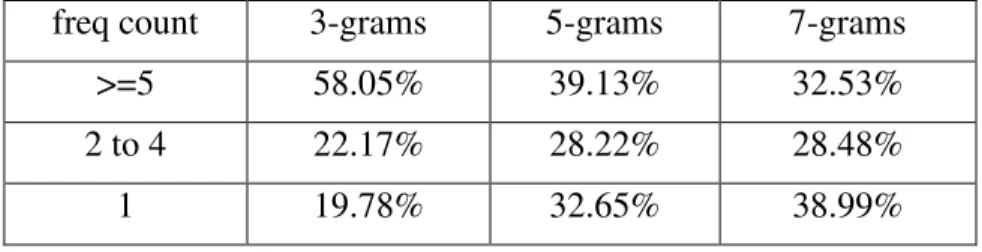
Table 1. Anagram traffic mix (Wang et al., 2006). ... 41
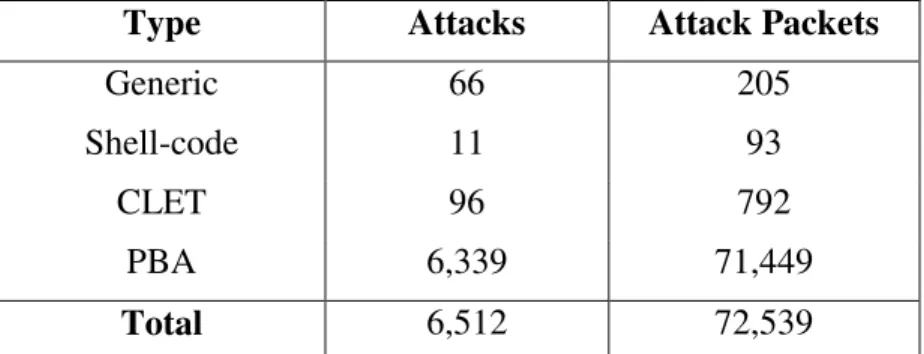
Table 2. The attacks dataset characteristics of McPAD (Perdisci et al., 2009). ... 47
List of Figures
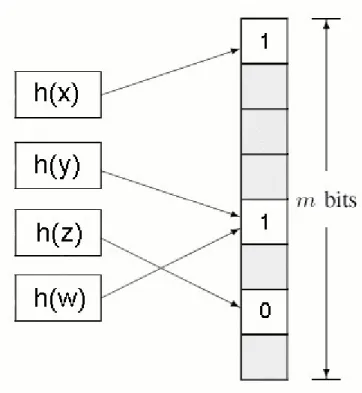
Figure 1. A sample Bloom Filter. ... 40
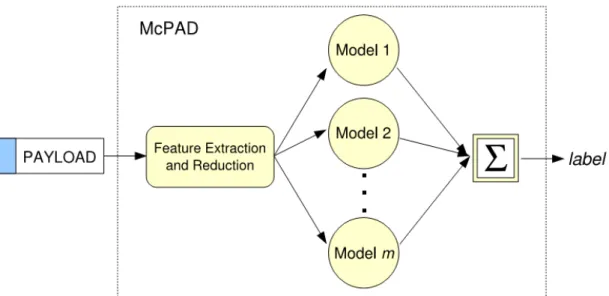
Figure 2. Overview of McPAD multiple classifier system (Perdisci et al., 2009). ... 45
Figure 3. HMMPayl test results against the XSS-SQL Injection test set (Ariu et al., 2011).
... 51
Figure 4. The general form of a trained Hidden Markov Model. ... 57
Figure 5. An example of a trained Hidden Markov Model. ... 58
Figure 6. The high level navigation analysis layer looks at the order of URLs requested
by the client. ... 60
Figure 7. The request analysis layer looks at the payloads of the request. ... 62
Figure 8. The request-response analysis layer looks at the payloads of both the request
and response. ... 63
Figure 9. The combination of all three layers yields the final determination whether
traffic is anomalous or normal. ... 64
Figure 10. The ROC graph of the Layered system Request Layer as compared to
HMMPayl for the Generic attacks dataset. ... 77
Figure 11. The ROC graph of the Layered system Request Layer as compared to
HMMPayl for the Shellcode attacks dataset. ... 78
Figure 12. The results of testing the Request-Response Layer with the WebGoat test set.
... 81
Figure 14. The results of testing against the McPAD Generic attack set and the Fortune
500 normal data set. ... 84
Figure 15. The results of testing against the McPAD Shellcode attack set and the Fortune
Chapter 1
Introduction
Background
As modern society makes use of computing technologies in more ways, the usage
of computers to store sensitive or critical data continues to increase. Computers are used
for operations critical to the functions of modern society such as the power grid and air
traffic. Similarly, computers are used to store sensitive government documents and
national security information such as a design for a new fighter plane (Souren, 2013).
These computers are often networked to other computers and these networks may be
connected to external networks through the Internet. With this increasing connectivity
comes the added risk of attackers making use of this connectivity to tamper, disrupt, or
gain access to this sensitive or critical data.
The most basic attackers are often thwarted because of their use of familiar
attacks. Familiar attacks can be detected through the use of attack signatures. Attack
signatures are a mechanism that specifies key components of the attack in order to
accurately identify the attack with as little chance as possible for a false positive
(Denning, 1987). However, more advanced attackers that use unfamiliar attacks are not
so easily stopped by the use of signatures. The attacks used by an advanced attacker will
A common advanced attack methodology used is that of the 0-day attack (Wang,
Cretu, & Stolfo, 2005). A 0-day attack is named such because it is an attack that has not
yet been disclosed and thus cannot be adequately mitigated or detected through signature
methods. All programs have the possibility for code-based vulnerabilities with the
possibility increasing as the complexity of the code increases. Because of this, the
continued discovery of new 0-day attacks is a virtual certainty. Another advanced attack
methodology may consist of familiar attacks that are restructured in some way to evade
detection from attackers. These attacks are named variant attacks (Wagner & Soto, 2002).
At a holistic level, the attack may be the same attack as before but the variation in its
construction allows it to become undetectable by standard signature-based methods.
The typical means for detecting attacks, whether familiar attacks, 0-day attacks, or
variant attacks, is by using an intrusion detection system (IDS) (Heberlein et al., 1990). A
Network-based IDS (NIDS) scans network traffic for potential attacks. Should the IDS
detect an attack, it creates an alert that notifies the operator for further investigation. A
variation on the IDS allows for it to sit in-line with the network traffic and add the
functionality of immediately blocking any attack detected. This variation is called an
intrusion prevention system (IPS) (Plato, 2004). At its core, an IPS behaves similarly to
an IDS with the addition of the active mitigation features that allow an IPS to block the
detected attacks.
An IDS typically performs attack detection using one of two methods. The first
method is known as a signature-based method (Kemmerer & Vigna, 2002). The
signature-based method matches an operator-created signature in traffic to identify
anomaly-based method examines all traffic to learn what is typical for a network then
will detect deviations or anomalies from the normal traffic. When one of these anomalies
is detected, the system creates an alert for an operator to investigate.
A recent offshoot of anomaly detection is the subfield payload anomaly detection
in which the payload contents of packets are analyzed to detect attacks at the application
layer. A model for comparing the payload anomaly detection system against the
traditional NIDS is the OSI Model. The OSI Model is a model which characterizes
network traffic into different logical layers (Day & Zimmermann, 1983). In terms of the
OSI Model, a typical NIDS will operate at the third layer, the network layer. A payload
anomaly detection system will operate at the seventh layer, the application layer.
The first major payload anomaly detection system was the PAYL algorithm. The
PAYL algorithm created an intrusion detection system focused on detecting 0-day worms
essentially using a histogram of bytes or n-grams of size 1 (Parekh, Wang, & Stolfo,
2006; Wang et al., 2005; Wang, Parekh, & Stolfo, 2006). Anagram followed up on PAYL
by granting the ability to handle n-grams greater than 1 (Wang et al., 2006). The next
major system was the McPAD system (Perdisci, Ariu, Fogla, Giacinto, & Lee, 2009)
which built upon the n-gram model using a size of 2 and added the capability for space of
varying size between the bytes while also modeling the collected n-grams in a Support
Vector Machine (Scholkopf, Platt, Shawe-Taylor, Smola, & Williamson, 2001). The next
two systems, Spectrogram (Song, Keromytis, & Stolfo, 2009) and HMMPayl (Ariu,
Tronci, & Giacinto, 2011), were developed in parallel and focus similarly on using
Markov Models (Markov, 1971) to detect attacks. A major difference in the two is that
parameters while HMMPayl learns the entire request payload. As a whole, these detectors
have been shown to be far more capable of detecting application layer attacks than the
prior approaches taken in anomaly detection.
Additionally, other variants of network-based IDS exist that use other models for
detection, such as biologically inspired IDS. Some examples of the biologically inspired
model are provided by the human body’s immune system (Hofmeyr, Forrest, &
Somayaji, 1998) or the concept of danger theory (Aickelin, Bentley, Cayzer, Kim, &
McLeod, 2003). Researchers have created many different models for attack detection.
Each model has its own successes or lessons learned. These lessons have been
incorporated in subsequent IDS to refine and improve upon the concept of attack
detection.
Problem Statement
Current network-based anomaly detection systems suffer from high false positive
rates and high false negative rates and thus are unreliable in production usage, either
providing analysts with too many false alarms or failing to alert analysts to significant
attacks. High false positive rates create significant amounts of noise for an analyst to
investigate and determine if the alert is a legitimate attack or not. This amount of extra
work can lead to missed true attacks. Low detection rates means true attacks have no
corresponding alert and are not properly classified as anomalies therefore it is highly
With each generation of IDS and refinement of the underlying models, the false
positive rates are reduced and the detection rates are improved. While the users’
expectation is not for an oracle that provides a perfect assessment of every packet, there
is a reasonable expectation for high levels of accuracy. Though current systems have
advanced significantly over prior systems in their accuracy, they have not yet reached a
high enough level of accuracy (Ingham & Inoue, 2007).
Goal
The goal of this research was to construct a payload anomaly detection system by
combining multiple techniques of detection in a layered approach combining the
requested URLs, request payloads, and a combination of the requested URLs and the
responded payloads, demonstrate the system’s viability, and demonstrate the increased
detection capabilities the layered model had over current state of the art detection systems
that typically use just one of the layers. Experiments using both the system created
through this research and state of the art payload anomaly detection systems allowed for a
direct evaluation of the system created through this research in comparison to other
systems. The systems were evaluated using the receiver operating characteristic model
which presents a simplified graph showing the detection capabilities of a system by
Relevance and Significance
As long as there are assets of value, there will be attackers who want to take those
assets. This axiom applies to physical objects of value such as jewelry as well as digital
objects of value such as a person’s bank account information or sensitive government
communications. These examples are a small subset of all possible digital assets that
might be of value to an attacker. To protect those digital assets, network owners employ
many different attack detection and defense mechanisms. The focus of this work is on
anomaly detection systems specifically detection within the payload.
Earlier anomaly detection systems focused on characteristics of the traffic
contained within the header or high level statistics about the packet such as number of
bytes (Wenke, Stolfo, & Mok, 1999). This was a logical decision at the time as many of
the attacks were present in the header of a network packet or not well disguised.
However, as the avenues of attack in the header were closed, attackers shifted their
method from the header to the content of the packet in the payload. The payload is the
communication that is being delivered from one host to another specifically at the
application layer: allowing an application on one host to communicate to the application
on the other. Attackers found a fertile ground for attacks in the application layer as each
application introduces a new set of potential vulnerabilities.
Anomaly detection systems shifted their focus from the headers to the payloads
and began detecting application layer attacks to match the attackers’ shift. The payload
anomaly detection systems evolved from the statistical modeling of single bytes (Parekh
et al., 2006; Wang et al., 2005; Wang et al., 2006) to multiple bytes (Wang et al., 2006) to
generation of payload anomaly detection systems added complex statistical models to the
detection mechanism favoring the Markov models (Markov, 1971) whether in Markov
Chains (Song et al., 2009) or Hidden Markov Models (Ariu et al., 2011). Payload
anomaly detection systems are the state of the art in anomaly detection intrusion
detection as they represent the best detection mechanism for application layer attacks.
This research aimed to improve upon those state of the art systems by combining
multiple layers of detection. The layers are a high-level navigation layer, a request
payload analysis layer, and a request-response payload analysis layer. The high-level
navigation layer is an approach that has been proven in the context of distributed denial
of service attacks (Yi & Shun-Zheng, 2009). The request payload analysis layer has also
been proven in the detection of attacks (Ariu et al., 2011). The request-response payload
analysis layer is a novel detection mechanism that was tested through this research.
Further, the combination of these three layers is also a novel combination and was tested
through this research.
As attackers increase in sophistication, focus, and resources, the need for more
accurate detection mechanisms protecting networks increases. Anomaly detection
systems must improve their detection performance by lowering false positives and
increasing true positives in order to best protect digital assets.
Barriers and Issues
The area of anomaly-based intrusion detection is a challenging area of study due
elusive parameters that characterize an attack with perfect accuracy for all attacks
remains an unachieved goal. The possibility of ever achieving this goal was posited as a
question in the infancy of the study area (Denning, 1987). In 2007, Gates and Taylor
followed up on Denning's goals and questioned whether Denning’s goal of accurate and
consistent attack detection is even achievable (Gates & Taylor, 2007). Similarly,
Axelsson (2000) has indicated that accurate intrusion detection is a very hard problem
due to the difficulty in minimizing the false alarm rate. The challenge of building good
enough intrusion detection as outlined by Axelsson is not one to be taken lightly. The
lesson taken from Axelsson that minimizing false positive rates is a significant criterion
for usefulness for all anomaly-based intrusion detection systems. As stated previously,
the goal of this research was to minimize the false positives and maximize the true
positives meeting or bringing the state of the art closer to Axelsson’s criterion for
successful intrusion detection.
Testing an intrusion detection system is a difficult task. The testing of anomaly
detection systems is a disputed area. There is no agreed upon approach or data set that
allows for consistent testing. The data sets from the KDD Cup in 1999 (Lippmann et al.,
2000; Newman, 1999) were used for test purposes at the time of the competition but have
since been refuted as poor representations of actual data (Brugger, 2008; Mahoney &
Chan, 2003; McHugh, 2000). This leaves a gap with no widely accepted benchmark data
in the intrusion detection research community. Consequently, the KDD Cup ‘99 test set is
often still relied upon to provide test data and comparisons between detection methods.
This research presented a testing approach that was consistent with the test approaches
2009). Further, it made use of the same attack data as was used in testing those systems to
provide a representative comparison between systems.
Assumptions, Limitations, and Delimitations
A limitation of this study is that the testing was not performed using real-time
data. It instead used offline data. This is part of a natural evolution of the system and does
not represent a permanent limitation of the system rather a limitation of this initial study.
A possible extension of this work is to optimize and enhance the system for real-time
data. When designing the system, the possibility of extension to a real-time detection
system was kept in mind during the design process. It is expected that the modifications
required to support real-time detection would be minor.
Another consideration for this system is the nature of attacks can be difficult to
identify. This creates a limitation for the study in that traffic may appear to be normal and
benign to the researcher performing classification but may actually be an attack. This can
lead to false classifications in both training and testing results. Given this limitation, the
traffic and attacks will be classified using the best available knowledge at the time of
classification to determine if an attack is present in the traffic.
Summary
The focus of anomaly detection systems have evolved along with the evolution of
attackers and their targets. Early attacks tended to be hidden in the headers of packets or
the application layer and avoid detection by broad statistical measures. To combat this
evolution, detectors have had to shift their focus to packet payloads. This evolution has
led to a new subfield of anomaly detection called payload anomaly detection. This field is
still relatively young but has benefited greatly from the advancements in the broader
parent field of anomaly detection. Payload anomaly detection has evolved from its earlier
focus on the statistical distributions of bytes to more complex statistical models such as
Markov models. With each evolutionary step, the detection characteristics improved.
This research continued the advancements of payload anomaly detection by increasing
the detection performance of the system through the application of multiple layers of
detection combined as well as considering response payloads to provide a more accurate
Chapter 2
Review of the Literature
Overview
This chapter is organized into two sections. The first will be a review of major
milestones in intrusion detection starting from the initial research in the field to recent
milestones. The second section will be a review of literature directly relevant to this
research.
History of Intrusion Detection
This section is a breakdown in chronological order of the history of intrusion
detection from start to the current point in time.
Origin of Intrusion Detection Systems
The concept of intrusion detection was first introduced by Anderson (1980).
Anderson proposed intrusion detection as a method to identify when a system was
compromised. This focus of detection would later become known as host-based intrusion
detection as opposed to what would be created later as network-based intrusion detection
could be used to identify behaviors that represented misuse of the system. The different
forms of intrusions were enumerated as internal penetration, external penetration, and
misfeasance (J. P. Anderson, 1980).
Internal Penetration was defined as the case when a user with legitimate access to
internal resources attempts to gain access to additional resources they are not authorized
to access. This attempt may occur through the usage of credentials belonging to other
users. This illegal access could be identified through logs that would show a user account
behaving in a manner inconsistent with its typical behavior.
External Penetration was defined as the case when an unauthorized user attempts
to access protected resources. This could be a user accessing a system through direct
physical access to the system or through networked connections. External penetrations
could be detected by repeated failed access attempts to protected resources.
Misfeasance was defined as the case when a user attempts to circumvent
protections in place on the system to gain additional access. This might be making use of
incorrect file permissions or errors in the operating system that grant additional access.
Misfeasance could be detected through audit logs that show users gaining access to files
or systems that they should not have access to.
These intrusions could be statistically identified as deviating from the observed
ordinary behavior through the review of audit logs. For example, an external penetration
attempt might be identified by a series of failed login attempts. An internal penetration
activities. This concept, though visionary as the original publication of intrusion
detection, was labor intensive and an inefficient method to detect intrusions.
Intrusion Detection Expert System (IDES)
The concept of intrusion detection was expanded upon, refined, turned into a
model at SRI International, and then published by Denning (1987). At the time of
Denning's publication, networks consisted of far fewer components and a smaller variety
of components than they do in modern networks. The system created, the Intrusion
Detection Expert System (IDES), used an expert system to evaluate log data and
determine potential intrusions or misuse. Like Anderson’s work, the focus on specific
logs and audit data from servers is representative of what was later named host-based
intrusion detection. Denning's system consisted of five primary elements. Those elements
follow:
• subjects - the users of the system or processes initiated by the users
• objects - the various pieces of the system that the subjects interacted with
• profiles - characterizations of the interactions between subjects and objects
• anomaly records - records describing the abnormal behaviors not contained in the
profile as detected by the system
Analysis of all these elements allowed the system to detect anomalies in behavior that
may have represented an intrusion.
While Anderson’s work described the concept in an ideological form, Denning’s
work created a system that implemented the concept. This concept created a model that
was built upon for all future anomaly detection systems.
Haystack
The Haystack IDS was developed by Smaha (1988). Among other things,
Haystack had innovative and effective data reduction techniques. Haystack was designed
for use in the U.S. Air Force to help System Security Officers detect and investigate
intrusions. The Haystack system was specifically designed for use in the Air Force but it
was designed with the intention that its applicability could be extended to other systems.
Being designed for the Air Force allows the system an advantage in detecting intrusions
over other types of networks: Air Force systems have rigidly defined acceptable use
scenarios. Other networks tend to be more open and the administrators have less ability to
specify and enforce rules over their users. The goal in designing Haystack was to
augment not replace the existing security tools and personnel. The system analyzes the
raw audit trail of the target system, processes that audit trail into canonical events, and
then generates a security incident report to present to the security officer. The security
officer then investigates the incident and determines if it is a legitimate alert or false
normal behavior such as spikes in usage or known bad behaviors such as printing
password files.
To handle the large amounts of throughput necessary to be processed by the
Haystack system, the designers implemented data reduction techniques. Specifically, the
Haystack analysis system is significantly less powerful than the mainframe system it was
intended to monitor. To maintain the throughput necessary to monitor audit logs in a
reasonable timeframe as well as maintain a historical trail of audit logs, the system
performs data reduction techniques on those logs. Rather than maintaining the full audit
trail, the system extracts the significant components of the audit trail and preserves those
for detecting intrusions. This feature extraction methodology made sense and increased
efficiency. It was adopted in most intrusion detection systems that followed to reduce the
storage necessary to record logs and provide throughput improvements.
Network Security Monitor
In 1990, the concept of intrusion detection was modified to look at networks
creating the network-based intrusion detection model (Heberlein et al., 1990). This was
done through a program called Network Security Monitor (NSM) that evaluated network
traffic for intrusion attempts. This program differed from the IDES model in that the
focus of this IDS was analyzing the traffic flowing across the network and identifying
that portion of the traffic that was anomalous traffic with the assumption that anomalous
traffic is worth investigating further. This represented a novel approach to intrusion
auditing the data local to the systems. The goal of a network-based IDS is to identify an
intrusion based on network traffic alone. This type of IDS focuses either on readily
apparent characteristics of the traffic or the way the traffic differed from the normally
observed traffic rather than the end effects as reported by the target systems.
The NSM work was later expanded upon and further described by Mukherjee,
Heberlein, & Levitt (1994) to better define the concept of network-based intrusion
detection. NSM collected network traffic and classified it into four layers. The four layers
approach allowed the system to characterize the traffic. The first layer was at the packet
level and analyzed the individual packets. The second layer built upon the first to create a
unidirectional network traffic stream. The third layer built upon the second layer to create
a bidirectional traffic stream. The fourth layer built upon the third layer to identify the
activities of each host in the network. The collected outputs of the third and fourth layers
as well as a profile of the typical traffic of the network are then fed into an expert system.
The profile of the typical traffic is created by monitoring the network activity over time.
The concept of network-based intrusion detection is also the method used in this
research. However, the method of traffic inspection differs greatly between the two
systems. NSM used an approach demonstrated in previous host-based systems to inspect
network traffic. This method consists of constructing a model of normal traffic from host
to host. This concept, while still valuable, is prone to false positives. Attempting to
catalog all standard network traffic flows in a network leads to a challenge due to the
changing nature of networks. New hosts can be created and new users can make use of
existing hosts. When these changes to the network occur, the traffic profile will be
network-agnostic to avoid these false positives. It focuses on the contents of the packets traversing
the network rather than the source and destination of those packets.
Mukherjee, Heberlein, & Levitt urged the use of benchmarking methods to test
and compare IDS as well as the development of better and more accurate models. Both
goals remain relevant to this dissertation research. While there have been attempts at
creating universally accepted test methods such as the DARPA data set (Lippmann et al.,
2000), there still remains no widely accepted method by which every IDS can be
compared in an unbiased manner. Additionally, while modern IDS have become more
accurate in their detections, there is no single system that is accepted as the best detector.
Each of the intrusion detection systems have different strengths and focus areas requiring
tradeoffs and the evolution of attacks has led to the degradation of older systems.
Distributed Intrusion Detection System (DIDS)
Distributed intrusion detection systems, systems that collect data from multiple
points in a network to combine data from different perspectives rather than from a single
independent monitoring point, were a natural next step after network-based IDS. A
specific distributed IDS known as Distributed Intrusion Detection System (DIDS) was
created to expand the ability to monitor systems and networks from a single monitored
entity to multiple monitored entities controlled from a single location (Snapp et al.,
1991). DIDS had the capability to remotely monitor heterogeneous computer systems
then perform data reduction to collect all that data at a central point for data processing
and did not include hosts located on different network segments. An interesting element
of this system is that it is capable of uniquely identifying network users using traffic
analysis then assigning each identified user a Network User Identifier (NID). This NID is
capable of following the user despite any attempts to circumvent the tracking such as
multiple accounts or lateral movement in the network.
DIDS consisted of several components: host-based monitors on each host to be
monitored, a network-based monitor, and a director to coordinate the components (Snapp
et al., 1991). The host-based monitors each track the audit trails of their host systems to
identify anomalous behaviors. The network-based monitor observes the network traffic to
detect what systems connect to each other. Both of these monitor types report their
collected data to the director. The director consists of an expert system that analyzes the
information provided by the monitors. Further, it can request additional data from each of
the monitors as needed.
DIDS is interesting in the fusion mechanics of its data feeds – both host-based and
network-based monitoring. The systems that existed prior to DIDS focused on the
paradigms independently while DIDS combines its view of both the network and the
hosts. This model is not one commonly seen in intrusion detection systems even since the
creation of DIDS. Even at the time of performing this research, a more common
deployment scenario is independent deployment of host-based and network-based
intrusion detection systems allowing for networks to benefit from the best of class in both
networks. This data from both types of intrusion detection systems, however, is typically
systems. This external system allows for correlation of the data it receives from all
sources and can perform a similar fusion as was introduced in DIDS.
Next-generation Intrusion Detection Expert System (NIDES)
Recent research has created a new category of IDS that blends attributes of both
signature-based detection and anomaly-based intrusion detection called hybrid intrusion
detection. As an editorial note, other definitions exist for hybrid intrusion detection that
include the blending of mobile, embedded, or visual detection mechanisms (Alam &
Vuong, 2007; Lauf, 2007; Peng, Feng, & Rozenblit, 2006). Hybrid systems tend to focus
on improving the accuracy of detection by both increasing the detection rate and reducing
the false positive rate using a combination of the signature-based and anomaly-based
methods.
The first true hybrid system was the Next-generation Intrusion Detection Expert
System (NIDES) (D. Anderson, Frivold, & Valdes, 1995), which represents an evolution
of IDES. NIDES is a hybrid in that it combines both the misuse detection that existed in
IDES with statistical analysis to perform anomaly detection. NIDES was designed to
detect intrusions, as identified by the data differing from the historical norm, and
intrusion scenarios, known system vulnerabilities, and other violations of a systems
security policy.
The statistical algorithms included in NIDES allow it to exceed the capabilities of
a typical misuse system by detecting unknown attacks. A future extension of the NIDES
structure to allow the system to better detect collaborative attacks. Additionally, NIDES
uses audit records like IDES did rather than including any form of network data.
Graph-based Intrusion Detection System (GrIDS)
A Graph-based Intrusion Detection System (GrIDS) was created at the University
of California at Davis in 1996 with an interesting and unique approach to intrusion
detection (Staniford-Chen et al., 1996). GrIDS makes use of activity graphs to define the
permitted behaviors in a network. The activity graphs are created automatically by the
system after analysis of activity on the hosts and network traffic.
GrIDS operates in a hierarchical fashion using reduction techniques allowing the
system to scale to large networks. This is an enhancement on previous detection systems
in that it can collaboratively detect attacks from large networks. GrIDS is also capable of
incorporating data received from external monitoring sources. Further, the system is
controlled by a graphical interface that allows drag-and-drop capabilities to reconfigure
the system - even in real-time. While presenting many novel and unique detection
capabilities, this model was not built upon much by later research.
Event Monitoring Enabling Responses to Anomalous Live Disturbances (EMERALD)
A system that was developed by SRI International for monitoring large-scale
networks is the Event Monitoring Enabling Responses to Anomalous Live Disturbances
(EMERALD) (Porras & Neumann, 1997). EMERALD is a highly-distributed system that
isolation, and automated response. EMERALD also includes a recursive framework that
can share the analysis results from the distributed monitors to provide a global detection
and response capability that can counter attacks occurring across an entire network
enterprise.
EMERALD consists of three monitor types that service three different levels of
the network hierarchy. The types of analysis are enterprise-wide, domain-wide, and
service analysis. The information feeds up and is correlated from the service level to the
domain level and finally to the enterprise level. The service monitors review audit logs
and probe the domain for intrusion data. The domain monitor handles the reports from
the service monitors and alerts the system administrators of threats. The enterprise-wide
monitors correlate the reports from the domain monitors to detect distributed attacks.
A novel component introduced in EMERALD is its communication capabilities.
EMERALD can have system monitors in one domain communicate with another domain.
Additionally, the system monitors can communicate with third party analysis tools. The
communication occurs using a subscription-based scheme where both a push and pull
mechanism exists. For example, a client monitor can subscribe to receive analysis from a
server monitor in order to provide better correlation. This allowed the intrusion detection
systems to provide broader detection coverage.
Hummingbird
Frincke, Tobin, McConnell, Marconi, and Polla (1998) wrote about the lack of
has used these techniques for a long time but they have not been implemented in an
automated manner previously. To meet this goal, they proposed a framework for
cooperative intrusion detection. The framework does not account for multiple distinct
IDS but rather the interaction guidelines for multiple systems using the same IDS,
Hummingbird, which uses the previously proposed Hierarchical Management of Misuse
Reports (HMMR) protocol (Frincke, Evans, & Aucutt, 1996). The HMMR protocol
funnels information from various sources under different administrative control to a
central reporting system. This allows correlation among the various alerts at a higher
level but does not allow various administrators to modify or configure systems that they
do not control.
The Hummingbird work highlights the benefits that can be gained by sharing data
between systems especially when there exists dependencies between the two systems. In
relationships where the sharing benefits both sides, symbiotic relationships, there is a
strong incentive to share data between the systems. Hummingbird facilitates these
symbiotic relationships.
To protect the data flowing between systems, the framework implements a few
key measures. The first measure is access control, specifically a weakened Bell-LaPadula
(Bell & LaPadula, 1973) model and Biba (Biba, 1977) model. Further, the system
protects the sensitivity of the data exchanged through data filtering techniques. The
techniques used are data reduction and data sanitization. While these techniques create
additional processing on the source host, they do provide the additional benefit of
The introduction of sharing and collaboration introduced new risks to the
paradigm of intrusion detection (Frincke, 2000). There is a local decision of how much
trust is placed in the remote sites that share data with the local site. Additionally, there is
a concern of how much data can be safely shared to a remote site without divulging
secrets. Multiple security policies must be managed to address the varying security
profiles of each partner site.
A major advantage in collaboration lies in detecting what is termed as widespread
attacks (Frincke, 2000). Widespread attacks require collaborative efforts across multiple
domains to detect them. Those domains could represent a single site, network, or an
enclave. The categories of widespread attacks are defined as simple attacks, repeated
pattern attacks, and multipoint attacks. Simple attacks are attacks that come from a single
attacker or point of entry. Repeated pattern attacks are repeated simple attacks that are
generated from multiple attackers independently. A multipoint attack is an attack that
consists of many component actions that make up an attack. Each of those component
actions are separated and performed by separate attackers. Through the use of multiple
collaborative detection points, a detection system could detect the more complex attacks
such as a multipoint attack whereas a non-collaborative system would be limited to
simple and selected repeated pattern attacks.
Coordinated Attack & Response Detection System (CARDS)
Another collaborative system that was intended for a large-scale distributed
Ning, Wang, & Jajodia, 2000). This system was created to detect signature-based alerts in
a large distributed network. The monitored network was directly connected and centrally
managed by a single administrator. The data was centrally correlated and the alerts jointly
compiled and managed. This allowed the systems to perform correlated attack detection
with centralized response. Additionally, the signatures could be created uniformly
through the entire system.
CARDS consists of three main components. The first component is the signature
manager. The signature manager generates specific signatures from generic signatures,
decomposes specific signatures into intrusion detection tasks, and distributes these tasks
to the involved monitors. Monitors are responsible for the observation of the target
systems. The monitors perform the intrusion detection tasks and cooperate with other
monitors if attacks are distributed. Coordinating all of these components is the directory
service. The directory service provides information to each of the signature managers and
monitors. Aside from the directory service, the signature managers and monitors are not
required to collaborate and can operate independently. These elements only collaborate
when investigating a distributed attack. The communication between elements uses
Extensible Markup Language (XML) (Bray, Paoli, Sperberg-McQueen, Maler, &
Yergeau, 2008).
Prior to CARDS, other collaborative intrusion detection systems had been created.
However, those systems all were created with the assumption that they were under the
control of a single administrator and reside in a single internal network but have different
perspectives of that same network. Typically, the collaborative systems assume similar
data from most collaborative intrusion detection systems are incompatible with other
collaborative IDS even those of the same type.
Extending the CARDS system, Ning, Jajodia, and Wang (2001)researchers
created what they term abstraction-based intrusion detection. This is based on the earlier
work of the Adaptable Real-time Misuse Detection (ARMD) system (J.-L. Lin, Wang, &
Jajodia, 1998). The CARDS method is essentially a hybrid intrusion detection technique
that combines abstraction with signature-based methods in order to increase the detection
rate by allowing the system to detect unknown variations on known attacks. That
abstraction is important because the systems that are being observed and monitored are
disparate systems with different operating systems. Additionally, abstraction can be used
to filter irrelevant details so that systems can ignore irrelevant details and focus on the
relevant traffic information that could contain the anomalies.
Abstraction is frequently used as a preparation process and the abstraction is
performed ad hoc. An example of how this usage of abstraction could create a problem
lies in detecting an attack such as the Mitnick attack (Northcutt, 2002). In this attack, the
attacker first creates a SYN flood attack to disable the incoming Transmission Control
Protocol (TCP) (Postel, 1981) port then connects to another host spoofing the flooded
host's IP address and TCP port as the source IP and port. If a user were to create a
signature based on that attack, the signature might look for a SYN flood then the
subsequent TCP connection. While this signature would detect the attack described
above, a new method to disable the TCP ports other than a SYN flood would render the
signature ineffective. To combat this, a better alternative would be to create a generic
detection system prior to CARDS could detect this attack. The best alternative to creating
a generic signature would be to write programs that support this generalization but those
programs would require constant updating as new methods were identified and observed.
The application of abstraction in this system led to two conclusions: abstraction is an
error-prone process and there is not enough support for effective and efficient abstraction
in current IDS. Using Ning, Jajodia, and Wang’s extension of the ARMD system, the
above signature generalizing the disabling of TCP ports would be possible.
ARMD falls short when applied to a distributed environment because it does not
account for distribution and coordination mechanisms. The design of this system did not
make use of the existing hierarchical approaches as they were considered inefficient.
Should two distant IDS need to communicate on a distributed attack in a hierarchal
system, their communications would need to be forwarded through multiple levels of
hierarchy before they reach the other host. It would be more efficient if the IDS could
communicate with each other directly. The ARMD model allows IDS to communicate
directly when that communication is essential to detecting attacks. To this end, a
framework extending ARMD was created by Ning, Jajodia, and Wang that performs
distributed attack specification and event abstraction. Further, the model can detect
distributed attacks using a decentralized approach by decomposing signatures into
"detection tasks". The end result is a system that can detect variants on known attacks but
not detect completely unknown attacks. The variants on known attacks must share
essential features of an existing signature. Abstraction was shown to be a powerful
also increase the false-positive rate. While the feasibility of abstraction-based detection
was demonstrated, additional research is necessary to refine this work.
Snort-based Hybrid Intrusion Detection Systems
A common platform used for hybrid intrusion detection systems is the Snort
signature-based IDS (Roesch, 1999) with features of anomaly detection added to it
(Aydin, Zaim, & Ceylan, 2009; Gómez, Gil, Padilla, Baños, & Jiménez, 2009; Hwang,
Cai, Chen, & Qin, 2007). These modifications to Snort have increased the detection rate
and false positive rate of Snort against their test data under controlled circumstances.
Snort is a signature-based IDS (Roesch, 1999). It is an open-source tool that is
provided for free and is also available in a commercial form. Snort is often used for
research as its open-source nature makes it very accessible and easy to extend. Snort, in
its default state, operates in the standard signature-based method. Signatures are defined
and provided to the system. Then the system monitors for traffic that matches the pattern
defined in a signature. If a match occurs, the system will then create an alert and present
it to the operator. It is also possible for Snort to operate in a blocking or IPS mode.
Aydin, Zaim, and Ceylan (2009) improved Snort by combining packet header
anomaly detection (PHAD) (Mahoney & Chan, 2001) and network traffic anomaly
detection (NETAD) (Mahoney, 2003). These anomaly detection protocols are inserted as
preprocessor components to Snort. In the testing against the hybrid IDS, the test results
show that the aggregated detection totals of the Snort detection combined with both
own. The hybrid IDS does not appear to be collaborating among the detection protocols
though but rather appears to be multiple engines running on the same data in sequence.
Gómez, Gil, Padilla, Baños, and Jiménez (2009) created a system called H-Snort,
a hybridization of Snort with anomaly detection. They also chose to add their anomaly
detection capabilities as a Snort preprocessor. A statistical anomaly detection method was
chosen though a future goal is to improve their system later with a data mining
preprocessor. Two observations about H-Snort were noted through testing. The first
observation is that a longer training period lowers the number of false alarms. The second
is that as the number of elements increases, the sensitivity of the detection mechanism
decreases thereby reducing the total efficiency as it misses detecting attacks.
Hwang, Cai, Chen, and Qin (2007) modified Snort to create a feedback loop
allowing the anomaly detection piece to generate signatures which are then fed into the
Snort signature detection system. In this scheme, they hope to leverage the ability of the
anomaly detection to identify unknown attacks while relying on the signature detection to
have low false positives. The scheme they use to detect attacks is that of episodes.
Episodes are a sequence of network events with rare episodes representing the anomalous
activity which is possibly an attack. When using their hybrid methods, the detection
capabilities significantly increased averaging a doubling of attacks identified versus Snort
Fuzzy Logic Hybrid Intrusion Detection
Other research has combined fuzzy logic methods with intrusion detection to
allow signature-based methods to have an anomaly-based characteristic to them. Fries
(2008) combines fuzzy logic and genetic algorithms (GA) to produce strong results on
both the detection rate and false positive rate. This system takes advantage of the genetic
algorithm's capability to identify solutions through unsupervised learning.
Fries uses the Intrusion Detection Based on Genetic Clustering (IDBGC)
algorithm developed by Liu, Chen, Liao, and Zhang (2004). IDBGC provides a two-stage
approach that establishes clusters of network traffic features and then detects intruders by
classifying traffic into one of the clusters. The first stage establishes a set of clusters
using the nearest neighbor method. In the second stage, the clusters are then combined
using a GA to obtain a near-optimal result. Additionally, the rules are optimized using a
principal component analysis (PCA) proposed by Bankovic, et al. (2007). PCA
significantly reduces the number of features needed for rules by extracting the subset of
features that preserves the most significant information. This is accomplished by
identifying a few orthogonal linear combinations of the original variables with the largest
variance. To improve the rules' detection capabilities, fuzzy logic is applied. This is done
through the use of trapezoidal fuzzy sets. The test results show that the application of
fuzzy logic to traditional GA intrusion detection methods has increased the detection
capabilities.
Another method makes use of the ensemble feature selection technique of fuzzy
belief k-NN classification algorithms to create a hybrid IDS (Chou & Chou, 2009). This
selection techniques. The hybrid model created uses an ensemble feature selecting
classifier with four base classifiers. Each base classifier uses a subset of traffic features to
derive an independent decision about the network traffic. The decision obtained from
each classifier is combined to improve the detection capabilities of the system. The base
classifier makes use of the fuzzy belief k-NN classification algorithm. The goal with this
detection system was to improve detection of attackers gaining access to systems and
further exploiting vulnerabilities of that system. To further improve the detection
capabilities by reducing the false positive rate, a data mining technique, the C4.5 decision
trees algorithm (Quinlan, 1993), created rules for normal behavior. Using the normal
behavior rules as a filter, the ensemble classifier generated an output indicating if the
behavior is anomalous.
A Collaborative Distributed Intrusion Detection System
Lin, Xiang, Pao, and Liu (2008) created an interesting distributed and
collaborative method by which IDS in a large network, such as a single ISP, can share
packet analysis data rather than replicating effort. To accomplish the notification and
identification of previously analyzed packets, the system modifies the packets at the
border routers to mark the packet as analyzed. It does so by using the Differentiated
Services Code Point (DSCP) field, an IP header field typically used for Quality of
Service (QOS) purposes. This field is initially populated with a value of zero. After an
internal router analyzes the packet, that field is then set to one. This method of checking
the packet only once internal to an autonomous system (AS) assumes that the routers and
not done to increase the detection capabilities of the IDS but rather to improve the
detection throughput throughout the network. The simulation of this technique indicated
that an overall increase in throughput was observed.
A Correlation Extension to CounterStorm-1 (CS-1)
Cullingford (2009) describes a scheme by which IDS can work together within a
single distributed network by sharing alerts but does not describe a scenario with
disparate networks. The system is implemented by modifying an existing commercial
IDS called CounterStorm-1 (CS-1) (Trusted Computer Solutions, 2001). Those
modifications shared alerts between the different networks to correlate the various alerts.
The modification introduced to the CS-1 system was extending the correlation idea to
contain information from disparate engines possibly running on disparate networks. To
this end, the system implemented a new anomaly detection algorithm, Rogue Ports (RP),
in CS-1 to share data between CounterStorm’s disparate internal detection engines, RP
and Statistical Payload Anomaly Detection (PAYL). The two engines shared data at the
Command Center level, the central control mechanism for the CS-1 system, though
sharing between multiple CS-1 installations was also possible. Testing with CS-1 and the
RP and PAYL engines showed that collaboration and cross-correlation among different
engines was a powerful technique to reduce false positives. These correlation techniques
were found to be effective and improve the CS-1 detection system so further efforts were
Intrusion Detection Interoperability
Multiple frameworks for creating intrusion detection interoperability have been
constructed and shared. Those frameworks have all focused on creating a collaborative
network of disparate intrusion detection sensors. This would be beneficial in the scenario
of a business evolving in the choice of their typical IDS as time went on leading to
multiple different IDS existing at the same time. The Common Intrusion Detection
Framework (CIDF) is the earliest example (Kahn, Porras, Staniford-Chen, & Tung, 1998;
Chen, Tung, & Schnackenberg, 1998). As far as status on this work,
Staniford-Chen most recently publicly posted that this work was never intended to create a standard
and is currently dormant (Staniford-Chen, 2008).
Subsequent to CIDF, an Internet Engineering Task Force (IETF) working group,
Intrusion Detection Exchange Format Working Group (IDWG), was created. This
working group's mission was "to define data formats and exchange procedures for
sharing information of interest to intrusion detection and response systems, and to
management systems which may need to interact with them" (Erlinger & Staniford-Chen,
2002). This working group appears to be idle since 2002 with no further action taken.
The results of the working group have been published as IETF Request For Comments
(RFC) 4765 (Debar, Curry, & Feinstein, 2007), 4766 (Wood & Erlinger, 2007), and 4767
(Feinstein & Matthews, 2007).
Reviewing the documentation that is still available from both the CIDF and IETF
intrusion detection working group, it is apparent that the scope of the attempted solution
is very broad. The contributors to the proposed standards had attempted to create a
a distinct manner. Their specifications allowed the systems to command other systems
and specify the actions and reactions that should occur. This goal would require the
participation of all IDS creators, both commercial and academic, to ensure that the
requirements of the standard were maintained and interoperability of the IDS was
available. The two bodies achieved significant milestones in defining the IDS messaging
scheme but never took the task to completion.
Areas of Research Directly Relevant to This Research
This section focuses on research that provides the foundation for the concepts and
methodologies that will be employed in this research. First, detection systems using
payload anomaly detection to detect attacks are discussed. This is followed by an analysis
of some specific techniques that were incorporated into this dissertation research.
Early Payload Analysis Systems
In a system proposed by Kruegel, Toth, and Kirda (2002), a detector can make
use of application layer protocols to identify anomalous traffic. By monitoring protocols
such as HTTP, DNS, SMTP, and FTP, that covers a large portion of all anonymous
traffic available on the internet. The prototype system specifically modeled traffic from
the DNS and HTTP protocols. In the evaluation of this approach, one of the factors
considered was the payload distribution. It was hypothesized that the distribution of a
payload is not evenly distributed and each protocol has a distinct distribution that can be
In the system LERAD, anomaly detection was extended to the payload (Vargiya
& Chan, 2003). These researchers discussed the rationale as to why it is more reliable to
evaluate payloads without making use of explicit knowledge of the protocol
specifications. A primary motivation for this lays in the challenge of hard-coding the
specification for each protocol. Further, the nature of protocols and their constant change
means that this specification must be maintained and regularly updated. The usage of four
distinct algorithms on marking boundaries within the payload was evaluated in this work.
Within each pair of boundaries lies a token that can be used to model the behavior of the
payload. It is these tokens that are analyzed for anomalous behavior.
These two early payload analysis systems set the foundation for later payload
analysis systems. Prior to this point, as discussed in the previous subsection, most
network-based intrusion detection was focused on headers rather than the application
layer content or payloads. The focus on payload analysis represents a shift in detection
strategies.
Payload Analysis
The PAYL algorithm created an intrusion detection system capable of detecting
0-day worms and creating signatures based on those worms for detection elsewhere
(Parekh et al., 2006; Wang et al., 2005; Wang et al., 2006). Their system detects worms
through anomalous behavior, namely the propensity for worms to repeat uncommon
Further, worms tend to have the same traffic repeated on both ingress and egress. Once
an attack is identified, the algorithm creates a static signature for detection of this attack.
PAYL has a mechanism used to share attacks without oversharing and violating
the privacy of the sharing parties. To do so, the payloads are compared between different
sites to confirm the existence of an attack rather than purely sharing information about an
attack. Should two sites share payloads that are sufficiently similar, the attacks are
considered to be confirmed and the signature is more trusted and reliable. The methods
discussed for the comparison of attacks are String Equality (SE), Longest Common
Substring (LCS), Longest Common Subsequence (LCSeq), Manhattan Distance (MD),
and LCS of Z-String (Zstr) (Wang et al., 2005).
String equality is a method by which two strings are compared for an exact match
(Wang et al., 2005). As applied to the problem of worm detection, the strings compared
would be the payload coming in and the payload going out. If the payloads are the same,
then a worm is likely detected. The challenge with SE is that it is a very strict detection
method. If a single byte differs between the two payloads or the packet is fragmented
differently, then the match will not be found.
The Longest Common Substring method behaves in a similar manner as SE but
rather than requiring the full string to match, there can be substrings matching (Wang et
al., 2005). This makes the method less exact than SE but allows it to overcome the
problem of fragmentation. With longer matching substrings comes higher confidence in
the match. However, the challenge with this methodology is that it is computationally
The Longest Common Subsequence method is similar to LCS with the difference
that the subsequence does not have to be a contiguous block of characters as in the
substring (Wang et al., 2005). The advantage of this approach over LCS is that it can
detect a polymorphic worm. However, there is also the risk of increased false positives.
To prevent the sharing of private information and only allow sharing of potential
worm information, the two sites compare the potential attacks to look for confirmation
using a reduced form. This removes the first three metrics, SE, LCS, and LCSeq, from
consideration as useful comparisons using those metrics because they require actual full
content to do a comparison. The remaining methods are MD and Zstr.
The MD method requires a byte distribution of the payloads be exchanged
between the two sites (Wang et al., 2005). The distributions are considered similar if
they have a small MD. The actual MD is computed as the distance between two points
measured by only taking paths consisting of right angles (Black, 2006). This distance
measure originated from considering the grid-like streets of Manhattan. When computing
a path between two points, since one cannot traverse city blocks diagonally, the distances
between two points are equivalent across many distinct paths consisting of only right
angle turns.
The Zstr method is actually an LCS against the Z-String of the two payloads
(Wang et al., 2005). The Z-String is defined as the 1-gram frequency distribution ordered
by rank. Essentially, this is a descending ordered frequency list of distinct bytes. The
between z-strings. This in turn provides a similarity amongst the distributions of the two
payloads.
To perform the payload analysis, PAYL extracts n-grams from the payloads. An
n-gram is a sequence of n sequential bytes (Shannon, 1951). The n-grams are statistically
analyzed to determine the distribution. This mechanism is language independent and
requires no parsing, no interpretation, and no emulation of the content. In other words,
this mechanism can function as the detection mechanism on its own. The original usage
for n-grams was in language independent categorization of text, essentially determining
the similarity of one block of text to another. The concept of n-grams continues to be a
common theme in payload anomaly detection and will be seen again in the systems
discussed later as well as in the system introduced in this dissertation research.
In PAYL, the n-gram is specifically extracted from the payload and the value of n
is set to 1, essentially making 1-grams or single bytes. Then a basic statistical analysis is
performed on the 1-grams storing their mean and variance each in a 256 element vector
(256 being the full set of symbols used to represent the content of a payload). To make
use of this data, PAYL trains on these values with normal traffic and establishes
thresholds. If those thresholds are exceeded during detection, an alert is generated. The
conclusion is that content-based alert correlation is a promising direction for intrusion
detection. By sharing attack data between sites, stronger defense against attacks and