NBER WORKING PAPER SERIES
OPTIMAL LIABILITY FOR TERRORISM Darius Lakdawalla
Eric Talley Working Paper 12578
http://www.nber.org/papers/w12578
NATIONAL BUREAU OF ECONOMIC RESEARCH 1050 Massachusetts Avenue
Cambridge, MA 02138 October 2006
This research was supported by the RAND Center for Terrorism Risk Management and Policy. The views expressed herein are those of the author(s) and do not necessarily reflect the views of the National Bureau of Economic Research.
© 2006 by Darius Lakdawalla and Eric Talley. All rights reserved. Short sections of text, not to exceed two paragraphs, may be quoted without explicit permission provided that full credit, including © notice, is given to the source.
Optimal Liability for Terrorism Darius Lakdawalla and Eric Talley NBER Working Paper No. 12578 October 2006
JEL No. K13
ABSTRACT
This paper analyzes the normative role for civil liability in aligning terrorism precaution incentives, when the perpetrators of terrorism are unreachable by courts or regulators. We consider the strategic interaction among targets, subsidiary victims, and terrorists within a sequential, game-theoretic model. The model reveals that, while an "optimal" liability regime indeed exists, its features appear at odds with conventional legal templates. For example, it frequently prescribes damages payments from seemingly unlikely defendants, directing them to seemingly unlikely plaintiffs. The challenge of introducing such a regime using existing tort law doctrines, therefore, is likely to be prohibitive. Instead, we argue, efficient precaution incentives may be best provided by alternative policy mechanisms, such as a mutual public insurance pool for potential targets of terrorism, coupled with direct compensation to victims of terrorist attacks.
Darius Lakdawalla The RAND Corporation 1776 Main Street
Santa Monica, CA 90407-2138 and NBER
[email protected] Eric Talley
Professor of Law & Co-Director Berkeley Center in Law
Business and the Economy
UC Berkeley (Boalt Hall) School of Law 887 Simon Hall
Berkeley, CA 94720-7200 [email protected]
1 Introduction
The four years since the September 11 terrorist attacks have wrought monumental changes. In addition to its staggering human toll, 9/11 effected a profound transformation in America’s prior-ities concerning national security, civil liberties, and the role of law. The attacks set into motion a social and political reshuffling as dramatic as any that this country has witnessed in the post-war era. Much of this upheaval continues to play out today.
Early policy debates after September 11 addressed immediate exigencies, ranging from the appropriate governmental role in compensating those suffering losses,1 to ensuring homeland se-curity,2 to the appropriate trade-off between national security and civil liberties.3 While these concerns remain significant today, a new issue has emerged: the proper role of liability. Approx-imately 60 individual claimants have opted out of the victims compensation fund (VCF),4 and are currently pursuing their claims in federal court (Tugend, 2004). Under the Air Transportation Safety and System Stabilization Act (which also created the VCF itself), any court adjudicating the cases of opt-outs must apply principles drawn from state common law.5 The historical rarity of similar terrorist acts in the U.S. has placed significant strains on courts deciding how to extend existing common law principles to the terrorism context, making the resulting litigation relatively unpredictable. Despite this unease, a significant amount of terrorism-related litigation is currently moving through the legal system. As recently as October 2005, for example, a civil jury in New York found the Port Authority principally liable for deaths and injuries resulting from the 1993
1See, e.g., the Terrorism Risk Insurance Act of 2002, 116 Stat. 2322, P.L. 107-297 (Nov. 26, 2002). 2E.g., the U.S. Patriot Act, H. R. 3162 (2001) (codified in scattered sections of Title 18 of the U.S. Code). 3Three recent (and important) Supreme Court cases have centered on this question. See Rasul v. Bush, 542 U.S.
466 (2004); Hamdi v. Rumsfeld, 542 U.S. 507 (2004), and Rumsfeld v. Padilla, 542 U.S. 426 (2004).
4See Virgilio v. City of New York, 407 F.3d 105 (2nd Cir. 2005) (holding that litigation and claims under the VCF
are mutually exclusive, and that any party who makes a claim under the VCF waives all potential civil liability claims, except possibly against the terrorists themselves).
5See Air Transportation Safety and System Stabilization Act§408(b)(2), Pub. L. No. 107-42, 115 Stat. 230
(2001) (codified at 49 U.S.C.§40101). The Act also contained a provision capping exposure of airline defendants in any civil action to the level of insurance carried by the airlines. Id at§408(a). Later, similar caps were imposed for the city of New York, aircraft manufacturers and persons with a proprietary interest in the WTC. See Aviation Security Act§201(b), Pub.L. No. 107-71, 115 Stat. 597 (Nov. 19, 2001).
truck bomb that detonated in the basement of the World Trade Center.6
Consequently, the policy issues underlying post-terrorism litigation deserve immediate and rea-soned consideration, particularly because they have so far received little attention in the emerging literature on terrorism risk. This paper attempts to fill that void, exploring whether and how civil liability might play an important policy role in the wake of the 9/11 attacks, and in anticipation of others like them.
At first blush, civil liability seems an odd vehicle for addressing the harms stemming from ter-rorism, particularly since the agents most directly responsible—terrorists themselves—are usually beyond the reach of civil and criminal courts. If the law is unable to provide effective incen-tives for those who cause harm, common sense would suggest civil liability is a poor institutional choice. Indeed, even though litigation is capable of accomplishing other goals such as spreading risk, without a meaningful deterrence role litigation is a weak substitute for more direct insurance mechanisms (which are capable of spreading risk more efficiently).
Closer inspection, however, yields a more complex view of liability’s role. While the threat of liability often cannot deter terrorists directly, it can shape the incentives of those who experi-ence harm. For example, the threat of legal liability may induce various types of “targets” (such as bridges, buildings, public fora, and attractions) to alter their precautions on behalf of licensees, permittees, and other bystanders likely to be affected when a target is successfully attacked. More-over, compensation through liability can influence individual “passers-by” in their decisions about whether to venture out into public fora, where to congregate, and how to protect themselves if exposed. Finally, the credible threat of liability may affect the strategic interaction among targets that “compete” to avoid the attention of terrorists. Because terrorism is a central locus for numer-ous precautionary activities in the face of a collective risk, it is perhaps less surprising that courts are seriously entertaining the viability of these claims.
In this paper, we ask whether and how civil liability can improve incentives to take precautions 6The case is now proceeding to the damages phase, where the Port Authority will face joint and several liability
exposure. See New York Times, Port Authority Found Negligent in 1993 Bombing, Section A, Page 1, Column 6 (October 27, 2005).
against terrorism. To frame the discussion, we introduce a formal, game-theoretic model of be-havior in which terrorists, potential targets, and other collateral victims all take the legal system as a given and take actions that maximize their own individual expected welfare. (We assume throughout that terrorists are beyond the reach of the civil courts.7)
Our analysis suggests that, while it is possible to envision a liability system that promotes fully efficient precautionary incentives, its contours would tend to diverge substantially from existing doctrinal templates in at least three ways. First, the “flow” of damages payments may differ con-siderably from what seems plausible under existing tort law: for example, we demonstrate that under relatively general assumptions, an ‘optimal’ liability regime would not allow bystanders to recover against a damaged target for their injuries; however, such a regime might well allow the affected target to recover against affected bystanders. Second, an optimal liability regime would allow damaged targets and unaffected targets to sue one another, and, under plausible assumptions, would allowunaffected partiesto state a claim for damages against affected targets. Finally, under an optimal liability regime, it is generically the case that the amount of damages defendants would pay need not coincide with the actual harm suffered by the plaintiff, and might prescribe damages even if the plaintiff has suffered no harm.
From a pragmatic perspective, the unconventional forms of liability that our analysis suggests likely render an efficient civil liability regime an unattractive and politically infeasible approach, particularly if some alternative mechanism could provide similar incentives. Therefore, we argue that a more direct and plausible mechanism for efficiency would be a form of social insurance (not unlike the 9/11 victims’ compensation fund, but without the ability to opt out). Indeed, such a scheme would more naturally decouple compensation from harm (Choi and Sanchirico, 2002), and would have the added benefit of spreading risk more efficiently than liability.
7We also assume that the state plays a limited role of establishing the applicable legal doctrines (and potentially
helping to underwrite public insurance). In particular, we do not inquire whether the liability/insurance landscape affects governmental policy decisions that may affect terrorist activity. See, e.g., Levmore and Logue (2003), who argue that such exposure, in the context of terrorism, is unlikely to have significant effects on governmental action ex ante.
1.1 Basic Intuition
While the formal analysis appears later, it is worthwhile to explore the intuitive underpinnings of our argument here. There are three sets of externalities presented by terrorism. Addressing them all would create an unwieldy and likely infeasible liability regime, but failing to correct them all leaves inefficient decisionmaking in place.
The first externality is the conventional one that a target (such as the owner of an office building) may not do enough to protect a collateral victim (such as a passer-by) who might be injured in the event of an attack. On its own, this motivates the most intuitive form of liability rule, in which a target owes a duty to compensate a collateral victim. If the building is an efficient harm-avoider, such a liability rule encourages the building to take due care in ensuring the safety of those inside and around it. If this were the only incentive problem, the solution would be standard and straightforward.
However, the strategic behavior of terrorists subverts the effectiveness of this simple liability rule. Since terrorists’ payoff likely increases in the number of casualties they inflict (see the discus-sion on page 18), collateral victim patronage increases the risk faced by targets. Patrons, however, do not account for the way their actions “draw fire” onto targets or each other. The result, even in the absence of any liability rule, is inefficient over-patronage of targets by victims. Introducing liability payments from targets to victims generally exacerbates this externality. Therefore, while there may be corrective justice or insurance rationales for compensating individual passers-by, and reasons to encourage targets to invest in safety, decoupling these transfers from one another may well be efficiency-enhancing.
Moreover, strategic terrorists also create incentive problems that involve targets’ interactions with one another. The simple liability rule posited above does not correct this problem. If terrorists are strategic maximizers, then the protection decisions of one target can significantly affect the risk faced by others, even if thousands of miles away. For example, erecting a new building in a high-risk zone will “draw fire” away from other structures, yielding benefits to their owners.
Conversely, a decision by an existing target to self-protect by hardening itself may make other buildings more attractive targets. As a result, targets under threat from terrorism might either overinvest or underinvest in protection. If liability is to address these incentive problems, it must afford legal claims between affected targets and unaffected targets.
Given these incentive problems, we find that the optimal liability regime8has three key features. First, it forces targets to internalize the losses of individual victims, but optimally redirects all of those payments to a third-party (in the case of our model, unaffected targets). Redirection avoids exacerbating the over-patronage problem. Second, it forces victims to pay for the risk they draw onto targets and each other, but also redirects at least some portion of these payments toward third parties. Finally, it requires targets to internalize any externality risk they impose upon one another (and their respective populations of individual victims). The combination of legal actions that would support the above set of transfers, as noted above, would present significant implementation difficulties within our current court system.
Our analysis contributes to the literature in a number of ways. Primarily, it builds on a grow-ing literature concerngrow-ing terrorism externalities and, more generally, crime externalities. Several authors have observed that investments in observable crime-prevention or passive avoidance of crime-ridden areas shifts crime risk onto others (Clotfelter, 1978; Shavell, 1991; Hui-Wen and Png, 1994; Freeman et al., 1996; Hakim and Rengert, 1981; McNamara, 1994; Newman et al., 1997). These negative externalities to protection are perhaps even more pronounced in the context of terrorism (Woo, 2002b; Lakdawalla and Zanjani, 2005).
Complicating this strand of analysis is the existence of important positive externalities. Ayres and Levitt (1998) have pointed out thatunobservedprotection against crime may also have positive spillovers, since others in a close proximity may also benefit from precautionary acts. Similarly, Kunreuther and Heal (2003) have discussed the case of “interdependent security,” where
self-8Byoptimal,we implicitly wish to convey something less than first best – in which the terrorist’s activity level
could be directly controlled by the courts/regulatory system. Our benchmark for social optimality, then, is whether the liability system can implement activity levels by victims and targets that are socially optimal constrained by the impossibility of regulating terrorist actors.
protection by one target directly reduces risk for others. For example, effective baggage screening by one airline lowers risk for all other airlines to which a passenger might connect. In addition, Keohane and Zeckhauser (2003) have noted that if terrorists prefer to strike densely populated targets, avoiding such areas has positive externalities. While these and related observations have also been applied to the study of terrorism insurance (Gron and Sykes, 2002; Lakdawalla and Zanjani, 2005; Levmore and Logue, 2003) and public policies to deter terrorism (Powell, 2005), the literature has not specifically considered the appropriate role for liability alongside (or in lieu of) insurance. We attempt to fill that void here.
Our analysis also contributes to another strand of literature in law and economics, which con-cerns the difficulty of using liability rules to regulate non-contractible “cooperative” investments among self-interested parties (e.g., Holmstrom, 1982; Che and Hausch, 1999). In such contexts, it is frequently impossible for simple liability schemes to induce efficient investments absent some mechanism that “busts the budget” between the investing parties – i.e., a joint tax in the event of a loss and/or a joint subsidy in the event of a gain.9 Although a popular theoretical mechanism for busting the budget in litigation contexts is through “decoupling” (e.g., Polinsky and Che, 1991), where the defendant’s payment may be larger or smaller than the plaintiff’s recovery, it is often difficult to implement in practice. Our analysis reveals that complex litigation may function as a form of “stealth” decoupling without requiring additional apparatus to bust the budget. In settings involving anoverlapping series of multi-sided investments,complex litigation may provide a way to “decouple” the rents created/destroyed within a particular multi-sided investment, redirecting them in the form of damages to another party to the litigation (who plays no role in the joint invest-ment problem at hand, but might in others). In some situations (such as the framework we study), an optimal system of budget-balanced,strict liability payments exists, even though such a system would be suboptimal were we to constrain our analysis to a single joint investment problem within our framework.
9See, e.g., Cooter and Porat (2002) (exploring the notion of “anti-insurance”), or Schwartz and Watson (2001)
1.2 Caveats and Preview
There are two caveats to our analysis that deserve explicit mention before proceeding. First, we abstract from the effects of risk-aversion by considering risk-neutral actors. Although this as-sumption simplifies our technical analysis considerably, there are other, more substantively central, reasons for it. If liability is to play a role independent of public and private insurance provision, it must be by improving the incentives of actors who might otherwise externalize costs and ben-efits onto others. Risk-aversion would produce an additional insurance “rationale” for a liability regime, but it would be a spurious one, as this role is best played by an active insurance market. In our estimation, then, the unique role of legal liability should be to shape incentives, while the insurance market is the best vehicle for spreading risk.
The second caveat to our analysis is that we assume terrorists to be beyond reach of the courts. To be sure, there may be some situations where perpetrators of terrorism are subject to civil or criminal litigation, such as the convictions of Oklahoma City domestic terrorists Timothy McVeigh and Terry Nichols, or the recovery against the Libyan government for the PanAm bombing over Lockerbie, Scotland. Although adding this possibility would be relatively simple, we have chosen not to do it for three reasons. First, it is inconsistent with what most believe to be the most central and salient characteristic of most (though certainly not all) terrorist acts: the lack of effective jurisdiction over those most responsible for the harm.10 Second, even if some of the assets of terrorists were reachable through the tort system, they are likely to be limited relative to the size of the harm, effectively making terrorists judgment-proof. Finally, even if terrorists’ attachable assets were significant, there would be little of interest left to study here, since the resulting framework would lend itself to a more standard economic analyses of tort law (Shavell, 1987).
Our analysis proceeds as follows. In Section 2, we briefly explore the relevant legal issues 10It should be noted that currently, a civil lawsuit brought by survivors of the 9/11 attacks is moving forward
against alleged financiers Osama Bin Laden’s al-Qaeda terror network and Afghanistan’s former Taliban regime. Those accused include the country of Sudan, three members of the Saudi royal family, various Islamic charities, along with seven financial institutions and the Bin Laden family’s Saudi construction firm. Even if this suit ultimately succeeds (on vicarious liability grounds), it is doubtful that in general the financiers of terrorism are well placed to monitor and deter terrorists themselves.
surrounding terrorism litigation, and conclude that two sorts of civil liability claims seem at least plausible (though still highly uncertain) under common law tort templates: Victims (such as by-standers and owners of nearby structures suffering collateral damage) might sue attacked targets for inadequate precaution; and attacked targets themselves might sue unaffected targets for “ex-cessive” precautions. Other types of claims range from exceedingly speculative to absurd, and therefore would probably be unavailable under existing tort principles. In Section 3, we then move to characterize the socially efficient liability regime in this environment. We demonstrate that while there exists a scheme that replicates the social planner’s optimal allocation, it neces-sitates transfers that are starkly inconsistent with the forms of liability that appeared plausible in Section 2. We illustrate, nevertheless, that such transfers can be replicated (perhaps more plausi-blyandefficiently) outside of the judicial system, through public and private insurance schemes. Section 4 considers various caveats and extensions to our analysis, while Section 5 concludes. (An Appendix to this article contains the proofs of the various claims).
2 Terrorism and Tort Law
As noted in the introduction, the 9/11 litigation has invited courts to play precedent-setting roles in determining how to allocate private action recovery rights in the wake of a terrorist act. In fulfilling this role, courts can be justifiably expected (and are indeed required by statute) to fit plaintiffs’ claims into conventional tort law doctrines. This institutional constraint should not be overlooked in our own analysis: For if an otherwise ”optimal” civil liability system contradicted established doctrinal templates, then it is unlikely to be a serious policy candidate in practice. This section, therefore, briefly explores exactly when and how pre-existing tort doctrine would likely constrain the civil liability in practice.
We consider four types of civil litigation: (1) suits brought by harmed individuals (such as bystanders) against affected targets (such as buildings); (2) suits brought by targets against one another; (3) suits brought by targets against harmed individuals; and (4) suits brought by unaffected
targets against affected targets.11 We conclude that (1) is easily justified and (2) may be plausible, but that (3) and (4) are decidedly poor fits.
2.1 Harmed Individuals Against Attacked Targets
Likely the most standard form of civil liability claim following a terrorist attack would come from harmed individuals (or their heirs) against the physical targets of terrorist attacks, alleging inad-equate precaution. In such a claim (as with most tort actions), a successful plaintiff would have to prove (a) that the defendant owed a duty to undertake reasonable steps to protect the safety and well-being of victims; (b) that the defendant breached this duty; (c) that this breach actually and “proximately” caused harm to the victims; and (d) that such harm can be reflected in provable damages.12
Some of these elements are likely indisputable in the wake of a terrorist act. For example, the damages suffered by the various victims of the 9/11 attacks have been well-documented: the Victims Compensation Fund alone has paid out more than $38 billion to victims (Dixon and Stern, 2004). Moreover, assuming it were well-understood how (and whether) terrorists respond to precautions, one could likely articulate a reasonable standard of care for target-level precautions, and perhaps even make plausible inferences about whether a failure to undertake them caused the victims’ injuries.
Plaintiffs might face a less trivial challenge proving that a defendant’s “duty” extended to ex-traordinary terrorist acts (as opposed to general issues of building safety). Although modern courts interpret the duty requirement relatively broadly, a number of states have recently begun to con-strain defendant’s ambit of duty in certain circumstances. For example, a number of courts limit the application of duty to risks that are not reasonably foreseeable,13and others have eliminated the
11As noted above, we are excluding claims against terrorists themselves and the government. See supra TAN - . 12The approach is slightly different for products liability claims (such as those filed against Boeing). The
differ-ences, however, are not material for our discussion.
13See, e.g., Strauss v. Belle Realty Co., 482 N.E.2d 34, 36 (N.Y.C.A. 1985); Washington v. City of Chicago, 720
concept of duty from situations involving inherently risky activities by the victim (such as skiing, attending baseball games, or operating a firearm).14 In principle, such limitations could apply to terrorism claims as well.
Another potential challenge that individual plaintiffs are likely to face is one of proximate cau-sation. Unlike “actual” causation (which only inquires whether the defendant’s negligence played a substantial factor in bringing about the harm), proximate cause limits exposure to situations where there is a direct and naturalconnection between the defendant’s action and the resulting harm. One important proximate cause limitation in conventional tort cases occurs when an un-likely or exogenous act by a third party intervenes in the causal chain between the defendant’s actions and the plaintiff’s injury.15 Similarly, in the terrorism context, defendants would likely contend that an interceding decision by a strategic player (a terrorist or rogue nation) would dis-able individual victims from recovering from the targets of terrorist acts.16 Although “duty” and “proximate cause” are conceptual cousins,17 there is a largeproceduraldistinction between them. The doctrine of duty is one that a judge usually rules on before a case ever reaches a jury (a
so-14See Hamilton v. Beretta U.S.A. Corp., 750 N.E.2d 1055 (2001) (holding that gun manufacturers owe no duty to
victims of gun violence); see generally Esper and Keating (2005).
15In a well-known products liability case, for example, a plaintiff sued an automobile manufacturer to recover on a
manufacturing defect that caused the plaintiff’s spare tire to fall off his SUV while driving on the freeway. Although initially unharmed, the plaintiff was injured when a third party’s vehicle rear ended the plaintiff’s vehicle while he was retrieving the tire. The New Jersey Court of Appeals reversed a trial court judgment for the plaintiff, holding that the intervening act of negligence (both of the victim and of the third party driver) was sufficient to break the chain of causation begun by the manufacturing defect. Yun v Ford Motor Co., Sup. 276 N.J. Super. 142, 647 A.2d 841 (1994); See also Brown v. United States Stove Co., 98 N.J. 155, 171-5, 484 A.2d 710 (1984) (manufacturer relieved of liability if superseding intervening cause).
16See, e.g., Port Authority of N.Y. and N.J. v. Arcadian Corp., 189 F.3d 305 (3d Cir.1999); Gaines-Tabb v. ICI
Explosives USA, Inc., 160 F.3d 613 (10th Cir.1998); In re Korean Air Lines Disaster of September 1, 1983, No. 83-3442, 1985 WL 9447, 1985 U.S. Dist. LEXIS 17211 (D.D.C.1985).
17Both doctrines frequently focus on unforeseeable occurances in the chain of events leading to a plaintiff’s injury.
Indeed, this spillover is evident in perhaps one of the most well-known cases in American tort law: that ofPalsgraff v. Long Island Railroad162 NE 99 (1928), where a plaintiff’s injury had been caused by an unlikely chain of events sparked by the defendant’s negligent actions. Writing for the majority, Justice Cardozo held that the case could not go forward, since the type of harm suffered was not reasonably foreseeable, and thus there was no duty owed. Writing in dissent, Judge Andrews viewed the case as one involving proximate causation. To this day, there is not general agreement about how to classify this case.
It is worth noting that Esper and Keating (2005) criticizes the spillover of the foreseeability doctrine on exactly these grounds. One potential difference, cited by Judge Hellerstein, is that in the duty context the foreseeability inquiry is a general one, while in the proximate cause context, it focuses on a specific chain of events that gives rise to a particular
called “issue of law”). The proximate cause determination, in contrast, is almost always submitted to a jury to decide (an “issue of fact”). Consequently, prospective plaintiffs would almost certainly rather litigate foreseeability issues at the proximate cause stage (with the benefit of discovery and a jury).
Over the longer term, would either the duty or the proximate cause doctrines create a significant constraint on suits by individual victims against physical targets? Perhaps, but we are skeptical. Indeed, neither doctrine seems to constitute a categorical barrier against post-terrorism litigation of this sort. And moreover, the actual individuals making claims such claims (at least thus far) have been permitted to put forth broad conceptions of duty and probable cause, and lawsuits against the WTC towers are proceeding apace.18 While the trial court’s broad view of duty and coausation will survive appeal is not clear, but at the very least American tort law appears to have the flexibility to allow for such cases (at least in principle).
A similar analysis pertains to “collateral” targets (such as buildings on juxtaposed parcels) that suffer damage because of their proximity to the primary target. Such cases bear a close resemblance to the individual-on-target case described above. Indeed, in many respects, collateral targets are indistinguishable from individual victims who find themselves at the scene of an attack. Consequently, in our analysis below we will tend to treat suits brought by collateral targets as equivalent.
2.2 Attacked Targets Against Unaffected Targets
A second conceivable tort cause of action might involve suits by damaged targets against other undamagedtargets, possibly even those thousands of miles away. Unlike the first set of cases, this form of litigation is more of an ill fit within the modern tort regime. However, there is some limited support in precedent for liability if the adversely affected target could establish that the unaffected target’s precautionary acts imposed negative externalities by diverting terrorists to relatively less
protected targets. In particular, one area of law that allows for such claims is the doctrine pertaining to liability for harm due to surface runoffs and flooding. Indeed, property owners have long taken measures to protect their land holdings against flood damage (such as building culverts and dykes). Such measures, however, are helpful largely because they externalize the risk of flooding to adjoining properties, somewhat akin to the manner in which hardening of a target throws risk onto less protected targets.
In the context of surface water runoff, courts have created some limited rights of suit, though such rights vary tremendously by jurisdiction. Some states adhere to something known as the “common enemy” doctrine, which shields any landowner from liability from neighboring flood damage and imposes all the risk on adjoining landowners to either self-protect or reach a com-mon agreement.19 Another group of states, in contrast, have staked out the opposite side of the spectrum (something frequently identified as the “civil law” rule)20imposingstrict liabilityto his neighbors when his actions to protect his land cause harm to his neighbors.21 Finally, a third set of jurisdictions have opted for the more moderate course (the “reasonable use” doctrine22), allow-ing owners to take precautions to protect their land up to the point where their marginal expected benefit is smaller than the marginal social cost of the protection.23 Although still a minority posi-tion (embraced in just under ten jurisdicposi-tions), it is widely perceived to be growing quickly in its influence.24
19See, e.g., Keys v. Romley, 64 Cal.2d 396, 50 Cal.Rptr. 273, 412 P.2d 529 (1966); Yonadi v. Homestead Country
Homes, Inc., 35 N.J.Super. 514, 114 A.2d 564 (App.Div.1955), petition denied 42 N.J. Super. 521, 127 A.2d 198 (1956); Butler v. Bruno, 115 R.I. 264, 341 A.2d 735 (1975); Carland v. Aurin, 103 Tenn. 555, 53 S.W. 940 (1899).
20The name emanates, apparently, from the fact that the only civil law jurisdiction in the US, Louisiana, is credited
with being the first state to embrace it. See Orleans Navigation Company v. New Orleans, 1 La. (2 Mart. [O.S.]) 214 (1812).
21These two approaches, sometimes in modified variations, appear to have been adopted in just over twenty states
each each. See Keys v. Romley, supra (counting jurisdictions); and Annot. 93 A.L.R.3d 1193, 1207-11 (1979).
22Though a relatively recent phenomenon nationally, the original seeds of the reasonable use doctrine can be found
in New Hampshire during the 19th century. Swett v. Cutts, 50 N.H. 439 (1870); Bassett v. Salisbury Manufacturing Co., 43 N.H. 569 (1862).
23See Enderson v. Kelehan, 226 Minn. 163, 32 N.W.2d 286 (1948); Armstrong v. Francis Corp., 20 N.J. 320, 120
A.2d 4 (1956); Pendergrast v. Aiken, 293 N.C. 201, 236 S.E.2d 787 (1977); Butler v. Bruno, 115 R.I. 264, 341 A.2d 735 (1975); Annot. 93 A.L.R.3d 1193, 1216-21 (1979).
24It is also beginning to infiltrate the other two doctrines, which in some jurisdictions have begun to embrace some
Thus, target-on-target liability claims – while probably a long shot – are at least plausible sorts of claims, particularly in states that have embraced more liberal analogical counterparts in riparian law. At the same time, however, courts in these states would have to be convinced to draw these analogies, and plaintiffs would still have to surmount the duty and proximate cause hurdles discussed above.
2.3 Attacked Target Against Harmed Individuals
A third potential sort of claim involves a suit brought by a damaged target against individuals (such as bystanders) who were harmed by the terrorist act. Once again counterintuitive, such a claim is at least conceivable in principle (in light of the discussion above): A large population of individuals congregating at a target, the argument goes, presents a natural attraction for terrorist attention, if terrorists care (inter alia) about how many individuals an attack might reach. While individual victims recognize the fact that their presence at a site marginally increases the odds of a terrorist act, they do not fully internalize the additional cost that their presence imposes on the target itself (or on each other), which is also subject to enhanced risk of attack. Consequently, the argument goes, affected targets argue that the risk of attack was substantially caused (or at least enhanced) by the presence of victims at the site.
Notwithstanding the conceptual analogy to target-on-target claims, target-on-individual claims are much less plausible in practice, for a number of reasons. First, in order to proceed against in-dividuals, it wouldprobablybe necessary to file a separate action against each one, a process that imposes substantial fixed costs on the target plaintiff for each suit filed. The extent of damages that the plaintiff has suffered as a result of each individual defendant’s actions are likely to be both speculative and small in magnitude, since any individual victim imposes only incremental risks on a target. It therefore seems plausible that the cost of filing suit against each bystander victim defen-dant would greatly exceed the prospective damages that a plaintiff-target might reasonably expect
in such a suit.25 Second, to the extent that individuals are in a contractual relationship with the targets (such as employees and lessees at the WTC), the target can use the terms of such relation-ships to regulate her exposure by limiting the extent to which these contractual counterparties are present on site.26 Finally, and perhaps most saliently, because of the human element of tragedy that attends death and injury of individual victims, it would almost certainly be politically unpalatable for a target-plaintiff to proceed against a population of sympathetic victims, notwithstanding what optimal deterrence theory may dictate. It is telling that to our knowledge, no such actions have actually been filed in the 9/11 litigation — yet another more direct indication of the implausibility of such claims.27
2.4 Unaffected Targets Against Attacked Targets
Finally, and for the sake of completing the permutations at play, one might consider the possibil-ity that unaffected targets could bring suit against attacked targets. Here, it is difficult to imagine what tort theory an unaffected target might have at its disposal. Indeed, unaffected target-plaintiffs would face a seemingly insurmountable burden demonstrating that they suffered any harm what-soever (either actually or proximately); similarly, such a plaintiff would be unable – virtually by definition – to prove damages. Add to this the politically unsavory notion of an undamaged target collecting from a damaged one, and it seems relatively certain that actions such as this will fail.
2.5 Synthesis and Analytic Typology
Our analysis of existing templates in tort law has been necessarily brief, but it does generate a general framework for thinking about the likely tort claims that harmed individuals and targets 25These problems become even more intractable under a negligence standard. Indeed, because numerous victims
are likely to act independently of one another in an uncoordinated fashion, it would be difficult to determine which sub-population of defendants was responsible for violating the negligence standard – i.e., that point at which the marginal social cost of an additional victim at a site exceeds the marginal social benefit. See section , infra.
26This argument, obviously, does not apply to bystanders, passers-by, and others not in contractual privity with the
target – a distinction we revisit below.
27Although not discussed in the text, it also seems quite implausible (and self-defeating) for harmed individuals to
are likely to encounter after a terrorist act. First, for most courts wading into this terrain, it is overwhelmingly likely that the terrorist actors themselves cannot be made to answer for their own activities, limiting the court’s response to a type of “second-best” allocation of rights among the terrorists’ victims and targets (actual or potential). Second, suits by harmed individuals against affected targets appear to be the most viable jurisprudentially, but they are likely to face stiff challenges on both duty and proximate cause grounds. Third, suits by damaged targets against un-affected targets for alleged excessive precautions are unorthodox, but find at least some plausible analogical templates within existing case law. Here too, though, duty and proximate cause argu-ments may present significant obstacles, depending on jurisdiction. Fourth, it appears extremely unlikely (for both practical and economic reasons) that damaged targets can sue individual victims for “overpopulating” the site and drawing terrorists’ fire. And finally, it seems wholly implausible that unaffected targets could bring successful claims against attacked targets.
How, then, are courts likely to resolve the uncertainty regarding duty and causation? Based on a doctrinal analysis alone, it is difficult to make predictions with absolute certainty. However, the doctrines discussed above are thought to rest heavily on policy considerations about the nature and effects of liability. And, one important set of policy considerations concerns how liability affects individual incentives, and in turn allows policymakers to navigate a large set of trade-offs between social costs and social benefits implicit in acts of terrorism precautions. In the section that follows, then, we posit and analyze a formal model of behavior that makes these costs and benefits explicit. Before proceeding, however, we pause briefly to consider the role of contractual relations among the potential parties. As noted above, at least some individuals harmed by a terrorist attack are likely to be in a contractual relationship with the target. In such situations, at least where the contractual vehicle functions well, the terms of their contract may be able to deal with at least some of the collective action problems between the aforementioned parties. Entry fees, rental/lease terms, capacity restrictions, conditions of occupancy, office management, and other contractual mechanisms allow the parties to affect – either directly or indirectly – a large set of
precautionary activities at a given target without the aid of tort law. In contrast, other parties, such as bystanders, are not in a contractual relationship with targets (or one another), and tort law is likely to be a more effective vehicle for completing the market. In addition, there may yet be other parties (such as subway or food court patrons), who are in alimitedcontractual relationship, which may not be sufficiently rich to allocate terrorism risk reliably.
In what follows, then, we will tend to distinguish between (1) individuals who are in either no contractual privity with targets or a relatively monolithic one, from (2) individuals who have a rela-tively nuanced contractual relationship with targets. To the extent that the latter group specifically contracts with terrorism risk in mind, courts may wish simply to effectuate those risk allocations. We therefore treat this latter group in what follows as roughly coterminous with the “target” in the analysis that follows, concentrating principally on the former group, who we label as individual “victims.”28
3 An Incentive-Based Model of Terrorism, Precautions, and
Liability
As noted in the previous section, an important goal of liability policy is to provide individuals with efficient incentives in a “second-best” world where the perpetrators of terrorism are beyond courts’ jurisdiction. While pure incentive problems are not the only policy goals — problems of efficient risk-bearing and the provision of public goods like national security are also significant factors — incentive-provision is both important in the overall policy landscape and uniquely amenable to a liability solution. In this section, we explore the incentive problems created by terrorism and how a liability system could solve them.
Our analysis considers a number of different types of actors: Actual or potential targets hit by a terrorist attack; collateral targets (such as adjacent buildings) that are not targeted themselves but 28Notably, to the extent that targets and their contracting parties do not account for the welfare of bystanders or
suffer significant damage from their proximity to the affected target; individual victims (such as vendors or employees) who are in contractual privity with targets; and victim by-passers who are not in contractual privity with targets. To simplify, we group with “Targets” all agents in con-tractual privity with the primary targets of terrorism, under the assumption that they will allocate their joint risks efficiently amongst themselves.29 We also group collateral targets with bystanders, since their legal claims would be similar (see above), and since neither is likely to be in contractual privity with the targets. We will refer to these groups generically as “Victims.”30
As already noted, a key assumption is the impossibility of reaching the terrorists themselves. Also, and as already noted, we exclude as impractical any suits brought against an individual victim for his/her incremental contribution to the likelihood of an attack. With these caveats in mind, our formal analysis proceeds in three stages. First, we develop an economic environment in which terrorists, targets, and victims interact with one another. Second, we characterize equilibrium behavior within this framework in the absence of liability and describe its welfare effects. And finally, we ask whether a prudently designed liability system could improve upon this equilibrium in welfare terms. In order to focus solely on incentives (rather than insurance), we assume that all players in our model are risk-neutral.
3.1 Framework
Consider a single terrorist group contemplating whether to attack one or more of N particular targets. The targets are assumed to be evenly spaced along a circle of (normalized)
circumfer-29This group includes owners of buildings, landmarks, shopping centers, government offices, well-known business,
and the like, that might be the locus of a terrorist’s targeting activities. It may also (depending on the nuance of their contractual relationship) include lessees, employees, and the like. As noted in the text, there is perhaps less to be gained by tort claims when complete contracts can be written by rational, welfare-maximizing agents.
30This definition abuses terminology somewhat, sinceallaffected individuals/groups/entities can be appropriately
thought of as ‘victims’; we have used a narrower definition here to distinguish between primary victims (“Targets”) and secondary victims (our use of “Victims” stated in the text). The key distinction is that targets can directly control the level of protection against terrorism, while victims cannot, save for relocating themselves away from high-risk areas. Consistent with the discussion in note 29, victims are assumed unable to write complete ex ante contracts with targets.
ence 1 and have respective locations of©1
N, ..., N N
ª
.31 Successful attacks depend on planning and preparation. To that end, terrorists invest in preparation against each targeti, denoted asri, where
i = 1,2, ..., N. The terrorist group has total resources R to allocate among attacking targets, as well as a non-violent activity (e.g., political rallies, bake sales, etc.) that yields an expected payoff ofΓ(A), whereΓis twice differentiable, increasing, and strictly concave. Terrorists allocate their resources to maximize their expected utility, defined below.
In the event of a successful violent attack, a potential target is assumed to suffer a loss L, assumed (for simplicity) to be identical across targets. In addition, however, each target i may also have vi victims present on site. From the attack, the terrorist group gains utility of B(L, vi)
for each targeti that is successfully attacked, whereB(.)is assumed to be increasing in both its arguments.
The assumption that terrorists value casualties can easily be reversed or relaxed, with pre-dictable consequences for our analysis. However, assuming terrorists to prefer casualties is both plausible and important in generating incentives that are difficult for courts to align. Even be-fore September 11, terrorism experts observed modern religious terrorists’ lack of compunction at mass murder, and tendency to much more extreme forms of violence than terrorists of earlier times (Hoffman, 1998). This tendency has been reinforced by the hardening of government assets at home and abroad, which has caused terrorists to turn their attention to “softer” targets where they can inflict mass casualties (Woo, 2002a). The nature of modern extremist groups, coupled with the decreased relative cost of hitting densely populated civilian targets, has resulted in terrorism that seeks mass casualties as a means of gaining publicity and producing shock (Simpson, 2004). Finally, it is worth noting thelackof evidence that modern terrorist groups take steps to minimize casualties. Terrorists target crowded public areas like bazaars, public transit, and the like.32
Targets can reduce their probability of loss by investing in self-protection, but their decision problem is influenced by the behavior of terrorists and victims. In particular, the probability of
31This distribution is not relevant to the terrorists, but is to the victims, as we describe below.
32The only major exception to this pattern is the case of ethnic terrorists, who seek solidarity with their fellow
a successful attack against target i is a function of terrorist preparation ri and target protection
si, as in ρ(si, ri), where we make the intuitive assumptions that ρs < 0, ρr > 0, ρss > 0 and
ρrr <0. We also assume that self-protection measures thwart the marginal effectiveness of terror investments, so thatρrs <0. Against a “harder” target, terrorists have to spend more resources to increase their probability of success by a given amount. Victim behavior influences the incentives of terrorists to attack a particular target. Given the anticipated decisions of victims and terrorists, targets minimize the expected sum of protection costs, uncompensated losses, and damages (if any) that must be paid to victims and/or other potential targets.
Finally, “victims” also suffer in the event of an attack if they find themselves near (or inside) an affected target. In contrast to targets, however, victims have no control over the on-site protection decisions of targets. The only way victims can protect themselves is to locate in safer areas. Vic-tims’ initial locations are assumed to be distributed uniformly around the unit circle, and indexed byk ∈ (0,1].They can choose to “stay at home” or patronize one of theN targets. They derive utilityG0 > 0from their outside option of staying home. The spatiality of the model reflects the
fact that victims might have heterogeneous preferences across location, even holding terrorism risk constant. Patronizing any targetiprovides the payoff ofG > G0,but requires her to “travel” the
distance¯¯k− i N
¯
¯,and to bear travel costs ofγ¡¯¯k− i N
¯
¯¢. We assume thatγ(0) = 0, γ0 > 0,and
γ00 >0.Consequently,γis invertible, and we therefore define the functionθ(y)to denoteγ−1(y)
.33 Subsidiary victims maximize the net payoff from their patronage decision, taking account of both travel costs and uncompensated injury from possible terrorist attacks (described in more detail below).34
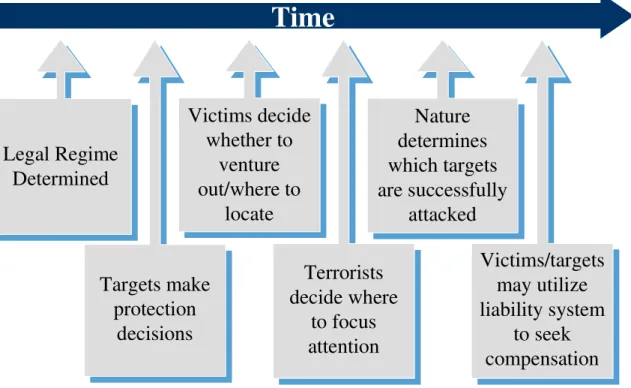
Figure 1 below captures the sequence of the game. Because target decisions are most likely
33Note thatθ(0) = 0, θ0 >0,andθ00<0.We also make a technical assumption thatG−G 0< γ
¡ 1 2N
¢
,so that the victims who are furthest away from any target will simply choose to stay home, even in the absence of terrorist risk. Relaxing this assumption, we conjecture, has little effect on our results.
34Our framework implicitly assumes that victims capture all the gross surplus (G) from their decision to patronize
a target. This assumption seems natural, since the lack of a contractual relationship makes it difficult for the target to extract any of the victim’s surplus. Nevertheless, all of our results would follow if we assumed that the target captured some portion of the victims’ surplus (so long as the patronizing victims as a whole retained some complementary portion of it).
to be durable (e.g., building a skyscraper), we assume that primary targets move first, and that they each install their self-protection levelsiupon moving. After observing target self-protection,
victims move second, setting aggregate patronage levels,vi,for each target. After observing both
self-protection measures and patronage at each target, terrorists move last. We assume that the actions taken by each actor are observable to all involved. Note that this description fully defines a sequential game under complete information.
3.2 Equilibrium and Welfare in the Absence of Liability
To analyze equilibrium behavior in this game, we begin by characterizing predicted play in the benchmark case where no party can seek compensation through the tort system. This reveals the externalities that an optimal liability regime must address, but it is also a plausible outcome in its own right, as pending terrorism litigation may ultimately prove unsuccessful. To characterize the equilibria of the game, we employ standard backward induction techniques, beginning with the terrorists, then moving to the secondary victims, and then finally moving to primary targets.
3.2.1 Terrorists
Terrorists observe~s = {s1, ..., sN} and~v = {v1, ..., vN},and allocate their own resources ~r =
{r1, ..., rN}to solve the following problem:
max {~r,A}Γ(A) + N X i=1 ρ(si, ri)B(L, vi) s.t. A+ N X i=1 ri ≤R (3.1)
Given the concavity ofρ inri,for any given{~s, ~v}the first order conditions of this problem are
both necessary and sufficient for a unique maximum, and are as follows:
Γ0(A) =ρ
Time
Legal Regime
Determined
Legal Regime
Determined
Targets make
protection
decisions
Targets make
protection
decisions
Victims decide
whether to
venture
out/where to
locate
Victims decide
whether to
venture
out/where to
locate
Terrorists
decide where
to focus
attention
Terrorists
decide where
to focus
attention
Nature
determines
which targets
are successfully
attacked
Nature
determines
which targets
are successfully
attacked
Victims/targets
may utilize
liability system
to seek
compensation
Victims/targets
may utilize
liability system
to seek
compensation
Time
Legal Regime
Determined
Legal Regime
Determined
Targets make
protection
decisions
Targets make
protection
decisions
Victims decide
whether to
venture
out/where to
locate
Victims decide
whether to
venture
out/where to
locate
Terrorists
decide where
to focus
attention
Terrorists
decide where
to focus
attention
Nature
determines
which targets
are successfully
attacked
Nature
determines
which targets
are successfully
attacked
Victims/targets
may utilize
liability system
to seek
compensation
Victims/targets
may utilize
liability system
to seek
compensation
Figure 1: Sequence of moves.
The interpretation of these conditions is fairly standard. The terrorists allocate resources so that the expected marginal productivity of investments is equal across all targets and the non-violent ac-tivity. Thus, for example, when one target increases its own protection, it becomes marginally less attractive to terrorists. This shock to their rates of return then induces terrorists to shift resources toward their other alternatives: attacking different targets and investing more in the nonviolent ac-tivity. Similarly, if a specific target is patronized by more victims, then that target becomes more attractive to the terrorist group, causing it to shift resources marginally away from other targets and the nonviolent activity, and toward the more-patronized target.
Formally, these intuitions can be summarized in the following lemma.
Lemma 3.1. Under an optimal allocation of resources by the terrorist group, and for a given
{~s, ~v}, ri is uniquely defined, strictly decreasing in si andv−i,and strictly increasing ins−i and
vi. Moreover, for allj, Ais strictly increasing insj and strictly decreasing invj.
conditional on victim and target decisionmaking. The effect of the underlying parameters on ter-rorist behavior is proven in Lakdawalla and Zanjani (2004).35 Perhaps the most important aspect of Lemma 3.1 is the fact that the resource allocation for a given location i can turn, in part, on actions taken by victims and targets atdifferentlocations(−i). For example, enhanced protection efforts by a remote target (s−i) can shift risktowardtargetias the terrorist group removes marginal
resources from the better-protected target and reallocates them to others. Similarly, greater patron-age at a remote target (v−i) can shift riskaway fromtargetias the increased patronage makes the
remote target more attractive, and the terrorist group attempts to increase its resource expenditures there.
In what follows, we shall refer to these cross-target effects as “risk-shifting,” since activities at one target tend to shift risk onto (or away from) other targets. In contrast, the changes that patronage/self-protection have in channelling terrorist efforts into (or away from) nonviolent activ-ities we will call “deterrence,” because it reduces the total level of investment in violent terrorism that society must bear. Both target protection and victim precaution have risk-shifting and deter-rence effects. Target self-protection both enhances deterdeter-rence on the margin (a positive externality) and shifts some marginal risks onto other targets (a negative externality). Similarly, a reduction in victim patronage contributes to deterrence (a positive externality) and shifts risk onto other targets (a negative externality).
Analysis of the terrorist’s first order conditions also yields the following result:
Lemma 3.2. Under an optimal allocation of resources by the terrorist group, and for a given
{~s, ~v}, ¯ ¯ ¯∂ri ∂si ¯ ¯ ¯> ¯ ¯ ¯P−i∂r−i ∂si ¯ ¯ ¯and ¯ ¯ ¯∂ri ∂vi ¯ ¯ ¯> ¯ ¯ ¯P−i ∂r−i ∂vi ¯ ¯ ¯∀i.
Essentially, Lemma 3.2 states that deterrence and risk-shifting are generally always present simultaneously. Self-protection by a target reduces terrorist activity against that target by more than the additional activity it diverts to other targets. Thus, while target hardening does shift risk, it has a net deterrent effect in the aggregate. Similarly, victim patronage transfers risk to
other targets, but it also draws resources away from the non-violent activity, and thus erodes net deterrence in the aggregate.
3.2.2 Subsidiary Victims
Having characterized the unique optimal choice for the terrorist group, we now consider how subsidiary victims behave in light of the terrorist’s anticipated strategy profile. It is important to distinguish precisely between victims’ internal costs, and the costs that they externalize onto targets. The latter externalities would form the basis for an optimal liability scheme, if one is to be formed.
Recalling the incentives and cost structure faced by each victim, each victim considers what target (if any) she will visit during the period, an action we denote byh. For each victim at location k, h(k) = idenotes a decision by that victim to spend time at targeti. In addition, victims can choose to spend time away from all targets (i.e., they “stay home”), an activity we denote by h(k) = 0.Thus, the action set for victims is given byh(k) ∈ {0,1, ..., N}.It is easily verified thatvi =
R
h(k)=idkdenotes the size of the sub-population patronizing targeti, fori∈ {1, ..., N}.
As noted above, victims receive payoff G from patronizing any target (rather than staying home), but must also bear travel costs of γ¡¯¯k− i
N
¯
¯¢, to patronize that location. In addition, however, all victims suffer personal losses should their patronized target be successfully attacked (in addition to any loss suffered by the target itself). Each subsidiary victim spending time at that target suffers a negative shockDto her welfare. The expected payoff to victimkfrom patronizing targeti∈ {1,2, ..., N}is G−γ µ¯¯ ¯ ¯k−Ni ¯ ¯ ¯ ¯ ¶ −ρ(si, ri)D (3.3)
while the net payoff for the outside (safe) activity remains constant at G0. Note, however, that
victims do not account for the losses of targets, even though they may be partly responsible for the risk that targets face.
equi-librium), the identity of the “marginal” victim,k∗, who is indifferent between patronage at targeti
and staying at home, is given by the following expression:36
G−G0 =γ µ¯¯ ¯ ¯k∗−Ni ¯ ¯ ¯ ¯ ¶ +ρ(si, ri(v1, ..., vN))D, i= 1, ..., N (3.4)
This expression implies that victims located within the radiusθ(G−G0−ρ(si, ri(v1, ..., vN))D)
of targetiwill patronize it. Note that the right-hand side of the above expression is strictly increas-ing in k∗, so the interval [−k∗, k∗] is uniquely defined. Aggregate patronage of each targeti is
then given by37:
vi = 2θ(G−G0 −ρ(si, ri(−→s ,−→v))D) (3.5)
All else equal, victims will tend to move toward more protected targets and avoid less protected ones. Moreover, since an increase in protection by any one target decreases aggregate risk, it will also increase the aggregate number of victims who patronize at-risk targets. Formally, we have:
Lemma 3.3. Under an optimal allocation of resources by the terrorist group and optimal choices by victims, and for a fixed {~s}, the patronage of any target i, vi, is uniquely defined, strictly
increasing insi andv−i,and strictly decreasing ins−i.Moreover, for alli,
¯ ¯ ¯∂vi ∂si ¯ ¯ ¯> ¯ ¯ ¯P−i ∂vi ∂s−i ¯ ¯ ¯. The results of Lemma 3.3 are analogous to the argument made by Lemma 3.2. An aggregate reduction in risk increases the aggregate number of victims choosing to venture out to targets. This reaction is likely to have a significant effect on target activities. While, as demonstrated above, self-protection can shift risk onto other targets, these gains come at the cost of drawing in additional subsidiary victims, who are attracted by the enhanced fortifications. On the margin,
36The reader will note that this set of first order conditions leaves out the constraint that PN
i=1vi ≤ 1. This
constraint will tend not to be binding so long as victims find it optimal to spend at least some time in the outside activity. We will constrain our analysis to parametric contexts where this condition is satisfied in what follows.
37And consequently, the total number of potential victims who pursue the safe option is:
v0= 1−Σ·vi= 1−
N
X
i=1
then, targets must weigh the private benefits they receive by shifting risks and effecting deterrence, against attracting more victims (and thwarting their own precautions) on the other.
3.2.3 Targets
We now step back to the initial stage of the game, in which primary targets have the opportunity to make self-protection decisions. Recall that in the event of a successful attack, targetisuffers losses L, but may invest resources si to dampen the probability of a successful attack. Like the other
parties, primary targets behave strategically, and understand the nature of the subsequent structure of the game analyzed above: i.e., once targets’ investments are sunk and observed, victims will then optimize across locational choices, and then the terrorists will optimize across investments in attacking targets and carrying out nonviolent political activity.
Consequently, each targetimakes protection decisions that maximize its expected payoff, solv-ing the followsolv-ing:
min si
ρ(ri(si, s−i), si)·L+si (3.6)
This problem has the first order condition for each targeti:
ρs(ri, si)·L | {z } Direct Effect +ρr(ri, si)· dri dsi ·L | {z } Indirect Effect + 1|{z} MC = 0 (3.7)
The intuition behind this condition is relatively straightforward. On the one hand, increasing si
imposes a direct marginal cost of 1 on the target, reflected in the final term on the left hand side of
(3.7). On the other hand, by enhancing self-protection, the target is able to affect the probability of an attack in both direct and indirect ways. A larger value ofsi directlyreduces the probability of
an attack by acting on theρ(.)function, represented by the first term on the left hand side of(3.7). In addition, however, a larger value of si has indirect effects by altering the strategies of victims
and terrorists, and changing the equilibrium value of ri in the continuation game, represented by
Note that the direct effect depicted in(3.7)is strictly negative, and thus there are always direct benefits to investing in precautions. However, the indirect effect is somewhat more complicated to sign, since the equilibrium partial derivative dri
dsi has multiple, countervailing effects. The
decom-position of this derivative yields the following:
dri dsi = − z}|{ ∂ri ∂si + + z }| { ∂ri ∂vi ∂vi ∂si + + z }| { X j6=i ∂ri ∂vj ∂vj ∂si (3.8)
Equation(3.8)represents the equilibrium impact of target 1’s own protection on its own risk. In general, the sign of this term is ambiguous: For, on the margin, a target’s own protection may not make it safer, because it may draw in enough victims to offset the effect of protection. In any interior equilibrium, however, the marginal impact of self-protection on terror investments must be negative, or targets would not expend valuable resources on it. The external effects of protection on other targets though remain ambiguous in equilibrium.
By placing on ρ sufficient technical regularity conditions,38 one can show that, dri
dsi < 0 for
all values of si,limsi→∞
dri
dsi = 0;andlimsi→∞
dri
dsi = −∞.However, these conditions are merely
sufficient for the optimal choice to be finite and strictly positive. They do not guarantee the global concavity of the target’s problem. To guarantee concavity (and a unique local optimum), it is necessary to make one additional assumption:
Assumption A1: The following condition holds everywhere:
ρss(ri, si) + [2ρrs(ri, si) +ρrr(ri, si)]· dri dsi +ρr(ri, si)· d2r i ds2 i <0 (A1)
Condition (A1) is merely the second order condition for global concavity. It is possible to weaken this assumption, at the expense of complicating the analysis somewhat. In particular, violation of (A1) implies that there may be multiple local minima from which to choose, and
it may be possible that the optimal protection choice might “jump” from one local minimum to another with a perturbation in the economic environment. Assumption A prevents such jumps from occurring.
3.2.4 Equilibrium
By construction, we have shown that for a given~s,the optimal strategies of the subsidiary victims and targets are uniquely defined. Moreover, we have demonstrated that the optimal si for each
target is almost always unique. We now show that, under the conditions described earlier, there is only one symmetric equilibrium, according to the following:
Proposition 3.4. If Assumption A1 holds, there is a unique symmetric equilibrium of the no liability game, which is characterized by (3.7), (3.5), and (3.2).
The symmetry comes from the even spacing of targets and victims, the equal value of each target, and the symmetric position of the targets in choosing their strategies simultaneously. Let the symmetric equilibrium described by the above system with no liability be denoted by©sN L, vN L, rN Lª.
In what follows, we constrain our attention in all cases to this family of symmetric equilibria. Intuitively, we can make a few general predictions about the efficiency characteristics of the symmetric equilibrium. First, in the absence of any liability regime, there are likely to be too many victims at each target, since each victim does not internalize the cost of the risk she imposes on targets. Second, targets are likely to misallocate self-protection resources, since they do not account for external effects on other targets, and they do not fully internalize the welfare of on-site subsidiary victims. Hence, targets may expend too much or too little on protection (depending on which of these effects dominates).39
Efficiency within our model most naturally reduces to maximizing the summed total expected payoffs of victims and targets (net of loss), conditional on the incentive compatibility constraints 39These intuitions will be important for our later analysis, since they suggest that the optimal liability regime
involves forcing netpaymentsby victims to the population of targets, and payments among targets that depend on the net externalities associated with protection.
of the terrorists.40 To simplify the notation, note that the number of victims at target i satisfies
vi
2 =ki∗− N1, and thus targetiis populated by victims over the interval[−v2i,v2i]. Therefore, total
surplus of all victims in the neighborhood of targeti(whether they patronize or not) consists of the sum of each victim’s individual surplus:
V S(i) = µ 1 N ¶ G0+ 2· Z vi 2 0 (G−G0 −γ(x)−ρ(si, ri)D)dx (3.9)
Target surplus consists of expected losses net of protection:
−
N
X
i=1
(ρ(si, ri)L+si) (3.10)
A ‘socially optimal’ allocation of resources, then, would maximize the social surplus of victims and targets, taking as given the optimal responses of terrorists:41
max si,vi N X i=1 " 2 Z vi 2 0 (G−G0−γ(x)−ρ(si, ri)D)dx−(ρ(si, ri)L+si) # (3.11)
subject to the incentive compatibility constraint:
Γ0(A) =ρ
r(si, ri)B(L, vi) (3.12)
Constraining our analysis to a symmetric equilibrium, this problem simplifies to one of choos-ing {v,ˆ s,ˆ rˆ} to maximize surplus for a representative target, so that the social welfare function becomes, Ψ (ˆr,ˆs,vˆ) = 2 Z ˆv 2 0 (G−G0−γ(x)−ρ(ˆs,ˆr)D)dx−ρ(ˆs,ˆr)L−ˆs (3.13)
40Note that this formulation does not include the welfare of terrorists, which seems most natural in this context. It
also does not include any other social benefits of reducing terrorist behavior that are not visited on prospective v