© 2015. Adegboye Adegboyega. This is a research/review paper, distributed under the terms of the Creative Commons Attribution-Noncommercial 3.0 Unported License http://creativecommons.org/licenses/by-nc/3.0/), permitting all non-commercial use, distribution, and reproduction inany medium, provided the original work is properly cited.
Global Journal of Computer Science and Technology:
GInterdisciplinary
Volume 15 Issue 2 Version 1.0 Year 2015
Type: Double Blind Peer Reviewed International Research Journal Publisher: Global Journals Inc. (USA)
Online ISSN: 0975-4172 & Print ISSN: 0975-4350
Secure on-Line Transaction through Augmented Biometrics
System
By Adegboye Adegboyega
Abstract-Internet and its facilities facilitate on-line shopping by allowing shoppers to browse the online stores and obtain their needs with minimum effort. This is not possible with familiar traditional system of buying and selling. This advantage offered by the internet is restricted by issue arising from on-line security and payment systems. Although research has been conducted and several approaches have been devised to reduce this restriction but there is need for further improvement. As a result, this research work proposes a new solution that combines biometrics technology (Finger Print) together with (password) to provide secure on line transaction through multiple factors security solution. It makes, verifying process and verification for shopper’s identity more secured by recognize individual based on measurable biological characteristics (Fingerprint) and provision of a link to identify the authorized user, this minimizes frauds. This addresses and reduced the security problems that are associated with existing on line transaction and e-payments. The design was implemented using Visual Basic.Net and SQL because of their supports for implementing web-based security systems. Samples of (130) on line shoppers were used for this research work to capture fingerprints from index and thumb fingers of left and right hands, also the attitudes of the customers in terms of password selection and management.
Keywords:
password, security, e-payment, fingerprint, biometric technology, on line transaction and
shopper.
GJCST-G Classification: K.4.4
SecureonLineTransactionthroughAugmentedBiometricsSystem
Strictly as per the compliance and regulations of:
Secure on-Line Transaction through Augmented
Biometrics System
Adegboye Adegboyega
Internet and its facilities facilitate on-line shopping by allowing shoppers to browse the online stores and obtain their needs with minimum effort. This is not possible with familiar traditional system of buying and selling. This advantage offered by the internet is restricted by issue arising from on-line security and payment systems. Although research has been conducted and several approaches have been devised to reduce this restriction but there is need for further improvement. As a result, this research work proposes a new solution that combines biometrics technology (Finger Print) together with (password) to provide secure on line transaction through multiple factors security solution. It makes, verifying process and verification for shopper’s identity more secured by recognize individual based on measurable biological characteristics (Fingerprint) and provision of a link to identify the authorized user, this minimizes frauds. This addresses and reduced the security problems that are associated with existing on line transaction and e-payments. The design was implemented using Visual Basic.Net and SQL because of their supports for implementing web-based security systems. Samples of (130) on line shoppers were used for this research work to capture fingerprints from index and thumb fingers of left and right hands, also the attitudes of the customers in terms of password selection and management. The empirical results reveal above 80% password management practices, more than 85% for fingerprint recognition rate and 96.30% participation. The combined strengths of this scheme present on line shoppers a secure and usable authentication scheme. Although on line shopping is used in this research work, it can be adapt to perform airline ticket booking; do financial deals like pay bills via internet banking and online brokering to buy shares.
Keywords: password, security, e-payment, fingerprint, biometric technology, on line transaction and shopper.
I.
I
ntroductionodern software application computer programs enable ones to carry out on-line transaction irrespective of location and time, however, the issue arising from Security and payment systems like “the use of spyware and virus that allows usernames and passwords to be stolen for unauthorized access are impeding the adoption of these online applications especially those involving sensitive data like financial transactions”(Stavrou et al,2002).
According to (Chandra and Calderon, 2005; Költzsch, 2008), “extra securitymeasures are needed in order to protect consumers from on-line fraudand
Biometric technology is increasingly being seen as a potential solution that will adequate address this problem”, also (Jain et al, 2000 and Gunajit and Pranav, 2010) point out that “Biometrics provide very powerful tools for the problems requiring positive identification and provide enabling technology that have potential to make our society safer, reduce fraud and lead to user convenience”.
Compared to other security measures, application of biometric technology may provide a better method to curb on line fraud, since it uses certain physical and behavioral traits that are distinctive to an individual to identify and verify the person through authentication; other forms of authentication methods have presented problems of improper authentication to users, for adequate on-line data protection and authentication, there is need to offer improved solution through biometric system (Shouvik et at, 2012,P.4,Okediran O. O., et al 2014, P. 2).
According to (Selina and Oruh, 2012), “Institutions offering Internet-based products and services to their customers should use effective methods to authenticate the identity of customers using those products and services”, also (Amtul, 2011) affirmed that “fingerprint technology in particular, can provide a much more accurate and reliable user authentication method”. This research work has detailed the development of a biometric identification scheme something you have (fingerprint) combined with something you know (password) for electronic payment. The combined strengths of these scheme present computer users a secure and usable authentication scheme, that reduces fraudulent practices in the payment of on line transaction payment and provides better solution.
II.
Review of Existing on Line Payment
Methods
a) Online cash systems
Online cash systems such as Virtual BBVA in Spain and PAY offered by SNAP in Italy, Austria and Australia have been designed and implemented. The wider usage of these on-line cash payment system is limited because of inability to secure on-line payments and transaction process over the internet making user inconvenience.
M
7
Global Journal of C omp uter S cience and T echnology Volume XV Issue II Version I
Y
ear
( ) G 2015Abstract-Author: Dept. of Mathematical Science Achievers University, Owo, Ondo State, Nigeria. e-mail: [email protected]
b) Debit cards, otherwise called ATM cards
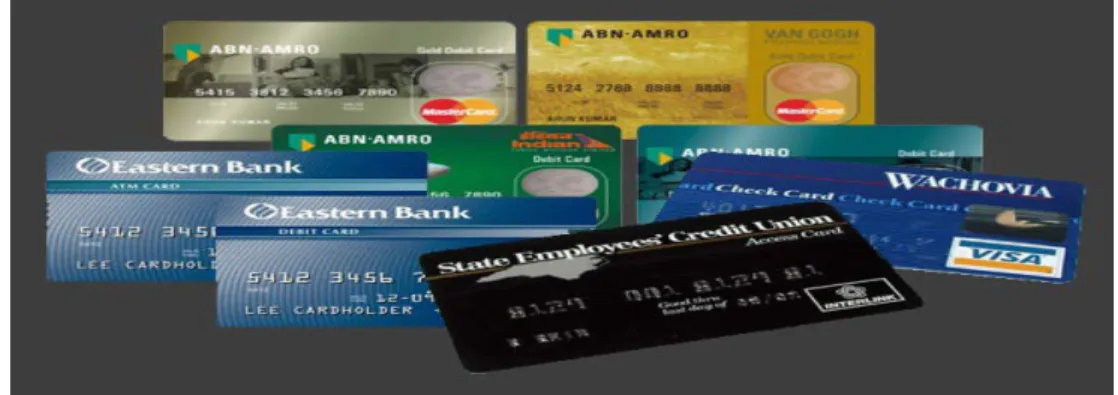
Debit cards, otherwise called ATM cards are still the most common e-banking product used by most Nigerians. It is of great importance for all economic agents, since it enables fast and efficient payments in the national economy as well as internationally. The
ability to complete payments with confidence is critical to the efficient functioning of the on-line electronic transaction and this efficiency has not been fully achieved due to existence of the various forms of crimes such as fraud and identity theft problems that are affecting on-line payment. Figure 1 shows ATM card.
c) Online Credit Card Payment System
According to (Laudon and Traver, 2002),”This payment system has been widely accepted by consumers and merchants throughout the world, and the most popular methods of payments especially in the
retail markets”. It offers several advantages over the traditional modes of payment; the consumers and merchants still faced challenges of third party involvement. Figure 2 shows Credit Card Payment Form.
d) Electronic Cheque Payment System
Digital cheque payment system seeks to extend the functionality of existing chequing accounts for use as online shopping payment tools. Electronic cheque system has many advantages: (1) they do not require consumers to reveal account information to other individuals when setting an auction (2) they do not require consumers to continually send sensitive financial information over the web (3) they are less expensive than credit cards and (4) they are much faster than paper based traditional cheque. The disadvantage of electronic cheque system includes their relatively high fixed costs, their limited use only in virtual world and the fact that they cannot protect the users’ anonymity.
e) Smart Cards based Electronic Payment System
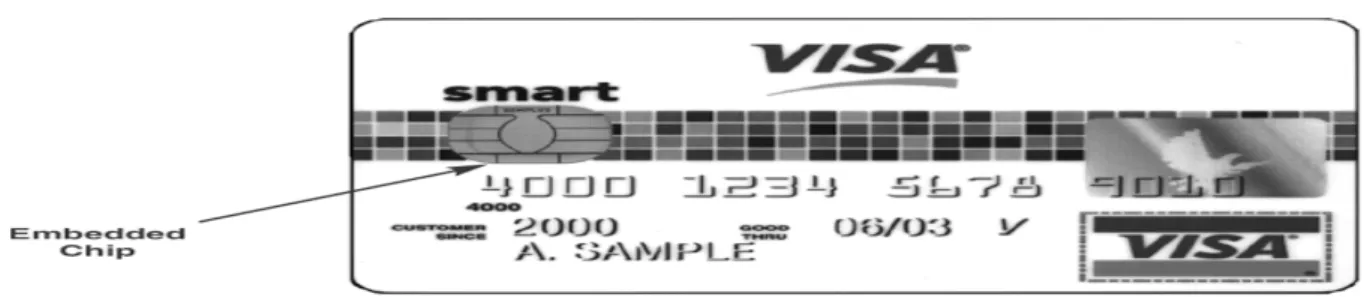
(Chakrabarti et al K, 2002) described Smart Cards based Electronic Payment System as “Plastic card that contained memory chips or embedded microprocessors of greater storage and inbuilt transaction processing capability”, Smart cards are better protected from misuse than conventional credit cards, because the smart card information is encrypted. Currently, the two smart cards based electronic payment system- Mondex36 and Visa Cash are incompatible in the smart cards and card reader specification. Not knowing which smart card system will become market leader; banks around the world are Secure on-Line Transaction through Augmented Biometrics System
8
Global Journal of C omp uter S cience and T echnology Volume XV Issue II Version I
Y
ear
( ) G 2015Figure 1:ATM card
Figure 2 :Credit Card Payment Form Sample
Therefore, it is not very suitable for the retail transactions by consumers.
unwilling to adopt either system, let alone other smart card system. Therefore, establishing a standard smart
card system, or making different system interoperable with one another is critical success factors for smart card based payment system.
Figure 3: Smart Card based ElectronicPayment System (Sumanjeet , 2009),reported that ” Users tend
not to trust existing systems due to the long history of fraud, misuse or low reliability, that resulted to non positive reputation, also potential customers often
mention this risk as the key reason why they do not trust this payment system”, therefore, they do not make Internet purchases with it.
Figure4:
Proposed ModelArchitecture of Secure On-Line Transaction Augmented BiometricsSystem
9
Global Journal of C omp uter S cience and T echnology Volume XV Issue II Version I
Y
ear
( ) G 2015III.
Description of the Proposed System
The proposed model gives the flexibility to perform any online payment or transaction, the model is based on, three-tier security comprising the Password, provided link and finger print. The architecture aims to, makes, online payment or transaction verifying process and verification for shopper’s identity more secured as much as possible. The user will be presented with a registration page for first time of use, after his registration, he will be required to scan his finger print, which will then be submitted into the fingerprint database through provided link. For subsequently use the consumer, log into his system (PC/Laptop/Phone) using (PINS), then do fingerprint using fingerprint device and send the captured information via a provided link, he browses, the online stores, when he is ready to pay for his shopping, the on line-store contacts his bank and the bank, compared his captured fingerprint to a compact and expressive digital representation of the user fingerprints already stored as a template on a cloud database. If a match is found and the user has enough fund is granted to carry out the on line transactionpayment, deduction is made from the consumer’s account , otherwise, the payment is denied, which ever case an applicable information is send to the consumer and the on line store to respond as appropriate.
IV.
Implementation and Results
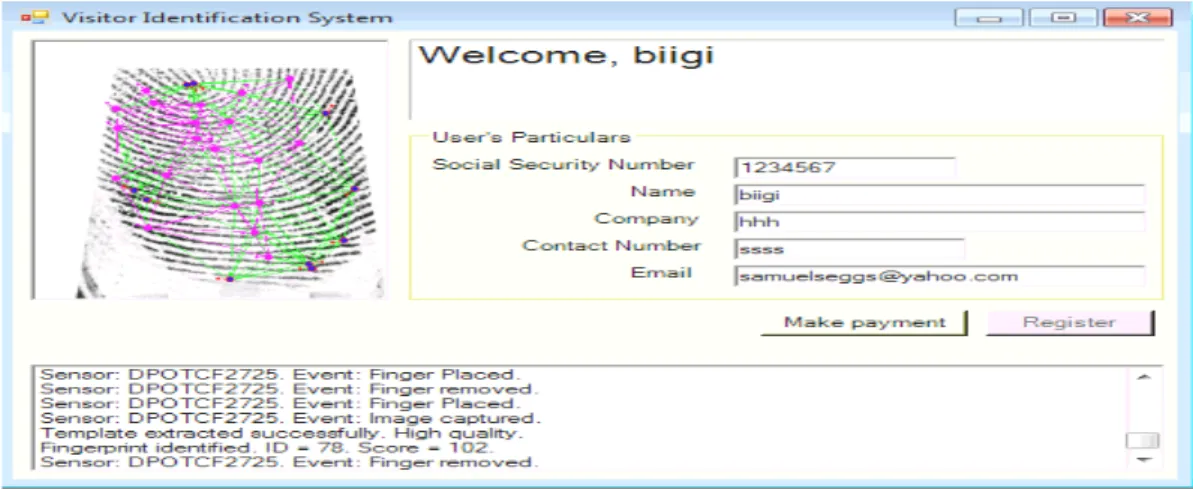
Hypertext markup language was employed in the Microsoft visual studio integrated development environment. The overall system was developed on the Microsoft.NET framework using Visual Studio.NET (visual C#) and MS SQL Server 2008. Samples of (130) on line shoppers were used for this research work to capture fingerprints from index and thumb fingers of left and right hands, also the attitudes of the customers in terms of password selection and management. Some of the graphical user interface of the developed system is depicted in Figures 2 - 5. The empirical results reveal more than 80% password management practices and above 85% of fingerprint recognition rate. The combined strengths of this scheme present on line shoppers a secure and usable authentication scheme.
Figure 4:Shopper information interface
Figure 5:Shopping Cart information interface
Secure on-Line Transaction through Augmented Biometrics System
10
Global Journal of C omp uter S cience and T echnology Volume XV Issue II Version I
Y
ear
( ) G 2015a) Research Design
The descriptive survey design was adopted which involved the collection of primary and cross sectional data through the use of a structured questionnaire. A preliminary study visit was made to a community-Based ICT Centre Ewekoro Abeokuta Nigeria in April 2015 to find out about the feasibility of the study. The sample frame for this study comprised exhaustive list of the ICT Centre units. The purposive sampling method was adopted in selecting the respondents so as to ensure that selected individuals were those that had adequate knowledge of online shopping.
b) Instrument for Data Collection
Data were collected with a structured questionnaire designed in a four point Like scale, comprised four sections: Section A elicited information about units in the ICT Centre.Section B asked questions about ICT resources available in each Unit. While section C sought to ascertain the stage of ICT Global Standard in the Centre. Section D, the last section, contained questions that enquired about the challenges
encountered by the units in the ICT online transaction adoption and implementation processes. The instrument was validated through face and content validity. It was subjected to thorough scrutiny by three experts in Biometric System research and two others in the field of password selection and management. Modifications were made on the instrument based on their assessments. Copies of the questionnaire were distributed to the respondents by the researchers who had initially sought the permission of the Director of the ICT Centre. A total of 135 copies of the questionnaire were distributed but 130 copies were completed and returned. This constituted 96.30% and was used for data analyses.
c) Data Analysis
The Statistical Package for Social Science (SPSS) software was used to carry out the analysis. The variables used to assess the Secure On-Line Transaction Augmented Biometrics System using 4-point like scale was re-coded. Strongly Agree and Agree were re-coded as high while disagree and strongly Disagree were re-coded as Low. Next, a frequency distribution table was generated for all the variables.
11
Global Journal of C omp uter S cience and T echnology Volume XV Issue II Version I
Y
ear
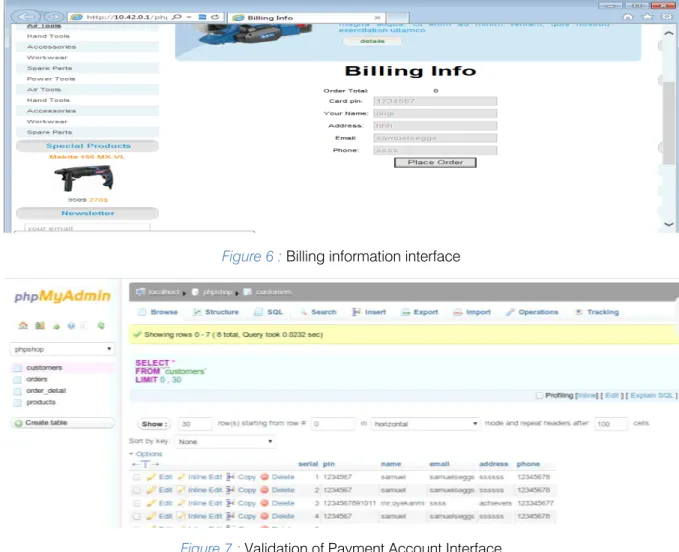
( ) G 2015Figure 6 :Billing information interface
Figure 7 :Validation of Payment Account Interface
V.
Evaluation of The Secure Augmented
Table 1 : Distribution of variables concerns the Secure Augmented Biometrics System PASSWORD SELECTION PASSWORD MANAGEMENT FINGERPRINT LEFT( index and
thumb) FINGERPRINT RIGHT( index and thumb) OPERATIONAL EFFICIENCY
Freq. % Freq % Freq % Freq % Freq. %
Valid Low 20 15.38 23 17.69 16 12.31 15 11.54 18 13.85
High 110 84.62 107 82.31 114 87.69 115 88.46 112 86.15
Total 130 100 130 100 130 100 130 100 130 100
The distribution of variables as relates to the Secure Augmented Biometrics System is as presented in table 1.The Password selection and Password management are more than 80%,this may due to initial training giving to the user concerned password protection. While Finger Print (Index and Thumb) recorded more than 85 % .Operational efficiency is more than 85% this is owed to ease of use that make user to easily acquired sufficient knowledge and skills on the use of the system and can result to increase in number of on-line transaction. A total of 135 copies of the questionnaire were distributed to Participants but 130 copies were completed and returned. The system shows 130/135 (96.30%) participation. From the evaluation, we can conclude that the Secure Augmented Biometrics System is highly efficient, effective and satisfactory to the target users (On-line shoppers).
Internet shopping, unlike traditional retailing systems shoppers browse the online stores and obtain their needs with minimum effort. Internet shopping has been one of the mostly used facilities of the Internet. Security in online shopping and payment systems has been a wide research area since the early days of the Internet and several approaches have been devised. This research work proposes a new solution that combines password with finger print recognition. The Password selection and Password management are more than 80%, this may due to initial training giving to the user concerned password protection. While Finger Print (Index and Thumb) recorded more than 85 % .Operational efficiency is more than 85% this is due to ease of use that makes user to easily gained sufficient knowledge and skills on the use of the system this will increase on line shopping and mobile payments for goods and services through online transaction when the system is fully adopted. The system shows 130/135 (96.30%) participation. From the evaluation, we can conclude that the Secure Augmented Biometrics System is highly efficient, effective and satisfactory to the target users (On-line shoppers). It makes, verifying process and verification for consumer identity more secured by recognize individual based on measurable biological characteristics (Fingerprint) and provision of a link to identify the authorized user, this minimizes frauds. The result of this research work has demonstrated that finger print uniqueness provides adequate authentication. In this work, will combine text based password and
biometrics (finger Print), the combined strengths of these scheme present on line shoppers a secure and usable authentication scheme. Although the on line shopping was used in this research work, it can be apply to perform airline ticket booking; do financial deals like pay bills via internet banking and online brokering to buy shares.
References Références Referencias
1. Amtul Fatima (2011): E-Banking Security Issues – IsThere A Solution in Biometrics ? Journal of Internet Banking and Commerce, vol. 16, no.2 Pp 1-9. 2. Chakrabarti, Rajesh and Kardile, Vikas (2002),
E-Commerce: The Asian Manager’s Handbook, New Delhi: Tata McGraw Hill.
3. Chandra, A., & Calderon, T. (2005).Challenges and constraints to the diffusion of biometrics in information systems. Communications of the ACM, 48(12), 101-106.
4. Gunajit Sarma1 and Pranav Kumar Singh (2010): Internet Banking: Risk Analysis and Applicability of Biometric Technology for Authentication. Int. J. Pure
Appl. Sci. Technol., 1(2) (2010), pp. 67-78.
5. Jain, A.K., Prabhakar, S., Hong, L. and Pankanti, S. (2000), “Filterbank-based fingerprint matching” IEEE Trans. on Image Processing, pp.846-859.
6. Laudon, C. Kenneth and Traver, Carol (2002), E-Commerce, New Delhi: Pearson Education.
7. Okediran O. O., et al (2014) A Biometric Identification Based Scheme for Secured E-Payment. Journal of Computation in Biosciences and Engineering. Volume 1/ Issue 2 Pp .1-5
8. Selina Oko and Jane Oruh (2012): Enhanced ATM security system using biometrics. International
Journal of Computer Science Issues, Vol. 9, Issue 5, No 3, Pp 355-363.
9. Shouvik Biswas, Anamitra Bardhan Roy,Kishore Ghosh, Nilanjan Dey (2012) : A Biometric Authentication Based Secured ATM Banking System. International journal of Advanced Research in Computer Science and software Engineering.Volume 2,Issue 4,April 2012 Pp. 178-182.
10. Stavrou, A, Benjamin, P, May, J., (2002): “E- Commerce and Poverty alleviation in South Africa; An Input Paper to the Government Green Paper – Unpublished”, pp 27- 44, available at
http://docweb.pwv.gov.za/Ecomm-debate/myweb/greenpaper/academics/stavrou.html Secure on-Line Transaction through Augmented Biometrics System
12
Global Journal of C omp uter S cience and T echnology Volume XV Issue II Version I
Y
ear
( ) G 201511. Sumanjeet S (2009). Emergence of Payment Systems in the age of Electronic Commerce: The State of Art, Global J. Bus. Res., 2(2): 17- 36.
12. Sumanjeet Singh (2009) Emergence of payment systems in the age of electronic commerce: the state of art Asia Pacific Journal of Finance and Banking Research Vol. 3. No.3. 2009.Pp 18-40.
13
Global Journal of C omp uter S cience and T echnology Volume XV Issue II Version I
Y
ear
( ) G 2015This page is intentionally left blank
Secure on-Line Transaction through Augmented Biometrics System© 2015 Global Journals Inc. (US)1
14
Global Journal of C omp uter S cience and T echnology Volume XV Issue II Version I