Facebook and political engagement: A study of online political group membership
and offline political engagement
Meredith Conroy
a, Jessica T. Feezell
b, Mario Guerrero
c,⇑ aOccidental College, Department of Politics, 1600 Campus Road, Los Angeles, CA 90041, USA b
University of California, Santa Barbara, Department of Political Science, Mailcode 9420, Santa Barbara, CA 93106-9420, USA c
California State Polytechnic University, Pomona, Department of Political Science, 3801 West Temple Avenue, Building 94, Room 303, Pomona, CA 91768, USA
a r t i c l e
i n f o
Article history:
Available online 24 April 2012 Keywords: Political communication Social media Political participation Facebook Surveys
a b s t r a c t
In what ways do online groups help to foster political engagement among citizens? We employ a multi-method design incorporating content analysis of online political group pages and original survey research of university undergraduates (n= 455) to assess the relationship between online political group member-ship and political engagement—measured through political knowledge and political participation sur-rounding the 2008 election. We find that participation in online political groups is strongly correlated with offline political participation, as a potential function of engaging members online. However, we fail to confirm that there is a corresponding positive relationship between participation in online political groups and political knowledge, likely due to low quality online group discussion.
Ó2012 Elsevier Ltd. All rights reserved.
1. Introduction
New media is a growing force in the study of civic engagement. There are many levels of analysis within the discussion of new media effects ranging from the global economy to personal use of the Internet. Our research exists on the level of the democratic divide (Norris, 2001), where researchers study individual-level usage of the Internet and analyze its effect in terms of civic engage-ment. We join an active discussion of whether political Internet use will be helpful, harmful, or irrelevant in its effects on civic soci-ety and political engagement.
There is some controversy concerning the effects of the Internet on political engagement. While the impact of general Internet use on political efficacy and trust is still contested,1many are optimistic
about the ability of political Internet use to increase offline and con-ventional forms of political participation (Cho et al., 2009; Mossber-ger, Tolbert, & McNeal, 2008; Rojas & Puig-i-Abril, 2009; Shah, Cho, Eveland, & Kwak, 2005; Xenos & Moy, 2007), knowledge (Xenos & Moy, 2007) and civic engagement through social capital (Jennings & Zeitner, 2003; Norris, 2001; Shah, Kwak, & Holbert, 2001; Valenzu-ela, Park, & Kee, 2009).
Understanding the influence of political Internet use, and espe-cially new venues and capacities for social interaction, on offline
conventional forms of political participation and political knowl-edge is especially pertinent to understanding younger citizens, who are more active online than previous generations. In 2007, Pew reported that 93% of teens use the Internet. Additionally, as Internet use goes up, participation on social networking sites (SNS) increases as well: ‘‘more [teens] than ever are treating [the Internet] as a venue for social interaction—a place where they can share creations, tell stories, and interact with others’’ (Lenhart, Madden, Macgill, & Smith, 2007). To better understand whether heightened Internet use has a positive or negative impact on polit-ical engagement of youth, it is important for our analysis to incor-porate measures of different types of social interactions online. As time goes on, we are developing more robust measures for online activities and effects through increased research efforts related to the effects of new media. This paper is an early attempt to accu-rately capture measurements of these online social interactions.
The proliferation of online venues for all purposes, from social interaction to consumerism, suggests that Internet use alone is too blunt a measure. Recently, researchers have begun to examine specific forms of ‘‘political use’’ of the Internet and SNS, an ap-proach we find to be more indicative of the mechanisms through which new media impacts political engagement. This project con-tributes to this line of more specified research by further exploring how online political group membership affects offline conventional forms of political participation and political knowledge among youth. Political groups are defined as any social connection shared by individuals, which can enable political discussion and interac-tion. Political groups have long existed offline through formal group organizations and even informal interaction amongst friends. However, new media is providing opportunities for
0747-5632/$ - see front matterÓ2012 Elsevier Ltd. All rights reserved. http://dx.doi.org/10.1016/j.chb.2012.03.012
⇑ Corresponding author. Tel.: +1 805 893 3432; fax: +1 805 893 3309. E-mail addresses: [email protected] (M. Conroy), [email protected] (J.T. Feezell),[email protected](M. Guerrero).
1
For an extended discussion of how the Internet erodes engagement and demobilizes citizens, seeAnsolabehere and Iyengar, 1995; Nie, 2001;Pasek, More, & Romer, 2009;Putnam, 2000. Also, more recent literature on Internet use and slacktivism, seeVitak et al., 2011.
Contents lists available atSciVerse ScienceDirect
Computers in Human Behavior
citizens in political groups to engage politically in ways that we have not yet seen.
Focusing on the social networking website Facebook, we use a multi-method design to learn more about the content of online political groups and potential influence they have on political engagement. Political engagement is defined here as offline con-ventional forms of political participation and political knowledge. We begin with analysis of original survey data (n= 455) to measure membership in online political groups and levels of offline conven-tional forms of political activity and political knowledge. We find that increased online political group membership is correlated with increased levels of offline conventional forms of political par-ticipation but not necessarily increased levels of political knowl-edge. To elaborate on these findings, we conduct a content analysis of political group pages and group wall commentary (walls are a shared social space where group members post mes-sages), where we find information quality to be quite low and rel-atively opinionated rather than information rich. Through survey design, we confidently establish correlation between online politi-cal groups and politipoliti-cal engagement, while the content analysis corroborates this relationship. We conclude with a discussion of our findings and suggest direction for future research in this area.
2. Online political activity effects
Certain uses of the Internet and new media yield civically redeeming effects in users.Mossberger et al. (2008)find that chat rooms, political email correspondence, and online news exposure predict higher voting rates.Shah, Kwak et al. (2001)demonstrate that information exchange over the Internet fosters civic engage-ment, trust, and life contentment in younger generations, while so-cial recreation on the Internet is negatively correlated with trust and life contentment. Both of these studies highlight the more deliberative uses of Internet, and more specifically, political discus-sion. McLeod, Scheufele and Moy (1999), Hardy and Scheufele (2005), Shah et al. (2007), and Cho et al. (2009)find interpersonal processes, such as discussion, are central to learning and action, perhaps licensing the positive effects on civic engagement and participation.
SNS often propagate deliberative activity through their use of discussion walls, online chat, information sharing, and networking. One function of SNS that has received little attention so far is the ability to easily create and join groups. Social scientists have cele-brated the advantages of group membership and associations for decades and some have prescribed participation in groups as an ‘‘all-purposive elixir for the ills of society’’ (Dekker & Uslaner, 2001). Existing research demonstrates that group membership encourages trust (Brehm & Rahn, 1997; Jennings & Stoker, 2004), democratic values, and the development of important political skills (Fowler, 1991; McFarland & Thomas, 2006). Furthermore, membership in a group provides necessary motivation and incen-tive to be politically informed (Coleman, 1988; Fishkin, 1991). In-deed, described as a ‘‘nation of joiners’’ in the 18th century by foreign visitor Alexisde Tocqueville (1990 [1840], p. 118), political engagement in the US has historically been spurred by group membership.
In one of the more crucial calls for attention to groups,Putnam (2000)details an alarming trend amid group membership and civic engagement in the United States; as membership in civic groups decreases so too does civic engagement. Putnam believes the stock of social capital underpinning civic engagement is built up though participation in voluntary organizations, largely offline. Yet the Internet is changing the ways in which we communicate, organize, and socialize (Bimber, Flanagin, & Stohl, 2005; Ellison, Steinfield, & Lampe, 2007; Gil de Zuniga & Valenzuela, 2011; Hampton & Wellman, 2001; Klein, 1999; Rich, 1999; Shah et al., 2005).
Technological development has spurred what is known as ‘‘net-worked individualism’’ where individuals are more likely to share information and work in collaborative networked groups ( Well-man, 2001). More specifically, the Internet revolution has brought about the inception of online groups that appear to resemble offline groups in function, if not in form. Even as some disagree that offline groups have decreased in prominence, most agree that the Internet has brought significant changes in how offline groups function.
The perceived decline in offline groups paired with growth among online groups raises an important question for civic engagement and new media: In what ways does online political group participation benefit offline political participation? In this paper, we anticipate advancing scholarship on the effects of online political group membership specifically in terms ofpolitical engage-ment. Heeding advice fromBerger (2009), we avoid measuring ef-fects on civic engagement broadly. We focus more directly on political engagement in the form of offline conventional forms of political participation during the 2008 election and political knowledge, generally, measured using a standard set of civics questions (Delli Carpini & Keeter, 1997). We argue that online political group membership is likely to encourage offline political participation, but is unlikely to contribute to substantial increases in political knowledge among joiners.
2.1. Group membership as a mechanism for political engagement
Group membership is thought to encourage political engage-ment though a number of mechanisms. First, group membership can provide an opportunity for members to discuss politics. Discus-sion is thought to be integral to feelings of efficacy among citizens, leading to higher rates of political activity (Andersen & Hansen, 2007; Cho et al., 2009; Delli Carpini, Cook, & Jacobs, 2004; Delli Carpini & Keeter, 1997; Fishkin, 1991; Gastil & Dillard, 1999; Robinson & Levy, 1986). Discussion in a group setting can also pro-mote learning by necessitating the expression of views (Taber & Lodge, 2006) and forcing more thoughtful consideration of viewpoints (Eveland, 2004; Huckfeldt, 2007). Benhabib (1994, p. 30–31)notes that, ‘‘when presenting their point of view and posi-tion to others, individuals must support them byarticulating good reasonsin a public context to their co-deliberators. This process of articulating good reasons in public forces the individual to think of what would count as a good reason for all others involved.’’ Eveland (2004)finds that anticipation of discussion that is counter to one’s own viewpoint motivates individuals to become more in-formed and elaborate on their own opinions. Reasoning, in this general sense, promotes learning (Cho et al., 2009).
However, deliberation effects are precarious. Studies have found the diversity of discussion to be imperative to knowledge gains, whereas homogenous discussion or one-sided arguments are detrimental to knowledge gains. This is especially evident in the framing literature, which finds that the availability of coun-ter-arguments limits framing effects (Druckman & Chong, 2007; Druckman & Nelson, 2003; Sniderman & Theriault, 2003). Diverse discussion is important in helping people to develop skills that encourage deeper understanding, yet message exposure is only as varied as a person’s network (Gastil, Deess, & Weisler, 2002; Nisbet & Scheufele, 2004; Scheufele, 2002).
When most people discuss politics, ‘‘their conversations usually take place within primary groups of family and close friends – that is, among like-minded people who largely resemble each other so-cially and politically’’ (Price & Capella, 2002, p. 304; see alsoWyatt, Katz, & Kim, 2000).Mutz and Martin (2001, p. 99)find cause for concern as they show a trend toward ever-homogenizing discus-sant networks, however, they go onto note that our media environ-ments, such as the news we read and watch, are more diverse than our social environments and that when compared to personal
interactions, people have less ability and desire to exercise selec-tive exposure on media content (see also Brundidge & Rice, 2009). Additionally, some have taken the hopeful view that new, albeit intangible, venues unrestrained by geography will enable diversified discussion groups and a more engaged citizenry or that online messaging will lead to more civic participation.
The Internet exists as a potential emporium of diverse informa-tion where people can communicate freely, without the restricinforma-tion of time and space. However, selection capabilities and little regula-tion of material available online might instead produce groups with members who share similar values and ideas; in other words, the Internet may lead to a heightening of selective exposure. By the sheer choice lent to Internet users, those surfing the web can choose to only join groups and discuss politics with like-minded others (Bimber, 2008). Thus, although deliberation is a characteris-tic of groups both online and offline, deliberative criteria—that the participant have an open mind, and that there be diversity among messages—are not a necessarily organic characteristics of group participation (Barabas, 2004).
Indeed, the Internet provides minority groups and subcultures with views counter to the mainstream a place to meet and gather. AsDahlgren (2006, p. 15)notes:
One can see an expansion in terms of available communicative spaces for politics, as well as ideological breadth, compared to the mass media. Structurally, this pluralization not only extends but also disperses the relatively clustered public sphere of the mass media.
Yet by providing minority groups a digital space to meet, the Internet becomes a place of external ideological balance, where individual group’s space lackinternalbalance (Norris, 2001).Sparks (2001)argues that this could lead to cynicism and disengagement. Indeed, when individuals with strong political positionsdomeet to discuss politics, it often dissolves into argumentation (Huckfeldt & Mendez, 2007), defeating the purpose of deliberation.
Using survey design,Norris (2004)found that Americans most active in online groups report that membership in online groups both widened their social networks to include others with different backgrounds and beliefs, as well as deepened their existing social ties, though she notes that the type of group matters. Thus, the po-tential for groups to deepen existing cleavages exists.
Additionally, discussion that takes place online is asynchro-nous; although a number of social networking sites have a forum or application for chatting and discussion, most dialogue takes place on message boards and over the course of a few days or months. For instance, a group member can post a comment on a message board and either never returns to see if others have re-sponded, or returns several days later to continue the conversation. Either way, this type of discussion adds dimension to our tradi-tional understanding of deliberation, acting as a potential detri-ment to the learning process.
Another valuable component of group membership that may or may not be present online is accountability.Olson (1965)famously argues that face time is an important component in the enforce-ment of member participation. By ensuring individuals will physi-cally run into each other, small groups will enhance membership participation. Correspondingly, larger groups are less likely to incentivize member participation and individual accountability. The Internet, alternatively, does not necessarily bring people into physical contact or require as much commitment from its mem-bers and this has potentially harmful associated effects (Putnam, 2000).
If we apply this logic to group membership online, it suggests that online groups may be unlikely to hold members accountable. Members of online groups usually do not meet face to face, and members of online groups can also choose to be anonymous, or
have multiple or false identities (Kolko & Reid, 1998; Nie & Erbring, 2000). For example,Fung (2002)found that journalists sometimes pretend to be ordinary citizens online in Hong Kong. This can have negative effects on one’s online community. As Kolko and Reid (1998)suggest, individuals who are anonymous or have multiple identities online are less likely to maintain their online identities, and as a result, may be unlikely to contribute in a meaningful way to an online community. These findings also suggest that ele-ments of political engagement may be hindered as a result. Yet Bargh, McKenna, and Fitzsimmons (2002)report that respondents from their experiment felt more comfortable discussing politics online than in person, and were more their ‘‘true selves’’ (see also Stromer-Galley, 2003). In conclusion, several attributes of offline groups, such as face-to-face communication, physical group mem-bership, and fluid personal discussion are not staples of online groups, lending to the overall need of an increased study of this on-line function.
As the scholarship now stands, there are many competing as well as consistent expectations of the influence of online group activity on political engagement. Early work quickly called into question the exchange of face-to-face interaction for online corre-spondence, but later work has begun to identify areas in which the two forms are similar and even complementary (Krueger, 2002; Norris & Jones, 1998; Shah, Kwak et al., 2001; Shah, McLeod, & Yoon, 2001; Tidwell & Walthers, 2002; Wellman, Haase, Witte, & Hampton, 2001; Williams, 2007). Recent scholarship has assessed the impact of SNS network size and strength (Ellison, Steinfield, & Lampe, 2011; Gil de Zuniga & Valenzuela, 2011; Rojas, 2008; Son & Lin, 2008) on political engagement, but not necessarily smal-ler groups or cliques that existwithinsocial networking sites. We argue that as scholarship continues to move toward understanding the effects of online activity on offline activity, greater attention must be paid to the forums of exchange, the type of information being exchanged, and the quality of opinions being expressed on-line. We move this line of research forward by opening up social networking sites and looking at the specific ways in which groups within these sites foster activities that may relate to offline con-ventional forms of political participation and knowledge. We focus specifically on the social networking site, Facebook, which as of late 2011, is the most visited website on the Internet. We chose Facebook because in addition to its popularity as the most visited site on the Internet, Facebook is the most popular social network-ing site. We do not expect that Facebook has a disproportionate political use, but we assert that as it is the most popular social net-working site, it potentially has substantial effects on the political process.
The main analysis examines whether membership in political Facebook groups is independently related to both participation and knowledge after controlling for other personal level indica-tors. These personal level indicators and participation will not be the focus of the analysis as previous literature has documented these relationships. Since the dependent variable—political engagement—is likely to influence membership in online political groups, the model may violate the recursivity assumption in OLS regression. Thus, two-stage least squares (2SLS) models are used to estimate this relationship, as OLS models cannot rigorously control for any potential endogeneity between the dependent and predictor variables. Before examining these results, we ex-plain Facebook and the choice of using groups as our medium of analysis. Next, we move onto describing the methodology and limitations of the sample. In considering these limitations, we assess the findings of the statistical analysis and use a content analysis in an attempt to corroborate those findings. Through de-tailed analysis of the information exchanged among online groups, online group membership rates, and measures of political engagement and knowledge of group members on Facebook, we
are able to empirically explore the theoretical expectations of on-line group participation.
2.2. Facebook
Facebook is an online medium that lets users interact with each other by sharing information about themselves via personal pro-files. Users share their information by ‘‘friending’’ others and allowing them access to their profile. As of Winter 2011, Facebook is currently considered the largest online social network with over 800 million active users, surpassing other online social networks such as MySpace, Friendster, and Bebo. Originally created by Har-vard University students in February 2004, Facebook was modeled after paper pages that Harvard circulated profiling staff, faculty, and students. Facebook originally began as a service only offered to universities, but continually expanded its availability until Face-book allowed global registration in September 2006. Since then, Facebook has grown rapidly, becoming especially popular among younger generations and college students.
Although the premise of Facebook rests with sharing informa-tion via an online profile that contains basic informainforma-tion about the user, there have been important additions to the site that have fundamentally changed how users interact with others on Face-book. Facebook introduced the ‘‘groups’’ application in September 2004 as one of its basic features. Groups allows users to share com-mon interests with each other by providing a comcom-mon space where users can meet others interested in a specific topic, disseminate information about that topic, and have public discussions relevant to that topic. Groups also have the ability to connect individuals who are not friends, yet share a common political interest. Individ-uals who would not be normally connected on Facebook are net-worked together in these groups based on their shared interests. Groups are unique in the sense that they have a powerful network-ing ability. Groups also allow members to directly converse with each other over one-on-one private messages, which signifies the powerful potential of groups to facilitate political communication. The group application was one of the earliest and still remains one of the most pivotal features contributing to the interactive nature of Facebook. Facebook has also made the wall (where users can post messages on other people’s profiles), notes (where users can share their views with blog-like posts), share (where users can post links to external websites on their profile), and fan pages (where users can show support for a public figure) features, enabling users to continually interact with each other in a variety of different ways.
3. Research methodology
This is a study of a specific application of SNS, namely online political group participation on Facebook. Of the work to date that has focused on SNS (Ellison et al., 2007; Lewis, Kaufman, & Christa-kis, 2008; Zywica & Danowski, 2008) we were only able to find one study that has looked at group participation through SNS and finds a positive correlation between online political group participation and offline political participation (Valenzuela et al., 2009). Our study advances the field by looking at the relationship between on-line political group membership on Facebook and offline conven-tional forms of political engagement. We use a multi-method design, which employs a survey and two-stage least squares model to test our hypotheses, and also explore if a direct association ex-ists. In the interest of adding depth to the findings, we conduct a content analysis to investigate the manner in which online political group membership discussion facilitates political engagement.
Very few large, national surveys include measures for the spe-cific types of SNS usage that we would like to explore in our study.
Consequently, we designed a survey that allows us to open up gen-eral SNS usage and learn more about the specific ways in which young people use these SNS applications as well as the political and civic ramifications of their usage. We sample undergraduate college students who are heavy users of Facebook, thus making them an important sample population to examine for potential ef-fects. Based on this survey we can begin to gain a better under-standing of whether the political group application on Facebook is civically virtuous.
Offline conventional forms of political participation and politi-cal knowledge are critipoliti-cal components of general politipoliti-cal engage-ment; therefore, we examine these as our primary dependent variables. Of the available Facebook applications, we specifically expect that online political group participation will be positively correlated with offline participation because online political groups promote activity that transfers readily to the offline world.
H1.Increased levels of online political group membership are corre-lated with increased levels of offline political participation.
We also expect to find a direct significant association between the relationship of online political group membership and offline conventional forms of political participation and political knowl-edge. An individual who joins an online political group does not necessarily have to be interested in politics. Rather, shared inter-ests and social concerns may push an individual to interact and learn about politics through online political groups. Online political groups allow members to express their opinion through posts and to engage on many levels through the group discussion and infor-mation sharing. For example, individual group members may learn that an organization is sponsoring a local meeting, the location and time of a political rally, a link to an online petition, or members may generally feel obligated to take action after participating in online political groups. These activities provide a psychological connection with political activity online that we believe will stim-ulate political empowerment offline. An individual may be empowered through interaction or information they found online, that they might not otherwise have been exposed to. Although not a specific hypothesis, we attempt to shine light on this association by using a two-stage least squares regression model, which uses instrumental variables to control for endogeneity. Separately, be-cause of the nature of online political groups, we expect a different outcome regarding the relationship between online political group membership and political knowledge.
H2.Increased levels of online political group membership will have no effect on levels of political knowledge.
In online political groups, we expect that the information sources that are provided for members to access and share would serve to increase levels of political knowledge onlyifthese sources were fully exploited and informed. Where, in face-to-face interac-tions people are physically held accountable for their statements and conversation, we believe that the anonymity or lack of per-sonal interaction online may lead to lower quality information sharing and provision. Because it is very easy to post comments on-line, and because people can do so without much social risk, we ex-pect to find a paucity of high quality information being shared on group walls. Therefore we expect to accept the hypothesis of H2 and find no correlation between political group membership and increased levels of political knowledge.
In summary, we expect to find that increased levels of online political group membership via Facebook will be correlated with increasing levels of political participation among members, offline, yet have no effect on political knowledge. To analyze this, we con-duct a two-part study. In the first part of the study, we use survey design to assess the relationships between online political group
membership via Facebook and political engagement. The second part of the study focuses on a content analysis of political groups to provide rich detail about how Facebook users interact in politi-cal groups and the quality of information and deliberation users are exposed to.
4. Survey design
For the first portion of the study, we administer a survey to col-lege undergraduates at a public university in California (n= 455). This study is based on a convenience sample, which invariably raises questions about the external validity of the findings (Sears, 1986). The survey allows us to gather cross-sectional data about Facebook usage among a limited yet relevant population including new measures for distinctly political versus non-political usage. The survey takes roughly 15 min to complete and all surveys were administered over the course of one week. We survey students in three large political science classes; two lower division courses and one upper division course during the first week of the spring quarter of 2009. Nearly 70% of the students in the sample are, or intend to become, political science majors. Political science majors are admittedly more interested in politics. For the purposes of the study, this biases the results because political science majors are more likely to have knowledge about political issues and/or partic-ipate more in politics offline. Thus, in addition to the sample being college-aged, the population of the study is biased towards being politically active.2The inclusion of political science majors in the
sample does offer some benefits, as young people are known for their general lack of political participation.3Twenty-two percent of
the sample was made up of freshman; 28% were sophomores; 33% were juniors; 15% were seniors; the remaining 2% failed to specify their year in school. However, the sample is not homogenous on key demographic variables4 and is easily comparable to the wider
university population and similar state public universities. We do not claim the findings on participation and knowledge to be gener-alizable to the wider population. It is reasonable to assume that this sample might be hyper-users of Facebook, in addition to being youn-ger, more politically interested and active than other cohorts. We do believe, however, that the effects found in this study may not differ drastically across similar groups, specifically younger generations of politically active college students who use social networking sites in large numbers. In considering that Facebook and online social net-working is growing considerably over time, this sample is intrinsi-cally interesting. The findings, as applied to hyper-users of Facebook who are politically interested, provide interesting implica-tions and new research quesimplica-tions for Internet use and civic engage-ment amongst the broader population.
We suspect that there may be some simultaneity between peo-ple who choose to join online political groups and peopeo-ple who en-gage politically. While endogeneity is a potential problem that we anticipate, we run an ordinary least squares (OLS) regression as a starting point for determining a significant direct association be-tween online political group membership and offline political
participation and political knowledge. To establish this direct asso-ciation, we address the problem of endogeneity by using a two-stage least squares regression model (2SLS), which instruments length of Facebook membership and frequency of log-on for polit-ical group membership on Facebook, to control for endogeneity. Furthermore, we do recognize some limitation in the methodology of this design as causality between online political groups and off-line political participation is better established through a panel study.
4.1. Measures
Our independent variable is a self-identified measure of how many political groups the respondent is a member of as a propor-tion of their total amount of group membership (PG), ranging on a 5-point ordinal scale from none to all. The two primary dependent variables that are of most interest are offline political participation (PP) and political knowledge (PK). To measure offline political par-ticipation, we create an aggregate scale composed of ten modes of political participation coded on a four-point scale indicating partic-ipation frequency. The political particpartic-ipation scale ranges from 0 to 40 or low participation to high participation (M= 19.29, SD = 4.18,
a
= .733).5The measure for political knowledge is also an aggregatescale composed of dummy variables for correct answers to 11 polit-ical knowledge questions. The politpolit-ical knowledge scale ranges from 0 to 11 or low knowledge to high knowledge (M= 9.47, SD = 1.64,
a
= .621).6 The descriptive statistics for the predictor variable and the two scales are listed inTable 1.The model for political participation and political knowledge is: ðPPÞ;ðPKÞ ¼
a
þb1PGþb2Sþb3Aþb4Yþb5Iþb6IDþb7Rþb8PIþb9ONþb10Pþ
e
ð1:1ÞTable 1
Descriptive statistics for the dependent and predictor variables.
Variables Categories N Percentage
Political group membership None 108 25.12
A few 204 47.44 Some 89 20.70 Most 27 6.28 All 2 0.47 Participation index 0 5 1.43 1–2 37 10.57 3–4 158 45.14 5–6 106 30.29 7–8 37 10.57 9–10 7 1.90 Knowledge index 0 1 0.24 1–2 7 1.69 3–4 55 13.25 5–6 197 47.47 7 155 37.35 2
We controlled for major in an earlier iteration of the models presented in this study. Major does not significantly affect the outcome. To address concerns of an overly interested and knowledgeable population, we include controls for political interest, which does affect the two dependent variables.
3
74.5% have persuaded one or more person to vote; 14% have donated to a campaign; 3% have worked for a campaign; 17% have volunteered for a campaign; 34% have attended a political rally; 20% have put a political bumper sticker on their car, or window; 11% have participated in a boycott; 56% have signed a petition. 34.1% of the sample answered all political knowledge questions correctly; 29.0% missed one question on the knowledge scale; 14.3% missed two questions on the knowledge scale; 7.7% missed three questions on the knowledge scale; 14.9% missed four or more questions on the knowledge scale.
4
The sample was compared on ethnicity and gender, which are the only relevant demographic variables that are made publicly available by the university.
5
The participation scale includes measures of whether the subject voted in 2008, plans to vote in the 2010 election, tried to persuade someone to vote, donated money to a political candidate or campaign, worked as a paid employee for a candidate or campaign, worked as a volunteer for a candidate or campaign, attended a political rally, stuck a campaign sticker on window or car, participated in a boycott, and signed a petition.
6The knowledge scale includes measures for whether the subject provided the correct response to the following 11 questions provided byDelli Carpini and Keeter (1997): which party holds the majority in the House of Representatives, vote required to override a presidential veto, which party is more conservative, whose responsi-bility is it to determine if a law is constitutional, how many terms can the President serve, how many members are on the Supreme Court, what political office is held by Nancy Pelosi (write-in), can you vote online in a presidential election, do you need to pass a literacy test to vote in CA, which 2008 presidential candidate most favored universal health care, which 2008 presidential candidate most favored troop reduction in Iraq.
In the above equation, a number of measures are used to control for socioeconomic, demographic, and political factors that are thought to have an influence on participation and knowledge (Rosenstone & Hansen, 1993; Verba, Schlozman, & Brady, 1995). To control for the possible impact of sex on political participation we include a dummy variable for sex (S), coded 0 for male and 1 for female. We include a scale for age (A),7which is a self-reported
measure asking respondents how old they are, as well as an ordinal measure for year in school (Y), coded low to high.
We ask subjects to report their family income (I) because this is likely a better indicator of their socioeconomic status than the in-come of a student. We measure family inin-come on an ordinal scale ranging from ‘‘under $50,000’’ to ‘‘over $250,000’’ in $50,000 incre-ments, with 6 representing over $250,000. We measure party iden-tification (PI) using a 5-point scale moving from ‘‘strong Democrat,’’ ‘‘weak Democrat,’’ ‘‘Independent,’’ ‘‘strong Republican,’’ and ‘‘strong Republican.’’ Highly differentiated racial diversity proved to be an insignificant factor correlated to participation and knowledge, so we use a basic dummy variable (R) here where ‘‘white/non-Hispanic’’ is coded as 1 and all else coded as 0. We measure political interest (PI) using a 7-point scale indicating the respondent’s self-identified overall interest in politics.8Lastly,
re-cent work suggests that online news gatherers (ON) who use Internet websites for political information, like Google and Yahoo News, are more likely to vote (Mossberger et al., 2008), and we suspect that privacy (P) online may also correspond with political reclusiveness,9 so we include a dummy variable for online news readers and a mea-sure for online privacy that ranges on a 4-point scale from few restrictions to many restrictions that a respondent places on their Facebook profile. The descriptive statistics of the sample based on these variables are listed inTable 2.
We first test the hypotheses that increased political group membership on Facebook is correlated with increased offline polit-ical participation and politpolit-ical knowledge by using a multivariate OLS regression. However, we also use a two-stage least squares regression to control for any simultaneity between our primary variables, to try and establish a direct association between the pre-dictor and dependent variables. In the two-stage least squares model on both participation and knowledge, we instrument polit-ical group membership (PG) using:
PG¼
a
þb1LMþb2FLþe
ð1:2ÞWe use two variables as instruments for political group mem-bership that correlate with increased group memmem-bership but are not politically motivated: how long respondents have been Face-book members (LM), calculated on a 5-point scale from ‘‘less than 6 months’’ to ‘‘more than 3 years’’ and how frequently respondents
log onto Facebook (FL) calculated on a 6-point scale from ‘‘never or almost never’’ to ‘‘I always stay logged on.’’10Thus, these variables
satisfy the requirement that instruments not be correlated with the predictor variable for two-stage least squares regression models. These two instruments are used to estimate our variable ‘Predicted probability of group membership’ for the 2SLS models inTables 1 and 2. The second stage of the two-stage least squares model is sim-ilar to Eq.(1.1). As proper instruments in 2SLS, the instruments are independently correlated with the independent variable but not the dependent variable.11
4.2. Content analysis
In the second portion of the study, through in-depth content analysis of political groups, we gain a better understanding of the type of information and discourse to be found among these online political groups. Survey design can only tell us so much about the nature of online political group membership. The richness of infor-mation provided to us by looking directly at online political group discussion gets to the central aspect of online social interaction. In the survey design, we argue that political information levels may remain unaffected by increased political group membership. In assessing our hypothesis, the content analysis should underscore why this seemingly contradictory effect occurs. Although some limitations do exist in the content analysis, analyzing the content and quality of information posted to these online political groups can help us assess the merits of political knowledge acquisition through this medium.
We analyzed the content of 39 randomly selected political Face-book group pages, accounting for numerous dimensions of infor-mation content and quality available through these online political groups. Political groups are identified on Facebook as a distinct category, called ‘‘Politics.’’ The groups that the respondents in the survey identified as political are presumably included in this sample. We coded the information for these political group pages (Cohen’s Kappa = .71), gathering general group content and infor-mation including: number of news posts, links posted by the group administrators, shared videos, advertised events, and group wall discussion. Groups usually allow for members to post comments on the ‘‘wall’’ to be viewed by members and non-members alike. These comments on the group wall can potentially be seen as a proxy for discussion that might occur in face-to-face interaction in a traditional offline group. As we addressed earlier, wall posts are a form of asynchronous communication, and thus not tradi-tional discussion. Privacy standards on Facebook protect users and their demographic information from being readily identified through these discussions, thus the discussion that occurs may be disjointed as a result. In addition, the discourse that occurs on-line may differ from the rhetorical and discursive practices that oc-cur online (Bentivenga, 2006). These limitations prevent the results of the content analysis from being generalizable. But given that wall posts function as the primary mode of discussion for online political groups on Facebook, the wall posts warrant a systematic look. Discussion through these wall posts typifies the behaviors that are common in most online social networks. Although the
7
Age is the first of three variables that pose potential problems in reference to the assumptions of a regression. Age has a skewed distribution toward younger individuals within the sample. This reflects the limitation of a sample of college students. In addition, our variables measuring political interest and online news gathers are also skewed, reflecting a sample that is more politically interested than expected. While our study recognizes the limitations of the sample, we did conduct the OLS and 2SLS by transforming these three variables. When we conduct the analysis with these transformations, our results do not significantly change as the magnitude, direction and significance of the relationships remain the same. We do not report the regression analyses with the transformations as interpreting regression results with transformations poses significant problems in comparing non-trans-formed to transnon-trans-formed variables.
8
The question on political interest is measured by using one question asking respondents to report their own level of self-interest. The question used asked respondents to indicate, on a seven-point scale, ‘‘How interested are you in politics?’’ The scale was labeled at three points, ‘‘Not interested,’’ ‘‘Moderately interested,’’ and ‘‘Very interested.’’ Respondents are asked to interpret the 7-point scaled based on their placement between these three labels within the seven points.
9 For an extended discussion on Facebook and privacy, seeLewis et al., 2008. Privacy on Facebook can be predicted by the influence of cultural, social, and personal characteristics.
10
Users who ‘‘always stay logged on’’ are presumed to be active users throughout the day. They stay logged onto Facebook in order to intermittently check the service whenever they are online.
11
Robust instruments are notoriously difficult to identify and employ. Further testing through the Cragg–Donald Wald weak identification test reveals that these estimators are categorically weak. However, we repeated the regression analysis with the instrumental variables using a limited information maximum likelihood regres-sion with a conditional likelihood ratio test that is robust to weak estimators and conclude very similar findings to those found in the 2SLS regression (the results are reported in Appendix C). ‘Instrumented group membership’ is the equivalent of Eq. (1.2).
content analysis is limited, it can speak directly to the nature of on-line political discussion on networks. The results of the content analysis have the ability to illuminate and generate future ques-tions in the field of online social networks. We randomly selected 20 comments from each wall (n= 780) to be coded according to opinion strength and overall information quality.12
In generating the codes for the analysis, we rely on a relatively simple yet analytic strategy to assess the sophistication of the dis-cussion. We gauge opinion strength based on the adjectives and adverbs used in the comments, and whether or not the commenter expresses a personal plea or statement. Opinions were coded as ‘‘Not Opinionated,’’ ‘‘Low,’’ and ‘‘High.’’ For example, the comment ‘‘Wait, Jeanine, your telling me Obama rode in on the good things Bush Did??? Are you insane?’’ was left on the wall for the group ‘‘Is Obama Qualified? No, But He Did Stay at a Holiday Inn Express Once.’’ This comment is categorized as highly opinionated based on the strength of the language used. The strength of opinion from these individuals with highly opinionated wall posts is typically derived from existing knowledge of the political system. Those posts that are not highly opinionated, and tend to be one-word, two-word statements, or sentence fragments are devoid of any
information indicating outside knowledge of the topic under discussion.
The evaluation of wall post information quality was based on the accuracy of the comment, and whether or not the comment was supported by evidence, with an explanation or accurate statis-tics. Those comments which met this criteria were considered ‘‘Excellent;’’ comments that were accurate and supported with evi-dence, but did not elaborate on the evidence were considered ‘‘Good;’’ comments that were not supported with evidence were considered ‘‘Average;’’ inaccurate comments are considered ‘‘Poor.’’ For example, the comment ‘‘According to former bank reg-ulator Bill Black, more than 12 million Americans are at risk of going into foreclosure because the mortgages they hold are worth far more than the value of the homes’’ left on the ‘‘Occupy Boston’’ group would be considered to be an excellently informed post. The post makes a comment based on statistics that would not be read-ily available on the group. In addition, we coded posts for the ac-tual informational content they provided. Had the post provided an informational perspective that was not yet introduced on the group, it would be considered to be ‘‘very informative’’. In the example from the ‘‘Occupy Boston’’ group, that post would be cat-egorized as ‘‘very informative’’ as the statistic had yet to be brought to light on the group wall prior to the posting. When infor-mation is introduced on the groups in this manner, it has the abil-ity to facilitate and encourage learning amongst most discussants in the group.
The coding procedure followed standards for content analysis, including the development of a codebook, coder training, coder practice, and establishing intercoder reliability. In the next section, we present the results from the content analysis and discuss how this method contributes to a deeper understanding of general on-line discussion.
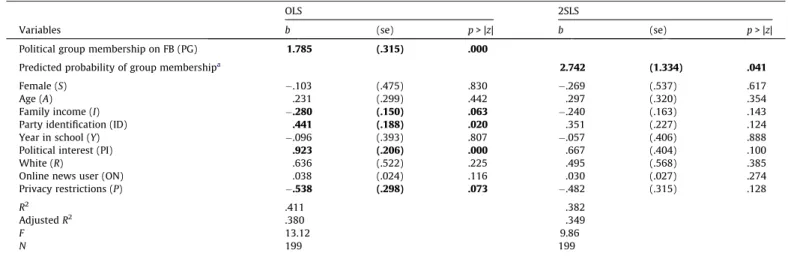
Table 3presents the findings from the OLS and 2SLS models with political participation as the dependent variable (H1).13The
political participation scale is coded so that higher scores are associ-ated with higher probabilities of participating offline. This table indi-cates that our primary independent variable, political group membership through Facebook, has a significant effect on offline political participation after controlling for other influential factors. In fact, in the OLS model, a respondent indicating ‘‘all’’ versus ‘‘none’’ of their Facebook groups as political is likely to score higher on our participation scale by seven points, or the equivalent to performing two political activities with the highest frequency. In controlling for endogeneity in the two-stage least squares model, we call the dependent variable ‘predicted probability of group membership’. The two-stage least squares model uses Eq.(1.2)as instruments in order to avoid the problem of endogeneity. We also confirm the rela-tionship between political group membership on Facebook and off-line political participation.
Table 4examines political knowledge as the dependent variable (H2), where we observe that online political group membership through Facebook is significantly but weakly correlated to political knowledge in the OLS model. The difference between a respondent with no political group memberships and one with all political group memberships is the equivalent of answering slightly more than one additional political knowledge question correctly. How-ever, when using the two-stage least squares model, the predicted probability of group membership fails to achieve statistical signif-icance. The instrument used inTable 4is identical to that ofTable 3. ‘Predicted probability of group membership’ is instrumented for using Eq.(1.2). Unlike the results forTable 3, the two-stage least
Table 2
Descriptive statistics for the sample.
Variables Categories N Percentage
Sex (S) Male 212 47.11 Female 238 52.89 Age (A) 18–19 183 40.76 20–21 211 46.99 22–23 41 9.13 24 and above 14 3.12
Family income (I) Less than $50,000 72 18.51 $50,001–100,000 108 27.76 $100,001–150,000 82 21.08 $150,001 and above 127 32.65 Party identification (ID) Strong Republican 26 6.36
Weak Republican 50 12.22
Independent 62 15.16
Weak Democrat 153 37.41 Strong Democrat 118 28.85
Year in school (Y) Freshman 102 22.71
Sophomore 129 28.73
Junior 152 33.85
Senior 66 14.71
Political interest (PI) Not interested 40 8.88 Moderately interested 38 8.44 Very interested 372 82.68
White (R) White 244 57.41
Non-white 181 42.59
Online news user (ON) 0 h/week 144 39.89
1–3 h/week 45 12.47
4–6 h/week 57 15.79
7 h/week and above 115 31.85
Privacy restrictions (P) None 340 79.07
Some level of privacy 90 20.93 Length of FB membership (LM) Less than 6 months 16 3.72
6 months–1 year 52 12.09
1–2 years 116 26.98
2–3 years 159 36.98
3 years or above 87 20.23
Frequency log-in (FL) Never 14 3.50
1–2 times/week 51 12.72 Several times/day 305 76.05 Always logged on 31 7.73
12 We used a random number generator to produce 20 numbers ranging from 1 ton. We then scrolled through the wall pages to find the corresponding wall post and pasted it onto a sheet for our research assistants to code.
13
The OLS models for both political participation and political knowledge are reported in Appendixes A and B, respectively.
squares model for political knowledge inTable 4suggests that the relationship observed in the OLS model is endogenous.
As such, it seems that we can make the case that membership in online political groups via the Facebook platform encourages offline political participation, even when the simultaneity problem is ta-ken into account. At the very least, we can be confident that online political groups encourage offline political participation and there-fore we confirm H1. When we turn to political knowledge, however, H2 is supported in the 2SLS model which controls for simultaneity showing that political group membership does not confidently bol-ster levels of political knowledge. Therefore, while political engage-ment encompasses both political participation and political knowledge, our study cannot confirm the fact that Facebook creates fully politically engaged participants, rather it seems that it encour-ages political participation but not a corresponding effect on polit-ical knowledge. To understand more about why this might be the case, we turn to the content analysis of the group pages.
Table 5shows that the content of Facebook political pages pro-vides potential sources of information, particularly in self-guided
Table 3
OLS and Two-stage least squares estimates of political group membership on Facebook (PG) and offline political participation (PP).
OLS 2SLS
Variables b (se) p> |z| b (se) p> |z|
Political group membership on FB (PG) 1.785 (.315) .000
Predicted probability of group membershipa
2.742 (1.334) .041
Female (S) .103 (.475) .830 .269 (.537) .617
Age (A) .231 (.299) .442 .297 (.320) .354
Family income (I) .280 (.150) .063 .240 (.163) .143
Party identification (ID) .441 (.188) .020 .351 (.227) .124
Year in school (Y) .096 (.393) .807 .057 (.406) .888
Political interest (PI) .923 (.206) .000 .667 (.404) .100
White (R) .636 (.522) .225 .495 (.568) .385
Online news user (ON) .038 (.024) .116 .030 (.027) .274
Privacy restrictions (P) .538 (.298) .073 .482 (.315) .128 R2 .411 .382 AdjustedR2 .380 .349 F 13.12 9.86 N 199 199
Note: Data derived from survey of 455 college undergraduates. Unstandardized regression coefficients with standard error in parentheses. All tests are two-tailed tests. To control for possible interdependence between group membership and political participation offline, we estimated a two-stage least squares model.
a
Predicted probabilities from first-stage OLS regression where the dependent variable is political group membership, and independent variables are female, age, family income, party identification, year in school political interest, White, Asian, Black, Hispanic, Online news user, and privacy restrictions. Years on Facebook and frequency of Facebook log-in are the instrumental variables.
Table 4
OLS and two-stage least squares estimates of political group membership on Facebook (PG) and political knowledge (PK).
OLS 2SLS
Variables b (se) p> |z| b (se) p> |z|
Political group membership on FB (PG) .295 (.140) .036
Predicted probability of group membershipa 1.045 (783) .184
Female (S) .590 (.225) .009 .695 (.265) .009
Age (A) .286 (.138) .040 .392 (.185) .035
Family income (I) .099 (.070) .158 .114 (.077) .139
Party identification (ID) .008 (.087) .931 .063 (.118) .596
Year in school (Y) .340 (.178) .058 .375 (.195) .056
Political interest (PI) .336 (.098) .001 .127 (.239) .596
White (R) .498 (.242) .041 .352 (.301) .244
Online news user (ON) .007 (.011) .568 .001 (.014) .963
Privacy restrictions (P) .015 (.138) .916 .112 (.179) .532 R2 .243 .123 AdjustedR2 .201 .074 F 5.79 4.79 N 191 191
Note: Data derived from survey of 455 college undergraduates. Unstandardized regression coefficients with standard error in parentheses. All tests are two-tailed tests. To control for possible interdependence between group membership and political knowledge, we estimated a two-stage least squares model.
a
Predicted probabilities from first-stage OLS regression where the dependent variable is political group membership, and independent variables are female, age, family income, party identification, year in school political interest, White, Asian, Black, Hispanic, Online news user, and privacy restrictions. Years on Facebook and frequency of Facebook log-in are the instrumental variables.
Table 5
Political Facebook group page content.
Percentage of groups No (%) Yes (%) Provide additional contact information 39 62 Provide web links in the ‘‘links’’ section 18 82
Provide video links 41 59
Event information posted 80 20
News posts provided 26 74
Photos posted 13 87
Discussion topics posted on ‘‘discussion board’’ 13 87 Note: Data from content analysis of 39 randomly selected political Facebook groups.
formats, which members can optionally take advantage of. For example, 62% of the pages we coded provided additional contact information for the group outside of Facebook and 82% posted additional website links in the designated ‘‘links’’ space. In addi-tion, a large number of the groups posted news links, photos, and discussion topics for the visitors to engage in online. Administra-tively, these political pages seem to provide a wealth of informa-tion where members have the opportunity to seek and learn
more about their group. While it seems that political groups have the ability to encourage the acquisition of political knowledge, per-forming a content analysis of the discussion among group mem-bers within these groups can highlight whether or not memmem-bers take advantage of these opportunities.
Fig. 1 presents our findings across three critical dimensions among the 780 wall posts randomly selected for analysis. We pre-sume that members who are politically knowledgeable should be having online discussions that are well informed, characterized by strong opinions, and of high-information quality. Even if all mem-bers are not necessarily politically knowledgeable, if the discussion between members is reasonably well-informed, then the discussion should encourage the attainment of political knowledge.
Overall the informational content and quality of discussion on the walls was very low. Forty-one percent of the wall posts were ‘‘not very’’ informative posts, which are described as posts that did not share any new information. Only 16% were classified as sharing ‘‘very’’ thoughtful information within the post; these posts are coded as those that offered a new perspective or information to the group. The strength of the opinion offered in the post was coded not opinionated or neutral, low opinion, or high opinion. Low opinion posts are those that have a perspective on the issue at hand, as contrasted to high opinion posts which have a strong perspective by inciting people or advocating for action. Over-whelmingly, 523 of the 780 (67%) posts offered low or high opinion strengths suggesting that the general discussion in Facebook groups is opinionated. The wall posts were also coded for their overall information quality, ranging from ‘‘Poor’’ where the infor-mation was inaccurate, incoherent, or did not support thought with evidence, to ‘‘Excellent’’ where the post supports their thought with evidence and/or thoughtful explanation. The overall quality of the posts we coded was poor and only 4% were thought to offer excellent quality discussion.
The finding that the overall quality of wall posts on these groups is low may be on account of the nature of most Facebook groups themselves. Online political groups have the potential to foster discussion, but are also mediums for other types of activity. For example, members create political groups without the inten-tion of being an informainten-tion-rich space. Indeed, groups such as ‘‘I have more foreign policy experience than Sarah Palin’’ are formed to be a source of comedic material, as opposed to a place to talk seriously about Sarah Palin’s foreign policy experience. In our con-tent analysis we do not organize groups by their incon-tention or ‘‘seri-ousness’’ of discussion. In this manner, differences in overall quality may be linked to the group’s original purpose. Nonetheless, regardless of each group’s intention, these online political groups create awareness around political issues. We do recognize the lim-itation around the existing content analysis and suggest future work and description is necessary to fully understand the discus-sion taking place in online political groups on Facebook.
Our content analysis indicates that political Facebook group users, in general, often do not share much new information and the information they do share tends to be somewhat inaccurate, incoherent, or not very well supported with evidence. As a forum for people to easily engage and share their opinions, online cal groups are beneficial; however, as a forum to learn new politi-cal information online politipoliti-cal groups are ineffective due in part to low quality wall discussion. The survey design suggests that while online group membership in political groups encouraged political participation, it had no effect on political knowledge. The content analysis suggests that while political group members may feel more empowered or efficacious through the opportunity presented by online participation in political groups, the low quality of group interaction does not encourage members to learn new political information.
5. Discussion
This research and its findings are significant on three impor-tant levels. First, we illustrate the need to start looking deeper into SNS usage, and political Internet usage more generally. Social network sites are not a use in and of themselves, as much as they are a platform for various applications that have important implications for studying how people interact today. This study highlights one SNS application from one specific SNS at one point in time. We investigate a specific service provided by Facebook through which groups can encourage political participation in ways very similar to offline groups. While we show that Facebook groups foster political participation, we believe this is just a preliminary step, to understanding the potential of SNS to impact the political process. Indeed, Facebook and other SNS have created new ways to bridge the gap between users through groundbreaking interactive technologies. These groundbreaking technologies provide ample opportunity for other scholars to investigate Facebook, SNS sites, and their effect on political engagement.
Second, we show that online political groups produce similar ef-fects to traditional offline groups, specifically in their ability to fos-ter political engagement. The 2008 election solidified the importance of the Internet broadly, and SNS specifically, as critical elements of politics and campaigning today. We find that Facebook allows for the creation of online political groups that provide many of the benefits that we have known face-to-face groups to provide for decades, such as information, motivation for political action, and a forum for discussion and communicative exchanges. In this sense, Facebook is fostering political engagement. However, this finding points to other interesting questions regarding the nature of online political groups. While we know online political groups have the potential to encourage offline political engagement, fu-ture research should focus on how and whether online political groups influence feelings of efficacy, and how membership in groups changes or solidifies political opinions and attitudes. The full extent of the effect of online political groups on political behav-ior needs to be thoroughly examined as the effects of online polit-ical groups can have potentially important ramifications for the political process.
The last point we make emphasizes the dual nature of the findings. The fundamentals of democracy assume a knowledge-able public, one that is capknowledge-able of representing its own self-inter-est effectively. A healthy democracy, then, should see tandem movement between political knowledge and political participa-tion. Here we find that while online political group membership is correlated with offline political participation, we do not see an equally significant correlation with levels of political knowl-edge. Although a panel study would be a more ideal method for shining more light on the potential for information gains, we exe-cuted a content analysis of group wall posts as an attempt to understand these findings. Our results offer a suggestion for why this might be the case’ the information content and quality of most wall posts were found to be very poor, generally lacking support for their claims, incoherent, or simply opinionated. In other words, political group members are exposed to little new or well-articulated information about the political causes around which these groups form. The information is more likely to be reinforcing and therefore mobilizing, but not enlightening and therefore educational.
Through content analysis of online political group pages coupled with a survey of high-level Facebook users, we offer a step forward in understanding the political nature and effects of online social networking sites and online political groups. We find that online political groups that are facilitated through SNS platforms
such as Facebook perform many similar functions to their offline counterparts. Online political group membership is positively re-lated to offline political participation, but appear to fall short on our measures of political knowledge. We suggest this is the case because while the groups offer many applications that members can use to feel engaged and politically empowered, the group wall discussion falls short of quality deliberation and offers little sub-stantive information sharing.
There are clear limitations to this project however, mainly the sample frame and external validity of our findings. While our sample closely approximates the campus in terms of demo-graphics, a better sample would be a nationally representative panel. Future research should investigate these measures, these findings, and other relevant questions with better sampling tech-niques in a panel study. We anticipate that as research in this field continues to grow in demand and interest that this will be-come easier to do. Furthermore, an interesting line of future en-deavor should look at specific forms of political participation as they are facilitated through new media. As part of this, we should continue to expand our understanding of what it means to be a political participant in the era of new media as these definitions, and survey measures, should continue to change rapidly.
Acknowledgments
The authors would like to thank Bruce Bimber for his thoughtful feedback throughout our research, as well as M. Kent Jennings and Eric R.A.N. Smith for their comments on previous versions of this manuscript.
Appendix A
First-stage regression on political group membership for politi-cal participation (PP). OLS Variables b (se) p> |z| Female (S) .21 (.11) .05 Age (A) .04 (.07) .55 Family income (I) .07 (.03) .05 Party identification (ID) .09 (.04) .02 Year in school (Y) .12 (.09) .21 Political interest (PI) .26 (.04) .00
White (R) .16 (.12) .18
Online news user (ON) .01 (.01) .13 Privacy restrictions (P) .06 (.07) .34 Length of FB membership (LM) .15 (.06) .01 Frequency log-in (FL) .08 (.05) .09 R2 .304 AdjustedR2 .263 F 7.43 N 199
Note: Instrumental variables in bold. Data derived from survey of 455 college undergraduates. Unstandardized regression coefficients with standard error in parentheses.
Appendix B
First-stage regression on political group membership for politi-cal knowledge (PK).