Scholarship@Western
Scholarship@Western
Electronic Thesis and Dissertation Repository
8-15-2019 1:30 PM
Dead Men Walking: An Analysis of Working-Class Masculinity in
Dead Men Walking: An Analysis of Working-Class Masculinity in
Post-2008 Hollywood Film
Post-2008 Hollywood Film
Ryan Schroeder
The University of Western Ontario
Supervisor Tim Blackmore
The University of Western Ontario Graduate Program in Media Studies
A thesis submitted in partial fulfillment of the requirements for the degree in Master of Arts © Ryan Schroeder 2019
Follow this and additional works at: https://ir.lib.uwo.ca/etd
Part of the Other Feminist, Gender, and Sexuality Studies Commons, and the Other Film and Media Studies Commons
Recommended Citation Recommended Citation
Schroeder, Ryan, "Dead Men Walking: An Analysis of Working-Class Masculinity in Post-2008 Hollywood Film" (2019). Electronic Thesis and Dissertation Repository. 6421.
https://ir.lib.uwo.ca/etd/6421
This Dissertation/Thesis is brought to you for free and open access by Scholarship@Western. It has been accepted for inclusion in Electronic Thesis and Dissertation Repository by an authorized administrator of
i
Working-class masculinity has lost its steam. Since 2008, a sub-genre of Hollywood films
has emerged that depicts the current crisis, and imminent demise, of working-class
masculinity in the United States. The 2008 financial crisis has had devastating effects on
the American economy, and particularly the working-class, whose precarious economic
position has only been exacerbated under neoliberalism. These effects have become the
thematic focus of a fringe genre of films, which show how the destabilization of the
American economy has incited greater instability in gender relations, and has had an
acute impact on working-class men. This thesis proceeds by analyzing how these films
articulate the current crisis of working-class masculinity in America. Using the
framework outlined by R.W. Connell, I explore how working-class masculinity has
become marginalized in relation to neoliberal hegemonic masculinity, and how its
marginalization has become an excitatory factor for inter-masculine violence, constituting
a social problem.
Summary For Lay Audience
By studying the films Out of the Furnace (2013), Warrior (2011), and Manchester by the
Sea (2016), this thesis seeks to identify how Hollywood has represented the
working-class in decline, and how blue collar men have struggled in their masculinities since the
market crash of 2008. By analyzing the relationships between working-class men in these
films, and how these men live out their lives, we gain insight into the conditions of
working-class masculinity in American culture at this time. Such an analysis serves to
deepen our understanding of the problems with working-class masculinity at hand, and in
doing so helps us address these problems moving forward.
Keywords
ii
“That immaculate manliness we feel within ourselves, so far within us, that it remains
intact though all the outer character seem gone; bleeds with keenest anguish at the
undraped spectacle of a valor-ruined man.”
iii
Sincerest of thanks to my supervisor, Tim Blackmore, for the kindness, guidance, and
support that has seen me through this journey. To my parents, Kim and Jay, for the love
and stability they have provided over the years. And to my partner Danielle, who has
iv
Abstract ... i
Epigraph ... ii
Acknowledgments ... iii
List of Figures ... v
Introduction: The Beginning of the End ... 1
Chapter 1: Theoretical Foundations ... 11
Chapter 2: Gender Relations (Fathers and Brothers) ... 41
Chapter 3: Gendered Practice (Work, Crisis, and Violence) ... 71
Conclusion: The Final Breath ... 116
Bibliography ... 127
v
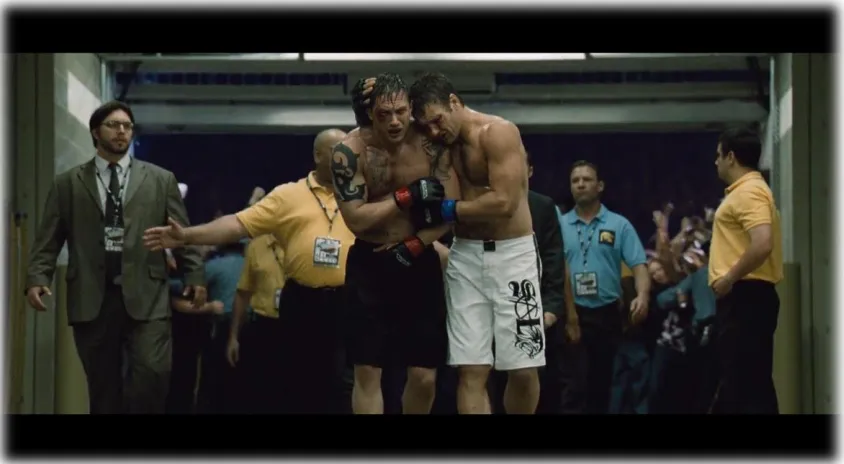
Figure 1. “We're all lost.” ©Lionsgate, 2011. ... 48
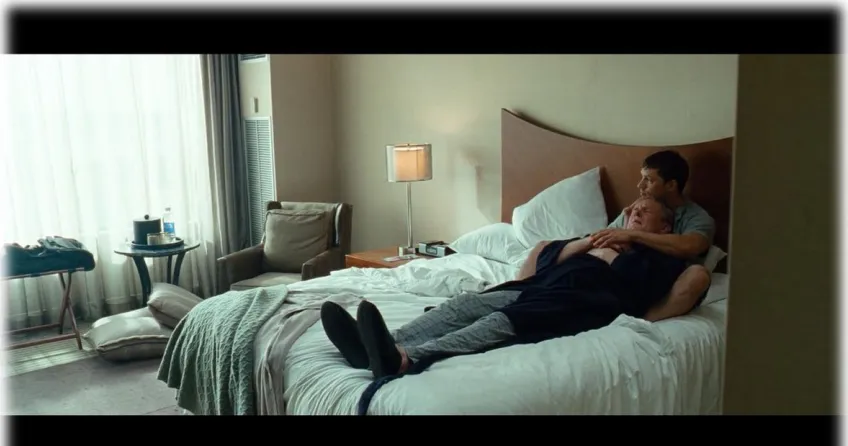
Figure 2. Brothers Holding Hands. ©Apian Way, 2013. ... 59
Figure 3. Honouring the Code. ©Apian Way, 2013. ... 84
Figure 4. Lee's Departure. ©Amazon Studios, 2016. ... 90
Figure 5. Towards Reconfiguration. ©Lionsgate, 2011. ... 118
Figure 6. Russell Repentant. ©Apian Way, 2013. ... 119
Introduction:
The Beginning of the End
Since the financial crisis of 2008, there have been a number of Hollywood films
produced that depict the struggle of working-class men in America. This struggle, what
might be called a crisis of masculinity, has resulted from the economic recession that
followed the financial crisis. It has become a major topic of cultural importance that has
since spread throughout the American cultural imagination, becoming thematically
embedded in many mass media cultural products. What is called the 2008 financial crisis
was caused by the sub-prime mortgage crisis that occurred two years prior, following
which a large portion of Americans lost their homes because of under-regulated and
unsafe lending practices. When interest rates rose, and homes lost their value, many
Americans who had been given interest-only mortgages could no longer afford their
houses, and so defaulted on their loans. The surge in speculation and subsequent decline
in the real estate market had resounding effects on the economy, ushering in what is
known to be the worst economic recession since the great depression.1 The time period
following 2008 thus marks a point in which the various insecurities concomitant to the
destabilized economy could be seen playing out in popular culture. What has been made
visible by a sub-genre of Hollywood films to be released after this point is that the
financial crisis has also destabilized gender relations, resulting in a crisis, or what would
best be called crisis tendencies, of working-class masculinity.
Since the dawn of neoliberalism at the end of the 1970s, the working-class in
America has fallen ever more progressively into economic precarity. As a result of a shift
in policies towards greater deregulation of the market economy, the median income has
been suppressed while the income of top earners continues to increase, as David Harvey
explains: “the ratio of the median compensation of workers to the salaries of chief
executive officers increased from just over thirty to one in 1970 to more than four
hundred to one by 2000.”2 Having already been reduced to a state of economic
1 Gerard Dumenil and Dominique Levy, The Crisis of Neoliberalism (Cambridge, Mass: Harvard University Press,
2011), 265.
2 David Harvey, "Neoliberalism as Creative Destruction," The Annals of the American Academy of Political and Social
vulnerability, the 2008 recession spelled death for the status of working-class men in
America (this is of course an all-gender issue, and will be addressed on page 6). Because
men’s position of dominance over women within the gender order is legitimated by
capitalism, a man must have access to economic resources if he is to fulfill his patriarchal
potential. Moreover, under patriarchal logics, it is the expectation that men protect the
institution of patriarchy so as to safe-guard their positions of power within society. What
is then called hegemonic masculinity is the ideal by which masculinities are organized
towards patriarchal perseverance. If a man should lose his access to resources, and
thereby fail in his ability to wield economic command, and provide for a family, he loses
that which gives him much of his power as a man. When the material benefits of
patriarchy, what R.W. Connell calls the “patriarchal dividend,” are lost by such a large
strata of men who share in similar configurations of practice – practices which are
constituted in their working environments – there is the likelihood that a crisis will occur
in the lives of these men. For such men, the destabilization of their gendered positions of
power tends to be paralleled by a discussion of an overall crisis of that form of
masculinity.3
These crisis tendencies of working-class masculinity have since become a
recurring theme within popular culture, and films that depict the struggles of
working-class men post-2008 comprise a culturally important sub-genre. The representation of
working-class masculinity in its present state is culturally significant because Hollywood
tends to represent masculinity in its present idealized hegemonic form. Cultural narratives
tend to serve the function of reinforcing patriarchal ideals, instructing boys and men about
what is deemed the dominant masculine configuration of the time.4 As men consume such
cultural products, they internalize the patriarchal ethos by narcissistically identifying with
the hegemonic male characters on screen.5 A deviation from the logics of cultural
production that seek to affirm hegemonic aspiration is therefore not only something
different, but something culturally significant. It is a break from the standard operating
3 R.W. Connell, Masculinities, 2nd ed. (Berkeley: University of California Press, 2005), 79.
4 R.W. Connell and James Messerschmidt, “Hegemonic Masculinity: Rethinking the Concept,” Gender and Society 19,
no. 6 (2005): 838.
5 Laura Mulvey, "Visual Pleasure and Narrative Cinema," In Feminisms: An Anthology of Literary Theory and
procedure and endeavours to show the real for what it truly is6. By depicting the veritable collapse of working-class masculinity, these films go beyond the standard model of
hegemonic affirmation, and illuminate not only some of the actualities of working-class
masculine struggle, but also demonstrate that the reasons for this struggle are inherent to
hegemonic masculinity itself. These films do not seek to obfuscate the problems at hand
by providing false idols for men to venerate in denial of themselves and the reasons for
their own suffering, but rather expose the often inarticulable issues that men experience as
a result of being caught in a system of patriarchal dominance that often enough does not
benefit them as much as the hegemonic mode would have them believe.
My research proceeds with a thematic analysis of three texts that reveal the crisis
tendencies of working-class masculinity at this time. I chose the films Warrior (2011),
Out of the Furnace (2013), and Manchester by the Sea (2016) so that they would serve as
exemplars of this sub-genre, primarily for their quality, veracity, and the consummate
attention they give to the issues of gender relations and gendered practice among
American working-class men. What these texts so poignantly address are the issues of
inter-masculine violence that extend from restricted male relations, compromised
configurations of practice, and diminished economic positions. Warrior (Gavin
O’Connor, 2011) for instance, tells the story of two brothers, Tommy Riordan (Tom
Hardy) and Brendan Conlon (Joel Edgerton), whose lives have been bifurcated by their
relationships with their alcoholic father, Paddy Conlon (Nick Nolte). Through the
reproductive cycle of gender relations which I outline later, Tommy’s masculinity comes
to reflect the masculinity of his father, who he loathes for having driven him and his
mother away when he was a teenager. Brendan on the other hand has found a way to
improve his social standing, moving beyond the confines of working-class practice and
becoming a teacher. Thus, the brothers represent the polarities of working-class and
middle-class masculinity. With Tommy being determined to prove his masculine
self-worth after a life-long struggle of interpersonal loss and emotional devastation, and
Brendan being driven by desperation to save his house from being foreclosed on, and
thereby protect the family he is meant to provide for, the brothers come into direct
physical conflict in a mixed martial arts tournament, because the one thing the brothers
share is their capacity for violence. The conflict is played out as more than just a fight
between men, but a war of masculinities that are both struggling to assert their claim for
the patriarchal dividend, which are the payouts of “honour, prestige, and the right to
command” that men receive for upholding patriarchal rule.7 By incisively representing an
intractable partition within masculine relations, and the implosive contingencies of
working-class masculine practice, the film emphasizes how the working-class masculine
ethos has been delegitimated under neoliberalism, and how working-class men must
reconfigure their masculinities if they are to maintain their privileged positions within the
gender order.
Out of the Furnace (Scott Cooper, 2013)also follows the lives of two brothers,
Russell and Rodney Baze (Christian Bale and Casey Affleck), whose lives are torn
asunder by the death of their father (Bingo O’Malley), who represents both the
working-class masculinity that has been passed down to them, and the declining economic state of
the industrial region in which they live. When Russell loses his chance at starting a family
after being sent to prison, and Rodney returns from the Iraq war as a broken and
unsalvageable wreck, the brothers prove incapable of helping each other solve their
problems, and are pushed further and further towards violent conflict. Rodney’s character
in many ways resembles Tommy’s in Warrior, insofar as his life has been destroyed by
the very configuration of working-class practice that he has been trapped within. With
presumably no way out, Rodney proceeds down a path of violent (self)destruction in an
attempt to communicate the pain of his loss – the loss of his status as a man. Russell’s life
is also inundated with crisis. Failing to maintain coherence with the hegemonic ideal, he
is stripped of his chance to fulfill his patriarchal potential, and is thus impelled to redeem
himself as a man by avenging the death of his brother. Through portrayals of dead-end
masculine configurations that result in crisis and lead to violent inter-masculine conflict,
the film not only emphasizes crises experienced by working-class men, but the inevitable
demise of working-class masculinity.
In Manchester by the Sea (Kenneth Lonergan, 2016), the death of the status of
working-class masculinity is symbolized by the loss of the father and brother figure as
one and the same. Joe Chandler (Kyle Chandler) is the primary patriarchal figure in this
text, who early in the film dies from a heart attack. His brother Lee (Casey Affleck), and
son Patrick (Ben O’Brien/Lucas Hedges) survive Joe in what proceeds to be a test of their
ability to survive together as men. The film follows the conflict-ridden existence of Lee
and Patrick as they attempt to reassemble the pieces of their shattered lives after Joe’s
death. The struggle between the two men to communicate (or relate) with each other
pervades this narrative, painting a picture of what it means to sustain a configuration of
working-class masculinity at this time. With Lee having written his own life off after the
death of his children, he represents the failed patriarch who is doomed to live out the rest
of his days as a man who is marginalized from his community, and in relation to the
neoliberal configuration of hegemonic masculinity. Lee must however persevere for the
sake of his nephew Patrick, who is now an orphan and dependent on Lee for support and
guidance, two things which Lee struggles to provide because of the tragedy of his past.
Where Patrick represents the present need for working-class masculinity to be
reconfigured, Joe’s death, and Lee’s resignation thus symbolize its proverbial castration –
working-class masculinity cannot prosper in the current neoliberal cultural milieu. The
film provides a warning for the future of working-class men in America, as much as it
functions as a reflection on the inconsistencies with the present hegemonic configuration
of masculinity, as well as its departure from the privileged position it held in the past.
These texts were also chosen to represent how consistently the theme of
working-class masculine crisis has been addressed between the 2008 financial crisis and the time
of this writing. Warrior, released three years after 2008, marks an early point in the wave
of these films. Out of the Furnace follows two years after, and then Manchester by the
Sea three years after that. If an even more recent text were to be chosen, it would have
been A Star is Born (2018), as the exegesis that follows would have thematically aligned
just as well with this text as the others, however due to the limitations on the scope of this
thesis further textual analysis could not be engaged in. The body of texts that were
consulted while in the selection process is outlined below. This list of texts is both meant
well as a guide for those who might wish to further consider the implications of this
analysis:
• Brothers (2009)
• Blue Valentine (2010)
• Warrior (2011)
• Drive (2011)
• Bullhead (2011)
• The Place Beyond the Pines (2012)
• Killing Them Softly (2012)
• Out of the Furnace (2013)
• Locke (2013)
• The Drop (2014)
• Manchester by the Sea (2016)
• Hell or High Water (2016)
• A Star is Born (2018)
• Leave No Trace (2018)
Since the selection process inherently involves leaving other texts out, it should be
noted that where the themes and issues that are interrogated in this analysis do pervade
the aforementioned list of films in varying frequencies, the chosen texts proved to be the
most cogent of exemplars, insofar as they embody the greatest amount of potential for
thematic analysis, and as sources of data held up best under the litmus test of analytical
scrutiny. It is also pertinent to address the object of focus in the same manner.
Working-class masculinity is not the only configuration to undergo stress and strain as a result of
post 2008 recession. Films such as The Company Men (2010), Margin Call (2011), 99
Homes (2014), The Big Short (2015), and Demolition (2015) are also examples of how
the financial crisis was overtly discussed and represented by the Hollywood culture
industry, and they place particular emphasis on problems faced by middle- to
upper-middle class men. However, the representation of what is at stake for the masculinities in
these films is nowhere near as dire as that which is being proffered by this sub-genre
concerning the conditions of working-class masculinity. To put it simply, where the
middle- to upper-class men in films such as these stand to be pushed down a rung, the
working-class is the lowest on the socio-economic ladder, and therefore is at the greatest
risk of having its masculinities pushed down and out to the margins.
It must also be acknowledged that this analysis focuses almost entirely on
working-class men, and not women. The simple explanation for this is that the
recognition of this cinematic trend occurred prior to the research that was conducted on
the topic. It is known that Hollywood cinema has primarily been a white, middle-class,
through the mass media, Hollywood products are designed for the pleasure of the active
male viewer.8 Because Hollywood film largely has been, and is still, produced by men for
men, it only makes sense that a crisis of masculinity would be a far more salient theme to
run through the industry. This is not to excuse the industry as being so evidently
patriarchal, but if anything, to condemn it. By giving insight into the conditions of
complicit masculine struggle in relation to hegemonic masculine rule, these films provide
an opportunity for cultural reflection on the very problems of patriarchy for both men and
women, and since Hollywood has the greatest cinematic reach in the world as a mass
media enterprise, such films are likely to get the most exposure. If there is to be a focus
on men, it should be in a way that broadcasts such inconsistencies, so that men can be
incited to reform the system from within. It is, after all, masculinity that resides at the
centre of the problem, since the problem is patriarchy. Should patriarchy be dismantled,
men must play a part in reconfiguring their modes of practice and towards ameliorating
systemic inequalities in gender relations. This analysis thus focuses on the relationship
between working-class masculinity and hegemonic masculinity because hegemonic
masculinity is a problem that must be addressed if patriarchal control is to be undermined.
Race and sexuality are other representational factors that ought to be accounted
for. Even though this analysis does not focus on race and sexuality as intersectional
elements, they certainly do bear weight on any gender or class analysis. For the purposes
of this analysis then, where working-class masculinity is the focus, what is meant is
indeed white heterosexual working-class masculinity; however, there will not be a
relational analysis of race and sexuality in what follows. In short, the scope of this thesis
was too limited to consider these variables at proper length, although an extended reading
of these texts could certainly include them as a part of the analysis. I understand that
much of my argument might seem to make a special case for white, straight, working
class men in parts of America. I want to be clear that while I do address what happens to
these men as reflected in the cultural texts I have selected, I am not making any claims
about their rights over and above any other group. This is not an argument that white
working class men have been hit harder than, say, generations of African American men
and women who have inherited the legacy of hundreds of years of official and unofficial
slavery. I acknowledge that millions have been grievously injured by the system of late
capitalism I discuss. All deserve justice, all deserve to be treated fairly and in accordance
with American Constitutional law as it is written, if not practiced. No people of any race,
class, gender, sexual orientation or any other subjectivity, deserve to be treated badly.
This thesis in no way argues that white working class men should enjoy rights of which
others have, in some cases for centuries, only dreamed. However I do argue that it is
crucial to study this particular group if we want to understand the ongoing daily politics
in contemporary America. That being said, the characters that I focussed on in this
analysis are indeed white, and presumably heterosexual men. Much like female
representation in Hollywood cinema, characters that are not a part of this homogenous
group are too often cast in subordinate roles, much as they are within the internal
hegemonic hierarchy.9 Thus, though there have been films released since the financial
crisis that address the struggles of subordinate masculinities – Moonlight (2016) being an
excellent example of one, and an excellent film – they are outside the purview of this
research, although a further analysis into such texts would be of great value to the study
of masculinities in film.
In conducting this research, a cultural studies approach was used, which involved
a close reading of the selected texts through various theoretical lenses. Chapter 1
establishes the conceptual and theoretical foundations upon which this analysis was built,
and also serves as a review of the literature germane to this area of study. The chapter
begins with a brief explanation of gender from the sociological perspective of social
constructionism, before moving more thoroughly into an examination of the field of
masculinity studies. Since this research proceeds as an analysis of masculinity, with a
prominent conceptual focus on hegemonic masculinity, the theorists R.W. Connell, and
James W. Messerschmidt are most heavily relied on for a theoretical framework. Chapter
1 thus proceeds to explore the fundamentals of a sociological analysis of masculinity with
attention paid to how gender must be understood as a relation concept, and one that is
constituted in practice.10 The notion of crisis is then interrogated for purposes of
conceptual clarification, and explained in line with the model of hegemonic masculinity
that Connell and Messerschmidt propose. The topic of violence is then explored in
theoretical detail, pulling from theorists such as Michel Foucault, Johan Galtung, and
Byung-Chul Han. Lastly, neoliberalism is explored as a political-economic program that
created the necessary conditions for the 2008 financial crisis. The research conducted by
Dumenil and Levy is used to explain the events of the crisis and their consequences,
along with the supporting literature of David Harvey, and Jim McGuigan, whose theories
on neoliberalism help explain the current economic moment and its implications on the
working mass.
Chapter 2 begins the textual analysis that comprises the core project of this work.
Since gender relations are a primary component of how masculinity is to be understood,
the chapter proceeds as an analysis of the masculine relations between the central male
characters in each of these texts. Across each of these texts there is a shared theme of
patriarchal descent, and the meaning of this is two-fold. For one, these texts show how
working-class masculinity is socially and culturally reproduced through father-son
relations. Secondly, they establish that this reproductive cycle has come to an end as a
result of the unsustainability of working-class masculinity under neoliberalism. Thus, the
passing on of working-class configurations is thematically tied to the fall from hegemonic
grace that working-class men have experienced. Furthermore, the chapter explores the
issues of brotherly relations as represented in these texts. The intractable issue of
working-class disgrace under neoliberal hegemonic masculinity is further exacerbated by
the inability of men being able to help and support other men – even those closest to
them. The brothers in these texts prove unable to help each other restore their status as
men because the working-class configuration is doomed to die. These men are then
provided with an ultimatum: reconfigure, or die. The chapter moves sequentially between
texts, starting with Warrior, as it is the first in the chronological order, and ending with
Manchester by the Sea, as the chapters that follow continue to do.
Since masculinities are to be understood as configurations of practice, Chapter 3
then delves into the problems of working-class practice as exhibited by the central male
bear at the beginning of this chapter, firstly as a way of identifying how the economic
positions of these men define much of who they are. It is by defining the economic
situation of these men that their struggles then become apparent. As these characters are
shown falling deeper into economic despair, what becomes apparent is not only their
inability to provide, and thereby succeed as model patriarchs, but that without this ability
they can no longer understand who they are as men. This dislocation and the concomitant
desperation to preserve their identities culminates in crisis for these characters, and
through a misplaced alliance with a configuration of practice that has only diminished
them, drives them toward acts that only contribute to their further undoing. What follows
in this reading is then a critical unpacking of how these texts use representations of
violence to demonstrate the problems at the heart of masculine hegemony. As the men
undergo crisis, they are both habitually and structurally turned towards violence. Violence
is thus exposed as an element integral to the fight for hegemonic authority, however
where it is best rendered invisible under the hegemonic ideal, its true and ugly nature
becomes visible when men have no other means of asserting their authority. The full
destructive capacity of violence is thus played out in these films, and between the men in
these texts, as a way of illuminating the problems of masculine hegemony for men. These
characters engage in the violent destruction of each other and themselves as a way of both
asserting their hegemonic status, and as a way of communicating the pain of their
experiences as marginalized men. The final part of this chapter thus seeks to explain how
violence is articulated as a method for patriarchal preservation, and furthermore
establishes the extent to which these films prognosticate the imminent demise of
Chapter 1:
Theoretical Foundations
It is not titles that honour men, but men that honour titles.
– Niccolò Machiavelli
Throughout this chapter I will discuss the theoretical foundations for the gendered
power structure understood as patriarchy, and its guard dog: hegemonic masculinity. R.W
Connell’s theory of hegemonic masculinity will serve as an analytical framework for
understanding how men gain and hold power over others, as well as why certain
masculinities become more dominant while others lose power. Furthermore, the
application of this framework will provide insight into what can transpire when men do
lose power as a result of their masculinity being marginalized from a position that was
once complicit with hegemonic masculinity. By combining the analysis of hegemonic
masculinity with a complementary theoretical outline of crisis, and crisis tendencies, this
chapter also intends to situate the selected texts in the context of the cultural moment in
which they were produced, as well as in relation to the history of that which proceeded
them. Furthermore, in addressing the systemic forces behind the diffusion of such
intimately felt and lived out crises, a concise analysis of neoliberalism will be brought to
bear. By synthesizing theories of crisis and hegemonic masculinity with those of
neoliberalism, this chapter will develop a socio-historical backdrop for this cultural
moment. Ultimately, this framework will serve as the primary instrument for analyzing
representations of gender relations and masculine practice in chapters 2 and 3, as well as
establishing the cultural and historical significance of this sub-genre of film. To begin this
analytical expedition; however, we must start by laying a theoretical foundation. In what
follows, the ideas of gender and patriarchy will first be discussed, setting the stage for a
more thorough exploration of masculinity. Then, a framework for concepts of crisis and
hegemonic masculinity will be constructed, followed by a theoretical outline for
neoliberalism and how it relates to working-class masculinity in post-2008 America.
Lastly, a cinematic history of masculinity in crisis will be developed to help frame the
Gender
As an approach to understanding the gendered dimensions of crisis in
contemporary Hollywood film, it is important to begin with what is meant by gender.
From the social constructionist perspective (which understands the social world to be
made largely of human definitions rather than universal laws), gender differs from sex
insofar as it is the amalgamation of norms and values that have been associated with the
biological categories of ‘male’ and ‘female’. One learns to act their gender, as “gender is
not fixed in advance of social interaction, but is constructed in interaction.”11 Furthermore
gender is historical, it is based in convention, and the roles which have been customarily
assigned to each gender have, over time and across various cultures, been loaded with
meanings. Sex however, is rooted in a biological distinction between those who are born
with XX (female) and XY (male) chromosomes, and their corresponding physical
manifestations. The chromosomal sex-determination system that has been used in the
natural sciences as a way of categorizing the physical differences between women and
men has commonly (and erroneously) been conflated with the systems of cultural values
that assign meanings to these categories. As Connell suggests, “to believe that we can
understand the social world through a biological demarcation is to misunderstand the
relation between bodies and social processes.”12 This common error is a highly
problematic one. For one, it has led to a belief in a natural gender order, whereby such
things as divisions of labour and power relations are preordained and justified in their
being products of evolution or intelligent design. As well, by couching the cultural in the
biological, our ability to interrogate culture and effect social change with regards to
gender relations has been restricted. Because what is perceived as normal is often
mistaken for what is natural due to historical consistency with certain biological
imperatives that manifest in socially convenient practices, the role culture plays in the
collective formation of meanings often goes unexamined. As a result, gender relations
have become more and more entrenched in the cultural imagination as biologically
determined laws and not socially constructed norms.
It has been with great effort that the fields of sociology and gender studies have
worked to denaturalize gender and problematize its implications in the realm of social
relations. As Judith Butler has argued, gender ought to be understood as a verb,
something that is brought into being through action, and not as something that is inherent
in the body. Because we tend to act out gender, performing masculinity and femininity for
each other, we not only speak gender into existence, but also reify it. What we say and do,
the way we dress and speak make gender appear to be something that is “natural”. Butler explains, “because there is neither an ‘essence’ that gender expresses or externalizes nor
an objective ideal to which gender aspires, and because gender is not a fact, the various
acts of gender create the idea of gender, and without those acts, there would be no gender
at all. Gender is, thus, a construction that regularly conceals its genesis.”13
Gender is complex, as it is problematic. If gender is not a fixed feature within the
individual, but rather something that is acted into existence as Butler suggests, then
gender becomes rather difficult to talk through as a great deal of abstraction is required to
undo the damage of its conceptual hypostatization. Being subject to political influence
and historical change, gender becomes a much more difficult idea to frame in some grand
narrative, and as a permeable and liquid concept, it begins to slip through the fingers as
soon as one attempts to grasp it. These are some of the reasons that work is continuously
needed on this subject until present myths about sex and gender are discredited. Much is
owed to feminist scholars (e.g., Simone de Beauvoir, Betty Friedan, Donna Haraway, bell
hooks, Eve Sedgwick) for rendering the term open for analysis, allowing gender to be
understood as a collectively-constructed element of our social lives. The more that gender
can be understood as a social fact and less a biological one, the more we can work
towards addressing the many injustices concomitant to the realm of gender relations, and
ultimately dismantle the gendered system of dominance known as patriarchy.
13 Judith Butler, "Performative Acts and Gender Constitution: An Essay in Phenomenology and Feminist Theory,"
Patriarchy
Although it remains a fraught concept, especially within feminist scholarship,
patriarchy, as Michael Kimmel notes, refers to a hierarchal social structure in which men
hold power over women, and is recognizable in two domains.
Public patriarchy refers to the institutional arrangements of a society, the
predominance of males in all power positions within the economy and polity, both locally and nationally, as well as the "gendering" of those institutions themselves (by which the criteria for promotion, for example, appear to be gender-neutral, but actually reproduce the gender order). Domestic patriarchy refers to the emotional and familial arrangements in a society, the ways in which men’s power in the public arena is reproduced at the level of private life. This includes male-female
relationships as well as family life, child socialization and the like.14
The dichotomy Kimmel draws between the public and domestic spheres of patriarchy
establishes the terrain upon which patriarchy can be discussed as a macro and a micro
social phenomenon. At the structural level, patriarchy pervades institutional logics within
society. The cultural products that people consume are heavily influenced by androcentric
thinking, which in turn implicates the consumer in the reproduction of patriarchal norms.
Laura Mulvey, in her foundational work Visual Pleasure and Narrative Cinema,
suggested that cinema is a patriarchal fantasy played out for the male viewer, who,
through the process of identification, takes on the active role of looking at the female.
The female viewer inversely becomes the object of the gaze, and thereby internalizes this
passive ‘self-viewing’ role as it is played out on screen in her day-to-day life. Patriarchy
is thus inscribed in the male as an active participant and the female as a passive recipient
of the male gaze.15 This example illustrates how patriarchal thinking at the structural level
finds its way down the pipe, and how the viewer who becomes inundated with the codes
of patriarchal behaviour may act them out at the interpersonal level, putting into practice
the ideals that are exemplified in the media that they consume.
Patriarchy is a problem, as the wide range of feminist scholarship suggests. It is
not only an unequal system by which men are afforded more rights and greater liberty at
the expense of women, it is also a system of violence. The fickle and fragile notions upon
which gender dominance is based means it is always at risk of being subverted, and
because the only law supporting patriarchal dominance is one of force, the use of force at
times becomes an instrument (though not the only instrument) to preserve this system.
Masculinity and violence have thus become very closely associated terms in Western
culture, to the extent of masculinity being viewed as a highly destructive and toxic force
in society, in the lives of women, and even in the lives of men. And so, the study of
masculinity has become its own field. Branching out from the domain of sociology, and
as a focussed field of inquiry within gender studies, masculinity studies emerged as way
of addressing the problem at the heart of patriarchy: masculinity.
Masculinity
Masculinity, as an object of knowledge, is still relatively new on the scene of
feminist research. The field of masculinity studies began to emerge during the 1980s and
‘90s, which happened to be concurrent with a time of political turmoil following the Men’s Liberation movement of the 1970’s. Men’s Liberation was a movement which
sought to renegotiate the meanings of what it meant to be a man. Normative expectations
for men to conform to traditional conceptions of masculinity were being refuted by the
new left. Such conceptions and idealizations of masculinity at the time were seen by
members of the movement as being damaging to the lives of both men and women. The
movement shared many of the sentiments of second wave feminism, primarily concerning
gender equality, and domestic violence prevention, and was in many ways aligned with
the Women’s Liberation movement of the time. Buchbinder notes that such movements, as well as “other civil rights movements of the 1960’s such as Black Liberation and Gay
Liberation,” contributed to an elevation in social consciousness, insomuch as many
“social, political, and other inequities and injustices were traced back to the dominance
and power of white middle-class, heterosexual males who were then compelled to
examine the power structures and dynamics of their societies, and their own role in
those.”16
Men’s Liberation borrowed much of its understanding of patriarchy and its
consequences from feminism, but also much of the rhetoric on masculinity was taken
from burgeoning research about sex roles. Sex role theory had become popular by taking
earlier ideas of sex difference from the 19th century and combining them with later sociological ideas on the social role. The sex role model, which understood gender as an
amalgam of sex difference constituted through socialization, became prominent in the
psychological discourse about gender at the time, and led to an expansion of male sex role
literature which had not been seen before. Connell notes that, “much of the writing of the
1970’s encouraged men towards the modern vision, using therapy, consciousness-raising
groups, political discussion, role-sharing in marriage or self-help.”17 The issue with role theory however is that it fails to account for social change, as much as it overstates the
static categories within which male and female prescriptive behaviours are fixed within.
To this extent it does not account for cultural variations, nor does it make room for
intersectional analysis of race, class, and differences in sexual orientation. Furthermore,
in sex role theory the biological element of sex remains far too structurally intertwined
with ideas about gendered patterns of behaviours. As Connell explains, “[i]n sex role
theory, action (the role enactment) is linked to a structure defined by biological
difference, the dichotomy between male and female – not to a structure defined by social
relations. This leads to categoricalism, the reduction of gender to two homogenous
categories, betrayed by the persistent blurring of sex difference with sex roles.”18 Though problematic, sex role literature proved to be a significant theoretical ground-floor upon
which the field of masculinity studies could build upon.
In overhauling the previous body of sex role literature, the field has emphasized
that as an object of knowledge masculinity can not be talked about as a singular,
all-encompassing concept. Although “[m]ass culture generally assumes there is a fixed, true
masculinity beneath the ebb and flow of daily life,”19 Connell explains that gender is a relational concept that is constituted in practice; that “masculinity as an object of
knowledge is always masculinity-in-relation.”20 Masculinities should be thought of as
17 Connell, Masculinities, 24. 18 Ibid., 26.
socially organized configurations, or forms, that are made manifest in social action.
Where masculinity only has meaning in relation to femininity, the varying configurations
of masculinity can only be understood in relation to other masculinities. Furthermore,
masculinities cannot be comprehended outside the cultural and social framework in which
they are fixed. Connell confirms that masculinities are indeed “configurations of practice
structured by gender relations. They are inherently historical; and their making and
remaking is a political process affecting the balance of interests in society and the
direction of social change.”21 Thus, masculinity cannot be studied as a static archetype that is constant throughout time, but rather a part of a perpetually shifting structural
formation in which various aspects – or masculinities – are played out.22
Because men are the dominant power in the gender order, it has long been
customary not to discuss masculinity. One reason for this is that power renders itself
invisible, it refuses to be talked about or seen.23 If attention can be brought to bear on
those who hold power, then critical inquiry can be launched into the premises of such
power, leading to the deterioration and reformulation of the power structure. Thus, it has
been in the interest of patriarchy for masculinity to not be talked about. As mentioned,
feminism has been the excitatory condition through which our awareness has been drawn
to the patriarchy, as it continues to do. Operating upon similar principles, masculinity
studies has sought to unpack the center of this phenomenon; to make legible the
complexity of the system of gender relations and the power structure that maintains it.
Crises of Masculinity
The emergence of this field of study has been punctuated by various reactionary
countermeasures that followed in the wake of men’s movements in the 1970s and ‘80s.
Because of what appeared to be the diminishing of male authority resulting from the
surge in second wave feminist sentiments at this time, a counter-movement emerged in
which many men began to radically resist feminist influence and attempted to reassert
their dominant social position. Michael Messner observes that, because of this new crisis,
21 Connell, Masculinities, 44. 22 Ibid., 67.
“men's liberation had disappeared. The conservative and moderate wings of men's
liberation became an anti-feminist men's rights movement, facilitated by the language of
sex roles.”24 The new premise of the movement was to incite a return to traditional masculinity, what Robert Bly conceived of as masculine archetypes that are rooted in our
psyche but have been repressed. To Bly, and the mythopoetic movement he inspired in
America in the early ‘90s, the problem men were facing at the time was located in a loss
of contact between men and the deep masculine. To help men find their way back to their
source of inner power, Bly’s book Iron John encouraged that men should bond together
over the rejection of the feminine, emphasizing that only through celebration of the
hyper-masculine could men recover the inner most essential features of the one true
masculinity which they had lost touch with.25
Given that men’s liberation had sought to undermine patriarchal dominance in
America, it would not be uncommon, nor entirely incorrect, for such reactionary
measures as those employed in the ‘90s to be considered indicative of a deeper crisis in
masculinity. Buchbinder establishes that
One way of understanding the notion of crisis is as a reaction of anxiety or even panic to cultural change. This usually alarming and undesired emotional response on the part of the individuals is then projected outward as a generalized social response that redefines change as catastrophe. The “crisis” then ceases to be simply a reaction to perceived change. Instead, it is understood as a real threat.26
A crisis manifests from the fear of such a threat, in this case to group identity and the
power that resides in that identity structure – to the point where that threat becomes real
in its consequences. In other words, the pervasive discussion of, and belief in, a crisis is
enough to materialize its effects, to the extent that it really does not matter whether the
crisis is real. Sally Robinson explains how the rhetoric of crisis can engender crisis itself,
whereby “[a] crisis is ‘real’ when its rhetorical strategies can be discerned and its effects
charted; the reality of a particular crisis depends less on hard evidence of actual social
trauma … than on the power of language.”27 It is to this extent that a perceived crisis does
24 Michael Messner, “The Limits of "The Male Sex Role": An Analysis of the Men's Liberation and Men's Rights
Movements' Discourse,” Gender and Society 12,no. 3 (1998): 255.
25 Robert Bly, Iron John: A Book About Men, 1st ed. (New York: Vintage Books, 1992). 26 Buchbinder, Studying Men and Masculinities, 6.
not necessarily need to form at the level of the individual or be a group experience, but
rather might be instantiated, or at least reified through media. As with Robert Bly’s Iron
John, it is hard to say at what point in time such a threat might begin to be felt, and at
what point it becomes an acknowledged crisis resulting from the mass dissemination of
rhetoric that legitimates men’s feelings of ressentiment. Though this relationship is not
entirely clear, what is important to address is the role that the media play not just in
responding to crisis, but in making a crisis an event that is more easily related to and
identified with – because, as Robinson explains: “the language of crisis imposes a certain
narrative logic on an event, or, more nebulously, a social trend or cultural formation.”28
Another problem with the use of ‘crisis’ as firm concept in relation to masculinity
is that a crisis becomes unwieldy and diffused when attempting to situate it historically.
As an aberration, a deviation from the norm, a crisis is meant to suggest a moment of
turmoil that erupts from a state of stability. There would need to be a prior moment when
masculinity was indeed stable for the concept to hold any value. Yet, as John MacInnes
contends, there does not appear to be a moment in history since the Enlightenment (when
modern conceptions of gender difference were forged) when masculinity has not been in
crisis:
It has become a cliché to argue that masculinity is in crisis. But although men’s privilege is under unprecedented material and ideological challenge, the briefest historical survey will show that masculinity has always been in one crisis or another … This is because the whole idea that men’s natures can be understood in terms of their “masculinity” arose out of a crisis for all men: the fundamental incompatibility between the core principle of modernity that all human beings are essentially equal (regardless of their sex) and the core tenet of patriarchy that men are naturally
superior to women and thus destined to rule over them.29
Much like Connell has professed, that gender relations are always in flux, masculinity is
also perpetually unstable. In addition to this, patriarchy incessantly perceives itself to be
under threat even though this threat might not be real. All of these issues hint at more than
just the fragility of masculinity, but also at how neurotically concerned men are with the
maintenance of patriarchy. What ought to be addressed is that there was and continues to
28 Robinson, Marked Men: White Masculinity in Crisis, 11.
29 John MacInnes, The End of Masculinity: The Confusion of Sexual Genesis and Sexual Difference in Modern Society
be a perceived, or felt, crisis on behalf of many men who fear a certain disinheritance of
power. Demasculinization is all too commonly seen as a threat to individual, or even to a
group identity, when what is most often at threat are men’s positions of power within the
patriarchy.
Masculinities respond to events that effect gender relations and, because of this,
responses will vary depending on which masculinities are implicated and in which ways.
Connell borrows the term “crisis tendencies” from Habermas to explain how
masculinities are implicated in the disruptions and transformations of the gender order.
Since the “theoretical term ‘crisis’ presupposes a coherent system of some kind …
masculinity is not a system. It is rather a configuration of practice within a system of
gender relations.” Connell concludes however, that “[w]e can … logically speak of the
crisis of a gender order as a whole and of tendencies towards crisis.”30 As noted, such
tendencies culminate in response to perceived threats to patriarchal power. Where some
men might see the potential in feminism for the reconfiguration of an oppressive gender
order to the benefit of all, others might see it as a threat to their own positions of power,
which encompasses their identities.
Hegemonic Masculinity
Within the gender order, the “relations of power…show the most visible evidence
of crisis tendencies.”31 Much of this has to do with patriarchy’s constant need to maintain masculine dominance. When gender relations shift due to larger forces of social and
historical change, then patriarchy is put under pressure to change as well. It is the raison
d'être of patriarchy to preserve its power, and if it cannot, then it must adapt to gain
footholds elsewhere. Connell and Messerschmidt have operationalized the concept
“hegemonic masculinity” to explain how patriarchy is preserved through male practices
of domination. However, by drawing on Gramsci’s notion of hegemony, Connell and
Messerschmitt’s concept is meant to imply more than just a system of male dominance
over women, but also a way of investing patriarchal logics in the minds of those it
dominates. As they explain, “the hierarchy of masculinities is a pattern of hegemony, not
a pattern of simple domination based on force. Cultural consent, discursive centrality,
institutionalization, and the marginalization or delegitimation of alternatives are widely
documented features of socially dominant masculinities.”32 The plurality and hierarchy of
masculinities are central to this concept, as the gender order is not maintained simply by
men’s domination over women, but also by men’s domination over other men.
Demetriou, as Connell and Messerschmidt have recognized, has further established a
distinction between what he calls “external” and “internal” hegemony; where “‘External hegemony’ refers to the institutionalization of men’s dominance over women; ‘internal
hegemony’ refers to the social ascendancy of one group of men over all other men.”33 The
system of dominance between men is one that is much less talked about, but remains
integral to the maintenance of the patriarchy as a whole, as it is internal hegemony
amongst men that assures external hegemony over women.
Hegemonic masculinity is an organizing ideal, and as an ideal it co-opts the most
compatible practices from the ever-changing array of configurations into an assemblage.
This assemblage serves as a model for the best way to conduct one’s self while
simultaneously seeking to uphold the patriarchy. Hegemonic masculinity is the apotheosis
of what men are encouraged to achieve, and as a model it embodies all the ideals of that
which makes a man powerful in that particular time and cultural space. In doing so, it
must be established in relation to subordinated and marginalized masculinities, which
include, but are not limited to, men whose masculinities intersect with other marginalized
identities, such as race, class or sexual orientation. Black masculinity, or “poor white”
masculinity, or gay masculinity are all relational terms insofar as they are removed in
varying degrees from the hegemonic masculine standard.34 Hegemonic masculinity
operates, in a sense, by pushing other masculinities down so that it can maintain a lofty
status, as it is only hegemonic so long as there are masculinities that are marginalized and
subordinated in relation to it. As a result, men with subordinate or marginalized
masculinities see themselves in relation to that which is hegemonic. These power
relations pressure such men to reconfigure their masculinities so that their practices align
32 Connell & Messerschmidt, “Hegemonic Masculinity: Rethinking the Concept,” 846. 33 Ibid., 844.
with the hegemonic ideal – so that they too can acquire the concomitant social
positioning. There is a constant struggle for ascension, and the preeminence of hegemonic
masculinity depends on this hydraulic model, as it is through competition within the
system of masculine dominance that hegemonic masculinity is perpetually reshaped so
that external hegemony can be maintained. Demetriou refers to this process as the
“dialectical pragmatism” of internal hegemony,35 because it is conflict between
masculinities that helps determine which configurations of practice are most ideal for the
preservation of the patriarchy in any given time.
As Connell establishes, “the number of men rigorously practicing the hegemonic pattern in its entirety may be quite small.” 36 The reality is that the ideal hegemonic form
is unattainable for the majority of men because they lack access to resources that are
required to hold such status. Because of this, most men do not explicitly act the role of the
hegemonic patriarch, but are rather complicit with hegemonic masculinity because they
are nonetheless rewarded for contributing to the preservation of the patriarchy. This
payout, what Connell refers to as the “patriarchal dividend,” is most simply the “advantage men in general gain from the overall subordination of women” – it is that
which affords men their taken-for-granted positions of privilege in the gender order.37
Complicit men may not be entirely hegemonic, but they are nonetheless a constitutive
component of the hegemonic system which helps maintain patriarchal dominance. When
the constitutive practices of complicit masculinities fall out of coherence with the
prescribed practices of the hegemonic ideal – in effect hampering the reproductive needs
of patriarchy – they risk being marginalized. This pressure then can be a cause for crisis
among men who share in these unadjusted configurations, and on a wider scale these
intermittent personal crises come to emblematize what are the crisis tendencies of a
particular masculinity. Such tendencies are rooted in the very foundations of hegemonic
masculinity, and more specifically internal hegemony, as the processes of dialectical
pragmatism threaten certain masculinities with obsolescence. Hegemonic masculinity
thus creates the necessary conditions for crisis tendencies. Why this is important is
35 Demetrakis Demetriou, “Connell's Concept of Hegemonic Masculinity: A Critique,” Theory and Society 30, no. 3
(2001): 337-361.
because crisis tendencies carry with them an array of other social problems that extend
from masculine practice, namely – for the purposes of this analysis – those involving
violence.
Violence and Masculinity
Violence between men might not seem as important a topic of analysis as say,
domestic or sexual violence against women, as it is women within the discussion of
hegemonic masculinity who are most at threat; however, addressing issues of violence
between men is an important part of dealing with the phenomenon of gendered violence
as a whole. Connell has remarked that the link between “social conflict and violence has
opened up new perspectives in violence prevention,”38 which suggests that research into
the gendered dimensions of violence can help in developing strategies to prevent it.
Addressing the violence of internal hegemony is a necessary part of this pursuit. Violence
has a way of articulating masculine prowess, and it can be instrumental in instructing
what it means to be a man.39 Even when not used for the specific purposes of asserting
one’s dominance, the use of force can function as a policing mechanism by which men regulate other men’s behaviour, serving to reinforce, as Michael Kimmel puts it, a “toxic
brew of entitlement and despair.”40 Violence becomes more than just a practice that is
used for the purposes of social regulation, it becomes a behavioural pattern that is
culturally reproduced, so that those who incur violence often learn to enact it themselves
as a way of communicating the experience of being a man. The emotional limitations that
have been culturally ascribed to men often result in externalized violence and aggression
being the only acceptable emotional responses to stressful scenarios (this is discussed in
greater detail in Chapter 3). As the saying goes, if the only tool a person has is a hammer,
then every object starts to look like a nail. Violence is learned by men at the hands of
other men, and so the cycle goes, but it also carries inwards into a man’s psychology, and
outwards into social relations with women, in all ways leaving a trail of devastation. 41
The above are some of the reasons why the problem of masculinized violence must be
38 Connell, Masculinities, 258. 39 Ibid., 83.
40 Michael Kimmel, Guyland: The Perilous World Where Boys Become Men, 1st ed. (New York: Harper, 2008), 172. 41 DeKeseredy, Walter S. and Martin D. Schwartz, "Masculinities and Interpersonal Violence," in Handbook of Studies
studied and addressed for the far-reaching consequences of violent male behaviour to be
remedied.
In discussing the problem of violent male behaviour, it is important to make clear
that masculinity tends towards violence in much the same way that it tends towards crisis.
Since “[v]iolence is a part of a system of domination, but is at the same time a measure of its imperfection,”42 it is important to emphasize that hegemony operates in a far more
complex manner than simply through the use of force. However, even though hegemonic
masculinity does not solely operate through the use of force, violence still plays a
significant role in the struggle for male dominance – especially when masculinities are
inundated with crisis tendencies. Connell and Messerschmidt are hesitant to acknowledge
violence as a salient factor of hegemonic masculinity for the aforementioned reasons, but
they do remark that,
Because the concept of hegemonic masculinity is based on practice that permits men’s collective dominance over women to continue, it is not surprising that in some contexts, hegemonic masculinity actually does refer to men’s engaging in toxic practices—including physical violence—that stabilize gender dominance in a particular setting. However, violence and other noxious practices are not always the
defining characteristics, since hegemony has numerous configurations.43
It is because of the plurality of configurations that they are cautious of reducing
masculinity to a set of role behaviours. Indeed, hegemonic masculinity does not need to
be violent in order to further instantiate dominance, violence however does often erupt as
a response to a perceived threat or real loss of power, and so it is a factor that must be
accounted for when discussing the crisis tendencies of disinherited masculinities, such as
working-class masculinity at the present time.
Although Connell is correct in arguing that “masculinity cannot be interpreted as a
fixed propensity to violence,”44 the patriarchy as a gendered structure of male dominance
must also be understood as a structure of violence. Foucault has established that the direct
use of force is a less effective mechanism of social control than the disciplining of the
mind, and one reason for this is because direct violence is visible.45 Hegemony works on
42 Connell, Masculinities, 84.
43 Connell & Messerschmidt, “Hegemonic Masculinity: Rethinking theConcept,” 846. 44 Connell, Masculinities, 258.
the pervasive acceptance of domination that is based in a violence that cannot be detected.
As Connell suggests, “part of the struggle for hegemony in the gender order is the use of
culture for such disciplinary purposes: setting standards, claiming popular assent, and
discrediting those who fall short.”46 Even so, within a structure of violence there are bound to erupt myriad instances of physical violence, because even though the one does
not rely on the other for its legitimacy, it engenders its spontaneous occurrence
nonetheless. On the topic of systematic violence, Byung-Chul Han explains that “the
situation in which an act of violence occurs often arises from the system and systemic
structure in which it is embedded. Thus, manifest, expressive forms of violence can be
traced back to these implicit structures, which establish and stabilize a system of
domination but which withdraw from visibility.”47 Even though hegemonic masculinity
does not operate solely through the overt use of violence, to understand the dynamics of
inter-masculine violence one must consider the system by which practices of domination
are arranged and formalized. Furthermore, the conceptual framework for hegemonic
masculinity gives us insight into something that is often missed in the discussion of
gendered power relations, that: “focussing on [dominant masculine] power ignores the
fact that notions of masculinity can also have a damaging effect on men and male
identity.”48
The reality is that hegemonic masculinity is an ideal that does not support all
configurations.49 Men are expected to conform as best they can to the hegemonic ideal if
they are to receive the patriarchal dividend. However, the irony of this is that as an ideal,
hegemonic masculinity does not benefit the majority of men, because the majority of men
do not have the resources needed to achieve hegemonic status. As previously established,
the best most men can hope for is to be complicit. Nonetheless, men still venerate the
ideal as if it is something they can embody, and the mass media play a significant role in
maintaining this false consciousness. The ideals of hegemonic masculinity that have been,
and still are being, constructed in the mass media tend to be based in the performances of
46 Connell, Masculinities, 205.
47 Byung-Chul Han, Topology of Violence, trans. Amanda DeMarco, Vol. 9 (Cambridge, Massachusetts: The MIT
Press, 2018), 77.
48 Donna Peberdy, Masculinity and Film Performance: Male Angst in Contemporary American Cinema (New
York;Houndmills, Basingstoke, Hampshire;: Palgrave Macmillan, 2011), 30.
heroic masculine exemplars that are beyond the real scope of life. Connell expresses that
“hegemonic masculinities can be constructed that do not correspond closely to the lives of
any actual men. Yet these models do, in various ways, express widespread ideals,
fantasies and desires.”50 Men in turn narcissistically identify with these idols, and even
though they cannot possibly obtain their likeness, they still desireto be just like them.
Connell and Messerschmidt, in exploring how hegemonic ideas proliferate throughout
culture and inform men, use a multi-tier model that ranges from global, to regional, to
local masculinities. They explain how “[g]lobal institutions pressure regional and local
gender orders; while regional gender orders provide cultural materials adopted or
reworked in global arenas and provide models of masculinity that may be important in
local gender dynamics.”51 The regional level of hegemonic masculinity is central to this
analysis, as it is often through media that men in their local setting come into contact with
what it means to be hegemonic. As Connell and Messerschmidt propose,
Hegemonic masculinity at the regional level is symbolically represented through the interplay of specific local masculine practices that have regional significance, such as those constructed by feature film actors, professional athletes, and politicians. The exact content of these practices varies over time and across societies. Yet regional hegemonic masculinity shapes a society-wide sense of masculine reality and, therefore, operates in the cultural domain as on-hand material to be actualized, altered, or challenged through practice in a range of different local circumstances. A regional hegemonic masculinity, then, provides a cultural framework that may be materialized in daily practices and interactions.52
The culturally endorsed – yet highly unachievable – hegemonic aspiration, paired with
the incessant (often violent) competition that is structurally endemic to the logics of
internal hegemony suggest that masculine hegemony is truly not in the best interest of
most men. As Michael Kaufman has suggested, the armour of power that men wear is
also a major source of their pain.53 Being a man involves incurring violence of various forms, including the physical but by no means limited to it. As mentioned, forms of
violence propagate further violence, but central to this is the idea of “structural violence,”
which is a far more diffuse kind of harmfulness that reverberates out from institutions
50 Connell & Messerschmidt, “Hegemonic Masculinity: Rethinking the Concept,” 838. 51 Ibid., 849.
52 Ibid., 849-850.