EVALUATION OF DEVELOPMENT AND IMPLEMENTATION OF INDIVIDUALIZED EDUCATIONAL PROGRAMME BY TEACHERS OF
LEARNERS WITH INTELLECTUAL DISABILITIES IN KISUMU AND NAIROBI COUNTIES, KENYA
BY
OLEWE-NYUNYA ALICE E83/23455/10
A RESEARCH THESIS SUBMITTED IN FULFILLMENT OF THE DEGREE OF DOCTOR OF PHILOSOPHY OF EDUCATION (SPECIAL NEEDS
EDUCATION) IN THE SCHOOL OF EDUCATION OF KENYATTA UNIVERSITY
ii
iii
DEDICATION
iv
ACKNOWLEDGEMENTS
I wish to express my sincere appreciation to all individuals whose contributions made the completion of this thesis possible. First and foremost to my Supervisors; Dr. Franciscah Irangi Wamocho for continuous and tireless encouragement and scholarly guidance. My appreciation to Dr. Chomba Wa Munyi whose intelligence, ideas, guidance, assistance quickly showed me the path to success.
Special thanks to Professor G. K. Karugu whose encouragement and counseling instilled comfort and peace in me. To my dear lecturers in the department of special needs education, Dr. Nelly Otube and Dr. Margaret Murugami who showed great interest in my progress and guided me.
Thanks to all headteachers and special needs education teachers in both special and regular schools. Thanks to Jackline Oruma who typed this thesis with love and joy.
v
TABLE OF CONTENTS
DECLARATION ... ii
DEDICATION ... iii
ACKNOWLEDGEMENTS ... iv
TABLE OF CONTENTS ... v
LIST OF TABLES ... ix
LIST OF FIGURES ... x
ABBREVIATIONS AND ACRONYMS ... xi
ABSTRACT ... xii
CHAPTER ONE: INTRODUCTION AND BACKGROUND TO THE STUDY ... 1
1.1 Introduction ... 1
1.2 Background of the Study ... 1
1.3 Statement of the Problem ... 9
1.4 Purpose of the Study ... 9
1.5 Research Objectives ... 10
1.6 Research Questions ... 10
1.7 Significance of the Study ... 11
1.8 Limitation and Delimitation of the Study ... 12
1.8.1 Limitation of the Study... 12
1.8.2 Delimitation of the Study ... 12
1.9 Assumptions of the Study ... 12
1.10 Theoretical/Conceptual Framework ... 13
1.10.1 Theoretical framework ... 13
1.11 Operational Definition of Key Terms ... 16
CHAPTER TWO : REVIEW OF RELATED LITERATURE ... 18
2.1 Introduction ... 18
2.2 Criteria for IEP Development and Implementation ... 18
2.2.1 Pre-referral ... 18
2.2.2 Referral ... 22
vi
2.2.4 Eligibility ... 29
2.2.5 Development of the IEP ... 29
2.2.6 Implementation of the IEP ... 31
2.2.7 Evaluation and Reviews ... 32
2.3 Involvement of Multi-disciplinary Team in IEP Development... 34
2.4 Availability of Resource Materials ... 40
2.5 Challenges of Developing and Implementing IEP ... 41
2.6 Summary of Literature Reviewed ... 47
CHAPTER THREE: RESEARCH DESIGN AND METHODOLOGY ... 49
3.1 Introduction ... 49
3.2 Research Design ... 49
3.3 Variables ... 50
3.3.1 Independent Variables ... 50
3.3.2 Dependent Variable ... 50
3.4 Location of the Study ... 50
3.5 Target Population... 51
3.6 Sampling Technique and Sample Size ... 51
3.6.1 Sampling Technique ... 51
3.6.2 Sample Size ... 52
3.7 Research Instruments ... 52
3.7.1 Questionnaire for Teachers ... 53
3.7.2 Interview Guide for Head Teachers ... 53
3.7.3 Lesson Observation Checklist ... 54
3.7.4 Document Analysis ... 54
3.8 Pilot Study ... 54
3.8.1 Validity of the Instrument ... 54
3.8.2 Reliability of the Instrument ... 55
3.9 Data Collection Techniques ... 56
3.10 Data Analysis ... 56
3.11 Logistical and Ethical Consideration ... 58
CHAPTER FOUR: FINDINGS, INTERPRETATION AND DISCUSSION ... 60
vii
4.2 General Information ... 61
4.3 Criteria Followed by Teachers in Developing and Implementing IEP ... 63
4.3.1 Assessment of learners’ academic skills ... 64
4.3.2 Assessment of learner’s adaptive skills ... 64
4.3.3 Involvement of professionals in developing of IEP ... 66
4.3.4 Involvement of professionals in implementation of IEP ... 67
4.3.5 Review of the IEP by Teachers ... 69
4.4 Involvement of Multidisciplinary Team in Developing and Implementing IEP ... 70
4.5 Availability of Resource Materials for Developing and Implementing IEP ... 73
4.5.1 Availability of resources and materials in the school ... 73
4.5.2 Resources and materials needed ... 75
4.6 Challenges Encountered by Teachers of Learners with Intellectual Disabilities in relation to IEP implementation ... 77
4.6.1 Challenges encountered by teachers ... 78
CHAPTER FIVE: SUMMARY, CONCLUSION AND RECOMMENDATION ... 83
5.1 Introduction ... 83
5.2 Summary of the Findings ... 83
5.2.1 Professional Qualification ... 83
5.2.2 Criteria Followed by Teachers in Developing and Implementing IEP ... 84
5.2.3 Involvement of Multidisciplinary Team... 84
5.2.4 Availability of Resource Materials ... 84
5.2.5 Challenges Encountered by Teachers of Learners with Intellectual Disabilities ... 85
5.3 Conclusions ... 85
5.4 Recommendations... 86
5.4.1 Recommendations to headteachers/teachers on development and implementation of Individualized Education Programme ... 86
5.4.2 Recommendation on the criteria followed ... 86
5.4.3 Recommendation on involvement of multidisciplinary team... 86
viii
5.4.5 Recommendation on challenges in development and implementation of
IEP ... 87
5.4.6 Policy Recommendations ... 87
5.5 Further Research ... 88
REFERENCE ... 89
APPENDICES ... 102
APPENDIX I: THE QUESTIONNAIRE FOR TEACHERS ... 102
APPENDIX II: INTERVIEW GUIDE FOR HEAD TEACHERS ... 106
APPENDIX III: LESSON OBSERVATION CHECKLIST/DOCUMENT ANALYSIS ... 108
APPENDIX IV: MAP OF NAIROBI COUNTY ... 109
APPENDIX V: MAP OF KISUMU COUNTY ... 110
APPENDIX VI: PERMIT FROM NACOSTI ... 111
APPENDIX VII: RESEARCH AUTHORIZATION KISUMU COUNTY COMMISSIONER ... 112
APPENDIX VIII: RESEARCH AUTHORIZATION KISUMU DIRECTOR OF EDUCATION ... 113
APPENDIX IX: RESEARH AUTHORIZATION CHIEF OFFICER EDUCATION, CHILDREN AND YOUTH AFFAIRS ... 114
ix
LIST OF TABLES
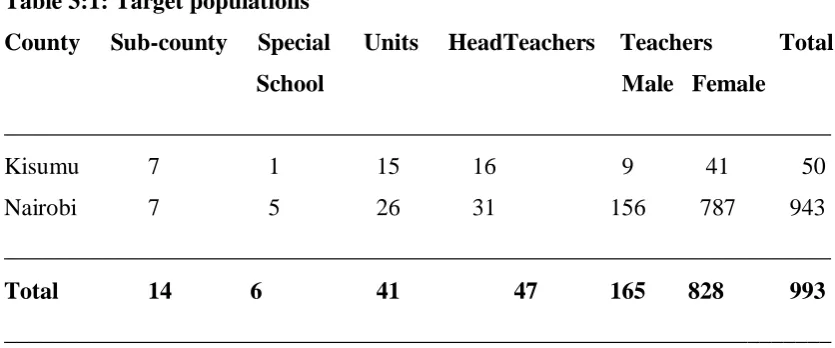
Table 3:1: Target populations ... 51
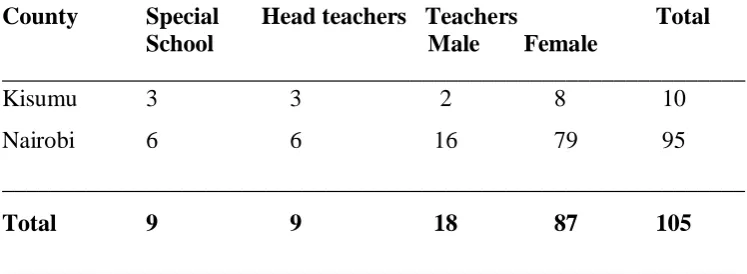
Table 3:2: Sample size ... 52
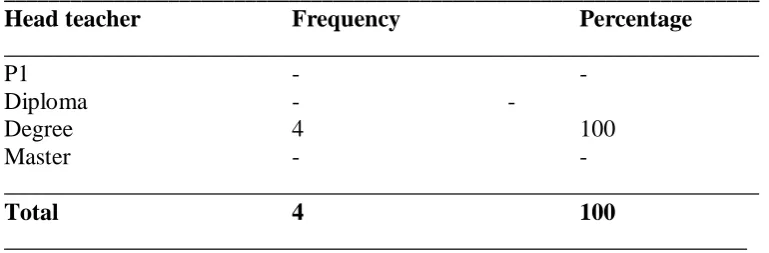
Table 4.2(a): Education level ... 61
Table 4.2(b): Teaching experience of teachers ... 62
Table 4.2(c): Duration of head teacher experience (Years): ... 63
Table 4.3(a): Teachers responses on whether they assessed learners in academic ... 64
Table 4.3(b): Teachers responses on whether they assessed learners in adaptive skills... 64
Table 4.3(c): Teachers responses on whether they involve the professionals when developing IEP ... 66
Table 4.3(d): Teachers’ responses on whether they involve the professionals when implementing IEP ... 67
Table 4.3 (e): Teachers’ responses on whether they review the IEP ... 69
Table 4.5 (a): Teachers responses on resources and material school have ... 73
Table 4.5 (b): Head teachers’ responses on what resources and materials they need... 75
x
LIST OF FIGURES
xi
ABBREVIATIONS AND ACRONYMS AAMR American Association on Mental Retardation EARC Educational Assessment and Resource Centre ECDE Early Childhood Development Education ID Intellectual Disability
IDEA Individuals with Disabilities Education Act IEP Individualized Education Program
IQ Intelligence Quotient
KISE Kenya Institute of Special Education MDE Multidisciplinary Evaluation
MoE Ministry of Education
NACH National Advisory Committee on the Handicapped SLD Specific Learning Disabilities
SPSS Statistical Package for Social Sciences SNE Special Needs Education
xii ABSTRACT
1
CHAPTER ONE
INTRODUCTION AND BACKGROUND TO THE STUDY 1.1 Introduction
This chapter presents the background to the study, statement of the problem, the purpose of the study, research objectives, research questions and significance of the study. It also outlines limitations and delimitations of the study, research assumptions, theoretical and conceptual framework and operational definitions of key terms.
1.2 Background of the Study
Special Education for learners with intellectual disability has become a growing concern and a major issue in almost all parts of the world. Globally, access to individualized education programme (IEP) for the physically disabled is more popular in developed countries unlike in developing countries (Lincove, 2009). Efforts to ensure equitable access to IEP for children with disability have been a challenge particularly in developing countries in Asia and Africa. A majority of developed countries are on the verge of achieving development and implementation of the individualized educational programme which is a sharp contrast to the countries in Sub-Saharan Africa.
2
with Disabilities Education Act (IDEA) (1997) in the USA, strengthened the rights of learners with disabilities to a free appropriate education and ensured greater accountability for these learners (Allen, Smith, Test, Flowers, & Wood, 2001).
Globally, the field of Special Education is dramatically influenced by Jean-Marc Itard findings (1775-1838) when he worked with the boy who had mental disorder in Southern France (Patton & Mcmahon, 2006). It was around this period that “Special Education” started emerging. During this period children referred to in this study as Intellectually Disabled were known as “mentally retarded”. Intellectual Disability is a
new term used when referring to a person who has certain limitation in intellectual functioning and in skills such as communicating, taking care of oneself and social skills. These limitation causes a child to learn and develop more slowly than a typica l child. In such a case the school staff may work with the child’s parents and other professionals to develop an IEP; which describes the child’s unique needs and
services that have been designed to meet those needs. A child with ID can do well in school but is likely to need the individualized help.
3
to meet a child’s needs (Childre & Chambers, 2005). All IEPs, contain the following information regarding the child with disability: present levels of educational performance, measurable annual goals, special education and related services, participation levels with other non-disabled children, plan for delivering services and modifications, measuring and reporting progress as well as a degree of access to general curriculum including the amount of time spent participating in general education ( Varma, 2009).
Studies in Inclusive Early Childhood Education by Burnett (1999) and Mattie and Kozen (2007) indicate that teachers of inclusive classes need support to develop and implement IEPs. They further note that effective implementation of IEP requires the collaboration of all the members of the support team. Nación and Campesinos (2002) and Sudhalter (2007) also posit that the support team members must work together to develop and implement IEPs for young children with disabilities in inclusive settings. Sudhalter (2007)observes that determination of students and their families who need IEP is the starting point and while preparing IEP planning comes after a rigorous evaluation.
4
undertaken by a team. Similarly, the Turkish Ministry of Education in 1997 recognized the need for having regulations for special education in which the principles of educating children with disability, their schooling process and the importance of IEP were clearly identified (Carter & Wilson, 2011).
According to Valenzuela and Martin (2005), in most African countries, children with special needs are mostly disadvantaged since they are unable to join school early in life. They eventually end up dropping out of school due to unconducive school environment that is characterized by congestion, lack of specialized personnel and facilities. Subsequently, most special needs children who require special attention and facilities to achieve their academic aspirations drop out. The teachers are unable to support them individually or in small classes since all classes are overwhelmingly large (Salvador-Carulla &Bertelli,2007). Evidently today, with the emerging trend in education of learners with special needs many of these African countries now recognize Special Needs Education (SNE) as a necessity for all children with disability.
5
In Kenya, different commissions and sessional papers have fronted recommendations for children with intellectual disabilities. They include: the work of the Committee on Care and Rehabilitation of the Disabled (Mwenda, 1964) which resulted in the formulation of Sessional Paper No.5 of 1968. The Ominde Report (Kenya Education Commission, 1964) which recommends that learners with intellectual disability be integrated to learn in regular schools.
Moreover, the National Education Commission (The Gachathi Report, 1976) recommends several measures to address special needs education. These include: coordination of early intervention and assessment of children with special needs, creation of public awareness on causes of disabilities to promote prevention, research to determine the nature and extent of handicaps for provision of special needs education, establishment of early childhood development education (ECDE) programme as part of special schools and development of policy for integration of learners with special needs.
Besides, the Presidential Working Committee on Education and Training for the Next Decade and Beyond (The Kamunge Report, 1988), emphasized deployment of special needs education inspectors at district level, the total integration of children with disability, necessary facilities and equipment be provided for learners with special needs education and required that parents be more responsible for their childrens’
6
have equal access to quality and relevant education. It provides the overall policy framework for the education sector and references the necessary legal context within which education and training, including SNE, shall be designed, developed and implemented in Kenya. All the above policies in Kenya do not come out clearly on the use of Individualized Educational Plan (IEP) for students with intellectual disability in special schools or intergrated programmes.
Despite the Kenya Governments silence on the issue of IEP it is noted that the education for learners with intellectual disabilities has been provided for in Kenya as early as 1948 (Mwangi, 2013), started by Rotary Club in 1948 at the St. Nicholas special school (currently known as Jacaranda special school). However, it was not until in 1960’s that teachers’ of learner with special needs started being trained
specifically for learners with visual impairment, hearing impairment and those with intellectual disabilities in various institutions such as High Ridge Teachers Training College, Siriba Teachers College and Kamwenja TTC. In 1986, the training for teachers from the various institutions was moved to Kenya Institute of Special Education (KISE) where they started training diploma teachers in Special Needs Education (SNE) in specific areas of disabilities including the area of intellectual disabilities. Currently, more graduate teachers are being trained in various universities including Kenyatta University, Moi University, Maseno University and many more from private universities (Ministry of Education, 2000). It is thus, clear that teachers for learners’ with intellectual disabilities in Kenya have been well prepared during
7
Evidently, no study has been carried out in Kenya to evaluate the competency of these teachers’ of learners with intellectual disabilities in developing and implementing IEP. However, there is a related study carried out by Ndanu (2012). He investigated the influence of IEP for learners with learning difficulties in primary schools in Mwingi District, Kitui County in Kenya.
In this study, Ndanu used a study sample of 46 respondents which comprised 35 teachers, 10 headteachers and 1 area Education Officer. The findings of the study was that despite applying several teaching/learning strategies to facilitate teaching/learning processes, the performance of learners with learning difficulties was quite minimal. The study aimed at finding out how the administrative structure was put in place to implement the IEP in terms of resources, equipment and teachers capacity in public primary schools and challenges facing teaching in implementing IEP. Descriptive statistics was used to analyze the data collected. His findings revealed that the use of IEP and other strategies were effective in enhancing the learners with difficulties. The study is similar to the present study as it investigates the challenges which teachers face in implementing IEP. However, it differs in the sense that the respondents in the current study were teachers’ of learners with special needs (intellectual disabilities) while in Ndanu’s study respondents were regular teachers. Similarly, the training of teaches is an expensive affair which requires the government to fund in order to achieve the objective of training teachers for learners with intellectual disability in the country.
8
study, Walingo employed document analysis and a survey design in a mixed method research approach. The problem of the study was that persons who were deaf and blind experienced a lot of challenges in both hearing and sight that limit their interaction with the environment. The study aimed at analyzing the strategies that were used in the formulation and implementation of IEPs, the personnel who were involved, the quality of the formulated goals in identifying and addressing the needs of learners, the evaluation and reevaluations of IEPs and challenges encountered in the whole process and how they were addressed. The current study differs from Walingo’s study in the sense that the respondents were teachers who were intellectually disabled while Walingo’s were teachers of deaf-blind. The current study evaluated IEP while Walingo’s analyzed IEP implementation in supporting the
attainment/functional abilities in learners who are deaf-blind. The findings revealed that there were no specific strategies that were used to formulate IEP goals and implement them. A multidisciplinary approach was not used in IEP formulation, implementation and reevaluation. The goals that were formulated did not capture adequately the needs of the learner that would have supported the attainment of functional abilities. Walingo’s study respondents were teachers of learners who were deaf-blind. It also differs in the use of adopted Program Evaluation for Procedure and Substantive Efficacy (PEPSE) – ICF-CY, and R-GORI in analyzing 54 IEPs for learners who were deaf and blind.
9
shows that the University education unit spending totals Kshs. 137,707 was 18 times that of primary education. Therefore, with this massive expenditure it was important for this study to explore whether the IEP was being developed and implemented by these special education teachers who are trained especially for learners with intellectual disability and establish the challenges they face in the development and implementation of IEP in special schools and units in Kisumu and Nairobi Counties in Kenya.
1.3 Statement of the Problem
Despite the expensive and comprehensive training of teachers in Kenya in Special Needs Education to develop and implement IEP with learners with intellectual disabilities, their competency is still questionable. In line with their training, the special education teachers are expected to assess the individual child’s needs and
develop and implement the IEP. When teachers do not develop the IEP, there is a lack of individualized goal setting and a teacher cannot measure an individuals’ academic and adaptive learning progress. Evidently, a child with intellectual disability when not given individual instruction to meet his/her unique needs will perform poorly in both academic and adaptive skills area. These concerns prompted the researcher to evaluate the development and implementation of individualized educational programs for learners with intellectual disabilities in Kisumu and Nairobi counties, Kenya.
1.4 Purpose of the Study
10
disabilities in selected special schools and units in Kisumu and Nairobi Counties in Kenya.
1.5 Research Objectives The study objectives sought to:
i. Establish the criteria followed by teachers in developing and implementing Individualized Education Programme (IEP) for learners with intellectual disabilities in special schools and units in Kisumu and Nairobi counties. ii. Establish the involvement of multidisciplinary team in developing and
implementing IEP for learners with intellectual disabilities in special schools and units in Kisumu and Nairobi Counties.
iii. Investigate the availability of resource materials for developing and implementing IEP for learners with intellectual disabilities in special schools and units in Kisumu and Nairobi Counties.
iv. Explore the challenges encountered by teachers of learners with intellectual disabilities in developing and implementing IEP for learners with intellectual disabilities in schools and units in Kisumu and Nairobi counties.
1.6 Research Questions
i. What criteria is followed by teachers in developing and implementing IEP for learners with intellectual disabilities in special schools and units in Kisumu and Nairobi counties?
11
iii. What resource materials are available for IEP development and implementation for learners with intellectual disabilities in special schools and units in Kisumu and Nairobi Counties?
iv. What are the challenges facing teachers of children with intellectual disabilities when developing and implementing IEP in Kisumu and Nairobi Counties?
1.7 Significance of the Study
The study generated information on the challenges to successful development and implementation of the IEP for learners with intellectual disability. These findings may be beneficial to policy makers so as to make better the quality of education in special units and special schools for learners who are intellectually disabled.
12 1.8 Limitation and Delimitation of the Study 1.8.1 Limitation of the Study
The data obtained through the instruments in the present study might not be generalized to the entire population of teachers and headteachers since the study was only conducted in two counties in Kenya.
1.8.2 Delimitation of the Study
The study was delimited to special schools and units of learners with intellectual disabilities in Kisumu and Nairobi counties in Kenya. Equally, the study was delimited to headteachers and all special needs education teachers in both special schools and units for learners with intellectual disability. The sample was from the population of all units with learners who were intellectually disabled, all headteachers of the regular schools with units and special schools for learners with intellectual disability. The study excluded headteachers of regular schools which did not have a unit. The interest of the survey was mainly to explore the competency of special needs teachers in developing and implementing IEP with learners who were intellectually disabled in units attached to regular schools and special schools for the same learners in Kisumu and Nairobi counties.
1.9 Assumptions of the Study
This study made the following assumptions:
i. Honesty and willingness of respondents in the study area to give information to the best of their knowledge.
13
iii. The learner with intellectual disability in Kenya require Individualized Education Programme in order to learn.
1.10 Theoretical/Conceptual Framework 1.10.1 Theoretical framework
This study was guided by Four-step Model of Context Input Process and Product (CIPP) (Stufflebeams, 1961). According to this model, any evaluation of a programme is characterized by the following four areas: context, input, process and product. In the evaluation programme four areas were looked at. They are Context, Input, Process and Product (CIPP). In this study, the context provides information on goals, objectives and priorities. Input shows activities of the programme such as the methods and strategies applied, resources used like human and materials. The process provides information on the programme as to what legal requirements and guidelines to be followed, identification of the problem and what strengths and weakness found in the programme. Lastly, the product entails the examination of the general and specific outcomes of the programme.
14 1.10.2: Conceptual Framework
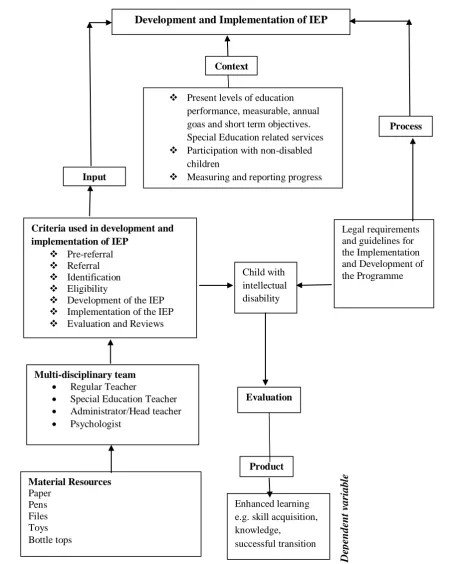
Figure 1.1: Relationship between independent and dependent variables Development and Implementation of IEP
Present levels of education performance, measurable, annual goas and short term objectives. Special Education related services
Participation with non-disabled children
Measuring and reporting progress signatures.
Input
Criteria used in development and implementation of IEP
Pre-referral
Referral
Identification
Eligibility
Development of the IEP
Implementation of the IEP
Evaluation and Reviews
Process
Multi-disciplinary team Regular Teacher
Special Education Teacher
Administrator/Head teacher
Psychologist Material Resources Paper Pens Files Toys Bottle tops Child with intellectual disability Legal requirements and guidelines for the Implementation and Development of the Programme
Evaluation
Enhanced learning e.g. skill acquisition, knowledge, successful transition D epe n de n t vari ab le In de pe n de n t V ar iabl e In te rv en in g V ari abl e Context Product
15
A conceptual framework is a set of broad ideas and principles taken from relevant fields of inquiry and used a structural format subsequent presentation (Bricki & Green, 2007). Figure 1.1 illustrates that in the learning process of a learner who is intellectually disabled; an IEP is used to guide the instruction. Therefore, it has to be developed and implemeted by focusing on the IEP key components. These are learner’s present levels of educational performance, measurable annual goals and
short-term instructional objectives, specific educational services to be provided, the extent to which the child will participate in general education, projected date for initiation of services, duration of those services and annual evaluation of progress made on IEP). When using a multidisciplinary team, they establish the present level of education performance, measurable annual goals, short-term objectives, special education and related services, the participation of a child with other non-disabled children, how progress is measured and reported, date of initiation, transition services and signatures of signatories. For the IEP to be developed there are strategies that ought to be followed. These are pre-referral of this child, referral, identification and eligibility. They require the involvement of human resources and material resources (paper, pen, files). Once the IEP is developed, there is a process of IEP implementation which will adapt Stuflebeam’s four-step model of CIPP (Context,
16 1.11 Operational Definition of Key Terms
Evaluation: Examining a set of practices about developing and implementing an Individualized Education programme (IEP) efficiency and quality. It is a form of systematic examination of events to be able to make more informed decisions about IEP implementation (Lincove, 2009). Individualized Education programme (IEP): A written education plan that
specifies what an individual learner needs to learn effectively. It is negotiated by a team of professionals and requires that special education and related services be provided to overcome those needs(Woods et al., 2013).
Intellectual Disabilities (ID): Substantial limitations in performing academic tests and also problems in performing everyday life social skills
(Sudhalter, 2007).
Intellectual Functioning: General mental capacity, such as learning, reasoning, problem solving among others (Tammy & Bombeck, 2013). Interdisciplinary Team: Members are characterized by formal channels of
communication between them. Each team member is generally responsible for implementing a portion of the service plan related to his/her discipline (Heward; 2006)
Implementation: is the carrying out, execution, or practice of a plan, a method, or any design, idea, model, specification, standard or policy for doing something. As such, implementation is the action that must follow any preliminary thinking in order for something to actually happen
17
Multidisciplinary Team: Members of different professional disciplines including the child’s parent/guardian and the child if necessary that work together
for the benefit of the child with intellectual disability (Bandu & Jelas, 2012).
Special Units: A self-contained classroom which is a separate room or rooms
18
CHAPTER TWO
REVIEW OF RELATED LITERATURE 2.1 Introduction
This chapter presents the review of related literature based on themes arising from the objectives of the study. These were the criteria for IEP development and implementation, personnel involved in developing IEP; human and material resources and challenges of implementing IEP.
2.2 Criteria for IEP Development and Implementation
This section explains IEP process, which is considered to be one of the most critical elements that ensure effective teaching, learning and better results for all learners with disabilities. In line with this observation, the review of literature done on Smith (2004, 2007) work gives seven steps to be observed in a comprehensive IEP planning process which begins with pre-referral and ends with a evaluation and review. He shows how each of these steps fits into the whole process of IEP planning and implementation.
2.2.1 Pre-referral
19
Pre-referral activities are employed to screen students before more formal identification procedures are implemented. In general, before any formal referral to special education is made, teachers and family members work together to see whether educational or behavioral difficulties can be resolved in the general education classroom. The assessments used during this step of the IEP process are intervention-based and are made in the student's general education class using direct measures of performance (McNamara & Hollinger, 2003).
The point here is to avoid unnecessary assessments and placements in special education, which are costly in time; money, and resources. During this pre-referral period, teachers try different validated teaching approaches to determine whether faulty instruction is the source of the problem (Barnett et al., 2004). They also make basic accommodations to the instructional program and systematically differentiate instruction more intensively. General education teachers receive both assistance and consultation from specialists. Students whose learning remains challenged are referred to special education and the next step of the IEP process.
A study by (Lloyd, Kauffman, Landrum and Roe, 1991) indicate that most reasons why classroom teacher refer students for special education and other types of support services are for many reasons such as general academic problems, difficulty in reading and behavioural problems such as in attentiveness.
20
support team implementation were compared to those schools employing a more traditional approach of obtaining services for students with learning problems, which involved referring students with learning problems directly for a multidisciplinary evaluation (MDE).
The costs and effectiveness of the traditional approach was based upon data from the Phase IV and Phase V schools before the instructional support team program was implemented in these schools. Costs associated with these two programs were primarily calculated according to personnel costs required to run the two programs. The long-term cost associated with servicing students in special education programs was estimated to be twice the cost of servicing regular education students.
The effectiveness of the two programs was measured according to effectiveness measures taken from the Instructional Support Team Projects data files (Kovaleski, McKinley, & McCloskey, 1995), which collected information on the numbers of instructional support team referrals, the number of psychological evaluations, the number of students placed in special education programs, and the number of same year retentions.
21
learning difficulties within a school. One of the factors utilized to determine the success of an instructional support team program is the percentage of students referred to the instructional support team who are able to continue to remain in their regular education classroom without the need for a multidisciplinary evaluation or special education services.
On the average 85 % of students serviced through the instructional support team program did not need to be referred for a multidisciplinary evaluation because the team determined that their needs could be adequately met in the regular education classroom. Of those 15 % of students referred for MDE, only 54 % were placed. This result was unexpected given that the instructional support team referred the student on because they believed those student’s needs were not being met in the regular
education classroom with the instructional support team interventions. However, this placement was higher than the traditional approach which placed only 37 % in special education programs after a MDE referral. Approximately two-thirds of those students who did not qualify remained in the regular education classroom without any further instructional assistance.
22 2.2.2 Referral
Normally, if pre-referral interventions are unsuccessful, an individual is referred for special education services. Referrals can come from many different sources: from parents, a social service agency, public health nurses, a doctor etc. Kroth, (1990) states that learners referral normally starts when the regular education teacher becomes concerned about a certain learners behavior or academic achievement. Young children who are at risk of having disabilities because of improper prenatal care, low birth weight, accident or trauma during infancy, or child abuse are referred for special services.
Also, those with visible indications of a disability (e.g., a missing arm or leg, facial differences resulting from Down syndrome) or other signals of significant developmental delay (e.g., an 18-month-old not walking independently or a three-year-old not talking) are usually identified early and receive early intervention services during infancy or their preschool years. Typically, the referral process begins sooner for children with severe disabilities, because their disabilities are obvious at birth or during infancy.
23
Learners who are referred in most cases are those whose academic performance is significantly lagging behind their classmates. Yssedke et al., (1983) further points out that 75%-81% of learners referred by the teachers normally qualify for special education services. In the case of learners with intellectual disability they are normally noticed because of their failing to adapt academically or socially to the expected standards of their age mates. According to Smith, Tyler and Mclean (1998) the main referral process for the learner begins when the regular class teacher informs the school principal/head teacher, parents, counselor, or special service committee (also referred to as the appraisal and review team or the learner’s study team).
This committee then decides whether the learner needs to be evaluated more thoroughly. In such a case the person who referred the learner for special education services is expected to provide to the committee with relevant information on the learners behavioral observations, samples of academic work or anecdotal notes (e.g. results from each achievement test, scores from weekly quizzes and samples from learners writing and if social behavior is of concern a written description of the learners atypical behavior in the classroom and on the playground (Smith, Tyler and Mclean; 1998).
24
for consent to evaluate the learner is sent to parents. Parents are expected in return to respond in writing to consent before formal assessment is started.
Cline (1992) in Kihoro (2010) adds that a class teacher decision to refer a child for assessment may also be influenced by the teacher’s inability to recognize the
differences between a child who has intellectual disability (ID) a child who has specific learning difficulties (SLD) or a child who has communication disorders. Such cases when referred to assessment may well be placed in special schools for children with intellectual disability, where they do not fit.
The Education Act of 1981 in the UK (Solity, 1992) in Kihoro (2010) stipulates that a parent or a guardian of the child suspected of having intellectual disability must give consent for a child to be referred for assessment. The permission must be given in writing. The child’s parent or guardian must be involved in the assessment process. A
study by Ford and Webb (1994) that focused on desegregation of special educational programs suggested that lack of referrals– and inadequate teacher training – contributed to the under representation of African American students in gifted programs.
25
Although some education scholars argued that teachers lack of referral of African American students who need special education may have been faced with strong anecdotal evidence that many African American students had low academic skills, learning disabilities or behavioral disorders that truly warranted a different learning environment. However, this anecdotal evidence ignores how the lack of culturally responsive referral systems may affect student performance.
Usually in Kenya situation, before placement in special school or a special unit for learners with intellectual disability, a thorough referral and assessment process must be undertaken by a team of professionals or a multidisciplinary team. The child suspected of having intellectual disability, the child’s parents or guardians and the child’s teacher must be actively involved in the process (Kihoro, 2010).
2.2.3 Identification
The purpose of identification in the IEP process is to determine whether: a learner has a disability, special education is required, and what types of services are needed. Evaluations are conducted by multidisciplinary teams made up of professionals who have expertise in each area of concern.
Each member helps to evaluate the learner's unique strengths and needs. Information can come from a broad range of sources, including the learner’s parents and family
26
In this step, a lot of data about the learner is collected which is used to inform the team about the learner's abilities which includes: medical history, information about social interactions at school and at home, adaptive behavior in the community, educational performance, and other relevant factors are considered. Evaluations include an array of assessment instruments and procedures. Information is collected, from family members, about individuals' major life activities: performance at home, at school, in interpersonal relationships, and during leisure time. Formal tests—tests of intelligence, academic achievement, and acuity (e.g., vision and hearing)—are part of the information used to make decisions about students and their potential special education status.
Less formal assessments (school observations of social behavior, examples of academic assignments, direct measurements of academic performance, and portfolio samples of classroom performance) are also important pieces of evidence for this step in the IEP process. Luckasson et al., (1992) points out that for learners who are suspected to have intellectual disability assessment in specific adaptive skill areas which include communication, self-care, home living, social skills, community use, self-direction, health and safety, functional academics, leisure, and work are critical. One result of the evaluation step of the IEP process can be determination that the learner does not have a disability. In this case, the IEP process is discontinued. For those learners who do have disabilities, this phase of the process provides vital baseline information on the learner’s performance which guides the development of
27
Pierangelo, R. and Giulioni G. (1998) posit that effectively carried out assessment which would result in appropriate placement of a child must have the following components:
an individual psychological evaluation
general intelligence
instructional needs, leaning strengths and weaknesses, social and
emotional dynamics
academic history including interviews or reports from the child’s past
and present from the teachers physical examination of the child
According to Gargielo (2006) in Nyakundi (2015) Assessment is termed as the process of gathering information, analyzing it, and making viable judgment while placement is putting a learner in the most appropriate educational setting or positions. Klin and Volkmar (1995) recommended a multidisciplinary team for assessment and feel strongly that parents need to be a part of the assessment. Assessment results should translate easily into implications for adaptation, learning, and vocational training.
28
personality assessment. Communication assessment should obtain information on vocabulary, sentence construction, comprehension, non-literal communication skills, pragmatics, prosody of speech and content, and coherence and contingency of conversation. The psychiatric examination should include observations in structured and unstructured situations that investigate relationships, leisure skills, special interests, social and affective presentation, and behavior problems.
In Kenya, Educational Assessment Resource Centre (EARC) have the responsibility of assessing and placing learners with special needs (Nyakundi 2015). According to the Kochung (2003) EARCs personnel were merely trained special education teachers without any further training on assessment and that most of the Educational Assessment Resource Centres lacked critical assessment equipment and tools. Nyakundi (2015) adds that the Ministry of Education (MoE) National Special Education Policy Framework Draft (2009) revealed that there was inadequate skilled labour for the assessment for placement decisions of learners with (SNE).
29
of United Kingdom (UK) state that the assessment process starts with the class teacher because of a child’s unsatisfactory performance in school.
2.2.4 Eligibility
The information from the identification step is used to recognize students who actually have a disability and qualify for special education services. For those students, the IEP committee then determines what components of the full range of special education and related services are needed so that an appropriate education can be planned for and ultimately delivered. The education of those students who do not meet the eligibility requirements remains the responsibility of general educators.
In the United States of America, the federal laws state that eligibility for special education services is determined by two criteria: it must be established that student has a disability and there must be evidence that the disability in some way adversely affects the student’s educational performance (Doorlag & Lewis, 2003). Achenbach (2005), in a special section of the Journal of Clinical Child and Adolescent Psychology dealing with advancing assessment for children and adolescents, discussed the importance of evidenced-based assessment that has been omitted in the emphasis and search for evidenced-based treatments. He stated it is hard to determine how treatments are working if the problems they are based on have not been appropriately and adequately assessed.
2.2.5 Development of the IEP
30
2003). The IEP is a tool which is developed to ensure that school children with special needs receive the special education and related services which are appropriate to each child’s needs. Therefore, after thorough completion of the pre-referral, referral,
evaluation, and eligibility steps of the IEP process, it is time to develop the actual individualized program plan for the learner who has qualified for special education. The next step requires that parents and the IEP team make decisions about appropriate education, other related services, and placement. The assessment results are used to help make these decisions. The IEP team then puts its crafted plan down in writing– resulting in the IEP that will guide the delivery of the child’s special education and
related services. They must ensure that the resulting IEP addresses the minimal contents of the IEP- which are the key components as given by IDEA:
(1) A statement of the learner’s present levels of educational performance; (2) A statement of measurable annual goals and short-term instructional
objectives;
(3) Specific educational services to be provided;
(4) The extent to which the child will participate in general education, Projected date for initiation of services;
(5) Expected duration of those services;
(6) A statement of annual evaluation of progress made on IEP (Smith, 2007).
31
development process to determine whether: a learner has a disability, special education is required, and what types of services are needed. Denbo (2002) focused on school cultures that had effective leadership, support for development, teacher diversity, and the use of data to improve instruction.
2.2.6 Implementation of the IEP
Once the IEP is developed, the student's services and individualized program begin. The IEP now lays out what constitutes an appropriate education for the student, the extent to which the student participates in the general education curriculum, the accommodations the student receives both for instruction and for testing, and the array of multidisciplinary services from related service providers that support the student's educational program. For students who are participating in a different curriculum or whose goals differ from those of the general education curriculum, the IEP has specified alternate assessment procedures as well.
According to Penuel, Fishman, Yamaguchi, & Gallagher, (2007); for learner to advance appropriately towards his or her IEP goals, he/she must be involved in the general curriculum and participate in other school activities. Every individual involved in the provision of services to the learner should know and understand his or her responsibilities while carrying out the IEP. This helps to ensure that the learner receives the services that have been planned, including the specific modifications and accommodations that the IEP team identified as necessary. The school must take steps to ensure a student's IEP is implemented as recommended by the multidisciplinary committee, including but not limited to: providing copies of the learner’s IEP, as
32
responsibilities and providing a learner with his or her instructional materials in an accessible alternative format if recommended in the learner’s IEP.
According to Whitbread et al., the general consensus among teachers today is that they are feeling "overtaxed" (2007, p. 7) when it comes to working with parents to make decisions about appropriate education, other related services, and placement teaching special education students. Working with the parents, while providing accommodations and paperwork documentation, in addition to their regular workload, it is little wonder that teachers may be feeling overtaxed. If there are multiple parents or partners involved in the process, this can add to the load of working with and notifying not only the custodial guardian/partner/parent, but the non-custodial parent/partner also. This feeling of bum out among teachers may lead to resentment toward the parents they are working with or the entire IEP/special education process in which they are enveloped (Whitbread et al., 2007).
2.2.7 Evaluation and Reviews
Evaluation means procedures used to determine whether a child has a disability and the nature and extent of the special education and related services that the child needs. The evaluation results are very useful in determining how the child is currently doing in school and what areas of need the child has. This is one of the evaluation’s explicit purposes as reflected in IDEA’s definition of evaluation. For each IEP developed
33
IEP review meetings is to ensure that the learner is meeting his/her goals and making educational progress.
To assist in accountability process it is recommended that frequent assessments of the individual's performance occur, even if major IEP reviews occur once a year or only every three years. The purpose of such measurements of progress is to guide instruction and be sure those interventions scheduled are effective. It is important to know if the learner is not making the expected progress or if he/she has progressed much faster than expected. Together, parents and school personnel can then address the learners needs as those needs become evident (Ittenbach, Patton and Beirne-Smith,1994.
Etscheidt (2003) reviewed 68 published legal cases occurring between 1997-2002 involving students with IEP issues and found three primary factors that lead to judicial decisions: the IEP must be matched to evaluation data (9 cases out of 21 decisions supported the school district), IEP team members must be qualified to develop 36 programs (all 9 case decisions supported the school district), and the methodology provided must assist the student’s achievement of IEP goals (8 out of 9
34
This study sought to establish the criteria and the key components used in developing and implementing the IEP by teachers of learners with intellectual disabilities in selected special schools and units in Kisumu and Nairobi Counties in Kenya.
2.3 Involvement of Multi-disciplinary Team in IEP Development
According to Griffin (2011) an interdisciplinary team should be charged with the task of providing comprehensive, appropriate educational programmes for all learners with disabilities. The team members are composed of a group of individuals who have vested interest in the learners’ educational programme. Smith et al., (1994) add that
team members should be teachers, psychologists, school administrators, parents, learners, advocates, nurses, social workers, occupational/physiotherapists, speech and language therapists. According to Woods et al. (2013), the needs of the individual learner should determine the exact composition of the team.
35
Similarly, the IEP might contain points for action that go beyond the school and family with learners who are intellectually disabled therefore, many professionals are more likely to be involved in the provision of services and support to the learner. Support from a multidisciplinary team is required throughout schooling and as the child matures the involvement of social worker and other staff may be required as the child moves to adulthood. Sharing expertise and insights can help make everyone's job a lot easier and can certainly improve results for learners with disabilities (Sudhalter, 2007). Schools can encourage teamwork by giving teachers, support staff and/or paraprofessionals time to plan or work together on such matters as adapting the general curriculum to address the learner's unique needs. Teachers, support staff and others providing services to learner with disabilities may require training and staff development (Test et al., 2004).
Communication between home and school is also important. Parents can share information about the learner’s home environment and build upon what the learner is
36
parents and school personnel can then address the learners' needs as those needs become evident.
According to Heward, (2003) every team member conducts assessment, plans interventions and delivers services. He further shows that the headteacher/ administrator is a vital participant in the IEP meeting, this individual represents the school system. This person knows a great deal about special education services and educating learners with disabilities (Carter & Wilson, 2011). He or she can talk about the necessary school resources and materials. This individual has the authority to commit resources and materials and be able to ensure that whatever services are set out in the IEP will actually be provided.
At least one of the learners’s regular education teachers must be on the IEP team if the learner is (or may be) participating in the regular education environment. The regular education teacher informs the team for instance on the following: general curriculum in the regular classroom, aids services or changes to the educational programme that would help the learner to achieve and strategies to help the learner with behaviour moulding, if it is an issue.
37
Support for school staff may include professional development or more training for teachers, administrators, bus drivers, cafeteria workers and others who provide services for learners with disabilities. The learner’s special education teacher
contributes valuable information and experience on how to educate the learner with disabilities.
According to Martin, Marshall and Sale (2004),the parents are key members of the IEP team. They know their children very well and can talk about their strengths and needs as well as offer ideas for enhancing their children’s education. Furthermore
they can offer insight into how their children learn, their interests and other aspects known by only parents. In addition, they can listen to contributions from other team members regarding their children’s needs and share their suggestions. Also, they can
report on whether the skills the children learn at school are being used at home.
Another important member of the IEP team is the individual who can interpret what the learner’s evaluation results mean in terms of designing appropriate instruction. The evaluation results are very useful in determining the learner’s current
performance in school and other areas of need that the learner may have. This IEP team member must be able to talk about the instructional implications of the learner’s evaluation results, which will help the team plan appropriate instruction to address the learner’s needs (Mattie & Kozen, 2007).
38
(Sandt & Karriker, 2010). The school system may invite one or more individuals who can offer special expertise or knowledge about the child, such as a paraprofessional or related services professional.
Moreover, when developing an IEP, consideration should be taken on the learner’s
need for related services. Thus related service professionals are often involved as IEP team members or participants. They share their special expertise about the learner’s
needs and how their own professional services can address these needs (Mattie & Kozen, 2007). Depending on the learner’s individual needs, some related service professionals attending the IEP meeting or otherwise helping to develop the IEP might include occupational or physical therapists, adaptive physical education providers, psychologists, or speech-language pathologists.
When an IEP is being developed for a learner on transition age, representatives from transition service agencies can be important participants. Whenever a meeting is called to consider needed transition services, the school must invite a representative of any other agency that is likely to be responsible for providing or paying for transition services (Penuel et al., 2007). This individual can help the team plan any transition services the student’s needs. He or she can also commit the resources of the agency to
pay for or provide needed transition services. If he or she does not attend the meeting, then the school must take alternative steps to obtain the agency’s participation in the planning of the student’s transition services.
39
Services division of the Arizona Supreme Court Administration office of the Courts 2013 posits that a learner should be included in the process if he/she is old enough to understand and possibly assist the team in planning for his/her future. This allows them to have a strong voice in their own education and can teach them a great deal about self-advocacy and self-determination. They further state that currently more and more learners are participating in and even leading their own IEP meetings. By law, certain individuals must be involved in writing a learner’s Individualized Education
Programme. Note that an IEP team member may fill more than one of the team positions if properly qualified and designated. For example, the school system representative may also be the person who can interpret the child’s evaluation results.
These people must work together as a team to write the child’s IEP. According to Sandt and Karriker (2010)a meeting to write the IEP must be held within 30 calendar days before deciding that the child is eligible for special education and related services. Each team member brings important information to the IEP meeting. Members share their information and work together to write the child’s Individualized Education Programme. Each person’s information adds to the team’s understanding of
the child and the services the child needs.
This IEP team member must be able to talk about the instructional implications of the child’s evaluation results, which will help the team plan appropriate instruction to address the child’s needs. He or she may be a member of the team already, such as the learner’s special education teacher or the public agency representative, or may be
40
This study sought to establish the involvement of a multi-disciplinary team in developing and implementing the individualized educational programme by teachers of learners with intellectual disabilities in selected special schools and units in Kisumu and Nairobi Counties in Kenya.
2.4 Availability of Resource Materials
Beirne Smith et al., (2006) state that policy makers must identify the most beneficial set of goals and allocate the necessary resources those IEP goals that might require resources in terms of human, money and materials should be addressed. According to Dabkowski (2006), some goals may require resources in terms of clerical support or supplies. It is important that the team identifies such resources at the time they generate goals. The individuals being supported under the IEP programme require school to provide accessible versions of instructional materials to learners’ with
special needs. Students with disabilities should receive study materials in appropriate formats at the same time as their typical peers receive their textbooks. According to Valenzuela and Martin (2005), these individuals demand special administrative models (for example, special administrators, special staffing, facilities and funding).
Administrative mode according to Sudhalter, (2007) include planning, organizing, staffing, directing and coordinating which embodies supervising, reporting and budgeting. Staffing explains how the administrators arrange for the regular supply of personnel, staff training through workshops, seminars, teachers’ meetings and
41
procedure through which the regular employment of the proper kind and number of staff necessary to accomplish the goals of the school or organization is achieved.
Thus, the morale of the staff in the school will be raised for higher productivity. Supervising refers to monitoring and coordinating the activities, facilities and personnel at various units of the special school (Demirel & Cokun, 2010). It also entails, provision of corrective measures and positive criticisms instead of judgment so as to achieve the set goals of building those special needs. Budgeting embodies fiscal management, financial planning and control by administrators in order to ensure that the available financial resources are not diverted from the main objectives which include:providing special facilities, equipment, environment, medical care, consultation services, clinics, among other things, for learners’ with special needs. In
general terms, services rendered to the special needs learners are expected to be specially designed and delivered by highly trained and specialized personnel.
Therefore, this study sought to establish the availability of resource materials in development and implementation of the individualized educational programme by specialized teachers of learners with intellectual disabilities in selected special schools and units in Kisumu and Nairobi Counties in Kenya.
2.5 Challenges of Developing and Implementing IEP
42
individualization of IEPs due to a number of factors such as school culture, classroom setting, teachers’ use of assessment data, and (3) collaboration in developing IEPs is
varied with noticeable limitations in the involvement of parents, other professionals and learners.In similar vein, Childre and Chambers (2005) describe that context and school culture have significant effects on IEP practices and importantly influence the nature and level of collaboration between teachers, parents, students and other stakeholders when developing and implementing IEPs.
Ronaldi (1976) cautions that: staff development must take place first. He warns that teachers may end up with paperwork compliance rather than real exemplary implementation. According to Smith, (1990) and Sugai, (1985) they argue that developing, writing, and monitoring IEPs is quite time consuming, and some teachers report that the burden of the paperwork outweighs the usefulness of the document. However, the study of Abosi (2003) show that, the individuals with special needs are not well catered for by the government. He laments that teachers’ training and
general development, for those with special needs is lacking, especially in Africa.
43
they are ill-equipped to simultaneously handle the multiplicity of academic and behavioral challenges presented by individuals with intellectual disabilities.
Martin, Marshall and Sale (2004) points out that IEP participation play a significant effective positive dialogue and outcome. Harry, Allen and Mchanghlin (1995) note that parents are typically not actively involved in the IEP process. According to Stoner, Cocks, Thomson, Angel, Heyl and Crouley (2005), parental perceptions on IEP meeting is traumatic, confusing and complicated.
Lee-Tarver (2006) point out that IEP is perceived as necessary tool for planning, preparing and implementing educational goals and curriculum. A study by Salas (2004) shows that parents of children with special needs input isfrequently not respected during IEP meetings. Collaboration in the IEP process discussed by Karvonen and Huynh (2007) describe the difficulties faced by teachers and parents in establishing and maintaining relationships with team members while developing IEPs. Some of the highlighted challenges are involved around issues of power and equity, culture, roles of team members and their ability to overcome barriers to forge partnerships.
44
decision making and view the services and support in the IEP as being very individualized for their children. Though teachers are the most knowledgeable resource in programming for IEP, the quality of the teacher’s relationship and other
team members has a major impact on the overall outcomes for students (Snyder, 2002).
The literature on the involvement of students in their IEP meetings suggests that students have limited role and input in the IEP process. The efficacy and effectiveness of the IEP process is questionable not only in the short-term but in the long-term for students with disabilities. Mattie and Kozen (2007) argue that the students themselves might find it difficult to participate in IEP given that they are the beneficiaries and have varying disabilities, including cognitive disabilities. Although the IEP process is viewed as a means by which guardians and parents can be angaged in their childrens’
education so as to foster a good relationship between parents and professionals in IEP, other studies have shown varying and limited amounts of collaboration in development of IEP between parents and teachers (Mattie & Kozen, 2007).