Breadth and Duration of Meningococcal
Serum Bactericidal Activity in Health
Care Workers and Microbiologists
Immunized with the MenB-FHbp Vaccine
Eduardo Lujan,
aElizabeth Partridge,
aSerena Giuntini,
a*
Sanjay Ram,
bDan M. Granoff
aCenter for Immunobiology and Vaccine Development, UCSF Benioff Children's Hospital Oakland, Oakland, California, USAa; Division of Immunology and Infectious Diseases, Department of Medicine, University of Massachusetts Medical School, Worcester, Massachusetts, USAb
ABSTRACT
MenB-FHbp is a meningococcal serogroup B vaccine with two factor H
binding protein (FHbp) antigens from subfamilies A and B. For licensure, efficacy
was inferred from serum bactericidal antibody (SBA) responses to four reference
strains. Only limited information is available on the breadth or duration of protective
SBA responses to genetically diverse disease-causing strains. Seventeen health care
or laboratory workers were immunized with two (
n
⫽
2) or three (
n
⫽
15) doses of
MenB-FHbp at 0, 2, and 6 months. SBA levels were measured against 14 serogroup
B case isolates, including 6 from U.S. college outbreaks and 2 from Quebec during
hyperendemic disease. Compared with preimmunization titers, the proportion of
subjects with
ⱖ
4-fold increases in SBA titer 1 month after 2 doses of vaccine ranged
from 35% to 94% for six isolates with FHbp subfamily A and from 24% to 76% for
eight isolates with subfamily B FHbp. The respective proportions with
ⱖ
4-fold titer
increases at 1 month after dose 3 were 73% to 100% and 67% to 100%. At that time
point, the proportion of subjects with titers of
ⱖ
1:4 (presumed sufficient for short-term
protection) ranged from 93% to 100% for all 14 isolates. By 9 to 11 months after
dose 3, 50% or fewer of the subjects with follow-up sera had protective titers of
ⱖ
1:4 for 4 of 9 isolates tested. Three doses of MenB-FHbp elicited short-term
protec-tive SBA responses to diverse disease-causing serogroup B strains. For some strains,
serum titers declined to
⬍
1:4 by 9 to 11 months, which raises concerns about the
duration of broad, long-term protection. (This study has been registered at
Clinical-Trials.gov under registration no. NCT02569632.)
KEYWORDS
Trumenba, FHbp, factor H binding protein, meningococcal vaccine,
Neisseria meningitidis
, vaccines
T
he meningococcal serogroup B vaccine MenB-factor H binding protein
(MenB-FHbp) (Trumenba; Pfizer Vaccines) was licensed under an accelerated approval
pathway in 2015 by the U.S. Food and Drug Agency for use in adolescents and young
adults (1). The vaccine contains two lipidated recombinant factor H binding protein
(FHbp) sequence variants, one from each of subfamilies A and B (2). Efficacy was
inferred from serum bactericidal activity (SBA) demonstrated in phase II
immunoge-nicity trials using four serogroup B reference strains, two with FHbp subfamily A and
two with subfamily B. The vaccine is currently undergoing regulatory evaluation for
licensure in Europe.
Susceptibility of meningococci to anti-FHbp SBA is affected by a number of factors,
including antigenic relatedness between the vaccine antigen and the strain antigen (3).
In general, even within a subfamily, SBA responses are lower when homology between
Received17 April 2017 Returned for modification13 May 2017 Accepted23 May 2017
Accepted manuscript posted online31 May 2017
CitationLujan E, Partridge E, Giuntini S, Ram S, Granoff DM. 2017. Breadth and duration of meningococcal serum bactericidal activity in health care workers and microbiologists immunized with the MenB-FHbp vaccine. Clin Vaccine Immunol 24:e00121-17.https://doi .org/10.1128/CVI.00121-17.
EditorDrusilla L. Burns, Food and Drug Administration
Copyright© 2017 American Society for Microbiology.All Rights Reserved. Address correspondence to Dan M. Granoff, [email protected].
*Present address: Serena Giuntini, MassBiologics, Boston, Massachusetts, USA.
VACCINES
crossm
on August 17, 2020 by guest
http://cvi.asm.org/
the FHbp amino acid sequence of the vaccine antigen and strain antigen is divergent
(3, 4). Also, SBA responses are lower for strains with low FHbp expression (5–7), and
intrinsic strain factors such as binding of FH by PorB2 (8) or NspA (9) can render some
strains resistant to anti-FHbp bactericidal activity.
Only limited information is available on the breadth or duration of protective
antibody (Ab) titers elicited by MenB-FHbp against genetically diverse disease-causing
strains (10, 11). In the present study, we measured SBA responses of laboratory and
health care workers 1 month after administration of two or three doses of MenB-FHbp
with a panel of 14 genetically diverse serogroup B case isolates (Table 1) and one
mutant with low FHbp expression. We also report SBA persistence at 9 to 11 months
after a third dose, since the published information on SBA persistence after MenB-FHbp
vaccination has to date been limited to studies using the four serogroup B reference
strains (21).
RESULTS
The recommended 3-dose schedule for MenB-FHbp is 0, 1 to 2, and 6 months. One
month after administration of two doses separated by 2 months,
ⱖ
70% of the subjects
had
ⱖ
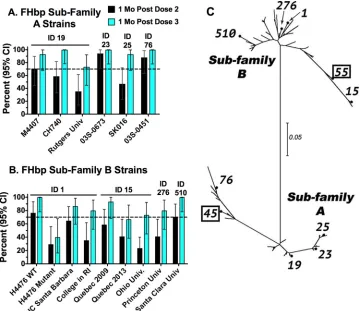
4-fold increases in SBA titer for three of the six FHbp subfamily A case isolates
(Fig. 1A) and for two of the eight FHbp subfamily B case isolates (Fig. 1B). One month
after a third dose,
ⱖ
70% of subjects had
ⱖ
4-fold increases in SBA responses to all six
FHbp subfamily A isolates and to seven of eight FHbp subfamily B case isolates. The
exception after dose 3 was the Quebec 2013 isolate with subfamily B FHbp (identifier
[ID] 15), with a response rate of 67%. The subfamily A and B FHbp sequence variants
in MenB-FHbp are ID 45 (also referred to as A05) and ID 55 (B01), respectively. There was
no obvious relationship between
ⱖ
4-fold SBA responses to a given strain and its FHbp
sequence relatedness with either vaccine antigen (Fig. 1C).
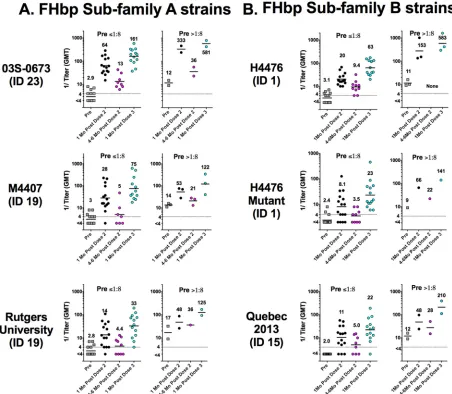
Figure 2 depicts the SBA titers of individual subjects at different time points in
relation to immunization as measured against three representative case isolates with
FHbp subfamily A (panel A), two case isolates with FHbp subfamily B, and one mutant
with lower expression of FHbp subfamily B (panel B). Graphs with the corresponding
data for the remaining 9 case isolates are shown in Fig. S1 in the supplemental material.
For each isolate, the data are stratified by preimmunization SBA titers of
ⱕ
1:8 (the
persons likely to benefit most from immunization) and those with preimmunization
TABLE 1FHbp antigen expression of meningococcal test isolatesaStrain designation or collection site (alternative designation[s])
Location of isolate collection
(yr of collection, no. of cases) Reference(s)
MLST designation (clonal complex)
FHbp subfamily (peptide ID)b
FHbp expressionc M4407 (CH258, B11) Minnesota, USA (1996, endemic) 4, 12 6160 (41/44) A (19) ⫹ CH740 (B2, M11051) Georgia, USA (2003, endemic) 4 13 (260) A (19) ⫹⫹ Rutgers University (CH865, M39535) New Jersey, USA (2016, 2 cases) 4, 13 11 (11) A (19) ⫹/⫺ 03S-0673 (CH862, NM01405) California, USA (2003, endemic) 4 1364 (32) A (23) ⫹⫹ SK016 (CH526, NM01593) North Carolina, USA (2001, endemic) 4 103 (103) A (25) ⫹ CH862 (03S-0451, NM01394) California, USA (2003, endemic) 4 32 (32) A (76) ⫹ H44/76 (H44/76-SL) Norway, Europe (1976, hyperendemic) 4, 14 32 (32) B (1) ⫹⫹ University of California, Santa
Barbara (CH840, M27846)
California, USA (2013, 5 cases) 4, 15 32 (32) B (1) ⫹⫹
College in Rhode Island (CH852, M29429)
Rhode Island, USA (2015, 2 cases) 4, 16 9069 (364) B (1) ⫹⫹
Quebec 2009 (CH860, 100681 Quebec, Canada (2009, hyperendemic) 4, 17 269 (269) B (15) ⫹⫹ Quebec 2013 (CH861, 122747) Quebec, Canada (2013, hyperendemic) 4, 17 269 (269) B (15) ⫹⫹ Ohio University (CH855, M21294) Ohio, USA (2010, 13 cases) 4, 18 269 (269) B (15) ⫹ Princeton University (CH819,
M26312)
New Jersey, USA (2013, 9 cases) 4, 19, 15 409 (41/44) B (276) ⫹
Santa Clara University (CH863, M39090)
California, USA (2016, 3 cases) 4, 20, 43 11910 (32) B (510) ⫹⫹
aFurther details of each of the strains are provided in Table 1 of a previous study (4). MLST, multilocus sequence typing. bThe FHbp (peptide) ID is shown in parentheses as annotated in the relevant public database (http://pubmlst.org/neisseria/fHbp/).
cAntigen expression was measured by flow cytometry using live bacteria and monoclonal antibodies or polyclonal mouse sera as previously described (4).⫹⫹ represents high FHbp expression,⫹represents medium expression, and⫹/⫺represents low expression in comparison with strains H44/76 (subfamily B) and M4407 (subfamily A), which naturally express FHbp at high levels. Depending on the subfamily, the reference strain was tested in parallel with each test strain.
on August 17, 2020 by guest
http://cvi.asm.org/
titers of
⬎
1:8 (the persons with high levels of natural immunity who were likely
protected prior to vaccination). As previously reported for adults immunized with
MenB-4C (Bexsero; GSK) (4), subjects in the present study who had preimmunization
SBA titers of
⬎
1:8 tended to respond to MenB-FHbp vaccination with higher
postim-munization SBA titers than subjects with preimpostim-munization titers of
ⱕ
1:8. There also
appeared to be a relationship between the amount of strain FHbp expression and the
postvaccination SBA titer. For example, for the three strains with FHbp subfamily A,
the Rutgers University strain had the lowest level of FHbp expression (Table 1) and the titers
associated with that strain were lowest after vaccination (Fig. 2A). Similarly, SBA titers were
lower with the H44/76 mutant with
⬃
50% lower expression of subfamily B FHbp (6) than
with the parental H44/76 strain, which, as noted above, has naturally high FHbp expression
(5) (Fig. 2B).
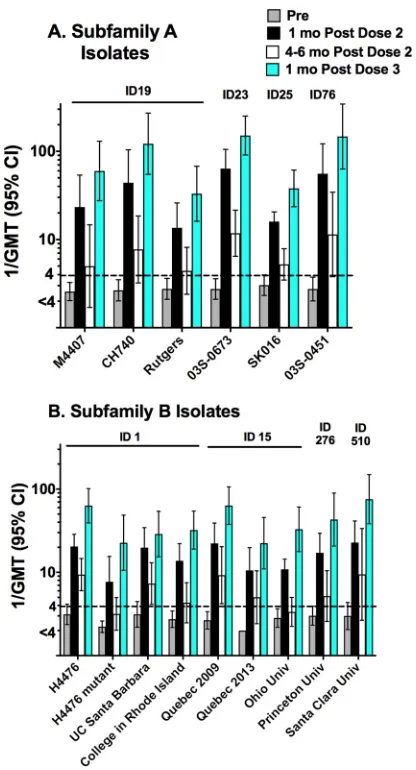
Figure 3 summarizes the reciprocal geometric mean titers (GMT) before
immuniza-tion and at different time points after 2 or 3 doses of MenB-FHbp. In this analysis, we
excluded data from subjects with preimmunization titers of
⬎
1:8. What is notable is the
rapid decline in titers seen between 1 month after dose 2 and 4 to 6 months later and
the high booster response seen 1 month after dose 3. At 1 month after dose 3, the
reciprocal GMT ranged from 33 to
⬎
151 for the six case isolates with FHbp subfamily
A and from 22 to 76 for the eight FHbp case isolates and one mutant with FHbp
subfamily B. The high prevalence of protective titers of
ⱖ
1:4 (94% to 100% of the
FIG 1Percentages of vaccinated subjects with 4-fold or greater increases in serum bactericidal antibody titer. Four-fold responses were determined by comparing the titers seen 1 month (Mo) after administration of 2 or 3 doses of MenB-FHbp with the respective preimmunization titers. Error bars represent the 95% CI (confidence interval). The numbers above the bars in panels A and B indicate the FHbp sequence ID, as described in Table 1. (A) Six FHbp subfamily A case isolates. Univ., University. (B) Eight subfamily B case isolates and a mutant of strain H44/76 with⬃50% less FHbp expression than the parental wild-type (WT) strain (6). UC, University of California; RI, Rhode Island. (C) Unrooted maximum likelihood phylogram of strain FHbp amino acid sequence variants (ID numbers are indicated) computed with MEGA software (version 7). The scale bar indicates 5% amino acid sequence divergence. ID 45 and ID 55, which are shown in boxes, are the FHbp sequence variants from subfamilies A and B, respectively, in the MenB-FHbp vaccine.
MenB-FHbp Immunogenicity Clinical and Vaccine Immunology
on August 17, 2020 by guest
http://cvi.asm.org/
subjects with the 14 case isolates and one mutant) was consistent with these high
GMTs.
We obtained follow-up sera at 9 to 11 months from 13 of the 15 subjects who
received the recommended three doses of vaccine. From the 14 case isolates, we
selected 9 to measure SBA persistence, including 3 with FHbp subfamily A and 6 with
FHbp subfamily B. We also tested the persistence of SBA against the H44/76 mutant
with lower FHbp expression (i.e., a total of 10 test strains). The main criterion for
inclusion of a strain was having a minimum of 10 subjects for evaluation with
preim-munization titers of
ⱕ
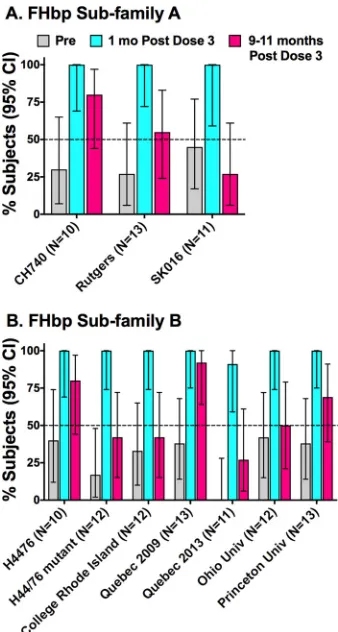
1:8. Against strains CH740, SK016, and Rutgers University, which
all express subfamily A FHbp, 80%, 55%, and 27%, respectively, maintained protective
titers of
ⱖ
1:4 at 9 to 11 months (Fig. 4A). For the strains with FHbp subfamily B (panel
B), 50% or fewer of the subjects maintained protective titers at 9 to 11 months against
three case isolates (33% for the Quebec 2013 isolate, 42% for the isolate from a college
in Rhode Island, and 50% for the Ohio University strain) and against the one mutant
tested with lower FHbp expression (43%). Interestingly, among the subjects with
preimmunization titers of
ⱕ
1:8, the prevalence of protective SBA titers at 9 to 11
months after dose 3 was 85% (11/13) against the Quebec 2009 strain compared with
FIG 2Serum bactericidal antibody responses of individual subjects measured against 6 representative strains. Each symbol represents the serum titer of an individual before immunization and at 1 month after doses 2 or 3 and, for some subjects, at 4 to 6 months after dose 2 of MenB-FHbp (see Materials and Methods). The numbers above the symbols indicate the reciprocal GMTs. (A) Three case isolates with FHbp subfamily A. (B) Two case isolates with FHbp subfamily B and a mutant of H44/76 with 50% lower expression of FHbp subfamily B. Data for the remaining 9 case isolates are provided in Fig. S1 in the supplemental material.
on August 17, 2020 by guest
http://cvi.asm.org/
33% against the Quebec 2013 strain (4/12 subjects with preimmunization titers of
ⱕ
1:8,
P
⫽
0.015 by the Fisher exact test). The two strains had identical respective multilocus
sequence types (ST), PorA variable region sequence types, and FHbp sequence variants,
and the two isolates had similar FHbp expression levels (Table 1 and Fig. 5).
We investigated the basis for the greater anti-FHbp resistance of the Quebec 2013
strain than of the 2009 strain using predose and 1-month-post-dose 2 serum pools from
immunized adults. The two strains showed low levels of binding with antibodies in
preimmunization serum by flow cytometry which increased in postimmunization serum
and were similar for the two strains (Fig. 5A). In 12 independent SBA assays, the postdose
2 immunization pool had a higher reciprocal GMT against the Quebec 2009 strain than
against the Quebec 2013 strain (27 versus 11,
P
⬍
0.0001), which confirmed the relative
resistance of the 2013 strain. We also tested a panel of mouse monoclonal Abs (MAbs)
to different meningococcal antigens (Fig. 5B). The two strains showed similar levels of
binding with the anti-capsular or anti-PorA MAbs by flow cytometry and had similar
levels of bactericidal activity. Thus, the anti-FHbp resistant Quebec 2013 strain was not
inherently more resistant than the 2009 strain to antibodies directed at other antigens.
By flow cytometry, there was no evidence of lower FHbp expression in the 2013 strain
than in the 2009 strain, which could have been an explanation for the greater resistance
FIG 3Geometric mean serum bactericidal titers. (A) Strains with FHbp subfamily A sequence variants. (B) Strains with FHbp subfamily B sequence variants. Subjects with preimmunization titers of⬎1:8 were excluded. The numbers above the bars indicate the FHbp sequence ID, as described in Table 1. Further details regarding the number of sera tested against each strain at different time points can be found in Table S1 in the supplemental material.
MenB-FHbp Immunogenicity Clinical and Vaccine Immunology
on August 17, 2020 by guest
http://cvi.asm.org/
of the 2013 strain to anti-FHbp bactericidal activity. The most notable finding was that
of 50-fold-higher binding of the 2013 strain with the anti-neisserial surface protein A
(NspA) MAb than of the 2009 strain. Conceivably, the high NspA expression in the
Quebec 2013 strain contributed to its relative resistance to anti-FHbp bactericidal
activity since, in a previous study, binding of FH to NspA was responsible for resistance
of some serogroup B strains to anti-FHbp bactericidal activity (9).
DISCUSSION
In the present study, we measured SBA responses of 17 laboratory and health care
personnel immunized with the recently licensed MenB-FHbp vaccine. An important
strength of our study was the use of a large panel of serogroup B clinical isolates, which
were representative of different hypervirulent lineages causing the majority of
sero-group B disease in the United States (22). The strain panel also included case isolates
from six meningococcal outbreaks on U.S. college campuses and two case isolates from
Quebec during a period of hyperendemic disease. Our most important finding was that,
compared with the response rates seen with two doses, separated by 2 months,
response rates increased following a third dose at 6 months, which resulted in greater
uniformity in protective titers between strains than after 2 doses. Thus, the
recom-mended three-dose MenB-FHbp schedule elicited broad short-term protection in nearly
all individuals against all isolates tested. The findings are in agreement with that of a
large multicenter MenB-FHbp immunogenicity study in healthy European adolescents,
FIG 4Persistence of serum bactericidal antibody titers ofⱖ1:4 at 9 to 11 months after dose 3. (A) Three case isolates with FHbp subfamily A sequence variants. (B) Six case isolates with FHbp subfamily B and one H44/76 mutant with⬃50% lower expression of FHbp subfamily B than the parental strain. Strain FHbp sequence variant (peptide ID) and expression data are summarized in Table 1. Subjects with preimmunization titers of⬎1:8 were excluded. Numbers in parentheses below thexaxis represent the numbers of tested subjects with samples collected before administration of dose 3, 1 month after dose 3, and 9 to 11 months after dose 3 (three sera from each subject). The horizontal line represents 50% of subjects with protective titers ofⱖ1:4.
on August 17, 2020 by guest
http://cvi.asm.org/
which reported that 88% to 99% of subjects achieved protective SBA titers at 1 month
after a third dose against four serogroup B reference strains used for licensure of
MenB-FHbp (23). Also, two smaller immunogenicity studies reported broadly protective
SBA titers at 1 month after dose 3 using a panel of case isolates with FHbp sequence
variants that were more divergent than the four reference isolates (10, 11).
Few data are available on the persistence of protective SBA titers in adolescents
immunized with three doses of MenB-FHbp. In one study in which 93% to 100% of
subjects had achieved protective titers 1 month after a third dose against the four
reference strains, the prevalence rates of protective titers at 6 months were found to
have decreased to 57% to 89% for three of the reference strains and to
⬃
40% for the
fourth reference strain (21). In that study, a protective SBA titer was defined as one that
was greater than or equal to the lower limit of quantification (
ⱖ
1:16 for one reference
strain and
ⱖ
1:8 for three strains).
In the present study, we measured the persistence of protective SBA titers of
ⱖ
1:4
at 9 to 11 months after a third MenB-FHbp dose. For 4 of the 9 case isolates tested, and
for one mutant with lower FHbp expression,
ⱕ
50% of the subjects tested at 9 to 11
months maintained protective titers of
ⱖ
1:4. Thus, the broad immunity present 1
month after three doses of MenB-FHbp may be short-lived. However, it is possible that
protective immunity could theoretically be maintained despite SBA titers of
⬍
1:4 (24,
25). For example, meningococci can be killed by opsonophagocytosis in the absence of
FIG 5Investigation of the basis for resistance of the Quebec 2013 strain to anti-FHbp bactericidal activity. (A) Pooled sera collected before and 1 month after administration of dose 2 from 9 adults immunized with MenB-FHbp. Flow cytometry was performed as previously described using live bacteria (4) and 1:300 dilutions of the serum pools. In 12 assays, the reciprocal GMT of the postpool SBA was higher against the 2009 strain than against the 2013 strain (27 versus 11,P⬍0.0001). (B) mouse MAbs to different meningococcal antigens. The MAb to PorA P1.19 was purchased from the National Institute for Biological Standards and Control, United Kingdom (catalog no. 04/248) and tested in the flow assay at a concentration of 5g/ml. The anti-FHbp JAR 5 MAb is broadly reactive with FHbp subfamily B but individually lacks complement-mediated bactericidal activity (40, 41). JAR 5 was tested in the flow assay at 10g/ml but was not tested for bactericidal activity (Not Done). The anti-NspA MAb 14C7 (tested at 50g/ml in the flow assay) was from a previous study (42). Orange lines and symbols, Quebec 2009 strain; blue lines and symbols, Quebec 2013 strain.
MenB-FHbp Immunogenicity Clinical and Vaccine Immunology
on August 17, 2020 by guest
http://cvi.asm.org/
SBA (25–27), and immunized persons with certain inherited complement deficiencies
who cannot mount SBA responses, but who can mount opsonic antibody responses,
can be protected from developing meningococcal disease (25, 28). A recent
postmar-keting study found high short-term effectiveness in infants immunized in the United
Kingdom with the MenB-4C vaccine (29). Similar postmarketing studies are needed in
the United States for teenagers being immunized with MenB-FHbp to determine
whether protection against meningococcal disease wanes or persists over time
coin-cident with decreasing prevalence of protective SBA titers of
ⱖ
1:4.
Finally, the three-dose MenB-FHbp schedule of administration at 0 months, 1 to 2
months, and 6 months was approved by the FDA for teenagers and young adults when
the first two doses are separated by 1 to 2 months. In contrast, the FDA-approved
schedule for MenB-4C is two doses separated by 1 to 2 months and does not include
a third booster dose (30). We recently reported SBA responses of healthy adults
immunized with two doses of MenB-4C, separated by 1 to 2 months (4). That study and
the present MenB-FHbp study were not designed to provide comparative
immunoge-nicity data. However, considering all of the strains, the respective
ⱖ
4-fold SBA
re-sponses to two doses of either vaccine were similar across the strain panel. Conceivably,
the lack of benefit of a third dose of MenB-4C seen in prelicensure studies in Chile (31,
32) resulted from a high proportion of the Chilean subjects having titers of
ⱖ
1:4 before
immunization, which would be expected to result in higher responses to vaccination
than in a population that was immunologically naive. Also, the Chilean study tested
responses to vaccination using only three antigen-specific indicator strains. The
anti-NadA indicator strain, 5/99, is more susceptible to MenB-4C vaccine-induced SBA than
case isolates with NadA (4). Also, the anti-FHbp and anti-PorA P1.4 indicator strains
used in the Chilean study, and in other studies that have been used as a basis for
MenB-4C vaccine licensure (33), are matched exactly for the amino acid sequence of the
respective antigens in the vaccine, which rendered these strains more susceptible to
vaccine-induced SBA than genetically diverse strains in which the respective antigen
sequences varied or had low expression (4).
MATERIALS AND METHODS
Study design.A total of 18 microbiologists or health care workers were enrolled in a postlicensure immunogenicity study of the MenB-FHbp vaccine given at the recommended three-dose schedule of 0, 2, and 6 months. Thirteen subjects were enrolled at University of California, San Francisco (UCSF)-Benioff Children’s Hospital Oakland, Oakland, CA, and 5 subjects at the University of Massachusetts School of Medicine, Worcester, MA. Subjects were eligible if they had no significant underlying diseases that might be expected to impair immune responses and if they provided written informed consent. The protocols and consent forms were approved by the Institutional Review Boards of UCSF-Benioff Children’s Hospital Oakland (protocol 2014-079) and the University of Massachusetts School of Medicine (protocol H00007204). The study is registered at clinicaltrials.gov (ClinicalTrials registration no. NCT02569632).
For the final analyses, data from one subject enrolled in Oakland were excluded because of a diagnosis of biliary cancer after dose 2. Of the remaining 17 subjects, 15 completed the recommended three doses, and 2 subjects withdrew before receiving a third dose, one because of severe local reactions to doses 1 and 2 and the other because of pregnancy. The data for these two subjects were included in analyses of the responses to doses 1 and 2. Thus, for the predose time point and 1 month after dose 2, there were sera from 17 subjects, and for 1 month after dose 3, there were 15 sera. We also obtained sera at 4 to 6 months after dose 2 from 10 subjects, including 2 who did not receive the third dose.
The median age of the 17 subjects included in the final analyses was 40 years (range, 24 to 66 years). Nine (45%) subjects were males; 11 (65%) were of European white ancestry, 1 (6%) was African-American, 2 (12%) were of Asian/Indian ancestry, and 3 (18%) were of other Asian ancestry. Serum samples were obtained immediately prior to dose 1 and 1 month after dose 2 from all 17 subjects and at 1 month after dose 3 from all 15 subjects given three doses. Ten subjects provided an elective serum sample at 4 to 6 months after dose 2, and 12 of the 15 subjects given three doses of vaccine provided a serum sample at 9 to 11 months after dose 3.
Neisseria meningitidisstrains.We measured SBA titers against 14 previously described case isolates and one mutant with 50% lower FHbp expression than the parental H44/76 isolate (4, 6), which has naturally high expression (5). Six of the case isolates had FHbp subfamily A, and eight had FHbp subfamily B. Six case isolates were from recent outbreaks on U.S. college campuses (Princeton University [15, 19], University of California, Santa Barbara [15], Ohio University [18], Santa Clara University [20, 43], a college in Rhode Island [16, 34], and Rutgers University [13]). Two additional case isolates were from patients hospitalized between 2009 and 2013 in Quebec, Canada, during a period of hyperendemic serogroup B disease (17). Detailed descriptions of the regions and years of isolation, genetic lineages, and levels of vaccine antigen expression of the isolates have been previously published (4). For convenience,
on August 17, 2020 by guest
http://cvi.asm.org/
the strain designations, clonal complexes identified on the basis of multilocus sequence analysis (35), and FHbp sequence variants and their relative expression levels as measured by flow cytometry (36) are summarized in Table 1.
Serum bactericidal assay.The assay was performed as previously described (4). In brief, the bacteria were grown to mid-exponential phase in Frantz medium supplemented with 4 mMD,L-lactate (Sigma) and 2 mM CMP-N-acetylneuraminic acid (Carbosynth). Test sera were heated for 30 min at 56°C to inactivate endogenous complement. Exogenous complement consisted of pooled sera from three healthy adults that had been subjected to IgG depletion using a protein G column as previously described (37). The bactericidal titer was defined as the serum dilution that resulted in a 50% decrease in the CFU count per milliliter compared to the CFU count per milliliter in negative-control wells after a 60-min incubation at 37°C.
Statistical analysis.The primary outcome variables were the proportion of subjects with SBA titers ofⱖ1:4, which were considered sufficient for protection (38, 39), and the proportion of subjects with ⱖ4-fold increases in SBA titers 1 month after dose 2 or after dose 3, compared to the preimmunization titer, which were considered representative of more-robust responses (4). The proportions were com-puted along with 95% exact confidence intervals. For calculation of GMT, titers below the limit of detection were assigned half the value of the lowest dilution tested (i.e., 1:2 for titers of⬍1:4). For calculation ofⱖ4-fold increases in SBA titers, we required a minimum postimmunization titer of 1:16 for subjects with titers of⬍1:4 to achieve aⱖ4-fold response, which is the definition used by FDA for licensure of serogroup B vaccines in the United States (see Table 1 in the Bexsero U.S. package insert [https://www.gsksource.com/pharma/content/dam/GlaxoSmithKline/US/en/Prescribing_Information/ Bexsero/pdf/BEXSERO.PDF]). All statistical tests were two-tailed; probability (P) values ofⱕ0.05 were considered statistically significant.
SUPPLEMENTAL MATERIAL
Supplemental material for this article may be found at
https://doi.org/10.1128/CVI
.00121-17
.
SUPPLEMENTAL FILE 1,
PDF file, 0.8 MB.
ACKNOWLEDGMENTS
We are grateful to Betty Flores and Lisa H. Lavrisha for enrolling, immunizing, and
obtaining the blood samples from the subjects at the UCSF Benioff Children’s Hospital
Oakland.
This work was supported by grants R01 AI046464 (D.M.G.), AI114701 (D.M.G.), and
AI114790 (S.R.) and by grants U01 AI118161 (S.R.) and R21 AI119327 from the National
Institute of Allergy and Infectious Diseases, NIH. Enrollment, immunization, and blood
draws for the subjects at UCSF Benioff Children’s Hospital were performed at the CTSI
Clinical Research Center (supported by the National Center for Advancing Translational
Sciences, National Institutes of Health, through UCSF-CTSI grant UL1 TR000004). The
contents of the paper are solely our responsibility and do not necessarily represent the
official views of the NIH. The laboratory work at UCSF Benioff Children’s Hospital was
performed in a facility funded by Research Facilities Improvement Program grant C06
RR016226 from the National Center for Research Resources, NIH. The funders had no
role in study design, data collection and interpretation, or the decision to submit the
work for publication.
D.M.G. and S.R. are inventors listed on patent applications or on issued patents in
the area of meningococcal vaccines. Rights to these inventions have been assigned to
UCSF Benioff Children’s Hospital Oakland and the University of Massachusetts School of
Medicine, respectively. S.R. is a consultant for companies (Achillion and Annexon) that
develop therapeutic complement inhibitors. E.L., S.G., and E.P. have declared that they
have no conflicts of interest.
REFERENCES
1. Shirley M, Dhillon S. 2015. Bivalent rLP2086 vaccine (Trumenba): a review in active immunization against invasive meningococcal group B disease in individuals aged 10 –25 years. BioDrugs 29:353–361.https://doi.org/ 10.1007/s40259-015-0139-0.
2. Zlotnick GW, Jones TR, Liberator P, Hao L, Harris S, McNeil LK, Zhu D, Perez J, Eiden J, Jansen KU, Anderson AS. 2015. The discovery and development of a novel vaccine to protect againstNeisseria meningitidis
serogroup B disease. Hum Vaccin Immunother 11:5–13.https://doi.org/ 10.4161/hv.34293.
3. Konar M, Granoff DM, Beernink PT. 2013. Importance of inhibition of binding of complement factor H for serum bactericidal antibody re-sponses to meningococcal factor H-binding protein vaccines. J Infect Dis 208:627– 636.https://doi.org/10.1093/infdis/jit239.
4. Giuntini S, Lujan E, Gibani MM, Dold C, Rollier CS, Pollard AJ, Granoff DM. 2017. Serum bactericidal antibody responses of adults immunized with the MenB-4C vaccine against genetically diverse serogroup B meningo-cocci. Clin Vaccine Immunol 24:e00430-16.https://doi.org/10.1128/CVI .00430-16.
MenB-FHbp Immunogenicity Clinical and Vaccine Immunology
on August 17, 2020 by guest
http://cvi.asm.org/
5. Welsch JA, Ram S, Koeberling O, Granoff DM. 2008. Complement-dependent synergistic bactericidal activity of antibodies against factor H-binding protein, a sparsely distributed meningococcal vaccine anti-gen. J Infect Dis 197:1053–1061.https://doi.org/10.1086/528994. 6. Pajon R, Fergus AM, Koeberling O, Caugant DA, Granoff DM. 2011.
Meningococcal factor H binding proteins in epidemic strains from Africa: implications for vaccine development. PLoS Negl Trop Dis 5:e1302. https://doi.org/10.1371/journal.pntd.0001302.
7. Jiang HQ, Hoiseth SK, Harris SL, McNeil LK, Zhu D, Tan C, Scott AA, Alexander K, Mason K, Miller L, Dasilva I, Mack M, Zhao XJ, Pride MW, Andrew L, Murphy E, Hagen M, French R, Arora A, Jones TR, Jansen KU, Zlotnick GW, Anderson AS. 2010. Broad vaccine coverage predicted for a bivalent recombinant factor H binding protein based vaccine to prevent serogroup B meningococcal disease. Vaccine 28:6086 – 6093. https://doi.org/10.1016/j.vaccine.2010.06.083.
8. Lewis LA, Vu DM, Granoff DM, Ram S. 2014. Inhibition of the alternative pathway of nonhuman infant complement by porin B2 contributes to virulence ofNeisseria meningitidisin the infant rat model. Infect Immun 82:2574 –2584.https://doi.org/10.1128/IAI.01517-14.
9. Giuntini S, Pajon R, Ram S, Granoff DM. 2015. Binding of complement factor H to PorB3 and NspA enhances resistance ofNeisseria meningitidis
to anti-factor H binding protein bactericidal activity. Infect Immun 83: 1536 –1545.https://doi.org/10.1128/IAI.02984-14.
10. Taha MK, Hawkins JC, Liberator P, Deghmane AE, Andrew L, Hao L, Jones TR, McNeil LK, O’Neill RE, Perez JL, Jansen KU, Anderson AS. 2017. Bactericidal activity of sera from adolescents vaccinated with bivalent rLP2086 against meningococcal serogroup B outbreak strains from France. Vaccine 35:1530 –1537.https://doi.org/10.1016/j.vaccine.2017.01 .066.
11. Harris SL, Donald RG, Hawkins JC, Tan C, O’Neill R, McNeil LK, Perez JL, Anderson AS, Jansen KU, Jones TR. 2017.Neisseria meningitidisserogroup B vaccine, bivalent rLP2086, induces broad serum bactericidal activity against diverse invasive disease strains including outbreak strains. Pediatr Infect Dis J 36:216 –223.https://doi.org/10.1097/INF.0000000000001399.
12. Vu DM, Wong TT, Granoff DM. 2011. Cooperative serum bactericidal activity between human antibodies to meningococcal factor H binding protein and neisserial heparin binding antigen. Vaccine 29:1968 –1973. https://doi.org/10.1016/j.vaccine.2010.12.075.
13. Soeters HM, Dinitz-Sklar J, Kulkarni PA, MacNeil JR, Mcnamara LA, Za-remski E, Chang HY, Lujan E, Granoff D, Lasky M, Montana B. 2017. Serogroup B meningococcal disease vaccine recommendations at a university, New Jersey, USA, 2016. Emerg Infect Dis 23:867– 869.https:// doi.org/10.3201/eid2305.161870.
14. Snape MD, Dawson T, Oster P, Evans A, John TM, Ohene-Kena B, Findlow J, Yu LM, Borrow R, Ypma E, Toneatto D, Pollard AJ. 2010. Immunoge-nicity of two investigational serogroup B meningococcal vaccines in the first year of life: a randomized comparative trial. Pediatr Infect Dis J 29:e71– e79.https://doi.org/10.1097/INF.0b013e3181faa6be.
15. Rossi R, Beernink PT, Giuntini S, Granoff DM. 2015. Susceptibility of meningococcal strains responsible for two serogroup B outbreaks on U.S. university campuses to serum bactericidal activity elicited by the MenB-4C vaccine. Clin Vaccine Immunol 22:1227–1234.https://doi.org/ 10.1128/CVI.00474-15.
16. Soeters HM, Mcnamara LA, Whaley M, Wang X, Alexander-Scott N, Kanadanian KV, Kelleher CM, MacNeil J, Martin SW, Raines N, Sears S, Vanner C, Vuong J, Bandy U, Sicard K, Patel M; Centers for Disease Control (CDC). 2015. Serogroup B meningococcal disease outbreak and carriage evaluation at a college - Rhode Island, 2015. MMWR Morb Mortal Wkly Rep 64:606 – 607.
17. Law DK, Lefebvre B, Gilca R, Deng S, Zhou J, De Wals P, Tsang RS. 2015. Characterization of invasiveNeisseria meningitidisstrains from Quebec, Can-ada, during a period of increased serogroup B disease, 2009 –2013: pheno-typing and genopheno-typing with special emphasis on the non-carbohydrate protein vaccine targets. BMC Microbiol 15:143.https://doi.org/10.1186/ s12866-015-0469-6.
18. Mandal S, Wu HM, MacNeil JR, Machesky K, Garcia J, Plikaytis BD, Quinn K, King L, Schmink SE, Wang X, Mayer LW, Clark TA, Gaskell JR, Messon-nier NE, Diorio M, Cohn AC. 2013. Prolonged university outbreak of meningococcal disease associated with a serogroup B strain rarely seen in the United States. Clin Infect Dis 57:344 –348.https://doi.org/10.1093/ cid/cit243.
19. Basta NE, Mahmoud AA, Wolfson J, Ploss A, Heller BL, Hanna S, Johnsen P, Izzo R, Grenfell BT, Findlow J, Bai X, Borrow R. 2016. Immunogenicity
of a meningococcal B vaccine during a university outbreak. N Engl J Med 375:220 –228.https://doi.org/10.1056/NEJMoa1514866.
20. Biswas HH, Han GS, Wendorf K, Winter K, Zipprich J, Perti T, Martinez L, Arellano A, Kyle JL, Zhang P, Harriman K. 2016. Notes from the field: outbreak of serogroup B meningococcal disease at a university - Cali-fornia, 2016. MMWR Morb Mortal Wkly Rep 65:520 –521.https://doi.org/ 10.15585/mmwr.mm6520a3.
21. Marshall HS, Richmond PC, Beeslaar J, Jiang Q, Jansen KU, Garces-Sanchez M, Martinon-Torres F, Szenborn L, Wysocki J, Eiden J, Harris SL, Jones TR, Lee SS, Perez JL; 6108A12001 Study Investigators. 2017. Me-ningococcal serogroup B-specific responses after vaccination with biva-lent rLP2086: 4 year follow-up of a randomised, single-blind, placebo-controlled, phase 2 trial. Lancet Infect Dis 17:58 – 67.https://doi.org/10 .1016/S1473-3099(16)30314-0.
22. Wang X, Cohn A, Comanducci M, Andrew L, Zhao X, MacNeil JR, Schmink S, Muzzi A, Bambini S, Rappuoli R, Pizza M, Murphy E, Hoiseth SK, Jansen KU, Anderson AS, Harrison LH, Clark TA, Messonnier NE, Mayer LW. 2011. Prevalence and genetic diversity of candidate vaccine antigens among invasive Neisseria meningitidis isolates in the United States. Vaccine 29:4739 – 4744.https://doi.org/10.1016/j.vaccine.2011.04.092.
23. Vesikari T, Ostergaard L, Diez-Domingo J, Wysocki J, Flodmark CE, Bee-slaar J, Eiden J, Jiang Q, Jansen KU, Jones TR, Harris SL, O’Neill RE, York LJ, Crowther G, Perez JL. 2016. Meningococcal serogroup B bivalent rLP2086 vaccine elicits broad and robust serum bactericidal responses in healthy adolescents. J Pediatric Infect Dis Soc 5:152–160.https://doi.org/ 10.1093/jpids/piv039.
24. Granoff DM. 2010. Review of meningococcal group B vaccines. Clin Infect Dis 50(Suppl 2):S54 –S65.https://doi.org/10.1086/648966. 25. Granoff DM. 2009. Relative importance of complement-mediated
bac-tericidal and opsonic activity for protection against meningococcal dis-ease. Vaccine 27(Suppl 2):B117–B125.https://doi.org/10.1016/j.vaccine .2009.04.066.
26. Plested JS, Welsch JA, Granoff DM. 2009. Ex vivo model of meningococ-cal bacteremia using human blood for measuring vaccine-induced se-rum passive protective activity. Clin Vaccine Immunol 16:785–791. https://doi.org/10.1128/CVI.00007-09.
27. Platonov AE, Vershinina IV, Kayhty H, Fijen CA, Wurzner R, Kuijper EJ. 2003. Antibody-dependent killing of meningococci by human neutro-phils in serum of late complement component-deficient patients. Int Arch Allergy Immunol 130:314 –321.https://doi.org/10.1159/000070219. 28. Platonov AE, Vershinina IV, Kuijper EJ, Borrow R, Kayhty H. 2003. Long term effects of vaccination of patients deficient in a late complement component with a tetravalent meningococcal polysaccharide vaccine. Vaccine 21:4437– 4447.https://doi.org/10.1016/S0264-410X(03)00440-7. 29. Parikh SR, Andrews NJ, Beebeejaun K, Campbell H, Ribeiro S, Ward C, White JM, Borrow R, Ramsay ME, Ladhani SN. 2016. Effectiveness and impact of a reduced infant schedule of 4CMenB vaccine against group B meningococcal disease in England: a national observational cohort study. Lancet 388:2775–2782. https://doi.org/10.1016/S0140-6736(16) 31921-3.
30. MacNeil JR, Rubin L, Folaranmi T, Ortega-Sanchez IR, Patel M, Martin SW. 2015. Use of serogroup B meningococcal vaccines in adolescents and young adults: recommendations of the Advisory Committee on Immu-nization Practices, 2015. MMWR Morb Mortal Wkly Rep 64:1171–1176. https://doi.org/10.15585/mmwr.mm6441a3.
31. Santolaya ME, O’Ryan ML, Valenzuela MT, Prado V, Vergara R, Munoz A, Toneatto D, Grana G, Wang H, Clemens R, Dull PM. 2012. Immunoge-nicity and tolerability of a multicomponent meningococcal serogroup B (4CMenB) vaccine in healthy adolescents in Chile: a phase 2b/3 ran-domised, observer-blind, placebo-controlled study. Lancet 379:617– 624. https://doi.org/10.1016/S0140-6736(11)61713-3.
32. Santolaya ME, O’Ryan M, Valenzuela MT, Prado V, Vergara RF, Munoz A, Toneatto D, Grana G, Wang H, Dull PM. 2013. Persistence of antibodies in adolescents 18 –24 months after immunization with one, two, or three doses of 4CMenB meningococcal serogroup B vaccine. Hum Vaccin Immunother 9:2304 –2310.https://doi.org/10.4161/hv.25505.
33. O’Ryan M, Stoddard J, Toneatto D, Wassil J, Dull PM. 2014. A multi-component meningococcal serogroup B vaccine (4CMenB): the clinical development program. Drugs 74:15–30.https://doi.org/10.1007/s40265 -013-0155-7.
34. Fiorito TM, Bornschein S, Mihalakos A, Kelleher CM, Alexander-Scott N, Kanadanian KV, Raymond P, Sicard K, Dennehy PH. 25 January 2017. Rapid response to a college outbreak of meningococcal serogroup B
on August 17, 2020 by guest
http://cvi.asm.org/
disease: nation’s first widespread use of bivalent rLP2086 vaccine. J Am Coll Healthhttps://doi.org/10.1080/07448481.2017.1285772.
35. Maiden MC, Bygraves JA, Feil E, Morelli G, Russell JE, Urwin R, Zhang Q, Zhou J, Zurth K, Caugant DA, Feavers IM, Achtman M, Spratt BG. 1998. Multilocus sequence typing: a portable approach to the identification of clones within populations of pathogenic microorganisms. Proc Natl Acad Sci U S A 95:3140 –3145.https://doi.org/10.1073/pnas.95.6.3140. 36. Giuntini S, Reason DC, Granoff DM. 2011. Complement-mediated
bac-tericidal activity of anti-factor H binding protein monoclonal antibodies against the meningococcus relies upon blocking factor H binding. Infect Immun 79:3751–3759.https://doi.org/10.1128/IAI.05182-11.
37. Beernink PT, Shaughnessy J, Braga EM, Liu Q, Rice PA, Ram S, Granoff DM. 2011. A meningococcal factor H binding protein mutant that eliminates factor H binding enhances protective antibody responses to vaccination. J Immunol 186:3606 –3614.https://doi.org/10.4049/jimmunol.1003470. 38. Goldschneider I, Gotschlich EC, Artenstein MS. 1969. Human immunity
to the meningococcus. II. Development of natural immunity. J Exp Med 129:1327–1348.
39. Borrow R, Carlone GM, Rosenstein N, Blake M, Feavers I, Martin D, Zollinger W, Robbins J, Aaberge I, Granoff DM, Miller E, Plikaytis B, Van Alphen L, Poolman J, Rappuoli R, Danzig L, Hackell J, Danve B, Caulfield M, Lambert S, Stephens D. 2006.Neisseria meningitidisgroup B correlates of protection
and assay standardization—international meeting report Emory Univer-sity, Atlanta, Georgia, United States, 16 –17 March 2005. Vaccine 24: 5093–5107.https://doi.org/10.1016/j.vaccine.2006.03.091.
40. Welsch JA, Rossi R, Comanducci M, Granoff DM. 2004. Protective activity of monoclonal antibodies to genome-derived neisserial antigen 1870, a
Neisseria meningitidis candidate vaccine. J Immunol 172:5606 –5615. https://doi.org/10.4049/jimmunol.172.9.5606.
41. Beernink PT, Welsch JA, Bar-Lev M, Koeberling O, Comanducci M, Granoff DM. 2008. Fine antigenic specificity and cooperative bactericidal activity of monoclonal antibodies directed at the meningococcal vaccine can-didate, factor H-binding protein. Infect Immun 76:4232– 4240.https:// doi.org/10.1128/IAI.00367-08.
42. Moe GR, Zuno-Mitchell P, Hammond SN, Granoff DM. 2002. Sequential immunization with vesicles prepared from heterologousNeisseria men-ingitidisstrains elicits broadly protective serum antibodies to group B strains. Infect Immun 70:6021– 6031.https://doi.org/10.1128/IAI.70.11 .6021-6031.2002.
43. Lujan E, Winter K, Rovaris J, Liu Q, Granoff DM. 3 June 2017. Serum bactericidal antibody responses of students immunized with a menin-gococcal serogroup B vaccine in response to an outbreak on a university campus. Clin Infect Dis.https://doi.org/10.1093/cid/cix519.
MenB-FHbp Immunogenicity Clinical and Vaccine Immunology