Volume 2010, Article ID 732586,6pages doi:10.1155/2010/732586
Research Article
A New Method to Calibrate Attachment Angles of Data Loggers in
Swimming Sharks
Shizuka Kawatsu,
1Katsufumi Sato,
2Yuuki Watanabe,
3Susumu Hyodo,
1Jason P. Breves,
4Bradley K. Fox,
4E. Gordon Grau,
4and Nobuyuki Miyazaki
11Ocean Research Institute, The University of Tokyo, 1-15-1 Minamidai, Nakano, Tokyo 164-0014, Japan
2International Coastal Research Center, Ocean Research Institute, The University of Tokyo, 2-106-1 Akahama,
Otsuchi, Iwate 028-1102, Japan
3National Institute of Polar Research, 10-3 Midorimachi, Tachikawa, Tokyo 190-8518, Japan
4Hawaii Institute of Marine Biology, University of Hawaii, Kaneohe, HI 96744, USA
Correspondence should be addressed to Shizuka Kawatsu,[email protected]
Received 2 May 2009; Accepted 7 August 2009 Academic Editor: Jo˜ao Manuel R. S. Tavares
Copyright © 2010 Shizuka Kawatsu et al. This is an open access article distributed under the Creative Commons Attribution License, which permits unrestricted use, distribution, and reproduction in any medium, provided the original work is properly cited.
Recently, animal-borne accelerometers have been used to record the pitch angle of aquatic animals during swimming. When evaluating pitch angle, it is necessary to consider a discrepancy between the angle of an accelerometer and the long axis of an animal. In this study, we attached accelerometers to 17 free-ranging scalloped hammerhead shark (Sphyrna lewini) pups from Kaneohe Bay, Hawaii. Although there are methods to calibrate attachment angles of accelerometers, we confirmed that previous methods were not applicable for hammerhead pups. According to raw data, some sharks ascended with a negative angle, which
differs from tank observations of captive sharks. In turn, we developed a new method to account for this discrepancy in swimming
sharks by estimating the attachment angle from the relationship between vertical speed (m/s) and pitch angle obtained by each accelerometer. The new method can be utilized for field observation of a wide range of species.
1. Introduction
An accurate determination of pitch angle is critical to gain detailed information about the diving and foraging strategies of aquatic animals. For example, air-breathing aquatic animals that forage underwater control pitch angle and allocate their submerged time. In African penguins, steeper ascent angles presumably occur when they have depleted their oxygen stores and must return to the surface more quickly to breathe [1]. In macaroni penguins, pitch angle is significantly correlated with time spent at the bottom-phase of the dive [2]. A steep pitch angle during ascent indicates that they encountered a prey patch and a shallow pitch angle contributes to movement into a more profitable area in the following dive, due to increasing the horizontal distance [2]. While in fish, Nakaya [3] said that scalloped hammerhead sharks (Sphyrna lewini) have great maneuverability due to a movable large plate on head. Based
on the observation of swimming behavior, it is apparent that sharks make a sharp dorsal turn at the bottom, consume food items, and swim away along the bottom [3]. In this sequence, pitch angle is an important indicator of a feeding event.
at the water surface, a time in which they were essentially horizontal before release. This methodology is well suited for birds that can be maintained in a horizontal position at the water surface. However, for animals that have a flexible body, it is difficult to keep them positioned horizontally for an extended period of time. In addition, this methodology cannot be applied for obligate swimming fish because of fatal risk for lack of adequate gill ventilation. Another approach to account for the discrepancy between the pitch angle of data loggers and the longitudinal axis was reported by Sato et al. [5] in Weddell seal. In this study, the attachment angle was calculated by using the data logger along with the speed sensor. Sato et al. [5] used the data logger (UWE1000-PD2GT: 22 mm diameter, 124 mm length; 80 g in air; Little Leonardo Co., Tokyo, Japan) which contains a propeller and reported that the attachment angle for a specific dive of Weddell seal could be determined using equations including the number of propeller rotations, surging acceleration (m/s2), the acceleration of gravity (9.8 m/s2), and body angle
(degrees). This methodology can only be applied for large animals due to the relatively large size of data loggers that have a propeller. Furthermore, this method is only applicable for diving animals that must come to the surface to breathe. Lastly, in a third study, the attachment angle in flatfish was assigned as 0◦when they lay on the substrate as reported by Kawabe et al. [6]. This method is only applicable for benthic animals that remain on the bottom. There are currently no reported methods to apply for continuous swimming fish.
The previously described methods are specific for partic-ular species and we therefore anticipated that they might not be suitable for use in hammerhead sharks. Scalloped ham-merhead shark pups have flexible bodies and are obligatory swimmers [7]. In addition, their small body size allows only for use of the smallest logger available for field studies that can only record depth, temperature and 2-axes accelerations, but not speed. In this study, we attached data loggers to 17 free-ranging pups with the objective to establish a new method for calibrating the attachment angle of loggers in free-ranging sharks.
2. Materials and Methods
2.1. Field Work. Our field studies occurred in Kaneohe Bay, Hawaii (21.26◦N, 157.47◦W) in August and October, 2007, and July/August, 2008. Kaneohe Bay is a nursery ground for the scalloped hammerhead shark (Sphyrna lewini) during summer months in which pups spend most of their time near the bottom [8]. In this study, juvenile scalloped hammerhead sharks were collected using hand lines with baited hooks. Upon capture, sharks were immediately transferred to the Hawaii Institute of Marine Biology, University of Hawaii, and placed in 3 m diameter tanks with flow-through seawater for 2–3 days. Sharks were fed squid twice a day and usually resumed feeding within 24 hours of capture. Release of the sharks into the field with data loggers did not occur until they resumed feeding in captivity for at least 48 hours. At this time, both total length (TL) and body mass (BM) were measured. For some sharks, BM was estimated from the
relationship (R2 = 0.45) between TL and BM of 20 pups
from a previous experiment. Prior to release, a data logger was attached immediately anterior to the first dorsal fin using a plastic cable connected to a time-scheduled release system [9]. This cable ran through the soft plastic netting (3 cm× 5 cm) attached to the shark with dissolvable suture (Matsuda Medical Kogyo Co., Tokyo, Japan). Techniques used to attach the data loggers were done within a jet of seawater and designed to minimize stress. The time required to attach the data loggers was less than 5 minutes per individual and we let sharks respire forcibly along the way. After which time sharks were immediately released in the bay. All animal experiments were conducted according to the Guideline for Care and Use of Animals approved by the committees of University of Tokyo and University of Hawaii.
2.2. Data Recovery. An automatic time-scheduled release system that allows for loggers to be located and retrieved using VHF radio signals was used because the recapture of instrumented pups in Kaneohe Bay is not possible. The data loggers were attached to a float of copolymer foam (Nichiyu Giken Kogyo Co., Saitama, Japan), in the top of which a VHF radio transmitter with a 45 cm semirigid wire antenna (Advanced Telemetry Systems Inc., Isanti, MN, USA) was embedded. A plastic cable connected to a time-scheduled release mechanism (Little Leonardo Co.) bound the tag to the plastic netting which was attached to the pups. Tag retrieval followed the method reported in Baikal seals [10]. Devices were attached to 17 pups in total, of which we successfully retrieved 16 loggers. Of the 16 loggers, one data logger was released from a pup after 6 hours, 7 were released after 24 hours, 7 were released after 48 hours, and one was released after 72 hours.
2.3. Instruments. Acceleration data loggers (M190L-D2GT; Little Leonardo Co., Tokyo, Japan) were used to examine swimming behavior of pups. Each logger was 15 mm in diameter, 53 mm in length, had a mass of 18 g and recorded depth (1 Hz), 2-axes accelerations (for detecting caudal fin movement and pitch, 32 Hz for eight individuals and 16 Hz for eight individuals), and temperature (1 Hz). The total weight of the instruments deployed on pups, including devices for data recovery (such as float and VHF transmit-ter), was 50 g with a slight positive buoyancy in seawater. The measuring range for acceleration along two axes was ±29.4 m/s2. Values recorded by the accelerometers were
converted into acceleration (m/s2) with linear regression
equations. To obtain the calibration equations, relative values recorded by each logger at 90◦and−90◦from the horizontal level were regressed against the corresponding acceleration (9.8 m/s2and−9.8 m/s2, resp.).
Data logger +θ γ >0◦
γ <0◦
−θ 0
◦
γ
Data logger Y +
γ
g α θ
+ −
θ γ
Data logger Y − g
γ
α
Descent [θ <0◦,Y <0 (ms)−2,γ <0◦,α <0◦]
Ascent [θ >0◦,Y >0 (ms)−2,γ >0◦,α <0◦]
Figure1: Attachment of a data-logger to the dorsal side of a hammerhead shark. Diagram shows the direction of surging accelerationY,
recorded by a D2GT logger placed on a shark, and gravityg(=9.8 ms−2), angle of surge axis of the logger to horizon (γ), that of longitudinal
axis to horizon (θ) defined as pitch angle (negative as the shark descends), and logger attachment angle (α).
as gravity). The acceleration sensor along the longitudinal body axis can measure acceleration in response to changes in the movements of animals such as stroking and change in pitch angle. High-frequency fluctuations in the surging acceleration records are believed to be caused by caudal fin movements. When the animal is still or moving at a constant speed, the gravity vector will change in response to pitch angle. Together, low-frequency fluctuations in the acceler-ation along the longitudinal axis (surging acceleracceler-ation) are used to calculate the pitch angle [5,11].
To remove the high-frequency component of acceleration caused by the tail beating, we extracted the low-frequency signals on surging accelerations of sharks with a filter in the IGOR Pro software (Wave Metrics Inc., USA; see also [5,11]). Then, the low-frequency component of longitudinal acceleration (Y) was converted to angle of the data-logger relative to the horizon (γranging from −90◦ to 90◦) as follows:
γ=a sin
Y
9.8
. (1)
Following Sato et al. [5], the body angle of pups against the water surface (θ,Figure 1) can be expressed by
θ=γ−α, (2)
whereγ is the angle of surge axis of the logger to horizon (degrees), and α is the attachment angle of the logger against the longitudinal axis (degrees).θandγwhile pups were descending (the data logger was tilting in a clockwise direction) were regarded as negative, and when ascending (the data logger was tilting in a counterclockwise direction),
θandγwere regarded as positive.
At first, we estimated an attachment angle (α1) using a
previously reported method [4]. We corrected the values of body angle recorded in a holding tank horizontally for 10– 20 seconds to 0◦. We held a pup for 10–20 seconds with its
1.5 1 0.5 0
Depth
(m)
23 : 08 2007/10/24
23 : 09 23 : 10 23 : 11 23 : 12 Time on 24 October 2007
−40
−20 0 20
Pit
ch
ang
le
(deg)
(a)
2.5 1.5 0.5
−0.5
Depth
(m)
23 : 09 : 50 2007/10/24
23 : 09 : 55 23 : 10 : 00 23 : 10 : 05 Time on 24 October 2007
−40
−20 0 20
Pit
ch
ang
le
(deg)
(b)
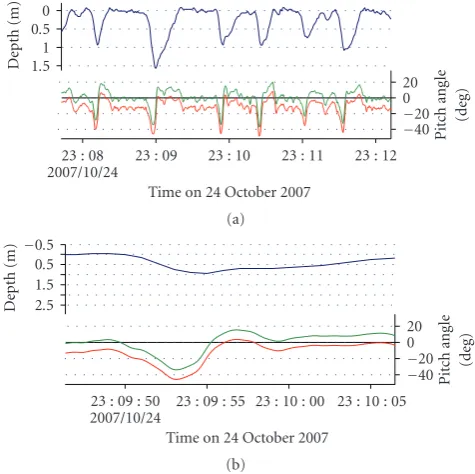
Figure2: (a) An example of swimming depth (blue line) adjusted pitch angle by new method (green line) and by previous method (red line) of an individual pup (HI0703). (b) Enlarged part of
Figure 2shows that the adjusted pitch angle (green line) changed from a negative to positive value at the moment of ascent.
body level to the water surface and recorded the time. We assumed the pitch angle during previous recording periods to be flat (0◦). Then, we subtracted the recorded angle during previous periods from each individual’s pitch angle data over the period of logger deployment. Next, we obtained another attachment angle (α2) using a new method that estimated
Table1: Morphological information and attachment angles of loggers derived from a previous method (α1) and that following adjustment
by a new method (α2) for each shark.
Shark ID Sex Total length (cm) Body mass (g) α1(degrees) α2(degrees) Correlation coefficient Data length (h)∗
HI0702 F 54.5 727 −19.6 −43.6 −0.72 6
HI0703 M 58 870 −12.5 −24.3 −0.88 24
HI0704 F 54 935 −2.2 −20.5 −0.71 48
HI0705 F 56 760 −18.0 −36.4 −0.79 48
HI0706 M 55 750 −13.3 −25.3 −0.57 28
HI0707 F 56 780 −12.0 −23.9 −0.77 24
HI0709 M 54 745 −6.9 −19.9 −0.56 20
HI0801 F 54 575 −31.2 −31.9 −0.78 2
HI0802 F 54 575 −19.3 −22.7 −0.83 2
HI0803 — 58 717 −23.1 −40.1 −0.72 19
HI0804 — 58 717 −24.9 −44.1 −0.74 24
HI0805 — 57 681 −26.1 −55.2 −0.60 17
HI0807 M 54 575 −15.8 −40.4 −0.72 17
HI0808 F 57 681 −21.7 −17.3 −0.71 44
∗Data length (h) is not necessarily consistent with total recorded hours.
−80
−60
−40
−20 0 20 40 60
Pit
ch
ang
le
befor
e
co
rr
ection
(deg)
−0.8 −0.6 −0.4 −0.2 0 0.2 0.4 Vertical speed (m/s)
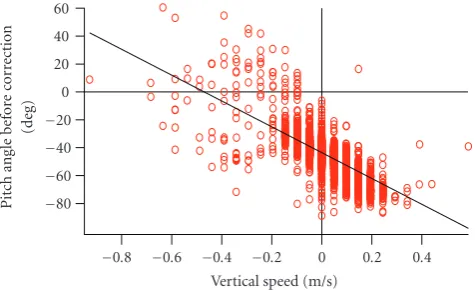
Figure3: Example of the relationship between raw pitch angle (γ) and vertical speed from an individual pup (HI0702). A negative vertical speed indicates ascent and a positive value indicates descent.
speed (m/s) and body angle. We compared raw pitch angle (γ) with vertical speed per second to find a linear regression from each pup. There are indications that negatively buoyant fishes, such as sharks and sturgeon, may assume a positive pitch tilt during steady horizontal swimming as a behavioral mechanism to increase the total body area generating lift [12,13]. Nonetheless, it can be assumed that the body axis of an animal is parallel to the direction of movement when the animal swims at a constant speed. With this assumption, we expected a descending pup to have a negative pitch angle while the pitch angle of an ascending pup would be positive. If a pup swims horizontally, the instantaneous pitch angle would be zero. When we analyzed the relationships between raw pitch angle and vertical speed per second, we found a linear regression from each pup. This regression line should pass through the origin coordinate if the logger angle is parallel to the longitudinal axis of the body. We considered the intercept of the regression line to be the attachment angle (α2degrees).
To confirm the utility of this new method, we observed instrumented banded dogfish (Triakis scyllium) in an exper-imental tank using a video camera. We attached a data logger (UWE190PD2GT: 22 mm diameter, 124 mm length; 80 g in air; Little Leonardo Co., Tokyo, Japan) using the same method as used for hammerhead pups. After the experiment, we compared the adjusted angle calculated from our new method with the adjusted angle obtained from video observations.
3. Results
As expected, we could not use previously reported methods to adjust pitch angle. Thus, we needed to develop a new method to calculate the attachment angle for hammerhead pups. A modulation of the pitch angle of a swimming shark is expected to correspond to fluctuations in the vertical speed rate (depth changes per second). The depth parameter therefore has the potential to provide information for the correction of pitch angle.
The first method reported by Watanuki et al. [4] provided us an estimated attachment angle (α1) from 16 pups that
varied between−40.9◦and−2.2◦(Table 1). When we applied this attachment angle to each pup, some individuals showed a negative angle when they ascended (Figure 2, red line). All the scatter plots made from the pitch angle before adjustment and the vertical speed provided a linear regression. A regression line was produced for each pup (Figure 3) with correlation coefficient (absolute value) higher than 0.56 (Table 1). The intercept of the regression line (adjustment angle α2) varied from −55.2◦ to −17.3◦ (Table 1). α1 and
α2were regarded as negative when the data logger was tilting
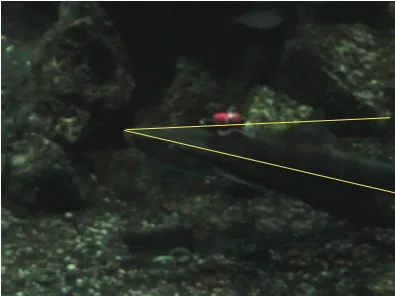
Figure4: An attachment angle of the data logger on the banded
dogfish was 14◦from visual analysis and 13.7◦from the regression
line method.
The attachment angles obtained from our new method differed from values obtained from the first method (Table 1). For example, an attachment angle of one individ-ual (HI0702) from the first method was −19.6◦ while the new method yielded an angle of−43.6◦. Both corrected pitch angles using the above values are indicated inFigure 2. The corrected pitch angle using the new methodology showed that the diving profile became negative during descent and positive during ascent (Figure 2(b)). Even considering the pitch tilt previously cited [12, 13], a negative pitch angle during ascent does not correctly represent the pitch angle of a pup. We concluded that the new methodology corresponds well with the diving profile. In banded dogfish held in an aquarium, the adjustment angle from the regression line method was 13.7◦, while the observed tilt angle of the data logger was 14◦when analyzed from video observations (Figure 4).
4. Discussion
The new regression line method we report has three advantages over previously described methods. First, the new method provides more accurate information about the correction angle since the corrected pitch angle using the new methodology corresponds well with the diving profile. It is difficult to fix sharks on their flat pitch angle because their bodies are flexible and a seemingly flat angle out of water is not necessarily the same as the rigid flat angle. Indeed, banded dogfish orient their heads slightly upward when resting at the bottom of an aquarium when compared with when they are held out of water. Second, the new method is considerably less invasive than the method that requires holding sharks level at the water surface. Our new method accounts for the fact that hammerhead shark pups are obligate swimmers that can only respire while swimming [7]. Third, it is possible to adjust the pitch angle without speed data. Sato et al. [5] developed another adjustment technique for a logger that contained a propeller so as to record speed in addition to depth, 2-axes accelerations, and temperature in the data logger we used. With this technique,
the animal does not need to be fixed flat, but it cannot be applied to smaller animals such as hammerhead shark pups, because a data logger including a speed sensor is too large and would likely impact behavior.
In conclusion, we developed a new method of analysis that enabled us to correct the pitch angle of hammerhead sharks equipped with a small accelerometer. For fish that display changes in pitch angle when making movements up and down in the water column, this new method to correct pitch angle in juvenile sharks can be applied for the acquisition of information in a wider range of species.
Acknowledgments
The authors would like to thank the following people for their cooperation: Dr. Darren T. Lerner, Dr. Nicholas M. Whitney, and Dr. Tetsuya Hirano, University of Hawaii, Yoko Yamaguchi, Shin Takaki, and Souichirou Takabe, ORI for their assistance with the fieldwork, and Sho Tanaka, Fumitaka Noguchi, and Genjiro Nishi, Tokai University, for their assistance of aquarium investigations. This study was supported by the Sasakawa Scientific Research Grant from The Japan Science Society to S. K., the Pauley Foundation Summer Program 2008 at Hawaii Institute of Marine Biology to E. G. G., Japan-USA Research Cooperative Program from the Japan Society for the Promotion of Science to S. H., Grant in Aid from JSPS (19255001) to K. S., and program “Bio-Logging Science of the University of Tokyo (UTBLS)” led by N. M.
References
[1] R. P. Wilson and M.-P. Wilson, “The foraging behaviour of
the African penguinSpheniscus demersus,” inThe Penguins:
Ecology and Management, pp. 244–265, Surrey Beatty and Sons, Sidney, Australia, 1995.
[2] K. Sato, J.-B. Charrassin, C.-A. Bost, and Y. Naito, “Why do macaroni penguins choose shallow body angles that result in
longer descent and ascent durations?”Journal of Experimental
Biology, vol. 207, no. 23, pp. 4057–4065, 2004.
[3] K. Nakaya, “Hydrodynamic function of the head in the
hammerhead sharks (Elasmobranchii: Sphyrnidae),”Copeia,
pp. 330–336, 1995.
[4] Y. Watanuki, Y. Niizuma, G. W. Gabrielsen, K. Sato, and Y. Naito, “Stroke and glide of wing-propelled divers: deep diving seabirds adjust surge frequency to buoyancy change
with depth,”Proceedings of the Royal Society B, vol. 270, no.
1514, pp. 483–488, 2003.
[5] K. Sato, Y. Mitani, M. F. Cameron, D. B. Siniff, and Y.
Naito, “Factors affecting stroking patterns and body angle
in diving Weddell seals under natural conditions,”Journal of
Experimental Biology, vol. 206, no. 9, pp. 1461–1470, 2003. [6] R. Kawabe, Y. Naito, K. Sato, K. Miyashita, and N. Yamashita,
“Direct measurement of the swimming speed, tailbeat, and
body angle of Japanese flounder (Paralichthys olivaceus),”ICES
Journal of Marine Science, vol. 61, no. 7, pp. 1080–1087, 2004. [7] C. G. Lowe, “Kinematics and critical swimming speed of
juve-nile scalloped hammerhead sharks,”Journal of Experimental
[8] K. N. Holland, B. M. Wetherbee, J. D. Peterson, and C. G. Lowe, “Movements and distribution of hammerhead shark
pups on their natal grounds,”Copeia, pp. 495–502, 1993.
[9] Y. Watanabe, E. A. Baranov, K. Sato, Y. Naito, and N. Miyazaki,
“Foraging tactics of Baikal seals differ between day and night,”
Marine Ecology Progress Series, vol. 279, pp. 283–289, 2004. [10] Y. Watanabe, E. A. Baranov, K. Sato, Y. Naito, and N. Miyazaki,
“Body density affects stroke patterns in Baikal seals,”Journal of
Experimental Biology, vol. 209, no. 17, pp. 3269–3280, 2006. [11] H. Tanaka, Y. Takagi, and Y. Naito, “Swimming speeds and
buoyancy compensation of migrating adult chum salmon
Oncorhynchus ketarevealed by speed/depth/acceleration data
logger,”Journal of Experimental Biology, vol. 204, no. 22, pp.
3895–3904, 2001.
[12] P. He and C. S. Wardle, “Tilting behavior of the Atlantic
mack-erel,Scomber scombrus, at low swimming speeds,”Journal of
Fish Biology, vol. 29, pp. 223–232, 1986.
[13] C. D. Wilga and G. V. Lauder, “Functional morphology of
the pectoral fins in bamboo sharks,Chiloscyllium plagiosum:
benthic vs. pelagic station-holding,” Journal of Morphology,