ABSTRACT
LUKES, LAURA ANN. Why Do They Do That? An Analysis of Student Learning Processes and Perceptions in Introductory Geology Courses. (Under the direction of David McConnell).
Geoscience education researchers have recently recognized the importance and role of affect
and self-regulation as critical mediators between course context and student learning
outcomes (e.g., performance and persistence). Introductory physical geology students (n =
73; from 5 U.S. colleges and universities) were interviewed about their learning strategies
and experience in their introductory geology course, including how they prepare for an exam.
A grounded theory approach was used to analyze the interview data and create codebooks to
characterize motivation and self-regulated learning as it was reported in interviews. All
students report a performance component to their motivation, where a learning task is a
means to an end, such as earning a grade. However, most high performing students (70%)
also reported their motivation was also oriented towards a mastery goal, such as satisfying
curiosity, more frequently than low performing students (18%). The majority of students
(81%) also described an emotional component to their motivation. Contrary to existing
models that emphasize the dominant role of positive emotions, most students indicated they
were motivated to engage in exam preparation as a way to avoid experiencing negative
emotions. In terms of self-regulation, high performers are more strategic in their planning
and low performing students rely more on instructors for guidance when choosing strategies.
Both high and low performers use a combination of shallow (e.g., rehearsal) and deep (e.g.,
more likely to consider the success of their learning process, yielding more evidence of
regulation. From a synthesis of these findings, an applied model of self-regulated learning is
presented in which high performing students begin the exam preparation process with
reflection on their classwork. Results suggest that student outcomes would benefit from
© Copyright 2014 Laura Ann Lukes
Why Do They Do That? An Analysis of Student Learning Processes and Perceptions in Introductory Geology Courses
by
Laura Ann Lukes
A dissertation submitted to the Graduate Faculty of North Carolina State University
in partial fulfillment of the requirements for the degree of
Doctor of Philosophy
Marine, Earth, and Atmospheric Sciences
Raleigh, North Carolina
2014
APPROVED BY:
_______________________________ ______________________________
Dr. David McConnell Dr. John Nietfeld
DEDICATION
BIOGRAPHY
Laura Lukes taught high school for 5 years before serving as an Albert Einstein
Distinguished Educator Fellow at the National Science Foundation in the Office of Polar
Programs (now the Division of Polar Programs). While there, she served as director of the
Joint Science Education Program (JSEP). She has also taught at the community college level
since 2006 and, as part of this program, at the university level since 2012. During her time at
North Carolina State University, she served on the university’s teaching award committee
and was selected to serve as a member of the Geological Society of America’s Education
committee. She also served as co-chair of the Association of Polar Early Career Scientists
ACKNOWLEDGMENTS
I would like to thank all the many people (past, present, and future) who have made this
TABLE OF CONTENTS
LIST OF TABLES ... viii
LIST OF FIGURES ... ix
CHAPTER 1-What motivates students to study for an exam? ... 1
ABSTRACT ... 2
INTRODUCTION ... 3
Why is it important to understand student motivation? ... 4
What do we already know about student motivation? ... 5
Research Question and Goals ... 8
METHODS ... 9
Data Collection ... 9
Participants ... 10
Qualitative analysis ... 11
RESULTS ... 13
Achievement goal orientation ... 13
Emotion ... 13
DISCUSSION ... 14
Performance vs. Mastery Goal Orientations ... 14
Motivation-Emotion Connections ... 17
High Performing Students vs. Low Performing Students ... 18
R1 Universities vs. Two-year Colleges ... 22
Implications for Future Investigations and Improving Student Motivation ... 23
Limitations ... 25
CONCLUSION ... 27
ACKNOWLEDGEMENTS ... 28
REFERENCES ... 29
CHAPTER 2-How students prepare for exams in college-level introductory
geoscience courses: A qualitative analysis of 73 student interviews ...46
ABSTRACT ... 47
INTRODUCTION ... 47
What is self-regulated learning? ... 49
Why is understanding student self-regulation important? ... 52
Research questions and goals... 53
METHODS ... 55
Data collection ... 55
Participants ... 56
Methods of qualitative analysis ... 57
RESULTS ... 58
Planning ... 59
Action (Using tactics) ... 61
Reflecting ... 65
Regulating ... 67
DISCUSSION ... 69
Implications for research... 70
Implications for practice ... 70
CONCLUSION ... 77
ACKNOWLEDGEMENTS ... 77
REFERENCES ... 79
CHAPTER 3-What’s the difference? Comparing the exam preparation
strategies of high and low performing students in introductory geology
courses ...91
ABSTRACT ... 92
INTRODUCTION ... 92
What is self-regulated learning? ... 93
Research questions and goals... 94
METHODS ... 95
Participants ... 96
Methods of qualitative analysis ... 97
Methods of quantitative analysis ... 99
RESULTS ... 100
Coding results ... 100
SRL model results ... 100
DISCUSSION ... 101
Planning ... 101
Action ... 104
Reflection ... 110
Regulation ... 112
SRL as a process ... 115
Limitations and strengths ... 118
CONCLUSION ... 120
LIST OF TABLES
CHAPTER 1
Table 1. Codebook: Motivation to Study ... 41
CHAPTER 2
Table 1. SRL Codebook ... 87
CHAPTER 3
LIST OF FIGURES
CHAPTER 1
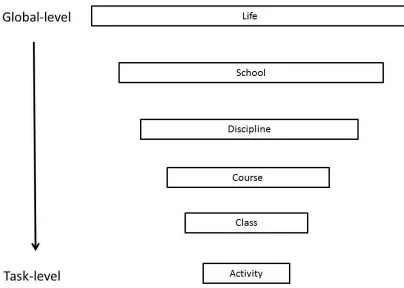
Figure 1. Relationship between goal levels ... 34
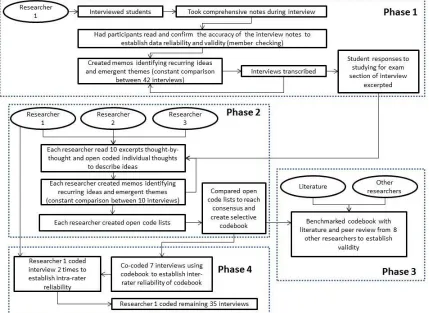
Figure 2. Qualitative method process ... 36
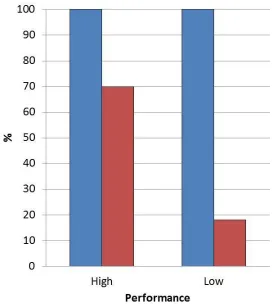
Figure 3. Comparison of goal orientation of high and low performers ... 37
Figure 4. Comparison of goal orientation of university and community college students ... 37
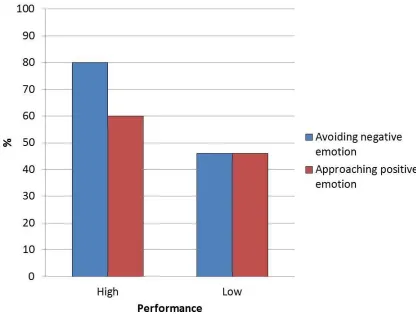
Figure 5. Comparison of emotion reported by high and low performers ... 39
Figure 6. Comparison of emotion reported by university and community college students .. 40
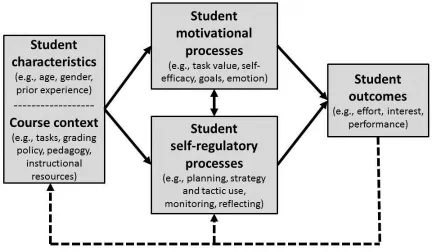
CHAPTER 2 Figure 1. Role of self-regulation and student outcomes ... 84
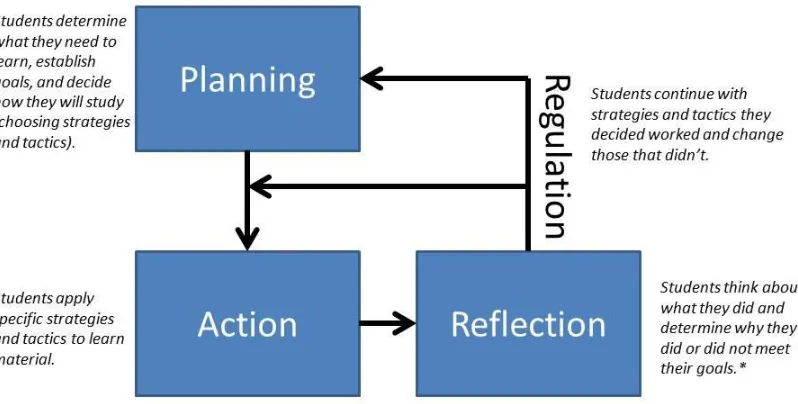
Figure 2. General composite model of SRL ... 85
Figure 3. Research methods ... 86
CHAPTER 3 Figure 1. General SRL model ... 125
Figure 2. Research methods ... 126
CHAPTER 1
What motivates introductory geology students to study for an exam?
Submitted to Journal of Geoscience Education.
AUTHORS Laura A. Lukes
Department of Marine, Earth, and Atmospheric Sciences
North Carolina State University
David A. McConnell
Department of Marine, Earth, and Atmospheric Sciences
North Carolina State University
KEY WORDS
affect, motivation, undergraduates, learning strategies, community college, emotion, learning
ABSTRACT
There is a need to understand why some students succeed and persist in STEM fields and
others do not. While numerous studies have focused on the positive results of using
empirically-validated teaching methods in introductory science, technology, engineering, and
math (STEM) courses, little data has been collected about the student experience in STEM
courses. The aim of this study was to capture and characterize the student perception of their
motivation to study for an exam in a geoscience class. Students enrolled in introductory
physical geology courses (n=42) at 5 different institutions (7 instructors at 2 research
universities and 3 community colleges) were interviewed using a semi-structured protocol.
The interview data was analyzed using a grounded theory approach. The resulting emergent
themes included goal orientation and emotion. All students report a performance component
to their motivation, where a learning task is a means to an end, such as earning a grade.
However, most high performing students (70%) also reported their motivation was also
oriented towards a mastery goal, where a learning task itself serves as an end, such as
satisfying curiosity, more frequently than low performing students (18%). The majority of
students (81%) also described an emotional component to their motivation. Contrary to
existing models, most students indicated they were motivated to engage in exam preparation
as a way to avoid experiencing negative emotions. These resulting insights to student
motivation have implications both for course design and instructional practices in similar
INTRODUCTION
The United States is facing a STEM (Science, Technology, Engineering, and Math)
workforce shortage (President’s Council of Advisors on Science and Technology, PCAST,
2012). Nearly half of college-level STEM majors switch to non-majors within the first two
years of their college experience (Strenta et al., 1994; Seymour & Hewitt, 1997). Much of
this workforce demand can be met if we can reduce the STEM attrition rate by just 10%
(PCAST, 2012). It is therefore important to understand why students are leaving STEM
fields like geology, so that intentional changes can be made to improve retention.
Why are students leaving STEM? Many students identify dissatisfaction with their
introductory STEM classes as a primary factor in their leaving STEM (Seymour & Hewitt,
1997; Tobias, 1990). In other words, if a student with a geology major takes an introductory
geology course and has a negative experience, they are likely to change majors and leave
STEM altogether. In addition, student experiences in introductory geology courses have
been identified as critical gateway for attracting geology majors (Levine, 2008; Houlton,
2010; Wilson, 2013). Compared to other STEM fields, the student experience in college
level introductory geology courses is doubly important, not only for retaining existing
majors, but also for attracting new students to the discipline.
Before the student experience can be improved, we need to first establish a baseline for the
features of that experience. There has been a notable body of work in discipline-based
NRC, 2012) that has focused on student cognition (e.g., teaching practices and learning
gains, metacognition) but less attention has been paid to student affect (NRC, 2012).
Research on the affective domain of the student experience (e.g., emotions, attitudes,
motivation, values) is gaining recognition for its critical role in student engagement and is
emerging as a key area of interest in the field (van der Hoeven Kraft et al., 2011; NRC,
2012). This study is part of the large-scale collaborative efforts of the Geoscience Affective
Research Network (GARNET), which aims to measure affect among students in introductory
geology courses across the United States (Gilbert et al., 2012). We report the results of a
series of student interviews that investigate some aspects of student motivation associated
with exam preparation in introductory geology courses. Further, we discuss the importance of
student emotion as an additional driver of study behaviors.
Why is it important to understand student motivation?
What do we mean by motivation? While there is much debate surrounding the definition and
nature of motivation, here we define motivation as a “process whereby goal-directed
activities are instigated and sustained” (Schunk, et al., 2013). In other words, motivation is
an excited internal state that involves the beliefs and/or emotions that someone holds and
results in strategy use and behaviors that aim to avoid or seek something. Some students may
arrive at this state driven by factors such as an interest in the topic, by a sense of academic
self-preservation, and/or through the encouragement of family, peers and/or the instructor.
hamper their efforts to achieve learning goals. Whatever the cause, motivation, both in and
out of the classroom, is critical to student learning in any domain including the geosciences
(van der Hoeven Kraft et al., 2011). Models of student learning (e.g., Pintrich & Zusho,
2007) indicate that motivational processes drive student action, such as studying for an exam,
and can positively mediate learning outcomes (e.g., achievement, persistence, effort;
McConnell and van der Hoeven Kraft, 2011).
What do we already know about student motivation?
There are several theories and approaches linking student motivation and learning. The
diversity in models speaks to the complexity of motivational processes. Data that emerged
was consistent with one of these theoretical frameworks, achievement goal theory, which is
discussed below. For a more thorough review of motivational theory, the reader is directed to
Schunk et al. (2013), which provides a comprehensive discussion and analysis of
motivational theory as applied to education research.
A student’s goal orientation refers to “an integrated pattern of beliefs, attributions, and affect
that produces the intentions of behavior” (Weiner, 1986; Ames, 1992). In other words, goal
orientations are the rationale for why a student pursues an achievement task (Schunk et al.,
2013) rather than the performance objective a student has for an achievement task (e.g., earn
a grade of X on an exam; Kaplan and Maehr, 2007). Goal orientation is expressed and
observed in the different ways students approach, engage in, and respond to achievement
orientation, there is general consensus in the literature (Schunk et al., 2013) that there are two
main goal orientations: performance goal orientation and mastery goal orientation. A student
with a performance orientation engages in learning activities with the purpose of
demonstrating competence or ability, often in a context of how that achievement will be
judged relative to others (Schunk et al., 2013). Engagement in a task is viewed as a means to
an end such as rewards, which in academic settings are often (course) grades (Pintrich et al.,
1993). In contrast, a student with a mastery goal orientation, sees the task as an end itself
(Pintrich et al., 1993) and thus engages with the purpose of self-improvement by developing
new skills, acquiring new knowledge, and/or improving competence by overcoming a
challenge (Schunk et al., 2013). For example, a geology major might seek to be successful in
a course to enhance their GPA so that s/he can earn a place in graduate school (performance
orientation) but s/he can also recognize that they are developing a skill that will be applied in
their career (mastery orientation). Some have suggested that students may toggle between
multiple goals, each with their own type of orientation (Pintrich, 2000b).
Goal orientation is typically measured through self-report surveys, like the Motivated
Strategies for Learning Questionnaire (MSLQ, Pintrich et al., 1993) in which students use a
Likert scale (e.g., 1=strongly disagree to 7= strongly agree) to rate their reaction to a
statement describing a manifestation of a person’s goal orientation (e.g., “I want to do well in
this class because it is important to show my ability to my family, friends, employer, and
for statements associated with each goal orientation (performance or mastery) are usually
then averaged to create an overall goal orientation score (e.g., Gilbert et al., 2012).
Goal orientations have also been linked to emotion through correlational studies
(Linnenbrink and Pintrich, 2002; Pekrun et al., 2002). Mastery goals have been reported to
be predictors of enjoyment of learning, hope, and pride whereas performance-avoidance
goals have been described as predictors of anxiety, hopelessness and shame (Pekrun, et al.,
2006). These studies tend to view emotions as outcomes rather than part of the motivational
process itself. For example, performance goal-oriented students feeling more anxiety and
shame after poor performance and mastery goal-oriented students feeling more pride after
achievement. These studies do not explicitly define the role emotions play in motivational
processes as they are correlational in nature and causation cannot be established from the
data.
It is important to remember that there are different levels of motivation when discussing
motivation in a formal learning context such as an introductory geology course (Figure 1). A
person may be motivated to engage at a global level such as engagement in school in general.
They may be motivated at the discipline level, in this case their engagement in science. A
student may be motivated at the course level as seen by their engagement in the geology
course as a whole and/or at the class level such as their engagement in a specific day or week
of class. Finally, a student can be motivated at the task level through their engagement in
exam. In addition to a student potentially alternating between multiple goals, they are likely
to also be toggling between different levels of motivation. For example, in a geology class, a
student’s motivation may be oriented towards performance because they want to earn a good
grade on the exam (task-level) because they want to earn a good grade in the class
(course-level), so that they will complete the credits necessary to earn a college degree (school-level;
Figure 1). In research, therefore, it can be difficult to sort out those differences and
influences. Self-report instruments such as the Motivated Strategies for Learning
Questionnaire (MSLQ; Pintrich et al., 1991) capture the course level motivation of a student,
but may miss the day-to-day connection between student motivation and action. For the
purposes of this study, we have chosen to focus on the task-level motivation of students,
specifically their motivation to prepare, or study, for an exam. By asking students to reflect
on their motivation to study for an exam rather than their motivation in the course as a whole,
we can gain insights into how student motivation directly connects to specific choices and
actions of students in an introductory geology course. These insights have the potential to
inform instructor practice in terms of what resources and scaffolding methods would be most
beneficial to students.
Research Question and Goals
This study sought to answer the question: what motivates students to study for an exam
(task-level motivation)? Specifically, in this article, we seek to answer the following questions:
Are there differences in the goal orientation of high and low performing students as they
exam? Are there any differences between research university and community college
populations? In addition to addressing these questions, a broader goal of this study was to
identify the implications of this motivation as it relates to instructor practice.
METHODS
Motivation is often inferred through the product of student actions rather than measured
directly (e.g., if Sally earns an A, then Sally is said to be motivated). A better proxy for
understanding motivation as a process is by asking students to reflect on the rationale behind
their goals, choices, and actions. This study takes a qualitative approach to investigate
student motivation through interviews that evoke student reflection. As a methodological
framework, a qualitative approach yields richer descriptions and captures contextual
relationships that are inherently omitted by quantitative methods (e.g., surveys).
Data Collection
A total of 73 students, from 2 research universities (R1) and 3 community colleges (2YC),
volunteered to be interviewed as part of a larger study (e.g., Gilbert et al., 2012). The
university classes typically enrolled 80-150 students each, whereas, the community college
classes enrolled fewer than 50 students. University students were interviewed between
weeks 10 and 12 of the semester (students had taken two exams prior to interview). All of
the community college students were interviewed between week 8 and 9 of the semester after
completing 1 or 2 exams with the exception of students from one community college class
Student interviews were conducted in person (by the first author) and lasted 15-75 minutes
depending on the extent of student responses. During the interview, students were asked a
consistent suite of questions about their experiences in their introductory geology course,
with a particular focus on how students study for and prepare for an exam in the course
through questions such as “What motivates you to do what you just described [about how
you study for an exam]?” (The complete list of questions and interview protocol are
described in Appendix A in the supplementary materials). Following a grounded theory
approach to the study (Oktay, 2012; illustrated in Phase 1 shown in Figure 2), the interviews
were semi-structured in nature, providing students with open ended questions that allowed
student-identified themes to emerge and be further investigated by the interviewer with
follow up questions. Interviews were digitally recorded and later transcribed. Upon
completion of the interview, participants reviewed the interviewer’s notes to confirm
accuracy. After the interview, the interviewer created memos: summarizing non-verbal
observations of the students and interviewer reactions and impressions, identifying emerging
ideas and themes, and comparing interview notes and memos to data in previous interviews
and memos (the constant comparison component of grounded theory methods).
Participants
A grounded theory approach is an iterative, recursive process that relies on constant
comparison. Consequently, the interview protocol developed over time through 73 student
interviews. To ensure consistency, the participants in this study, consist of the 42 students
data, participants were nearly evenly split between sex (55% female) and between research
university and community college (55% R1). In terms of diversity, 21% indicated they were
of a background other than white (non-Hispanic) and 19% did not disclose ethnicity/race.
More than two thirds (69%) indicated that were “very interested” or “somewhat interested”
in science, but only 21% indicated that they were “very likely” or “somewhat likely” to be a
science major. In terms of achievement, while 70% of students earned an A or a B in the
class at the end of the semester, only 48% earned an A or B average on exams/quizzes.
Qualitative analysis
Following a standard grounded theory approach to analyzing the interview data (Charmaz &
Belgrave, 2012; Figure 2), transcribed interviews were read in an iterative, recursive fashion,
allowing the researcher to constantly compare data between interviews. Prior to coding, all
42 interviews and their corresponding memos were read by the primary investigator to
identify recurring ideas and emergent themes. Interviews were then coded following common
practices. First (Phase 2 in Figure 2), during open coding, 10 transcripts were dissected by
the primary investigator and two other researchers (one involved in the larger GARNET
investigation and one unfamiliar with the project) at the individual thought level, meaning
that each separate thought a student had about a source of motivation was tagged. For
example, “I want to pass…plus, I’m a science major, so I want to know this stuff.” would be
split into two separate tagged items (“I want to pass” and “I’m a science major, so I want to
know this stuff.”). Next, memos were created to identify recurring ideas and initial
recursive manner as the interview transcripts were analyzed. The primary investigator coded
and re-coded each interview 3 times in an effort to test-retest the codes to establish
intra-coder reliability. The open codebooks, open coding results, and memos between researchers
were compared to establish inter-rater reliability and validity through peer review. These
emergent results were also compared to the dominant motivation in education literature to
identify any overlap (Phase 3 in Figure 2). Consensus between researchers was reached on
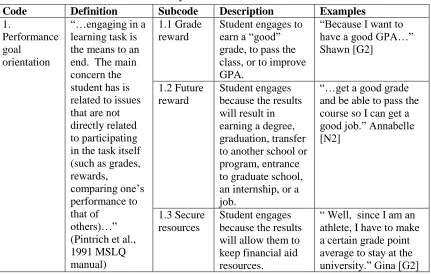
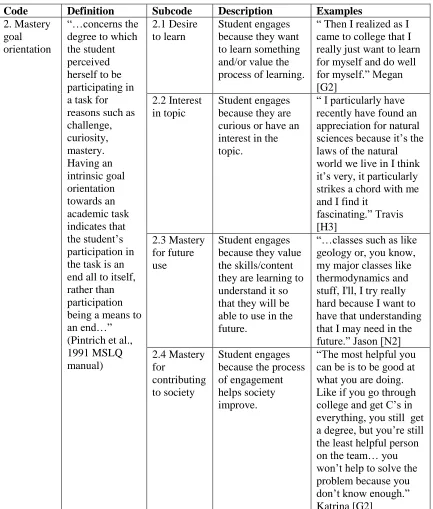
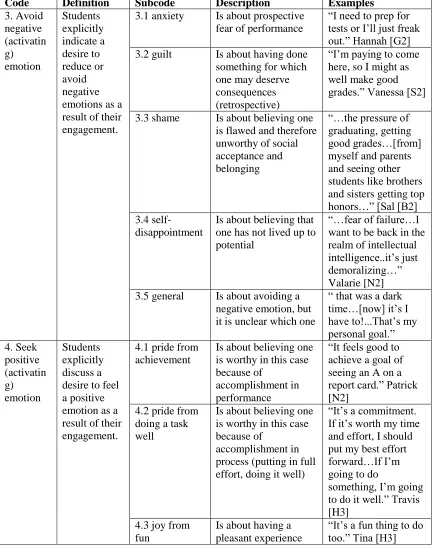
recurring ideas and themes for a final codebook (see Table 1) to be used for selective coding.
Interview transcripts were recoded (Phase 4 in Figure 2) using the final codebook (each
transcript recoded twice by the primary investigator to establish 100% intra-rater reliability).
Inter-rater coding reliability (in this case, percent of agreement) was established through the
co-coding methods of Gorden (1992). The two coders reached an initial average agreement
of 92% (using 7 of the 10 interviews), reaching 100% consensus on all 7 interviews through
discussion. The remaining interviews were then coded by the primary investigator. These
selective coding results and resulting memos were synthesized to develop categories
(performance goal orientation, mastery goal orientation, avoiding negative emotion(s) and
approaching positive emotion(s)). Eventually, an emergent model of student motivation in
studying for an exam in an introductory geology course resulted. While participants were
unavailable to review and confirm the validity of final codes (member checks), participants
reviewed and confirmed the interviewer’s field notes (Phase 1 in Figure 2), establishing the
validity of any interpretations or conclusions that closely follow the wording or sentiment of
RESULTS
The overarching themes that emerged from the data included the achievement goal
orientation of the student (consistent with performance and mastery goal orientations already
identified in the literature) and the emotional goals of the student (engaging in studying with
the goal of avoiding or approaching emotional states).
Achievement goal orientation
All of the students reported some form of performance goal orientation in which they view
the task is a means to an end, such as an extrinsic reward like a grade, degree, or job (see
Table 1, Code 1). Mastery goal orientation, in which they see the task is an end unto itself,
such as desire to learn, interest, future use, etc. was reported by 43% of participants (18
students; see Table 1, Code 2). When the data were sorted into high performing (earned A or
B average on exams) and low performing (earned an average of C or below on exams)
subpopulations, 70% (14 of 20) of high performers and 18% (4 of 22) low performers
reported a mastery goal orientation (Figure 3). When data were examined as 2YC and R1
university subpopulations, 53% (10 of 19) 2YC students and 35% (8 of 23) R1 university
students reported aspects of mastery goal orientation (Figure 4).
Emotion
Eighty-one percent (34 of 42) of all students included emotion as part of their explanation of
what motivated them to prepare for an exam (Table 1, Codes 3 and 4). This majority was
separated into subgroups: 29% (12 of 42) reported avoiding negative emotions; 19% (8 of
42) reported approaching positive emotions only; and 33% (14/42) described both avoiding
negative emotions and approaching positive emotions. High performing students were more
likely to report they were avoiding negative emotions (80%, 16 of 20) than low performing
students (46%, 10 of 22; Figure 5). This majority of high performers was consistent across
gender (90% of females and 67% of males). Within the high performer population, 100% of
students who earned an A average on exams/quizzes reported that they were avoiding
negative emotion. A majority of high performers (60%; 12 of 20) and almost half of low
performers (46%; 10 of 22) reported they were seeking positive emotions. This majority was
inconsistent across gender (73% of high performing females and 44% of high performing
males). Large majorities of both 2YC (95%, 18 of 19) and R1 students (70%, 16 of 23)
reported emotional components to their motivation. Students were more likely to report
avoiding negative emotions than approaching positive emotions at both types of institution
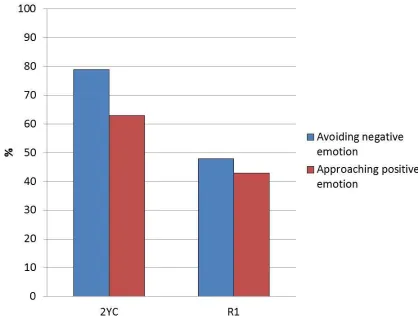
(Figure 6). In each case, a larger proportion of 2YC students (compared to university
students) noted they were avoiding negative emotions (79% vs. 48%) or approaching positive
emotions (63% vs. 43%).
DISCUSSION
Performance vs. Mastery Goal Orientations
The data from this study provide a unique perspective on goal orientations because, unlike
other studies that rely on survey data, goal orientations emerged from the student narratives,
orientation. Most survey-based studies focus on the correlation of these high/low average
performance and mastery goal orientation scores with other factors (e.g., learning strategies).
Such studies are focused on the degree to which a student expresses performance and
mastery goal orientations rather than whether or not s/he expresses one or the other. By
asking students to discuss what they see as important, we can reduce the tendency for
researchers to preferentially select data that confirms their pre-existing beliefs (commonly
called confirmation bias; Nickerson, 1998). This allows us to gain insights into whether
students self-identify with one or both of the goal orientations. All students reported a
performance goal orientation at the task level when preparing for an exam, with fewer
reporting a mastery goal orientation. While students may identify with mastery goal
orientations at a more global course level (see Gilbert et al., 2012), at the task level,
performance goal orientation dominates their engagement.
Mastery goal orientation has been correlated with higher performance and the more effective
use of self-regulated learning strategies. Self-regulated learning is “an active, constructive
process whereby learners set goals for their learning and then attempt to monitor, regulate,
and control their cognition, motivation, and behavior, guided and constrained by their goals
and the contextual features in the environment” (Pintrich, 2000). The absence of a mastery
orientation in most students could be interpreted to represent a corresponding deficit of
self-regulated learning strategies in preparation for an exam. When we examine performance, we
performance levels correlate with mastery goal orientation (see comprehensive review of this
correlation in Meece et al., 2006).
Another advantage to using qualitative grounded theory methodology is that we can observe
how students interpret questions about their motivation in terms of goal level. Surveys like
the MSLQ, are assumed to represent course-level, but actually ask students to consider
multiple goal levels through prompts such as “in this class,” “when I take a test,” and “for
this course.” In this study, we explicitly asked students to discuss what motivated them to do
the tasks they described in preparing for an exam (task-level motivation). Despite this clear
task-level prompt, most student responses revealed a more complex relationship between
goal levels. For example, Cassandra (a R1 student) declares that she motivates herself to use
flashcards to prepare for an exam because she wants a good grade in the class (course-level).
The implication is that getting a good grade on the exam (task-level) will result in a good
grade in the class. When she is prompted about why she wants a good grade, she connects to
more global goals such as GPA and being able to transfer into a specific program in the
college (school-goal) which is linked to her broader career goals. Such data suggests
students are toggling between goal levels and/or framing their task-level motivation in more
global school and life goals. If we examine the codebook that emerged from student
responses (Table 1), we see that most instances of mastery orientation are more global in
nature, while performance orientation tends to be at the task level with connections to more
global goals. This apparent mixing of goal levels may be actually be evidence of a future
(Husman and Shell, 2008). More studies establishing a clear link between student strategies
and their future goals are needed to clarify these relationships.
Motivation-Emotion Connections
Most students (81%) report an emotion component when they reflect on their motivation to
prepare for an exam, suggesting that emotion plays a significant role in achievement
motivation. Most emotion-achievement models predict that positive emotions (e.g., joy,
pride) would be indicated by students who report higher levels of mastery goal orientation
and negative emotions (e.g., shame, guilt) would be associated with performance-avoidance
goal orientations. We do see some support of this in our results. For example, Faith says “If
I get an A on the test I’d be like “Oh I want to get an A on the next test too.” I think it
actually motivates me rather than getting a bad test. Not saying a bad test does not make me
want to do better but…an extra motivat[or] I think if I receive a good grade first.” Faith
wants to sustain the pride she is feeling and uses that emotion to drive her to action.
Unlike the predictions of most emotion-achievement models, our results show a high
incidence of the avoidance of negative emotions by students who report mastery goal
orientation. Some students appear to be using feelings of guilt and shame to engage in
learning strategies. For example, Vanessa (R1) states she is ”paying to come here, so [she]
might as well make good grades…[she’s] capable of doing so, so why be lazy?” There is a
sense of guilt for potentially wasting both money and her ability by doing poorly. By
this emotionally charged self-talk and self-instruction as a way to motivate and regulate her
engagement. In this sense, Vanessa uses the anticipation of emotional responses to drive her
to action. This is in direct contrast with model predictions and responses from other students
like Faith (R1) who use retrospective emotions to drive action. This unexpected result
suggests we need to examine how students are using emotions to engage in learning
strategies.
High Performing Students vs. Low Performing Students
A clear majority (70%) of high performers (those who earn an A or B average on their exams
in the class) report a mastery goal orientation in addition to their performance orientation
compared to only 18% of low performers (those who earn a C average or below on their
exams). If we separate the high performers even further, we find that 100% of those students
who earned an A average on exams indicated a mastery goal orientation in addition to their
performance goal orientation. These high performing students (both A and B averages) are
motivated by their interest in the topic, learning in general, or how their learning process
contributes to improving society in general. As Patrick, a R1 university student (STEM
major) put it, “I was really intrigued by it.” He went on to explain that he put the effort and
time into applying his study methods because he had an insatiable curiosity about the world.
He didn’t want to just be able to repeat the answers the instructor was looking for, he wanted
to understand why the answer was the way it was. While it seems logical that a geoscience
or STEM major is motivated by mastery goals such as interest and value, it is important to
related majors such as Staci (an arts major at a R1 university) echoed such curiosity as an
inherent task value, indicating that she “would like to get the most as possible” out of her
learning experience in class, viewing preparation for an exam as one of those tasks. Note the
more global nature of her mastery orientation. This suggests that there may be a relationship
between complex goal level patterns and performance.
If we examine the nature of these mastery goal orientations of high performing students, we
can see that mastery goals correspond with deeper learning strategies such as elaboration
(e.g., paraphrasing, creating analogies) and/or organization (e.g., creating outlines or concept
maps). For example, if a student is driven to understand the “why” behind a concept, they
will relate new concepts to pre-existing knowledge and find analogies and resources to
construct new conceptual meaning. In this way, these results are consistent with previous
reports that suggest that high performers are more intrinsically motivated individuals who
value a task as a process in addition to the benefits of completing a task successfully
(Pintrich, 2000).
But what of the low performers that indicated mastery goal orientations in addition to their
performance goal orientation? Why were they not as successful? When we examine the
student reflections on their motivation in the context of the geology study strategies they
outlined during the interview, a clear distinction emerges between the high performing and
low performing mastery goal-oriented students: a disconnect between their motivation and
actually resulting in study action. For example, Andre (a 2YC student), indicates an interest
in geology as part of his motivation early in the interview, but goes on to explain that “…like
it’s motivation of I want to do the stuff I like to do after, I basically say I have to do the work
first…” When it comes down to the motivation behind his actual study actions, he is purely
motivated by extrinsic rewards (getting to do what he really wants to do). Andre’s study
strategies (chunking his time 1-2 days before a summative assessment by quizzing himself
with flashcards containing general key concepts) focus on rehearsal strategies rather than
elaboration and do little to satisfy his purported interest in geology. When we compare this to
Patrick’s interest from earlier, we see that unlike Andre, Patrick’s interest and curiosity
coincide with how Patrick studies. Unlike Andre, Patrick uses his curiosity to drive his effort
levels and persistence at a study task: “[he’s] going to do this however long it takes.”
It is possible that the low performing mastery goal oriented students are inaccurate in their
self-monitoring or are projecting an ideal version of themselves to the interviewer. Graham
(a 2YC student in his seventh semester) indicates that “just learning is awesome,” but he also
acknowledges that for geology, for some inexplicable (to him) reason he just “isn’t doing
anything [to study] for [geology].” While he is self-reflective in his interview, unlike the
high performing students, he has failed to fully evaluate his self-observations. He has yet to
determine why he is motivated or not motivated to action and more importantly, he fails to
enact strategies to regulate his motivation even when he recognizes that it is failing him.
From these conflicting results, we can see that student self-report data on survey instruments
learning processes and outcomes at the task level. A student, like Graham, may indicate a
mastery goal orientation when reflecting on their motivation to engage in a task such as
studying for an exam, but describe a performance goal orientation behind their actual study
action.
The majority of high performers indicate discrete emotions (e.g., anxiety, guilt,
self-disappointment, pride). If we further sort the A high performers from the B high performers,
we see that all A students report they are avoiding negative emotions. We propose that this is
evidence that high performers use emotions as motivational controls to regulate their
engagement in self-regulated studying activities. Consider what Travis (2YC) tells us: “if
that’s what I decided to do, then I’m going to give it my best efforts, otherwise it is a waste
of time.” He will engage in his study strategies with clear purpose and high effort levels to
avoid feeling guilt at wasting time. The conviction in his voice and his description of his
study methods in another part of the interview appear in support of his claim of avoiding
guilt.
When we examine the high and low performing populations in general, we observe that 2YC
students are 35% of the high performing population and 59% of the low performing
population. This appears to be related to the grade portfolio breakdown of 2YC courses.
They tend to have less of the final course grade determined by performance on summative
assessments (e.g., exams) than the R1 courses. When we further examine the high
these high performers with mastery goal orientation are from 2YC. In contrast, it is of
interest to note that all (except one) of the low performing students with mastery goal
orientation were 2YC students. This brings to light the question of differences in
motivational needs and processes between the R1 and 2YC populations.
R1 Universities vs. Two-year Colleges
On first glance, R1 and 2YC appear similar in that all students report performance goal
orientation and fewer students indicate mastery goal orientation. Upon closer examination,
we see that a higher percentage of 2YC students report a mastery goal orientation compared
to R1 students. We also see that a higher percentage of 2YC students report an emotional
component to their motivation, suggesting that 2YC students do in fact have higher affective
loads and potential affective obstacles to their learning. Several 2YC students described their
motivation with more emotional urgency due to personal context than university students
with comments like “I’m picking my college career off the ground…that was a dark time”
(Randy, 2YC). Consider Sienna, she studies to perform well “to make [her] dad proud”
which by itself is perhaps unremarkable, but she follows with “…making him proud is
always hard,” adding a deeper emotional tone evoking questions of self-esteem to this need
for external validation. Additionally, she also indicates she is studying to perform well so she
could someday “figure out and prevent other people” from having the same
geologically-related health concern her mother did. If she fails, she faces rejection from her father and a
sense of guilt and shame for not metaphorically helping her mother. In other words, there is
like Jason, who tries really hard in geology to perform well because he “want[s] to have that
understanding that [he] may need in the future [for his career plans].” All three (Randy,
Jason and Sienna) want to perform well and they all want to use the geology content
understanding for their future career plans, but Sienna has several emotional components to
her motivation portrait. This high affective load (emotional demands on brain processing)
has the potential to interfere with her intentions because she is focused on her feelings
instead of the cognitive task itself.
Implications for Future Investigations and Improving Student Motivation
The results of this study suggest caution should be used when interpreting course level
motivation survey or interview data, as students may conflate their more global course level
motivation with their task level motivation sources or express relationships between them
that are difficult to parse out. By giving students a specific scenario in their course to reflect
on when discussing their motivation to study for an exam (e.g., “Walk me through a typical
week or two before an exam, how do you prepare?”), the responses are more likely to be
valid representation of what students actually do in geology class, rather than a global
interpretation of “studying” in general. In other words, this specificity reduces the number of
potential memory data points a participant is referencing when formulating their responses.
They are primed to think about geology class and not math class, for example. If students
digressed into how they studied for other courses, they were redirected and asked about other
This study examines student motivation for the task of studying for an exam. Other tasks,
such as note taking, clicker questions, small group work, class discussions, and active
listening may involve different motivation. These tasks need to be explicitly examined in a
similar manner to identify what motivates students to engage in different task-specific
learning processes in these different tasks and to delineate where motivational processes
break down for students to facilitate instructor intervention. If students are inaccurately
identifying their task level motivation, a strategy for instructors could be to include
opportunities for students to reflect on their learning and study strategies, including
motivation.
The results suggest that most students have a high affective load (emotional demands on
brain processing). The results also suggest that high performing students use this high
affective load to drive their engagement in learning processes. While it is tempting to portray
the results as implying that instructors should intervene to increase or decrease student
affective load, we argue the results instead suggest instructors should focus their efforts on
preparing class materials and reference materials to be aligned with class assessments (e.g.,
exam) so that when students are motivated to engage, they have effective resources that will
efficiently lead them to success. All students exhibit a performance orientation and most
have emotional drives that motivate them to prepare for exams. Our job as instructors should
be to clarify the processes necessary for success on exams. For example, by providing
explicit learning objectives that are tied to the assessments, students can focus their efforts on
Limitations
The strength of this study lies in using the student voice to characterize a model for
motivation and emotion, rather asking students how they compare to an existing model for
motivation. However, even when students are explicitly asked about their task level goals,
they frequently discuss them in terms of more global goals. This tendency to discuss
multiple goals and levels simultaneously presents a challenge for anyone seeking to account
for the principle mediators of student outcomes. Future studies could include follow up
questions in the interview protocol that explicitly prompt students to differentiate between
the task level and global level more accurately to establish the relative significance of each.
While the participant demographics of this population were consistent with the larger study
population (see methods section), the participant population selection process presents a few
noteworthy limitations to consider. First, participants were limited to R1 and 2YC
institutions. Future studies could include other populations such as private liberal arts
colleges. Second, participants were volunteers and were offered a $20 gift card for
participating. Such incentives (financial and social) potentially bias the sample towards
individuals that have similar motivations for participating like the goal of getting a gift card.
While a few participants divulged post interview that they were motivated primarily by the
gift card, the majority of participants indicated they were interested in sharing their
experience in geology. The average time of the interviews (~45 minutes) suggests that the
majority of participants were genuinely considering the questions, rather than rushing
higher levels of interest in science compared to the larger study population. However, like
the larger population, participants were predominately non-STEM majors. Finally, the
majority of the participant population earned an A or B in the course, suggesting there may
be some unaccounted for motivation bias in our population selection. We reduced this bias,
however, by using exam grade averages in lieu of final course grade. When these exam
averages were sorted by high and low performance, the population was no longer skewed
towards high performers. While it would have been more ideal to select a population
randomly from the larger study or, in keeping with grounded theory methods, select a
population based on emerging ideas, it wasn’t practical due to the logistical requirements of
one researchers interviewing participants at multiple institutions across the U.S. For
example, limited funding only allowed the interviewer to be on campus for 2-3 days. If a
student was unable to interview during that window due to their schedule, they were not
included in the study. Related to this scheduling conflict is the role interview timing may
have played in student responses. Institutions have similar calendar schedules, preventing
the researcher to interview students at the exact same time in the semester. Every effort was
made to schedule the interviews around similar points in each institution’s course schedule so
that students had at least two exams in geology as reference points, with one exception (see
methods section). Despite the limitations discussed here, the advantages and insights from
including the student voice provide new data to the discussion of student learning in the
CONCLUSION
Through our analysis of student interviews, we present a new dataset and key findings for the
geoscience community. Assessment drives student actions and learning gains. All students
are motivated to study to obtain extrinsic rewards (e.g., grade, degree) and the tasks that
determine the majority of grade (often exams) will likely drive student focus and action. The
majority of students describe an emotional component to their motivation. Course structure
can be used as a tool by students to reach emotional goals that are tied to performance.
Therefore, modifying course structure to provide students with opportunities that explicitly
model the processes necessary to be successful on an exam is likely to be beneficial to
student outcomes.
Students indicate that mastery goal orientations in addition to performance goal orientations
mediate higher performance outcomes (A or B average on exams). As mastery goal
orientations are related to study strategy use (Pintrich, 2000; Elliot et al., 2011), instructors
should encourage the development of student mastery goals. This can be accomplished by
directing student attention to learning objectives, aligning assessments with objectives,
assessing students using evaluation/analysis level questions (that require deeper study
strategies), explicitly describing study strategies, and providing opportunities for students to
ACKNOWLEDGEMENTS
This work was supported by National Science Foundation award 0914404. Any opinions,
findings, conclusions, or recommendations expressed in this material are those of the authors
and do not necessarily reflect those of the National Science Foundation. In addition to this
support, we appreciate the feedback from the co-coders (Lisa Gilbert and LeeAnna
REFERENCES
Ames, C. 1992. Classrooms: Goals, structures, and student motivation. Journal of Educational Psychology, 84: 261-271.
Charmaz, K. and Belgrave, L. 2012. In Gubrium, J., Holstein, J., Marvasti, A., and McKinney, K., eds., The Sage Handbook of Interview Research. Los Angeles: SAGE, p. 347-364.
Dweck, C. and Leggett, E. 1988. A social cognitive approach to motivation and personality.
Psychological Review, 95: 256-273.
Elliot, A., Murayama, K., and Pekrun, R. 2011. A 3x2 achievement goal model. Journal of Educational Psychology, 103: 632-648.
Gilbert, L. A., Stempien, J., McConnell, D., Budd, D., van der Hoeven Kraft, K., Bykerk-Kauffman, Jones, M., Knight, C., Matheney, R., Perkins, D., and Wirth, K. 2012. Not just “Rocks for Jocks”: Who are introductory geology students and why are they here? Journal of Geoscience Education, 60: 360-371.
Gorden, R. 1992. Basic interviewing skills, Itasca,IL: Peacock.
Houlton, H. R. 2010. Academic Provenance: Investigation of pathways that lead students into the geosciences [M.S. Thesis]. West Lafayette, Indiana: Purdue University.
Husman, J. and Shell, D. 2008. Beliefs and perceptions about the future: A measurement of future time perspective. Learning and Individual Differences, 18: 166-175.
Kaplan, A., and Maehr, M. 2007. The contributions and prospects of goal orientation theory.
Levine, R., Gonzalez, R., Cole, S., Fuhrman, M., and Carlson Le Foch, K. 2007. The Geoscience pipeline: A conceptual framework. Journal of Geoscience Education, 55: 458-468.
Linnenbrink, E. and Pintrich, P. 2002. Achievement goal theory and affect: An asymmetrical bi-directional model. Educational Psychologist, 37: 69-78.
McConnell, D. & Kraft, K. (2011). Affective domain and student learning in the geoscience.
Journal of Geoscience Education, 59: 106-110.
Meece, J., Anderman, E., and Anderman, L. 2006. Classroom goal structure, student motivation, and academic achievement. Annual Review of Psychology, 57: 487-503.
National Research Council. 2012. Discipline-based education research: understanding and improving learning in undergraduate science and engineering. Washington, DC: National Academy Press.
Nickerson, R. 1998. Confirmation bias: A Ubiquitous phenomenon in many guises. Review of General Psychology, 2: 175-220.
Oktay, J. S. 2012. Grounded theory [electronic resource]. Oxford: Oxford University Press.
PCAST Report: Engage to excel: Producing one million additional college graduates with degrees in science, technology, engineering, and mathematics (2012).
Pekrun, R., Elliot, A., and Maier, M. 2006. Achievement goals and discrete achievement emotions: A theoretical model and prospective test. Journal of Educational Psychology, 98: 583-597.
Pintrich, P. 2000a. The role of goal orientation in self-regulated learning. In M. Boekaerts, P. Pintrich, & M. Zeidner, (eds.), Handbook of self-regulation (pp. 451-502).
Pintrich, P. 2000b. Multiple goals, multiple pathways: The role of goal orientation in learning and achievement. Journal of Educational Psychology, 92: 544-555.
Pintrich, P., Smith, D., Garcia, T., and McKeachie, W. 1991. A Manual for the Use of the Motivated Strategies for Learning Questionnaire (MSLQ). Ann Arbor, MI: National Center for Research to Improve Post Secondary Teaching and Learning.
Pintrich, P., Smith, D., Garcia, T., and Mckeachie, W. (1993). Reliability and predictive validity of the Motivated Strategies for Learning Questionnaire (MSLQ). Educational and Psychological Measurement, 53: 801-813.
Schunk, D., Meece, J., and Pintrich, P. (2013). Motivation in Education: Theory, research, and applications. NJ: Pearson.
Seymour, E., and Hewitt, N. M. 1997. Talking about leaving: Why undergraduates leave the sciences, Boulder: Westview press.
Strenta, A.C., Elliott, R., Adair, R., Matier, and Scott, J., 1994, Choosing and leaving science in highly selective institutions. Research in Higher Education, 35: 513-547.
Van der Hoeven Kraft, K., Srogi, L., Husman, J., Semken, S., & Fuhrman, M. (2011). Engaging students to learn through the affective domain: A new framework for teaching in the geosciences. Journal of Geoscience Education, 59: 71-84
Weiner, B. 1986. An attributional theory of motivation and emotion. New York: Springer-Verlag.
Wilson, C. 2013. Graduates’ decision points for majoring in the geosciences. Geoscience Currents, 78.
FIGURE LIST
Figure 1. Relationship between goal levels
Figure 2. Qualitative method process
Figure 3. Comparison of goal orientation of high and low performers. Percent of high
performers (earned A or B average on exams; n=20) and low performers (earned a C or
below average on exams; n=22) who reported aspects of performance (e.g., extrinsic rewards
like grades and what grades could get them like degree, job, etc.) and mastery (e.g., desire to
learn, interest, future value, etc.) goal orientations.
Figure 4. Comparison of goal orientation of university and community college students.
Percent of R1 and 2YC participants who reported performance and mastery goal orientations.
Figure 5. Comparison of emotion reported by high and low performers. Percent of high and
low performers who report they are motivated to avoid negative emotions (e.g., anxiety,
shame, guilt, self-disappointment). Percent of high and low performers that report they are
Figure 6. Comparison of emotion reported by university and community college students.
Percent of R1 and 2YC students who reported avoiding negative emotions and approaching
Table 1. Codebook: Motivation to Study
Code Definition Subcode Description Examples
1.
Performance goal
orientation
“…engaging in a learning task is the means to an end. The main concern the student has is related to issues that are not directly related to participating in the task itself (such as grades, rewards,
comparing one’s performance to that of
others)…” (Pintrich et al., 1991 MSLQ manual)
1.1 Grade reward
Student engages to earn a “good” grade, to pass the class, or to improve GPA.
“Because I want to have a good GPA…” Shawn [G2]
1.2 Future reward
Student engages because the results will result in earning a degree, graduation, transfer to another school or program, entrance to graduate school, an internship, or a job.
“…get a good grade and be able to pass the course so I can get a good job.” Annabelle [N2]
1.3 Secure resources
Student engages because the results will allow them to keep financial aid resources.
Table 1. Continued
Code Definition Subcode Description Examples 2. Mastery
goal orientation
“…concerns the degree to which the student perceived herself to be participating in a task for reasons such as challenge, curiosity, mastery. Having an intrinsic goal orientation towards an academic task indicates that the student’s participation in the task is an end all to itself, rather than participation being a means to an end…” (Pintrich et al., 1991 MSLQ manual)
2.1 Desire to learn
Student engages because they want to learn something and/or value the process of learning.
“ Then I realized as I came to college that I really just want to learn for myself and do well for myself.” Megan [G2]
2.2 Interest in topic
Student engages because they are curious or have an interest in the topic.
“ I particularly have recently have found an appreciation for natural sciences because it’s the laws of the natural world we live in I think it’s very, it particularly strikes a chord with me and I find it
fascinating.” Travis [H3] 2.3 Mastery for future use Student engages because they value the skills/content they are learning to understand it so that they will be able to use in the future.
“…classes such as like geology or, you know, my major classes like thermodynamics and stuff, I'll, I try really hard because I want to have that understanding that I may need in the future.” Jason [N2] 2.4 Mastery
for
contributing to society
Student engages because the process of engagement helps society improve.
Table 1. Continued
Code Definition Subcode Description Examples
3. Avoid negative (activatin g) emotion Students explicitly indicate a desire to reduce or avoid negative emotions as a result of their engagement.
3.1 anxiety Is about prospective fear of performance
“I need to prep for tests or I’ll just freak out.” Hannah [G2] 3.2 guilt Is about having done
something for which one may deserve consequences (retrospective)
“I’m paying to come here, so I might as well make good grades.” Vanessa [S2]
3.3 shame Is about believing one is flawed and therefore unworthy of social acceptance and belonging
“…the pressure of graduating, getting good grades…[from] myself and parents and seeing other students like brothers and sisters getting top honors…” [Sal [B2] 3.4
self-disappointment
Is about believing that one has not lived up to potential
“…fear of failure…I want to be back in the realm of intellectual intelligence..it’s just demoralizing…” Valarie [N2] 3.5 general Is about avoiding a
negative emotion, but it is unclear which one
“ that was a dark time…[now] it’s I have to!...That’s my personal goal.” 4. Seek positive (activatin g) emotion Students explicitly discuss a desire to feel a positive emotion as a result of their engagement.
4.1 pride from achievement
Is about believing one is worthy in this case because of
accomplishment in performance
“It feels good to achieve a goal of seeing an A on a report card.” Patrick [N2]
4.2 pride from doing a task well
Is about believing one is worthy in this case because of
accomplishment in process (putting in full effort, doing it well)
“It’s a commitment. If it’s worth my time and effort, I should put my best effort forward…If I’m going to do
something, I’m going to do it well.” Travis [H3]
4.3 joy from fun
Is about having a pleasant experience
Appendix A: Interview protocol
Question Prompts
Tell me about yourself. Major? Interests? How would you characterize yourself
as a student?
Have to get an A/B or best that you can or pass to get credit?
Walk me through a typical week before an exam, how do you prepare? (calendar visual provided)
Resources?
Methods (What does X look like, describe it.)? How often do you do X?
How do you motivate yourself to do (method X) and then motivate yourself to stay on task? What are you trying to do? Why? What is your goal in doing (method X)?
How do you know if you successfully learned the appropriate material after you do (method X)?
What kind of an environment do you do (method X)?
You mentioned (method X) does it involve others, or do you do it independently?
If your instructor asked for evidence that you studied, what would you show them (if anything)?
Do you study differently for exams vs. quizzes? How? Briefly describe your class to me. What’s instructor like?
How do they teach/present? Types of work I can expect to do? Resources available to study? Group work?
Grading?
Grade mostly determined by? Know grade now?
Describe a typical HW assignment in your class and your strategies for doing HW.
Let’s pretend your instructor gives you an assignment and you find yourself more challenged by the assignment than you thought.
What do you do?
If that doesn’t work?
If someone walked into a typical class and observed you “learning”, what would they see you doing?
How often do you reflect on how you are learning or how effectively you learn?
Does your instructor have you do this?
When did you first have to “study” for any subject in school?
Why then? Science? You mentioned (methods XYZ), How
did you come up with these strategies? How did you know how to study? Where/when did you learn how to do that?
Have your strategies changed over time since you first started studying or have they stayed the same?
Do you use different strategies in different classes?
What helps you learn? What hinders your learning? Role of student?
CHAPTER 2
How students prepare for exams in college-level introductory geoscience courses:
A qualitative analysis of self-regulated learning in 73 student interviews
Submitted to Journal of Geoscience Education.
AUTHORS Laura A. Lukes
Department of Marine, Earth, and Atmospheric Sciences
North Carolina State University
David A. McConnell
Department of Marine, Earth, and Atmospheric Sciences
North Carolina State University
KEY WORDS
ABSTRACT
Geoscience education researchers have recently recognized the importance and role of affect
and self-regulation as critical mediators between course context and student learning
outcomes (e.g., performance and persistence). Introductory physical geology students (n =
73; from 5 U.S. colleges and universities) were interviewed about their learning strategies
and experience in their introductory geology course, including how they prepare for an exam.
We used a grounded theory approach to analyze the interview data and create a codebook to
characterize self-regulated learning as it was reported in interviews. We present an applied
model of self-regulated learning and propose that student outcomes would benefit from
instructors explicitly incorporating aspects of this model into geoscience courses.
INTRODUCTION
The National Research Council (NRC, 2012) and others have recently called for
discipline-based education researchers to recognize the interdependence of affective and cognitive
processes in student learning. In a study of geoscience classes, McConnell and van der
Hoeven Kraft (2011) examined this in a geoscience context. They identified the critical role
affect and self-regulated learning processes play in students’ use of effective cognitive
strategies to encode information when learning geoscience. However, self-regulated models
of learning have not been investigated in geoscience classrooms. A self-regulated learning
model offers researchers and instructors a conceptual framework for understanding student
learning in a way that bridges affective, cognitive, and metacognitive domains. Instructors