Original Research Article
The effects of combined therapy of myo-inositol and D-chiro inositol in
reduction of the individual components of metabolic syndrome in
overweight PCOS patients compared to myo-inositol supplementation
alone: a prospective randomised controlled trial
Manideepa Pande
1, Ashish Seal
1*, Sukanta Mishra
1, Arup Dasgupta
2,
Mousumi Sengupta
3, Rinini Dastider
4INTRODUCTION
As the name suggests PCOS is a syndrome characterized by variable gynaecological and systemic signs and symptoms in association with cystic changes in ovary.
The signs and symptoms and their prevalence in PCOS are variable to a large extent and in one study (1) it was
found to be as following: infertility 40%, hyperandrogenism 70%, amenorrhoea 50%, obesity 60-80%, abnormal uterine bleeding 30% and abnormal menstruation 20%.1 A severe form of PCOS 1Department of Obstetrics and Gynecology, Vivekananda Institute of Medical Sciences, Kolkata, West Bengal, India 2Department of Anaesthesiology, ICARE Institute of Medical Sciences and Research, Banbishnupur, Purba Medinipur,
Haldia, West Bengal, India
3Department of Radiology, Vivekananda Institute of Medical Sciences, Kolkata, West Bengal, India
4Department of Biochemistry, Vivekananda Institute of Medical Sciences, Kolkata, West Bengal 700026, India
Received: 17 April 2017 Accepted: 18 May 2017 *Correspondence: Dr.Ashish Seal,
E-mail: [email protected]
Copyright: © the author(s), publisher and licensee Medip Academy. This is an open-access article distributed under the terms of the Creative Commons Attribution Non-Commercial License, which permits unrestricted non-commercial use, distribution, and reproduction in any medium, provided the original work is properly cited.
DOI: http://dx.doi.org/10.18203/2320-1770.ijrcog20172911
ABSTRACT
Background: Polycystic ovarian syndrome (PCOS) is one of the most common endocrine disorder affecting five to ten percent women of reproductive age group. Variability of signs and symptoms along with metabolic syndrome as one of the long term complications make it worthy of early diagnosis and treatment. Medical management of PCOS is aimed at the treatment of metabolic derangements, anovulation, hirsutism, and menstrual irregularities.
Methods: 140 patients, using inclusion and exclusion criteria, were selected and randomly divided into two groups (seventy in each) and age, BMI, waist hip ratio, blood pressure (systolic, diastolic), serum fasting insulin, fasting blood sugar, total cholesterol, HDL, LDL, triglycerides were measured. Study group were given {Myo-inositol (550 mg) + D-chiro-inositol (13.8 mg)} (MI+DCI) twice daily and the control group were given Myo-inositol (1 gm) (MI) twice daily for six months. Same variables were measured at the end of three and six months and compared with repeated measurement ANOVA using SPSS (version 20).
Results: Comparison between these two groups before study was non-contributory. Combined drug therapy has provided statistically significant decrease in BMI, W:H ratio, Diastolic BP, Fasting blood sugar at the end of both 3rd and 6th month but in case of LDL it was at the end of 3 months. Combined drug therapy also increased the HDL level significantly in both the occasions.
Conclusions: Combined medical therapy by (MI+DCI) is very much helpful in reducing the metabolic complications of PCOS without any major side effects.
characterized by hyper-androgenism, insulin resistance and acanthosis nigricans is commonly referred as a popular acronym HAIR-AN Syndrome.2 It is the the most
common cause of female infertility which is caused by a combination of hyperandrogenism, chronic anovulation and irregular menstrual cycle.3-5 Several patients affected
by PCOS are also affected by insulin resistance (±) signs of diabetes hyperinsulinemia.6-8 PCOS-induced insulin
resistance determines a higher risk for the development of type 2 diabetes75, hypertension and dyslipidemia, all elements of the metabolic syndrome.2,9
Diagnosis of PCOS
Rotterdam Criteria May 2003for the diagnosis of PCOS Any two of the following three features Oligo- or anovulation, clinical and/or biochemical signs of hyperandrogenism, polycystic ovaries.2
Modified definition of the WHO criteria for Metabolic Syndrome10
• Hyperinsulinemia (the upper fourth of the fasting insulin level among nondiabetic subjects) or hyperglycemia (fasting glucose ≥110 mg/dl),
• In addition to at least two of the following: a) waist girth ≥94 cm, b) dyslipidemia (triglycerides ≥150 mg/dl or HDL cholesterol <40 mg/dl), c) BP ≥140/90 mmHg or taking BP medication.
Inositol (myo-inositol, D-chiro-inositol etc), a six-carbon polyol which has been characterized as an insulin sensitizer; in-deed, inositolphosphoglycan (IPG) mediators play a key-role in multiple cellular processes that control glucose metabolism and inositol is integral to properly functioning insulin receptors. Thus, a defect in tissue availability or altered metabolism of inositol, as in PCOS women, is a key factor in insulin resistance.11
Different studies have proved the efficacy of myo-inositol in controlling the metabolic components of PCOS. Here we have compared the effects of (D-chiro-inositol + myo-(D-chiro-inositol) combined therapy vs myo(D-chiro-inositol therapy alone in controlling the components of metabolic syndrome.
Aims and objective of present study were to compare the effects between (myo-inositol+D-chiro-inositol) and myo-inositol monotherapy in controlling individual components of metabolic syndrome and to evaluate the complications and side effects of the two drugs.
METHODS
Double blinded (subject/patient and outcome assessor) Randomized controlled trial with parallel group design. Considering at least one overweight PCOS women attending OPD clinic per day and giving consent to participate in the study,the study period would be till we complete our required number of sample size (upto a maximum period of 18 months-March2015 to September
2016). All overweight (BMI>27) PCOS women attending the OPD of Obstetrics and Gynaecology at VIMS, Kolkata. A total of number of 140 patients will be included in the study (70 patients in each group).
Inclusion criteria
For each group:
• Overweight (BMI>27) women satisfying Rotterdam criteria for diagnosis of PCOS.
• No other known causes of infertility
• No known metabolic disorder.
Exclusion criteria
• Women less than 18 years or more than 41 years old
• Patients on hormonal medication
• Known diabetic/hypertensive patient
• Known alcoholic or smoker.
Patients selected using inclusion and exclusion criteria will be randomized using computer generated randomization sequence into two groups (70 in each group). Pre-intervention tests are done for all the parameters and compared. One group has received myo-inositol (1 gm BD) and another group has received [myo-inositol (550mg) and D-chiro-[myo-inositol (13.8mg)] (1 tab BD) for 3 months. All the parameters are tested again and compared to test the significance. The same drug therapy to continue for the same group of patients for next 3 months. And at the end of 6 months all the parameters are measured and compared using appropriate statistical test. The protocol and both the patient information sheet and the consent form were submitted to the Institutional Ethics Committee of VIMS, Kolkata.
Statistical analysis
All the data collected are compiled in Microsoft excel sheet and have been analyzed using statistical software Statistical Package for the Social Sciences (SPSS Version 20) as per nature of the data with appropriate statistical tests. Analysis will be two tailed and p<0.05 has been considered as statistically significant.
RESULTS
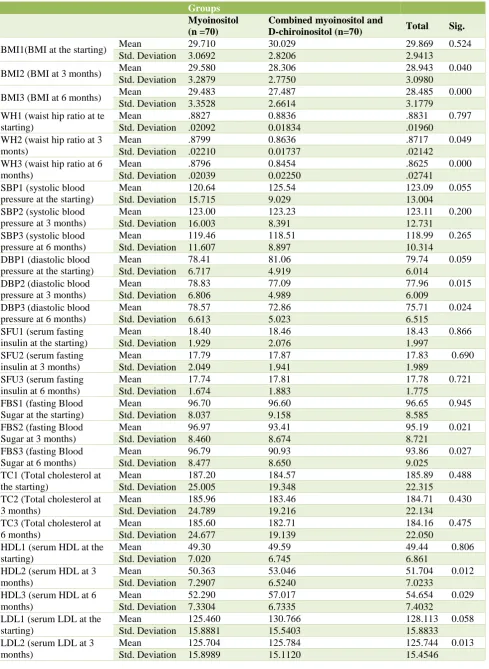
Table 1a: Demographic and other study parameters of study participants.
Groups
Myoinositol (n =70)
Combined myoinositol and
D-chiroinositol (n=70) Total Sig.
BMI1(BMI at the starting) Mean 29.710 30.029 29.869 0.524 Std. Deviation 3.0692 2.8206 2.9413
BMI2 (BMI at 3 months) Mean 29.580 28.306 28.943 0.040 Std. Deviation 3.2879 2.7750 3.0980
BMI3 (BMI at 6 months) Mean 29.483 27.487 28.485 0.000 Std. Deviation 3.3528 2.6614 3.1779 WH1 (waist hip ratio at te
starting)
Mean .8827 0.8836 .8831 0.797
Std. Deviation .02092 0.01834 .01960 WH2 (waist hip ratio at 3
monts)
Mean .8799 0.8636 .8717 0.049
Std. Deviation .02210 0.01737 .02142 WH3 (waist hip ratio at 6
months)
Mean .8796 0.8454 .8625 0.000
Std. Deviation .02039 0.02250 .02741 SBP1 (systolic blood
pressure at the starting)
Mean 120.64 125.54 123.09 0.055
Std. Deviation 15.715 9.029 13.004 SBP2 (systolic blood
pressure at 3 months)
Mean 123.00 123.23 123.11 0.200
Std. Deviation 16.003 8.391 12.731 SBP3 (systolic blood
pressure at 6 months)
Mean 119.46 118.51 118.99 0.265
Std. Deviation 11.607 8.897 10.314 DBP1 (diastolic blood
pressure at the starting)
Mean 78.41 81.06 79.74 0.059
Std. Deviation 6.717 4.919 6.014 DBP2 (diastolic blood
pressure at 3 months)
Mean 78.83 77.09 77.96 0.015
Std. Deviation 6.806 4.989 6.009 DBP3 (diastolic blood
pressure at 6 months)
Mean 78.57 72.86 75.71 0.024
Std. Deviation 6.613 5.023 6.515 SFU1 (serum fasting
insulin at the starting)
Mean 18.40 18.46 18.43 0.866
Std. Deviation 1.929 2.076 1.997 SFU2 (serum fasting
insulin at 3 months)
Mean 17.79 17.87 17.83 0.690
Std. Deviation 2.049 1.941 1.989 SFU3 (serum fasting
insulin at 6 months)
Mean 17.74 17.81 17.78 0.721
Std. Deviation 1.674 1.883 1.775 FBS1 (fasting Blood
Sugar at the starting)
Mean 96.70 96.60 96.65 0.945
Std. Deviation 8.037 9.158 8.585 FBS2 (fasting Blood
Sugar at 3 months)
Mean 96.97 93.41 95.19 0.021
Std. Deviation 8.460 8.674 8.721 FBS3 (fasting Blood
Sugar at 6 months)
Mean 96.79 90.93 93.86 0.027
Std. Deviation 8.477 8.650 9.025 TC1 (Total cholesterol at
the starting)
Mean 187.20 184.57 185.89 0.488
Std. Deviation 25.005 19.348 22.315 TC2 (Total cholesterol at
3 months)
Mean 185.96 183.46 184.71 0.430
Std. Deviation 24.789 19.216 22.134 TC3 (Total cholesterol at
6 months)
Mean 185.60 182.71 184.16 0.475
Std. Deviation 24.677 19.139 22.050 HDL1 (serum HDL at the
starting)
Mean 49.30 49.59 49.44 0.806
Std. Deviation 7.020 6.745 6.861 HDL2 (serum HDL at 3
months)
Mean 50.363 53.046 51.704 0.012
Std. Deviation 7.2907 6.5240 7.0233 HDL3 (serum HDL at 6
months)
Mean 52.290 57.017 54.654 0.029
Std. Deviation 7.3304 6.7335 7.4032 LDL1 (serum LDL at the
starting)
Mean 125.460 130.766 128.113 0.058 Std. Deviation 15.8881 15.5403 15.8833
LDL2 (serum LDL at 3 months)
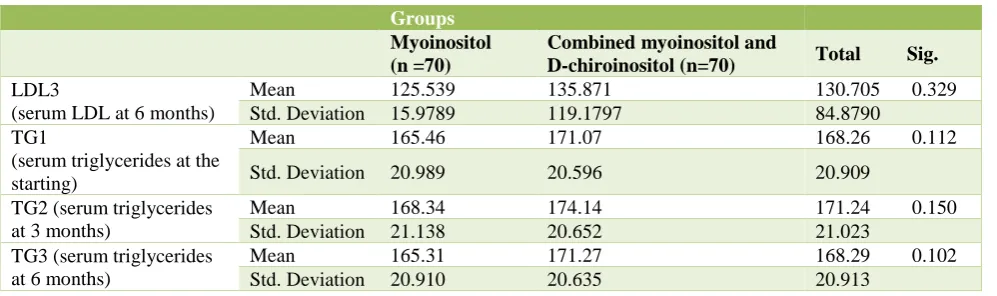
Table 1b: Demographic and other study parameters of study participants.
Groups
Myoinositol (n =70)
Combined myoinositol and
D-chiroinositol (n=70) Total Sig.
LDL3
(serum LDL at 6 months)
Mean 125.539 135.871 130.705 0.329 Std. Deviation 15.9789 119.1797 84.8790 TG1
(serum triglycerides at the starting)
Mean 165.46 171.07 168.26 0.112
Std. Deviation 20.989 20.596 20.909
TG2 (serum triglycerides at 3 months)
Mean 168.34 174.14 171.24 0.150
Std. Deviation 21.138 20.652 21.023 TG3 (serum triglycerides
at 6 months)
Mean 165.31 171.27 168.29 0.102
Std. Deviation 20.910 20.635 20.913
An alpha level of 5% has been taken, i.e. if any ‘p’ value was less than 0.05, it has been considered as significant. The power of our study was 90%. Coming to the analysis, age and other parameters are studied as baseline evaluation (pre-intervention) and statistical tests applied to test the presence of any significance. It was found that there was no statistically significant difference between these two groups.
At the end of three months and six months the measurements were again studied and it was found that those datas were normally distributed and no statistically significant difference present between these two groups. At the end of 3 months BMI, WH Ratio, Diastollic BP, FBS, LDL were found to be reduced significantly and HDL was increased significantly in combined therapy group than myo-inositol only group. Other values of other parameters were unrewarding.
At the end of 6 months in the combined therapy group all of the above-mentioned parameters except LDL in which statistically significant changes noted were again found to carry statistically significant difference from the myo-inositol group.
DISCUSSION
Carlomagno G et al and Heimark D et al in two separate studies from two independent laboratories have reported a significant reduction of (Myo-inositol/D-chiro-inositol) ratio in D-chiro-inositol from 100:1 in healthy women to 0.2:1 in PCOS patients.12,13 Those studies suggest marked
MI depletion and an increased DCI reduction indicating the need of their supplementation in PCOS patients.
A trial was conducted by Nordio M and Proietti E on fifty patients where the metabolic effect and pre-determined parameters were assessed between two groups; one group treated with combined (Myo-inositol and D-chiroinositol) and the second group was given myo-inositol only.14 The
study showed that combined therapy is effective in reducing diastolic blood pressure and serum sex hormones significantly. It also showed that plasma
glucose and insulin sensitivity index measurements were more controlled at the end of 3 months with combined therapy than myo-inositol only.
A study conducted by Mnozzi M et al on Cardio-vascular risk factor of PCOS patients by giving [Myo-inositol (550 mg) + D-chiro-inositol (13.8 mg)] (MI+DCI) twice daily for six months.15 Statistical analysis shows statistically
significant reduction in serum fasting insulin, fasting blood sugar, LDL and statistically significant increase in
HDL level.
In present study, at the end of 3 months BMI, WH Ratio, Diastollic BP, FBS, LDL were found to be reduced significantly and HDL was increased significantly in combined therapy group than myo-inositol only group. At the end of 6 months in the combined therapy group all of the above-mentioned parameters except LDL have shown statistically significant changes.
CONCLUSION
Considering the wide range of presenting signs and symptoms of PCOS, early diagnosis and treatment, not only to control gynaecological problems but also to prevent and treat metabolic complications, is necessary. Combined (Myo-inositol+D-chiro-inositol) therapy proved to be more efficacious than Myo-inositol only in reducing individual components of metabolic syndrome. Dietary habits and physical exercise of individual may play some role which has not been confounded.
Funding: No funding sources Conflict of interest: None declared
Ethical approval: The study was approved by the Institutional Ethics Committee
REFERENCES
spontaneous episodic secretion and ovarian function in nonobese patients with polycystic ovary syndrome. Fertil Steril. 2004;81(1):114-9.
2. Rotterdam ESHRE/ASRM-Sponsored PCOS Consensus Workshop Group. Revised 2003 consensus on diagnostic criteria and long term health risks related to polycystic ovary syndrome. Fertil Steril. 2004;81(1):19-25.
3. Azziz RJ. Controversy in clinical endocrinology: diagnosis of polycystic ovarian syndrome: the Rotterdam criteria are premature. Clin Endocrinol Metab. 2006;91(3):781-5.
4. Azziz R, Carmina E, Dewailly D, Diamanti-Kandarakis E, Escobar-Morreale HF, Futterweit W, et al. Positions statement: criteria for defining polycystic ovary syndrome as a predominantly hyperandrogenic syndrome: an Androgen Excess Society guideline. J Clin Endocrinol Metab. 2006;91(11):4237-45.
5. 5. Azziz R, Carmina E, Dewailly D, Diamanti-Kandarakis E, Escobar-Morreale HF, Futterweit W, et al. The Androgen Excess and PCOS Society criteria for the polycystic ovary syndrome: the complete task force report. Fertil Steril. 2009;91(2):456-88.
6. Expert panel on detection, evaluation, and treatment of high blood cholesterol in adults: Executive Summary of the Third Report of the National Cholesterol Education Program (NCEP) expert panel on detection, evaluation, and treatment of high blood cholesterol in adults (Adult Treatment Panel III). JAMA 2001;285:2486-97. 7. Vause TD, Cheung AP, Sierra S, Claman P, Graham
J, Guillemin JA et al. Ovulation induction in polycystic ovary syndrome. J Obstet Gynaecol Can. 2010;32(5):495-502.
8. Lisi F, Carfagna P, Oliva MM, Rago R, Lisi R, Poverini R et al. Pretreatment with myo-inositol in non-polycystic ovary syndrome patients undergoing multiple follicular stimulation for IVF: a pilot study. Reprod Biol Endocrinol. 2012;10:52.
9. Legro RS, Arslanian SA, Ehrmann DA, Hoeger KM, Murad MH, Pasquali R et al. Diagnosis and
Treatment of Polycystic Ovary Syndrome: An Endocrine Society Clinical Practice Guideline. J
Clini Endocrinol Metab. 2013;98(12):2013-2350. 10. Balkau B, Charles MA. Comment on the provisional
report from the WHO consultation. European Group for the Study of Insulin Resistance (EGIR) (Letter).
Diabet Med. 1999;16:442-3. 11. Iuorno MJ, Jakubowicz DJ, Baillargeon JP, Dillon P,
Gunn RD, Allan G et al. Effects of D-chiroinositol in lean women with the polycystic ovary syndrome. Endocr Pract. 2002;8:417-23.
12. Heimark D, McAllister J, Larner J. Decreased Myo-inositol to chiro-Myo-inositol(m/c) ratios and increased m/c epimerase activity in PCOS theca cells demonstrate increased insulin sensitivity compared to controls. Endocr J. 2014;61(2):111-7.
13. Unfer V, Carlomagno G, Papaleo E, Vailati S, Candiani M, Baillargeon JP. Hyperinsulinaemia alters myo-inositol to d-chiro-inositol ratio in the follicular fluid of PCOS patients. Reprod Sci. 2014;21(7):854-58.
14. Minozzi M, Nordio M, Pajalich R.. The combined therapy myo-inositol plus d-chiro-inositol, in a physiological ratio, reduces the cardio-vascular risk by improving the lipid profile in PCOS patients. Eur Rev Med Pharmacol Sci. 2013;17:537-40.
15. Nordio M, Proietti E. The Combined therapy myo-inositol and d-chiro-myo-inositol reduces the risk of metabolic disease in PCOS overweight patients compared to myo-inositol alone. Eur Rev Med Pharmacol Sci. 2012;16:575-81.