University of Windsor University of Windsor
Scholarship at UWindsor
Scholarship at UWindsor
Electronic Theses and Dissertations Theses, Dissertations, and Major Papers
10-19-2015
Establishment of Asynchronous Rapport with Test Administrator:
Establishment of Asynchronous Rapport with Test Administrator:
A Comparison of Online and In-Person Testing Procedures
A Comparison of Online and In-Person Testing Procedures
Natalie Gayle Frost University of Windsor
Follow this and additional works at: https://scholar.uwindsor.ca/etd
Recommended Citation Recommended Citation
Frost, Natalie Gayle, "Establishment of Asynchronous Rapport with Test Administrator: A Comparison of Online and In-Person Testing Procedures" (2015). Electronic Theses and Dissertations. 5465.
https://scholar.uwindsor.ca/etd/5465
Establishment of Asynchronous Rapport with Test Administrator:
A Comparison of Online and Paper-and-Pencil Testing Procedures
By
Natalie Frost
A Thesis
Submitted to the Faculty of Graduate Studies through the Department of Psychology in Partial Fulfillment of the Requirements for
the Degree of Master of Arts at the University of Windsor
Windsor, Ontario, Canada
2015
Establishment of Asynchronous Rapport with Test Administrator:
A Comparison of Online and In-Person Testing Procedures
by
Natalie Frost
APPROVED BY:
______________________________________________ Dr. Suzanne McMurphy
Social Work
______________________________________________ Dr. Joseph Casey
Psychology
______________________________________________ Dr. Kimberley Babb, Advisor
Psychology
DECLARATION OF ORIGINALITY
I hereby certify that I am the sole author of this thesis and that no part of this thesis has been published or submitted for publication.
I certify that, to the best of my knowledge, my thesis does not infringe upon anyone’s copyright nor violate any proprietary rights and that any ideas, techniques, quotations, or any other material from the work of other people included in my thesis, published or otherwise, are fully acknowledged in accordance with the standard referencing practices. Furthermore, to the extent that I have included copyrighted material that surpasses the bounds of fair dealing within the meaning of the Canada Copyright Act, I certify that I have obtained a written permission from the copyright owner(s) to include such material(s) in my thesis and have included copies of such copyright clearances to my appendix.
ABSTRACT
Rapport is often established with clients prior to psychological testing to facilitate
self-disclosure and ease anxiety. Test administrators need to find ways to build rapport with
clients prior to online tests. The present study examined whether asynchronous rapport, a
positive relationship established without real-time interaction, could form between an
online test administrator and participants. This study examined the effects of a
rapport-building procedure prior to, and consistency of scores on, online and offline measures.
Separated by a one-week interval, undergraduate students completed both online and
paper-and-pencil versions of measures of perceived rapport, self-disclosure, social and
state anxiety. Participants were randomly assigned to either an asynchronous rapport
condition (an online video and in-person script presented by the test administrator to
foster rapport) or no rapport condition. Results suggest that asynchronous
rapport-building, online test administration, and social anxiety were related to amount of
DEDICATION
To my loving husband, Eric.
ACKNOWLEDGEMENTS
Thank you to Dr. Kimberley Babb for your support and knowledge every step of
the way. You guided me so that I could grow into a better researcher. Your attention to
detail helped me to clarify and strengthen the importance of this research. I am also
grateful for your kindness and understanding when we faced methodological challenges
along the way.
Thank you to Dr. Joseph Casey for your knowledge in assessment procedures as
well as Dr. Suzanne McMurphy for your knowledge in the trust literature. Your support
during the development of this project was greatly appreciated.
I would also like to thank Dr. Dennis Jackson and Dr. Alan Scoboria for assisting
me with methodological and research design suggestions. Your contributions helped
strengthen the conclusions this research project was able to make.
Special thanks to Jillian Glasgow for video recording the online asynchronous
video. Thank you for helping me perfect the asynchronous rapport script for the video.
Finally I would like to thank my research assistants, Fedaa and Sarah, for helping
me score and input the data collected. The time you committed to this project was
TABLE OF CONTENTS
DECLARATION OF ORIGINALITY ... iii
ABSTRACT ... iv
DEDICATION ...v
ACKNOWLEDGEMENTS ... vi
LIST OF TABLES ...x
LIST OF FIGURES ... xi
LIST OF APPENDICES ... xii
CHAPTER I: INTRODUCTION ...1
CHAPTER II: LITERATURE REVIEW ...3
Online Therapeutic Services ...3
Effectiveness of online therapy ...3
Concerns about Internet Testing...4
Technological reliability...5
Communication cues...5
Credentialing and training ...6
Benefits of Online Testing ...9
Convenience and accessibility ...9
Anonymity ...11
Online disinhibition effect and self-disclosure ...13
Online Clients ...16
Clients with learning disabilities or ADHD ...16
Clients with online service preferences......18
Therapeutic Alliance ...19
Rapport ...20
Establishing rapport ...22
Online Therapeutic Alliance and Rapport ...24
Online therapeutic alliance ...24
Online rapport ...25
The Present Study...27
Hypotheses ...27
CHAPTER III: METHODOLOGY ...32
Participants ...32
Measures...37
Materials ...54
Design and Procedure...55
CHAPTER IV: RESULTS ...59
Data Preparation ...59
Missing Data...59
Preliminary analyses ...59
Main Hypotheses ...65
Hypothesis 1 ...65
Hypothesis 2 ...65
Hypothesis 3 ...69
Hypothesis 6 ...75
Supplementary Analyses ...78
Trust in the Internet ...78
Participants’ Feedback ...80
CHAPTER V: DISCUSSION ...81
Effectiveness of Rapport Video/Script ...81
Consistency of Online vs Paper-and-Pencil Measures ...83
State Anxiety ...84
Self-Disclosure ...85
Test Format Preferences ...89
Limitations and Future Directions...90
Conclusions and Practical Applications ...93
REFERENCES ...96
APPENDICES ...114
LIST OF TABLES
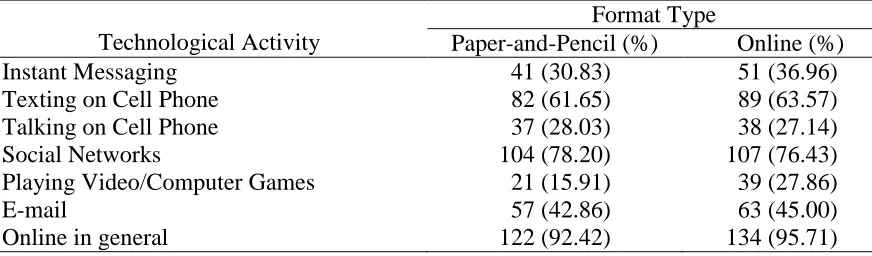
TABLE 1: Frequency of Participants that Spend More Than 30 Minutes per Day
Partaking in Technological Activities ...35
TABLE 2: Mean Scores and Standard Deviations for Comfort Communicating Using Different Methods ...36
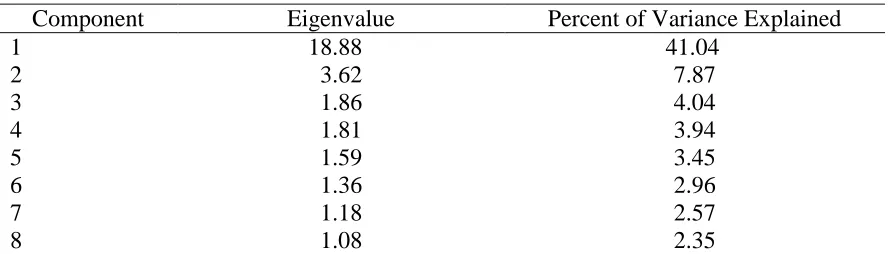
TABLE 3: Eigenvalues and Percentage of Variance Explained by Extracted Components from the Paper-and-Pencil Format of the FROST ...41
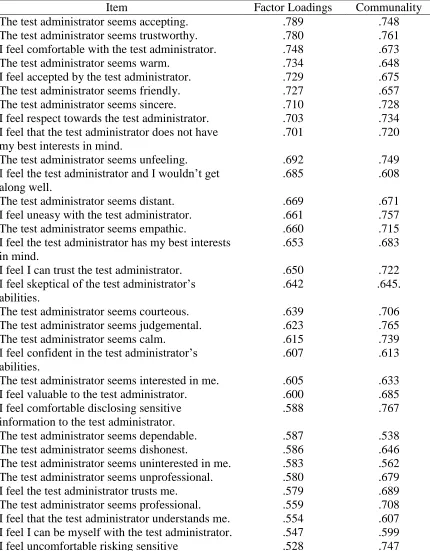
TABLE 4: Factor Loadings and Communalities for the 46 items from the Paper-and-Pencil Format of the FROST ...43
TABLE 5: Eigenvalues and Percentage of Variance Explained by Components Extracted from the Online Format of the FROST ...45
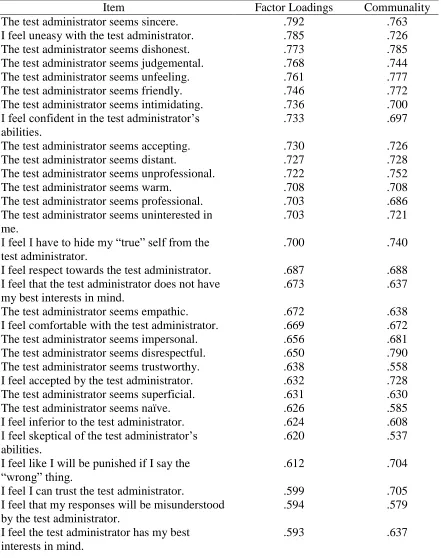
TABLE 6: Factor Loadings and Communalities for the 46 items from the Online Format of the FROST ...46
TABLE 7: Research Design...56
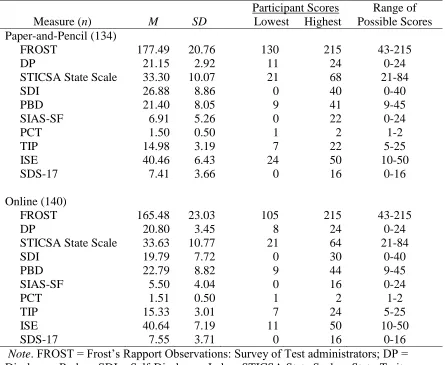
TABLE 8: Descriptive Statistics for All Measures and Formats ...61
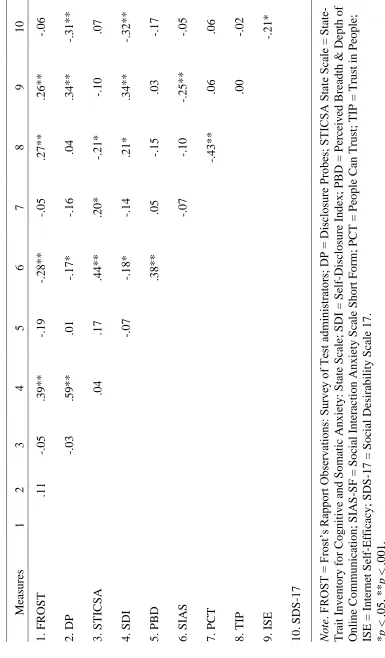
TABLE 9: Correlation Matrix for Paper-and-Pencil Variables ...63
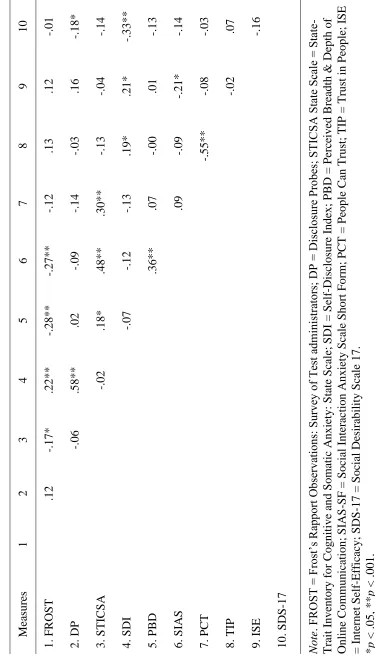
TABLE 10: Correlation Matrix for Online Variables ...64
LIST OF FIGURES
FIGURE 1: Perceived rapport with test administrator as a function of test format and
LIST OF APPENDICES
Appendix A: Summary Table of Measures ...114
Appendix B: Background Information ...115
Appendix C: Frost’s Rapport Observations: Survey of Test administrators ...118
Appendix D: Asynchronous Rapport Script ...121
Appendix E: Consent Form ...122
Appendix F: No Rapport General Instructions ...125
Appendix G: Debriefing Questionnaire for the Asynchronous Rapport Condition ...126
CHAPTER 1
INTRODUCTION
The expanding technological knowledge of psychologists has brought online and
computer-based psychological services into society. These online services have potential
benefits for certain groups of individuals who may face challenges of access to quality
psychological care. For example, online testing may be more accessible, convenient, and
preferable for Canadians in rural areas than having to schedule traditional
paper-and-pencil tests. Because of these perceived benefits, research is needed to ensure that online
testing is being provided in the most effective way.
Until the 1990s, research examining online psychological services was limited.
Since then, researchers have demonstrated the validity of some online psychological
services that have become increasingly popular with clients (Khanna & Kendall, 2008;
Sánchez-Ortiz et al., 2011; Spence et al., 2011). Over the years, online psychological
services have been delivered in synchronous and asynchronous formats depending on
whether the interactions between the client and therapist occur in real-time or not. More
recently, researchers have examined the benefits of transforming paper-and-pencil
psychological tests to valid online tests. It cannot just be presumed that online formats of
tests have the same psychometric properties as their paper-and-pencil counterparts
(Buchanan et al., 2005; Fouladi, McCarthy, & Moller, 2002), but current research is
beginning to support the idea that many paper-and-pencil tests maintain their validity
when administered in an online format (Holländare, Askerlund, Nieminen, & Engstrom,
2008; Kane, Walker, & Schmidt, 2011; Vallejo, Jordán, Diaz, Comeche, & Ortega, 2007;
It is also important to consider the difference in method of administration between
online and paper-and-pencil tests. A key component of in-person psychological test
administration is the quality of the relationship between the client and test administrator.
Establishing a positive relationship with the client by building rapport allows clients to
feel more comfortable discussing sensitive topics and being evaluated by a test
administrator prior to an assessment (Sattler & Ryan, 2009). Potential reductions in
anxiety in the moments prior to testing may facilitate greater self-disclosure during
testing. Although researchers have demonstrated that positive relationships can be
developed between therapists and clients in an online therapeutic environment (Prado &
Meyer, 2006), it is currently unknown whether rapport can be established online between
a client and test administrator prior to Internet-based testing without a real-time
interaction (asynchronous rapport).
The goals of the present study were to examine the effects of asynchronous
rapport on, and the consistency of, online and paper-and-pencil measures of
self-disclosure, anxiety, and perceived rapport with the test administrator. This study built upon the research of online therapy and the therapeutic alliance to explore participants’
perceptions of an online test administrator and how that affects their responses. Though
test administrators are encouraged to build rapport with clients prior to in-person testing
and interviewing, research has yet to examine the role of rapport in an online
environment and its potential ability to reduce anxiety, facilitate self-disclosure, and form
a positive relationship with the test administrator prior to online testing. Research on
rapport and the benefits and concerns of online testing will be discussed in the following
CHAPTER 2
LITERATURE REVIEW
Online Therapeutic Services
Therapeutic services provided by therapists over the Internet to clients have
numerous aliases, such as Internet therapy, cybercounselling, E-therapy, and online
therapy. Services are offered in both synchronous and asynchronous formats.
Synchronous interactions require the client and therapist to be present and have a
cooperative interaction in real-time. Some examples of synchronous services are: online
audio, instant messaging, Skype, and the use of webcams. In contrast, asynchronous
interactions do not occur in real-time and are more like exchanges through e-mail than an
active social interaction. E-mail, online forums, and web consulting are examples of
asynchronous services. Whereas only 46 to 52 percent of online therapists use
synchronous chat, approximately 75 to 82 percent of online therapists use e-mail to
communicate and conduct therapy with clients (Laszlo, Esterman, & Zabko, 1999;
Maheu & Gordon, 2000). Perhaps asynchronous service allows the client and therapist to
have a flexible schedule and gives them more time to reflect on responses, which is not
always possible in synchronous service.
Effectiveness of online therapy. A meta-analysis by Barak, Hen, Boneil-Nissim,
and Shapira (2008) reviewed fourteen studies that directly assessed the effectiveness of
asynchronous and synchronous online therapies compared to face-to-face therapies and
found that they were equally effective when measured by expert raters and self-report
questionnaires. Furthermore, no differences in effect size were found between
audio (without video), instant messaging, and e-mail therapies had larger effect sizes than
webcam therapy (Barak et al., 2008). This suggests that even when there are no visual
social cues between the therapist and client, online therapy can still be effective.
Researchers have also found that during both face-to-face and online therapy similar
positive therapeutic alliances between clients and therapists can be formed (Knaevelsrud
& Maercker, 2006).
Asynchronous online therapy is similar to asynchronous online testing because
they both involve the exchange of personal information online between the client and
therapist and the test administrator is absent and does not provide real-time feedback.
Based on Barak and colleagues’ (2008) research, it is possible that information gathered
from online testing that does not require real-time direction from an administrator may be
equally effective as in-person testing, assuming the psychometric properties of the test
remain stable. Thus, one purpose of the present study is to examine the reliability of
online tests in comparison to the original paper-and-pencil formats of the tests.
Concerns About Internet Testing
The implementation of online testing as a common practice is being approached
cautiously by psychologists. Using computers as a method of test administration has
brought new ethical concerns that have never been warranted before. Many of these
concerns are similar to the concerns about online counselling, such as technological
reliability, lack of communication cues, credentialing and training, and relationship
development issues with the psychologist (Sampson, Kolodinsky, & Greeno, 1997; Suler,
Technological reliability. Technology cannot always be counted on to perform
tasks in the desired manner. Computers may fall victim to technical difficulties and
viruses. Furthermore, online communication brings with it its own risks to
confidentiality. Transferring personal information over the Internet has the chance to be
hacked or lost. Finally, the identity of the individual completing test questions cannot
always be relied upon or discerned when tests are completed online.
Fortunately, many of these concerns can be addressed by using appropriate
computer and Internet security programs and having a backup plan with the client if
technological difficulties arise (e.g., offering the alternative of a telephone interview,
rescheduling). Furthermore to ensure that the client is the one completing the
questionnaires, some psychologists use code words to limit the chances of imposters
taking online tests (Canadian Psychological Association, 2013; National Board for
Certified Counselors, 2012).
Communication cues. A major concern about online psychological services is
that psychologists using this method of communication do not have the benefit of using their clients’ verbal, visual, and physical cues (Alleman, 2002). Face-to-face test
administration allows the test administrator to note clients’ expressions of distractibility,
frustration, and distress that may affect test scores. For example, a test administrator may
notice that the client is looking away from the test materials and not concentrating on the task. This distraction may affect the client’s performance on working memory and timed
tasks. In response, the test administrator may direct the client’s attention back to the task
to maintain the validity of the test results. Similarly, if a client displays emotional distress
consideration that the client’s heightened state of arousal might be negatively affecting
their performance (Teigen, 1994). Therefore, if online test administrators do not have access to the client’s expressed mood and behaviours throughout the testing, the concern
is that they may be missing cues that would help them determine if the test is a valid
measure of the client’s performance.
Test administrators also lack control over the testing environment when a client
completes tests online. If clients are frequently leaving their computer, listening to
something simultaneously, multitasking, or if someone else is in the room, these factors
may affect their test results. For example, performance on in-person intelligence and
reading comprehension tests have been shown to be significantly poorer while
simultaneously listening to background music compared to performing in silence (Dobbs,
Furnham, & McClelland, 2011; Purham & Currie, 2014). Furthermore, most
psychological tests used standardized procedures during development to assess reliability,
validity, and compile norms of the test results. If participants take frequent breaks or are
distracted, the procedure is no longer standardized and results may be only cautiously
compared to a normative group. Inaccurate test results may lead to misdiagnoses,
inappropriate education plans, and/or poor resource allocation.
Credentialing and training. Alongside the concerns about the online format of
tests, there is the question of who is qualified to provide online tests. In-person
psychological tests are typically administered by a licensed psychologist or psychological
associate. However, their credentials do not necessarily qualify them to administer online
tests. Psychologists also need to be educated in how to communicate effectively online,
the client online. As of yet it is not mandatory for universities to train graduate
psychology students in online assessment or counselling. At some universities there are
courses or certificate programs in online counselling, but these programs are not
accredited by the Canadian Psychological Association (CPA).
Fortunately, the CPA has drafted a set of ethical guidelines for psychological
services that are provided online (Canadian Psychological Association, 2013). These
ethical guidelines create a framework to regulate how psychologists should communicate,
treat, and deliver services to clients safely online. Twenty-three guidelines were
developed and categorized in accordance with the four ethical principles of CPA: respect
for dignity of persons, responsible caring, integrity in relationships, and responsibility to
society. The first principle emphasizes the need to educate clients on the benefits and
risks of online services, including potential confidentiality limitations of information sent
online. Clients may seek online services because of their convenience but it is important
that they are aware of the limitations so that they can make an informed decision
regarding their psychological service needs. The second principle contains four
guidelines for responsible caring that requires psychologists to: (a) refrain from
performing psychological services online until they have demonstrated competency in
service delivery in-person, (b) determine if other psychological services would benefit the
client more, (c) keep up to date on the effectiveness research of online services, and (d) develop an online service plan in accordance with the client’s needs. These guidelines
ensure that online psychologists are knowledgeable and competent in providing effective services to clients and reduce the chance of worsening clients’ problems. The third
to be licensed in their own jurisdiction, as well as the clients’ jurisdiction. The final principle emphasizes the need to abide by laws in the client’s jurisdiction and by online
test copyright laws. These last two principles ensure that psychologists are being held
accountable for their services through their licensing board, as well as societal laws. It is
expected that these guidelines will be officially included in the upcoming CPA code of
ethics, although they are not currently included.
In addition to the CPA, other organizations have also created ethical guidelines
for the practice of online psychological services. The National Board for Certified
Counsellors (NBCC) was the first organization to develop a set of ethical guidelines to
address concerns about online psychological services (National Board of Certified
Counselors, 2012). The NBCC Policy Regarding the Provision of Distance Professional
Services is the most recent update of these guidelines (National Board of Certified Counselors, 2012). The guidelines mirror those presented earlier from the CPA’s draft
with a few additions. Specifically, NBCC counsellors must also maintain a secure backup
system for digital communication, never use social media to communicate with clients,
and provide clients with information regarding their credentials and locations at which
clients can access free Internet.
Despite the concerns associated with online test administration, it could be argued
that these are no more disconcerting than risks taken in face-to-face test administration
(Skinner & Zack, 2004), such as physical harm to client or therapist. In fact, the benefits,
such as creating new opportunities to reach other populations, may outweigh the
potential problems with online services and are creating ethical guidelines to limit them.
Benefits of Online Testing
Much of the research on the benefits of online psychological services has been
conducted in the context of online therapy. Online therapy has been shown to have
numerous benefits for the psychologist and the client (Barak, Boniel-Nissim, & Suler,
2008; Cook & Doyle, 2002; Young, 2005), and these benefits may not only be applicable
to online testing, but may also give online testing an advantage over traditional
pencil tests. Some of the proposed advantages that online testing has over
paper-and-pencil and in-person testing are anonymity, increased self-disclosure, convenience, and
accessibility. The proposed benefits of online testing will be discussed in more detail
below.
Convenience and accessibility. A major reason that clients choose to partake in
online psychological services is because of their convenience (Chester & Glass, 2006;
Haberstroh, Duffey, Evans, Gee, & Trepal, 2007; Young, 2005). Online therapy and
online testing allow clients to remain in their own home while receiving services, thus eliminating travel expenses and travel time to a clinician’s office. In order for
psychological services to be useful, individuals have to be able to access them. The
Internet can be accessed almost anywhere, and many Canadians have Internet access at
home. In 2012, 83% of Canadians reported having access to the Internet within their own
home (Statistics Canada, 2013a). Individuals who don’t have Internet access at home are
usually still able to access it at local community service buildings, public libraries,
Internet cafes, schools, and many other locations. Not only is the Internet available nearly
who are unable to get time off work or clients who care for young children more
flexibility in scheduling services. Clients who are unable to schedule appointments in an
office during typical work hours may still have access to online psychological services
during the evenings and weekends (Rochlen, Zack, & Speyer, 2004). However, if the test
administrator is required to establish rapport using synchronous, real-time
communication with clients (e.g., Skype), the scheduling of online testing may still be
limited to the times the administrator is available and not when the clients are available.
This suggests that asynchronous testing may be the most convenient delivery method.
The accessibility of online psychological services may be most valuable to clients
living in rural communities who may not have access to a licensed psychologist in their
area. Though an estimated 19 to 31 percent of Canadians live in rural areas, only 10
percent of Canadian physicians and 5 percent of Canadian psychologists provide services
to rural areas (Canadian Psychological Association, 2011; Society of Rural Physicians of
Canada, 2015). Fortunately, most of those living in rural areas have access to the Internet
(Canadian Radio-television and Telecommunications Commission, 2010). The Internet
greatly expands the geographical boundaries of psychological testing services.
Furthermore, it allows the opportunity for increasing the range of expertise to which
clients have access (e.g., services from a licensed child psychologist versus an unlicensed
psychotherapist; Young, 2005).
Finally, online psychological testing can be more accessible than in-person testing
for individuals with mobility, physical, language, and hearing disabilities (Barak &
Sadovsky, 2008; Mallen, Vogel, Rochlen, & Day, 2005; Rochlen et al., 2004). For
translator for testing in their area, but can find someone online. Research has found that
individuals with hearing disabilities use the Internet more, in general and for online
communication, than do individuals without hearing disabilities (Barak & Sadovsky,
2008). This suggests that online communication with a test administrator, and potentially
online testing, may be more preferable than in-person testing for clients with hearing
impairments.
Anonymity. For some individuals, there is still a significant stigma about seeking
psychological services, and the fear of stigmatization is one of the most common reasons
they choose not to seek psychological help (Corrigan, 2004). For this reason, clients may
wish to maintain as much anonymity as possible when receiving psychological services. There is much more to anonymity than just not having one’s name identified.
Lapidot-Lefler and Barak (2012) believe that anonymity also refers to being unidentifiable with
regards to appearance, gender, weight, age, ethnicity, and other personally identifying
features. Clients who are concerned about being judged by others for seeking
psychological help, or being seen at a psychologist’s office (e.g., parking at or getting off the bus at a psychologist’s office), may be more inclined to seek assistance from someone
who cannot see or hear them in real time.
Furthermore, clients may react to therapists’ verbal and visual behaviours that
they perceive as negative reactions to their responses, such that they develop feelings of
inferiority and distrust towards the therapist. Negative impressions and feelings towards
the therapist can deter the development of a positive relationship between the client and
therapist. Suler (2004) introduced the concept of invisibility, similar to anonymity, which
Invisibility is the ability to conceal facial expressions (e.g., frown), physical movements
(e.g., sneezing), appearance, and vocal reactions (e.g., sighing) from a communication partner online. This is similar to Freud’s psychoanalytic therapy whereby clients would
lie down on a couch and the therapist would sit out of the client’s sight (Freud, 1913),
creating a form of invisibility. Online therapy and testing allow both the client and
examiner to be invisible during an interaction, which may foster a more positive test
administrator-client relationship. For the purpose of this research, invisibility will be
incorporated as a part of the larger concept of anonymity.
Anonymity can greatly affect how individuals choose to respond (i.e., in a
socially desirable way or honestly). Social desirability can severely impact the internal validity of psychological testing because it forms a misrepresentation of participants’ true
responses (Hathaway & McKinley, 1989; Huang, Liao, & Chang, 1998; Nederhof, 1985).
A study by Joinson (1999) manipulated test format (online vs paper-and-pencil) and
anonymity (anonymous vs non-anonymous) to examine participants’ levels of social
desirability. Participants in the anonymous condition were instructed that their scores
could not be linked to them but participants in the non-anonymous condition were
required to put their name on the test. Approximately half of the participants completed
the self-report social desirability measure online and the other half completed the
paper-and-pencil format. Joinson found that participants who were anonymous had significantly
lower social desirability scores than those who were not anonymous. Similarly,
participants who completed the measure online had significantly lower social desirability
scores than those who completed the paper-and-pencil format. He also found that
social desirability scores. This study suggests that clients who can maintain some
anonymity and complete psychological tests online may be less likely to respond in a
socially desirable way, thus contributing to the validity of the test results.
Online disinhibition effect and self-disclosure. Other studies (e.g., Joinson,
2001b; Spears, Lea, Corneliussen, Postmes, & ter Haar, 2002; Tanis & Postmes, 2007)
have demonstrated how anonymity can elicit online disinhibition that assists
psychologists with gathering important information from clients. In the past few decades
researchers started to notice a discrepancy between research participants’ amount of
self-disclosure online, in-person, and on paper-and-pencil measures (Hart & Goldstein, 1985;
Kiesler, Siegal, & McGuire, 1984; Levine, Ancill, & Roberts, 1989; Robinson & West,
1992). In response to this discrepancy, Weisband and Kiesler (1996) conducted a
meta-analysis that reviewed 39 studies on the amount of self-disclosure of personal information
using computer, in-person interview, and paper-and-pencil methods of test
administration. They found the highest levels of self-disclosure occurred when tests were
administered on a computer with no one else in the room.
It wasn’t until 2004 that John Suler coined the term online disinhibition effect to
describe the unusually high amount of online expression and disclosure. This effect can
be defined as a decrease in behavioural inhibitions online (that can lead to greater
self-disclosure) that are thought to be fostered by anonymity (Suler, 2004). In accordance with Altman and Taylor’s (1973) social penetration theory, greater self-disclosure may
improve the quality of the relationship between the test administrator and client from
self-disclosure also allows the test administrator to make more informed decisions about the clients’ needs based on the greater amount of relevant personal information.
A study by Joinson (2001b) demonstrated the online disinhibition effect on participants’ amount of self-disclosure. Forty undergraduates were paired and given a
dilemma to discuss and form a collaborative answer. Half of the dyads completed the task
face-to-face and the other half completed it using online chat in separate rooms.
Transcripts of the discussion were analyzed for spontaneous self-disclosure of personal
information. It was found that participants spontaneously disclosed more information
about themselves to a stranger when communication was online than when
communication was face-to-face. The results of this study may be applied to
psychological testing, whereby online test formats may facilitate the amount of relevant
personal information clients choose to disclose to the test administrator.
It is not only the amount of information disclosed that is important for clinical
assessment but also the depth of communication. There are two forms of verbal
information given about oneself in conversations: breadth of communication and depth of
communication. Breadth refers to the disclosure of numerous facts about oneself in a
variety of areas, whereas depth refers to the disclosure of intimate facts about oneself that
are not commonly discussed. Valkenburg and Peter (2007) examined the perceived
breadth and depth of online communication with friends of 665 students, ages 10 to 16,
using self-report questionnaires. They found that 25% of participants reported breadth of
communication with friends was easier to convey online than face-to-face
communication, and 30% reported depth of communication with friends was easier to
been shown to have more breadth and depth when disclosing information face-to-face to
another person than do adolescent boys (McNelles & Connolly, 1999), other research
suggests this discrepancy is not found for online interactions (Valkenburg & Peter, 2007).
Results from these studies suggest that some clients—regardless of gender—may find
online testing to be a more effective medium to communicate personal facts about
themselves. The present study will examine participants’ comfort self-disclosing
information online, as well as how their perceptions of an online test administrator
facilitates, or hinders, self-disclosure.
In sum, online psychological testing potentially offers unique benefits to clients
and test administrators such as anonymity, greater self-disclosure, convenience, and accessibility. Perceived anonymity reduces clients’ fear of being judged negatively by
others for seeking psychological services and facilitates open discussion of sensitive,
personal information. Similarly, client reactions that may invalidate test results, such as
socially desirable responding, may be less likely to occur online, and self-disclosure to
the test administrator may be greater in breadth and depth due to the online disinhibition
effect. Greater self-disclosure of intimate information enables test administrators to form
a trusting relationship with clients and better understand the clients’ unique needs.
Finally, online testing can be more convenient regarding scheduling and is more
accessible to clients across the country. These benefits of online testing may be
particularly valuable to clients with learning disabilities, Attention Deficit/Hyperactivity
Disorder (ADHD), social anxiety, and clients that prefer communicating online.
Online Clients
Clients with learning disabilities or ADHD. Many individuals with disabilities
turn to the Internet for information and advice.One population of clients that frequently
seek assistance online is those with learning disabilities. For example, LD OnLine created
one of the most popular websites for individuals seeking information for learning
disabilities (www.ldonline.org). It has provided online information to over two million
website visitors each year and has over 79,000 newsletter subscribers (LD OnLine,
2009). The popularity of online resources for learning disabilities is expected because the
most commonly occurring disabilities in Canadian school-aged children are learning
disabilities (Statistics Canada, 2006). A disorder highly comorbid with learning
disabilities is ADHD. ADHD is found in approximately 5% of children and
approximately 2.5% of adults (American Psychiatric Association, 2013).
It is common for access to assistive educational resources and educational plans to
be limited for the individuals with disabilities until psychological tests are administered
to reveal their specific learning deficits. Online measures may also benefit individuals
with learning disabilities and ADHD who are self-conscious or hesitant to reveal
potential limitations. By allowing them to take tests alone and within their own home,
they may feel less vulnerable. If psychologists are able to make valid diagnoses for
students using online tests for learning disabilities and ADHD (such as the Reynolds
Adaptable Intelligence Test and Basic Achievement Skills Inventory), rather than the
traditional paper-and-pencil tests, educational plans and assistive resources may be
Behavior Intervention Monitoring Assessment System, Comprehensive Executive
Function Inventory). To meet this need, they have created a way for psychologists to
administer tests to clients via a website (www.mhsassessments.com). Though they have
recently made the tests available online, research is still needed regarding how this format
of service delivery may influence responses.
Clients with social anxiety. Another client population that may benefit from
online screening and testing is those who are at risk of or who have social anxiety. Social
anxiety disorder is characterized by an overwhelming fear of, avoidance of, and distress
in social situations during which one may be evaluated by others (American Psychiatric
Association, 2013). Because of the fear associated with being evaluated during a
conversation, social anxiety can significantly impact information gathering required for
psychological testing when done in person. Social anxiety may inhibit how much
personal information clients feel comfortable disclosing to a test administrator with
whom they are not familiar. It may also affect the quality of the relationship between the
test administrator and client due to the client’s unease during face-to-face social
interactions.
Research has just begun to explore social anxiety’s role in online self-disclosure
and online relationship formation. Valkenburg and Peter (2007) examined adolescents’
use of online communication with friends. They found that those who had high social
anxiety viewed the Internet as a valuable place to disclose personal information, more so
than adolescents with low social anxiety. Similarly, Joinson (1999) found that
non-clinical participants reported lower social anxiety scores when questionnaires were
relationship between online communication and self-disclosure, whereby online
communication accounts for significantly more variance in self-disclosure among those
with high social anxiety than those with low social anxiety (Wang, Jackson, & Zhang,
2011). Therefore, for individuals with high social anxiety, test administration and
information gathering may be more successful online than face-to-face.
Furthermore, a positive relationship has been found such that the greater the
severity of social anxiety, the more individuals prefer talking online rather than
face-to-face (Pierce, 2009). For example, a study conducted by Tian (2013) built on previous
research findings of online communication to examine social anxiety’s role on
self-disclosure and relationship formation via online blogging. Bloggers who had high social
anxiety disclosed deeper personal information and sought online relationships more than
did those with low social anxiety.
In conclusion, the literature suggests that individuals with high social anxiety hold
positive attitudes towards online interactions and engage in more online self-disclosure
than do those with low social anxiety. It is possible that the Internet may foster a positive
testing environment that is better than face-to-face testing for those with social anxiety
and may reduce the social interaction barrier to help-seeking for these individuals.
Clients with online service preferences. Individuals seeking psychological
services tend to be parents of children, and students, between the ages of seven to
mid-twenties. Many of these students were born in the 1980s to early 2000s and are a part of
Generation Y (also known as the Millenials). Individuals in Generation Y grew up in a
technological society and are recognized for their technological competency (Greenfield
99% of Canadians age 9 to 17 use the Internet (Environics Research Group, 2001;
Statistics Canada, 2010). Therefore Canadian postsecondary students are likely frequent
users of the Internet for communication using e-mail, Facebook, Twitter, Instagram,
LinkedIn, and other social media sites (Statistics Canada, 2010).
Online testing may be the most accessible and effective format for today’s clients
because of their experience growing up in a technological society. Research has shown
that those who hold positive attitudes towards online therapy tend to be more comfortable
using the Internet and computers (Leibert, Archer, Munson, & York, 2006; Wangberg,
Gamon, & Spitznogle, 2007). Similarly, Skinner and Latchford (2006) found that clients
participating in online support groups had significantly more positive attitudes about the
idea of participating in online therapy than face-to-face therapy. Participants liked the
idea of being able to use computers to communicate with a therapist at a convenient time,
being distant, anonymous, and not able to see the therapist. Online communication is
becoming more accepted in society. This suggests that psychologists may need to take
these communication preferences into account when deciding on the best treatment options for today’s clients and how to use their communication preferences to establish a
positive relationship.
Therapeutic Alliance
Establishing a positive relationship with clients is a central part of providing
psychological services. One way to positively connect with clients is by forming a
therapeutic alliance. The therapeutic alliance (also known as working alliance or helping alliance) is defined as a “collaborative relationship between client and therapist in
therapy outcome (e.g., symptom reduction) for in-person therapy (Horvath & Symonds,
1991; Martin, Garske, & Davis, 2000). It is often established within the first three
sessions of therapy and has been shown to be stable across sessions (Hilsenroth, Peters, &
Ackerman, 2004; Salzman, Luctgert, Roth, Creaser, & Howard, 1976).
Bordin (1979) operationalized the therapeutic alliance as consisting of goals,
tasks, and bond. Goals are what the client hopes to achieve through therapy. Clients need
to self-disclose personal information to the therapist to collaboratively determine what
they will strive to achieve in therapy. Tasks are the agreed upon steps between the
therapist and client that will bring the client closer to reaching their goals. The
therapeutic bond is the trusting relationship between the client and therapist that will
enable them to collaboratively work towards the goals. It is imperative that therapists
establish a trusting relationship so that clients can feel comfortable disclosing sensitive
information in a safe environment.
Rapport
A concept related to the therapeutic alliance is rapport. Rapport can be described
as the level of openness, relatedness, trust, empathy, warmth, interest, and effective
communication between the client and therapist (Anderson & Anderson, 1962; Charny,
1966; Harrigan & Rosenthal, 1983; Kritzer, 1990). This is similar to Bordin’s concept of
bond between the therapist and client, independent of goals and tasks. The most widely
used operationalization of rapport in everyday and therapeutic interactions was developed
by Tickle-Degnen and Rosenthal (1990). They believed rapport consisted of three
components: mutual attentiveness, coordination, and positivity. Mutual attentiveness
considered to be the harmony and synchronicity expressed throughout an interaction.
Finally, positivity is the friendliness, care, and warmth expressed to each other, and this
component is thought to have the largest contribution to rapport. Rapport often needs to
be established quickly to create a warm, positive testing environment within minutes of
meeting with a client, and research in single-session therapy has found this to be possible
(Gibbons & Plath, 2009; 2012).
Rapport, as it pertains to the context of psychological testing, is typically
established within a shorter period of time than the therapeutic alliance and is the client’s
first impressions of their relationship with the test administrator. Therefore, in the context
of psychological testing, rapport may not include Tickle-Degnen and Rosenthal’s
coordination component of rapport, which is established during a longer interaction. By
dismantling the construct of rapport into Tickle-Degnen and Rosenthal’s (1990) three
components and removing coordination, it is possible that positivity and mutual
attentiveness, alone, could foster rapport in an online context.
The removal of coordination from Tickle-Degnen and Rosenthal’s (1990) concept
of rapport is the removal of synchronous interaction, which better accommodates the
needs of clients. The remaining components of rapport—positivity and mutual
attentiveness—retain the warmth, friendliness, and genuine interest that may build
rapport online. The present study will use the term asynchronousrapport to represent the
positivity and mutual attentiveness of a test administrator. One purpose of the present
study is to assess whether asynchronous rapport can be established with a participant
Establishing rapport. The establishment of asynchronous rapport with the test
administrator may reduce anxiety, elicit more self-disclosure, and may be important for gathering sensitive, valuable information from the client. State anxiety is the cognitive
and behavioural signs of anxiety, such as feelings of nervousness and physical agitation,
present in a particular moment, rather than a constant trait (Gaudy, Vagg, & Spielberger,
1975). When clients feel nervous, agitated, or uneasy they may have difficulty
completing psychological tests due to overwhelming emotional distraction and reduced
concentration. A study by Carless and Imber (2007) examined 460 job applicants’
perception of the interviewer and state anxiety before and after being interviewed for a
position. Applicants that perceived the interviewer to be warm, friendly, humorous,
competent, and knowledgeable about the job reported significantly less state anxiety
following the interview than prior to the interview. In accordance with these findings, a
test administrator who displays characteristics associated with rapport (e.g., friendliness)
may reduce a client’s state anxiety immediately before psychological testing.
Rapport with the therapist also has been shown to facilitate self-disclosure of
sensitive information in face-to-face interactions. For example, Farber, Berano, and
Capobianco (2004) examined 21 clients’ comfort with self-disclosing information to their
therapist during a semi-structured interview. They found that most clients rated
themselves on questionnaires as more comfortable with self-disclosing information when
they perceived their therapist as understanding, nonjudgmental, and accepting. These
characteristics may also be demonstrated by an online test administrator that seeks to
establish asynchronous rapport with clients. In the context of psychological testing, it is
environment and encourage the client to disclose more during testing. Therefore, being
able to establish rapport online prior to testing may be critical for valid, thorough data
collection.
Sattler and Ryan (2009) suggest that rapport can be established prior to test
administration in numerous ways: (a) allaying anxiety by explaining what will happen,
reassuring the client about confidentiality, and providing information about the test
duration; (b) showing genuine interest, support, and warmth towards the client in a
professional manner; and (c) helping the client feel at ease by engaging them in friendly
conversation and test administrator self-disclosure. It is common for individuals to be
apprehensive about psychological test administrators that are unfamiliar to them. The
more informed clients are about the test procedures, the less they may fear the test
administrator. Researchers have found that verbal behaviours, such as greetings, polite
words, compliments, and lack of criticism, foster rapport with participants (Bronstein,
Nelson, Livnat, & Ben-Ari, 2012). Rapport also can be enhanced with nonverbal
behaviours such as smiling, head nodding, forward lean, and forward-facing body
orientation (Tickle-Degnen & Rosenthal, 1990). Furthermore, it has been found that
when therapists self-disclose personal information about themselves, they can elicit a
higher quantity of self-disclosed information from the client (Bundza & Simonson, 1973;
Joinson, 2001a). Bundza and Simonson (1973) measured participants’ willingness to
self-disclose personal information and participants’ impressions of the therapist after the
therapist self-disclosed information. Participants were given one of three versions of a
transcript of a therapy session:(a) the therapist did not reveal any personal information,
the therapist revealed personal information and provided warm comments. Using
questionnaires, participants that read the transcript in which the therapist self-disclosed
and made warm comments rated the therapist as more nurturing and rated themselves
higher on willingness to self-disclose personal information to the therapist, compared to
participants that read the other transcripts.
Online Therapeutic Alliance and Rapport
Online therapeutic alliance. To better understand the basis of asynchronous
rapport in an online environment, we can draw from the research on establishing a
therapeutic alliance with online therapy clients. A study by Prado and Meyer (2006)
examined the therapeutic alliance between clients and therapists partaking in online
asynchronous therapy using a discussion forum for fifteen sessions. A measure of
therapeutic alliance was administered every fifth session. They found that the therapeutic
alliance scores obtained were similar to those found in prior research and concluded that
a therapeutic alliance may be established between therapists and their clients in online
asynchronous therapy.
Furthermore, many researchers have found similar ratings of therapeutic alliance
strength in face-to-face compared to online therapy (Cook & Doyle, 2002; Day &
Schneider, 2002; Reynolds, Stiles, & Grohol, 2006). For example, Cook and Doyle
(2002) recruited fifteen clients who were beginning online counselling and examined their therapeutic alliance scores using Bordin’s (1979) Working Alliance Inventory with
their therapist after three sessions. Participants’ therapeutic alliance scores were not
significantly different from the twenty-five clients in face-to-face therapy that originally
(2002) randomly assigned 80 clients to either face-to-face, real-time video conference, or
real-time audio therapy conditions. Observers rated videos of the therapy sessions on a
measure of therapeutic alliance consisting of patient characteristics (e.g., inhibited,
frustrated, ashamed) and therapist characteristics (e.g., judgmental, optimistic, warmth,
friendliness). Therapeutic alliance scores for the three therapy modalities did not differ
significantly. These studies demonstrate the possibility that therapeutic alliances formed
online can be just as strong as in person. However, it is currently unknown whether
asynchronous rapport, as with therapeutic alliance, can be established online prior to
Internet-based testing.
Online rapport. Asynchronous rapport is similar to Bordin’s (1979) bond
component of the therapeutic alliance in that it fosters positive relationships. Evidence for
the effectiveness of asynchronous rapport comes from education research. Some distance
education teachers strive to build online rapport with students, often using asynchronous
online communication. A qualitative study by Murphy, Rodriguez-Manzanares, and
Barbour (2012) examined rapport-building techniques that forty-two distance education
secondary school teachers used to build a positive relationship with their students online.
Semi-structured telephone interviews were used to collect information from the distance
education teachers. Their results showed that distance education teachers strove to
acknowledge the student as an individual, and were supportive, accessible, friendly,
respectful, caring, and made a point of talking about topics besides academics. These
characteristics are in accord with descriptors distance education students use to describe
effective teachers (e.g., respectful, approachable, communicative, engaging, humorous;
rapport could also be established online between a test administrator and client. This may
be accomplished by effectively communicating warmth and trust through the use of
asynchronous communication, such as e-mails or online videos of the test administrator.
Many manuals of in-person psychological tests encourage test administrators to
build rapport with the client prior to testing. However this suggestion has not become
standard practice for the administration of online psychological tests. This is because the
test administrator is often not available for real-time interaction while clients take online
tests. Therefore, a potential critical shortfall of the transformation of paper-and-pencil
tests to online formats may be the loss of establishing rapport and building a positive
relationship with the client.
As psychologists begin to rely more on online testing, how test administrators
present themselves to clients online needs to be investigated to determine if the test administrator’s presentation affects client responses. It is unknown whether asynchronous
rapport with a test administrator can be established online using the same methods of
rapport building used prior to in-person testing and whether this will affect clients’
responses differently than written instructions alone. It is also unknown whether
asynchronous rapport with a test administrator facilitates greater client self-disclosure
than the online disinhibition effect for individuals with and without social anxiety.
Finally, it is unknown if online testing enables individuals with social anxiety to form a
positive relationship with an online test administrator and if this relationship facilitates
The Present Study
Because only a small percentage of Canadian psychologists offer services in rural
areas, there is a need to make psychological testing more accessible to Canadians living
in rural areas and, in particular, students so that they can receive educational resources
sooner if needed. One way of doing this is by researching the feasibility of online
measures, such as measures for anxiety and self disclosure. In order to collect valid data
for screening measures, students often need to self-disclose sensitive and potentially
anxiety-provoking information online. Building asynchronous rapport with the test
administrator may facilitate self-disclosure and reduce anxiety.
Using a 2 x 2 mixed design, the present study examined the effects of rapport
format (asynchronous rapport vs no rapport) and test format (online vs pencil-paper) on
self-disclosure, anxiety, test format preference, and perceived rapport with test
administrator. For those in the asynchronous rapport condition, participants were
presented with either an online video or an in-person presentation delivered by the test
administrator in order to foster asynchronous rapport with the participant prior to test
instructions. Participants in the no rapport condition did not view the online video or
in-person presentation and only received the paper-and-pencil or on-screen test instructions.
Hypotheses
Hypothesis 1: The effect of the two main rapport conditions on perceived
rapport. Because participants in the rapport condition will receive a genuine, warm,
friendly interaction with the test administrator, it is expected that they will report greater
is in accordance with Tickle-Degnen and Rosenthal’s (1990) belief that positivity and
mutual attentiveness contribute to rapport.
Hypothesis 2: Consistency of test scores using different test formats and
rapport.
Hypothesis2a: Test score consistency on online and paper-and pencil formats.
Scores from all of the paper-and pencil measures administered are expected to be
correlated with their online format counterpart.
Hypothesis 2b: The effect of rapport on test score consistency across different
test formats. It is hypothesized that the consistency of test scores between online and
paper-and pencil formats of the same measures will differ depending on rapport
condition. Participants in the no rapport condition may be more anxious and disclose less
information in their responses on the paper-and-pencil measures but be influenced by the
online disinhibition effect (i.e., increased self-disclosure, lower anxiety) when they take
the same measures online. This discrepancy would result in inconsistent scores between
the two formats.
In contrast, those in the asynchronous rapport condition may experience the
online disinhibition effect during online testing but may also be influenced by the
calming, self-disclosing test administrator prior to paper-and-pencil testing. The online
disinhibition effect and rapport with a test administrator are similar in that they may both
increase self-disclosure and reduce anxiety in participants. The similarity of the effects on
participants may result in more consistent test scores between test formats.
Hypothesis 3: Mediation between asynchronous rapport exposure and state
Hypothesis 3a: Asynchronous rapport exposure and measure of state anxiety. In
accordance with Sattler and Ryan (2009), rapport is established to help the client feel at
ease. Participants in the asynchronous rapport condition are expected to feel more at ease
and thus report lower levels of state anxiety than participants who are in the no rapport
condition.
Hypothesis 3b: Mediating effects of perceived rapport between asynchronous
rapport exposure and measure of state anxiety. It is hypothesized that those in the
asynchronous rapport condition would perceive rapport with the test administrator and
this would lead to less anxiety during the testing than participants in the no rapport
condition. If participants perceive rapport with the test administrator then it is expected
that they will report lower state anxiety than participants who have negative perceptions
of the test administrator.
Hypothesis 4: Mediating effects between asynchronous rapport exposure and
self-disclosure.
Hypothesis 4a: Asynchronous rapport exposure and self-disclosure. In therapy
sessions, rapport has facilitated self-disclosure (Farber, Berano, & Capobianco, 2004;
Leibert et al., 2006). Participants’ level of self-disclosure may depend on if they
experienced rapport with the test administrator. It is expected that participants who were
exposed to asynchronous rapport with the test administrator will relay more personal
information to the test administrator on measures of self-disclosure than those in the no
rapport condition.
Hypothesis 4b: Mediating effects of state anxiety between asynchronous rapport
condition would have less state anxiety resulting in greater self-disclosure than those in
the no rapport condition. If the participant reports high state anxiety they may be more
resistant to self-disclose. Reduced state anxiety from a positive relationship with the test
administrator may facilitate self-disclosure.
Hypothesis 4c: Mediating effects of perceived rapport between asynchronous
rapport exposure and self-disclosure. It is hypothesized that those in the asynchronous
rapport condition would perceive greater rapport with the test administrator resulting in
greater self-disclosure than those in the no rapport condition. It is expected that clients
who perceive stronger rapport with the test administrator will feel more comfortable
self-disclosing personal information and will disclose more information than those who
perceive low rapport with the test administrator.
Hypothesis 5: Effects between test format and self-disclosure.
Hypothesis 5a: Test format and self-disclosure. In accordance with the online
disinhibition effect, it is hypothesized that the amount of self-disclosure will be greater
online than in-person (Suler, 2004).
Hypothesis 5b: Relationship between social anxiety and self-disclosure on
different test formats. Previous research suggests that individuals who are high in social
anxiety may self-disclose more online than in person to their friends (Wang et al., 2011).
Therefore it is hypothesized in the present study that participants with higher social
anxiety would self-disclose more information online with a test administrator than those
with lower social anxiety.It is also hypothesized that participants with higher social
anxiety would self-disclose less information face-to-face with a test administrator in the
Hypothesis 6: Relationship between test format, Internet competency, social
anxiety, and format preference.
Hypothesis 6a: Test format and format preference. Because of the convenience
of and prevalence of Internet use in today’s students, it is expected that the majority of
students will prefer the online test format over the paper-and-pencil format.
Hypothesis 6b: Internet competency and format preference. It is possible that
Internet competency is related to participants’ test preference. If participants are more
comfortable and familiar with using computers and Internet applications then they may
prefer online tests. Conversely, if participants are less familiar with online computer use,
they may prefer in-person paper-and-pencil tests.
Hypothesis 6c: Social anxiety and format preference. Participants with high
social anxiety may prefer online tests to paper-and-pencil tests, more so than participants
with lower levels of social anxiety. Online testing does not involve any direct interaction
with a test administrator and the test administrator is unable to see them during testing.
These characteristics may be preferable testing conditions for participants with social
CHAPTER 3
METHODOLOGY
Participants
A power analysis was conducted using a moderate effect size and suggested that
approximately 144 participants would be needed. One hundred fifty-six undergraduate
students (38 male, 127 female, 1 two-spirited) were recruited through the Psychology
Department Participant Pool at a university in Southwestern Ontario. There were no
exclusion criteria for participants because one of the benefits of online testing is that it
may be accessed by anyone seeking assistance. Participants were given a bonus mark
toward an eligible course upon completion of the study. The methodology for the present study was approved by the university’s Research Ethics Board and participants were
treated in accordance with the Tri-Council Policy Statement: Ethical Conduct for
Research Involving Humans. Thirty of the 156 participants completed measures at time 1
but not time 2. The time 1 data were included in all analyses that did not compare time 1
data with time 2 data. One hundred forty participants completed the online measures and
134 participants completed the paper-and-pencil measures.
The 156 participants ranged in age from 18 to 53 years (M = 22.25 years, SD =
5.66 years). The majority of participants self-identified as White (n = 89, 57.1%),
whereas the remainder self-identified as Aboriginal (n = 2), Arab/West Asian (n = 18),
Asian (n = 13), Black (n = 14), Latin American (n = 4), or “other” (n = 16). Forty-eight
participants were in their third year of study, in comparison to 41 in second year, 35 in
Participants reported their current psychological and physical disabilities. Twelve
participants reported having one psychological disorder and eleven participants reported
having multiple disorders. Of the participants that reported having one disorder, 3 had an
anxiety disorder, 8 had a mood disorder, and 1 had ADHD. Of the participants that
reported having multiple disorders, 11 had an anxiety disorder, 6 had a mood disorder, 2
had ADHD/Learning Disability, and 1 had a personality disorder. Eleven participants
reported that they were receiving a form of pharmaceutical treatment for their
psychological disorder, five of which were also receiving therapeutic services. Four
participants were receiving therapeutic services alone. Eighteen participants reported
having a physical disability. Of these students, 8 reported visual disabilities, 8 reported
motor disabilities, 1 reported a hearing disability, and 1 reported epilepsy. The participant
with a hearing disability reported having difficulties with the online video and was
removed from the study. Four participants with psychological disabilities and six with
physical disabilities reported that they were receiving services through the university’s
Student Disability Services.
The validity of participants’ data was examined and removed if deemed invalid.
Participants who stated on the debriefing questionnaire that their responses were “Mostly Untrue” (n = 5) or “Completely Untrue” (n = 10) were removed from the study.
Additionally, the online data from participants in the asynchronous rapport conditions
who stated they had technical problems with the online video were removed (n = 9). The
paper-and-pencil data for these participants were retained for analyses that did not require
two time points of data. Two participants’ online data were removed because they were