ISSN(Online): 2320-9801
ISSN (Print): 2320-9798
I
nternational
J
ournal of
I
nnovative
R
esearch in
C
omputer
and
C
ommunication
E
ngineering
(An ISO 3297: 2007 Certified Organization)
Vol. 4, Issue 9, September 2016
An Implementation of Dengue Fever Disease
Spread Using Informatica Tool with Special
Reference to Dharmapuri District
S. Stany Leena Princy1, A. Muruganandam2
Research Scholar, Department of Computer Science, Don Bosco College, Periyar University, Salem,
Tamil Nadu, India1
Research Supervisor, Department of Computer Science, Don Bosco College, Periyar University, Salem,
Tamil Nadu, India2
ABSTRACT: Dengue virus belongs to the family of Flaviviridae, having four serotypes (DENV 1–4). It spread by the bite of infected Aedes mosquitoes. Dengue fever is caused by any one of four dengue viruses spread by mosquitoes that succeed in and near human lodgings. When a mosquito bites a person impure with a dengue virus, the virus enters the mosquito. When the infected mosquito then bites another person, the virus enters that person's bloodstream. Dengue can vary from a simple fever to severe fatal Dengue Haemorrhagic Fever / Dengue Shock Syndrome (DHF/DSS). Data mining is a prominent technology which is used by health sectors for identifying diseases like dengue, diabetes and cancer. Data sets were collected from Dharmapuri health center. Our analysis shows, out of the 100 serum samples, which include 43 female and 47 male, 30 percent a positive result for dengue-virus and 70 percent was negative. Informatica tool used in this paper is being for purpose of analysis of the provided data set and to detect the dengue affected patients for early and good recovery.
KEYWORDS:Dengue, Flaviviridae, DHF, Dengue Shock Syndrome and Informatica
.
I. INTRODUCTION
Dengue Fever (DF) is a highly Infectious Disease which spreads very easily. It is very essential to know about the disease before it spread from one State to another. It is an unpleasant sudden illness of a week duration (sometimes with two weeks) with two or more of the following symptoms: Headache, Body pain, abdominal pain, continuous vomiting, fever, reduction in WBC platelets and nose bleeding and severe bone pain. DF is usually mild in children whereas it is severe in adults. Dengue Haemorrhagic Fever (DHF) is known for the following symptoms, Positive tourniquet test, Small red or purple colored spots, purpura that means spontaneous bleeding under the skin surface, bleeding from gums. Reduction in platelets one lakh/cu.mm or less and Evidence of plasma leakage due to increased blood vessel wall for the flow of small molecules. Dengue Shock Syndrome (DSS) all the above specified symptoms plus the signs of weak pulse, low pressure, hypotension for age, fever, cold, restlessness. The above descriptions are enough for Doctors to determine signs of Dengue and to treat the same. However further tests are to be conducted to classify whether it is DF/DHF/DSS using the above criteria. An early diagnosis can help in quick recovery. For better and accurate result Informatica techniques are used for separating a dengue affected patient from a normal patient [1].
II. RELATED WORK
ISSN(Online): 2320-9801
ISSN (Print): 2320-9798
I
nternational
J
ournal of
I
nnovative
R
esearch in
C
omputer
and
C
ommunication
E
ngineering
(An ISO 3297: 2007 Certified Organization)
Vol. 4, Issue 9, September 2016
A Study of Clinical Profile of Dengue Fever in a Tertiary Care Teaching Hospital” refer to dengue as an international health concern very powerful and spreading widely in tropical and sub-tropical countries. The authors have presented a study on north Karnataka as it is largely affected by dengue virus. They conclude that dengue in the major cause of undifferentiated fever and is hardly recognized as a clinical entity by physicians [3].
A retrospective analysis “Dengue is one of the most important Arbovirus diseases seen in Southeast Asia and India. The authors have made an analysis of dengue with the referred samples of a three year period (2006-2008) at the department of virology, Chennai. They come to the conclusion that creating a general awareness among the public and through continuous vigilance from the health care physicians could go a long way in combating dengue [4].
Chikungunya virus is very similar to dengue virus it spreads very fast in tropical regions due to the presence of Aedes mosquitoes. The techniques of machine learning and algorithms of data mining play an important role in diagnosis and prognosis of several health diseases. The authors focus on comparing the chikungunya viral affected patients with dengue viral affected patients [5]. Dengue is a life threatening disease caused by female mosquito’s called “Aedes”, usually found in tropical regions. Officials and experts have, for a long time, been in search of details on dengue, so that they can accurately classify the dengue affected patients as they require on exclusive treatment. For the last few years Pakistan has been the target of dengue disease. The authors, in their search of dependable results have used classification techniques for evaluation of their work. [6]. “Analysis of significant factors for dengue infection prognosis using the self-organizing map” presents a new approach of using SOM map. This map has been used for visualizing and categorizing the dengue affected person from normal healthy subjects [7].
Dengue virus belongs to family Flaviviridae that has four serotypes spread by Aedes mosquitoes. The above 2.5 million people living in dengue threat regions for approximately. Dengue disease creates highly complex economic and ecologic problems in the society. The author explained the Extent of work done by various groups of scientist in this country [8].
Data mining is used widely by many organizations. Especially in health sector data mining is getting popular in the today world. This organization tool results in good decision making leads to effective treatment for patients so that they can receive a better and affordable service by health sector. Author used clustering and classification techniques of data mining to find the hidden patterns which will result in meaningful decision making [9].
III. METHODOLOGY
Informatica is a software development company found in 1993. The company headquarter is located in Redwood City, California. Gaurav Dhillon and Diaz Nesamoney is the co-founder of this company. The CEO of the company is Anil Chakravarthy. Informatica Power Center is widely used Extraction Transformation Loading ETL tools used in building enterprise data warehouses to store and prevent the data in data base. The Informatica Power Center aid in extracting data from its source, transforming it as per business requirements and loading into a target data
warehouse. Extracting Transformation Loading can take data that is heterogeneous and make it homogeneous form.
Without ETL it would be impossible to programmatically analyze heterogeneous data and derive business intelligence from it [10].
ISSN(Online): 2320-9801
ISSN (Print): 2320-9798
I
nternational
J
ournal of
I
nnovative
R
esearch in
C
omputer
and
C
ommunication
E
ngineering
(An ISO 3297: 2007 Certified Organization)
Vol. 4, Issue 9, September 2016
Once the data are loaded to the target the ETL process is complete, in order to make the data warehouse updated with the latest data ETL is processed regularly in many organization. Informatica is an enterprise tool which is mainly used for big data analyses. Many other data mining tools fail to work with big data, but Informatica is more accurate when processing more number of data. It can deal with lakhs and lakhs of data. The assets of Informatica are: Informatica jobs (sessions) can be arranged logically into worklets and workflows in folders. Job monitoring and recovery (Easy to monitor jobs using Informatica Workflow Monitor). Easier to identify and recover in case of failed jobs or slow running jobs. Ability to restart from failure row step. Informatica Market Place one stop shop for lots of tools and accelerators to make the SDLC faster, and improve application support [12].
Fig.1: has shown the process involved in the analysis of the data in Informatica tool. The source file used by us for importing data is in CSV format, the raw data is now trimmed, formatted, de duplicated and transformed to meaningful data with the help of expression transformation. The data is then processed in the router transformation rather than using a filter in which we can provide only one condition which drops the un-satisfied records. We have used router transformation in which we can give one or more condition which provides the ability to save unprocessed data in a different target for future use. This is done for avoiding the bottleneck. Mapping designer in Informatica tool is used to engender the map based on the relation. Transformations are used to differentiate dengue patients from healthy objects by using Mapping designer.
Fig.1: Mapping Process
A. 3.1 Data
set
ISSN(Online): 2320-9801
ISSN (Print): 2320-9798
I
nternational
J
ournal of
I
nnovative
R
esearch in
C
omputer
and
C
ommunication
E
ngineering
(An ISO 3297: 2007 Certified Organization)
Vol. 4, Issue 9, September 2016
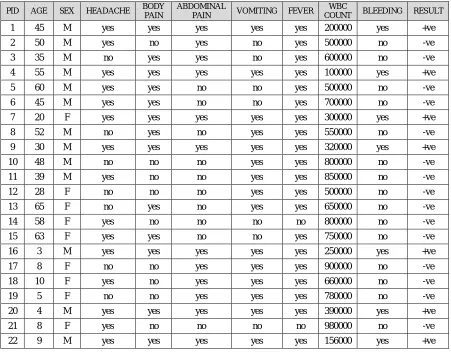
Table 1. The chunk of Data set
PID AGE SEX HEADACHE BODY
PAIN
ABDOMINAL
PAIN VOMITING FEVER
WBC
COUNT BLEEDING RESULT
1 45 M yes yes yes yes yes 200000 yes +ve
2 50 M yes no yes no yes 500000 no -ve
3 35 M no yes yes no yes 600000 no -ve
4 55 M yes yes yes yes yes 100000 yes +ve
5 60 M yes yes no no yes 500000 no -ve
6 45 M yes yes no no yes 700000 no -ve
7 20 F yes yes yes yes yes 300000 yes +ve
8 52 M no yes no yes yes 550000 no -ve
9 30 M yes yes yes yes yes 320000 yes +ve
10 48 M no no no yes yes 800000 no -ve
11 39 M yes no no yes yes 850000 no -ve
12 28 F no no no yes yes 500000 no -ve
13 65 F no yes no yes yes 650000 no -ve
14 58 F yes no no no no 800000 no -ve
15 63 F yes yes no no yes 750000 no -ve
16 3 M yes yes yes yes yes 250000 yes +ve
17 8 F no no yes yes yes 900000 no -ve
18 10 F yes no yes yes yes 660000 no -ve
19 5 F no no yes yes yes 780000 no -ve
20 4 M yes yes yes yes yes 390000 yes +ve
21 8 F yes no no no no 980000 no -ve
22 9 M yes yes yes yes yes 156000 yes +ve
ISSN(Online): 2320-9801
ISSN (Print): 2320-9798
I
nternational
J
ournal of
I
nnovative
R
esearch in
C
omputer
and
C
ommunication
E
ngineering
(An ISO 3297: 2007 Certified Organization)
Vol. 4, Issue 9, September 2016
Fig. 2: Sequence of diagnosis performed on a test sample
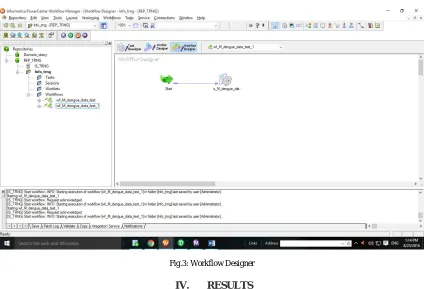
Session is created and its connected to workflow by using Workflow designer in informatica. The Fig.3 below shows the session connected to workflow, this workflow is used to run the overall process for final output.
Fig.3: Workflow Designer
IV. RESULTS
ISSN(Online): 2320-9801
ISSN (Print): 2320-9798
I
nternational
J
ournal of
I
nnovative
R
esearch in
C
omputer
and
C
ommunication
E
ngineering
(An ISO 3297: 2007 Certified Organization)
Vol. 4, Issue 9, September 2016
Fig. 4: Analysis chart of collected samples
Data are stored in oracle database. An Oracle database is a collection of data which can be called as a unit.
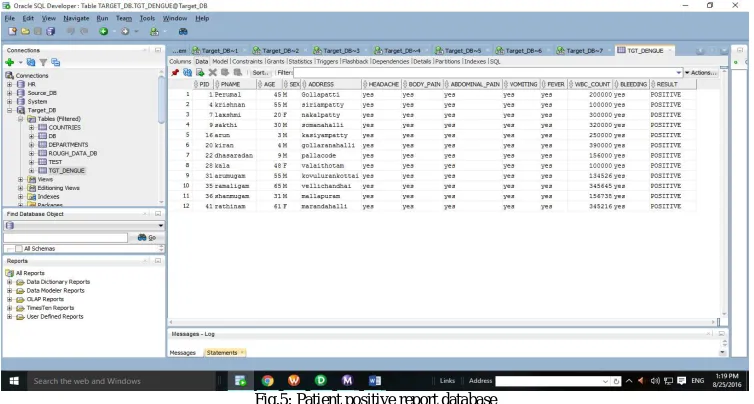
Oracle database is used for two purposes: to store and to retrieve the data [13], it differentiated the dengue patient from
healthy object for better view. Fig. 5 shows the patients who are all with positive results are painstaking to be affected on dengue disease and got segregated from healthy objects.
Fig.5: Patient positive report database
ISSN(Online): 2320-9801
ISSN (Print): 2320-9798
I
nternational
J
ournal of
I
nnovative
R
esearch in
C
omputer
and
C
ommunication
E
ngineering
(An ISO 3297: 2007 Certified Organization)
Vol. 4, Issue 9, September 2016
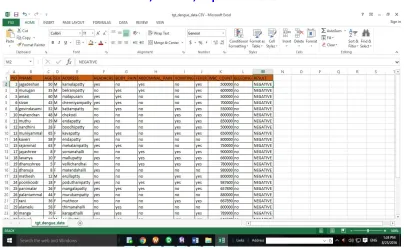
Fig. 6: Healthy objects are stored in flat file
V. CONCLUSION
Dengue is a life threatening diseases, widely prevalent in India since 1956. The dengue affected rate was 10,097 in 2014 with 37 deaths. In 2016, 41 lives have already been lost due to dengue and 19,704 cases were positive for dengue. The rapid diagnose kit was used for diagnosing dengue. However the results were unreliable.The Union Health Ministry has requested Indian Council of Medical Research to ban devices due to improper results. We are now left with no choice other than taking precautionary measures which involve making our environment clean and tidy which in turns annihilates the reproduction of Aedes mosquitos. Vaccination has to be developed for preventing this fatal disease and the same should be available for people at low cost.
REFERENCES
1. WHO SEARO Comprehensive Guidelines for Prevention and Control of Dengue and Dengue Haemorrhagic Fever Revised and expanded 2011.
2. Srinivas, Vaddadi, and Vaddadi Radha Srinivas. “DENGUE FEVER: A REVIEW ARTICLE”. INDIAN J MED RES (2011).
3. Mohan, D. K., and M. Dhananjaya. “A study of clinical profile of dengue fever in a tertiary care teaching hospital”. Sch J App Med Sci 1.4 (2013): 280-282.
4. Gunasekaran, P., et al. “Dengue disease status in Chennai (2006-2008): A Retrospective Analysis”. The Indian Journal of Medical Research 133.3 (2011): 322.
5. Fathima, A. Shameem, D. Shameem, and Nisar Hundewale Manimegalai. “A Review of Data Mining Classification Techniques Applied for Diagnosis and Prognosis of the Arbovirus-Dengue”. IJCSI International Journal of Computer Science 8.6 (2011).
6. Shaukat, Kamran, et al. “Dengue Fever Prediction: A Data Mining Problem”. Journal of Data Mining in Genomics & Proteomics 2015. 7. Faisal, Tarig, Fatimah Ibrahim, and Mohd Nasir Taib. “Analysis of significant factors for dengue infection prognosis using the self-organizing
map”, 2008 30th Annual International Conference of the IEEE Engineering in Medicine and Biology Society. IEEE, 2008. 8. Gupta, Nivedita, et al. “Dengue in India” The Indian Journal of Medical Research 136.3 (2012): 373.
9. Sharma et al., International Journal of Advanced Research in Computer Science and Software Engineering 4(6), June - 2014, pp. 1-6.
10. Malewar, Rahul. Learning Informatica Power Center 9.x. Packt Publishing Ltd, 2014.
11. Berson, Alex, and S. Smith. “Data Warehouse, Data Mining and OLAP”(1997).
12. Vadrevu, Keshav. “Informatica Power Center - The Complete Reference: The one-stop guide for all Informatica Developers” (2014).
ISSN(Online): 2320-9801
ISSN (Print): 2320-9798
I
nternational
J
ournal of
I
nnovative
R
esearch in
C
omputer
and
C
ommunication
E
ngineering
(An ISO 3297: 2007 Certified Organization)
Vol. 4, Issue 9, September 2016
BIOGRAPHY
Mrs. S.STANY LEENA PRINCY, Research Scholar, Department of Computer
Science, Don Bosco College, Dharmapuri, Tamil Nadu, India. She has received her Bachelor’s degree in computer science from Thiruvalluvar University, Vellore in 2010 and also holds her MCA degree from SRM University, Chennai in 2013. She worked as a System Configuration Specialist in Aon Hewitt, Chennai from (2013-2014). Her research area of interest includes Data mining and Database management system.
Mr. A. MURUGANANDAM, Assistant Professor, Department of Computer Science, Don Bosco College, Dharmapuri, Tamil Nadu, India. He is a Research Scholar in the
field of Wireless Sensor Networks at Bharathiyar University, Coimbatore, Tamil Nadu,