coatings
Article
Microwave-Assisted Dip Coating of
Aloe Vera
on
Metallocene Polyethylene Incorporated with
Nano-Rods of Hydroxyapaptite for Bone
Tissue Engineering
Hairong Wang1, Xueliang Zhang2, Mohan Prasath Mani3, Saravana Kumar Jaganathan4,5,6,*, Yi Huang1and Chengzheng Wang1
1 Department of Orthopedics, Jianhu Hospital Affiliated to Nantong University, Yancheng 224700, China;
[email protected] (H.W.); [email protected] (Y.H.); [email protected] (C.W.)
2 Department of Orthopedics, First Hospital of Lanzhou University, Lanzhou 730000, China;
3 Faculty of Biosciences and Medical Engineering, Universiti Teknologi Malaysia,
Johor Bahru 81300, Malaysia; [email protected]
4 Department for Management of Science and Technology Development, Ton Duc Thang University,
Ho Chi Minh City, Vietnam
5 Faculty of Applied Sciences, Ton Duc Thang University, Ho Chi Minh City, Vietnam
6 IJN-UTM Cardiovascular Engineering Centre, Department of Clinical Sciences, Faculty of Biosciences and
Medical Engineering, Universiti Teknologi Malaysia, Johor Bahru 81300, Malaysia
* Correspondence: [email protected]
Academic Editor: Mazeyar Parvinzadeh Gashti
Received: 18 August 2017; Accepted: 14 October 2017; Published: 31 October 2017
Abstract: Bone tissue engineering widely explores the use of ceramic reinforced polymer-matrix
composites. Among the various widely-used ceramic reinforcements, hydroxyapatite is an
undisputed choice due to its inherent osteoconductive nature. In this study, a novel nanocomposite comprising metallocene polyethylene (mPE) incorporated with nano-hydroxyapaptite nanorods
(mPE-nHA) was synthesized and dip coated withAloe veraafter subjecting it to microwave treatment.
The samples were characterized using contact angle, Fourier transform infrared spectroscopy (FTIR), scanning electron microscope (SEM), atomic force microscopy (AFM) and 3D Hirox microscopy scanning. Contact angle results show that the hydrophilicity of mPE-nHA improved notably with the
coating ofAloe vera. The surface topology and increase in surface roughness were observed using
the SEM, AFM and 3D Hirox microscopy. Blood compatibility assays of pure mPE and theAloe vera
coated nanocomposite were performed. The prothrombin time (PT) was delayed by 1.06% for 24 h Aloe-vera-treated mPE-nHA compared to the pristine mPE-nHA. Similarly, the 24 hAloe-vera-coated mPE-nHA nanocomposite prolonged the activated partial thromboplastin time (APTT) by 41 s against the control of pristine mPE-nHA. The hemolysis percentage was also found to be the least for the 24 hAloe-vera-treated mPE-nHA which was only 0.2449% compared to the pristine mPE-nHA, which
was 2.188%. To conclude, this novel hydroxyapatite-reinforced,Aloe-vera-coated mPE with a better
mechanical and anti-thrombogenic nature may hold a great potential to be exploited for bone tissue engineering applications.
Keywords: metallocene polyethylene; hydroxyapatite nanorods; Aloe vera coating; bone tissue engineering
1. Introduction
In biomedical applications, the materials used for bone tissue engineering must possess certain characteristics, such as being biocompatible, biodegradable, non-toxic, highly porous, have significant
mechanical properties and should not cause foreign body reactions [1]. Recently, many researchers
utilized the variety of materials in repairing the damaged tissue. The utilized materials were polymers, metals, and ceramics. The use of metals and ceramics in bone tissue engineering were limited owing to certain limitations such as a lack of degradability in a biological environment and limited process
ability [2]. Alternatively, today these polymers are widely used in bone tissue engineering owing
to their design flexibility and the fact that they can be easily tailored according to specific needs [3].
The frequently used polymers for making nanocomposites in bone tissue engineering are poly (lactic acid), poly (glycolic acid), poly (lactic-co-glycolic acid), poly (caprolactone) and natural polymers such as collagen, gelatin, silk, and chitosan. Several nanoparticle-reinforced polymer composites have been fabricated for bone tissue engineering applications. It was found that a 10% nano-particle reinforcement, by weight, enhances the stiffness and strength of the polymeric matrix, yet decreases
the toughness [4]. On the other hand, a >10% increase of nHA reduces the mechanical properties due
to a marked clustering effect of nano-particles [5]. The chemical formula of HA is Ca10(PO4)6(OH)2
and it is known as pentacalcium hydroxide tris (orthophosphate) [6–8]. In the last twenty years,
enormous attention has been given to the HA-based filler reinforcement for polymer matrices for
plausible biomedical applications such as tissue engineering [9]. Hence, there is increasing interest
in the development of novel hybrids and nano-powders to be incorporated into suitable polymers to
confer better mechanical properties [10–12].
Aloe verais a commonly available plant that has been increasingly used in the day-to-day life of human beings. The succulent part of the plant contains numerous potentially active substances in the form of essential amino acids, glucomannans, minerals, lipids, vitamins, polysaccharides, major
polypeptides, proteins, and antioxidants [13,14]. In the mid-1990s the total sales value of products
composed ofAloe veraderivatives and ingredients was reported to be $1 billion; since then it has grown
tremendously and now it is estimated to be more than $35 billion globally [15]. Meanwhile, exhaustive
research has been conducted to scrutinize the therapeutic propensity ofAloe vera. These studies have
revealed its ability to promote tissue regeneration or rehabilitation by improving oxygen and blood
supply, shielding from microbial attacks, and providing essential nourishment [16]. Hence, in this
work,Aloe veraextract is utilized to develop an antifouling and biocompatible biomaterial for bone
implant applications.
Microwaves are radio waves possessing wavelengths from one millimeter to one meter, or equivalent, with frequencies between 300 MHz (0.3 GHz) and 300 GHz. In recent times, microwaves
have been used successfully for the surface modification of polymers and fabrics [17,18]. The cost,
time, and energy requirements of microwave treatment are significantly lower compared to other surface treatment methods. Besides that, the size of the microwave system is compact in comparison to other techniques because of the high energy applicators and direct energy absorption by most of the materials. In addition, good instantaneous control and decreased environment pollution are some of
the chief benefits which promote microwave treatment as a better tool for surface modification [19].
Apart from the selection of the most suitable filler, there are other critical factors, such as the
effective dispersion and distribution of filler into the matrix by the prevention of agglomeration [20],
introducing H-bonds [21], or the functionalization of the filler. These are the pre-requisite vital factors
to enhancing the affinity between the filler and polymer, to create surface roughness, to tailor the aspect
ratio of filler (2D) and to increase interfacial adhesion in polymer nanocomposites [22,23]. Until now,
a complete understanding of the correlation between all these factors is a daunting challenging for novel biomedical applications. An extensive literature review has revealed numerous studies that report the synthesis of hydroxyapatite in various forms and shapes, such as spherical, rod-like, fiber-like and
flower-like [24–26] via different methods such as hydrothermal, microwave and precipitation methods.
Coatings2017,7, 182 3 of 17
aspect ratio embedded with mPE to form rod-like HA/mPE nanocomposites. The present investigation
aims to develop a microwave-assistedAloe veracoating on the novel mPE-nHA nanocomposite for
bone tissue engineering applications.
2. Materials and Methods
2.1. Blood Procurement and Ethical Approval
All the experimental procedures involved in the handling of blood were approved by the Faculty of Biosciences and Medical Engineering, Universiti Teknologi Malaysia with ref no: UTM.J.45.01/25.10/3Jld.2(3). A group of healthy adults was recruited and educated regarding the risks and benefits of blood donation. The participants were given sufficient time to decide whether they would like to participate in the study or not. The blood was withdrawn via venipuncture after getting the signature on the consent form. Then, the freshly-drawn whole blood was anticoagulated with acid-citrate-dextrose (56 mM sodium citrate, 65 mM citric acid, 104 mM dextrose, CCD) at a ratio of 9:1 (blood/citrate). Finally, the platelet poor plasma (PPP) was obtained by centrifuging the citrated blood at 3000 rpm for 15 min using Heraeus Labofuge™ 200 centrifuge (Thermo Fischer Scientific, Waltham, MA, USA).
2.2. Chemicals
Calcium nitrate tetrahydrate (Ca(NO3)2·4H2O) and diammonium hydrogen phosphate (DAHP)
((NH4)2HPO4), oligomeric surfactant, polypropylene glycol (PPG Mn ~425), were supplied by
Sigma-Aldrich, St. Louis, MO, USA. Aliphatic polyethylene carbonate diol (PCD) (Mw = 1000),
with a characteristic OH value of 57.0 mg KOH/g was used. 4,40-Methylene bis(phenyl isocyanate)
(MDI) and 1,4-butanediol (BD) were obtained from Sigma-Aldrich, St. Louis, MO, USA. Solvents such as Tetrahydrofuran (THF), acetone and methanol were of analytical grades and were supplied by Merck, Darmstadt, Germany.
2.3. Synthesis of Hydroxyapatite Nanorods
Hydroxyapatite nanorods of higher aspect ratios was prepared by using non-ionic surfactant
e.g., polypropylene glycol in normal atmospheric condition for the first time. In a beaker, 0.2 mol·L−1
each of Ca(NO3)2·4H2O and (NH4)2HPO4in 500 mL of double distilled water were taken in amounts
such that Ca:P mole ratio was maintained at ~1.67. We followed an in-situ technique for the preparation of PPG-coated nHA rods; 5 wt % (with respect to Calcium and Phosphate precursors) of PPG was added to the solution of calcium nitrate as a non-ionic surfactant as well as the coating agent to improve the interfacial adhesion between the thermoplastic polyurethane (TPU) and nHA while preparing nanocomposites. The pH of both the calcium nitrate and DAHP solutions were maintained at ~11
to 12 with the addition of the required amount of NH4OH solution. Then (NH4)2HPO4was added
drop-wise to the mixture of Ca(NO3)2·4H2O & PPG and the whole milky suspension was vigorously
stirred at 70◦C using a mechanical stirrer (2800 rpm). The pH of the reaction mixture was also
maintained in the range of 11–12 by adding NH4OH solution gradually (drop-wise). This process
was continued for 4 h at 80◦C. HA particles were washed using ethanol, dried, and ground into fine
powders for later use (Selvakumar et al. 2015 [27]). Thus, the pristine (unmodified) and PPG-coated
HA nanorods are designated as nHA and PPG-nHA, respectively. The nHA crystals were formed as per the following reaction:
10Ca(NO3)2·4H2O + 6NH4H2PO4+ 2NH4OH→Ca10(PO4)2(OH)2+ 8NH4NO3+ 12HNO3
The white gelatinous precipitate thus obtained was filtered using a centrifugal filtration process (3500 rpm for 10 min), washed a number of times with double-distilled water thoroughly (until
(PPG-coated) were not subjected to a calcination process because the oligomeric substances are likely
to degrade at 400◦C [27].
2.4. Synthesis of HA Nanorod/mPE Nanocomposites by the In-Situ Technique
In the first step, the calculated amount (1 wt %) of nHA or PPG-nHA was well dispersed in THF
and sonicated for 1 h in a 500 mL round-bottom flask in an N2atmosphere, followed by the addition
of the calculated amount of PCD to the same solution. Later, the whole solution was sonicated for 1 h. MDI and BD were then added to the resultant solution, followed by another round of sonication for
30 min. Ultimately, the reaction was carried out at 60◦C for 6 h, with stirring at a speed of 1000 rpm.
Once the reaction was completed, the product was purified by precipitation in cold methanol, followed
by repeated washings. The precipitate was then dried in a vacuum oven at 60◦C. The synthesized
mPE-nHA films were utilized for further experimentation.
2.5. Aloe Vera Extract Preparation
Fresh succulent leaves ofAloe verawere chosen and washed with de-ionized water. The skinny
upper part and the yellowish latex part were removed. The semitransparent whitish gel was isolated with a metal ladle. Finally, the gel was mixed thoroughly into a concentrated fibrous extract, which was utilized for the coating of metallocene polyethylene nanohydroxyapeptite (mPE-nHA) samples.
2.6. Microwave Treatment
The samples were subjected to microwave treatment beforeAloe veracoating as the microwave
rapidly accelerates the chemical process, plays a pivotal role in the resulting in a homogeneous coating
and even strengthens the coating adhesive [28–32]. Initially, the pristine mPE-nHA sheet was cut into
identical square-shaped samples of size 2 cm×2 cm. These samples were washed with distilled water
and 70% ethanol to remove the foreign particles present on the surface. Finally, mPE-nHA samples were exposed to an optimized microwave treatment of 800 W and 2450 MHz produced by a microwave oven (Samsung ME711K, Suwon, Korea) for one minute.
2.7. Dip Coating of Aloe Vera on Microwave Assisted mPE-nHA
The coating ofAloe veraon the mPE-nHA was done by the dip-coating method [33]. To start the
process, the mPE-nHA samples were dipped in the preparedAloe veraextract. When the samples were
completely dipped, the time of dip coating was noted. TheAloe verawas dip coated for the period of
12 and 24 h, respectively. After coating, the samples were removed and dried at room temperature for 24 h to remove the moisture on the surface. Most importantly, for each surface and blood compatibility characterization study, samples were freshly prepared as per this protocol. The results for the 12 and 24 hAloe-vera-coated mPE-nHA samples were compared with the pristine mPE-nHA, which was the
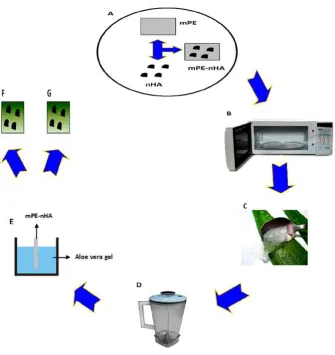
control. The extract preparation and coating of theAloe veraextract on the mPE-nHA substrate are
depicted in Figure1.
2.8. Characterization of the Samples
2.8.1. Contact Angle Measurement
The hydrophilicity of theAloe-vera-coated mPE-nHA nanocomposite was determined using a
Dynamic Contact Angle Analyzer (FTA200—First Ten Angstroms, Portsmouth, VA, USA). A water
droplet of 1µL was used and the photographs were taken in the ultra-fast mode within 30 s. The degree
of the angle formed was determined using the computer interfaced software. The contact angles were
Coatings2017,7, 182 5 of 17 Coatings 2017, 7, 182
analyze the chemical composition or functional groups present in the Aloe‐vera‐coated nanocomposite and control. Forty scans were obtained per minute and averaged in the resolution of 4 cm−1. Diamond was utilized as the ATR crystal. The FTIR spectra of each sample were recorded separately and the transmittance value corresponding to each wavelength in the region 400–5000 cm−1 was imported in an excel sheet using the inbuilt software. Finally, the FTIR outline of each sample analyzed and compared in a single graph using SpekWin version 1.71.6.1 software (Society for Applied Spectroscopy, Berchtesgaden, Germany).
Figure 1. Schematic representation of steps involved in mPE‐nHA nanocomposite coating with Aloe
vera. (A) Synthesis of mPE‐nHA nanocomposite; (B) 60 s microwave treatment; (C) Extraction of Aloe
vera; (D) Thorough mixing of the Aloe vera gel; (E) Dip coating of the Aloe vera gel on microwave
treated mPE‐nHA nanocomposite; (F) 12 h Aloe vera dip coated mPE‐nHA; (G) 24 h Aloe vera
dip‐coated mPE‐nHA.
2.8.3. 3D‐Hirox Digital Microscope
The 3D‐Hirox digital microscope model (KH‐8700, Hirox Technologies, Hackensack, NJ, USA) was utilized to study the topography and the Aloe vera coating on the samples. 3D‐Hirox digital microscopy images are very useful in determining the morphological structure of samples to determine whether the sample has pores or has an even surface. There are two types of images which are obtained from 3D‐Hirox digital microscopy either with or without a profilometry line. The surface morphology of 1 cm × 1 cm of mPE‐nHA and Aloe‐vera‐coated mPE‐nHA samples were studied at an area of 69,277 μm2 at a magnification of 50×, 100×, 500× and 1000×. The 50× magnification was utilized to study the distribution of the nanohydroxy apaptite in the mPE. The same as in white light confocal profilometry, in‐focus and 3D images were obtained using this 3D microscope. Slices of the image were captured at different heights acquired for the surface topography analysis [34]. A maximum of three profiling lines was chosen as the profiling value of each sample. Each point in the X, Y and Z
Figure 1. Schematic representation of steps involved in mPE-nHA nanocomposite coating with
Aloe vera. (A) Synthesis of mPE-nHA nanocomposite; (B) 60 s microwave treatment; (C) Extraction
of Aloe vera; (D) Thorough mixing of the Aloe veragel; (E) Dip coating of theAloe vera gel on
microwave treated mPE-nHA nanocomposite; (F) 12 hAloe veradip coated mPE-nHA; (G) 24 h
Aloe veradip-coated mPE-nHA.
2.8.2. Attenuated Total Reflectance Fourier Transfer Infrared Spectroscopy (ATR-FTIR)
The ATR-FTIR equipment NEXUS-870 model spectrophotometer (Thermo Fischer Scientific, Waltham, MA, USA) used has additional features such as an extended beam splitter, two light sources, and middle band MCT detectors with various sampling options. This test was performed to analyze the
chemical composition or functional groups present in theAloe-vera-coated nanocomposite and control.
Forty scans were obtained per minute and averaged in the resolution of 4 cm−1. Diamond was utilized as
the ATR crystal. The FTIR spectra of each sample were recorded separately and the transmittance value
corresponding to each wavelength in the region 400–5000 cm−1was imported in an excel sheet using the
inbuilt software. Finally, the FTIR outline of each sample analyzed and compared in a single graph using SpekWin version 1.71.6.1 software (Society for Applied Spectroscopy, Berchtesgaden, Germany).
2.8.3. 3D-Hirox Digital Microscope
The 3D-Hirox digital microscope model (KH-8700, Hirox Technologies, Hackensack, NJ, USA) was
utilized to study the topography and theAloe veracoating on the samples. 3D-Hirox digital microscopy
images are very useful in determining the morphological structure of samples to determine whether the sample has pores or has an even surface. There are two types of images which are obtained from 3D-Hirox digital microscopy either with or without a profilometry line. The surface morphology of
at a magnification of 50×, 100×, 500×and 1000×. The 50×magnification was utilized to study the distribution of the nanohydroxy apaptite in the mPE. The same as in white light confocal profilometry, in-focus and 3D images were obtained using this 3D microscope. Slices of the image were captured at
different heights acquired for the surface topography analysis [34]. A maximum of three profiling lines
was chosen as the profiling value of each sample. Each point in theX,YandZaxes of the profiling line
was measured and their values were exported to an excel sheet to represent the height of the pits in the sample. Data processing was performed using the in-built 3D profilometry software (3D viewer, Hirox Technologies, Hackensack, NJ, USA). Images were recorded at a standard 1200–1600 pixel resolution.
2.8.4. Scanning Electron Microscope
The surface microstructure of the samples was critically analyzed in detail using SEM (JEOL Ltd., Akishima, Tokyo, Japan). The SEM which was utilized to study the polymeric nanocomposite samples was a JEOL JSM5800 SEM with an OXFORD ISI 300 EDS X-ray microanalysis system (Abingdon, UK). A K550X gold sputter coater, from Quorum Technologies in Lewes, UK was used for sputter coating. The sputter coater had a magnetron target assembly, which enhances the efficiency of the process using low voltages, and provides a fine grain and cool sputtering, without the need to cool the target or the specimen stage which was used. The sputter coating was performed for 4 min. The control and theAloe-vera-coated nanocomposite underwent gold sputtering and was then studied using SEM at a
magnification of 1500×.
2.8.5. Atomic Force Microscopy
The surface roughness of the samples in this study was determined with the help of AFM. The AFM model used to analyze the samples was SPA300HV, with a scan rate of 1.502 Hz in the
tapping mode. Here, the surface morphology of the pristine and theAloe-vera-coated samples were
measured using AFM in contact mode on a 10×10µm2area, and the mean average surface roughness
(Ra) and the 3D pictographic view were obtained. Each AFM image was analyzed in terms ofRa[35].
The surface roughness was calculated using the SpekWin version 1.71.6.1 software (Society for Applied Spectroscopy, Berchtesgaden, Germany).
2.9. Blood Coagulation Assays
2.9.1. Prothrombin Time (PT)
Prothrombin time is a useful indicator to dictate the prohibition of the extrinsic pathway. Initially,
the pristine mPE-nHA, 12 and 24 hAloe-vera-coated mPE-nHA samples of size (1 cm×1 cm) were
placed in separate disposable petri dishes. Then, 100µL of PPP obtained from citrated whole blood
was placed carefully on the samples and incubated in a LABSIL incubator maintained at 37◦C for
3 min. Later, the PPP solution was mixed well with 100µL of NaCl-thromboplastin Factor III and the
time taken for clot formation on each substrate, detected using a steel hook, was measured using a
chronometer. The tests were repeated three times independently for each sample [36].
2.9.2. Activated Partial Thromboplastin Time (APTT)
APTT is utilized for studying the propensity of the blood to coagulate via an intrinsic pathway and to determine the effect of a biomaterial on delaying the process. The pristine mPE-nHA, 12 and 24 hAloe-vera-coated mPE-nHA samples of size (1 cm×1 cm) were placed in separate disposable
petri dishes. Then, 100µL of PPP obtained from citrated whole blood was placed on the samples
and incubated at 37◦C for 3 min. Then, the PPP was activated by adding cephaloplastin reagent and
again incubated for 5 min at 37◦C. Later, the PPP was activated by the addition of calcium chloride
(0.025 mol·L−1). The inclusion of CaCl2triggers the clotting process. The time taken from the addition
Coatings2017,7, 182 7 of 17
structure in the blood. The duration taken for the clot formation was recorded with a chronometer as
the APTT. The tests were repeated three times independently for each sample [36].
2.9.3. Hemolysis Assay
The pristine andAloe-vera-coated nanocomposites were equilibrated with physiologic saline
(0.9%w/v; 37◦C, 30 min) followed by incubation with 3 mL aliquots of citrated blood diluted with
saline (4:5 ratios by volume). This mixture of blood and distilled water was prepared at a ratio of 4:5 by volume to result in comprehensive hemolysis, which was used as the positive control. The physiological saline solution was utilized as the negative control, as it produces no coloration.
The samples were subjected to incubation in their respective mixtures (60 min, 37◦C). These mixtures
were later centrifuged and their absorbance of the clear supernatant was determined at 542 nm. Finally, the absorbance of the positive control was normalized to 100% and the absorbance of the other samples
was ascertained as a percentage of hemolysis whilst comparing it with the positive control [37].
2.10. Statistical Analyses
All the experiments were performed thrice independently. One-way ANOVA was done to determine statistical significance. The results obtained from all experiments are expressed as
mean±SD. In the case of the qualitative experiments, a representative of the three images is shown.
3. Results and Discussion
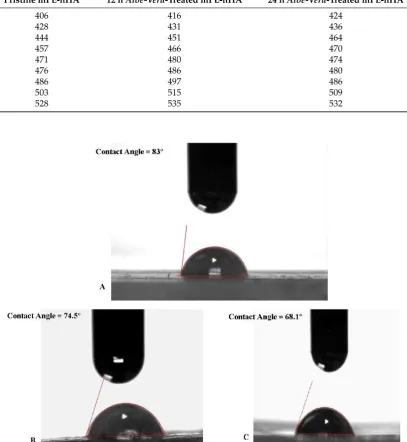
The mean contact angle of the pristine mPE-nHA was found to be 83◦and the mean contact angles
of the 12 and 24 hAloe veradip-coated mPE-nHA samples were 74.5◦and 68.15◦, respectively, which
were significantly lower when compared to the untreated surface as shown in Table1and represented
in Figure2. Gentile et al. [38] prepared polyhedral oligomeric silsesquioxane- polycarbonate-based
urea urethane (POSS-PCU) composite samples for bone tissue engineering and performed plasma treatment. It was observed that the initial pure POSS-PCU composite samples were hydrophobic with
a contact angle of 90±4◦and after 10 min plasma modified composite films exhibited a hydrophilic
nature with a contact angle of 53±5◦. Our contact angle results were found to be in a similar trend as
they observed what predicts the suitability of the developed composite for bone tissue engineering. FTIR was performed for the determination of the chemical composition of untreated and treated
samples, as shown in Figure3. The peaks were observed at 714, 1014, 1232, 1369, 1469, 1583, 1731,
2845, 2912, and 3363 cm−1. The patterns of peaks with differing intensities were noted for both
control and coated samples. The 3363 cm−1 represents the O–H stretching of the alcohol group.
The drastic increase in the intensity of this peak for the 24 hAloe veradip-coated mPE-nHA dictates
the improved hydrophilicity of the coated samples compared to the control. The twin bands at 2845
and 2912 cm−1ascertain the presence of C–H stretch for the alkanes group. The absorption peak at
1731 cm−1was for the C=O stretch of esters; the peak observed at 1469 cm−1dictates the presence
of alkyl groups (C–H bending), and the existence of C–H bending of the alkane group is inferred
from the peak produced at 1369 cm−1. The peak at 1583 cm−1represents the C=C stretching in the
cyclic alkene group. The absorption band in the region of 1232 cm−1denotes the C–O stretch of
carboxylic acids (controls), and the crest at 1014 cm−1represents the C–O stretch in secondary alcohol.
Finally, the peak at 714 cm−1represents the C–H bend of the aromatic and alkyne group, respectively.
In spite of there being no major change in the functional groups, theAloe veradip-coated mPE-nHA
nanocomposite samples demonstrated characteristic absorption spectrum ofAloe veraat 1731 and
1232 cm−1, elucidating the presence of O-acetyl esters; the peaks formed at 1469 cm−1and 714 cm−1
unravelled the essence of the aromatic vibrations of the components present inAloe veragel [39,40].
In the interim, theAloe veradip-coated samples were also found to have peak shifts at far regions of
the IR spectra (“Zone A”), which shown in Figure3b. The peaks shifts were represented in Table2.
gel. This result is in accordance with the peaks formed between 400–500 cm−1and 500–600 cm−1,
demonstrating Si–O bending and C–H stretch as in some previous studies [41].
Table 1.Contact angle measurement of the mPE before and after HNO3treatment.
Sample Number Sample Average Contact Angle in Degrees *
1 Pristine mPE-nHA 83
2 mPE-nHA coated withAloe vera(12 h) 74.5
3 mPE-Nha coated withAloe vera(24 h) 68.15
* Differences were significant compared with pristine mPE-nHA (p< 0.05).
Table 2.Peak shifts observed in Zone A of the recorded FTIR.
Pristine mPE-nHA 12 hAloe-Vera-Treated mPE-nHA 24 hAloe-Vera-Treated mPE-nHA
406 416 424
428 431 436
444 451 464
457 466 470
471 480 474
476 486 480
486 497 486
503 515 509
528 535 532
Coatings 2017, 7, 182
Table 1. Contact angle measurement of the mPE before and after HNO3 treatment.
Sample Number Sample Average Contact Angle in Degrees *
1 Pristine mPE‐nHA 83
2 mPE‐nHA coated with Aloe vera (12 h) 74.5
3 mPE‐Nha coated with Aloe vera (24 h) 68.15 * Differences were significant compared with pristine mPE‐nHA (p < 0.05).
Figure 2. A representative contact angle image showing the spreading of a water droplet in pristine
mPE‐nHA, and 12 and 24 h Aloe vera dip‐coated mPE‐nHA (n = 3), respectively.
Figure 3. A representative FTIR spectra of pristine mPE‐nHA, 12 and 24 h Aloe vera dip‐coated
mPE‐nHA nanocomposites. (a) 714 cm−1, (b) 1014 cm−1, (c) 1232 cm−1, (d) 1369 cm−1, (e) 1469 cm−1, (f) 1583 cm−1, (g) 1731 cm−1, (h) 2845 cm−1, (i) 2912 cm−1, (j) 3363 cm−1.
Coatings2017,7, 182 9 of 17 Coatings 2017, 7, 182
Table 1. Contact angle measurement of the mPE before and after HNO3 treatment.
Sample Number Sample Average Contact Angle in Degrees *
1 Pristine mPE‐nHA 83
2 mPE‐nHA coated with Aloe vera (12 h) 74.5
3 mPE‐Nha coated with Aloe vera (24 h) 68.15 * Differences were significant compared with pristine mPE‐nHA (p < 0.05).
Figure 2. A representative contact angle image showing the spreading of a water droplet in pristine
mPE‐nHA, and 12 and 24 h Aloe vera dip‐coated mPE‐nHA (n = 3), respectively.
Figure 3. A representative FTIR spectra of pristine mPE‐nHA, 12 and 24 h Aloe vera dip‐coated
mPE‐nHA nanocomposites. (a) 714 cm−1, (b) 1014 cm−1, (c) 1232 cm−1, (d) 1369 cm−1, (e) 1469 cm−1, (f) 1583 cm−1, (g) 1731 cm−1, (h) 2845 cm−1, (i) 2912 cm−1, (j) 3363 cm−1.
Figure 3. A representative FTIR spectra of pristine mPE-nHA, 12 and 24 hAloe veradip-coated mPE-nHA nanocomposites. (a) 714 cm−1, (b) 1014 cm−1, (c) 1232 cm−1, (d) 1369 cm−1, (e) 1469 cm−1, (f) 1583 cm−1, (g) 1731 cm−1, (h) 2845 cm−1, (i) 2912 cm−1, (j) 3363 cm−1.
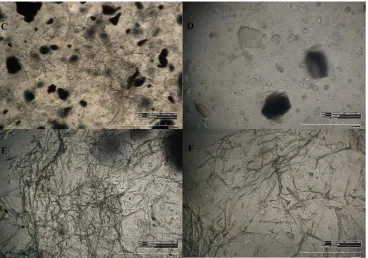
Figure4represents the 100×and 500×3D Hirox digital microscopy images of mPE-nHA and
Aloe veradip-coated mPE-nHA. A tangible coating ofAloe verawas observed after the 12 and 24 h
exposure toAloe veraextracts. Figure5A shows the distribution of hydroxyapatite nanorods in the
mPE sample. It was found that the area ratio of nHA was 7.6% and the distribution of the nHA
nanorod analysis in mPE-nHA depicts that there are 184 nHA nanorods present in a 2,144,112µm2
area. The thickness of theAloe veracoating measured was found to be 94.8µm for the 24 hAloe vera
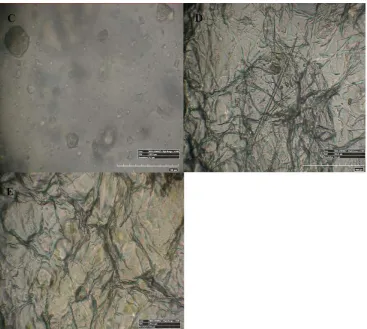
dip-coated mPE-nHA, as represented in Figure5B. Figure5C–E further shows that the 1000×images
of 3D hirox further dictate the presence of the fibrousAloe verastructure, which is present in the 12 h
and 24 hAloe veradip-coated mPE-nHA, and absent in the pristine mPE-nHA. Figure6ascertains the
profiling lines of the mPE-nHA surface at 1000×magnification, where the thickness of theAloe vera
coating was found to be the highest for the 24 hAloe veradip-coated mPE-nHA. Al-Hijazi et al. [42]
studied the biological effect ofAloe verain bone healing and also investigated the expression of bone
morphogenetic protein 7 (BMP7) inAloe veratreated bone tissue. It was observed that theAloe vera
treated group exhibited increased proliferation of osteogenic cells and enhanced the expression of BMP7 compared to the untreated group. Hence in our prepared composites containing significant
amounts ofAloe veracontent might favor the enhanced proliferation of osteogenic cells for new bone
tissue growth.
Coatings 2017, 7, 182
Table 2. Peak shifts observed in Zone A of the recorded FTIR.
Pristine mPE‐nHA 12 h Aloe‐Vera‐Treated mPE‐nHA 24 hAloe‐Vera‐Treated mPE‐nHA
406 416 424
428 431 436
444 451 464
457 466 470
471 480 474
476 486 480
486 497 486
503 515 509
528 535 532
Figure 4 represents the 100× and 500× 3D Hirox digital microscopy images of mPE‐nHA and
Aloe vera dip‐coated mPE‐nHA. A tangible coating of Aloe vera was observed after the 12 and 24 h
exposure to Aloe vera extracts. Figure 5A shows the distribution of hydroxyapatite nanorods in the
mPE sample. It was found that the area ratio of nHA was 7.6% and the distribution of the nHA
nanorod analysis in mPE‐nHA depicts that there are 184 nHA nanorods present in a 2,144,112 μm2
area. The thickness of the Aloe vera coating measured was found to be 94.8 μm for the 24 h Aloe vera
dip‐coated mPE‐nHA, as represented in Figure 5B. Figure 5C–E further shows that the 1000× images
of 3D hirox further dictate the presence of the fibrous Aloe vera structure, which is present in the 12 h
and 24 h Aloe vera dip‐coated mPE‐nHA, and absent in the pristine mPE‐nHA. Figure 6 ascertains the
profiling lines of the mPE‐nHA surface at 1000× magnification, where the thickness of the Aloe vera
coating was found to be the highest for the 24 h Aloe vera dip‐coated mPE‐nHA. Al‐Hijazi et al. [42]
studied the biological effect of Aloe vera in bone healing and also investigated the expression of bone
morphogenetic protein 7 (BMP7) in Aloe vera treated bone tissue. It was observed that the Aloe vera
treated group exhibited increased proliferation of osteogenic cells and enhanced the expression of
BMP7 compared to the untreated group. Hence in our prepared composites containing significant
amounts of Aloe vera content might favor the enhanced proliferation of osteogenic cells for new bone
tissue growth.
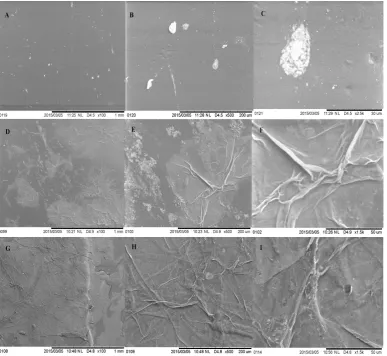
Figure 7 shows the representative SEM micrographs of pristine and Aloe vera dip‐coated
mPE‐nHA. The bright spots represent the pits that may have formed in the pristine mPE‐nHA due
to the surface‐modification effect of the microwave. These pits were later concealed by Aloe vera gel
in the dip‐coated samples. It is evident that the Aloe vera coating is greater even in the case of the 24 h
Aloe vera dip‐coated samples compared to the 12 h Aloe vera sample, which illustrates that the coating
is time‐dependent. Further, the bright spots formed in the mPE‐nHA depict the improved surface
roughness by the formation of pits. For bone tissue engineering, the material with enhanced surface
roughness will favor the adhesion and proliferation of osteoblasts for bone tissue growth [43]. The
prepared mPE‐nHA nanocomposites render rougher surfaces which might enhance the adhesion and
proliferation of osteoblasts for new bone tissue growth.
Figure 4. Cont.
Figure 4. 100× and 500× image using 3D Hirox digital microscopy. (A–C) are the 100× image of pristine
mPE‐nHA, 12 h Aloe vera dip‐coated mPE‐nHA and 24 h Aloe vera dip‐coated mPE‐nHA nanocomposite,
respectively; (D–F) are the 500× images of untreated mPE‐nHA, 12 h Aloe vera dip‐coated mPE‐nHA
and 24 h Aloe vera dip‐coated mPE‐nHA nanocomposite, respectively.
Figure 5. Cont.
Figure 4. 100×and 500×image using 3D Hirox digital microscopy. (A–C) are the 100×image of pristine mPE-nHA, 12 hAloe veradip-coated mPE-nHA and 24 hAloe vera dip-coated mPE-nHA nanocomposite, respectively; (D–F) are the 500×images of untreated mPE-nHA, 12 h Aloe vera
dip-coated mPE-nHA and 24 hAloe veradip-coated mPE-nHA nanocomposite, respectively.
Figure7shows the representative SEM micrographs of pristine andAloe veradip-coated mPE-nHA.
The bright spots represent the pits that may have formed in the pristine mPE-nHA due to the
surface-modification effect of the microwave. These pits were later concealed byAloe veragel in
the dip-coated samples. It is evident that theAloe veracoating is greater even in the case of the 24
hAloe vera dip-coated samples compared to the 12 hAloe vera sample, which illustrates that the coating is time-dependent. Further, the bright spots formed in the mPE-nHA depict the improved surface roughness by the formation of pits. For bone tissue engineering, the material with enhanced
surface roughness will favor the adhesion and proliferation of osteoblasts for bone tissue growth [43].
The prepared mPE-nHA nanocomposites render rougher surfaces which might enhance the adhesion and proliferation of osteoblasts for new bone tissue growth.
Coatings 2017, 7, 182
Figure 4. 100× and 500× image using 3D Hirox digital microscopy. (A–C) are the 100× image of pristine
mPE‐nHA, 12 h Aloe vera dip‐coated mPE‐nHA and 24 h Aloe vera dip‐coated mPE‐nHA nanocomposite,
respectively; (D–F) are the 500× images of untreated mPE‐nHA, 12 h Aloe vera dip‐coated mPE‐nHA
and 24 h Aloe vera dip‐coated mPE‐nHA nanocomposite, respectively.
Figure 5. Cont.
Coatings2017,7, 182 11 of 17
Coatings 2017, 7, 182
Figure 5. 50×, 100× and 1000× image using 3D Hirox digital microscopy. (A) nHA nanorod distribution
in pristine mPE‐nHA at 50×; (B) Thickness of Aloe vera coating in 24 h Aloe vera dip‐coated mPE‐nHA
at 100×; (C–E) are 1000× images of untreated mPE‐nHA, and 12 and 24 h Aloe vera dip‐coated
mPE‐nHA, respectively.
Figure 6. Cont.
Figure 5. 50×, 100× and 1000× image using 3D Hirox digital microscopy. (A) nHA nanorod distribution in pristine mPE-nHA at 50×; (B) Thickness ofAloe veracoating in 24 hAloe veradip-coated mPE-nHA at 100×; (C–E) are 1000×images of untreated mPE-nHA, and 12 and 24 hAloe vera
dip-coated mPE-nHA, respectively. Coatings 2017, 7, 182
Figure 5. 50×, 100× and 1000× image using 3D Hirox digital microscopy. (A) nHA nanorod distribution
in pristine mPE‐nHA at 50×; (B) Thickness of Aloe vera coating in 24 h Aloe vera dip‐coated mPE‐nHA
at 100×; (C–E) are 1000× images of untreated mPE‐nHA, and 12 and 24 h Aloe vera dip‐coated
mPE‐nHA, respectively.
Figure 6. Different three‐dimensional representations using 3D Hirox digital microscopy.
(A) Profiling of pristine mPE‐nHA at 1000×; (B) Profiling of 12 h Aloe vera dip‐coated mPE‐nHA at
1000×; (C) Profiling of 24 h Aloe vera dip‐coated mPE‐nHA at 1000×.
Figure 7. Representative SEM micrographs of pristine and Aloe vera dip‐coated mPE‐nHA. (A) Pristine
mPE‐nHA at 100×; (B) mPE‐nHA at 500×; (C) mPE‐nHA at 2500×; (D) 12 h Aloe vera dip‐coated
mPE‐nHA at 100×; (E) 12 h Aloe vera dip‐coated mPE‐nHA at 500×; (F) 12 h Aloe vera dip‐coated mPE‐
nHA at 1500×; (G) 24 h Aloe vera dip‐coated mPE‐nHA at 100×; (H) 24 h Aloe vera dip‐coated mPE‐
nHA at 500×; (I) 24 h Aloe vera dip‐coated mPE‐nHA at 1500×.
Figure 6.Different three-dimensional representations using 3D Hirox digital microscopy. (A) Profiling of pristine mPE-nHA at 1000×; (B) Profiling of 12 h Aloe veradip-coated mPE-nHA at 1000×; (C) Profiling of 24 hAloe veradip-coated mPE-nHA at 1000×.
Coatings 2017, 7, 182
Figure 6. Different three‐dimensional representations using 3D Hirox digital microscopy.
(A) Profiling of pristine mPE‐nHA at 1000×; (B) Profiling of 12 h Aloe vera dip‐coated mPE‐nHA at
1000×; (C) Profiling of 24 h Aloe vera dip‐coated mPE‐nHA at 1000×.
Figure 7. Representative SEM micrographs of pristine and Aloe vera dip‐coated mPE‐nHA. (A) Pristine
mPE‐nHA at 100×; (B) mPE‐nHA at 500×; (C) mPE‐nHA at 2500×; (D) 12 h Aloe vera dip‐coated
mPE‐nHA at 100×; (E) 12 h Aloe vera dip‐coated mPE‐nHA at 500×; (F) 12 h Aloe vera dip‐coated mPE‐
nHA at 1500×; (G) 24 h Aloe vera dip‐coated mPE‐nHA at 100×; (H) 24 h Aloe vera dip‐coated mPE‐
nHA at 500×; (I) 24 h Aloe vera dip‐coated mPE‐nHA at 1500×.
Coatings2017,7, 182 13 of 17
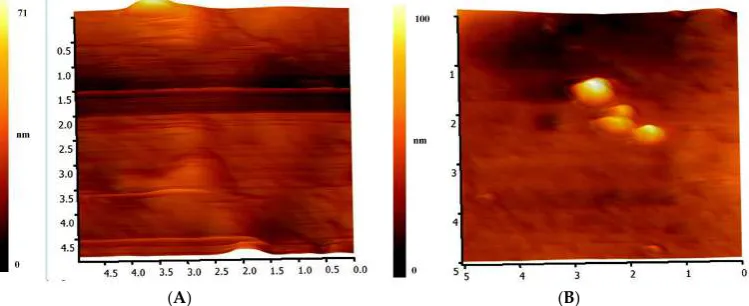
The AFM images are given in Figure8. It was found that the mean value of the average surface
roughnessRaof the pristine mPE-nHA film and 24 hAloe veradip-coated mPE-nHA film surfaces
were 1.17 and 7.52 nm, respectively. The nanotopographic analysis of the samples was demonstrated
utilizing AFM (NanoWizard®, JPK Instruments, Berlin, Germany). Figure8A represents the 3D surface
topography of the pristine mPE-nHA nanocomposite. It was observed that the surface of the sample possess smaller number of hill and valley structures in the untreated mPE-nHA nanocomposite sample.
In contrast, Figure8B, which shows 60 s microwave treated and 24 hAloe veradip-coated mPE-nHA,
indicates more nano-roughness. Jose et al. prepared bioactive polysulfone nanocomposites blended
with hydroxyapatite for bone tissue engineering. The surface roughness (Ra) of pure polysulfone
was found to be 2.22, and the 1, 2 and 5 wt % loading of hydroxyapatite fillers were found to be 3.85,
4.97 and 7.80, respectively; our results show similar roughness levels [44]. It was reported that bone
implant with enhanced roughness has a significant influence on the adhesion and proliferation of
osteoblasts [40], hence ourAloe veradip-coated mPE-nHA with enhanced roughness might be suitable
for the bone tissue engineering.
Coatings 2017, 7, 182
The AFM images are given in Figure 8. It was found that the mean value of the average surface
roughness Ra of the pristine mPE‐nHA film and 24 h Aloe vera dip‐coated mPE‐nHA film surfaces
were 1.17 and 7.52 nm, respectively. The nanotopographic analysis of the samples was demonstrated
utilizing AFM (NanoWizard®, JPK Instruments, Berlin, Germany). Figure 8A represents the 3D
surface topography of the pristine mPE‐nHA nanocomposite. It was observed that the surface of the
sample possess smaller number of hill and valley structures in the untreated mPE‐nHA
nanocomposite sample. In contrast, Figure 8B, which shows 60 s microwave treated and 24 h Aloe
vera dip‐coated mPE‐nHA, indicates more nano‐roughness. Jose et al. prepared bioactive polysulfone
nanocomposites blended with hydroxyapatite for bone tissue engineering. The surface roughness (Ra)
of pure polysulfone was found to be 2.22, and the 1, 2 and 5 wt % loading of hydroxyapatite fillers were
found to be 3.85, 4.97 and 7.80, respectively; our results show similar roughness levels [44]. It was
reported that bone implant with enhanced roughness has a significant influence on the adhesion and
proliferation of osteoblasts [40], hence our Aloe vera dip‐coated mPE‐nHA with enhanced roughness
might be suitable for the bone tissue engineering.
(A) (B)
Figure 8. Representative AFM images of pristine and Aloe vera dip‐coated mPE‐nHA. (A) Pristine
mPE‐nHA; (B) 24 h Aloe vera dip‐coated mPE‐nHA.
The results of the PT and APTT are summarized in Figure 9. Both the PT and APTT demonstrated
an increase in their value for 12 and 24 h Aloe vera dip‐coated mPE‐nHA compared to the pristine
mPE‐nHA. The mean PT of the mPE‐nHA nanocomposite control and 12 h and 24 h Aloe vera
dip‐coated mPE‐nHA was 48, 49 and 51 s, respectively. The PT was prolonged by 1.06 percent after
dip coating with Aloe vera, which is in the similar trend found in a study where the PT time was found
to be delayed in thermoplastic polyurethane (TPU) by 1.9 times following dextran coating. On the
other hand, the mean APTT was found to be 179, 210 and 220 s, respectively. Statistical analysis of
the untreated sample with the treated ones using one‐way ANOVA showed significant differences
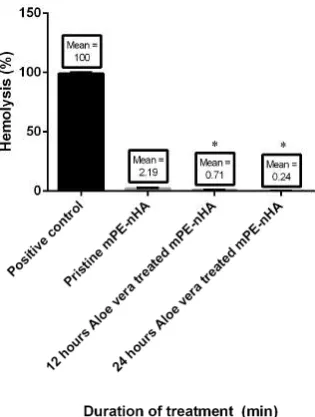
(p < 0.05) between them for APTT. The hemolysis assay was performed for studying the effect of Aloe vera dip‐coating on the red blood cells (RBC). Mean absorbance seemed to reduce in the case of Aloe vera dip‐coated samples compared with pristine mPE‐nHA, indicating lesser damage incurred
by the interaction between the samples and the RBC, as shown in Figure 10. The mean absorbance
was found to be 0.6533, 0.0143, 0.0046, and 0.0016 for the positive control, mPE‐nHA nanocomposite,
12 h Aloe vera dip‐coated mPE‐nHA and 24 h Aloe vera dip‐coated mPE‐nHA, respectively. The
computed hemolytic percentages were found to be 8.158%, 2.188%, 0.704%, and 0.2449% for the
above‐mentioned samples, respectively. Statistical analysis of the percentage of hemolysis of the
mPE‐nHA nanocomposite and the Aloe vera dip‐coated mPE‐nHA samples using one‐way ANOVA
dictated a statistically significant (p < 0.05) decrease in hemolytic percentage for the Aloe vera
dip‐coated mPE‐nHA samples compared to the control pristine mPE‐nHA. From the results obtained,
it is obvious that the 24 h Aloe vera dip‐coated mPE‐nHA is the least hemolytic compared to the other
samples. According to ASTMF756‐00(2000) standard [45], mPE‐nHA nanocomposite, 12 h Aloe vera
dip‐coated mPE‐nHA and 24 h Aloe vera dip‐coated mPE‐nHA is inferred to be a non‐hemolytic Figure 8. Representative AFM images of pristine andAloe veradip-coated mPE-nHA. (A) Pristine mPE-nHA; (B) 24 hAloe veradip-coated mPE-nHA.
The results of the PT and APTT are summarized in Figure9. Both the PT and APTT demonstrated
an increase in their value for 12 and 24 hAloe veradip-coated mPE-nHA compared to the pristine
mPE-nHA. The mean PT of the mPE-nHA nanocomposite control and 12 h and 24 hAloe veradip-coated
mPE-nHA was 48, 49 and 51 s, respectively. The PT was prolonged by 1.06 percent after dip coating withAloe vera,which is in the similar trend found in a study where the PT time was found to be delayed in thermoplastic polyurethane (TPU) by 1.9 times following dextran coating. On the other hand, the mean APTT was found to be 179, 210 and 220 s, respectively. Statistical analysis of the untreated
sample with the treated ones using one-way ANOVA showed significant differences (p< 0.05) between
them for APTT. The hemolysis assay was performed for studying the effect ofAloe veradip-coating
on the red blood cells (RBC). Mean absorbance seemed to reduce in the case ofAloe veradip-coated
samples compared with pristine mPE-nHA, indicating lesser damage incurred by the interaction
between the samples and the RBC, as shown in Figure10. The mean absorbance was found to be
0.6533, 0.0143, 0.0046, and 0.0016 for the positive control, mPE-nHA nanocomposite, 12 hAloe vera
dip-coated mPE-nHA and 24 hAloe veradip-coated mPE-nHA, respectively. The computed hemolytic
percentages were found to be 8.158%, 2.188%, 0.704%, and 0.2449% for the above-mentioned samples, respectively. Statistical analysis of the percentage of hemolysis of the mPE-nHA nanocomposite and theAloe veradip-coated mPE-nHA samples using one-way ANOVA dictated a statistically significant
(p< 0.05) decrease in hemolytic percentage for theAloe veradip-coated mPE-nHA samples compared to
the control pristine mPE-nHA. From the results obtained, it is obvious that the 24 hAloe veradip-coated
mPE-nHA is the least hemolytic compared to the other samples. According to ASTMF756-00(2000)
dip-coated mPE-nHA is inferred to be a non-hemolytic material, since the percentage of damage
falls below two percent. Selvakumar et al. [27] prepared a nanocomposite based on polyurethane
incorporated with polypropylene glycol (PPG)-warped hydroxyapatite for bone tissue engineering. It was observed that the hydroxyapatite-loaded polyurethane nanocomposites exhibited enhanced blood compatibility and also observed enhanced osteoblast MG63 cell proliferation compared to pristine polyurethane (PU). Hence, our developed membrane showing enhanced blood compatibility might favor osteoblast cell proliferation for new bone tissue growth.
Coatings 2017, 7, 182
material, since the percentage of damage falls below two percent. Selvakumar et al. [27] prepared a
nanocomposite based on polyurethane incorporated with polypropylene glycol (PPG)‐warped
hydroxyapatite for bone tissue engineering. It was observed that the hydroxyapatite‐loaded
polyurethane nanocomposites exhibited enhanced blood compatibility and also observed enhanced
osteoblast MG63 cell proliferation compared to pristine polyurethane (PU). Hence, our developed
membrane showing enhanced blood compatibility might favor osteoblast cell proliferation for new
bone tissue growth.
Figure 9. Comparison of prothrombin time (PT), activated partial thromboplastin time (APPT) and
absorbance of pristine mPE‐nHA, 12 h and 24 h Aloe vera dip‐coated mPE‐nHA (n = 3). Values shown
are mean ± SD and * indicates that differences in the mean are significant (p < 0.05) with respect to the
mPE control.
Figure 10. Comparison of the hemolysis percentage of the positive control, pristine mPE‐nHA, 12 h
and 24 h Aloe vera dip‐coated mPE‐nHA (n = 3). Values shown are mean ± SD and * indicates that
differences in the mean are significant (p < 0.05) with respect to the mPE control.
Figure 9.Comparison of prothrombin time (PT), activated partial thromboplastin time (APPT) and absorbance of pristine mPE-nHA, 12 h and 24 hAloe veradip-coated mPE-nHA (n= 3). Values shown are mean±SD and * indicates that differences in the mean are significant (p< 0.05) with respect to the mPE control.
Coatings 2017, 7, 182
material, since the percentage of damage falls below two percent. Selvakumar et al. [27] prepared a
nanocomposite based on polyurethane incorporated with polypropylene glycol (PPG)‐warped
hydroxyapatite for bone tissue engineering. It was observed that the hydroxyapatite‐loaded
polyurethane nanocomposites exhibited enhanced blood compatibility and also observed enhanced
osteoblast MG63 cell proliferation compared to pristine polyurethane (PU). Hence, our developed
membrane showing enhanced blood compatibility might favor osteoblast cell proliferation for new
bone tissue growth.
Figure 9. Comparison of prothrombin time (PT), activated partial thromboplastin time (APPT) and
absorbance of pristine mPE‐nHA, 12 h and 24 h Aloe vera dip‐coated mPE‐nHA (n = 3). Values shown
are mean ± SD and * indicates that differences in the mean are significant (p < 0.05) with respect to the
mPE control.
Figure 10. Comparison of the hemolysis percentage of the positive control, pristine mPE‐nHA, 12 h
and 24 h Aloe vera dip‐coated mPE‐nHA (n = 3). Values shown are mean ± SD and * indicates that
differences in the mean are significant (p < 0.05) with respect to the mPE control.
Coatings2017,7, 182 15 of 17
4. Conclusions
In this study, the mPE was incorporated with nano-rods of hydroxyapaptite and then coated with Aloe verawith the help of a microwave. The samples were subjected to physical characterization tests such as contact angle, FTIR, SEM, AFM and 3D Hirox microscopy scanning. The results show that the
hydrophilicity of the nano-hydroxyapaptite improves with dip coating withAloe vera. TheAloe vera
juice makes the surface topology of the mPE-nHA more hydrophilic, thereby improving its wettability.
Surface roughness improvement was ascertained by the AFM result. The presence ofAloe veradip
coating on mPE-nHA was confirmed by the SEM and 3D Hirox microscopy results. The PT was
delayed by 1.06% for the 24 hAloe veradip-coated mPE-nHA compared to the pristine mPE-nHA.
Likewise, theAloe veradip-coated mPE-nHA nanocomposite prolonged the APTT by 41 s against the
pristine mPE-nHA. The hemolysis percentage was found to be the least for the 24 hAloe veradip-coated
mPE-nHA nanocomposite, which was only 0.2449%. Hence, the 24 hAloe veradip-coated mPE-nHA
can be plausibly exploited for bone tissue engineering applications.
Acknowledgments: This work was supported by the Ministry of Higher Education Malaysia with the Grant no.Q.J130000.2545.17H00 and FRGS Grant no.R.J130000.7809.4F444.
Author Contributions:Hairong Wang and Xueliang Zhang performed the experiments and analyzed the data. Mohan Prasath Mani assisted in doing the experiments, analyzed the data, wrote the paper, and prepared figures and/or tables. Saravana Kumar Jaganathan conceived and designed the experiments, performed the experiments, analyzed the data, contributed reagents/materials/analysis tools, prepared figures and/or tables and reviewed drafts of the paper. Yi Huang and Chengzheng Wang contributed reagents/materials/analysis tools and reviewed drafts of the paper.
Conflicts of Interest:The authors declare no conflict of interest.
References
1. O’brien, F.J. Biomaterials & scaffolds for tissue engineering.Mater. Today2011,14, 88–95.
2. Zohora, F.T.; Azim, A.Y.M.A. Biomaterials as a porous scaffold for tissue engineering applications: A review.
Eur. Sci.2014,10, 186–209.
3. Kar, K.K.; Rana, S.; Pandey, J.Handbook of Polymer Nanocomposites Processing, Performance and Application; Springer: Berlin/Heidelberg, Germany, 2015.
4. De Santis, R.; Gloria, A.; Russo, T.; D’Amora, U.; Zeppetelli, S.; Dionigi, C.; Sytcheva, A.; Herrmannsdorfer, T.; Dediu, V.; Ambrosio, L. A basic approach toward the development of nanocomposite magnetic scaffolds for advanced bone tissue engineering.J. Appl. Polym. Sci.2011,122, 3599–3605. [CrossRef]
5. Gloria, A.; Russo, T.; D’Amora, U.; Zeppetelli, S.; D’Alessandro, T.; Sandri, M.; Bañobre-López, M.; Piñeiro-Redondo, Y.; Uhlarz, M.; Tampieri, A.; et al. Magnetic poly(epsilon-caprolactone)/iron-doped hydroxyapatite nanocomposite substrates for advanced bone tissue engineering.J. R. Soc. Interface2013,10, 20120833. [CrossRef] [PubMed]
6. Dorozhkin, S.V.Calcium Orthophosphates: Applications in Nature, Biology, and Medicine; CRC Press: Boca Raton, FL, USA, 2012; p. 854.
7. Eliaz, N.; Metoki, N. Calcium phosphate bioceramics: A review of their history, structure, properties, coating technologies and biomedical applications.Materials2017,10, 334. [CrossRef] [PubMed]
8. Huber, F.X.; McArthur, N.; Hillmeier, J.; Kock, H.J.; Baier, M.; Diwo, M.; Berger, I.; Meeder, P.J. Void filling of tibia compression fracture zones using a novel resorbable nanocrystalline hydroxyapatite paste in combination with a hydroxyapatite ceramic core: First clinical results.Arch. Orthop. Trauma Surg.2006,126, 533–540. [CrossRef] [PubMed]
9. Banobre-Lopez, M.; Pineiro-Redondo, Y.; De Santis, R.; Gloria, A.; Ambrosio, L.; Tampieri, A.; Dediu, V.; Rivas, J. Poly(caprolactone) based magnetic scaffolds for bone tissue engineering.J. Appl. Phys.2011,109, 07B313. [CrossRef]
11. Laschke, M.W.; Strohe, A.; Menger, M.D.; Alini, M.; Eglin, D. In vitro and in vivo evaluation of a novel nanosize hydroxyapatite particles/poly(ester-urethane) composite scaffold for bone tissue engineering.
Acta Biomater.2010,6, 2020–2027. [CrossRef] [PubMed]
12. Ma, R.; Weng, L.; Bao, X.; Ni, Z.; Song, S.; Cai, W. Characterization of in situ synthesized hydroxyapatite/polyetheretherketone composite materials.Mater. Lett.2012,71, 117–119. [CrossRef] 13. Hamman, H.H. Composition and applications ofAloe veraleaf gel.Molecules2008,13, 1599–1616. [CrossRef]
[PubMed]
14. Surjushe, A.; Vasani, R.; Saple, D.G.Aloe vera: A short review.Ind. J. Dermatol.2008,53, 163–166. [CrossRef] [PubMed]
15. Herzberg, F.; Gruenwald, J.Aloe Vera: An International Success Story; Nutraceutical World: Ramsey, NJ, USA, 2003.
16. Davis, R.H.; Donato, J.J.; Hartman, G.M.; Haas, R.C. Anti-inflammatory and wound healing activity of a growth substance inAloe vera.J. Am. Podiatr. Med. Assoc.1994,84, 77–81. [CrossRef] [PubMed]
17. Guruvenket, S.; Rao, G.M.; Komath, M.; Raichur, A.M. Plasma surface modification of polystyrene and polyethylene.Appl. Surf. Sci.2004,236, 278–284. [CrossRef]
18. Hui, A.Y.N.; Wang, G.; Lin, B.; Chan, W.T. Microwave plasma treatment of polymer surface for irreversible sealing of microfluidic devices.Lab Chip2005,5, 1173–1177. [CrossRef] [PubMed]
19. Ku, H.S.; Siores, E.; Ball, J.A.R. Review—Microwave processing of materials: Part I.HKIE Trans. 2001,8, 31–37.
20. Kavya, K.C.; Dixit, R.; Jayakumar, R.; Nair, S.V.; Chennazhi, K.P. Synthesis and characterization of chitosan/chondroitin sulfate/nano-SiO2 composite scaffold for bone tissue engineering.
J. Biomed. Nanotechnol.2012,8, 149–160. [CrossRef] [PubMed]
21. Zhou, S.; Zheng, X.; Yu, X.; Wang, J.; Weng, J.; Li, X.; Feng, B.; Yin, M. Hydrogen bonding interaction of poly(d,l-lactide)/hydroxyapatite nanocomposites.Chem. Mater.2007,19, 247–253. [CrossRef]
22. Gong, X.H.; Tang, C.Y.; Hu, H.C.; Zhou, X.P.; Xie, X.L. Improved mechanical properties of HIPS/hydroxyapatite composites by surface modification of hydroxyapatite via in-situ polymerization of styrene.J. Mater. Sci. Mater. Med.2004,15, 1141–1146. [CrossRef] [PubMed]
23. Lee, H.J.; Choi, K.W.; Kim, K.J.; Lee, S.C. Modification of hydroxyapatite nanosurfaces for enhanced colloidal stability and improved interfacial adhesion in nanocomposites.Chem. Mater.2006,18, 5111–5118. [CrossRef] 24. Bose, S.; Saha, S.K. Synthesis and characterization of hydroxyapatite nanopowders by emulsion technique.
Chem. Mater.2003,15, 4464–4469. [CrossRef]
25. Yuan, J.; Wu, Y.; Zheng, Q.X.; Xie, X.L. Synthesis and characterization of nano hydroxylapatite by reaction precipitation in impinging streams.Adv. Mater. Res.2011,160, 1301–1308. [CrossRef]
26. Vidhya, G.; Kumar, G.S.; Kattimani, V.S.; Thamizhavel, A.; Girija, E.K. Microwave irradiation synthesis of 3D flower-like hydroxyapatite.Int. J. Sci. Eng. Res.2015,6, 18–19.
27. Selvakumar, M.; Jaganathan, S.K.; Nando, G.B.; Chattopadhyay, S. Synthesis and characterization of novel polycarbonate based polyurethane/polymer wrapped hydroxyapatite nanocomposites: Mechanical properties, osteoconductivity and biocompatibility.J. Biomed. Nanotechnol. 2015,11, 291–305. [CrossRef] [PubMed]
28. Irzh, A.; Gedanken, A. A microwave-assisted process for coating polymer and glass surfaces with semiconducting ZnO submicron particles.J. Appl. Polym. Sci.2009,113, 1773–1780. [CrossRef]
29. Irzh, A.; Perkas, N.; Gedanken, A. Microwave-assisted coating of PMMA beads by silver nanoparticles.
Langmuir2007,23, 9891–9897. [CrossRef] [PubMed]
30. Su, H.C.; Chen, C.H.; Chen, Y.C.; Yao, D.J.; Chen, H.; Chang, Y.C.; Yew, T.R. Improving the adhesion of carbon nanotubes to a substrate using microwave treatment.Carbon2010,48, 805–812. [CrossRef]
31. Tuval, T.; Gedanken, A. A microwave-assisted polyol method for the deposition of silver nanoparticles on silica spheres.Nanotechnology2007,18, 255601. [CrossRef]
32. Mohandas, H.; Sivakumar, G.; Kasi, P.; Jaganathan, S.K.; Supriyanto, E. Microwave-assisted surface modification of metallocene polyethylene for improving blood compatibility.BioMed Res. Int.2013,2013, 253473. [CrossRef] [PubMed]
Coatings2017,7, 182 17 of 17
34. Pereira, C.; Busani, T.; Branco, L.C.; Joosten, I.; Sandu, I.C. Nondestructive characterization and enzyme cleaning of painted surfaces: Assessment from the macro to nano level. Microsc. Microanal. 2013, 19, 1632–1644. [CrossRef] [PubMed]
35. Pelagade, S.M.; Rane, R.S.; Mukherjee, S.; Deshpande, U.P.; Ganesan, V.; Shripathi, T. Investigation of surface free energy for PTFE polymer by bipolar argon plasma treatment.J. Surf. Eng. Mater. Adv. Technol.2012,2, 132–136. [CrossRef]
36. Amarnath, L.P.; Srinivas, A.; Ramamurthi, A. In vitro hemocompatibility testing of UV-modified hyaluronan hydrogels.Biomaterials2006,27, 1416–1424. [CrossRef] [PubMed]
37. Jaganathan, S.K.; Mohandas, H.; Sivakumar, G.; Kasi, P.; Sudheer, T.; Avineri, V.S.; Murugesan, S.; Supriyanto, E. Enhanced blood compatibility of metallocene polyethylene subjected to hydrochloric acid treatment for cardiovascular implants.BioMed Res. Int.2014,2014, 963149. [CrossRef] [PubMed]
38. Gentile, P.; Ghione, C.; Tonda-Turo, C.; Kalaskar, D.M. Peptide functionalisation of nanocomposite polymer for bone tissue engineering using plasma surface polymerisation.RSC Adv.2015,5, 80039–80047. [CrossRef] 39. Agnes Mary, S.; Giri Dev, V.R. Electrospun herbal nanofibrous wound dressings for skin tissue engineering.
J. Text. Inst.2015,106, 886–895. [CrossRef]
40. Suganya, S.; Venugopal, J.; Ramakrishna, S.; Lakshmi, B.S.; Dev, V.R. Naturally derived biofunctional nanofibrous scaffold for skin tissue regeneration. Int. J. Biol. Macromol. 2014,68, 135–143. [CrossRef] [PubMed]
41. Müller, C.M.; Pejcic, B.; Esteban, L.; Piane, C.D.; Raven, M.; Mizaikoff, B. Infrared attenuated total reflectance spectroscopy: An innovative strategy for analyzing mineral components in energy relevant systems.Sci. Rep. 2014,4, 6764. [CrossRef] [PubMed]
42. Al-Hijazi, A.Y.; Al-Mahammadawy, A.K.; Issa, E. Expression of BMP7 in bone tissue treated withAloe vera.
Int. Res. J. Natl. Sci.2015,3, 39–48.
43. Huang, H.H.; Ho, C.T.; Lee, T.H.; Lee, T.L.; Liao, K.K.; Chen, F.L. Effect of surface roughness of ground titanium on initial cell adhesion.Biomol. Eng.2004,21, 93–97. [CrossRef] [PubMed]
44. Jose, A.J.; Alagar, M. Development of bioactive polysulfone nanocomposites for bone tissue replacement. In Proceedings of the 18th International Conference on Composite Materials (ICCM-18), Jeju Island, Korea, 21–26 August 2011.
45. ASTM F756-00 Standard Practice for Assessment of Hemolytic Properties of Materials; ASTM International:
West Conshohocken, PA, USA, 2000.