Pandian Saraswathi Yadav Engineering College, Arasanoor, Sivagangai, Tamilnadu, India
Achieve VM Performance Attacks in
Third-Party Clouds Using Swiper
Rajalakshmi.K
1, Thiruselvan.P
2PG Scholar, Department of Computer Science and Engineering, P.S.R.Rengasamy College of Engineering for Women,
Sivakasi, Tamilnadu, India1
Asst. Professors, Department of Computer Science and Engineering, P.S.R.Rengasamy College of Engineering for
Women, Sivakasi, Tamilnadu, India2
ABSTRACT: Multiple virtual machines (VM) share the same physical resources (e.g., CPUs, caches, DRAM, and I/O devices). all the application allocated to individual VM separate from another. At the time performance weakness will occur. Performance weakness caused by struggle between virtual I/O workloads i.e., by increase the competition for shared resources and another could purposely slow down the execution of a targeted application in a VM. For that the increase model of cloud computing, e.g., Amazon Elastic Compute Cloud (EC2), provide a stretchy strong environment for large-scale applications. The focus on I/O resources such as hard-drive throughput and/or network bandwidth - which are important for data-intensive applications.Swiper: the framework which uses a carefully planned workload to incur significant delays on the embattled application and VM with lowest cost (i.e., resource consumption).
KEYWORDS: Co-location, Synchronization, Exploiting, VMClient and Server.
I. INTRODUCTION
The Cloudcomputing is the after that stage in the Internet's growth, provide the means during which everything from computing power to computing communications, applications, business processes to personal collaboration can be delivered to you as a service wherever and whenever you need.
The cloud computing can be clear as the set of hardware, networks, storage, services, and interfaces that merge to deliver aspects of computing as a Service. Cloudservices encompass the release of software, infrastructure, and storage over the Internet based on user demand.
1.1 Application of cloud computing
The world of the cloud has more participants:
The end user who doesn’t have to know something about the original technology.
Cloud computing has four necessary characteristics: suppleness and the capability to scale up and down, self-service provisioning and regular provisioning, application programming interfaces (APIs), the billing and metering of service usage in a pay-as-you-go model. This suppleness is what is attracting individuals and businesses to move to the cloud.
II. OVERVIEW OF CLOUD Two of types cloud computing:
1. Location of Cloud hosted. 2. Types of Services.
Location of Cloud Hosted
Cloud Computing can be classified in to four types:
1. Public Cloud: it is service to any one access. e.g.: sun cloud
2. Private Cloud: itis service to particular people e.g.: organization,
3. Hybrid Cloud: the both combination of public and private cloud.
4. Community Cloud: It is very useful for same government sectors or equal people. In between organizations, infrastructure can be common in same community.
1.2 Location of Cloud hosted.
Example of any -government organizations can split the data to same agency but not for non-government agency
Based on Service Providers:
Clouds Computing can be classified into 3 types based on the cloud service providers.They are
Infrastructure as a Service (IaaS): This is the most basic cloud-service model, which provides the user with virtual communications, for example servers and data storage legroom. Virtualization acting a major role in this form, by allowing IaaS-cloud providers to deliver resources on-demand extracts them from their large pool install in data centers.
Pandian Saraswathi Yadav Engineering College, Arasanoor, Sivagangai, Tamilnadu, India
1.3 Cloud Services
The services might comprise an operating system, a programming language achievement surroundings, databases and web servers.
Software as a Service (SaaS): In this model, the cloud provides the user with access to before now developer applications that are running in the cloud. The access is achieved by clients and the users do not lever the infrastructure where the application resides, remove together with this the way the need to place up and run the appliance on the cloud user’s own computers.
III. RELATED WORKS
Michael L. Littman et al “Markov games as a framework for multi-agent reinforcement learning” In the Markov decision process (MDP) formalization of reinforcement learning, a single adaptive agent interacts with an environment defined by a probabilistic transition function. In this solipsistic view, secondary agents can only be part of the environment and are therefore fixed in their behavior.
The MM policy did slightly better. In the limit, this should not be the case since an agent trained by the minimax-Q algorithm should be not sensitive to the enemy against which it was trained and always behave so as to maximize its score in the worst case. The fact that there was a variation suggests that the algorithm had not converged on the optimal policy yet. Prior to convergence, the enemy can make a big inequality to the proceedings of a minimax-Q agent since playing against a strong enemy means the training will take place in important parts of the state space.
It describes a Q-learning-like algorithm for judgment optimal policies and demonstrates its application to a simple two-player game in which the most favorable policy is probabilistic.
H. Howie Huang1, Andrew S. Grim Shaw et al “Automated Performance Control in a Virtual Distributed Storage System”Storage grasp in large organizations has grown rapidly in the last few decades. explain Storage and desk, a new virtual spread storage system that utilizes a large quantity of spread machines to provide cargo space services with quality of service guarantees. The make the most of fake to provide high levels of ease of use and steadfastness. Our evaluation reveals that Storage desk achieves well again read and write performance compared to CIFS.
As Storage desk serves clients and applications on shared storage chattels, it is decisive to make sure unexciting storage access even when the workloads are mysterious a priori. The present a new virtual widen storage system called Storage and desk that aggregate vacant consignment space resources on distributed machines to create an especially large storage pool.
Diego Ongaro Alan L. Cox Scott Rixner et al Scheduling I/O in Virtual Machine Monitors “This paper explores
on performance using multiple caller domains in cycle running different types of applications. Two of these optimizations have in collective optimistic effects on I/O performance. The enhance optimization habitually impacts both bandwidth and latency positively, because it allows domains performing I/O operations to drag off lower response latency. This irritable naissance of scheduler configurations and appliance types offers near-term into the key problems in VMM scheduling for I/O and motivates would-be freshness in this area. These configurations include a multiplicity of scheduler extensions deliberate at improving I/O performance.
Gaul Soundararajan, Daniel Lupei, Seed Gambaro, Adrian Daniel Popes cu, Jin ChenCristiana Amaze et al “Dynamic Resource Allocation for Database Servers Running on Virtual Storage “the introduce a novel multi-resource allocator to animatedly allocate multi-resources for database servers running on virtual storage. Multi-multi-resource allotment involves proportioning the database and storage server caches, and the storage bandwidth between applications according to overall feat goals. The combination of on-line modeling and variety to arrive at near-optimal configurations within action.The problem of global resource allocation, which involves proportioning the database and storage server caches, and the storage bandwidth among applications, according to overall performance goals.
The performance models provide a resource-toper formance mapping for every application, in all achievable resource quota configurations. Our key ideas are to integrate readily available information about the application and system into the presentation model, and then treat the model through restricted experimental variety of actual behavior. The key idea is to integrate access tracking and known resource dependencies e.g., due to cache understudy policies, into our presentation model. Experimental evaluation, both micro benchmarks and the industry standard benchmarks TPCW and TPC-C.
Peter Bod´ık, Moses Goldszmidt, Armando Fox, Dawn B. Woodard, Hans Andersen et al “Finger printing the Datacenter: Automated Classification of Performance Crises “current datacenters comprise hundreds or thousands
of gear running applications requiring high availability and reaction. Although a performance emergency is easily detected by monitoring key end-to-end performance indicators (KPIs) such as return latency or request throughput, the variety of conditions that can lead to KPI degradation makes it difficult to pick suitable recovery actions. They based on a new and adept representation of the data center’s state called a fingerprint, constructed by arithmetic jumble and summarization of the hundreds of performance metrics usually collected on such systems. The object of these fingerprints is to provide the basis for atypical classification and credentials of performance crisis in a data centers. The estimate uses 4 months of trouble-ticket data from a production datacenter with hundreds of machines running a 24x7 enterprise-class user-facing application. The Knowledge this is the first scrupulous evaluation of any such move toward on an extensive production installation.
S. K. Barker et al “Empirical evaluation of latency-sensitive application performance in the cloud “The same was
true with CPU and disk interference, indicative of that (at least in our small server setup), nothing was bottlenecked by the CPU or disk. weighty background network I/O, however, had a serious impact. When Tcwasnot used, the environment VM crippled the game server at cause. The importance of unsurprising resource allocation in certain applications has resulted in a significant amount of work on fair-share schedulers. Several techniques have been proposed for expected allocation of the processor, network bandwidth and disk throughput.
The degree of interference varies from resource to resource and is the most pronounced for disk-bound latency sensitive tasks, which can degrade by nearly 75% under sustained background load. Cloud computing has emerge as a new paradigm where an association or user may dynamically rent remote compute and storage resources, using a credit card, to host networked applications “in the cloud.” Fundamentally, cloud computing enables application providers to allocate possessions purely on-demand – on an as needed basis – and to vary the amount of resources to equivalent workload demand.
Pandian Saraswathi Yadav Engineering College, Arasanoor, Sivagangai, Tamilnadu, India
The total design, implementation, and appraisal of a working No Hype system on today’s commodity hardware. This new work adds a significant level of depth through a complete prototype design and implementation, as well as new performance and security analysis which identifies and evaluates potential side-channels. The related work can be categorized in four main areas: minimizing the hypervisor, proposing new processor architecture, harden the hypervisor, or giving VMs more straight access to hardware. The security of shared cloud infrastructures, today’s commodity hardware imposes some restrictions; as future work, we will examine minimal hardware changes to further tighten the security of a No- Hype system. Also, we will add support for live VM migration, particularly for the scenario where the initiator of the migration (the cloud provider) differs from the owner of the VM (the cloud customer).
IV. SYSTEM ARCHITECTURE Network Authentication:
In this Module they check whether the application using system is in the Authorized network or not access network authentication.
VM Module:
In this module user can register their information in the application. The registered information is verified by the admin. If the admin allow user to access the application means the user can login to the application otherwise or not vm module.
3.1 system architecture Bandwidth Calculation:
In this Module we will calculate the Bandwidth totally used by the Application. In every tab loaded bytes also calculated.
Swiper Module:
In this module, the swiper frame work is implemented. the focus on I/O resources such as hard-drive throughput and/or network bandwidth - which are critical for data-intensive applications. We design and implement Swiper.
Admin Management:
This module can be logged in by the admin only. In this module the admin can allow the user and restrict the user. USER
ADMIN LOGIN ADMIN
REGISTER
WELCOME ADMIN
USER PC ACCEPTED LOGIN
FILES (1, 2,3, 4,5) SPEED CALCULATIO
NN PASSWORD
IS WRONG
IMPLEMENTATION OF SYSTEM MODULES
1. Network Authentication.
2. VM Module.
3. Bandwidth Calculation.
4. Swiper Module. 5. Admin Management. Module Description
Network Authentication
In this Module we check whether the application using system is in the Authorized network. If it presented in the same network it will allow you to use the application. Else it will not allow you to use the application. If you are in the authorized network means it will transfer to the next module. The Network authentication is used in enterprise and public-safety settings. It has been in use for several years and this longevity gives us confidence that it is a good choice.
VM Module
In this module user can register their information in the application. The registered information is verified by the admin. If the admin allow user to access the application means the user can login to the application. Else the user can’t access the VM. The user was accepted by the Admin then the user can enter into the virtual machines (VM) that share the same physical resources (e.g., CPUs, caches, DRAM, and I/O devices), each application should be allocated to an independently managed VM and isolated from one another.
Bandwidth Calculation
In this Module we will calculate the Bandwidth totally used by the Application. In every tab loaded bytes also calculated. The speed of the page loaded in the application also calculated. A new type of security vulnerability caused by competition between virtual I/O workloads - i.e., by leveraging the competition for shared resources, an adversary could intentionally slow down the execution of a targeted application in a VM that shares the same hardware.
Swiper Module
In this module, the swiper frame work is implemented. We focus on I/O resources such as hard-drive throughput and/or network bandwidth - which are critical for data-intensive applications. We design and implement Swiper, a framework which uses a carefully designed workload to incur significant delays on the targeted application and VM with minimum cost (i.e., resource consumption).While there are more number of users uses the application except an active tab other tab loading bandwidth to be stopped. The speeds of the ideal tab are reallocated to the new requested user. Then the user can uses the same application with the same speed
Admin Management
This module can be logged in by the admin only. In this module the admin can allow the user and restrict the user. The data usage is monitored by the admin and list the active and idle user usage. And also design the workload to all the targeted VM.
V. EVALUATION
Pandian Saraswathi Yadav Engineering College, Arasanoor, Sivagangai, Tamilnadu, India
Figure 5.1 shows a network authentication and enter to the systemname
Figure 5.2 shows that register the user name, password, confirm password and email id.
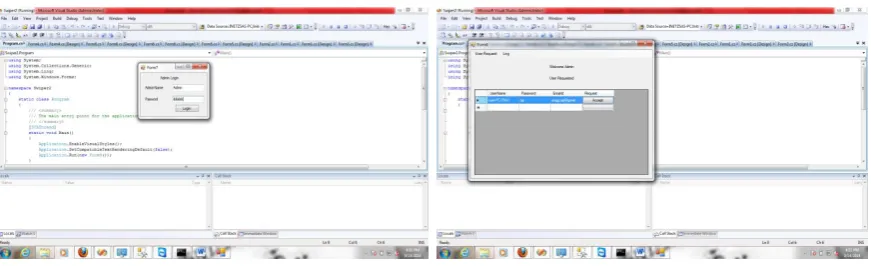
Figure 5.3 shows that the admin login in enter to admin name and password
Figure5.4 shows that the welcome admin and accepted to user request.
Figure 5.5 shows that the user pc is accepted.
Figure 5.6 shows that the login for username and password
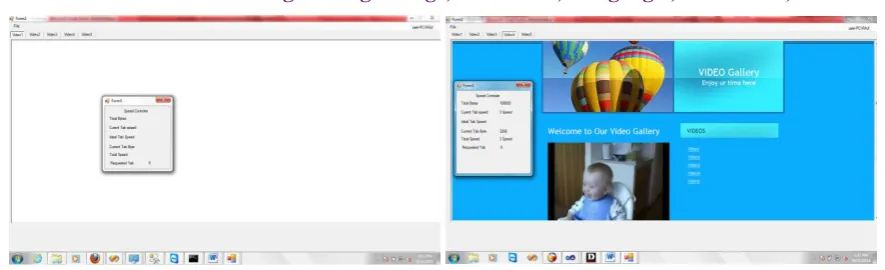
Figure 5.8 shows that open they video4 play after speed calculation
VI. CONCLUSION
A novel I/O workload based performance attack which uses a carefully designed workload to incur significant delay on a targeted application running in a separate VM but on the same physical system. Such a performance attack poses an especially serious threat to data-intensive applications which require a large number of I/O requests.
Performance degradation directly increases the cost of per workload completed in cloud-computing systems.
Our experiment results demonstrated the effectiveness of our attack on different types of victim workloads in real world systems with various number of VMs. Interested readers may refer to Appendix I for the literature review and more discussions, where we have proposed a number of possible solutions to these types of attacks as future work. Also, it would interest to study the effects of system parameters, e.g., I/O schedulers and buffer sizes, on defending such attacks.
ACKNOWLEDGEMENT
The authors acknowledge the contributions of the students, faculty of P.S.R.Rengasamy College of Engineering for Women for helping in the design of test circuitry, and for tool support. The authors also thank the anonymous reviewers for theirthoughtfulcomments that helped to improve this paper. Theauthors would like to thank the anonymousreviewers for their constructivecritique from whichthis paper greatly benefited.
REFERENCES
1. Ron C. Chiang, SundaresanRajasekaran, Nan Zhang, H. Howie HuangGeorge Washington University “Swiper: Exploiting Virtual Machine Vulnerability in Third-PartyClouds with Competition for I/O Resources” 10.1109/TPDS.2014.2325564, IEEE Transactions on Parallel and Distributed Systems.
2. M. L. Littman, “Markov games as a framework for multi-agent reinforcement learning.” in ICML, vol. 94, 1994, pp. 157–163. 3. M. Rosenblum et al., “Virtual machine monitors: Current technology and future trends,” IEEE Computer, vol. 38, pp. 39–47, 2005. 4. H. H. Huang et al., “Automated performance control in a virtual distributed storage system,” in Grid, 2008.
5. G. Soundararajan et al., “Dynamic resource allocation for database servers running on virtual storage,” in FAST, 2009.
6. P. Bodik et al., “Fingerprinting the datacenter: automated classification of performance crises,” in EuroSys. ACM, 2010, pp. 111–124.
7. S. K. Barker et al., “Empirical evaluation of latency-sensitive application performance in the cloud,” in Proceedings of the first annual ACM SIGMM conference on Multimedia systems. ACM, 2010,pp. 35–46.
8. Szefer et al., “Eliminating the hypervisor attack surface for a more secure cloud,” in Proceedings of the 18th ACM conference on Computer and communications security. ACM, 2011, pp. 401–412.
BIOGRAPHY
K.Rajalakshmihas received B.E degree in Computer and Science Engineering from Anna University, chennai 2013. She is currently pursuing Master Computer Science and Engineering P.S.R.Rengasamy College of Engineering for Women, under Anna University, Chennai. Her areas of interest in research are Cloud Computing