ISSN(Online): 2320-9801
ISSN (Print): 2320-9798
I
nternational
J
ournal of
I
nnovative
R
esearch in
C
omputer
and
C
ommunication
E
ngineering
(An ISO 3297: 2007 Certified Organization)
Vol. 3, Issue 6, June 2015
Robust Estimation of Adaptive Deblurring
Using Genetic Algorithm
Meenu P Kumar, Bijy Mathew
Pursuing M.Tech, Dept. of CSE, Caarmel Engineering College, MG University, Kerala, India
Assistant Professor and Head, Dept of CSE, Caarmel Engineering College, MG University, Kerala, India
ABSTRACT: It is a quite difficult task to obtain images under dim conditions. There are many factors with which brightness of the image can be obtained, like the sensor sensitivity(ISO),Exposure time and Aperture. Due to many time dependant and independent factors, higher ISO images produces more noise. This paper estimates the blur kernel. This includes the combination of piecewise-linear model and effective regularization scheme. The proposed framework produces improved robustness of estimation process in the presence of noise and large blurs. The problems of low deblurring efficiency and low PSNR ratios have been overcomed. This is achieved by using the algorithm of
adaptive deblurring blur using genetic algorithm
.
KEYWORDS: Blur Kernel, Piecewise Linear Model.
I. INTRODUCTION
Image editing consists of the processes of altering images, whether they are digital photographs, traditional photochemical photographs, or illustrations. Traditional analog image editing is known as photo retouching, using tools such as an airbrush to modify photographs, or editing illustrations with any traditional art medium. Graphic software programs, which can be broadly grouped into vector graphics editors, raster graphics editors, and 3D modelers, are the primary tools with which a user may manipulate, enhance, and transform images. Many image editing programs are also used to render or create computer art from scratch.
To obtain bright and clear images under dim lighting conditions is a challenging task. The brightness of the images can be determined by sensor sensitivity(ISO),exposure time and aperture. A higher ISO value, longer exposure time, and wider aperture setting increase the image brightness at the cost of image quality. A longer exposure time effectively ensures brightness of acquired image but leads to a higher probability of movement in both the scene and the camera while the shutter is open. Conversely, a higher ISO setting to obtain brighter image introduces more noise which is composed of time-independent and time-dependent components. The situation requires a higher ISO value implies a weak image signal and a relatively high level of time-independent noise which is inherent in the sensor. A shorter exposure time for compensating the high ISO results in time-dependent noise due to increased randomness of captured photons. In most cases, since the incoming light is insufficient in dark situations, both noise and blur are present in the image.
II. LITERATURE SURVEY
ISSN(Online): 2320-9801
ISSN (Print): 2320-9798
I
nternational
J
ournal of
I
nnovative
R
esearch in
C
omputer
and
C
ommunication
E
ngineering
(An ISO 3297: 2007 Certified Organization)
Vol. 3, Issue 6, June 2015
In controlled imaging scenarios where the evolution of the PSF trajectory along with the exposure time can be statistically studied or analytically formulated, the restoration-error model can tell whether there exists an optimal exposure, i.e. an exposure time that minimizes the restoration error achievable by the corresponding deblurring algorithm; then, whenever the optimal exposure time exists, the restoration-error model provides its value. This issue, to the best of the knowledge, has so far been neglected, mainly because of the unpredictability of the PSF trajectory.
The method used here is a general one and customized restoration-error model can be obtained for any kind of deblurring algorithm since it focuses on convolutional blur and it mainly considers the image deconvolution. Moreover it is an easy and convenient method to decouple the blur estimation from the blur removal. Since these two problems are typically faced by different algorithms which may behave differently with respect to motion development. Therefore the proposed method is mostly suited for non-blind deconvolution algorithm.
However the method proposed so far has only a methodology to detect the blur caused due to the camera motion. But the blur on an image is not only caused due to camera motion. There are many other factors like dim lighting, movement of background images etc, for such blurred images. Hence it is considered as a limitation of this system.
From the Fast two-phase image deblurring under impulse noise[2]first the case with salt-and-pepper noise is
discussed. In the first phase of this method, the noise candidate set N, is detected by the AMF[2] algorithm. The
maximum window size we used in AMF is 19 throughout the test. Obviously, the two-phase deblurring method is better than the variational method. In general, the PSNR of the restoration by this method is about 2 to 7 dB higher than that by the variational method. However, there is no good detector for random-valued noise when the noise ratio is high. The performance for random-valued noise can be improved if a better noise detector can be found in the first phase.
From Q. Shan, J. Jia, and A. Agarwala's high-quality motion deblurring from a single image[5],It is found that the techniques used till then can successfully deblur most motion blurred images. However, one failure mode occurs when the blurred image is affected by blur that is not shift-invariant, e.g., from slight camera rotation or non-uniform object motion. An interesting direction of future work is to explore the removal of nonshift- invariant blur using a general kernel assumption.
Yet another interesting observation that arises from this work is that blurred images contain more information than we usually expect The results show that for moderately blurred images, edge, color and texture information can be satisfactorily recovered. A successful motion deblurring method, thus, makes it possible to take advantage of information that is currently buried in blurred images, which may find applications in many imaging-related tasks, such as image understanding, 3D reconstruction, and video editing.
From image deblurring with blurred/noisy image pairs[6],proposed by L. Yuan, J. Sun, L. Quan, and H.-Y. Shum,an image deblurring approach using a pair of blurred/noisy images is proposed. The approach takes advantage of both images to produce a high quality reconstructed image. By formulating the image deblurring problem using two images, it is developed an iterative deconvolution algorithm which can estimate a very good initial kernel and significantly reduce deconvolution artifacts. No special hardware is required. The proposed approach uses off-the-shelf, hand-held cameras.
III.PROPOSEDSYSTEM
ISSN(Online): 2320-9801
ISSN (Print): 2320-9798
I
nternational
J
ournal of
I
nnovative
R
esearch in
C
omputer
and
C
ommunication
E
ngineering
(An ISO 3297: 2007 Certified Organization)
Vol. 3, Issue 6, June 2015
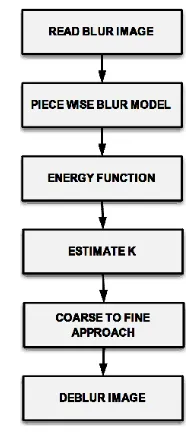
Figure 1: Block diagram to get a deblur image
Fig.1 shows the block diagram of motion blur kernel. When an image is inputted by the user, from the image a blur kernel is estimated. From the blur kernel the piecewise linear model can be obtained. On performing some operations the energy function of the input is obtained. Using the energy function the K value can be estimated which is required. Hence it is possible to perform the coarse to fine approach. And the user can get a deblurred image.
3.1 Motion Blur
Motion blur is the apparent streaking of rapidly moving objects in a still image or a sequence of images such as a movie or animation. It results when the image being recorded changes during the recording of a single frame, either due to rapid movement or long exposure.When a camera creates an image, that image does not represent a single instant of time. Because of technological constraints or artistic requirements, the image may represent the scene over a period of time. Most often this exposure time is brief enough that the image captured by the camera appears to capture an instantaneous moment, but this is not always so, and a fast moving object or a longer exposure time may result in blurring artifacts which make this apparent. As objects in a scene move, an image of that scene must represent an integration of all positions of those objects, as well as the camera's viewpoint, over the period of exposure determined by the shutter speed. In such an image, any object moving with respect to the camera will look blurred or smeared along the direction of relative motion. This smearing may occur on an object that is moving or on a static background if the camera is moving. In a film or television image, this looks natural because the human eye behaves in much the same way.Because the effect is caused by the relative motion between the camera, and the objects and scene, motion blur may be avoided by panning the camera to track those moving objects. In this case, even with long exposure times, the objects will appear sharper, and the background more blurred
3.3 System Architecture
ISSN(Online): 2320-9801
ISSN (Print): 2320-9798
I
nternational
J
ournal of
I
nnovative
R
esearch in
C
omputer
and
C
ommunication
E
ngineering
(An ISO 3297: 2007 Certified Organization)
Vol. 3, Issue 6, June 2015
Fig 2: Architecture diagram of proposed system
In this level the end user uploads the image to the database. The server identifies the blur in the image and it is then subjected to many other processes. After classifying the image, the image is underwent with a piecewise linear model. Here the areas in the picture is classified to many small pieces where detailed understanding of blur can be estimated. Then the energy function is extracted and identified and another operation that is coarse to fine approach is done. After performing all these operations, the blur from the image can be removed. And finally, an image which is deblurred is retrieved to the user.
3.4 Preprocessing:
In preprocessing, first the image is resized by using bicubic interpolation method. Interpolation is the process used to estimate an image value at a location in between image pixels. When imresize enlarges an image, the output image contains more pixels than the original image. The imresize function uses interpolation to determine the values for the additional pixels. After resizing, the RGB image is converted into grayscale by eliminating the hue and saturation information while retaining the luminance.
3.5 Piecewise Linear Model .
ISSN(Online): 2320-9801
ISSN (Print): 2320-9798
I
nternational
J
ournal of
I
nnovative
R
esearch in
C
omputer
and
C
ommunication
E
ngineering
(An ISO 3297: 2007 Certified Organization)
Vol. 3, Issue 6, June 2015
When an input is given the sensor translation is performed. Thereby one can estimate the Arbitrary curve C by the translation. On noticing the figure itself it is well understood that the estimation is not linear. But in the preexisting techniques it curves were considered to be linear. This does not produce a better output. To overcome these problem the piecewise linear model is proposed. So a generic approach is followed in this approach, each portion is considered to be linear and clears each small individual portions. Then the error is overcomed.
APPLICATIONS
Motion blur recovery algorithm finds its application in the field of:
Medical imaging picture editing
IV.EXPERIMENTAL RESULTS
ISSN(Online): 2320-9801
ISSN (Print): 2320-9798
I
nternational
J
ournal of
I
nnovative
R
esearch in
C
omputer
and
C
ommunication
E
ngineering
(An ISO 3297: 2007 Certified Organization)
Vol. 3, Issue 6, June 2015
Figure4: Photographs in a low light environment. (a) Blurred image (with shutter speed of 1 second, and ISO 100) due to camera shake. (b) Noisy image (with shutter speed of 1/100 second, and ISO 1600) due to insufficient light. (c) Noisy image enhanced by adjusting level and gamma. (d) deblurred image
The proposed method using motion segmentation very effectively identify the objects in motion in a video and using the enhancement as proposed that is PSNR values using genetic algorithm very easily identifies the motion blur effectively. As an enhancement Peak Signal To Noise (PSNR) value is obtained . In the existing system intensity value is calculated using manually defined threshold but in the proposed system it is determined from training data that is given. Decision tree learning uses a decision tree as a predictive model which maps observations about an item to conclusions about the item's target value. It is one of the predictive modeling approaches used in statistics, data mining .
The figure denotes that our proposed method effectively handle rain in dynamic scene compared to the existing methods.
V. CONCLUSION
Existing deblurring algorithms perform poorly with blurred images. Based on the existing systems from the input image using piecewise linear model the error caused at each tiny instances can be obtained. Therefore the input user can identify the region with blur occurrences and apply some techniques to overcome it. The algorithm outperforms existing ones in removing the error in an image.
ACKNOWLEDGEMENT
We would like to thank reviewers for their helpful and constructive comments. We would also like to thank the faculties, the resource providers and the system administrator for the useful feedback and constant support.
REFERENCES
[1]. G. Boracchi and A. Foi, “Modeling the performance of image restorationfrom motion blur,” IEEE Trans. Imag. Process., vol. 21, no. 8, pp. 3502–3517, Aug. 2012
[2] L. Bar, N. Kiryati, and N. Sochen, “Image deblurring in the presence of impulsive noise,” Int. J. Comput. Vis., vol. 70, no. 3, pp. 279–298, Dec. 2006.
[3] J.-F. Cai, R. Chan, and M. Nikolova, “Fast two-phase image deblurring under impulse noise,” J. Math. Imag. Vis., vol. 36, no. 1, pp. 46–53, 2010
[4] R. Fergus, B. Singh, A. Hertzmann, S. T. Roweis, and W. T. Freeman, “Removing camera shake from a single photograph,” in Proc. ACM SIGGRAPH, 2006, pp. 787–794
[5] Q. Shan, J. Jia, and A. Agarwala, “High-quality motion deblurring from a single image,” ACM Trans. Graph., vol. 27, no. 3, pp. 1–10, 2008
BIOGRAPHY
Meenu P Kumar received his Bachelor of Engineering in Computer Science and Engineering from Anna University, Chennai, 2012. At present, she is pursuing M.Tech in Computer Science and Engineering at Caarmel Engineering College, Kerala, and Affiliated to MG University. Her research interests include Image processing, Cloud Computing.
Bijy Mathew is the Assistant Professor and Head of the Department in the Computer Science and Engineering