Situation Awareness Application
Thesis by
Judy Mou
Computer Science, Caltech
Advisors: Prof. K. Mani Chandy
Dr. Julian Bunn
In Partial Fulfillment of the Requirements for the degree of
Master of Science
CALIFORNIA INSTITUTE OF TECHNOLOGY Pasadena, California
2013
2013
Abstract
Design Consideration
Assumption and dependencies
Application users have the following on their Android devices ● Google Play Service
● Google Android Maps version v2
● Android version (4.0.3 Ice-Cream Sandwich or higher)
Constraints
● Application users should have internet access ○ Users may have bandwidth limits ● Mobile devices have limited battery power
System Architecture
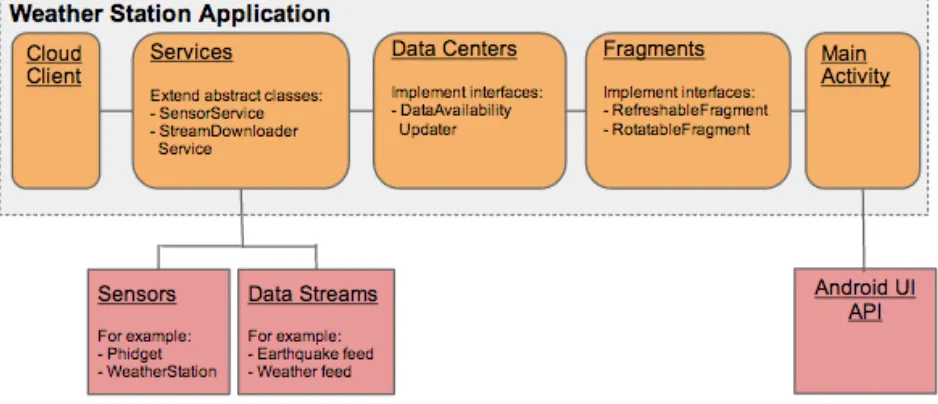
Figure 1: High-Level System Architecture
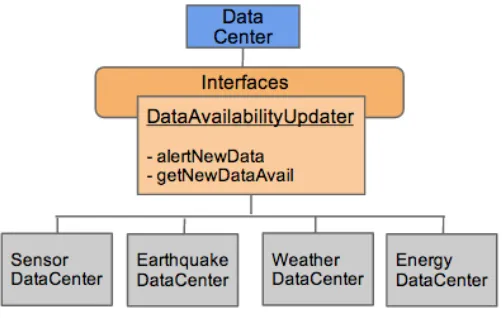
The four main components of the application are Services, Data Centers, Fragments, and a cloud communication client. A Service processes incoming data from sensors or other streams. Data Centers store data provided by Services and surface them to Fragments, which render the user interface with the information. The cloud communication client is responsible for communicating with the backend server and encapsulates all the information and logic required for
Application components
Services
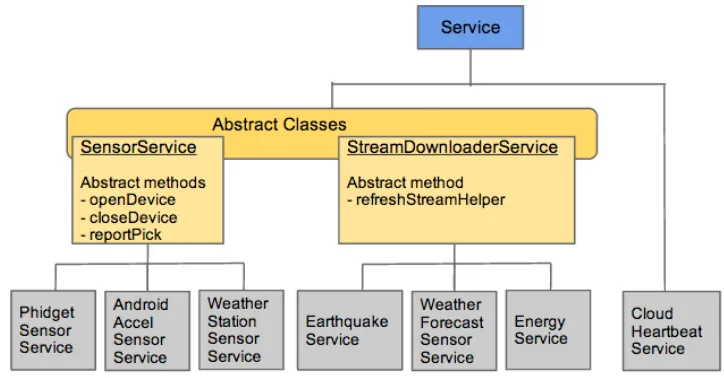
Figure 2: Service Component Diagram
A Service is an Android application component that performs long running background
operations, which is an ideal platform for data processing. All Services in the application have the following responsibilities:
● At the startup stage, it connects to sensors or data streams.
● It periodically retrieves data, and the data rate is predetermined by the nature of the information. For example, it processes weather information hourly whereas Phidget data is processed whenever it becomes available, which is fifty times per second.
● It uses Data Center interfaces to store collected data.
● Anomaly detection is performed for each data point if necessary.
○ If an abnormality is detected, it sends an alert to MainActivity via an Intent and then requests CloudClient to deliver the abnormal data to the server.
Many Services share common resources, so the platform defines and uses two abstract classes,
SensorService and StreamDownloaderService.
SensorService
This is the base class for the Service that processes sensor data. Since its task includes storing data and sending abnormal data points to the cloud server, the abstract class contains a
CloudClient
CloudClient is a singleton class that is responsible for communicating with the server. It encapsulates client information and logic that are required for the communication. Other components can send data to the server using a set of methods CloudClient provides. For example, Service can report anomalies to the server by calling sendPick method, passing the sensor type and the current value as arguments.
Fragments
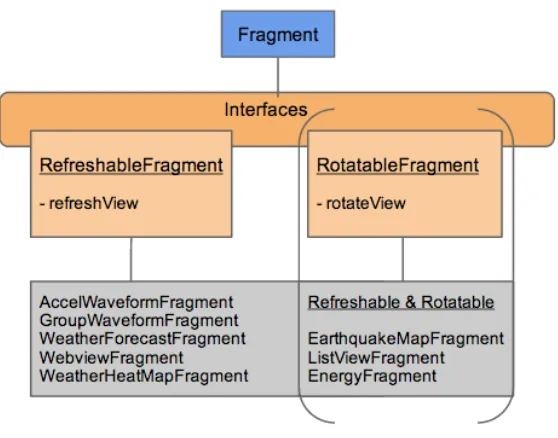
Figure 4: Fragment Component Diagram
Fragments can be combined to form a multi-tile UI. A Fragment can also be hidden, removed, or reused, which makes it a good candidate for a sliding tile UI. A Service saves data from a stream in a Data Center, while a Fragment is responsible for rendering the UI with the information stored in the Data Center.
RefreshableFragment
The consumers (e.g. MainActivity) of Fragments determine the frequency at which information should be refreshed, whether it is 1 second or 10 minutes. Calling refreshView
on Fragments with the desired rate (currently every quarter of a second) triggers them to update views if new information is available in Data Centers.
References
1. R. Clayton, T. Heaton, et al. Community seismic network. Annals of Geophysics, 54(6), 2012.
Figure 5: Recent Earthquake View
Figure 7: Heatmap View
Figure 8: Event Triggered Android Accelerometer Sensor Waveform View
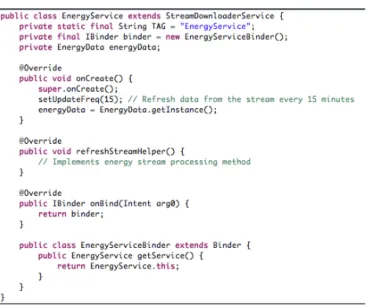
Figure 11: EnergyService Code Snippet