© 2018 IJSRCSEIT | Volume 3 | Issue 5 | ISSN : 2456-3307
Delta-3D Printer based on Cortex M3 Processor
Antra Priya1, Ankit Gupta2, Jitendra Kumar3 , M.V.Patil41, 2, 3 Student, Electronics Department, College of Engineering, Bharati Vidyapeeth Deemed to be University, Pune, Maharashtra, India
4Assistant Professor, Electronics Department, College of Engineering, Bharati Vidyapeeth Deemed to be University, Pune, Maharashtra, India
ABSTRACT
This paper proposes the idea of Delta -3D Printer which is based on the basic principle of a Delta robot, i.e., a parallel robot with 3 interconnected arms. The extruder will be attached by the three arms in a triangular configuration (thus the name “Delta”). Three general principle steps i.e. Modelling, Printing and Finishing are used. It uses the method of “Fused Deposition Modelling” in which the parts are building step by step from bottom to top by extruding the thermoplastic filaments. These types of printers can be used for modelling, building large Prototypes and Production Applications as it takes less time as compared to other 3D printers. In today’s world with new advancements in automation & technology, this printing technology proves to be a boon in the field of prototyping and printing.
Keywords: Delta,3D-printing,FDM,CAD,Prototyping
I.
INTRODUCTION
Delta 3D printing is a technology that is widely used for making a physical object from a three-Dimensional digital model. 3D printing is one of the most demanding Rapid prototyping techniques used in Industry. Amongst most of the 3D printing techniques such as Selective Laser Sintering, SLA, Powder & Solid modelling, Fused Deposition modelling is the most convenient & fast method, it is also the most economical process for large prototypes. 3D printing generally is a process that is used to create a three-Dimensional object by forming layers of materials under computer control to create an object.
3D printing technology is also called as Additive Manufacturing (AM) technique that builds 3D objects from computer-aided design (CAD) model by successively adding material layer by layer. 3D Printing and Additive Manufacturing are the terms
that came up as emerging technologies and were used as an alternate for AM technologies.
The major advantage of a 3D printer is that it allows the designers to produce a prototype in a very short time, which is tested and quickly remodelled and reducing the required time from the prototype phase to obtaining the final product. At the same time, using this technique we can obtain accurate components and also complex parts in shorter duration that, through Cartesian and other methods would take a large amount of time to accomplish it.
Delta printer is based on the functional principle of Delta robot i.e. a parallel robot with three interconnected arms. It uses the method of FDM (Fused Deposition Modelling) that builds parts layer-by-layer by heating and extruding the thermoplastic filament on the heating bed.
method of moving. Most of the printers use the Cartesian system i.e. left to right, front to back. In most of the methods the Stepper motors were connected in the moving arms making the arms heavier to move and accuracy was not achieved. In the Delta 3d printer the three parallel interconnected arms are free to move and are lighter in weight as the motors are not attached to it, thus making the motion of the arms more fast and accurate.
II.
II.
LITERATURE REVIEW
1. “Printable 3D Models for Customized Hands-on Education”. Fabricated: The new world of 3D printing. (2007/8/5 Conference) [1] This paper proposed a method of (“Printable 3D Models for Customized Hands-on Education”,) which gives an Physical models which are an important form of hands-on active learning. In this paper he proposed that rapid prototyping technology has the potential to reverse this trend, and reap the educational benefits while eliminating many of the logistic difficulties that have lead to it.
2. “Direct Free Form Fabrication of Seeded Hydro gels in Arbitrary Geometries”, Tissue Engineering, vol. 12, pp. 1325-1335, 2006:- [2] in this paper the Author proposed a technique of “Direct Free Form Fabrication of Seeded Hydro gels in Arbitrary Geometries”. By combining the strengths of injection moulding tissue engineering with those of solid freeform fabrication (SFF), three-dimensional (3-D) pre-seeded implants were fabricated without custom-tooling, enabling efficient production of patient-specific implants.
3. “Rapid Prototyping of Com plant Human Aortic Roots for Assessment of Valved Stents”, Interactive Cardiovascular and Thoracic Surgery, Volume 8, Issue 2, 1 February 2009, Pages 182– 186 :- [3] This paper proposed a method of “Rapid Prototyping of Com plant Human Aortic Roots for Assessment of Valved Stents”. The
casting methods utilized up to now are multi-step, time consuming and complicated.
4. “3D printing in Education”, Version 1.0, DOI: 10/13140RG.2.2.16230.83526:- [4] this paper has summarised the research that has been conducted into the application of 3D printing into the education system. It provides a state of the art review in answering the two questions of where and how 3D printing is being used in the education system.
5. “Filament Advance Detection sensors for fused Deposition Modelling 3D printers”, DOI:10.3390/s18051495 :- [5] This paper presents a system to detect extrusion failures in fused deposition modelling 3D printers by sensing that the filament is moving forward properly. To do it, Photogrammetric Scanning methodology was employed. This development has made it possible to use the printer with remains of coil filaments, which were not spent because they were not sufficient to complete the impression.
6. “A comparative study of Cartesian and Delta 3D printers on producing PLA parts”, Materials Research, Issue February 2018, DOI: 10.1590/1980-5573-mr-2016-1039:- [6] this paper presents a comparative study of Cartesian and Delta 3D printers. To increase the knowledge about additive manufacturing, a comparative study with Cartesian and delta printer was performed. Three samples were produced in each printer and compared. In results, the parts produced by delta printers obtained better surface quality.
III.
SYSTEM OVERVIEW
The system consists of two parts: Hardware and Software.
A. Hardware:
The hardware consists of 2 types:- a) Mechanical part
Mechanical parts are:-
● NEMA17 Stepper motor ● Extrusion Head
● Hot Bed
● 70CM2020AluminiumPost ● Acrylic Top & Bottom plate ● 200mm Graphite shaft
Electronics parts are:- ● Cooling Fan
● SMPS ● LCD Module ● Mother Board:
1. NEMA17 Stepper Motor: Stepper motors are brushless motors that make use of the multi-toothed
electromagnets to define its position. The
electromagnets are fixed around a centralized gear. NEMA numbers define the standard dimensions of a faceplate for mounting a motor. [7] NEMA 17 stepper motors are stepper motors with a 43.2mm x 43.2mm (1.7 inch x 1.7 inch) faceplate. The NEMA 17 stepper motor can provide 200 steps per revolution (1.8-degree step angle).
Figure 1. NEMA 17 Stepper Motor
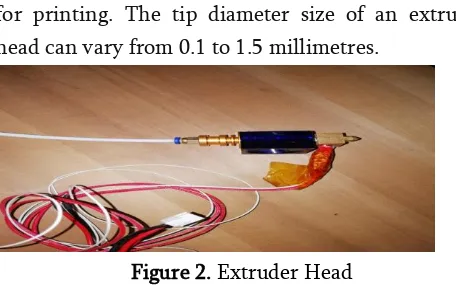
2. Extruder Head: A 3D printer extruder head and nozzle assembly are critical components for three-dimensional printing. It accepts and moves the thermoplastic filament. The thermoplastic filament is also called as the 3D printer’s “ink”. The extruder head heats and melts the filament on the hot bed to build parts.
It consists of both the hot and cold end for material extrusion. The cold end pulls the filament from its rotating spool, to the hot end. The thermoplastic filament then moves to the heated element, which
for printing. The tip diameter size of an extruder head can vary from 0.1 to 1.5 millimetres.
Figure 2. Extruder Head
3. Hot Bed: We have used the hot bed because it improves the quality by keeping the extruded thermoplastic filament warm and thus preventing warping. The hot bed is made up of hard aluminium plate, harder and smoother than the other versions. Size: 220mm, Voltage: 12V, Power: 180W
Figure 3. Hot Bed
4. 70CM20*20 Aluminium Post: To support the acrylic Top and Bottom plate, we have used an aluminium post of length 700mm approx. It is exactly 20*20mm square and has T-slots on all the four sides. The hole diameter is 5mm. The three parallel interconnected delta arms moves on this aluminium post with the shaft attached to it.
Figure 4. Aluminium post
plates were designed using CAD software and processed using laser cutting of the acrylic plate. The Top and Bottom plates are 8mm in thickness and various slots are provided to connect it to the aluminium post.
Figure 5. Acrylic plate
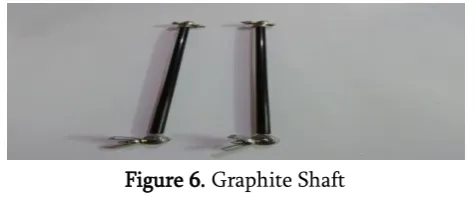
6. 200mm Graphite Shaft: We have used six graphite rods. It is also called as guiding rods. Length of graphite shaft is 185mm and with the knuckle bearings its total length is 214mm. It helps in the movement of extrusion head.
Figure 6. Graphite Shaft
7. Cooling Fan: When you start experimenting with printing objects with fine details at high speed, you will discover a problem with the 3D printing of thermoplastic materials i.e. controlling layer temperature. With a cooling fan fitted, Slic3r can still run the print at full speed.
Figure 7. Cooling Fan
8. SMPS: The electronic power supply integrated with the switching regulator for converting the electrical power efficiently from one form to another form with desired characteristics is called as Switch-mode power supply. We have used it to obtain regulated DC output voltage from unregulated AC or
DC input voltage. In our project we have taken the SMPS which provides;
Input: 110/220VAC Output 12V /30A
Figure 8. SMPS
9. LCD Module: We have used the RepRap LCD smart controller in our delta 3D Printer, which has following specification: Display size: 3x3cm.
His Smart Controller contains a SD-Card reader, a rotary encoder and a LCD display.
All further operations, such as calibration, the axis movement can be done with the rotary encoder embedded
Figure 9. LCD Module
10. Mother Board: ARMx STM32F103
It is a ARM 32-bit Cortex-M3 CPU processor. Features:
702 MHz maximum frequency. 64 or 128 Kbytes of Flash memory 20 Kbytes of SRAM
4-to-16 MHz crystal oscillator PLL for CPU clock
USB 2.0 full-speed interface CAN interface (2.0B Active)
7 timers: Three 16-bit timers, each with up to 4 IC/OC/PWM or pulse counter and quadrature (incremental) encoder input.
Figure 10. Mother Board
B. Software:
The software involved in the 3D printing process is comprised of two basic parts. First, a slicer program converts a CAD model, typically an STL file, into machine code. Next, control software converts G-code into electrical pulses that move the motors.
A. Slicer software: Most 3D printer models under $1,000 use open-source slicer software that is available for download on the Internet. The most widely used program to convert STL files to G-code is Slic3r. This software has options for speed, temperature, and feed control (Slic3r). There are similar programs such as Skeinforge, Cura, and Kisslicer, which are all available for free, download online (Edutech).
B. Control software: Unlike slicer software, control software is usually designed for each specific printer Configuration and mechanism.
Such software can be programmed onto a programmable logic controller (PLC) or a microcontroller. One way this can be achieved is by using Yaskawa’s Motion Works software, which is based on the industry standard IEC 61131 programming languages for PLCs.
There are open-source options for control software as well. The most popular of these is Repetier-Host, which was developed for the Rep-Rap printing platform. There are also programs that combine the slicing and control software. Netfabb is one such package that is available for free online (Edutech).
Higher-end printers make use of proprietary software that is integrated into the machine.
IV.
WORKING
This Delta 3D printer is based on the method of Fused Deposition Modelling. The printer will be switched on using the power supply. First we will define the Height of the printer. For this procedure we will bring the Extruder through a rotary control that will be provided in the LCD section.
Then a small surface such as a paper will be placed on hot plate and the extruder will detect the height of the paper. To set the height we will repeat this 10-12 times and then height will be set.
There are three stepper motors present on the X, Y, Z axis that will control the motion of the extruder. We find the Centre point of the hot bed.
Filament feeding will be done through the extruder motor which contains a servo motor. [8]The function of the extruder is to maintain the motion of the filament in and out of the extruder.
With the help of CAD software we will build a 3D design of the object that is going to be printed. For this we will present the step file of the object and will feed it to the printer. The step file is prepared with the help of layering software. Its function is to break the model into parts which the printer will read. (Consist of G code, M code, heating)
V.
CONCLUSION
and the time taken to print a product. Hence, it confirms that Delta printers are Efficient and useful for 3D printing.
VI.
REFERENCES
[1].HOD LIPSON, "Printable 3D Models for Customized Hands-on Education". Fabricated: The new world of 3D printing. 2007/8/5 Conference ACM SIGGRAPH 2007 courses. [2].D. L. Cohen, E. Malone E , ("Direct Free Form
Fabrication of Seeded Hydro gels in Arbitrary Geometries", Tissue Engineering, vol. 12, pp. 1325-1335, 2006.
[3].Martins Kalejs, Ludwig Karl von Segesser, "Rapid Prototyping of Com plant Human Aortic Roots for Assessment of Valved Stents", Interactive Cardiovascular and Thoracic Surgery, Volume 8, Issue 2, 1 February 2009, Pages 182-186.
[4].Simon Ford & Tim Minshall, "3D printing in Education: a literature Overview" , Version 1.0-17 September 2016, Working Paper October 2016. DOI: 10.13140/RG.2.2.16230.83526
[5].Enrique Soriano, Fernando Blaya, "Filament Advance Detection sensors for fused deposition modelling 3D printers", Sensors18(5), May 2018. DOI: 10.3390/s18051495.
[6].Betina Madeira Schmitt & Cassiano Bonin, "A comparative study of Cartesian and Delta 3D printers on producing PLA parts", Materials Research, Issue- February 2018, DOI: 10.1590/1980-5373-mr-2016-1039.
[7].Charles Bell, "3D Printing with Delta Printers", Issue-Jan2015,DOI:10.1007/978-1-4842-1173-1. [8].Chenming Wu, Ran Yi, Charlie Wang, "Delta