STOVER, TRACY EUGENE, JR. Optimization of Fast Critical Experiments to Reduce Nuclear Data Uncertainties in Support of a Fast Burner Reactor Design Concept. (Under the direction of Paul J. Turinsky).
An optimization technique has been developed to select optimized experimental design specifications to produce data specifically designed to be assimilated to optimize a
given reactor concept. Data from the optimized experiment is assimilated to generate posteriori uncertainties on the reactor concept’s core attributes from which the design
responses are computed. The reactor concept is then optimized with the new data to realize cost savings by reducing margin. The optimization problem iterates until an optimal experiment is found to maximize the savings.
A new generation of innovative nuclear reactor designs, in particular fast neutron spectrum recycle reactors, are being considered for the application of closing the nuclear fuel
cycle in the future. Safe and economical design of these reactors will require uncertainty reduction in basic nuclear data which are input to the reactor design. These data uncertainty propagate to design responses which in turn require the reactor designer to incorporate
additional safety margin into the design, which often increases the cost of the reactor. Therefore basic nuclear data needs to be improved and this is accomplished through
experimentation.
Considering the high cost of nuclear experiments, it is desired to have an optimized experiment which will provide the data needed for uncertainty reduction such that a reactor
optimized reactor design.
Methods are first established to model both the reactor concept and the experiment
and to efficiently propagate the basic nuclear data uncertainty through these models to outputs. The representativity of the experiment to the design concept is quantitatively determined. A technique is then established to assimilate this data and produce posteriori
uncertainties on key attributes and responses of the design concept. Several experiment perturbations based on engineering judgment are used to demonstrate these methods and also
serve as an initial generation of the optimization problem.
Finally, an optimization technique is developed which will simultaneously arrive at an optimized experiment to produce an optimized reactor design. Solution of this problem is
made possible by the use of the simulated annealing algorithm for solution of optimization problems. The optimization examined in this work is based on maximizing the reactor cost
savings associated with the modified design made possible by using the design margin gained through reduced basic nuclear data uncertainties. Cost values for experiment design specifications and reactor design specifications are established and used to compute a total
Optimization of Fast Critical Experiments to Reduce Nuclear
Data Uncertainties in Support of a Fast
Burner Reactor Design Concept
by
Tracy E. Stover, Jr.
A dissertation submitted to the Graduate Faculty of
North Carolina State University
in partial fulfillment of the
requirements of the Degree of
Doctor of Philosophy
Nuclear Engineering
Raleigh, North Carolina
2011
APPROVED BY:
____________________________
____________________________
Dr. Ralph C. Smith
Dr. Dmitriy Y. Anistratov
____________________________
____________________________
Dr. Hany S. Abdel-Khalik
Dr. Paul J. Turinsky
Dedication
I can do all things through Christ which strengthens me.
(Philippians 4:13, NKJV)
I dedicate this dissertation to my loving wife Maria who supports me in all my endeavors, to
my parents who without their support I would never have gotten this far, and to my aunt who
Biography
Tracy Eugene Stover, Jr. was born in Fairlea, West Virginia on December 1, 1983 to Tracy and Gay Stover of Smoot, West Virginia. He received elementary and secondary education at Smoot Jr. High and Elementary School. He graduated as salutatorian from
Greenbrier West High School of Charmco, West Virginia in 2002.
Tracy attended Murray State University of Murray, Kentucky as a major in the area
of Engineering Physics. In the summer of 2004 he received the Summer Undergraduate Research Fellowship at the National Institute of Standards and Technology in Gaithersburg, Maryland. After receiving his B.S. from Murray State in May of 2005 he enrolled at North
Carolina State University for graduate studies in Nuclear Engineering under the direction of Dr. Paul J. Turinsky. In December 2007 he received his M.S. in nuclear engineering with a
project that quantified cross-section induced uncertainties on back-end fuel cycle metrics. In summer of 2008 Tracy worked at the Idaho National Laboratory under the direction of Dr. Samuel Bays where he studied and modeled benchmark fast critical experiments and began
data assimilation studies that served as a basis for this work. While at NC State, Tracy has been primary author on three papers, and co-author on an additional five. He also served two
years as president of the Nuclear Engineering chapter of the Graduate Student Association, and one year as secretary/treasurer.
Before completing his Ph.D., Tracy spent 6 months as a research engineer at NC State
Acknowledgements
This work has been funded by the U.S. Department of Energy under the Nuclear Energy Research Initiative Grant Number DE-FC07-06ID14746.
Assistance is acknowledged to the following individuals and organizations: Dr. Samuel Bays
Dr. David Nigg Dr. Matthew Jessee
Dr. Masood Iqbal
Dr. Won-Sik Yang Mr. Ross Hays
Mr. Jason Elkins Mr. Shuang Du Idaho National Laboratory
Table of Contents
List of Tables ... ix
List of Figures ... xii
Nomenclature ... xiii
1. INTRODUCTION...1
1.1. Motivation and Scope for Research ... 1
1.2. Literature Review ... 4
1.2.1. Nuclear Data Needs ... 5
1.2.2. Uncertainty Propagation Techniques ... 8
1.2.3. Data Assimilation Techniques ... 9
1.2.4. Experiment Optimization ... 11
1.3. ZPPR Program History... 15
1.3.1. Experimental Capabilities ... 18
1.3.2. Measurement Techniques ... 21
1.3.3. History of Minor Actinide Analysis ... 23
1.4. ABTR Concept ... 24
1.5. Establishing a Language for this Work ... 25
2. EXPERIMENT SELECTION AND KEY OBSERVABLES ...28
2.1. Experiment Selection ... 28
2.1.1. Experiments Considered ... 28
2.1.2. Applicability of ZPPR 15-B... 33
2.1.3. ZPPR as a Neutron Source ... 34
2.2. Selection of Key Observables, Attributes, and Responses... 36
2.3. Unitless Safety Parameters ... 38
3. MATHEMATICAL AND COMPUTATIONAL METHODOLOGIES ...41
3.1. Modeling Software Verification... 41
3.2. ESM Methodology ... 42
3.3. Representativity Methodology ... 46
3.4. Adaptive Simulation Methodology ... 48
3.5. Optimization Problem Development ... 55
3.5.1. Definition of Experiment Cost ... 57
3.5.2. Definition of ABTR Design Limits and Responses ... 58
3.5.3. Definition of ABTR Core Attributes ... 59
3.5.4. Definition of ABTR Design Specifications ... 60
3.5.5. Design Limits and Final Problem Statement ... 61
3.5.6. Solution of the Optimization Problem ... 64
3.5.7. Simulated Annealing Procedure ... 66
3.6. Optimization Experiment ... 71
3.6.1. ABTR Costs ... 71
3.6.2. ABTR Penalties ... 75
3.6.3. ZPPR Costs ... 76
3.6.4. Optimization Demonstration Parameters ... 77
3.7. Software Used in Analysis ... 82
3.7.1. REBUS and DIF3D... 82
3.7.2. MC2-2 ... 84
3.7.4. In-House Generated Software ... 85
4. REACTOR MODELING AND VARIATIONS ...87
4.1. ABTR Models ... 87
4.1.1. Start-Up Core ... 87
4.1.2. Equilibrium Core ... 88
4.1.3. Sodium Voided Core... 89
4.1.4. Cross Section Adjustment for Doppler Coefficient ... 90
4.1.5. Axial and Radial Expansion Coefficient Models... 90
4.2. ZPPR Models ... 92
4.2.1. Base Models ... 92
4.2.2. Sodium Voided Inner Core ... 94
4.2.3. Cross Section Adjustment for Doppler Coefficient ... 95
4.2.4. Preliminary ZPPR Variations ... 95
4.2.5. Optimization Variations ... 101
5. RESULTS AND INTERPRETATIONS ...103
5.1. ZPPR Models’ Uncertainties ... 103
5.2. Representativity of Experiments to ABTR ... 112
5.3. Adaptive Simulation Posteriori Results ... 121
5.4. Key Parameters Response Analysis ... 144
5.4.1. Reactor Safety ... 144
5.4.2. Power ... 147
5.4.3. Fuels and Materials ... 149
5.4.4. Discharged Waste ... 150
5.4.6. Experiment Choice for Design Concept ... 156
5.5. Optimized ZPPR Experiment and ABTR Start-up Core ... 158
6. Feasibility Analysis ...169
7. Conclusions and Recommendations ...175
References ...184
Appendices ...190
Appendix A: ZPPR-15B Model Verification and Validation ...191
Appendix B: REBUS Linearity...198
Appendix C: ZPPR Variations for Optimization Problem ...202
List of Tables
Table 2.1 : 15-Group energy structure used in this work. ... 31
Table 3.1 : Fission product yield uncertainty for Mo-99. ... 54
Table 3.2 : Decay constant uncertainties. ... 55
Table 3.3 : Reprocessed Fuel Cost Breakdown. ... 74
Table 3.4 : ABTR Fuel by Mass Distribution. ... 74
Table 4.1 : ZPPR-15B TRU model variation nomenclature. ... 96
Table 4.2 : TRU plate composition by weight percent. ... 96
Table 5.1 : Cross section uncertainties available. ... 105
Table 5.2 : Reactor model nomenclature. ... 106
Table 5.3 : ZPPR integral parameter values for original ZPPR-15B and all TRU v.1 models. ... 107
Table 5.4 : ZPPR integral parameter uncertainties on all other 0th generation models. ... 108
Table 5.5 : Average reaction rates uncertainties for original ZPPR-15B and all TRU v.1 models. ... 109
Table 5.6 : Average reaction rates uncertainties for all other 0th generation ZPPR models. 110 Table 5.7 : Selected ZPPR perturbation integral parameter uncertainties. ... 111
Table 5.8 : Average reaction rates uncertainties for selected ZPPR perturbations. ... 112
Table 5.9 : Representativity to ABTR-SU of original ZPPR-15B, TRU v. 1 and 1-B. ... 116
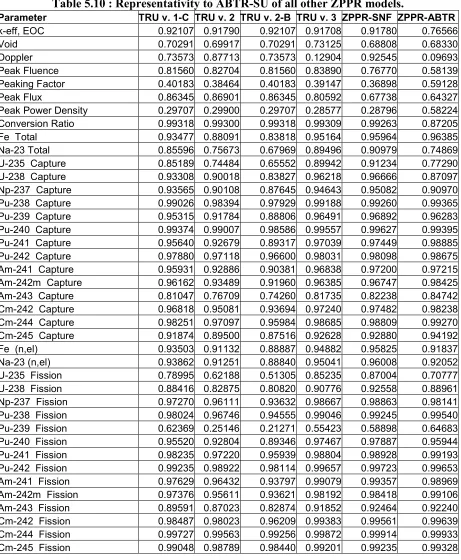
Table 5.10 : Representativity to ABTR-SU of all other ZPPR models. ... 117
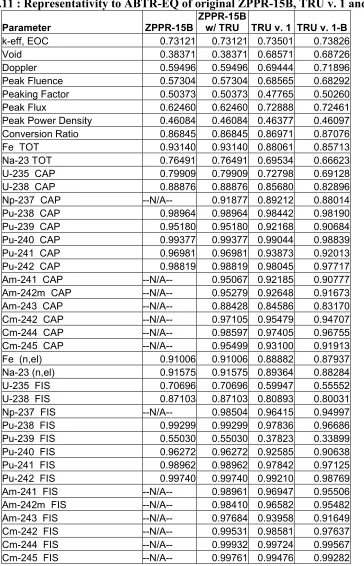
Table 5.11 : Representativity to ABTR-EQ of original ZPPR-15B, TRU v. 1 and 1-B. ... 118
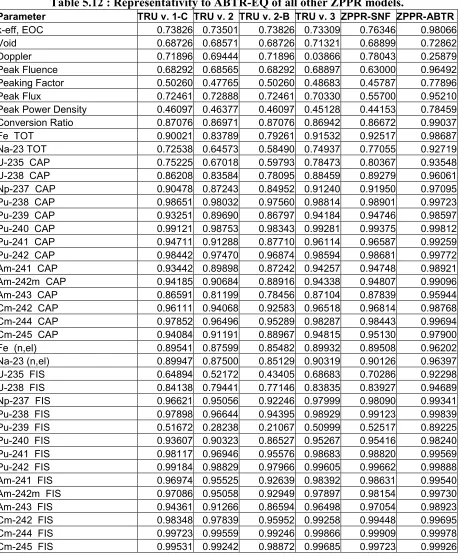
Table 5.12 : Representativity to ABTR-EQ of all other ZPPR models. ... 119
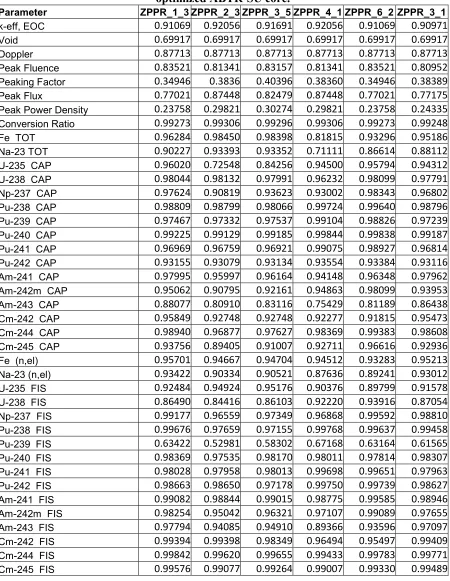
Table 5.13 : Representativity of the selected ZPPR perturbations to their respective optimized ABTR-SU core. ... 120
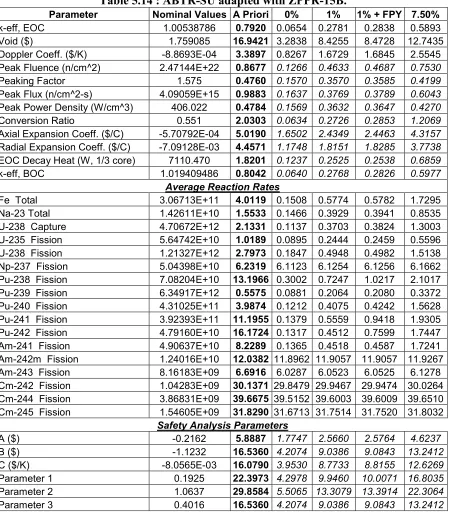
Table 5.14 : ABTR-SU adapted with ZPPR-15B. ... 123
Table 5.15 : ABTR-SU adapted with ZPPR-15B w/ TRU. ... 124
Table 5.16 : ABTR-SU adapted with TRU v. 1. ... 125
Table 5.17 : ABTR-SU adapted with TRU v. 1-B. ... 126
Table 5.19 : ABTR-SU adapted with TRU v. 2. ... 128
Table 5.20 : ABTR-SU adapted with TRU v. 2-B. ... 129
Table 5.21 : ABTR-SU adapted with TRU v. 3. ... 130
Table 5.22 : ABTR-SU adapted with ZPPR-SNF. ... 131
Table 5.23 : ABTR-SU adapted with ZPPR-ABTR. ... 132
Table 5.24 : ABTR-EQ adapted to ZPPR-15B. ... 133
Table 5.25 : ABTR-EQ adapted with ZPRR-15B w/ TRU. ... 134
Table 5.26 : ABTR-EQ adapted with TRU v. 1. ... 135
Table 5.27 : ABTR-EQ adapted with TRU v. 1-B. ... 136
Table 5.28 : ABTR-EQ adapted with TRU v. 1-C. ... 137
Table 5.29 : ABTR-EQ adapted with TRU v. 2. ... 138
Table 5.30 : ABTR-EQ adapted with TRU v. 2-B. ... 139
Table 5.31 : ABTR-EQ adapted with TRU v. 3. ... 140
Table 5.32 : ABTR-EQ adapted with ZPPR-SNF. ... 141
Table 5.33 : ABTR-EQ adapted with ZPPR-ABTR. ... 142
Table 5.34 : Selected ABTR posteriori results from selected ZPPR perturbations. ... 143
Table 5.35 : Posteriori uncertainty for reactor safety parameters in ABTR-SU. ... 146
Table 5.36 : Posteriori uncertainty for reactor safety parameters in ABTR-EQ. ... 147
Table 5.37 : Posteriori uncertainties for power parameters in ABTR-SU. ... 148
Table 5.38 : Posteriori uncertainty for power parameters in ABTR-EQ. ... 148
Table 5.39 : Posteriori uncertainties for material parameters in ABTR-SU. ... 149
Table 5.40 : Posteriori uncertainties for material parameters in ABTR-EQ. ... 149
Table 5.41 : Posteriori uncertainties on waste parameters for ABTR-EQ, 1 of 2. ... 151
Table 5.42 : Posteriori uncertainties for waste parameters for ABTR-EQ, 2 of 2. ... 152
Table 5.43 : Posteriori uncertainties for conversion parameters in ABTR-SU, 1 of 2. ... 153
Table 5.44 : Posteriori uncertainties for conversion parameters in ABTR-SU, 2 of 2. ... 154
Table 5.45 : Posteriori uncertainties for conversion parameters in ABTR-EQ, 1 of 2. ... 155
Table 5.46 : Posteriori uncertainties for conversion parameters in ABTR-EQ, 2 of 2. ... 156
Table 5.47 : Design specifications of ZPPR_5_3. ... 166
Table 5.49 : Optimized ABTR design specifications and cost. ... 167
Table 5.50 : Optimized ZPPR representativity to optimized ABTR. ... 167
Table 5.51 : Optimized ABTR attributes uncertainty using data from ZPPR_5_3. ... 168
Table 5.52 : Optimized ABTR responses uncertainty using data from ZPPR_5_3. ... 168
Table 6.1 : Radiation hazard from the worst single tray in a ZPPR experiment. ... 173
List of Figures
Figure 1.1 : Cartoon schematic for ZPR-6 and ZPR-9. ... 17
Figure 1.2 : Photograph of ZPPR while being loaded. ... 18
Figure 1.3 : A fully loaded ZPPR drawer. ... 20
Figure 2.1 : ZPR-6 and ZPPR 2 flux spectra compared to ABTR. ... 32
Figure 2.2 : FTR or ZPR-9 flux spectrum compared to ABTR. ... 32
Figure 2.3 : ZPPR-15B flux spectrum compared to ABTR. ... 34
Figure 4.1 : ABTR core showing triangular discretization. ... 88
Figure 4.2 : ZPPR-15B as built. ... 94
Figure 4.3 : ZPPR-15B with 16 TRU drawers in the center. ... 97
Figure 4.4 : ZPPR-15B with 32 TRU drawers in the center. ... 98
Figure 4.5 : ZPPR-15B with distributed TRU drawers... 99
Figure 4.6 : ZPPR-15B with mock SNF assemblies. ... 100
Figure 4.7 : ZPPR-15B ABTR mock-up... 101
Figure 4.8 : Optimized ZPPR Experiment, ZPPR_5_3. ... 102
Figure 5.1 : Bounding and example inner ABTR optimizations. ... 163
Figure 5.2 : Overall optimization of ZPPR experiment and ABTR design. ... 163
Figure 5.3 : Progressive standard deviation of the ZPPR Markov chains, by generation. ... 164
Nomenclature
ABTR – Advanced Burner Test Reactor ANL – Argonne National Laboratory BOC – Beginning of cycle
BOL – Beginning of life DU – Depleted uranium
EOC – End of cycle EOL – End of life
ESM – Efficient Subspace Method
FPY – Fission Product Yield
MWD/MT – Megawatt days per metric ton
INL – Idaho National Laboratory LWR – Light water reactor MOC – Middle of cycle
SA – Simulated Annealing
SNF – Spent Nuclear Fuel, also refers to Spent Nuclear Fuel sample drawer for ZPPR
1.
INTRODUCTION
1.1.
Motivation and Scope for Research
All nuclear reactor designs rely on basic nuclear data, which are obtained by evaluating experimental data from differential and integral experiments designed to provide information about basic nuclear data and reactor operation, e.g. determining reaction cross
sections. In the U.S. between the 1950s and the 1990s, many reactor physics and criticality integral experiments were performed. The integral experiments most crucial to this
particular study were performed on the fast critical Zero Power Reactor, ZPR, and the Zero Power Plutonium (or Physics) Reactor, ZPPR, at Argonne National Laboratory – West, which is now Idaho National Laboratory. The ZPPR and the smaller ZPR were split-table
reactors which housed a grid of drawers that were filled with fuel, reflector, blanket, and structural materials in various geometries and compositions for various experiments [1].
These experiments were conducted to provide information on the physics of Generation IV type fast reactors. Interest in fast reactor and closed fuel cycle analysis began to decline in the 1980s and virtually ended in the early 1990s reflecting the political climate of the times.
Today there is renewed interest in Generation IV type fast reactors, especially with the continuing buildup of high level nuclear waste and the difficulties associated with
interring spent fuel. This study focuses on the Advanced Burner Test Reactor, ABTR, proposed by Argonne National Lab in 2006 [2]. This reactor is a possible means of demonstrating the closing of the fuel cycle by burning off plutonium and minor actinides
reactor, like all others, relies on established basic nuclear data, namely isotopic reaction cross
sections, to compute the necessary neutronics design calculations. These data, established by experiments like those conducted on ZPPR, include uncertainty derived from various sources during the experiment and in evaluation. Uncertainties for these cross sections are often
included with the basic data in the form of a covariance matrix containing variance and covariance information for different isotopes and reactions. Design calculations must
therefore include uncertainty of key reactor operating parameters that result from the uncertainty in these basic data.
Related to uncertainty analysis is another aspect of the nuclear data that is
increasingly becoming of interest as well – representativity, which is a quantitative measure of how similar the sensitivity profiles for a parameter are between two different reactors [3].
An experiment might be performed very well and the information obtained from it may be very accurate, but if that experiment does not reasonably represent the physics of the design being considered the information obtained from it may not be applicable to said design. To
examine this portion of the problem, the representativity factor has been developed as a means to measure whether integral parameters in an experiment are sensitive to similar basic
data, i.e. representative, of a given design [4]. In contrast to accuracy, an experiment and a design may have a large uncertainty on a given parameter, but if that parameter is sensitive to the same basic data by similar magnitudes, then the representativity will be high despite
However, it is not sufficient merely to have a representative experiment with very
accurate results. Those results must be realistically incorporated into the overall knowledge base to be used to reduce the uncertainty and required margin on key reactor operating parameters. In this work, adaptive simulation will be used to make this incorporation.
Adaptive simulation utilizes both experimental data and a priori values of nuclear data and associated uncertainties to obtain posteriori values and uncertainties. In this work a
computational, subspace-based data assimilation technique is employed [5]-[11]. This approach solves a generalized minimization problem [11] that has been appropriately regularized to treat its ill-posed nature [12]. The solution that results is the optimal
perturbation to be applied to the input nuclear data which, when propagated through the analysis model, comes as close as possible to obtaining the desired results, the improved
agreement between measured and predicted observables. The solution to this problem used in this work will not only be constrained to the space spanned by the a priori input cross section covariance information, but also factor in experimental errors, i.e. counting statistics,
fission product yield uncertainty, etc.
Given a method to measure the representativity of an experiment to a design and a
method to assimilate the data from an experiment into design calculations, a methodology will be developed in this work to optimize the experiment for the desired uncertainty reduction to reduce required design margins. Considering the high cost of nuclear
experiments, especially those concerned with advanced reactor designs, the benefit of performing an experiment must outweigh the cost. In practical terms the monetary savings
produces the data to reduce those margins. Initially, numerous core attributes and design
responses of a reactor design, ABTR, were examined for potential posteriori uncertainty reduction using representative experiments, i.e. variations of ZPPR. The benefit of the experiment can be determined by examining whether the posteriori values fall within the
desired safety criteria [13] and operating margin [14] when considering uncertainty as opposed to their a priori values. A subset of ABTR design responses and their associated
core attributes were selected for optimization of the ABTR design. The responses were assigned a monetary value developed in this work. ZPPR experiment design specifications were also assigned a monetary value. This information was then incorporated in a two-level
optimization problem in which ZPPR design specifications are varied to produce experimental results that are assimilated into posteriori uncertainty data for an ABTR design.
The ABTR design specifications are then varied to produce an optimized design, in terms of monetary savings. The price of the experiment is compared with the cost savings on the ABTR design and iterations performed to reach an optimal combination of experiment and
reactor design, i.e. optimized the net savings defined as ABTR cost savings minus ZPPR experimental cost. Finally, a discussion will be presented on the cost of experiments versus
the economic worth of margin, and the feasibility of some of the experiments simulated in this work.
1.2.
Literature Review
that will be used. Discussion of the reactors examined in this work, including a summary of
the ZPPR program history, will be deferred to subsequent sections.
1.2.1. Nuclear Data Needs
The previous section indicated that a principle motivation for this work was the need
for reduction in the uncertainty on basic nuclear data so as to benefit reactor designers who must allow additional safety margin due to uncertainty on design responses induced by these nuclear data uncertainties. Both recent and historic research has been done explicitly on the
topic of nuclear data needs for the design of Generation-IV type reactors.
As early as 1968 work was being done to analyze the sensitivity of fast reactor designs to deficiencies in basic nuclear data. At that time Greebler identified deficiencies in
sodium cross sections and the Pu-239 fission yield as the main sources of uncertainties yielding 1 to 4 % uncertainties on reactivity coefficients [60]. He also quantified
uncertainties in terms of mills per kWh installed capacity. Salvatores and Palmiotti made an extensive study in 1985 about uncertainty and target accuracy needs for the liquid metal fast breeder reactor initiative of those days [61]. They examined the critical mass which was
determined to need integral experiments to improve data, burnup dependent core reactivity changes which had a 16% uncertainty, reactivity control issues (control rod worth and
that with the current deficient data that an unacceptable 25% bias would need to be applied
on reactivity parameters of fast reactors.
Interest in fast reactors revived in the 2000s with the intention of closing the nuclear fuel cycle. In turn nuclear data needs for fast reactors again came into question and produced
some recent work. Some of these recent works focus particularly on a certain aspect of nuclear data uncertainty. For example D’Angelo and Rowlands examine exclusively the
uncertainty in delayed neutron data for major actinides, which is important for reactivity control of cores that are heavily loaded with actinides [57]. Williams examines the uncertainty and sensitivity of eigenvalue difference responses, i.e. how uncertainties will
propagate to reactivity coefficients which are key core attributes for designing a reactor that will operate safely [58]. Elkins [34] and Stover [35] examine more global affects of nuclear
data uncertainty propagation by evaluating the effects on fuel cycle performance and waste management parameters. Konomura and Ichimiya have taken a different path and investigate the materials needs of fast reactors, which are removed from basic data but still depend on
the effects calculated by using cross sections [62]. They identify concerns with in-service repair and inspection and in finding sodium resistant materials. However, it is a series of
works by Aliberiti, Salvatores, Palmiotti, and others that provides the most in-depth modern research in references [4], [14], [63], [64], and [65]. Aliberti most completely addresses the sensitivity and uncertainty effects on typical Generation-IV systems and suggests target
accuracies that will be needed for future systems. The short paper referenced is an abbreviated version of a much longer and more extensive report coordinated by Salvatores.
systems is addressed extensively. The team of investigators that compiled this report
carefully lays out in detail the nuclear data needs for various innovative systems such that the design margins and reactor responses will be acceptable with regard to the safe and economic operation of these Generation-IV type systems. While the full details of these works are too
lengthy to include here, it was the conclusion that for most Generation-IV reactor types to operate safely and economically, the nuclear data would have to be improved to give
accuracies of ±0.5% on reactivity, ±3% on power peaking factor, ±300 pcm on burnup calculations, ±5% on transmutation rates, and ±10% on reactivity coefficients including void worth. Several of these references made use of the representativity factor to evaluate how
representative experiments were to the systems being considered and [64] went as far as to suggest a data assimilation technique similar to the one that is employed in this work.
This work intends to respond to these nuclear data needs by developing a method for optimized experiment design to meet the target uncertainties on key reactor design responses. Experiment optimization has been applied extensively in other fields such as aerodynamics
and aviation, semiconductors and electronics, chemical engineering, mechanical design, and mineral processing [44]-[50]. However, a survey of integral nuclear experiments, for
reference any of the more than 500 ZPPR program reports, shows nuclear experiments are often performed for a very targeted evaluation rather than optimized for a subsequent process or design. For example, common ZPPR experiments were criticality tests and reaction rate
sampling. These types of experiments were important to the understanding of generalized fast reactor physics, however some even specifically designed to study the design of a
1.2.2.
Uncertainty Propagation Techniques
The first tool required for this work is an efficient uncertainty propagation technique.
Cross section a priori covariance data is propagated through the ABTR models and through ZPPR experiment variations to selected observables and core attributes. The experimental
data is then used to generate posteriori covariance data on the ABTR attributes and responses.
The field of uncertainty and sensitivity analysis is rich with methods and literature.
The three most common methods are stochastic sampling, general perturbation theory using adjoint functions, and forward deterministic methods. Stochastic methods require a number of random samples that exceeds the number of input uncertainty parameters being sampled
[30]. This method is impractical for this work since there are many input uncertainty parameters. Adjoint methods are used for linear systems when there are only a few output
responses of interest and very large amounts of input parameters that must be perturbed since an adjoint function is required for each output parameter [31]. This method is marginally practical for this work because there are also many output responses. The forward
deterministic methods, such as the “propagation of errors” method [32], are most useful when there are many output responses and only a few input parameters to perturb as this
method perturbs input and runs the model in a forward calculation.
In the case of reactor design, often the number input parameters and output responses that must be perturbed and analyzed, respectively are both very large. In the case of large
of forward simulations by recognizing the more important contributors to uncertainty,
allowing the less important contributors to be ignored and thus reduce the number of forward simulations required to propagate the uncertainty information [5][8][9][33]. Since this work involves large input and moderate output streams, ESM was chosen. ESM works particularly
well when there is strong correlation among the nuclear data uncertainties and some of the responses are insensitive to components of the nuclear data uncertainties. For the
application of interest, these two attributes exist. A final requirement of ESM, which will be discussed in more detail in Chapter 3, is that the core simulator responses behave linearly with respect to the nuclear data. It is shown that this is the case within the range of input
parameters as defined by their uncertainties, so that ESM is applicable.
1.2.3. Data Assimilation Techniques
The goal of performing an experiment is to provide useful information to advance the
field of knowledge of a subject. In particular the experiments simulated in this work are intended to provide improved basic nuclear data with which a reactor design may be optimized by reducing design margins. Therefore a technique is required that will permit the
assimilation of the new experimental data into the current data to improve its quality.
Tarantola [66] presents in a very general fashion a direct computation method to
assimilate responses to modify an a priori set of parameters, in this case a covariance matrix, into a posteriori set of parameters. Within the context of our usage, the results of his presentation are consistent with a Bayesian approach. His formulation shows that the
information, the experimental uncertainties and a linear operator that maps between the
experiment space and the covariance data space, i.e. sensitivities of the experiment to the desired covariance data. This serves as the starting point for the assimilation, but Tarantola’s formulation assumes a well-conditioned problem. For the problem of interest in this work,
the data assimilation problem is actually ill-conditioned.
Tikhonov generalized the Bayesian approach [12]. By introducing a regularization
parameter, the weight given to improving agreement of prediction with experiment, i.e. the mismatch term, relative to allowed deviation from the a priori parameter values, i.e. the regularization term, can be selected. The value of this term is then selected to minimize the
mismatch term while minimizing the regularization term. Ideally this regularization parameter must be as close to 1 as possible since the farther from unity this value is, the more
different the problem actually being solved is from the problem that is desired to be solved, that being the Bayesian approach to achieve maximum likelihood.
In his work, Jessee applied Taratonla’s described assimilation technique with
Tikhonov’s regularization technique to a multi-physics core simulator [11]. In that work, nuclear reaction cross sections were adjusted based on measured values of reactor responses
in a technique known as adaptive simulation. The cross sections were adjusted, within their a priori uncertainty space, so that the simulated core yielded responses closer to actual measured data. Jessee took his formulation to the point that measured data along with a
and the reactor whose response uncertainties are being determined for are no longer one and
the same.
1.2.4. Experiment Optimization
Experiment optimization is an effort to maximize the effectiveness of the data
obtained from an experiment toward the solution of a particular problem. This practice is often applied in fields of study where experiments can be both complex and expensive. Therefore a good experiment that yields the desired results toward the solution of a problem
is of importance. This can be seen in such highly competitive fields as mining and ore processing [47], chemistry [48], and electronics [45]. It is also of high importance where experimentation is often not only expensive but time consuming and complicated such as
mechanical designs [46], medicine [49], and robotics [50]. Of the papers reviewed, perhaps the one that best shows a potential application for the nuclear industry is the one by Zheng
[44]. His work was to optimize a wind tunnel experiment. Like the nuclear industry, aeronautical experiments can be very expensive and time consuming to both develop and to implement. They also involve complicated fluid dynamics problems, often based on
empirical relationships, which require great care in studying, much like the study of the nuclear physics that go into reactor design. One trait common to these optimizations is that
these are directed experiments meant to provide specific data for a specified design. Many of the more than 500 ZPPR program technical reports indicate that these experiments were intended to provide general knowledge about fast reactor physics, with fewer cases being
technology, it only makes sense to apply this practice of experiment optimization to nuclear
designs.
As indicated in the discussion of the scope of this work, an original optimization problem will be developed to determine the optimal experiment that yields an optimal ABTR
design. One method to optimize the design is by use of factorial design [72]. In factorial design, two or more factors, i.e. design specifications, are varied in all possible combinations.
This exhaustive search not only requires discrete values for each of the factors but requires, for k factors, 2k-1 experiments to be analyzed. Since the choices available for both the ABTR
and the ZPPR design specifications optimization are very numerous (e.g. loading patterns)
and oftentimes continuous (e.g. enrichments), an exhaustive search of all options is computationally demanding and therefore possible but infeasible. Note simulated annealing
also cannot treat continuous variables. This is addressed in Section 3.6.4. Randomly choosing the design specifications will not approach a truly optimized solution. Experienced engineering judgment adds a degree of informed decision making to design specification
choice and indeed this is how the initial generation of ZPPR experiment perturbations was developed. As will be shown, these ZPPR perturbations based on choice of test drawer fuel
composition, detector number and position, and loading pattern did yield reasonably good results for posteriori uncertainties reductions in ABTR design responses. These “hand optimized” choices were based largely on the concept of exposing ABTR type fuel forms and
problem for this work was developed, it became necessary to apply a proven, logical,
mathematical technique for the solution of the optimization problem.
An entire field of research is devoted solely to advancing the knowledge of optimization algorithms so even a generalized discussion of the various techniques is beyond
the scope of this work. As such only the technique applied in this work is discussed.
The simulated annealing algorithm method for solving optimization problems is
employed in this work. Simulated annealing was chosen primarily for its ease of implementation and for its extensive application in nuclear industry optimization problems, such as fuel management, that are very much similar to the type of optimization problem
encountered in this work. In metallurgy, annealing is the process of cooling a hot material at a specified rate so as to achieve a desired crystalline structure by getting all the particles to
arrange in a low energy state. Simulated annealing is a optimization algorithm for solving combinatorial problem which uses a Boltzman machine to progressively narrow the range of accepted solutions. This is analogous to the Boltzman probability distribution which
characterizes the probability of being at a stated energy at a given temperature for a solid that is in thermal equilibrium, and this is used to determine the cooling schedule for the physical
annealing process [51].
A very readable text on this subject is that by van Laarhoven [51] which contains discussion on the original method development by Metropolis and Kirkpatrick and
subsequent advances. The algorithm begins with a large range of values of the objective function, values less than the previous generation are always accepted and values greater than
based on the change in the objective function value and the annealing temperature. This
prevents the solution for being trapped in local minima. After a number of acceptances, the system is “cooled”, that is the probability of acceptance of an inferior solution decreases. The process continues asymptotically approaching a solution in the neighborhood of the
global minima.
This process was applied to the field of in-core nuclear fuel management by
Kropaczek [52] in 1990. The in-core fuel management problem, with 1050 or more possible combinations of fuel assembly placement and enrichment, is ideal for this application because the search field is very large and fraught with local minima. The design of the ZPPR
experiment is analogous to this with multiple choices for sample drawer loading, and instrumentation location and quantity available. Since Kropaczek, the nuclear industry has
applied this process to improve economics and fuel utilization. Ye [56] applied the method to core control utilizing very detailed penalty functions to augment the objective function, and a cooling schedule based on the distribution of accepted values rather than just a scalar
constant between 0.5 and 0.99 [51]. He also applied a limit to the maximum number of trials per generation as well as the number of acceptances. Moore used the method for fuel loading
pattern optimization for boiling water reactors [53]. This problem included hard constraints which resulted in an immediate rejection of the trial solution. Du applied this optimization engine in the out-of-core fuel cycle economics code OCEON [55]. He added to his method
an initial “temperature” based on the standard deviation of the objective function values from a survey generation, here after referred to as the 0th generation of the annealing process.
management code. In addition to running the algorithm in parallel, he added the constraint
on the cooling schedule to make the cooling adjustment a minimum value or the value determined from the distribution of the acceptance, whichever is larger. If the system is cooled too quickly trapping in a local minima can occur. So as can be seen the simulated
annealing algorithm is a common choice for solving large combinatorial problems with certain attributes.
1.3.
ZPPR Program History
The ZPPR fast reactor experimental program ran from 1963 to 1990 at what was once
Argonne National Lab – West but is now Idaho National Lab. It consisted of four actual reactors: ZPR-3, ZPR-6, ZPR-9 and ZPPR, all of which are split table designs as indicated in
Figure 1.1. ZPR-3 seems to be the least applicable to this work and is not possible to be restarted for future work as it has been fully decommissioned and is on display at the Experimental Breeder Reactor No. 1 Museum just east of Arco, ID. ZPR-3 was a “table top
reactor”, i.e. the entire apparatus is about the size of a small sport utility vehicle, with a 30 x 30 matrix of 1 inch drawers. It was typically uranium fueled and graphite moderated,
although assemblies 48 through 57 were plutonium fueled and are occasionally referenced as early plutonium benchmarks. ZPR-6 and ZPR-9 were essentially of the same design. They were 45 x 45 matrices of 2.2 inch drawers (~8 ft square matrix) housed in an apparatus about
12 feet in height. ZPR-9 improved on ZPR-6’s sampling capabilities by adding sample traverse tubes and a more controllable axial sampling device that spanned the axial length of both halves. ZPR 6 and ZPR 9 hosted a wide variety of experiments that drifted away from
non-reactive material. These also experimented with various fuel isotopes including both
plutonium and uranium and various fuel forms including both metal and oxide fuels. An analysis of ZPR 6 Assembly 7a has been previously performed as a starting point for this work [7]. ZPR 6 and 9 are fully decommissioned but the physical apparatuses are still
housed at INL. ZPPR was the largest and most versatile of the reactors having a maximum of 77 x 77 2.2 inch drawers (~14 ft square matrix), however, they assumed circular cores so
the lower corners, which are 10x10 solid blocks, are not available for use (Figure 1.2). ZPPR is currently in standby mode, which means it is fully unloaded but still mechanically operable from its original control room. INL’s current plan is to decommission this reactor whenever
funding is available. Costs for decommissioning are estimated at $5 million. The estimated cost to refurbish the control room, bring in new expertise, and restart the ZPPR program is
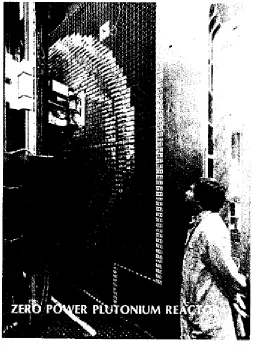
Figure 1.2 : Photograph of ZPPR while being loaded.
1.3.1. Experimental Capabilities
This and subsequent subsections refer to a selection of general information about the
ZPR and ZPPR programs. This information was obtained from the ZPR Technical Memoranda Series, which is a collection of 500 documents detailing the ZPR and ZPPR programs from 1963 to 1991. Due to the large volume of information, specific memos are
First it should be noted that the drawers for ZPR-6, -9 and ZPPR are all the same size
and fully interchangeable with each other and with any of the plates. A drawer or tray is filled with a combination of several plates that together form a composition for a given region of the core, e.g. high enriched inner core or a depleted uranium blanket (Figure 1.3).
The plates are short enough to be able to be arranged in such a manner as to give radial instrumentation or sample gaps as small as 0.5 inch. The plates exacting widths allow only a
few millimeters axial spacing however. Special empty steel cans are used to replace sodium cans in voiding experiments and there are enough available to void about 1200 liters worth of sodium cans from an experiment. Reactivity was measured by finely calibrated control rods
and later by power feedback calculations. Neutron spectra were typically taken by proton-recoil detectors which took up an entire drawer. Single drawer worth was measured prior to
neutron spectra measurements. For the whole program neutron detectors were placed in thin lead shields to reduce gamma interference with the measurements. In the early 1980s high energy neutron detectors were developed for testing in the ZPPR. These used thicker energy
filters to stop low energy neutrons and gammas, so the detectors could focus on the spectrum greater than 1 MeV. That is all the information on detector shielding or energy filters
contained in the technical memos.
Irradiation experiment sampling was conducted one of three ways – by foils, axial sample changer typically near the core center, and radial transverse tube just behind the
mid-plane of the stationary half. If the sample can fit in a 2 x 2 x 2 inch box, a 0.5 inch diameter tube or can be wedged in between the plates, it can be irradiated. The 2 in. cubic box usually
Fission chambers were usually placed in the axial changer or traverse tube, but later ZPPR
assemblies had several specific drawers that consistently housed fission detectors. Finally, and perhaps most importantly for advanced designs, the drawer cross sectional area is such that most hexagonal fuel assemblies can be approximated well with a 2 x 2 or 3 x 3 block of
drawers. To further facilitate experiments simulating assemblies with fuel pins rather than plates, a number of pin cell calandria drawers were constructed. These were drawer sized
cells that had 16 evenly spaced fuel pins surrounded by appropriate amounts of sodium and structural material which, combined in 2 x 2 or 3 x 3 groups, simulated a fast reactor fuel assembly.
1.3.2.
Measurement Techniques
As mentioned in the previous section, measurements of reactivity were taken either
by means of a finely calibrated control rod or by power feedback calculations which used inverse kinetics. Reactivity parameters such as void worth were measured by reactivity
changes and a known delayed neutron fraction. Proton-recoil neutron detectors were used for neutron flux spectrum measurement. Other integral parameters such as power peaking factor or power density were determined by back end calculations using other measured
information.
Reaction rates from irradiated samples as well as the fuel itself were of key importance. Fissile and fertile uranium and plutonium samples were loaded into fission
chambers and irradiated. Small samples of uranium and structural material were irradiated as well. Button sized foils of uranium and plutonium as well as more rare materials such as
americium were also irradiated. Irradiated samples were counted over time after being irradiated. Fission reactions were calculated by the decay of the prominent fission product Mo-99 into Tc-99 with a half life of 65.94 hours. Capture reactions were calculated by
counting the decay of capture daughter products such as U-239 from U-238 capture. This
introduces three sources of error: 1) counting statistics uncertainty of 1/ # of counts , 2)
fission product yield uncertainty, and 3) decay constant yield uncertainty, in addition to sample isotope purity, density, and dimensions.
Technical Memos. The following comes mainly from discussions with Dr. Samuel Bays of
INL and from a single material science paper from the 1970s where one of the companies that produced the foils discussed manufacturing techniques [16]. The cylindrical samples were indicated to have been made in-house, either at INL or ANL. The foils’ manufacture
appears to have been contracted to chemical companies, like the ones who created the plates, e.g. DOW Chemical. The one paper on foil manufacture indicated that the foils had to be
made very precisely and up to 40% were rejected for impurities or manufacturing problems – no indication of cost. The uranium samples could be handled openly and the plutonium samples were made in glove boxes. Discussion with Dr. Bays yielded a little more
information on the plates and the small samples. The plutonium plates are incredibly valuable, especially today as are the enriched uranium plates. The others, he indicated, could
be reproduced if more were needed, especially the sodium and steel plates. INL can and does make its own minor actinide samples and is currently producing on an as-needed basis, which is briefly address in the next section. These are small cylindrical samples however,
created on a laboratory basis, nothing on the scale of producing hundreds of plates.
There were typically five experiments performed on every ZPR and ZPPR assembly.
These were criticality, Doppler reactivity, void worth, small sample worth, and reaction rates and ratios. Criticality was measured directly as indicated above. Small sample Doppler reactivity experiments, usually with natural uranium oxide and plutonium oxide samples,
were performed by placing a heated sample in various locations along the traverse tube. Core wide Doppler reactivity experiments involved shutting off the cooling fans and
small sodium samples and by voiding portions of the core in radial increments. Small
samples were measured in the axial sample changer or in the traverse tube and the worth accounted for by the fine control rod. Reaction rates were taken by irradiating foils at various locations, by traversing uranium and plutonium fission chambers, and by small
spherical double-foil counters placed in either the axial sample changer or specially made gaps in the plates. Locations of these counters and especially of the foils are well
documented for most experiments. Later in the program, methods were reported for converting the point-wise foil and fission chamber measurements to cell-averaged values which one would get from a computational model. Documentation is better for the ZPPR
experiments than the ZPR ones. Neutron spectra were reported for only select reactors and assemblies. Less common experiments, such as the use of pin calendria rather than fuel
plates, were also conducted but these are often specific to a given reactor and assembly.
1.3.3. History of Minor Actinide Analysis
Difficulty in producing and handling pure minor actinides has been a hindrance in doing research with these matrerials up until modern times. With the exception of the
occasional Am-241 sample in ZPPR, that program has almost no information. Further information is sparse on minor actinide irradiation up until modern times. One special
experiment conducted on the ZEBRA 21 reactor was cited in a ZPPR report. This experiment irradiated Am-241 and Am-243 samples to determine production rates of Cm-242, Am-242m, and Cm-244 [18]. A long term irradiation study on minor actinide samples
actinide irradiation in fast critical facilities in the USA. Therefore the minor actinide reaction
rates calculations rely on very little a priori cross section information.
1.4.
ABTR Concept
The following discussion comes mostly from the ABTR pre-conceptual design report [2]. The ABTR is a small, prototype scale fast flux power reactor rated at 250 MW. It
consists of 199 hexagonal fuel assemblies of which 78 are reflectors, 48 are shielding, 10 are control, and 3 are material test, i.e. inert. The remaining 60 are divided between 3 fuel regions – inner core, outer core and middle core. When the ABTR first starts up, the 54 inner
and outer core assemblies are composed of a Pu-U-Zr alloy fuel in which the plutonium content is weapons grade. The 6 middle core assemblies are composed of SNF acquired
from used LWR fuel that is also alloyed with uranium and zirconium. After each planned cycle of 4 to 6 months, fuel from the ABTR is recycled and mixed with more incoming SNF from LWRs. This recycled fuel is added into ABTR in greater and greater quantities, slowly
replacing the high enrichment weapons grade plutonium fuel until the reactor reaches an equilibrium flow. Equilibrium is reached when the reactor’s own recycled spent fuel and
incoming supplies of LWR SNF are unchanged from cycle to cycle and sufficient to sustain repetitive cycle lengths.
The ABTR represents one of many Generation IV reactor concepts designed to close
the fuel cycle, employ advanced methods and technology, and reduce the amounts of high level waste that must be disposed of. ABTR also reflects a shift in energy policy from its predecessor designs of the 1970s and 1980s in that this reactor is designed to burn rather than
uses a hard neutron spectrum to fission many threshold-reaction isotopes such as neptunium,
americium and curium. ABTR creates usable power while simultaneously destroying long lived isotopes that limit waste disposal. Combined with the use of passive safety systems, modern materials, and other advanced concepts, ABTR is the model of the current trend in
Generation-IV concepts in the USA.
1.5.
Establishing a Language for this Work
The optimization problem developed in this work, and indeed the whole body of this paper, will apply a specific set of terms to describe specific pieces of information. This
terminology seeks to provide a common, specific language for discussion in this work. The special terms are as follows:
For the ZPPR Experiment
1. ZPPR Design Specifications: items that define the experimental setup and are the
decision variables
2. ZPPR Observables: the instrument readings that are used for adaption
3. ZPPR Experiment Cost: function of the ZPPR Design Specifications and associated with multiple experiments
For the ABTR Reactor
1. ABTR Design Specifications: items that define the design of the reactor
3. ABTR Design Responses: responses that have limits whose uncertainty distributions
can be determined from the ABTR Core Attributes uncertainty distributions and the ABTR Design Specifications
4. ABTR Design Limits: values that the ABTR Design Responses should not exceed for
a stated probability
5. ABTR Reactor Cost: Function of the Design Specifications
6. ABTR Design Spec Range: allowed combinations of ABTR Design Specifications that do not violate any of the limits and is a function of ABTR Core Attributes uncertainties
7. ABTR Optimum Design Specs: that combination of ABTR Design Specifications constrained to be within the ABTR Design Spec Range that minimizes the ABTR
Reactor Cost
8. ABTR Reactor Cost Savings: Difference between the ABTR Reactor Cost using ABTR Optimum Design Specifications for a priori minus posteriori ABTR Optimum
Design Specs
Optimization Problem Terms
1. Parameters: input data, i.e. cross-sections, used in modeling both ZPPR and ABTR that are adapted and who’s a priori and posteriori uncertainties are known or can be determined
To summarize the relationship: Design specs produce some set of design attributes
calculated from a set of parameters and the attributes produce some set of design responses which must be within the bounds of a set of design limits.
Note that since the ZPPR Experiments Cost and the ABTR Optimum Design
Specifications using the posteriori ABTR Core Attributes Uncertainties are functions of the ZPPR Design Specifications, the Cost Objective Function can be maximized by selection of
the ZPPR Design Specifications. Outline for this Work
In Chapter 2 the selection of the ZPPR experiment design is discussed as are the
choice of observables, attributes, and responses. Chapter 3 discusses the methodologies employed and developed in this work. Chapter 4 reviews the modeling of the ZPPR
experiment and ABTR reactor design concept. Chapter 5 presents the numerical results of this study. Chapter 6 will discuss experiment feasibility and Chapter 7 the conclusions and recommendations for future work. Appendices A and B present supporting analyses to show
applicability of the uncertainty propagation methods. Appendix C shows graphically all of the ZPPR perturbations examined in the optimization demonstration. Appendix D presents
2.
EXPERIMENT SELECTION AND KEY OBSERVABLES
2.1.
Experiment Selection
2.1.1.
Experiments Considered
For a ZPPR experiment to be considered as a potential for use in this study it had to meet several criteria. The first and foremost criterion is that similar irradiation conditions must exist within the experiment that would be found in the ABTR. That is, while the
absolute magnitudes will be orders of magnitude different, the normalized neutron flux spectra of both ABTR and the chosen experiment must be very close in energy distribution,
preferably both in the central core location and at some point in the outer core region. Furthermore, it is desired that the chosen experiment have similar material properties as ATBR, for instance ABTR has only metal fuel elements so it would be desired that an
experiment have no oxide fuels or oxide blanket material in it.
In reviewing the ZPR and ZPPR experiments, including the ZPR-6 Assembly 7
model created by Dr. Masood Iqbal at NC State in 2007 [7], there were potentially six experiments that may be useful, two of which appear very applicable to the ABTR design. These are ZPR-6 Assembly 7, ZPR-9 Assembly 27, ZPPR-3, ZPPR-6, ZPPR-10 Assemblies
A and B, and ZPPR-15, the latter two being the ones most applicable. Each is briefly discussed and a neutron flux spectrum provided when available in the reports. Spectra were
later than No. 3. The experimenters seem to have fallen into the routine of reporting only the
typical measurements and their analysis and moving rapidly on to the next assembly. Also, only ZPR-6, Assemblies 6A and 7 and ZPPR Assemblies 2, 3, 9, 20 and 21 have been extensively studied and documented and included in the NEA’s Benchmark Collections
[20][21]. The others have had mostly basic analyses and report the raw measurements; therefore, most of the information available comes from the ZPR Technical Memos series.
The ZPR-6 Assembly 7 core is discussed first since it has been studied extensively at NC State [7]. This is a uniform core of plutonium metal and depleted U3O8 fuel surrounded
by a DU blanket [22]. This core has the same composition as the ZPPR 2 inner core and so
these two have almost identical inner core spectra [23]. Calculated ZPR-6 Assembly 7 15-group spectra and ZPPR 2’s reported spectra are compared with the ABTR start-up core
spectra in Figure 2.1, labeled ZPR6-7, ZPPR2, and ABTRneq respectively. Assembly 7 also had a modified version which replaced the typical plutonium in the central core with plutonium with a high Pu-240 content, (increase from 11 a/o to 24 a/o) to simulate the
recycle of LWR fuel. This version is also included in Figure 2.1, labeled ZPR6-7H240 [17]. ZPR-9 Assembly 27 is a smaller core which is an engineering mock-up of the Fast
Test Reactor, FTR [24]. The design includes many ABTR-type assembly mockups (shim rods, fuel tests, control rods, etc.) and the core goes through 4 loadings, each of which are documented, to simulate EOC, two MOC burnup steps, and a BOL core. The compositions
also included the higher Pu-240 content to simulate LWR recycle. There are several drawbacks to this model. First, there is almost no documentation beyond the memo
the core has complicated axial and radial heterogeneities which would be very difficult to
model. Third, while similar to ABTR, the core’s volume is smaller since it was modeled on ZPR type machine. A central flux spectrum was not found for this core, but there is one for the BOL version of FTR, which this assembly was supposed to simulate. This spectrum is
presented in Figure 2.2, labeled FTR.
The ZPPR-3 reactor is a two-region core, outer zone having fuel spikes, and is almost
identical to ZPPR-2, except that ZPPR-3 had 19 2 x 2 control/test assembly positions mocked-up in the core [25]. Its geometry is also similar to ABTR and ZPPR 10. While no spectra were to be found it is likely similar to ZPPR 10. Core compositions are related to
ZPR-6 Assembly 7 and ZPPR-2. ZPPR-6 is another two-region core that was based on hexagonal geometry, in this case the compositions of the Clinch River Breeder Reactor [26].
It also models variations of the 19 2 x 2 drawer control rod assemblies. Unfortunately, it is also one reactor for which documentation is sparse.
ZPPR-10 configurations A and B are larger 57 x 57 drawer cores. These have a
uniform plutonium loading and with a pseudo-two region structure [27]. “Pseudo” terminology is used because uniformly placed fuel “spikes”, replacing U3O8 with plutonium,
were used to achieve criticality. The geometry closely resembles ABTR in that it includes a thick reflector and has 19 mockup control/test assemblies in the inner core, just as the reference ABTR core. No tabulated flux spectra were found for this model. ZPPR 10
configurations C and D were much larger and part of the U.S.-Japan JUPITER-I Program. The size makes them inapplicable to the ABTR but may indicate an ability to model/study
Finally, ZPPR-15 is the core most applicable to ABTR, and as such was the core
selected to be modified for adapting the input cross section data for ABTR. Since this is the experiment that will be used and modified throughout this work, discussion of its properties warrants a separate section, which follows.
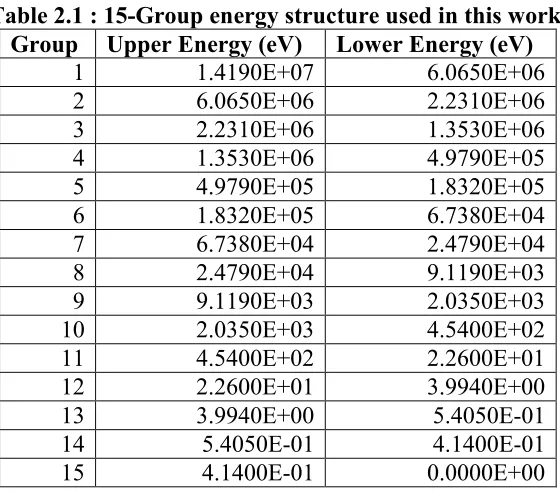
Table 2.1 : 15-Group energy structure used in this work. Group Upper Energy (eV) Lower Energy (eV)
1 1.4190E+07 6.0650E+06
2 6.0650E+06 2.2310E+06
3 2.2310E+06 1.3530E+06
4 1.3530E+06 4.9790E+05
5 4.9790E+05 1.8320E+05
6 1.8320E+05 6.7380E+04
7 6.7380E+04 2.4790E+04
8 2.4790E+04 9.1190E+03
9 9.1190E+03 2.0350E+03
10 2.0350E+03 4.5400E+02
11 4.5400E+02 2.2600E+01
12 2.2600E+01 3.9940E+00
13 3.9940E+00 5.4050E-01
14 5.4050E-01 4.1400E-01
0.00E+00 5.00E-02 1.00E-01 1.50E-01 2.00E-01 2.50E-01 3.00E-01 1.E+01 1.E+02 1.E+03 1.E+04 1.E+05 1.E+06 1.E+07 R el at ive Fl ux ( ar bi tr ar y) Energy (ev)
Calculated Central Flux Spectra for ABTR and Experiements
ZPR6-7 ZPPR2 ABTRneq ZPR6-7H240
Figure 2.1 : ZPR-6 and ZPPR 2 flux spectra compared to ABTR.
0.00E+00 5.00E-02 1.00E-01 1.50E-01 2.00E-01 2.50E-01 3.00E-01 1.E+01 1.E+02 1.E+03 1.E+04 1.E+05 1.E+06 1.E+07 R el at ive Fl ux ( ar bi tr ar y) Energy (ev)
Calculated Central Flux Spectra for ABTR and Experiements
ABTRneq FTR
2.1.2.
Applicability of ZPPR 15-B
ZPPR-15 is a true two-zone core surrounded by a thin blanket and thick reflector
[28]. Further this is an all-metal core; the typical U3O8 was replaced by DU metal plates.
Also, thin plates of zirconium were added along the fuel plates to give the neutronics of
alloying fuel in the mixture U-Pu-Zr. The one drawback is that this core has no mockup control or test assemblies, but these could be simulated by test material in a model. Note in Figure 2.3 that the center and edge neutron spectra of this core, labeled Z15, are very close to
the ABTR start-up core [18][29]. This is probably due to the metal fuel and addition of the zirconium. Another benefit of ZPPR 15 is that the various configurations represent clean and expected compositions for both BOL and EOC cores, which make it even more promising.
Central and Outer Core Edge Flux Spectra for ABTR and Experiments 0.00E+00 5.00E-02 1.00E-01 1.50E-01 2.00E-01 2.50E-01 3.00E-01 1.E+00 1.E+01 1.E+02 1.E+03 1.E+04 1.E+05 1.E+06 1.E+07 Energy (ev) R el at ive F lu x ( ar bi tr ar y) ABTRcenter Z15Center ABTRedge Z15edge
Figure 2.3 : ZPPR-15B flux spectrum compared to ABTR.
2.1.3. ZPPR as a Neutron Source
Countless irradiation experiments over the course of the ZPPR program indicate that it was used extensively as a fast neutron source. What make this particular experiment so
attractive for this work is that its normalized neutron spectrum closely matches the one calculated for ABTR. While the absolute values of neutron passing a given area per second
varies about 11 orders of magnitude between the ABTR and the ZPPR, the shape of the energy spectra are nearly identical. Further, the designers of ABTR put great effort into assuring that the normalized start-up core spectrum was nearly the same as the normalized
reaction rates are directly scaleable from the flux spectrum, then for any given composition
the same reactions should be taking place in ZPPR-15B as in ABTR, just on a lower order of absolute magnitude. This provides an environment to analyze the less understood reactions such as fission and capture of the higher minor actinides.
2.1.4. ZPPR as a Reactor Mock-Up
A survey of the ZPPR program history shows that reactors were used various times to mock-up future full scale facilities. These included the Fast Test Reactor, FTR, the Fast Flux
Test reactor, FFT, and the Clinch River Breeder Reactor, CRBR. ZPPR provided an environment to mock up fuel assemblies for these reactors, determine void worth, perform power distribution calculations, and examine relative reaction rates. What the ZPPR could
not do was to determined full scale, temperature dependent properties such as Doppler reactivity coefficient and axial or radial expansion coefficient since the ZPPR was a room
temperature facility where the core was not allowed to exceed certain temperatures. It was also difficult to gather any information on radiation damage to materials over long times since neutron fluence is proportional to the time integrated flux, but both ZPPR flux level and
experiment duration, at most a few days, are orders of magnitude too low versus what is needed. In summary, ZPPR could be used as a reactor mock-up facility for some integral
2.2.
Selection of Key Observables, Attributes, and Responses
In reviewing the various references looking for observables and attributes typically measured and also those that would limit a reactor like ABTR, one finds a considerable list
of limiting factors for reactor operation. The ABTR report lists numerous neutronics, thermal hydraulics, mechanical and materials factors that limit the reactor [2]. Wade and
Fujita build an entire safety analysis around four reactivity coefficients [13]. Aliberti, et. al. list both operating metrics such as k-effective and discharge metrics such as heat load as areas needing improvement for total fuel cycle performance [14]. As will be seen, many
observables and attributes were examined for the initial generation of experiment perturbations. For the optimization problem, however, a more focused group of values was
chosen and assigned monetary significance. Eventually, the selected outputs for this work met essentially two criteria: 1) what could be calculated with the modeling codes or their outputs and 2) what attributes are most important to the various aspects of a new reactor
design.
The code REBUS, which will be discussed more in Chapter 3, is a neutronics and fuel
cycle simulation code, so immediately all mechanical, thermal hydraulic, and materials limits are beyond our scope of analysis. This leaves neutronics based metrics such as peaking factors, reaction rates, reactivity coefficients, and fuel composition changes. For ABTR
safety it was decided to look at void worth, Doppler reactivity coefficient, radial expansion reactivity coefficient, and axial expansion coefficient, from which the safety analysis developed by Wade and Fujita can be built. For waste disposal concerns, end of cycle
core also discharge decay heat and masses. The time integral of decay heat, i.e. power
generation, of the discharged fuel was also examined. For materials concerns, peak neutron flux and peak neutron fluence were examined. For reactor operations, BOC and EOC k-effectives, peaking factor, and peak power density were examined. For general fuel cycle
information, this work examined conversion ratio, total and elastic scatter reaction rates for iron and Na-23, and fission and capture reaction rates for U-235, U-238, Np-237, Pu-238,
Pu-239, Pu-240, Pu-241, Pu-242, Am-241, Am-242m, Am-243, 242, 244, and Cm-245. Reaction rates were taken at numerous spatial nodes in the active fuel and then averaged. Note in ZPPR only reaction rates, void worth, and Doppler coefficient were
assumed to be directly measurable and used in data assimilation.
The optimization problem had a much more focused group of parameters. Reaction
rates and k-effective from ZPPR experiments were used in the data assimilation to produce posteriori ABTR uncertainties. The ZPPR experiment is optimized over the specification of number and location of instruments, and choice and placement of SNF and TRU fuel
drawers. The ABTR design is optimized over the specifications of cycle length, inner core and outer core Pu-239 content, middle core TRU enrichment, boron content which is equated
to changing the number or size of control rods, and sodium content which is equated to changing the fuel rod size. The overall decision variable for the optimization is net cost savings, but the decision variables for the ABTR optimization are burnup, cycle length, and