PARKINS, LESLIE CAROL. Predicting Faculty Participation in Service-Learning Pedagogy at Research Institutions. (Under the direction of Audrey Jaeger, Ph.D.).
As a pedagogy supporting a renewal of higher education’s civic mission,
service-learning provides opportunities to improve student service-learning and connections with
community issues. Understanding faculty participation in service-learning pedagogy can
provide insight into how institutions can better support such non-traditional approaches to
faculty work. The purpose of this study was to identify individual characteristics and
motivational factors predicting faculty participation in service-learning pedagogy at
research institutions. This study employed quantitative methodology and used the Faculty
Survey of Individual and Motivational Factors to survey 3,000 full-time tenured and
tenure track faculty at five similar research institutions. This study demonstrated the
influence of ethnicity, rank and teaching goals as significant factors on the use of
learning pedagogy. These findings reflect the current participation of faculty in
service-learning as moving more toward the mainstream and also suggest possible policy and
Predicting Faculty Participation in Service-Learning Pedagogy at Research Institutions
by
Leslie Carol Parkins
A dissertation submitted to the Graduate Faculty of North Carolina State University
in partial fulfillment of the requirements for the Degree of
Doctor of Education
Adult and Higher Education
Raleigh, North Carolina
2008
APPROVED BY:
__________________________________ ____________________________________
Duane Akroyd Patti H. Clayton
__________________________________ ____________________________________
Rachel A. Willis Audrey J. Jaeger
I dedicate this work to my parents, Morris and Dorothy Kirk, and teachers who
have instilled within me an inquisitive nature and a desire to learn. I am immeasurably
grateful to my husband, Grant, for his constant support, love, and understanding. I also
humbly recognize the presence of God in my life, as he surrounded me with individuals
BIOGRAPHY
Leslie Parkins is originally from Tarpon Springs, Florida while at an early age she
discovered a passion for education. Following graduation from East Lake High School in
1995, Leslie enrolled at the University of South Florida, where she was an Honors
student and active in various student activities. In 1998, Leslie received the Distinguished
Community Service Award from the Florida Board of Regents. She graduated with a
Bachelor of Arts degree, cum laude, with a major in Communication Studies in 1999. She
graduated from Bowling Green State University with a degree in College Student
Personnel in 2001. During graduate school, Leslie served in various student affairs
positions and worked abroad in Wales at the University of Glamorgan in Treforest.
During these experiences she became committed to a career in higher education, with a
particular passion for student learning.
Leslie has worked in higher education for seven years at various institutions
working in residential programs, leadership development, academic advising and
service-learning. Currently, Leslie is the associate director for programs and leadership of the
APPLES Service-Learning Program at the University of North Carolina at Chapel Hill.
Leslie spends most of her time establishing and maintaining community-campus
partnerships, mainly through service-learning courses. In addition, Leslie is initiating
programs to improve the development and support of service-learning faculty, students
and community partners. Her work at APPLES inspired her to pursue this research, with
engagement activities. In 2007, Leslie was honored with the Annuit Coeptis award from
the American College Personnel Association, as an emerging professional with promise.
She intends to continue to work in higher education, firmly believing in its
transformational power for both individuals and society. Leslie lives in Durham with her
ACKNOWLEDGMENTS
This research was possible through the guidance and support of my dissertation
chair, Audrey Jaeger. Thank you for guiding me in this journey and providing me with
the encouragement I needed to get here. Each of my committee members have offered
valuable contributions, I thank each for their presence and support. Duane Akroyd
offered methodological expertise which has improved my instrument and analysis. Patti
Clayton represented a perspective of a scholar and practitioner in service-learning, with
advanced knowledge and understanding of the field and its issues. Rachel Willis offered
the perspective of a service-learning faculty member who has individually endured the
challenges presented in this study. I am grateful to each of you for serving on this
committee and for nurturing my growth as a scholar. I would also like to acknowledge
the role of the Odum Institute at the University of North Carolina at Chapel Hill, and
particularly Cathy Zimmer in this study. As an organization supporting social science
research, I was able to glean countless improvements for my study.
As the inspiration for this study, I acknowledge the students, staff, faculty, and
community partners of the APPLES Service-Learning Program at the University of North
Carolina at Chapel Hill. Thank you for your contribution and encouragement in this
work. Particularly, I would like to thank Jenny Huq, director of the APPLES program, for
her generous support and understanding during this journey.
I also would like to acknowledge the assistance and support of national
and the advancement of institutional engagement. This research stands upon your
shoulders and I am thankful for your support and guidance in this study.
Finally, I would like to thank my family, friends and classmates, who have
offered assistance and encouragement during this process. Your presence allowed me to
TABLE OF CONTENTS
LIST OF TABLES………...…...viii
LIST OF FIGURES………...……ix
INTRODUCTION………...1
Service-Learning……….………...………...1
Faculty Reward Structure……….……..………....3
Conceptual Framework……….…………...………...6
Statement of the Problem……….…...9
Purpose of the Study………..……..………...12
REVIEW OF THE LITERATURE………..14
Service-Learning………..14
Student Outcomes....………...16
Faculty Issues Relating to Service-Learning………...17
Faculty Work and Rewards……….………….………...19
Faculty Reward and Tenure Process………...20
Institutional Factors……….24
Individual Factors………28
Research Universities………...………...30
Cognitive Motivation Theory……...………...34
Expectancy Theories………...35
Capability and Context Beliefs………...37
Summary……….41
METHODOLOGY………...43
Research Design………..43
Web-Based Survey………..45
Population and Sample………....46
Instrumentation………...48
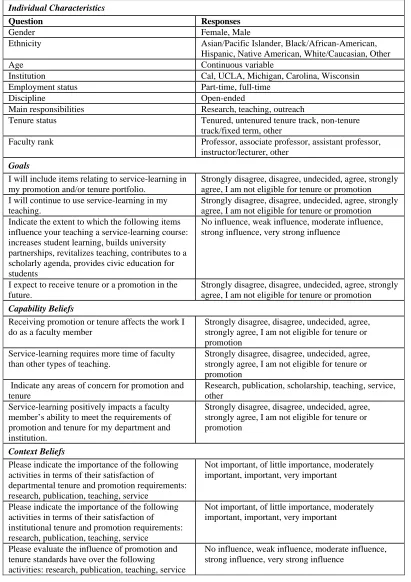
Individual Characteristics………...48
Service-Learning……….49
Goals………...49
Capability Beliefs………50
Context Beliefs………51
Validity and Reliability………...52
Variables……….53
Data Collection………59
Data Analysis………..60
Limitations………..61
RESULTS……….63
Profile of Respondents………63
Gender, Age, and Ethnicity……….64
Institution and Employment Status……….65
Data Analysis………..66
Factor Analysis………68
Construct Reliability………...71
Results……….73
Cal………...75
UCLA………..76
Michigan……….76
Carolina………...77
Wisconsin………...………….78
Summary……….………82
DISCUSSION………...83
Gender……….………84
Ethnicity………..86
Rank………...88
Discipline………...92
Motivational Variables………...93
Teaching Goals………94
Capability Beliefs………95
Context Beliefs………98
Summary………...100
CONCLUSIONS AND RECOMMENDATIONS………...102
Implications………..103
Limitations………106
Revisiting the Conceptual Framework……….108
Recommendations for Research and Practice………...109
Summary………...113
REFERENCES………...115
APPENDICES………131
Appendix A: Invitation to Participate in Survey………...132
Appendix B: Reminder to Participate in Survey………...133
Appendix C: Permission to Use Instruments……….135
Appendix D: Institutional Review Board Submission and Approval…………136
Appendix E: Informed Consent……….142
Appendix F: Survey Instrument……….143
Appendix G: Measurement and Explanation of New Variables………153
Appendix H: Correlation of Variables………...157
LIST OF TABLES
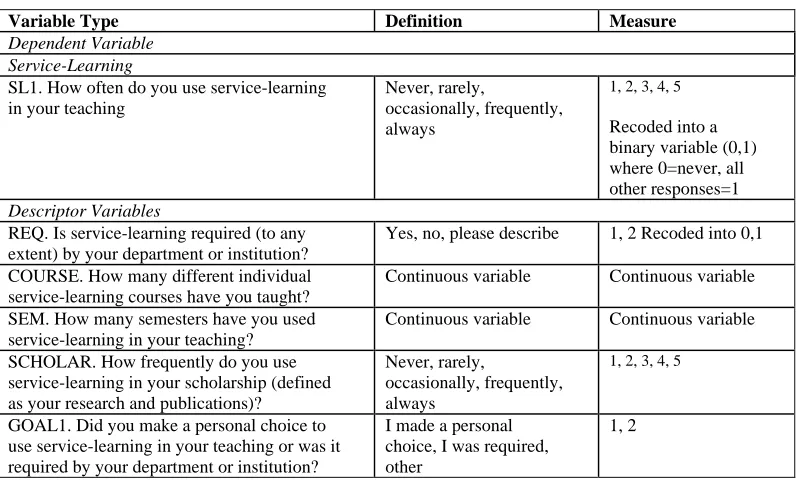
Table 3.1 Dependent Variable: Service-Learning………53
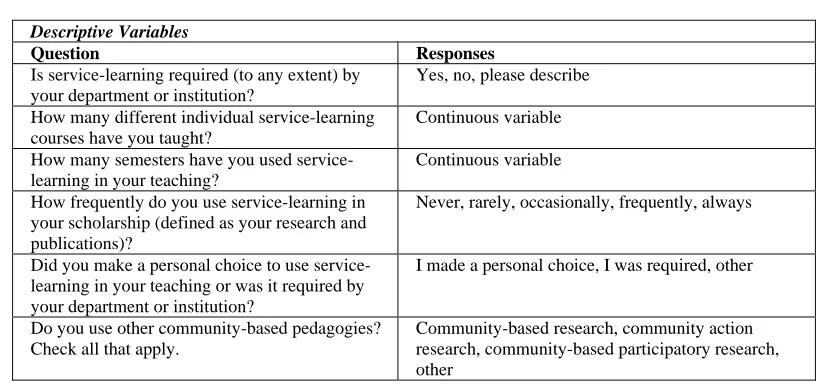
Table 3.2 Descriptive Variables: Service-Learning……….54
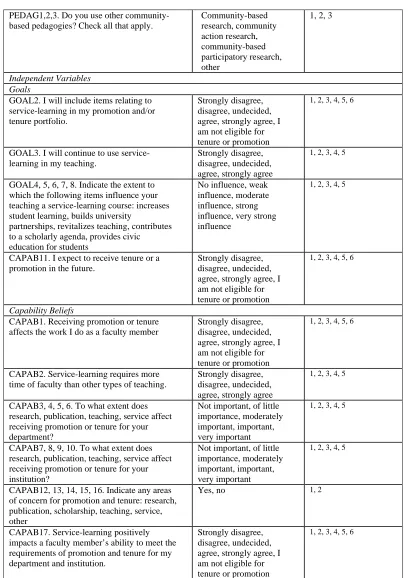
Table 3.3 Explanation of Independent Variables……….55
Table 3.4 Definition and Measurement of Variables………...56
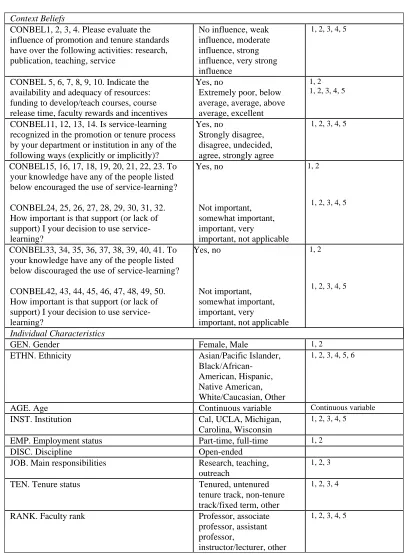
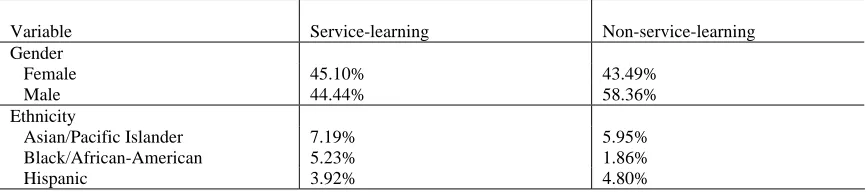
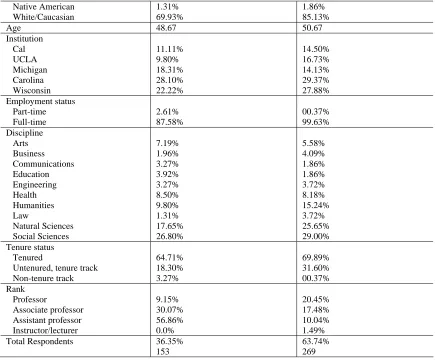
Table 4.1 Table 4.2 Table 4.3 Table 4.4 Table 4.5 Table 4.6 Table 4.7 Table 4.8 Table 4.9 Participation in Service-learning by Percentage………..63
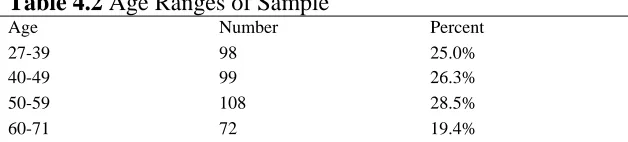
Age Ranges of Sample……….65
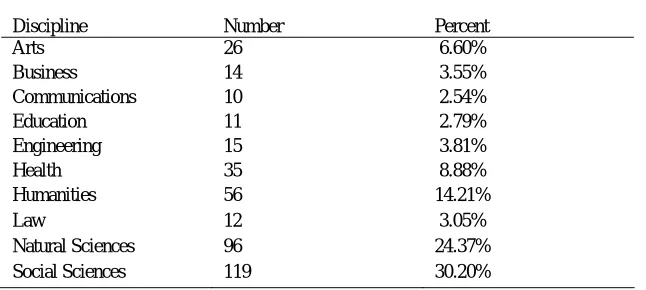
Discipline Distribution of Sample………66
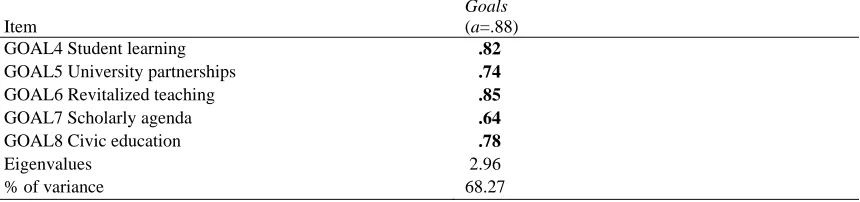
Summary of Exploratory Factor Analysis Results for Goals Measure……….……69
Summary of Exploratory Factor Analysis Results for Capability Beliefs Measure Using Principal Axis Extraction with Promax Rotation……….70
Summary of Exploratory Factor Analysis Results for Context Beliefs Measure Using Principal Axis Extraction with Promax Rotation…71 Percentage of Faculty Participation in Service-Learning by Institution ………74
List of Retained Independent Variables Included in the Regression Models………...79
LIST OF FIGURES
INTRODUCTION
Figure 1. Conceptual Framework for Study of the Influence of Individual Characteristics and Motivational Factors for Predicting Faculty Involvement in Service-Learning Pedagogy………...8
METHODOLOGY
Figure 2. Statistics of Participating Institutions………47
CONCLUSIONS AND RECOMMENDATIONS
INTRODUCTION
Since the birth of American higher education with the founding of Harvard in
1636, the purpose of a college education evolved over time. Initially its intention was to
train the elite to become clergy and public servants, but later shifted to providing
occupational education for the masses (Rudolph, 1990). Recently, many scholars and
associations both within and outside of the academy, suggest a return to the democratic
mission of colleges and universities (Boyer, 1990; Brukardt, Holland, Percy, & Simpher,
2004; Ehrlich, 1997; Ehrlich, 2000; Jaeger & Thornton, 2006; Kezar, Chambers, &
Burkhardt, 2005; U.S. Department of Education, 2006). This return to a democratic
mission reflects the initial focus of American higher education to meet the civic needs of
communities and society as a whole. Such a return would require changes on many levels
within universities, affecting significant aspects of the institutions such as curriculum,
faculty roles, funding, enrollment, and institutional mission (Checkoway, 2001; Furco,
2001; Ward, 2003; Zlotkowski & Williams, 2003). Various pedagogical approaches, such
as service-learning, developed to integrate more of an experientially based curriculum
founded in the democratic ideals of society.
Service-Learning
Service-learning, a pedagogical approach to the democratic mission of education,
provides a mechanism to reconnect college curriculum to civic goals. Recently, scholars
pushed to renew higher education’s commitment to develop a democratic society
engaged in serving the public good (Boyer, 1990; Ehrlich, 1997; Ehrlich, 2000; Jaeger &
experience as a basis for learning” deliberately involving students in the community
while enhancing academic learning in the classroom (Jacoby, 1996, p. 9).
As a pedagogical model, service-learning received increasing attention in the last
several decades. Several definitions of service-learning exist; for the purposes of this
study, Jacoby’s (1996, p. 5) definition of service-learning is used and is defined as
follows:
Service-learning is a form of experiential education in which students engage in
curricular activities that address human and community needs together with
structured opportunities intentionally designed to promote student learning and
development.
Service-learning was first used as a term by Robert Sigmon and William Ramsey in 1967
and continues to develop as a practical and reflective pedagogy applicable for most
disciplines (Giles & Eyler, 1994). As a vehicle for student learning, service-learning
enhances several outcomes including increased understanding of course content, critical
thinking skills, and writing skills (Astin & Sax, 1998; Berson & Younkin, 1998; Eyler &
Giles, 1997; Ikeda, 2000; Markus, Howard, & King, 1993).
As a pedagogy service-learning allows faculty to explore ways to combine
theoretical concepts and practical experiences. Grubb (1999) defines good teaching as
being both “didactic and discipline centered” and “constructivist and student-centered”
(p. 40). Such a pedagogy requires additional planning time and often places a strain on
Faculty Reward Structure
The prevalence of service-learning is limited to the number of faculty
self-selecting to use it in their courses. However, such a decision can impact how faculty
spend their time, often prescribed by the faculty reward structure emphasizing research,
teaching, and service. Previous studies have shown the impact of institutional rewards
and structures on faculty work behaviors and an increased emphasis on research over
teaching and service (Ramaley, 2000; Tierney, 1999; Ward, 2003). Tierney states:
Existing faculty reward structures are not in sync with the public’s main goals for
higher education (i.e., undergraduate education and service). Instead, faculty
reward structures appear to be heavily geared toward research and scholarship.
(Tierney, 1999, p. 3)
Institutional type influences the emphasis faculty place on teaching, research, and service.
The emergence of research universities as a distinct institutional type reflects the growing
economic and intellectual needs of American society (Rudolph, 1990). Over the past
several decades, research universities set the standard for institutional prestige and
recognition (Graham & Diamond, 1997; O’Meara, 2007). As such, institutions are
continuously seeking evaluation and information on how to improve their status in
comparison with other institutions (DiMaggio & Powell, 1983). This phenomenon of
institutional isomorphism is evident as tenure and promotion practices are relatively
similar among research institutions (Boyer, 1990; DiMaggio & Powell, 1983). For years,
research institutions have become the gold standard of universities, and only in the past
comprehensive Carnegie classification system (Graham & Diamond, 1997; O’Meara,
2007).
Research institutions emphasize research, offer different curriculum, and
decentralize decision making about the tenure and promotion to individual departments
(Tierney, 1999). The requirements of the tenure and promotion process vary greatly
across institutional type and between disciplines. However, within research universities
the faculty reward structure continues to primarily emphasize research over teaching and
service (Tierney, 1999).
Awarding tenure to faculty began in 1940 by the standards set forth by the
American Association of University Professors (Olivas, 1997). The rationale for tenure is
to preserve the academic freedom among professors, to provide financial stability for
professional scholars and to set forth reasonable criteria for termination or continuation of
employment (Olivas, 1997). Typical tenure and promotion practices among research
institutions require faculty to submit a portfolio of scholarly activities including research,
publication, teaching, and service experiences to a review committee according to the
policies of the university and department. For many faculty achieving tenure provides
professional and financial stability as well as academic and scholarly freedom. As such,
tenure policies and standards can directly influence their productivity and work (Ward,
2003).
Teaching and service plays a lesser role in the faculty reward structure at research
institutions (Tierney, 1999). Although scholars called for a new approach to the
institutional mission and values of these institutions (Boyer, 1990; Jaeger & Thornton,
2006; O’Meara, 2002; Rice, 1996). These institutions reflect the Germanic model of
higher education, valuing the pursuit of science through the practice, application, and
funding of research (Graham & Diamond, 1997).
Limited studies have explored faculty participation in service-learning pedagogy
at research institutions. Giles and Eyler (1998) called for research to explore faculty
involvement in service-learning. In 2002, Abes, Jackson, and Jones (2002) studied a
statewide cross-section of faculty at varying institutional types, including community
colleges, teaching institutions, and research institutions. Their study explored motivations
and deterrents among service-learning and non-service-learning faculty across Ohio. The
authors found the faculty reward structure is a significant factor only for faculty at
research institutions to participate, continue or discontinue service-learning pedagogy.
However, this study is limited in a number of ways: the sampling of such a wide variety
of institutions prevents any significant information for a particular type of university or
faculty and the lack of theoretical framework does not ground the results conceptually.
The American higher education system did not always place such a tremendous
emphasis on research as the most valued product of scholarship; prior to 1906,
scholarship was related to the creative work of faculty (Boyer, 1990). Since the
introduction of research to universities, research productivity continues to be heavily
weighted in the promotion and tenure process particularly for research intensive
universities. Research and publication are traditionally considered for productivity;
faculty activities do not fit into this traditional structure, it is difficult to evaluate faculty
work for promotion and tenure. Despite how service-learning cuts across research,
teaching, and service, it is not compatible with a research institution’s faculty reward
structure; yet, faculty continue to teach service-learning courses (Amey, 2002).
As the preeminent publication on reconceptualizing faculty work, Scholarship
Reconsidered outlines the need for faculty roles and reward structures to better
incorporate teaching and service (Boyer, 1990). Sixty-two percent of four year
universities report Scholarship Reconsidered (1990) “had a role in discussion of faculty
role and rewards” (Glassick, Huber, & Maeroff, 1997). Identifying a theoretical
framework to better explain the involvement of faculty in service-learning can provide
opportunities to better enhance the faculty reward system to better integrate the various
scholarly activities of faculty.
Conceptual Framework
Motivation theory provides a framework for understanding faculty work and
productivity, providing insight into the issues and decisions relating to faculty work and
rewards. Various theories have examined motivation as a cognitive process where an
individual assesses tasks and rewards when deciding to pursue a particular goal or engage
in a specific behavior. These theories evolved over time, integrating new theories and
representing more of a dynamic understanding of human behavior.
This study integrated several theories relating to the cognitive nature of
motivation, including Vroom’s (1964) expectancy theory, Porter and Lawler’s (1968)
the rational processes of human behaviors seeking a particular outcome in the context of
a specific environment. Other theories approach motivation through a biological,
emotional or needs-based approach.
In particular, expectancy theory examines and explains how individuals make
decisions about their behavior. The premise of expectancy theory is individuals choose
the behavior associated with the “strongest motivational forces” (Vroom, 1964).
Motivational force is determined by the valence, instrumentality and expectancy of a
behavior. Valence is defined as the attractiveness of the reward itself. The actual behavior
necessary to achieve the desired reward is instrumentality. Expectancy refers to the
individual’s ability to successfully complete the behavior. As an established work
motivation theory, the use of expectancy theory can ground research in the area of
understanding faculty participation in service-learning. In addition, it can explore aspects
of faculty motivation that were previously overlooked by other researchers.
Porter and Lawler (1968) built upon Vroom’s theory to examine individual
performance as a function of ability and motivation. Their theory considers mediating
variables and the product rather than the sum of these variables. For example, one’s effort
is a product of both the perceived value of the reward and the effort-reward probability,
or likelihood of receiving the reward with the given effort. Individual characteristics,
understanding of one’s role, rewards (both intrinsic and extrinsic), and perceived equity
of the rewards are considered to be mediating variables affecting motivation. This
motivation model (Miner, 2005). While Porter and Lawler’s theory provides a more
detailed model of Vroom’s initial theory, both lack the impact of context on motivation.
Motivation systems theory is the “organized patterning” of personal goals,
emotional arousal processes and personal agency beliefs that “direct, energize and
regulate” one’s behavior (Ford, 1992, p. 17). Mainly influenced by Ford’s living systems
framework, motivation systems theory also incorporates additional theories of motivation
such as motivational control theory, goal setting theory, and task motivation theory,
(Bandura, 1986; Campion & Lord, 1982; Ford, 1987; Hyland, 1988; Locke & Latham,
1990a, 1990b; Maehr & Braskamp, 1986). Primarily recognized for its “comprehensive
conceptualization of the whole person” this theory considers psychological, biological,
and organizational influences on individual behavior (Ford, 1987, p. 245). Due to its
comprehensive and integrative approach to motivation, motivation systems theory is the
most appropriate theoretical context for understanding faculty involvement in
service-learning. Of particular interest in this study is how individual characteristics, goals,
capability beliefs, and context beliefs influence faculty to participate or not participate in
service-learning pedagogy.
The application of these theories provides a conceptual framework for this study.
In addition, this conceptual framework is heavily influenced by Colbeck and
Wharton-Michael’s (2006) conceptual approach for framing faculty motivation to use public
scholarship. Public scholarship is the integration of public contributions within all areas
of scholarship. Colbeck and Wharton-Michael’s (2006) conceptual idea provides the
This model illustrates the conceptual framework proposed in this study applies individual
characteristics and motivational factors to predict faculty involvement in service-learning
pedagogy.
Figure 1. Conceptual Framework for Study of the Influence of Individual Characteristics and Motivational Factors for Predicting Faculty Involvement in Service-Learning
Pedagogy.
Understanding faculty motivations provides insight into individual, institutional,
and departmental factors influencing the use of service-learning pedagogy. In particular,
previous research has shown that the level of support within a department or institution
through the faculty reward structure greatly influences the choice to use service-learning
at research institutions (Abes et al., 2002).
Statement of Problem
The recent call to return to a democratic education suggests supporting
pedagogies engaging students and faculty in the community (American College
Personnel Association & National Association of Student Personnel Administrators,
Individual characteristics (Porter & Lawler, 1968)
• Gender • Ethnicity • Rank • Discipline
Involvement in service-learning pedagogy Motivation
• Goals (Vroom, 1964; Locke & Latham, 1990)
• Capability beliefs (Vroom, 1964; Ford, 1992)
2004; Boyer, 1990; Ehrlich, 1997, 2000; Jaeger & Thornton, 2006; Kezar et al., 2005;
U.S. Department of Education, 2006). As a pedagogy supporting a renewal of higher
education’s civic mission, service-learning has positive impacts on student learning
including increased understanding of course content, critical thinking skills, moral
development, and social awareness (Astin & Sax, 1998; Berson & Younkin, 1998; Eyler
& Giles, 1997; Ikeda, 2000; Markus et al., 1993; Ward, 2003).
Despite its impact on learning outcomes, service-learning is rarely rewarded in the
promotion and tenure process at research institutions where faculty performance is
assessed based on traditional approaches to research, teaching, and service (Furco, 2001;
Zlotkowski, 2003). Service-learning pedagogy is both time consuming and difficult to
implement requiring more time and effort; yet, the number of faculty participating in
service-learning programs has increased to over 1,000 campuses, without being
recognized in the performance review process (Bulot & Johnson, 2006; Campus
Compact, 2006). The challenges associated with service-learning pedagogy at research
institutions are amplified by the expectations of faculty to spend more time on research
related activities such as grant writing and publication and less on teaching (National
Survey of Post Secondary Faculty, 1993, as cited in Tierney, 1999).
Limited research has examined faculty participation in service-learning and even
fewer studies have examined participation at research institutions. Abes et al. (2002)
found the tenure and promotion process is a factor for faculty at research institutions in
choosing to participate or continue to participate in service-learning pedagogy. Most
their decision to discontinue the use of service-learning pedagogy. However, faculty at
non-research institutions did not identify the tenure and promotion process as a factor in
the decision to participate in service-learning pedagogy (Abes et al., 2002). Similar
studies identify the associated intrinsic rewards as a motivating factor to participate in
service-learning pedagogy (Bringle, Hatcher, & Games, 1997; Hammond, 1994). Each of
these studies addresses various individual and institutional factors relating to
service-learning pedagogy. Although various studies examine motivation and deterrents for
faculty using service-learning pedagogy, the literature lacks the application and
framework of a comprehensive motivation theory.
Previous studies recommend future research to examine service-learning
pedagogy as it relates to individual and institutional factors such as faculty motivation,
institutionalization, and reward structures (Furco, 2001; Holland, 1997; Jaeger &
Thornton, 2006; Ward, 2003). Abes et al. (2002) studied faculty motivations and
deterrents for using service-learning pedagogy and found faculty at research institutions
have different motivations and disincentives than their counterparts at other institutions.
Although this research is critical to better understanding service learning at research
universities, it lacks a conceptual framework. Work motivation theory provides a
foundation to understand human behavior as it relates to how faculty spend their time.
Such theories provide a better understanding of faculty decisions to engage or not engage
in service learning pedagogies. In addition, Abes et al. (2002) surveyed a broad sample of
faculty across institutional type, providing a broad analysis of faculty motivations and
institutions and faculty to better understand the influence of tenure and promotion on
service-learning pedagogy.
Boyer (1990) called for a re-examination of faculty reward structures to
incorporate more creative approaches to scholarship and teaching. However, limited
research discusses faculty workload in the context of work motivation theory. Kezar et al.
(2005), O’Meara (2002), O’Meara and Braskamp (2002) and O’Meara and Jaeger (in
press) discuss faculty reward structures and the need to include public service activities,
such as service-learning in traditional conceptions of scholarship. In addition, Furco
(2001) and Zlotkowski and Williams (2003) identifies a need to better support
service-learning pedagogy at research institutions, but neither study discusses the specific
motivations for service-learning faculty at research institutions. Each of these studies
provides a basis for examining the individual and institutional factors affecting the
decision by faculty to use service-learning pedagogy at research institutions. Building on
the previous research, this study considered both the individual and the context through
the application of cognitive motivation theories.
Purpose of the Study
The purpose of this study was to identify individual characteristics and
motivational factors predicting faculty participation in service-learning pedagogy at
research institutions.
Research questions addressed by this study include:
Research Question 1: What are the levels of faculty participation in
Research Question 2: What is the influence of individual characteristics (gender,
ethnicity, rank, discipline) and motivational factors (goals, capability beliefs, context
REVIEW OF THE LITERATURE
Both governmental officials and scholars have called for a renewal of the civic
mission of higher education (American College Personnel Association & National
Association of Student Personnel Administrators, 2004; Bringle, Games, & Malloy,
1999; Brukardt, Holland, Percy, & Simpher, 2004; U.S. Department of Education, 2006).
This call suggests reconnecting curriculum to civic engagement through new pedagogies
such as service-learning. However, the nature of service-learning requires more time and
effort from faculty, and is a particular issue for faculty at research institutions (Bulot &
Johnson, 2006). This literature review explores research on service-learning, faculty
issues, research institutions, and work motivation theories.
Service-Learning
American higher education has grown for more than 370 years, and continues to
expand and develop according to the needs of society. With over 3,700 American
institutions of higher education, universities have become increasingly competitive,
developing a highly specialized mission or adapting new objectives quite different from
those established in the university charter (Ward, 2003). Emphasis in reconnecting higher
education with the greater good is evident in the Commission on the Future of State and
Land-Grant Universities recommendation to “reinvigorate the historical role higher
education has played in society calling for institutions to redesign teaching, research, and
service functions” (O’Meara, 2002, p. 9).
For many, higher education is “more than a vehicle for providing economic
2005, p. 4). For centuries the public relationship between higher education and society
supported access to educational opportunities, excellence in teaching, and preparing
students to participate in a democratic society. The Spelling Commission found this
historic agreement has failed in many ways to serve the current public good in terms of
access and excellence (U.S. Department of Education, 2006). The current definition of
public good of higher education is related to the social benefits of college, including
increased individual wages leading to increased tax bases, a more literate society and a
higher gross national product as opposed to a definition calling for the creation and
perpetuation of a democratic society (Paulsen, 2001).
In an effort to reconnect college learning with a democratic society, John Dewey
studied and developed experiential pedagogies, such as service-learning, the intentional
integration of service and academic coursework (Giles & Eyler, 1994). Service-learning
as a pedagogy is an approach to experiential education through the intentional integration
of service and academic learning (Jacoby, 1996). Service-learning was first used as a
term by Sigmon and Ramsey in 1967 and over the course of four decades it has seen saw
slow but significant growth as a pedagogy (Giles & Eyler, 1994). As a movement,
service-learning gained momentum over the decades and is increasingly integrated
throughout various disciplines by many cross-sections of faculty (Abes, Jackson, &
Jones, 2002; Butin, 2006). Despite the increase in use of service-learning by faculty, the
institutionalization of service-learning remains slow and faces resistance. The increasing
presence of service-learning pedagogy provides opportunities to better understand the
Student Outcomes
Most research relating to student outcomes and service-learning is
non-experimental, and as such is limited in its generalizability. Previous studies addressing
student outcomes assert service-learning enhances critical thinking, and writing skills and
promotes an increase in the understanding of course content (Astin & Sax, 1998; Berson
& Younkin, 1998; Eyler & Giles, 1997, 1999; Ikeda, 2000; Markus, Howard, & King,
1993).
Research also confirms a correlation between service-learning, faculty interaction,
and retention; however, few studies offer direct evidence that involvement in
service-learning predicts increases in retention rates (Keup, 2005; Woodard, Mallory, & DeLuca,
2001). Eyler and Giles (1997) found service-learning increases student faculty
interaction, which has been found to positively affect student retention (Astin, 1993).
Additional research suggests service-learning has a positive effect on the retention of
first-year students (Vogelgesang, Ikeda, Gilmartin, & Keup, 2002). Additional scholars
recommend service-learning as a program that can positively impact minority student
retention (Swail, Redd, & Perna, 2003). These studies demonstrate to varying degrees the
value of service-learning and the need to further explore its effect on the experience and
retention of undergraduate students.
Despite these studies, the literature suffers from a lack of experimental or
quasi-experimental studies, often relying on attitudinal surveys of convenience samples. In
recent years, service-learning scholars have been working to address this deficiency
research is needed to better understand faculty teaching, particularly to study the
participation of a pedagogy requiring more time, effort and resources such as
service-learning.
Faculty Issues Relating to Service-Learning
A study of faculty participation and faculty rewards relating to service-learning
pedagogy can confirm levels of support within an institution (Abes et al., 2002). Such
studies can uncover influences to use service-learning at research institutions. As it
requires more faculty time, and more faculty time at research institutions is
disproportionately invested in research activity in comparison to other institutions, it is
curious as to why tenured and tenure-track faculty would invest more of their time in
service-learning (Tierney, 1999).
Abes et al. (2002) surveyed both service-learning and non-service-learning faculty
at various institutions throughout the state of Ohio. Descriptive statistics were used to
illustrate the similarities and differences between and within groups of faculty. However,
such a broad study can not uncover the specifics relating to each faculty group that a
more narrow study could provide by exploring the specific issues relating to particular
groups of faculty, institutions, or disciplines. As such, this study will explore only
tenured and tenure track faculty at research institutions, surveying both service-learning
and non-service-learning faculty.
Abes et al. (2002) lack a theoretical framework grounding the approach and
conclusions of the study and fail to complete a factor analysis of the instrument. Because
future studies. Although the descriptive statistics demonstrate interesting findings,
additional analysis is warranted.
Challenges associated with new pedagogies were noted by Dewey during his
career, calling for pedagogy to become a university discipline, equal to other academic
disciplines (Ehrlich, 2000). According to Boyer (1990), the focus of scholarship of
pedagogy is the discovery, teaching, dissemination of knowledge of pedagogy. A
stronger research agenda and scholarship in pedagogies could help in the advancement of
non-traditional pedagogies on college campuses. This study approaches service-learning
as a pedagogy with the goal to develop strategies and recommendations to strengthen
institutional support for such innovative approaches to teaching and learning.
Institutional support for teaching is reflected in the values of the university, which
are espoused in the various practices, policies, and rhetoric of the institution. University
mission statements distill the most important values and goals of the institution in a way
intended to direct the policies and practices of the institution. Calleson, Jordan, and Seifer
(2005) highlighted the challenges aligning institutional mission with the actual work of
faculty, particularly in the work associated with engagement or work addressing pressing
needs in communities. Work in communities can be difficult to assess, as it can vary so
drastically by individual, discipline, and community, and it does not always fit within the
traditional views of scholarship (Calleson et al., 2005).
Each institution involved in this study has an established service-learning
program, providing a variety of opportunities to combine academic course work with
provides a wide range of faculty development opportunities to develop, implement and
sustain service-learning course offerings.
Although these programs provide administrative and logistical support for
service-learning pedagogy, they often exist in isolation among the faculty work and
reward structure both at the departmental and institutional level. A disconnect appears to
exist for faculty at research institutions as the faculty reward structure is not set up to
support or acknowledge service learning pedagogy or the additional demands on time or
effort that this pedagogy requires (Abes et al., 2002; Bulot & Johnson, 2006).
Faculty Work and Rewards
Personnel expenses, including faculty salaries, constitute the largest proportion of
institutional budgets (Hearn, 1999; Paulsen & Smart, 2001; Ward, 2003). As a result of
state and public investment in higher education various stakeholders including
administrators, legislators, parents, students, and faculty demand a better understanding
of the faculty reward structure and process. As such, state-supported research universities
are becoming more publicly accountable and faculty performance is more of a relevant
topic both within and outside the university (Layzell, 1999). Higher Education for the
Public Good is a text outlining the fragile balance between the American public and its
universities (Kezar et al., 2005). This delicate tension is “a result of sustaining a
democratic society and securing the future of the American economy, as well as
contributing to the numerous individual benefits that result from higher education”
(Kezar et al., 2005, p. 8). To transform an institution to be supportive of engaging
(Furco, 2002). The actual work of faculty members is a product of individual and
institutional characteristics, values, and rewards (Blackburn & Lawrence, 1995; Ramaley,
2000; Ward, 2003). These influences are discussed throughout this chapter.
Faculty Rewards and Tenure Process
Awarding tenure to university professors began in 1940 by the standards set forth
by the American Association of University Professors (Amacher & Meiners, 2005;
Tierney & Bensimon, 1996). According to the AAUP, the rationale for tenure is to
preserve academic freedom among professors, to provide financial stability for
professional scholars and to establish criteria for termination of employment. Typical
practices among research institutions include faculty probationary periods not to exceed
seven years, where a professor meets specific standards set forth by the employment
contract and written expectations of the university and department (Olivas, 1997). Before
the probationary period expires, often during the sixth year, tenure track faculty come
before a tenure review board to submit professional and scholarly contributions to the
field (Amacher & Meiners, 2005). The initial decision is often at the program or
departmental level and is recommended to review boards either at the college or
university level. Often faculty are recommended on multiple levels to receive tenure or
promotion and must be informed in writing their status of tenure and promotion
(Amacher & Meiners, 2005).
The award of tenure provides faculty with the opportunity of lifetime employment
at the institution (American Association of University Professors, 2006; Amacher &
typically at the program or departmental level and is recommended to review boards
either at the college or university level (Amacher & Meiners, 2005). Although disciplines
vary in the specific standards for tenure and promotion, each academic department
typically maintains a set of standards to evaluate tenure track faculty (Amacher &
Meiners, 2005). The tenure and promotion process also determines faculty pay. Salary
differences exist between each rank and the promotion between ranks is closely
connected to faculty productivity.
For many faculty, achieving tenure provides professional and financial stability as
well as academic and scholarly freedom. The road to tenure is academically strenuous
and personally challenging requiring high levels of publication, research, and teaching
(Baez & Centra, 1995). Typically if during the sixth year of employment a tenure track
professor does not receive tenure, the contract is not renewed beyond a seventh year and
requires faculty to look elsewhere for employment (Amacher & Meiners, 2005).
Receiving tenure is a long and complex process, requiring a faculty member to
contribute a great deal of scholarly work to his or her field. This scholarly productivity is
typically defined by number of published articles or citations and research contributions.
However, productivity is defined differently among institutions and disciplines (Tierney,
1999). For example, a baccalaureate college focusing on undergraduate educationmay
emphasize teaching above research and the humanities emphasize publishing books
rather than articles.
The current tenure and promotion process at research institutions is widely
and downplaying teaching and learning (Boyer, 1990). However, the American higher
education system has not always placed such a tremendous emphasis on research as the
most valued product of scholarship; prior to 1906, scholarship was related to the creative
work of faculty, not specifically research (Boyer, 1990). Since the introduction of
research to universities, it has been heavily weighted in the promotion and tenure process
particularly for universities with very high research activity. However, these critiques of
the tenure and promotion process should not overlook how research produced within
higher education in the last century has made significant contributions to society.
The quantity of research and publications are traditionally most valued by
institutions and equated with faculty productivity; teaching and service are recognized to
a lesser extent (Becker & Toutkoushian, 2003). However, when faculty activities do not
fit into the traditional tenure and promotion structure it is difficult to evaluate faculty
work for promotion and tenure. Despite how service-learning cuts across research,
teaching and service it is not compatible with a research institution’s faculty reward
structure (Amey, 2002).
Tenure and promotion, the faculty reward structure of a university, is in place to
provide academic freedom and lifetime employment for university faculty. Part of the
tenure and promotion process is the upward movement among the ranks of faculty
(Tierney, 1999). Academic tenure includes the promotion of faculty from assistant
professor to tenure status as an associate professor, to finally full professorship. The
decision for promotion and tenure are directed by the institutional and departmental
Although tenured and tenure track faculty participate in service-learning, many
faculty are reluctant to participate in activities such as service-learning not highly valued
in promotion and tenure (O’Meara, 2002). While still employed in a probationary status,
faculty job performance is most vulnerable before receiving tenure (Tierney & Bensimon,
1996). The conscious decision to participate in activities beyond the traditional activities
valued in the promotion and tenure process at a research institution can be considered
risky and counterproductive for junior faculty.
Recommendations from researchers supportive of service-learning include
offering additional ways to evaluate non-traditional activities (Glassick, Huber, &
Maeroff, 1997; Sandmann, 1996; Votruba, 1979). Such evaluations should include a
variety of methods and information, offering both quantitative and qualitative data
regarding quality, productivity, and results of scholarship. Institutions making changes to
the approach to promotion and tenure include the University of Maryland Council of
University System Faculty, Portland State University, California State University at
Monterey Bay and the Michigan State University Department of Educational
Administration.
Small changes to the tenure and promotion process have been applied to the
institutions in this study. The School of Dentistry and the School of Government at the
University of North Carolina at Chapel Hill have updated the tenure and promotion
process to acknowledge and reward activities integrating scholarship and engagement
(Campus Compact, 2007). The University of Michigan assembled a sub-committee in
(University of Michigan, 2007a). The sub-committee recommended the university begin
a dialogue on broadening traditional forms of scholarship. Imagining America, an
organization based at the University of Michigan, formed Tenure Team Initiative, a group
aimed at providing resources to deans and chairs to assess and reward public scholarship
in the arts and humanities (University of Michigan, 2007a). The University of
Wisconsin’s Outreach and Extension has redeveloped policies to be broader and more
robust at assessing engagement scholarship (Wise, Retzleff, & Reilly, 2002). However,
outreach and extension faculty are already oriented to work towards community
engagement by nature of their positions. Beyond these examples, no significant tenure or
promotion policy changes have been implemented at any of the institutions in this study.
It is an enormous task to apply changes to the promotion and tenure process,
particularly to expand its reach beyond the traditional notions of research, teaching, and
service (Colbeck, 2002). With the faculty reward structure being so influential on the
work of faculty and the reward structure being determined by academic departments and
institutions, it is imperative to further study how these systems could change to
emphasize the work of faculty beyond research and to embrace broader forms of teaching
and scholarship. Identifying a theoretical framework to explain the involvement of
faculty in service-learning can provide opportunities to enhance the faculty reward
system to better integrate the various scholarly activities of faculty.
Institutional Factors
Various institutional factors determine the requirements, structure, and processes
institution (university, college, community college), emphasis on teaching or research,
and academic discipline. In addition, historical contexts of the development of
institutions are critical in determining the faculty reward structure over the years
(O’Meara & Jaeger, in press).
Studies show faculty are now asked to do more than ever before, splitting time
between teaching, research, publication, student advising, professional service, and
outreach (Schuster & Finkelstein, 2006). The increasing expectations of faculty work
limit the amount of time that can be spent on work not directly rewarded or
acknowledged. There is a need for the emphasis of research and publication to be
reconciled with a value of service in the practices, policies and rhetoric of research
universities (Brukardt, Holland, Percy, Simpher, 2004; Furco, 2002; Ramaley, 2000;
Ward, 2003).
Institutional priorities are evident in how faculty are rewarded; although
institutions espouse the value in renewing the civic mission of higher education, it is not
enacted in the traditional approach to tenure and promotion (Becker & Toutkoushian,
2003). Faculty performance is often reduced into how many research dollars faculty
garner, how many articles faculty publish, and how many courses faculty teach. The
evaluation process of faculty performance does not reflect institutional emphasis on
student learning, but rather on research, teaching, and service. Previous studies of faculty
work and rewards found universities do not recognize service as an effort to maintain
institutional prestige (Diamond, 1993, 1999; Huber, 2002; O’Meara, 2002, 2005). The
institutions, asserts the primary barrier to outreach for faculty is the lack of support
conditions including resources, time, and recognition (American Association of State
Colleges and Universities, National Association of State Universities and Land Grant
Colleges, 1995).
The socialization of faculty impacts the work of faculty, as new faculty members
learn the norms of their role in their institution, department, and discipline from other
faculty members (Fairweather, 1996; Tierney & Bensimon, 1996; Deci, Kasser, & Ryan,
1997). The faculty reward structure at research universities reflects an emphasis on
research and ensures its persistence. This reward structure includes the guidelines for
promotion and tenure, which currently rewards faculty to not focus on teaching, but
rather on research and publication. Specifically, faculty at research institutions spend less
time on instruction and service in comparison to other institutions (Fairweather, 1996).
Beyond individual institutions, universities are competing with one another for
faculty, and they reward faculty based on similar criteria. The socialization of faculty and
competition among universities helps to further perpetuate the current emphasis on
research and publication over teaching and other activities. Isomorphism is an
institutional factor perpetuating research as the most valued reward across higher
education (DiMaggio & Powell, 1983; O’Meara, 2007).
Scholarship Reconsidered outlines the need for faculty roles and reward structures
to better incorporate teaching and service (Boyer, 1990). Sixty-two percent of four year
universities report Scholarship Reconsidered “had a role in discussion of faculty role and
researchers have called for institutions to incorporate broader forms of scholarship and
engagement in the tenure and promotion process (Boyer, 1990; Brukardt et al., 2004;
Colbeck & Michael, 2006; Jaeger & Thornton, 2005, 2006; O’Meara, 2005; O’Meara &
Braskamp, 2005; Zlotkowski, 1996).
In 2006, the Carnegie Foundation for the Advancement of Teaching piloted a new
classification system for universities addressing levels of engagement (Carnegie
Foundation, 2007b). This new optional classification for engagement is available for any
institution electing to complete the process. Submissions include information on the
status of engagement within the institution, including information on curriculum and
policy changes representing multiple levels of institutional engagement. The
classification includes two categories: curricular engagement and outreach and
partnerships (Carnegie Foundation, 2007b). Curricular engagement requires engaged
teaching, learning, and scholarship in partnership with the community. Outreach and
partnership focuses on how the university establishes and practices to build and sustain
engaging relationships with the community, including the allocation of resources, the
types of relationships and the interaction between campus and community. This new
classification system signals the need for higher education to demonstrate its commitment
to serving the public good, as well as the need for universities to share this information
with one another. Beyond understanding institutions, research is needed to understand
individual factors affecting how faculty make decisions about research, scholarship,
Individual Factors Affecting Faculty Work
Previous studies of faculty research productivity examining the role of faculty
reward and tenure process have found an increase in publication requirements across
higher education (Blackburn & Lawrence, 1995; Diamond, 1993, 1999; Huber, 2002;
O’Meara & Braskamp, 2005). Additional studies examine individual and institutional
factors influencing research productivity, such as gender, race, and discipline (Antonio,
Astin, & Cress, 2000; O’Meara & Braskamp, 2005; O’Meara 2005; Tierney & Bensimon,
1996; Tien & Blackburn, 1996). O’Meara’s (2005) exploratory study of faculty
scholarship sampled more than 2,000 chief academic officers on the changes in the
faculty reward structure and found that publication productivity is weighted more in the
promotion and tenure process than 10 years ago. Although Tien and Blackburn (1996)
included a theoretical base in their research, they analyzed data from a 1989 national
survey, analyzing data from nearly a decade previous, thus making their findings
outdated. Existing research on faculty motivations and the faculty reward structure have
ranged in terms of sample size, validity, and theoretical foundations making it difficult to
formulate convincing results and conclusions relating to faculty reward structures.
Individual factors such as gender, race, and ethnicity influence the work of
faculty, particularly the emphasis on teaching and research (Chen & Gupta, 2006;
Schuster & Finkelstein, 2006). Additional studies found female faculty of color are more
likely to be engaged in community service activities (Antonio et al., 2000). As a result,
relating to faculty to determine how pervasive and institutionalized service-learning is
across the faculty population.
Beyond individual characteristics, how individual faculty define scholarship plays
a role in service-learning pedagogy. One’s view of scholarship can be a barrier to
participating in work that is perceived outside the traditional parameters of tenure and
promotion (O’Meara, 2002). These perceptions can be discipline-specific. The values of
disciplines in the social sciences, such as an emphasis on studying human relationships,
can encourage faculty work with communities. Various definitions of scholarship based
on individual characteristics and discipline provide insight into how work is defined by
individual faculty.
Research has shown rank makes a difference as to whether faculty are influenced
by extrinsic and intrinsic motivation (Chen & Gupta, 2006; Tien, 2000). In addition to the
disproportionate number of female faculty of color engaged in community service
activities, Antonio et al. (2000) found faculty of low academic rank are also more likely
to be engaged in this type of work. As a result, rank is a critical personal characteristics
explored in this study.
Existing research on the role of how faculty rewards are perceived by individual
faculty are limited in external validity due to small samples or internal validity by lacking
a theoretical foundation (Chen & Gupta, 2006). Thus there is a need to use an established
work motivation theory to frame a study of a random sample of faculty at one particular
The Development of Research Universities
The Morrill Act opened both access and curriculum at colleges and universities
and solidified the tripartite mission of universities, establishing faculty roles as teaching,
research, and service (Ward, 2003). Disciplines became more specialized and faculty
were rewarded for scholarship and research productivity. Research universities grew out
of a growing pressures and demands for “global competition for world leadership”
throughout the early twentieth century (Graham & Diamond, 1997).
During the late 1800’s, the Germanic model of education influenced the direction
of American higher education to pursue research and graduate education (Graham &
Diamond, 1997). During the end of the 19th century, urban and research institutions
began establishing close ties between the city and university (Kezar et al., 2005). The
early 1900’s brought about the Wisconsin Idea, initiating the idea of university extension
services to bring professors to communities to address the political, social, and economic
needs of the state (Kezar et al., 2005). The aim of the Wisconsin Idea was to “cultivate
relationships between the university and the state” (Ward, 2003, p. 31).
During this era, the German model finally took hold in American higher
education through the founding of Johns Hopkins University in 1876 (Ward, 2003).
Faculty were specialized by disciplines, college curricula was varied to include electives,
and the orientation of the institutions turned toward research. The balance and integration
of faculty roles were challenging in the early years and continues to be a challenge
through the present. More specifically, it was difficult to accomplish the goals of teaching
with society through new calls for faculty involvement in service” (Ward, 2003, p. 33).
These challenges throughout the era solidified the inward orientation of research
universities (Ward, 2003).
The changes brought about during the era of mass education also changed the
relationship between the university and the public. During this era, the number of public
institutions doubled and college enrollments soared (Graham & Diamond, 1997). As
research continued to advance at universities, funding sources began to increase,
particularly in the federal government. Sources such as National Science Foundation and
National Institute of Health have funded billions of dollars of university-sponsored
research aimed at defense, health, and science issues (Leshner, 2004). As funding sources
shifted to the government, institutional priorities shifted to accommodate the needs of the
federal government rather than local needs (Ward, 2003).
Research-oriented missions have driven research-dominated university priorities
(Boyer, 1990; Ward, 2003). Pressures for research funds have been a result of the decline
of public funds since the 1980s (Ward, 2003). Research has increasingly become more
commercialized, with NSF funding decreasing (Leshner, 2004). As a result, funding is
less available for initiatives without immediate results or those that do not serve
commercial interests (Bok, 1982).
The research model of higher education also became the model and standard for
prestige among American universities (Graham & Diamond, 1997). This perpetuated a
competitive climate and a pursuit of prestige fueled by various rating systems of
non-research universities, the Carnegie classification system has been the preferred ranking
system for research universities and is now considered to be a “prestige barometer”
(O’Meara, 2007, p. 125).
The Carnegie classification system provides a mechanism to classify similar
institutions according to appropriate measures based on school enrollment, funding,
degree offerings, faculty productivity and a variety of other factors. In this study,
doctorate-granting universities are considered, differentiated by the quantity (not quality
or importance) of research activity present at the institution. The current Carnegie
classifications of doctorate institutions reflect a more comprehensive measure of research
institutions (using both per-capita and aggregate measures of research activity) than
previous classifications based solely on federal funding for research (Carnegie
Foundation, 2006a). The classification with the highest level of research productivity is
Research (very high activity) universities. Currently, there are 96 institutions in the nation
that fall under this classification, including all of the institutions used in this study.
A feature of the American higher education system is one university tends to
closely resemble another university. These features “make them both recognizable and in
conformity” with existing expectations (Graham & Diamond, 1997). Institutional
isomorphism can help explain the similarities seen across higher education, and also the
pressures exerted to drive certain institutional objectives (DiMaggio & Powell, 1983).
Institutional isomorphism is a phenomenon in place to achieve legitimacy among other
universities and is often applied to organizational goals (Parsons, 1956). This
American system of higher education. O’Meara (2007) discusses striving, the process of
institutions changing various policies and practices to emulate universities with a higher
level of prestige. The policies and practices affected by striving include faculty reward
structures, often becoming more rigorous, demanding and intensive (O’Meara, 2007).
Reisman (1956) and Berdahl (1985) assert institutions monitor one another closely,
particularly those with the same level of prestige or slightly more prestige. For example,
the Ivy League institutions are often considered the most prestigious, and as such
carefully watch one another to identify striving techniques. This academic drift (Berdahl,
1985) begins to affect universities across institutional type, with the most prestigious (and
thus influential) institutions being the most selective research institutions. According to
Brewer, Gates and Goldman (2002) the institutions selected as peers for this study are
prestige seeking, monitoring closely the innovative practices of their peers and
aspirational peers. Prestige-seeking behavior impacts the structure of faculty work and
rewards and is an important strategy for institutions to compete with similar institutions
(O’Meara, 2007).
The structures of institutions also impact the dynamics of research universities,
which function as bureaucratic institutions with specialized units that are most efficient
when accomplishing routine work (Colbeck & Wharton-Michael, 2006). However,
institutions also exhibit technical complexity, as evident in the hiring of faculty to
accomplish complex work such as teaching, research, and service. As a result,
universities best fit into the professional bureaucracy model Mintzberg (1979) created to
hybrid of the bureaucratic and technical institutions (Bolman & Deal, 2003). However,
Colbeck and Wharton (2006) argue these professional bureaucracies are devolving into
machine bureaucracy, with de-professionalized workers, specialization, and central
decision making. This is evident in research universities as more faculty are pushed to
focus on one particular scholarly agenda, mostly research and publication.
As in previous eras, the success of the American higher education system, in
particular the research university, is faced with various challenges. Boyer (1990) notes
higher education is lacking direction and relevance to the nation’s priorities. Although
college missions may reflect service to the state or community as a priority, it is often
only espoused and not enacted in practice (Checkoway, 2001). This struggle is unique for
research universities, where individual faculty’s research agendas take precedence in
funding, rewards, and promotion. Recently, various scholars and leaders have expressed
concern higher education is no longer serving the public good as it once did (Kezar et al.,
2005). Research universities often set the standard of scholarly productivity within higher
education, which is not surprising because they have the most extensive pool of resources
and enroll the largest number of students (O’Meara, 2007). However, this expectation of
research productivity is often thought to be at odds with an expectation for quality
education and must be resolved by American research universities.
Cognitive Motivation Theory
Studying work motivation is valuable, as it plays a central role in organizational
behavior, such as how faculty spend their time (Rainey, 1993). Motivation can be
validity in some studies (Kreitner & Kinicki, 2001). One question causing debate among
scholars and researchers is whether motivation is an attitude or a behavior, or possibly
both. For the sake of this research, motivation is an overarching concept composed of
different variables and issues (Rainey, 1993). In particular, this study considers cognitive
theories of motivation, asserting motivation is a rational choice of an individual as a
function of abilities, goals, and environment to determine specific behaviors resulting in
desirable outcomes (Blackburn & Lawrence, 1995).
Expectancy Theories
Several work behaviors have been studied in the field of organizational and
industrial psychology through Vroom’s (1964) expectancy theory. As one of the most
prominent and significant established frameworks for understanding individual
motivation, expectancy theory examines the decision-making process for an individual to
engage in specific behaviors for a particular reward (Rainey, 1993). Specifically, it
examines the reward and its motivational strength in relation to the effort and skill needed
to achieve those rewards through tasks, actions or behaviors (Vroom, 1964). Vroom
studies the process of motivation as a function of an individual’s psychological and
behavioral processes and perceptions.
Expectancy theory provides key concepts in understanding motivation, asserting a
person intentionally chooses behavior with the highest motivational force (Lawler, 1973).
Key concepts of expectancy theory include expectancy (expectation the effort leads to
desired performance), instrumentality (the performance leads to the desired outcome),