Maddy Coy, Liz Kelly and Jo Foord
with Val Balding and Rebecca Davenport
Map of Gaps:
The Postcode Lottery of
Violence Against Women
Support Services
Copyright © End Violence Against Women ISBN: 978-0-9544803-6-3
www.endviolenceagainstwomen.org.uk
Table of Contents
Glossary . . . 4
Executive Summary. . . 5
Scale of the Problem. . . 5
What is the Impact of the Postcode Lottery?. . . 6
Conclusions and Recommendations. . . 7
Introduction. . . 8
Defining Terms. . . 9
What is a Support Service?. . . 10
Why Violence Against Women Services Matter. . . 11
From Global to Local: Policy Contexts. . . 13
Policy in the Nations and Regions. . . 14
Methodology. . . 16
Criteria for Inclusion. . . 17
Geographical Boundaries. . . 18
Findings: Maps of Gaps . . . 19
VAW Support Services across the UK . . . 21
Domestic Violence Services . . . 23
Women’s Refuges . . . 25
Services for Black and Minority Ethnic Women including Female Genital Mutilation 25 Perpetrator Programmes. . . 29
Specialist Domestic Violence Courts SDVCs. . . 31
Sexual Violence Services. . . 33
Rape Crisis Centres. . . 35
Sexual Assault Referral Centres. . . 37
Prostitution, Trafficking and Sexual Exploitation Support Services. . . 39
Bridging the Gaps . . . 40
Conclusions and Recommendations. . . 46
Appendix one: Establishing Minimum Provision at Local Level . . . 47
References. . . 50
Acknowledgements
Map of Gaps is a project born of and nurtured by many minds. Special thanks go to the Roddick Foundation for providing the possibility for CWASU to pursue research that we wanted to do. We dedicate this study, and the campaigning which it will inform, to the memory of Anita Roddick, who believed, like us, that women have the right to live free from violence. She championed women’s services, understanding the unique and vital role they play in undoing some of the harms of violence and in holding societies to account to ensure they accord all women respect, dignity and redress for human rights violations.
Alongside the authors a number of other women contributed substantially to the data collection and analysis: Val Balding began the project, developing the initial databases and regional analysis; Rebecca Davenport completed the regional analysis. Other colleagues in CWASU provided input and editorial support.
Second tier groups and individuals across the nations and regions have checked our database against their own records. Members of the End Violence Against Women (EVAW) Coalition contributed expert advice on the project as a whole, and Holly Dustin, manager of the EVAW campaign, has provided invaluable input throughout.
Final acknowledgement must go to the services included in this report, who continue to provide specialised and quality support to women on limited resources and recognition.
Map of Gaps 2007
Copyright © End Violence Against Women
Published by End Violence Against Women
ISBN: 978-0-9544803-6-3
End Violence Against Women 17-25 New Inn Yard
London EC2A 3EA
Telephone + 44 (0) 207 033 1559 Facsimile: + 44 (0) 207 033 1796
Executive Summary
Over three million women across the UK experience violence each year and for these women specialised support services are essential for their access to safety, justice and the ability to move on with their lives. For the first time ever, Map of Gapsdemonstrates graphically that women in the UK face a postcode lottery in their access to basic support services. Whilst a minority of women live in an area where there are good services, too many women face patchy provision at best, and at worst there is no support at all.
The best story to be told is in Scotland where provision is distributed more equally and furthermore is the only part of the UK where there has been an expansion of Rape Crisis Centres. The reason is simple; the Scottish government is developing a strategic approach to addressing violence against women and has allocated ring-fenced funding for services.
Key recommendation: End Violence Against Women and the Equality and Human Rights Commission are calling on national governments and local authorities to take urgent action to ensure consistent national coverage and funding of specialised third sector support services for all women.
The Commission considers this issue to be a key test against which it will judge British Government departments and local authorities in assessing how they meet their legal obligations under the Gender Equality Duty.
Scale of the Problem
According to the UN, violence against women (VAW) is ‘any act of gender-based violence that is directed against a woman because she is a woman or that affects women disproportionately.’ VAW in the UK includes: Rape and sexual assault; domestic violence; forced marriage; sexual harassment and stalking; trafficking and sexual exploitation; crimes in the name of honour; and female genital mutilation.
Whilst under some measures men are more likely to be victims of violence, this is not usually part of a recurrent pattern of behaviour1
. Nor are most of the violent incidents men are subjected to a cause and a consequence of inequality, as VAW is. The violence that women experience is commonly committed by known men – partners, family members, friends, work colleagues. In addition, sexual harassment in public is widespread and contributes to women’s fear of crime and whether they feel safe in public spaces at night. Women are twice as likely as men to be worried about violent crime.
VAW is also an issue that cuts across ethnicity, age, disability and other categories: Girls and young women are more likely to experience sexual violence; older women are more likely to be abused by carers than older men; women with mental health problems and learning disabilities are particularly vulnerable to sexual violence and yet these groups are least likely to see the perpetrator brought to justice. BME women face additional barriers to accessing support and experience particular forms of violence, such as forced marriage, female genital mutilation and crimes in the name of honour.
The stark fact is that across the UK three million women experience violence each year, and almost half these incidents will be serious and/or repeated. In addition, there are many, many more women who have suffered violence in the past as children or adults and who need support to deal with the legacies of victimisation. Potential service users, therefore, are in their millions.
List of maps, tables and figures
Table 1: BCS 12 months prevalence converted into numbers of women. . . 9
Figure 1: Local government offices in England. . . 18
Table 2: Population estimates for Nations and Regions 2006. . . 19
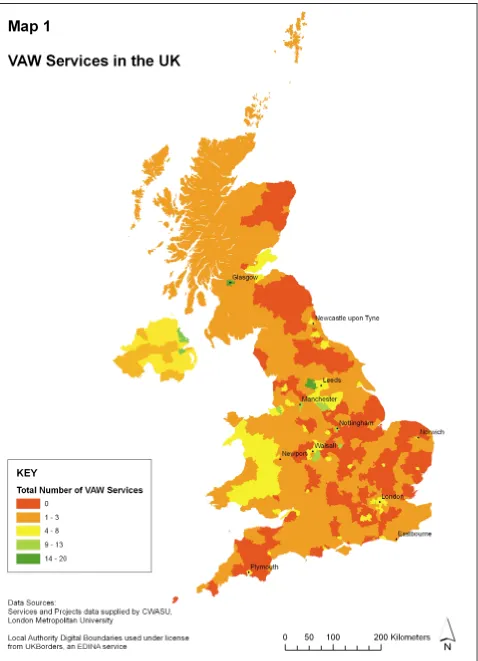
Map 1: VAW support services in the UK. . . 20
Table 3: Support service provision by type of violence across all Nations & Regions 21 Table 4: VAW support services by Nations and Regions. . . 21
Map 2: Domestic violence services. . . 22
Table 5: Domestic violence services by Nations and Regions. . . 23
Map 3: Women’s refuges . . . 24
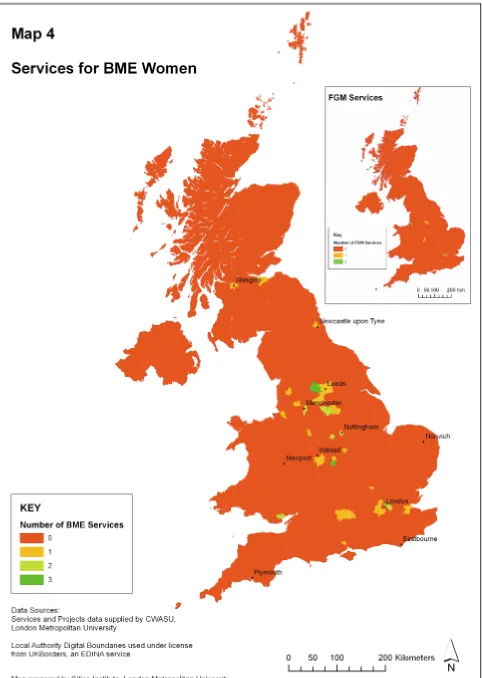
Map 4: Services for BME women. . . 26
Table 6: BME services by Nations and Regions including FGM services . . . 27
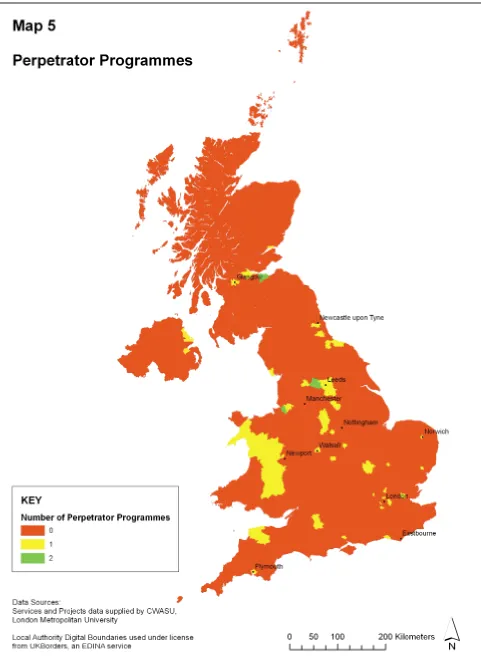
Map 5: Perpetrator programmes . . . 28
Table 7: RESPECT member perpetrator programmes by Nations and Regions. . . 29
Map 6: Specialist Domestic Violence Courts. . . 30
Table 8: Specialist Domestic Violence Court by Nations and Regions. . . 30
Map 7: Sexual violence services . . . 32
Map 8: Rape Crisis Centres. . . 34
Map 9: Sexual Assault Referral Centres. . . 36
Table 9: Sexual violence services by Nations and Regions . . . 37
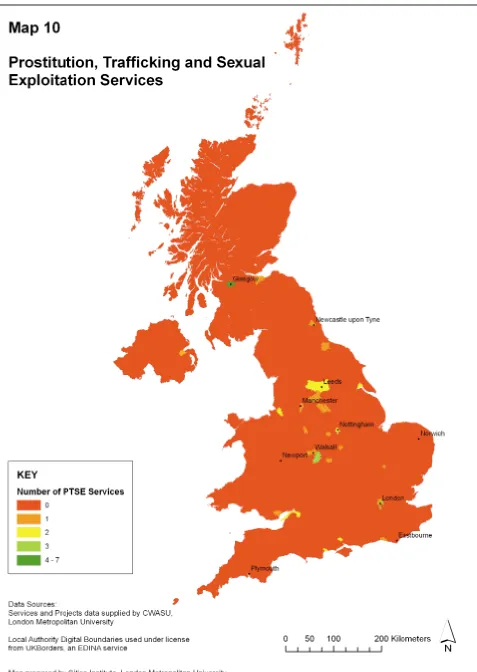
Map 10: Prostitution, trafficking and sexual exploitation services. . . 38
Table 10: Prostitution and sexual exploitation services by Nations and Regions. . . . 39
Table 11: Extrapolated percentages of central government funding on women’s services in 2000/01 . . . 41
Table 12: Pools of need. . . 48
Table 13: Extrapolated prevalence of domestic violence, sexual assault and stalking in last 12 months in UK cities. . . 49
Table 14: Support needs and service responses . . . 49
BAWSO Black Association of Women Step Out
BCS British Crime Survey BME Black & Minority Ethnic EVAW End Violence Against Women FGM Female Genital Mutilation GIS Geographical Information System GVAWP Glasgow Violence Against Women
Partnership
IDVA Independent Domestic Violence Advisor
ISVA Independent Sexual Violence Advisor
LAA Local Area Agreement
LGA Local Government Association NAWP Newham Asian Women’s Project
NGO Non-Governmental Organisation
RCC Rape Crisis Centres
SARCs Sexual Assault Referral Centres SBS Southall Black Sisters
SDVCs Specialist Domestic Violence Courts
UN United Nations
VAW Violence Against Women
WAVE Women Against Violence Europe
Wales in one year alone is £17 billion. Using a case study approach, we estimate that in Hammersmith & Fulham where there are services, the cost to the State of providing dedicated and specialised support to a woman and her children that enables them to establish safety is £9,654, while in Shrewburyness, where there are no appropriate services, her situation could spiral to an ultimate cost to the State of £337,054.
Conclusions and Recommendations
Equality duties on the public sector have been introduced across the UK, most recently, the Gender Equality Duty in England, Wales and Scotland. This requires all public bodies to take steps to eliminate unlawful sex discrimination and harassment and promote equality of opportunity between women and men. Many British public bodies, including government departments and local authorities, also have specific duties which include setting gender equality objectives, publishing them in Gender Equality Schemes and carrying out gender impact assessments on new and existing policies. The Office of the Third Sector, within the Cabinet Office, should therefore be assessing the gender impact of current funding policies under both national and local processes. This should include an investigation into the extent to which a) support for specialised services is part of gender equality schemes; b) generic providers are being preferred in competitive tendering processes at local levels; and c) funding for frontline services is compliant with the Government’s COMPACT with the Third Sector.
Map of Gaps documents significant shortfalls in the provision of specialised services across the UK and demonstrates how a strategic approach to VAW results in better and more equal service provision. The reality is that the greatest demand for support will fall on non-statutory services and we are calling upon government at all levels to recognise and value the historic and current contributions of the women’s voluntary sector in addressing VAW and providing support according to women’s needs. This recognition should include harnessing their expertise in policy development and ensuring stable and long-term funding strategies.
The experience of Scotland proves that investment in frontline voluntary sector support services produces a significant return. Scotland should, therefore, be regarded as a benchmark with respect to its strategic approach, its recognition that violence is a cause and consequence of women’s inequality and its commitment to enhancing capacity and diversity of provision. National and regional governments should follow the model of the Scottish Government in developing VAW strategies which have a core commitment to funding specialised support services. This should also be considered as part of their legal obligations under the public sector equality duties.
Local authorities across the UK should follow the model of Glasgow City Council and commit to long-term funding of specialised support services for victims of violence. This should be part of a strategic approach on VAW and should be considered as part of their legal obligations under the public sector equality duties.
Over the next year, governments in England, Northern Ireland and Wales should develop a funding framework for specialised frontline services, similar to the VAW Fund in Scotland, to ensure that all women across the UK have access to these vital services.
Women deserve access to quality support services. To continue with the current situation is simply too costly, not only to women themselves but also to society more broadly. We must end the postcode lottery by bridging the gaps.
For these women, specialised support services2 are vital for their immediate safety, access to justice and ability to move on with their lives. Map of Gaps shows graphically for the first time that access to support is a postcode lottery in that it depends on where you live. In addition, many services are facing a crisis in their funding because of new commissioning processes and the move towards funding generic rather than women-specific services. We have already witnessed a tide of closures and many other services are creaking under the weight of demand; helplines are often engaged, refuges are full, Rape Crisis and survivors groups have long waiting lists and the new domestic and sexual violence advisors are having to ration their support to individuals designated highest risk.
● A third of local authorities across the UK have no specialised VAW support service.
● Most women in the UK have no access to a Rape Crisis Centre and fewer than one quarter of local authorities have any sexual violence service at all.
● A very small proportion of the UK is covered by existing Sexual Assault Referral Centres.
● Fewer than 1 in 10 of local authorities have specialised services for BME women which would address forced marriage, female genital mutilation and crimes in the name of honour, as well as other forms of violence.
● Almost one third of local authorities have no domestic violence services.
● Fewer than 1 in 10 local authorities have services for women in prostitution.
Five areas are particularly underserved: The East of England; London; Northern Ireland; the North West; and the South East. In three cases these are regions with large percentages of the population; in two there are smaller populations but extensive rural areas. Women in Northern Ireland appear especially poorly served with no provision across a number of the services mapped here.
Very few areas can claim to have sufficient service provision to meet the needs of their female population who have recently suffered violence, let alone the many more who struggle to cope with legacies from the past. We commend the nine areas with the most extensive provision – Birmingham, Bradford, Glasgow, Hammersmith & Fulham, Leicester, Liverpool, Manchester, Nottingham and Sheffield – but note that at least three of these have minimal sexual violence services.
It is apparent that where government steers provision a more consistent geographical spread is possible. In contrast, where decisions are left to localised decision-making the postcode lottery is reinforced. We share the concerns of the VAW sector that local commissioning, and the move towards larger and more generic providers, will not only reduce the number of specialised services but in the process, will also lead to the loss of the incalculable institutional skills and expertise of these organisations.
What is the Impact of the Postcode Lottery?
Defining Terms
Violence against women (VAW) is used in this report to reflect the meanings it has been accorded by the United Nations (UN). The 1995 Beijing Platform for Action states it is:
… any act of gender-based violence that results in, or is likely to result in, physical, sexual or psychological harm or suffering to women, including threats of such acts, coercion or arbitrary deprivation of liberty, whether occurring in public or private life. (United Nations, 2001)
The recent Secretary General’s report (UN, 2006) reminds us of the language use in the first declaration on this issue in 1993.
… the term “violence against women” is understood to mean any act of gender-based violence that is directed against a woman because she is a woman or that affects women disproportionately. (p12)
The forms of violence addressed by services mapped here include: Intimate partner violence; rape and sexual assault; sexual abuse of girls; trafficking, prostitution and sexual exploitation; stalking and sexual harassment; female genital mutilation (FGM); forced marriage; crimes in the name of honour.
[image:5.1190.673.1112.539.673.2]The British Crime Survey (BCS) is the best estimate for England and Wales of the extent of violence in women’s lives: it measures domestic violence, sexual assault and stalking across the lifetime and the last 12 months6. Table 1 presents findings from the 2001 (Walby and Allen, 2004) and more recent 2004/5 (Finney, 2006) surveys. We use the 2001 and 2005 population estimates to convert the prevalence rates into actual numbers, as these match the survey years as closely as is possible. Whilst these estimates are not entirely accurate for a number of reasons7, this is the closest we can get to current potential support needs. We use the last 12-month prevalence rates and calculate the actual number of women from the baseline of the female population aged 15-59, in order to get as close as possible to the BCS sample frame, which is women aged 16-59.
Table 1: BCS 12 months prevalence converted into numbers of women
Introduction
The majority of the public undoubtedly back the provision of support for women who suffer violence. Indeed, a recent poll (Women’s Resource Centre, 2007) found the vast majority of women (97%) supported access to women-only services. Far less are aware that support services are not only unevenly distributed, but actually non-existent in some areas. It is often only when someone needs to find support – for themselves or someone they are close to – that the limited availability becomes evident.
Over the last decade a number of projects have aimed to ‘map’ support services for victim-survivors3of violence. What have been noticeably absent are actual maps that chart the geographical location and distribution of services and, more importantly, the gaps in provision. This project, funded by the Roddick Foundation, required a collaboration between sociologists and geographers to document the ‘postcode lottery’ of service provision (Kelly, 1999) in visual form.
The study had three guiding goals:
● To plot geographically the distribution of violence against women services across the nations and regions of the UK;
● To provide politicians, policy makers and NGOs with accessible information on which to base decisions and campaigns;
● To provide the End Violence Against Women (EVAW) Coalition4with a tool through which progress in securing and extending specialised5VAW support services could be tracked.
Map of Gaps provides incontrovertible evidence that access to support depends on where you live, and that some regions of the UK, and thus the women who live there, are especially poorly served. Conversely, there are good stories to tell, locations where coverage is more equitable and/or encompasses many forms of violence. Whilst relatively rare, such areas demonstrate that it is possible to build integrated and comprehensive service provision.
The core of this report is the actual maps. In addition, national and regional analysis has been undertaken to compare the relative distribution of services to population estimates. That a region has a proportion of services similar to, or even greater than, its proportion of the UK population should not be read as meaning that provision is adequate. Most services are currently unable to meet the actual demand from the minority of victim-survivors who manage to find them. Helplines are often engaged, refuges full and outreach projects working to capacity, while rape crisis and survivors groups have long waiting lists; all aspire to be able to provide more to their existing service users, and to reach women currently outside the support network, but current resources preclude this.
Before presenting the maps and findings, we discuss the definitions we have used, the contribution of specialised services and their place in international and national policy. How we undertook the work is outlined in the methodology section. The maps cover all services, domestic violence and sexual violence. In the latter two sections additional maps address specific forms of violence and/or service provision.
Type of violence Previous 12 month Extrapolated Previous 12 month Extrapolated prevalence rate Nii prevalence rate Niv
2001i 2004/5iii
Stalking 7.8 1,233,020 8.9 1,447,220
Domestic violence 6.0 948,477 5.9 959,393
Sexual assault 2.1 331,967 2.8 455,305
Total 15.9 2,513,464 17.6 2,861,918
1 The figure in this column is the estimated prevalence as a percentage of the female population of England and Wales aged 16-59 years (Walby & Allen, 2004). Whilst some women suffer more than one form of violence, and so may appear in several columns, they remain potential service users across a range of provision.
2 Calculated using the 2001 census figures for England and Wales, women aged 15-59 (baseline 15,807,953). 3 Finney (2006).
now have a diversity of responses, drawing on wider practice bases, but the UK has never had the investment in this sector that has been evident in other western countries.
We make reference throughout this report to diverse or a diversity of services and argue that this is what government and commissioners should also be aiming for. Diversity here means a range of forms of provision – helpline, shelter, advocacy, counselling – across forms of violence and for social groups with additional needs (young women, minority women, women with disabilities). Diversity of provision ensures the following can be accommodated:
● the complexity and differences between of forms of violence;
● both crisis/acute interventions and longer-term support;
● specificity of needs with respect to age, minority status, other vulnerabilities;
● access for women with complex needs;
● variations across criminal justice, health, wider social and community support and/or empowerment needs;
● the different routes women take into support;
● the time lag from events before many women are ready to seek help;
● the possibility for continued innovation and change.
Why Violence Against Women Services Matter
The impacts of violence are diverse, ranging from lethal to relatively minor. Research has documented a range of impacts, including physical injury, gynaecological disorders, long-term mental health issues, self-harm and suicide, disruption in intimate relationships, constrained socio-economic opportunities, routes into offending behaviour and wider social exclusion (see for example, UN Secretary General Report, 2006; Kelly & Lovett, 2005; Walby & Allen, 2004; Rumgay, 2004). The human and emotional costs of just domestic violence to its victims have been estimated at three times those to the public purse: £17bn per year (Walby, 2004). These also constitute costs to societies and communities, since they represent lost capacities and potentials. Given that many perpetrators are known and trusted, violence damages social relations, undermining the ability to trust others, unravelling the fabric of connections between families, neighbourhoods and friendship networks.
The need for support services that enable women to name, address and move on from violence and abuse is acute given what we know about the contexts in which violence most commonly occurs and its associated harms. Unlike the violence experienced by men9, women are most commonly abused by someone they know, often on multiple occasions and with sexualised elements. Each of these acts as a deterrent to telling others, let alone making an official report; and these impediments are enhanced for women from black and minority ethnic (BME) and refugee communities and for older women. Disability, mental health issues, substance misuse, involvement in prostitution and insecure immigration status may heighten the risks of being victimised whilst making access to support more complex, and diminishing the likelihood of involving statutory services. Specialised VAW services have provided options and access to support for those who traditionally ‘suffered in silence’, enabling women ‘to ‘live’ rather than just survive’ (Kelly & Lovett, 2005:15). It is women’s services that deliver on government and UN commitments to empower women and repair the harms violence does to individuals, social networks and communities.
It has been suggested that since the women’s movement has been so successful in getting VAW recognised, service provision should now be mainstreamed into the statutory This exercise suggests a maximum of 2,861,900 and a minimum of 2,513,464 potential
service users for existing provision in England and Wales who are currently experiencing or have recently experienced violence.
Data from the other nations in the UK, whilst less extensive, and limited to domestic violence, have broadly similar contours, with surveys in Scotland (Macpherson, 2002) and Northern Ireland (Carmichael, 2007) echoing the six per cent prevalence rate for the previous 12 months. Extrapolating the most recent population figures across all the nations and regions of the UK, therefore, results in a minimum of three million women experiencing some form of violence each. For some, especially with respect to the domestic violence category, incidents in the last twelve months may be neither serious nor frequent8, and this group may be less likely to need or seek support. For almost half of those reporting domestic violence, however, the behaviours were serious enough to cause injury and/or were repeated. Taking into account the potential for double counting, the low level of some incidents, there are still at least 1.5million potential service users who are currently being/have been recently, victimised.
The second layer of potential service users comprises a larger pool of women who have suffered violence in the past as children and/or as adults who seek support to deal with the legacies of victimisation. Potential service users, therefore, need to be counted in the millions.
What is a Support Service?
We use the term ‘support service’ to encompass organisations providing a range of support options that enable women to create safety, seek justice and undo the harms of violence. These options include: Listening; advice; advocacy; shelter; protection; self-help; and access to activism. From the outset we need to recognise that support can come from a range of sources, and that for most women their first port of call is informal network members – (female) friends and family (Kelly, 1999; Wilcox, 2000). The responses of confidantes can either encourage or discourage wider help-seeking. We know, for example, with respect to rape, that reporting to the police and/or seeking healthcare is often the outcome of being encouraged by others to make those moves (Lovett et al., 2004). When making reports to statutory bodies women may be lucky to encounter pockets of excellence; these, however, often depend upon the knowledge and empathy of committed individuals located within more generic responses.
From Global to Local: Policy Contexts
That VAW constitutes a violation of women’s human rights is now widely recognised (Kelly, 2004). Under a number of international agreements, the UK government is required to ensure that women have access to services that provide routes to protection, justice, medical treatment and any other provisions that will help regain agency, security and human dignity. For example, the Convention on the Elimination of all Forms of Discrimination against Women (CEDAW), General Recommendation 19, stipulates that ‘appropriate protective and support services should be provided for victims’. Under the strategic objectives of the 1995 Beijing Platform for Action, states are obliged to provide ‘well-funded’ support services including therapeutic, legal and medical provisions ensuring access for migrant women and women from rural areas. The Council of Europe recently adopted Recommendation Rec (2002)5 on the protection of women against violence, which calls on member states to adopt a national strategy on VAW that includes the provision of specialised support organisations (Hagemann-White & Bohne, 2007).
The UK does not yet have an integrated strategy on all forms of VAW as required by the United Nations and Council of Europe (Kelly & Lovett, 2005), although Scotland is in process of developing such a policy. In the last decade, however, the Westminster Government has introduced a raft of measures aimed at specific forms of violence. Until recently, these were almost exclusively directed at domestic violence, often justified on the erroneous grounds that it is the most common form of VAW. In fact, recent studies from Germany and France suggest that sexual harassment occurs at four times the rate of physical and sexual violence (Hagemann-White, 2006), and the latest BCS data show stalking to be most common of the three forms measured (Finney, 2006).
Investment in Scotland has been focused on the core support services provided by the women’s sector. The Westminster Government, in contrast, has emphasised statutory services, especially the criminal justice system, with investment in; specialist domestic violence courts (SDVCs), independent domestic violence advisors (IDVAs), SARCs and independent sexual violence advisors (ISVAs). Whilst the associated advocates do provide support, they work to particular models of risk assessment and/or to improve criminal justice outcomes. That central funding has been made available for establishing all of these provisions is further illustration of the failure at local authority and health trust levels to prioritise VAW services. Women’s groups with a history of two decades or more can produce detailed accounts of how they have had to ‘shape shift’ to access funding streams, and how difficult it is to secure core services. The case study of the Women’s Rape and Sexual Abuse Centre in Cornwall illustrates this process.
Service case study: Women’s Rape and Sexual Abuse Centre, Cornwall
‘No one wants to give us any core costs’
WRSAC was established in 1994 by women concerned that there was no local community-based provision for survivors of sexual violence. The organisation works from a feminist ethos that recognises the link between VAW and gender inequality. The Helpline was launched in 1996 with a donation of £1000, and subsequent charitable trusts enabled recruitment of paid staff to co-ordinate volunteers. In 1999, sector. Whilst acknowledging that there are critical aspects of provision that the statutory
sector must deliver, this suggestion fails to understand not only the depth of knowledge which specialised services have amassed, but also the choices women themselves make about where to access support. It remains the case that only a minority of victim/survivors ever report violence to statutory agencies – their access to support relies upon there being alternative routes. Moreover, statutory services have not proved themselves consistent in response; rather engagement has waxed and waned with government priorities, and focused primarily on crisis intervention. The longer-term support many women need has never been a priority for any statutory agency. Just as one indication of the combination of women’s decision-making and the responsiveness of the women’s services, Sexual Assault Referral Centres (SARCs) report that a minority of service users take up available counselling options; in contrast, specialised women’s support services are unable to meet demand, and many have lengthy waiting lists.
A vibrant and accessible women’s NGO sector is an essential component of co-ordinated community responses for a plethora of reasons. It provides access for women who will not, or are uncertain whether to, make an official report – currently the majority.
● It offers support and signposting into statutory services.
● It builds knowledge and awareness of the diversity and complexity of VAW and responses to it.
● It develops and tests innovative approaches.
● It emphasises safety, security, autonomy and empowerment.
● It provides long-term support.
● It offers support whenever the woman is ready to access it.
● It can be flexible and dynamic in meeting diverse and complex needs.
Where there is capacity, and through second tier networks, the women’s NGO sector offers a strategic ‘expert view’ to government on laws, policy and practice and helps government and statutory agencies to develop guidance and training.
Despite the fact that VAW is an issue in many women’s lives, and is now a priority for the Minister for Women and Equalities, only 1.2 per cent (across all nations) of all central government funding to the UK voluntary/third sector goes to women’s organisations,10
and only a proportion of these will specialise in violence (Mocroft & Zimmeck, 2004).
The Corston Report: a review of women with particular vulnerabilities in the criminal justice system (2007)
including services for BME women. In addition, the strategic inclusion of prostitution as a form of VAW in Scotland led the Scottish Government to issue guidance for local authorities responding to street prostitution. One million pounds has been distributed between four local authorities to support the introduction of the guidance and a new kerb crawling offence.10
Wales has a relatively strong domestic violence sector which, during the 1980s, emphasised developing provision in rural areas. In 2005, an all Wales Domestic Abuse Strategy was launched to guide policy and service provision. Responses to VAW in Northern Ireland are framed by the history of political conflict (McWilliams, 1997). Currently, the province has a Domestic Violence and Abuse Strategy (2005) and an ongoing consultation on a Sexual Violence and Abuse Strategy, both of which are framed in gender-neutral terms.
In England and Wales a range of policies are currently in operation. The National Domestic Violence Delivery Plan, published in March 2005, lists ‘To build capacity within the domestic violence sector to provide effective advice and support to victims of domestic violence’ as one of seven objectives (Home Office, 2005), and this remains an objective for 2007/8 alongside developing professional standards (Home Office, 2007). In January 2007, an Action Plan on Sexual Violence and Abuse was launched, with a key objective ‘to increase access to support and health services’ (HM Government, 2007:21). Fragility of the specialised sexual violence sector is recognised albeit that the only clear commitment is ‘for the Government to work with the sector to address this issue if access to support services is to be increased’. The most recent development in Public Service Agreement 23, ‘Make communities safer’, includes explicit reference to the need for local government to invest in sexual violence support services. The Home Office co-ordinated strategy on prostitution not only identifies support services as key to the provision of routes out, but acknowledges that it is only specialist services that can develop the necessary relationships of trust: ‘Dedicated services are also essential to broker the provision of mainstream services’ (Home Office, 2006:42). Thus across all relevant policies the critical importance of specialised support services is acknowledged.
There is even stronger recognition of the women’s voluntary/third sector and the necessity of women-only provision in: the Corston Report (Corston, 2007); Women’s Mental Health into the Mainstream (DoH, 2002); and the Victims of Violence and Abuse Prevention Programme (Itzin, 2006). As with many aspects of government policy, however, these disparate elements are neither consistent nor joined up, unlike in Scotland.
Thus across a range of policy documents, in different and not always consistent ways, the unique role of specialised voluntary/third sector services are recognised. In Scotland, ring-fenced monies have been provided at the national level to secure and build provision. There is no equivalent in the other nations and regions, albeit that the Victims Fund13has been used in England and Wales to secure and extend capacity in the sexual violence sector14. Most services, therefore, rely on funding from generic pots, such as Supporting People, and funding at the local level.
Local Area Agreements are intended to enable key partners to set relevant priorities, allowing greater flexibility with respect to local circumstances. The policy is part of devolving decision-making and reducing bureaucracy. While domestic violence has been partly mainstreamed into criminal justice initiatives, there is no requirement for Cornwall Probation Service funded WRSAC to provide support work to women as
part of the domestic violence perpetrator programme, and Home Office funding covered two further domestic violence support posts. At this point, sexual violence work was funded by the National Lottery and Comic Relief, with all projected outputs, outcomes and targets achieved and surpassed. None of the local authorities approached by WRSAC saw sexual violence as within their remit. In 2005, the Home Office Volunteers Fund covered the volunteer co-ordinator but applications to the Victims Fund were not successful. As the Director of WRSAC comments, ‘No one it seemed wanted to pay us for direct services to victims/survivors of sexual violence’.
In 2006, WRSAC was awarded £250,000 for six IDVAs by the county council, further extending their domestic violence provision.
Currently, the only statutory funding for sexual violence that WRSAC receives are small grants from the Home Office Gold Star scheme (for work with volunteers) and Victims Fund monies for a support worker. An Independent Sexual Violence Advocate was initially funded for 6 months, but the local authority did not provide match funding and the future of the post is uncertain.
WRSAC has received the Criminal Justice Board’s ‘Award For Outstanding Service To Victims and Witnesses’ (2005), has been presented to MPs and Ministers as one of Legal Services Commission’s ‘Flagship Projects’. In 2006 it was voted by people in Cornwall as one of Pirate FM’s ‘Best in Cornwall’. The organisation supports over 1000 women a year through diverse and innovative projects.
For 2008, WRSAC has no guaranteed funding for work on sexual violence or for salaries for the director and administrator.
This situation is likely to worsen, as commissioning frameworks at local authority levels are being interpreted as routes to rationalisation through contracting with single providers for what are termed ‘integrated’ services. Integration here is not a number of specialised groups choosing to amalgamate, or specialised women’s groups extending their remit to other forms of violence or provision. Rather generic, often housing, providers are making successful bids based on lower unit costs. Whilst small women’s organisations are long on expertise, they are short on capacity to tender for much extended service provision. Generic housing or advice services, on the other hand, have capacity but a limited knowledge and practice base. The biggest danger here is that decisions will be made on the basis of cost and efficiency, losing sight of the value added by the needs-based approach to support which has enabled so many women and children to ‘get free’ from violence.
Policy in the Nations and Regions
To ‘map’ services we used GIS (Geographical Information System), a software application which makes it possible to link data about a place or location to a digital map. The distribution of these data and their relationship to other electronically stored information about places or locations can then be analysed. Mapping techniques are employed to visualise the results.
The database was geocoded to Local Authority16boundaries using the nationally agreed coding system for England and Wales, Scotland and Northern Ireland. Attaching the data at this geographical level (instead of address or postcode point) maintained the confidentiality of individual projects and services. The distribution of services was visualised using chloropleth mapping. This enabled the uneven geography of service provision across the UK to be highlighted. The maps demonstrate the extent to which community access to a range of specialised support services is subject to a ‘spatial lottery’.
Criteria for Inclusion
VAW support services are defined by two inclusion criteria for the purposes of this study: that the organisation works primarily on violence; and that it provides significant direct support to female victims/survivors. We have not included national helplines, since they do not have geographical catchment areas, and are thus difficult to ‘map’. This means that the domestic violence helpline in England run by Women’s Aid and Refuge, the Wales domestic abuse helpline run by Welsh Women’s Aid, the domestic violence helpline in Northern Ireland run by Women’s Aid Northern Ireland, the Scottish domestic abuse helpline and the just established Scottish sexual violence helpline are not included.
What is mapped, therefore, is the women’s voluntary/third VAW sector (refuges, community domestic violence projects, rape crisis centres, sexual violence support services) and those specialised services within the statutory sector that provide significant support. Under these criteria, we have mapped:
● Sexual Assault Referral Centres (SARCs) and Specialist Domestic Violence Courts (SDVCs), both of which offer advocacy and support services.
● Health sector female genital mutilation (FGM) services, since they are the only formal support services addressing this issue.
● Perpetrator programmes that are members of the RESPECT network, since they have signed up to work in accordance with RESPECT’s principles and minimum standards that includes an associated support service for women.
We have not mapped IDVAs and ISVAs specifically since they are not ‘services’ as such, and to do so would also result in significant double counting, as many are located in SARCs, SDVCs, RCCs and other domestic violence services, which are mapped. Nor have we included services that only provide services to male victims/survivors or women’s centres since they do not specialise in work on violence.
provision for domestic violence support services via the LAA framework. This situation is even more confused with the new Public Service Agreements announced in October 2007 with the need for specialist sexual violence support services explicitly noted, but no equivalent for domestic violence. Given that the majority of women (at least 75%) do not report violence to the police, voluntary/third sector support is vital. A serious impediment to integration in LAAs is the dearth of knowledge and understanding of the issues or the women’s voluntary/third sector among commissioners. If governments across the UK are serious in their commitment to address VAW, they must build capacity and provide resources that will address these, and other, gaps.
Finally, duties on the public sector to promote equality have been introduced across the UK, most recently, a duty to promote equality on the grounds of gender was introduced in England, Wales and Scotland in 2007. These duties should lead to public bodies addressing VAW more effectively, in the first instance by assessing the need for VAW services and then setting priorities accordingly. However, with the notable exception of Scotland, there has been a tendency to approach violence from a gender neutral and crime-based perspective that has served to disconnect forms of VAW from wider work on gender equality (Horvath & Kelly, 2007). Cabinet Minister for Women and Equality Harriet Harman, recently announced VAW would be one of the priorities, reaffirming an earlier Labour government position and signalling a willingness to discuss VAW as a public priority.
Map of Gapsis a contribution to this ongoing policy process, and illustrates that there is much to be done if we are to ensure women across the UK have equitable access to support, respect and redress.
Methodology
This study was undertaken to map the location and comparative availability of VAW services across the UK. It draws on data from primary and secondary sources, including: an emailed questionnaire distributed to service providers; liaison with umbrella organisations (including Women’s Aid Federation of England, Welsh Women’s Aid, Women’s Aid Northern Ireland, National Rape Crisis Network England and Wales, Rape Crisis Scotland, Scottish Women’s Aid, the Survivors Trust; the London-based Sexual Violence Action and Awareness Network; published listings of services; and internet searches.
A database was compiled of services, listed by types of service provided, forms of violence covered and location. Data entry was checked on multiple occasions, and in different ways. We do not claim absolute accuracy: unstable and short-term funding means some services close at short notice and some small organisations may not appear on lists. Whilst not comprehensive, therefore, the database is as detailed and inclusive as possible for an audit across nations and regions.
Table 2: Population estimates for Nations and Regions 2006
Findings: Maps of Gaps
The maps in this section represent in visual form the postcode lottery for women seeking help and support. The colour shading is key to understanding the presence and extent of services: Red indicates no specialised VAW service; green indicates that in these areas a range of services is available; the shades in between indicate relative distributions. Whilst a lack of services in a local authority area does not entirely limit access, as there may be services in the adjacent local area, often services may have limits placed on whom they can support. We also know from research on women’s help-seeking that multiple routes to support are frequently used, and that it can take considerable effort to make first moves. Paucity of services, therefore, constitute a barrier to seeking and finding support, and makes it intensely difficult for women to marshal the ‘basket of resources’ (Sen, 1999) they need to resolve situations and/or move on with their lives.
Services have been mapped overall (Map 1) and then within two broad headings: domestic violence (Maps 2-6) and sexual violence (Maps 7-10). Further sub-divisions map the extent and distribution of specific kinds of services: Those for BME women; perpetrator programmes; Specialist Domestic Violence Courts; Rape Crisis Centres; Sexual Assault Referral Centres; prostitution, trafficking and sexual exploitation services.
Geographical Boundaries
The distribution of services is analysed at two levels – across nations and regions and by local and/or unitary authority. Provision is examined, therefore, across Northern Ireland, Scotland, Wales and the local government regions of England (see Figure 1). We present comparisons at the regional level, and two case studies at city level, to reveal the disparities of access. The next stage of the project will be online interactive maps, which enable drilling down to local authority areas, so that what is and is not available currently can be readily accessed by politicians, the voluntary/third sector and policy makers.
Figure 1: Local Government Offices in England
Equity of provision, however, is not just about geographical distribution of services but the populations that they serve. To assess this, we draw on population estimates for the nations and regions of the UK using mid-year population estimates for 2006 (see Table 2). Key figures to bear in mind when reading the report are:
● 83.8 per cent (50,763,100) of the population live in England;
● The South East, London, and the North West are the regions with the highest population distributions (more than 10% of the total);
● Wales, the North East and Northern Ireland have the lowest population distributions (less than 5% of the total).
Nation/Region Population Percentage Female Percentage of total population of total population population
South East 8,237,800 13.6 4,209,700 13.6
London 7,512,400 12.4 3,798,300 12.3
North West 6,853,200 11.3 3,498,700 11.3
East of England 5,606,600 9.3 2,853,800 9.2
West Midlands 5,366,700 8.9 2,727,200 8.8
Yorkshire and the Humber 5,142,400 8.5 2,615,200 8.5
South West 5,124,100 8.5 2,618,500 8.5
Scotland 5,116,900 8.5 2,647,500 8.6
East Midlands 4,364,200 7.2 2,206,900 7.1
Wales 2,965,900 4.9 1,521,100 4.9
North East 2,555,700 4.2 1,308,300 4.3
Northern Ireland17 1,741,619 2.9 880,215 2.9
[image:10.1190.76.402.223.609.2]VAW Support Services Across the UK
Headline findings
● A third of local authorities across the UK have no specialised VAW support service.
● Only nine out of 434 local authority areas can claim to have a diversity of provision (defined as nine or more services across both forms of VAW and types of provision).
[image:11.1190.63.541.73.734.2]A total of 781 specialised VAW support services were identified and form the basis of Map 1. Table 3 illustrates that almost three-quarters are focused on domestic violence. We reiterate here that this should not be read as meaning there are adequate domestic violence services. The sections which follow show this is not the case. What it tells us is that currently there is an imbalance in provision across forms of violence.
Table 3: Support Service provision by type of violence across all Nations and Regions
Table 4 supplements Map 1, presenting the relative distribution of services by nation and region, and population estimates. The most significant findings are summarised below:
● Only just over two thirds (69.8%, n=303) of the 434 local authorities in England, Scotland, Wales and Northern Ireland have a specialised VAW support service. ● Significantly underserved regions are the East of England, the East Midlands,
Northern Ireland, the North West and the South East.
● Areas with a diversity of provision are Birmingham, Bradford, Glasgow,
[image:11.1190.682.1114.290.384.2]Hammersmith and Fulham, Leicester, Liverpool, Manchester, Nottingham and Sheffield.
Table 4: VAW support services by Nations and Regions
Type of service provision N %
Domestic violence 575 73.6
Sexual Violence 135 17.3
Prostitution, Trafficking and Sexual Exploitation 56 7.2
Female Genital Mutilation 15 1.9
TOTAL 781 100
Nation/Region Services Population
N % %
London 119 15.2 12.4
North West 84 10.7 11.3
West Midlands 77 9.9 8.9
South East 77 9.9 13.6
Scotland 76 9.7 8.4
Yorkshire and the Humber 75 9.6 8.5
South West 64 8.2 8.5
East Midlands 53 6.8 4.9
Wales 52 6.7 7.2
East of England 50 6.4 9.2
North East 41 5.2 4.2
Northern Ireland 13 1.7 2.9
[image:11.1190.675.1114.550.768.2]Domestic Violence Services
Map 2 includes all domestic violence services, with maps 3-6 breaking provision down into more specific sub-sets.
Headline findings
● Whilst domestic violence services comprise three-quarters of all services, one in three local authorities have none.
● Only 22 areas can claim to have a diversity of provision (defined as four or more services).
A total of 510 domestic violence services were identified, including specialised BME projects and perpetrator programmes with associated women’s support services. Whilst comprising the majority of provision, even domestic violence provision is not comprehensive across the UK. Most of the services mapped here are part of the women’s voluntary/third and community sector that has provided safe refuge, advice and support for over three decades.
The more equitable distribution in Wales and Scotland suggests that policies that support specialised service provision have had positive impacts. The evident respect for the women’s sector has resulted in some nourishment of it, although still insufficient to meet current needs. The lack of provision in many parts of England suggests that the Local Government Association (LGA) guidance that ‘work to tackle domestic violence is part of local authorities’ core business – not an optional extra’ (LGA, 2006a:3) has not been consistently heeded, with some local authorities failing to commission frontline services (LGA, 2006b).
Analysis (see Map 2 and Table 5) revealed the following major gaps and disparities:
● One third (33.9%, n=147) of local authorities in England, Scotland, Wales and Northern Ireland have no specialised service for women experiencing domestic violence.
[image:12.1190.60.539.75.740.2]● England is underserved, with the East of England the most underserved region.
Table 5: Domestic violence services by Nations and Regions
Nation/Region Services Population
N % %
London 80 15.7 12.5
North West 56 11.0 11.4
South East 53 10.4 13.6
Scotland 49 9.6 8.4
Yorkshire and the Humber 47 9.2 8.4
West Midlands 46 9.0 8.9
Wales 38 7.5 4.9
South West 37 7.3 8.4
East Midlands 35 6.9 7.2
East of England 33 6.5 9.2
North East 25 4.9 4.2
Northern Ireland 11 2.2 2.9
Women’s Refuges
Headline findings
● One in three local authorities (37.8%, n=164) do not have a women’s refuge.
Refuges are an iconic invention of the women’s movement, with both the USA and the UK claiming to have provided ‘the first’ (Dobash & Dobash, 1992). What is undisputed is that refuges/shelters are now a global model, considered the foundation of responses to domestic violence. They have always provided safe housing, mutual support and advice. Many groups encompass additional services, including: outreach; counselling; signposting; advice and advocacy; practical support; floating support; children’s services; second-stage accommodation and resettlement support. Community-based projects, whilst not providing safe housing, will have a combination of the other activities noted above.
A total of 379 women’s refuges were identified. We reiterate that this does not tell us anything about capacity, as bed spaces will vary according to the size of the refuge. There are also further criteria for women trying to access refuges that will affect availability of provision, such as no recourse to public funds, an upper age limit for male children, ability to accommodate large families or restrictions on accepting women with mental health/substance misuse issues.
Since 2003, most refuge-based services were funded by a Supporting People stream that the government ring-fenced for domestic violence. This ring-fence was removed in 2006, meaning there is no longer any form of secure funding framework for these services.
Services for Black and Minority Ethnic Women including
Female Genital Mutilation
Headline findings
● Nine out of ten local authorities have no BME service.
● All current services focus on domestic violence or FGM.
● The vast majority of services are located in England.
● There are no FGM services in Northern Ireland, Scotland or Wales.
Map 4 shows BME domestic violence services and FGM services, a number of which also address forced marriage and crimes in the name of honour. We place this category under the broad heading of domestic violence since this is what most of the groups specialise in. However, this should not be read as support for the Westminster Government’s current definition of domestic violence. The most important point to emerge from the mapping is the meagre provision and its concentration in particular metropolitan areas. A total of 57 BME domestic violence projects were identified across the UK, with an additional 15 FGM projects – all located in England.
2005) and ‘intense advocacy’ (Thiara, 2005:7). Research has also established that minority women value the option of specialist refuge provision, particularly where English is their second language (Rai & Thiara, 1997). Funding for BME services comes from similar sources as those outlined in the previous section but groups have found it even more difficult to build sustainable foundations (Thiara & Hussain 2005), since services often incur higher costs, not least because they require interpreting services and resource/time-intensive community outreach work (Rai & Thiara, 1999). Crucially, they also provide services and support to women with uncertain immigration status and/or no recourse to public funds (Gill and Rehman, 2004; Thiara, 2005)18.
Table 6: BME services by Nations and Regions including FGM services
Table 6 reveals that almost 95 per cent of specialised BME provision is located in England, with almost half concentrated in London (47%). Regional analysis reveals further critical gaps.
● Of the 434 local authorities in England, Scotland, Wales and Northern Ireland, 46 – only one in ten (10.6%) – have a specialised BME service.
● There are no specialised BME services in the South West of England or in Northern Ireland.
A recent study estimates that there are at least 66,000 women and girls in England and Wales who have undergone FGM, in the main prior to arrival in the UK, with a further 33,000 girls and young women at risk (Dorkenoo et al., 2007). Only 15 FGM services were identified, all located in England, with over three-quarters of all provision in London. All, bar three, are health clinics in the statutory sector focusing on the gynaecological or antenatal consequences of FGM. There are few community-based services and significant gaps, especially with respect to girls at risk.
Detailed analysis reveals the following more specific gaps:
● No specialised services in Scotland, Wales or Northern Ireland.
● No specialised services in five of the eight Government Office regions in England.
Nation/Region Services
N %
London 34 47.2
Yorkshire and the Humber 9 12.5
North West 7 9.7
West Midlands 7 9.7
East Midlands 5 6.9
South East 4 5.6
Scotland 2 2.8
Wales 2 2.8
East of England 1 1.4
North East 1 1.4
Northern Ireland 0 0
South West 0 0
[image:14.1190.676.1113.229.450.2]Perpetrator Programmes
Headline Findings
● Almost half of all government office regions in England do not have statutory programmes that are members of the RESPECT network. ● Provision is weak in Northern Ireland, Scotland and Wales.
Whether, and how, domestic violence perpetrators should be dealt with has been, and continues to be, contested (Burton et al., 1998). That said, there is an emerging consensus that programmes addressing perpetrators should be one part of a co-ordinated response. International good practice recommends that all such programmes be accompanied by a support service for women (RESPECT, 2004). The Westminster Government’s Domestic Violence Delivery Plan mandates the Probation Directorate to provide a standardised perpetrator programme across England and Wales, but does not make associated support services for women a requirement. As stated previously, all that is mapped here are RESPECT member programmes, and Map 4 reveals a dearth across the nations and regions. Table 7 shows that almost half (44.4%) of government regions in England do not have one, and voluntary/third sector provision is especially weak in Scotland and Wales. Voluntary and self-referral projects comprise 63.2 per cent of provision and have a wider reach, since probation programmes only work with the tiny percentage of men convicted of offences (Burton et al., 1998; Hagemann-White, 2006).
There are undoubtedly more perpetrator programmes running under the auspices of probation areas19 or other non-statutory services, but not all offer associated support for partners. The lack of programmes working with what is internationally accepted best practice is of concern given the current focus on co-ordinated community and criminal justice system responses. Moreover, we know that some women access support through perpetrator programmes (Burton et al., 1998), and that they welcome an advocacy-based, pro-active support model. Where children’s welfare is at risk, mandating men’s attendance at a perpetrator programme may be a strategy used by child protection workers to support women. This is only possible where there is a) voluntary entry and b) an attached women’s support service. The absence of provision to meet these requirements ensures that some abused women will lose custody of their children when this could have been prevented had appropriate services been available.
Regional analysis reveals additional critical gaps.
● The South East and West Midlands are particularly poorly served.
[image:15.1190.59.540.75.739.2]● Large parts of England, Northern Ireland, Scotland and Wales have no provision.
Table 7: RESPECT member perpetrator programmes by Nations and Regions
Nation/Region Voluntary/ Statutory/ All projects Population
Self Referral Probation % %
London 5 1 13.0 12.4
North West 5 1 13.0 11.3
North East 4 0 8.7 4.2
Yorkshire and the Humber 4 1 10.9 8.5
South West 3 0 6.5 8.5
South East 2 0 4.3 13.6
West Midlands 2 0 4.3 8.9
East of England 1 6 15.2 9.2
East Midlands 1 2 6.5 7.2
Scotland 1 4 10.9 8.4
Wales 1 1 4.3 4.9
Northern Ireland 0 1 2.2 2.9
Specialist Domestic Violence Courts (SDVCs)
Headline findings
● There is no SDVC in Northern Ireland.
● Distribution is skewed in England, with three regions having over half (55.4%, n=36) of specialist courts.
Specialist Domestic Violence Courts (SDVCs) are a priority in the Domestic Violence Delivery Plan for England and Wales, with the dual aims of improving criminal justice outcomes and enhancing advocacy with victims (Cook et al., 2004). We include them here to recognise the associated network of Independent Domestic Violence Advisors (IDVAs). In April 2007, the Westminster Government announced an expansion of the SDVC programme in England and Wales to 64 by the end of the year, and to 100 in 2008.
[image:16.1190.60.540.71.743.2]Scotland has a pilot Specialist Domestic Abuse court operating in part of Glasgow. This court is included in the table below and map, giving a total of 65 SDVCs across the UK.
Table 8: Specialist Domestic Violence Court by Nations and Regions
Our analysis (Map 5 and Table 8) reveals some stark inequities.
● Northern Ireland has no SDVC.
● Over half of SDVCs (55.4%) are located in three of the nine regions of England – the West Midlands, the North West and the South West.
● Underserved regions are London and the South East.
Nation/Region Courts Population
N % %
North West 13 20.0 11.3
West Midlands 13 20.0 8.9
South West 10 15.4 8.5
Wales 8 12.3 4.9
Yorkshire and the Humber 8 12.3 8.5
East of England 4 6.2 9.2
London 3 4.6 12.4
East Midlands 2 3.1 7.2
North East 2 3.1 4.2
South East 1 1.5 13.6
Scotland 1 1.5 8.4
Northern Ireland 0 0 2.9
Sexual Violence Services
Headline findings
● Only one in five local authority areas have a specialised voluntary/third sector sexual violence service.
● Less than one in four local authority areas have any sexual violence service.
● Only five local authorities can claim diversity of provision (defined as three or more services)
We’d like more staff and secure funding with service level agreements. We’d like no waiting list rather than seven months, and we’d like to see a network of rape crisis lines across the country, so women can access a service wherever they happen to live. We don’t think that’s too much to ask in 2006. (South Essex Rape and Incest Crisis Centre, 2006)20
Unlike domestic violence, sexual violence support services have not been afforded strategic positioning in national and local policy until very recently, with the promotion of SARCs and monies from the Victims Fund. As a consequence, they are noticeably less widespread than for domestic violence and are even more fragile. Given the paucity of provision we map both voluntary/third sector service provision for sexual violence, abuse and sexual exploitation and the statutorily funded Sexual Assault Referral Centres (SARCs). As Lovett et al. (2004) note:
UK SARCs primarily focus on services needed in the aftermath of recent rape. Support for adults dealing with histories of sexual abuse in childhood, adult rapes that occurred some time ago, sexual harassment and flashing tends to be undertaken by Rape Crisis Centres (RCCs) and Survivors groups, most of which operate on extremely limited and insecure funding. (p.9)
Despite this, a Department of Health survey identified voluntary/third sector services as key providers of advocacy and support, delivering high-level interventions by highly qualified staff, with significant unmet demand (HM Government, 2007). It is also the case that the take up of ongoing counselling support by SARC service users is relatively low (see Lovett et al., 2004 and annual reports from the London Havens).21
A total of 116 voluntary/third sector sexual violence and abuse services and 19 SARCs were identified. As Map 6 and Table 9 demonstrate, sexual violence service provision varies widely across nations and regions.
The following gaps emerged from more detailed analysis:
● Just over one in five (n=96 of 434, 22.1%) of local authorities in the UK have a specialised voluntary/third sector sexual violence support service.
● Even when SARCs are taken into account, less than one in four local authorities (n=105, 24.2%) have a specialised sexual violence support service.
● There is no specialised BME organisation focusing on sexual violence in the entire UK.
● There is only one small Belfast-based counselling service in the whole of Northern Ireland.
● There is only one Rape Crisis Centre in Wales.
● Underserved regions are Northern Ireland, London, and the North West (see Table 9).
Rape Crisis Centres
Headline findings
● The majority of women in the UK have no access to a Rape Crisis Centre.
● The only area where provision has not fallen is Scotland.
● London, Northern Ireland, South West, Wales and West Midlands are underserved.
Rape Crisis Centres (RCCs) developed from grassroots activism to challenge the culture of disbelief and woman blame that suffused traditional responses to sexual crime. For over three decades they have provided vital support not only for women recently assaulted, but also for adult survivors of childhood sexual abuse (Sen et al., 2004). Despite women working in RCCs having skills and expertise honed through years of experience (Morton, 2000), they are often cast as less ‘professional’ than statutory services. The services provided will be some combination of a helpline, telephone counselling/support, face-to-face sessions, advocacy, accompaniment to court and self-help groups.
All RCCs in Scotland and most in England and Wales are women-only services; a few have become ‘mixed gender’ for different reasons, the most common being funding stipulations (Hooper & Warwick, 2006). There are currently 42 groups associated with the Rape Crisis Network in England and Wales22, 18 less than existed in 1996 (Jones & Cook, forthcoming). Recent closures include Milton Keynes (2004), Hounslow (2005), South Wales (2005) and York (2007). The only RCC in Northern Ireland, Belfast, which provided cross-community provision for over two decades, lost funding in 2006.
There are nine RCCs affiliated to Rape Crisis Scotland23, a much higher ratio of services to population than in any other part of the UK. Only in Scotland has provision of RCCs grown, with four of the nine services being established since 2004. This is the direct outcome of a ring-fenced national budget line – planned investment to secure, strengthen and equalise provision of core support services.