NITRATE ASSIMILATION IN FUNGI AND HIGHER
PLANTS
Ghassan Jadou Mousa Kana'n
A Thesis Submitted for the Degree of PhD
at the
University of St Andrews
1997
Full metadata for this item is available in
St Andrews Research Repository
at:
http://research-repository.st-andrews.ac.uk/
Please use this identifier to cite or link to this item:
http://hdl.handle.net/10023/14338
PLANTS.
Ghassan Jadou Mousa Kana’n
BS.c, MS.c Yarmouk University-Jordan
Submitted In Accordance With The Requirements For The Degree Of Doctor Of Philosophy.
The University Of St. Andrews
All rights reserved
INFORMATION TO ALL USERS
The quality of this reproduction is dependent upon the quality of the copy submitted.
In the unlikely event that the author did not send a com plete manuscript and there are missing pages, these will be noted. Also, if material had to be removed,
a note will indicate the deletion.
uest
ProQuest 10167065
Published by ProQuest LLO (2017). Copyright of the Dissertation is held by the Author.
All rights reserved.
This work is protected against unauthorized copying under Title 17, United States C ode Microform Edition © ProQuest LLO.
ProQuest LLO.
789 East Eisenhower Parkway P.Q. Box 1346
I, Ghassan Jadou Mousa Kana’n, hereby certify that this thesis has been composed by myself, that it is a record of my own work and that it has not been accepted in partial or complete fulfilment of any other degree or professional qualification.
Signed Date
I was admitted to the Faculty of Science at the University of St. Andrews as a Candidate for the degree of Ph.D. in January 1994.
I hereby certify that the Candidate has fulfilled the conditions of the Resolution and Regulations appropriate to the degree of Ph.D. at the University of St. Andrews, and that the Candidate is
qualified to submit this thesis in application for that degree.
In submitting this thesis to the University of St. Andrews, I understand that I am giving permission for it to be made available for use in accordance with the regulations of the University Library for the time being in force, subject to any copyright vested in the work not being affected thereby. I also understand that the title and abstract will be published and that a copy of the work may be made and supplied to any bona fide library or research worker.
Signature of Candidate Date
Contents Declaration Certificate Copyright
Acknow lodgements Table Of Contents Abbreviations Summary
Page
11
iii iv
V
vii 1 6
CHAPTER ONE
INTRODUCTION.
1.1 Model Organisms Used In This Study 9
1.1.1 Aspergillus nidulans 9
1.1.2 Arahidopsis thaliana 11
1.2 The Nitrate Assimilation Pathway 13
1.2.1 Significance 13
1.2.2 The Nitrate And Ammonium Assimilation Pathways And The Purine Degradation
Pathway 15
1.3 Nitrate And Nitrite Transport 20
1.3.1 Biochemistry 20
1.4.2 Genetics 37
1.4.3 Molecular Biology 38
1.5 Molybdenum Cofactor Biosynthesis 39
1.5.1 Biochemistry 39
1.5.2 Genetics 43
1.5.3 Molecular Biology 46
1.6 Related Genes For Molybdenum
Cofactor In Other Organisms 48 1.7 Other Genes Which May Be required
For Nitrate Assimilation 56
1.7.1 Chlorate Resistance 56
1.7.2 Molybdate Resistance 58
1.7.3 Tungstate Resistance 60
1.7.4 Caesium Sensitivity 63
1.7.5 Regulatory Genes For Nitrate Assimilation 64
1.8 Fungal Transformation 68
1.9 Objectives Of This Study 74
CHAPTER TWO
MATERIAL AND METHODS
2.1 Organisms And Strains Used In
This Research 76
2.2 Growth Media 81 2.2.1 Aspergillus nidulans. Growth Media 81 2.2.2 Escherishia coli Growth Media 84 2.2.3 Arahidopsis thaliana. Growth Medium 86
2.3 Specific Methodology 86
2.3.1 Aspergillus nidulans 86
2.3.1.1 Growth And Storage Of Strains 86 2.3.1.2 Preparation Of Suspensions Of
Conidiospores 87
2.3.1.3 Large-Scale Fungal Genomic
DNA Preparation 87
2.3.1.4 Aspergillus nidulans Tmmformaûon 88 2.3.1.5 Fungal DNA Mini-Preparation 93 2.3.1.6 The Generation Of Chlorate Resistant
Mutants Aspergillus nidulans Nitrate defective. By Spontaneous And Induced
Mutagenesis 94
2.3.1.6.1 Spontaneous Mutations 94
2.3.1.6.2 Induced Mutations 95
2.3.1.7 Sexual Crosses 97
2.3.2 Escherichia coli 99
2.3.2.1 Growth And Storage Of Strains 99 2.3.2.2 Plasmids And Cosmids Used In Fungal
2.3.2.6 Plasmid Mini Preparation Using Qiagen
Spin Column-50 104
23.2.1 Plasmid Mini Preparation 105
2.3.2.8 Plasmid Midi Preparations Using
Qiagen 100-Tip Column 106
2.3.2.9 Large-Scale Plasmid Preparation 108 2.3.2.10 Plasmid Preparation Using Caesium
Chloride Method 110
2.3.2.11 Phenol, Chloroform, Isoamylalchohol
And Ethanol Precipitation Of DNA 114
2.3.2.12 Southern Blots 114
2.3.2.13 Preparation Of Chromosome 111
Cosmid Bank Filters 117
2.3.2.14 DNA Hybridisation 118
2.3.2.15 Elctrophoretic Separation And
Northern Blotting Of RNA 123
2.3.3 Arahidopsis thaliana 126
2.3.3.1 Growth And Siovdigt Of Arahidopsis thaliana 126 2.3.3.2 Large Scale Genomic Plant DNA Preparation 127 2.4 General Molecular Techniques 128 2.4.1 Agarose Gel Electrophoresis 128 2.4.2 Polymerase Chain Reaction (PCR) Principle 130 2.4.2.1 Preparation Of Primers 132 2.4.2.2 Rapid Fungal DNA Preparation For
Transformants (Using Primers X\ And À2) 136 2.4.2.4 Polymerase Chain Reaction For Amplification
Of Aspergillus nidulans DNA Transformants
(Using Ampicillin Primers) 137
2.4.3 DNA Sequencing 138
2.4.3.1 DNA Preparation From Wild-Type And
Temperature Conditional And Non-Conditional
cnxH Mutant Strains For Sequencing 140 2.4.3.2 Polymerase Chain Reaction (PCR) For
Dialysed DNA 141
2.4.3.3 Isolation Of DNA Fragment From Agarose
Gel Using Gene Clean kit 142 2.4.3.4 Annealing Template And Primer 143
2.4.3.5 Labelling Reaction 143
2.4.3.6 Termination Reaction 144
2.4.3.7 Preparation Of Sequencing Gel 145
2.5 Biochemical Assays 147
2.5.1 Nitrate Uptake Assays 147
2.5.2 Nitrite Uptake Assays 150
2.5.3 Nitrate Reductase Assays 153
2.6 Source Of Materials 158
ISOLATION AND GROWTH CHARACTERISATION OF CHLORATE RESISTANT MUTANTS
3.1 The Objectives Of This Research
Section 159
3.2 Mutagenesis 161
3.3 Growth Tests 161
3.4 Factors Influencing The Ratio Of
Generated Mutants 163
3.4.1 The Influence Of Proline As A Sole Nitrogen Source On The Ratio Of Chlorate Resistant Mutants Generated After Spontaneous Or NT G Treatment
Of Wild-type Strains 163
3.4.2 The Influence Of Uric Acid As A Sole Nitrogen Source On The Ratio Of Chlorate Resistant Mutants Generated
After Spontaneous, NTG or DEO
Treatment Of Wild-type Strains 164 3.4.3 The Influence Of Glutamate As A Sole
Nitrogen Source On The Ratio Of Chlorate Resistant Mutants Generated After Spontaneous, NTG Or DEO
The Ratio Of Chlorate Resistant Mutants Generated After DEO
Treatment 166
3.4.5 The Influence Of The gdh-niaD
Transformant Strain SAA1032 On The Ratio Of Chlorate Resistant Mutants Generated After DEO
Treatment 166
3.4.6 The Influence Of The gdh-niaD
Transformant Strain SAA 1023a On The Ratio Of Chlorate Resistant Mutants Generated After DEO
Treatment 167
3.4.7 The Influence Of The gdhB-niaD
Transformant Strain SAA 1023b On The Ratio Of Chlorate Resistant Mutants Generated After DEO
Treatment 167
3.5 Nitrate Reductase Activity In gdhA-niaD And gdhB-niaD
Transformant Strains 167
3.6 Comparison Study 169
CHARACTERISATION OF c m MUTANTS
4.1 The Objectives Of This Research
Section 175
4.2 Isolation Conditions Of cm Mutants Which Have Been
Genetically Analysed 176
4.3 Genetic Recombination
Analysis Of crn Mutants 176
4.4 Growth Tests 182
4.4.1 Growth On Nitrate 182
4.4.2 Heterokaryons Complementation 182 4.4.3 Growh Tests On Chlorate Or Caesium With
Different Nitrogen Sources. 183 4.4.4 Growth Tests Of Chlorate Sensitive-Caesium
sensitive Strains 185
4.5 Temperature-Conditional crn Mutants 185
4.6 Nitrate Transport Activity 188
4.6.1 Net Nitrate Uptake Capacity In Various
Temperature Non-Conditional crn Mutants 188 4.6.2 Net Nitrate Uptake Capacity In Various
Thermo-Sensitive crn Mutants 190 4.7 Nitrate Reductase Activity In
Wild-Type And Various
4.9 Discussion 192
CHAPTER FIVE
CHARACTERISATION OF NITRITE UPTAKE ACTIVITIES IN A. nidulans
5.1 The Objectives Of This Research
Section 200
5.2 Characterisation Of Nitrite Uptake Activities in A. nidulans Wild-type
Strain 201
5.2.1 Effect Of pH On Nitrite Uptake Activity. 201 5.2.2 Effect Of Temperature On Nitrite Uptake
Activity 201
5.2.3 Regulation Of Nitrite Uptake Activity In
Young Wild-type Cells 202
5.2.4 Regulation Of Nitrite Uptake Activity In
Older Wild-type Cells 203
5.2.5 Inhibition Of Nitrite Uptake Activity In
Older Wild-type Cells 205
5.3 Characterisation Of Nitrite Uptake
5.3.2 Effect Of 1 mM Ammonium On Nitrite (25 piM) Uptake Activity Of
Older Cells 208
5.3.3 Uptake Activity Of 10 piM Nitrite In Older
Cells Of Wild-type And Mutant Cells 209 5.3.4 Inhibition Of Nitrite Uptake (10 piM)
Activity By Nitrate (50 //M) In Older
Cells Of Wild-Type And Mutant Strains 210 5.3.5 Inhibition Of Nitrite (10 pM) Uptake
Activity By Chlorate (1.5 mM) In Older
Cells Of Wild-Type And Mutant Strains 211 5.3.6 Kinetic Parameters Of Nitrite Transport In
A. nidulans 212
5.3.7 Inhibition Of Nitrite (3 mM) Uptake Activity By Nitrate (10 mM) In Older
Cells Of Wild-Type And Mutant Strains 215 5.3.8 Inhibition Of Nitrite (3 mM) Uptake
Activity By Chlorate (10 mM) In Older
Cells Of Wild-Type And Mutant Strains 216 5.3.9 Inhibition Of Nitrite (3 mM) Uptake
Activity By Ammonium (10 mM) In Older Cells Of Wild-Type And Mutant
Strains 217
5.3.10 Inhibition Of Nitrite Uptake By
CHARACTERISATION OF THE cnx MUTANTS
6.1 The objectives of this research
section 223
6 .2 Genetic Analysis 223
6.2.1 Isolation Conditions Of cnx Mutants Which
Have Been Genetically Analysed 223 6.3 Characterisation Of The
Temperature-Conditional cnx Mutants 228
6.4 Comparison Of
Temperature-Conditional Mutant Frequencies With
Previous Studies 230
6.5 Nitrate Reductase Activities In
Thermo-Sensitive cnx Mutants 232
6.6 Molecular Analysis Of The cnxH 234 6.6.1 An Attempt To Isolate The cnxH By
Chromosome Walking 234
6.6.2 A Second Attempt For The Isolation Of The cnxH Gene Using Genomic DNA Or argB BasedGenomic Bank
Along With Replicating Plasmids 237 6.6.3 The Isolation Of The cnxH Gene
Conditional And Non-Conditional cwcH
Mutants 245
6.6.7 Data Base Searches 247
6.6.8 Northern Blot And The Regulation
Of Expression 248
6.7 Discussion 248
CHAPTER SEVEN
ATTEMPTS AT CLONING Arahidopsis thaliana
cnx GENE 254
CHAPTER EIGHT
DISCUSSION, CONCLUSIONS AND
FUTURE WORK 256
Appendices 265
A204 nm A595 nm Arg APS Bio bp BSA BPB: NR Cs CsCl Cone CTAB Cs CIO3 -CR: NR Da DEO DEP d-ATP d-CTP d-GTP d-TTP DNA DNase DTT DW
Absorbance at 204 nm Absorbance at 595 nm
Arginine Auxotrophic Requirment Ammonium Persulphate
Biotin Auxotophic Requirment Base Pair
Bovine Serum Albumin
Bromophenol Blue Nitrate Reductase Activity Caesium
Caesium Chloide Concentration
Cetyl Trimethyl Ammonium Bromide Cryo-Sensitive
Chlorate
Cytochrome-C Nitrate Reductase Activity Dalton
1,2,7,8-Diepoxy octane Diethyl Pyro Parbonate
2'- Deoxy-Adenosine 5"- Triphosphate 2"- Deoxy-Cytidine 5'- Triphosphate 2"- Deoxy-Guanosine 5"- Triphosphate
T - Deoxy-Thymidine 5'- Triphosphate Deoxyribonucleic Acid
EDTA Ethylene Diamine Tetra Acetic Acid EtBr Ethidium Bromide
Fig Figure
FAD Flavin Adinine Dinucleotide.Disodium Salt FMN Flavin Mono Nucleotide
g Gram
Glu Glutamate
GMP Guanosine Mono Phosphate GTP Guanosine Triphosphate GS Glutamine Synthetase
h Hour
i.e Id Est (that is)
KDa Kilodalton
Kb Kilobase Pairs
L Litre
LiCl Lithium Chloride
LETS Lithium Chloride Ethylene Diamine Tetra-Acetic Acid Tris- HCl Sodium Dodecyl Sulphate Buffer LiOA Lithium Acetate
Meth Methionine Auxotophic Requirment
pig Microgram
pi\ Microlitre
piCi MicoCurie
//M Micromolar
[image:23.612.108.492.64.721.2]mm mCi mM M MOPS Mo ng nm nmol NADPH
NADP-GDH
NED No
NO3-NO2" NR NiR NTG °C O.D O/N PABA
Millimeter Millicurie Millimolar Molar
3-(N-Morpholino) Propane- Sulphonic Acid Molybdenum
Nanogram Nanometer Nanomole
b-Nicotinamide Adenine Dinucleotide Phosphate (Reduced Tetrasodium Salt)
Nicotinamide Adenine Dinucleotide Phosphate- Glutamate Dehydrogenase
N-l-Naphthyl Ethylene Diamine Dihydrochloride Number
Nitrate Nitrite
Nitrate Reductase Nitrite Reductase
N-methyl-N-nitro-Nitrosoguanidine Degrees Centigrade
Optical Density Overnight
Pg pmol PVP KOAC PMS
pyro pro PCR R RNA RNase rpm Sec S SD SDS SOW STC N3 NaOAC NaOP TAE TE ts
Picogram Picomole
PolyVinylPyrrolidone Potassium Acetate
Phenazine Methosulfate (N-methyl dibenzopyrazine Methyl Sulfate Salt)
Pyridoxine auxotrophic requirment Proline auxotrophic requirment Polymerase Chain Reaction Resistant
Ribonucleic Acid Ribonuclease
Revolutions Per Minute Second(s)
Sensitive
Standard deviation
Sodium Dodecyl Sulphate Sterile Distilled Water
Sorbitol Tris Calcium Solution Sodium Azide
Sodium Acetate
Sodium Orthophsphate
Tris-Acetate Ethelene Diamine Tetraacetic Acid Tris- Ethylene Diamine Tetraacetic Acid
u//d U.A
u.v
Volv/v
wA
W/V yA ZnAc < >
Unit Per Microlitre Uric Acid
Ultra Violet Volume
Volume To Volume White Mutation Weight To Volume Yellow Mutation
Zinc Acetate Dihydrate Less Than
MOLECULAR STUDIES OF GENES REQUIRED FOR NITRATE ASSIMILATION IN FUNGI AND HIGHER
PLANTS.
Ghassan Kana'n.
Nitrate assimilation is an extremely important part of the nitrogen cycle and is carried out by most bacteria, fungi and plants. A relativily short catalytic pathway reduces nitrate to nitrite (via nitrate reductase activity) and then nitrite to ammonium ions (via nitrite reductase activity) which are converted into organic nitrogen by further metabolic pathways. A considerable amount of information is known about the biochemistry, genetics and recently, the molecular biology of these two enzymes. Much less is known about the transport of nitrate and nitrite into cells as well as the synthesis of the molybdenum cofactor needed for nitrate reductase catalytic activity. Research work reported in this thesis focus on these latter two processes in the eukaryotic model organisms, Aspergillus
nidulans and to a lesser extent Arabidopsis thaliana.
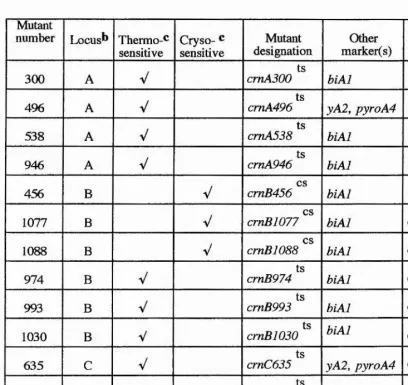
Genetic characterisation of 47 crn. mutants shows that there are three additional genes (i.e. to the original identified crnA gene)
their exact involvment in nitrate transport requires their molecular cloning. Certain mutations generated in the crnA gene have been investigated at the molecular level and the disruptions in the protein determined.
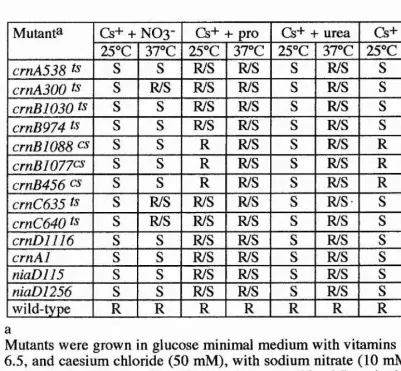
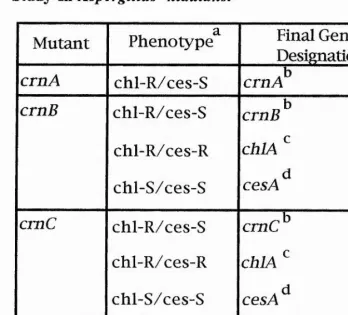
During the genetic studies of crn mutants, two other genes were postulated. The first is chlA, mutation which results in resistance to chlorate (unlike the wild-type) and caesium (like the wild-type). The second is cesA mutation. These latter mutants lead to caesium sensitivity but are chlorate sensitive like the wild-type. These two genes are unlinked to crnA, crnB, crnC and crnD genes. The bases of these phenotypes is unclear and need further investigation.
A study of nitrite uptake was undertaken which showed that wild-type A. nidulans has an active nitrite transport system. The activity of this system is repressed by ammonium and is nitrate induced. Mutants which are hypersensitive to chlorate taken up much higher levels of nitrite as compared to wild-type.
cnxB, 3 in cnxC and 3 in cnxF. These mutants will be particularly useful to relate structure and function when data is forthcoming regarding their protein sequence. Two temperature-sensitive mutants,
cnxH255 and cnxH261 showed reduced nitrate reductase
thermostability which indicates that the cnxH product could be associated with the NR protein.
One of the Aspergillus nidulans genes required for the synthesis of the molybdenum cofactor was isolated using molecular self-cloning transformation approaches. This gene, cnxH , was sequenced at the nucleotide level as well as three mutant alleles (one temperature sensitive and two temperature non-conditional). The results show that the cnxH product is the homologue of Escherichia,
coli moaE whose role is in the synthesis of the molybdenum cofactor
specifically to convert the large subunit to active converting factor. Sequence analysis of the two non-conditional mutants indicates that such mutants generated stop codons which provides little or no information about the structure / function relationships. The mutation in the temperature-sensitive mutant lead to a glycine insertion at position -h443 and it is postulated that this additional amino acid caused the heat liability of the NR enzyme. Studies of cnxH
CHAPTER ONE
INTRODUCTION
1.1 The Model Organisms Used In This Study.
Two model organisms which assimilate nitrate were used in this research work. First, the haploid ascomycetous filamentous fungus
Aspergillus nidulans and second, the diploid higher plant Arabidopsis
thaliana.
1.1.1 Aspergillus nidulans.
The eukaryotic fungus Aspergillus nidulans grows on relatively cheap laboratory media requiring only basic growth requirements i.e., an organic carbon and inorganic nitrogen source, water, oxygen, and trace elements. The organism is considered to be relatively easy to handle and safe to deal with, in terms of laboratory research work (Pontecorvo et. al., 1953; and for a recent review see Martenilli, 1994 and refernces therein). Another attraction is that A. nidulans
organellar and the extra organellar genetic systems. Also A. nidulans
transcriptional machinary, and therefore are likely to be similar in gene expression mechanisms. However, fungi differ from higher eukaryotes in the lack of abundance of repeated DNA sequences. Moreover, the simplicity of isolating large number of mutants, the development of an efficient transformation protocols and the construction of contiguous physical maps, all help to gather more and more important information. Additionally, the isolation of an array of genes of both scientifical and commercial interest, generates great enthusiasm for the isolation of most genes that lie in this relatively small genome in the near future.
In summary, the main useful features of A.nidulans, is that it is a lower eukaryotic organism which is a useful and convenient model system for the study of biological systems, (for a treatise see Martinelli and Kinghorn, 1994 and the various reviews therein, also previously reviewed by Arst, 1981, 1983, 1984, Johnstone, 1985; Mishra, 1985; Hynes, 1986).
1.1.2 Arabidopsis thaliana.
The diploid (2n=10, i.e the relatively small genome is distributed over only five pairs of separate chromosomes) higher plant species Arabidopsis thaliana belongs to the genus Arabidopsis
which in turn belongs to the mustard or crucifer family (cruciferae).
Arabidopsis thaliana is widely used for studies of classical and
its relatively small size, short life cycle, screening of large number of mutants, its contribution to the ease of use of this plant in the laboratories and its small nuclear genome. All of these features have reduced the expense and effort required for many types of experiments in molecular genetics. Such correlates as its relative lack of repetitive DNA sequences, reduced copy number of multigene families and reduced size of introns and intergenic spacers (some 60% of the genome consists of single-copy DNA sequences, most of which are genes or associated sequences). These properties facilitate a series of different types of experiments in molecular genetics and allow the cloning of many Arabidopsis genes by methods that would be difficult or even impossible if the genome were larger or more typical in its content of repetitive sequences. The structure of individual genes, the structure of chromosomes, the genetic properties, and the overall complement of genes in the genome are typical of those of other flowering plants. Since the above mentioned characters Arabidopsis thaliana has been regarded as a useful and therefore popular model organism for investigating a wide range of research topics in plant molecular biology. Arabidopsis differs from several of the other model organisms in at least one key respect.
Arabidopsis is closely related to the species it models. In this respect
and isolate the corresponding gene. One of the implications of this high degree of similarity between the model and the modelled is that all aspects of Arabidopsis biology-development, metabolism, biochemical, environmental, and so are worthy of investigation because of the broad applicability of the gathered information (reviewed in Meyerowits and Somerville, 1994).
1.2 The Nitrate Assimilation Pathway.
1.2.1 Significance.
than the total amount of the alternative pathway of nitrogen fixation, which is carried out by leguminous plants in association with symbiotic bacteria. Therefore, it is a very important pathway for nitrogen reduction and is present in most prokaryotic and eukaryotic organisms including bacteria, algae, fungi, and higher plants (For reviews see Cove, 1979; Unkles, 1989; Kim and Rees, 1994; Crawford, 1995 and refernces therein). Unlike in eukaryotes, bacterial nitrate reduction can serve two main purposes, nitrate can be reduced to ammonium and used as a nitrogen source for the synthesis of nitrogenous cellular components. Alternatively, nitrate can be reduced to nitrite, ammonium, nitrous oxide, or dinitrogen for anaerobic respiration, which generates energy for cell growth.
reduce the amount of nitrate fertilisers required. In addition, to reduce human and animal health risks from carcinogenic N-nitroso compounds derived from nitrate. Further and from an ecological point of view, another objective is to improve the utilisation of nitrogen by mycorrhizal fungi in nitrogen deficient soils (reviewed in Martin and Botton, 1993).
1.2.2 The Nitrate And Ammonium Assimilation Pathways And The Purine Degradation Pathway.
Nitrate assimilation pathway involves three sequential steps, where nitrate uptake from the external environment, and its release into cells by nitrate transporter(s) is most likely the first step in this assimilation pathway (Figure l.I). Two further enzymic steps then occur: reduction of nitrate to nitrite by the activity of nitrate reductase (NR) (NADPH: nitrate oxidoreductase, B.C. 1.6.6.3), then the conversion of nitrite to ammonium by nitrite reductase (NiR) (NADPH: nitrite oxidoreductase B.C. 1.6.6.4) (reviewed in Cove, 1979; Scazzocchio and Arst, 1981; 1983; Kinghorn and Unkles, 1994 and references therein).
In Aspergillus nidulans genetical and biochemical studies have
indicated that the crnA gene encodes a nitrate transporter (Brownlee and Arst, 1983; Unkles et. al., 1991). The evidence which supports crnA being a structural gene for nitrate uptake came from the following findings: First, genetical studies have revealed that crnA
I
a woI
s
I
DCI
i SCL
Q < Z
g
c;I
I CM
I
I ro
<u T3 '(/) C <D "D
■J2
Q) C (tJ k_ JQ E <D E CD Ü aIs
I I
Î
I
s
I
t
■I
I
CN|1
-y :3I
I
s l gro S-a ci
§ g s "a
îl
a .
a ^
Ph qj a
li
il
"2 1 1 C3 T3I I
g
I
II
II
Is
rl
"%) T3 a S< CCS
|iII
Ph c« S2II
IIîl
i|
C1-H C
^ "O
II
S - l
g c
o
§
C9u
s
a -g "oI
I
1
o c So DC c '■*3 si D > CO &■g §
I °
■g =
. 5 GO
II
g I
I &
^ %
Ï1
§ \bII
■g 8If
1) '3w ^03 =S
I - .
O fli
ig s;CCS
^ <lT
iâ
H - S U T3
i|
« :
o ON
c 0 <D
1
Q cu e&
c1
aa
- ~im a
a _
&%8
I I
sI
1
c o 3 ag 8^r—4
Î
j i
g %
• • d j
r-H C
I
I
§
&.S
c(U1
I.
g ^ DC a e lg'i
1
al ' è C
e = 5
s 'i l
III
HI
J=J C . r. O ON
a 00O ON
17
QI
<D
&g
>. O
N a
§ a
.2 "S
I
u CM <g
u k o k cu •§s
uI
0 C/5 L , 0 O w 0^ c/5 Ns f
C3 <D
! :
in CO
S o .
Cu > ^ .
ni
i
13
JS
a
%
o cc
o
CL, k4 (U (U
Dh t:
t l
03 ga
^
a r r
l i
E. Jr
» C1
COI
( SI
Cs
CO % a . s^ 'o
(U OJ
5 .'H
CO
I
e °
gj CO
s "
(U a
-5 ’So %
V o
Id
I
CO<uo
13
Æ
a
TJ Q
C
§
CL CO 1 <ü a1
.^ 2
^ I
^ o
16
If
s
I
C3%
a CO CO O*
O a S 03I
c o a o <ui l
II
2
5
C3 (U
I :a
*6 CO O a 'o u , 01
(D ahS*
C4 Uh
s co 6r* 0 X 2 co txJ
§
U g
Oh O
2 I
XI 0I CO><
01 \ < N X1
CO1
C S CO CI
T 3 (DI
COg
g
<üI
T 3î
CO X) O .(O O GOg
co8
Om
<üI
ë
S <D a % c o . 5 03 % (U co <uI
w T f C * 66
I CO XI < N < H cA I aS uî
2^ o t5c D û co C (D C o
s
o oë
o3I
tuI
NOI
co <Ui
XI
I
I
1
hO 01
g
hO Æ1
CJ cs
-g è ’6hO
I
tu
11
tu BI
1
co M§
utu O O
%
î
tu1“
ag
§
1s
ï
i
crtuco
08
I
i
I
XI
coî
â
I
I
n
§
o co kO coi
Dû ^ c
3
I
T3g
g
I > as I 2
Id
-S I
Dû <U
II
B tu "6 co 03I
co wI
I
Xf
r, .%
>1
S
I
X H ens
I
•SI
I
coI%
1
Dû X X tos «4-H a tuB
08
03 "81
I
I
1
SI
’Ohi
l i
■g
XI
. 1 S "aa s
I §
s g
l î
c ^1 g O h ’ ^ 4 O Î.H G G
= -a
2 3il
î i
T3 ^ o tos Dû
Ir2
co sa
I
i f
£ X§
a
t!Ü G
X
= (2
II
^
S
e
0 "O tu;
X1
-gI
T3g
g
0 co1
X!
I l
I u T3§
§
CQI
'64 tu X Xg
; S
co cd
g
8
9
5
z .IO
3
6
I<
3
'% oI
t l mfe; .B co r -o
'6
Cu o F-i Bsa
coI
tu 0 \ë
g
tuII
f I
l î
Iz
0 tu x " +-> 23 O a<u
1
u§
'o XI
'CI
'6
tu 0cog
1
CuI
o *6i
01
%
a%
3
co o co ag
g
_î
I
04
<3n
a io co ^
*0 ON
I
T3g
i
o3 S)t l
II
in (ü
N g
tu XS'
X X cog
co Lh tug
a
c 01
tuco , .
tu G
2
o t
u , u_ CD ll. 2; _ _ _ _J CD CD CD |p - | _ Z CD c/) Z q: < CD CD > > <
u . < u_ c/) < t _J > [ o j S H < Uj CD to X
- _J _J _J Z U_ Ql
f < CD CD U_ CJ 1 - > t o < < > to
U- _ CD CD _J (0^1 a . CD 2 S _J _J <
Q 2 u . > u - - J P V 2 □ Ü CD O ' CD < u - > < CD h - < CD _ D. 2 O ' 5 u . Z q;
" o CD Z lÜ PT Ô qÜ <
> - _J _ t o CJ > 2 > - _ < CD < < H
V O t O —lu _ > - > <
CD'CD
_ CD CD
< O 't o _ i cx H u j h - CD,
to a .CK:
o >
CD
^ 3 : _ g ^ UJ Û h c ÿ h
-o’.
_ j 2 D. CD _J _ CD < _ > —I u . o£
< h - to _ l CD > (Q^ —I I— > _ CL < < _J _ l CD CJ _ _ i _J CC CD _ l o ,Q _ _1 Lu t o - J U- U_
h“ - J ^ <—I 2 ^ Lu > CL > - LU LU to > 0 : 1 — 0 - ^ < C D L L Q C
a
| > < t O £
nitrate as sole nitrogen source (Tomsett and Cove, 1979; Brownlee and Arst, 1983). Second from biochemical evidence, crnA mutants had reduced the uptake of nitrate (Brownlee and Arst, 1983). Third, molecular analysis (Unkles et. al., 1991) revealed that crnA gene has specified a polypeptide of 483 amino acids (molecular weight of 52 KDa) with 12 membrane spanning segments, which may form the channel for nitrate transport. Finally, classical genetic studies showed that the crnA gene maps close to the other two structural genes for nitrate assimilation namely niiA and niaD (Tomsett and Cove, 1979; Reviewed in Cove, 1979).
Genetic studies have shown that niaD gene is the structural gene for the NADPH NR apoprotein, that catalysis the reduction of nitrate to nitrite. Mutants within the niaD gene results in chlorate resistance and the inability to utilise nitrate as the sole nitrogen source, but grow normally with other nitrogen sources (reviewed by Cove, 1979). Recent biochemical and molecular studies (Johnstone et. al., 1990) revealed that niaD gene encodes a protein of 873 amino acids with a subunit size of 95 KDa. The results obtained by Johnstone et. al.,
(1990) along with others (Minagawa and Yoshimoto, 1982) implicated that the A. nidulans NR is a homodimeric structure with a 180 KDa molecular weight and a subunit size of 91 to 95 KDa (the niaD gene product) (Tomsett, 1991).
1104 amino acids with a molecular weight of 126 KDa (Johnstone ciL, 1990). Mutations in the niiA gene lead to the abolition of NiR activity which is required for the conversion of nitrite to ammonium in the nitrate assimilation pathway. Additionally, niiA mutants are unable to utilise nitrate and nitrite as sole nitrogen sources. In contrast, to crnA and niaD mutants, niiA
mutants show sensitivity to chlorate. Classical genetic studies revealed that the three structural genes for nitrate assimilation pathway
{crnA-niiA-niaD) are tightly linked in a cluster in the order crnA-niiA-niaD
on linkage group VIII of the Aspergillus genetic map Figure 1.3 (Tomsett and Cove, 1979; Arst et. al., 1979). The expression of
crnA, niiA, and niaD genes are subject to induction by nitrate
(mediated by the product of the nirA regulatory gene product) and to ammonium or nitrogen metabolite repression (by the areA
regulatory gene product) in addition, to autoregulation by niaD itself (see section 1.7.5 regulatory genes for nitrate assimilation) (reviewed by Cove, 1979; Scazzocchio and Arst, 1989, 1994). It is interesting that in its near relative, N. crassa , the equivalent genes of
niiA and niaD (i.e. nit-1 and nit-3 respectivily) are unlinked to each other and located on different chromosomes (Tomsett and Garrett,
1980).
assimilation is the conversion of glutamate into glutamine by glutamine synthase (GS), which is encoded by glnA gene and maps in linkage group II (MacDonald, 1982; Cornwell and MacDonald, 1984). Of peripheral, but noteworthy interest, a further glutamate dehydrogenase (NAD-GDH) encoded by the A nidulans gdhB gene which maps in linkage group IV (Arst et. al., 1975; Kinghorn and Pateman, 1976) and it is unlinked to gdhA. In fact these genes locate on different chromosomes. Previous studies suggested that NAD- GDH might have a reverse role to gdhA i.e converting glutamate to ammonium where ammonium is an short supply. No gdhB or glnA
DNA clones have been reported recently to investigate the expression of gdhB (reviewed in Kinghorn and Unkles, 1994).
The first steps of purine degradation pathway in A. nidulans
involve two purine hydroxylases (formerly named xanthine dehydrogenase I and II) namely purine hydroxylases I and II which were described some time ago by Scazzocchio et. al., (1973) in
A.nidulans.. Both hydroxylases were found to be different with
6-hydroxynocotinate) and hypoxanthine. Both ammonium and nitrate act as co-repressors of this enzyme (Darlington et. al., 1965; Darlington and Scazzocchio, 1968, Scazzocchio, 1973), Mutation in the cnx genes leads to loss of activity of both purine hydroxylase I and II, in addition to the loss of nitrate reductase activity. Three temperature-sensitive cnxH mutants, isolated by MacDonald and Cove (1974) showed growth with nitrate at 25°C, but showed the mutant phenotype with hypoxanthine at the same temperature. In addition, the three temperature-sensitive cnxH mutants, exhibited a heat labile nitrate reductase enzyme but not purine hydroxylase I and II at 25°C. Such results suggested that cnxH gene might code for a structural component required for the activity of all three enzymes (MacDonald and Cove, 1974; Scazzocchio, 1974; and reviewed in Cove, 1979). Both purine hydroxylase I and II were found to be able to hydroxylate hypoxanthine. The gene hxA (the structural gene for purine hydroxylase I) lies on chromosome V has been cloned and sequenced. The protein is a 304 KDa homodimer with each subunit contain two Fe-S centres, FAD and Mo. The gene hxnS which encodes a structural component of purine hydroxylase II, lies on chromosome VI (Lewis etal., 1978). Purine hydroxylase II from A.
nidulans has been purified, and found to have a molecular weight of
1.3 Nitrate And Nitrite Transport.
1.3.1 Biochemistry.
Whilst much detailed information is available regarding the nitrate assimilatory enzymatic steps including their structure, function and regulation, much less is known about the nitrate and nitrite uptake systems in both prokaryotes and eukaryotes. Uptake systems (particularly nitrate) must, a priori, be fairly responsive, robust and versatile since probably all organisms need effectively to take up considerable amounts of nitrate to satisfy their nitrogen requirments for growth, in for example soil environments, in which the concentration of such essential nitrogen source may vary greatly. Biochemical research work with A. nidulans provided evidence for a distinct nitrate-inducible nitrate uptake system with a Km value of around 200 mM (Brownlee and Arst, 1983). However, the
Aspergillus nitrate uptake system was found to be different from the
formerly nitrate-inducible nitrate uptake systems (with Km's around 250 pM) in other related fungi, such as the breadmould Neurospora
(Schloemer and Garrett, 1974; Quesada et. al., 1994) or the industrial antibiotic producer Pénicillium chrysogenum (Goldsmith
et. aL, 1973). The Aspergillus nitrate uptake system requires a
Arst, 1983). These findings might suggest that, crnA gene encodes a differentially regulated component expressed in spores and young mycelia but, not in older cells. Their work also indicated that, more than one nitrate uptake system was present, one system for conidia and young cells, whilst the other in older cells (Brownlee and Arst, 1983; reviewed by Cove, 1979; Pombeiro et. al., 1983; Crawford, 1995).
(Research studies were carried out in order to determine the effect of different inducers or inhibitors on the nitrate and nitrite transport systems. Brownlee and Arst (1983) in A. nidulans reported that, both nitrate and nitrite induces the uptake of nitrate in the wild- type mycelium, where the degree of induction by nitrite was lesser than that of nitrate, this variability in induction was related to the slight toxicity of nitrite, in addition to its reactivity precluding its use. Additionally, they showed that chlorate the toxic analogue of nitrate, strongly and rapidly inhibits the net nitrate uptake in both young and older cells of wild-type and crnAl strains in A. nidulans.
In N. crassa , Schloemer and Garrett (1974) reported that
nitrite as an inducer for a nitrate uptake system(s). It affects negatively nitrate uptake rates also the mechanism of nitrite inhibition was suggested to be non-competitive. These N. crassa results agreed broadly with those previously obtained in in the duckweed Spirodela
Using Sirodela. oligorrhizci Ferguson and Ballard, (1969) demonstrated that when nitrate-grown Sirodela cells were supplied with both nitrate and ammonium at the same time, ammonium was utilised first. The authers showed that the uptake could occur in the absence as well as in the presence of a functional (NR) activity, i.e without noticeable sudden changes in the enzyme level. These findings lead to the suggestion that ammonium might prevent nitrate uptake by a mechanism(s) other than repressing enzyme activity vis-a vis in a non-competitive inhibitory manner principally.
Galvan and his colleagues studied and characterised nitrite and nitrate transport in nitrate transport-deficient mutants of the alga
Chlamydomonas reinhardtii, as well as the genetic transformants
carrying either nar 2 and Nrt 2;1 or nar 2 and Nrt 2;2 genes (Galvan et. aL, 1996) as discussed before. The results obtained indicated that nitrate transport- deficient mutants grow on nitrite and show nitrite uptake activity at lower nitrite concentrations (i.e < 25
pM) but not nitrate. This led to the conclusion that the uptake system present in such strains is nitrite specific. In addition, integration of
the nar 2 and Nrt 2;1 genes into the nitrate transport-deficient
transport-deficient mutants genome, resulted in similar nitrite uptake rates to those in the parental strains (i.e nitrate transport-deficient strains). This indicated that integration resulted in a system which is specific for transporting nitrate but does not transport nitrite efficiently (Galvan et. al., 1996).
Regarding the effect of different inhibitors on nitrite uptake, Cordoba et. al., (1986) studied the kinetic characteristics of nitrite uptake and its inhibition by nitrate in the wild-type strain of Chlamydomonas reinhardtii. The results demonstrated that nitrate can be considered to be as partially competitive inhibitor of nitrite uptake in which inhibition is independent of the existence of functional (NR). These results appeared to fit with the presence of different transport system for nitrite and nitrate at least in
Chlamydomonas reinhardtii. Competition by nitrate and its toxic
analogue chlorate (see section 1.7.1 on chlorate toxicity) have been studied in C. reinhardtii by Galvan et. al., (1996). The latter researchers found that neither nitrate at a concentration of 50 pNi nor chlorate at a concentration of 1.5 mM had an inhibitory effect on the uptake of nitrite by the nitrate specific system {nar 2 / Nrt 2/2). In contrast, both ions (i.e nitrate and chlorate) were found to inhibit significantly nitrite uptake in the bispecific system {nar 2 / Nrt 2;1),
which transport both nitrate and nitrite efficiently (Galvan et. al.,
reported that nitrate up to a 100 pM did not have any significant effect on the uptake of nitrite. Very recent research work carried out by Galvan et. al (1996) showed that different nitrate concentrations up to 75 pM had no effect on the uptake of nitrite by either the nitrite specific (i.e nitrate transport-deficient system) or the nitrate specific systems {nar 2 / Nrt 2/2). In contrast, nitrate at a concentration of up to 75 pM strongly inhibited the uptake of nitrite by the bispecific system {nar 2 ! Nrt 2/7).
1,3.2 Genetics.
Genetic analysis of nitrate assimilation in A. nidulans revealed that crnA gene is one of three tightly linked genes in a cluster located in chromosome VIII, the gene order being crnA-niiA-niaD. The
crnA gene ( crn = chlorate resistant nitrate utilising) of A. nidulans
was first revealed by mutations therein, which were selected on the basis of chlorate resistance (Tomsett and Cove, 1979; reviewed by Cove, 1979). A number of genes may affect nitrate and/or nitrite uptake and these genes are discussed below.
crn mutants can be easily and simply isolated, screened and distinguished from other nitrate assimilation mutants such as niaD
No nitrite uptake gene has been described in A. nidulans.
Mutations in four unlinked genes have been reported to be phenotypicaily hypersensitive to nitrite. First, the nihA mutation maps in linkage group I (Pombeiro et al., 1983), results in sensitivity to higher levels of nitrite (>10 mM), but on normal concentrations it grows as wild-type. This lead to the suggestion that such mutation makes the strain more efficient in nitrite uptake, or more efficient in the efflux of nitrite back into the medium. The second, nitrite hypersensitive mutation is niiC628 which maps in linkage group I (reviewed in Cove, 1979). This mutant grows on both nitrate and nitrite (10 mM) with a nitrogen-starved morphology, has the wild- type levels of both ( NR and NiR) enzymes activity. As before, this suggests that there is an altered permease function in the mutants resulting in either increase, influx, or decreased efflux. (Cove, 1979). The third gene is meaB6, which maps in linkage group IV meaB
mutants have both NR and NiR activities and are also hypersensitive to nitrite (>10 mM). In contrast to the other hypersensitive mutants,
translation at residue 233 which in turn, resulted in frame shift mutation leading to truncation of the meaB product. These findings indicated that the situation regarding the status of nitrite efflux and nitrogen metabolite repression in meaB locus is still unclear (Arst and Cove, 1969; reviewed in Cove, 1979). The fourth nitrite hypersensitive mutation (10 mM) is the tamAlOS which maps in linkage group VI. The tamA105 mutant was selected for resistance to thiourea (i.e a toxic analog of urea), aspartate hydroxylate (toxic analog of asparagine), and chlorate (toxic analog of nitrate), in addition to its resistance to méthylammonium (toxic analog of ammonium) (Kinghorn and Pateman, 1975). Very recently, the tamA
gene was cloned and sequenced (Davis et, aL, 1996). From the inferred amino acid sequence analysis it is pridicted that the tarnA
gene encodes a putative control protein with a putative zn(II)2 cys-6 cluster DNA binding domain. Surprisingly the zinc cluster DNA binding domain has been found to be not required for function. In contrast, a small internal in-frame deletion within the tamA gene has been found to abolish tamA function. Therefore, it is likely that this deleted region and possibly other conserved region are the important functional domains of this protein (Davis et. aL, 1996). The function of the tamA gene is still unknown, but it could be
involved in nitrite uptake (Kinghorn and Pateman, 1975).
1.3.3 Molecular Biology.
segments (Unkles a i, 1991). From this molecular data, it was concluded that the crnA gene of A. nidulans encodes a high affinity nitrate transporter, and this conclusion arises from different lines of evidence. First, the crnA protein contains twelve hydrophobic membrane-spanning helices (Figure 1.2, secondary structure prediction using TMAP) ( Unkles et. aL, 1991; Trueman et. aL,
1996). Second, Northern blot results indicated that crnA expression is induced by nitrate and repressed by ammonium, which is similar to other genes in the pathway such as niaD (NR) and niiA (NiR) confirming its association with the nitrate assimilation pathway. Third, reduced net nitrate uptake is observed in the crnAI mutant relative to the wild-type strain (Brownlee and Arst, 1983; Unkles
et. al., 1991).
Since the publication of crnA sequence, other eukaryotic high affinity transporters have been identified and characterised at the DNA and protein level. In the green alga Chlamydomonas reinhardtii , two nitrate transport protein carriers have been identified. The algal transport proteins were found to be encoded by Nrt 2;I and Nrt 2;2, genes (formerly named nar 3 and nar 4, respectively) with the requirement of a functional nar 2 gene as discussed above. The function of the nar 2 gene is not clear yet but, it has been suggested that nar 2 product is either a structural or regulatory protein required for the function of both high affinity transport genes
{Nrt 2;1 and Nrt 2;2) (Quesada et. aL, 1994). The C. reihardtii
amino acid level with each other (almost 80% identical) and with the
Aspergillus CRN A nitrate transport protein (about 31% identity)
(Fernandes et, al., 1989; Trueman et. al., 1996; Unkles et. al., 1991; Quesada et. a i, 1994; reviewed in Crawford, 1995). The algal
{Nrt 2;1 and Nrt 2;2) and the fungal {CRNA) nitrate transport
proteins were showning to be hydrophobic proteins having 12 hydrophobic membrane-spaning segments, which would form the channel for nitrate transport (Johnstone et. a i, 1990; Unkles et. al.,
1991; Quesada a/., 1994). Very recently, in C. reinhardtii nitrate transport deficient mutants and transformed strains of C. reinhardtii
In higher plant cells, it is generally believed from physiological experiments that at least two nitrate transport systems are involved. The first is a high affinity system which is inducible by nitrate, the other is a low affinity system expressed constitutively (Hole et. aL,
1990; Glass et. aL, 1992). A putative nitrate transporter cDNA clone has been isolated from the higher plant Arabidopsis thaliana
(Tsay É?/. a/., 1993). Perhaps surprisingly, this clone encodes a protein which does not show amino acid similarty with any other algal or fungal high affinity nitrate transporter (Tsay et. aL, 1993; Quesada
et. aL, 1994). Very recently a gene from the higher plant Hordium
vulgare (barley) has been cloned using primers based on the
A. nidulans crnA sequence (Trueman et. aL, 1996). This barley
clone has been also found to encode a protein with 12 putative membrane-spanning segments, and it showed identity at the amino acid level with the Aspergillus CRNA protein (identity to 32%) and with the algal NRT 2;1 protein (identity to 50%) (Trueman et. aL,
1.4 Nitrate Reductase And Nitrite Reductase.
1.4.1 Biochemistry.
It has been reported that three closely related forms of nitrate reductase are present in algae, fungi, and plants (Wray and Kinghorn, 1989 and references therein). First, there is NADH NR (E.C. 1.6.6.1) which is the most common form observed in most higher plants and algae. Second, certain plants possess NADPH NR (E.C. 1.6.6.2). In fungi, NADPH NR (E.C. 1.6.6.3) is only present. NR is found to be a multi-redox enzyme having 3 functional domains associated with 3 prosthetic groups, FAD, heme-Fe, and molybdopterin (reviewed by Dunn-Coleman et. al., 1984 and references therein). The 3 functional domains of NR bind its 3 cofactors in order to form the active sites of the enzyme. It has been shown that NR physiological activity
{in vivo) involves the transfer of 2 electrons from NADP(H),
through FAD, heme, and Mo-Co, to nitrate (Cooley and Tomsett, 1985; Johnstone et. aL, 1990; Garde et. aL, 1995; reviewed by Campbell and Kinghorn, 1990 and references therein).
The A. nidulans wild-type NR (and related fungal species such
as N. crassa ) has been shown to possess an NR associated
even in cells gro^vn in the absence of nitrate. Two protein species showing cytochrome-C reductase activity were detected in the wild- type mycelium, grown in the presence of nitrate (Table 1.1). One species with a sedimentation coefficient of 7.6s (identical to that of NR) which is induced by nitrate and repressed by ammonium, the other (13.7s)which was also detectable in cnx mutants of 13.7s. Since this species was found to be present in the wild-type as well as in (all)
cnx mutants (which lack NR activity), and because it is neither induced by nitrate nor repressed by ammonium, it was suggested that 13.7s molecule is not involved in nitrate reduction. Instead, it might act in association with some other enzyme such as sulphite reductase and therefore ignored in this work. The cnx mutants can be divided into two groups: The first, with nitrate inducible cytochrome-C reductase activity, where the 7.6s species can be detected at the same level or even a higher level than that of the wild-type e.g. cnxBlJ,
cnxF9, cnxGl, and cnxHl mutants. The second group consist of,
constitutive cytochrome-C reductase mutants that can produce a new species (absent in the wild-type) of sedimentation coeffiecent 4.5s e.g. cnxA5, cnxBIl, cnxF2, cnxG4 and cnxHS. Both cnxE
constitutive and inducible mutants (unlike other cnx mutants) produce only the 7.6s species (not the 4.5s species). Some strains of
A. nidulans such as cnxBlS, cnxF9, cnxG2, and cnxHl produced
i
£
% 5 Vp
ns (V Pfil U o u w © © o U a o % * pz
p Tf PS 'kwk < u 091
« o « a Q Op
©le 0
%
.S
p
Ui
O )
5
«1 I
« ■s
2 I
CZ)' p
p
p % c/3 z H " S cI
i
P " Og
< ü D -© J=J " © * P C O Q*
HI
X) T3© coH
euH
§
oII
^ " 2
O O
4 -» 3
1
( 3 eë
T3C P < S P " p P X p t/3 t/3 O en © <D c/3 Di: z z P t/3I
S'
g
T3Ê
§
T 3§
© X 'o ©I
©g
T 3 © > z pi
p o o p Xi
W ) t/3Î
1
eu 0 < % t/3 v o K ( ü zu - ,
o 0 p
1
eu p -§ i§ S X kH O§
X p e n P © X s ’o © eu tZ i c/3 l o © X H © t/3 a u p1
X X 3 ZI
I
kH . a © > c/3 P O og
I
Z p p p < 2I
I
© t/ 3 u n X H ë &1
X) ■ s S © o U c/3 © 8 eu c/3 C/3 u n 8I
euI
g
t/ 3 P ■ g OhO Z
& g
t/ 3 k H
O
T): bq
I
© p§
p XI
I
1
I
o e n X gg
c/3I I )
z
o
©
1 1
pT 3 P
g
£ gbû H b ü b o p ps
c/3 i n <D P5
P c/3 ©I
P < z ©I
&
g' Dî
p pi
& X H © X H oI
YI
c/3 X l > k H o c/3 ung
©I
I
J
I
W ) c/3 z s p c/3 X X§
I
i
1
o ©I
1
© >i
t
OQU
1
k H o k H o p 0 T3g
-g
S Oh1
t/3 un OI
Z p © XI
t/3i
p X X H © ©s
1
t/ 3 unI
'og
I
■ gI
p < ü p gg
s o -sI
g
X © Z (2 g' t/3 t/3§
P k HI
©1
s -ê
© X "O
g
o X c/3 p p £ 2I
O o PI
co «g
XI
pg
I
1/3 -PI
I
NI
S YI
I
I
t/3 X1
ï
< ü
I
■ § c/3 C/3 z kH!
pI
c ■ g o
<D p * x
z 1 1 t j o U î ï p o
- w X
GO
un unc o P
4 - » 4 - J
CD T | - T T
P n 3 " p
O
s P a g g
p GO
œ
un
GO GO (/3 GO GO c o GO c o
z
(D 2 a X un X X 0 0 X un
C O a g T t K J > T l "
GO
Z T 3CD
o O
y G O P
T 3 P *P p (Ü z GO < P
; z )
CD
c 0 )
(4 -4 kH
<D 5 O CD U 1 O kH P p un O
o c o
X p p < u B 1 p CD CZ3 g
p b o
O kH
- 3
GO GO GO GO GO
Z p 4—« p un e n 0 0 r - un
1 ) e n
kH
O i z u l > i >
kH O
u CD
(U 1 i k - H U U t— H u U U
g 1 1
- gP O p
*— H u S
3 : < N
" S k q k n
g Un >--4 r n g
B
u '-" H Y ) O s
Z o q o q k ; k q ( <
% K % H ( n U ?
S 1 5 S 5 5 5 g
a "~-4
( N ''- - 1 < N '" - 4 C N
p
U
1
1
1
COX
1
CO un
Tf
to
un
U
1
1
1
COX
8
§
u1
I
COX
%
CO
un
U
1
uU
00
1
1
U
0 '" 4
1
Ri
u
fvn''-'4
1
%9
CO
un
CO
un
U
K '—-4
presence of the molybdenum cofactor, the 4.5s aggregates to form the 7.6s product. Only the 7.6s species completed with the molybdenum cofactor possesses NR activity. When dissociated into 4.5s subunits only the alternative activity (cytochrome-C reductase activity) is observed. Consequently this lead to the conclusion that mutants, which produce the 4.5s species were unable to aggregates the enzyme subunits into native NR, i.e., the 4.5s is unable aggregate to form the 7.6s molecules (MacDonald et. aL, 1974; reviewed in Cove, 1979).
In summary the niaD gene seems to specifies a 4.5s protein with cytochrome-C reductase activity only. The 7.6s molecule, a dimer of two 4.5s {niaD ) products and one or more molybdenum cofactor molecules {cnx genes) has both NR and cytochrome-C activities. The molybdenum cofactor, therefore, is necessary for the dimérisation of the 4.5s products in order to provide enzyme activity. In other words, when the molybdenum cofactor is in the form of a complex with the 4.5s dimer, it shows NR activity but, when dissociated it only shows the alternative cytochrome-C NR activity.
The most widely used assay method for the presence of Mo-Co, is the in vitro complementation of the nitrate reductase subunits in
nit-1 extracts of N, crassa mutant (deficient in the synthesis of
therefore, with NADPH cytochrome-C reductase but not NR activity. This mutant protein of N. crassa was found to sediment at 4.5s (roughly equivelent to that of Aspergillus group discussed above), whilst the wild-type N. crassa NR was found to sediment at 7.9s (similar to wild-type A. nidulans). When cell-free extract of the
N. crassa nitl mutant was mixed with a source of Mo-Co such as
E.coli cell-free extracts that contains free molybdenum cofactor),
both the cofactor and the nit-1 protein associated together to form the 7.9s species which then possesses both NADPH NR and cytochrome-C reductases activities. The addition of molybdate to the complementation mixture led to the stimulation of NR activity, such
in vitro nitrate reductase was found to be identical to the native
enzyme in terms of molecular weight, sedimentation coefficient and substrate affinities (Amy and Rajagopalan, 1979).